PM Modi’s Visit To Saudi Arabia Deepens Bilateral Ties

It goes without saying that India has always cherished to maintain good bilateral ties with Saudi Arabia. The incumbent PM Narendra Modi has right from start always shown a great deal of interest in improving further the bilateral relations between both the countries and deepening them further. The Crown Prince of Saudi Arabia – Mohammad Bin Salman too has shown great interest in enhancing further the bilateral relations between India and Saudi Arabia.

                                         It goes without saying that the sustained efforts to end the prolonged nonchalant relations between both the countries began seriously for the first time while former PM late Atal Bihari Vajpayee was at the helm of affairs. The first step was taken when Vajpayee’s Foreign Minister Jaswant Singh had travelled to the kingdom of Saudi Arabia in early 2001. We then saw how five years later, King Abdullah visited Delhi which was the first visit to India by a Saudi monarch in half a century to announce a new phase being heralded in bilateral relations. But the depth was still lacking and attention was confined only to buying oil from Saudi Arabia and exporting manpower.

                                             However, much water has flown under the bridge since then! It cannot be denied that the expansion and institutionalization of strategic cooperation between India and Saudi Arabia started taking deep roots during the Prime Minister Narendra Modi’s latest two-day visit visit to Saudi Arabia in end of October which is the second in three years. After arriving in Riyadh, PM Modi tweeted on a happy note saying that, “Landed in the Kingdom of Saudi Arabia, marking the start of an important visit aimed at strengthening ties with a valued friend. Will be taking part in a wide range of programmes during this visit.”

                                 It is quite well known that Saudi Arabia is second biggest supplier of oil to India after Iraq. It is also India’s fourth largest trading partner and the bilateral trade amount adds up to $27.48 billion in 2017-18 and Saudi investment of around $ 100 billion in India in various key areas like energy, agriculture, minerals, mining, petrochemicals and infrastructure is also in the pipeline. This makes the relations between both the countries all the more important and both countries appreciate this fully.

                                   As we all know, this latest visit by PM Modi to Saudi Arabia was about Modi delivering a keynote at the high profile “Future Investment Initiative Summit” that was basically an initiative of Crown Prince of Saudi Arabia. It also cannot be denied that this visit of PM Modi to Riyadh truly marks the consolidation of a bilateral partnership that has long struggled to take deep roots and this is in the mutual long term shared interests of both the countries.        

                                        It is most refreshing to learn that India and Saudi Arabia have shown together deep interest in last few years to deepen the ties between both the countries. This has culminated in the launch of a Strategic Partnership Council between both the countries during PM Modi’s visit to Saudi Arabia just recently. This new body comprising of two mechanisms which will be headed by the Foreign Ministers and Commerce Ministers of both sides will guide and monitor relations in some crucial areas, as for instance, energy, security and trade.

                               It cannot be lightly dismissed that India is one of eight countries with which Saudi Arabia is forging strategic partnerships under its Vision 2030 policy. Saudi Arabia understands fully the growing potential of India and this alone explains as to why it has placed India in the club of those few countries with whom it is forging strategic partnerships as just stated above. This is bound to deepen the bilateral ties between both the countries.

                                      It is also quite heartening to note that in a marked departure from the one they issued in February 2019, the joint statement by New Delhi and Riyadh made no mention at all on the resumption of dialogue between India and Pakistan. In the joint statement that was issued on October 29 after the bilateral meeting was concluded between PM Narendra Modi and Saudi King Salman bin Abdulaziz Al Saud, the two sides reiterated their “categorical rejection of all forms of interference in the internal affairs of countries” and the need for the international community to fulfil its responsibilities towards “preventing any attacks on the sovereignty of States”. This was the need of the hour also!

                                          Be it noted, the February 2019 joint statement that was issued after Saudi Crown Prince Mohammad bin Salman’s visit to India had a full paragraph on India-Pakistan relations stating that, “The two sides stressed the importance of regional stability and good neighbouring relations. His Royal Highness appreciated consistent efforts made by Prime Minister since May 2014 including Prime Minister’s personal initiatives to have friendly relations with Pakistan. In this context, both sides agreed on the need for creation of conditions necessary for resumption of the comprehensive dialogue between India and Pakistan.”

                                     It cannot be lost on us that the recent October 29’s joint statement between both India and Saudi Arabia was silent on India-Pakistan ties or a dialogue. This is a healthy sign as relations between both the countries are now not placing Pakistan on priority list any longer! It has to be unequivocally appreciated!

                                      Also it cannot be ignored that unlike February 2019 when the joint statement said that the Prime Minister and His Royal Highness “condemned in the strongest terms, the recent terrorist attack on Indian security forces on 14 February, 2019 in Pulwama in Jammu & Kashmir”, there was no reference this time to the Pulwama attack. The joint statement said that, “The Indian side condemned the terrorist acts against civilian installations in the Kingdom”. This was a reference to the drone attacks on Saudi oil fields. The joint statement said that both sides expressed their rejection of all terrorist acts and stressed the need to “prevent access to weapons including missiles and drones to commit terrorist acts against other countries”.

                                           Needless to say, the February statement too had called upon “all States to deny access to weapons including missiles and drones to commit terrorists acts against other countries. This time, on terrorism, it said that the two sides stressed that “the extremism and terrorism threaten all nations and societies. They rejected any attempt to link this universal phenomenon to any particular race, religion or culture.” Very rightly so!

                              More importantly, in a new formulation, both sides also called for “closer cooperation in the United Nations Counter-Terrorism Center”, and also agreed on strengthening cooperation in combating terrorist operations, exchange of information, capacity building and strengthening of cooperation in combating transnational crimes, within the framework of the existing bilateral security cooperation.

                                     Any discussion on India’s deepening ties with Saudi Arabia would be incomplete without mentioning the full list of 12 Memorandum of Understanding (MoU) that were signed between both the nations following bilateral talks. So let us discuss them one by one. They are as follows:-

1.  The most significant MoU was signed to establish a Strategic Partnership Agreement that was signed by the Prime Minister of India – Narendra Modi and Crown Prince of Saudi Arabia – Mohammed bin Salman bin Abdulaziz Al Saud.

2.    MoU on Cooperation in the Field of Renewable Energy between Saudi Ministry of Energy and Ministry of New & Renewable Energy of India that was signed by Dr Ausaf Sayeed who is the Ambassador of India to Saudi Arabia and HRH Prince Abdulaziz bin Salman Al Saud who is Energy Minister of Saudi Arabia.

3.   MoU on Security Cooperation that was signed by TS Tirumurti who is Secretary, Economic Relations (ER), Ministry of External Affairs (MEA) of India and HRH Prince Abdulaziz bin Saud bin Naif Al Saud who is Interior Minister of Saudi Arabia.

4.  MoU for cooperation in combating illicit trafficking and smuggling of narcotic drugs, psychotropic substances and chemical precursors that was signed by Dr Ausaf Sayeed and HRH Prince Abdulaziz bin Saud bin Naif Al Saud.

5.  MoU between Saudi General Authority of Military Industries (GAMI) and Department of Defence Production, Ministry of Defence concerning collaboration in military acquisition, industries, research, development and technology that was signed by TS Tirumurti and HE Ahmad Al-Ohali who is Governor of General Authority of Military Industries of Saudi Arabia.

6.  MoU for cooperation in Civil Aviation that was signed by Dr Ausaf Sayeed and HE Abdulhadi Al-Mansouri who is President of GACA in Saudi Arabia.

7.   MoU between Central Drugs Standard Control Organization (CDSCO), Ministry of Health & Family Welfare and Saudi Food & Drug Authority (SFDA) for Cooperation in the field of medical products regulations that was signed by TS Tirumurti and HE Dr Hisham Al Jadhey who is CEO of SFDA of Saudi Arabia.

8.  Letter of Intent between Small and Medium Enterprises General Authority (Monshaat) of the Kingdom of Saudi Arabia and Atal Innovation Mission (AIM), NITI Aayog of the Republic of India that was signed by Dr Ausaf Sayeed and Engineer Saleh Al-Rasheed who is Governor of Small and Medium Development Authorities of Saudi Arabia.

9.  Cooperation Programme between Foreign Service Institute, MEA and Prince Saud Al Faisal Institute of Diplomatic Studies (IDS) of Ministry of Foreign Affairs of Saudi Arabia by Dr Ausaf Sayeed and Dr Abdallah Bin Hamad Al Salamah who is Director General of Prince Saud Al Faisal Institute for Diplomatic Studies.

10.                   MoU between Indian Strategic Petroleum Reserves Limited (ISPRL) and Saudi Aramco signed by HPS Ahuja who is CEO and MD of ISPRL of India and HE Ahmad Al-Subayae who is Vice-President of ARAMCO of Saudi Arabia.

11.                   MoU for Cooperation between National Stock Exchange (NSE) and Saudi Stock Exchange (Tadawul) signed by Vikram Limaye who is MD and CEO of National Stock Exchange of India and Engineer Khaled Al-Hasan who is CEO of Saudi Stock Exchange (Tadawul).

12.                   MoU between National Payments Corporation of India (NPCI) and Saudi Payments that was signed by Arif Khan who is the Chief Digital Officer of National Payments Corporation of India and Ziyad Al Yusuf who is MD of Saudi Payment.

                                           In its joint statement pertaining to the volatile Syrian situation, the two leaders of India and Saudi Arabia very rightly highlighted the importance of preserving unity in Yemen, ensuring its stability and coming out with a viable political solution to solve the Yemeni crisis  that would be based on the outcome of the Yemeni National Dialogue, GCC initiative and the Security Council Resolution (2216).

                                       On Palestine, India and Saudi Arabia both stressed on the need for achieving a comprehensive, just and lasting peace in Palestine based on relevant UN resolutions and the Arab Peace Initiative. Both leaders exuded confidence that the peace resolution will guarantee the rights of the people of Palestine and lead to the establishment of their independent state based on the 1967 borders with Jerusalem as its capital.

                         Last but not the least, the two leaders also agreed on the ever-lasting importance of bilateral engagement in promoting ways to secure the waterways in both the Indian Ocean region and the Gulf, from any threat that may endanger the interests of the two countries including their national security. Finally, we saw how at the end of the visit, PM Modi extended an invitation to King Salman to visit India to complete the consultations and further discuss matters of bilateral cooperation and international issues of mutual interest. PM Modi also reiterated his support to Saudi Arabia for its upcoming Presidency of the G20 in 2020.

                                      On a concluding note, it may well be said that the bilateral relations between India and Saudi Arabia have certainly deepened over the last couple of years but still there is lot of scope for expanding it further which must be worked out exhaustively. No doubt, PM Narendra Modi is showing considerable interest in ensuring that relations between both the countries are further deepened and what is most comforting to note is that this is being reciprocated by the Saudi Crown Prince Mohammad bin Salman bin Abdulaziz Al Saud in equal measure! This will benefit both the countries equally!

Sanjeev Sirohi, Advocate,

s/o Col BPS Sirohi,

A 82, Defence Enclave,

Sardhana Road, Kankerkhera,

Meerut – 250001, Uttar Pradesh.

SC Must Take Suo Motu Action Against Reported Incidents Of Manhandling Of Covid Patients

It is a matter of grave concern that we are getting to learn more and more reported incidents of manhandling of Covid patients/dead bodies. What is even more tragic to learn is that this is happening more with those patients who are not able to cough up huge astronomical sum of money as demanded by the hospitals where they are admitted! This is certainly a cause of grave concern for all of us who are Indians and judiciary too must take serious note of it.

                                           To be brutally honest, this most serious issue has been lying unattended since a long time. No one is taking a serious note of it. Who is responsible for this pathetic state of affairs?

                                    Truth be told, this has been brought to the fore by none other than the former Union Law Minister of India – Dr Ashwani Kumar who also happens to be an eminent and a senior advocate of the Supreme Court. He has addressed a letter directly to the Chief Justice of India (CJI) – Sharad Arvind Bobde and Justices of the Supreme Court highlighting the grave infraction of the citizen’s right to die with dignity amid the Covid-19 pandemic. He has very rightly and commendably asked the CJI to take suo motu notice of various reported incidents, whereby persons suffering from Covid-19 infection are being ill-treated and their dead bodies are being manhandled.

                                    To be sure, Dr Ashwani Kumar has specifically drawn the attention of the CJI towards a tragic, barbaric and shocking incident in Madhya Pradesh where an elderly man suffering from Covid was tied to a bed, after he allegedly failed to make payment of fees for his treatment in the Shajapur-based hospital. Similarly, in yet another case, he pointed out that in the Union Territory of Puducherry, a video had surfaced whereby government workers – four men in PPEs could be seen throwing the body of a Covid-19 positive man into a pit. Less than 30 seconds later one of the men is heard telling a government official that they have “thrown the body” for which the official shows thumbs up in approval!

                                           Of course, it is quite clear that the frontline workers ignored a series of Covid protocol while handling the body! The video shows the dead person was merely wrapped with a white cloth and not in a bag as mandated in such cases. The cloth wrapped around the body also opened up as it was dropped exposing the workers to tremendous risk of infection. It is not yet clear if the body was duly embalmed. The undignified handling of the Covid patient has led to massive outrage in Puducherry!

                                        In his elegant and effective style, Dr Ashwani Kumar points out in his hard hitting letter that, “The tragic and condemnable sight of a Covid-19 patient being chained to a bed in a hospital in Madhya Pradesh and another sight in Puducherry of a dead body being thrown in a pit for burial, has shocked the conscience of the Republic committed to human dignity under the Constitution, which recognizes dignity as a core constitutional value at the pinnacle in the hierarchy of non-negotiable constitutional rights.”

                                             To start with, Dr Ashwani Kumar first and foremost points out in his letter addressed to the CJI and Justices of the Supreme Court that, “This letter is intended to highlight and bring to the notice of the apex court, a case of grave infraction of the citizen’s right to die with dignity recognized by this Hon’ble Court on various occasions. Reference is invited inter alia to the decisions of the Hon’ble Supreme Court in: Kharak Singh v State of UP & Ors 1964 SCR (1) 332, Pt. Parmanand Katara v Union of India 1995 (3) SCC 248, Ashray Adhikar Abhiyan v Union of India (2002) 2 SCC 27 and the Constitution Bench in Common Cause v Union of India (2018) 5 SCC 1. Reference is also invited to recent judgments of the Madras High Court in a Suo-Motu PIL and Bombay High Court in Pradeep Gandhy v State of Maharashtra, declaring a fundamental right to die with dignity embracing right to decent burial or cremation. These judgments constitute the law of the land and are binding on all authorities, as actualizing the promise of the Constitution.”

                                         Going forward, Dr Ashwani Kumar then further goes on to add in his letter that, “I may also add that the notified protocols for cremation in the capital city, reported piling up of bodies in hospitals and mortuaries, non-availability of adequate cremation/burial grounds and the reported non-functioning of electric crematoriums constitute distressing and an unacceptable violation of Right to Die with Dignity.”

                                            Most importantly, it is then pointed out by Dr Ashwani Kumar in the concluding part of his letter that, “Since the Court has the duty and the power to ensure that the law declared by it is actually enforced, it is requested that the Court takes suo-motu notice of the matter. In view of the shocking infraction of the fundamental right to dignity, as is evidenced from the enclosed NDTV report (Annexure ‘A’), Your Lordships are respectfully requested to issue such orders, writs or other directions as will effectuate the citizens right to die with dignity.”

                                                  Speaking for myself, I feel that it is high time and now Centre must come forward immediately and take the laudable initiative to make right to die with dignity a fundamental right just like to like to life is  as enshrined in Article 21 of the Constitution! For this the Constitution will have to be amended and that must be done accordingly! Political parties must come forward and join hands in ensuring that it is approved unanimously by both Houses of Parliament as early as possible! This is the crying need of the hour also! It brooks no more delay anymore now!   

Sanjeev Sirohi, Advocate,

s/o Col BPS Sirohi,

A 82, Defence Enclave,

Sardhana Road, Kankerkhera,

Meerut – 250001, Uttar Pradesh.
Dissent By One Judge Not A Bar For Upholding Death Penalty

It has to be remarked right at the outset that in a very important observation made most recently on November 7, 2019 in a latest judgment titled Manoharan v State by Inspector of Police, Variety Hall Police Station, Coimbatore in Review Petition (Crl) Nos. 446-447 of 2019 in Criminal Appeal Nos. 1174-1175 of 2019, the Supreme Court has minced no words to hold that dissent by one Judge not a bar for upholding death penalty. In this latest case, the Supreme Court has thus dismissed the review petition filed by Manoharan whose death penalty was upheld by it a few months back. It may be recalled here that the Supreme Court (2:1) had in August 2019 upheld the death sentence that was awarded to Manoharan who was found involved in gang rape of a 10-year-old girl and thereafter murdering her and her brother. It must be disclosed here that Justice Rohinton Fali Nariman and Justice Surya Kant had upheld the death penalty and Justice Sanjiv Khanna had expressed his dissent against upholding the death penalty that was awarded to Manoharan.   

                                                   To start with, the ball is set rolling in para 1 of this noteworthy judgment authored by Justice Surya Kant for himself and Justice Rohinton Fali Nariman wherein it is observed that, “These review petitions are directed against the judgment dated 01.08.2019 passed in Manoharan v. State by Inspector of Police, (2019) 7 SCC 716, wherein this three-Judge Bench had affirmed conviction of the accused Manoharan for offences punishable under Sections 302, 376(2)(f) and (g) and 201 of the Indian Penal Code (in short “IPC”) and by majority upheld the death sentence confirmed by the High Court.”

                                   While dealing with the factual matrix, it is then laid bare in para 2 that, “Brief facts of the present case are as follows:

‘X’, a ten-year-old brother were enrolled in Classes V and II respectively in a private school at Coimbatore and would commute around 7:45 a.m. in a pickup vehicle owned by one Kartikeyan (PW-2). On 29.10.2010 the children left as usual with their school bags and lunch boxes and stood about two-hundred feet away from their home, in front of the Vinayakar Temple. Around 8:00 a.m., PW-2 came to the designated pick-up spot but did not find the children there. He contacted the children’s father, Ranjith Kumar Jain (PW-5) over mobile to enquire about their absence. Being in Hyderabad, PW-5 was unable to provide an immediate reply to the query of PW-2 and hence called his wife, the children’s mother – Sangeetha (PW-8), who informed him that both X and Y had already left home. Since the father of the children (PW-5) was already on his way back to Coimbatore, he entrusted his wife to look out for the children and co-ordinate with the van driver. Sangeetha informed Karthikeyan that the children had already left the house, whereafter she along with her relatives Vijay Kumar (PW-1) and Sanjai (PW-6) started searching for the children.”

                        While elaborating further, it is then pointed out in para 3 that, “Kamala Bai (PW-9), the paternal grandmother of the children had gone to a Jain Temple around 8:00 a.m. in the morning. Upon returning home at 10:30 a.m. and finding Sangeetha in panic, Kamala Bai informed her that the children had been picked up by a former van driver and it was conjectured that the children must be in school. Vijay Kumar (PW-1) then went to the school and found that the children had however not reached. After a frantic but futile search, PW-1 lodged a police complaint (Ex. P1) with Vasuki (Sub-Inspector of Police, (PW-42) at around 11 AM under Section 363 of the Indian Penal Code (in short “IPC”).”

                                   More pertinently, it is then elucidated in para 4 that, “The Investigating Officer (“10”, PW-47), thereafter, took over investigation and recorded statements of the informant (PW-1), the school’s principal-Anthony Raj (PW-10), as well as of the grandmother (PW-9) and the just returned father of the children (PW-5). First trace of the missing children was received at 6 PM when Anthony Raj (PW-10) informed the IO (PW-47) that one Chinnasamy (PW-22) had called to inform that two school bags with identity cards bearing names of X and Y were found floating in and later fished out from the Parambikulam-Axhiyar Project (“PAP”) Canal. A second lead came to the Police from Karthikeyan (PW-2) who received a call from his erstwhile employee – Anbu @ Gandhiraj (PW-7) who conveyed that one Mohanakrishnan had borrowed a Maruti Omni Van from him that morning. This aroused Kathikeyan’s suspicion since Mohanakrishnan was his former employee whose services were terminated after it had been discovered that he was borrowing money from the parents whose children were being transported to school by PW-2’s agency. The IO (PW-47) accordingly advised both Anbu (PW-7) and Karthikeyan (PW-2) to immediately alert the police whenever Mohanakrishnan came to return the Omni Van. At around 9:45 PM, Anbu alerted the police that Mohanakrishnan came to return the Van and he had also confessed to the kidnapping, rape and murder of the two missing children along with his friend Manoharan. Pursuant to the information received by Anbu Mohanakrishnan was arrested and a confessional statement was recorded in the presence of Anbu (PW-7) and one Santosh Kumar (not examined as a witness). The Maruti Omni Van along with one Nokia Cellphone and the driving license of Mohanakrishnan were also seized. The IO consequently sent a report (Ex. P-30) for alteration of charge from under Section 363, IPC to Sections 364(A), 376, 302 read with Section 201, IPC which was received by the Magistrate at 11:45 PM.”

                                         Furthermore, it is then observed in para 5 that, “Having observed certain saliva and yellow-coloured stains on the seized van, the IO requisitioned forensic assistance of Sarvanan (PW-43), Deputy Director of Mobile Unit of Tamil Nadu Forensic Sciences Department. In the presence of Sarvanan (PW-43), Anbu (PW-7) and one Santosh Kumar (unexamined), the van was thoroughly searched wherein a lady’s underwear bearing the inscription “SBT Kidswear 75c.m.” with hair strands were recovered. Sarvanan (PW-43) further collected the betel nut saliva stains on the left door of the van with a cotton swab for chemical examination, as well as dried yellow-colour stains found on the seat and floormat, and the clothes (namely pant, half shirt and underwear) worn by Mohanakrishnan (Mahazar Exs. P-5 & P-6).  Mohanakrishnan subsequently led a police team to the place where he claimed to have raped X as well as to Deepalapatti, the place from where the children had allegedly been pushed into the running waters of the PAP canal.”   

                                           To be sure, para 9 then illustrates that, “The present review-petitioner, Manoharan (hereinafter “petitioner”) who was stated to have perpetrated the crime along with Mohanakrishnan, was arrested on 31.10.2010 at 7AM, as recorded in Ex. D-4. Manoharan made a disclosure statement to the police (Ex. P-21) on the basis of which the IO (PW-47) recovered lunch box of Y from his house. Further, after being produced before the Magistrate the same day the petitioner was sent to judicial custody.”

                                   To put things in perspective, it is then enunciated in para 10 that, “A Test Identification Parade was conducted on request of the IO whereby Kamala Bai (PW-9) identified Mohanakrishnan as the driver of the van in which the children had been kidnapped. Subsequently, both the petitioner and Mohanakrishnan were medically examined on 04.11.2010 whereby samples of their blood and saliva were sent to the Tamil Nadu Forensic Science Laboratory for DNA Analysis. A potency test of the petitioner was conducted by Dr. J.R. Singh (PW-46), who in his medical report (Ex. P-56) found him potent and further noticed signs of injury around his private parts.”

                                       Be it noted, para 11 then reveals that, “During recovery proceedings under Section 27 of the Indian Evidence Act (in short “IEA”), whilst in police custody, Mohanakrishnan shot and wounded two police officers and was consequently shot dead by the Police on 09.11.2010. Thus, the trial against Mohanakrishnan was abated and the petitioner alone was left to be tried as an accused.”

                            As it turned out, the Bench then observes more damningly in para 12 that, “Succinctly, the prosecution’s version of events is that Mohanakrishnan using a borrowed school van, picked up two children (X and Y) who were waiting to go to school at about 7:50 a.m. He further picked up his friend, Manoharan from his house at 9:30 a.m. and subsequently, they took the children to a remote location where after the girl child was raped and sodomised. Subsequently, Manoharan and Mohanakrishnan purchased cow dung powder (a poisonous substance) which was mixed in milk and then administered to the children to end their life. However, both the children spat out the substance and only ingested a small portion. Since poisoning did not work, Mohankrishnan and the petitioner threw both the children into the turbulent waters of a nearby Canal, hence drowning them.”  

                                     While discussing about the sequence of events in the Trial Court, the Bench then observes in para 13 that, “Over the course of the trial, the prosecution examined forty-nine witnesses in all including persons who witnessed abduction, purchase of milk and cow dung powder and those having seen children in the custody of accused persons at various places. Further, various medical and forensic evidence were produced, proving drowning and rape as well as injuries on Petitioner’s body. A ‘last seen theory’ was built by the prosecution, in addition to use of a confessional statement made by the petitioner under Section 164 CrPC. The Trial Court ultimately held the Petitioner guilty under Section 120-B, 364-A, 376, 302 r/w 34 and 201 IPC. Under Section 376, the Petitioner was awarded life sentence and for offence under Section 302 IPC he was given death sentence.”

                                   Needless to say, para 14 then brings out that, “The Madras High Court set aside conviction of Petitioner under Sec. 120-B and 364A IPC but confirmed the sentences under Sec. 307, 302 r/w 34 and 201 IPC. After considering aggravating and mitigating circumstances, the High Court confirmed death sentence awarded by the Trial Court.”

                                     To say the least, it is then disclosed in para 15 among other things that, “Thereafter the Petitioner filed a Special Leave Petition under Article 136 whereby this Court dismissed his appeal and confirmed the death sentence by majority, observing that the case fell in the category of the ‘rarest of rare’ cases”. Para 16 then further discloses among other things that Justice Khanna in his minority opinion also upheld conviction under the various offences concerned, but dissented on the quantum of sentence.

                                             Going ahead, it is then observed in para 17 that, “The Petitioner then filed the present petition for review of the said judgment and order dated 01.08.2019 which was heard at considerable length in open Court following the parameters evolved in Mohd. Arif @ Ashfaq v. Registrar, Supreme Court of India, (2014) 9 SCC 737, wherein a Constitutional Bench of this Court held that in cases of death penalty, since the punishment is irreversible and Article 21 of the convict is violated, it is necessary to provide at least one opportunity for oral arguments on the question of sentence.”

                       More crucially, the majority while upholding death penalty minces no words to hold in para 65 that, “Even observed devoid of any aggravating circumstances, mere young age and presence of aged parents cannot be grounds for commutation. One may view that such young age poses a continuous burden on the State and presents a longer risk to society, hence warranting more serious intervention by Courts. Similarly, just because the now deceased co-accused Mohanakrishnan was the mastermind whose offence was comparatively more egregious, we cannot commute the otherwise barbarically shocking offences of the petitioner. We are also not inclined to give leeway of the lack of criminal record, considering that the current crime was not just one offence, but comprised of multiple offences over the series of many hours.”

                                     While convicting the majority also could not lose sight of what is stated so plainly in para 66 that, “Even if the cases involving confession merit some leniency and compassion, however, as was earlier noted in our majority opinion, the attempted retraction of the statement shows how the petitioner was in fact remorseless. Such belated retractions further lay rise to the fear that any remorse or repentance being shown by the petitioner now may be temporary and that he can relapse to his old ways. Irrespective of the underlying reasons behind such retraction, whether it be the fear of death or feeling that he was not getting any benefit of his earlier confession, but the possibility of recidivism has only been heightened and we can no longer look at the initial confession in a vacuum.”

                                         Most crucially, the majority while upholding conviction first observes in para 67 that, “Rather, the present case is essentially one where two accused misused societal trust to hold as captive two innocent school-going children, one of whom was brutally raped and sodomised, and thereupon administered poison and finally drowned by throwing them into a canal. It was not in the spur of the moment or a crime of passion; but craftily planned, meticulously executed and with multiple opportunities to cease and desist. We are of the view that the present offence(s) of the Petitioner are so grave as to shock the conscience of this Court and of society and would without doubt amount to rarest of the rare.”

                                          Lastly, it is then held in the last para 68 that, “Hence, we find that there exist no grounds to review our judgment upholding conviction and death penalty. The review petitions are accordingly dismissed.”  

                                         Before winding up, it has to be thus said that the majority view has prevailed that upholded conviction and death penalty while dismissing the review petitions. The contention raised by senior advocate Siddharth Luthra that death ought not to be awarded in case of a single dissent, notwithstanding the opinion of the majority was not accepted! Also, it was  clearly held that the offence committed by the petitioner was so grave so as to shock the conscience of this court and of society and would without doubt amount to ‘rarest of the rare’. Also, the crime was not in the spur of the moment or a crime of passion but was craftily planned, meticulously executed and with multiple opportunities to cease and desist as has been rightly held and pointed above! So the dissent by Justice Sanjeev Khanna on the question of sentencing alone could not come in for rescue in any manner in saving the petitioner from being sent to the gallows! Very rightly so!     

Sanjeev Sirohi, Advocate,

s/o Col BPS Sirohi,

A 82, Defence Enclave,

Sardhana Road, Kankerkhera,

Meerut – 250001, Uttar Pradesh.      
Am I Safe ?

Am I Safe ? The question which comes into every women’s mind at some point in her life. Earlier women used to feel insecure outside their homes but now they don’t even feel secure in their own homes.


The subjection of a major proportion of women in our country to torture is so regular that the fear part has become a part of a woman’s daily life. There is a constant fear in the back of every women’s mind whether she admits it or not .


India which is a developing country has also developed multitudinous crimes for women in the last few decades. Thomas Reuters Foundation in its 2018 survey ranked India as the world most dangerous country for women ahead of Afghanistan, Syria and Saudi Arabia. A similar poll seven years ago had ranked India fourth, with Afghanistan top of the list.


According to National Crime Records Bureau Rape is the fourth most common crime committed against women in India.
The official crime statistics for 2016 shows a woman is raped every 13 minutes; six women are gang raped every day.
According to 2018 NCRB data Uttar Pradesh is the most unsafe for women while state wise Madhya Pradesh recorded the highest number of rape cases. Among the Union territories New Delhi recorded the highest number of rape cases.


Crime against women is increasing with every passing day . Everyday newspaper articles and social media is filled with infinite cases of violence against women.
How phenomenal is that right ? Women in our country aren’t considered as humans they are just considered as mere tools to fulfill a man’s sexual desire because in a country where men indulge in violence just to establish their superiority and power over women what else can we accept. In January 2011, the International Men and Gender Equality Survey Questionnaire reported that 24% of Indian men had committed sexual violence at some point during their lives.


The increasing crime rates are imposing a serious question that where is India lacking. The same Indians who worship goddess Durga during navratri humiliate her afterwards. Has hypocrisy become an important characteristic of Indian masses?


India ranked 95th out of 129 countries in global gender equality index and 112th out of 153 on gender gap index. These surveys clearly show that Patriarchy is still playing very hard on Indian women and male superiority is still prevalent in India.
Our Indian Society still believes that women are responsible for the things happened and happening to them, this is so because they wear revealing clothes and invite the opposite sex to harass them. But dear society what about the five month old toddler who was raped by her relative, what about Asifa did they also invited their perpetrators by any means or they were also wearing revealing clothes to serve the purpose. They didn’t but then also they were raped.


No matter how many excuses our society presents but the reality will not change that the reason behind the occurrence of such incidents is the hideous mentality of some males present in our country. They have been brought up in such an environment which has forced them to become a malefactor.


We say we can’t help it and change the present scenario but we can. We can do so just by giving right values to every male around us and by making them understand that:

Real Men Don’t Rape

They Respect ”

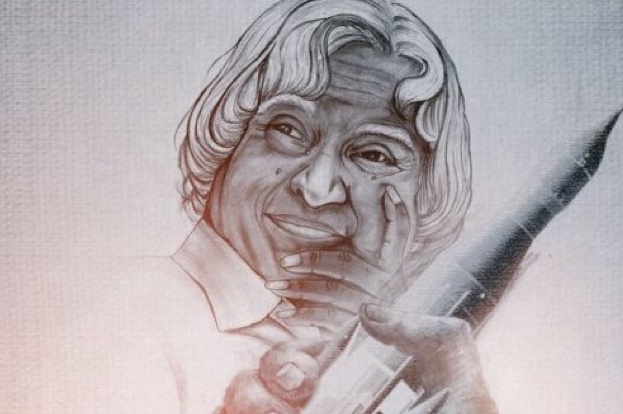
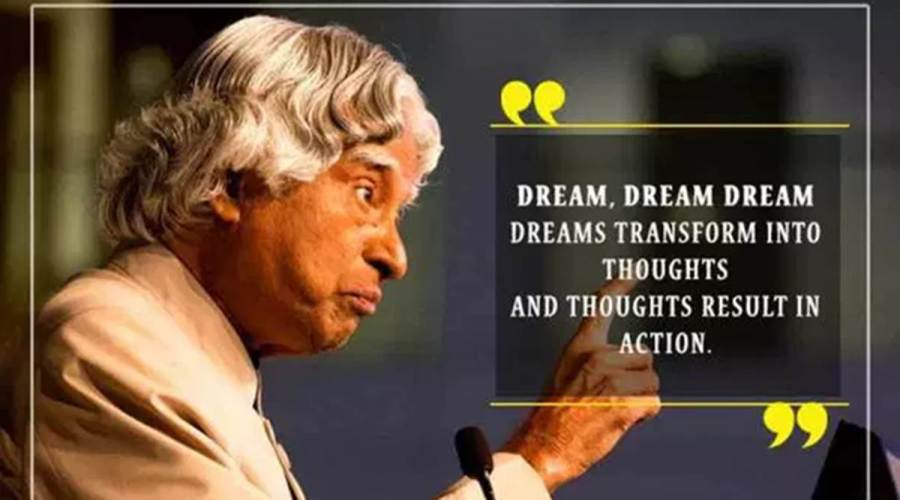
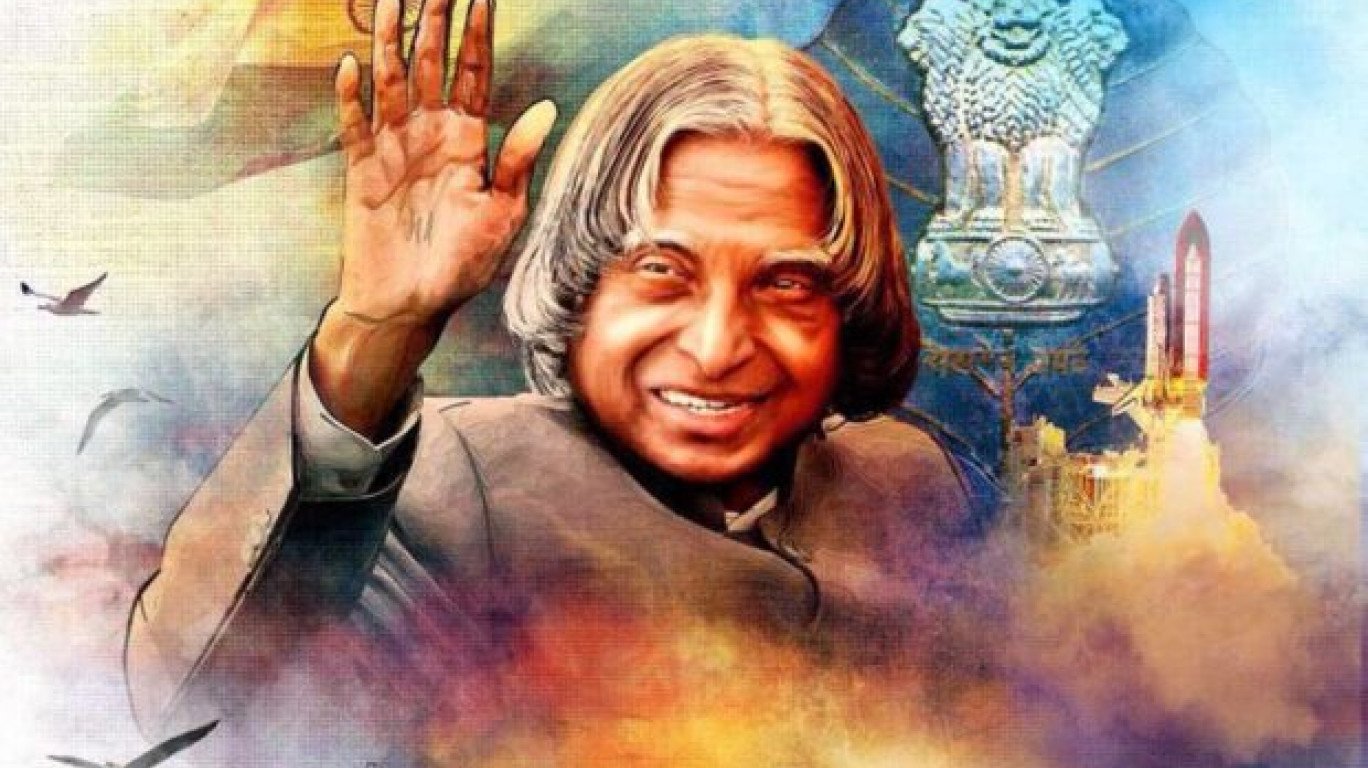
MISSILE MAN: A.P.J ABDUL KALAM

A.P.J Abdul Kalam ( Avul pakir jainulabdeen) (15 October 1931- 27 July 2015) . Kalam was born to a Tamil Muslim family in the oil grimage centre of Rameshwaram on Pamban island and raised in Rameshwaram, Tamil Nadu and studies physics and aerospace engineering.

At that time the financial condition of his family was poor so from an early age he started supporting his family financially. But he never gave up education. Along with supporting his family he continued his studies and completed graduation. Kalam earned a degree in aeronautical engineering from the Madras institute of technology.

The great missile man becomes the president of India in 2002 .11th president of India (2002-2007) succeeding K.R Narayana. He won the 2002 presidential election with an electoral votes of 922884 surpassing the 107366 votes won by Lakshmi sahagal. During his presidency period , the army and country achieved many milestones that contributed a lot to the nation. He served the nation with a open heart that’s why he was called ” People President ” . But at the end of his term period, he was not satisfied with his work that’s why he wanted to be the president a second time but later on forefiled his name. After the leaving the presidential office at the end of his term Dr. A.P.J Abdul Kalam again turn to his old passion which is teaching students. He worked for many reowned & prestigious institution of India located across the country. Above all, according to his the youth of the country is very talented but need the opportunity to prove their worth that’s why he supported them is very good dead , he always appreciated and motivated them by taking practical examples. He was friendly with students and youth through this nature youth easily became friendly with them and tell them about their issues.

He added many projects that contributed to the society also he was the one who helped in the development of Agni & Prithvi missiles. Thus came to know as the Missile man of India for his work on the development of ballistic missile and launch vehicle technology. He spent the next four decades as a scientist & science administrator, mainly at the Defence research & development organisation (DRDO) and the Indian space research organisation (ISRO) & was intimately involved in Indians civilian program & millitary missile development.

He also played a pivotal organisational, technical and political role in India’s pokhran nuclear test in 1998 , the first since the original nuclear test by Indians in 1974. During his Lifetime Dr. A.P.J Abdul Kalam was not only awarded and honoured by Indian organisation & committee but also by many international organizations & committees. During his Lifetime ,Dr. A.P.J Abdul Kalam wrote many books but his most notable work was ” INDIA 2020″ which have an action plan to make India a superpower. Dr. Kalam was a man of simplicity & integrity . He was so busy at work that he rises up early in the morning and work till late hours after midnight.

The man had the vision to make India a great country. And according to his the youth are the real assets of the country that’s why we should inspire & motivate them. The man who lead Indian’s entry into the exclusive club of countries making their own Intermediate Range Ballistic Missiles ( IBRM).

7 Invention of Kalam :

  • Nandhi ( Double engine powered hovercraft)
  • Pokhran-2
  • Indigenous Guided Missiles
  • Kalam Raju Stent ( low cost coronary stent)
  • Kalam Raju tablet ( aimed at arming health workers at the primary level to respond to emergency medical situation)
  • Light weight calipers ( After polio free India , to make easy for special people )
  • Project Devil & Project Valiant ( Develop ballistic mission)

Kalam put forward a country wide plan called technology vision 2020, which he described as a road map for transforming India from a less developed to a developed society in 20 years. The plan called for, among other measures, increasing agricultural productivity, emphasizing technology as a vehicle for economic growth, and widening access to health care & education.

He was such a bachelor who became father of India Missile man . His other child were Indian students and scholars.

Acid Attack

Acid attacks refer to physical assaults where an acid or corrosive material is thrown over another individual with the intention to disfigure, torture or kill an individual and according to recent study this form of violence against women is increasing at alarming rate. It was revealed that the victims of acid burn are most often young and teenage girls because of refusal of marriage and rejection of love proposal or sexual advances, personal revenge and family disputes.Another major cause reported was they did not bring enough dowries with them. This horrific act occurs in countries such as: Bangladesh, Cambodia, Pakistan, India, and Afghanistan.

Another major cause reported by respondents was they did not bring enough dowries with them. The most notable effect of an acid attack is the lifelong bodily disfigurement. Consequently, the victim is faced with physical challenges, which require long-term surgical treatment. Acid assault survivors also face many mental health issues upon recovery like anxiety, depression, lowered self-esteem and increased self- consciousness. Many social implications exist for acid survivors  especially women, like such attacks usually leave victims handicapped in some way, rendering them dependent on either their spouse or family for everyday activities, such as eating and running errands. These dependencies are increased by the fact that many acid survivors are not able to find suitable work, due to impaired vision and physical handicap. This negatively impacts their economic viability, causing hardships on the families/spouses that care for them. Moreover, acid survivors who are single when attacked almost certainly become snubbed or excluded from society, effectively ruining marriage prospects. Moreover, a significant number
of victims receive no compensation for healthcare and other costs, and many others face significant challenges in accessing adequate first aid and long-term healthcare.

“I lost my childhood that day, I stopped going to school and lost all my friends. People stared at me and mocked me.
Neighbors and relatives blamed me, and said I must have done something wrong to earn the man’s wrath. My only fault was I refused the man’s proposal.” These were the words spoken by Laxmi Aggarwal , a 26 year old acid attack survivor , who was subjected to an acid attack by two men in 2005 while she was waiting for a bus in the Khan Market area in New Delhi subsequent to her rejection to marry one of the attackers. In spite of the fact that she survived the attack, it had. left her disfigured for life as the acid had burnt her whole face. She has undergone several surgeries to make her physical appearance resemble of what it was.

Acid violence is widespread and prevalent in our society that remains often invisible. Hence the government must combat the acids attacks and implement laws by ensuring adequate police investigations, protecting victims, and punishing the perpetrators. One important way to combat acid violence is to limit the easy availability of acid. The acids used for attacks are easily available as they are used in domestic use as well as for scientific and research purposes. A monitoring system should be formed to check the effective implementation of the rules by the people. They can also eradicate the violence by effectively implementing laws that provide for perpetrators’ prosecution and punishment . Also we must spread awareness about the devastating effects among people and all must work effectively to curb the violence.

The Science Of Developing Self-Control In Life

What is Self-Control and Why Does It Matter in Life?

Self-control consists of two components, namely, our ability to resist temptations and exercise control over our emotions and behavior.

To me, self-control is one of the most important things in life. Without it, I wouldn’t even write this article. Let’s face it, when you share anything on the internet that gets enough views, you always get a bunch of hate. Every time that happens, I feel like quitting. But I also realize that there are people who find these articles useful.

Self-control is what keeps me level-headed. It makes me resist my temptation to get pissed off and walk away. There’s also scientific proof that self-control matters in life.

“We rely constantly on self-control in every aspect of our lives. Although it is not an ability unique to humans, our elevated levels of self-control may have played a key role in our evolution. Self-control is likely to have been key to many of the traits such as prosociality, that define modern humans.”-Dr. Penny Spikins.

Self-Control in Daily Life

Most of us want to have a fulfilling career, vibrant social life, good relationships with our loved ones, and be in good physical shape. Here’s the thing: We need self-control to make those good things happen. Let me give you a few examples of what that looks like in daily life.

Eating Healthy

I stumbled upon this question on internet and books : “Why is it hard to eat healthy?” The top answer bluntly says, “You lack self control.” That made me laugh because it’s the truth. But we all know that it’s not that simple.

Eating healthy is a problem for many reasons. For example, most of us see food as pleasure—not fuel. In developed countries, we don’t have to worry about getting access to food for our survival.

But your body still has the natural urge to take advantage of food when it’s available. On top of that, there are many biological processes going on that we’re not aware of. 

In my experience, eating healthy has nothing to do with your ability to resist buying junk food or ordering a pizza—it has everything to do with how much you educate yourself about your body. That’s an important reason why eating healthy is difficult: We lack the self-control to learn about nutrition, longevity, and how our bodies function. 

Self Improvement

Why is it so difficult to improve yourself? Every day, we have the choice to do something that pays off later instead of now. Going to the beach, binge-watching tv shows, reading gossip, drinking alcohol, smoking, or every other pleasurable activity in life always gives you an instant payoff. 

That’s why people often say, “Adapt or die.” If you don’t move forward, everything that’s related to you as a human will deteriorate. That’s a scary outlook. But here’s the problem: The degree of deterioration is so small that we don’t notice anything on a day-to-day basis. 

You probably feel the same as yesterday, correct? Entropy in humans works over a longer period. That’s why we feel no urgency to improve ourselves today. We need self-control to invest in ourselves despite seeing a lack of daily improvement. 

How to Develop More Self-Control

How can we get some? Based on everything you’ve read until now, let me share three things you can do. 

1. Direct Your Energy Towards a Useful Pursuit  

Our pursuit must be useful to make it stick. Shallow pursuits that only fulfill your materialistic desires will not motivate you to control your urges. You need something that’s so important you’re willing to do whatever it takes. 

When I started my blog, I was dedicated to sharing honest advice without hidden intentions. To me, that was a worthy pursuit. That drove me to write every single day. As of this writing, I’ve published 331 articles on my site.

2. Set Long-Term Goals

On a day to day basis, I rely on a system that keeps me productive. A system is a combination of productivity strategies that help you to stay consistent.

But when it comes to long-term drive, I love to set goals because they will give you a clear sense of direction. In what direction do you want to take your life over the next three, five, ten, and twenty years? This is a very hard thought-experiment if you take it seriously.

Most people say, “I don’t know.” But you shouldn’t let yourself off the hook like that. Practice self-control by forcing yourself to pick a direction in life. You can always adjust. The long-term goals I set for myself five years ago have changed today. But at least they got me moving. 

3. Minimize Stress

There’s some evidence that stress sabotages self-control.7 When you’ve had a stressful moment at work, it’s tempting to grab a candy bar (or two) to release the stress, right?

The same analogy is true for every other stress-related behavior. If you examine your life, you’ll find that you do a lot of things to simply manage stress. In fact, I believe that for most of us, that’s all that we do.

When I lived a stressful life years ago, I was only thinking about ways to get rid of that stress. But you’re only treating the symptoms that way. You can take as many vacations or buy as much crap you want from the internet, none of it will relieve your stress. If you truly want to minimize stress, you must design your life in a way that gives you a stress-level you can handle.

For me, that meant doing different work and leaving city life (I was living in London at the time). Some situations simply give us too much stress. A bad relationship is another common cause of stress. Unfortunately, there are no simple “step-by-step” tips for managing stress. 

Sure, you can meditate, take long walks, read, or journal—all these things will lower stress—but there’s nothing better than designing a life that causes less excessive stress. But that doesn’t mean we should avoid all stress.

An optimal level of stress is actually great for us and it will slow down entropy. We need to find out what that level is for ourselves. Every person has a different stress tolerance. The key is to improve our self awareness  and understand what stresses us out. Then, we want to lower that to a level that we can handle without getting frustrated.

Conclusion

Let me repeat the definition of self-control again: Our ability to resist temptations and exercise control over our emotions and behavior. 

These two aspects will increase the quality of our decisions and therefore, our lives. I hope that all of this inspires you to strengthen your self-control. Directing your energy towards a useful pursuit, setting long-term goals, and minimizing stress are all good ways to set yourself up for more self-control. 

Strengthening self-control is one of those things that has no end goal. It’s a never-ending process that will only benefit us the more we master it. When’s the last time you heard, “That person has too much self-control?” Exactly. More is better.

The Human Calculator

Shakuntla Devi , born on 4th november, 1929, was an Indian writer and mental calculator, popularly known as the ‘human computer’. Her talent earned her a place in the 1982 edition of  The Guinness Book of World Records. She was born in Bangalore, India.

Born to Hindu Kannada Brahmin parents, Devi was a precocious child and she demonstrated her arithmetic abilities at the University of Mysore without any formal education.

Shakuntala Devi wrote a number of books in her later years, including novels as well as texts about mathematics, puzzles, and astrology. She wrote the book The World of Homosexuals, which is considered the first study of homosexuality in India. She treated homosexuality in a positive light and is considered a pioneer in the field.

Shakuntla Devi travelled the world demonstrating her arithmetic talents, including a tour of Europe in 1950 and a performance in New York City in 1976.

In 1988, she travelled to US to have her abilities studied by Arthur Jensen a professor of psychology at the University of California, Berkeley. Jensen tested her performance of several tasks, including the calculation of large numbers. Examples of the problems presented to Devi included calculating the cube root of 61,629,875 and the seventh root of 170,859,375. Jensen reported that Shakuntala Devi provided the solution to the above mentioned problems (395 and 15, respectively) before Jensen could copy them down in his notebook.  Jensen published his findings in the academic journal Intelligence in 1990.

In 1977, she wrote The World of Homosexuals, the first study of  homosexuality in India.

In april 2013, she was admitted to a hospital in Bangalore with respiratory problems. Over the following two weeks she suffered from complications of the heart and kidneys. She died on 21st april, 2013 in the hospital. Sje was 83 years old.

On 4th november, 2013 she was honoured with a Google Doodle.

The Beginning Of An End!

Remember, being in junior classes and studying those flash cards learning new words, new adjectives. It taught us the difference between beautiful and ugly by portraying a white person as beautiful and a black person as ugly. That was just a beginning and we never realized how this affected our minds. Some of us might remember the protests against racism and police brutality in the late 1960s, the outrage of African Americans has a sad and sickening familiarity. It is sad because yet another black man was killed by the police officer although he was not resisting arrest, even if had he been resisting, the officers had no write to apply lethal force to an unarmed person. We do not have to look back for examples of racism. We can see it now with disgusting awful frequency. Watching the video of George Floyd being murdered in broad daylight by a police officer, made me sick. It scared me and made me think our humanity has come to an end. It’s just an example of disgrace on humanity. People are protesting against it and Donald trump is touting them as thugs and threatening to send the National Guard.

I am not in favor of violence. I am not saying that burning buildings or destroying public property is correct, all I am saying is justice is not on their side. There is  no second thought to the fact that,  some things have changed in major, a black man was elected as president twice, yet so many things remained unchanged; segregated neighborhoods and schools, disparate treatment and a lot more to that.  We should not do this, we can be better than this. We should not tolerate it just for the sake of being a part of this so called liberal society. No race is superior to another. BLACK LIVES MATTER, Colin K. was right. Why does being black makes you a thug? Why are people teaching us that the color of your skin determines your value in this world? Racism is a virus, deeply rooted, systematically that exist in some form or another, is rampant in our society today.

Being angry at this lately, spreading awareness through social media, showing how devastated you are from this whole incident does not make you any less of a racist if you still joke around, judging people on their skin color in your real life. Symbolic statements and gestures matter a lot but they do not change injustice. We need to change in enforcement.

We have had plenty of reasons to be ashamed of a large portion of the human species (because there are always exceptions, not all people are bad). The color of our blood is red; it is not white or black. There is no difference it is just the darkness in our minds.

Drive My Car: A Short Story

In this short story collection, all of the seven men are immensely curious and on the basis of their curiosity, each story moves forward. In the first short story, ‘Drive My Car’ the protagonist is a veteran actor who lost his wife to advanced uterian cancer. Kafuku, the curious widower has been living his days seeking for answers for his dead wife’s infidelity. He has been in love with her for twenty long years to the extent where he knowingly ignored the four affairs his wife had been in, after they both lost their three days old child at the hospital. He finds solace in the company of the female driver whom he hires, even though he had always been doubtful of women drivers. He loses his beautiful wife but he can’t lose the thought of she making love with her colleague. He ends up meeting her last partner, after her death. Kafuku befriends him in order to find a fatal flaw which he would use against him as a way to punish him for sleeping with his wife. Only he couldn’t. He couldn’t punish the other man. He lets the other man go. But, curiosity doesn’t leave Kafuku.

Haruki Murakami is one of the most popular bestseller authors across the globe. All of his works are his masterpieces, his words keep the readers hooked to the story until the very last. He got immense popularity with his novel, The Norwegian Wood, a gem of a book. He is not only a bestseller in his native place but also a bestseller all around the world. He has done an excellent work with his novel, Men Without Women. He has completely hypnotized the readers with his magic words and beautiful minute details. The book has seven tales of seven different characters, bound together only on one point – the lack of one woman in their lives. All the protagonists are male, and their lives are halved and they are left lonely without women.

The entire plot of the short story revolves around curiosity. Murakami, through his narration, brought out the nature of every character present in the story. You definitely should read the story, to understand the depths of human mind. Their are many intricacies in human mind, and Murakami miraculously excels every single time with his extraordinary words, and a sense of getting deep inside the reader’s thoughts. He brings out the rhythms to the heart’s music, and plays it, according to his convenience. We read, what he writes for us, in a way that our desires get fulfilled. It is extremely hard to put down any work of Haruki Murakami, before finishing. But, the most beautiful part of reading Murakami’s works are, you can read them as many times you want, but every time you open the page to the same old story, trust me, the words would speak differently to you.

In my opinion, the universe would become a sad but happy place, if you read the short story, ‘Drive My Car.’ It is one of a kind, which provides you with a sense of calm, yet holds your attention until the very last, and even then, you would wish the story to continue, you would wish to know more about the characters, and you stay oddly unsatisfied yet satisfied with the story.

HOW TO LEARN CODING AND TIPS TO LEARN IT FASTER

With the resources present on the web , it’s very easy to urge started with programming. If you’ve got a laptop/desktop and a reliable Internet connection, you’ll start your coding journey immediately . Follow this roadmap to begin without any confusion.

Object Oriented Programming Language( OOP )
Start your coding journey with an OOP Language like C++. Learn the nitty gritties of it and master the important libraries such as STL. For a detailed strategy to learn C++, check this article. It is equally important to solve different programming problems. This tests if you’ll actually convert an algorithm into working code. Hackerrank is a good source for covering the basics and solving challenging problems.

Mastering Data Structures and Algorithms
You should develop the ability to tackle different programming questions by implementing the correct algorithm. This is also crucial for software developer roles, as every company tests the knowledge of algorithms and data structures. Competitive programming websites such as Codechef, Codeforces are some of the recommended sources to begin with.

Building Software
Start developing your own applications. Simple projects like web scrapers, document searchers are an honest start line . Learn Python which may be used for developing several web applications. You can also start learning android and web development. You can also build your own portfolio after this.

Delve Deeper
Software engineering is a huge field. Increase the complexity of projects gradually such as using the web scraper to fetch data from a website and adding classification by using ML. You can try to build applications powered by databases( apps such as Quora or a small social network application that can group users by their common interests and engage them accordingly. )

Specialized Skills
Try to gain skills which can be leveraged massively. Start with Machine Learning from Andrew Ng’s Coursera course. Join Kaggle and participate within the ir contests in order that you’ll understand the implementation of ML in the world . Often the practical use of different ML algorithms is more essential than understanding the theory fully. You can also explore areas such as Cryptography, Network Security depending on your interests.

IMPORTANT TIPS TO LEARN CODING FASTER
When learning how to code, it is important to know the right way to learn. Otherwise even after spending a huge amount of your time , it can happen that you simply aren’t actually good in coding and there are gaps in your learning.

  1. Practice coding
    Only seeing tutorials for coding would not help. Often students are satisfied in watching videos and that they feel that the training is over. This is not how it works in real world and is certainly not coding. Unless you are stuck at problems, you do not know your weaknesses. Writing code is the deal. And you have to get things executed. Practice problems from sites like Hackerrank to urge started. There are elaborate editorials for problems and you’ll understand from there if you’re stuck.
    For running Python programs, you’ll also use Google Colaboratory. You have the power of Google data centres at your disposition and there is no additional need to install anything else. The notebooks are present in the Google Drive connected to your account. Try Google Colaboratory.
  2. Googling
    Google things on how to do it. Stackoverflow has many solutions to very frequently occurring errors. There are blog posts available for it. Use the main keywords and not unnecessary grammar. Googling in itself is a great skill. You need not remember each and each syntax of each programing language . Be smart to take the help of the resources.
  3. Patience
    Writing code by yourself by following the logic requires patience and it’s okay to struggle initially . You can understand the essential syntax of a language at one go but that’s not enough. For understanding the subtleties within the various problems, you would like to spend longer time with the precise questions. If you’re stuck in writing a program, follow the 2nd step, read the code, the relevant material and execute step 1. Once you recognize the way to do these stuff, you’ll be learning things quickly.

Proximity over distancing: Reviving the Global Economy during and after the Pandemic

With the passing of several months since its sudden arrival it is by now clear that COVID-19 has dealt a devastating blow to the global economy. But global economy is not a monolithic structure. It is an aggregate of many national and regional economies. The virus, it is widely believed, has originated in China which after boasting of impressive growth rate is now nervous about its decline. But China is not alone in this situation. There has been a steep fall in economic activities around the world. There are large scale lockdowns and quarantined spaces. The Governments in different parts of the world are trying to provide stimulus packages and incentivise production process to cope with the adverse economic situation.

But not everyone is optimistic. World Trade Organization (WTO) economists argue that the decline will likely exceed the trade slump brought on by the global financial crisis of 2008‑09. “The unavoidable declines in trade and output will have painful consequences for households and businesses, on top of the human suffering caused by the disease itself”, mentioned the WTO Director-General, Roberto Azevêdo in a press release on 20 April, 2020. He also warned that the world trade is expected to fall between 13% and 32% in 2020 as the COVID 19 pandemic disrupts normal economic activity and life around the world.

There are scholars like Stephen Rosh, economics professor at Yale University, who is rather doubtful about the success of such measures, at least in near future. He does not think much about the effectiveness of the adopted fiscal and monetary policies. While one may indulge in debate about Rosh’s opinion it is important to point out that we are confronted globally with an unpleasant economic scenario. Not only China, worse affected will be developing economies like India, China’s neighbour, whose economy in the pre-pandemic period was being considered to be ‘rising’. Even the advanced economies like that of the USA are not immune from the pandemic effect on economy. In a sense, COVID-19 is a ‘great equaliser’. It spares none, no matter how robust the economy is.

The issue is not to panic or not to give up. The fight must go on against the dreadful virus not only in epidemiological and biotechnological terms but also in economic terms. The global economic fight, however, cannot be waged only at the level of individual economies. The national economies must fight from their own locations but should also establish and sustain proper networking in this endeavour with other economies. The synergistic effort pays. For instance, one of the worst affected domains of the economic onslaught of the pandemic, the share markets, according to The New York Times faced the ‘tornado like head wing’. But a positive development is that after initial rout, stock markets are rebounding. It provides a lesson: that the countries must come together to fight the virus rather than trying to shed each other’s blood, economically speaking. Morgan Stanley’s Chief Global Economist, Chetan Ahya, has recently in an interview mentioned that he doesn’t think that the virus shock would fundamentally challenge the growth cycle. The word ‘fundamentally’ is very important. The underlying logic is that the global economy periodically has weathered a number of shocks but still has managed to experience growth. 

Much of information about the global economy remains cloudy. Not everything can be expected to be clear. But let us understand that if different countries unite to fight the ravages caused by ‘the common enemy’ there is a recovery possible. One agrees that there is stiff competition among the economies of the world for the twin pursuit of wealth and power. One also understands that ‘mercy, and ‘charity’ are not the norms of economic competition. But the pandemic has sent us an implicit signal: the national economies should indulge in ‘minimal cooperation’ among themselves at this stage to revive intense competition. When everybody is talking about ‘social distancing’ in this case it has to be ‘economic proximity’.

A tale of misuse of power

These days the age-old quote might makes right, rings true throughout the world. In every nation, the vile fruit of corruption has ripened. We have recently seen, protests about the massive misuse of power police have done in the US. However, it is not the case in just America, but rather every country in the world. But simply implying that the police have excessive power, cannot be true as the problem runs way deeper. Various cases of misuse of power arise due to the lack of accountability. None go more unchecked than when the political party has more influence than the opposition.

Like the case in India, where BJP has nigh invulnerability when it comes to misuse of power. Due to their opposition either being weak, or having lost the trust of the people, the BJP of today has seen a tremendous rise in power. And with a charismatic leader like Narendra Modi to lead them is just cherry on top. This makes it easier for the member of affiliates of the party to misuse their power for their own gain or to silence their enemies. Even the news that should be holding them accountable is either bought or silenced. The few who do report on them, a majority of them have ties outside of India and have been known to have worked against India in the past. All of this has put our motherland in a vulnerable situation right now. Thus, here we see that a single party gaining major influence can be a deterrent for a well-functioning democracy. Modi as been termed as borderline tyrannical by many a foreign news experts. However, this is not just the case in India, even in other nations such situations and problems have arisen. Take the example of USA, now a republican dominant country. Ever since Trump came into office with his motto of make America great again, many within the country feel like it has been anything but so. Many a times we have seen Trump blatantly showing his racist, misogynistic and overall apathic side, but due to less accountability he has had a free rein since the start of his term. He has often been seen slamming his opponents the way bullies do, name calling and spitting false facts. In fact, should a group or a person be in Trump’s good books, he has been seen going to any lengths to take their side. He has repeatedly referred to the charlotsville racists as “good people”, even defending people who have done reprehensible deeds just because they were associated with his image. He even goes as far as concocting conspiracy theories around people who stand up against him. The conspiracy theory actually makes a lot of sense once you delete your sense of empathy and humanity. Once you view your political opponents as soulless automata whose only purpose and motivation is to damage your personal agenda, you can easily believe that they’re going to risk death just to damage your political position. It’s just a more extreme version of an authority figure seeing a civilian’s every movement as a threat — once you stop viewing people as other humans with lives and aspirations and concerns and ONLY as opponents whose prime agenda is to hurt you, you will believe they will seize any opportunity to attack you, even at hopeless detriment of themselves. If you view their lives as not valuable, then you’re willing to believe they will unthinkingly trade that low value life for the privilege of threatening you. That’s how prejudice works. The same has also been seen in case of India’s ruling party

Will India have SUPERPOWERS like USA?

The world is almost ruled by powerful countries like USA, China, Japan, Russia etc. and its none of the wonder that developed countries are helping as well as exploiting the developing countries. Developing countries like India, Pakistan, Srilanka and many more… are mostly dependent on the developed countries, but the biggest question arises will India be list of the superpower countries by 2050. The answer would be yes, but unfortunately due to pandemic situation that number will rise to 2055-2060 because India faced a major setback due to this and also India build a strong relation with other countries with help of our respected Prime Minister sir. Let us look out which factors are going to help to build a nation with superpowers:

1- Economic growth

Chinese economy is based on foreign investment, while India is growing based on a more local economic sector. So if we look in future i.e. after 30-40 India will overtake as it is very slow process. We know very well that many MNCs have begun to invest tremendously in India and has started to rely on Indian engineers for their next generation products. Companies like GM, Boeing, Motorola and many others have begun to build their Research and Development facilities and Asian headquarters in India. They see more potential on Indian market. If India is able to maintain this steady growth, it can definitely become 2nd largest economy by 2050.

money bills currency euros
Photo by Dom J on Pexels.com


3) Military power

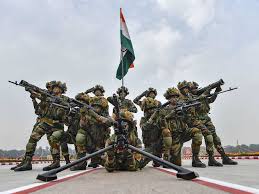
India stands on 4th rank in terms of defense with the budget of 54 billion $ and 13L+ army man. India has a total of 2,102 aircrafts and a naval strength of 295 and is ready to tackle any military emergency. India is gaining new technology and ideas from world and also our DRDO is working very efficient like wise India adopted 5th generation fighter plane from Russia and Defense Drone technology from USA and other technology too from Israel. Therefore if India increases the defense budget in next 3-4 decades, specially in Air force and cyber and New technology than India definitely can handle any worse situation.

download (1)

Image source: economictimes.com

3- Diplomacy and international relations

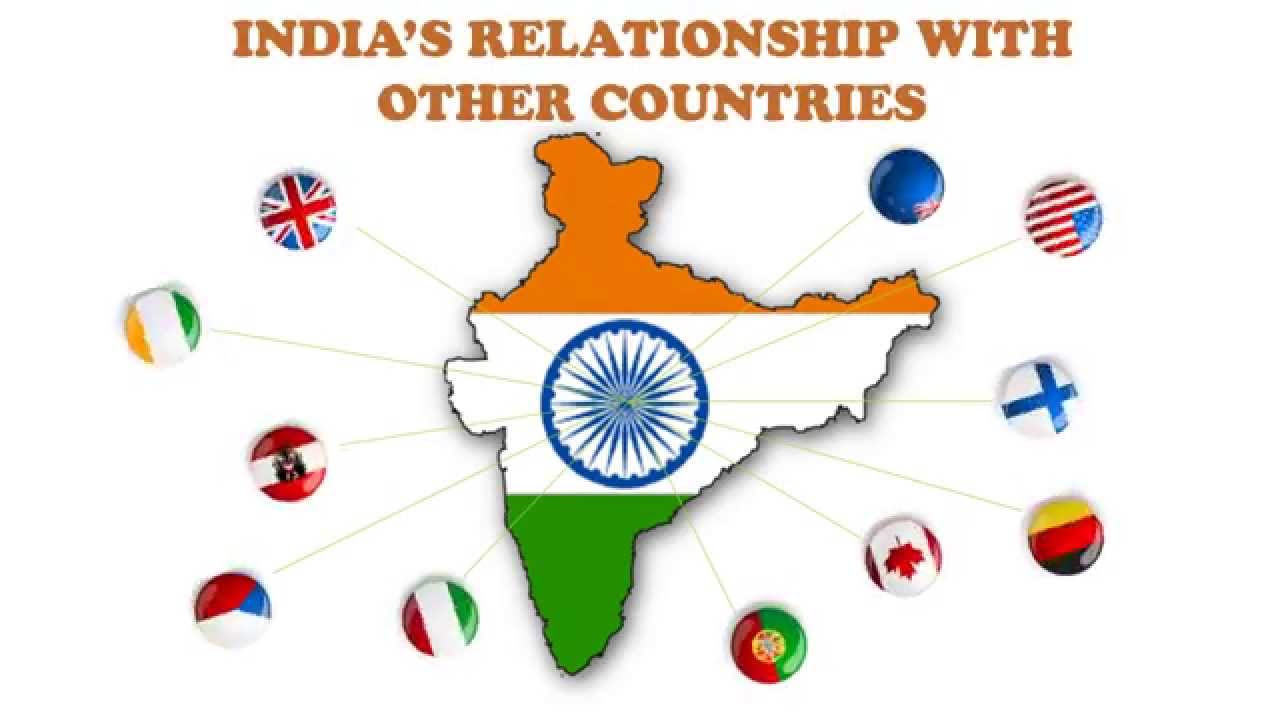
India’s Diplomacy is standing at a good potions no matter still there are many internal disputes but in the eyes of world India is at a better place. India is able to maintain relation with foreign countries in a stable and steady manner which will ultimately help the people of India. In the coming years India will be able to maintain permanent seat in UN Security Council which will be biggest achievement in diplomatic point of view.

maxresdefault

Image source: Kosha group

4) Population

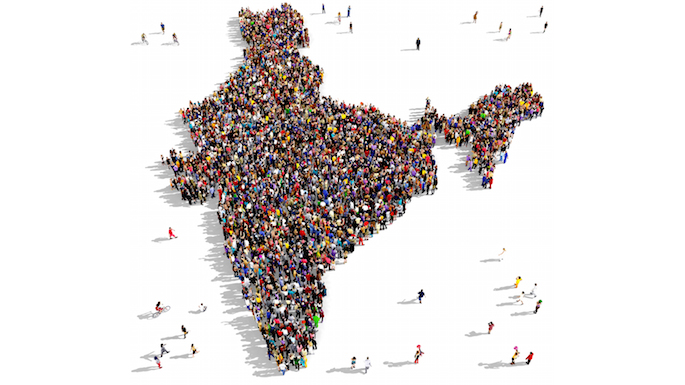
India has highest number of fresh minds, they are handled correctly with innovative and interesting education system than none of the country can stop India to be listed in top 5 countries. Youth is the biggest asset of India and no other country has this much amount of youth in their population. In the coming years, some of the strong nations of the world will face problem of decrease in populations and this will lead to, a decline in workforce, India will face no such problem.

India’s education system need to be modified a bit and student instead of memorizing theories, they should be taught to learn and understand the concept. The subject related to entrepreneurship should be added at early age so that they get knowledge of business at early age which would help them and ultimately help the nation.

1487221957_mnnhdhd9498jp534h1ctvc3aj7indian-population

Image source: Indiannewsonweb.com

5- Science and Technology

India has greatest potential yet to be showed to the world in the field of science and technology. New and new startups are evolving around us day by day and that will help a lot. Our scientist proved that India can even complete the mission on a budget of bollywood movie. India is also 4th country to land on the moon. India is emerging slowly in the field of software and will create a great impact in the near future.

creative internet computer display
Photo by Markus Spiske on Pexels.com


CLASSES OVER CORONA

It has been almost 3 months, since the country is locked down, every street was empty and busiest places were lonely. All Organisation and institutions were shut down, and advised to work from home. Same was the educational institutions such as schools, and colleges were said to shut down, amidst of the running final exams and terminal tests, which was coming near. No one knew when the schools and colleges will open next and take the pending exams. So, the cases rose, and the chances grew slim of reopening of the schools, so a new way of teaching was introduced, the online class, which undoubtedly failed, as India has the majority students from the rural areas, which has poor connectivity of Internet, which makes them, inattentive in the classes. The same online way of taking examination was also introduced, but was opposed by the same majority of students. Still the institutions are in limbo, and are confused about what to do next. 
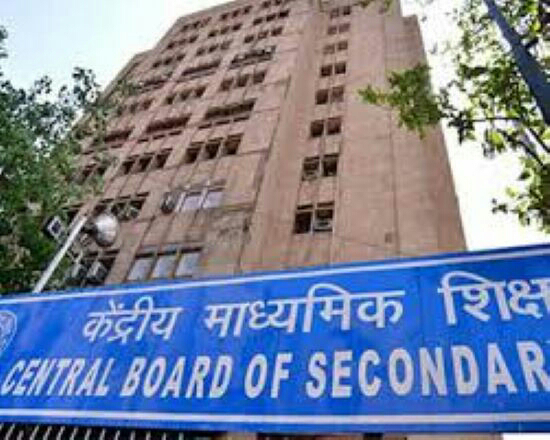
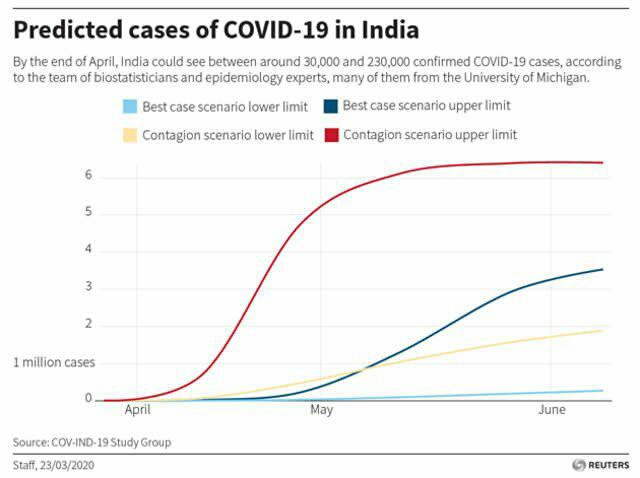
As several board exams were pending and must be taken. The Central Government announced  dates and gave the students an option to held the pending board exams between 2nd July to 13th July 2020. This decision of govt. is opposed nationwide by the students and their guardians. As now, in the 2nd week of June, the current active cases in India is around 1.5 lakhs, and India is among the top 5 corona affected countries in the world. This step of taking examinations 1 month later, would make the young lives vulnerable to virus. And eventually a hike in cases nationwide. 
But, its not just the CBSE, which is desperate to take examination, State Boards, Universities, Colleges are no exception. No sooner did the CBSE announced the dates, all rushed into announcing their dates of examination. 
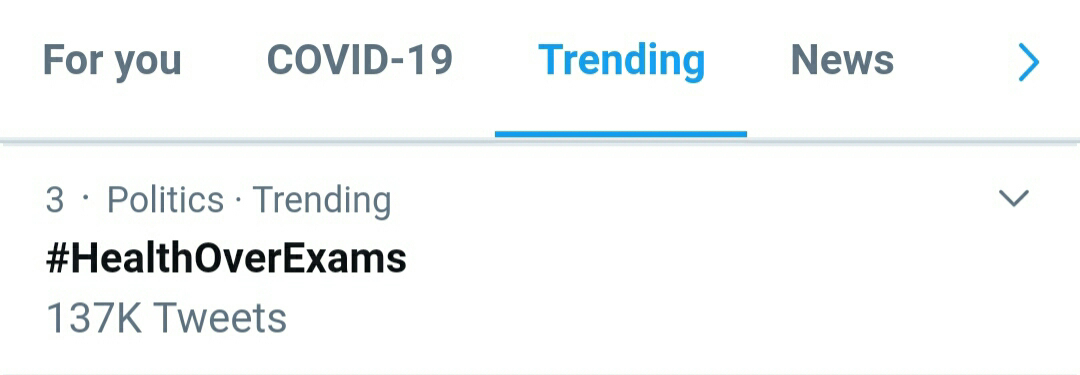
This led to a mass campaign on twitter ‘#StudentsLivesMatter’ inspired from ‘#BlackLivesMatter’. Several petitions were signed on change.org to urge the govt. to cancel the examinations as those can affect the student’s health and rise the cases in country. In response to such mass opposition, several state governments and universities decided to cancel the semester exams of 1st and 2nd year students, but final year students had to appear in the finals. Again, this decision was opposed, which caused too much confusion among students. Kerala took the exams for final year, in between of this chaotic situation. Thus, a student committed suicide, as she was accused of cheating during examination, as she couldn’t prepare for her exams. Though exams were cancelled for the final year students, too, but at a cost of a student’s life. 
Although, the final year exams were called off, by several universities, still some universities like the CUSAT, is taking PG final year exams from home. It will be a open book test. Still, it don’t risk any student’s life. Students will safely appear in exams from their respective home. University also said, those who can’t have network connectivity, can mail their answers afterwards to the university. Inspite of such mass opposition, the CBSE and State Boards are obstinate to take Board exams in this mid-pandemic situation. 
July is seen as the month of steep rise in Covid cases, by several medical institutions and experts, though many exams are scheduled in July. The month starts with CBSE, and other state’s pending Board exams, and then comes JEE(JOINT ENTRANCE EXAMINATION) Mains which is to be appeared by approx. 12lac students, scheduled from 18th July to 23rd July. It is followed by NEET(NATIONAL ELIGIBILITY ENTRANCE TEST), to be appeared by 15lacs students, scheduled on 26th July 2020. And many more private universities and state funded colleges will take their entrance exams. Eventually, students will need to rush to their examination centre city, from their home, if in any rural area. Such this movement will violate the norms of social distancing and make the students vulnerable to the virus. 
The way institutions and governments are desperate in taking exams, shows how our education system is focused and cares only about grades. No such steps to enforce the daily classes have been taken by universities. But, the way, they are acting to take exams won’t give India a better future, rather it might take the India’s youth on tablets and isolation wards, or even worse, on ventilation. Thus, against such obstinate decision, parents have moved to Supreme Court to either postpone or cancel the pending exams, which are scheduled from 2nd July 2020. 
Today, a new hashtag was trending on twitter ‘#HealthOverExams’ which clearly shows students and guardians are not in mood of appreciating exams in mid of this panic-pandemic situation. They have already made clear that their kids won’t go to school until there’s zero case in the country. Thus govt closed the schools till 15th August. Similarly the students who are said to appear for exams in this chaotic situation doesn’t seem to compromise with their health over any exams.