

Throughout history, we have read about great warriors who fought with weapons and ammunition to save the glory of their country. But among all, there is one great leader who choose to fight without any weapon and to follow the path of non-violence. He followed the path of Ahimsa for Indian Independence. He was Mohandas Karamchand Gandhi, also well-known by Mahatma Gandhi. He was born on 2nd of October in Gujarat, Porbandar. His father’s name was Karamchand Gandhi and mother’s name was Putli Bai.
Our Father of Nation was adored by his mother as a child and his nickname was Monya. Once he watched a drama “Raja Harishchandra” which happened to be the turning point of his life. He learnt the value of truth and honesty from the drama and followed that throughout his life. But did you know once Gandhi ji stole gold from his own house? He was under debt when he decided to steal gold. But amidst that he felt so guilty that he wrote a confession letter and gave it to his father. After reading the letter, Gandhiji’s father neither shouted nor beat him up but just tore the letter apart.
Gandhiji got married to Kasturba Bai and went to England for further studies. He started living in South Africa once he became a Barrister. In South Africa when he was travelling in a first-class coach which was filled with British officials, he was forced to get down of the train because of his nationality and skin color. That’s when he decided to fight for all the Indians who lived in South-Africa and launched the Satyagraha movement. He lived there for 21 years. Infact the station where he was forced to get down, now have his statue.
When he came back to India, he built an ashram near Sabarmati river, named Satyagraha Ashram. Not only did he fight for Indian independence but as a true Indian, he also spoke against many other social evils like untouchability, poverty, illiteracy, etc. Some of Gandhi’s famous movements are: Civil Disobedience Movement, Hind Swaraj, Dandi March, Swadeshi Movement, Satyagraha, etc. He always showed the path of truth and goodwill to his countrymen.
And how can we forget the three famous monkeys of Gandhiji? These there monkeys depicts life lessons to us. The first says ” See no evil!”, the second says, “Say no evil!”, and the third says, “Listen no evil!” These ideologies were always followed by Baapu. He was admired because of his strong principles and anyone following his path of non-violence and honesty will be admired too.
Undoubtedly, Mahatma Gandhi is the greatest and famous Indian personality and for his contributions in Indian independence struggle, he earned the title of “Father of the nation”.
Day: June 23, 2021
Father of Economics – Adam Smith
Adam Smith was a Scottish economist and philosopher. He has become famous by his influential book The Wealth of Nations (1776). Smith was the son of the comptroller of the customs at Kirkcaldy, Fife, Scotland. The exact date of his birth is unknown. However, he was baptized at Kirkcaldy on June 5, 1723, his father having died some six months previously.
At the age of about fifteen, Smith proceeded to Glasgow university, studying moral philosophy under “the never-to-be-forgotten” Francis Hutcheson (as Smith called him). In 1740 he entered Balliol college, Oxford, but as William Robert Scott has said, “the Oxford of his time gave little if any help towards what was to be his lifework,” and he relinquished his exhibition in 1746. In 1748 he began delivering public lectures in Edinburgh under the patronage of Lord Kames. Some of these dealt with rhetoric and belles-lettres, but later he took up the subject of “the progress of opulence,” and it was then, in his middle or late 20s, that he first expounded the economic philosophy of “the obvious and simple system of natural liberty” which he was later to proclaim to the world in his Inquiry into the Nature and Causes of the Wealth of Nations. About 1750 he met David Hume, who became one of the closest of his many friends.
In 1751 Smith was appointed professor of logic at Glasgow university, transferring in 1752 to the chair of moral philosophy. His lectures covered the field of ethics, rhetoric, jurisprudence and political economy, or “police and revenue.” In 1759 he published his Theory of Moral Sentiments, embodying some of his Glasgow lectures. This work, which established Smith’s reputation in his own day, is concerned with the explanation of moral approval and disapproval. His capacity for fluent, persuasive, if rather rhetorical argument is much in evidence. He bases his explanation, not as the third Lord Shaftesbury and Hutcheson had done, on a special “moral sense,”nor, like Hume, to any decisive extent on utility,but on sympathy. There has been considerable controversy as how far there is contradiction or contrast between Smith’s emphasis in the Moral Sentiments on sympathy as a fundamental human motive, and, on the other hand, the key role of self-interest in the The Wealth of Nations. In the former he seems to put more emphasis on the general harmony of human motives and activities under a beneficent Providence, while in the latter, in spite of the general theme of “the invisible hand” promoting the harmony of interests, Smith finds many more occasions for pointing out cases of conflict and of the narrow selfishness of human motives.
Smith now began to give more attention to jurisprudence and political economy in his lecture and less to his theories of morals. An impression can be obtained as to the development of his ideas on political economy from the notes of his lectures taken down by a student in about 1763 which were later edited by E. Cannan (Lectures on Justice, Police, Revenue and Arms,1896), and from what Scott, its discoverer and publisher, describes as “An Early Draft of Part of The Wealth of Nations, which he dates about 1763.
At the end of 1763 Smith obtained a lucrative post as tutor to the young duke of Buccleuch and resigned his professorship. From 1764-66 he traveled with his pupil, mostly in France, where he came to know such intellectual leaders as Turgot, D’Alembert, AndréMorellet, Helvétius and, in particular, Francois Quesnay, the head of the Physiocratic school whose work he much respected. On returning home to Kirkcaldy he devoted much of the next ten years to his magnum opus, which appeared in 1776. In 1778 he was appointed to a comfortable post as commissioner of customs in Scotland and went to live with his mother in Edinburgh. He died there on July 17, 1790, after a painfull illness. He had apparently devoted a considerable part of his income to numerous secret acts of charity.
Shortly before his death Smith had nearly all his manuscripts destroyed. In his last years he seems to have been planning two major treatises, one on the theory and history of law and one on the sciences and arts. The posthumously published Essays on Philosophical Subjects (1795) probably contain parts of what would have been the latter treatise.
The Wealth of Nations has become so influential since it did so much to create the subject of political economy and develop it into an autonomous systematic discipline. In the western world, it is the most influential book on the subject ever published. When the book, which has become a classic manifesto against mercantalism, appeared in 1776, there was a strong sentiment for free trade in both Britain and America. This new feeling had been born out of the economic hardships and poverty caused by the war. However, at the time of publication, not everybody was convinced of the advantages of free trade right away: the British public and Parliament still clung to mercantilism for many years to come (Tindall and Shi). However, controversial views have been expressed as to the extent of Smith’s originality in The Wealth of Nations. Smith has been blamed for relying too much on the ideas of great thinkers such as David Hume and Montesquieu. Nevertheless, The Wealth of Nations was the first and remains the most important book on the subject of political ecomomy until this present day.
JUDICIAL APPOINTMENT
The Supreme Court of India and
the High Courts are the guardians
of the Constitution of India. Given
their exalted constitutional status,
it is imperative that the method of
appointing judges to these courts is such that only persons of the highest integrity and aptitude are chdown.
But ,the current system of
appointments, by a collegium of
senior Justices of the Supreme Court, pursuant to a decision of the Court itself, has proven unequal to this way . Finally, it proceeds on an indefensible interpretation of Article 124(2) and Article 217(1) of constitution which prescribes the method of judicial appointments.
WHAT IS SOLUTION .
The Constitution (120th Amendment)bill,2013 and the judicial Appointment commission bill,2013 were introduced in the Rajya Sabha in August 2013.According to this bill provides for the establishment of a Judicial Appointments Commission to appoint judges, the composition, functions and procedures of which are laid down in the accompanying
Bill. In general, the concept of an
appointments commission is salutary.
Three keys amendments to
the existing scheme are necessary.
1.too much latitude is allowed to
Parliament to change the composition and functions of the Commission. It is necessary that not only the establishment of the Commission but also its composition and functions
are laid down by a constitutional
amendment.
2. These is no procedure or criteria laid down in the act for shortlisting of candidates or
for resolving disagreements in the
Commission. The past experience of judicial appointments, both when it was led by the executive as well as the judiciary, suggests the definite need for dispositive rules in this regard thereby bringing an optimal degree of
transparency into the process.
3. Despite vesting the Commission with the power to transfer judges and Chief Justices from one High Court to another, the Bills neither specify the grounds nor the procedure for
doing so. It is clearly delineated grounds for transfer of judges and the procedure to be
followed are laid down in the Act.
Now we comes towards the IMPLEMENTATION AND IMPACT
1. The Constitution (120th Amendment) Bill, 2013 passed by the Rajya Sabha and The Judicial Appointment Commission Bill, 2013 pending in the Rajya Sabha should be withdrawn.
2.A more detailed constitutional
amendment should be introduced
containing the following-
∆ The composition of the Judicial
Appointments Commission;
∆ The functions of the Commission.
3. A new, reworked bill must be
introduced alongside the constitutional amendment providing for-
∆ The criteria and procedures
for shortlisting and selection of
candidates
∆ The grounds and procedures for transfer of judges to be followed by the Commission.
Result
Such reform will ensure that the best candidates for judicial office are selected in an optimally transparcy manner. Further, it will do so in a manner that is perfectly consonant with the independence of the judiciary.
Series Review: Deathnote

Death note is anime with 37 episodes (Anime is hand-drawn and computer animation originating from Japan). It is psychological anime, it do not have much action, but a battle of minds. Death Note has crime, suspense, logic and thrill. It’s famous because it puts heavy emphasis on the act of dying and depth and darkness of the world in which we live in. You will love the characters and how insanely smart each one is Yagami Light and L are two of the most loved & smartest fictional characters.
“The human whose name is written in this note shall die.” – Death Note
Imagine one day you come across a notebook, but it’s not like those notebooks that you can buy at the nearest bookstore. By writing someone’s name on that notebook, you can kill that someone. What would you do?
The story of Death Note starts when a perfect student, appearance-wise and intelligence-wise, Yagami Light comes across the Death Note, a Shinigami’s (God of Death) notebook. On Death Note, an instruction of how to use the Death Note is written in English language. Light, being curious, tries to write a criminal’s name onto the Death Note, and much to his disbelief, the criminal dies. Light then vows to rid the world of evil to make a better world, he executes every criminal under the alias of Kira (Japanese interpretation for the English word “killer”). Fast forward for a few weeks, the polices begin to notice there are unusual deaths going among the criminals, they then decide to bring in the legendary detective L to track down whoever is killing the criminals. Although it is true that the criminal rate has gone down drastically ever since Kira shows up, L believes that Kira is promoting peace in the wrong way.
First of all, I have to say that the art is really well-drawn. Although it is tagged as shounen and most of the time it shows guys, the girls are really well drawn as well. The art style in this anime is really suitable for the genre. The art tries to be as “anime-like” as possible while maintaining its realistic and mysterious quality. I personally think there isn’t any better-suited drawing style for Death Note.
I find this anime really interesting sound-wise. The background music, which slides in every now and then, will allow you to feel the suspense and keep you on the edge of your seat. The voice actors/actresses are also very good. The voices for “shinigamis” are well dubbed in a hoarse voice. The opening and ending songs are really good, lyrics wise and music wise.
The characters are very unique and varied. Light would not bat an eye when he is killing other people, L likes to sit with his legs raised on the chair. Light and L are pretty much opposite in everything they do, but they both don’t like losing, and they will do practically anything to avoid it. Other characters, like Amane Misa, which will be introduced later as the anime goes, is also very unique. Out of all the characters in the anime, I personally find L very interesting.
The end is so awesome that it will give you goosebumps. Yagami Light and L, these two are like the best fictional characters. The battle between the minds of Kira and L was great. Death Note was gripping, fast-paced and brilliant throughout. It will keep you hooked till the end! There is this one thing that is very special about Death Note. After every episode, you will be like “What’s Now?”. This anime is full of suspense and thrill which makes it one of the best.
Death Note is one of those animes that require a bit of thinking in order for you to fully understand what’s going on. It’s really interesting to see how Kira and L try to outsmart one another, and it’s even more interesting when you can actually understand why they do what they do.
I really enjoyed this anime, and I will recommend this to almost anyone out there with decent comprehension level. Although this anime is relatively old (it was released in 2006), I feel the need to review this anime since I think this anime is hands-down one of the best animes out there. If you like those animes which require you to think, give this anime a shot.

How lockdown affects GDP …?
To earn a BREAD for our family is everyone’s basic need but what if we cannot fullfill it? There are plenty of questions in our mind running continuosly some of them are…..
what is GDP ? What is the relation between GDP and grains ? How it affects our life …?
GDP stands for gross domestic product for example the amount of crop production per year which is sell by the farmers and reach to common people in cheap prices just like what we improt or exports what profit we get what we invest what we spend on it. In short calculating all the factors related to development like education ,child ratio,birth ratio,crops, goods ,prices etc
Our capita increase when we work but if we do nothing by sitting at our homes it affects our economy so harshly it decrease the GDP .
2011-2012 till 2020-21 GDP is same 135.13 trillion but it is expected to be 145.69trillion
And in 2020 when lockdown starts it gowing down fall rapidly .
How to drink water? The right way
Did you know that upto 60% of our body is made of water. Every single cell in our body needs water to survive whether it’s our digestion our lungs our heart everything needs water. Many times if we’re feeling tired, lethargic if we have a headache or when our muscles feel tight. A lot of time it’s actually simply because we are dehydrated. It’s actually a key component when it comes to our immunity. We have to keep our body hydrated and water and water only is the thing that’s going to do that.
1. Drink it hot. Or at least at room temperature. According to Ayurveda the boiling water actually enriches it with energy and it gains a quality of sukshma which means penetrating. Hot water is easily absorbed into your circulatory system and helps to flow throughout the body. This means nutrition is delivered more effectively to your cell and your body is removing the waste products from your cell more efficiently too.
2. Sitting down to drink. Standing and drinking water is actually not recommended at all in ayurveda. It says that water can accumulate in different parts of your body and cause swelling. When you drink water too fast it actually just gushes through your body and it doesn’t allow time for your water to go through all the organs. Water is supposed to move through your organ to also remove out some of the toxins or impurities. So if it doesn’t reach the kidney then those toxin will actually build up in our organ and that can lead to bad health. Drinking water standing can also increase the amount of fluids that gets to the joints and so sometimes people will have pain in their joints or swelling in their knees or hands.

3. Drink slowly. Taking small sips throughout the day is most beneficial to you. You can start your day having a good few glasses but as you go through the day, drink it slowly, drink it every hour. But most important when you get to the end of the day try not to drink to much it will disrupt your sleep and it also put too much pressure on your bladder when it’s supposed to be resting and rejuvenating.
4. Drink it first thing in the morning. First thing that goes into your body is so important because of the toxins that accumulate in our body overnight. This actually help flush them all out before we start all over again the next day. Starting your morning with having hot water can really help to cleanse out your system before you get ready for the day.

5.Don’t drink water with your meals. We leave atleast 45 minutes gap between drinking large amount of water and having our meals. The reason is because drinking water releases large amount of water before we’re about to eat dilutes our digestive enzymes in our stomach and then it makes harder for our stomach to digest our food.
6.Add Flavor to your water. I wouldn’t recommend adding sugar because our body actually ends up not recognizing the water to be water it ends up taking it as food so it hydrates your water differently. I recommend you using herbs or spices like cardamom or black pepper. You can also add fruits like grapefruit or oranges anything you like but as natural as possible. Keep it fresh.


Green Subway

Underground train system used to carry large numbers of passengers within urban and suburban areas, also known as subway, tube, or metro. Subways are normally built beneath city streets to make construction easier, but they may take detours and must occasionally cross rivers. The system’s outskirts usually emerge aboveground as conventional trains or elevated transit lines. The majority of subway trains are made up of multiple cars that operate on a multiple-unit basis.
Charles Pearson, a city solicitor, suggested the first subway system for London as part of a city improvement proposal shortly after the Thames Tunnel opened in 1843. Parliament approved the building of a 3.75-mile underground railway between Farringdon Street and Bishop’s Road, Paddington, after ten years of debate. Cut-and-cover construction on the Metropolitan Railway began in 1860, with trenches dug along the streets, brick sides added, girders or a brick arch added for the roof, and the highway restored on top.
London’s example was followed by a slew of other cities. The first subway on the European continent, a 2.5-mile (4-kilometre) electric tube, opened in Budapest in 1896, employing single trains with trolley poles. The use of a flat roof with steel beams instead of a brick arch, and thus a smaller trench, resulted in significant cost savings over prior cut-and-cover systems.
The Metro (Chemin de Fer Metropolitan de Paris) began service in 1898 in Paris, with the first 6.25 miles (ca. 10 km) opening in 1900. The speedy pace was due to the large streets above and the modification of the French engineer Fulgence Bienvenue’s cut-and-cover approach. At regular intervals throughout the route, vertical shafts were sunk, and side trenches were dug, and masonry foundations to support timber shuttering were placed immediately beneath the road surfaces. The roof arch was then built with minimal disruption to street traffic. While this technology is still employed in Paris, it has not been widely replicated in the construction of subways abroad.
Automatic trains, which use aerospace and computer technology to design, build, and run, have been developed in a few urban regions, including the Victoria Line, a component of the London subway system (completed 1971). BART (Bay Area Rapid Transit), which opened in 1976 in the San Francisco Bay Area, was the first rapid-transit system to be intended for totally automatic operation. Trains are controlled remotely, needing only one crew member in each train to be on standby in the event of a computer breakdown. The first subway line in Washington, D.C., opened in 1976, featuring an autonomous train control system and 600-foot (183-metre) long underground coffered-vault stations.
Other elements of modern subway construction include air-conditioned trains with lightweight aluminium cars, smoother, and faster rides due to advancements in track construction and car-support systems, and attention to the architectural appearance of and passenger safety in underground stations.
PREFABRICATION
What is prefabrication?
Prefabrication is the process of fabricating components of a structure in a factory or other manufacturing facility and shipping entire assemblies or sub-assemblies to the location where the structure will be installed. The term prefabrication also refers to the production of things other than construction in a fixed location. and the section is delivered assembled and ready for assembly. It generally does not refer to electrical or electronic components of a machine or mechanical parts such as pumps, gears, and compressors, which are usually supplied as separate items, but rather refers to the machine body that was used for parts in the past. . Mac premade parts This body can be called “sub-assemblies” and can be separated from other components.
Since when it is used
Prefabrication has been used since ancient times; For example, it is said to be the oldest dam in the world, Sweet Track, dating from around 3800 BC. Ancient Sri Lanka, particularly the Kingdom of Anuradhapura and the Kingdom of Polonnaruwa, used ready-made technology to erect huge structures, which are 2000 years old and some sections have been prepared separately and then assembled. In 1755 the Portuguese capital, especially the Baixa district, is popularly known as the Marqués de Pombal, the most powerful royal minister of D. The leadership of Sebastião José Von Carvalho e Melo, the most powerful royal minister of D. José IA, arose from Pombal a new architectural and urban planning style that introduced early anti-seismic design features and innovative prefabricated buildings. The buildings were manufactured entirely outside of the city, transported in pieces, and then assembled on-site, a process that lasted into the 19th century and provided city dwellers with unprecedented levels of safety before the earthquake. In the 19th century, Australia was importing large numbers of prefabricated houses from the United Kingdom. The method was widely used in prefabricated houses in the 20th century, for example in the UK as temporary living space. Space for thousands of townspeople. Families were “bombed out” during World War II. The assembly of profiles in factories saved time on site and the lightness of the panels reduced the cost of foundation and assembly on site. Gray concrete with flat roofs, prefabricated houses were uninsulated and cold, and prefabricated houses took on some stigma, but some London prefabricated houses have been occupied for much longer than the expected 10 years. The Crystal Palace, built in London in 1851, was a widely visible example of prefabricated iron and glass. Structures; Oxford Rewley Road station followed on a smaller scale.
Current uses
The most widespread form of prefabricated parts in civil engineering is the use of precast concrete parts and prefabricated steel parts in structures in which a certain part of a certain shape is repeated many times. It can be difficult to make the formwork required for pouring concrete structures on site. and delivering wet concrete to the site before it sets requires careful time management. Pouring concrete profiles in a factory brings the benefits of reusing molds and concrete can be mixed on-site without having to be transported and pumped wet into a crowded construction site. The parts reduce the cost of cutting and welding on-site, as well as the associated costs. The quality of the residential units produced had risen to such an extent that their residents could not distinguish them from traditionally built units. The technology is also used in office buildings, warehouses, and factories. Prefabricated parts made of glass and steel are widespread. Use for the exterior of large buildings: single-family houses, cottages, log houses, saunas, etc. They are also sold with prefabricated elements. Thanks to the modular prefabrication of wall panels, complex thermal insulation, window frame components, etc. can be produced on the assembly line, which tends to improve the construction quality of every wall or frame on-site prefer manual construction and the image of the prefabricated house as a “cheap” method only slows its acceptance. However, today’s practice already allows the system to be modified depending on the customer’s requirements and the choice of coating material. All clinker facades can be bricked, even if the load-bearing elements are made of wood Civil engineering work This can be decisive for the success of projects such as bridges and avalanche galleries, where the weather conditions only allow a short construction period. The systems and prefabricated bridge components offer bridge planners and construction workers considerable advantages over the construction time. e, safety, environmental sustainability, feasibility, and cost. Prefabrication can also help minimize the impact of bridge building on traffic. Small and frequently used structures such as concrete towers are also prefabricated in most cases. Radio towers for cell phones and other services often consist of several prefabricated parts. The masts are also often assembled from prefabricated parts. Prefabrication is widespread in the assembly of aircraft and spacecraft, and components such as wings and fuselage sections are often manufactured at the final assembly site in different countries or state Airbus.
Advantages
Moving sub-components out of the factory is generally cheaper than moving pre-production resources to each location.
Placing resources on the site increases costs; precast concrete components reduce costs by reducing the workload on the construction site.
The precision tools of the factory can help control the flow of heat and air in the building, reduce energy consumption and improve the health of the building.
The machine movement of the parts and the absence of wind and rain can improve the safety of the structure.
Uniform indoor factory environments eliminate most of the climate impacts on production
- A Systematic Literature Review on the Social, Economic, and Environmental Impact of Covid-19 Pandemic on Shopping Malls in India
- Artificial Intelligence Skills Possessed by Office Technology and Management Professionals for Effective Records Management in Kano State Public Offices
- Assessing the Modern Employee Management Strategies for Optimum Organizational Productivity in Nigeria
- Home Cleaning 101: The Ultimate Beginner’s Guide to a Spotless and Stress-Free Home
- Twin-Arch Crown High-Rise Towers: Geometry-Driven Structural Stability and Passive Environmental Performance in Coastal Urban Contexts
Advertisements
why cancel culture should be cancelled
Cancel culture or call out culture is a modern form of ostracism in which someone is thrust out of social or professional circles- where it be online, on social media, or in person.
The notion of cancel culture is a variant on the term call-out culture and constitutes a form of boycotting or shunning involving an individual (often a celebrity) who is deemed to have acted or spoken in a questionable or controversial manner.
J.K Rowling, known as the author of Harry Potter series, was also cancelled after she made a transphobic comment on Twitter. From authors to entertainers or to just common people, online platforms are ruthless when judging ones action and their past.
When children make a mistake, they are taught to correct themselves often in a polite manner and learn something from it and move on, why can’t influencers, authors or even people who make a mistake be treated the same?
The difference is that now there is a worldwide platform for the audience to speak their minds. Through a tweet or an Instagram post, a person can call out a celebrity or a person with more influence and others who agree with them follow. With a tool like social media, where a lot of people follow a herd mentality, it is easier to make a mountain out of a molehill. People are always taught to have their own opinions and stick to what they think, but when their opinion is more on the controversial side or is different from others, others tend to “invalidate” it and shame them for it.
Rowan Atkinson, an actor well known for playing Mr. bean told Radio Times that cancel culture has become a digital mob “roaming the streets looking for someone to burn”. He then continued to say that this culture has made it hard for people to be “exposed to a wide spectrum of opinion” and he was fearful for the future.
Hence, cancel culture is extremely negative and toxic and it can threaten the mental peace and stability of a person who committed a mistake or was ignorant in the past, not giving a chance to the person. The only thing that should be cancelled is the nature of denying forgiveness to those who have wronged.
The Building Technology Behind Skyscrapers
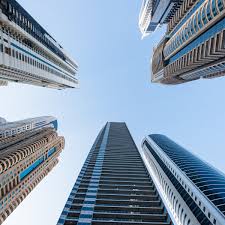
When planning and constructing high-rise buildings, the aim is to create safe and livable rooms in very tall buildings; the buildings have to bear their weight, withstand wind and earthquakes, protect residents from fire, but also have to be easily accessible on the upper floors. Utilities and a comfortable climate for residents Most high-rise buildings have a steel frame that allows them to be built higher than typical reinforced concrete structural walls. Buildings are characterized by window areas created by the concept of a steel frame and a curtain wall; However, skyscrapers can also have curtain walls that mimic conventional walls and have a small window area. This is made possible by cheap energy from fossil fuels and industrially refined raw materials such as steel and concrete.
The construction of the skyscraper was made possible by the construction of steel structures, which increased the brick and mortar construction of the late 19th work. The usable area for ever-larger supporting pillars is reduced. Tubular skyscraper structures have been used since 1960, reducing the use of materials (cheaper: Willis Tower uses a third less steel than the Empire State Building), but allows for greater height; allows fewer interior columns and thus creates more usable space . The elevators are characteristic of skyscrapers, a safety elevator with which passengers can be transported comfortably and safely to the upper floors option was to use a steel frame instead of stone or brick; Otherwise, the walls of the lower floors of a tall building would be too thick to be practical.
Today’s leading elevator manufacturers are Otis, ThyssenKrupp, Schindler, and KONE. Advances in construction technology have caused skyscrapers to shrink in width and increase in height. Some of these new techniques include mass dampers to reduce vibration and oscillation and gaps to allow air to pass through, which reduces wind shear.
Basic design considerations
Good structural design is important for most construction projects, but especially important for high-rise buildings because, given the high price tag, the likelihood of catastrophic failure is small but unacceptable. For civil engineers, this is a paradox: the only way to ensure reliability is to test all failure modes in the laboratory and the real world, but the only way to understand all failure modes is to identify previously known failures. Thus, no engineer can be sure that a given structure will withstand all the stresses that could lead to failure, but they can only have a sufficiently large margin of safety to make failure acceptable due to some form of myopia or some unknown factor.
Loading and vibration
The stress in a skyscraper is in large part due to the strength of the building material itself. In most building designs, the weight of the structure is much greater than the weight of the material it supports beyond its weight., The load on the structure is much greater than the payload . The amount of building material in the lower levels of a skyscraper must be larger than the Empire State Building. Thus the shape results exclusively from the load-bearing capacity. Posts can come in a variety of designs, the most common of which is for skyscrapers. can be divided into steel frames, concrete cores, pipe-in-pipe construction, and wall shear walls.
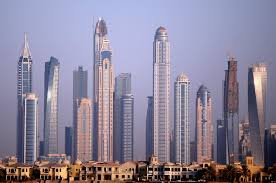
Steel frame
By 1895, steel had replaced cast iron as a construction material for skyscrapers. Its malleability enabled a variety of shapes and rivets, which ensured firm connections. The simplicity of a steel frame eliminated the inefficient portion of a shear wall, the center portion, and load-bearing elements, which were consolidated in a much stronger way by allowing horizontal and vertical supports throughout. the distance between the support elements decreases, which in turn increases the amount of material to be supported. In buildings over 40 floors, this becomes inefficient and uneconomical because the usable area for the support column is reduced and the increased use of steel.
The elevator conundrum
The invention of the elevator is a prerequisite for the invention of high-rise buildings because most people can (or can) only climb a few stairs at a time. Elevators in high-rise buildings are not only necessary aids such as running water and electricity but are also closely related to the design of the entire building . Taller buildings need more elevators to reach more floors, but elevator shafts consume valuable living space.
Many high-rise buildings use non-standard elevators to reduce space requirements. Buildings like the former World Trade Center Tower and the John Hancock Center in Chicago use elevated lobbies where express elevators take passengers to higher floors and serve as a base for local elevators. Architects and engineers can stack elevator shafts on top of each other to save space; However, celestial corridors and high-speed elevators take up a lot of space and add to the time it takes to move between floors. Double-deck elevators, so that more people can take an elevator to two floors at each station. More than two floors can be used in an elevator, although this has never been the case. The main problem with double-deck elevators is that if only one person needs to reach a particular floor, then everyone in the elevator will be forced to stop. d Mall, Petronas Twin Towers, Willis Tower, Taipei 101 The Paradise lobby on the 44th floor of the John Hancock Center is also home to the first multi-level indoor pool, which is still the tallest in the United States.
ode on indolence by John Keats
“Ode on Indolence” was probably the second ode composed by Keats in the spring of 1819 after “Ode on Melancholy” and a few months prior “To Autumn”. When it comes to grouping of the odes together as a sequence “Indolence” is often placed first in the group, which absolutely makes sense, considering the fact that “Indolence” usually provides glimmerings of themes explored in the other five poems and also seems to portray the speaker’s initial struggle with the problems and ideas of the other odes. “Indolence” is an extraordinarily simple tale of a young man who spends a drowsy summer morning lazing around until he is nudged by a vision of Love, Ambition and Poetry. He feels brewing desire to follow the vision but in the end decides against it when the temptations of his indolent morning outweighs the temptations of love, ambition and poetry.
The principal theme of Keats’ “Ode to Indolence” holds the pleasant numbness of the speaker’s indolence state which is preferable over more exciting and engaging states of love, ambition and poetry. Anguish of morality- the pain and frustration caused by the changes and endings unavoidable in the life of a human being is one of the great themes of Keats’ poetry. In his Ode on Indolence, the speaker’s indolence in many ways seems an attempt to blur the forgetful lines that exists in this world, so that the “short fever-fit” of life can no longer seem agonizing . Love and ambition are rejected by the speaker simply because they require him to experience his own life too and hold the unavoidable promise of ending (of love, the speaker also wonders what and where it is, he notes the pale cheek and “fatigued eye,” and observes it “springs” directly from human morality). He is not interested to find out “how change the moon” and to be “sheltered from annoy” which is why poetry offers the most seductive as well as hateful, challenge to indolence. Poetry is not mortal, but it is detests to indolence and would requires the speaker to feel his life too acutely- hence, it possesses “not a joy” for him as sweet as the nothingness of indolence.
Inspite of the poem ending on a note of rejection, the endurance of the figures and the speaker’s impassioned response to them indicates that the he will eventually have to raise his head from the grass and directly confront love, ambition and poetry. A confrontation which embodies the other five odes, in which the speaker struggles with problems of creativity, morality, imagination and art. Many ideas and images in Ode of Indolence anticipates more developed ides and images in the later odes. Keats in other odes confronts some sort of divine figure, usually a goddess, in the Ode on Indolence, he confronts three. The lushly described summer landscape with its “stirring shades/ and baffled beams,” anticipated the imaginary landscape the speaker creates in “Ode to Psyche”, the experience of numbness anticipates the aesthetic numbness of “Ode to a Nightingale” and the anguished numbness of “Ode to Melancholy” the birdsong of the ‘throstle’s lay’ anticipates the nightingale and the swallows of “To Autumn.”
In this way, the “Ode on Indolence” makes somewhat a preface to all the other odes. It does not present a dramatic exploration of love, ambition and poetry, rather ignites a possibility of such a confrontation in a way that throws light on the behavior of the speaker in other odes. Its lush seductive tone and the speaker’s oscillation between temptation and rejection in the face of the figures’ persistent processional highlights a deeper and more acute poetic exploration to come. As for now the speaker is absolutely content with the numbness of his indolence.
SUSTAINABLE TRANSPORT
The word sustainable means able to retain at the minimum possible with best results and also helps the mother earth heal. Sustainability is a vast concept and is generally a long term process when it comes to results. Sustainable practices preached in day to day life helps one achieve long term goals.
Such is the concept of SUSTAINABLE TRANSPORTATION.The increasing pollution in day to day life is a major example of why sustainable transport should be an important goal of the people of the 21st century. The daily consumption of petrol and diesel by various vehicles, excessive carbon monoxide emissions, contribution to global warming, noise pollution are some of the reasons among so many more that deplete the earth’s natural resources and increase health problems.
The only option of change is to switch to a more healthier, quick, effective and also less resource consumption way; In the fast pacing life of people where every two among three people own a car in urban areas, it is important that sustainable alternatives not only add value to human’s time but are effective at the same time.
Here are my vision of some eco-friendly, sustainable and intelligent choice :
To start with first is TO WALK, walk for the short trip and avoid your vehicle when possible. This won’t only help nature heal but also can make one lose weight if practiced regularly, also it will make you feel closer to the greenery around and you won’t need to wait in long traffic queues or find a parking spot when you arrive.
Next on my list would be to CYCLE, if you switch a cycle from your bus, train or bike journey, this will help to reduce the emission of around hundred kilograms of greenhouse gases. It will help lose more calories in every round of your travel and the fresh air is complimentary with every trip.
If it’s not possible for you to travel without a vehicle, choose more eco-friendly ones. One of the best options can be CARPOOLING, it is a way of sharing a vehicle for a bunch of people destined for the same place. It helps save fuel and the hassle of parking. Additionally it adds company for your journey and lesser cars on the road.
The next time you are planning to go for a trip, go for some EXPLORE PLACES AROUND your residence, you never know there are so many around your place. Unplanned trips are amazing and the best when not harming nature. It helps save fuel and energy, decreases pollution and helps one feel more close to nature and experience unknown places.
There are a lot other ways too and everyday there is a new find by so many humans.GREEN TRANSPORTATION is a choice and every being should choose it as a responsible citizen. Choosing these means to travel helps the earth heal at its maximum and makes the air pure. SUSTAINABLE TRANSPORTATION should be followed everywhere and by everyone as much as possible.
The Need of The society!
Smart Ways Of Writing With Keyla- The Laptop!


“If people cannot write well, they cannot think well, and if they cannot think well, others will do their thinking for them.”
- George Orwell
Today’s article features Keyla – The Laptop who shall be explaining The Smart Ways Of Writing. Good Morning Folks! This is Keyla. I am currently a renowned medium for the writing process. I understand that most of the ancient mediums of writing are depressed due to their extinction because of me. I apologize for that, from the core of my heart. However, it’s not our fault if people find writing on us, an easier task! It totally is based on the perspective of people who have regarded us deeply. I also admit that the digital medium involving me, doesn’t make writing a merrier process. Yes! That’s true. But, as I stated, the human perspective is something that gets into the way!
Anyway, since humans are glued to the digital medium and their love for me won’t diminish (is what I think, until some other medium doesn’t turn up ;)), I am here to explain the smart ways of writing easily without burdening yourself! So, I will be explaining that in a step by step approach!
Love The Writing Process!
A simple way is to love the process and admire the lengthy write ups! Writing long stories shouldn’t make you feel sleepy. If that is so, then you must avoid writing, because only a sound person, ecstatic regarding the process, can compose a good story.

Jot Down Those Ideas!
Every time you feel an idea pass through your mind, the sensible thing to do is to jot it down promptly before you lose sight of it! These ideas can prove helpful in composing good content!

Write In A Speech Format!
When you write, ensure that your content is interactive and not merely descriptive. Innovative content is much more interesting, than descriptions with facts! In short, address the readers and make them feel one with your content! Let them feel as if they are enjoying this conversation with you!
Write, When You Feel Like It!
Mood factor plays an important role in the writing process, so write only when you have the proper mood and stable state of mind to make the task interesting!

Write In Bits!
If you have a large amount of content to write, then you are free to work on it, in bits. Don’t try to write it in a single day, as it may stress you out and then disrupt the writing mood! However, if you are a huge writing fan and just can’t wait to read your completed story, and feel that you are well enough to write in a single day, then you are free to do so! The only thing that matters is that your mood remains intact.
Gobble Down Certain Interesting Words Or Facts Mentioned In Other Books!
There is an exception to this rule! You must read a lot here! Only when you read, can you write after all! Try reading all sorts of novels that would contain some interesting ideas which could be highlighted in your book! Don’t worry! Copyright issues aren’t prevalent here! 😉 That is what makes writing an interesting task. The more you read other works, the more you learn. You do not get blamed for copying. Instead, you get admired for learning whenever you read!

Write Frequently!
In order to not feel burdened for writing huge content later, make sure to practice writing frequently. After all, practice makes perfect, doesn’t it.
Imagine Your Content And The Story It Poses!
Try imagining all that you write. This makes it extremely easier to frame your content because you yourself feel lost in the process. So, an important thing to do is, not only make the readers, but also make yourself one with the process!

Thus, Lastly, I would conclude stating that the smartest way of writing is creating your own imaginative world and getting lost in that, visualizing yourself as a part of the story and getting one into that. So, write with love and utmost devotion. Have the power to get into that world you just created through your content!
Yellow Scribe is here to help you with that. Consult them and make your publishing dream come true! Let people be introduced to your creativity!
Thank You For Your Time, Keyla!
3D PRINTING
3D printing, also called additive manufacturing, is often defined as the construction of a three-dimensional object from a CAD model or a digital 3D model. The term “3D printing” is often explained as a spread of processes during which materials are deposited, solidified with computer control to present a three-dimensional object, with more material being added together typically layer by layer.
Looking at current scenarios 3D printing or additive manufacturing has been used widely for manufacturing, medical, industry etc. which facilitate 3D printing to become successful economical technology. The earliest application of 3D printing was on the toolroom end of the manufacturing spectrum.
HOW IT WORKS:
3D printers are available and are a neighborhood of the additive manufacturing family and use familiar methods to a standard inkjet printer- albeit in 3D. It takes a mixture of top-of-the-line software, powder-like materials and precision tools to make a three-dimensional object from scratch.
The various steps include :
3D Modeling Software:Modeling helps printers to form the merchandise come right down to the tiniest detail. The 3D modeling software ensures precision designs is why 3D printing is being hailed as a real and important changer in many industries.
Slicing the Model: Engineers are required to slice the model into layers to assist the printer to make the ultimate product. Slicing software takes scans of every layer of a model and can tell the printer the way to move so as to recreate that layer.
The 3D Printing Process: The printer acts an equivalent as a standard inkjet printer within the 3D printing , where a nozzle moves back-and-forth while dispensing a wax or plastic-like polymer layer-by-layer, expecting that layer to dry, then adding a subsequent level.
There are various types of 3D printing depending on size, shape and also time consumed in making one depends on these factors.
ADVANTAGES :
- Fast Design and Production, helps design and print faster also production rate saves time.
- Minimises Waste, little wastage compared to traditional methods.
- Cost Effective, requires lesser products, machine cost can be saved by outsourcing the project.
- Easy To Use, easily accessible by everyone.
- Environmental Friendly, Fuel efficient and less wastage.
- Flexible Design, helps design and print complex designs.
SCOPE :
In the construction world , 3D printing is used to create construction components or to print even entire buildings. Construction is well-accustomed to 3D printing as much of the information necessary to create an product will exist as a result of the design process, and the industry is already experienced in computer aided manufacturing.3d printing is not a new technology, followed since the 1980s. Making a three-dimensional model, or prototype, from a computer made design by adding successive layers of material is now standard practice in many industries, ranging from aerospace and architecture to medicine and high-end manufacturing.
3D printing encompasses many sorts of technologies and materials as 3D printing is getting used in most industries you’ll consider . It’s important to ascertain it as a cluster of diverse industries with a myriad of various applications.
A few examples:
– consumer products (eyewear, footwear, design, furniture)
– industrial products (manufacturing tools, prototypes, functional end-use parts)
– dental products
– prosthetics
– architectural scale models & maquettes
– reconstructing fossils
– replicating ancient artefacts
– reconstructing evidence in forensic pathology
– movie props
Monsoon!

Yeah! Its a season of joy, enjoyment, happiness, and we should enjoy it at the best.
A monsoon is traditionally a seasonal reversing wind accompanied by corresponding changes in precipitation, but is now used to describe seasonal changes in atmospheric circulation and precipitation associated with annual latitudinal oscillation of the Intertropical Convergence Zone between its limits to the north and south of the equator. Usually, the term monsoon is used to refer to the rainy phase of a seasonally changing pattern, although technically there is also a dry phase. The term is sometimes incorrectly[according to whom?] used for locally heavy but short-term rains.
The major monsoon systems of the world consist of the West African and Asia–Australian monsoons. The inclusion of the North American Monsoon and South American monsoon with incomplete wind reversal has been debated.
The term was first used in English in British India and neighbouring countries to refer to the big seasonal winds blowing from the Bay of Bengal and Arabian Sea in the southwest bringing heavy rainfall to the area.
So we should definitely enjoy this season!
 Eduindex
You must be logged in to post a comment.