Swami Vivekanand

Swami Vivekananda’s inspiring personality was well known both in India and in America during the last decade of the nineteenth century and the first decade of the twentieth. 

Born as Narendranath Datta in a Bengali Kayastha family,  he is the chief driving force behind various religious reform movements during the times of Colonial India. He introduced Hinduism to the world in a famous speech that he spoke in Chicago in 1893.

He was born on January 12, 1863 and His father was Vishwanath Datta, an attorney at the Calcutta high court while his mother, Bhubaneswari Devi was a housewife. From a very young age, Vivekananda was interested in spirituality and would meditate in front of the images of Hindu Gods and Goddesses.
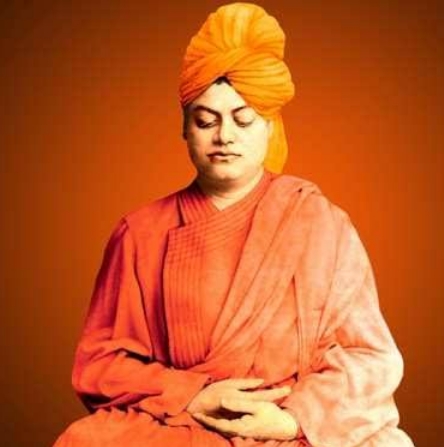
He is regarded as a one of the finest spiritual leaders and intellects India has produced.

He was a devout follower of an Indian saint named Sri Ramakrishna Paramhansa. Not only that, he was a devout follower of Sri Ramakrishna Paramhansa, whose ideologies he followed till the day he breathed his last. Inspired him, he even formed the Ramakrishna Math and the Ramakrishna Mission. He went to the United States of America to teach modern Hindu philosophy.

His vast knowledge of Eastern and Western culture as well as his deep spiritual insight, fervid eloquence, brilliant conversation, broad human sympathy, colourful personality, and handsome figure made an irresistible appeal to the many types of Americans who came in contact with him. People who saw or heard Vivekananda even once still cherish his memory after a lapse of more than half a century.

The Swami’s mission was both national and international. A lover of mankind, he strove to promote peace and human brotherhood on the spiritual foundation of the Vedantic Oneness of existence. A mystic of the highest order, Vivekananda had a direct and intuitive experience of Reality. He derived his ideas from that unfailing source of wisdom and often presented them in the soulstirring language of poetry.

To the Hindus he preached the ideal of a strength-giving and man-making religion. Service to man as the visible manifestation of the Godhead was the special form of worship he advocated for the Indians, devoted as they were to the rituals and myths of their ancient faith. Many political leaders of India have publicly acknowledged their indebtedness to Swami Vivekananda.

In America Vivekananda’s mission was the interpretation of India’s spiritual culture, especially in its Vedantic setting. He also tried to enrich the religious consciousness of the Americans through the rational and humanistic teachings of the Vedanta philosophy. In America he became India’s spiritual ambassador and pleaded eloquently for better understanding between India and the New World in order to create a healthy synthesis of East and West, of religion and science.

The natural tendency of Vivekananda’s mind, like that of his Master, Ramakrishna, was to soar above the world and forget itself in contemplation of the Absolute. But another part of his personality bled at the sight of human suffering in East and West alike. It might appear that his mind seldom found a point of rest in its oscillation between contemplation of God and service to man. Be that as it may, he chose, in obedience to a higher call, service to man as his mission on earth; and this choice has endeared him to people in the West, Americans in particular.

Swami Vivekananda focused on channelling the energy of the youth. He said that Youth is the most important segment of any country.

In the course of a short life of thirty-nine years (1863-1902), of which only ten were devoted to public activities-and those, too, in the midst of acute physical suffering-he left for posterity his four classics: Jnana-Yoga, Bhakti-Yoga, Karma-Yoga, and Raja-Yoga, all of which are outstanding treatises on Hindu philosophy. In addition, he delivered innumerable lectures, wrote inspired letters in his own hand to his many friends and disciples, composed numerous poems, and acted as spiritual guide to the many seekers, who came to him for instruction. He also organized the Ramakrishna Order of monks, which is the most outstanding religious organization of modern India. It is devoted to the propagation of the Hindu spiritual culture not only in the Swami’s native land, but also in America and in other parts of the world.

Swami Vivekananda passed away on July 4 in the year 1902. He was just 39 years old. Even almost 120 years after his demise, he is still alive in many people’s hearts and minds as they fondly remember his ideologies and what he taught.

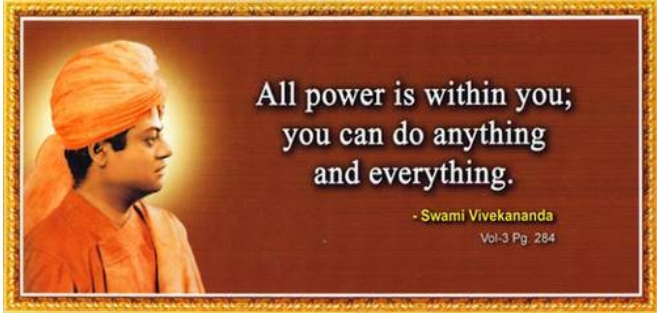
National Youth Day is celebrated on January 12, every year in India to honor the birth anniversary of Swami Vivekananda.

Overthinking- problem of today’s generation

Overview 

Overthinking is simply what its name suggests – thinking too much. Overthinking is going over the same thought again and again, analyzing the simplest of situations or events until all sense of proportion has gone. The overthinking brain cannot translate these thoughts into actions or positive outcomes, so therefore creates feelings of stress and anxiety. The phrase “overthinking” is often used quite flippantly these days. (You can picture the social media posts: “I’m overthinking my holiday packing. Lol.”) But for the genuine overthinker, there is nothing shallow or light-hearted about their thoughts. Overthinking is like a problem which every 2nd or 3rd person is going through right now. It is something where you tend to think about a lot, which tends to control your mind, and you waste so much of your energy and you tend to lose time on something which doesn’t even matter to you that much and over the time you start doubting on yourself. 

Why does we overthink? 

Thinking a lot is a habit, much like biting our nails. Where overthinking becomes problematic is when we continually overlook the underlying need behind the behavior. It’s something we start doing because we’re coping with feelings that might be uncomfortable, or with needs that are not met. An intelligent or creative person’s mind needs to be fed. It needs “food for thought”. When this type of person does not provide their mind with intriguing or stimulating information on a regular basis, they’ll feel an unmet need. It’s quite possible the person will start to think or fantasize about things they have no control over, simply to fill the space. It becomes entertaining to think a lot, it provides stimulation. We tend to overthink when something bothers us. But if it starts to bother a lot than it also effects one’s health. 

How to stop overthinking? 

Step back and look at how you’re responding 

The way you respond to your thoughts can sometimes keep you in a cycle of rumination, or repetitive thinking. 

The next time you find yourself continuously running things over in your mind, take note of how it affects your mood. Do you feel irritated, nervous, or guilty? What’s the primary emotion behind your thoughts? 

Having self-awareness is key to changing your mindset. 

Find a distraction 

Shut down overthinking by involving yourself in an activity you enjoy. 

This looks different for everyone, but ideas include: 

  • learning some new kitchen skills by tackling a new recipe 
  • going to your favorite workout class 
  • taking up a new hobby, such as painting 
  • volunteering with a local organization 

Take a deep breath 

You’ve heard it a million times, but that’s because it works. The next time you find yourself tossing and turning over your thoughts, close your eyes and breathe deeply. 

Meditate 

Developing a regular meditation practice is an evidence-backed way to help clear your mind of nervous chatter by turning your attention inward. 

Not sure how to get started? We’ve got everything you need to know in this how-to guide. All you need is 5 minutes and a quiet spot. 

Look at the bigger picture 

How will all the issues floating around in your mind affect you 5 or 10 years from now? Will anyone really care that you bought a fruit plate for the potluck instead of baking a pie from scratch? 

Don’t let minor issues turn into significant hurdles. 

Do something nice for someone else 

Trying to ease the load for someone else can help you put things in perspective. Think of ways you can be of service to someone going through a difficult time. 

Does your friend who’s in the middle of a divorce need a few hours of childcare? Can you pick up groceries for your neighbor who’s been sick? 

Realizing you have the power to make someone’s day better can keep negative thoughts from taking over. It also gives you something productive to focus on instead of your never-ending stream of thoughts. 

So don’t just overthink, whenever you feel that it’s happening just take a deep breath and it will be fine! 

Human rights

The twentieth century has seen numerous changes in Indian society in each field. The world itself saw two World Wars, numerous other enormous and little show-downs, cold-war, and rise of fundamentalism and psychological warfare which has ended up a risk to respectful society. The improvement in science and innovation has made life more comfortable but expanded the damaging capacity of fighting to such tall extents that the world appears to be living on a load of explosives and may self-destroy it one day. Man appears to have misplaced himself in this fabric world.

Coming back to India, it saw the heightened of flexibility battle within the starting of the final century, picked up autonomy halfway through it and experienced quick socio-economic changes. It has been able to preserve its mainstream majority rule nature and structure. But at times our commitments to preserve human rights were tried to the total.

The unstable circumstances in Kashmir, Gujarat and a few other delicate regions and indeed regularly serene ranges at touchy times have raised certain questions that got to be replied. Questions like: Has India been able to ensure human rights? In the event that there have been laxities or disappointments, how can they be evacuated? Do the barefaced charges against the nation, of having fizzled to secure human rights hold water or they are fair a portion of political purposeful publicity? And at long last what steps have been taken by the government to ensure that these rights are not abused? These questions got to be replied within the right point of view some time recently coming to a agreement whether human rights are secure in our nation. And more critically, what ought to be done to preserve and reinforce them.

There are two conclusions on the matter that India incorporates a convention of maintaining human values and securing human rights. The Father of the Country, Mahatma Gandhi wandered as distant as South Africa to battle for the cause of the neighborhood dark individuals. The Indian people’s possess battle for flexibility was extraordinary in it and expected more noteworthy size when observed within the higher viewpoint of putting an conclusion to the abominations and persecutions allotted out by outside run the show to humankind living in a nation.

It was, in this manner, in right sincere that after accomplishing autonomy; India was made a Imperial Equitable Republic. The six Essential rights, i.e. (i) Right to Uniformity, (ii) Right to Opportunity, (iii) Right against Abuse, (iv) Right to Opportunity of Religion, (v) Social and Instruction Rights and (vi) Right to Protected Cures were revered within the Structure. Other than, there has been a authoritative gathering at the State and the Parliament at the Middle to sanction laws from time to time for social and financial equity and improvement.

There’s an free and effective legal framework for security of rights of the citizens. Consequently, right conditions and an satisfactory set-up were made for tranquil, legal and dynamic presence for everybody with small or no scope for infringement on human rights.

In this way, we have a solid convention and protected backing to guarantee upkeep of human rights. But this does not cruel that there have been no laxities within the framework. There’s no dissent of the truth that there have been outright infringement of human rights ‘n a few parts at a few period of time like Delhi in 1984, Godhead m 2001 and J&K in 1980’s and 1990’s. It is germane to say here that distinctive communities have been at the accepting conclusion of such infringement totally different times and regions, with each community announcing to be the most exceedingly bad sufferers. But we are able call these episodes laxities not disappointments for the basic reason that they have been intermittent occurrences not a State incited orders of genocide like those of the Jews in Nazi Germany. By and expansive individuals themselves have been mindful for making ruin on target bunches. State has continuously stood for casualties and fortification of law and arrange.

The government’s execution in this respect has gotten wide spread feedback from different quarters. But in all reasonableness, we must to begin with of all have a see at the steps taken to preserve human rights.

The National Human Rights Commission was made in October 1993 which is an expression of India’s concern for security and advancement of human rights. It has developed as a lasting body having crucial teacher interface with the Minorities Commission, the Women’s Commission and the SC’s and ST’s Commission. Its primary capacities are counted underneath:

The creation of an autonomous commission laying down a appropriate framework and strategy for its work and bringing all the related issues inside its scope and control talks volume approximately the government’s concern to set up equity and run the show of law.

The Commission has its claim staff for conducting examinations into complaints of human rights infringement. It can moreover use the administrations of experts or examining offices of Central or State Governments. The Commission has moreover related itself with Non-Governmental Associations (NGOs) in examination work. It fixes time limits for accepting data or report falling flat which it goes before on its claim and orders indictment or such other activity against the charged for which it can approach and include the State Tall Court or the Preeminent Court.

It may suggest to the concerned specialist or government the give of such prompt intervals alleviation to the casualty because it may think fundamental. The Commission too has the control to go before in movements or petitions of charges of human rights infringement by equipped powers.

That the government has made it official on itself to show its activity taken report on the suggestion of the Commission bears declaration to the truth that the government isn’t as it were sharp to ensure human rights but moreover genuine around making an independent body which might make an air of believe on it among the individuals of India. The government needs to appear that it is its obligation to preserve legitimate open arrange and peace.

The destinations and circles of the Commission moreover incorporate security of planned castes and tribes as these classes have endured colossally for numerous centuries in terms of barefaced segregation and abuse. The Commission knows the esteem of locks in Central and State Governments, NGOs, common teach and other components of respectful society in its campaign to battle separation.

Since its initiation in 1993, the National Human Rights Commission has fared surprisingly well in its targets. It has kept on get and change various person complaints from people strikingly Davits and Exhorts against the affirmed acts of segregation, untouchability, savagery against human creatures, outrages of different sorts and high-handedness of open hirelings, etc. The Commission is exceptionally much able of managing successfully the issues like Godhead carnage and other ethnic and devout issues.

The exterior universes as well as the depreciators at domestic are fast to criticize that the episodes of expansive scale departure of Kashmiri Pandits from the valley are clear signs of the destitute state of undertakings within the nation with respect to human rights.

We may say that the travel to conclusion human abominations in a world which is isolated by financial inlets and devout convictions is long and testing. In India as all over else within the world, history and society have seen carnage and genocide. As we walk towards civilization and advance, there’s more extensive condemnation of savagery executed by devout or political intensity. What is vital is to figure it out the encourage to regard human rights as a national obligation, a ethical basic and God’s decree of all inclusive brotherhood. Nothing else things more.

Supply Chain Challenges for Covid-19 Vaccine Delivery in India

1. Logistics and Management

As of today, there are 154 candidate vaccines in pre-clinical trials, 21 in Phase-1 trials (Small-scalesafety trials), 12 in Phase-2 trials (Expanded safety-trials) and 11 in the path of approval across the globe. Not to forget, Russia’s first registered vaccine against the virus – Sputnik V. Even India has over a dozen of companies working on the vaccines out of which Covaxin developed by Bharat Biotech in collaboration with ICMR, is in its final stages and is highly anticipated. With so many possibilities, pharmaceutical manufacturers and distributors need to ensure continuity in vaccine development and delivery to meet the market demand. The following table talks about the potential vaccines being manufactured in India.

2. Availability and Affordability

Once the vaccine is launched, availability and affordability will be a key challenge. We must consider
the possibility of a private-public partnership to move this further, like in the case of polio vaccines.
There could be possible problems of irregular access to the vaccines, shortage in the supply, theft and
robbery, spike in pricing etc. which must be thought of beforehand. The vaccines must be suitably and
fairly priced for the lower income groups to be able to afford.

3. Manufacture and Production outreach

India has an upper hand in this criterion, since it has been manufacturing and exporting a significant
amount of vaccines and medicines of different kinds, globally. However, on the arrival of a potential
vaccine, manufacture and production has to be given a clear priority and must be upscaled, in order to
be prepared for the challenges of shortages like in the case of N95 masks.

4. Education and Outreach

Although vaccines are primarily important, it is not vital that everyone must be vaccinated at one
time. People with good immunity, free of ailments and high resilience are not particularly required to
be vaccinated. Healthcare workers, Senior citizens, people with health problems like diabetes, asthma,
coronary diseases etc. must be given first priority over the healthy population of the country, which
can be vaccinated at a later stage, if necessary.

Overview of Absalom and Achitophel

The neo-classical age place the epic at the top of the hierarchy of various poetic compositions. This leads the poets of the late 17th and early 18th century to attempt to write Epic poetry. Dryden instead chooses a mock-heroic trend as a means of representing and satirizing especially different socio-political ages. A mock-epic or the mock-heroic imitates the elaborate form and ceremonious style of the epic genre but usually applies them to a commonplace or trivial subject matter.

Poetic style

Dryden wrote this poem in an eloquent flexible, cogent yet controversial poem. According to David Daiches Dryden build on the ‘Reform of our members’ the perfect wase poetic style. Dr. Johnson Heiled Dryden and said that Dryden was the founder of the “new verification” and with him, it is apparent that English poetry has did not tend to revert to its former savageness. Johnson also remarked that before Dryden no poetical diction, no refined use of words was appropriated to arts. Critics have stated that it was in Dryden’s prologue and epilogue two places that he achieved that great strength. He could be Ironic, satirical, critical, humorous, or indent in a variety of ways. Absalom and Achitophel is a famous example of Dryden’s clear summative statement and the greatest achievement of his argumentative verse. The style of poem is essentially heroic which means that the plot, the character, the wit, the passion, and the description are all amplified above the level of common conversation. The style is best adapted to the biblical allegory and a narrative of great political evils during 17th century England.

Polish plot

Charles II had no legitimate son after him his brother James was supposed to sit on the throne. The plot was made to exclude him from the throne and create the atmosphere to make the Duke of Monmouth sit on the throne, this controversy was called the Popish plot by Titus Oatis.

Absalom and achitophel was published in 1681. Absalom and Achitophel was a contribution to the debate on public affairs in the form of verse satire. Dryden’s reason and intents were all on the side of legitimate and settled government so that the whig agitation to exclude from the succession. Charles II heir and his brother James on the ground that he was a Roman Catholic. And to encourage Charles’s legitimate son the Duke of Monument to assert his claim found Dryden on the Jory side. Supporting legality and the true succession protectants whig agitation in favor of exclusion of James from the succession was led by Earl of Shaftesbury and the Duke of Buckingham. Dryden took the biblical story of the rebellion of Absalom against his father King David and applied it to the contemporary situation with Charles II.

Alleviating poverty through education

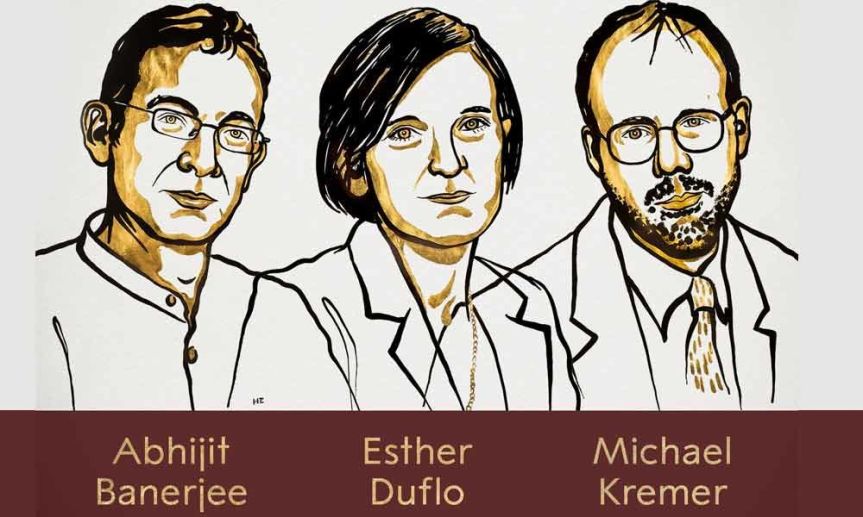
In 2019, Abhijeet Bannerjee, Esther Duflo and Michael Kremer received the Nobel Prize in Economics for their experimental approach to alleviating poverty. Poverty is one of the biggest issues faced by mankind. It is associated with social problems such as malnutrition, poor education and health. Poverty alleviation is the method of systematically reducing poverty by improving peoples’ education and job opportunities and in turn drastically improve their standard of living.

Their approach was very simple. To tackle the big problem of how to remove poverty, break it down into smaller, manageable questions. Once you find those questions, try to answer each one of them with a field experiment. A field experiment is a randomized controlled trial in which participants make choices in their normal day-to-day environment. Some of these experiments were carried out to find out how exactly education plays a role in reducing poverty.

Michael Kremer rounded up a large number of schools that needed some kind of support and split them up into groups. These schools were given resources that they were not receiving before. These resources varied from textbooks to free school meals. The outcome of the resource distribution was randomised. Due to this, researchers could find a connection between the various types of resources and how it helped children learn better. Surprisingly, textbooks and free school meals proved to make no difference in the learning of the students. It was observed that lack of resources was not the major problem that the low-income schools were facing. The biggest problem was that the teaching happening in these schools was not in accordance with the students’ needs. Banerjee and Duflo analysed remedial tutoring in Mumbai and Vadodara by providing schools with teaching assistants who helped students that had special needs. They discovered that helping the weakest student was a very effective measure in increasing the quality of education.

These experiments showed us that teachers lacked incentive and accountability, which showed in a high level of absenteeism. Reforms had to be made to bring teaching in line with students’ needs and the experiments showed that extra resources are of very limited value.

After the field experiment, this is what Banerjee and Duflo had to say on education policy formation:

  1. They believe that if the cost of schooling decreases, it would lead to a sizeable increase in school enrolment. If some financial barriers and non -financial barriers (e.g: distance to school) are removed it would certainly result in better school participation,
  2.  Awareness about the benefits of education should be spread. If the underprivileged know that there is a wage gap between the educated and uneducated, they would certainly want to be educated. Providing information about jobs would lead to an increase in education investment.

3. More attention should be paid to weaker students. Teaching assistants should be provided to make sure all students are able to cope with the level of teaching and should ensure no child is left behind.

This was how field experiments in education proved to be useful in alleviating poverty.

Wannacry Cyber Attack

What was the cyber attack?

The WannaCry ransomware attack was a worldwide cyber attack in May 2017 by the WannaCry ransomware. It propagated through EternalBlue, an exploit developed by the United States National Security Agency (NSA) for older Windows systems. WannaCry is a ransomware cryptoworm, which targeted computers running the Microsoft Windows operating system by encrypting data and demanding ransom payments in the Bitcoin cryptocurrency. The worm is also known as WannaCrypt, Wana Decrypt0r 2.0, WanaCrypt0r 2.0, and Wanna Decryptor. It is considered a network worm because it also includes a transport mechanism to automatically spread itself. This transport code scans for vulnerable systems, then uses the EternalBlue exploit to gain access, and the Double Pulsar tool to install and execute a copy of itself. WannaCry versions 0, 1, and 2 were created using Microsoft Visual C++.

When did it happen?

The attack began on Friday, 12 May 2017, with evidence pointing to an initial infection in Asia at 07:44 UTC. Within a day the code was reported to have infected more than 230,000 computers in over 150 countries. Officially the initial outbreak was from 12 May 2017 to 15 May 2017. Organizations that had not installed Microsoft’s security update from April 2017 were affected by the attack.

How did it happen?

The vulnerability WannaCry exploits lies in the Windows implementation of the Server Message Block (SMB) protocol. The SMB protocol helps various nodes on a network communicate, and Microsoft’s implementation could be tricked by specially crafted packets into executing arbitrary code. It is believed that the U.S. National Security Agency discovered this vulnerability and, rather than reporting it to the infosec community, developed code to exploit it, called EternalBlue. This exploit was in turn stolen by a hacking group known as the Shadow Brokers, who released it obfuscated in a seemingly political Medium post on April 8, 2017. Microsoft itself had discovered the vulnerability a month prior and had released a patch, but many systems remained vulnerable, and WannaCry, which used EternalBlue to infect computers, began spreading rapidly on May 12. In the wake of the outbreak, Microsoft slammed the U.S. government for not having shared its knowledge of the vulnerability sooner.

Who did it?

The US and UK governments have said North Korea was responsible for the WannaCry malware attack affecting hospitals, businesses and banks across the world in May 2017. Ironically, it was allegedly developed as a cyber-attack exploit by the US National Security Agency. Although they were reported to have known of the tool’s vulnerabilities, the NSA didn’t bring it to Microsoft’s attention until the hacker group called Shadow Brokers leaked EternalBlue to an obscure website. Further analysis of the attack by companies such as Symantec revealed links to the Lazarus group who in turn have been linked to North Korea although the attack does not bear the hallmarks of a nation-state campaign.

Which security services were violated?

WannaCry spread using an exploit called EternalBlue, created by—and subsequently stolen from—the U.S. National Security Agency (NSA). EternalBlue enabled attackers to discover vulnerable computers on the target network. WannaCry also leveraged an NSA backdoor called DoublePulsar to install WannaCry on the networkThe WannaCry ransomware attack hit around 230,000 computers globally .A third of NHS hospital trusts were affected by the attack. Terrifyingly ambulances were reportedly rerouted, leaving people in need of urgent care in need. It was estimated to cost the NHS a whopping £92 million after 19,000 appointments were canceled as a result of the attack. As the ransomware spread beyond Europe, computer systems in 150 countries were crippled. The WannaCry ransomware attack had a substantial financial impact worldwide. It is estimated this cybercrime caused $4 billion in losses across the globe.

Affected organizations

  • Andhra Pradesh Police, India
  • Automobile Dacia, Romania
  • Boeing Commercial Airplanes
  • Cambrian College, Canada
  • Hitachi
  • Honda
  • Instituto Nacional de Salud, Colombia
  • Portugal Telecom
  • Pulse FM
  • Renault
  • Russian Railways
  • University of Milano-Bicocca, Italy
  • Vivo, Brazil

Global Warming a threat to Life

The process of rising average air temperatures near the Earth’s surface during the past one to two centuries is known as global warming. Climate scientists have been collecting extensive data of numerous weather events (such as temperatures, precipitation, and storms) and associated effects on climate (such as ocean currents and the chemical makeup of the atmosphere) since the mid-twentieth century. The Intergovernmental Panel on Climate Change (IPCC) was established in 1988 by the World Meteorological Organization (WMO) and the United Nations Environment Program (UNEP) to give voice to a growing conviction within the scientific community (UNEP).  Human beings and human activities have been responsible for a worldwide average temperature increase of between 0.8 and 1.2 °C (1.4 and 2.2 °F) of global warming since preindustrial times, according to a special report published by the IPCC in 2018, and most of the warming observed in the second half of the twentieth century can be attributed to human activities.

Climate change since last glaciation

Changes in the sum of qualities that constitute climate change are referred to as global warming. Changes in precipitation patterns, winds, ocean currents, and other aspects of the Earth’s climate are all examples of climate change. A federal assessment on the implications of climate change on the future of the United States has been issued. According to recent research from the Geological Survey, climate change has been more relevant over the industrial age of the previous two centuries. The climate of the Earth has changed across different periods, from a single human life to billions of years. Significant fluctuations in the worldwide extent of glaciers and ice sheets were seen throughout the Pleistocene glacial era (about 2,600,000 to 11,700 years ago). Changes in the geometry of Earth’s orbit around the Sun drove changes in the distribution of solar radiation over the planet’s surface. According to a new study, these changes occurred across tens to hundreds of millennia. 

The most recent ice age, or glacial era, ended 21,000 years ago, and is known as the Last Glacial Maximum. Continental ice sheets stretched deep into Europe and North America’s middle latitude areas during this period. The global annual mean temperature appears to have been 4–5 degrees Celsius (7–9 degrees Fahrenheit) lower than it was in the mid-twentieth century. During the last ice age, Earth’s climate was marked by more cooling at higher latitudes and very less cooling across broad portions of the tropical waters (around the Equator). The Holocene is the term used to describe the most recent period of Earth’s history. The Holocene Epoch is an era in which humans have had a significant impact on climate. However, other scientists suggest that the Holocene ended very recently and that the Earth is now in the Anthropocene Epoc, a climatic gap that might be named the Anthropocene Epoc. Since the end of the ice age, people have had a major effect on climate throughout this time period.

Causes of Global Warming

  1. The greenhouse effect

A balance of solar and terrestrial radiation keeps the Earth’s average surface temperature constant. Because the frequencies of the radiation are very high and the wavelengths are relatively short, solar radiation is sometimes referred to as “shortwave” radiation. Terrestrial radiation, on the other hand, is classified as longwave radiation due to its low frequencies and long wavelengths. The total energy of incoming solar radiation is approximately 1,366 watts per square metre each year. Approximately 30 units of incoming solar energy are reflected back to space by clouds, the atmosphere, or reflecting areas of the Earth’s surface for every 100 units of incoming solar radiation. Earth’s planetary albedo is the reflective capacity of the planet, and it does not have to remain constant throughout time. Earth must emit these same 70 units back into space to preserve thermodynamic equilibrium. Some of the infrared light emitted by the Earth’s surface is absorbed by greenhouse gases. As a result of this absorption, some of the initial 70 units are unable to reach space. The presence of greenhouse gases in the atmosphere causes the surface and lower atmosphere to warm up.

  1. Radiative forcing

Solar radiation and greenhouse gases in the atmosphere may change the      temperature of the Earth’s surface and lower atmosphere. According to Dr. David Frum, “radiative forcing” might be thought of as “radiative force” or “radiative forcing.” The quantity of downward-directed radiant energy impinging on the Earth’s surface is measured by radiative forcing, which is a measure of the effect of a specific climatic component. Climate variables that contribute to the warming of the Earth’s surface are known as “positive forcing,” whereas forces that cool the Earth’s land surface are known as “negative forcing.” According to the IPCC, there is no question that human-caused greenhouse gas emissions are driving global warming. Each square metre of Earth’s surface receives around 342 watts of solar energy each year on average. This amount can be linked to a change in the Earth’s temperature. Changes in the distribution of terrestrial radiation (that is, radiation emitted by Earth) within the atmosphere can cause temperature changes at the surface. Radiative forcing has a natural cause in some situations, such as during volcanic eruptions when expelled gases and ash block some of the sun radiation reaching the surface. It has an anthropogenic, or purely human, origin in other situations. Anthropogenic increases in carbon dioxide, methane, and nitrous oxide, for example, are predicted to cause positive radiative forcing of 2.3 watts per sq metre. 

  1. The influences of human activity on climate

Human activity has affected global surface temperatures through altering the radiative balance that governs the Earth on a variety of temporal and geographical scales. The most substantial and well-known anthropogenic effect is the increase in greenhouse gas concentrations in the atmosphere. Humans also have an impact on climate through altering aerosol and ozone concentrations and changing the land cover of the Earth’s surface.

The Pandemic Panic

The year 2020, has been an exceptionally unusual year for India, particularly from the economic point
of view. From the extended lockdowns due to the global pandemic, the departure and disturbing plight
of the migrant laborers, the agitated protests by the healthcare workers over the non-payment of
salaries, laying off employed workers in the workplace and to the recent protests over agricultural
bills passed by the government; all these upheavals have led to a high economic distress and a spike in
the rates of unemployment within the country. I dare say that, the pandemic will be remembered more
for its financial distress, rather than the morbidity rate. COVID -19 has left over 1 lakh dead in India,
and several others with elaborate hospital bills. With the possibility of a prospective vaccine, expected
at the end of this year or the early beginning of next year, another imperative challenge that India is
yet to face is, the manufacture and supply of affordable vaccines to its 1.3 billion citizens.

To meet the global demand of urgency in the production of vaccines, countries including India must
encourage self-reliance in order to decrease the production costs. Governments must ensure proper
planning and implementation to meet the suitable needs of their citizens. With the decrease in the
surfacing of the daily cases and an increase in the recovery rate, we still have a long way to go, but we
are in the right direction of approach.

Stress management

It may seem that there’s nothing you can do about your stress level. The bills aren’t going to stop coming, there will never be more hours in the day for all your errands, and your career or family responsibilities will always be demanding. But you have a lot more control than you might think. In fact, the simple realization that you’re in control of your life is the foundation of stress management.
Managing stress is all about taking charge: taking charge of your thoughts, your emotions, your schedule, your environment, and the way you deal with problems. The ultimate goal is a balanced life, with time for work, relationships, relaxation, and fun – plus the resilience to hold up under pressure and meet challenges head on.

Identify the sources of stress in your life:
Stress management starts with identifying the sources of stress in your life. This isn’t as easy as it sounds. Your true sources of stress aren’t always obvious, and it’s all too easy to overlook your own stress-inducing thoughts, feelings, and behaviors. Sure, you may know that you’re constantly worried about work deadlines. But maybe it’s your procrastination, rather than the actual job demands, that leads to deadline stress. 
Think about the ways you currently manage and cope with stress in your life. Your stress journal can help you identify them. Are your coping strategies healthy or unhealthy, helpful or unproductive? Unfortunately, many people cope with stress in ways that compound the problem.
Unhealthy ways of coping with stress:
These coping strategies may temporarily reduce stress, but they cause more damage in the long  run:
• Smoking
• Drinking too much
• Overeating or undereating
• Zoning out for hours in front of the TV or computer
• Withdrawing from friends, family, and activities
• Using pills or drugs to relax
• Sleeping too much
• Procrastinating
• Filling up every minute of the day to avoid facing problems
• Taking out your stress on others (lashing out, angry outbursts, physical violence)

Learning healthier ways to manage stress:
If your methods of coping with stress aren’t contributing to your greater emotional and physical health, it’s time to find healthier ones. There are many healthy ways to manage and cope with stress, but they all require change. You can either change the situation or change your reaction. When deciding which option to choose, it’s helpful to think of the four As: avoid, alter, adapt, or accept.
Since everyone has a unique response to stress, there is no “one size fits all” solution to managing it. No single method works for everyone or in every situation, so experiment with different techniques and strategies. Focus on what makes you feel calm and in control.
Not all stress can be avoided, and it’s not healthy to avoid a situation that needs to be addressed. You may be surprised, however, by the number of stressors in your life that you can eliminate.
●Learn how to say “no” – Know your limits and stick to them. Whether in your personal or professional life, refuse to accept added responsibilities when you’re close to reaching them. Taking on more than you can handle is a surefire recipe for stress.
●Avoid people who stress you out – If someone consistently causes stress in your life and you can’t turn the relationship around, limit the amount of time you spend with that person or end the relationship entirely.
●Take control of your environment – If the evening news makes you anxious, turn the TV off. If traffic’s got you tense, take a longer but less-traveled route. If going to the market is an unpleasant chore, do your grocery shopping online.
●Avoid hot-button topics – If you get upset over religion or politics, cross them off your conversation list. If you repeatedly argue about the same subject with the same people, stop bringing it up or excuse yourself when it’s the topic of discussion.
●Pare down your to-do list – Analyze your schedule, responsibilities, and daily tasks. If you’ve got too much on your plate, distinguish between the “shoulds” and the “musts.” Drop tasks that aren’t truly necessary to the bottom of the list or eliminate them entirely.
●Express your feelings instead of bottling them up. If something or someone is bothering you, communicate your concerns in an open and respectful way. If you don’t voice your feelings, resentment will build and the situation will likely remain the same.
●Be willing to compromise. When you ask someone to change their behavior, be willing to do the same. If you both are willing to bend at least a little, you’ll have a good chance of finding a happy middle ground.
●Be more assertive. Don’t take a backseat in your own life. Deal with problems head on, doing your best to anticipate and prevent them. If you’ve got an exam to study for and your chatty roommate just got home, say up front that you only have five minutes to talk.
●Manage your time better. Poor time management can cause a lot of stress. When you’re stretched too thin and running behind, it’s hard to stay calm and focused. But if you plan ahead and make sure you don’t overextend yourself, you can alter the amount of stress you’re under.
●Focus on the positive. When stress is getting you down, take a moment to reflect on all the things you appreciate in your life, including your own positive qualities and gifts. This simple strategy can help you keep things in perspective.
●Set aside relaxation time. Include rest and relaxation in your daily schedule. Don’t allow other obligations to encroach. This is your time to take a break from all responsibilities and recharge your batteries.
●Connect with others. Spend time with positive people who enhance your life. A strong support system will buffer you from the negative effects of stress.
●Do something you enjoy every day. Make time for leisure activities that bring you joy, whether it be stargazing, playing the piano, or working on your bike.
●Keep your sense of humor. This includes the ability to laugh at yourself. The act of laughing helps your body fight stress in a number of ways.

Learn the relaxation response:
You can control your stress levels with relaxation techniques that evoke the body’s relaxation response, a state of restfulness that is the opposite of the stress response. Regularly practicing these techniques will build your physical and emotional resilience, heal your body, and boost your overall feelings of joy and equanimity.

Budding entrepreneurship amidst the youth

For many the word entrepreneurship sounds like an intricate term, which we think that are associated only with people doing large businesses, world wide. But it is the concept of developing, managing and promoting a business platform which could be relevant to the field of interest that one has in line to gain profit. There is a major misconception that a business investment deals with more money. But the young entrepreneurs come up with impalpable investments which can remarkably attribute to the growth of a business like innovation, skills, creative thinking, time management, energy and of course monetary sources also take an integral part but not a major part. Especially in this pandemic many of the young people have made their venture into businesses through the digital platform which turned into a good of source of income for many. Youth entrepreneurship has a huge impact on the social and economic progress of the society. It is regarded as a promising alternative and help sustain growing economies and lead to a viable development. At one point, every individual after the completion of their studies would be striving hard discovering for opportunities to get a job in the government or a corporate sector thinking that their life would be settled and if they don’t acquire so, they would be distressed about their career. So one of the major challenges faced by most of the countries is unemployment. But now the tables have turned and individuals pursuing their studies on one hand have also started framing opportunities for themselves in accordance with the field that fascinates them, which could be on a small scale. Working towards Youth Entrepreneurship programs can aid solving problems that are currently challenged by the countries and could pave way for a better future.

In the mean time the hobbies have evolved into professions. For instance if a person is good at artistic works and drawing portraits he gets into the sphere of vending personalized gifts through online platform. The teenage girls who have been doing henna designs for their set of family for various get togethers are now online providing their work for many brides out for marriages. There are many blooming fashion designers who have been just designing costumes for themselves before, but then through the help of digital platforms and social media have started their own clothing line. Blogging, publishing own books, teaching online courses, launching podcasts, handmade goods, thrift stores, freelancing, web development, baking & selling pastry items and we can just bundle up examples about the several establishments of the budding young entrepreneurs.

Inspiration has nothing to do with the age factor. People who do quality and consistent work can inspire many and here are such inspirational young entrepreneurs who have given rise to very successful and engrossing start ups .

Ritesh Agarwal is a smart young man behind the OYO rooms and he is the founder and the CEO of the same. He is the world’s second youngest billionaire in 2021.

Sreelakshmi Suresh is a web designer holding the titles of World’s Youngest CEO and World’s youngest web designer. She started meddling with computers at the age of 3, started designing at 4, and came up with her first website at the age of 6.

Tilak Mehta , a 15 year old boy founder of Paper n Parcel is the World’s Youngest entrepreneur who made Digital Courier company with the help of ‘Mumbai Dabbawala’ and he was awarded Global Child Prodigy 2020.

Trishneet Arora is the founder and CEO of TAC security, a cyber security company. He has written books on cyber security, ethical hacking and web defence. He started his own company at the age of 19.

Akhilendra Sahu is a young serial entrepreneur form India. He is the founder and CEO of ASTNT technologies Pvt Ltd., He was 17 years old when he started his career as a freelancer. He ranked on India’s top 10 young Indian entrepreneur $ top 10 young digital influencers.

Aditi Gupta is an Indian author and co-founder of Menstrupedia Comic. Menstrupedia provides a user-friendly guide to menstruation, hygiene and puberty and break myths associated to them.

Entrepreneurs are the cluster of individuals who are reluctant to be one among all and frames out some innovative roadmaps to stand out form others, who defy to stick to the conservative thinking and wants to be out of the box. The three important keys that a budding entrepreneur should know are, PROMOTE NEW IDEAS, ACCELERATE ENTREPRENEURSHIP AND INVEST IN STARTUPS USING YOUR INGENUITY. Technology has enabled progress in all fields. The digital platform plays a very pivotal role in the upliftment of the young entrepreneurs and boosts the inner entrepreneurship in us. The world is been swamped with countless possibilities and opportunities. When you become certain about what you need you get a step closer to success and cling on to both hard work and smart work. To become a successful entrepreneur be hungry and ambitious on your goals. To persist in the same domain willpower, assertiveness and perseverance are very vital because every field is indulged with risks. Never halt in the career with the same mindset you started with, evolve with time. Aspire to inspire people!!!

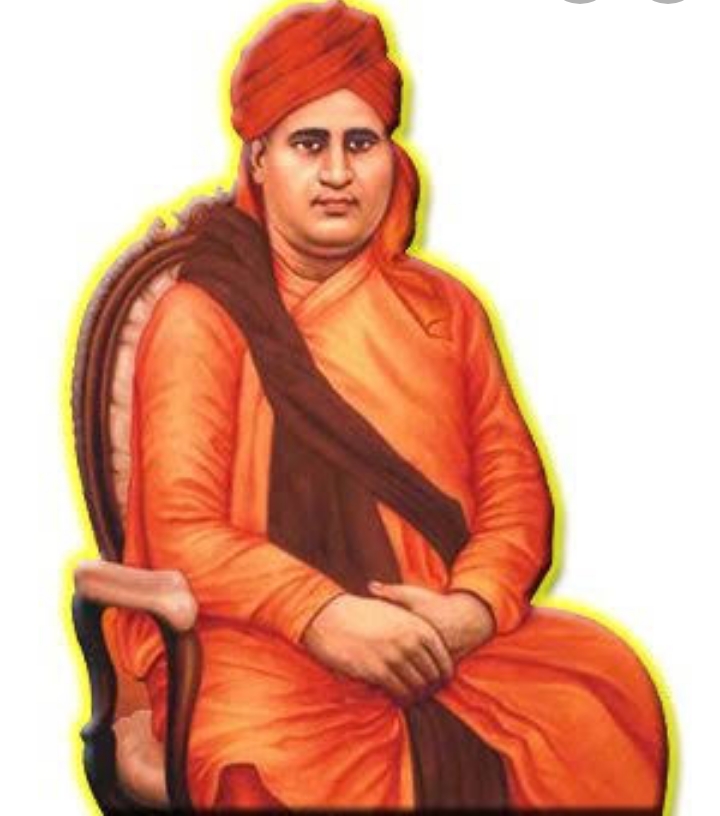
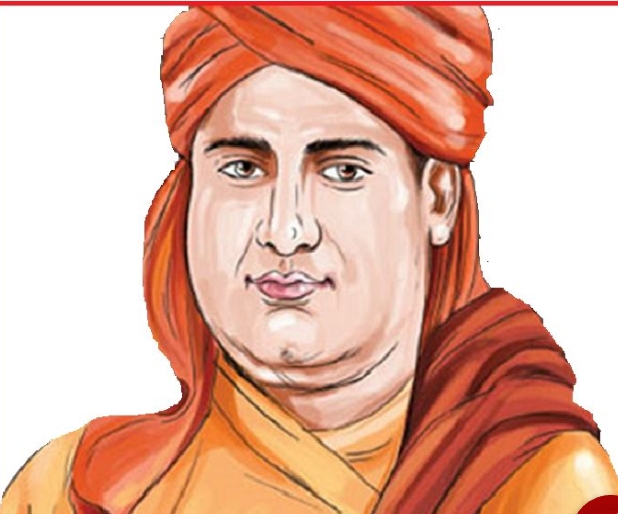
Swami Dayananda Saraswati

Dayananda Saraswati was an Indian philosopher, social leader, and reform movement of the Vedic dharma. He was the one who first gave the call for Swaraj as “India for Indians” in 1876, a call later taken up by Lokmanya Tilak.

As per the traditional Hindu calendar, Dayanand Saraswati was born on the Dashami Tithi of Phalguna Krishna Paksha. In India, all the Vedic institutions and religious establishments celebrate this day with great pomp and enthusiasm. Several schools and academic institutions hold debates, essay competitions etc.

The founder of the Hindu reform organisation Arya Samaj, Swami Dayanand Saraswati was born as Mool Shankar Tiwari on February 12, 1824, in Gujarat. He was named Mool because he was born when the Mool Nakshatra prevailed. His father was Karshanji Lalji Kapadi, and his mother was Yashodabai.

He was deeply devoted to God and translated the Vedas from Vedic Sanskrit to Sanskrit and Hindi so that the common man could also read them. He brought about a revolution in the social life of Indians to spread Vedic teaching and his ideas he travelled all over India and he roundly condemned the caste system, he was bitterly opposed to untouchability. “Untouchability is a dreadful curse of our society every living being has a soul, which deserves affection, in every human being there is a soul worthy of respect, one who does not know this basic principle cannot understand the true meaning of the Vedic religion.” Though acknowledged to be one of the greatest men of his age, even by those who differed with him on many points, Swamiji was simple and unostentatious in his habits and tastes.

He always laid stress on female education, equal rights and pure conduct in life. In his opinion over the centuries, with the passage of time some wicked customs had crept into Hinduism, these customs dimmed the greatness of this religion.

He was the among the first great Indian stalwarts who popularized the concept of Swaraj- the right to self-determination vested in an individual -when India was ruled by British. It was his philosophy which inspired nationalists in the mutiny of 1857 as well as champions such as Lala Lajpat Rai and Bhagat Singh. Dayananda’s Vedic message was to emphasize respect and reverence for other human beings, he related Atma with Param Atma. In the 10 principles of the Arya Samaj, he enshrined the idea that ” All actions should be performed with the prime objective of benefitting mankind”. Dayananda’s ‘Back to Vedas’ message influenced many thinkers, Sri Aurobindo who decided to look for hidden psychological meaning in the Vedas, Many Padri’s , Sanyasi’s were influenced by Swamiji’s updesh, Maharaja Ranbir Singh of Jammu and Kashmir went to see Swamiji during the Darbar which was held at Agra (November,1866 A.D.).

Swami Dayanand wished that his work of social reform should continue even after his death, so he founded an institution called ‘Arya Samaj’ at Mumbai on April 10,1875. It grew into a huge institution spread beyond the shores of India. Millions of Hindus were influenced by Arya Samaj, which rendered boundless and unequalled services to society, through its religious centres, gurukuls, schools, colleges, women orphanages and asylums for women. He was fully convinced that Indian could’t prosper unless education spread. He said that, there should be a law to compel the parents to send every boy or girl who is eight years old to school. The King’s son and the farmer’s son should be equal in a gradual. They should all be made to work and live alike in Gurukuls.
The chief objective of Swami Dayananda’s teaching are that all should be treated with love and justice. One should always be ready to accept truth and give up untruth, be good to the world, i.e., to make physical and social improvement. To achieve these we should dispel ignorance and diffuse knowledge.

He had a sensitive and compassionate heart that melted at the sufferings of the poor. ‘To love the creation of God is to love God Himself- so he taught people. He always advocated that those Hindus who had gone to other religions and wish to come back into the Hinduism fold by performing purification rites for them.

OCEANS

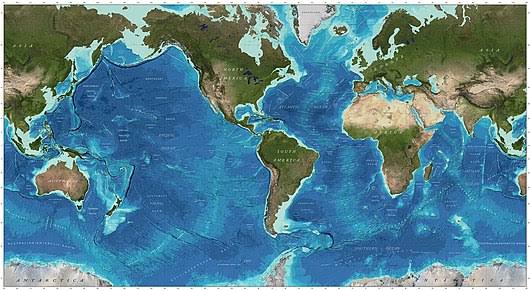
The continents and oceans are however, not evenly distributed in the northern and the southern hemispheres. The northern hemisphere holds 61% of land whereas the southern hemisphere holds 81% of water. It is because of this pattern of land and water distribution, the northern hemisphere is called as the land hemisphere and the southern hemisphere is called as the water hemisphere.

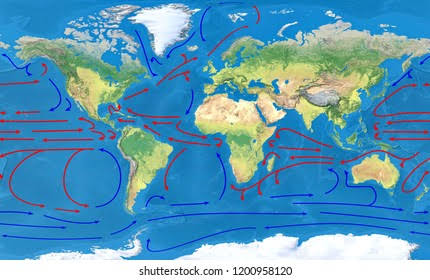
Oceans and seas are considered as resource bowl of the earth because of the immense availability of food, minerals etc., Present distribution of the world’s oceans and major seas are illustrated in the map.

Relief of the Ocean Floor

The ocean basins are characterized by the following major relief features:

✓Continental shelf
✓Continental slope
✓Continental rise
✓Deep sea plain or Abyssal plain
✓Oceanic deep
✓Oceanic ridge

Continental Shelf

A shallow and gently sloping platform extending out from the adjoining continental land mass into the sea is called Continental Shelf. It is almost a uniform zone of sea bed with a gentle gradient.

Continental Slope

A steep slope which descends from the edge of the continental shelf to the deep ocean-bed is called continental slope. It forms a boundary between the Continental Crust and the oceanic crust. This zone is free from deposits as they are steep. The most important characteristic of continental slope is the presence of deep canyons and trenches. Due to the low penetration of sunlight, the slope has nearly freezing temperature. Hence aquatic life has very slow rate of metabolism.

Continental Rise

At the base of the continental slope is a gently sloping layer of sediments which merge into the deep-sea floor. This underwater feature found between continental slope and abyssal plains is called the continental rise. It consists of submarine fans which are similar to the alluvial fans found on land.

Deep Sea Plains or Abyssal Plains

The deep sea plains or abyssal plains are underwater plains found on the deep ocean floor. These plains extend from continental rise to the mid oceanic ridges. The gradient of the slope is very gentle and it appears as a uniform flat and featureless plain. These plains are usually covered by the thick layer of sediments composed of clay, slit and sand, brought by the rivers. These are often characterized by features like abyssal hills, sea mounts, guyots, coral, atoll etc.

Oceanic Deeps

Trenches are the deepest part of the ocean and occupy about 7% of the total relief of the ocean floor. The ocean temperature in the trench is slightly cooler than the freezing temperature. As they are sediment free, most trenches are V-shaped with steep sides. Epicentre of the great earthquakes are all found in the trenches.

Oceanic Ridge

Oceanic ridge is a continuous submarine mountain chain. They are made of young basaltic rock formed when two tectonic plates moves apart. The mid – ocean ridge is probably the most extensive single feature of the earth ‘s topography. Two of the most well known mid – ocean ridges are the Mid – Atlantic Ridge and the East Pacific Ridge. The Mid – Atlantic Ridge is the largest unbroken oceanic ridge.

Movement of the Ocean Water

The ocean water is dynamic. Temperature, salinity, density, external forces of the sun, moon and the winds keep the ocean waters in movement, both horizontally and vertically. Waves and currents are in horizontal motion while tides have vertical motion.

Waves

Of the all movements of the oceans, sea waves are considered to be the strongest. Sea waves are ripples on water caused when winds blow over the sea. The height of these waves depends on the speed of wind, its duration and the direction from which they blow. Sometimes waves are also caused by tremors felt on the ocean floor. Such waves are quite destructive and called Tsunami.

Tides

The periodic rise and fall of water due to the gravitational pull of the sun and moon on earth are called tides. They are classified broadly into Spring tides and Neap tides.

When the Sun, Moon and Earth are aligned in the same line, the collective gravitation pull of the sun and moon on earth’s water strengthens to form a high tide known as spring tide. Such tides always occur on full moon and new moon days.

Ocean Currents

The movement of oceanic water on the surface and at the depths in a definite direction is called ocean current. Ocean currents are in clockwise motion in the northern hemisphere and in the anti – clockwise motion in the southern hemisphere.

The factors that generate ocean currents are :

  • Earth’s rotation
  • Prevailing winds and
  • Differences in temperature and salinity of ocean water.

5-month-old baby girl in UK ‘turning to stone’

The effects of fibrodysplasia ossificans progressiva, a disease which causes damaged soft tissue to regrow as bone.

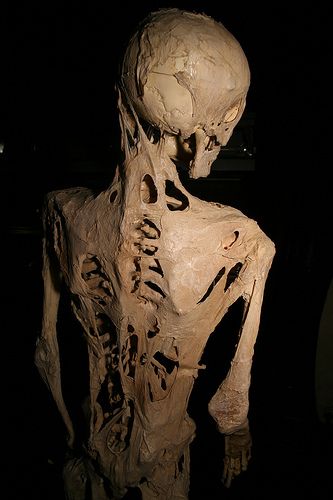
Lexi Robins, 5 month old from the UK is “turning to a stone”due to an extremely rare genetic condition Fibrodysplasia Ossificans Progressiva (FOP) that turns muscles into bones.

Lexi Robins was born on January 31 and seemed like any other normal baby, except she didn’t move her thumb and had bigger toes.

Lexi was diagnosed with a life-limiting disease called Fibrodysplasia Ossificans Progressiva (FOP), which affects just one in two million.

Due to the disorder, Lexi’s condition may worsen rapidly if she suffers any minor trauma, as simple as falling over. She cannot receive injections, vaccinations and dental care and cannot give birth.

Post by Alexandera robins https://www.instagram.com/tv/CQnwqnTIUlV/?utm_source=ig_embed&utm_campaign=loading.

FOP is a severe, disabling disorder with no current cure or treatment. It is the only known medical condition where one organ system changes into another. Fibrodysplasia ossificans progressiva is caused by a mutation of the gene ACVR1.

The FOP can lead to bone formation outside skeleton and restrict movement. It is believed to replace muscles and connective tissues, such as tendons and ligaments, with bone. Thus, it is generally perceived that the condition turns a body into stone.

People with this disease, which has no proven treatment, can be bedridden by the age of 20 and their life expectancy is around 40 years.

It has no current cure.

Rape crisis in India

Anatomy of Rape

Sexual assault on women is a common phenomenon in our country. Under sexual assault comes; molestation, eve-teasing, child sex abuse, rape, marital rape, domestic violence.

Of all these crimes, Rape is the most violent crime which is committed against women. According to Section 375 of the Indian Penal Code, Rape means an unlawful intercourse done by a man with a woman without her valid consent.

Rape outrages a woman’s modesty. After a rape incident, a woman lives a pathetic life which includes fear, depression, guilt complex, suicidal action and social stigma.

In recent times, Rape incidents have increased manifold. According to statistics, two women are raped in the country every hour. If further statistics are to be believed, every 10 hours a girl of age 1-10 is being raped in India.

It appears that the rapists are not scared of laws. Also, cases are being reported where minors and elderly women are being raped. The recent incident which shook the nation was the gang rape of a 23 year old para-medical student in a moving bus on the streets of Delhi.

The cruelty which was shown towards the girl by the rapists filled every Indian with wrath. So much so was the anger, that thousands of people poured into the streets to demand justice for the young lady.

The protests compelled our leaders to sit up and think and now amendments of the laws concerned with sexual assault on women our underway.

Every day the newspaper reports of rape incidents. In majority of rape cases the accused is known to the victim. The accused may be a friend, a relative, neighbor.

Some cases are a rude shock to humanity like that of a five year innocent girl being raped by her neighbor. Not only he raped her, but damaged her internal organs beyond cure. Some cases have come into light wherein teachers have raped their students.

Causes of Rape

The important question which arises when we talk of rapes is what causes rape. Why rape cases are increasing at an alarming rate? First and the foremost cause of increasing rape cases is the lack of public safety. Women are not safe outside their homes and why only outside they are not safe even inside their homes.

A number of cases have been reported wherein the guilty has committed the crime in the very house of the victim. Rapes are being done in moving vehicles also which raise a question on the effectiveness of the traffic system of our country. Another important reason is the dearth of police officials and female police officers in particular. According to the Times of India, there is 1 officer for every 200 citizens.

Studies show that rape victims are more likely to report sex crimes if female police officers are available. Lack of female police further aggravates the problem.

Another very important reason is a sluggish court system of India and few convictions. India’s court system is painfully slow and for rapes that do get reported, the conviction rate is not more than 26%.

As the accused is not convicted, others think that they can go around freely and rape whosoever they like. Stigmatizing the victim and encouraging the victim to compromise gives a further impetus to this horrendous crime.

In many rural areas, the victim is pressurized to drop charges against the guilty. Not only this they are encouraged to marry their rapist by telling them that nobody will marry them now and it will bring shame to her family.

In recent times, prominent leaders and experts have blamed women’s clothing as responsible for increasing rape cases which is totally wrong. No clothing is an invitation to rape.

Remedies

The dire need of today is to curb this violent crime. The most important step to be taken in this direction is the strengthening of laws dealing with sexual assaults.

Death penalty should be imposed on a rape accused.

A woman’s squad should be formed in every district which would exclusively deal with problems of women.

Fast track courts must be established so that justice is given as early as possible.

Some NGO should start Rape Crisis Centre where victim can approach by calling a toll-free number or physically visiting the local centres. Such centre should play a vital role in supporting rape victims to cope up with the psychological trauma and also guide them to obtain legal remedy.

Conclusion

Women are wonderful daughters, sisters, wives, and mothers. They should be loved, cared, respected and should be protected.