

Even as 2020 brought the entire world to a standstill, and as it halted the shooting and release of new movies, a young writer and director decided to challenge the pandemic, and planned to shoot a low budget experimental computer screen movie using just an iPhone, titled C U Soon. This young director was Mahesh Narayanan. The movie starred Fahadh Faasil, Roshan Andrews and Darshana Rajendran.
The movie, written, directed and edited by Mahesh Narayanan, and produced by Fahadh Faasil and Nazriya Nazim was India’s first computer screen film, and was a commercial as well as critical success.
And this was one of the movies that brought Mahesh Narayanan to the forefront, even though he has made exceptional movies like Take Off (2017) before this. But these would not end up being the magnum opus of the filmmaker.
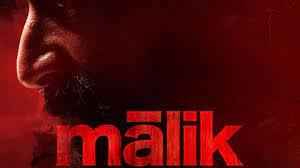
His magnum opus would come out almost a year later, titled Malik, also starring Fahadh Faasil, Nimisha Sajayan, Joju George, Vinay Fort, Indrans and more. Even though majority parts of the post-production were completed before the Pandemic hit, it couldn’t be completed in its entirety and had to be shelved for a theatre release post the pandemic. In December 2020, it was decided that the film would have a release date of May 2021 during Eid. But the pandemic played spoil sport again, as the 2nd wave hit the country. Finally, the makers decided the best option would be to release it online, and it went on to become one of the most awaited films in 2021.
Malik tells us the story of 2 communities living in a coastal area in the Thiruvananthapuram district of Kerala. The film talks about issues like communal riots and the politics behind it, and sand mining by the government to create roads, even though the decision is met with the protests of the local citizens.
The film is a treat to watch, with brilliant acting, story, cinematography and music. Even though one can see similarities between Francis Coppola’s The Godfather (1972) and Mani Ratnam’s Nayakan (1987), the film stands out in its own right. The writer was able to characterize all the characters really well, which meant that all human aspects of all characters, and not just the protagonist was very well defined. Unlike most films, which work on the protagonist, Malik gave an overall importance to all the characters.
The actors did an amazing job of bringing this well written characters to life. While watching this film, the audience is transported to the world of Ramadappally and Suleiman Ali Malik. Especially in a scene where Nimisha Sajayan and Fahadh Faasil are mourning the loss of their son, the actors are able to bring tears in the eyes of the audience, and the audience are able to relate to the emotions going through the minds of the actors.
The music by Sushin Shyam was subtle and brought gravitas to the scenes where it was necessary. The music director has also managed to create music that would last for days in one’s head even after watching the film. The same goes for the cinematography by Sanu John Varghese and the stunt direction by Lee Whittaker, who had earlier worked on movies like Bahubali. The 13 minute single take deserves a special mention of its own.
The use of CGI in the film was minimal, but even then, it was evident that CGI was used in some scenes. But this, minor detail does absolutely nothing to the visual treat that is Malik.
Malik could be considered an epic in terms of Malayalam or rather Indian cinema. It shows how characters should be created in an ensemble movie. The movie has the potential to be studied by film students all over India, and quite possibly it will gain that status soon enough. Overall, after watching the movie, the audience can see why the filmmakers were so keen on releasing it in theatres, and kept OTT as the last straw. This movie is made for theatres, and the theatre experience would have made the film even better than it already is!
























 Eduindex
You must be logged in to post a comment.