
Agusto Boal and Aristotle’s Coercive System of Tragedy

Photo by Ibolya Toldi on Pexels.com

Agusto Boal was a Brazilian activist who brought revolutionary changes to theatre as an artform. In his work Theatre of the Oppressed, Boal extensively discusses about the theatrical form that he developed of the same name. He also explains the politics involved behind various dramatic techniques and criticisms from across the world like Aristotle, Hegel and Brecht. In the first chapter, Boal argues that the Greek tragedies, as defined by Aristotle, is actually a coercive system that enforces state ideologies onto the citizens.

Tragedy, then, is an imitation of an action that is serious, complete, and of a certain magnitude; in language embellished with each kind of artistic ornament, the several kinds being found in separate parts of the play; in the form of action, not of narrative; through pity and fear effecting the proper purgation of these emotions.

-Aristotle

According to Aristotle, Tragedy is an imitation of an action that, through its several characteristics, evokes catharsis or ‘proper purgation of soul’. Every tragedy has a tragic hero who is defined as “a man who is not eminently good and just, yet whose misfortune is brought about not by vice or depravity, but by some error or frailty”. This error in the hero is referred to as his tragic flaw or hamartia. The spectator establishes an empathic relationship with the protagonist and lives vicariously through him as he enjoys a state of happiness brought upon by the same hamartia. Then suddenly, the hero falls from happiness to misfortune. This is referred to as ‘peripeteia’. The spectator along with the hero suffers this but is unable to disassociate with the character due to ‘anagnorisis’, i.e, recognition of the flaw. Furthermore, the tragedy ends with a ‘catastrophe’ wherein, the hero suffers the consequences of his action through death or a fate worse than death. 

Boal sums up this process in three stages. Stage 1, where the protagonist and the spectator take a path towards happiness which then moves towards misfortune. Stage 2, the character and the spectator realise their own hamartia which Boal refers to as an ‘anti-constitutional flaw’; where the state reinforces certain unsaid social set-ups. Stage 3, where after the horror of the catastrophe, the terrified spectator undergoes catharsis through which they are purified of their hamartia. As explained by Arnold Hauser, the tragedians were paid by the state to produce the plays and thus, they naturally denied any plays that went against the state. Through the tragedies, the spectator is emotionally manipulated into thinking that having this hamartia would lead to a terrible fate, thus maintaining the status-quo in the society. This can also be analysed with reference to Althuser’s Ideological State Apparatus. In this context, the values of the state are propagated through theatre which acts as an institution.

Tragedy effectively coerces people into believing that any desire to go against the state will prove disastrous. This reinforces Boal’s statement that, theatre is the most perfect artistic form of coercion. Though Aristotle claims that poetry, theatre and tragedy are not associated to politics, Boal points out that reality states otherwise. And so, it can be argued that artforms, including theatre or its modern variants such as television and film – are all political.
Demand and Supply

What is Demand?

Demand refers to the quantity of goods that consumers are willing to buy at given level of income during a given period of time. In order to understand the relationship of demand with different variables, let’s take a look at the factors that can influence demand.

Factors affecting demand

  1. Price of the Given Commodity: One of the most important factors affecting the demand of the commodity is its price. An inverse relationship exists between price and demand of a commodity. This means that as the price of a good increases its demand falls due to fall in the level of satisfaction of the consumer.
  2. Price of Related Goods: Demand of a product is also determined by the prices of other related products. Related products include Complementary and Substitute goods. Complementary good refers to goods that are usually bought together by consumers. For example, pencil and erasers. If the price of pencils goes up, the demand for erasers also decreases because they are used together (direct relationship). Substitute goods refer to goods that can replace each other. For example, Coke and Pepsi. If the price of Coke increases, the demand for Pepsi would increase. (inverse relationship)
  3. Income of the Consumer: Income of a consumer plays a major role in determining the demand of the product. Higher level income groups generally have higher demand than lower level income groups. If the income of a consumer increases, his demand and purchasing capacity also increases (direct relationship).
  4. Tastes and Preferences: Tastes and preferences of the consumer directly influence the demand for a commodity. They include changes in fashion, customs, habits, etc. An individual who prefers rice over bajra might not get affected by the increase in the price of rice where as a small increase in price of bajra will discourage them to buy bajra.
  5. Expectation of Change in the Price in Future: If the price of a certain commodity is expected to rise in future, then consumers will demand more of that product in the future than they normally would. There exists a direct relation between expectations of change in prices in future and its demand in current period of time.

What is Supply?

In economics, supply is the amount of a resource that firms, producers, laborers, providers of financial assets, or economic agents are willing and able to provide to the marketplace or directly to another agent in the marketplace.

Factors affecting Supply

  1. Price of the given Commodity:
    Price of a commodity is one of the most important factors which determine the supply of a commodity. Generally, price of the commodity and its supply are directly related, that is as the price of product increases, its supply will also increase and vice-versa. The price rise in the market promotes the producers to produce more, in order to earn more in the market.
  2. Prices of Other Goods:
    The quantity supplied of a commodity depends not only on its price, but also on the prices of other commodities. Increase in the prices of other goods makes them more profitable in comparison to the given commodity. As a result, the firm shifts its limited resources from production of the given commodity to production of other goods, reducing its supply (Inverse relationship).
  3. Prices of Factors of Production (inputs):
    If there is a rise in price of factors of production like:- land, labour, capital etc. the cost of production also increases as a result of which the product becomes less profitable and suppliers might reduce the production of that commodity and vice-versa (inverse relationship).

4. State of Technology: Advancements in technology plays a major role in determining the supply of the product. Introduction of new technology in the market reduces the cost of the product which increases the profit margin and induces the supplier to increase production of the product.

  1. Government Policy (Taxation/ Subsidy Policy):
    Increase in government taxes reduces the profit margin of product due to increase in the cost. This demotivates the supplier as a result of which he will reduce the production of that particular commodity (inverse relationship).

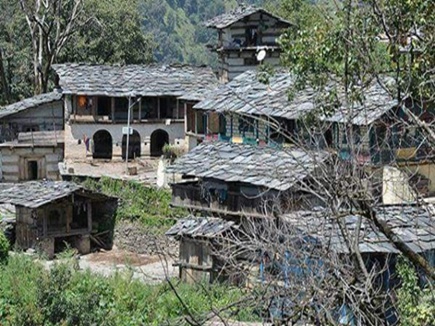
Ghost Villages of Uttarakhand

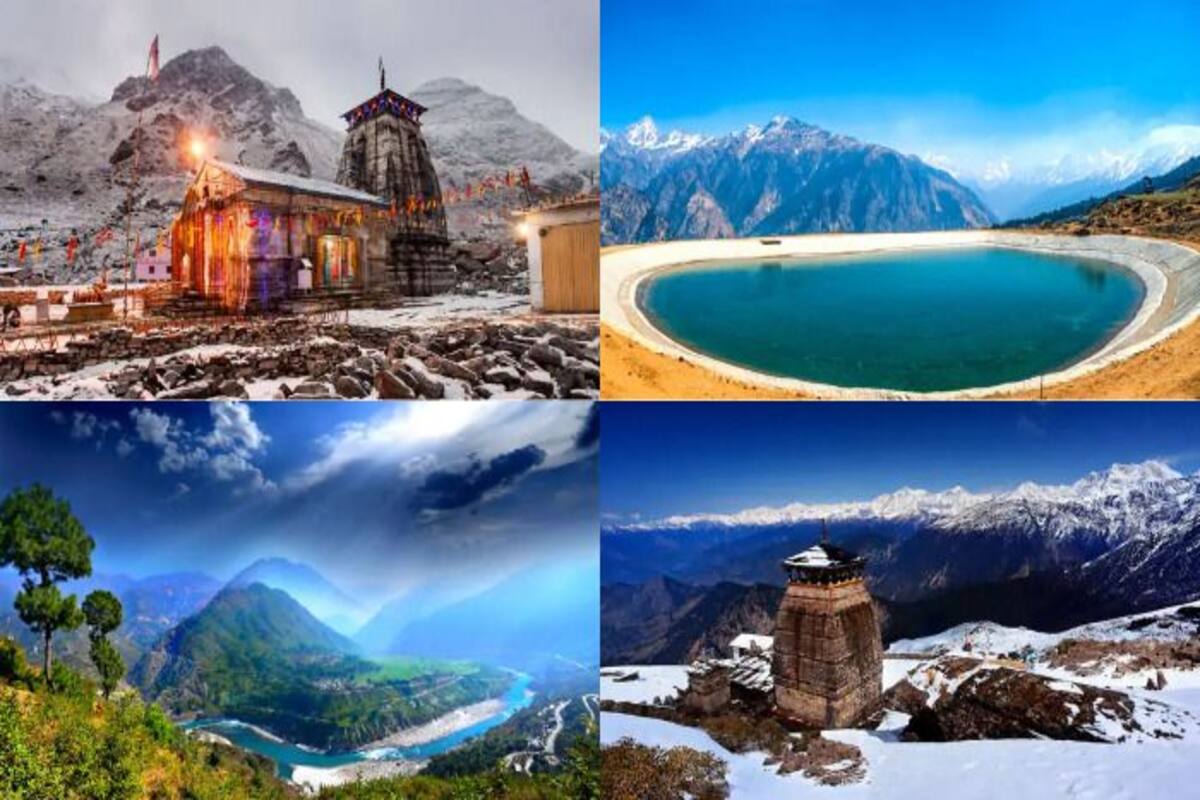
Uttarakhand fondly known as the Abode of God due to its rich cultural and religious history which is still stored in many temples sprawled across the state is also the origin of river Ganga and Yamuna , two of the most sacred rivers of India. The shrine of Baba Amarnath and Kedarnath in the state makes it a famous destination for pilgrims from all over the world not to mention the large number of tourists it attracts every year due to the picturesque scenery which the state offers . Despite such rich heritage of the state, in the last two decades it has faced a major issue where out of 16.739 villages in the state, 1702 villages were declared “Ghost villages” as they have no inhabitants. Whereas about 405 villages have less than 10 people as its residents( The data is based on the Census of 2011). The question is that why the area which was separated from Uttar Pradesh to form a separate state of UTTARAKHAND so that the people here may have better growth opportunities, has seen such a drastic decline in population over the last decade. Is there really some ghost as the title “ghost village” suggests that has occupied the place of the human beings? What is the reason that despite such a large number of tourists and pilgrims visiting the state every year, the villages here which act as a treasure chest preserving the culture, the heritage and the history of the place, are empty? This blog will answer all these questions.

Why are the villages devoid of any human habitant?

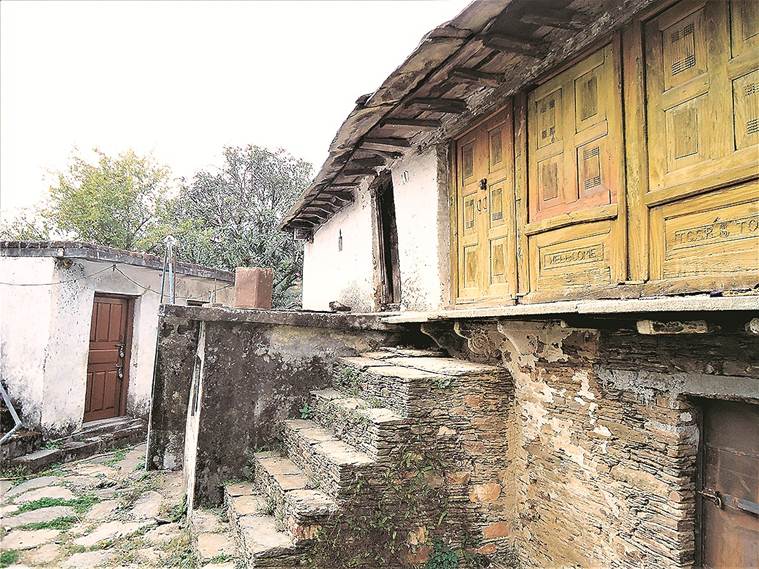
People from the villages have migrated to other states and other cities of Uttarakhand such as Rishikesh , Haridwar , Dehradun etc. in search of employment with an aim to have better lives. Initially, it was just the youngsters who would migrate to other places for earning but eventually as the time passed and the villages remained remote, elders also started to shift simultaneously as the cities offer better healthcare facilities. Imagine the emotional turmoil which people go through when they have to leave their homeland, their birthplace just to feed themselves.

The reasons for migration

  • The villages in Uttarakhand are least developed with many villages still having a narrow risky trek which connects them to the main road. Electricity till a decade ago was foreign to these places. Authorities pay absolutely no attention in catering to the needs of the people living there. Though the state is blessed with two of the most sacred rivers, yet the residents specially in the villages have to struggle even for water. Urbanisation in the hills brought with it such affects that many villages which were blessed with the streams full of water almost the entire year many decades back are now witnessing dried streams and barren land . Though the famous tourist places of the state, such as Almora, Nainital, Rishikesh, Haridwar, the capital city Dehradun etc. are provided with the facilities which ensures the safety and well being of humans, villages are still untouched.
  • Safety is another big issue which the residents have to face. The villages which are located amidst the dense jungles of the Himalayas are home to many wild animals many of which are man eaters. Even if the animal is not a man eater, wild animals such as wild boar , wild pig destroys the crops leaving no source of living for the people.
  • Since the entire state is situated in the mountains, the paths there are steep which leaves scope only for terrace farming and does not allows the growth of many crops. The crops which are grown are either destroyed by wild animals or by the famous mountain rains with very little left to fill the stomach with. Owing to these reasons, people have gradually stopped farming. Also, the extremely effective implementation of welfare schemes like the Mahatma Gandhi National Rural Employment Guarantee Act (MGNREGA) which allows the people working as laborers under the MGNREGA projects give them enough amount for sustenance and the enforcement of the food Security Act gives them enough ration to survive with . The reasons mentioned under this bullet point can be considered as the reasons for the decline of farming which was the sustenance profession of the state since years and validates the moving of people in search of better life opportunities.
  • Also, the people in the villages feel that City life is a heaven with all sorts of opportunities something which is rarely visible to them in the naturistic villages. Litle did they realize , that the reason for a large number of tourists coming to the state every year is their want to escape from the monstrous daily problems of the city life. How ironic it is , that geography has created such a vast opinion between two sets of human beings each one thinking that the other set resides in heaven! Well, this is how life is full of oxymorons and ironies!

Is the presence of ghost villages good for the state?

The answer is a big NO. Experts say that migration leads to abandonment of villages which causes degradation of land, makes villages unlivable, and further fuels migration. In fact, the migration to cities has been in such great numbers that Uttarakhand has recorded the highest increase in the share of urban population in any of the Himalayan states of the country while its rural decadal growth rate is the lowest. The inter state migration which was at its peek during the early 2000s when the state was newly formed was transformed into an intra-state migration after the devastating floods which destroyed Uttarakhand in 2013. The consequences being that the cities are overpopulated as they had no proper arrangements made to accommodate such a large number with the standards of living deteriorating for everyone. Whereas the villages have lost their mark.

The empty village homes are now covered with the wild shrubs and has increased the area of exploration to the wild animals such as tigers and leopards many of which are man eaters. The increase encroachment of animalsin the human settlements may prove fatal to the villages which are still lively though in less numbers.

Owing to the nationwide lockdown in 2020, many of the migrants have come back home to resettle in their roots and are now trying farming which is more difficult now owing to the covering of the farming areas by the wild shrubs which are difficult to remove. The resettling phase will again be a difficult one as these villages are still the same with no better facilities.

Environmentalist Anil Joshi, who in 2015 undertook a 20-day march across Uttarakhand as part of the Gaon Bachao Andolan (“save village movement”) to address the issue of migration from villages says ” we should ask the government why there is still a need to migrate”. His words hits a deep chord forcing us to think, why is it this difficult to fulfill the basic needs of the simple villagers so that they can stay close to their roots saving our culture and our future.

ANGER

Anger is an emotion which is a little more dangerous than the rest of them. Anger can be triggered due to financial problems, family problems, being surrounded by people you dislike, personal issues, etc. No one likes being angry nor do we like being surrounded by people who have a bad temper.

Everyone releases anger differently. Some like to shout at people, some like to break things, some tend to self-harm. Well, these methods do help release the anger, but they aren’t healthy ways of dealing with a situation.
Let’s have a look at how anger affects our relationships.
Some people take their anger out on the family. Sometimes when parents do not have control over things at their work, they come home and try to control the lives of their families.
Many parents often fight regularly at home and make the environment of the house hard to live in. Did you know that children who grow up in an abusive environment are usually too sensitive or completely numb? These children also show a sign of aggression or anger. They also suffer from anxiety and depression.
Some people also tend to substance abuse when they are angry. Using drugs, alcohol, tobacco, in large quantities. Some of these substances also cause more anger. Substance abuse is bad for a person’s mental, or physical health. It is also bad for the people around them.
Anger makes us do things we regret. It messes our relationships with people around us because we say things that we don’t mean to and do things we don’t want to.
I am not asking you to never take your anger out. Anger is an emotion that needs to be taken out. Taking anger out does not have to be destructive. We need to find constructive or healthy ways to take out our anger.
We are angry for a reason. So, the first step to calm the anger is to ask ourselves why we are angry. Once we find out why we are angry we can start working on it. Anger is our brain’s way of telling us to find a solution to an issue.
So, if it is a person that makes you angry, you might want to break ties with them.
If you feel angry with a job, maybe it is time to quit the job.

If we don’t listen to what our anger wants. Chances are the anger will keep sticking around until we make significant changes in our life. So, next time before you lash your anger out make sure to ask yourself what got you angry.
Some other healthy ways of dealing with anger are by doing physical activity like playing sports or working out. This will allow you to be constructive with it. In my boarding days when I would get angry, I would play squash. I would imagine the ball as my problem and hit the racket with full force. To tell you the truth it did help and make me feel good.

This way our anger is coming out in constructive ways. We need to learn to channel our anger to improve our lives instead of destroying it.

ALL THAT GLITTERS IS NOT GOLD

The line “all that glitters is not gold” occurs in William Shakespeare’s well-known play The Merchant of Venice”. It comes as a shock to Prince of Morocco when he, led by the exterior glitter of gold, chooses the gold casket and loses the lottery of caskets. The line has since then become a proverb. It means, in simple words, that appearances are deceptive. The seemingly beautiful and valuable object may turn out to be something most ugly and worthless.

Therefore, like all proverbs, ‘all that glitters is not gold contains the time-tested truth. It enjoins upon us to be cautious in our approach while judging the worth of a person or object. We should not be led by external appearance. A seemingly good apple may be rotten at the centre. A person may smile and smile, and yet prove to be a villain. An extremely beautiful face of a woman may hide her ugly, vicious character. A charming Cleopatra often proves to be a siren.

It is, of course, human to be attracted by good and beautiful persons and things. When a young man falls in love or goes to select a life partner, he is first tempted or repulsed by the outward appearance of the girl. If he does not pause and judge the real character of the girl, he is destined to rue and suffer for his choice throughout his life. So, it is equally true in the case of a girl in the choice of her would- be husband.

There is a beautiful story in the Bible which warns us against falling in to the seemingly attractive exterior. Eve gets attracted to the beautiful and yet forbidden fruit of knowledge (an apple). She fails to resist the temptation of tasting it. The moment she and Adam eat the forbidden fruit, they are thrown out of the Paradise forever. They bring upon them and their progeny (the whole mankind) endless sufferings in many forms.

In our modern world of glitter and glamour, there are many temptations around us. Most of us get attracted to glittering cars and bikes, gadgets and products of several kinds. Youngsters force their parents to buy them, which land their parents in vicious debt circles. The young men and women realise quite late how some of these attractive gadgets tell upon their health and ruin their careers.

Advertisements on the screen and in newspapers often coax people to buy things which are neither worth their money nor as useful as claimed. Most of us are misled by the utility of some products as they are advertised by some beautiful actresses, popular actors or other celebrities.

Know what happens during period!

Menstruation is the actual time when women bleed. And the entire time between 2 menstruation is called Menstrual cycle.

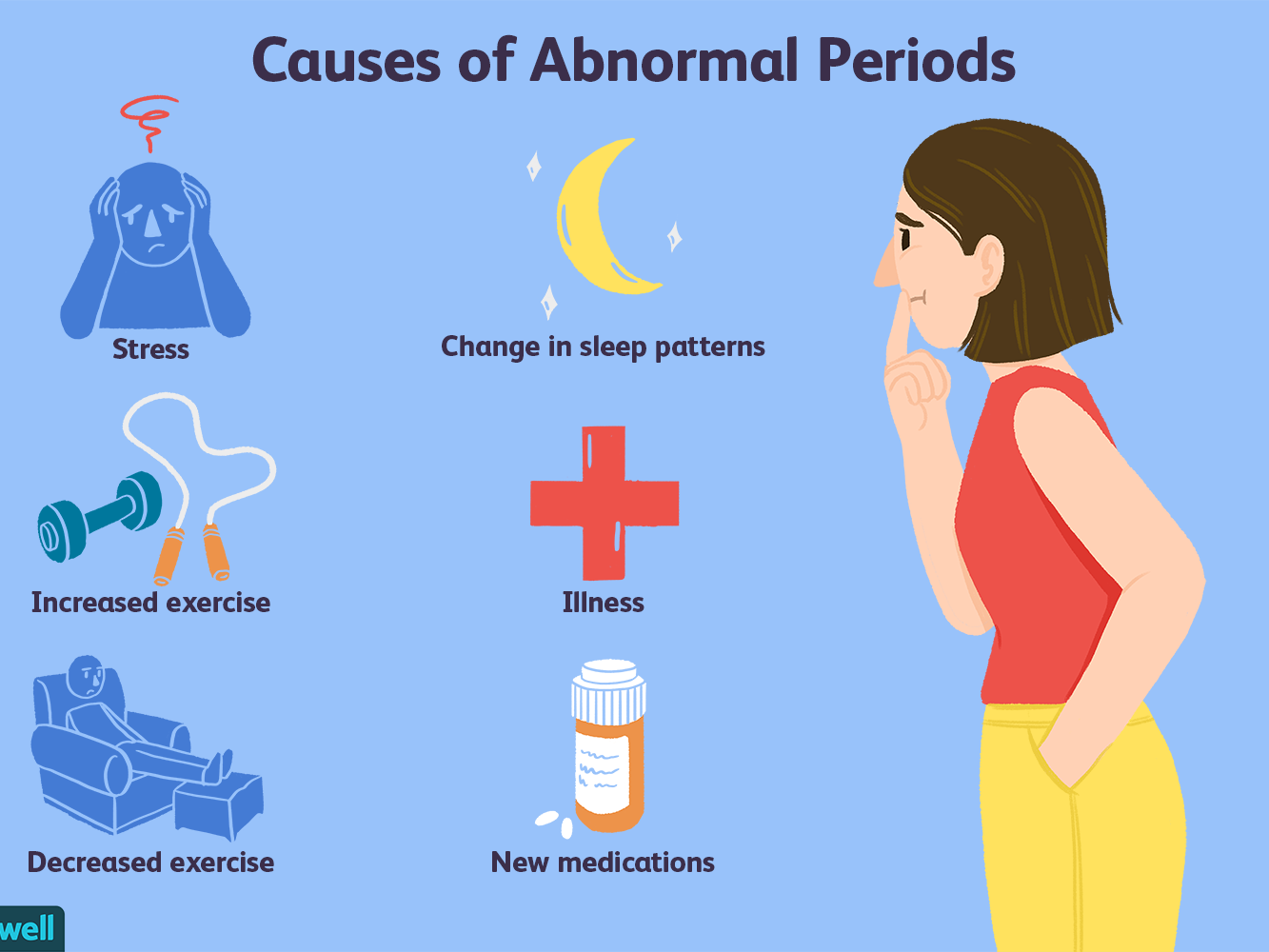
The excessive pain in menstruation is not normal and this condition is called Dysmenorrhea.

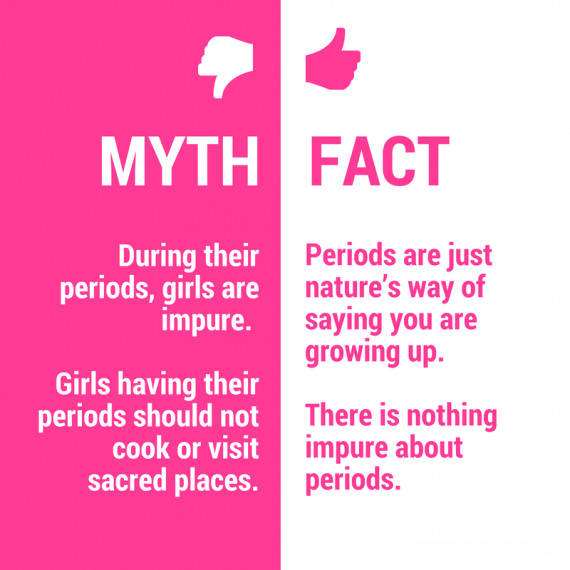
As everyone says period blood is dirty blood but in reality it is not the rejected blood of the body. It is less concentrated than normal blood and it has less blood cells.

“Smuggling pads to the bathroom like it’s some sort of illegal thing gotta be the worst adaptation to patriarchy”

Transgender men may still get their periods, just as transgender women might not have periods.

Girls miss their school 1-2 days every month and it affect their studies and education.

We bleed 5 days in a month and it really sucks

I am a girl
Yes, I am a girl
And like every other girl, I also go through those painful days
The day which comes and goes every month.
When the day comes, I feel like I’m in hell
I don’t have to touch stuff
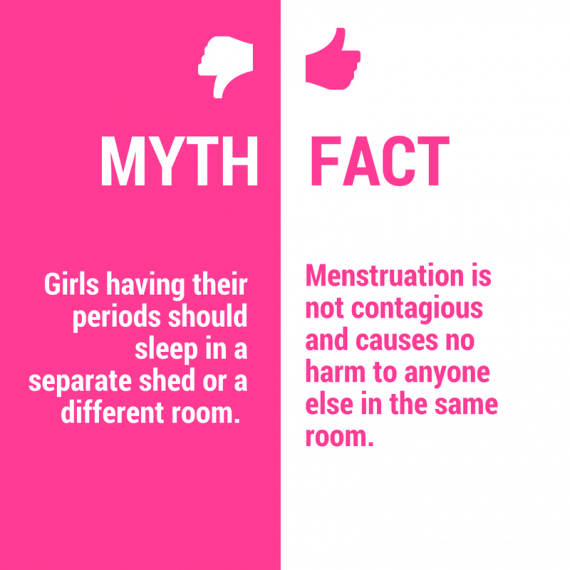
I am not allowed to go to bed
I am not allowed to go to the place of worship.
I am not allowed to say anything
I am not allowed to cry because of this cycle
I feel like thousands of hammers are breaking my bones.
I go through all these things like – mood swings, cramps, frustration, anger, and much more.
But I am not allowed to cry
I am not allowed to cry even when I feel the worst.
The reason behind this is that I am a girl
I am a girl
And I always taught to hide this
I always have to do that
I always have to be away from everyone
I have to hide this just because I am a girl And I am on my periods

How it feels when I am on my periods and no one understands the pain I am going through…

Superstitions

INDIA

  • Yoan’t enter a kitchen or cook food for anyone else.
  • Can’t enter a place of worship.
  • only enter a place of prayer once we’ve washed our hair on or after the fourth day.
  • Must wash our hair on the first day of our period to clean ourself completely. Buttt on the contrary…
  • If we wash our hair, our flow will be less and it will affect our fertility later in life.

Italy

  • Can’t touch plants.
  • Everything we cook will be a disaster.

UK

  • Tampons will break our hymen and make us impure.
  • Can’t take a bath.

Bolivia

  • can’t cradle babies or we’ll cause them to get sick.

As we know it is just because improper balance of estrogen and progesterone leads to the breakdown of endometrium lining that ultimately causes Menstruation every month.


we were taught to hide this.
Why, why do we have to hide this if it is natural.


This menstrual cycle is a natural thing and this is the reason why only women carry babies.But despite this, we all try to hide this.Everyone knows that this menstrual cycle always comes during it’s duration but everyone tries to hide it.When it is natural then why do we feel shame for this. Why??

Descriptive Writing-How to write, improve English.. creative writing..

Descriptive writing is a tool to make the audience imagine the event or place through your words. Below is a fictional description of visit to a café, mentioning details observed at the place:

A Visit to ” The Blue Café “

It was a regular Sunday afternoon but the discount coupons of The Blue Café on the occasion of their fresh opening, made it special. The café was only at a walking distance from home. The decoration on the entrance of that single-storey building turned out to be a strategy to attract people in the marketplace. Wonder how expensive it would have been to get a shelter on the main road of the city! There used to be a sweet shop before, which the owner sold for being unprofitable. Now it has been reconstructed to cater the demands of a wide range of consumers by offering a variety of food at one place. The café is making way for a large customer base since day one by bringing out luxurious offers for residents nearby.

Sunday was obviously attracting more customers. The guard at the entrance was well dressed and welcoming. The air conditioned hall and sitting arrangements were the most satisfactory. There was plenty of space to dine even on a busy day. The blue lights reflecting from the green walls had a soothing effect on the mind. They were neither too flashy nor too dark. The walls were holding fun and interesting posters compelling visitors to click several photos after lunch.

The tables were made of glass having beautifully prepared menu cards on them which offered a variety of dishes native to different places. The prices were on the peak but the discount coupons had our back for now. The service was fast enough since they had a good number of employees at work. Their uniforms had it written- ‘a day here gives a memory forever’. The kitchen was visible to an extent from the washbasin area. It was well equipped with modern cooking machines arranged in an order; leaving ample space to work. Proper sanitation facilities were provided for the customers which is a key point at public places. The management was really good and the food was delicious. There were free chocolate candies at the table for first hundred customers. The café was new and so was the crockery design. It was majorly a family dine-out at night and attracted young generations the most, during the day. The music at the background was pleasant and refreshing. The place is best suited for the working population since it calms down the mind, helps release stress and energises the body with its tasty food. The seats are arranged in a manner that no other gets disturbed.

Besides the blue lights, the name of the café also matches to the special dish called ‘Blue Bucket’ which is available only during the day at a high rate and unfortunately, the discount coupons doesn’t work on that. As the manager briefed, it is a dish having a basket of fruit salad, a cup of blue-berry ice cream and a special Thali. The veggies offered in the Thali are costly which is why this dish is unaffordable for many. Youngsters come here in groups just to have a taste of the famous Blue Bucket. Surely it is not a dish a single person can finish.

The place is really cherishing, especially for the youngsters. It is operative from nine to three during the day and seven to eleven at night. The café building adores the street with beautiful green lights hung upon the adjoining trees at night.

WANT TO BUILD INTEGRITY? 7 EASY STEPS

Step 1:Fulfill Your Promises

The first step towards building the integrity is to keep the promises that a person has made. If a person is not sure that he will be able to meet his promise, then he/she should not affirm to it.

For Example, If a person has promised to attend an organisational event, then he/she should definitely attend that event without any fail. This will depict that he/she is a person of words, who keep all his promises which will help in achieving a high respect in the organisation.

8 Daily Promises Uncommonly Successful People Make | Inc.com

Step 2:Keep your Appointments

The second step towards the evolution is to be on time in all meetings as it describes punctuality and responsiveness of a person.

For Example, If a person has a meeting scheduled at 6 PM, then he should be present there by 5:50 so that there is no delay in meeting due to that person. Reaching a meeting after the scheduled time of commencing, act as a barrier in the process of building high integrity and results in bad image with other members present in that meeting.

Step 3:Get Comfortable With Saying “No”

The next step towards building integrity is that a person should have guts to say that he will not be able to do a work. If he will keep on saying ‘yes’ to all the work, then he will face a pressure of doing all the tasks and will not be able to perform any of that task properly.

For Example, if a person knows that a task already given to him will consume a day and need to be submitted the next day , in this situation if  he is asked to do some work of his team member also, then he should not agree to do it, telling that he already has some work pilled up .

How to say no, without saying no. - Project Management Articles, Webinars,  Templates and Jobs

Step 4:Examine Your Reaction In Tough Situations

This step depicts that a person should record that how he reacts in different situations and should analyse the reason for that reaction. This will help him to analyse that how he can deal with the matter in a better manner.

For Example, If a person feel panic with deadline coming closer, he should take a note of it and should work in finding a solution of solving this problem. He should analyse that how he could have handled the situation in a  better manner.

Step 5:Your Attitude towards Money

This step deals with analyzing that what is the worth of money in the actions of a person.

For Example if a person is doing a work for sole purpose of earn money, then the person is said to be of low integrity but if he values his goals more than money, then he is said to be a person of high integrity.

Step 6:Define Your Values And Vision

This step depicts that a person need to have a clarity about individual goals and values and should analysing that how a company and that person can play a crucial role in achieving the goals and vision of each other. This will bring a confidence in the person that the organisation will bring him close to his goals which will motivate him to perform better.

For Example, if a person is not clear with his goals, he will doubt his decision and will not be able to perform well. He will have a low will to perform and will not be able to perform with his full callable  which  is a barrier in effectively and efficiently achieving the goals of that organisation.

Step 7:Stay Committed

The last step towards building a high integrity is that the person need to have faith in himself and his decisions. He should not get demotivated from the challenges and should keep on giving his best and he will surely be able to achieve his goals.

For Example, An employee can’t fulfill all his goals on the first day of his job. There is a requirement of firm determination and devotion of that employee towards work which makes it possible that he the vision with which he has joined that organisation.

Language is Man-made, not “Human Made”!

This is a very simple title, yet a major loophole that our society is facing for many decades. This is not about giving rights to a specific gender but the suppressions which a language creates in the backdrop of society and makes it a center of concern. Never thought language can create such discrimination against two genders.

In colloquial context we see that every day we speak our language and communicate flawlessly yet we never recognized the ocean of problem which a language brings every day.

Profoundly, the title itself gives us the best example as to how we use the word “Manmade”, linguistically whenever a thing is made by a human it is denoted as manmade. But the question here arrives is that why don’t we spell it as human-made?

There are many endless words where the wordings are based on one gender-biased, for say: countrymen, mankind, etc and mostly these words denote men and women were often neglected or ignored since the formation of words.

“Language has always been a media through which many cultures and communities bounded and created a sense of harmony with each other”.

Whereas we can notice that Gender Discrimination has always been a core of fear since civilization. It has become one of the cliché topics when it comes to feminism and cause of this people are ignorant as they assume that the world is changed and there is no more discrimination in today’s society.

Taking back to the advent of the problem we can observe that many writers, critics have battled to always protect the women community as they are always considered the “weaker section of the society”. We can’t deny this fact but, inevitably, they are still subjected when it comes to literature and language.

  1. How Women are Neglected by Language  as Language reflects Patriarchal world:

She says, “Women can either read and choose to stay trapped in their bodies by a language that does not allow them to express themselves, or they can use the body as a way to communicate.”

Helene Cixous (in; “The Laugh of Medusa” )

This very quote is taken from the famous article written by a critic, writer, and feminist; Helene Cixous who has explained how a woman had gone through repression in history and how literature and language had given an upper hand to the men in society to suppress women.

In “The Laugh of Medusa”, she explains how women should find their voice and the Language is the symbol of how a person portrays themselves. “Writing is for you, you are for you, your body’s yours, take it”. This line highlights that it’s high time that women should raise their head and minds and be themselves by being flawlessly independent and break the walls which portray women as fragile and frail.

The author claims that there is a very close relationship between women’s bodies and their writings and both have been repressed by men for centuries. Literature, in particular, explains to us how women as a writer were hard for the audience to accept them due to cultural prejudices laid against them since ages.

Writers like Virginia Woolf show us the patriarchal world through one of her works namely “Room of one’s own” through the lens of all the women present in the world and the problems they go through.

“A Woman must have money and a room of her own if she is to write fiction”. This quote is quite relatable for the women of contemporary society, but this was a major issue which women of the 18th and 19th centuries were facing, to be independent they always needed acceptance to flourish in their fields and for that, they always needed acceptance which was a great hurdle in their lives. For their personal growth, they were bounded to be under 4 walls and do all sorts of wifely duties which gave the society that women are doing dutiful jibs under their husbands present.

But unfortunately, those women were never accepted who was unique and out of the box because society was not people’s perspective, rather it was the male perspective.

Even in “Room of one’s own”, Woolf mentions Judith Shakespeare ( was considered as Shakespeare’s real sister), her character portrays us the devastation a woman goes through while struggling for getting justice.

It also portrays us that many decades of literature didn’t accept women’s works as they were not considered as talented and rather, they were judged based on patriarchal society.

  •  Females were Disowned yet contributed best Literature:

As when we look into 18th century British literature, we can see that several female writers have given an immeasurable piece of works which is still remarkable to date.

It would be a disgrace if we forget to mention  Jane Austen, the Bronte sisters, Virginia Woolf, who were the pillars of 18th-century literature. Whether it is a broody romantic novel of wuthering heights or it is jane Eyre, every writer has spilled their hearts and provided the real situation of women in the era.

Some great writers are unforgettable like J.K Rowling who made us believe in fantasy and made childhood more fascinating by giving us Harry Potter which always provides us nostalgia going back to those days.

Unfortunately, these writers have always struggled to prove their identity to the world, that these immense writers like J.K.Rowling, Emily Bronte, had to change their names to get worldwide recognition. Even in the postmodern age, the situation didn’t change and the process of women hiding their originality, their names was like a custom they followed for ages.

But these female writers never let their readers down and always provided the best piece of art even having so many hurdles in their life.

It’s a long way to go, but still, the situation is better as women are gaining recognition and fame in society, the world, and literature through their masterpieces of works.

Petrol, diesel prices hiked again

The petrol price has been increased by 35 paise in Delhi, while diesel saw an increase of 26 paise. This was the seventh hike of this month, according to price notification by the oil retailers.

Bhopal became the first city where petrol prices touched Rs. 100, thereafter cities like Jaipur, Mumbai, Hyderabad, and Bengaluru also sold petrol for Rs.100. In the country’s national capital, petrol prices scaled to Rs. 100 on July 7,2021.

Petrol now costs over Rs.100 in 18 states and UT’s – Rajasthan, Maharashtra, Karnataka, Odisha, Ladakh, Punjab, Sikkim, Delhi, West Bengal, Nagaland, Jammu and Kashmir and Telangana.

The central and taxes make up for 60% of the retail selling price of petrol and over 54% of diesel. Centre levies Rs. 32.90 per litre of excise duty on petrol and Rs. 31.80 a litre on diesel. The difference in prices in states occurs on account of local taxes like VAT or freight charges.

Rajasthan levies the highest VAT on petrol and diesel in the country, followed by Madhya Pradesh, Maharashtra, Andhra Pradesh, and Telangana.

Here are the list of petrol and diesel prices in the states of India:

Delhi: Petrol prices – Rs. 100.91 per litre; diesel prices – Rs. 89.88 per litre

Kolkata: Petrol prices – Rs. 101.01 per litre; diesel prices – Rs.92.97 per litre

Mumbai: Petrol prices – Rs. 106.93 per litre; diesel prices – Rs. 97.46 per litre

Bengaluru: Petrol prices – Rs. 104.29 per litre; diesel prices – Rs. 95.26 per litre

Chennai: Petrol prices – Rs. 101.67 per litre; diesel prices – Rs. 94.39 per litre

Hyderabad: Petrol prices – Rs. 104.86 per litre; diesel prices – Rs. 97.96 per litre

Jaipur: Petrol prices – Rs. 107.74 per litre; diesel prices – Rs. 99.02 per litre

Thiruvananthapuram: Petrol prices – Rs. 102.89 per litre; diesel prices – Rs. 96.47 per litre

Patna: Petrol prices – Rs. 103.18 per litre; diesel prices – Rs. 95.46 per litre

Bhopal: Petrol prices – Rs. 109.24 per litre; diesel prices – Rs. 98.67 per litre

Chandigarh: Petrol prices – Rs. 97.04 per litre; diesel prices – Rs. 89.51 per litre

Bhubaneswar: Petrol prices – Rs. 101.37 per litre,

diesel prices – Rs. 97.67 per litre

Srinagar: Petrol prices – Rs. 103.77 per litre, diesel prices – Rs. 93.49 per litre

This was the 39th hike in fuel prices since 4th May. The price of petrol has risen by Rs. 10.51 per litre and diesel by Rs. 9.09 per litre.

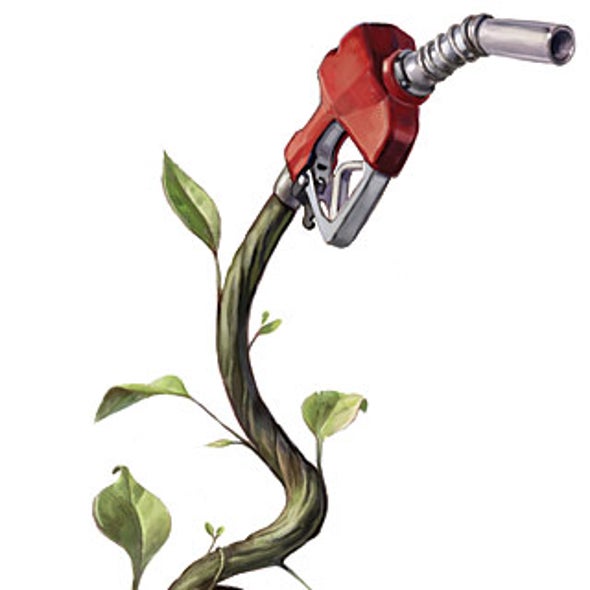
Biofuel

Biofuel is made out of biomass and this biomass consist of the organic remains called organic material. World biofuel day is observed on 10th august every year and it is important to discuss about biofuels as they can be an answer to the growing energy demand with no harms to environment.
Biofuel industries play a significant role in every country. Biofuel can contribute tremendously into the economy of both developed and developing countries. These are available in all three forms – solid, liquid and gas and based on the composition, making process and other criteria they can be further categorised. But, how are they different from any other fuel. The most useful feature of biofuel is being a renewable source of energy, a renewable source of energy creates less pollution and serves many added advantages. Today, when the goals are sustainable development, pollution free environment, better alternatives and meeting the growing demand of people in limited resources biofuel is a remarkable resource some of the common bio fuels are Bioethanol, Biodiesels and biogas etc.
Apart from being renewable the production process of bio fuel is also a notable feature, as mentioned before bio fuel is produced from organic material which is widely and easily available. Whereas, on the other hand other fuels which are mostly made from fossil available in a limited quantity, they can get exhausted easily if the requirement increases. Thus, in such a scenario bio fuel can help. Biofuels can be produced easily in any area, just like most of the countries are producing within there boundaries this reduces the dependence on the imported fuels.
Despite having a number of advantages, there are disadvantages associated with biofuels like:
• Production of biofuel requires water in large amount. If there is an insufficient supply of water it can disturb the production process.
• The quantity difference with biofuel, it can not generate same amount of energy in the same quantity as some other fuel. Which ultimately decreases the efficiency of biofuel in comparison to other fuels.
• Also, it requires huge area to setup a biofuel plant in case there is shortage of land then it can not be setup or the land on which the setup is done, it can not be used for any other pourpose so both ways it is a disadvantage.
The advantages and disadvantages are almost equal in numbers and the fact is that biofuel has surely bought changes in the field of energy production for many countries, it has expanded energy production, lesser carbon emission into the atmosphere and reduced the total dependence on fossil fuels. It is observed that the fuel prices are rising every year and they cause global warming at the same time biofuel can be an answer to all such problems specially the countries who are willing to invest in environment friendly product that will be beneficial for the development of the nation. The national leaders worldwide are looking for better alternatives to have a bright future and Biofuels is already one of those, various schemes are policies are framed and implemented at national level for the same.

Brownian motion

Brownian motion is the random movement of particles in a gas or liquid caused by the unequal bombardment of other molecules in the medium. In 1827, Robert Brown first noticed that a pollen grain suspended in water was moving in a random pattern. Later in 1905, Albert Einstein derived a quantitative expression for Brownian motion using the kinetic theory of molecules. Brownian motion is that it’s all around us! The Brownian motion model applies to everyday life: it explains how molecules are transferred throughout a cell to the navigation of robots on random terrain to computing genetic drift in biology to the prediction of stock prices in finance. The movement of pollen grains on still water. Dispersal of pollutants in the air. It is amazing how physics and science have given humanity a way to deal with random situations. All thanks to the Brownian motion.

Julius Mayer was the first person to state the law of the conservation of energy, one of the most fundamental tenets of modern-day physics. The law of the conservation of energy states that the total mechanical energy of a system remains constant in an isolated system of objects that interact with each other only by way of conservative forces.

J = R/(Cp – Cv)

R is the ideal gas constant expressed in work units. Cp and Cv are the specific heats at constant pressure and constant volume. They are expressed in heat units. One problem with Mayer’s work was that he had an accurate value of R, but Cp and Cv data were flawed. Therefore, his value of J was far less accurate than Joule. We call the law of conservation of energy the First Law of Thermodynamics. It says energy is conserved over its many forms’ potential, kinetic, thermal, and so on. Energy can neither be created nor destroyed.

Keezhadi Nanotechnology

If you believe that if I say Tamil people developed Nanotechnology 2600 years ago. Yes, it is true. Researches say that the pots which the tamil people used then, was coated using Nanotechnology. This blog is going to be about the carbon nanostructures that were found in Keezhadi. Scientists found the 2600 years old earthenwares in Keezhadi coated with carbon nanotubes. Carbon nanotubes have high thermal and electrical conductivity and very high mechanical strength and also very light in weight.

Many may have heard about Keezhadi, the archeological site which portrays the rich civilization of Tamil people in the sixth century BC. Many steps of excavation was made in Keezhadi. Huge remains of pottery were found. When scientists experimented on the pot remains, they found a unique black coating over it. They also discovered that Carbon Nanotubes were in the black coating. These were the oldest known nanostructures on the Earth right now.

In the modern era, Carbon Nanotubes was developed in 1991 which is called CNT. From 1991 to 2006, in America, more than 4500 applications for getting patent rights for Nanotubes have been submitted. This data is from a Scientific paper.

A graphite consists of layers of Graphene laid one over the other. If a single layer Graphene is taken and folded cylindrically/ round, then it is called Carbon Nanotubes. These Carbon Nanotubes and Graphene comes under SP2 bond type. Diamond cones under SP3 bond type. So Carbon Nanotubes and Graphene are tougher than diamonds. So Carbon Nanotubes and Graphene are called as “Wonder Material” by the scientists. Nanotube is used in the Bullet proof vests.

How many types does the Carbon Nanotubes consist of?
Carbon Nanotube has three typpes – Armchair CNT, Zigzag CNT and Choral CNT. The direction in which they are shaped will determine the type. After they have completed a Nanotube it is called Single-Walled Carbon Nanotubes (SWCNT). If there are layers of these, then it is called Multi-Walled Carbon Nanotube (MWCNT).

Can these SWCNT or MWCNT created naturally?

There are scientific papers released in 2008 and 2017. In any of those, there is no proof that they occured naturally. So according to science, the possibility for Nanotubes to occur naturally is very low. So one should have helped the process in the ancient era. An external force in specific level is required for its formation. A paper in 2008 says that from 2020 to 2025, the carbon nanotubes would be a billion dollars business. Such a precious material is found in Keezhadi now. But no one is ready to talk about it. But we should know about our history.

Gravity is science. But it existed for billions of years. When a person named it as “Gravity” it was changed into a Scientific term but still it is a Natural Occurance. That is the Reality. The Tamils in Ancient times were dependent on nature. Their way of using Nature to their will was unique. They thought about how to use it to improve their lifestyle. The Tamils were one step ahead of research. So the Tamils in the ancient times knew that Carbon Nanotubes and Graphene were the toughest materials which were very high electrical and heat conductors. Take only the toughness property. So Tamil people who lived 2600 years ago, needed the toughest material available on Earth. Tamils had metals. But they had clay in large quantities. The Tamils wanted to toughen up the clay. So they built aypots but it broke soon. So they discovered that to toughen up the claypots, they should heat them. These heated pots were not so tough. Now they wanted a coating to be done upon the pots. So through trial and error method they did a coating in the claypots. They would have spent many years to complete the research. After many trials with many materials which resulted in failures, the Tamils would have developed the carbon nanotubes.

How many degrees Celsius was required?

Nearly 1100° to 1400° Celsius. In these extreme conditions only, they could have created the Carbon Nanotubes. The Scientists of today say that the materials used for coating may be Carbon rich materials. So when we say Carbon rich materials, it could be Vegetable oil or any other material. When it is combined with the claypots under extreme heat, the carbon nanotubes may be created. The claypots would consist of Iron content. So iron and carbon together may produced Carbon Nanotubes, a material which is 200 times tougher than steel. So through this method, the ancient Tamils would have created Carbon Coated claypots which lasted for many years. Due to the toughness of carbon nanotube, the claypots has been discovered as Archaeological remains in Keezhadi.

“STAY AWAY FROM THE MAN UNTIL HE IS YOUR HUSBAND”.

GIRLS ARE TAUGHT TO STAY AWAY FROM BOYS. THEY ARE MADE TO UNDERSTAND THAT BOYS ARE INHUMAN AND CAN TAKE YOUR BENEFIT. BOYS ARE RUDE, BOYS ARE STONG, THEY PREY ON WOMEN AND SHIT LIKE THAT.

ISNT IT GOING TO BE BETTER TO TEACH YOUR BOYS TO BE KIND TO WOMEN? IS THAT THE BOY’S FAULT , IF HE IS BEING TAUGHT TO CONSIDER HIMSELF TO BE SUPERIOR AND TO BE AN ASSET FOR THE FAMILY ?

IF A DOCILE MIND IS TAUGHT TO DO SO, THEN WHO IS LIABLE FOR THIS MENTALITY?

IS IT THE GIRL’S FAULT THAT SHE IS MADE TO FEEL DUMB AND A LIABILITY.

WHY ARE WE TAUGHT TO STAY AWAY FROM MEN ? WHY ARE WE MADE TO THINK BAD FOR BOYS? WHY ARE WE TAUGHT THESE THINGS?

BOYS WERE NOT BORN WITH THE SUPERIORITY

AND A THINKING PROCESS OF INFERIORITY

IT WAS TAUGHT TO THEM BY THEIR ELDERS

THEY DID A BAD JOB BEING THE METAL { BOYS} WELDORS

WHY COME TO THE FINAL RESULT?

WHEN WE OURSELVES AT AT FAULT.

THINK OF IT, LETS TAKE A HAULT.

Engineers for developing Biological Systems

Engineering has already shaped the view of systems biology and its application to fundamental knowledge, bioremediation, and human health. Already, systems bioengineering has begun to establish a core set of principles for problem-solving that fuses experiments and computation. Some of which are discussed below-

Engineering of artificial gene networks-  Significant efforts were recently undertaken in the design of artificial genetic networks in prokaryotic and eukaryotic systems. Here, different genetic elements or parts are ultimately rationally combined to devices to realize specific cellular behaviors that have frequently analogies to elements from electric circuits such as switches and oscillators.

Networks for intercellular communications-  Creating macroscopically observable artificial functional behaviour in a cell population requires synchronization. Such synchronization can be enforced by adding chemical inducers or by letting the cells themselves produce a signal in response to a change in a culture property. One example for such a property is cell density which can be communicated by quorum sensing, for example via the luxR/luxI system of Vibrio fischeri or artificially engineered systems

Engineering of systems- Engineering biology is a very young discipline that follows a powerful technological vision. However, there are no examples available where the whole approach has been implemented. Still, in some cases, specific aspects of biology have been of critical importance. The design of an E.coli capable of image processing, refactoring of the phage T7, the design of novel polyketide antibiotics and the manufacturing of precursors for the anti-malaria drug artemisinin.