Motivation

The term motivation is derived from the word ‘Motive’. Motive is a combination of thought, feeling or condition that causes one to act. Motivation is that force which incites individual to perform some activation.

Types of Motivation

  1. Intrinsic Motivation :- Intrinsic motivation is internal. It occurs when person are compelled to do something out of pleasure, importance or desire. Motivation is always intrinsic when it comes from within oneself.
  2. Extrinsic Motivation :- It occurs when eternal factors compel the person to do something. Reward,punishment, praise, blame or cash prize are example of extrinsic motivation.

Techniques of Motivation

  1. Goal Setting :- If you don’t set a goal, you cannot achieve apex position in your life.
  2. Elaborate Arrangement of competition :- Without extensive arrangement of competitions one can’t perform well in such competitions.
  3. Healthy Environment :- Healthy environment consists of good climate, proper wealth, humidity and temperature etc. In such healthy environment one can exhibit good performance in competition.
  4. Motivational Music :- It is a good way to motivate someone.
  5. Positive Attitude :- For proper motivation the one should try to encourage positive attitude among themselves.


Meaning of Confidence

Confidence means having security about oneself and oneself ability. It is belief of being valuable, worthwhile and capable. Confidence turns thoughts into action.

Factors affecting Confidence

There are several factors that affect confidence both internal and external. Genetics, childhood, environment, society, media, health, experience can all add or take away how you feel about yourself and your abilities. The choices you make, risks you take and how you respond to challenges play major role in confidence development.

Tips to boost Confidence

  • Don’t compare yourself to others.
  • Surround yourself with Positive people.
  • Take care of your body.
  • Face challenges.
  • Continuous practice to sharpen your skills.
  • Good diet plan.
  • Try new things.

Anime series for beginners

1.Death Note

Death Note is written by Tsugumi Ohba and illustrated by Takeshi Obata. It consists of 37 episodes . It is psychological thriller, mystery based anime. This is the story of a teen genius boy who got a strange notebook which originally belongs to Shinigami Ryuk.

2.Attack on Titan

It is written by Hiroshi Seko and illustrated by Tetsuro Akari. Attack on Titan is of 4 season and 75 episodes. It’s genre is action, dark fantasy and post-apocalyptic.

3. One Punch Man

It is written by ONE and illustrated by Yusuke Murata. It consists of 23 episodes and it’s genre is action, gag comedy and superhero. One punch man is a story of a boy name Saitama, who has superpower and strongest person in the universe.

Operators and Expression in Python

Operators :-

Python consists a set of operators which are used to specify operations to be performed in an expression.

  • Unary Operators :- Operators that used only one operand. ‘+’ and ‘-‘ sign can be used as a sign of addition and subtraction and also as unary operators.
  • Binary Operators :- Operators which use two operands are known as binary operators like multiplication (*), addition (+) etc. are example of binary operators.
  • Membership Operators :- The membership operators (in and in not) are used to test for membership of a sequence, such as string , lists or tuples.
  • Identity Operators :- Identity operator ( is and is not) is used to compare the memory location of two objects by using id (object) functions.

Expression :-

  • Arithmetic Expression :- It is a combination of operands and arithmetic operators such as +,-,*,/ etc.
  • Relational/Conditional Expression :- The Expression that compares two operands using relational operators like >,<,>=,<=, etc. is called relational/conditional expression.
  • Logical Expression :- The logical expression uses logical operators like and, or and not. The logical expression produces boolean result such as True or False.

An ultimate solution to tea bags ‘Tea Infuser’

As soon we wake up we need our cup of tea . Normally we make tea from loose leaves but for ease big companies started selling tea in teabags. We only have to dip these teabag in hot water or milk and our tea is ready.

Teabag seems like paper bag but to keep the seal and shape of teabags intact in hot water, some companies are mixing polypropylene in it, which is a type of plastic. When teabag is dipped in hot water billions of microplastic gets released in tea, so basically it is not good for health.

To find out teabag is made of plastic or not we just have to rip a single bag with hands. If it rips easily, then it’s a paper bag. If it doesn’t rip easily then either it’s cloth bag or there is high chance of plastic mixed in it. Also teabag comes in different packets which is plastic wrapper so it generates a lot of waste.

Solution to teabags

It is best to make tea with loose leaves but this is not possible during travel that’s why most people use teabags. We can use Tea Infuse instead of tea bags. Tea infuser starts from Rs. 150/- and it is made up of steel.

We just have to open it fill it with tea leaves and use it as teabags. This won’t release any microplastic nor any waste would be generated. We can use tea infuser multiple times and it is compact, easy to carry during travel. This will save money as well because loose leaves are much cheaper than tea bags. One can buy tea infuser at any crockery shop or online.

Elements of Yoga

Patanjali described eight element of Yoga in Yogasutras. The eight elements of yoga are Yama, Niyama, Asana, Pranayama, Dharna, Dhyan and Samadhi.

1. Yama

It is the first element of astanga yoga. Through the practice of yama one can abstain from things that keep one’s mind involved in the inevitable struggle for survival. According to Patanjali there are five Yama Ahimsa ( Non-violence), Satya (Truthfulness), Asteya (Non-stealing), Brahmacharya and Aparigraha.

2. Niyama

Niyamas are related to one’s body and senses. Niyamas are also ethical practices as yamas. There are five niyamas Saucha (Purity), Santosh (Contentment), Tapa (Endurance), Swadhyaya( To study great Vedas, Holy books) and Tshwara Pranidhana ( dedicated to God).

3. Asana

Asana means ‘position or posture of body’. Asana gain so popularity that people thinks that yoga is nothing but asana but they are not aware that asana is a step towards yoga. Asana are performed to keep the body flexible, agile and young. There are various types of asana such as relaxative asana, meditative asana, etc. Each asana have different effects on various organ of body. It can be performed at any age without any problem.

4. Pranayama

It is the control of the process of breathing means appropriate control over inhalation and exhalation. There are three constituents of pranayama Puraka ( Inhalation), Kumbhaka ( Retaining the breath), and Rechka ( Exhalation). Pranayama helps in regulating the metabolic activities and enhance the functions of heart and lungs.

5. Pratyahara

It is a process of self control in which an individual is able to exercise control over his/her senses. To control the mind and senses is called pratyahara. The practitioner of pratyahara starts feeling extreme pleasure in remembering God.

6. Dharna

Dharna is concentration of mind. Dharna is the first step towards samadhi. Dharna is mental exercise which enables a yogi to go ahead towards dhyana and samadhi.

7. Dhyana

It is the process of complete constancy of mind. Dhyana is a complete concentration of mind over a period of time without any distractions.

8. Samadhi

The union of individual’s soul with absolute soul is called samdhi. During the stage of dhyana, when the disappearance of self-awareness takes place, the yogi attains the stage of samadhi.

Database Concepts

Database :- It is collection of information in such a way that computer program can quickly retrieve desired pieces of data and do operations.

DBMS ( Database management system) :- It is collection of programs that allows us to store, modify and extract information from database.

Data Independence :- Data independence implies that data stored at different levels should not affect each other when get changed.

Table :- A predefined row/column format for storing information in relational databasse.

Attributes :- Columns of table are called attributes.

Tuples :- Rows of table are called tuples.

Degree :- Number of attributes (columns) in a relation is called its degree.

Cardinality :- The number of tuples (rows) in relation is called cardinality.

Key :- Keys help in identifying, retrieving and establishing relationship among tables. There are various keys some of them are primary key, foreign key, alternate key, etc.

Data Integrity :- It means that one person can correctly and consistently navigate and manipulate the tables in database.

Entity Integrity :- It state that value of primary key can never be null and for each roe, it should be unique.

Referential Integrity :- It state that if a relational table has foreign key, then every value of foreign key must be either null or match the value in the relational table in which foreign key is a primary key.

Join :- It is used to combine related tuples from two relation. The join operator is cross product of two relations.

SQL (structured Query Language ) :- It is standard language used for communicating with RDBMS. It looks like English language.

DML ( Data Manipulation Language ) :- It is a part of SQL that provides statements for manipulating database. DML statements can modify the data stored in a database, but they can’t change its structured. Some of DML statements are : Insert Into, Delete , Select, Update, etc.

DDl ( Data Definition language ) :- It is a part of SQL that provides statements for creation and deletion of database. DDL statements are : Create Table, Alter Table, Drop Table, Create Index, etc.

What to do with kitchen waste?

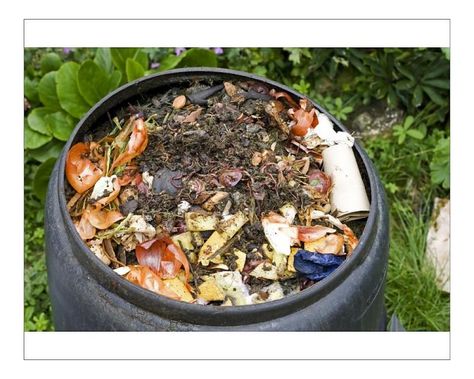
Our kitchen generates lot of waste throughout the day whether it is vegetable peel, leftover meal or rotten vegetables and fruits. All of these waste goes into dustbin.

According to report 60% of waste comes from kitchen. These waste gets mixed and collected in landfills. These waste releases methane gas which is a greenhouse gas. This pollutes air and water.

We can use these kitchen waste to make compost. Nowadays people buy fertilizers from market but what if we use kitchen waste to make compost. Isn’t this amazing way to save Earth as well as money ?

How to make compost :-

First we need is kitchen waste called as green waste. Drained the excess water from it. These waste are rich in nitrogen. Second we need is dried leaf called brown waste. Third microbes ( an accelerator ). Fourth is container you can use any container either of earthen pot or anything as per your ease.

Put dried leaves in the lower of container above it spread green kitchen waste add some accelerator i.e; microbes on top of it. Again put another layer of dried leaves and close the lid of container. That’s one day waste. On second day repeat the same process. Once in 4-5 days mix it well so that it can absorb oxygen. Oxygen is essential for its breakdown.

When container get full keep it aside for 20-30 days. After 30 days compost is ready to use. We can this compost to nourish the plants and grow whatever we want.

Tokens in Python

Token :- A token is the smallest unit of program. There are various tokens in python some of them are literals, keywords, identifiers, delimiters, operators, statements and expressions.

1. Literals

It refers to data item that have a constant value. Various type of literals are string literals, None (special literal), numeric literal and boolean literal.

2. Keyword

Python has some reserve words which have predefined meaning to its interpreter. It can’t be used as variable, mrthod or class name.

3. Identifiers

It is a name used to identify a variables, arrays and functions.

4. Variable

Variables are used as containers to store data. The data stored in a variable can be modified whenever needed.

5. Delimiters

Delimiters can be defined as a sequence of one or more character that is used to specify the boundary between separate independent region in plain text or other data streams.

6. Statements

A statements is a unit of code that python interpreter can execute.

7. Operators

Operators are used to specify operations to be performed in an expression.

Delete Useless Emails, Save Environment

In our email id there are such emails which we’ve never opened. We know that these emails are not important to us so we ignored them. In fact every email is polluting our environment.

Emails are saved on servers and to run these servers huge amount of electricity is needed. Even now electricity is generated through fossil fuels. This shows that email generate carbon dioxide which is harmful for environment.

According to research, one spam email give rise to 0.3 grams of carbon dioxide, normal email 4 grams and attachment email can generate around 50 grams of carbon dioxide.

According to report around 60 billion spam emails are sent in a single day which produces 80,00,000 kilograms of carbon dioxide.

There are some simple steps which we can follow to save environment.

  • Delete useless/unwanted emails so that the data will be deleted from from servers.
  • Delete spams consistently.
  • Unsubscribe unwanted emails.
  • Turn off social media notifications.
  • Clean your trash bin.

Lets take some simple steps towards cleaning environment by deleting useless emails.

5 Must have plants at home

1. Tulsi

Scientific name of Tulsi is Ocimum Tenuiflorum, generally known as Basil. Tulsi contains vitamin c, vitamin k, zinc . It has anti-bacterial, anti-fungal and anti-bacterial properties. It is rich source of anti-oxidant.

Benefits :-

  • Immunity booster.
  • Reduces stress.
  • Good for skin.
  • Reduces hair fall.
  • Useful in cold and cough.

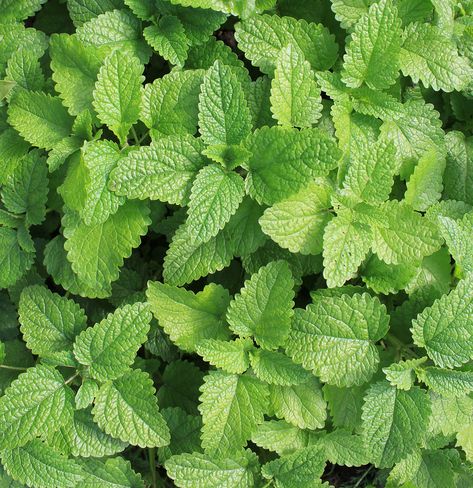
2. Mint :-

Its scientific name is Mentha and belongs to Lamiales family. It contains potassium, magnesium, calcium, iron, etc.

Benefits :-

  • Prevents Skin disease.
  • Provides relief in pain.
  • Beneficial in oral health.
  • Boost immunity.
  • Treat indigestion.

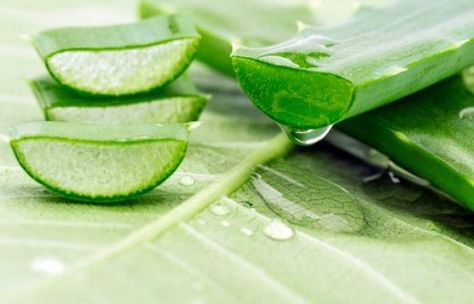
3. Alovera :-

Alovera belongs to Asphodelacea family. It contains vitamin A, C and E, anti-oxidants, salicylic acid, amino acid etc.

Benefits :-

  • Treat dandruff.
  • Treat minor burns.
  • Act as pain reliever.
  • Useful in diabetes.
  • Weight loss.

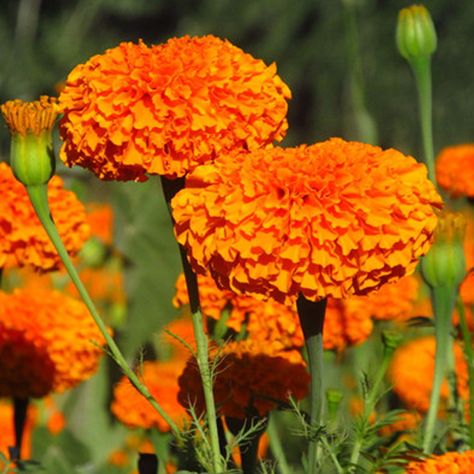
4. Marigold :-

Scientific name for Marigold is Tagetes belongs to family Asteraceae. Marigold is antipyretic, antiseptic, anti-oxidant and anti-bacterial.

Benefits :-

  • Heals skin wounds and burns.
  • Reduces eczema.
  • Good for digestion.
  • Helps in detoxification.
  • Treats ear infections.

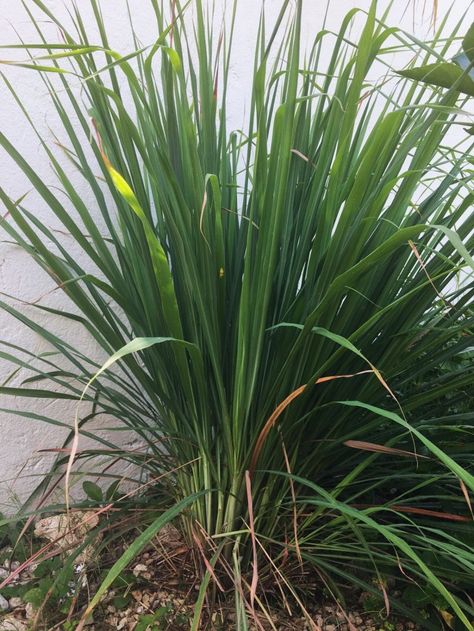
5. Lemongrass :-

Cymbopogon is scientific name for lemongrass. It belongs to Poaceae family. It contains potassium, manganese and iron. It is source of vitamin A and vitamin C.

Benefits :-

  • Relieving anxiety.
  • Prevents infection.
  • Reduces stress.
  • Lowers Cholesterol.
  • Helps in weight loss.

Yoga

Yoga is derived from Sanskrit word ‘Yuj’ (verb) which means unite. Yog means union of individual soul with the absolute soul. It also means unification of physical, mental, intellectual and spiritual aspects of human being

Benefits of Yoga

  1. Physical Purity :- There are three substance in our body i.e; vaat, pitt and kaph. If these three substance is in proper balance we may remain healthy. Neti, Dhoti, Nauli, Basti, Tratak etc. are some yogic exercise which keep internal organ of our body in clean state.
  2. Reduces Mental Tension :- Prathyahar, Dharna and Dhyan plays important role for restoring peace of mind. Makarasana, Shavasana, Shalabhasana are benefical for releasing stress.
  3. Spiritual Develpoment :- We can generate good control on our mind by doing regular exercises. Padmasana and Siddhasana are the best asana for spiritual development.
  4. Increase Flexibility :- Flexibility plays a significant role in every ones life. Flexibility makes the body movement efficiently. Chakrasana, Dhanurasana, Halasana, Bhujangasana are beneficial for increasing flexibility.
  5. Reduces Obesity :- Nowadays obesity is worldwide problem. Obese people may suffered from various diseases. Pranayama and meditative asana reduces obesity.

Physiological Benefits of Asana

  1. Bones and joints become strong.
  2. Muscles become strong.
  3. Circulation of blood becomes normal.
  4. Improves Immune system.
  5. Respiratory organ become efficient.

Physiological Benefits of Pranayamas

  1. Improves the supply of oxygen.
  2. Enhance elimination of waste product.
  3. Lungs become strong.
  4. Reduces stress.
  5. Purifies nervous system.

A Miracle Herb: Giloy

Scientific name of giloy is Tinospora Cordifdia also known as Guduchi in Hindi. It belongs to Menispermaceae family. It is climbing shurb have heart shaped leaf and also known as Heart-leaved moonseed.

Medicinal properties of Giloy

Giloy contains several important nutrients like Alkaloids, Terpenoids,Lignans, Steroids, etc. It can be used to cure fever, urinary problem, skiin disease, diabetes, etc.

Benefits:-

  • Chronic fever:- Giloy is a anti-inflammatory, antipyretic herb which helps to boost immunity.
  • Controls blood sugar level:- Giloy is known as “Madhunashini” in Ayurveda which means destroyer of sugar.
  • Improves digestion:- Giloy can reduce digestion-related problems like diarrhea hyperacidity, etc.
  • Reduces stress:- Giloy cools down the body and improves memory power

Python: An Introduction

Python was created by Guido Van Rossum in late 1980s at National Research Institute for Mathematics and Computer Science in the Netherlands. It is derived from many other languages like Modula-3, C, C++, Algol-68 and Unix Shell.It is object oriented , open source, cross platform, high-level dynamic and interpreted language . Python programming is very powerful, expressive and easiest language to learn and use.

Features of Python

  • easy to learn and use
  • comprises of board library
  • free and open source
  • object-oriented concepts
  • extensible

Interactive Mode :- A command line which gives immediate result for each statements.

Script Mode :- It is used to write set of statements/instruction in python. Set of statements store in file with .py extension.

IDLE :- It refers to “Integrated Development Environment” in python. It comprises Python shell program which lets user to type instruction into system.

If you decide to design your own language there are thousand of sort amateur language designer pitfalls.~ Guido Van Rossum

The land of forests “Jharkhand”

Jharkhand is the eastern state of India. Jharkhand originated from the southern part of Bihar on 15th november 2000. It share its border with Bihar in north, Uttar Pradesh And chhattisgarh in west, Odisha in south and West Bengal in east.

Jharkhand is derive from two words “Jhar” means bush and “khand” means land which together makes “The Land Of Forests”.

It is 15th largest state by area and 14th largest state by population. It comprises of 24 district. Ranchi is capital of Jharkhand and Dumka is sub-capital while Jamshedpur is largest industrial city. Jharkhand is famous for its rich mineral resources like Uranium, Mica, Bauxite, Granite, Coal, Iron, Copper etc. Jharkhand is rich in mineral resources and also known as “Ruhr of India” ( Ruhr is a mineral state).

Jharkhand is known for place of tribal communities . There are 30+ tribes in Jharkhand among them Khadia ,Santhal, Munda, Ho, Oraon, Asura, Birjia, Pahadia etc. are predominant. The tribe have its own unique tradition and culture which can be seen in their music, folk dance, paintings etc. These tribes believed that God reside in trees and nature. Hindi is official language of Jharkhand. Other than Hindi languages like Kurukh, Mundari, Santhali, Ho etc are also popular among tribal communities spoken languages.

https://en.wikipedia.org/wiki/Culture_of_Jharkhand

https://www.ritiriwaz.com/jharkhand-culture-and-tradition/