Plea of Privacy Not Tenable to Resist Gender Detection Test

It has to be remarked first and foremost that in an important and a landmark observation, the Madhya Pradesh High Court has just recently on October 4, 2019 in a notable judgment titled Smt. Surbhi Trivedi Vs. Gaurav Trivedi in Misc. Petition No. 4820 of 2018, held that in a matrimonial dispute, if gender of one of the parties is questioned by the other party, the court may direct such a party to undergo medical examination and the plea of violation of privacy shall not be tenable. This extremely important judgment was passed by Justice Subodh Abhyankar in a petition invoking supervisory jurisdiction of the High Court under Article 227 of the Constitution filed by one Surbhi Trivedi (Petitioner), through Advocate Sampoorn Tiwari, against an order of the Family Court whereby the Principal Judge had directed that her gender be verified by a Government lady doctor. Justice Abhyankar while concurring with the respondent’s-husband contentions clearly held that the Family Court had not committed any illegality or jurisdictional error in directing the petitioner to undergo feminity test. It was held that the parties must be given an opportunity to produce any evidence “having a nexus with the lis”.

                                       Regarding the law laid down, it is clearly mentioned in this judgment right at the outset that, “In a matrimonial dispute, if gender of one of the parties is questioned by the other party, it assumes importance and the party raising such issue also has a right to adduce the evidence in this behalf and the other party to rebut the same. This Court is conscious of the fact that one’s sex/gender is one’s own business, but when it comes to marriage, the other partner’s rights are also closely attached with the same, as it assumes importance to maintain a healthy and peaceful married life, and since he or she also has a fundamental right to life under Article 21 of the Constitution of India, the rights of both the parties are evened out. The plea of violation of privacy or any fundamental right is not tenable.”

                                  To start with, the ball is set rolling in para 1 of this landmark judgment wherein it is envisaged that, “This petition has been field by the petitioner/wife under Article 227 of the Constitution of India against the orders dated 16.8.2018 as also order dated 25.9.2018 passed in Case No. 112-A/2017 by the Principal Judge, Family Court, Jabalpur, whereby the learned Judge, by accepting an application filed by the respondent husband under Section 151 of CPC has directed that the gender of the petitioner be verified by a Government lady doctor and vide order dated 25.9.2018, the petitioner is directed to keep herself available for medical examination on 10.10.2018 before the Dean, Netaji Subhash Chandra Bose, Medical College, Jabalpur.”

                          To recapitulate, it is then pointed out in para 2 that, “Brief facts of the case are that the marriage of the petitioner-wife and the respondent husband was solemnized on 22.11.2009 at Jabalpur and after sometime a dispute arose between the parties which led to the present petitioner-wife filing an application under Section 9 of the Hindu Marriage Act, 1955 in the Family Court, Jabalpur. A reply to the aforesaid application has also been filed by the respondent along with an application under Section 151 of CPC with a prayer that as the petitioner lacks womanly attributes and is a transgender hence she be examined medically at Netaji Subhash Chandra Bode Medical College, Jabalpur. A reply to the aforesaid application was also filed by the petitioner opposing the same on the ground that the marriage between the parties was solemnized on 22.11.2009 and since last eight years the husband has never raised this issue before any authority and suddenly he has realized that the petitioner is transgender, which in itself is absurd hence the application is liable to be dismissed. It was further stated that even according to the reply of the respondent they had consummated the marriage, hence the said application being frivolous be dismissed.”    

                        While elaborating upon the decision of the Family Court, it is then stated in para 3 that, “The learned Judge of the Family Court vide the impugned order dated 16.8.2018 has allowed the said application taking note of the medical papers submitted by the respondent in respect of the petitioner’s physical attributes and it is directed that the petitioner shall get herself examine at the Netaji Subhash Chandra Bose Medical College, Jabalpur and its cost shall be born by the respondent only.”

                               Needless to say, after hearing the learned counsel for the parties and perusing the record as mentioned in para 6, it is then pointed out in para 7 that, “The learned Judge of the Family Court vide its impugned order dated 16.8.2018 has allowed the aforesaid application holding that the medical examination of the petitioner is necessary. In the considered opinion of this Court, no illegality or jurisdictional error has been committed by the learned Judge of the Family Court for the reasons assigned as here under.”

                                Most importantly, it is then very rightly held in para 8 without mincing any words that, “This Court is of the considered opinion that if any evidence having a nexus with the lis between the parties, should be allowed to be produced. In a matrimonial dispute, if gender of one of the parties is questioned by the other party, it assumes importance and the party raising such issue also has a right to adduce the evidence in this behalf and the other party, to rebut the same. This Court is conscious of the fact that one’s sex/gender is one’s own business, but when it comes to marriage, the other partner’s rights are also closely attached with the same, as it assumes importance to maintain a healthy and peaceful married life, and since he or she also has a fundamental right to life under Article 21 of the Constitution of India, the rights of both the parties are evened out. In such circumstances, the plea of violation of privacy or any fundamental right is not tenable.”

                                    It cannot be lost on us that it is then further pointed out in para 9 that, “In the judgment rendered by the Coordinate Bench of this Court in the case of Amol Chavhan Vs. Smt. Jyoti Chavhan, reported as 2012 (1) MPLJ 205, wherein, this Court, in a case where an application was filed by the wife for medical examination of the husband to ascertain if the husband is impotent or not, has held that the order passed by the trial Court directing the medical test of the husband to ascertain the impotency is just and proper. The relevant para 10 and 11 of the said judgment reads as under:-

‘10.  The Apex Court has relied on Sharda vs. Dharampal, reported in (2003) 4 SCC 493 to hold that medical examination by experts is permissible to ascertain the truth of the matter. In view of this, question No. 1 deserves to be answered against the petitioner. The Court below took a plausible stand and, therefore, cannot be interfered in this proceeding under Article 227 of the Constitution.

11. So far the issue regarding infringement of petitioner’s personal or fundamental rights flowing from Article 21 is concerned, in the opinion of this Court, there is no such infringement in a proceeding of this nature, where a question raised regarding impotency of petitioner by the wife, the Court has inherent power to direct the petitioner to undergo medical test.’

Reference may also be had to the judgment of the Hon’ble Apex Court in the case of Dipantia Roy Vs. Ronobroto Roy, reported in (2015) 1 SCC 365 wherein the DNA of the son was directed to be taken where the allegation was of infidelity of the wife by the husband.”

                                          What’s more, it is imperative to now mention that it is then made absolutely clear in para 10 that, “Having held in favour of the medical test, this Court is also of the firm opinion that if such rights to defend oneself are used in a manner so as to harass, scandalize or demoralize the other party, the Courts are competent enough to impose heavy cost on the person alleging the same so as to discourage such practice. In view of the aforesaid, in the considered opinion of this Court no case for interference is made out.”

                                               In other words, the Madhya Pradesh High Court while firmly ruling in favour of medical test which according to it does not violate any right to privacy or any other fundamental right also simultanously makes it amply clear that if such rights to defend oneself is itself made an instrument of oppression by using it as a potential weapon to harass, scandalize or demoralise the the othe party then the Court will not refrain from imposing heavy cost on the person alleging the same to send a strong and unmistakable message that if it is misused then those misusing it would have to face the music of law!

                                Lastly, it is then held in the last para 11 that, “As a result, petition being devoid of merit is hereby dismissed. It is also directed that the petitioner shall be examined as directed by the learned Judge of the Family Court and for this purpose she is now directed to appear before the Dean, Netaji Subhash Chandra Bose Medical College, Jabalpur on 14.10.2019 at 11.30 AM. The report so prepared be furnished to the concerned Court in a sealed envelope for its use in the proceedings.”

                                        In conclusion, it may well be said with a fair degree of satisfaction that Justice Subodh Abhyankar of the Madhya Pradesh High Court has very rightly held and very rightly interpreted in this latest, landmark and extremely laudable judgment that plea of privacy not tenable to resist gender detection test by parties in matrimonial disputes. Parties must therefore be always ready to submit themselves for gender detection test whenever and wherever it is considered necessary! What is wrong in it? Nothing wrong!

Sanjeev Sirohi, Advocate,

s/o Col BPS Sirohi,

A 82, Defence Enclave,

Sardhana Road, Kankerkhera,

Meerut – 250001, Uttar Pradesh.  

Inconvenience of Accused to Approach Court Seeking Permission To Travel Abroad

To start with, we ought to know fully well that the Supreme Court just recently on October 21, 2019 in a notable judgment titled Barun Chandra Thakur vs. Ryan Augustine Pinto & Anr. In Criminal Appeal No. 1618 of 2019 (Arising out of SLP (Cri.) No. 9873 of 2019 (@ SLP (Cri.) Diary No. 26654 of 2019) has observed categorically and convincingly that mere inconvenience in the matter of approaching the court seeking permission to travel abroad cannot be a reason to dilute such condition imposed in an anticipatory bail order. The Apex Court Bench comprising of Justice Arun Mishra and Justice Ravindra Bhat had observed thus in an appeal filed by a victim’s father against the order of the Punjab and Haryana High Court that diluted conditions in the anticipatory bail order by allowing an application filed by the accused. Very rightly so!

                                First and foremost, the ball is set rolling in para 1 of this noteworthy judgment wherein it is pointed out that, “Delay condoned. Permission to file SLP is granted. Leave granted. With the consent of counsel of the parties, the appeal was heard finally.”

                             Delving deeper, it is then pointed out in para 2 that, “The respondent had approached the Punjab & Haryana High Court seeking modification of orders made previously, which had granted anticipatory bail to him. By the impugned order, the conditions governing his anticipatory bail were modified. In these circumstances, the father of the victim of the crime has approached this Court, claiming to be aggrieved by the modifications in the impugned order.”

                                   To recapitulate, it is then pointed out in para 3 that, “The facts necessary for the purpose of this order are brief: a First Information Report (FIR No. 250 dated 08.09.2017) was registered for offence punishable under Section 302 of the Indian Penal Code, 1860 (“IPC”) read with Section 25 of the Arms Act, 1959, Section 75 of the Juvenile Justice (Care and Protection of Children) Act, 2005 and Section 12 of Protection of Children from Sexual Offences Act, 2012 (POSCO) at Police Station, Bhondsi. Investigation of the said case was transferred to the Central Bureau of Investigation (for brevity “CBI”). Consequently, the case was again registered on 29.09.2017. The respondent was released on interim bail on 07.10.2017, upon furnishing bail bond to the satisfaction of the investigation agency, subject to statutory terms and conditions.”

                                    While going into the nitty gritty of the case, para 4 then reveals that, “The interim bail was subsequently made absolute on 21.11.2017. One of the conditions stipulated in the order of the final bail was that he would not leave India without prior permission of the Court. This order was appealed by a Special Leave Petition. That petition was dismissed on 11.12.2017. After the grant of interim bail, the respondent sought leave to travel abroad for about three weeks between 19.01.2018 and 09.02.2018. By an order dated 18.01.2018, permission was granted. The respondent approached the High Court thereafter, with an application for modification of order granting bail, in so far as the order imposed the restriction on his travel. That application was permitted to be withdrawn. Yet again, on another application CRM-M No. 55170/2018 was filed. In this application, the respondent argued that the CBI had not gathered any incriminating material against him, and that the charge-sheet was filed on 05.02.2018, did not contain any allegation regarding his involvement and role in that crime, and further investigation was kept open under Section 173(8) of Code of Criminal Procedure, 1973 (for short, “CrPC”).”  

                                 Furthermore, it is then pointed out in para 5 that, “In this second application for modification, it was argued that the respondent frequently travelled abroad and the condition of having to secure prior permission was cumbersome and extremely inconvenient. The respondent, in support of his application placed reliance upon certain judgments, including a judgment of this court. The CBI opposed the application, emphasizing that the conditions imposed were not unreasonable, but in the larger interest of justice. It was also pointed out that the conditions were imposed by virtue of Section 437 of the CrPC.”

                                Most importantly, it is then very rightly held by the Apex Court Bench in para 9 that, “On an overall conspectus of the circumstances, this court is of the opinion that since the charge-sheet had been filed, there was no material alteration in the facts, justifying the High Court to modify the conditions governing the grant of anticipatory bail. Significantly, an identical application for modification of the conditions of bail was made earlier by the respondent, which did not meet with success; he withdrew that application. There could be no gainsaying to that the right to travel abroad is a valuable one and an integral part of the right to personal liberty. Equally, however, the pre-condition of securing prior permission before travelling abroad is a crucial ingredient which undoubtedly was engrafted as a condition for the grant of anticipatory bail in this case. Mere inconvenience in the matter of approaching the court, therefore absent of any significant change of circumstances (i.e. framing of charges or no significant or serious material emerging during the trial, in the course of deposition of key witnesses, as to the role of the respondent), ought not to have led to dilution of the terms of the High Court’s previous consistent orders. At best, the condition for seeking permission before travelling abroad could have been regulated, not deleted altogether.”

                                        Finally, it is then held in para 10 that, “Having regard to the above, this Court is of the opinion that the impugned order cannot be sustained; it is accordingly set aside. The condition originally imposed upon the respondent as a part of the order granting anticipatory bail to secure prior permission before travelling abroad is hereby restored. At the same time, the trial court is enjoined and directed to deal with the application seeking permission, whenever made, as expeditiously as possible and in any case, ensure that orders are made within one week of filing it (i.e., application seeking prior permission). It goes without saying that such orders shall be made after considering the view of the CBI and taking note of relevant factors, and at the same time, ensuring that reasonable period before undertaking the travel is also given.” The last para 11 then winds up the judgment by saying that, “The appeal is allowed in the above terms.”

                              In essence, the long and short of this latest, landmark and extremely laudable judgment is that mere inconvenience of the accused in the matter of approaching the court seeking permission to travel abroad cannot be a reason to dilute such condition imposed in an anticipatory bail order! While pooh-poohing the leniency displayed by the Punjab and Haryana High Court, the Apex Court Bench minced just no words to make it absolutely clear that, “At best, the condition for seeking permission before travelling abroad could have been regulated, not deleted altogether.” Very rightly so! All the High Courts and lower courts must always keep this in mind what the Apex Court Bench comprising of Justice Arun Mishra and Justice Ravindra Bhat have laid down so categorically and convincingly! There can be no denying or disputing it!

Sanjeev Sirohi, Advocate,

s/o Col BPS Sirohi,

A 82, Defence Enclave,

Sardhana Road, Kankerkhera,

Meerut – 250001, Uttar Pradesh.

Justice Sharad Arvind Bobde To Be The New CJI

  It is official now that the seniormost Judge of Supreme Court – Justice Sharad Arvind Bobde to take over from the incumbent Chief Justice of India (CJI) – Justice Ranjan Gogoi on November 18 just a day after Justice Gogoi retires as CJI on November 17! PK Mishra who is the Principal Secretary to the PM Narendra Modi presented the warrant of appointment to the CJI-designate – Justice Sharad Arvind Bobde in New Delhi on October 29, 2019. President Ram Nath Kovind on October 29 appointed Supreme Court Judge – Justice Sharad Arvind Bobde as the next Chief Justice of India from November 18! He was sworn in as Chief Justice of Madhya Pradesh High Court on 16 October, 2012 which he held till 11 April 2013 and was elevated to the Supreme Court on 12 April 2013.

                                    To state the obvious, the notification issued by the Ministry of Law and Justice states that, “In the exercise of the powers conferred by clause (2) of Article 124 of the Constitution of India, the President is pleased to appoint Shri Justice Sharad Arvind Bobde, Judge of the Supreme Court, to be the Chief Justice of India with effect from 18th November, 2019.” Justice Bobde has certainly an impeccable reputation of always being polite, precise and yet powerful in expressing himself in his judgments which he has rendered in last so many years in his official capacity as Judge of the Supreme Court! Justice Bobde will be the 47th CJI and will have a fairly long tenure of almost one-and-a-half-years, with his term set to end on April 23, 2021.

                                           Needless to say, Justice Bobde is the second Judge from Maharashtra’s Nagpur region to be appointed CJI after Justice Mohammad Hidayatullah who was the 11th CJI from 25 February 1968 to 16 December 1970. The legal fraternity in Nagpur is certainly extremely delighted over his appointment into the most prestigious chair of CJI and they have every right to feel delighted because Nagpur town becomes the talking point in each and every corner of the country due to his being appointed as CJI. 

                                            He was born on April 24, 1956 at Nagpur and hails from a family of reputed lawyers. His grandfather was a reputed lawyer. His father – Arvind Shriniwas Bobde was a two time Advocate General of the Maharashtra government in 1980 and 1985. Justice Bobde’s elder brother late Vinod Bobde was also a senior Supreme Court lawyer  and a Constitutional expert.

                                          It must be mentioned here that Justice Sharad Arvind Bobde completed Bachelor of Arts and LLB degrees from Nagpur University. Nagpur High Court Bar Association (HCBA) Secretary – Praful Khubalkar, who once worked as a junior lawyer in Justice Bobde’s chamber was all praise for the CJI-designate over his knowledge and professionalism. Without hiding his true feelings, Khubalkar said frankly that, “It’s a proud moment for the legal fraternity in Nagpur that Justice Bobde, once a member of the bar here, has been appointed to the top post in Indian judiciary. He has worked in the Nagpur Bench for several years and he was designated as a senior advocate from Nagpur. Justice Bobde’s arguments in the court as a lawyer used to be so impressive that people would flock to listen to him. I had the opportunity to be in his chamber. I was his junior and closely watched the way he used to work and argue cases. I had the opportunity to be in his chamber. I was his junior and closely watched the way he used to work and argue cases. We have seen Justice Bobde work as a lawyer, senior advocate and then as a Judge of the Bombay High Court here.”

                                                     Not stopping here, Khubalkar further went on to add that, “He used to encourage junior lawyers. Senior members and lawyers here are very happy and delighted over his appointment. In his honour, we are planning a grand felicitation programme.” Nagpur District Bar Association President Kamal Satuja said that, “It was a matter of great pride that a legal luminary from Nagpur has been appointed as the CJI. He is a role model for all members of the legal fraternity. He will always be a source of inspiration for young lawyers who will be encouraged to strive for excellence. It is not only a dream come true for Justice Bobde, but for the entire legal fraternity.” There can be no denying it!

                                               We must also remember that Justice Bobde was appointed an Additional Judge of the Bombay High Court on 29 March 2000 just two years after he was designated as a senior advocate and remained a Judge of Bombay High Court till 15 October 2012. He had a practice of over 21 years and was involved in several high stake cases, including the Adarsh housing society scam and the PIL against Lavasa Corporation Limited. He had the power to always convince Judge by his strong persuasive power armed with deep knowledge of law while he was lawyer for which he shall be always remembered as the lawyers of Nagpur never tire to point out very rightly!

                                               Frankly speaking, when asked about what were his best moments in his 22 years as a lawyer, he took no time in replying honestly that filing insolvency pleas on behalf of 3.9 lakh Maharashtra farmers to save them from debt recovery officers was a very satisfying case. He candidly disclosed that, “The farmers were perennially debt ridden because their products didn’t even fetch them the money invested to grow crops. There was an agitation by Sharad Joshi to stop debt recovery officers of cooperative banks from entering the village as they were taking away the utensils and other items from the farmers’ homes. I advised them and then filed insolvency pleas on behalf of farmers. The Bombay HC and later SC stayed debt recovery from farmers.”  

                                       While recalling his experiences as a Judge, he pointed out that he dealt with a case of a rape-cum-murder of a young girl. A labourer Arumugam was convicted and sentenced. But the investigating officer committed suicide and left a note confessing that he had framed the labourer by planting false evidence and tutored witnesses. Justice Bobde then pointed out that, “I was of the opinion that not only the man should be acquitted, but there should be prosecution of the witnesses who gave false evidence. This case made me realise why a Judge should not only seem to do justice but also strive to do justice by looking deeply into every aspect of every case.”

                                                    It cannot be lost on us that it was Justice Bobde who while being on the Constitution Bench had first pushed for mediation of the Ayodhya dispute in order to “heal heart and minds”. It also cannot be ignored that it was Justice Bobde who had spoken up repeatedly during the 40-day hearings in court on the need to bring the bitter acrimony between the two communities to an end. During the hearing, he had very rightly observed that, “We cannot undo what has already happened. But we can put an end to the acrimony, heal the relationship between the two communities.” What can be more important than this what Justice Bobde has so very rightly pointed out! Justice Bobde has handled many important cases in his more than six-year tenure as a Supreme Court Judge!

                                                  It must be recalled here that it was Justice Bobde who was part of the three-Judge Bench who passed the historic interim verdict that was passed on May 18, 2018, which set aside the order of Karnataka Governor Vajubhai Vala granting Karnataka Chief Minister BS Yeddyurappa 15 days to prove his party’s majority and instead directed that a floor test be conducted within 24 hours. On the administrative side, Justice Bobde headed the first-of-its-kind three-member in-house Committee, also comprising of Justices Indira Banerjee and Indu Malhotra of Supreme Court which gave a clean chit to CJI – Ranjan Gogoi who was facing serious allegations of sexual harassment leveled by a former Supreme Court staffer as they found no substance in those allegations leveled by the woman staffer on CJI Ranjan Gogoi!

                                      It deserves to be mentioned here that a few of the other important decisions passed by Justice Bobde include the two-Judge order passed in 2017, where the Apex Court rejected a woman’s plea seeking termination of her foetus, after reviewing a medical report that the 26-week-old foetus had a chance of survival; and a 2016 order passed by a three-Judge Bench which had suspended the sales of firecrackers in the National Capital Region, citing the extreme pollution. His notable judgments include his bold opinion upholding privacy as a fundamental right. He wrote that the first and natural home for a right of privacy is in Article 21 at the very heart of ‘personal liberty’ and life itself. He also rightly wrote that, “There are innumerable activities which are virtually incapable of being performed at all and in many cases with dignity unless an individual is left alone or is otherwise empowered to ensure his or her privacy.”

                                                 Happily enough, Justice Bobde was also part of the Apex Court Bench which had rightly insisted that a citizen cannot be deprived of essential services and welfare subsidies of the State for lack of an Aadhaar card. He was also a member of the Apex Court Bench which had rightly suspended the sale of firecrackers in the National Capital Region in 2016 to curb pollution. In 2016, he was part of a Bench led by then CJI TS Thakur which ruled that seeking votes in the name of religion might be a greater evil than whipping up sentiments based on caste or religion. In 2017, he upheld that Karnataka government’s ban on a book on the grounds that it outraged the religious feelings of Lord Basavanna’s followers.  

                                                         It is most heartening to note that Justice Sharad Arvind Bobde is among the seven Judges of the Supreme Court who have disclosed their assets on the Apex Court’s website. When his attention was drawn to the thin presence of women Judges in the Constitutional Courts, he said politely that, “I will strive for an objective and unbiased approach to select more women Judges for the High Courts and the Supreme Court. But, the problem is their availability. They have to be 45 years or more to be eligible for selection as HC Judges. So, we cannot create woman Judges for Constitutional Courts overnight. They have to be in the system.” When asked whether there is a systemic bias against selecting more women Judges, he retorted that, “No, it is because of their non-availability. There could be another reason for this. Whenever the Collegium proposes a name to government for appointment as HC Judge, a steady stream of complaints pour in making all kinds of allegations. May be, the women do not want, and rightly so, to get enmeshed in such unwarranted controversies created by frivolous complaints.”

                                           On the question of age of Judges, Justice Bobde is on the same page as CJI who proposed to the Union Government to increase the retirement age of High Court Chief Justices and Judges of High Court to 65 years from the present 62 years. He struck the right chord when he said that, “It will ease the competition to become a Supreme Court Judge. But more importantly, it is a waste of experience and talent acquired over the years, if a Judge is eased out of the system at the age of 62 years when the person is at the peak of his intellectual ability.”   

                                       On appointments of Judges, he said that, “I agree there should be transparency in appointments but I also believe that protection of a person’s reputation is also important. We don’t complain why someone is not inducted in the Cabinet, as reasons for non inductions are not crucial. Similarly, in the army, do you say that why so and so has not been made a general? I don’t think withholding such things amount to secrecy, it’s primacy.”

                                                       While defending the time taken in the appointments of Judges, he agreed that the process was long drawn but said there was reason for it. He said that a lot of inputs are taken into account while appointing the Judges adding also that the information is processed at the High Court Collegium level, then at the Supreme Court level, and sometimes even independent information is taken into consideration. Many senior lawyers have wished him and hoped that justice will be delivered in time under his leadership! Sanjay Hegde who is a senior advocate in Supreme Court too said that, “I wish him good luck and good health, for the task ahead. Hopefully, he will be a calming influence in what looks like increasing turbulent times. Many high courts are working at half strength due to lack of appointments. His pleasant but firm personality may yet smoothen the path of judicial regeneration.”

                                                   We recently saw how Justice Bobde was heard saying in his courtroom that it was only lately that the Judges had understood the benefits of hearing a case continuously, without a break, as they had heard the Ayodhya dispute. This may be an indication that, in future, important cases may be heard on a day-to-day basis in the top court! What can be more good news than this for the litigants?

                                            In conclusion, it will be the biggest boon for litigants if cases are decided in time and Justice Sharad Arvind Bobde seems fully committed to achieve that! What more can litigants ask? We all must wish him the very best for all the challenges and opportunities that lies in his tenure as CJI!

                                              One is pretty confident that he will certainly rise high to fulfil the huge expectations that litigants and people have from him! His cool, calm yet firm approach while deciding cases will certainly immensely benefit our nation! He rightly says that, “Questioning by itself is healthy, but they should not be mala fide and vicious. Personal attacks on Judges are uncalled for and destructive. It is not only the authority of the judiciary which is under challenge by social media, online articles and opinion heads but every kind of authority worth its name. What is happening in society? There is challenge to authority of parents, schools, the Parliament. This is the age of challenging authority.” Justice Bobde has rightly pointed out and we all must strive to ensure that we behave in a disciplined way and refrain from such conduct which is totally uncalled for! There can certainly be no denying it!    

Sanjeev Sirohi, Advocate,

s/o Col BPS Sirohi,

A 82, Defence Enclave,

Sardhana Road, Kankerkhera,

Meerut – 250001, Uttar Pradesh.

India And Germany Sign Many Pacts To Deepen Ties

It is most heartening to note that India and Germany have just recently on November 1 signed wide-ranging agreements to deepen the strategic cooperation between both the countries and also exchanged notes on ways to boost the bilateral trade between the two. As we all know, just recently on October 31, German Chancellor Angela Merkel accompanied by several Cabinet colleagues and a business delegation arrived in New Delhi on a three-day official visit. PM Narendra Modi while addressing a joint news conference along with the German leader said plainly that, “We’re encouraging our private sectors to give an impetus to our growing bilateral trade and Chancellor Merkel and I will meet some of the top business and industry leaders.”

                                       Truth be told, the bilateral trade between the two countries rose to $24.06 billion in 2018-19 from $22 billion the previous year while German companies have invested nearly $12 billion in India since 2000. There is still considerable scope for further improvement. It must be mentioned here that Eric Schweitzer who is the President of the Association of German Chambers of Commerce and Industry had earlier said that India had enormous potential but there has been uncertainty among companies after an investment protection agreement between the two countries ended in 2016.

                          Needless to say, it must also be mentioned here that the Ministry of External Affairs (MEA) spokesperson Raveesh Kumar had tweeted about the visit of German Chancellor mentioning that, “Enriching the strategic texture of our relationship, German Chancellor Angela Merkel had arrived in Delhi beginning her State visit to India during which she, along with PM @ narendramodi will co-chair the 5th IGC (Inter Governmental Consultations). This would be the 5th meeting between the leaders within a year.”  

                                Before proceeding ahead, it would certainly be worthwhile to discuss briefly the 17 pacts/agreements/memorandum of understandings (MoU) that were signed between the two countries. They are as follows:-

1.    Implementing Arrangement for Exchange of Personnel between Indian Space Research Organisation (ISRO) and German Aerospace Centre.

2.    Joint Declaration of Intent on Cooperation in the Field of Civil Aviation.

3.    Joint Declaration of Intent on Cooperation within the International Smart Cities Network.

4.    Joint Declaration of Intent between on Cooperation in the Field of Skills Development and Vocational Education and Training.

5.    Declaration of Intent on Strengthening Economic Cooperation in the field of Start-ups.

6.    Joint Declaration of Intent on the Establishment of Bilateral Cooperation Project regarding Agricultural Market Development.

7.    Memorandum of Understanding (MoU) in the field of Occupational Diseases, Re-habilitation and vocational training of Insured Persons and workers with disabilities.

8.    Memorandum of Understanding for cooperation in Inland, Coastal and Maritime Technology.

9.    Memorandum of Understanding to promote, establish and expand scientific and technological research cooperation.

10.                   Memorandum of Understanding on establishment of an academic collaboration in ayurveda, yoga and meditation.

11.                   Addendum to the MoU between India and Germany on cooperation in the field of higher education for extension of the period of Indo-German Partnership in Higher Education from July 1, 2020 to June 30, 2024.

12.                   MoU between National Institute of Agricultural Extension Management – MANAGE and the German Agricultural Academy – DEULA in the city of Nienburg in Germany on collaboration in agricultural, technical and professional training.

13.                   Joint Declaration of Intent between Siemens Limited, India and MSDE and German Ministry for Economic Cooperation and Development on Skills for Sustainable Growth.

14.                   MoU on the extension of Indo-German Partnership in Higher Education.

15.                   MoU regarding cooperation between the National Museum, the National Gallery of Modern Art, the Indian Museum Kolkata, the Prussian Cultural Heritage Foundation and the Stiftung Humboldt Forum in Berliner Schloss.

16.                   MoU between All India Football Federation (AIFF) and DeutscherFuBball-Bund e.V (DFB).

17.                   Statement of Intent on the key elements of the Indo-German Migration and Mobility Partnership Agreement.

                                       Apart from these, five joint declarations of intent, including cooperation on strategic projects, partnership for green urban mobility, research and development on artificial intelligence and cooperation prevention of marine litter were also signed. Merkel also identified “artificial intelligence” and “digital transformation” as an area of cooperation. While lauding India, she said that, “India has a huge potential here especially when it comes to digitalization. But the development is very fast as when it comes to 5G and AI. It’s a challenge and if we work together, this would be a wonderful way of cooperation. It’s also about trade, innovation, investment and knowledge.”                                                            

                                           It is most heartening and refreshing to note that in a new and more robust joint statement from the one issued two years ago, both India and Germany were on the same page in describing terrorism as a “global scourge” and called for a “halt to cross border movement of terrorists” and asked all the countries to work towards disrupting terrorist networks and financing channels. It also said that, “The leaders underlined the need for all countries to ensure that their territory is not used to launch terrorist attacks on other countries in any manner.” The joint statement was issued after Prime Minister Narendra Modi met visiting German Chancellor Angela Merkel. The joint statement as said earlier is far more stronger than the one issued in May 2017 when PM Narendra Modi had visited Germany and it needs no rocket science to conclude that it is palpably aimed at Pakistan which is the fountainhead of all terror activity and mother of all terrorists!

                                           It also clearly conveys that Germany has now certainly moved closer to India’s valid position on Afghanistan as they both agreed on the need for “dismantling of terrorist safe havens and sanctuaries”. PM Modi also reiterated that, “We have resolved to intensify bilateral and multilateral cooperation to deal with terrorism and extremism.” But this is still not enough.

                                     It is high time and European countries like Germany must understand that India has tolerated terrorism and proxy war operated directly from Pakistan to shocking level, declaring stupid, shameless and senseless ‘Ramzan ka ceasefire’ repeatedly for terrorists and Pakistan many times unilaterally who use it as an opportunity to re-group, re-arm and re-kill Indians most mercilessly which under no circumstances can ever be justified by any self-respecting nation and still Pakistan is not ready to amend its way in any manner! Yet we are asked repeatedly to extend the “peace hand” towards Pakistan by European countries only to be stabbed repeatedly! It is Pakistan’s proxy war that India has to deploy so much force in Kashmir and curb all type of movement of ordinary people as terrorists are always ready to exploit any opportunity which they get to strike at India!

                                       This is what countries like Germany never appreciates which is most hurting and keep advising India that, “We hope that India and Pakistan will find a peaceful solution together. The situation for the people on the ground as of now is not good for the long-term, this certainly has to change.” What the German Chanellor Merkel perhaps ignore is what is blindingly obvious that clapping cannot be done with one hand alone and Pakistan is not ready to cooperate with India in any manner and its stated policy is to “inflict thousands cuts on India from every side”! But let’s hope that good sense will prevail upon Germany as well as other European countries who have always turned a blind eye to it till now them in the days to come! We need to be more proactive in conveying our strong point on this score!

                                               On a different note, it must be said with some degree of satisfaction that while referring to the need for presenting a united front in the fight against terror, the two leaders – Modi and Merkel called for the finalization and adoption of the Comprehensive Convention on International Terrorism (CCIT) in March 2020. While the CCIT was mentioned in the 2017 statement, this is the first time that a deadline has been specified which has to be applauded and appreciated in no uncertain terms! This is a very key step in the right direction!

                                            While agreeing to continue cooperation within the framework of the Joint Working Group on counter-terrorism, they also spelt out specific areas this time: “information and intelligence sharing on terror networks” and experiences on dealing with the growing phenomenon of “radicalisation”. The two leaders also asked officials on both sides to schedule the next meeting of this working group at the earliest.  

                                                 On defence cooperation, the joint statement said that Germany will work towards facilitating “export of military equipment as well as technology sharing” with India. In another key upgrade, it also sought deeper cooperation between the defence industries of both countries to take advantage of “defence corridors set up in the states of Tamil Nadu and Uttar Pradesh” under the Make in India initiative. The two sides also decided to establish regular dialogue between their defence ministers, alternately in India and in Germany, at least once every two years.

                                            Going forward, the two sides also agreed to “deepen efforts to restart” stalled negotiations between India and European Union (EU) on the Bilateral Trade and Investment Agreement (BTIA). Negotiations have been held up since May 2013 after both sides failed to bridge gaps on crucial issues. But with this we hope that now the deadlock will end and adequate progress will be made in this direction also!

                                               On Afghanistan, India welcomed Germany’s efforts at co-organising an Intra-Afghan Dialogue that includes the government and ensures an Afghan-led and Afghan-owned peace process. The joint statement stated that, “They called for a cessation of violence; breaking of all ties to international terrorism; dismantling of terrorist safe havens and sanctuaries; preservation of the Constitutional order and the respect for the universal human rights of all Afghan citizens as enshrined in the Constitution. Germany appreciated India’s contribution in development cooperation and rebuilding of Afghanistan. The leaders underlined that the Heart of Asia-Istanbul process as well as the International Contact Group for Afghanistan remain important formats for regional and international confidence building and political cooperation.”

                                              Striking the right note, Merkel said that, “While economic relations have increased, they could be intensified even more”, while referring to the fast-track mechanisms. She also underscored that, “We can bring some cases where difficulties have occurred in terms of economic investments. We could really find help here quickly and make India a modern industrialised nation.” There can be no denying it!

                                       To put things in perspective, while underlining that Indo-German relations are progressing well, President Ram Nath Kovind said that they needed to strengthen cooperation in counter-terrorism and coordinate their positions at meetings of the Financial Action Task Force which is an intergovernmental organisation to combat money laundering. He also said that, “Terrorism is a global threat that must be fought jointly by the world community and terrorist safe havens eliminated in every part of the world.” What is most depressing to note is that countries like USA and UK are only keen to eliminate those terror leaders like Osama bin Laden and ISIS chief Abu Bakr al-Baghdadi who are direct threat to their nation but are just not bothered to eliminate all those terror leaders like Hafiz Saeed who is chief of Laskar-e-Taiba, Masood Azhar who is chief of Jaish-e-Mohammad, Syed Salaluddin who is chief of Hizbul Mujahideen along with many others who are openly enjoying official state patronage in Pakistan yet no European country nor US nor UN is doing anything to address it! They feel that they are not directly affected by them so why should they bother? The supreme irony is that Taliban has still not been declared a terror organization which since last more than 30 years has been regularly killing innocents as also American forces, UK forces along with others but wastes no time in declaring a Balochistan organization as a terror organization just because Pakistan wanted them to do so! If this is not “worst hypocrisy” then what else is I just fail to understand!

                                       While welcoming German Chancellor Angela Merkel to India at the Rashtrapati Bhavan, President Kovind said that, “Both countries were rightful claimants to a permanent membership of a reformed United Nations Security Council. In this regard, our cooperation as part of G-4 is important.” The chances of Germany are bright because it has no nation that is deadly opposed to it! But China which is implacably opposed to India and also controls a huge area of Jammu and Kashmir illegally transferred by Pakistan to it is just not prepared to concede for it under any circumstances! This despite the fact that former Indian PM late Jawaharlal Nehru always rooted for China to get permanent seat in the UN Security Council. But China has never reciprocated and instead stabbed us in 1962 by suddenly attacking us and occupying a large part of our territory which is still under their control! But we can hope that Germany will build a strong case for India to get a permanent seat in the UN Security Council!

                                      It is also good to note that on a day public health emergency was declared in the Delhi-NCR region, Angela Merkel said Germany will spend one billion euros (nearly Rs 8000 crore) in the next five years on green urban mobility projects in India over the next five years including 200 million euros to replace diesel buses in Tamil Nadu state which shall control pollution to a great extent. What was striking to note is that Chancellor Angela Merkel and PM Narendra Modi both had ignored the declared public health emergency and did not wear any masks. Both countries have certainly come a long way in deepening the relations but still there is a lot of way to go and one hopes that in coming years we would see the bond getting deeper between both the countries!

Sanjeev Sirohi, Advocate,

s/o Col BPS Sirohi,

A 82, Defence Enclave,

Sardhana Road, Kankerkhera,

Meerut – 250001, Uttar Pradesh.
PM Modi’s Visit To Saudi Arabia Deepens Bilateral Ties

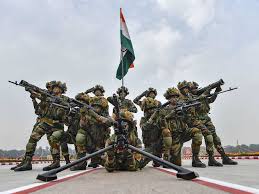
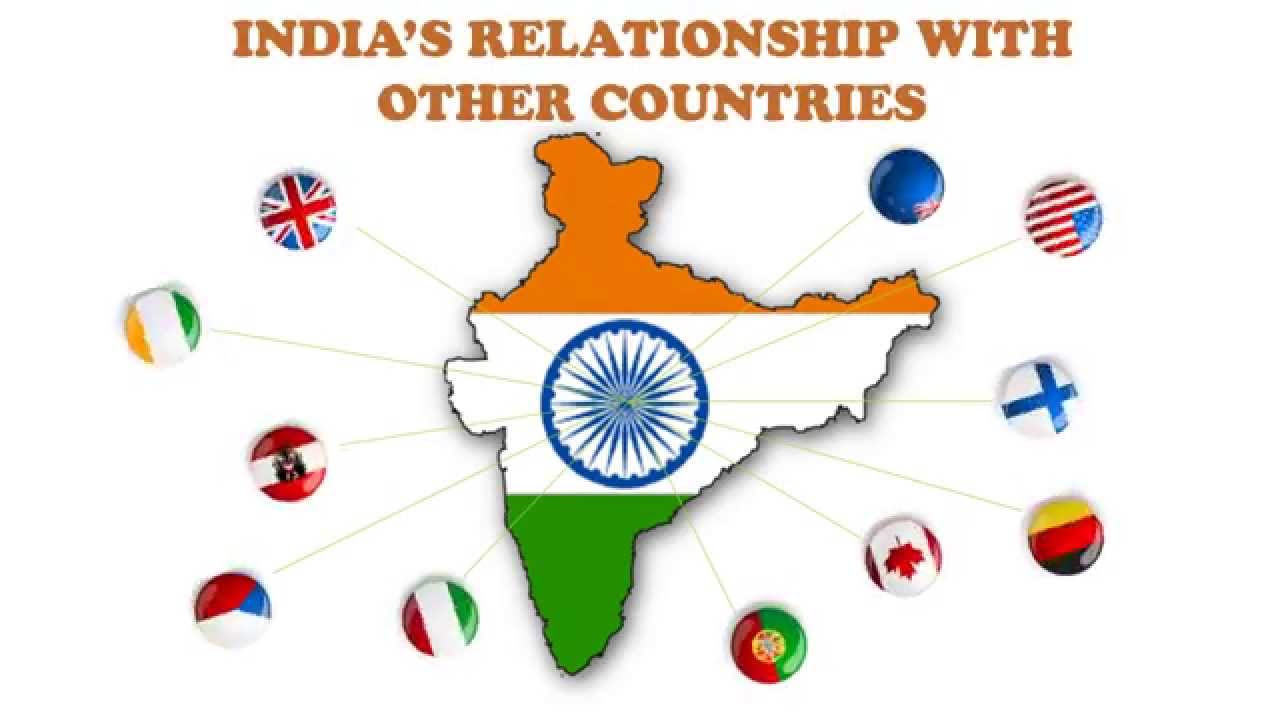
It goes without saying that India has always cherished to maintain good bilateral ties with Saudi Arabia. The incumbent PM Narendra Modi has right from start always shown a great deal of interest in improving further the bilateral relations between both the countries and deepening them further. The Crown Prince of Saudi Arabia – Mohammad Bin Salman too has shown great interest in enhancing further the bilateral relations between India and Saudi Arabia.

                                         It goes without saying that the sustained efforts to end the prolonged nonchalant relations between both the countries began seriously for the first time while former PM late Atal Bihari Vajpayee was at the helm of affairs. The first step was taken when Vajpayee’s Foreign Minister Jaswant Singh had travelled to the kingdom of Saudi Arabia in early 2001. We then saw how five years later, King Abdullah visited Delhi which was the first visit to India by a Saudi monarch in half a century to announce a new phase being heralded in bilateral relations. But the depth was still lacking and attention was confined only to buying oil from Saudi Arabia and exporting manpower.

                                             However, much water has flown under the bridge since then! It cannot be denied that the expansion and institutionalization of strategic cooperation between India and Saudi Arabia started taking deep roots during the Prime Minister Narendra Modi’s latest two-day visit visit to Saudi Arabia in end of October which is the second in three years. After arriving in Riyadh, PM Modi tweeted on a happy note saying that, “Landed in the Kingdom of Saudi Arabia, marking the start of an important visit aimed at strengthening ties with a valued friend. Will be taking part in a wide range of programmes during this visit.”

                                 It is quite well known that Saudi Arabia is second biggest supplier of oil to India after Iraq. It is also India’s fourth largest trading partner and the bilateral trade amount adds up to $27.48 billion in 2017-18 and Saudi investment of around $ 100 billion in India in various key areas like energy, agriculture, minerals, mining, petrochemicals and infrastructure is also in the pipeline. This makes the relations between both the countries all the more important and both countries appreciate this fully.

                                   As we all know, this latest visit by PM Modi to Saudi Arabia was about Modi delivering a keynote at the high profile “Future Investment Initiative Summit” that was basically an initiative of Crown Prince of Saudi Arabia. It also cannot be denied that this visit of PM Modi to Riyadh truly marks the consolidation of a bilateral partnership that has long struggled to take deep roots and this is in the mutual long term shared interests of both the countries.        

                                        It is most refreshing to learn that India and Saudi Arabia have shown together deep interest in last few years to deepen the ties between both the countries. This has culminated in the launch of a Strategic Partnership Council between both the countries during PM Modi’s visit to Saudi Arabia just recently. This new body comprising of two mechanisms which will be headed by the Foreign Ministers and Commerce Ministers of both sides will guide and monitor relations in some crucial areas, as for instance, energy, security and trade.

                               It cannot be lightly dismissed that India is one of eight countries with which Saudi Arabia is forging strategic partnerships under its Vision 2030 policy. Saudi Arabia understands fully the growing potential of India and this alone explains as to why it has placed India in the club of those few countries with whom it is forging strategic partnerships as just stated above. This is bound to deepen the bilateral ties between both the countries.

                                      It is also quite heartening to note that in a marked departure from the one they issued in February 2019, the joint statement by New Delhi and Riyadh made no mention at all on the resumption of dialogue between India and Pakistan. In the joint statement that was issued on October 29 after the bilateral meeting was concluded between PM Narendra Modi and Saudi King Salman bin Abdulaziz Al Saud, the two sides reiterated their “categorical rejection of all forms of interference in the internal affairs of countries” and the need for the international community to fulfil its responsibilities towards “preventing any attacks on the sovereignty of States”. This was the need of the hour also!

                                          Be it noted, the February 2019 joint statement that was issued after Saudi Crown Prince Mohammad bin Salman’s visit to India had a full paragraph on India-Pakistan relations stating that, “The two sides stressed the importance of regional stability and good neighbouring relations. His Royal Highness appreciated consistent efforts made by Prime Minister since May 2014 including Prime Minister’s personal initiatives to have friendly relations with Pakistan. In this context, both sides agreed on the need for creation of conditions necessary for resumption of the comprehensive dialogue between India and Pakistan.”

                                     It cannot be lost on us that the recent October 29’s joint statement between both India and Saudi Arabia was silent on India-Pakistan ties or a dialogue. This is a healthy sign as relations between both the countries are now not placing Pakistan on priority list any longer! It has to be unequivocally appreciated!

                                      Also it cannot be ignored that unlike February 2019 when the joint statement said that the Prime Minister and His Royal Highness “condemned in the strongest terms, the recent terrorist attack on Indian security forces on 14 February, 2019 in Pulwama in Jammu & Kashmir”, there was no reference this time to the Pulwama attack. The joint statement said that, “The Indian side condemned the terrorist acts against civilian installations in the Kingdom”. This was a reference to the drone attacks on Saudi oil fields. The joint statement said that both sides expressed their rejection of all terrorist acts and stressed the need to “prevent access to weapons including missiles and drones to commit terrorist acts against other countries”.

                                           Needless to say, the February statement too had called upon “all States to deny access to weapons including missiles and drones to commit terrorists acts against other countries. This time, on terrorism, it said that the two sides stressed that “the extremism and terrorism threaten all nations and societies. They rejected any attempt to link this universal phenomenon to any particular race, religion or culture.” Very rightly so!

                              More importantly, in a new formulation, both sides also called for “closer cooperation in the United Nations Counter-Terrorism Center”, and also agreed on strengthening cooperation in combating terrorist operations, exchange of information, capacity building and strengthening of cooperation in combating transnational crimes, within the framework of the existing bilateral security cooperation.

                                     Any discussion on India’s deepening ties with Saudi Arabia would be incomplete without mentioning the full list of 12 Memorandum of Understanding (MoU) that were signed between both the nations following bilateral talks. So let us discuss them one by one. They are as follows:-

1.  The most significant MoU was signed to establish a Strategic Partnership Agreement that was signed by the Prime Minister of India – Narendra Modi and Crown Prince of Saudi Arabia – Mohammed bin Salman bin Abdulaziz Al Saud.

2.    MoU on Cooperation in the Field of Renewable Energy between Saudi Ministry of Energy and Ministry of New & Renewable Energy of India that was signed by Dr Ausaf Sayeed who is the Ambassador of India to Saudi Arabia and HRH Prince Abdulaziz bin Salman Al Saud who is Energy Minister of Saudi Arabia.

3.   MoU on Security Cooperation that was signed by TS Tirumurti who is Secretary, Economic Relations (ER), Ministry of External Affairs (MEA) of India and HRH Prince Abdulaziz bin Saud bin Naif Al Saud who is Interior Minister of Saudi Arabia.

4.  MoU for cooperation in combating illicit trafficking and smuggling of narcotic drugs, psychotropic substances and chemical precursors that was signed by Dr Ausaf Sayeed and HRH Prince Abdulaziz bin Saud bin Naif Al Saud.

5.  MoU between Saudi General Authority of Military Industries (GAMI) and Department of Defence Production, Ministry of Defence concerning collaboration in military acquisition, industries, research, development and technology that was signed by TS Tirumurti and HE Ahmad Al-Ohali who is Governor of General Authority of Military Industries of Saudi Arabia.

6.  MoU for cooperation in Civil Aviation that was signed by Dr Ausaf Sayeed and HE Abdulhadi Al-Mansouri who is President of GACA in Saudi Arabia.

7.   MoU between Central Drugs Standard Control Organization (CDSCO), Ministry of Health & Family Welfare and Saudi Food & Drug Authority (SFDA) for Cooperation in the field of medical products regulations that was signed by TS Tirumurti and HE Dr Hisham Al Jadhey who is CEO of SFDA of Saudi Arabia.

8.  Letter of Intent between Small and Medium Enterprises General Authority (Monshaat) of the Kingdom of Saudi Arabia and Atal Innovation Mission (AIM), NITI Aayog of the Republic of India that was signed by Dr Ausaf Sayeed and Engineer Saleh Al-Rasheed who is Governor of Small and Medium Development Authorities of Saudi Arabia.

9.  Cooperation Programme between Foreign Service Institute, MEA and Prince Saud Al Faisal Institute of Diplomatic Studies (IDS) of Ministry of Foreign Affairs of Saudi Arabia by Dr Ausaf Sayeed and Dr Abdallah Bin Hamad Al Salamah who is Director General of Prince Saud Al Faisal Institute for Diplomatic Studies.

10.                   MoU between Indian Strategic Petroleum Reserves Limited (ISPRL) and Saudi Aramco signed by HPS Ahuja who is CEO and MD of ISPRL of India and HE Ahmad Al-Subayae who is Vice-President of ARAMCO of Saudi Arabia.

11.                   MoU for Cooperation between National Stock Exchange (NSE) and Saudi Stock Exchange (Tadawul) signed by Vikram Limaye who is MD and CEO of National Stock Exchange of India and Engineer Khaled Al-Hasan who is CEO of Saudi Stock Exchange (Tadawul).

12.                   MoU between National Payments Corporation of India (NPCI) and Saudi Payments that was signed by Arif Khan who is the Chief Digital Officer of National Payments Corporation of India and Ziyad Al Yusuf who is MD of Saudi Payment.

                                           In its joint statement pertaining to the volatile Syrian situation, the two leaders of India and Saudi Arabia very rightly highlighted the importance of preserving unity in Yemen, ensuring its stability and coming out with a viable political solution to solve the Yemeni crisis  that would be based on the outcome of the Yemeni National Dialogue, GCC initiative and the Security Council Resolution (2216).

                                       On Palestine, India and Saudi Arabia both stressed on the need for achieving a comprehensive, just and lasting peace in Palestine based on relevant UN resolutions and the Arab Peace Initiative. Both leaders exuded confidence that the peace resolution will guarantee the rights of the people of Palestine and lead to the establishment of their independent state based on the 1967 borders with Jerusalem as its capital.

                         Last but not the least, the two leaders also agreed on the ever-lasting importance of bilateral engagement in promoting ways to secure the waterways in both the Indian Ocean region and the Gulf, from any threat that may endanger the interests of the two countries including their national security. Finally, we saw how at the end of the visit, PM Modi extended an invitation to King Salman to visit India to complete the consultations and further discuss matters of bilateral cooperation and international issues of mutual interest. PM Modi also reiterated his support to Saudi Arabia for its upcoming Presidency of the G20 in 2020.

                                      On a concluding note, it may well be said that the bilateral relations between India and Saudi Arabia have certainly deepened over the last couple of years but still there is lot of scope for expanding it further which must be worked out exhaustively. No doubt, PM Narendra Modi is showing considerable interest in ensuring that relations between both the countries are further deepened and what is most comforting to note is that this is being reciprocated by the Saudi Crown Prince Mohammad bin Salman bin Abdulaziz Al Saud in equal measure! This will benefit both the countries equally!

Sanjeev Sirohi, Advocate,

s/o Col BPS Sirohi,

A 82, Defence Enclave,

Sardhana Road, Kankerkhera,

Meerut – 250001, Uttar Pradesh.
SC Must Take Suo Motu Action Against Reported Incidents Of Manhandling Of Covid Patients

It is a matter of grave concern that we are getting to learn more and more reported incidents of manhandling of Covid patients/dead bodies. What is even more tragic to learn is that this is happening more with those patients who are not able to cough up huge astronomical sum of money as demanded by the hospitals where they are admitted! This is certainly a cause of grave concern for all of us who are Indians and judiciary too must take serious note of it.

                                           To be brutally honest, this most serious issue has been lying unattended since a long time. No one is taking a serious note of it. Who is responsible for this pathetic state of affairs?

                                    Truth be told, this has been brought to the fore by none other than the former Union Law Minister of India – Dr Ashwani Kumar who also happens to be an eminent and a senior advocate of the Supreme Court. He has addressed a letter directly to the Chief Justice of India (CJI) – Sharad Arvind Bobde and Justices of the Supreme Court highlighting the grave infraction of the citizen’s right to die with dignity amid the Covid-19 pandemic. He has very rightly and commendably asked the CJI to take suo motu notice of various reported incidents, whereby persons suffering from Covid-19 infection are being ill-treated and their dead bodies are being manhandled.

                                    To be sure, Dr Ashwani Kumar has specifically drawn the attention of the CJI towards a tragic, barbaric and shocking incident in Madhya Pradesh where an elderly man suffering from Covid was tied to a bed, after he allegedly failed to make payment of fees for his treatment in the Shajapur-based hospital. Similarly, in yet another case, he pointed out that in the Union Territory of Puducherry, a video had surfaced whereby government workers – four men in PPEs could be seen throwing the body of a Covid-19 positive man into a pit. Less than 30 seconds later one of the men is heard telling a government official that they have “thrown the body” for which the official shows thumbs up in approval!

                                           Of course, it is quite clear that the frontline workers ignored a series of Covid protocol while handling the body! The video shows the dead person was merely wrapped with a white cloth and not in a bag as mandated in such cases. The cloth wrapped around the body also opened up as it was dropped exposing the workers to tremendous risk of infection. It is not yet clear if the body was duly embalmed. The undignified handling of the Covid patient has led to massive outrage in Puducherry!

                                        In his elegant and effective style, Dr Ashwani Kumar points out in his hard hitting letter that, “The tragic and condemnable sight of a Covid-19 patient being chained to a bed in a hospital in Madhya Pradesh and another sight in Puducherry of a dead body being thrown in a pit for burial, has shocked the conscience of the Republic committed to human dignity under the Constitution, which recognizes dignity as a core constitutional value at the pinnacle in the hierarchy of non-negotiable constitutional rights.”

                                             To start with, Dr Ashwani Kumar first and foremost points out in his letter addressed to the CJI and Justices of the Supreme Court that, “This letter is intended to highlight and bring to the notice of the apex court, a case of grave infraction of the citizen’s right to die with dignity recognized by this Hon’ble Court on various occasions. Reference is invited inter alia to the decisions of the Hon’ble Supreme Court in: Kharak Singh v State of UP & Ors 1964 SCR (1) 332, Pt. Parmanand Katara v Union of India 1995 (3) SCC 248, Ashray Adhikar Abhiyan v Union of India (2002) 2 SCC 27 and the Constitution Bench in Common Cause v Union of India (2018) 5 SCC 1. Reference is also invited to recent judgments of the Madras High Court in a Suo-Motu PIL and Bombay High Court in Pradeep Gandhy v State of Maharashtra, declaring a fundamental right to die with dignity embracing right to decent burial or cremation. These judgments constitute the law of the land and are binding on all authorities, as actualizing the promise of the Constitution.”

                                         Going forward, Dr Ashwani Kumar then further goes on to add in his letter that, “I may also add that the notified protocols for cremation in the capital city, reported piling up of bodies in hospitals and mortuaries, non-availability of adequate cremation/burial grounds and the reported non-functioning of electric crematoriums constitute distressing and an unacceptable violation of Right to Die with Dignity.”

                                            Most importantly, it is then pointed out by Dr Ashwani Kumar in the concluding part of his letter that, “Since the Court has the duty and the power to ensure that the law declared by it is actually enforced, it is requested that the Court takes suo-motu notice of the matter. In view of the shocking infraction of the fundamental right to dignity, as is evidenced from the enclosed NDTV report (Annexure ‘A’), Your Lordships are respectfully requested to issue such orders, writs or other directions as will effectuate the citizens right to die with dignity.”

                                                  Speaking for myself, I feel that it is high time and now Centre must come forward immediately and take the laudable initiative to make right to die with dignity a fundamental right just like to like to life is  as enshrined in Article 21 of the Constitution! For this the Constitution will have to be amended and that must be done accordingly! Political parties must come forward and join hands in ensuring that it is approved unanimously by both Houses of Parliament as early as possible! This is the crying need of the hour also! It brooks no more delay anymore now!   

Sanjeev Sirohi, Advocate,

s/o Col BPS Sirohi,

A 82, Defence Enclave,

Sardhana Road, Kankerkhera,

Meerut – 250001, Uttar Pradesh.
Dissent By One Judge Not A Bar For Upholding Death Penalty

It has to be remarked right at the outset that in a very important observation made most recently on November 7, 2019 in a latest judgment titled Manoharan v State by Inspector of Police, Variety Hall Police Station, Coimbatore in Review Petition (Crl) Nos. 446-447 of 2019 in Criminal Appeal Nos. 1174-1175 of 2019, the Supreme Court has minced no words to hold that dissent by one Judge not a bar for upholding death penalty. In this latest case, the Supreme Court has thus dismissed the review petition filed by Manoharan whose death penalty was upheld by it a few months back. It may be recalled here that the Supreme Court (2:1) had in August 2019 upheld the death sentence that was awarded to Manoharan who was found involved in gang rape of a 10-year-old girl and thereafter murdering her and her brother. It must be disclosed here that Justice Rohinton Fali Nariman and Justice Surya Kant had upheld the death penalty and Justice Sanjiv Khanna had expressed his dissent against upholding the death penalty that was awarded to Manoharan.   

                                                   To start with, the ball is set rolling in para 1 of this noteworthy judgment authored by Justice Surya Kant for himself and Justice Rohinton Fali Nariman wherein it is observed that, “These review petitions are directed against the judgment dated 01.08.2019 passed in Manoharan v. State by Inspector of Police, (2019) 7 SCC 716, wherein this three-Judge Bench had affirmed conviction of the accused Manoharan for offences punishable under Sections 302, 376(2)(f) and (g) and 201 of the Indian Penal Code (in short “IPC”) and by majority upheld the death sentence confirmed by the High Court.”

                                   While dealing with the factual matrix, it is then laid bare in para 2 that, “Brief facts of the present case are as follows:

‘X’, a ten-year-old brother were enrolled in Classes V and II respectively in a private school at Coimbatore and would commute around 7:45 a.m. in a pickup vehicle owned by one Kartikeyan (PW-2). On 29.10.2010 the children left as usual with their school bags and lunch boxes and stood about two-hundred feet away from their home, in front of the Vinayakar Temple. Around 8:00 a.m., PW-2 came to the designated pick-up spot but did not find the children there. He contacted the children’s father, Ranjith Kumar Jain (PW-5) over mobile to enquire about their absence. Being in Hyderabad, PW-5 was unable to provide an immediate reply to the query of PW-2 and hence called his wife, the children’s mother – Sangeetha (PW-8), who informed him that both X and Y had already left home. Since the father of the children (PW-5) was already on his way back to Coimbatore, he entrusted his wife to look out for the children and co-ordinate with the van driver. Sangeetha informed Karthikeyan that the children had already left the house, whereafter she along with her relatives Vijay Kumar (PW-1) and Sanjai (PW-6) started searching for the children.”

                        While elaborating further, it is then pointed out in para 3 that, “Kamala Bai (PW-9), the paternal grandmother of the children had gone to a Jain Temple around 8:00 a.m. in the morning. Upon returning home at 10:30 a.m. and finding Sangeetha in panic, Kamala Bai informed her that the children had been picked up by a former van driver and it was conjectured that the children must be in school. Vijay Kumar (PW-1) then went to the school and found that the children had however not reached. After a frantic but futile search, PW-1 lodged a police complaint (Ex. P1) with Vasuki (Sub-Inspector of Police, (PW-42) at around 11 AM under Section 363 of the Indian Penal Code (in short “IPC”).”

                                   More pertinently, it is then elucidated in para 4 that, “The Investigating Officer (“10”, PW-47), thereafter, took over investigation and recorded statements of the informant (PW-1), the school’s principal-Anthony Raj (PW-10), as well as of the grandmother (PW-9) and the just returned father of the children (PW-5). First trace of the missing children was received at 6 PM when Anthony Raj (PW-10) informed the IO (PW-47) that one Chinnasamy (PW-22) had called to inform that two school bags with identity cards bearing names of X and Y were found floating in and later fished out from the Parambikulam-Axhiyar Project (“PAP”) Canal. A second lead came to the Police from Karthikeyan (PW-2) who received a call from his erstwhile employee – Anbu @ Gandhiraj (PW-7) who conveyed that one Mohanakrishnan had borrowed a Maruti Omni Van from him that morning. This aroused Kathikeyan’s suspicion since Mohanakrishnan was his former employee whose services were terminated after it had been discovered that he was borrowing money from the parents whose children were being transported to school by PW-2’s agency. The IO (PW-47) accordingly advised both Anbu (PW-7) and Karthikeyan (PW-2) to immediately alert the police whenever Mohanakrishnan came to return the Omni Van. At around 9:45 PM, Anbu alerted the police that Mohanakrishnan came to return the Van and he had also confessed to the kidnapping, rape and murder of the two missing children along with his friend Manoharan. Pursuant to the information received by Anbu Mohanakrishnan was arrested and a confessional statement was recorded in the presence of Anbu (PW-7) and one Santosh Kumar (not examined as a witness). The Maruti Omni Van along with one Nokia Cellphone and the driving license of Mohanakrishnan were also seized. The IO consequently sent a report (Ex. P-30) for alteration of charge from under Section 363, IPC to Sections 364(A), 376, 302 read with Section 201, IPC which was received by the Magistrate at 11:45 PM.”

                                         Furthermore, it is then observed in para 5 that, “Having observed certain saliva and yellow-coloured stains on the seized van, the IO requisitioned forensic assistance of Sarvanan (PW-43), Deputy Director of Mobile Unit of Tamil Nadu Forensic Sciences Department. In the presence of Sarvanan (PW-43), Anbu (PW-7) and one Santosh Kumar (unexamined), the van was thoroughly searched wherein a lady’s underwear bearing the inscription “SBT Kidswear 75c.m.” with hair strands were recovered. Sarvanan (PW-43) further collected the betel nut saliva stains on the left door of the van with a cotton swab for chemical examination, as well as dried yellow-colour stains found on the seat and floormat, and the clothes (namely pant, half shirt and underwear) worn by Mohanakrishnan (Mahazar Exs. P-5 & P-6).  Mohanakrishnan subsequently led a police team to the place where he claimed to have raped X as well as to Deepalapatti, the place from where the children had allegedly been pushed into the running waters of the PAP canal.”   

                                           To be sure, para 9 then illustrates that, “The present review-petitioner, Manoharan (hereinafter “petitioner”) who was stated to have perpetrated the crime along with Mohanakrishnan, was arrested on 31.10.2010 at 7AM, as recorded in Ex. D-4. Manoharan made a disclosure statement to the police (Ex. P-21) on the basis of which the IO (PW-47) recovered lunch box of Y from his house. Further, after being produced before the Magistrate the same day the petitioner was sent to judicial custody.”

                                   To put things in perspective, it is then enunciated in para 10 that, “A Test Identification Parade was conducted on request of the IO whereby Kamala Bai (PW-9) identified Mohanakrishnan as the driver of the van in which the children had been kidnapped. Subsequently, both the petitioner and Mohanakrishnan were medically examined on 04.11.2010 whereby samples of their blood and saliva were sent to the Tamil Nadu Forensic Science Laboratory for DNA Analysis. A potency test of the petitioner was conducted by Dr. J.R. Singh (PW-46), who in his medical report (Ex. P-56) found him potent and further noticed signs of injury around his private parts.”

                                       Be it noted, para 11 then reveals that, “During recovery proceedings under Section 27 of the Indian Evidence Act (in short “IEA”), whilst in police custody, Mohanakrishnan shot and wounded two police officers and was consequently shot dead by the Police on 09.11.2010. Thus, the trial against Mohanakrishnan was abated and the petitioner alone was left to be tried as an accused.”

                            As it turned out, the Bench then observes more damningly in para 12 that, “Succinctly, the prosecution’s version of events is that Mohanakrishnan using a borrowed school van, picked up two children (X and Y) who were waiting to go to school at about 7:50 a.m. He further picked up his friend, Manoharan from his house at 9:30 a.m. and subsequently, they took the children to a remote location where after the girl child was raped and sodomised. Subsequently, Manoharan and Mohanakrishnan purchased cow dung powder (a poisonous substance) which was mixed in milk and then administered to the children to end their life. However, both the children spat out the substance and only ingested a small portion. Since poisoning did not work, Mohankrishnan and the petitioner threw both the children into the turbulent waters of a nearby Canal, hence drowning them.”  

                                     While discussing about the sequence of events in the Trial Court, the Bench then observes in para 13 that, “Over the course of the trial, the prosecution examined forty-nine witnesses in all including persons who witnessed abduction, purchase of milk and cow dung powder and those having seen children in the custody of accused persons at various places. Further, various medical and forensic evidence were produced, proving drowning and rape as well as injuries on Petitioner’s body. A ‘last seen theory’ was built by the prosecution, in addition to use of a confessional statement made by the petitioner under Section 164 CrPC. The Trial Court ultimately held the Petitioner guilty under Section 120-B, 364-A, 376, 302 r/w 34 and 201 IPC. Under Section 376, the Petitioner was awarded life sentence and for offence under Section 302 IPC he was given death sentence.”

                                   Needless to say, para 14 then brings out that, “The Madras High Court set aside conviction of Petitioner under Sec. 120-B and 364A IPC but confirmed the sentences under Sec. 307, 302 r/w 34 and 201 IPC. After considering aggravating and mitigating circumstances, the High Court confirmed death sentence awarded by the Trial Court.”

                                     To say the least, it is then disclosed in para 15 among other things that, “Thereafter the Petitioner filed a Special Leave Petition under Article 136 whereby this Court dismissed his appeal and confirmed the death sentence by majority, observing that the case fell in the category of the ‘rarest of rare’ cases”. Para 16 then further discloses among other things that Justice Khanna in his minority opinion also upheld conviction under the various offences concerned, but dissented on the quantum of sentence.

                                             Going ahead, it is then observed in para 17 that, “The Petitioner then filed the present petition for review of the said judgment and order dated 01.08.2019 which was heard at considerable length in open Court following the parameters evolved in Mohd. Arif @ Ashfaq v. Registrar, Supreme Court of India, (2014) 9 SCC 737, wherein a Constitutional Bench of this Court held that in cases of death penalty, since the punishment is irreversible and Article 21 of the convict is violated, it is necessary to provide at least one opportunity for oral arguments on the question of sentence.”

                       More crucially, the majority while upholding death penalty minces no words to hold in para 65 that, “Even observed devoid of any aggravating circumstances, mere young age and presence of aged parents cannot be grounds for commutation. One may view that such young age poses a continuous burden on the State and presents a longer risk to society, hence warranting more serious intervention by Courts. Similarly, just because the now deceased co-accused Mohanakrishnan was the mastermind whose offence was comparatively more egregious, we cannot commute the otherwise barbarically shocking offences of the petitioner. We are also not inclined to give leeway of the lack of criminal record, considering that the current crime was not just one offence, but comprised of multiple offences over the series of many hours.”

                                     While convicting the majority also could not lose sight of what is stated so plainly in para 66 that, “Even if the cases involving confession merit some leniency and compassion, however, as was earlier noted in our majority opinion, the attempted retraction of the statement shows how the petitioner was in fact remorseless. Such belated retractions further lay rise to the fear that any remorse or repentance being shown by the petitioner now may be temporary and that he can relapse to his old ways. Irrespective of the underlying reasons behind such retraction, whether it be the fear of death or feeling that he was not getting any benefit of his earlier confession, but the possibility of recidivism has only been heightened and we can no longer look at the initial confession in a vacuum.”

                                         Most crucially, the majority while upholding conviction first observes in para 67 that, “Rather, the present case is essentially one where two accused misused societal trust to hold as captive two innocent school-going children, one of whom was brutally raped and sodomised, and thereupon administered poison and finally drowned by throwing them into a canal. It was not in the spur of the moment or a crime of passion; but craftily planned, meticulously executed and with multiple opportunities to cease and desist. We are of the view that the present offence(s) of the Petitioner are so grave as to shock the conscience of this Court and of society and would without doubt amount to rarest of the rare.”

                                          Lastly, it is then held in the last para 68 that, “Hence, we find that there exist no grounds to review our judgment upholding conviction and death penalty. The review petitions are accordingly dismissed.”  

                                         Before winding up, it has to be thus said that the majority view has prevailed that upholded conviction and death penalty while dismissing the review petitions. The contention raised by senior advocate Siddharth Luthra that death ought not to be awarded in case of a single dissent, notwithstanding the opinion of the majority was not accepted! Also, it was  clearly held that the offence committed by the petitioner was so grave so as to shock the conscience of this court and of society and would without doubt amount to ‘rarest of the rare’. Also, the crime was not in the spur of the moment or a crime of passion but was craftily planned, meticulously executed and with multiple opportunities to cease and desist as has been rightly held and pointed above! So the dissent by Justice Sanjeev Khanna on the question of sentencing alone could not come in for rescue in any manner in saving the petitioner from being sent to the gallows! Very rightly so!     

Sanjeev Sirohi, Advocate,

s/o Col BPS Sirohi,

A 82, Defence Enclave,

Sardhana Road, Kankerkhera,

Meerut – 250001, Uttar Pradesh.      

Will India have SUPERPOWERS like USA?

The world is almost ruled by powerful countries like USA, China, Japan, Russia etc. and its none of the wonder that developed countries are helping as well as exploiting the developing countries. Developing countries like India, Pakistan, Srilanka and many more… are mostly dependent on the developed countries, but the biggest question arises will India be list of the superpower countries by 2050. The answer would be yes, but unfortunately due to pandemic situation that number will rise to 2055-2060 because India faced a major setback due to this and also India build a strong relation with other countries with help of our respected Prime Minister sir. Let us look out which factors are going to help to build a nation with superpowers:

1- Economic growth

Chinese economy is based on foreign investment, while India is growing based on a more local economic sector. So if we look in future i.e. after 30-40 India will overtake as it is very slow process. We know very well that many MNCs have begun to invest tremendously in India and has started to rely on Indian engineers for their next generation products. Companies like GM, Boeing, Motorola and many others have begun to build their Research and Development facilities and Asian headquarters in India. They see more potential on Indian market. If India is able to maintain this steady growth, it can definitely become 2nd largest economy by 2050.

money bills currency euros
Photo by Dom J on Pexels.com


3) Military power

India stands on 4th rank in terms of defense with the budget of 54 billion $ and 13L+ army man. India has a total of 2,102 aircrafts and a naval strength of 295 and is ready to tackle any military emergency. India is gaining new technology and ideas from world and also our DRDO is working very efficient like wise India adopted 5th generation fighter plane from Russia and Defense Drone technology from USA and other technology too from Israel. Therefore if India increases the defense budget in next 3-4 decades, specially in Air force and cyber and New technology than India definitely can handle any worse situation.

download (1)

Image source: economictimes.com

3- Diplomacy and international relations

India’s Diplomacy is standing at a good potions no matter still there are many internal disputes but in the eyes of world India is at a better place. India is able to maintain relation with foreign countries in a stable and steady manner which will ultimately help the people of India. In the coming years India will be able to maintain permanent seat in UN Security Council which will be biggest achievement in diplomatic point of view.

maxresdefault

Image source: Kosha group

4) Population

India has highest number of fresh minds, they are handled correctly with innovative and interesting education system than none of the country can stop India to be listed in top 5 countries. Youth is the biggest asset of India and no other country has this much amount of youth in their population. In the coming years, some of the strong nations of the world will face problem of decrease in populations and this will lead to, a decline in workforce, India will face no such problem.

India’s education system need to be modified a bit and student instead of memorizing theories, they should be taught to learn and understand the concept. The subject related to entrepreneurship should be added at early age so that they get knowledge of business at early age which would help them and ultimately help the nation.

1487221957_mnnhdhd9498jp534h1ctvc3aj7indian-population

Image source: Indiannewsonweb.com

5- Science and Technology

India has greatest potential yet to be showed to the world in the field of science and technology. New and new startups are evolving around us day by day and that will help a lot. Our scientist proved that India can even complete the mission on a budget of bollywood movie. India is also 4th country to land on the moon. India is emerging slowly in the field of software and will create a great impact in the near future.

creative internet computer display
Photo by Markus Spiske on Pexels.com


Live and Let Live : Heartbreaking Kerala Elephant News Exclusive >>>>>

Is really humanity is left is this world? This is the question that is there in mind because seeing around the world it seems like now humanity is left just in words. When we hear a news like an incident in Kerala it just seems like where we are today are we in our dreams where we are not got effected by our pain , just running in this world  behind the frame, pride and especially money.

Are we really lost in this world? Are we really getting caught in this world’s rattrap? Where everybody just competing for its place in this world but just tell me one thing. Are we humans alone in this planet? Are we only responsible to take forward the earth or we needs other creatures to maintain and to balance this ecosystem? I think we all know the answer of all these questions.

If a person needs both oxygen and water as crucial things to survive in this beautiful world likewise our mother nature also requires humans as well as animals and trees to maintain an ecosystem balance. Like the incident happened in Kerala with the pregnant mother elephant there are many incident taking place all around the world with the innocent animals and we humans are only responsible for it.

Credit: Third Party Reference

Just imagine a condition that a human mother is pregnant and if by the case the animals attack that lady so what we call that animal, what we will do with that animal and the sure answer is that almost 90 percent people will kill that animal calling her demon. Now you only think that are we people should not be called as demon and instead of killing that human or harming the human community that innocent lady elephant went to the water and taken its last breath in silence.

If any human were in her place he/ she should have taken the world in its head. See the difference between a humans and a animal, Remember it the same community which you all enjoy eating, remember that fish , she belongs to the same community she is the one who you catch first from the water bodies then fry her and then enjoy in your plate, remember that hen, remember the other creatures you all have enjoyed eating.

Are they not innocent? What was their crime, this that they are the small creatures and you are the humans, who always takes everything in granted, what was their crime? This that they are weak and you are strong. This was their crime? The right answer is that you all are just blank, completely blank hearing these questions. Are we have not got enough things to eat or is our mother nature is not able to fulfil the requirements of these greedy humans because these humans can kill the innocent animals just for their fun.

Credit: Third Party Reference

After that incident I have seen and heard many people’s just shouting for the justice of that innocent lady elephant, writing articles, putting stories for the justice without realising their own activities. Out of all who want to give justice to that innocent lady elephant, 90 percent are non-vegetarian; they enjoyed having those innocent animals in their plate. Are they not the criminals of all those innocent animals which they have enjoyed eating in their plates? Who have given them right to shout for other persons punishment.

I say that the person who has committed the Kerala’s incident should get the strict punishment but the other peoples should also realise that where they are today? There where they want innocent animals to survive, they kill other innocent animals so that they can live happily and can enjoy non-vegan meals. It’s the not the topic to debate it’s the topic to think from your inner self that are you not the criminals of many of those innocent animals? Sit in silence and think and the right answer will come from your inner self. Just sit and think and if your answer is not “Live and Let Live”. So I don’t know where you are? And who you are? Human or……..     

Giving Back – Orlando Supports Local Ronald McDonald House

Without community service, we would not have a strong quality of life.  It’s important to the person who serves as well as the recipient.  It’s the way in which we ourselves grow and develop.” – Dorothy Height
Giving back to the community is not a special event, but rather a part of who we are here at Herzing University.
Last month, the Caring and Community Committee from Herzing’s Orlando Campus volunteered at the Ronald McDonald House Charities of Central Florida (RMHCCF). This amazing organization provides a home away from home for families receiving medical care in the local area.
We were inspired by the fact that 60% of this charity’s recipients are central Florida residents. We share their sense of responsibility to be an active, rather than reactive, member of this great community!
The Caring & Community Committee, made up of faculty and staff, purchased groceries and prepared a delicious home-cooked meal consisting of baked ziti, salad and breadsticks. It was an amazing experience to see families with such strength of character in the face of serious illnesses.
At Herzing University, community service isn’t just part of who we are, it’s how we learn and grow. So, we encourage you to find a cause that you believe in and give back.
About the Author: Heatherann Antonacci, MBA, has dedicated the past seven years living out the mission of Herzing University as Campus President of Herzing – Orlando. As a single mother of two, Heatherann went to college as an adult learner. She knows firsthand the benefits of higher education. An advocate for building self-confidence and physical strength in young girls, she serves on the Board of Directors for the Orlando Chapter of Girls on the Run, among other leadership and advocacy roles in the Orlando area.  

Stop the Nonsense – The MBA Market Is Not Flooded!

It’s hard to imagine that anyone would suggest that pursuing a better future through education is a bad thing.
Yet, there are some critics – in the media, government and even in academia – who would want people to believe that there are too many people pursuing a master’s degree in business, often referred to as an MBA.
As Dean of Graduate Programs at Herzing University, I have tracked articles written by alarmists who are questioning the continued value of obtaining an MBA degree. These articles try to scare readers into believing that the job market is saturated with MBA holders.
I acknowledge that during the “Great Recession” of 2008-2009 many people with advanced degrees became unemployed and had struggled to find that corner office job again. But it’s important to recognize that many more individuals with undergraduate degrees or no degree at all lost their jobs and are competing for jobs against those with MBAs.
The evidence today supports the value of the MBA degree across all regions of the United States, including the job demand for well educated, critical-thinking, problem-solving leaders.
In Akane Otani’s January 7, 2015, article in Bloomberg Business, “Salaries for Business School Graduates Will Go Up in 2015,” Otani reported that more-than-half of the 169 employers who responded to a survey by the Graduate Management Admission Council said that they will raise beginning salaries for newly hired MBAs to match inflation. Otani’s article also identified that almost 20 percent of the employers indicated that they would increase salaries to exceed inflation. In addition, 72 percent of the companies expect to hire MBAs in 2015, as compared with 69 percent in 2014. I may be wrong, but rising entry-level salaries and increased hiring across almost three-quarters of the economy are not on the list of supply glut indicators.
A more recent article by Andrew Eder on March 2, 2015, published by BBC about a Wisconsin business college, shared that it had seen job postings for MBA graduates increase 36 percent in 2015. One business dean quoted in that article stated, “It’s going to be a (graduating) students’ market for the next 15-plus years.” In support of Eder, during the May 2015 “Association for Talent Development (ATD) Conference” in Orlando, Fla., the sentiment about the future prospects for MBA graduates from over a dozen attending college and university representatives was optimistic.
In Eder’s article, Barbara Hewitt, Senior Associate Director of Career Services at the Wharton School, stated that its MBA graduates only had a 4.2 percent unemployment rate six months following graduation – almost the exact findings reported by Herzing University. Strong employability prospects are probably the best reason to earn an MBA.
My advice is that the next time you see an article headline questioning the value of the MBA in today’s market, don’t waste your time with alarmist rhetoric. The evidence is clear. The evidence is convincing. The opportunities for the prepared MBA graduate are here today. The economy is growing, businesses are hiring, and competition from undergraduates will increase. It is your time… your money…your career… it is time to further your career with an MBA.
Dr. Ron Kern is the Dean of Graduate Programs at Herzing University. He previously served as Dean of Graduate Programs at Kaplan University and Dean of Academic Affairs at the Fischler School of Education and Human Services at Nova Southeastern University. He is a frequent speaker in the areas of graduate business, nursing and education degrees; doctoral dissertation completion; and Hispanic attainment and success in higher education.

Passionate And Ambitious People

An ambitious person you ask; the word is associated mostly with an extreme desire to succeed. That being said, the person would go any length any height for the sake of his goal. He couldn’t care less about anything other than the goal. Social life, relationships, people, money are either mere steps or obstacles for an ambitious person. The Goal is the keyword here.

Passion is more of an emotional term. You might not be talented for some art but your passion can turn you into a master. The aura of something so strong that you can’t help but zone out into your own world. A passionate person cares more about personal emotional fulfillment rather than the outcome. Inner happiness/Emotional fulfillment is the keyword here.

There’s something deeper than ‘being good at what you do’ that’s so magnetising — it’s being passionate about what you do.

And I’m not talking about people who scribble ‘self-motivated’ or ‘driven’ on their CVs in the self-proclaimed Skills section. Neither am I referring to the ideology behind the quote I once had the misfortune of seeing an Instagram celebrity post: “I don’t love rich men; I love ambitious men and ambitious men are never poor.” I mean, seriously. Lastly, this kinda passion doesn’t manifest itself in inefficient workaholism. In fact, I’d proffer that passionate people work smart, not hard. Which brings me to my point:

Being passionate makes you good at what you do. Passion for something drives you to delve deeper into its inner workings, and to build on the work of past pioneers for the advancement of that field. It’s a rabid hunger that growls ‘how?’ ‘why?’ and ‘why not?’ until one day that teacher, tiler or tradesman, through passion, perfection and sheer persistence, finds themselves at the top of their game.

…and getting better makes you more confident, which is the bee’s knees in attractive forces. Not to be confused with arrogance; this confidence stems from knowing that there’s a conference room, operating theatre, or some specific context where no one can pull the wool over your eyes. And that bubbles over into other areas of your life — you start speaking with authority, standing straight and all those other superhero characteristics.

As we learn more about our passions, we learn more about ourselves and life, and what could be more beautiful?

Passionate people are rarely bored, or boring. Opening your mind to new knowledge is all-consuming. You’re always discovering something or solving mysteries. The best foundation blocks for conversation and consequently relationships are people with something new and interesting to say. And when they speak, the passion ignites a fire so powerful that it draws you in and warms you from the inside out.

Passionate people challenge you to be more and to do more. It’s invigorating spending time with people who are unapologetically pursuing their passions. When you’re around them, your hangups dissolve and you think, even if just for a moment, that you too can be anything you want to be. This kinda passion is infectious.

Find your passion.
Feed it.
Flourish.

A LETTER TO THE PASSIONATE ONES!

You have spent countless nights awake , being stronger than your excuses. You believed you could, so you did. There were things you wouldn’t get over. Some things that stung you so hard ,they had set you back where you started, and you got hurt, and hurt and hurt, but you also rose from it. Its never an easy decision to make, and its never easy to accept that you might be walking down a path that will involve risks and new unknowns, but you continued. You Glow!!

Life dragged you, but you knew, it’s going to launch you into something great, and you never gave up. Just like every hard thing in you life,  you’ve made it through this too. You decided to choose guts over fear. You handled yourself at your worst. Now, here you are! Independent, compassionate. You got this!

Its mesmerizing to think about you struggling, being restless and afraid, still buckling up the next day to face the hurdles. You threw yourself into work. You got through all the problems getting up each day and putting one foot in front of the other. You adapted and survived no matter how hard it got. You shaped your own reality. You are incredible!

Do You Know, Why We Write Blogs?

First of all, what is the blog, everyone knows the blog, but here is the question of what is the technical turn and where is the origin of the blog? well, I tell you, the blog started out as a mix of what was happening in a person’s life and what was happening on the Web, a kind of hybrid diary/news site, and a person who has knowledge of how to post any news or new thing they begin their life with small blogs and they continue to word the success. furthermore, look about the origin of  The word “blog” is a shortened version of weblogs or weblogs. Besides being shorter and catchier, “blog” seems less likely to cause confusion, as “weblog” can also mean a server’s log files. in the past, not many people aware of the posting blogs, and there were not many facilities provided on the internet to post a blog, but in the last 10 or 15 years the trend of posting blogs is growing like a rocket.

people post many kinds of blogs like technology, photography, lifestyle, cooking, daily knowledge, general knowledge, news regarding pollution and Government, and many more. by sharing the post, people can share their experience and they can also pass their time if they do not have work to do. Nowadays, many companies and organizations like EDUindec.com and other NGOs higher the writer and give access to write something and post on their website or share on their social media and get the popularity, many organization also provide the education on these and how to bring more people on the site by getting this education on can easily understand the process of SEO (search engine optimization). there are some websites and domains, which provide free workspaces to write or promote social media handles.

However, many online e-commerce sites also on the trading and they start there platform by sharing the information on the blogs and through they share the product on their blog like clothes, accessories, computer parts, cooking books, and more. there are some famous bloggers Amit Agarwal, who is a Google Developer Expert, Amit Bhawani, who is also a famous tech blogger and he also has own youtube channels, so he starts to build his future by posting technology-related blogs, and in last, Srinivas Tamada he also famous Indian blogger post blog regarding the SQL databases and new database software for those people who wont to know about the databases of companies.

Here some advantages of having and writing blogs:


  1. Instant Marketing and Publicity: Now as people read, they learn about your work, your life, and/or your interest. You are on-air as long as your website is up. For about 10 to 30 minutes a day depending on how much effort you place, you are to impart something different to your readers, it might be knowledge or entertainment but as long as they get something, they finish your article with you leaving a mark in them at that moment. And that’s what’s important, ’cause when you do, you just got yourself a tribe.
  2. Increase in Search Ranking: Compared to a static portfolio, a blog counterpart is much friendlier to search engines because of the fresh content it offers once in a while. The friendlier you are, the better chances of you being searched for. And in case you haven’t thought about it, your blog can also include your portfolio which can be easily update-able rather than tinkering with your.html code just to insert another work.
  3. You gain additional income: Some of the successful people in the blogging industry choose to have additional income by placing some ads beside their website.  In some cases, their website becomes a marketing tool for other companies because of market specifics they cover. Other companies don’t like to make blogs for the heck of it, so in turn, they use other bloggers to market their services or product, and guess what? They pay for it!, For other online ad-companies, a mere browse through is enough to add to your piggybank, for others, you need clicks and to some, you need sales. But whichever the case is, you are earning passively for writing about things you love.


Stop the Nonsense – The MBA Market Is Not Flooded!

It’s hard to imagine that anyone would suggest that pursuing a better future through education is a bad thing.
Yet, there are some critics – in the media, government and even in academia – who would want people to believe that there are too many people pursuing a master’s degree in business, often referred to as an MBA.
As Dean of Graduate Programs at Herzing University, I have tracked articles written by alarmists who are questioning the continued value of obtaining an MBA degree. These articles try to scare readers into believing that the job market is saturated with MBA holders.
I acknowledge that during the “Great Recession” of 2008-2009 many people with advanced degrees became unemployed and had struggled to find that corner office job again. But it’s important to recognize that many more individuals with undergraduate degrees or no degree at all lost their jobs and are competing for jobs against those with MBAs.
The evidence today supports the value of the MBA degree across all regions of the United States, including the job demand for well educated, critical-thinking, problem-solving leaders.
In Akane Otani’s January 7, 2015, article in Bloomberg Business, “Salaries for Business School Graduates Will Go Up in 2015,” Otani reported that more-than-half of the 169 employers who responded to a survey by the Graduate Management Admission Council said that they will raise beginning salaries for newly hired MBAs to match inflation. Otani’s article also identified that almost 20 percent of the employers indicated that they would increase salaries to exceed inflation. In addition, 72 percent of the companies expect to hire MBAs in 2015, as compared with 69 percent in 2014. I may be wrong, but rising entry-level salaries and increased hiring across almost three-quarters of the economy are not on the list of supply glut indicators.
A more recent article by Andrew Eder on March 2, 2015, published by BBC about a Wisconsin business college, shared that it had seen job postings for MBA graduates increase 36 percent in 2015. One business dean quoted in that article stated, “It’s going to be a (graduating) students’ market for the next 15-plus years.” In support of Eder, during the May 2015 “Association for Talent Development (ATD) Conference” in Orlando, Fla., the sentiment about the future prospects for MBA graduates from over a dozen attending college and university representatives was optimistic.
In Eder’s article, Barbara Hewitt, Senior Associate Director of Career Services at the Wharton School, stated that its MBA graduates only had a 4.2 percent unemployment rate six months following graduation – almost the exact findings reported by Herzing University. Strong employability prospects are probably the best reason to earn an MBA.
My advice is that the next time you see an article headline questioning the value of the MBA in today’s market, don’t waste your time with alarmist rhetoric. The evidence is clear. The evidence is convincing. The opportunities for the prepared MBA graduate are here today. The economy is growing, businesses are hiring, and competition from undergraduates will increase. It is your time… your money…your career… it is time to further your career with an MBA.
Dr. Ron Kern is the Dean of Graduate Programs at Herzing University. He previously served as Dean of Graduate Programs at Kaplan University and Dean of Academic Affairs at the Fischler School of Education and Human Services at Nova Southeastern University. He is a frequent speaker in the areas of graduate business, nursing and education degrees; doctoral dissertation completion; and Hispanic attainment and success in higher education.

Giving Back – Orlando Supports Local Ronald McDonald House

Without community service, we would not have a strong quality of life.  It’s important to the person who serves as well as the recipient.  It’s the way in which we ourselves grow and develop.” – Dorothy Height
Giving back to the community is not a special event, but rather a part of who we are here at Herzing University.
Last month, the Caring and Community Committee from Herzing’s Orlando Campus volunteered at the Ronald McDonald House Charities of Central Florida (RMHCCF). This amazing organization provides a home away from home for families receiving medical care in the local area.
We were inspired by the fact that 60% of this charity’s recipients are central Florida residents. We share their sense of responsibility to be an active, rather than reactive, member of this great community!
The Caring & Community Committee, made up of faculty and staff, purchased groceries and prepared a delicious home-cooked meal consisting of baked ziti, salad and breadsticks. It was an amazing experience to see families with such strength of character in the face of serious illnesses.
At Herzing University, community service isn’t just part of who we are, it’s how we learn and grow. So, we encourage you to find a cause that you believe in and give back.
About the Author: Heatherann Antonacci, MBA, has dedicated the past seven years living out the mission of Herzing University as Campus President of Herzing – Orlando. As a single mother of two, Heatherann went to college as an adult learner. She knows firsthand the benefits of higher education. An advocate for building self-confidence and physical strength in young girls, she serves on the Board of Directors for the Orlando Chapter of Girls on the Run, among other leadership and advocacy roles in the Orlando area.