War, in the popular sense, a conflict between political groups involving hostilities of considerable duration and magnitude. In the usage of social science, certain qualifications are added. Sociologists usually apply the term to such conflicts only if they are initiated and conducted in accordance with socially recognized forms. They treat war as an institution recognized in custom or in law. Military writers usually confine the term to hostilities in which the contending groups are sufficiently equal in power to render the outcome uncertain for a time. Armed conflicts of powerful states with isolated and powerless peoples are usually called pacifications, military expeditions, or explorations; with small states, they are called interventions or reprisals; and with internal groups, rebellions or insurrections. Such incidents, if the resistance is sufficiently strong or protracted, may achieve a magnitude that entitles them to the name “war.”
In all ages war has been an important topic of analysis. In the latter part of the 20th century, in the aftermath of two World Wars and in the shadow of nuclear, biological, and chemical holocaust, more was written on the subject than ever before. Endeavours to understand the nature of war, to formulate some theory of its causes, conduct, and prevention, are of great importance, for theory shapes human expectations and determines human behaviour. .
The analysis of war may be divided into several categories. Philosophical, political, economic, technological, legal, sociological, and psychological approaches are frequently distinguished. These distinctions indicate the varying focuses of interest and the different analytical categories employed by the theoretician, but most of the actual theories are mixed because war is an extremely complex social phenomenon that cannot be explained by any single factor or through any single approach.
Evolution of theories of war
Reflecting changes in the international system, theories of war have passed through several phases in the course of the past three centuries. After the ending of the wars of religion, about the middle of the 17th century, wars were fought for the interests of individual sovereigns and were limited both in their objectives and in their scope. The art of maneuver became decisive, and analysis of war was couched accordingly in terms of strategies. The situation changed fundamentally with the outbreak of the French Revolution, which increased the size of forces from small professional to large conscript armies and broadened the objectives of war to the ideals of the revolution, ideals that appealed to the masses who were subject to conscription. In the relative order of post-Napoleonic Europe, the mainstream of theory returned to the idea of war as a rational, limited instrument of national policy. This approach was best articulated by the Prussian military theorist Carl von Clausewitz in his famous classic On War (1832–37).
World War I, which was “total” in character because it resulted in the mobilization of entire populations and economies for a prolonged period of time, did not fit into the Clausewitzian pattern of limited conflict, and it led to a renewal of other theories. These no longer regarded war as a rational instrument of state policy. The theorists held that war, in its modern, total form, if still conceived as a national state instrument, should be undertaken only if the most vital interests of the state, touching upon its very survival, are concerned. Otherwise, warfare serves broad ideologies and not the more narrowly defined interests of a sovereign or a nation. Like the religious wars of the 17th century, war becomes part of “grand designs,” such as the rising of the proletariat in communist eschatology or the Nazi doctrine of a master race.
Some theoreticians have gone even further, denying war any rational character whatsoever. To them war is a calamity and a social disaster, whether it is afflicted by one nation upon another or conceived of as afflicting humanity as a whole. The idea is not new—in the aftermath of the Napoleonic Wars it was articulated, for example, by Tolstoy in the concluding chapter of War and Peace (1865–69). In the second half of the 20th century it gained new currency in peace research, a contemporary form of theorizing that combines analysis of the origins of warfare with a strong normative element aiming at its prevention. Peace research concentrates on two areas: the analysis of the international system and the empirical study of the phenomenon of war.
World War II and the subsequent evolution of weapons of mass destruction made the task of understanding the nature of war even more urgent. On the one hand, war had become an intractable social phenomenon, the elimination of which seemed to be an essential precondition for the survival of mankind. On the other hand, the use of war as an instrument of policy was calculated in an unprecedented manner by the nuclear superpowers, the United States and the Soviet Union. War also remained a stark but rational instrumentality in certain more limited conflicts, such as those between Israel and the Arab nations. Thinking about war, consequently, became increasingly more differentiated because it had to answer questions related to very different types of conflict.
Clausewitz cogently defines war as a rational instrument of foreign policy: “an act of violence intended to compel our opponent to fulfill our will.” Modern definitions of war, such as “armed conflict between political units,” generally disregard the narrow, legalistic definitions characteristic of the 19th century, which limited the concept to formally declared war between states. Such a definition includes civil wars but at the same time excludes such phenomena as insurrections, banditry, or piracy. Finally, war is generally understood to embrace only armed conflicts on a fairly large scale, usually excluding conflicts in which fewer than 50,000 combatants are involved.
The causes of war
Contemporary theories of the causes of war divide roughly into two major schools. One attributes war to certain innate biological and psychological factors or drives, the other attributes it to certain social relations and institutions. Both schools include optimists and pessimists concerning the preventability of war.
Biological theories
Theories centring upon man’s innate drives are developed by ethologists, who draw analogies from animal behaviour, and also by psychologists and psychoanalysts.
Ethology
Ethologists start with the persuasive argument that study of animal warfare may contribute toward an understanding of war as employed by man. The behaviour of monkeys and apes in captivity and the behaviour of young children, for example, show basic similarities. In both cases it is possible to observe that aggressive behaviour usually arises from several drives: rivalry for possession, the intrusion of a stranger, or frustration of an activity. The major conflict situations leading to aggression among animals, especially those concerning access of males to females and control of a territory for feeding and breeding, are usually associated with patterns of dominance.
The analogies of animal to human behaviour drawn by many ethologists, however, are severely questioned by their more restrained colleagues as well as by many social scientists. The term “aggression,” for example, is imprecisely and inconsistently used, often referring merely to the largely symbolic behaviour of animals involving such signals as grimaces.
Observed animal behaviour can be regarded as a possible important source of inspiration for hypotheses, but these must then be checked through the study of actual human behaviour. As this has not yet been adequately done, the hypotheses advanced have little foundation and are merely interesting ideas to be investigated. Further, human behaviour is not fixed to the extent that animal behaviour is, partly because man rapidly evolves different patterns of behaviour in response to environmental factors, such as geography, climate, and contact with other social groups. The variety of these behaviour patterns is such that they can be used on both sides of an argument concerning, for example, whether or not men have an innate tendency to be aggressive.
Two particularly interesting subjects studied by ethologists are the effects of overcrowding on animals and animal behaviour regarding territory. The study of overcrowding is incomplete, and the findings that normal behaviour patterns tend to break down in such conditions and that aggressive behaviour often becomes prominent are subject to the qualification that animal and human reactions to overcrowding may be different. Ethologists have also advanced plausible hypotheses concerning biological means of population control through reduced fertility that occurs when animal populations increase beyond the capacity of their environment. Whether such biological control mechanisms operate in human society, however, requires further investigation.
Psychology
One school of theorists has postulated that the major causes of war can be found in man’s psychological nature. Such psychological approaches range from very general, often merely intuitive assertions regarding human nature to complex analyses utilizing the concepts and techniques of modern psychology. The former category includes a wide range of ethical and philosophical teaching and insights, including the works of such figures as St. Augustine and the 17th-century Dutch philosopher Benedict de Spinoza.
Modern writers utilizing psychological approaches emphasize the significance of psychological maladjustments or complexes and of false, stereotyped images held by decision makers of other countries and their leaders. Some psychologists posit an innate aggressiveness in man. Others concentrate upon public opinion and its influence, particularly in times of tension. Others stress the importance of decision makers and the need for their careful selection and training. Most believe that an improved social adjustment of individuals would decrease frustration, insecurity, and fear and would reduce the likelihood of war. All of them believe in the importance of research and education. Still, the limitations of such approaches derive from their very generality. Also, whether the psychological premises are optimistic or pessimistic about the nature of man, one cannot ignore the impact upon human behaviour of social and political institutions that give man the opportunities to exercise his good or evil propensities and to impose restraints upon him.
Social theories
Whereas psychological explanations of war contain much that seems to be valid, they are insufficient because man behaves differently in different social contexts. Hence, many thinkers have sought their explanations in these contexts, focusing either on the internal organization of states or on the international system within which these operate. The most voluminous and influential theories attributing war to the nature of the state fall into two broad streams, which can be loosely called liberal and socialist.
Liberal analyses
The early or classical liberals of the 18th and 19th centuries distinguished three basic elements in their analysis—individuals, society, and the state—and regarded the state as the outcome of the interaction of the former two. They assumed that society is self-regulating and that the socioeconomic system is able to run smoothly with little interference from the government. Economy, decentralization, and freedom from governmental control were the classical liberal’s main concerns, as shown particularly clearly in the writings of John Stuart Mill. They accepted the necessity of maintaining defense but postulated the existence of a basic harmony of interests among states, which would minimize the incidence of wars. Economic cooperation based upon an international division of labour and upon free trade would be in the interests of everybody—commerce would be the great panacea, the rational substitute for war.
In explanation of wars that did occur, however, liberals emphasized a variety of factors. First, they focused on autocratic governments, which were presumed to wage war against the wishes of peacefully inclined people. It thus became a major tenet of liberal political philosophy that war could be eliminated by introducing universal suffrage because the people would surely vote out of office any belligerently inclined government. From the early American pamphleteer Thomas Paine onward, a major school of liberals supported republicanism and stressed the peaceful impact of public opinion. Although they could not agree about actual policies, they stressed certain general ideas concerning relations between states, paralleling their laissez-faire ideas of the internal organization of the state with ideas of a minimum amount of international organization, use of force strictly limited to repelling aggression, the importance of public opinion and of democratically elected governments, and rational resolution of conflicts and disputes. Later in the course of the 19th century, however, and especially after World War I, liberals began to accept the conclusion that an unregulated international society did not automatically tend toward peace and advocated international organization as a corrective.
Socialist analyses
Whereas liberals concentrated on political structures, regarding them as of primary importance in determining the propensity of states to engage in war, socialists turned to the socioeconomic system of states as the primary factor. Early in the 20th century the two streams did to some extent converge, as evidenced by the fact that the English radical liberal John Hobson explained wars in terms later adopted by Vladimir Lenin.
Karl Marx attributed war not to the behaviour of states but to the class structure of society. To him wars occurred not as an often voluntary instrument of state policy but as the result of a clash of social forces. To Marx the state was merely a political superstructure; the primary, determining factor lies in the capitalist mode of production, which leads to the development of two antagonistic classes: the bourgeoisie and the proletariat. The bourgeoisie controls governmental machinery in its own interests. In its international relations, the capitalist state engages in wars because it is driven by the dynamism of its system—the constantly growing need for raw materials, markets, and supplies of cheap labour. The only way to avoid war is to remove its basic cause, by replacing capitalism with socialism, thus abolishing both class struggle and states. The Marxist doctrine, however, gave no clear guidance about the interim period before the millennium is reached; and the international solidarity of the proletariat proved a myth when war broke out in 1914, facing the European Social Democratic parties with the problem of adopting an attitude to the outbreak of the war. The Second International of working-class parties had repeatedly passed resolutions urging the working classes to bring pressure upon their respective governments to prevent war, but, once war had broken out, each individual party chose to regard it as defensive for its own state and to participate in the war effort. This was explained by Lenin as being due to a split in the organization of the proletariat that could be overcome only through the activity of a rigidly organized revolutionary vanguard.
Socialists in the West turned increasingly, although in varying degrees, to revisionist interpretations of Marxism and returned to their attempts to revise socioeconomic structures through evolutionary constitutional processes, seeing this as the only possible means of preventing wars. In the Soviet Union the socialist theory of war changed as the new communist regime responded to changes in circumstances. Soviet theoreticians distinguished three major types of war: between capitalist states, between capitalist and socialist states, and colonial wars of liberation. The internecine wars among capitalist states were supposed to arise from capitalist competition and imperialist rivalries, such as those that led to the two World Wars. They were desirable, for they weakened the capitalist camp. A war between capitalist and socialist states was one that clearly expressed the basic principle of class struggle and was, therefore, one for which the socialist states must prepare. Finally, wars of colonial liberation could be expected between subjugated people and their colonial masters.
The weakness of the theory was that the two major expected types of war, the intracapitalist and the capitalist-socialist, did not materialize as frequently as Soviet theoreticians had predicted. Further, the theory failed to adequately analyze the situation in the Soviet Union and in the socialist camp. Even in communist countries, nationalism seems to have proved more powerful than socialism: “national liberation” movements appeared and had to be forcibly subdued in the Soviet Union, despite its communist regime. Also, war between socialist states was not unthinkable, as the doctrine indicated: only the colossal preponderance of Soviet forces prevented a full-scale war in 1956 against Hungary and in 1968 against Czechoslovakia; war between the Soviet Union and the People’s Republic of China was a serious possibility for two decades after the Sino-Soviet split in 1962; and armed conflict erupted between China and Vietnam after the latter country became the most powerful in Southeast Asia. Finally, the theory did not provide for wars of liberation against socialist states, such as that conducted by the Afghan mujahideen against the Soviet Union from 1979 to 1989.
Nationalism
Many theories claim or imply that wars result ultimately from the allegiance of men to nations and from the intimate connection between the nation and a state. This link between the nation and the state is firmly established by the doctrine of national self-determination, which has become in the eyes of many the major basis of the legitimacy of states and the major factor in their establishment and breakup. It was the principle on which the political boundaries of eastern Europe and the Balkans were arranged after World War I and became the principal slogan of the anticolonial movement of the 20th century, finding expression in Chapter I, article 1, of the Charter of the United Nations in the objective of “self-determination of peoples,” as well as in the more specific provisions of Chapters XI and XII. It is this intimate link between nationalism and statehood that renders them both so dangerous. The rulers of a state are ultimately governed in their behaviour by what is loosely summed up as the “national interest,” which occasionally clashes directly with the national interests of other states.
The ideal of the nation-state is never fully achieved. In no historical case does one find all members of a particular nation gathered within one state’s boundaries. Conversely, many states contain sizable national minorities. This lack of full correlation has frequently given rise to dangerous tensions that can ultimately lead to war. A government inspired by nationalism may conduct a policy aiming at the assimilation of national minorities, as was the general tendency of central and eastern European governments in the interwar period; it may also attempt to reunite the members of the nation living outside its boundaries, as Adolf Hitler did. National groups that are not in control of a state may feel dissatisfied with its regime and claim self-determination in a separate state, as demonstrated in the attempt to carve Biafra out of Nigeria and the separation of Bangladesh from Pakistan.
There is no rational basis for deciding on the extent to which the self-determination principle should be applied in allowing national minorities to break away. As a rule, the majority group violently opposes the breakaway movement. Violent conflicts can ensue and, through foreign involvement, turn into international wars. No suitable method has been found for divorcing nationalism from the state and for meeting national demands through adequate social and cultural provisions within a larger unit. Such an attempt in the Austro-Hungarian Empire before its dissolution in World War I failed. Even the Soviet Union was not permanently successful in containing its large proportion of national minorities.
Nationalism not only induces wars but, through the severity of its influence, makes compromise and acceptance of defeat more difficult. It thus tends to prolong the duration and increase the severity of wars. Possibly, however, this is the characteristic only of new, immature nationalisms, for nationalism has ceased to be a major cause of conflict and war among the nations of western Europe.
Nationalism is but one form of ideology: in all ages people seem to develop beliefs and try to proselytize others. Even within particular ideological groups, schisms result in conflicts as violent as those between totally opposed creeds, and heretics are often regarded as more dangerous and hostile than opponents. As long as individual states can identify themselves with explosive differences in beliefs, the probability of a war between states is increased, and its intensity is likely to be greater.
Special-interest groups
Whereas some theories of war regard the state as an undifferentiated whole and generalize about its behaviour, other theorists are more sociologically oriented and focus on the roles played within the state by various special-interest groups.
A distinction is made by these theorists between the great mass of people and those groupings directly involved or influential with government. The people, about whose attitudes adequate knowledge is lacking, are generally assumed to be taken up with their daily lives and to be in favour of peace. The influential groups, who are directly involved in external affairs and, hence, in wars, are the main subject of analysis. Warlike governments dragging peace-loving people into international conflict is a recurrent theme of both liberal and socialist analyses of war. Some writers have gone to the length of postulating a continuous conspiracy of the rulers against the ruled that can be traced to prehistoric times, when priests and warriors combined in the first state structures. Most writers, however, narrow the field and seek an answer to the question of why some governments are more prone to engage in war than others, and they generally find the answer in the influence of important interest groups that pursue particular and selfish ends.
The chief and most obvious of such groups is the military. Military prowess was a major qualification for political leadership in primitive societies; the search for military glory as well as for the spoils of victory seems to have been one of the major motivations for war. Once the military function became differentiated and separated from civilian ones, a tension between the two became one of the most important issues of politics. The plausible view has generally been held that the military strive for war, in which they attain greater resources and can satisfy their status seeking and, sometimes, also an aspiration for direct and full political power. In peacetime the military are obviously less important, are denied resources, and are less likely to influence or attain political power directly. At the same time, a second, although usually subsidiary, consideration of the military as a causal agent in war holds that an officer corps is directly responsible for any fighting and is thus more aware of its potential dangers for its members and for the state as well. Although intent on keeping the state in a high state of preparedness, the military may be more cautious than civilians about engaging in war. It is often held, however, that increased military preparedness may result in increased tensions and thus indirectly lead to the outbreak of war.
Finally, some scientists and technologists constitute a new, much smaller, but important group with special interests in war. To some extent one can generalize about them, although the group is heterogeneous, embracing as it does nuclear scientists, space researchers, biologists and geneticists, chemists, and engineers. If they are involved in defense work, they all share the interest of the military in securing more resources for their research: without their military applications, for example, neither nuclear nor space research would have gone ahead nearly as fast as it has. War, however, does not enhance the status and standing of scientists; on the contrary, they come under the close control of the military. They also usually have peaceful alternatives to military research, although these may not be very satisfactory or ample. Consequently, although modern war technology depends heavily upon scientists and although many of them are employed by governments in work directly or indirectly concerned with this technology, scientists as a group are far from being wedded to war. On the contrary, many of them are deeply concerned with the mass destruction made possible by science and participate in international pacifist movements.
The control of war
The international environment within which states and the people within them operate is regarded by many theorists as the major factor determining the occurrence and nature of wars. War remains possible as long as individual states seek to ensure self-preservation and promote their individual interests and—in the absence of a reliable international agency to control the actions of other states—rely on their own efforts. It is no accident that reforms of the international system figure prominently in many prescriptions for the prevention of war. Whereas the reform of human propensities or of the state is bound to be a long drawn-out affair if it is at all possible, relatively straightforward partial reforms of the international system may produce significant restraints upon resorting to war, and a thorough reform could make war impossible.
Some theorists, being more optimistic about the nature of states, concentrate upon the removal of the fear and suspicion of other states, which is characteristic of the present as well as of all historical political systems; others, being less optimistic, think mainly of possible controls and restraints upon the behaviour of states. The underlying reasoning of both parties is generally similar. If individual states in competitive situations are governed by a short-term conception of their interests, acute conflicts between them will occur and will show a strong tendency to escalate. Thus, one state erects a tariff barrier to protect its industry against the competition of a trade partner, and the partner retaliates, the retaliatory interaction being repeated until the two countries find themselves in a trade war. Armaments races show a similar tendency to escalate, particularly so in an age of rapid technological change. The economic and scientific efforts necessary to avoid falling behind rivals in the invention and development of rapidly improving weapons of mass destruction have already reached unprecedented heights. And yet, neither trade wars nor arms races necessarily end in violent conflict. There seem to be operating some restraining and inhibiting factors that prevent an automatic escalation. Much of the theory of war concerns itself with the identification, improvement, and development of these restraining factors.
Diplomacy
The outcome of starkly competitive behaviour leading to wars is clearly against the interests of states, and it is rational for them to seek more desirable outcomes. If competitive behaviour is dangerous, theorists seek for alternative methods of cooperative behaviour that would not jeopardize the interests of the state through exposing it to the possibly less cooperative behaviour of others. Some theorists concentrate upon improving the rationality of the decision making of individual states through a better understanding of the international environment, through eliminating misperceptions and irrational fears, and through making clear the full possible costs of engaging in war and the full destructiveness of an all-out war, possible in our age.
The relative paucity of wars and their limited nature throughout the century following the Napoleonic Wars (1815–1914) stirred great theoretical interest in the nature of the balance-of-power system of that period—that is, in the process by which the power of competing groups of states tended toward a condition of equilibrium. Contributing to the successful operation of the balance-of-power system of the 19th century were relatively slow technological change, great diversionary opportunities for industrial and colonial expansion, and the ideological and cultural homogeneity of Europe. Pursuit of a balance of power is a way of conducting foreign policy that is perhaps less prone to war than other types of policy because, instead of indiscriminately increasing their power, states increase it only moderately, so as not to provoke others; and instead of joining the strongest, they join the weaker side in order to ensure balance. States in a balance-of-power system must, however, be ready to abide by constraints upon their behaviour in order to ensure stability of the system.
The application to international relations of a branch of mathematics—game theory—that analyzes the strategy of conflict situations has provided a new tool of analysis. In state interaction, as in any game situation, one side’s strategy generally depends upon that side’s expectations of the other side’s strategy. If all sides in a game are to maximize their chances of a satisfactory outcome, it is necessary that some rational rules of behaviour be conceptualized and agreed upon, and this idea of a set of rational rules can be applied to competing states in the international system. Game theorists distinguish antagonistic situations called zero-sum games, in which one state’s gain can be only at the expense of another state because the “payoff” is fixed. Even then a mutually acceptable distribution of gains can be rationally reached on the basis of the “minimax” principle—the party in a position of advantage satisfies itself with the minimum acceptable gain because it realizes that the other party, in a position of disadvantage, would yield on the basis of its possible minimum loss but would violently oppose a distribution even more to its detriment. In other situations, called non-zero-sum games, the payoff is not constant but can be increased by a cooperative approach; the gain of one participant is not at the cost of another. The contestants, however, have to agree about the distribution of the gain, which is the product of their cooperation.
Regional integration
Because wars within states have been eliminated through the establishment of suitable political structures, such as central governments that hold a monopoly of coercive power, many theories concentrate upon the establishment of parallel structures within the international context. Regional integration (cooperation in economic, social, and political affairs, as, for example, within the European Union) and the establishment of security communities (such as the North Atlantic Treaty Organization) have made much greater advances than attempts at the reform of the entire global international system.
Because conflicts among neighbours tend to be frequent, regional integration is an important advance toward reducing the incidence of war. Even if it were to become generally successful, however, regional integration would simply shift the problem of war to a different level: there would be fewer possibilities of war because intraregional conflicts would be contained, but interregional conflicts could still give rise to wars of much greater scope and severity. The phenomenon of war must, therefore, be analyzed at the universal level.
International law
Some of the most influential thinking about war and the international system has come from specialists in international law. All of them postulate that there exists an international society of states that accepts the binding force of some norms of international behaviour. These norms are referred to as international law, although they differ fundamentally from municipal law because no sovereign exists who can enforce them. Most international lawyers realistically accept that international law is, consequently, among rather than above states. It is, according to legal doctrine, binding on states but unenforceable.
International law concerns itself largely with two aspects of war: its legality and its regulation. As far as the legality of war is concerned, there arose in the 20th century a general consensus among states, expressed in several international treaties, including the Covenant of the League of Nations, the Kellogg-Briand Pact of 1928, and the Charter of the United Nations, that resort to armed force, except in certain circumstances such as self-defense, is illegal. Such a legalistic approach to the prevention of war, however, remains futile in the absence of a means of enforcement. The enforcement provisions of the United Nations Charter, which entail the application of military and economic sanctions, have never been applied successfully, owing to political disagreement among the major powers. This underlines the fact that legal norms, to be effective, must reflect an underlying political reality.
The United Nations
The United Nations is charged with the maintenance of international peace and security. The several approaches to peace outlined in its Charter and developed in its practice are based upon and clearly reflect the cumulative development of the relevant theories of war.
Drawing heavily upon the experience of the League of Nations, the Charter develops three interrelated approaches: first, pacific settlement of disputes, which would leave nations with nothing to fight about; second, collective security, which would confront aggressors with too much to fight against; and third, disarmament, which would deprive them of anything substantial with which to fight.
Peaceful settlement of disputes
Pacific settlement of disputes is based upon the assumption that war is primarily a technique for settling disputes, although it can, of course, also serve other purposes, such as allaying fears and seeking status. Further assumptions are that war frequently comes about because of the unawareness of decision makers of the possibility of settling disputes peacefully to the mutual advantage of both sides—an unawareness due to mere ignorance, pride, lack of imagination, or selfish and cynical leadership. It is thus possible that international organizations can contribute to the prevention of wars by devising and institutionalizing alternative, peaceful techniques for the settlement of disputes and by persuading the states to use them.
The scope of this approach is limited, for states are notoriously reluctant to abide by impartial findings on matters they regard as being of vital importance. Hence, what the procedures really offer is a means of slowing down the progression of a dispute toward war, giving reason a chance to prevail.
Collective security
Collective security is an approach to peace involving an agreement by which states agree to take collective action against any state defined as an aggressor. Leaving aside the problems of settling disputes or enforcing law or satisfying justice, it concentrates upon forestalling violence by bringing to bear an overwhelmingly superior international force against any aggressor. Although collective security, in somewhat different form8s, played a prominent part in the League of Nations Covenant and is embodied in the United Nations Charter, it has completely failed in both cases. Failing an international government capable of ultimately determining the issues, nations have not managed to agree on an unequivocal definition of aggression, have not in practice accepted the principle that aggression must be acted against independently of the identity of the perpetrator, and, therefore, have not established the international collective security force envisaged in the Charter.




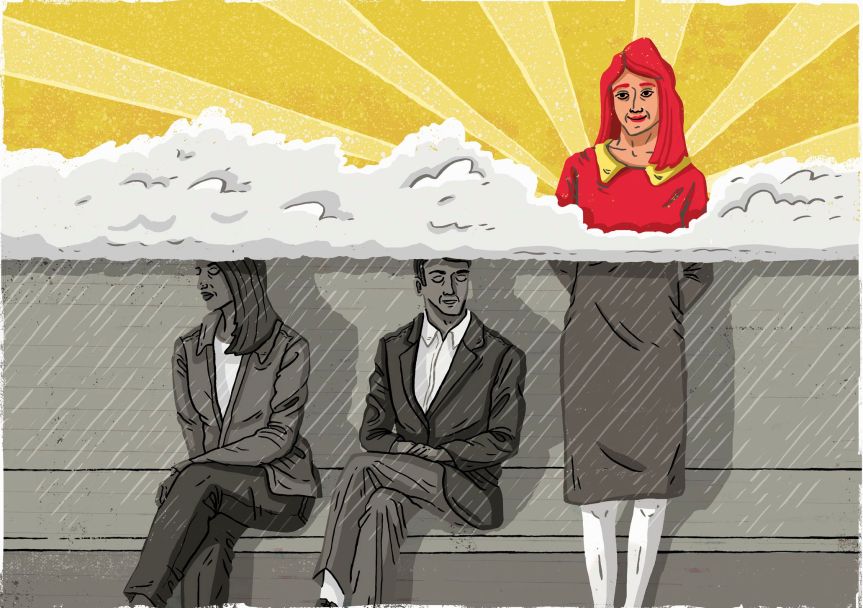





 The subject of online education is contentious in the present scenario when the world is fighting with a disastrous pandemic. Education is always seen as a necessity for everyone as it forms the basis for human capital formation which aids in development process of the nations. India being a country of 1.35 million people with more than 50 percent of population below 25 years of age represents a huge potential for education sector. The disastrous situation currently being faced by the world has made everyone to rethink the modes in which education can be imparted to the students. In the long run the practice of online learning will increase.





You must be logged in to post a comment.