The impact of Social Media Influencers on Sales

The way social media influencers directly or indirectly influence publicity and promotion somehow also influence the sales of a brand. Some of the ways in which social media influencers impact sales are:

1. Help in Consumer Research Phase:

Nowadays, market is mostly “consumer-oriented”. Consumers search and research, read reviews about a brand and hence they want someone trusted and experts who will voice their opinions, concerns and recommendations. Influencers play a vital role in spreading the word of mouth and recommendations thereby increasing sales.

2.Help in increasing Return on Investment:

Social Media Influencers help in achieving a relatively high Return on Investments than other factors. It is because of low capital investment. Other forms of advertisement or marketing tools require huge capital whereas dealings with Social media Influencer can be fixed just on a simple phone call.

3.Content Creation helps in increased Sales:

Influencers create meaningful and exciting content that sometimes evoke interest in the viewer to buy the product. Apart from this, Influencers also work on multiple social media accounts and this helps them to reach wide and diverse audience. This is also very helpful for increasing sales in a business.

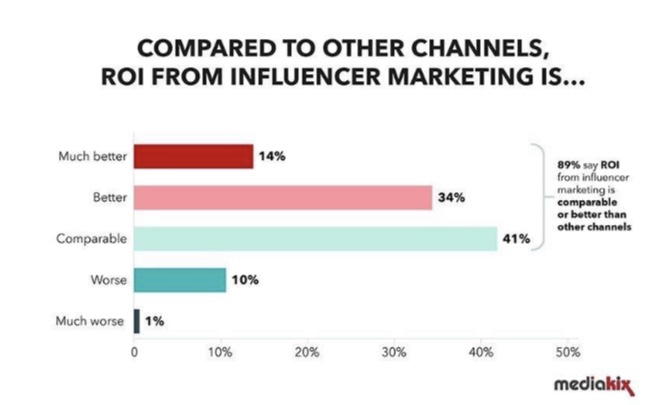
In a recent survey by Mediakix, a famous influencer marketing agency, about 89% of respondents say Return on Investment from Social Media Influencers is better than other channels.

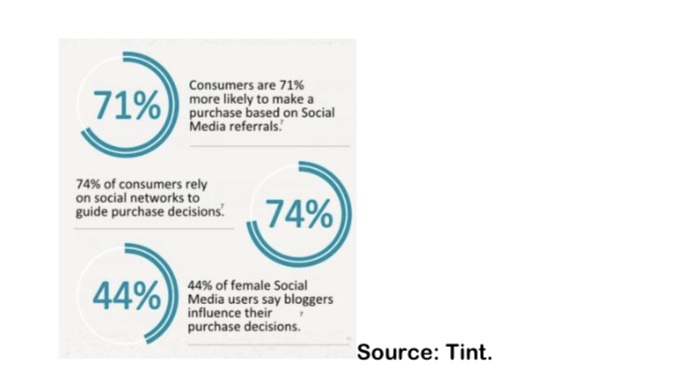
In another survey by Tint, 71% of respondents told that they rely on social media referrals for purchase decisions.

Some Examples:

1) Glossier, USA.

The USA based beauty brand has built its brand image by entirely relying on Social Media Influencers and other forms of digital marketing. They rely heavily on influencers as they send new products to influencers before the products are even launched so that influencers identify the flaws and suggest improvements (if they require) and thereafter the brand makes the changes accordingly.

2)Daniel Wellington, Sweden

This company was able to tap the “business opportunity” and it proved out to be quite fruitful for them. They broke into the Indian market by solely relying on Social Media Influencers. It is a watch brand company sends its new products to big social media influencers in India and enjoys extreme profits and sales. They were able to see India as a good market due to the country’s vast population.

Conclusion:

Social Media Influencer marketing or the Influencer marketing has become the fastest growing trend in communication in last few years. The key factors involved to be a good influencer are trust and credibility in the message. Latest studies and research have proved that social media influencers contribute to a business’s growth in a very positive manner in terms of promotion, publicity, sales and ROI. Many assume this marketing tool is temporary and will extinct in few years, however only time can say it.

Twitter vs Instagram. What’s better for business?

Before we get into the details about marketing on Twitter and Instagram, let us learn quickly about some of the key features of both Twitter as well as Instagram.
Twitter was launched in 2006 whereas Instagram was founded in 2010. As of 2020, there are 1.3 billion twitter accounts out of which only 330 million are monthly active users globally whereas there are 1.2 billion Instagram accounts out of which 1 billion are monthly active users globally.


About 293 million Instagram users are aged between 15 and 24 and 338 million users are aged between 25 and 34. Talking about Twitter, 80% of its global population is below 50 years old. Twitter ranks slightly behind Instagram when it comes to users 60+ users.

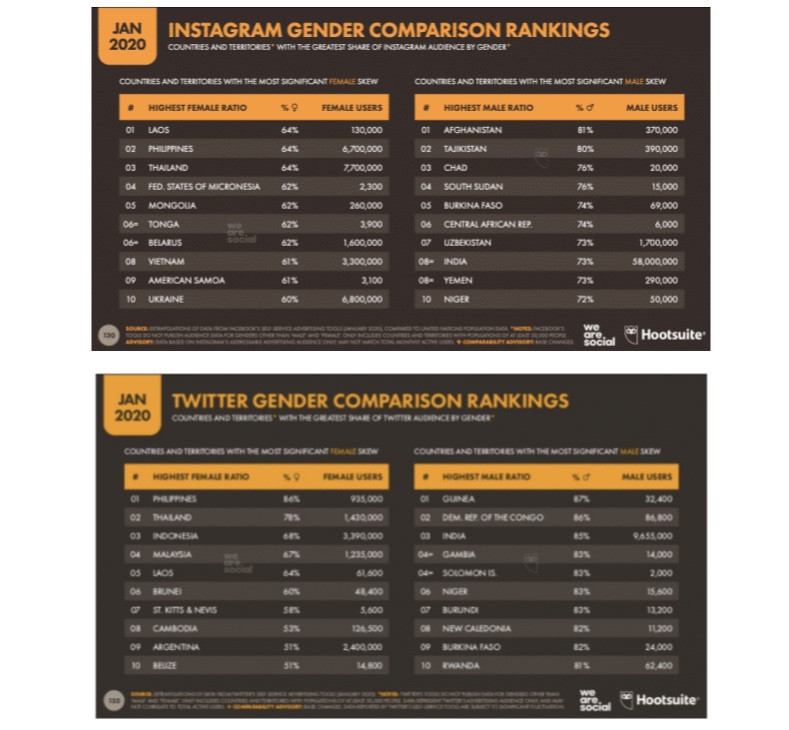
When it comes to the worldwide gender split, about 51% of Instagram users are female and 49% are male and when we talk about Twitter 62% are male and 38% are female. 85% of India’s Twitter audience is male, ranking the country third highest for male-to-female ratio.

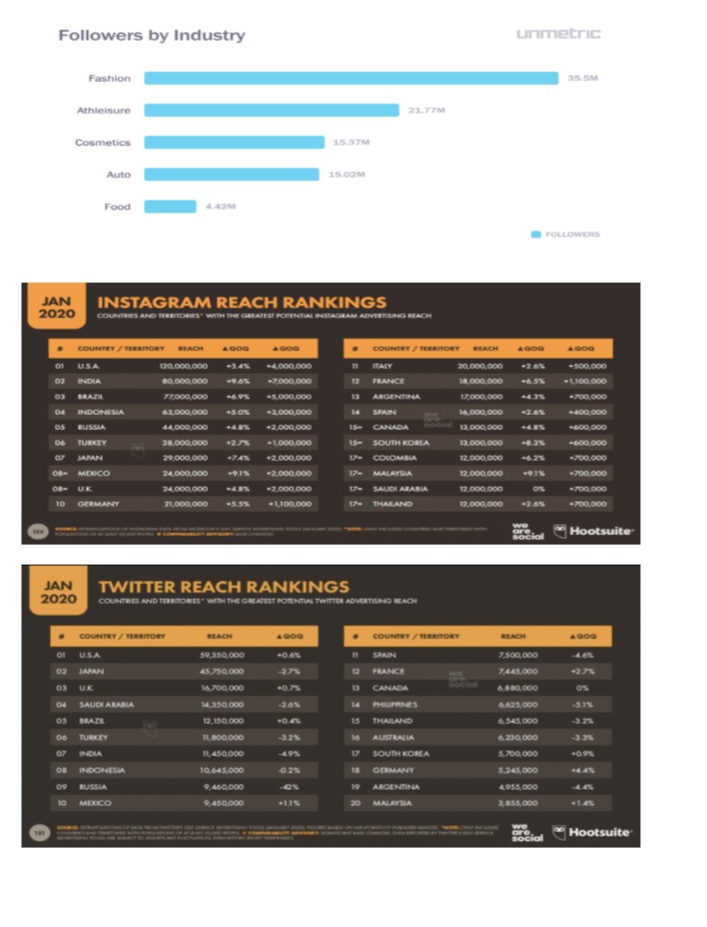
With the help of the above graphs, we come to know that Laos has highest female ratio when it comes to Instagram and for Twitter its Philippines with highest female ratio.

1. USER ENGAGEMENT REACH

One of the commonality between Instagram and Twitter is that maximum of their active users are aged between 18 and 29. And if a business is looking for a young audience, then surely it has to select both Instagram and Twitter.
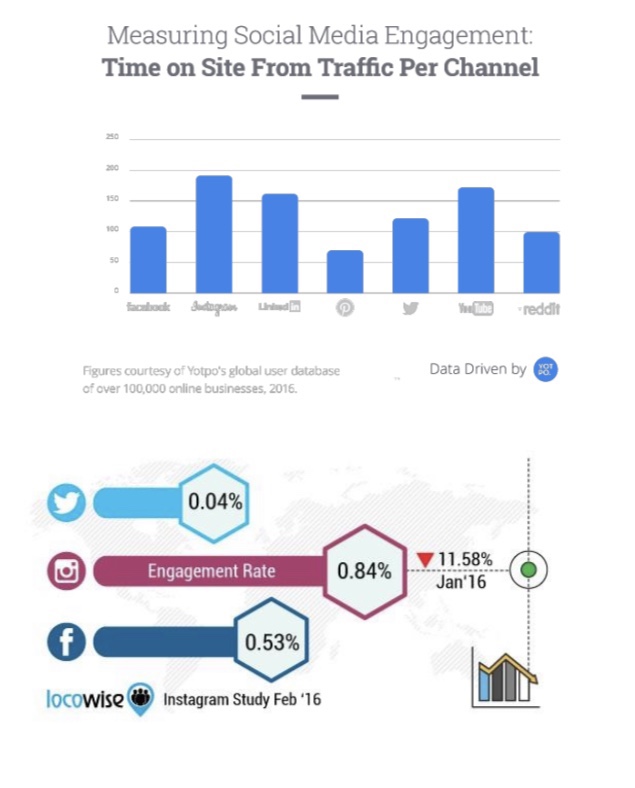
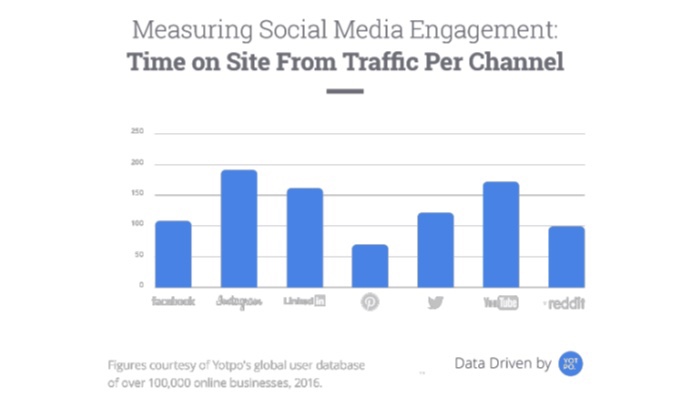
From the above two graphs, it is quite evident that user traffic is much higher on Instagram than any other platform.
However, it is important to note that maximum Twitter users are inactive and Instagram users are mostly active with over 500 million people using Instagram daily whereas only 330 million Twitter users are active monthly. So if a new business wants to enter the market and wants easy and quick promotion, Instagram is a better option any day.

2. Sales

Instagram has separate business profiles specifically for collaborations and business deals. Email, contact number can be directly attached on profiles whereas same does not happen with Twitter.
Another important characteristic where Instagram leads over Twitter is its “Trackable” feature. Sales and Leads can be tracked through Instagram Advertisements and hence we can see clear Return on Investment.

According to Shopify, an e-commerce platform, average price tag for a sale referred from Instagram is $65 and it is $55 for Facebook and $46 for Twitter.
With Instagram settings, we can link our profile to other social media accounts such as Facebook and Twitter but the same is not possible with Twitter and this can indirectly help in increasing sales.

Instagram being a more visual platform with variety of formats available is doing better than Twitter in driving sales.
In the graph below, it is found that traffic on Instagram is more than Twitter. So it is obvious, Instagram is ahead of Twitter when it comes to generating sales.

It is also important to note that Sales on social media platforms also depend on the country and the business field one is in.
After analysing the below three graphs, we will be able to understand that it is better to avoid using any of these applications for our business if our target audience is not into these fields and countries.

3) Return on Investment

Providing a link on our Instagram bio can fetch a lot of traffic and doing the same on our Tweets would also increase our traffic. Making good investment on Instagram sponsor advertisements and Twitter advertisement also increases our user traffic dramatically as Twitter shows our advertisements on “TRENDS” while Instagram shows our advertisements on stories.
Mostly, influencers prefer Instagram over any other platform since it is easy to handle and even users like Instagram posts as compared to other formats. And at the end all a business wants to do is to increase sales and earn profits. This is possible more on Instagram due to its unique yet diverse formats, high user engagement and efficient promotional techniques, so definitely ROI is bound to be more in Instagram than on Twitter.

Also, as mentioned before, Instagram Business profiles provide each and every detail about insights, engagements, and sales and as a result it gives better information regarding ROI in comparison to Twitter.
Two examples of Sales Tracking, User Enagagement and ROI information are given below.

Conclusion: Both Instagram and Twitter are doing well when it comes to marketing strategy and business. If we talk about situation half a decade ago, Twitter was leading but in 2020, Instagram is unbeatable winner.
Growth of the business also depends on the industry, for example fashion industry will do better on Instagram while News Industry will do better on Twitter.

Visual Culture: How Visual is always contaminated by Non-Visual?

A creator may create an image but that single image can have multiple meanings for different individuals that may or may not go with what the creator was trying to convey. Such is the situation today where “visual” holds massive influence and power on the masses. The meaning of whatever we see around us is very subjective in nature, that is, it depends from person to person. And all the meanings that we derive from seeing something around us depends on our personal experiences and backgrounds we come from. The visuals can be decrypted by many according to their own thoughts.

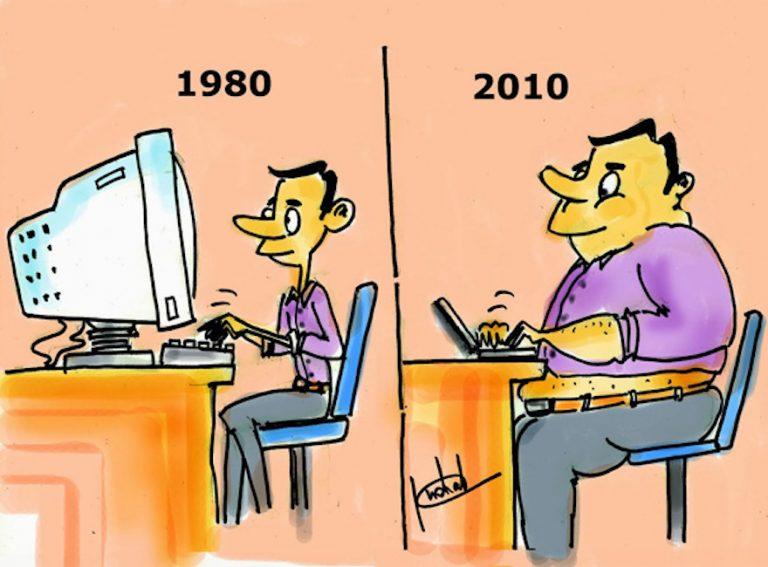
https://whatzviral.com/wp-content/uploads/2019/01/19-2.jpg

In the above picture, the creator was trying to convey how over the time we have so much indulged ourselves in technology that we have forgot to give time to ourselves and stopped caring about our health. However different people may interpret the image in different ways using their own understandings and logics like some may think this image shows advancement of technology from heavy computers to light weight laptops, some may think this picture shows the same person who has grown old in these 30 years.

The visual has risen steadily in importance in our culture. The presence of visual images has progressed from the high art of painting through various media such as still photographs, play television, video games etc. The increasing availability of various technologies has led to a massive presence of visuals around us.

Reading an image is about interrogating and playing with the separate elements that compose it to provide some private meaning. If we consider an “image” to be a combination of characteristics, then each one of us reading an image would construct and combine those characteristics attached to it and analyse it in new and unique ways.

The act of reading an image produces myths. It assembles in our minds various characteristics of image, some of which may change on subsequent readings and some of which may be undesirable. When we try to study an image, the image is brought into the world of discourse and meanings are constructed from and through them. . Images can become valuable if they generate powerful connotative meanings or if they are manipulated easily. Images acting as signifiers can evoke different meanings and examination of these images introduce the discourse.

Another example could be:

JapaneseGP: electric mini bike race - YouTube

The above picture is from a mini bike race in Japan, in which the creator wanted to convey the “peculiarness” of the picture, that is, adults on mini bikes. Some may just focus on those mini bikes or some may just see it as a normal bike race or some may see how the one in the far right is going out of the lane or some may see all of the above mentioned and all of this depends upon the interests and thinking capacity of individuals.

Conclusion: Every picture says something and every picture is trying to convey us a message, even though a picture may not look thought provoking, it carries come thought or meaning in some or the other way. Several factors are involved in the evolution or what we can say is “contamination” or pollution of image or visuals. What a creator is trying to convey through a message can be completely different from how the viewer interprets and decrypts it. Every individual can have several different meanings about the same visual that can be positive, negative or both depending on his interests and background.

RTI ACT and Investigative Journalism.

Just like citizens, the RTI act has enabled lot many journalists in the country to investigate regarding their concerned issues. RTI act over the years has become an important weapon for journalists to divulge hidden and lesser known information. RTI act has become so crucial and an “everyday thing” for some journalists that they have build their entire career out of it.

Some of the famous cases where RTI act has helped journalists in their investigation procedure are:

1) Chhatrapati Shivaji Memorial Project by journalist Mr. Vishwas Waghmode:

Mr. Waghmode, a journalist at the time in The Indian Express investigated the controversial Chhatrapati Shivaji Memorial project. According to him, the initial cost quoted by the contractor was Rs.3826 crores which was supposed to be the lowest bid as opposed to the government’s bid which was Rs.2500 crores. The government in order to resolve this issue set up a committee led by the chief secretary in order to renegotiate the cost which successfully got the cost down to the government’s estimate of Rs.2500 crores. Mr.Waghmode in connection with this case stated that the rules do not allow renegotiation but rather they are supposed to issue fresh tenders. He further added that the opposition was alleging the government had reduced the height of the statue in order to reduce the cost which the government vehemently denied.

In order to have the “genuine information”, he took the help of RTI act. Mr. Waghmode discovered and revealed how the government had in reality decreased the height of the statue and the horse by 7.5m. But in order to show that the height of the statue was not reduced, they had instead increased the height of the sword by 7.5m. He further revealed that since the sword was straight, the amount of money required to build the sword was quite less when compared to the reduction in height and that in turn helped them reduce the cost by a substantial amount.

RESULT:

When all of this came into the public eye, the State Government could not justify why the height of the sword was increased and was in deep shame.

2) HONORARY DOCTORATE SCAM by Shyamlal Yadav.

When we talk about investigative journalism in India, we can never ignore this name, that is, Shyamlal Yadav. In 2018, Mr. Shyamlal Yadav in The Indian Express published a series of investigative reports on how India has emerged as one of the biggest markets for “predatory” publishers of substandard research journals.


On February 6, 2018, The Indian Express scrutinised over 500 RTI applications filed over 470 higher educational institutions to find that monitoring authorities, and hundreds of politicians and bureaucrats were awarded such degrees between 1997 and 2017.

The list for instance included former director of IISC, who received 18 honorary doctorates from public universities between 2006 and 2012 when he was chairman of NAAC’s EC. The list also had several UGC chairmen who had such degrees during their tenure.


RESULT:
Rules were made by higher authorities in 2019 after the investigative report via RTI files whereby NAAC officials, family weren’t allowed to accept honorary doctorates from institutions under their watch. RTI was used to dig out crucial facts in this case.

3) Discontinuation of LIC policies by Shyamlal Yadav

Shyamlal Yadav got information through RTI from Life Insurance Corporation (LIC) that there were 59 million insurance policies those were lapsed permanently due to discontinuance of premium. And the premium deposited since then had become LIC property. Despite many efforts LIC did not provide the info on total money deposited against those policies till the date they lapsed. As a result, Indian Express published the story about the discontinuation.


RESULT:


Within 25 days of publication of the story, LIC issued fresh
advertisements regarding renewal of policies.

4) Streams of Filth by Shyamlal Yadav:

This was an investigation by Shyamlal Yadav regarding water pollution in India that took over one year. About 39 RTI applications regarding expenses by Government on water projects were filed.
It came into notice that large amount of money was spent by Government for water purification projects but there was little effect on nation’s lifelines.
The story was published in The Indian Express and was selected by UNESCO as one of the 20 best Investigative pieces in the world.


RESULT:
Central Pollution Control Board said the rivers of India are not just polluted but severely toxic.

Kadambini Ganguly: India’s First Female Doctor.

160 years ago, on this day, July 18, Kadambini Ganguly was born in a Bengali family in Bhagalpur, Bihar. As a child, she was rebellious with regard to sexism and patriarchy and was very hard-working as a student.

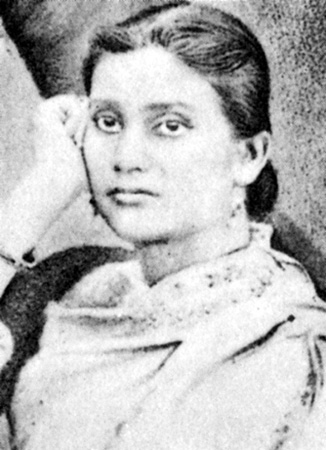
Picture of Dr. Kadambini Ganguly.

During her childhood, she had witnessed that in her area many women used to die without treatment as women could not get proper treatment because all doctors were males and Indian social culture didn’t approve a male doctor treating a female patient. From here, she dreamt of becoming a doctor during her childhood.

However, things didn’t happen according to her. She was married off at young age and thus she thought her dreams would go down the gutter. But it was then her husband who supported her in every walk of her life. She did her schooling partly at Banga Mahila Vidyalaya and partly at Bethune School. In 1878, she became the first female to pass the University of Calcutta entrance examination.

Within few years, she became one of the first few female graduates in the country alongside Chandramukhi Basu. When she wanted to study medicine, she was denied admission by University of Calcutta as the university wasn’t allowing female students back then. Dwarkanath Ganguly, Kadambini Ganguly’s husband challenged this patriarchal rule and in 1883 Kadambini Ganguly was the first female to take admission in Calcutta Medical College.

Kadambini Ganguly received a scholarship of two years and in 1886 she was awarded the GBMC award and thus making her the first female to have a degree in Western Medicine in the whole of South Asia.

It is also important to note that during that time people didn’t approve a female getting education and as a result she received strong opposition regarding her academical choices from conservatives even from her neighbourhood and relatives.

Bangabashi, a magazine of that time that was run by the then conservatives also called her a “whore” and this obviously didn’t go well with the Ganguly couple. Dwarkanath Ganguly legally filed a court case against the magazine and this resulted in 6 months jail term for the editor of the magazine.

Kadambini Ganguly also went abroad for her studies and got her further education in Edinburgh College of Medicines for Women. She quickly earned three different diploma degrees. Soon, she became popular in entire South Asia and Europe. Her name became so popular that the then King of Nepal invited her to treat his ailing mother.

Kadambini Ganguly had even advocated for social change in India and especially for women. It was due to her efforts that Bethune College in Kolkata added the Fine Arts course in their college. She was also one of the six female delegates to fifth session in Indian National Congress and even organised Women’s Conference in 1906 in Calcutta.

Authors of that time described Kadambini Ganguly as one of the “greatest” and the “most accomplished woman” of her time. And truly, all of us agree to it. Because of courageous women like her, so many women in the world must have got inspired to achieve their dreams. Kadambini Ganguly will always remain immortal in all her hearts.

BOBBY (1973): The Game Changer of Teenage Romance.

Why is the movie considered as Hindi Cinema’s first teenage love story?

1970s ‘India’ witnessed lots of socio-economic happenings like unemployment, poverty and corruption and so were the plots of most of the movies of that era based on classism, social injustice, divide between rich and poor and so on. Although the genre “love story” was mostly ignored, the film “Bobby” in 1973 came out as an exception. Directed by Raj Kapoor and produced and distributed by R.K. Films with Rishi Kapoor and Dimple Kapadia in lead roles, the film is altogether a masterpiece. Not only is it considered as a benchmark of Hindi Romantic Cinema but it also completely redefined the genre, thus breaking the earlier notions of typical family drama love stories.

Film Poster of Bobby (1973).

The movie begins with six year old Raj, son of a rich business person who is sent to boarding school leaving behind his governess, Mrs Braganza in grief. After completing his studies in boarding school, Raj (played by Rishi Kapoor) returns for his 18th Birthday party where his eyes are stunned seeing a girl in a white gown, who’s apparently his governess’ granddaughter, Bobby Braganza (played by Dimple Kapadia). The next day, Raj visits Mrs.Braganza’s home, who’s in a better economic condition than before and gets to meet Bobby. The two subsequently develop a friendship and liking towards each other. Not very long before they had their first break up following a misunderstanding at Raj’s friend’s party which they sort out later during Bobby’s Kashmir school trip.

Slowly, both of their parents come to know about their affair and Braganzas are invited to Raj’s home for a dinner party by his father. However seeing the social condition of Braganzas, Raj’s father brutally mocks them leading Braganzas shattered. He doesn’t stop at that and visits Braganza’s residence to again insult them by providing them money to get rid of the Raj and Bobby’s relationship. He then fixes Raj’s marriage with another rich businessperson’s disabled daughter without telling Raj. Raj, however, runs away and this time Raj’s family along with police accuse Bobby’s father with ‘kidnapping’. Both Raj and Bobby’s family chase the couple and with no option left Raj and Bobby decide to jump in the river but are rescued by each other’s dad. The film has a “happy ending” with unification of two families.

How this film brought a change in the genre and why it remains a trendsetter?

It is probably Bobby, which introduced teenage romance in Hindi Cinema. Before this film, love story in the context of Hindi Cinema was only restricted to a grown up adult man and woman mostly in their late 20s who fall in love and marry or how typical Indian families indulge in arrange marriage and how the couple start loving each other after marriage. Bobby was one of the first Hindi films which showed teenage romance in a very entertaining and engaging way. There is an entire song in the movie titled “Hum tum ek kamre me band” (English: We both are locked in a room) where it is shown how the young couple (Bobby and Raj) accidentally get locked in a room, which proves that the movie was way ahead of its time. The film is also known for its exquisite closets varying from fairy tale gowns to dreamy jackets. Shot in spectacular locations of Goa, Mumbai and Kashmir, it was all soothing and added more to its glory.

The film was specifically made for the youth and Bobby being the debut film of both Dimple Kapadia and Rishi Kapoor added more to its freshness. The film had so much of impact on youth that during that time 14-15 year olds used to rebel against their parents to find true love and eventually the film became “template” for teen romances in India. The audience and Indian public were so fascinated with the movie’s character Bobby that many girls born in India during that time were named “Bobby”. Interestingly, this movie’s plot was replicated consequently in several other romantic Hindi films for over three decades.

The typical “happy ending” stories as mentioned earlier also became a trend ever since. Almost every popular love story in Hindi Cinema had a similar plot thereafter and that too in a proper sequence- first romance of a teen couple from different economic classes, followed by severe family restrictions and finally the climax- either happy or mournful. These narrative elements like family restrictions and classism became genre conventions ever since the release of Bobby.

Brief History of Hindi Cinema.

In the course of its long history, the Hindi Cinema has gone through constant evolutions and is still witnessing massive socio-cultural changes, however, from substantive and insular point of view; the Hindi Film Industry still retains its own unique and peculiar characteristics. Since the beginning, the Hindi Cinema has drawn its inspiration from the styles and aesthetics of the mega diverse Indian culture.

In general great emphasis has been put on classical Indian traditions over the years including Indian storytelling, epics, and poems and like. Although movies came to India in July 1896 as famous French Lumiere Brothers screened their short films in Watson Hotel, Mumbai, the first ever Indian film was ‘Raja Harishchandra’, a mythological film released in 1913 directed by Dada Saheb Phalke, who is often called as the father of Indian Cinema.

Film Poster of Raja Harishchandra, 1913.

Raja Harishchandra being a silent film had Hindi, Marathi and English interfiles. In 1905, filmmaker Hiralal Sen documented “Swadeshi Movement of India” and screened it at Town Hall, Calcutta on 22nd of September which is considered as India’s first political film. H.S. Bhatavdekar’s first movie and the first film by an Indian Filmmaker was shot in 1899 in which he shot a Wrestling Match in Mumbai’s Hanging Gardens. By the 1930s, the industry was producing 200 films per year and it was in 1931, the industry had its first sound film named ‘Alam Ara’ by director Ardeshir Irani which had a mixture of both Hindi and Urdu.

Alam Ara, India’s first Sound Film. (1931)

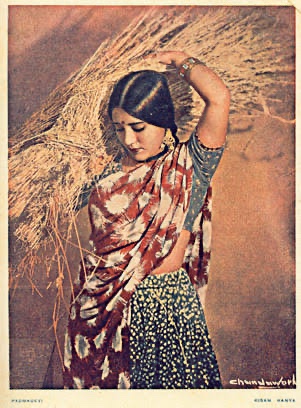
Since then the talkie films quickly were in high demand by the audience mostly in big cities and hence the industry permanently switched to sound films. The first ever Hindi color film was released in 1937 by Ardeshar Irani named “Kisan Kanya ”, however the colour films became popular among the audience only in late 1950s and early 1960s. The industry has also witnessed the breakdown of the studio system and complete on location shooting over the years. At present, Hindi Cinema produces over 1000 movies per year.

A still from Kisan Kanya (1937).

The Song and Dance Sequences

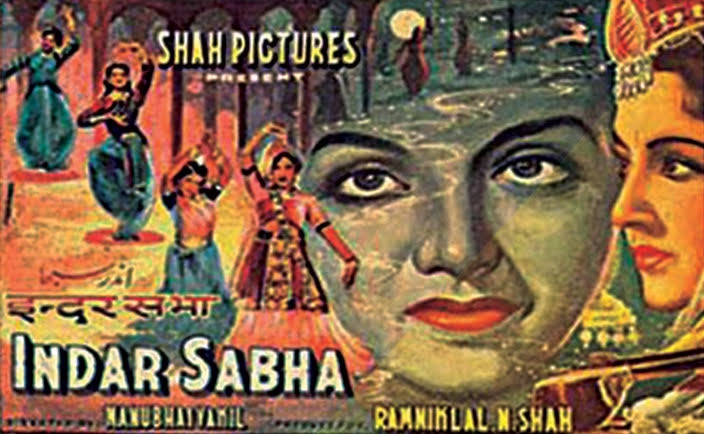
As mentioned earlier, the Hindi movies have always been a reflection of Indian culture and so hasn’t been any Hindi movie without a song till date. Two of the major characteristics of Hindi Cinema are songs and dance sequences. In fact, these two unique features are considered as the ‘peculiarities’ of Hindi Cinema which separates it from Hollywood or any other foreign film industry. In earlier times whenever there was a requirement of steamy scenes in movies, the protagonists, that is the hero and the heroine used to indulge into a song and dance sequel. The song and dance sequences pop up here and there according to necessary requirements and situations. The 1932 movie Indra Sabha was one of the first Indian movies with over 70 songs.

Film Poster of Indra Sabha (1932).

Truly, Hindi Cinema has entertained audiences worldwide for more than a century now. Informally and popularly known as Bollywood, Hindi Films will always have a special place in hearts of millions of Bollywood fans!

17 Sustainable Goals by United Nations.

Sustainable development is development that meets the needs of the present without compromising the ability of future generations to meet their own needs. Sustainable development has continued to evolve as that of protecting the world’s resources while its true agenda is to control the world’s resources. Environmentally sustainable economic growth refers to economic development that meets the needs of all without leaving future generations with fewer natural resources than those we enjoy today. Let us know 17 Sustainable Goals set by UN and their progress by now.

1) Poverty Eradication:

The 2030 Agenda acknowledges that eradicating poverty in all its forms and dimensions, including extreme poverty, is the greatest global challenge and an indispensable requirement for sustainable development.

2) ENDING HUNGER:

The total number of persons suffering from severe food insecurity has been on the rise since 2015, and there are still millions of malnourished children. The economic slowdown and the disruption of food value chains caused by the pandemic are exacerbating hunger and food insecurity.

3) Ensure healthy lives and promote well- being for all at all ages

Progress in many health areas continues, but the rate of improvement has slowed and will not be sufficient to meet most of the Goal 3 targets. Globally, an estimated 295,000 maternal deaths occurred in 2017, resulting in an overall maternal mortality ratio of 211 maternal deaths per 100,000 live births, a 4 per cent reduction compared with 2015 and a 38 per cent reduction compared with 2000. The majority of the deaths occurred in low- and lower-middle-income countries, and roughly 66 per cent of them occurred in sub-Saharan Africa. At the current pace of progress, the world will fall short of the target of the Goal.

4) Ensure inclusive and equitable quality education and promote lifelong learning opportunities for all:

At the end of 2019, millions of children and young people were still out of school, and more than half of those in school were not meeting minimum proficiency standards in reading and numeracy.

5)Achieve gender equality and empower all women and girls

The commitment to advancing gender equality has brought about improvements in some areas, but the promise of a world in which every woman and girl enjoy full gender equality and all legal, social and economic barriers to their empowerment have been removed remains unfulfilled.

6)Ensure availability and sustainable management of water and sanitation for all

In 2017, 3 billion persons lacked soap and water at home. In 2016, 47 per cent of schools worldwide lacked handwashing facilities with available soap and water, and 40 per cent of health-care facilities were not equipped to practise hand hygiene at points of care.

7) Ensure access to affordable, reliable, sustainable and modern energy for all

The world is making good progress on increasing access to electricity and improving energy efficiency. However, millions of people throughout the world still lack such access, and progress on facilitating access to clean cooking fuels and technologies is too slow.

8) Promote sustained, inclusive and sustainable economic growth, full and productive employment and decent work for all:

In 2018, the rate of growth of global real GDP per capita was 2 per cent. In addition, the rate for least developed countries was 4.5 per cent in 2018, less than the 7 per cent growth rate targeted in the 2030 Agenda.

9) Build resilient infrastructure, promote inclusive and sustainable industrialization and foster innovation:

In 2019, 14 per cent of the world’s workers were employed in manufacturing activities, a figure that has not changed much since 2000. The share of manufacturing employment was the largest in Eastern and South-Eastern Asia (18 per cent) and the smallest in sub- Saharan Africa (6 per cent).

10)Reduce inequality within and among countries

In 73 of the 90 countries with comparable data during the period 2012–2017, the bottom 40 per cent of the population saw its incomes grow. Moreover, in slightly more than half of those countries, the bottom 40 per cent experienced a growth rate in income that was higher than the overall national average.

11) Make cities and human settlements inclusive, safe, resilient and sustainable:

Rapid urbanization has resulted in a growing number of slum dwellers, inadequate and overburdened infrastructure and services and worsening air pollution.

12) Ensure sustainable consumption and production patterns:

As at 2019, 79 countries and the European Union reported on at least one national policy instrument that contributed to sustainable consumption and production in their efforts towards the implementation of the 10-Year Framework of Programmes on Sustainable Consumption and Production Patterns.

13) Take urgent action to combat climate change and its impacts.

The year 2019 was the second warmest on record and the end of the warmest decade, 2010 to 2019. In addition, with a global average temperature of 1.1°C above estimated pre-industrial levels, the global community is far off track to meet either the 1.5 or 2°C targets called for in the Paris Agreement.

14. Conserve and sustainably use the oceans, seas and marine resources for sustainable development:

Oceans and fisheries continued to support the global population’s economic, social and environmental needs while suffering unsustainable depletion, environmental deterioration and carbon dioxide saturation and acidification.

15) Protect, restore and promote sustainable use of terrestrial ecosystems, sustainably manage forests, combat desertification, and halt and reverse land degradation and halt biodiversity loss:

Forest areas continued to decline, protected areas were not concentrated in areas of key biodiversity and species remained threatened with extinction.

16) Promote peaceful and inclusive societies for sustainable development, provide access to justice for all and build effective, accountable and inclusive institutions at all levels:

Conflict, insecurity, weak institutions and limited access to justice remain a great threat to sustainable development. Millions of people have been deprived of their security, human rights and access to justice.

17) Strengthen the means of implementation and revitalize the global partnership for sustainable development:

Strengthening multilateralism and global partnerships is more important than ever before. The global nature of the pandemic requires the participation of all governments, the private sector, civil society organizations and people throughout the world.


Evolution of Panchayati Raj System in India.

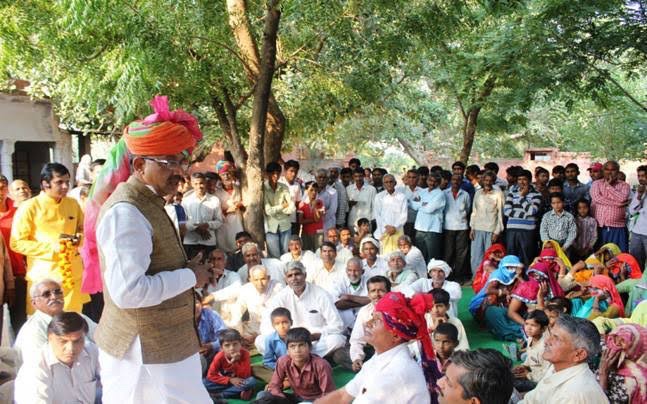
Since the beginning of India’s foundation, Panchayats have been the pillar of Indian rural set up. According to Mahatma Gandhi, development and governance in India should not be in big cities and towns but in rural areas and small villages because majority of Indian population resides in villages.

A Panchayati Raj meeting in India. Picture Credits: India Today.

The Panchayati Raj system in India derives its existence from Indian Constitution under Part IX under the head The Panchayats. When power is taken away from Central and State Governments and given to local government, it is called decentralisation.

Most of our Indian states like Uttar Pradesh, Maharashtra are internally very diverse. There is thus a need for power sharing within these states. Federal power sharing in India needs another tier of government, below that of the State governments. This is the rationale for decentralisation of power. Thus, this resulted in a third-tier of government, called local government. People have better knowledge of problems in their localities.

The need for decentralisation was recognised in our constitution. Since then there have been several attempts to decentralise power to the level of villages and towns. Panchayats in villages were set up in all states. An independent institution called the State Election Commission has been created in each state to conduct Panchayat elections.

A major step towards decentralisation was taken in 1992. The Constitution was amended to make the third-tier of democracy more powerful and effective. Now it is constitutionally mandatory to hold regular elections to local government bodies.

Now it is constitutionally mandatory to hold regular elections to local government bodies. Seats are reserved in the elected bodies and the executive heads of these institutions for the Scheduled Castes, Scheduled Tribes and Other Backward Classes. At least one-third of all positions are reserved for women. The State governments are required to share some powers and revenue with local government bodies. The nature of sharing varies from State to State.

Rural Local Governments is popularly known by the name panchayati raj. Each village or a group of villages in some states have a gram panchayat. This is a council consisting of several ward members often called panch, and a president or sarpanch. They are directly elected by all the adult population living in that ward or village. It is the decision making body of the entire village. The Panchayat works under the overall supervision of the gram sabha. All the voters in the village are its members. It has to meet at least twice or thrice in a year to approve the annual budget of the gram panchayat and to review the performance of the gram panchayat.

The local government structure goes right up to the district level. A few gram panchayats are grouped together to form what we call as a panchayat samiti or block or mandal. The members of this representative body are elected by all the panchayat members in that area. All the panchayat samitis in a district together constitute the zilla parishad.

Despite of the many flaws, Panchayats have contributed a lot maintaining the rule of law inside villages and educating the rural population about various different matters pertaining to their interests.

UNAIDS- Achievements and Challenges.

As of 2018, about 38 million people in the world are infected with HIV and out of these about 21 million people were living in Africa alone. South Africa, Nigeria and India are the worst affected countries with over 7 million, 3 million and 2 million people with HIV infection respectively. Interestingly, India is on third position with over 2 million of its population infected with HIV; however it has the lowest HIV rate in the world due to its vast population.

Source: UNAIDS.

UNAIDS acts as a global cogent body that protects HIV infected people from discrimination and aims to provide them a safer environment by creating awareness among the masses. It also provides deliberate and strategic advocacy and cooperates with different governments and private bodies to achieve its goals.

Achievements of UNAIDS.

1) Because of UNAIDS’s effective advocacy, different Government responses towards every aspect of HIV and AIDS was positive with good leadership and management.

2) UNAIDS’s advocacy also inspired many countries to change and abolish discriminatory laws that used to keep HIV patients on the fringes. It also convinced many countries to make laws in favour of women’s rights so that stigma faced by women decreases.

3) In 2019, 67% of all people living with HIV were accessing treatment. 68% of adults aged 15 years old and above had access to treatment, 53% of children had access to treatment and 73% of the female adults also had the access to treatment.

4) About 85% of pregnant women living with HIV had access to antiretroviral medicines to prevent transmission to their child in 2019.

5) UNAIDS also worked a lot in raising awareness about HIV and related stigma all over the world. It focused on myths related to HIV which ultimately led to a positive attitude of public towards HIV patients.

CHALLENGES FACED BY UNAIDS

There are a lot many challenges attached to HIV infection and thus it also becomes difficult for UNAIDS to deal with the issue at times. It is a social difficulty too and HIV patients suffer in silence because misconceptions about HIV.

1) HIV and Violence on women:

Every week, about 5500 young women aged 15-24 years become infected with HIV.

In Sub-Saharan Africa, five in six new infections among adolescents aged 15-19 years are among girls. Young women aged 15-24 years are twice more likely to be living with HIV than their male counterparts.
More than one third (35%) of women around the world have experienced physical and/or sexual violence by an intimate partner or sexual violence by a non-partner at some point of time in their lives.

2) HIV and Tuberculosis:

Tuberculosis remains the leading cause of death among people living with HIV, accounting for around one in three AIDS related deaths.
In 2018, an estimated 10 million people developed Tuberculosis and 9% of them had HIV.

3)HIV and COVID-19, newest of all:

A new analysis by UNAIDS has revealed that COVID-19 is going to have a detrimental effect on low and medium income families and countries around the world on supplies of the generic antiretroviral medicines used for HIV treatment.
The lockdowns and border closures imposed by Governments to stop Covid-19 have impacted both production of the medicines and their distribution.

It’s important for us as a society to support the HIV-AIDS patients and their families morally, socially and make a stigma-free environment for them.

Jagannath Puri Rath Yatra: 5 Fast Facts about the temple.

One of India’s biggest festivals, Rath Yatra begins today, July 12 and that is celebrated all across the world by millions of Indians. The festival has its primary significance in Indian states like Odisha, Jharkhand, West Bengal and Assam.

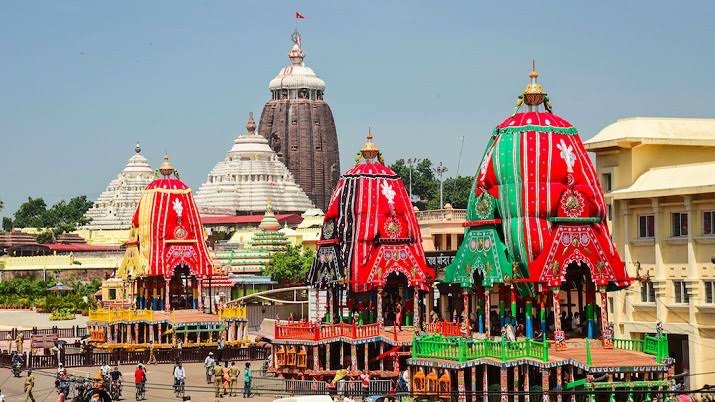
Picture Credits: India TV. Location: Puri Jagannath Temple.

As everyone has their eyes on Puri Jagannath Temple’s grand celebration for this festival, let us know some of the important facts about the temple.

1) Formation of Temple.

The temple was first built by the Ganga Dynasty ruler Anantavarman Chodaganga in 12 Century CE and was further developed by several other kings including that of the Ganga Dynasty as well as the Suryvamshi Dynasty.

2) Deities Worshipped

Lord Jagannath, Lord Balabhadra and Goddess Subhadra are worshipped inside the temple. The deities are adorned with different jewelleries and accessories according to different seasons.

3) Structure of the Temple.

The Temple has four distinct structures:

a) Deula, Vimana or Garba Griha where the triad deities are kept on the ratnavedi, the throne of pearls, in Deula Style.

b) Mukhashala, the frontal porch

c) Nata Mandir, Natamandapa which is known as Jagmohan, the audience hall or the dancing hall.

d) Bhoga Mandapa, the offerings hall.

The main temple is a curvilinear temple and crowning the top is the Srichakra, an eight spoked wheel of Lord Vishnu. It is also known as Nilachakra which is made out of Ashtdhatu and is considered sacrosanct.

4) The Food Offerings:

The food is offered to the Lord six times a day. The breakfast that is offered early morning is called Gopala Vallabha Bhog, the next offering at about 10 am is known as Sakala Bhog and another offering after some time is called the Sankhudi Bhoga which consists of Pakhala with curd and Kanji Payas.

The noon offering is known as Madhyanha Dhupa and that is followed by evening food at 8 pm known as Sandhya Dhupa. The last offering to Lord is called the Bada Simhara Bhoga.

5) Rosaighara- Temple’s Kitchen.

The temple’s kitchen is considered to be the largest in the world. About 56 varieties of food are produced which are purely vegetarian and prepared without the use of onions, garlic or chilies as prescribed by some Hindu Texts. Cooking is done only by using earthen pots with some water that comes from two nearby tube-wells known as Ganga and Yamuna. The most awaited food offering is known as Kotho Bhoga, offered during Mid-Day. After being offered to Lord Jagannath and other deities, the food is sold in a nearby market.

World Population Day: UP Population Bill Draft.

Today, July 11, is celebrated as World Population Day each year and this was established by United Nations Development Programme with an attempt to address the issues faced by global population.

Photo Credits: E Times.

This day is very important to India as our country is one of the few in the world to have a massive increase in population in the past few years. With growing population, demands and needs of the public also increases.

Uttar Pradesh, a state in India has a population of about 220 million, larger than that of many of the developed countries in the world. As increasing population is a growing concern, the Government of Uttar Pradesh has proposed a bill to control the population growth and any suggestions that would improve the bill are also welcomed and the last date for public opinion is July 19.

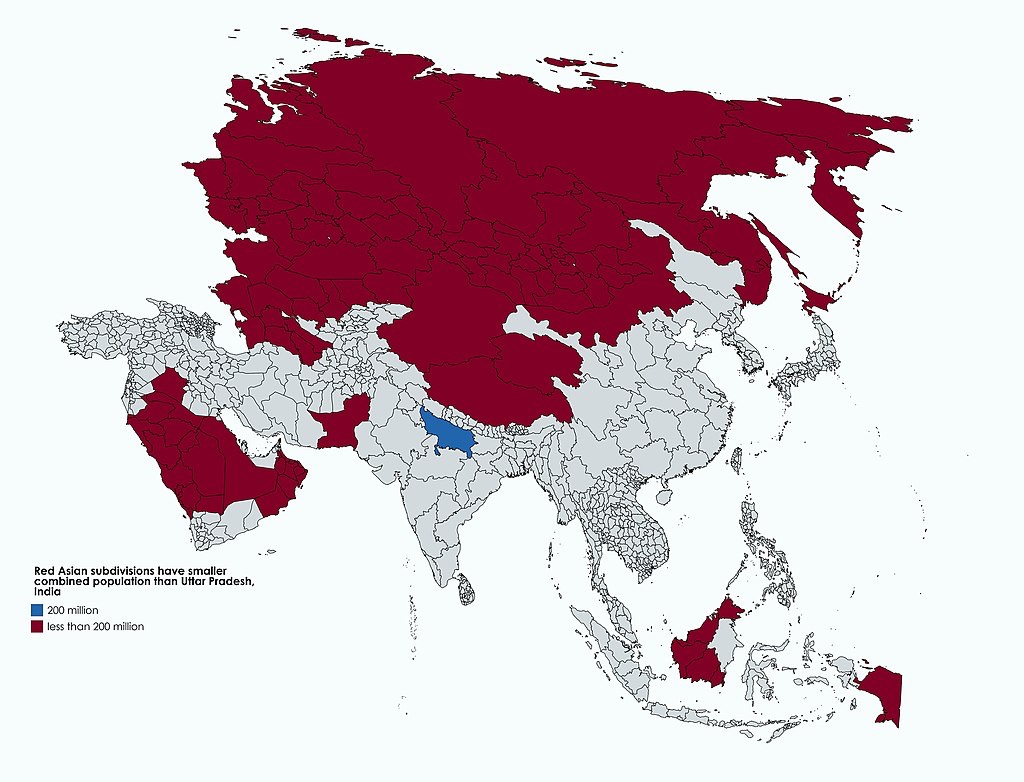
Blue Area: Uttar Pradesh.

The Blue Area, marked on the picture above is Uttar Pradesh and the blue area has more population than the entire red area combined. This shows the seriousness of the situation regarding the population in Uttar Pradesh.

Let us know some of the important facets from the Population Control Bill Draft of Uttar Pradesh which voices for a “two-child norm” in Uttar Pradesh.

The Government Duties:

1) A State Population Fund will be made for the purpose of implementation of the act.

2) Maternity Centres will be established at all primary health care centres. All centres and related NGOs will have to distribute contraceptive pills, condoms and like.

3) The Centres and NGOs will also have to educate people about proper family planning methods and record the information about pregnancies, deliveries, births and deaths.

4) The Government will also ensure that there’s a separate subject regarding population in all secondary schools.

5) The Government would also ensure to stabilise and provide welfare to the population of the state by implementing and promoting two child norm.

6) In the Bill it is also mentioned that public servant who adopt the two child norm would be entitled to several benefits such as increments throughout lifetime, maternity leaves and paternity leaves for 12 months (according to the case) with full salary and allowances and three percent increase in the Employer’s Contribution Fund under National Pension Scheme.

Citizen’s Responsibilities:

-The Bill has also made it clear that anyone violating the two child policy will be debarred from contesting local bodies elections, from applying or getting promoted in Government jobs, and receiving any kind of Government subsidy.

-As responsible citizens, the bill expects us to abide by the laws contained in the bill or suggest any improvements until July 19 and also encourages us to promote sustainable development with more equitable distribution.

The impact of Social Media Influencers on Publicity

In terms of marketing, publicity is the public visibility or awareness of a product, service for any organisation or business or company. It may also refer to the movement of information from its source to general public often (but not necessary) via the media. Here are some of the ways by which Influencers impact the publicity of a brand:

1) Building Awareness about the Brand:

Social Media Influencers on various social media platforms establish credibility in a particular industry (like fashion) and there is a huge gap between brands and their end users. Influencers try to bridge this gap as they take consumers through the “decision making phase” and thus help in creating a positive brand reputation.

2) Informing people about the product:

One of the main reasons why consumers trust influencers is that they relate with them on a personal level. Influencers know about the major everyday needs of an individual and hence they keep their followers “up-to- date” about latest trends regarding existing products, services or giving details about latest products.

3) Sponsor products in their profiles:

Sometimes social media influencers prefer fixed payments to feature the products of a brand or feature brands on their profile for a specific period of time or they may feature the products in their social media posts. This directly helps in general awareness of the brand.

4) Giving Prizes:

Social Media Contest is one of the most new ways that increases popularity of brands or product of brands. Business firms collaborate with social media influencers and it is the most cost effective technique to build awareness and general interest in brands. This is a typical strategy and it may require certain condition in exchange of prizes such as following the official page of the brand, tagging friends, liking posts and like.

These things directly help in increasing the online engagement and further increasing general interest in the brand.

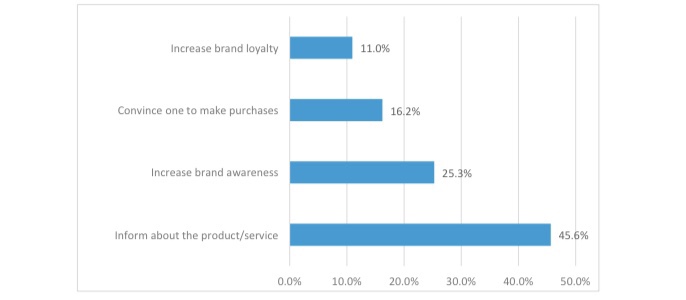
Source: Januz Wielki.

The above graph is from a recent survey conducted in August 2020 and it shows that majority of respondents feel “transfer of information” about a product is the main thing they look when it comes to social media influencers.
Increasing brand awareness and brand loyalty are the next two elements that respondents look when it comes to social media influencers.

This acts as evidence that social media influencers are very impactful when it comes to promotion and publicity of a product or a service. In this modern era, where social media is the new “illusion” of people, social media influencers help in building and increasing brand awareness and thereby they assist in promotion and publicity. Good Marketing Managers would tap this opportunity of “social media influencer marketing” to enhance the audience reach of their business.

RTI ACT- Every Citizen’s right!

Right to Information (RTI) is an act of the Parliament of India which sets out the rules and procedures regarding citizens’ right to information. This particular act was passed as an independent act by the Indian Parliament in the year 2005.

The RTI act has been useful in getting to know our personal grievances, making our politicians and elected representatives accountable.

The RTI act empowers common public in India by indirectly involving them in decision making and in other important public affairs. Every citizen in India through this act got the privilege of right to be informed.

RTI ACT: Controversial, yet beneficial.

Very recently, an RTI application was filed by a group of individuals seeking to know about source of a particular line in NCERT History textbook of grade 7th which said “Temples were rebuilt after they were destroyed by the Mughals”. The individuals wanted to know about the source of information regarding the text to which the response was “Source of information is unknown”.

In such a case, one may argue that RTI act doesn’t mandate an authorised body to respond “according to the query” (meaning, they just have to respond, it does not matter what the response is) that is, an authorised body doesn’t necessarily have to respond, they can just pass the query off by saying “no source of information available.”

But at the same time, RTI ACT as mentioned earlier is a powerful tool for citizens through which commoners in the country can keep an eye on the government and its activities. For example, in 2016, when Demonetisation was announced by the Government of India, Mr. Venkatesh Nayak filed an RTI application which revealed that RBI did not agree with Government of India’s justification that the decision would curb corruption in India.

Another example could be the Commonwealth Games Scam, in which an RTI application was filed by a non-profit organisation which revealed that Delhi Government had diverted Rs. 744 crores from funds which were kept only for Dalits to Commonwealth Games.

A very successful case was also found in Bangalore where a bundle of corruptions and dereliction of duties in allowing encroachment of government land of 12,000 square feet without the permission from the respective authorities by New Cambridge School Trust. The Assistant Executive Engineer who was supposed to actions against the encroachment of land which was worth Rs. 6 crores was found protecting the illegal encroachment of land. These irregularities came out when an RTI application was filed before the Executive Engineer Division in Bangalore.

Denouement:

RTI act from the beginning has been into controversies for being chaotic and problematic in many cases. But in my view, these instances of chaos are again because of the same loopholes we have in our democratic system and legal system we strive to fight against via the help of RTI act. Nonetheless, the act has enabled the citizens to become more aware and hold the government accountable when required. This is evident from the fact that India ranked 4th best in the world for RTI laws. The recent amendment of act in 2019 is however criticised as many feel, it would give Central Government more power.

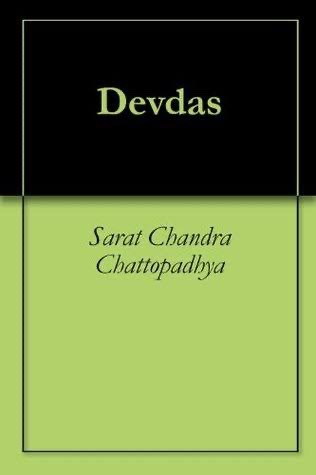
Unpopular Opinion: Devdas was toxic, not a lover. (Book Review)

Book Cover of Novel, Devdas. (Photo Credits: Goodreads)

There’s a certain notion among Indians that every sad lover in the country is a real life Devdas. But deep down, let’s analyse, was Devdas really a lover or yet another male chauvinist?

Plot:

The story starts with two childhood family friends Devdas and Paro, both belonging to rich households and immediate neighbours. Both of their families are well connected to the each other as well. The story revolves around Indian state of Bengal.

Slowly, Devdas and Paro grow up and start developing love for each other. However, Devdas was a spoilt rich brat and this is the reason his father sends him to London for higher studies. Paro becomes sad on knowing this and waits for his return. Devdas returns home after 10 years of studies and is now a well grown up. Paro, on the other hand, exceptionally beautiful, fantasises about her childhood love Devdas.

On his return to Bengal, Devdas and Paro meet and resume their fairy tale love story. However, Dev’s family isn’t happy with their relationship as Paro was from a lower caste background. Things go worse when Devdas’s mother insults Paro’s mother for offering her daughter as a bride to Devdas’s family. This was followed my Paro getting insulted by Devdas’s father who calls her “characterless” as she went on to meet Dev at late night. Devdas seeing all this, refused to accept Paro as his family was against the relationship.

Paro’s mother, unable to bear the insult, vows to get Paro married in a family which would be lot more rich and influential than Devdas. And she does so! A week later Paro marries a rich old man from a nearby village. However, just before her marriage, Devdas suddenly arrives and offers his hand to Devdas to which Paro refuses. Devdas gets angry at the refusal and hurts Paro with a gold necklace and thus Paro suffers from an injury.

Months later Paro’s marriage to the old man, Paro pays a visit to Devdas where it’s revealed he’s completely alcoholic and lonely. Paro requests him to come with him but Devdas doesn’t agree but promises her that he would come to Paro once before his death. Devdas also meets a courtesan, Chandramukhi with whom he develops loves but leaves her yet again.

Finally, the story ends with Devdas fulfilling his promise of coming to Paro but Paro’s husband refuses to let her meet Devdas. At the end, an alcoholic Devdas passes away leaving Paro sobbing.

Character of Devdas.

1) Devdas was never a lover.

I wonder, how people have beautifully whitewashed the ignorant and abusive nature of Devdas. When Paro went to meet Devdas late at night putting her dignity at stake, Devdas refused to go with her fearing about his own family honour. If this is the case, how can he be called a lover? If family and society was more important to him, it shows he never actually loved Paro.

2) Devdas was a male chauvinist.

Devdas suddenly offered his hands to Paro when Paro was just about to marry. Paro taking into consideration her self respect questioned Devdas that why is he so late and why didn’t he come when Paro went out to meet him at his home the week before. She also asked Devdas about the reasons why her parents and she were insulted by Dev’s family. Devdas couldn’t tolerate a woman questioning him and instead of apologising to her, he shouted at her for being “too arrogant”. Devdas cared about his family honour but didn’t care about Paro’s family honour: This shows his ingrained patriarchy.

3) Devdas tries to justifies abuse!

Perhaps one of the most problematic chapters of the book was when Paro refuses Dev’s offer of running away with him on her wedding night with the old man. On getting a rejection from Paro, Dev goes intolerant and beats Paro with a gold necklace. Paro suffers from an injury and her head starts bleeding. Devdas asks Paro to keep this injury with her for life as it would always remind her of Devdas. Paro agrees to this and throughout the book she is shown to love that injury. This also shows how much the book has normalised and romanticised a brutal abuse and also definitely brutal abusers!