Why Apple was not so popular in India???

Apple sells millions of iPhones every year. In the year 2018, the tech giant reported selling close to 47 million units worldwide. But not all markets are created equal. India has been one of the hardest countries to crack for the Cupertino giant. Although it’s been over a decade since Apple began selling iPhones in India, the company can’t seem to get a big bite of the world’s second-largest smartphone market. India is a very price-sensitive market, which means that people pay a lot of attention to what value they are getting out of the price that they are paying for a particular product.

In the case of Apple, there’s a lot of premium being paid for the brand itself, and that’s where the price-conscious Indian consumer thinks about that if they are getting the same kind of features or specs from another phone that they can get a lower price, that makes it tougher to sell something at a much higher premium. Apple is definitely feeling the pressure. Samsung and Xiaomi accounted for the majority of smartphone sales in India in quarter three of 2018, garnering 22 percent and 27 percent respectively of the smartphone market. In contrast, Apple made up only about 1 percent of India’s smartphone market share, trailing behind Chinese phone makers Vivo and Oppo. It’s also worth noting that the premium smartphone market in which Apple operates still makes up less than 5 percent of the overall smartphone market in India.

7 Key Strategies That You Must Learn from Apple's Marketing

Most of the smartphones in India that sell, they are below $200 and Apple does not have any play in that segment. This environment is one that competitors like Samsung have begun to adapt to. The South Korean powerhouse is launching its Galaxy M series budget smartphones to appeal to the Indian market. In contrast, Apple doesn’t seem too keen on changing up its India strategy. I got some ideas for you, OK? I talked to some people at Walmart yesterday. An arrangement with Walmart Flipkart to take over India with a budget phone rather than doing it piecemeal? For us, we’re about making the best product that enriches people’s lives. And so, we’re not about making the cheapest. For us, what we’ve seen is, there’s enough people in every country in the world that we play in that we can have a really good business by selling the best phones. Still, some tech investors see Apple as being out of touch with the India market. You think they are going to slash prices? I think they have to. How can you sell a $1,000 phone in a market like China where the GDP per person is $10,000? In India it’s $2,000. And if you go back to the September earnings release, they talked about the fact that India was way below where they thought.

Apple postpones launch of online store in India - The Economic Times

Well, if your average GDP person is $2,000 and you’re trying to sell a $1,000 phone, it’s gonna be probably pretty hard to sell it. They probably want to eat. Another issue for Apple: stiff tariffs. I think iPhones have a specific disadvantage in the India market because of the local regulation. There is a very high import duty on the phones that are not manufactured locally in India. So for most of the big players in the India market, they are manufacturing locally so they do not have to pay that high import duty. Samsung has been manufacturing phones in India since 2007 and just last year opened the world’s largest mobile phone factory on the outskirts of New Delhi. Chinese phone makers Xiaomi and Oppo have also invested millions of dollars to build manufacturing plants in the country. That’s not to say Apple has completely ignored India.

The tech giant already manufactures its lower-cost iPhone SE and iPhone 6s models locally, through a partnership with Taiwanese manufacturer Wistron. This year, Apple is also expected to move its production of the iPhone X series into Foxconn’s plant in southern India. If you look at how we’ve done over the years, we’ve gone from a $100-$200 million business to last year we had we exceeded $2 billion. That $2 billion was flat year over year after a rapid rapid growth. And so we have more work to do. We’d like to put stores there. We would like some of the duties and so forth that are put on the products to go away. But even with its local hardware production push, Apple still fails to provide Indians with a robust software experience.

Apple iOS 13 Release: Should You Upgrade?

Apple has introduced turn-by-turn navigation for the India market. Before that, that significant part was missing. And beyond that, there’s not a lot of customization that Apple has done for the India market. There are not a lot of apps that specifically cater to the India market. Past complaints for Apple Maps also included missing major landmarks and having very sparse data of cities and towns. But again, Apple is working on a solution. The company has hired thousands of engineers at its mapping facility in Hyderabad to improve its services. Apple Pay is also not an option in India, though similar payment services from Samsung and Google have already been rolled out. Finally, unlike in most other markets, Apple can’t rely so much on its brand recognition to sell devices in India. The other challenge for Apple in India is that it cannot have its own retail stores or own Apple stores because of some regulatory issues, which means it has to have partners on the retail side, whether it’s the Apple premium resellers, which you see in many other countries as well, or with the third-party resellers. In order to have a larger presence in the market.

Apple has to have partnerships with thousands of these resellers, which in a country as big as India, can be challenging. Apple is still a premium status symbol for many Indians, but one that is out of reach for the majority of the population. With phones from Chinese brands like OnePlus, which was India’s best selling premium smartphone brand for the second quarter in a row, offering similar features at a fraction of the cost, Apple may have a very tough time getting a bigger slice of the India market.

Apple - Localizing the Message - Global Marketing Professor

Why Australia is least affected by recession!!!

America’s economy is approaching a big milestone. If it keeps humming until July 2019, it’ll be the longest expansion in U.S. history. It would be exactly one decade and one month old by then. But there’s another country with an even more impressive run It’s even called the ‘lucky country’ Three big lessons from Australia.

  1. Be smart.
  2. Be organized.
  3. Be lucky.

So, if I’ve got any advice for other countries, it’s try and be as lucky as Australia That luck has to do with Australia’s treasure trove of natural resources. You know Australia is on the other side of the world and sitting on tremendously valuable minerals right at the point where the Chinese economy is just around the corner and exploding. Australia and every one its natural resources were within the right geographic neighborhood even as the Chinese economy began to begin . And it just so happens that China did a big fiscal stimulus in 2008 and spent a great deal of money building new cities. So all of these resources were drawn from places like Australia. So that also served as a huge tailwind at a time when developed markets were in a whole lot of trouble.

What Currency Is Used In Australia | Australian Dollar : Compare ...

The year 2008 was a time of economic turmoil The Global Financial Crisis hit and markets crumbled around the world. But as it turns out this was also a year for Australia’s economic management to really show off At the time the government had a very helpful and very low level of debt. One reason? Pension reform in the 1990s. Australia set up a compulsory retirement system called the superannuation system. It requires employers put money into its employees’ retirement savings.

Since companies and citizens have to build up retirement savings, some of the financial burden to pay off pensions was taken off of Australia’s government As other economies reeled in the wake of the 2008 crisis, the Australian Government was then able to put money directly into people’s bank accounts This boosted consumer spending in order to stimulate growth In 2008, the Australian Government unlike some other developed market governments actually jumped in very quickly with fiscal stimulus, so that helped to kind of minimize the effect of the crisis The country’s numbers continued to look sluggish after the financial crisis. But they never quite dipped low enough or for long enough to satisfy the definition of a recession. It takes two quarters of negative growth to fall into a recession. Australia’s economy did post a couple of negative quarters since 2008, but no country’s perfect. Overall Australia’s economy has been managed pretty much in recent years partly due to a robust and stable financial institution.

Reserve Bank of Australia – Australia's LGBTQ Inclusive Employers

Australia has an independent financial institution and it is a very well-run financial institution . It also has a floating exchange rate and the exchange rate helped it adjust to international shocks. Australia’s economic reforms gave it flexibility in times of hardship. For example, floating the Australian dollar In 1983, Australia’s government moved the dollar onto a floating exchange rate This meant that the dollar would be valued by supply and demand instead of being subject to influence from its government or its central bank It allows the economy to react to shocks as well Typically when an economy is hit by some sort of negative shock. The currency will adjust. It will depreciate and that helps promote exports. Another reason behind Australia’s economic diary lies in its immigration policy. Since the late 1990s, Australia has seen growth in temporary migration, many arriving to the country on student or temporary work visas. The number of temporary migrants peaked in the year 2000. However a recent change to immigration law in 2018 gave visa applicants more hurdles to get through if they wanted to come to the country Even when our GDP per capital average incomes aren’t rising by much because the number of people continues to rise that means the total GDP continues to rise at even more rapid pace Part of that’s underpinned by much faster population growth Most experts think Australia’s economy remains strong in 2019, but it’s not without risks.

Australia’s suffering at the instant from pretty weak wage growth. That’s worrying a lot of people. There’s a lot of fear right now that China is hitting a wall. That will hit demand for Australian products. The good news is to the extent that the Chinese are buying commodities hopefully will find buyers from overseas for many of those commodities if the Chinese are not there The bad news is the rest of the world economy is not doing that well.

Australian economic growth slows, enters per capita recession ...

MOTIVATION IN MANAGEMENT

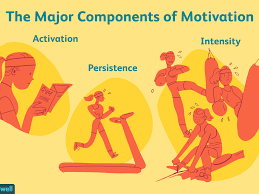
The term motivation is derived from the word motive and motives are expressions of a person’s needs and hence they are personal and internal and in this context, the term need should not be associated with urgency or nay pressing desire for something and it simply means something within an individual that prompts him to action and motives or needs are ‘whys’ of behaviour and they start and maintain activity and determine the general direction of the person and motives give direction to human behaviour because they are directed towards certain goals which may be conscious or sub-conscious. Motives are directed towards the achievement of certain goals which in turn determine the behaviour of individuals and this behaviour ultimately leads to goal-directed activities such as preparing food and a goal activity such as eating food and in other words, unsatisfying needs result in tension with an individual and engage him in search of the way to relieve this tension.

INTERRELATED TERMS

While discussing motivation, we need to understand three interrelated terms- Motive, Motivation, and Motivators.

1. Motive- A motive is an inner state or desire which energies an individual to move o to behave towards the achievement of goal and motive arises out of needs of an individual and it causes restlessness as he wants to fulfil his motive.

2. Motivation- It is a process of inducing people to perform to their best ability to accomplish a goal and it is a psychological phenomenon which arises from the feeling of needs and wants of individuals and it causes a goal-directed behaviour.

3. Motivators- Motivators are the incentives or techniques used to motivate the people in an organization and common motivators used by the mangers are increment, bonus, promotion, recognition, respect etc. 

 Motivations may be defined as the complex of forces inspiring a person at work to intensify his willingness to use his maximum capability for the achievement of certain objectives. According to Koontz and O’Donnell “ Motivation is a general term applying to the entire class of drivers, desires, needs, wishes and similar forces and to say that managers motivate their subordinates is to say that they do those things which they hope will satisfy drives and desires and induce the subordinates to act in the desired manner”

FEATURES OF MOTIVATION

1. Motivation is an internal Feeling/ instinct

Motivation is a psychological phenomenon which generates from within an individual and needs are the feelings arising in the mind of a person that he lacks certain things and such feelings affect the behaviour of that individual and causes him to do work and hence, motivation is the process of making an individual feel his needs.

2. Motivation produces goal-directed behaviour

Motivation is a power which leads the employees to the achievement of their goal and the behaviour of the motivated employees clearly shows that they are inclined towards the achievement of their goal.

3. Motivation can either be positive or negative

Positive motivation provides positive rewards like an increase in pay. Promotion, recognition etc. Negative motivation uses negative means like punishment, stopping increments, threatening etc., which also may induce a person to act in the desired way. 

How India’s massive Election System works?

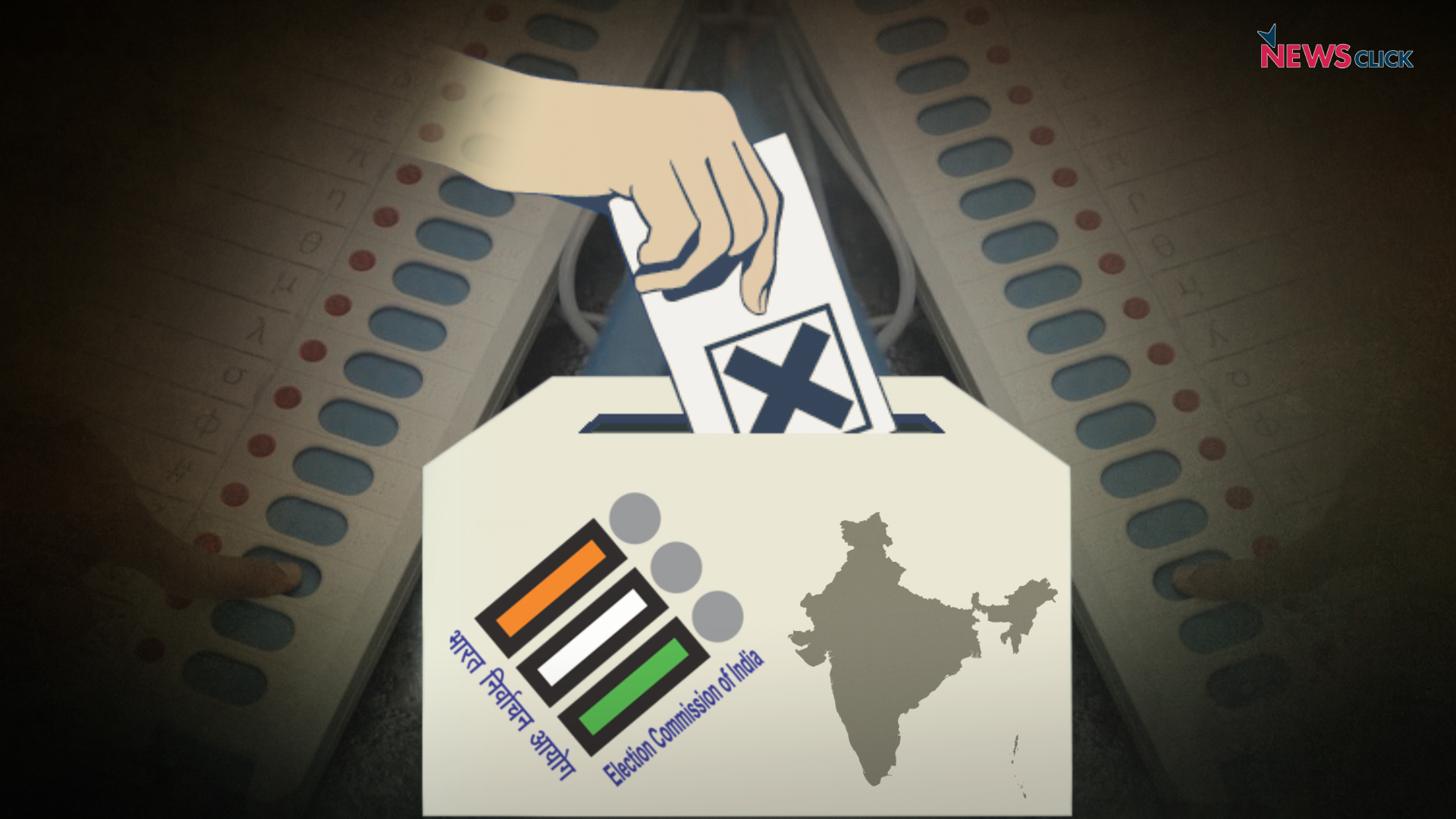
The world’s biggest democracy just had an election. The world’s biggest democratic election It’s a marathon election A mammoth undertaking It’s the world’s biggest exercise in democracy In India, voters picked its central government for the next five years. An eighth of the world’s population was eligible to vote in this election. In the year, 2019, there are 900 million eligible voters in India making this the largest Democratic exercise in the history of humanity.

A vote for reform: Election Commission collaborating with IIT-M on ...

In one of the largest and most populous countries in the world, that isn’t an easy task. India has to reach voters in coastal cities in the south, in the rural regions of the west, and jungles to the east and everywhere in between. And what’s more, they want every Indian citizen to be within 2 km of a voting station. That’s only about 25 city blocks no matter where you are in the country. It’s an incredibly ambitious goal and yet, somehow they’re able to do it. This is the biggest election in the world and I wanted to know how does it work. Every election a team of state officials and security forces, get on a ship within the east of India to require off towards this island. They travel about 100 km to get here, all to securely deliver these Electronic Voting Machines or EVMS, the instrument that logs India’s votes, the heart of this elaborate election process.

Election Commission's crackdown on poll-related monetary ...

India has 2.3 million voting machines for its 900 million voters. So, getting these machines on the brink of every voter may be a big logistical undertaking. That’s why India doesn’t have one polling day , instead, it’s closer to an election month with multiple phases that last weeks. This process takes more than 11 million election officials and security forces, who move from polling station to polling station to polling station from densely populated cities to the rural areas where the majority of Indians live. Once on the island with the EVMs, officials pile on to bike carts and head towards the polling station. Once they arrive, they start setting everything up for the vote.

On Election Day, voters line up, cast their vote, and get their fingers inked to prevent double voting. This is where the process ends for the voters, but for the election officials this is just the beginning. Driving a boat out to a remote island is just one of many ways that officials reach every voter. India’s vast and diverse terrain requires transportation methods of all kinds, like in the jungles of this northern state where elephants transport voting machines to reach a remote town or in the Himalayas where officials hike for hours to bring EVMS for election day. Helicopters, trains, they even use camels. But what makes India’s elections so impressive is not just how they reach everyone in such an enormous country, that’s just half the battle. It’s also the ways they try to include voters of all backgrounds into the process, a challenge that has been a part of India’s elections since the very beginning. India has 22 official languages and hundreds of dialects and when India became an independent nation, less than a quarter of the population could read and write.

Why EC Owes an Answer to the Country Over 'Phantom Votes' | NewsClick

The newly formed Election Commission of India created a range of symbols to correspond to each political party, like an elephant, a lotus, a hand or even an alarm clock so that from the beginning all people regardless of literacy level and language could vote with confidence. Since 1947, the literacy rate has increased significantly, but it’s still only 75 percent, so these symbols are still useful to many when casting a vote. But this is a massive sprawling operation and over the years it’s run into some pretty serious problems like allegations of election rigging and problems with a practice called booth capture, where gangs actually take over polling stations and tamper with the elections. It’s partly because of these problems that the Commission introduced these voting machines in the 1990s.

It also increased security around the elections. These efforts to include all voters and protect elections seem to be working. In 2019, India saw the highest voter turnout yet and for the firsttime women voted just as much as men. India’s elections are only getting bigger and more complicated. India has one among the fastest growing populations within the world. and in 2020, young people will make up more than a third of the country. This is the most important election within the world that takes many officials fanning out across a huge country to assist many millions vote.

Election Commission rejects Opposition demand to tweak VVPAT ...

8 Genuine ways to earn money from your home!!!

Here are some of the genuine ways to earn in your spare time without any investment.

  1. Transcriber: average earnings per month is hundred and fifty. All you need is actually to have a good pair of headphones and of course you need to get stored to type there now there is a few other sites so you can’t only rely of course on hundred and fifty dollars average earning per month but if you are good at this you can actually earn of course much more but what you can do is you can become a transcriber. rev.com is another site here as a transcriptionist you can anywhere from 24 to 90 cents per audio/video minute basically you can be a video captioner also which is pretty much the same here and you can earn anywhere from 45 cents up to 75 cents.
  2. Micro tasks you can do this on my.com in your spare time you get paid for completing simple tasks here so it can be anything from like tagging objects here helping companies select the best picture the audit user classifying you can see that there is tons of opportunities. Rapidworkers.com is another site where you can earn a decent amount just by doing some micro taskes.
  3. Data entry jobs on Amazon on rapid workers there is micro workers also but there is also assigned like a clickworkercalm.com. You just sign up for a free account and you work independently your schedule is flexible and all you need is a computer and of course and/or a mobile device with an internet connection and it’s totally up to you how much you want to work. You can do text creation, copy editing, research surveys, mystery visit, app testing and photo capturing a lot of opportunities that you can earn money from the comfort on clickworker.com.
  4. Virtual assistant one of my favorite sites is virtual assistant jobs calm and basically you can apply for data entry, call center whatever comes into your mind you can get started here and apply and search for it you might be available only to do this on part time so you can search for part-time flexible with contracts. Jobs.com helps us out there by providing all types of virtual assistance jobs.
  5. Online tutoring if you’re good at something math or English or something like that one side is a shag.com , VIP kid teachers.com which is basically they teach English here and you can earn up to twenty two dollars per hour teaching. There are many students who want to learn extra and out of their books so here comes opportunity by teaching them.
  6. Freelancer totally depends on your skills. There is other popular freelance sites like upwork.com there is freelancer.com there is people per hour so a lot of options actually that you can apply for here as a freelancer. Freelancing is one of the best option as you can work also on your niche and can enhance it for future use.
  7. Affiliate marketer and the good thing with affiliate marketing is that you don’t have to deal with shipping you don’t have to deal with anything at all. You need is just grab a link and promote that offer whatever it is and of course you earn a commission okay so one of the most popular platforms is Clickbank.com. They have thousands of products here probably one of the most popular niches will be health and fitness. You just grab a link here and what you do is you use this link to promote it you can use something like bitly to shorten this ugly link of course and then all you need to do is drive traffic to this offer. Amazon is another option that you can make money as an affiliate marketer they have millions of products here that you can promote ok you can earn a commission from anything you promote inside Amazon here so it works the same way it totally depends on your niche here how you can drive traffic to it.
  8. Sell stuff on eBay you have available that you don’t use at your home you can get stored there to sell this or you can actually use this platform to buy something and sell it much higher. So, you can be a sort of a middleman here so this is another option tons of ways and opportunities to make money eBay and you can of course do this from your home without any investment.


Day to Day Sings & Symptons…DAY 1 to 22

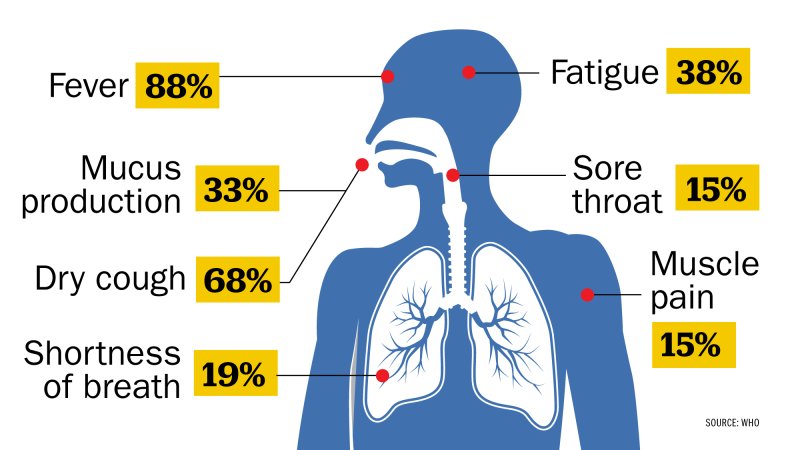
Day to Day Signs and Symptoms of Coronavirus DAY TO DAY SYMPTOMS OF COVID-19 Before proceeding, please note that this general overview is compiled for initial self-assessment only and should vary for each individual. If you are not feeling well, you ought to immediately consult a medical man to possess an accurate diagnosis and proper treatment of COVID-19. The typical daily symptoms are concluded from the study of 138 patients at Zhongnan Hospital of Wuhan University and another study involving 135 patients from Jinyintan Hospital and 56 patients from Wuhan Pulmonary Hospital.

Update: China reports 1,287 confirmed cases of new coronavirus ...

These symptoms are broken down into:

DAY 1 to DAY 2 the start symptoms are almost like the cold with a light pharyngitis and neither having a fever nor feeling tired. Patients can still consume food and drink as was common .

DAY 3 The patient’s throats start to feel a touch painful. Body temperature reads at around 36.5° celsius. Although it’s uncommon, other symptoms like mild nausea, vomiting or mild diarrhea are possible to set in.

DAY 4 Throat pain becomes more serious. Other symptoms like feeling weak and joint pain start to manifest. The patient may show a temperature reading between 36.5° to 37° celsius.

DAY 5 to DAY 6 Mild fever starts. The patients show a temperature reading above 37.2° celsius. The second most common symptom, dry cough, also appears. Dyspnea or breathing difficulty may occur occasionally. Most patients during this stage are easily feeling tired. Other symptoms remain about the same. These four symptoms are among the top five key indications of COVID-19 according to the final report of the initial outbreak conducted by the joint mission of China and WHO.

DAY 7 get more serious coughs and breathing difficulty. Fever can get higher up to 38° celsius. Patients may develop further headache and body pain or worsening diarrhea if there’s any. Many patients are admitted to the hospital at this stage.

DAY 8 to DAY 9 On the 8th day, the symptoms are likely to be worsened for the patient who has coexisting medical conditions. Severe shortness of breath becomes more frequent. Temperature reading goes well above 38°.

DAY 9 is that the average time when Sepsis starts to affect 40% of the patients.

DAY 10 to DAY 11 Doctors are ordering imaging tests like chest x-ray to capture the severity of respiratory distress in patients. Patients are having loss of appetite and should be facing abdominal pain. The condition also needs immediate treatment in ICU.

DAY 12 to DAY 14 For the survivors, the symptoms can be well-managed at this point. Fever tends to urge better and breathing difficulties may start to cease on day 13. But Some patients should be suffering from mild cough even after hospital discharge.

DAY 15 to DAY 16 Day 15 is the opposite condition for the rest of the minority patients. The fragile group must prepare for the possibility of acute cardiac injury or kidney injury.

DAY 17 to DAY 19 COVID-19 fatality cases happen at around day 18. Before the time, vulnerable patients may develop a secondary infection caused by a new pathogen in the lower respiratory tract. The severe condition may then lead to blood coagulation and ischemia.
DAY 20 to DAY 22 The surviving patients are recovered completely from the disease and are discharged from the hospital.

STAY HOME & STAY SAFE

Instagram Launches 'Stay Home' Story & Co-Watching Feature Amid ...

SUPERVISION OF MANAGEMENT

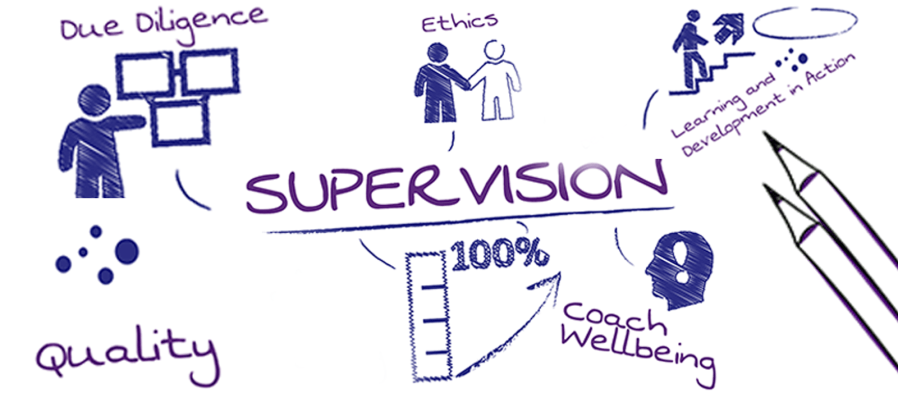
Supervision is an important aspect of the directing function and it involves the managerial task of observing the subordinates at work to ensure that they are working according to plans and policies of the organization, keeping the time schedule and supervision also includes helping subordinates to resolve their work problems. Managers at all level are in direct contact with subordinates and oversee their work performance and the top management supervises the work of middle-level managers, who in turn supervise the first-line managers or supervisors and the first-line managers are in direct contact with the operatives and thus, all levels of management are generally engaged in supervising the work of their immediate subordinates. According to R.C. Davis “Supervision is the function of assuring that the work is being done in accordance with the plan and instructions”. Supervision includes the following three elements:

  1. Commanding
  2. Guiding
  3. Controlling

This is the reason why, “Supervisors are known as a friend, philosopher, and Guide of workers”.

ROLE OF SUPERVISORS

Supervision has special importance only at the lower management level and the question which is now required to be discussed is to what role does a person working at the managerial level, the supervisor play in the organization.

1. Supervisor as a key man

 In every organization, the work of putting the plans into action is done by non-managerial staff who works under the guidance of a supervisor but however, at this level, even a little carelessness may cause the closure of the organization and that is why the supervision is referred to as the key man in the organization.

2. Supervision as a middle man

   In the organization, the supervisor plays the role of a middle man and he acts as a link between the higher-level managers and him workers, and his main job is to prepare a co-operative atmosphere among the two parties in order to facilitate the achievement of the goal of the organization.

3. Supervisor as a human relation specialist

A supervisor is likely to face a number of problems related to human behavior, for which one has to try and find out solutions and he can do so only if he is a human relation specialist.

FUNCTIONS OF SUPERVISOR

1. Planning the work or schedule activity

The supervisor is a low-level manager and he is required to study and analyze the work of his department and decide what, where, which, why, and by whom the work is to be performed. He has to chalk out daily and weekly program and he has also to arrange the raw materials, machines, tools, and equipment and the successful supervisor is an efficient planner.

2. Achieving the target

It is the most important duty of the supervisor to achieve the target prescribed for his department by the management and this can be achieved if the supervisor enables the best possible use of the available resources of the department towards the desired goal.

3. Enbaling standardized output through instruction and guidance

It is the supervisor, who ensures that the actual performance corresponds to the norms and standards laid by the management and the supervisor must satisfy himself as to the quality of the output and he should concentrate on both quality and quantity of goods. 

Negotiating- The Art, a small story!!!

I think there is an art to it it’s a craft, the negotiating training this morning in the office and the reason, negotiating it be is because it’s the one area of the deal where people need me the most and they need me the most they think I have the most confidence and the confidence that I have going to the deal comes from experience and it comes from honestly – practice practice practice because no matter what you’re selling you’re selling. Two different people you’ve got a seller and a buyer and in every negotiation you’ve got price you’ve got pressure and you’ve got persistence those are the three P’s remember that is it can be a nice little instructional.

The negotiations between Disney and Lucasfilm - A negotiation case ...

An iPhone cost to make now you’re not going to negotiate the price of an iPhone because there’s too strong demand but let’s say there wasn’t strong demand then you can negotiate or you can find a retailer who’s going to sell it to you for cheaper because it doesn’t cost nearly as much to make that phone. As it does for you to buy it real estate is the same way a deal that’s listed from 10 8 down to 10 so 10 million bucks the offer originally came in at 8 million dollars okay that seems like it’s way too far apart. If I go to the seller he’s going to say you got to come up they’re going to say oh no this is my offer so what do you do what do you do you remember the price you want to try to get – which in this instance was around 8 and a half that’s where we thought we’d get a deal done and the legacy price what the seller paid seller paid six point five. So, even at our low terrible awful offer that sellers making money that’s a good thing to remember and to consistently remind each side and then you let time saturate the emotions of the deal and you use repetition you only paid six five even if this bullshit offer you’re making money.

The Art of Negotiation in Project Management

There are clients who are losing million and they use pressure right the fear of a falling market and the fear of missing out every seller fears they’re not going to get their price going forward because maybe the market could change every buyer has a little fear that they’re going to lose it a little fear they’re going to miss out and then you’re trying to find the price in the middle where both sides will say we came to that number because that’s the max or the minimum that I’m willing to go to get this deal done.

Can a Business Simulation Game help develop Negotiation and ...

PLANNING- process and importance

WHAT IS PLANNING?????
Planning is a common term which focuses on pre deciding the things which we have to do later. Not only deciding the things but also planning includes thinking of the ways by which we can complete a particular plan successfully. It is an important parameter of the management and we need to plan things in the every sphere of life so that we can go on accordingly. Planning is the combination of creativity and innovation. Planning is done to perform any task effectively and efficiently so that there is no hurdle between the complete process of the task which we wish to perform. In the business world, it is said that planning acts as a bridge to reach the position where we wish to reach.
STEPS OF PLANNING
Planning is not an easy task rather it is a combination of several steps. The complete process of planning has been divided into 7 different steps which are mentioned below –

  1. To set objectives i.e. to decide where we aim to reach. It is basically aiming the destination. Every organization has some targets and thus has to complete them so setting objectives is the first and important step of the planning process.
  2. To develop premises i.e. to set assumptions. No work is completed without a risk and assuming things. So premises are basically assuming what can be done. So making those assumptions is the next step.
  3. To identify alternative courses of action is the third step i.e. once the objective has been set and assumptions have been made, then it is the time to identify and think the proper course of actions which must be performed to reach that particular aim.
  4. To evaluate alternative course i.e. to think of the advantages and disadvantages of each course of action and to find what alternative can work for it if that would not happen.
  5. The next step is to select the best alternative which would be suitable according to our aim. The best plan is adapted and implemented.
  6. The next step is to implement the actual plan which has been thought of yet. This is the step where actually planned course of actions take place and where actually the work is done by the individuals.
  7. The next and final step of the process of planning is to follow-up the actions. In this step all the validation and verification occurs that whether the planned process is going on with the same flow or not. Also it is seen that whether the plan needs any change or it should go on like that only.

IMPORTANCE OF PLANNING

  1. Planning tends to reduce the uncertainty of occurring a process.
  2. It is very essential to provide a proper direction to the plan.
  3. Planning helps to promote innovative ideas and thus the planned work is done more efficiently.
  4. Planning helps in decision-making and dividing the equal amount of work to each individual of the group or team.
  5. Planning reduces confusion at any level of the process.
  6. Planning helps in setting some goals and thus an organization does better work.

Poisoned environment & Corporate Greed: How Non-stick cookware (Teflon) is a deadly toxicant.

How Teflon went from wartime to lunch time.

PTFE was accidentally discovered in 1938 by Roy J. Plunkett while he was working in New Jersey for DuPont. Teflon is the trade name for a plastic material called polytetrafluoroethylene (PTFE), which was discovered by researchers working for the DuPont chemical company in 1938.

There are thousands of uses for Teflon, and some are relatively unexpected. In fact, one of the first major applications to use the advancements brought on by the development of Teflon was the Atomic Bomb! Teflon’s high resistance to corrosion allowed scientist to use it as a barrier in the gaskets that held the uranium within the bomb.By 1948, DuPont, which founded Kinetic Chemicals in partnership with General Motors, was producing over two million pounds (900 tons) of Teflon brand PTFE per year in Parkersburg, West Virginia. An early use was in the Manhattan Project (Atomic Program that led to Hiroshima & Nagasaki Nuclear Bombings) as a material to coat valves and seals in the pipes holding highly reactive uranium hexafluoride at the vast K-25 uranium enrichment plant.

Teflon’s Toxic Legacy: 3M and DuPont covered up the health risks of C8 in 20th Century.

It all began in 1945, when DuPont, renamed DowDuPont following its 2017 merger with Dow Chemical, began manufacturing Teflon, a product best known for its use in non-stick cookware, but also widely used in a variety of other consumer products, including waterproof clothing and furniture, food packaging, self-cleaning ovens, airplanes and cars.

One of the key ingredients in DuPont’s Teflon was C8, a toxic, man-made chemical created by Minnesota Mining and Manufacturing Company, better known as 3M, to make Scotchgard. The chemical, also known as PFOS or PFOA, is what gave Teflon its non-stick properties.

Both 3M and DuPont were well aware of the health hazards associated with C8. But that didn’t stop DuPont from dumping the toxic chemical into local waterways, where it made its way into public drinking water and subsequently sickened thousands of people, and ultimately killing many of them.

Stories from a number of people who were affected by DuPont’s Teflon, including DuPont employees, children and adults in the surrounding community, as well as pets, livestock and wildlife.

One of those stories is that of Sue Bailey, a former DuPont employee who gave birth to a son with severe deformities. Her son, William Bailey, aka Bucky, was born with half of a nose, one nostril, a serrated eyelid and a keyhole pupil where his iris and retina were detached.

Sue’s work for DuPont required her to come in direct contact with C8. Her job involved working in a large room with huge cylinders filled with C8. The cylinders would bubble over like an out-of-control bubble bath, according to the film. The Teflon production process left behind a discharge of water. It was Sue’s job to pump it out back, where it would flow directly into the river. 

DuPont tried to blame Sue for her son’s birth defects. But she wasn’t buying it. On her first day back to work, she heard her co-workers talking about another DuPont employee who had given birth to a baby with deformities very similar to Bucky’s.

DuPont knew exposure to C8 could harm human health and cause birth defects. Both DuPont and 3M had been studying the chemical since the 1960s. One study on the chemical led by 3M, determined that the chemical could potentially cause birth defects in the eyes of rat fetuses.

Studies link Teflon chemical to six human diseases

Ken Wamsley, a former DuPont employee who worked for the company for 40 years. He said the first time he heard C8 was dangerous was from a supervisor who said it might hurt pregnant women. DuPont sent all the women home, but insisted the men were not at risk.

That turned out to be a bold-faced lie.

Today, we know that exposure to C8 in drinking water is linked to six different diseases: kidney cancer, testicular cancer, ulcerative colitis, thyroid disease, preeclampsia and high cholesterol.

Evidence shows that DuPont knew for decades that exposure to C8 could cause long-term health effects in humans. DuPont started conducting cancer studies in 1988. The company’s own studies showed that exposure to C8 killed rats, dogs and monkeys, by causing testicular cancer, liver disease and pancreatic disease.

Teflon chemical is in the blood of 99 percent of Americans and soon will be in Indians too as the hazardous chemical PFA, is still unregulated in India.

Not only did DuPont continue to manufacture Teflon, but it also continued to dump the chemical into waterways.

In 2001, a class-action lawsuit was brought against DuPont by residents of the Ohio River Valley who had been exposed to C8 in their drinking water. DuPont agreed to settle the suit, offering the plaintiffs $343 million.

C8 contamination is so widespread that, according to this article in the Intercept, 99 percent of Americans have the chemical in their blood. It’s also been found in the blood of people from all parts of the world. The main sources of exposure are still somewhat of a mystery. The likely culprits, though, are industrial waste and the consumer products that shed C8 over time.


PFAS are still unregulated in India and will cause diseases like cancer in upcoming times.


As far as India is concerned, the situation is worse as PFAs are unregulated, states the 2019 India PFAS situation Report, published by IPEN, a Sweden-based non-profit organisation. 

The report clearly states that India joined as a party to the Stockholm Convention in 2006 and in turn, the Convention included India’s name to the PFA global restriction list in 2009. But, India has not accepted this amendment till now.

Yes, No PFAS substances are regulated in the country. India became a Party to the Stockholm Convention in 2006 and the treaty added PFOS to its global restriction list in 2009. However, India has not accepted the amendment listing this substance and it is unregulated, along with other PFAS.

IPEN researchers also conducted a small case study in Delhi. They found that non-stick cookware were sold under two categories: one was PFOA-coated and the other was PFOA-free cookware. PFOA is Perfluorooctanoic Acid and is known as an emerging health concern.

“Brands which sell PFOA-free cookware, usually label the product. But this label is not completely fool-proof and it is likely that many of these manufacturers are simply using fluoropolymers made without using PFOA,” state the researchers.

Fluorine-free alternatives include silicone-, ceramic- or enamel-based coatings. More research is required to be done in India to establish the constitution and shifts in the coated cookware market, states the report.

Breast milk is contaminated with PFAS substances A 2008 study found significant PFAS levels for PFOS, PFOA, PFHxS, and PFBS in women from Chidambaram, Kolkata, and Chennai.

Overall, average PFOS levels in Indian breast milk averaged 46 ppt – more than 2 times higher than the drinking water health advisory limit of 20 ppt for PFOA, PFOS, PFHxS, PFHpA and PFNA combined in the US State of Vermont. The highest level of PFOA exposure in Indian breast milk was more than 16 times higher than this drinking water limit!  


PFAS pollutes river, groundwater, and drinking water, a 2016 study found 15 PFAS in one or more locations in Ganges River surface water with levels ranging from 1.3 – 15.9 ppt. Short-chain PFAS (C5 – C8) were found more frequently and the authors indicate that this is likely due to ongoing substitution by industry.

The study calculated the mean cumulative PFOS and PFOA discharges to the whole Ganges catchment area to be 240 g/day for PFOS and 210 g/day for PFOA. This area covers a population of approximately 400 million people. PFOS could not be detected at the River’s origin in Rishikesh, but levels gradually increased downstream and elevated at the confluence with the Yamuna River in Allahabad. The study also found PFAS in groundwater – which is used for drinking water as well as irrigation purposes in most of the Ganges basin.

Fourteen PFAS were frequently detected and PFHxA and PFHpA were detected in all samples. The highest intakes per kg body weight were observed for children. Another study found that the Noyyal River contains significant levels of PFOA at 93 ppt and PFOS at 29 ppt. The authors note that this could be due to extensive industrial activity in this area including textile factories that dump directly into the river. PFOS has been found in the Cooum River (3.91 ppt) and in untreated sewage (12 ppt). Tap water samples from Goa, Coimbatore, and Chennai did not contain PFOS or PFOA – but shorter chain PFAS such as PFHxS (81 ppt) instead. Note that this is four time higher than the health advisory limit in US State of Vermont which sets a drinking water health advisory limit of 20 ppt for PFOA, PFOS, PFHxS, PFHpA and PFNA combined.

What can you do about it and how can you avoid PFAs Chemical exposure?

  • Avoid buying fabrics treated with nonstick chemicals such as:
    • Teflon.
    • Scotchgard.
    • Stainmaster.
    • Polartec.
    • Gore-tex.
  • Use stainless steel and cast iron cookware.
  • Skip optional stain-repellant treatment on new carpets and furniture.
  • Eat less fast food and skip the microwave popcorn.

Where are PFAS Chemicals Found?

1.Drinking Water

EWG’s Tap Water Database, based on tests by almost 5,000 utilities nationwide, shows that the drinking water supply of at least 16 million Americans in 33 states is contaminated with one or more nonstick chemicals. Many more people were not told that their drinking water contains harmful levels of PFAS, because the test information was not made public. From what EWG has been able learn about this secret data, we estimate that 110 million Americans’ drinking water is contaminated with PFAS.

If PFAS chemicals have been detected in your water, reverse osmosis and activated carbon filters may be effective for reducing or removing the contaminants.

2.Food Packaging

PFAS chemicals are widely used to coat paper and cardboard wrappers for fast food and bakery goods.

To avoid them, skip pre-cooked, packaged foods. Cut back on fast food and greasy carryout food and cook at home instead. Pop popcorn the old-fashioned way – on the stovetop. The inside of microwaveable popcorn bags is nearly always coated with PFAS chemicals. And check out EWG’s 2017 report showing that nearly all major brands use PFAS-treated wrappers.

3. Cosmetics

Dozens of personal care products, including dental floss, contain PFAS ingredients. Choose personal care products without “PTFE” or “fluoro” ingredients.

4.Cookware

The most prominent sources of PTFE, the chemical name for Teflon, are nonstick pans and utensils.

Avoid these products by choosing stainless steel and cast iron cookware instead.

5.Clothing

Textile products labeled Teflon, Scotchgard, Stainmaster or Gore-Tex, and clothes labeled stain- or water-repellent, usually contain PFAS chemicals. Although many responsible clothing companies are seeking safer alternatives, few of these options have made it to market so far.

6. Home Goods

PFAS chemicals nearly always lurk in stain-resistant furniture and carpets, as well as in spray treatments for leather and fabric protection. Avoid the coated products when possible and skip optional stain-repellant treatments.

IMPORTANCE OF DIRECTION IN BUSINESS WORLD

Directing is a very important function of management and its subordinates may not perceive the organizational goals in the absence of directing and the subordinates must be communicated what the organizational goals are, what the employees should do to achieve them, how they should do their jobs etc. Moreover, directing is directly concerned with human beings, so it should be executed carefully to achieve the desired goals. The part played by the manager is rather important as the CEO of the company from the point of managing the workers and the management and Getting things down is in the very nature of Directing.

THE IMPORTANCE

1. The benefit of unity of command

 Due to scientific supervision, effective communication, and proper motivation, there is no problem with conflicting orders or priorities and because of a complete reporting relationship with a single superior, personal responsibility for results becomes greater. Directing involves the management of human behavior and it creates cooperation and harmony among the members of a group and increasing people’s awareness has made managing human beings very difficult.

2. Increases potential

For reasons of physical nature’s productivity of managerial resources is limited, but the productivity and effectiveness of human resources have unlimited potential, and directing helps the enterprise in making use of this potential output of the human resources. Since humans evolve as the time goes by and stating together is an important aspect of keeping going together so everyone needs to understand the aspirations and expectations of their subordinates or their colleagues in order to manage them effectively.

3. Initiates action

All organizational activities are initiated through directing and along with planning, organizing, and staffing, managers must stimulate action by issuing instructions to subordinates and by supervising their work and the aim of directing is to activate employees to work towards the realization of predetermined goals of the organization and thus, without directing, other managerial activities like planning, organizing and staffing remain ineffective.

4.Optimization of individual efforts

 The ultimate success of an enterprise depends on the optimum efforts put in by all individuals with willing cooperation and through effective supervision, motivation, leadership, and communication directing makes it possible.

5.Means of motivation

The organizational objectives cannot be realized unless people working in an organization are motivated to work willingly and perform well to the best of their abilities and directing is motivating employees to contribute their maximum efforts towards the achievement of organizational goals.

6.Provision of a stable and balanced organization

Directing provides effective supervision, motivation, correct leadership, and a well-understood communications, and therefore the organization as a whole work in a balanced way and it lasts for a long time.

7. Integrates employees efforts

At all levels of management, there are subordinates under the managers and the work entrusted to these individuals is interrelated and the performance of each individual affects the performance of others and thus individual efforts need to be integrated so that the organization achieves its goals and the directing functions integrate the activities of the subordinates by supervision, guidance, and counseling.

BUSINESS MANAGEMENT

Business management and entrepreneurship are improving rapidly nowadays and one of the main roles is improving with it also, which is the line manager. The role of line manager became very important in the structure of the business entity. Line manager appeared from the business term “Line Management”. In the real life line manager normally in charge of activities and labour’s output or it is responsible for a specific product line, for example, tea production and he cannot make any alterations in production of coffee, because normally it will have its own line manager who is responsible for this product line. The functions of the line manager may increase and interfere with other management line to increase the success of an entity.

The most important skills of the manager are cooperation with all staff, leadership, motivation, planning and setting aims for the product line in which he operates and have high knowledge combined with skills, so he can use all what he or she knows effectively to approach they targets.The line manager must be a leader, because if he has no leadership no one would listen to him and everyone will do what they think is right, so they will create a chaos in the workplace, which can dramatically effect of the company, so the leadership of the manager is one of the most important skills which every manager must have.Another important skill for the line manager is planning and setting goals, which will ease the work of employee, because they will know what, is asked from him. Also, it helps to avoid demotivation in cases if the employee did not reach the output target, because he even did not know what was asked from him.These skills are essential in order to help the entity to succeed, however, there are lots of other skills which can boost the efficiency of the line manager such as: confidence,respect, employees can trust him, making decisions in critical circumstances, good relationship with everyone and can guide and inspire his or her workers.

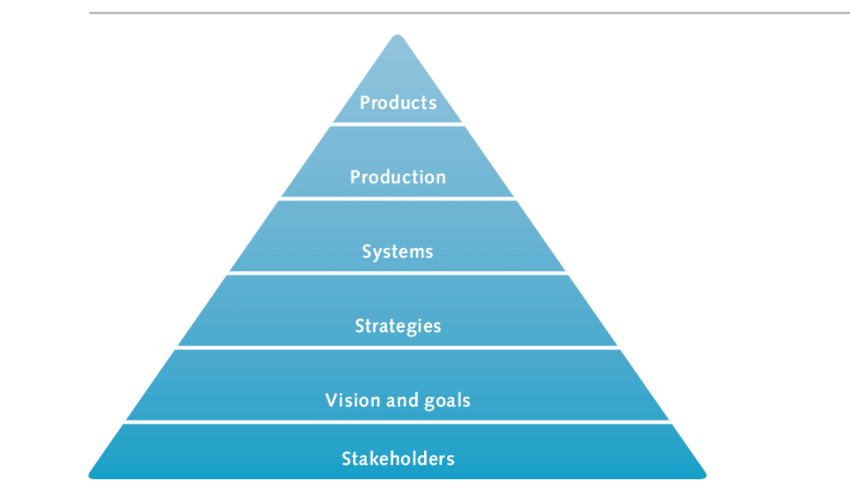
BUSINESS MANAGEMENT PYRAMID

 The motivation has a direct influence on the performance of the entity and there are different theories which describe how motivation can be improved, but only few of them will be discussed.Taylor (1917) stated that employees do not enjoy their work, so they must be supervised. Also, specific training lessons should be provided to improve the efficiency of an employee and they should be paid according how many items they had produced which will force them to work more and maximize productivity. This was one of the best theories for a long time.

However, this method was close to autocratic style of management, so it was not suitable for everyone for various reasons because of diversity of cultures. Mayo’s theory is opposite to Taylor’s because he thought that money is not motivating people and aimed on motivating via employees social needs at the workplace. Mayo (1949) made a research on it and concluded that individuals are best motivated when there is teamwork, freedom of communication among themselves and involvement of manager himself in working lives. The pyramid consisted of five levels of needs of an individual. They believed that first need which needs to be fulfilled is physiological needs and physiological needs are hunger and thirst.

ATTITUDE v/s EGO…The real life stories…!!!

Attitude is a huge thing and small part of Attitude is EGO, Example if Attitude is a Continent then Ego is just a small country in it Attitude can be divided into two parts first Right attitude and Second is Wrong attitude people get confuse between ego and attitude because ego is the part of wrong attitude but the best part is that you can be a good attitude person without having an ego. Likewise, Every Indian is an Asian, but every Asian will be an Indian is not compulsory similarly,

“every Egoistic person will for sure have Attitude, but person who has Attitude doesn’t have Ego”.

Your attitude matters in your life – Journey of life Continues

Hence even you should be a person who has attitude you shouldn’t be a person who is egoistic or who has a bad attitude (wrong attitude) Now let’s talk about definition, Attitude shows what we think about other things How we feel and how we respond in any situation whereas Ego always allow us to think about our self-esteem and self-importance for example, person who has a Good Attitude will say No matter what happens I will win whereas an Egoistic person will say, that no matter what happens no one can beat me Good attitude person will live life as if he is the king of the world. Whereas bad attitude person lives a life as if everyone is their slave and everyone should always obey them.


Now let’s talk about today’s Book summary which is related to this Topic Author Ryan has accomplished huge successes in a very young age he was only 19 years when he became the youngest executive in the Talent Management Agency who later did signing of big rock bands, and also did consulting for many books which was sold in millions at the age of 21 he was the marketing director of an amazing Company AMERICAN PAREL. At the age of 25 he was also the best selling author everything was so perfect, but suddenly one day time changed and everything changed in his life he lost everything, he started failing in his life, he made a tattoo in his hand, he tattooed the most important reason of his failure in his hand so that he never forget that and should never repeat that same mistake in his life and can avoid such failure again.

200+ Ego Quotes, Sayings, Images to Inspire You in Love and Life ...

The tattoo which he made in his hand was “EGO IS THE ENEMY” because his ego was the main and the most important reason for his failure and that reason he never wanted to forget Ryan defines Ego as an unhealthy belief which make us obsessed about self-importance. Ryan says that ego is “something which converts our Confidence to Arrogance Ego is that dangerous thing which ruins or destroys our long term goals by just giving us short term satisfaction, and by making us feel; superior from others for just for short time and such ego is not at all right”. Author says that every person in their lives always stays in one stage out of three first stage is ASPIRING, second is SUCCEEDING and third is FAILING:

  1. Either person is aspiring, means working on something in order to achieve something in his life wanted to become something in his life.
  2. Either person has already achieved in his life, means he already faced success.
  3. Either person is failing in his life, he is not able to achieve anything huge in his life.

Now the biggest obstacle which stands firm in front of us during all three stages to defeat us is nothing but our OWN EGO. Now let’s see how EGO Comes between all three stages to destroy our goals:

1.Aspiring, Rohit has seen a video related to body building he loved that video, hence he decided that he will for sure become a bodybuilder no matter what happens after deciding. On first day he started posting workout pictures on social media pages by NO PAIN NO GAIN #WORKINGONMYDREAMS with this he started showing off more than his actions, he do less and show more after few days his entire motivation goes down, and he return to his normal life. Well this happens to many people and the reason for this is EGO Our Ego always makes us think what others are thinking about us therefore instead of taking maximum action for our goal completion. We started doing easy things to impress others such has we started talking more, we start uploading pictures on social media pages which in reality nor impress others not even allow us to complete our goals because in show off and talking same resources are required which is needed to complete our actual goals, which is our time, mental physical health /energy and our will power and mostly we use all these and finish it just by showing off and talking. Hence it will be best if you avoid wasting your energy on talking and in thinking about it all day, start using that same energy in taking action and in completing your goals.


2.Succeeding, at age 18 Howard Hughes took the biggest decision. He gave money to his relatives and bought 100 percent shares of his family business and became owner of that company. It was an Oil drill bit company this was the very bold decision because he wasn’t much aware about the business but still it proved to be the most brilliant move of his, Hughes shifted that company from 1 million dollar to 1 billion dollar he became very successful. His overconfidence or can say his Ego destroyed his success his ego made his career the most embarrassing the most dishonest and waste career in the history. The first huge Success of Hughes made him believe the he is very talented and he can be successful in any business, hence he get into Aviation field, film making and in stock market, and in every field he faced a huge loss in fact a biographer has shown Hughes end life in his book like he was sitting in his favorite chair naked, without taking care of his health, without bathing he was fighting with lawyers with investigators, investors by hiding his every wrong doings. So, that he doesn’t lose his everything Hughes Ego was the reason for his embarrassing end even after getting success he failed miserably most of the time when people get success, then their ego shift them from humble and learning person to overconfident person about their capabilities therefore they failed to maintain their success and hence they lose everything in their lives.


3.Failing, after many scandals and 300 million loss, company gave two options to American Apparel Founder Dove Chaney, first option to resign as a CEO from the company and to work as Creative Consultant and for that he will get a good pay or salary, and second to resign and completely leave the company at that Time Dove rejected both options and chose the third and the worst option which was to FIGHT. He filed a case against his company, he sue his company, instead of searching a better CEO for a company. He made that company to reach to bankruptcy his ego didn’t allow him to think better for his company instead he destroyed his company as well as himself because after that case his life was so devastated that he used to sleep on his friend couch because he was bankrupt, had no money. Ego is something which never allow us to understand our own shortcomings and faults just like an alcoholic who feels the whole world is doing wrong with him. He himself does the worst for himself, without realising that he is the biggest enemy of himself. Similarly, when we fail to achieve something, at that time instead of taking responsibility our ego starts making excuses starts blaming world and others our ego blames and make excuses so that our respect doesn’t decrease hence we do everything but never realize our mistakes and shortcomings because of which we fail to overcome it and fail to get success and achievements in our lives.

Leadership Without Ego: How to Get Your Ego Out of the Way?

DIRECTING

Directing, in simple words, is instructing the subordinates to follow a certain process to attain a given objective and it is getting the work done through instructions and orders and directing is an important element of management without which success cannot be achieved in the managerial process and it is very essence of management and in fact, it is the sum total of all managerial efforts and it helps in the organization marching towards its defined goal. After planning, determination of objectives, organization, and forecasting, the working force needs briefing about the stated goals which have to be accomplished following the policies, programmes and schedules. Directing is the managerial function of guiding, motivating, leading and supervising the subordinates to accomplish desired objectives. It is an important managerial function that initiates organiser’s action and it is a connecting and activating link with various functions of management and it is a process around which all performance revolves and directing bits of help in mobilising and synthesizing human resources and efforts to accomplish the goals of the organization and directing is the heart of management-in-action and essence of operations. According to Ernest Dale directing is “Directing is telling people what to do and seeing that they do it to the best of their ability and it includes making the assignment, corresponding procedures, seeing that mistakes are corrected, providing on-the-job instructions and of course, issuing orders” and according to another author Newman directing is “ The process of directing is concerned with the way an executive issues instructions to his instructions to his subordinates or otherwise indicates what is to be done”. As a continuous process, directing comprises of:

  1. Issuing orders that are clear, complete, and within the capabilities of subordinates to accomplish.
  2. Training and instructing subordinates to carry out their assignments in the existing situations.
  3. Motivating subordinates to try to meet the expectations of the manager; and
  4. Maintaining discipline and rewarding those who perform properly.

NATURE OF DIRECTING

1. Directing Initiates Actions

Directing is a key managerial function and a manager has to perform this function along with planning, organizing, staffing, and controlling while discharging his duties in the organization and while other functions prepare a setting for action, directing initiates action in the organization.

2. Directing takes place at every level of management

Directing is a pervasive function of management and it exists at every level, location and operates throughout an enterprise and every manager, regardless of the number of subordinates, performs this function and he has to give instructions to the instructions, guide them and motivate them for the achievement of certain goals.

3. Directing is a continuous process

Directing is a dynamic and continuing function and it is the essence of management practice and the techniques and methods of directing have to be changed with t eh changing organizational conditions and a manager are expected to guide his subordinates in all the changing environments. Directing’s objectives are to get the work done and to see that the management works More responsibly and the manager has to make sure that the problem faced by his mens are solved quickly.