Teen slangs of 2020

Latest Teen Slang


Here are 20 of the latest teen slang words and phrases that are showing up in 2020, and what they mean.

Extra

This is another way of saying that someone or something is too much or over the top. An example might be: “She is so extra. She talks about Karen non-stop.” Extra can also be used in a self-deprecating way.

Snatched 

You don’t have to worry if you hear your teen saying that someone or something is snatched. It’s actually a compliment, and it could sound something like: “I love those sneakers! They are so snatched.”

Big yikes 

To use a slang word that we’ve already learned, big yikes is like yikes only extra. Think about how you might use “Yikes!” or “No way!” and then double it as in: “Big yikes! Did you see what Jared just posted on his finsta??”

Finsta 

You monitor your teen’s social media and are probably even connected with them on Instagram, so you feel like you’re aware of their digital footprint, right? Unfortunately, they may have a “finsta” too, which is a secret second Instagram account. This account is hidden from parents and may tell a different story than your child’s official Instagram account.

Flex 

Flex is the new way to say “show off.” An easy way to remember this one is to picture someone flexing their muscles. Your teen might say: “She is trying to flex all over finsta today since she received another college acceptance letter.”

No cap

This is probably equivalent to our “for real” or no “no lie” from our younger days. Teens are emphasizing that they are telling the truth with this one.

Lowkey 

This is a way to describe something you want to keep on the downlow, to use one of our old slang words, or something that you don’t want to emphasize too much. For instance: “I lowkey can’t wait for this school year to be over… not that I’m mentioning this to my parents.”

Highkey 

Conversely, highkey is a way to describe something that you really want to emphasize. For example, “I highkey can’t wait for this day to end! I want to scream it from the rooftops.”

I’m dead 

This is one you may have noticed in many of BuzzFeed’s “article” headlines. “I’m dead” refers to the fact that your teen is laughing so hard about something that she is dying of laughter.

Slay 

Slay is a way to say someone looks amazing or did an excellent job at something. One friend might tell another: “Girl, you slayed in that game! I can’t believe how many points you scored.”

Straight fire 

Straight fire is otherwise known as “on the up and up” or better than all of the rest. It can also mean hot. Not as in temperature, but as in “That’s hot!” expressed in a positive way.

Spill the tea 

If you hear your teen asking a friend to “spill the tea,” it means that they want to hear the latest gossip or story. Your teen might say, “Spill the tea! I want to hear what happened after you left the party.”

CD9 

Breaker, breaker. This one may take you back to the walkie-talkie days of your youth. CD9 stands for Code 9 as in, “Can’t talk! My parents are here!”

Shook 

Shook is a way to describe that you are emotionally shaken or affected by something. You might hear your teen say, “I stayed up all night reading that book, and now I am shook.”

Netflix and Chill 

This one sounds nice, right? Maybe you’re at work right now thinking of how nice it would be to get comfy on the couch and watch Netflix tonight with a pint of ice cream. When your teen says it, unfortunately, it means that she is using that as a front to have someone over (or go over there house) to make out and possibly




Best gifts for dad

             Best gifts for dad

So you have decided to make your dad feel special by gifting him the best you can. Well it’s a historical fact that choosing gifts is the most confusing stuff to do, the reason being millions and millions of options. So in this article you will find some evergreen choices for gifts that just work wonder. 

hugs_gettyimages

HUGs, yes you read it right. Give a warm cozy hug to your father and share how good you feel about him and trust me, it will work more than enough and your lovely dad will be happy in less than a second.

Apart from that try presenting him a lovely pair of socks because this is something that will definitely come in his use and won’t just eat dirt in the showcase.

A grooming and facial kit is also a good suggestion and will come handy to him in times of urgency when he hasn’t got any time to go and wait in saloons.

best-dad-ever-mug-coffee-mug-fathers-day-mug-daddy-mug-cup-with-stirring-spoon-gift

Apart from that, a coffee mug with vacuum sealed lid is also a nice buy as he can effortlessly carry tea, coffee or any beverage he loves which will remain hot or cold for 3 hrs.

A personalized photo frame or latest novel by this fav author is also a good stuff to think about. Further, gift him the membership of gym or yoga class that will add a pinch of health in your gift.

To escalate this gifting stuff why don’t you present him with his favourite snack in the evening so that he can go to bed with a smile on his face .

But you mustn’t forget,. Your affection, love and care is all what will really make his day and he will feel proud to have a child like you.


Architecture is a Living Tapestry

“And of everything We have created in pairs.”

-The Holy Quran [51:49]

“Glory to Allah, who created in pairs all things that the earth produces, as well as their own(human) kind and (other) things of which they have no knowledge.”

-The Holy Quran [36:36]


No element on the life sustaining earth exists without its complement. For example, the complement of zero is one; solids and voids; light and dark; if one did not exist, the other would lose its meaning.
This refers to both in terms of the one who sustains as well as the energies sustaining them. The balance among the elements of the entire universe is maintained through the various visible as well as invisible energies which in turn exist in pairs.
The energy could be classified as the ones within the human who sustain the energies of the earth and the other being the natural forces of the universe that aids the universal equilibrium which further keeps the physical and psychic activity in balance.
The harmony of the earth is controlled by the physical as well as the metaphysical energy forces of the cosmic energy. The energy takes part in influencing all the occurrences on the earth be it at architecturally large scale element like a city or a small scale architectural structure as a home. Both would be classified into the microcosmic level of the energy.

“Space is nothing, yet we have a kind of vague faith in it.”

-Robert Smithson


The existence of energy occurs in the place of nothingness. Voids hold the highest sources of energy. The architectural design is nothing but a technique of designing voids to show a flow of spaces making a way for the flow of energy among the various spatial arrangements. Most of the people in the Indian Society prefer Vastu Vidya to be incorporated while designing a space. The major reason being the energies that is considered to be flowing through the designed spaces and to create the balance between the concrete mass and the natural elements. Humans occupy the voids yet they fail to understand the meaning of the unseen energy forces that is felt through the experiences they encounter while inhabiting that particular personalized void that is the physical manifestation of the memories and imagination of their own. The metaphysical aspect of architecture lies within the fact that it influences the user experiences of their inhabited voids in the line of time. It connects the past to present and brings about a psychological and emotional connection.

An environology master, David Koh, stated, “When people built the house, the energy inside the house is static. Once the people live in, the energy inside the house is dynamic. People may affect the building, and the building may affect the people. And it’s not positive thinking that the people need, but it’s energy that makes people think positively.”
The energy flowing through the various spaces creates an imbalance due to the dynamism of the humans living in. This in turn, creates a flux within the dialects of energy within the physical, emotional and psychic connectivity of the people.
Architecture is a living tapestry and a constantly changing phenomena. The connection of the energy within the human body and outside, impacts not only buildings but other elements too that together builds the abstract and hypothetical whole.
The spatial fabrication of the concrete masses and the multiplicity of the same in diverse alignments as a whole builds the city fabric. A city is a spatial and temporal dimensions of architecture on a vast scale. The physicality that a city comprises is, districts, landmarks, streets, edges and nodes. The streets become the prominent defining thread of the city, connecting the different entities through its networks. They show a directional shift in motion of spaces with respect to different frames of reference exploring more than what is comprehended by the senses with the metaphysical lens to look behind the abstraction.

To represent the extraordinary within the ordinary, the light is put forth to a street in Kolkata, Topsia, recognized by the number ‘90’, has not yet been identified as one of the most alive streets of the city of joy yet they have the metaphysical fundamentalism. The street is particularly a connectivity to one of the Muslim populated locality of the place. The majority of the population living in the locality belongs to the middle class strata of society. They adapt themselves to the concept of ‘less is more’3 and seek the intangible aspects of the spaces that they use.
Considering the theories relating to the energy sources, streets becomes the most dynamic element that could be considered as the life of the whole city. They deal with more than the vehicular and pedestrian movement. The streets deal with the dialects of dynamics of metaphysical consequences.

Figure 1: Layout of Streets of Kolkata; source: author.

Within and outside the realms of architecture, streets pave the way at the microcosmic level for the energy distribution network similarly to the way it functions for the crowd and vehicular activity. The metaphysical lens from different frames of reference gives an opportunity to analyze the impact of the metaphysical link and how it is evoked with the crowd in context to the existing surrounding. Different users feel a variety of different emotions in consideration to one particular space.

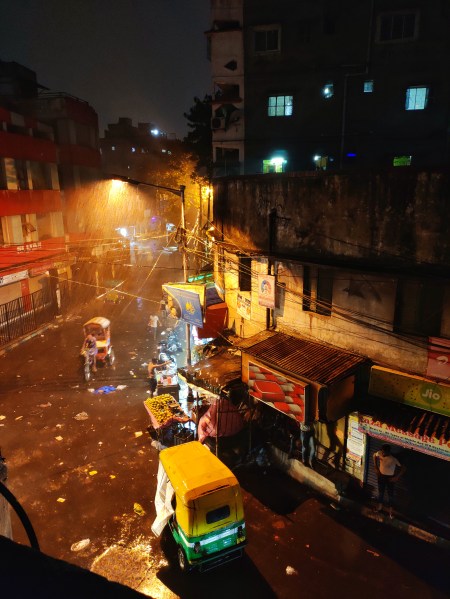
Figure 2: The Street ‘90’ on 12th June, 2019; source: author.


A resident of the place when asked about her experiences with the place said, “We have been staying here for about 15-18 years now. It has an essence of familiarity and home. The existing buildings, the shopkeepers, the vendors, and when I say vendors I really mean it. They are accurate with their location of stalls and wouldn’t trade it with anyone. Ive seen a lot of changes in the place. The building in red and white was built after demolition of an old 3-storey building for commercial purpose yet the upper floors still remain untouched after being built for so many years. The chaos is the essence of this place and without it, this street will lose its essence and identity.”

Considering the quantitative aspect of the street, it is about ten meters in width, with two meters of it occupied by the street vendors. An analysis of the street was done in three different phases of the day. When the morning struck, the silence is disturbed only by the daily activities of parents dropping off their half-dozed children to schools either by private or public convenience, which here is the auto rickshaws, who typically place themselves along the edge of the building as shown in Figure 2. Slowly and gradually as the time transcends the vegetable and fruit vendors take the edge of the street as their potential business spot. The traffic becomes evident by the noon with children coming back from school, having there go at the Sharbet waalas. As soon as the sun goes down, the street has an overwhelming response by the users creating itself in a chaotic mess of disoriented vehicles and people trying to make way to get out. Simultaneously, the sequence of functioning of the streets inflects thrrough its natural course. The female crowd encircles the ‘puchka waale bhaiya’, drooling over the smell of the tamarind water. A few steps towards the east would bring us to a smellscape of a multi-cuisine food corner with a large hot plate with parathas being fried, a traditional clay barbeque for the kebabs being cooked upon the coals, another man assorting the shelves with momos, fried crispy chicken and another struggling with delivering the order to the respective customers superimposing each other tones in a competitive streak to get their order first. The edges of the streets are defined by the utilities of all kind such as a pharmacy, general stores, grocery shops, food kiosks and corners, markets within a radius of a hundred meters, a shopping complex built few years back, occupied only the ground floor of the building structure. A fruit vendor defined the street as, “It is a metaphor of how our life is, always moving and moving in the forward direction. Despite the chaos we love our life so do we love this place.”

Figure 3: The Feeling Mapping of the Street (red-chaos, green- rejuvenation, orange-action, blue-contentment); source: author

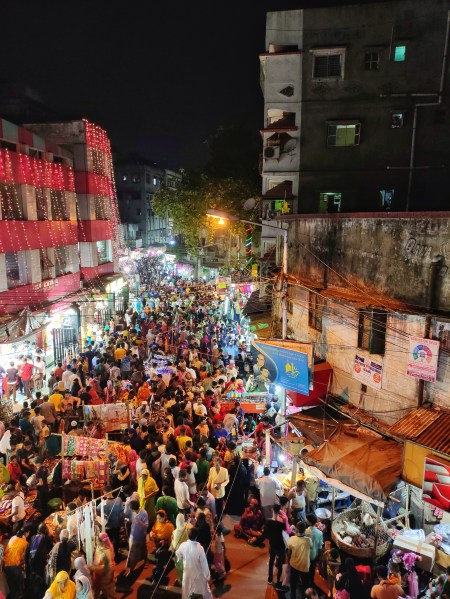
The rhythm of the basic functioning of the street is inflected during the festivities, such as the two Eids and Muharram. The zeal within the crowd becomes evident and the streets stop serving as a vehicular access instead it becomes a hub of utilities as shown in Figure 4.

Figure 4: The Street ‘90’ on 4th June, 2019 (On the Eve of Eid); source: author


In terms of architectural analysis, the flaws couldn’t remain unseen, but what the architects couldn’t see is the intrinsic experiences that the users have with the place. The elegance of the street is a culture of contentment and containment. It depicts the unification of the users belonging to all strata of the society interacting with each other whatever the purpose may be. The dynamics of the streets and the humans represent a whole of the community be it the rich or the poor. In a simple world, the whole of the world can be explored. The local architectural vocabulary of the streets shows motions and emotions of all colours. It depicts joy as well as sorrow. The chaos and the peace, all the comedies and tragedies. The energy drained is rejuvenated with the constant flow of energy on the street. The essence of the chaos in itself shows the intrinsic connection between the built and the unbuilt. The street evokes the intangible aspects of the userrs. The user activity is the result of the concentrated energy source at the micro cosmic level connecting humans with the space at a deeper level. Configuration of the whole of the city is determined by the streets that becomes the highest sources of energy flowing throughout.
The built is to exist what the unbuilt is to life. The boundaries defined by the concrete is a personalized space to exist in harmony, but to co-exist, an undefined yet the key that holds the city together. A street has a potential to turn itself into anything it wants. The street is an induced public space. The street has evolved through the line of time of urbanization inflecting the course of its motion. Due to the increasing number of concrete massing, the spatial contraction of the streets are taking place in localities like Topsia in Kolkata whereas due to the urbanization, the expansion of streets also take place with putting an end to the life of the city creating it in a block of monotony and regularity only used as an access not as a space for creating an interaction between the built and the unbuilt, the known and the unknown. Spatial expansion and contraction taking place to accommodate structures. Street is one part to the whole that encapsulates the built and the user.
People have a tendency to experience voids hence, they hold human sentiments. We are dehumanizing the streets by making it lose its existence by the loss of depiction of culture and tradition. It is a lost element with the thoughts drowned in hues of grey unaware of how to survive in the chaos. The task of an architect is to blend imagination with practicality by balancing ideas and reviving the true nature of the streets in context to human activities.

REFERENCES

1. The Holy Quran

2. Mustofa, 2011. According to Dr. R Tatang Santanu Adikara, the Head of Bioenergy Research Centre in Surabaya, human gets energy from two sources: inside the human body and outside the human body.

3. Metaphysical Approach for Design Functionality in Malay-Islamic Architecture, article in procedia-social and behavioral sciences-aug 2015

4. Mies Van der Rohe

5. Lynch, Kevin. Image of the City.

How to grab internships?

My connections often ask me how to get an internship?What preparations do we need to do to get an internship? How you prepared that you got so much internships? So, i thought of publishing an article that might help you all in getting your answers.

A Guide to Starting Your Career Off Right

Consider Your Qualifications

One of the most common misconceptions that students have about how to get an internship is that they must apply to every position that catches their eye to increase their odds. But this is a sure-fire recipe for radio silence from recruiters and hiring managers. Instead, think about the skills and experience you currently possess, and which positions you might be a good fit for based on that information. A few ways to narrow down which internships are right for you:

Think about your degree

Look up common career fields and job titles for people with your major.Consider your experience: Think about your previous work experience, and which roles it might prepare you for. A student working at a campus newspaper might consider a journalism internship, while a student who tutors for a statistics class may want to look at data science internships.

Identify transferable skills

Skills that help you succeed in school or in the student organisations you participate in — such as organisation, critical thinking and time management — will all be useful in the working world. Some quick research should reveal which jobs require these skills.

Explore your interests

With how much time you spend at work, you want to make sure you enjoy it! Write down a few career fields that interest you, and search internships in those areas.

Start small

Don’t feel pressured to get your dream internships right away, especially if you have no prior work experience. Start by exploring small local organisations, groups affiliated with your school or volunteer work in order to bolster your resume.

Know Where to Look

Once you have a more concrete idea of which internships would be the right fit, it’s time to see what’s out there! Here’s how you can do that.

Visit Job Sites

 Websites like LinkedIn , Internshala have millions of job listings, so you’re bound to find something that’s right for you. You can search for the internship titles you’re interested in, and narrow results down by location, size, industry, company ratings and more.

Leverage Your Network

Getting a personal recommendation can make all the difference in your internship search, so make sure to reach out to friends, family, colleagues, classmates, professors and alumni to see if they know anyone hiring.

Prepare Your Application Materials

No matter what job you apply to, there are a few key materials you’re going to want to have on hand. Here are the most common ones, and how to perfect them before you apply.

Resume

Resumes are brief documents that showcase your skills, education and professional background. Typically, resumes will contain your name and contact info, education, professional summary, work experience, skills and additional experience.

Social Media Profiles

Many recruiters use social medias to recruit— some may even require a link to your social media profiles. So, if you haven’t already, you may want to create a professional social media profile, especially on a networking site like LinkedIn.

A few best practices to follow as you polish your social media presence:

Choose a professional headshot for your profile picture.

Add relevant work experience as applicable.

Keep it appropriate — delete any suggestive references or pictures.

Share and engage with relevant industry content.

Hope, this will help you all in getting your dream internship.

Privacy Laws In India

Current laws and license agreements in India which allow for surveillance entail a significant potential for abuse, since the country lacks sufficient privacy safeguards . A privacy law is deemed necessary to ensure that data is not retained indefinitely, that data is not shared and disclosed to unauthorised third parties and that unauthorised parties do not have access to collected and intercepted data. In a democratic regime, surveillance should be targeted and carried out under a judicial warrant and the absence of privacy legislation deprives individuals from necessary safeguards. While the Information Technology Act and its Rules do entail some provisions for data protection and regulate certain types of surveillance, they appear to be inadequate. This is partly due to the fact that there is currently no law in India which establishes the right to privacy and as Security Practices and Procedures and Sensitive Personal Data or Information) Rules, 2011, represent a decisive step in creating a legal regime in India for data protection, but nonetheless appear inadequate in addressing issues relating to the collection of, access to, sharing of, disclosure and retention of data5 . Furthermore, they do not ensure the establishment of an independent body, such as a Privacy Commission, to oversee the handling of personal data and to address potential cases of breach.

Justice AP Shah Privacy Principles
The Planning Commission of the Government of India held meetings of the Group of Experts on Privacy Issues throughout 2012, which was chaired by Justice AP Shah, the former chief justice of the Delhi High Court . The CIS participated in these meetings and helped draft the Report of the Group of Experts on Privacy by the Justice AP Shah committee . This report entails a list of recommended national privacy principles, which should be followed in the creation of a privacy law. According to the report, the national privacy principles of India should be the following:


• Principle of Notice
• Principle of Choice and Consent
• Principle of Collection Limitation
• Principle of Purpose Limitation
• Principle of Access and Correction
• Principle of Security
• Principle of Openness
• Principle of Accountability


The first principle of notice states that the data collector should notify all individuals of its information practices, before any personal information is collected about them. Additionally, this principle also requires data controllers to notify individuals when their personal data has been breached, when such data has been legally accessed by third parties and when the data controller’s privacy policy changes. The second principle of choice and consent states that the data controller should provide individuals the choice to opt-in or opt-out with regards to the provision of their personal data, as well as that individual consent should only be taken by the data controller after providing. The third principle of collection limitation states that the data controller shall only collect personal information from data subjects as is necessary for the purposes identified for such collection, regarding which notice has been provided and consent from the individual taken. The fourth principle of purpose limitation states that personal data collected and processed by data collectors should be adequate and relevant to the purposes for which they are processed. In other words, a data controller should only collect, process, disclose, make available or otherwise use personal data for the purpose as stated in the notice after taking consent from individuals. The fifth principle of access and correction applies to individuals. In particular, this principle states that individuals should have the right to access their personal information which is being held by a data controller and to make corrections or to delete information when it is inaccurate .

The sixth principle of disclosure of information prohibits the data controller from disclosing personal data to third parties, unless informed consent has been provided by the individual for such disclosure. This principle also states that disclosure of information for law enforcement purposes must be in accordance with the laws in force. The seventh principle of security states that data controllers should be responsible for ensuring the security of all personal data that they have collected or which is in their custody.. The eighth principle of openness requires data controllers to take all necessary steps to implement practices, procedures, policies and systems in a manner proportional to the scale, scope and sensitivity to the data they collect, in order to ensure compliance with the privacy principles, information regarding which shall be made in an intelligible form, using clear and plain language, available to all individuals. Finally, the ninth principle of accountability states that the data controller should be accountable for complying with measures which give effect to the privacy principles.


Such measures should include mechanisms to implement privacy policies, including tools, training, education, as well as external and internal audits. In the report, the Group of Experts on Privacy recommended that such national privacy principles are applied to the cases of interception of communications, access to data and audio and video recording. In particular, it is emphasized that, with regards to the interception of communications and access to data in India, the principles of notice, choice and consent, and access and correction should be applied. With regards to audio and video recording in India, the application of the same principles, additionally including the principle of collection limitation, is recommended. Furthermore, the Group of Experts on Privacy also recommended the enactment of a privacy law in India which would include the establishment of Privacy Commissioners, as well as of self-regulating organisation (SROs) and co-regulation, which would supplement the role played by the Privacy Commissioners to ensure the implementation and enforcement of policies for a wide range of sectors and industries. Additionally, the Group of Experts recommended the establishment of a system of complaints which would include Alternative Dispute Resolution Mechanisms (ADRs), as well as the inclusion of offenses, penalties and remedies in the Privacy Act.

The Science Of Developing Self-Control In Life

What is Self-Control and Why Does It Matter in Life?

Self-control consists of two components, namely, our ability to resist temptations and exercise control over our emotions and behavior.

To me, self-control is one of the most important things in life. Without it, I wouldn’t even write this article. Let’s face it, when you share anything on the internet that gets enough views, you always get a bunch of hate. Every time that happens, I feel like quitting. But I also realize that there are people who find these articles useful.

Self-control is what keeps me level-headed. It makes me resist my temptation to get pissed off and walk away. There’s also scientific proof that self-control matters in life.

“We rely constantly on self-control in every aspect of our lives. Although it is not an ability unique to humans, our elevated levels of self-control may have played a key role in our evolution. Self-control is likely to have been key to many of the traits such as prosociality, that define modern humans.”-Dr. Penny Spikins.

Self-Control in Daily Life

Most of us want to have a fulfilling career, vibrant social life, good relationships with our loved ones, and be in good physical shape. Here’s the thing: We need self-control to make those good things happen. Let me give you a few examples of what that looks like in daily life.

Eating Healthy

I stumbled upon this question on internet and books : “Why is it hard to eat healthy?” The top answer bluntly says, “You lack self control.” That made me laugh because it’s the truth. But we all know that it’s not that simple.

Eating healthy is a problem for many reasons. For example, most of us see food as pleasure—not fuel. In developed countries, we don’t have to worry about getting access to food for our survival.

But your body still has the natural urge to take advantage of food when it’s available. On top of that, there are many biological processes going on that we’re not aware of. 

In my experience, eating healthy has nothing to do with your ability to resist buying junk food or ordering a pizza—it has everything to do with how much you educate yourself about your body. That’s an important reason why eating healthy is difficult: We lack the self-control to learn about nutrition, longevity, and how our bodies function. 

Self Improvement

Why is it so difficult to improve yourself? Every day, we have the choice to do something that pays off later instead of now. Going to the beach, binge-watching tv shows, reading gossip, drinking alcohol, smoking, or every other pleasurable activity in life always gives you an instant payoff. 

That’s why people often say, “Adapt or die.” If you don’t move forward, everything that’s related to you as a human will deteriorate. That’s a scary outlook. But here’s the problem: The degree of deterioration is so small that we don’t notice anything on a day-to-day basis. 

You probably feel the same as yesterday, correct? Entropy in humans works over a longer period. That’s why we feel no urgency to improve ourselves today. We need self-control to invest in ourselves despite seeing a lack of daily improvement. 

How to Develop More Self-Control

How can we get some? Based on everything you’ve read until now, let me share three things you can do. 

1. Direct Your Energy Towards a Useful Pursuit  

Our pursuit must be useful to make it stick. Shallow pursuits that only fulfill your materialistic desires will not motivate you to control your urges. You need something that’s so important you’re willing to do whatever it takes. 

When I started my blog, I was dedicated to sharing honest advice without hidden intentions. To me, that was a worthy pursuit. That drove me to write every single day. As of this writing, I’ve published 331 articles on my site.

2. Set Long-Term Goals

On a day to day basis, I rely on a system that keeps me productive. A system is a combination of productivity strategies that help you to stay consistent.

But when it comes to long-term drive, I love to set goals because they will give you a clear sense of direction. In what direction do you want to take your life over the next three, five, ten, and twenty years? This is a very hard thought-experiment if you take it seriously.

Most people say, “I don’t know.” But you shouldn’t let yourself off the hook like that. Practice self-control by forcing yourself to pick a direction in life. You can always adjust. The long-term goals I set for myself five years ago have changed today. But at least they got me moving. 

3. Minimize Stress

There’s some evidence that stress sabotages self-control.7 When you’ve had a stressful moment at work, it’s tempting to grab a candy bar (or two) to release the stress, right?

The same analogy is true for every other stress-related behavior. If you examine your life, you’ll find that you do a lot of things to simply manage stress. In fact, I believe that for most of us, that’s all that we do.

When I lived a stressful life years ago, I was only thinking about ways to get rid of that stress. But you’re only treating the symptoms that way. You can take as many vacations or buy as much crap you want from the internet, none of it will relieve your stress. If you truly want to minimize stress, you must design your life in a way that gives you a stress-level you can handle.

For me, that meant doing different work and leaving city life (I was living in London at the time). Some situations simply give us too much stress. A bad relationship is another common cause of stress. Unfortunately, there are no simple “step-by-step” tips for managing stress. 

Sure, you can meditate, take long walks, read, or journal—all these things will lower stress—but there’s nothing better than designing a life that causes less excessive stress. But that doesn’t mean we should avoid all stress.

An optimal level of stress is actually great for us and it will slow down entropy. We need to find out what that level is for ourselves. Every person has a different stress tolerance. The key is to improve our self awareness  and understand what stresses us out. Then, we want to lower that to a level that we can handle without getting frustrated.

Conclusion

Let me repeat the definition of self-control again: Our ability to resist temptations and exercise control over our emotions and behavior. 

These two aspects will increase the quality of our decisions and therefore, our lives. I hope that all of this inspires you to strengthen your self-control. Directing your energy towards a useful pursuit, setting long-term goals, and minimizing stress are all good ways to set yourself up for more self-control. 

Strengthening self-control is one of those things that has no end goal. It’s a never-ending process that will only benefit us the more we master it. When’s the last time you heard, “That person has too much self-control?” Exactly. More is better.

‘ DARK ‘ Season-3 Theories

Season 3 of Netflix’s Dark is releasing on 27th June, and the anticipation is rising. The time-bending series dropped an explosive cliffhanger at the end of season 2, which left us with a whole lot of questions. Considering how confusing the show is anyway, adding an alternate dimension was just icing on the cake. There are some theories which will leave us with  more questions than answers floating around about what happens in the final season  – check it out.

1. Winden will be removed from the timeline entirely.

Considering this is the final cycle, and the intangible knot of timelines has gotten far beyond anyone’s control, something drastic is required. Some people have posited that the town of Winden, which is at the centre of this unholy mess, will be obliterated entirely.

2.The world that alternate Martha comes from is the ‘world without time’ that Adam has been trying to create.

We don’t exactly know everything that Adam has been up to during his timeline, only the bits and pieces that we get during other people’s interactions with him. Mainly, we know he wants to create a world without time . If Adam succeeds in a part of his timeline we haven’t seen yet, then this other world would already exist, because it exists outside of time. This might be where alternate Martha comes from.

3. Helge Doppler has an injured eye in the new trailer, meaning it’s probably him from the alternate dimension.

In the dimension we’re familiar with, Helge has a ear injury (due to Ulrich, If I remember correctly). However, in the new trailer, there’s a shot of Helge with an injured eye , meaning it’s definitely alt-Helge, from the new Martha’s world.

4. Martha is Jonas’ replacement in the other world, as he does not even exist there. There’s even a shot of her wearing Jonas’ yellow coat.

According to Old Claudia, she’s seen the world without Jonas, which means he was probably never born in the alternate world. In that world, Martha lives Jonas’ life.

5. The shot of Stranger/Jonas working on a God Particle in the past could mean he’s accepted his role in founding Sic Mundus and ultimately becoming Adam.

The Stranger, from the post-apocalypse version is shown in the trailer working on a God Particle machine in the distant past under the church.

This could mean he’s decided to follow the path to becoming Adam.

6. The pendant Jonas found near the lake in 2019 belonged to Hannah , who was drowned there by someone while stuck in the 1950s.

In a photo of the filming of 3 season, Hannah has a pendant around her neck, which Jonas found on the lake in 2019. Bartoz spoke of the legend of a dead woman on the lake that grabs people by the legs. It is possible that Katharina, wanting revenge, murdered Hannah while they were both in the 50s.

7. It is theorised that the new trio seen in the trailer is made up of the real Aleksander Tiedemann, or an alt-world Mads Nielsen.

The kid who plays Mads and the child seen in the trailer, burning shit up like a pro, bear a striking resemblance. Similarly, the resemblance between Aleksander and the character seen is also quite notable. Considering his strange and unexplained history in the show, it’s a possibility.

8. Time moves backwards in the alternate world, and everything there goes in reverse.

There are 2 examples of this in the trailer – one is where Jonas is running backwards, and another is of Martha crying and tears going up her eyes. However, that is quite an impractical scenario, so let’s see.

If there’s one thing I’ve learned though, it’s that this show is always ready to surprise you, no matter how many theories you read online. So let’s wait and watch!

Source: YouTube.

SDG 11: SUSTAINABLE CITIES AND COMMUNITIES

Ideas, commerce, science, culture, productivity thrive at cities. More than half of the world’s population lives in urban areas. By 2020 two thirds of the world’s population (6.5 billion) will be urban. The increasing shift of rural to urban population because of various factors like job opportunities is called as urbanization.[1] However the development of cities comes with its own share of challenges. Cities which occupy only 2-3 % of earths land accounts for earths land account for around 60 -80 percent of energy consumption. The increasing number of slums has become a significant feature of urbanization. Over 1 billion people currently live in slums, with the number of slum dwellers only expected to grow in the coming decades. The less developed countries or developing which have grater rates of urbanization are host to majority of the slums.[2] The growth rate of urban areas in the developing countries are 2 % while it is 0.5 % in the developing countries.[3] Most of these countries however has failed to develop adequate infrastructure for these growing urban population. The number of slum dwellers is projected to increase to 2 billion by 2030 and to 3 billion by 2050 if current trends persist (UN-Habitat, 2010).[4] The presence of slums has regional and global implications, impacting areas such as education, health and child mortality, and political and social exclusion, among many other things.[5] This necessitates efficient urban planning and management and culturally inspiring cities and inclusive green cities for future. There is a need for a rapid shift to a sustainable way in the process of creation of our urban spaces. Jobs and opportunities should be created without burdening available land and resources.

The UN explains:” The challenges cities face can be overcome in ways that allow them to continue to thrive and grow, while improving resource use and reducing pollution and poverty. The future we want includes cities of opportunities for all, with access to basic services, energy, housing, transportation and more.”

SDG 11 in Indian Context

India, which will be third largest economy just behind china and U.S.A by 2025 is one of the fastest growing economies of the world.[6] India has witnessed a very high increase in its urban population. According to 2011 census, the urban population in India is around 31 % while it was at 11% according to 1911 census. Various statistics points to the fact Indians urban population has increased by 91 million between 2001 and 2011. Most of the Indian cities like Delhi and Mumbai faces the problem of congestion.  Also this goals holds great importance in Indian context as Mumbai is home to one the world’s largest slum, Dharavi which expands over an area of 2.1 square kilometers and has a population of about 700,000. 17% percent of urban population in India lives in slums, Delhi being the most polluted capital of the world again this year again and more alarmingly India is home to 21 of the of the 30 cities in the world, there are repeated instances of floods in Chennai .Further there are numerous cases of repeated prosecution of Bangladeshi immigrants in Kolkata.

Migrants who come to cities from villages looking for better jobs and opportunities end up homeless due to various reasons like financial problems, unemployment, natural calamities etc. They end up living in small huts made of straws, plastic, polythene etc. Majority of them live in very deplorable conditions without even basic necessities like toilet food and clothes.[7] 13 %   percent of the urban households doesn’t even have basic sanitary toilets.[8]

Efficient management of slums is essential towards this SDG as growth of slums has harmful ramifications on both humans and environment which are interlinked and not severable. Slum dwellers are vulnerable to threats like natural calamities and manmade disaster and these have direct impact on them[9].Their weak economic status makes it nearly impossible or extremely difficult for them to recover from the natural calamities. On the other hand, slum residents themselves can impact their environment due to lack of basic services, which results in contaminated soil and polluted air and waterways. This results in a perpetuated cycle of decline for both slum dwellers and the environment.[10]

This can be ascribed to the fact that the capacity of slum dwellers to recover from disasters are very low compared to formal communities.[11] Hence, increase in number of slums can be a serious challenge to sustainable development and we need efficient urban governance to combat this.

Conclusion

The challenge and responsibilities of achieving the Sustainable  Development Goal 11 are domineering in India. Urbanization must usher in a process of inclusive economic growth and counter the trends in inter and intra-urban inequalities that have grown at an alarming rate. It is expected that the Goal will be achieved through an urban development strategy, which allows all stakeholders, especially the currently marginalized and excluded sections to participate actively in social and economic life. Govt’s policies, programmes and schemes need to ensure that there is universal access to safe and affordable housing, basic amenities and open green spaces. The strategy must include components aimed at upgradation of slums, improvements in urban planning and management practices to make them participatory and inclusive, safeguarding the heritage and protecting the citizenry against natural disasters.

Despite the fact that India has done well on many sustainable development goals and climate goals, much is yet desired to achieve sustainable development in the real sense. First and foremost is the need for a clear road map to implement the policies to achieve with identified roles for the state governments, and a monitoring mechanism to measure progress. It also needs to draw up a quick plan to overcome the want for quality data. Public education and awareness are second to none in terms invoking agency of people in achievement of sustainable cities and communities. The goal is more complex than to be achieved by the policies and government programmes alone. We thus need to harness energy, understand and  involve participation of all stakeholders including the NGOs to make sustainable development a reality.

SDG Naga

[1]Pti, “India Poised to Become Third-Largest Consumer Market: WEF” (The Economic TimesJanuary 9, 2019) <https://economictimes.indiatimes.com/news/economy/indicators/india-poised-to-become-third-largest-consumer-market-wef/articleshow/67450935.cms?from=md&gt; accessed April 30, 2020

[2]Admin, “Invisible Urban Poor: The Pavement Dwellers of India” (Counterview.OrgDecember 7, 2019) <https://counterview.org/2019/12/07/invisible-urban-poor-pavement-dwellers-of-india/#_ftnref1&gt; accessed April 30, 2020

[3] IndiaSpend, “Every Indian To Have Toilet In Next 365 Days: Official Data. Under The Surface, A Crisis” (BloombergQuintOctober 2, 2018) <https://www.bloombergquint.com/politics/every-indian-to-have-toilet-in-next-365-days-official-data-under-the-surface-a-crisis&gt; accessed April 30, 2020

[4] “Informal Settlement Integration, the Environment and Sustainable Livelihoods in Sub-Saharan Africa” <http://www.grif.umontreal.ca/pages/irec% 20papers/napier.pdf.>

[5] Ali, M. H., & Sulaiman, M. S. (2006). The causes and consequences of the informal settlements in Zanzibar.

XXIII Congress of the International Federation of Surveyors, Munich, Germany, Retrieved from https://

http://www.fig.net/resources/proceedings/fig_proceedings/fig2006/papers/ts35/ts35_01_ali_sulaiman_0320.pdf.

[6] Ajibade, I., & McBean, G. (2014). Climate extremes and housing rights: A political ecology of impacts, early

warning and adaptation constraints in Lagos slum communities. Geoforum, 55, 76–86. doi:10.1016/j.

geoforum.2014.05.005

[7] “Cities – United Nations Sustainable Development Action 2015” (United Nations) <https://www.un.org/sustainabledevelopment/cities/&gt; accessed April 30, 2020

[8] McGranahan, Gordon, and David Satterthwaite. Urbanisation Concepts and Trends. International Institute for Environment and Development, 2014, http://www.jstor.org/stable/resrep01297. Accessed 7 Apr. 2020.

[9] Ibid.

[10] “Millennium Development Goals Report 2015 | Latest Major Publications – United Nations Department of Economic and Social Affairs” (United Nations) <https://www.un.org/en/development/desa/publications/mdg-report-2015.html&gt; accessed April 30, 2020

[11] Authors UN-HABITAT, “State of the World’s Cities 2010/2011- Cities for All: Bridging the Urban Divide: UN-Habitat” (UN) <https://unhabitat.org/state-of-the-worlds-cities-20102011-cities-for-all-bridging-the-urban-divide&gt; accessed April 30, 2020

Guide to live a Happy Life !

–You’re going to realise it one day-
That happiness was never about your job, or you degree, or being in a relationship. Happiness was never about following  the footsteps of all of those who came before you, it was never about being like others.
One day you are going to see  it – that happiness was all about the discovery, the hope, the listening to your heart and following or wherever it chose to go. Happiness was always about being kinder to yourself, it was always about embracing the person you are becoming. One day you will understand that happiness was all about learning how to live with yourself, that it was never in the hands of other people. It was about you , It is about you and It will always be about you–

Since long time, I’ve been exploring the best ways that people can live happily. And over the last year.
Outsmart Your Smartphone,Conscious Tech Habits for Finding Happiness, Balance, and Connection IRL. Even though there are tons of things you can do to live a happier life, I’ve narrowed our focus down to the 10 skills you can build that I believe are the most important to increase happiness. By building these skills, you can start to live a happy life.

1. Live a happy life by creating a plan for your happiness.

You wouldn’t bake a cake without a recipe. You wouldn’t go to a place you’ve never been without a map. And you shouldn’t try to build happiness without a plan either. Creating a good happiness plan is what takes you from where you are now to the happy life you envision.

2. Develop yourself to live a happy life.

Remember when something you wanted to do seemed impossible? Maybe it was that first time you rode a bike, or drove a car, or asked someone out on a date. Then you did it and realized you had it in you all along. Creating a happy life is the same way — the first step is believing in yourself and your ability to live happily. Then you’ll see that you had it in you all along. This is why engaging in personal development is key to living a happy life.

3. Think positive to create a happy life. 

We all know someone who will find the one bad thing in every situation. Maybe this person is us. If we learn to think positive instead, we can make even the most obnoxious situations more enjoyable, creating a happier life from the one we have now. Every moment of every day is a little better, because we can find the silver linings. This is why positive thinking is key to a happier life.

4. Boost your self-confidence to create a happy life.

If we don’t have self-confidence, it’s easy to think that there’s something fundamentally wrong with us — that there’s nothing we can do to change ourselves and create the happy life we desire. But self-confidence is actually a skill. When we learn how to think, feel, and act in ways that make us a person we really love, we can be more self-confident and, as a result, live happily more easily.

5. Create work-life balance for a happy life. 

Are you exhausted, demotivated, and in desperate need of a break? By learning how to create better work-life balance, you can make better use of the limited time you do have in your life. As a result, you end up enjoying all parts of your life a bit more.

6. Build resilience for a happier life. 

Sometimes life knocks you down — there is no getting around that. What really matters for creating a happy life is how easy it is for you to get back up. Developing emotional resilience keeps those challenges and hardships from overwhelming you. You recover more quickly from difficulties, and as a result, you’ll live happily more days each month and year.

7. Be more mindful to create a happy life. 

Now that we live in a high-tech world, we go through much of our lives on autopilot. As a result, we miss out on the best parts of being alive — positive experiences, connections with others, and even having fun. So maybe we already have a happy life . . . and we just don’t see it. When you become more mindful and self-aware, you stop feeling so numb and are able to better enjoy everything your life has to offer.

8. Find your life purpose for a happy life. 

We all want our lives to feel like they matter. It can be tricky, though, to figure out what matters to us. Each person’s life purpose is different, and learning to notice when you’ve found your purpose is a skill. By building this skill, your life becomes more meaningful and more satisfying, so you can live happily more easily.

9. Practice kindness to live a happier life.

We’re often so focused on boosting our own happiness that we ignore how we affect others. This is a huge mistake, because kindness is, counterintuitively, one of the best ways to create a happy life. Acts of kindness fuel a longer-lasting, more enduring type of happiness. So when you build this skill, you live more of your days happily.

10. Build healthy relationships for a happy life.

So often we think that a happy life is something we must build on our own. But long-term happiness actually comes from the relationships that we build with others. In fact, healthy relationships are the most important factor in both our health and our happiness. This is why learning how to develop better relationships helps you live happily for life.

Here are some steps which will help to boost the above skills :

~ Clarify why you want a happy life.
~ Clarify when you’ll build the skills that lead to a happy life.
~ Decide which happiness skills to build.
~ Decide in what order you will build the skills that lead to a happy life.
~ Commit to your goal to create a happier life.
~ Develop a growth mindset that focuses on           your belief in your ability to create a happy life.
~ Identify your values.
~ Define a happy life in your own words.
~ Record your progress towards personal development.
~ Get some help developing yourself to build a happy life.
~ Help your brain get used to thinking positive.
~ Start your day by imagining the way it looks in your happy life.
~ Savor positive moments.
~ Capitalize on positive moments.
~ Pay attention to the positive things.
~ Create a collection of positive images or positive quotes.
~ Think positive, but think negative when you need to​.
~ Practice gratitude​.
~ Stop minimizing your successes​.
~ Practice self-compassion.
~  Imagine your best self.
~ Know your strengths.
~ Celebrate your successes.
~ Practice mindful acceptance.
~ Observe your situation to increase your awareness​.
~ Find the positives in negative situations​.
~ Create a collection of images or quotes that inspire you to live happily.
~ Understand the benefits of negative emotions.
~ Beef up your coping skills.
~ Stop your negative thought cycles.
~ Be more present in the moment.
~ Take breaks from technology.
~ Pay more attention to find the meaning in your life.
~ Spend more time uninterrupted
~ Identify your values.
~ Find out what drives you.

Of course, building all of these skills takes time. If you need help, get support to walk you through the steps and guide you on your journey to living a happier life

Management During Pandemic.

As the spread and far-reaching impacts of Covid-19 dominate the world news, we have all been witnessing and experiencing the parallel spread of worry, anxiety, and instability. Indeed, in a crisis, our mental state often seems only to exacerbate an already extremely challenging situation, becoming a major obstacle in itself. Why is this and how can we change it? As the CEO of a firm that brings mindfulness to companies to unlock new ways of thinking and working, let me share a bit about how the mind responds to crises, like the threat of a pandemic.

Even without a constant barrage of bad or worrisome news, your mind’s natural tendency is to get distracted. Our most recent study found that 58% of employees reported an inability to regulate their attention at work. As the mind wanders, research has shown that it easily gets trapped into patterns and negative thinking. During times of crisis — such as those we are living through now — this tendency is exacerbated, and the mind can become even more hooked by obsessive thinking, as well as feelings of fear and helplessness. It’s why we find ourselves reading story after horrible story of quarantined passengers on a cruise ship, even though we’ve never stepped foot on a cruise ship, nor do we plan to.

When your mind gets stuck in this state, a chain reaction begins. Fear begins to narrow your field of vision, and it becomes harder to see the bigger picture and the positive, creative possibilities in front of you.  As perspective shrinks, so too does our tendency to connect with others. Right now, the realities of how the coronavirus spreads can play into our worst fears about others and increase our feelings of isolation, which only adds fuel to our worries.

Watching the past month’s turmoil unfold, I have been reminded of the old Buddhist parable of the second arrow. The Buddha once asked a student: “If a person is struck by an arrow, is it painful? If the person is struck by a second arrow, is it even more painful?” He then went on to explain, “In life, we cannot always control the first arrow. However, the second arrow is our reaction to the first. And with this second arrow comes the possibility of choice.”

We are all experiencing the first arrow of the coronavirus these days. We are impacted by travel restrictions, plummeting stock prices, supply shortages etc. But the second arrow — anxiety about getting the virus ourselves, worry that our loved ones will get it, worries about financial implications and all the other dark scenarios flooding the news and social media — is to a large extent of our own making. In short, the first arrow causes unavoidable pain, and our resistance to it creates fertile ground for all the second arrows.

It’s important to remember that these second arrows — our emotional and psychological response to crises — are natural and very human. But the truth is they often bring us more suffering by narrowing and cluttering our mind and keeping us from seeing clearly the best course of action.

The way to overcome this natural tendency is to build our mental resilience through mindfulness. Mental resilience, especially in challenging times like the present, means managing our minds in a way that increases our ability to face the first arrow and to break the second before it strikes us. Resilience is the skill of noticing our own thoughts, unhooking from the non-constructive ones, and rebalancing quickly. This skill can be nurtured and trained. Here are three effective strategies:

First, calm the mind.

When you focus on calming and clearing your mind, you can pay attention to what is really going on around you and what is coming up within you.  You can observe and manage your thoughts and catch them when they start to run away towards doomsday scenarios. You can hold your focus on what you choose versus what pulls at you with each ping of a breaking news notification.

This calm and present state is crucial. Right away, it helps keep the mind from wandering and getting hooked, and it reduces the pits of stress and worry that we can easily get stuck in. Even more importantly, the continued practice of unhooking and focusing our minds builds a muscle of resilience that will serve us time and time again. When we practice bringing ourselves back to the present moment, we deepen our capacity to cope and weather all sorts of crises, whether global or personal.

Look out the window.

Despair and fear can lead to overreactions. Often, it feels better to be doing something … anything … rather than sitting with uncomfortable emotions. In the past few weeks, I have felt disappointment and frustration with important business initiatives that have been adversely impacted by Covid-19. But I have been trying to meet this frustration with reflection versus immediate reaction. I know my mind has needed space to unhook from the swirl of bad news and to settle into a more stable position from which good planning and leadership can emerge. So, I have been trying to work less and to spend more time looking out my window and reflecting. In doing so, I have been able to find clearer answers about how best to move forward, both personally and as a leader.

Connect with others through compassion.

Unfortunately, many of the circles of community that provide support in times of stress are now closed off to us as cities and governments work to contain the spread of the virus. Schools are shut down, events are cancelled, and businesses have enacted work-from-home policies and travel bans. The natural byproduct of this is a growing sense of isolation and separation from the people and groups who can best quell our fears and anxieties.

The present climate of fear can also create stigmas and judgments about who is to blame and who is to be avoided, along with a dark, survivalist “every person for him/herself” mindset and behaviors.  We can easily forget our shared vulnerability and interdependence.

But meaningful connection can occur even from the recommended six feet of social distance between you and your neighbor — and it begins with compassion. Compassion is the intention to be of benefit to others and it starts in the mind.  Practically speaking, compassion starts by asking yourself one question as you go about your day and connect — virtually and in person — with others: How can I help this person to have a better day?

With that simple question, amazing things begin to happen. The mind expands, the eyes open to who and what is really in front of us, and we see possibilities for ourselves and others that are rich with hope and ripe with opportunity.

12 July :- New conversations day

“Many are so in the habit of making lazy conversation about weather & sport that we don’t take the opportunity to ask interesting questions and have rewarding conversations” .

Awkward Silence are suggesting a number of alternative conversation starters that people can use including ‘Which birthday tradition should change?’, ‘How would you feel about your partner doing kissing scenes in a film?”, and ‘What do you want to achieve with your life?’. “Conversation is extremely powerful. It’s the where ideas blossom, it’s where connections are made, it’s the life-blood of relationships”

Yet despite how impactful it is, people tend to under-value its worth.” “This is why New Conversations Day is so important, it’s to help people wake up to how rewarding new conversations can be.”

New Conversations Day is about not waiting until tomorrow to have the conversations we could be having.Like asking each other what we should be doing with our lives & making decisions, or talking to our parents & discovering their stories, or simply sharing the big ideas on our hearts” said Mr Benbow.

We want people on 12 July to not be content with dull conversation, we want them having genuinely interesting conversations. We have hundreds of suggestions to get them started, but each conversation is unique.

Ask someone what they would have said if they were the first person on the moon, or whether it’s OK for couples to have secrets from each other. Ask someone what they would teach their children about alcohol, or whether they think animal have morals. Ask someone what their idea would be for a TV show, or about the last time they cried.

Block chain Technology- Implementations

You must have heard a lot about the emergence of blockchain, isin’t? But here in this article, we will focus on the practical issues for blockchain implementation.

Introduction

In the tech world, blockchain technology is still the leading buzzword. Its ability to work in a distributed environment without getting tampered is the core source behind all the hypes.

As the technology is still in its developing phase, despite various possibilities in almost every sector, it will still take some course of time to get over all the challenges it is facing right now. Let’s explore what the practical blockchain implementation issues are.

As blockchain is revolutionizing rapidly, its scope and career opportunities are beyond imagination. If you are looking to start a profession in blockchain space and want to become a blockchain expert or a blockchain developer, favorable chances are on its way.

Practical Blockchain Implementation Issues

Blockchain technology is an algorithmic immutable ledger that presents a future-ready architecture for organizations to transact and exchange business-related information securely.

Does it mean it has no challenges? Of course not. There are various challenges associated when it comes to implementation. So let’s get started.

Lack of Internal Blockchain Knowledge

The first and foremost challenge while implementing blockchain is that most organizations have insufficient knowledge about technology. Companies do not have Blockchain experts and professionals who clearly understand the core concept of technology.

Thus organizations find it challenging to choose and adopt the best enterprise blockchain platform. Moreover, the companies are not aware of blockchain implementation steps that should guarantee the best outcome.

High Implementation Cost

Although popular enterprise blockchain platforms such as Hyperledger Fabric have made great strides in terms of the transaction speeds( just about twice the rate over VISA platform), most of the existing platforms such as Bitcoin(transacts 3 to 5 transactions per second ) and Ethereum (up to 15 transactions per second ) are inefficient in terms of speed of transactions and the energy consumption. Thus we can infer that the most convenient blockchain platforms come at a vast implementation and energy costs.

Backup and Recovery

Backup and recovery of data for blockchain networks are also one of the significant implementation issues. Although theoretically, creating a new node is easy, but it’s not practical spending several hours for a new node to sync with existing blockchain nodes and transfer configuration metadata. The recovery becomes even more critical when there is a requirement to migrate a node across datacenters.

Data privacy

Data privacy is a crucial bottleneck problem in blockchain as most enterprises do not appreciate the case where anyone can view their sensitive data, which might be delicate to their core business. Those who plan to share confidential business data are worried about confidentiality between several participants and shielding this data from access by other companions.

But, when blockchain nodes are run as a managed cloud service with users only able to access them through the APIs and event subscriptions, data privacy can be maintained to a great extend.

Blockchain Interoperability

Although they are various enterprise blockchain platforms, interoperability is a pertinent issue to which Blockchain developers are looking for mass adoption. The basic idea is to join one particular platform and to utilize the service on another enterprise platform if required without any severe compatibility problems.

Therefore, developers are finding a way through which users of different software can interact and conduct meaningful business.

Performance

In the blockchain network, the performance requirement is never the same. It varies from one scenario to the other. Like for example, the performance metrics include throughput and latency, and outcomes will vary in terms of network size and hardware configurations, and the tradeoffs between higher throughput versus lower latency.

Thus, based on the deep understanding of the business demands and platform architecture, a reasonable performance optimization solution needs to be adopted.

This is not the end of the list. Moreover, a lack of regulatory clarity is one of the significant implementation issues. Many governments are still unsure about how they consider this technology from a legal standpoint, and this leads to complexity.

Conclusion

Enterprise blockchain is gaining popularity and adoption in almost all sectors and for different use cases. Although blockchain might seem to be offering several advantages to the industries, it needs to be re-architected depending on various use cases for greater acceptance of enterprise blockchain in the mainstream.

The buzz around blockchain probably won’t subside, so hurry up and upgrade your skills now with the best online Blockchain certification courses.

To get instant updates about Blockchain Technology and to learn more about online blockchain certifications and become a blockchain expert, check the online opportunities which deals with all levels – beginner, intermediate and professional learning.

Journey of the Technologies that shaped today’s world: IC Engine

Steam engines changed a lot. They revolutionized how things were carried around, how people moved around and how industries worked. However, steam engines worked on of course, steam, which is not easy to create. It cannot be stored easily. So, one needed water and coal. Coal needed to be burned, water would heat up and steam would build. To generate sufficient power, the entire setup needed to be significantly large. That meant its applications could not be ubiquitous.

Therefore, despite the efficiency, cost-effectiveness, and power of steam engine, it was not practical to be adopted in all the places. Especially for day to day activities, it was not sensible to use such bulky machinery. As a result, steam engine despite their success in industrial and large applications, did not change a lot of things for individuals. For personal usage, the machinery needed to be compact, portable, and most importantly safe. This was achieved when Internal Combustion engines arrived on the scene.

The first Internal Combustion Engine was created by Étienne Lenoir around 1860. However, the real popularity and application of Internal Combustion Engines came Nicolaus Otto created the modern IC engine in 1876. The IC Engine works on hydrocarbon fuels which are extracted from Petroleum- mostly Diesel, Petrol and Gas. These fuels have high calorific value and they are highly combustible. This makes these fuel very useful but also very dangerous. IC Engines used valves to control the flow of fuel and supply of air. The controlled combustion generates heat which makes the gases expand. As the space is confined with only piston movable. The piston moves and through crank-shaft mechanism the wheel moves.

The most popular IC engines are 4-stroke engines. 4-stroke means there are four steps in each cycle of the engine operation. These steps are-

  • Intake stroke
  • Compression stroke
  • Combustion stroke
  • Exhaust stroke

As the fuel has high calorific value, a very small engine can generate sufficient power to move a car or a truck or a bike. These can be very compact and highly portable. IC engines have revolutionized how people move individually. The first modern car was built by the German engineer by Karl Benz in 1885. In early 1900s, companies like Ford and General Motors took car-making to next level. Assembly line production made the car manufacturing and later the entire manufacturing industry very fast and highly efficient. In last 100 years, cars and bikes have taken over the roads. More and more people now have cars and bikes. Cars are still costly and remain a status symbol in the society.

The compactness of IC Engines also made it possible to design small but powerful machines. This independence made it possible to design machines that could fly or travel under water. While the independence of owning individual machines is exciting, but this also increases the pollution. The cars and motorbikes are one of the largest polluters across the world.

Our independence to move around is wonderful and precious but we also have to understand that the environment is priceless. We have only one earth. We got it from our forefathers, and we have to handover this to the next generation. We should use our bikes and cars sparingly and responsibly. Pool whenever possible, use public transport whenever possible. Let’s not turn the boons bestowed by the science into a curse.

IMPROVE YOUR FOCUS

In this fast-paced world we’ve created, we’re only going to feel more overwhelmed by the ever-increasing directions and distractions we feel pulled toward. With exponentially increasing demands on us in our work and personal lives, sustaining and improving focus on things which matter is getting tougher and tougher.
You’ll be pleasantly surprised to learn that keeping focused is no longer about trying to discover secret weapons of willpower or self-discipline. With these initial self-reflective exercises and different brain-training exercises, you’ll no longer be having arguments with yourself to get on with the job!
Here’re 7 ways on how to improve focus.
1. Have a Plan You Feel Clear AboutOne of the foremost common reasons we struggle to take care of focus is because we lack clarity about what we’d like to try to to next. The next best action step doesn’t feel clear to us.
If you are trying to lose weight but aren’t clear on exactly what activities you need to do, with what intensity, the food you need to eat and the timing of when all this needs to happen, you increase your chances of staggered progress.
If there are not enough parts early in the process to that feel clear for you to make the next step, these emotional obstacles will derail you.
You must also recognize the amount of detail in the steps you need to feel ready and confident to move forward — this will differ between you and the next person. You and another person are often given precisely the same instructions to find out a task. He/she might feel completely ready and confident to get to work. On the other hand, you hesitate.
Work on developing enough detail clarity until you are feeling you’ve got enough resources and know enough to require the steps.
2. Set Your Mood and Environment to maximise Your Capacity to FocusIt’s been argued that in slightly-above-ambient temperatures, you’ll be more creative. You feel more relaxed and your productivity increases. Conversely, lower temperatures have also been found to more positively influence decision-making ability and alertness.
Cornell University conducted a study of office administration workers whereby their productivity positively correlated with increased office temperatures.[1] At 25℃, the workers were typing with 90% accuracy. However, with a drop of 5℃, the typing rate nose-dived along side an increased error rate of 25%. The study also identified other factors which could greatly affect productivity and focus such as air quality and pollution.
It’s not just temperature you need to pay attention to. Good lighting is essential. The wavelength of blue light emitted from neon lights and most electronic devices generally ignites our serotonin levels and keeps us awake. Consider though that natural light is best where possible. When your body is truly getting tired, you can honor its natural rhythms and listen to its cues for rest.
Switch off communication applications (e.g. Facebook messenger, Slack, Yamma). Make it hard for yourself to access such applications and devices by physically putting them in places that are inconvenient for you to access (try the 20-second rule and make it take more time to access). If you have to go outside to the garden shed to retrieve your phone (and it’s cold and raining outside), you’re less likely to do it!
Maximize your exposure to visual messages which direct you to remain on task. Rather than have your eyes cast across post-it-note messages such as: “Don’t get distracted”, have messages of what you want to direct yourself to do: “Keep going. Stay focused.” Surround where you propose to execute most of your day’s work with deliberate messages that directly tell you to remain on target .
3. Create a Distraction Procrastination To-Do ListWhen you know you have to prepare a complex report or assignment, the temptation to be carried away with the social flittings of your friends on Facebook or your colleagues chatting nearby will likely be stronger than ever. That story you spin yourself that you’re only spending a smidgin’ of your time getting ‘up-to-date’ so it can’t really do any harm becomes the sole story you would like to believe.
Trying to resist the temptation completely can cost you valuable time and psychic energy . The guilt you harbor for contemplating digressing from your important activity inflicts an emotional cat-o-nine tails upon you. That doesn’t serve you either.
Submit half-way. Fully indulge at a designated time period to soak up that dopamine rush from scrolling through sporadic events and sponsored posts on your newsfeed or chat to whoever is online at the time. 
After pounding through a piece of labor , undergo that guilty pleasure. When you engage in it, do it fully. If you’ve been studying straight for three hours, it’s time to stand up, stretch and stroll to your favourite coffee shop and back. Go for a walk or swing on the swings in your closest public park.
If you work from home, bake a batch of scones, put on a face mask as you soak your feet in a foot spa. Or watch half of the football match you recorded but haven’t gotten ‘round to reviewing yet.
Cold-turkey abstinence is hardly ever effective. Not only are you wasting time and energy resisting the urge. You make the urge stronger by denying yourself! So, don’t deny yourself but manage it wisely.
4. Practice Meditation and MindfulnessIf you’re yet to be convinced of how meditation can help you improve focus, look no further than the declarations made by the American Psychological Society praising its benefits.More and more studies are demonstrating how meditation can reduce rumination, stress, anxiety and improve relationships, emotional stability, focus and working memory capacity.
If you’re not meditating, you are doing yourself a gross disservice. Meditating allows to practice regaining focus. As you practice, you learn and increase your skills to notice when your mind is wandering off track. You then practice bringing it back to what you ought to be directing your attention to.Include in your morning preparations for the day a gentle but directed review of what you need to devote your time to today. Throughout the day, consider that your attention span swings like a pendulum. Exercise it one direction and let it swing into a free-thought space for moments of reprieve.
The world, our bodies and our minds work in rhythms. Learn to exercise your mind and focus intrinsically . If you try to beat yourself cognitively into submission, you’re unlikely to win. You’ll be unnecessarily exhausting yourself in repeated attempts of trying.
Here’s a beginner guide for meditation: Meditation for Beginners: How to Meditate Deeply and Quickly
5. Schedule Planning, Review and Recognition Periods Throughout Your DayManagement consultant and best-selling author of 18 Minutes, Peter Bregman recommends a simple plan to help train your brain to remain focused and help you track your progress.
Before the computer goes on, the first 5 minutes of your day, you invest in planning and write out your ‘today’s activities’ list. Physically writing down your activity goals for the day (using paper and pen, not electronic word processing) engages more functions within your brain (e.g. the generation effect[3]) which train it to acknowledge these activities are highly important.
Bregman then recommends that for 1 minute at the end of each of the next 8 hours, you stop and recall what you have accomplished in that hour. You congratulate yourself for what you have achieved and regain focus, recalibrate expectations and take a pause. You slow down to speed up.
By reviewing what you’ve got accomplished, you attach a positive emotional experience to your work and progress. This action in itself will improve your focus as you fuel your motivation to stay the wheels of your momentum, rolling.
The final 5 minutes at the end of the day are spent in reviewing and planning the next day. Doing so makes it easy for you to sustain laser focus from at some point to subsequent , to subsequent .
These 18 minutes of planning serve as plain but powerful guard rails to keep you mentally on track.
6. Create Goals and Activities That Satisfy Your Highest Priorities and ValuesWhenever you’re resisting doing something, it’s highly likely because it’s not topping your desirability charts.
As a human being, you behave and act in ways which ultimately keep you feeling safe and comfortable. As long as we can see we will get to continue feeling safe and comfortable, it doesn’t matter what activity we’re asked to do.
However, the moment a notion arises of your needing to do something that feels unfamiliar (and hence, uncomfortable), you can guarantee you’ll feel a sting of resistance. It might be slight but it will be there. However, life doesn’t allow us to simply avoid whatever we please.
The key is to examine and reframe what you need to do in a way that does satisfy your highest values and priorities.
If you believe you know what your values and priorities are, take a look at the results you have against the goals you’ve set for yourself thus far.
For example, if you believe one of your highest priorities is to have a healthy bank balance yet your balance statement shows more outgoings than revenue, having a lot of money is actually not a high priority for you.
At now , you would like to explore the variability of activities that yield a healthy bank balance that you’re not currently exercising. Saving, reducing costs, modifying and monitoring spending habits, making wiser purchase choices and finding ways to extend your income are all activities you would like to explore. These things might sound dull and like diligence .
7. Transform Information to Make Things More InterestingAccording to neurobiologists’ findings, we learn better when we actively do different things with the information. Not only are our experiences of learning more enjoyable, we activate more parts of our brain. This serves lessons and memories to be more effectively encoded into LTM .
You need to become clever at delighting and regularly stimulating your senses through variety.
If you’re studying, engage a spread of the way to exercise using the knowledge and skills you want to develop. Discussion groups, creating informal quizzes, teaching someone the knowledge you would like to find out involves you exercising verbal communication skills where you want to both give and receive information. You must adapt to your audience.
Drawing pictures and diagrams, creating voice memos about what you’re learning, using colors and symbols again different activates different parts of the brain. More connections are developed in your neural circuitry to aid your recall.
Furthermore, you become more adaptable and adept at applying what you learn to different situations.
Creating your own personalized manuals and notes becomes a passion project which pushes the personal gratification scale higher and higher.
Before you know it, staying focused no longer feels like a chore

Role of media in democracy

Democracy means  A system of government in which all the people of a country can vote to elect their representatives. Media came into existence in 1780 with the introduction of a newspaper namely ˜The Bengal Gazetteâ™ and since then it has matured leaps and bounds. It has been playing a very important role in shaping human minds.

Role of media

Media plays a crucial role in shaping a healthy democracy. It is the backbone of a democracy. Media makes us aware of various social, political and economical activities happening around the world. It is like a mirror, which shows us or strives to show us the bare truth and harsh realities of life.

The media has undoubtedly evolved and become more active over the years. It is the media only who reminds politicians about their unfulfilled promises at the time of elections. T.V news channels  excessive coverage during elections helps people, especially illiterates, in electing the right person to the power. This reminder compels politicians to be upto their promises in order to remain in power.

Television and radio have made a significant achievement in educating rural illiterate masses in making them aware of all the events in their language. Coverage of exploitative malpractices of village heads and moneylenders has helped in taking stringent actions against them by attracting governments attention.

The media also exposes loopholes in the democratic system, which ultimately helps government in filling the vacuums of loopholes and making a system more accountable, responsive and citizen-friendly. A democracy without media is like a vehicle without wheels.

In the age of information technology we are bombarded with information. We get the pulse of the world events with just a click of a mouse. The flow of information has increased manifolds. The perfect blend of technology and human resources (journalist) has not left a single stone unturned in unearthing rampant corruption in politics and society . Thanks to technology that has brought a kind of revolution in journalism.

Impact of media

The impact of media is really noteworthy. Excessive coverage or hype of sensitive news has led to communal riots at times. The illiterates are more prone to provocations than the literates. Constant repetition of the news, especially sensational news, breeds apathy and insensitivity. For instance, In Dhananjoy Chatterjee case, the overloaded hype led to death of quite a few children who imitated the hanging procedure which was repeatedly shown in most of the T.V. news channels. There is a plethora of such negative impacts. Media should take utmost care in airing or publishing such sensational news.

Commercialization has created a stiff competition in media. In order to outdo each other print media has often gone one step further in publishing articles, cover stories, etc.
Media experts say this is one of the means of attracting readers who are glued to T.V. news channels, which have cropped up swiftly in a recent past and they believe this is a cheap form of journalism.

Conclusion

No one is perfect in this world and so is the media. Here I am not degrading the media, rather I would say there is still a lot of scope for improvement by which media can raise upto the aspirations of the people for which it is meant. I cannot think of a democracy without active and neutral media. Media is like a watchdog in a democracy that keeps government active. From being just an informer it has become an integral part of our daily lives. With the passage of time it has become a more matured and a more responsible entity. The present media revolution has helped people in making an informed decisions and this has led to beginning of a new era in a democracy.