How to Write Informal Letter: Writing Tips and Samples

Want to write Informal letter but don’t know how to write Informal letter then this article is only for you and the learners who wants to learn letter writing. In today’s article we are sharing the steps, Tips or samples for writing Informal letter.
Informal letter or a Personal letter is a letter written to a close friend or an acquaintance. Isn’t it wonderful to receive such written letter from a friend?
Better yet, isn’t it wonderful to actually write one?

Letter writing still has a sentimentality about it that transcends all other forms of communication, and this is probably why some people stick to it even though they could use other means.
The best way of learning how to write letters, I reckon, is to look at a number of specimens, analyse what has to be done and perhaps what does not have to be done, don’t you agree?

Of course there are no hard and fast rules about how to write informal letter and common sense dictates that someone may use whatever works best for him. However, there is a conventional way of going about it that will make all the difference if you apply it.

How to Write Informal Letter:

As compared to formal letter writing Informal Letter writing is easy.

Informal Letter Format:

[Address of the Sender]

Date:

Dear (name of person)

Body of the letter:

Paragraph 1: Ask for the wellbeing of the person

Paragraph 2: Main reason to write the letter

Paragraph 3: Conclusion and end of letter

Yours lovingly,

Name of sender

Address and date in informal letter :

Some people may think the address is not important in an informal letter and prefer to leave it out. That works well if the person you are writing to knows your address already or if she has a good memory! However, it is very unlikely that someone will always remember your address, so it is always a good idea to include it.

Remember, this is the address they have to write to for the informal letter to reach you. The recipient’s address is on the envelope.

Salutation in Informal Letter

The most common salutation in an informal letter is “Dear….”
Note that it is followed by a comma.
Dear Mimi,
However, some go extremely informal and use “Hey!” or “Hi!”

You should use your discretion. Obviously if you are writing to your father, you would not use “Hey!” unless of course you are extremely close.

Body of an Informal Letter

Here are a few things you should take note of:

  • Paragraphs:

Since informal letters are usually written by hand, the paragraphs are usually indented. However, with more people using their computers to do most of their writing(and I have a bad feeling most people will forget how to write with their hands), it is becoming a common practice to write paragraphs without
indentations—like the way this one is written:

This,
apparently, is the modern way of writing paragraphs.

Use informal language:

The first paragraph generally expresses a greeting, followed by wishes of good health. Remember you are writing to someone you know very well, so try to be as friendly as possible:
How are you my dear sister?
However, always use your discretion. Try not to go overboard. Some people become bold and daring in letters and write things that they would otherwise not say to the person face to face. Obviously if you are writing to
an adult that you respect, like your dad, try not to write things like:
What’s up dude!” or “What’s going down?”
Try to picture the person you are writing to standing in front
of you. Imagine the things that you would say to him and write them down. This will help you not to go overboard.
Also avoid boring sentences like…
“I am writing this letter to….”

Punctuation and spelling

I have come across a good number of letters that abound with spelling mistakes and awful punctuation. Such
mistakes tend to distract the reader, so don’t neglect them even though you know your friend will understand.
The quality of your letter also speaks volumes about the kind of person you are so all the more reason to be careful!
If you use contractions, make sure that you put the apostrophe in the right places.

For example:

Isn’t and not is’nt
won’t and not wont
mustn’t and not must’nt
The contraction it’s is especially one that you must watch out for. It is the short form of it is or it has. But if you want to use it to indicate possession, you should use its and not it’s.

Check out this example:
The dog lost its collar.
Remember also to use capitals for the right things i.e. the names of people, places, holidays, etc should all start witha capital letter. Bottom line? Don’t throw away your grammar book!

Use consistence voice and style in Informal Letter

Use the active voice if you want your letter to sound more conversational and interesting. Avoid shifts in the voice.

Informal Letter of Business Format

Your Address

Your City, State Zip (Hit enter twice)

Today’s Date – Year, Month, Day

Company Name

Company Address

City, State Zip (Hit enter twice)

Dear Order Department : (Hit enter twice)

Paragraph 1( Hit enter twice)

Paragraph 2 ( Hit enter twice)

Last Paragraph( Hit enter twice)

Sincerely, (Hit enter 4 times)

Your handwritten signature goes here

Your Name

Your Title (if you have one)

Informal letter of business format block style :

Return Address
The address of the person sending the letter (sender). Includes the street address, city, state, and zip code. Note: The return address does not include the sender’s name.

Date
The date of the informal letter is written.Inside Address Includes the following information of the person receiving the letter: courtesy title (Mr., Mrs., or Ms.), first and last name and his/her job title (if applicable), company name (if applicable), street address, city, state, and zip code.

Salutation
Includes the greeting (opening) of the letter, followed by the receiver’s courtesy title and last name.

Body Includes the details of the letter. The first paragraph should introduce and state the reason for the letter. The following paragraphs should provide details for why the letter is being written and any background information that supports the message.

Complimentary Closing
Typically includes a closing phrase and is used to show respect and appreciation for the person reading
the letter.
Signature Area
The space for the sender’s signature.

Sender’s Name
Includes the sender’s first and last name, followed by his/her job title (if applicable).
Reference Initials
Initials of the person (other than the author) who keyed the letter for the sender.
Attachment/Enclosure Notation
Indicates another document is attached or enclosed with the letter.

Is India wrecked by socialism?

India’s economy is socialist, according to the constitution. Mrs. Indira Gandhi introduced this word in the 1970s. As the British occupied India for nearly 150 years, they began as a firm to transfer raw materials from India to the United Kingdom. This has frightened India into reopening its market to the rest of the world. Nehru was unusual in this regard; he permitted only a few enterprises to expand and concentrated his efforts on the agriculture sector.

The term ‘socialist’ was added to the Preamble by the Forty-second Amendment.

In the past, the Indian government implemented many social welfare programmes to demonstrate its socialist credentials, such as bank nationalisation, various job initiatives such as NREGA, and even selling milk. While the majority of these ponzi schemes failed, they added to the government’s financial burden. All of these ideas had a significant impact on citizens. Everyone began to rely more heavily on free goods. People began to expect cheaper rations, a free cooker, and subsidised gasoline or kerosene. Except for a few communities such as the Marwadi and the Gujratis, no one backed private industry, and everyone was focused on government jobs. Entrepreneurs were frequently reprimanded or disheartened. Profit was viewed as a bad thing, and wealthy people were frequently blamed for the country’s plight. In films from the 1970s and 1980s, the villain is typically wealthy, smoking a cigar, holding a peg of whisky in one hand, and plotting how to exploit low-wage workers. Building a business involves time, effort, risk, and expertise. In India, the image of business and the evil it entails is still pervasive. A large number of people still rely on the government to help them. Everything that is wrong with their lives is due to the government in some way.

India gradually up its market to the rest of the world and established a free market economy in 1991. While every step India takes has a significant impact, we have fallen behind other countries such as China, which began reforming a decade ago. China was able to nail down a few details regarding how the business model will work in a communist country. In India, entrepreneurs find it extremely difficult to start a firm because of the so-called red tape that still exists. The Indian bureaucracy is rotting from the inside out. The nature of the “Sarkari Babus” is still incompetent, slow, and corrupt. Obtaining land, establishing a factory, and obtaining a licence are all arduous tasks for entrepreneurs.

India chose a government-directed growth path over a market-driven one when it gained independence. With a GDP of around Rs.36 thousand crores and government revenue of around Rs.330 crores, we were a shaky economy. The average lifespan was only 31 years. That was an opportune time to pass away. We were also hard struck by the costs of World War II, as well as the bloody partition, which saw the largest human migration in history. Market forces would have positioned us as the world’s tailors, cobblers, and domestic assistance suppliers, given our large and impoverished population. Nehru, on the other hand, chose to invest on new infrastructure (the Temples of Modern India) in order to propel India ahead. The four huge steel plants, the DVC, the Bhakra Nangal project, and numerous public sector investments in power, locomotives, railway coaches, paved roads, irrigation, water supply, schools, IITs and IIMs, hospitals, and other areas were among them. The pressures continued to mount until we were on the verge of declaring bankruptcy in 1991. Then came the Narasimha Rao government, with Manmohan Singh as Finance Minister and Chidambaram as Commerce Minister, which changed everything. Nonetheless, all administrations since then have been mindful of the need to help India’s poor, rather than abandoning them to market forces.

Types of learners and how to engage them

  1. Auditory and Musical learners

To engage a social learner, encourage both group collaboration and presentation. Consider:

  • Roleplaying historical events or works of literature
  • Collaborating on maths problems
  • Working as a class on comprehension questions

Auditory learners like to hear solutions and examples explained to them, and may gravitate towards music subjects and group learning as a way to understand information. Auditory learners often have a high aptitude for distinguishing notes and tones in music and speech.

Qualities often associated with auditory learners include:

  • Possessing a ‘good ear’ for music and tones
  • May be distractible
  • Likes to talk to self / others / hum / sing

Auditory learners might say words out loud or hum tones to better learn them. This strategy is key for keeping musical learners engaged in class lessons.

How to engage them?

If you’re a music teacher, you’re in luck. Auditory learners will be engaged from start to finish. For other subjects however, engaging aural learners requires some tact and forethought.

The key here is your voice (and the voice of your students). Write down something on the whiteboard, then read it out loud. Work on your delivery so you can express learning material in interesting and engaging tones. Similarly, encourage your students to read back their own notes to themselves (and the class). Hearing the sound of their own voice and the voices of others is engaging to auditory learners, but it can be a great learning tool for students of all types.

Other strategies you can try include:

  • Recording lessons for later listening and reference
  • Encouraging auditory listeners to ‘teach others’ verbally
  • Seating them away from distractions

2. Visual and Spatial learner

Visual learners like diagrams, drawing out concepts, charts and processes. They learn by looking at visual concepts, creating them, and watching other people create them. Visual learners might be organised or creative in their application, and find things like colours and shapes useful.

Visual learners often possess the following qualities:

  • Habitual doodlers / drawers
  • Observant
  • Not easily distracted
  • Enjoys planning
  • Prefers visual instructions

How to engage them?

To engage a visual learner in the classroom you’ll want to include elements like maps, diagrams and imagery. If you have a projector, try to include relevant images to go along with the course content. In geography and history, maps are helpful, while for maths and logic, go with diagrams.

Charts, images and diagrams will aid most students, so catering to visual learners doesn’t mean you have to ignore other types. When it comes to self-driven learning, encourage the spatially aware to sketch out their ideas, create mind maps and flowcharts. It should probably come to them naturally, but a bit of prompting can always help.

Other tactics you can use include:

  • Sitting visual learners near the front
  • Using colour codes and cues
  • Encouraging note taking and recopying notes during study

3. Verbal learner

Verbal learning includes both writing and speaking. Verbal learners might have a preference for reading and writing, word games and poems. Verbal learners know the meanings of a broad category of words, can use them effectively, and actively seek out new words to add to their repertoire.

Some qualities associated with verbal learners include:

  • Intellectual
  • Bookworm
  • Good story teller

Verbal learners often seek out careers in journalism and writing, administration, law and politics.

How to engage them?

Verbal learners will want to write down notes, talk about concepts and potentially present them as well. The trick with verbal learners is knowing what adjacent types of learning apply to them – are they an outgoing or more introspective verbal learner? Some may lean more to talking, while others to reading and writing. Try to cater to preference while also using their verbal abilities to push personal boundaries every once in awhile.

4. Logical and Mahematical learners

Perhaps unsurprisingly, mathematical learners err towards careers in programming, accountancy, science, research and other number and pattern-orientated careers. Some qualities associated with mathematical learners include:

  • Pattern recognition
  • Good with numbers
  • Predisposition towards grouping and classification

How to engage them?

Mathematical learners will greatly appreciate any type of learning that logically explains the subject at hand. For maths, that’s easy. For other subjects, it requires some effort and planning:

  • History and geography: Try to include statistics and classification taxonomy in your lesson plans.
  • Literature: Ask your students “What category of book is this?” Or in poetry, have them learn the meters and explain them to other students.
  • Music: Teach both musical instrument classification (woodwind etc) and the mathematical relationships between notes.
  • Art: A good starting point is the colour wheel and the effects of combining different colours.

With logical students, always look to incorporate a system. If you’re unsure, include the students in the development of that system. They’ll benefit from it greatly.

5. Physical and Kinaesthetic learner

Commonly called hands-on learners, kinesthetics prefer to physically engage with the materials of the subject matter. Some qualities associated with physical learners include:

  • Preference to ‘get their hands dirty’
  • Energetic, may drum fingers or shake legs
  • Action-orientated and outgoing
  • May de-prioritise reading and writing

Physical learners represent about 50% of the population,and gravitate towards careers with lots of hands on work like emergency services, physical education and sports.

How to engage them?

Channeling the energy and excitability of physical learners is key to offering a good lesson. Taking breaks so they can move around can help, but so can encouraging role play and movement within the lesson itself. Physical interaction is also important. The use of props and models will greatly benefit a kinaesthetic learner. Give them something to grab onto and they’ll process information much better than from a book or whiteboard.

Other strategies to engage physical learners include:

  • Encouraging movement during study (don’t punish them for fidgeting)
  • Decluttering desks and surfaces so they can focus on learning

6. Social and Interpersonal learner

Social learners show preference towards groups and collaboration. Some, but not all, will gravitate towards leadership within a group. Some of the qualities often associated with this type of learner include:

  • Extraverted
  • Good communicator
  • Sensitive and empathetic

It’s important for educators to understand that not all social learners are extraverted or highly communicative, and that they can also be visual, auditory, verbal, logical or physical learners. The interpersonal aspect perhaps better describes the settings in which they are most comfortable, rather than how they absorb information.

As such, teachers should be cognisant of the breadth of variation between different types of social learners. For example, social doesn’t strictly mean verbal. Some social learners prefer to listen in a group setting, rather than on their own.

How to engage them?

Interpersonal learners like to ‘do’ and to ‘share’. This can sometimes lead to distraction for other students who are more intrapersonal in their learning habits. To prevent this, try to channel social learners into providing value to the group, giving them tasks that use their energy usefully, with a focus on empathy for their classmates.

7. Social and Intrapersonal learner

Solitary learners can be visual, auditory, physical, verbal or logical learners. Fulfilling all the needs of the solitary student will ensure they are fully engaged. Some of the qualities often associated with this type of learner include:

  • Independent
  • Introspective
  • Private

Intrapersonal learners may gravitate towards careers with a lot of self determination or motivation, as well as solitary workloads. Think:

  • Researchers
  • Writers and authors
  • Programmers and coders

How to engage them?

In a classroom environment it can sometimes be difficult to engage a solitary learner. They might sit silently in the back of the classroom, only to ace the exam at the end of semester. For the educator, it’s important to engage them during class. Provide visual materials, books and learning aids. Designate quiet areas, and collaborate with defined sharing time so the solitary learner can feel adequately prepared.

Mixed learning approach

With large classrooms, it’s not always easy to personalise lessons, but using a mixed learning approach throughout coursework can help you cater to each type of learning style. You may decide to focus on a particular learning type each lesson, or incorporate multiple strategies within each lesson. The most important element is first recognising the differences in student learning – the rest will flow from there.

Communism in India

The change of administration at the centre in 2014 has brought with it new promises, but it has also brought suffering to the people of India who are being drugged or tranquillized in the hope of long-term benefits. The people of the country will vote for the current government for a second term because they perceive no credible opposition or viable alternative to it.

Although the current government’s administrative efficiency is marginally better than its predecessor’s, the majority of Hindus applaud their radical non-secular approach on specific topics like as the sacredness of the cow or actions against minority appeasement. Furthermore, the minority appeasement approach used by previous Congress-led governments has warped the Indian polity’s secular nature, which must be remedied. However, the BJP government’s work is more of an antithesis to past practises and cannot be termed long-term strategies because it will transform India into a non-secular nation-state with characteristics akin to those of a Fascist state. This is the time for the Left Parties to move forward quietly but earnestly, despite political and economic restraints, and endeavour to enlist the support of the common man. Maharashtra, Gujarat, and Rajasthan are three states that have refused to recognise the Left Parties as an option and have been difficult for the Left to crack for the past seventy-one years.

In Maharashtra, the Indian National Congress (INC), National Congress Party (NCP), and, to a lesser extent, the Shiv Sena are well entrenched, and removing them will be difficult. Except for a brief period under Shankar Singh Vaghela’s leadership, the Bharatiya Janata Party has ruled Gujarat for the past thirty years. Rajasthan has seen five-year transitions between the Bharatiya Janata Party and the Indian National Congress since 1993. In Maharashtra, the sole RED Flag-affiliated party with some clout is the Shetkari Kamgaar Paksha, whose presence and political clout are insufficient to gain an absolute majority in the state legislature. The left must build cadres in these three states over the next few years, as well as re-establish acceptance in West Bengal and Tripura, and attempt a second consecutive inning in Kerala. Along with it, the Communists, or the Left Front, should endeavour to train cadres and prepare for the elections set for 2024, or else aim for an absolute majority in the Lok Sabha elections in 2029.

The road will be rough, but the people of our country require a third option that is superior to both previous and current regimes. This must be a joint effort by all of the Left Parties, i.e.

Except in a few places such as West Bengal, Kerala, and Tripura, the average man in India has not yet developed the needed confidence and faith in the Left Parties, and this has been their most significant disadvantage. There is yet a chance if the Left Parties examine and adjust their approach, making it more inclusive and abstaining from sticking to the Marxist norms that must be abandoned in order to win the trust of the Indian people. A more Machiavellian style, similar to that of Comrade Vladimir Illyich Ulyanov Lenin during the early years of Communist leadership in Russia. Despite the fact that Indian Communism will be relatively different and distinct in light of the country’s economic and social structure, it is the answer, the ultimate answer to equitable and fair governance.

JUVENILE DELINQUENCY

Delinquency is a kind of abnormality when an individual deviates from the course of normal social life this behaviour is called delinquency when a Juvenile below an age specified under a statute exhibits behaviour which may prove to be dangerous to society and or himself he may be called Juvenile delinquent.

Juvenile delinquents are those offenders including boys and girls were normally under 16 years of age

The acts of delinquency may include running away from home without the permission of parents, use of multiple languages, wandering about railroad street, market places, visiting gambling centers, shoplifting, stealing, etc.

Causes of Juvenile delinquency:

Broken homes- The broken homes and families lack of parental affection, security, absence of a loving mother in the childhood or lack of family ties, parental responsibility for all contributory factors to delinquency. Interaction at home is a very important means for socializing the child.

Poverty- A very large proportion of delinquent children come from poor homes. Poverty compels sometimes both of the parents to be outside the home for a very long period to earn their daily bread, the children will be uncared for and they may join hands with the Gangsters and become delinquents.

School dissatisfaction some student get dissatisfied with the school life there is lack of entertainment and sports facilities in schools, indifference of the teachers may contribute to such dissatisfied students become regular absentees in schools and start wandering in streets.

Emotional problems of the individual- Mental troubles and emotional maladjustments are strong factors in delinquency. From the psychological point of view “delinquency is a rebellion and an expression of aggression which is aimed at destroying, breaking down or changing the environment”.

Remedies for juvenile delinquency:

  • Creating and inspiring a team of work  of private and public agencies devoted to preventive work.
  • Establishing a child guidance clinic to give appropriate treatment to the disturbed children.
  • The problems of beggary and poverty are to be removed or controlled and the general economic standards of the people must be increased to prevent children from becoming delinquent due to economic exigencies.
  • Under section 399 of the Indian Criminal Procedure Code convicted young offenders below the age of 15 could be sent to reformatory school established by the state government. Section 562 of the C.P.C. also permitted discharge of certain convicted offenders on probation.
  • Certified schools are established to give some general education and Technical training to the children here are the children 10 and for the long-term treatment. After their release they are put under the charge of a probation officer or a welfare officer who watches their activities.

A great problem such as Juvenile delinquency cannot be solved by means of legislation and government efforts alone. Government as well as private agencies must work hard with all sincerity and seriousness to find an effective remedy for the problem of Juvenile delinquency. The public attitude towards Juvenile delinquent must also change.

Health consciousness.

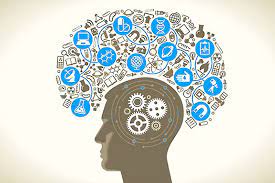
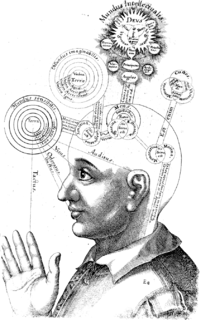
Consciousness, at its simplest, is sentience or awareness of internal and external existence. Despite millennia of analyses, definitions, explanations and debates by philosophers and scientists, consciousness remains puzzling and controversial, being “at once the most familiar and most mysterious aspect of our lives”. Perhaps the only widely agreed notion about the topic is the intuition that it exists. Opinions differ about what exactly needs to be studied and explained as consciousness. Sometimes, it is synonymous with the mind, and at other times, an aspect of it. In the past, it was one’s “inner life”, the world of introspection, of private thought, imagination and volition. Today, it often includes some kind of experience, cognition, feeling or perception. It may be awareness, awareness of awareness, or self-awareness. There might be different levels or orders of consciousness, or different kinds of consciousness, or just one kind with different features. Other questions include whether only humans are conscious, all animals, or even the whole universe. The disparate range of research, notions and speculations raises doubts about whether the right questions are being asked.

Examples of the range of descriptions, definitions or explanations are: simple wakefulness, one’s sense of selfhood or soul explored by “looking within”; being a metaphorical “stream” of contents, or being a mental state, mental event or mental process of the brain; having phanera or qualia and subjectivity; being the ‘something that it is like’ to ‘have’ or ‘be’ it; being the “inner theatre” or the executive control system of the mind.

And that’s why to be health conscious is better than being careless.

The Impact of Solitary Confinement

Many years ago, the approach toward detention institutions, convicts, and punishment was severe and obnoxious. After a prolonged battle with the government, the principle of recognizing the human being in the convicted perpetrator has been approved. The socio-legal approach is based on peace, mutual respect, and individual human respect. If a person commits a crime, it does not follow that he stops to be a human being and can be denied those components of existence that constitute basic humanity.

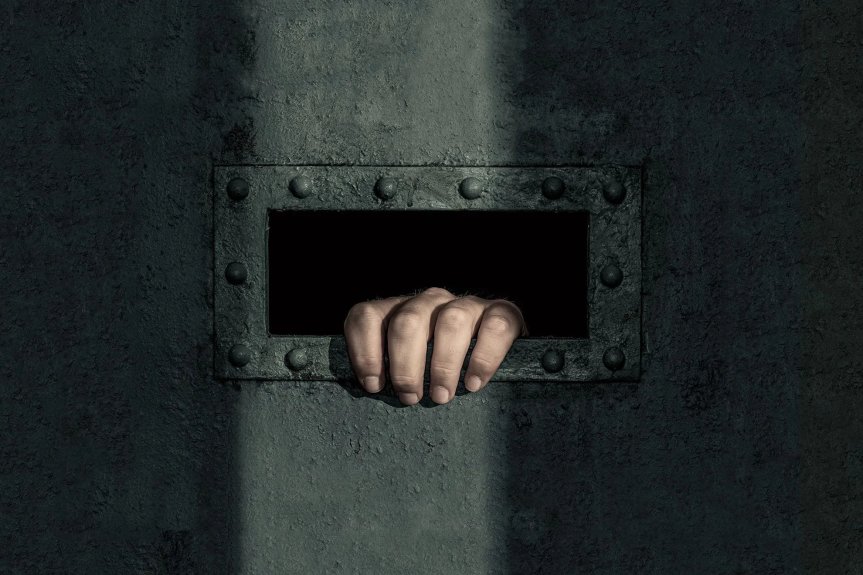
Solitary confinement is a type of imprisonment in which an inmate is segregated from other inmates and subjected to strict observation. It has been proved that such confinement is traumatic and has a negative impact on the prisoner’s overall well-being both physically and mentally. Prisoners are kept in solitary confinement for a variety of reasons. When prisoners are kept in solitary confinement as a form of punishment for what is deemed excessive behavior, such as aggression against fellow prisoners, they are usually forced to stay there for a specified period of time as a measure.

Solitary confinement, according to research findings, fundamentally affects a person’s brain, resulting in major and long-term mental health concerns as well as the expansion of deviant and violent behavior. There is a distinction between loneliness (a highly unpleasant experience to perceived isolation and the imposition of social isolation, also known as social pain) and aloneness (a tendency toward being alone/the decision to be alone), and the brain responds in very different ways. Solitary confinement as a form of punishment is akin to torture, having devastating effects for brain health. Prisoners who are isolated endure a range of psychological impacts, including emotional, cognitive, and psychotic disorders.

Prisons are already destructive, and putting people in solitary confinement adds an added layer of pressure that has been proved to create lifelong abnormalities in people’s minds and characters. In fact, long periods without human interaction have been found to physically decrease the part of the brain that plays a crucial role in memory. And, because humans are social animals by nature, denying people of their capacity to socialize can result in “social pain”, which experts define as “the feelings of sadness and suffering that result from negative social situations such as social deprivation, isolation, rejection, or loss.” Social pain impacts the brain in the same manner that physical pain does, and it can trigger much more suffering due to humans’ tendency to remember social pain months or even years afterwards. Even if a person does not enter solitary confinement with a mental disorder, the consequences of isolation may cause them to acquire a distinct psychiatric syndrome.

Life is more than just animal existence. The people incarcerated cannot be denied the same. A prisoner, whether convicted, under trial, or detained, continues to be a human being. They have all of the rights that a free person enjoys, but with some limitations. Being imprisoned does not strip people of their fundamental rights. Even while imprisoned, he has all of his basic fundamental rights. And especially in this pandemic, when many people are left alone or with a cellmate in confined spaces for 24 hours a day, knowing the negative impacts of solitary confinement and reforming these practices is more necessary than ever.

3D PRINTING

3D Printing is an new and emerging field of biotechnology, it’s a field of revolution in science, the earliest record of 3D printing through the additive process was the Japanese inventor Hideo Kodama in 1981. He created a product that used ultraviolet lights to harden polymers and create solid objects. This is a stepping stone to stereolithography (SLA).Overall 3D printing has changed and improved over the past thirty years. SLA, SLS, and FDM show the history of 3D printing, and thus how it became a vital tool for manufacturing. It allows you to make virtually anything simply by creating a computer file

HOW DOES IT WORKS ?

3D printing, also known as additive manufacturing, is a method of creating a three dimensional object layer-by-layer using a computer created design.3D printing is an additive process whereby layers of material are built up to create a 3D part. This is the opposite of subtractive manufacturing processes, where a final design is cut from a larger block of material. As a result, 3D printing creates less material wastage.

3D Printing Technologies :

There are three broad types of 3D printing technology; sinteringmelting, and stereolithography.

  • Sintering is a technology where the material is heated, but not to the point of melting, to create high resolution items. Metal powder is used for direct metal laser sintering while thermoplastic powders are used for selective laser sintering.
  • Melting methods of 3D printing include powder bed fusion, electron beam melting and direct energy deposition, these use laser, electron beams to print objects by melting the materials together.
  • Stereolithography utilizes photopolymerization to create parts. This technology uses the correct light source to interact with the material in a selective manner to cure and solidify a cross section of the object in thin layers.

3D Printing Processes :

3D printing has been categorised into seven groups by ISO/ASTM 52900 additive manufacturing – general principles – terminology. All forms of 3D printing fall into one of the following types:

  1. Binder Jetting
  2. Direct Energy Deposition
  3. Material Extrusion
  4. Material Jetting
  5. Powder Bed Fusion
  6. Sheet Lamination
  7. VAT Polymerization

Applications

  • Most common application is organ transplantation, and are also used for producing metal orthopedic implants. Due to 3D printing’s capabilities for creating porous surfaces, these types of implants more easily integrate with the patient’s own natural bones, allowing them to grow into the implant.
  • 3D printing applications that are used in construction include extrusion (concrete/cement, wax, foam, and polymers), powder bonding (polymer bond, reactive bond, sintering) and additive welding. 3D printing in construction has a wide array of applications in the private, commercial, industrial and public sectors. Advantages of these technologies include allowing more complexity and accuracy, faster construction, lower labor costs, greater functional integration, and less waste.

After 140 Years, Biologists Have ‘Resurrected’ The Genus of These Weird Yellow Cells

Deep in the tissues of sea anemones, corals, and jellyfish are strange yellow cells which are genetically distinct from the marine animals.

More than a century after these cells were first assigned a now forgotten genus, a new paper has resurrected the name and described six new species from around the world.https://7ebdf40ca650dbb49550c30c7626f99f.safeframe.googlesyndication.com/safeframe/1-0-38/html/container.html

“Because our team comprises scientists from seven countries, we were able to collect all of these samples, and some during the global pandemic,” said lead author of the study, biologist Todd LaJeunesse from Penn State University.

“This study highlights how the spirit of scientific discovery brings people together, even in times of hardship.”

First described in 1881, the yellow things were originally classified under the genus Zooxanthella by scientist Karl Brandt. Brandt also coined the term zooxanthellae, which is used colloquially to this day.

However, another scientist – a Scotsman called Patrick Geddes – was investigating these yellow cells at the same time. In 1882, without having seen Brandt’s work, Geddes discovered that not only were the cells separate from the animals they were within (something Brandt had also established), but that they were beneficial, acting as mutualistic symbiotes.

The genus Geddes established to categorize these cells was Philozoon, from the Greek words for ‘to love as a friend’ and ‘animal’. Unfortunately, Brandt came first, so the Philozoon genus was never used; Geddes switched to work in urban planning, and the newly named genus was largely forgotten.null

We are now well aware that these odd microorganisms Geddes and Brandt worked on back in the day are photosynthetic dinoflagellates – single-celled algae found in symbiosis with other marine life, such as corals – under the family Symbiodiniaceae.

In the new study, researchers took a closer look at these yellow cells, using genetic data, geographical data and morphology to analyze where exactly they should sit in the genetic tree.

And after determining that these creatures need to be put into a new genus, the team pulled the genus Philozoon out of retirement for two old species and six new ones.

“We emend the genus Philozoon Geddes and two of its species, P. medusarum and P. actiniarum, and describe six new species,” the team wrote in their paper.

“Each symbiont species exhibits high host fidelity for particular species of sea anemone, soft coral, stony coral and a rhizostome jellyfish.” 

The team wrote that Philozoon are found in shallow, temperate marine habitats around the world, including the Mediterranean Sea, eastern Australia, New Zealand, and Chile.

“Since most of the algae in the family Symbiodiniaceae have been thought to be mostly tropical where they are critical to the formation of coral reefs, finding and describing these new species in cold waters highlights the capacity of these symbioses to evolve and live under a broad range of environmental conditions,” explains LaJeunesse.

“Life finds a way to persist and proliferate.”

The research has been published in the European Journal of Phycology.

INTERMITTENT FASTING

What it is and How to do it?

There are all kinds of workout regimes out there but workouts are not the only thing that can help you loose those extra inches. There have been all kinds of development in this field too. One of the things that don’t require you doing intense workouts is Intermittent Fasting. Intermittent Fasting is a dietary approach that involves eating only during certain hours of a day and fasting for the rest.

HOW TO DO IT AND WHAT ARE THE APPROACHES?

There are various approaches depending on whether you are a beginner or an expert. You must remember that that should start easy and not start with the hardest part first thinking it would fast track the weight loss process. Let’s begin:
1. The 16/8 approach: It involves fasting for 16 hours and eating only in the eight hour interval. Your diet must be controlled and full of proteins for energy. You can easily pencil in two to three meals a day. This diet requires you to have your dinner by 8 pm and then eat nothing till lunch i.e. skip breakfast. If this timeline is tough for you to follow, you can go in for 14/10 approach. Again, you will be fasting for 14 hours and can eat in the 10 hour interval. This way you won’t have to skip your breakfast if you have your last meal by 8 pm.
2. FAST DIET: Also known as 5:2 diet. It involves having your regular meals 5 days a week and doing intense fasting for 2 days. During intense fasting you limit your calorie intake to 500-600 instead of your regular 2000-2500 calories (depending on your age, weight, etc).
3. ALTERNATE DAY FASTING: As the name suggests, in this approach you fast every other day. During the fast period you can drink as many fluids as you want but they all should be free of calories.
4. EAT STOP EAT: This involves fasting 24 hours once or twice a week. However one must be careful while pursuing this diet because not enough nutrients go inside your body and it could lead to low blood sugar levels and low energy levels.

You can pursue these diets according to your body but remember not to push yourself too hard. If you are able to develop a resist food after a certain time, make sure that you re regular in your approach because fasting takes time to show the results. Another important point to keep in mind is to not consume high calorie meals during your eating window. You must only take in your normal diet. You will not loose any weight if your eating window is full of high calorie meals.

ADVANTAGES:
– helps in cell repair
– prevents obesity
– helps in weight loss
– improves brain function
– keeps the heart healthy
– reduces the risk of diabetes
– helps in gaining muscle mass giving better physical performance
DISADVANTAGES:
– consumption of high calorie meals can lead to weight gain
– skipping meals can cause dizziness and nausea
– restrictive eating can influence eating disorder
WHO SHOULD NOT DO IT?
Intermittent fasting is not healthy for everyone. It should not be done by teens under the age of 18, pregnant women, people with diabetes or blood sugar problems and lastly by people who have eating disorders.

Thus, before diving deep into this lifestyle you must know your body so you don’t face any side effects in the long run. Again, you must start by picking a easier method and evolve as you go on. If you don’t feel like giving up your meals, you can always take the road of exercising for weight loss. But if you are strong enough just make sure you have a nutrient rich diet and don’t go nuts during the eating period.

The Glowing forest

Hello guys!!You guys may have heard of the term “forest” but have you ever heard of “Glowing forest”.

Yes! The forest that literally GLOWS at night.

Source: unknown

I am always awestruck by the art of nature,nature for me will always be a mystery.The things which we can never imagine in our life takes place in this huge world.

If you ever see a glowing forest you might think that lights from the city travelled all the way to the forest haha.But reality is far more impressive than any imagination you might have right now of a “glowing forest”.

Unexpected things that we come across in our life adds spice in our lives. Those unknown variables gives us these exciting experiences.

Learning about something and gaining knowledge should always be welcomed if they knock on our door of life.

Jumping right in to the topic.

How do you think these forests glow ?Got any idea about it.

Yes. I am using the word “forests” because they exist in various places all over the world.

So for today I am going to write about the enchanting and captivating forest that lies in Shikoku,Japan . At night time, the floor lights up in bright green due to the glowing mushrooms that create a luminescent ambiance as if we are in a fantasy .

During the rainy season these bioluminescent mushrooms emerge in the forest lighting up the whole forest creating a dream land.

Many hikers,travellers visit this place to experience the unknown world . Especially they visit at night because the forest’s speciality is glowing at night time .

There are various types of brightening mushrooms all over the world.

From vice

Guys don’t get discouraged thinking that you will not be able to visit that place because it’s very far. We have glowing forest in India tooo.

The bioluminescent fungus that grows on the barks and twigs of the tropical forest floors when exposed to rain this phenomena takes place.There should be certain humidity and moisture conditions for this type of fungi to grow .

Source:unkown

The fungi in the Western Ghats, on the other hand, belong to the Mycena genus, a group of tiny mushrooms that almost look like moss.

Even in Mhadei Wildlife Sanctuary situated in Swapnagandha Valley of Goa, Chorla Ghat near Panjim is another place where you can find the cool glow. Belgaum in Karnataka is another place to find these light up mushrooms.

Source :unknown

We got to know how these forest are glowing but the reason what causes the luminescent nature of the fungi is still unknown.

Thankyou^^

Know about Engineering departments

What does an Engineer do?
Engineers design machinery, build skyscrapers, and oversee public works, but they address society’s needs and problems on so many other levels as well. At a molecular level, they work on drug delivery systems that work inside cells. At a macro level, they look at the particle flow of pollutants through soil to clean up oil spills, abandoned industrial sites and other biohazards. At a galactic level, they design spacecraft for other-planet exploration. At an atomic level, they develop data storage that focuses on the spin of electrons in atoms. Clean drinking water, safe food storage, and the protection of our environment are also under the engineering umbrella.

What is Mechanical Engineering?

Mechanical engineering is the branch of engineering which deals with the design, manufacturing, maintenance and testing of machines. It is also considered as one of the most diverse and versatile disciplines of engineering. Mechanical engineering also includes the application of mechanics, material science, applied mathematics and physics.

With the rise of modern technology, mechanical engineering has witnessed newfound importance with more and more students opting to learn less explored domains of robotics, mechatronics, nanotechnology, etc.

New trends and future scope:

The scope of mechanical engineering no longer remains limited to just manufacturing and testing of huge machinery and equipment. With technology making new advancements, there are several new domains in mechanical engineering which are being taken up by passionate engineers. These domains include robotics, new materials, nanotechnology, computer-aided design, geomechanics, etc. The two highly pursued domains are robotics and mechatronics, both of which combine the knowledge of mechanical engineering with other streams to deliver state of the art products.

Robotics

Robotics is an interdisciplinary stream of engineering that combines mechanical engineering, electrical engineering and computer science with an aim to design and develop robotic systems along with computer systems to control them. With the AI revolution already started, Robotics as a stream has been on the rise and is expected to grow in both reach and demand in the coming decade.

Mechatronics

Mechatronics too, is an interdisciplinary branch of engineering which usually combines mechanical engineering, electrical engineering and Information technology. A mechatronic engineer is responsible for designing complex engineering systems, can assist in process automation and also test the systems in use in the processes.

From automobiles to heavy-duty lifting machines and even the modern aircrafts that defy speed barriers, a variety of modern systems are being designed under the supervision of expert mechanical engineers. You will not find mechanical engineers limiting themselves to the manufacturing industry anymore. Mechanical engineers are being welcomed in various industries with open arms and high compensation packages, provided that the candidates are skilled and proficient.

The current market scenario and scope:

According to the portal payscale.com, the average salary of mechanical engineers falls below Rs. 3.4 lakhs per annum. A few skills are able to add value to this compensation package. For example, knowledge of robotics or robotics process automation and a sound understanding of electrical systems can make a recruiting firm provide you with a better pay package, as per their need. Even though the pay package is lower in certain sectors as compared to computer science engineering, mechanical engineer with IT skills are very high in demand and the pay package is higher than CS engineers.

Jee mains 2021 exam date announced; Registration process begins for April/may session.

The most crucial engineering and medical entrance exams JEE Main and NEET UG have also been postponed due to the coronavirus outbreak.The February and March sessions of engineering entrance exam JEE Main 2021 were held while the April and May exams were postponed.

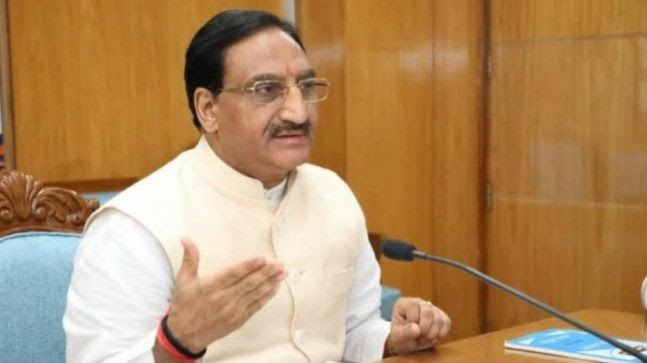
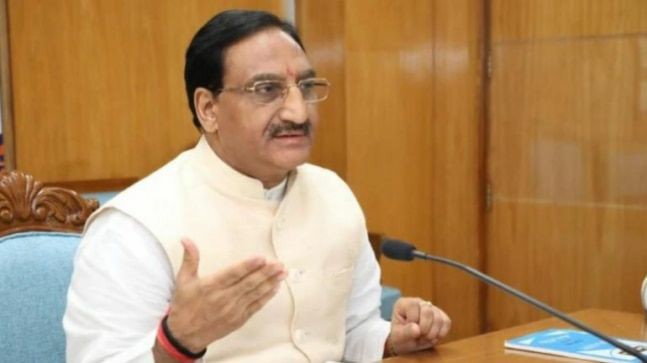
Education Minister Ramesh Pokhriyal has announced the exam schedule for JEE Main (April / May) sessions 2021 today. The minister made the announcement through a live session. The third session of JEE Main 2021 (April session) will be conducted from July 20-25. The fourth and last session of JEE Main 2021 (May session) will be conducted from July 27-August 2.Candidates can apply at jeemain.nta.nic.in. Those who wish to apply for the April session will be able to apply from tonight to July 8. JEE Main (May) session registrations will be open from July 9-12. Candidates will also be able to change their exam centres. Even to ensure social distancing amid the pandemic, the NTA has also increased the number of test centres for JEE Main (April and May) sessions. Earlier, the total number of test centres was 660. The test centres have now been increased to 828.

Social media reaction

Just within two hours of date announcement , the news started Trending over various social media plateform. On twitter the #jeemains2021reached in top ten trend within two hours only. Most of the people are making memes on the surprising announcement of exam date , while some are demanding for postponement of the exam .

What about jee advanced date announcement?

In this context, one thing has to be noted that the JEE Advanced 2021 Exam which was scheduled to take place July 3, 2021, also had to be postponed due to the COVID-19 situation in the country. However, recently, on June 25, 2021, IIT Kharagpur, the organising institute for JEE Advanced 2021 Exam has released the information brochure and list of documents that will be required for JEE Advanced 2021 Exam on the official website of JEE Advanced at jeeadv.ac.in. On the website, it is also mentioned that a new date for JEE Advanced 2021 Exam will be announced soon.

for more detail vist the link 👇

https://youtu.be/6x4aP17GXoE

https://www.dnaindia.com/education/report-nta-jee-main-2021-neet-2021-entrance-exam-dates-application-form-ntanicin-cbse-class-12-board-exam-2021-result-date-latest-updates-2898900

Indian parenting:flaws

What is parenting?

Parenting is the means of upbringing of children. There a lot of parenting techniques. Depending on the techniques followed parenting may be efficient or inefficient.

Why is parenting important?

“Health” is described as the state of complete physical, mental, social well being and not merely the absence of disease.Parenting impacts the physical, mental and the social well being of children which means that it influences the children’s “health”.The factors that are influenced by parenting are of paramount importance in an individual’s life. Negligent parenting techniques may lead to deterioration of individual qualities in the child.

Parental attitudes:

Parental attitudes refers to the parent’s perspective of interaction with their children.Parental attitudes have intense consequences towards parenting. The different type of parental attitudes are Over-protectiveness, Permissiveness, Rejection, Acceptance (Democratic parenting style), Domination, Submission.

Over-protectiveness:

This parental attitude tend to prolong infantile care and prevents the development of Self-reliance. The children brought up through this parental attitude may become over dependent and always seek for attention/help from others. Children may also develop nervous tendency and they will lack Self-confidence. They may become sensitive to criticism.

Permissiveness(Laissez-Faire style) :

Parents always give their time and energy for the sake of children when they follow permissiveness style. Children become more selfish and demanding due to this parental attitude.

Rejection:

Rejecting attitude causes the parent to express dominance over the child. Parents who are dissatisfied with their marital life and who do not like parental responsibilities show hostility towards their children. The rejecting attitude of parents shapes the child into an aggressive child. Rejecting attitude also enables children to develop into an independent being and the children learn to spend time by themselves. This also results in exhibition of mature behaviour, however it causes mental stress upon the child.

Acceptance (Democratic parenting style) :

As the name intends, Acceptance style desires to accept the children for who they are. Acceptance style does not support criticism. Parents encourage freedom of emotional expression and love the child unconditionally. The word “unconditionally”means to love someone without any reason to love. That means, loving the children for who they are naturally. Unconditional love develops without “expectations”.Parents recognise and satisfy the child’s needs in this style.Therefore the child would face life confidently, and they would become an better introspector.

Domination:

Parents demand unquestioning obedience from their child through domination style.Children may eventually become polite, honest,self conscious and feel inferior.

Submission:

Submission style allows the children to dominate parents and treat them with no respect. This makes the child to become disobedient, irresponsible and careless.

Among all kind of parental attitudes, accepting attitude is the best because the parents follow Democratic methods of disciplining and children evolve to self-confident and cheerful personalities.

Flaws found in Indian parenting methods:

According to the Indian society, the most common mistake that some of the Indian parents commit is expressing dominance over the child. Not all Indian parents follow substandard parenting techniques, but most of the parents seem to raise their child with defective parenting techniques. Most of the Indian parents aim to control their children’s life completely. This is the most erroneous practice.

The parents control their children’s personal life and education. This control affects the children’s mental health.Sometimes parents also allow their kin to take responsibility for their child’s life. This further reflects on the child’s social life.As parents follow these techniques, the children begin to distance themselves from their parents.Parents expect children to behave in a certain way and they are not loved unconditionally. Parents should never try to control their children’s life just because they were born from them. A good parent only guides the pathway to their children’s life and the children are permitted to act upon their life decisions. The most important thing in any relationship is “Healthy Communication”.Similarly, Parents and the children must have a healthy communication between them. Healthy communication allows both of them to express their opinions confidently and sort out the queries.

Indian parents lack healthy communication with their children due to difference of opinions and busy schedule for work.Most of the children fear to express their opinions. Healthy communication also lets parents to teach important concepts of life to their children. Indian parenting is still followed as brutal practices where some of the parents try to kill their own children when children overstep their parent’s decisions. This happens due to the disgusting norms of the society such as indiscrimination due to caste,religion, money etc. Indian parents believe these norms due to the society and they fail to recognize their child’s needs. Indian parents must understand the importance of parenting.

Indian parenting is greatly impacted by the society. Thus it results in the flaws of parenting techniques.

Courses and programs

Courses and programs for students are the main role to their education .

A program is your degree . A course is one building block (subject) of your program

Our featyre is depends on our Courses and programs

Some of courses

1 B.Com. This is the most popular choice among Commerce stream students. …

2 Chartered Accountancy.

3 Bachelor’s course in Economics.

4 Company Secretaryship course.

5 Law courses. …

6 Management courses. …

7 Technical courses. …

8 Designing courses.          

And some more

Administration Studies

Architecture Studies

Art Studies

Aviation

Business Studies

Construction

Cosmetology Studies

Design Studies

Economic Studies

Education

Educational and academic news and updates

Energy Studies

Engineering Studies

Environmental Studies

Fashion

Food and Beverage Studies

General Studies

Health Care

Humanities Studies

Journalism and Mass Communication

Languages

Law Studies

Life Sciences

Life Skills

Management Studies

Marketing Studies

Natural Sciences

Performing Arts

Professional Studies

Self-Improvement

Social Sciences

Sport

Sustainability Studies n

Technology Studies

Tourism and Hospitality