Every Indian School child is taught that the peacock is India’s National Bird, Tiger is the national Animal, Jana gana Mana is the national Anthem, and Hockey is the national sport.
But in India, the Ministry of Youth Affairs and Sports in 2012 cleared that no particular sport is recognised as India’s National Game.
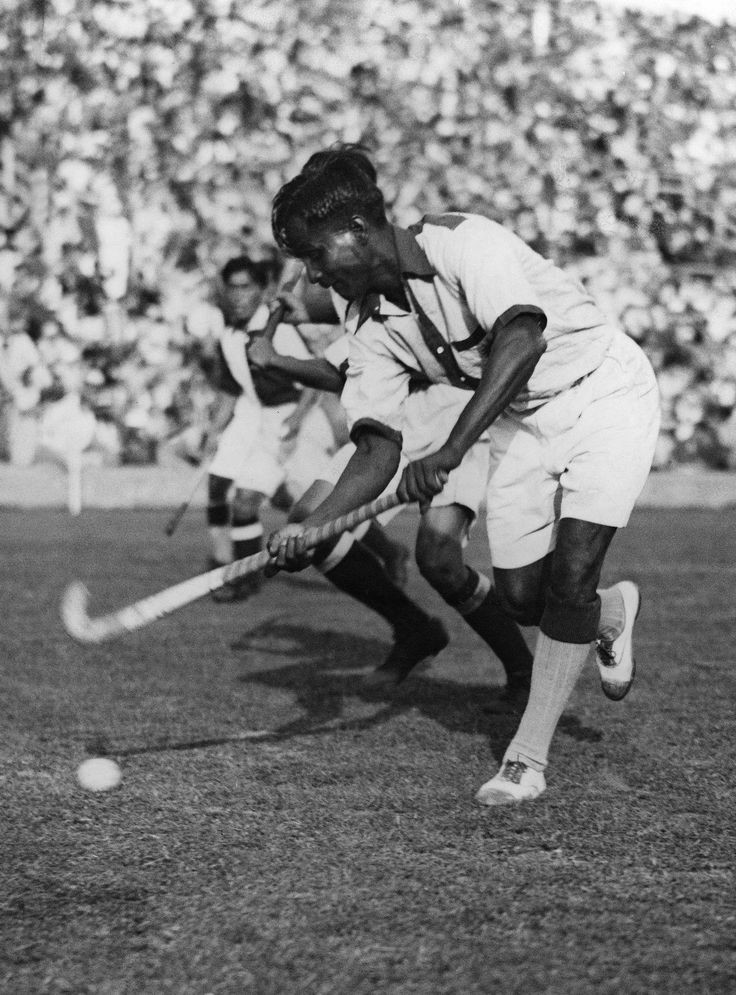
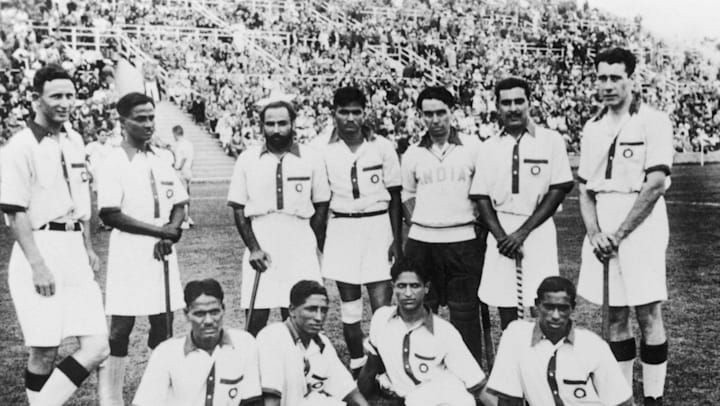
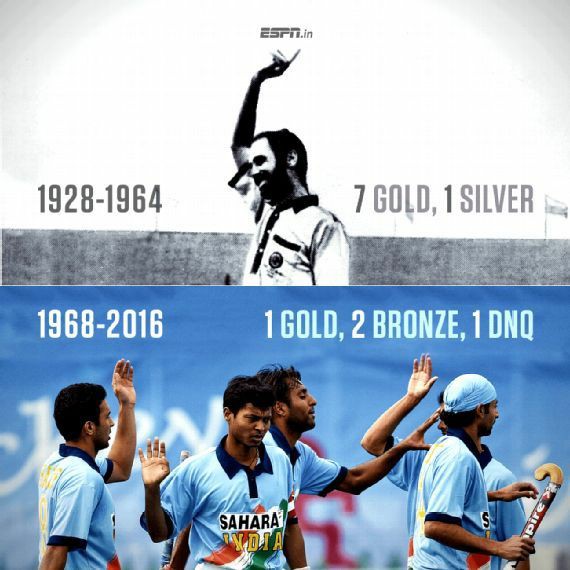
Some people called Hockey as the National Sport probably because of the international success that hockey gained since it’s Olympic debut in the early 20th century. In 1928, the Indian men’s hockey team made their debut at the Olympics, and won 6 gold medal between 1928-1956. Though their performance declined later.
Similarly, some people believe Kabaddi as the National Sport of India because Kabaddi too is most popularly played in India. Kabaddi is one of the Oldest sports in our country.
But the truth is that the national game of India is neither Hockey nor Kabaddi. There is no sport which has been declared or recognised as the National Sport of India till date.
One of the most ancient games in the world — a crude form of the sport was played in Egypt some 4,000 years ago — the history of hockey can be traced back to 1527 in Scotland. Back then, it was called ‘hokie’ – where players hit around a small ball with sticks.However, the first version of modern-day field hockey was developed by the British sometime between the late 18th and early 19th century. It was introduced as a popular school game then and made its way to the Indian army during British rule in the 1850s.In the next few decades, national competitions like the Beighton Cup in Calcutta and Aga Khan tournament in Bombay (now Mumbai) popularised the sport further, especially in erstwhile provinces of Bombay and Punjab.
Ask any sportsperson, the pinnacle of sporting success for them is to stand on the Olympic podium and see their country’s national flag rise in that hallowed arena. It is that dream that pushes them into making sacrifices as they chase Olympic glory.The London Olympics saw India finally take steps towards realising its true potential at the Olympics. Abhinav Bindra had raised the bar in Beijing with a first ever individual Gold medal.Just one individual Gold in a country of a billion plus people. Even the six medals at London 2012 were nowhere close to the tally India should be aspiring for. But at least it was a start.
However no story of Indian sport is complete without a look back at a rich legacy. The Champions of today are inspired by past generations who have coveted Olympic glory. Only a handful have managed to attain the ultimate glory in world sport, an Olympic medal.Yet the story of India at the Olympics begins with Hockey. Very rarely has a sport been as synonymous with a country than India and Hockey. It is a rich legacy, 8 gold medals, six of those consecutive wins across four decades.
Dominance in the world of hockey
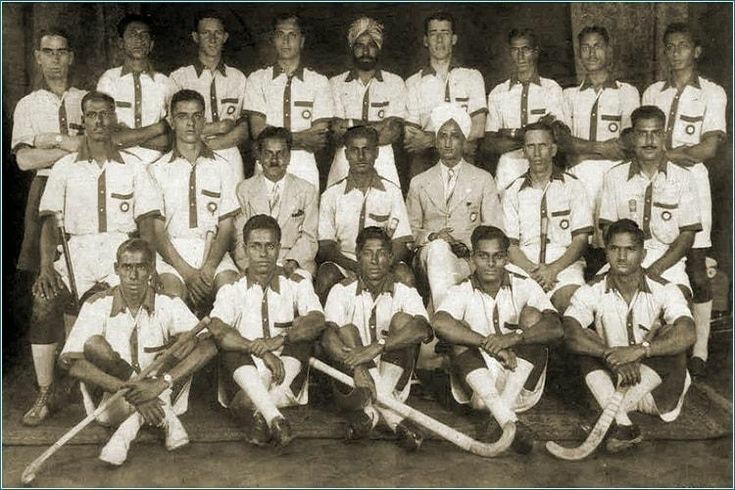
After a rocky relationship with the Olympic Games until 1924 — hockey was only played in 1908 and 1920 and dropped for the other editions — the presence of a global sports body (FIH) ensured that hockey gained permanent Olympic status starting Amsterdam 1928. The Indian Hockey Federation applied and earned an FIH membership in 1927, thus ensuring that the Indian hockey team would play its first Olympics in 1928.It was the beginning of a legacy – decorated with eight gold medals – a record till today.
The Indian hockey team clinched the Olympic gold medal in its first attempt in 1928. India played five matches, scoring 29 goals and conceding none, with Dhyan Chand scoring 14 of them.The hockey wizard became the cornerstone of the Indian hockey team as it won two more gold medals in 1932 and 1936, completing a hat-trick of Olympic hockey golds. Dhyan Chand was made captain in 1936 in what would prove to be his final Olympic Games.
Unfortunately there were no Olympics in 1940 and 1944 due to the Second World War and that was the last the Olympics saw of Dhyan Chand. In 1948 a newly independent India had to battle not just strong teams but also cope with the exodus of players to Pakistan.When the Olympics returned after World War II in 1948, India found a new genius in the legendary Balbir Singh Sr. as he steered them to a second hat-trick of Olympic gold medals in 1948, 1952, and 1956, this time as an independent nation. The period was one of the most significant in the history of hockey in India. While Pakistan halted the gold run in the final at the 1960 Rome Olympics, India would ascend to the top step at Tokyo 1964. However, it was apparent that India’s domination of the sport was weakening. The Indian hockey team had won silver at the 1958 and 1962 Asian Games, before finally winning gold in the 1966 edition. However, India only managed a bronze at Mexico 1968, in what was then their lowest finish in the Olympics.
In 1968 and 1972 the team returned with a Bronze medal while Montreal saw the team draw a blank, unable to adjust to a change from grass to artificial turf. The pain of those campaigns is expressed by 3-time medallist Harbinder Singh, Ashok Kumar, Aslam Sher Khan and Dr Vece Paes. Hockey expanded its reach beyond the Olympics with the first Hockey World Cup held in 1971 in Spain. Though Pakistan beat Spain to win the title and India finished third, the sport was steadily gaining popularity in Europe, and innovations were underway.
While India’s representation in global hockey was largely restricted to the men, the women’s team made its first appearance in international competition at the inaugural women’s Hockey World Cup in 1974, finishing a creditable fourth.There seemed to be an upturn when the men’s team won its only World Cup title in 1975.
1980s-2008: A period of declination of performance
The 1980s actually began well for the Indian hockey teams.The men’s team took advantage of a depleted field to win their eighth Olympic gold at Moscow 1980 while the women’s team finished fourth in what was the first edition of women’s hockey at the Olympics.At the 1982 Asian Games in New Delhi, where women’s hockey was played for the first time, the women’s Indian hockey team clinched a historic gold at home while the men’s team won silver.
The introduction of hockey at the Commonwealth Games in 1998 provided another platform for global hockey. The Indian men’s and women’s teams finished fourth in the inaugural edition.The decline of Indian hockey hit rock bottom in 2008 when the men’s team, for the first time since 1928, failed to qualify for the Beijing Olympics.
Revival of Indian hockey
After the disappointment of 2008, the men’s Indian hockey team responded by returning to the podium at the 2010 Commonwealth Games, winning silver and the 2010 Asian Games, where they won bronze.The men’s Indian hockey team qualified for the 2012 London Olympics. Though India ended last, it represented a small bit of progress.
In the years since, Indian hockey seems to have found its feet again.The women’s team, led by Rani Rampal, won silver at the 2018 Asian Games, achieving their best ranking of ninth in the world the same year and qualified for a second-consecutive Olympics in Tokyo the following year.The men’s Indian hockey team has imbibed an attacking philosophy under new head coach Graham Reid and young captain Manpreet Singh.India played their first FIH Pro League campaign in 2020, winning games against the best in the world like Belgium, Australia and the Netherlands and rising to fourth in the world rankings, their best in history.
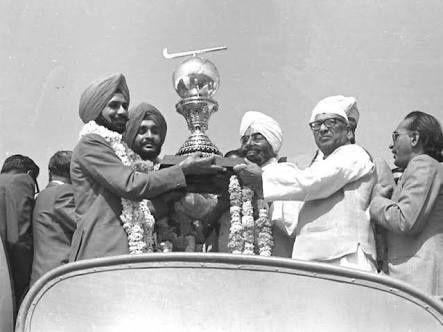
Indian men’s hockey team today displayed a great game of counter-attacking play as it won defeated Germany 5-4 in the bronze medal play-offs at the Tokyo Olympics today. Indian men’s hockey team won an Olympic medal after a gap of 41 years. India’s last of the eight Olympic golds came way back in the 1980 Moscow Games.The eight-time former gold-winners, who battled a heartbreaking slump in the last four decades, made the resurgence of the last couple of years count in the best way possible with an Olympic medal.
People face an extreme, irrational and persistent threat of water known as ‘aquaphobia’. It’s a fairly common fear which differs in severity from person to person. Traveling through waterways, going near swimming pools, water bodies or even entering a bathtub might seem life threatening to some people.
Aquaphobia is a specific phobia. This is an irrational fear of something that doesn’t cause much danger. You may have aquaphobia if you find that any source of water causes you an excessive amount of anxiety. This can include a swimming pool, a lake, an ocean, or even a bathtub.
The most common cause of aquaphobia is a previous negative experience. If you have been through a near-drowning experience, shipwreck, or even a bad swimming lesson, you are more likely to develop a phobia of water. Learning to swim is a rite of passage for many children, and frightening experiences are common.
The word “thalassophobia” refers to a fear of the ocean or other large, deep bodies of water. Thalassophobia is different from aquaphobia, which is a fear of water itself. Aquaphobia can include a fear of being in any body of water, including small ones.
Some of the more common symptoms of aquaphobia include: an immediate feeling of intense fear, anxiety, and panic when thinking about water. a persistent, excessive, or unreasonable fear when exposed to water. recognizing that the fear of water is excessive or out of proportion to the actual threat.
Aquaphobia is highly treatable. Exposure therapy and CBT are effective treatments that help reduce feelings of fear, anxiety, and panic in people with specific phobias.
We all are familiar with the term Pollution and have heard and observed it lot of times. But here , I want to discuss different types of pollution’s effect on our Environment and health. whether it be air pollution, water pollution , noise pollution ,soil pollution or any other pollution. it has some serious effect on our environment.
As we all know that pollution is an undesirable change in the physical or chemical change in our environment due to accumulation of harmful substances and these substances who causes this pollution are called pollutants.
Now let us discuss some adverse effect of different types of pollution in our environment :-
Effects due to air pollution: it is the one of the most common pollution it is caused due to unwanted particles in air. Major pollutants are carbon monoxide, oxide of Sulphur, hydrocarbons ,carbon dioxide etc.
Carbon monoxide : carbon monoxide has a damaging effect on us. it has affinity with haemoglobin and forms stable compound , due to which oxygen capacity of haemoglobin reduces.it can cause headaches, exhaustion and other effects . it can even cause death.
Oxides of Sulphur : it causes breathing difficulties and diseases like asthma and bronchitis. It is also harmful to plants and animals. Sulphur dioxide with Sulphur trioxide and water forms Sulphorous acid and Sulphuric acid. which causes acid rain. acid rain can damages various buildings plants and aquatic life.
Hydrocarbons: They are very dangerous and many hydrocarbons like methane when oxidizes with Carbon dioxide can increase amount of carbon dioxide in nature. Alkyl nitrates when reacting with molecules in atmosphere can affect blood kidneys and nervous system.
Carbon dioxide : high concentration of carbon dioxide can cause global warming and due to global warming it affects our climate and other things.
2. Effects due to water pollution : it is due to the unwanted substances in water bodies. which make it unfit and harmful for use.
Effects of nitrates : Excessive presence of nitrates in water is unfit to drink , especially for infants. This excessive nitrates is due to the use of hydrogen fertilizers.
Effect of pesticides: pesticides can easily penetrate our skin. it can also cause lung related problems.
effect of domestic wastes : it contains a lot of organic matter in forms of soap , detergents and food. such pollutants causes water pollution and can lead to diseases like typhoid cholera Diarrhoea. organic waste from various industries enter in water bodies and cause excessive growth of aquatic vegetation and decreases oxygen content of water.
3. Effects due to soilpollution : it causes loss of natural nutrients , soil organic matter and imbalances the nutrients present in the soil. crops that are grown in contaminated soil can absorbs those toxic material. it weakens the strength of trees. soil erosion is a very common problem.
4. Effects due to Noise pollution : Noise pollution occurs due to unwanted disturbing sound that causes problems to us. Excessive exposure to noise pollution can weaken our ears , can cause headaches , stress and anxiety. Noise pollution can damage ecosystem and also wildlife.
5. Effects due to radiation pollution : it is caused due to contamination of air , water with radioactive materials.
Effects of radioactive pollution: Radioactive pollution is a very dangerous and harmful pollution. it can cause diseases like cancer , haemorrhage etc. it can cause infertility of soil . radioactive pollution can damage plants it can affect their life.
nuclear disaster : a devastating fire in the reactor of chernobyl nuclear power plant took place on 26 April 198+6. this resulted in clouds of radioactive smoke affecting nearly 20000 people. Even today many people are suffering due to that.(veer Bala Rastogi , 237).
These all pollutions stated are very harmful for us . we should follow certain steps to decrease their effect in our environment .
Even after living or residing in a city, a person can start his or her business in agriculture industry and it is sustainable also. The business will provide food into the busy and populated areas and cities. Urban Farming.
WHAT IS URBAN FARMING?
In simple terms Urban farming is the process of producing or cultivating food inside the city limits. This business has both pros and cons. This business faces challenges but it also offers many benefits to the city, like increased food security, decreased waste, community involvement and many more. Urban Farming is also known as Urban Gardening or Urban Agriculture and it means the practice of cultivating, processing and distributing food in and around cities or towns or urban areas. It involves animal husbandry. bee keeping, horticulture, aquaculture etc.
NEED OF URBAN FARMING:
Provide Food to the growing population
Reduce pressure on the traditional methods of cultivation
Help improve Quality of Life
Reduce Food Security
Reduce Environmental Impact
Help improve the landscape of the city
TYPES OF URBAN FARMING
Urban Farming is of many types, like: Street Landscaping, Tactical Gardening, Backyard Gardens etc.
VERTICAL FARMING
Backyard Gardens: It generally means growing food in the property of a home and sharing it with family, friends or neighbors.
Street Landscaping: Improving the landscape of the streets with the help of living street design or community gardens etc.
Tactical Gardens: Utilizing small spaces available in a practical way (that doesn’t involve much expenses). Ex: Keyhole Garden which replace parking spot in streets.
Forest Gardening: Gardens in urban forests including crops, fruits or herbs or nuts and even vegetables.
ROOFTOP GARDENS: Using spaces of roof for growing food. This method helps in reducing Urban Heat Island effect and help in improving the quality of air.
Green Walls : Using the space on internal and external walls to grow food.
Vertical Farms: Planting or cultivating vertically for reducing the usage of land and land footprint of agriculture.
Animal Husbandry: Raising animals for food and cities also allow residents to raise a limited number of such animals.
Urban Beekeeping: It is a very common hobby and has many benefits for the local environment.
Aquaponics: Raising aquatic animals such as fish etc. and in urban areas this can be done by capturing storm water and creating self sustaining system.
ROOFTOP FARMING
IMPORTANCE OF URBAN FARMING:
Urban Farming is an essential part of urban ecological and urban ecosystem and helps in improving the sustainability of the area. It plays an important role in Urban management system . A growing city will produce large number and amount of waste and urban agriculture acts like a solution for solving this issues by turning urban wastes into productive resource system. It helps in bringing original and nurtitious food to the local communities which has many direct health benefits. It reduces the risk of harmful conditions and vulnerability to get exposed to different chemicals used for increasing the longevity of the food and fruits.
Give whatever you are doing & whomever you are with the gift of your attention – JIM ROHN .
Rightly said by him as with concentration you can achieve anything & everything . Concentration means focused attention, and it has many uses and benefits. It assists in studying, enables faster comprehension, improves the memory, helps in focusing on a task, job or goal, and enables you to ignore meaningless and irrelevant thoughts. When this ability is strong, the mind obeys you more readily and does not engage in meaningless thoughts. This ability plays an important role in meditation, gaining mental mastery, and attaining peace of mind. Without it, the mind just jumps restlessly from one thought to another, not allowing you to meditate properly. everybody wants to increase their concentration power , but this power needs some hacks to grow , so let me share few facts with which you can grow you concentration .
GET SOME ‘GREEN TIME’ !
Each one of us knows that when we are surrounded with green , we feel refreshed & energetic . A dose of nature can work like a doctor for increasing concentration . suggests that exposure to natural surroundings, including green spaces, may prove beneficial for children’s brain development. In a study, children aged 4–5 to 7 years of age with more green space around their homes scored better in attention tests. These results underline the importance of expanding green areas in cities to support children’s health and brain development. exposure to greenery & increasing in concentration won’t stop at childhood , research has shown that colleges & institutes which are surrounded with greenery supports better mental health of children .
You may not have the luxury of a rooftop garden or an office laden with plants, but spending time outside someplace green, or eating your lunch in the park each day, could make a significant difference to your concentration.
2. TAKE a KITKAT BREAK !
People forget to take breaks , & this is what makes them stressful . A study found that people who read emails throughout the day switched screen twice as often and were in an ongoing state of high alert with a constant heart rate. When email was removed from these people for 5 days, their heart rate returned to a natural, variable one. The authors concluded that taking an email vacation significantly decreases stress and improves concentration and focus.
Few examples of break are here :
Take a notification break : Everyone have observed that when ever you get notification from your phone you pic it up & check that notification . This is a thing which breaks your concentration . The team explained that task performance takes a hit because humans have a limited capacity for attention that needs to be split between tasks. The researchers also emphasized that just being aware of a missed text or call can have the same effect. If you need to stay on track and focused, it might be worth either turning off your cell phone, setting it to silent, or putting it away somewhere that you cannot see it.
Social Media break : One should take social media break , because every time one wants to check their account , which break you concentration & make you walk on a less focused path .
Work break : Excess work gives you tension , which lets you less concentration & more confusion .
Researchers recommend taking:
a mid-morning break to replenish concentration
better breaks by doing something you enjoy, which should make your break more restful, provide better recovery, and help you to come back to worked focused
frequent short breaks to facilitate recovery
Taking breaks earlier in the day and doing preferred activities lead to better health, job satisfaction, and revival of energy, motivation, and concentration.
3 . IMPROVE YOU WELL BEING : You know what , you food , sleep habits , working habits tells how concentrative you are . your habits of living you life decides you concentration level . Let me give you some tips to improve your concentration :
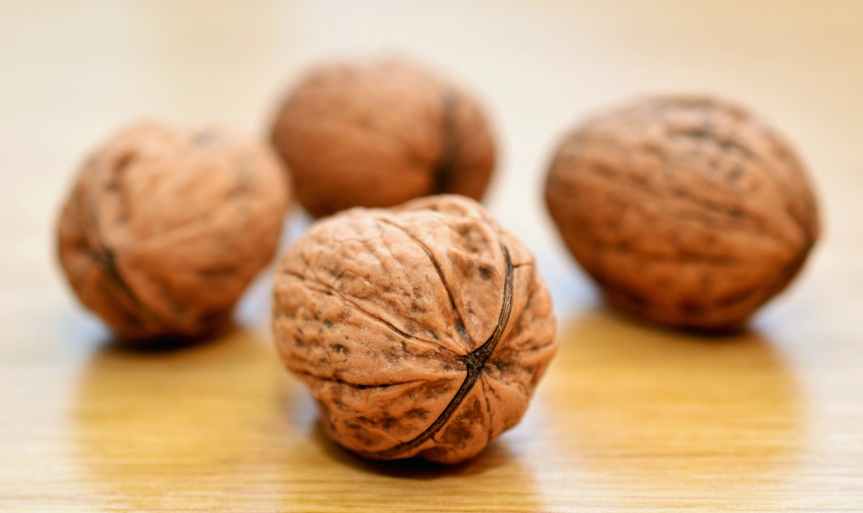
Walnuts may improve performance on tests for cognitive function, including those assessing information processing speed, memory, and concentration.
Avocados. Consuming one avocado every day may help improve cognitive function due to an upsurge in lutein levels in the eye and brain. Researchers uncovered that eating an avocado daily enhanced measures of cognitive skills, including processing speed, memory, and attention.
Chocolate — or specifically the cocoa bean — is rich in flavanols, which are compounds that have neuroprotective effects. Cocoa flavanols may help to improve cognitive processing speed, working memory, and attention when ingested for between 5 days and 3 months.
The mountains show the raw beauty of nature, extreme calmness and offer so much more than you can imagine. Feel the sun on your face and back and enjoy the cast number of activities provided by the mountains…. It can be canoeing or hiking or climbing or fishing etc. which will never make you regret your decision to travel the mountains. Go and Retreat on your next vacation.
REASONS TO TRAVEL MOUNTAINS :
Health Benefits: Travel to mountains can be very therapeutic with the miles stretching greenery and beautiful sounds of birds.
Finding Peace: Mountains help you find your inner peace in life and give the opportunity to discover and explore the beauty of nature.
Mesmerizing Beauty: The terrain is rough and reaching some places can be tough but you will get to feel that because you will be mesmerized with the beauty of the mountains. This beauty helps in healing, giving peace and a whole pure feeling.
Tranquility and Peace: People head to mountains when they need some peace and space. The mountains take you to a uncomplicated lifestyle. 10 minutes of meditation can heal your soul and give the peace that you want.
Pure Air: One of the best things about mountains is the pure air which you won’t find anywhere else. Take a deep breathe and feel it immediately. You will get to know and feel the difference. You will surely miss this fresh air once you return to the city life.
Adventures: Mountains offer a range of adventures which will add better experiences to your trip. And hiking is one of the best and most amazing adventures to do in mountains.
Welcoming Nature of the People: The people of the mountains welcome you with a warm smile and everyone you meet in the mountains will be very polite and helpful. You will not feel like a stranger there.
Disconnect:Mountains give you the perfect chance to escape from the chaotic lifestyle and everyday rush. It is important for everyone to take a break and enjoy their life with a free time.
Build Relationships: Travelling to mountains give a great time to spend with your family and friends. Mountains offer many activities and adventures which can be done in groups and here you can do them with your family and friends and even other travelers which gives you an opportunity to build relationships.
Not a Sight but an Experience: The best thing about the mountains is the experience that you will get and not just the scenes. You will understand and explore nature; come across different people and welcoming locals; adventures and events; fresh air and purity and peace. You will be disconnected from the entire chaos and hectic lifestyle and will get a perfect vacation filled with purity, tranquility and adventures.
The adrenaline rush from the peaks, the serene tranquility and the heights of mountains will fill your heart with happiness and joy. Mountains really bring out the best from you, set your soul free and happy. The tall peaks, the misty environment, the warm locals- a retreat to the mountains brings you back to the city with a clearer mind and a happier heart.
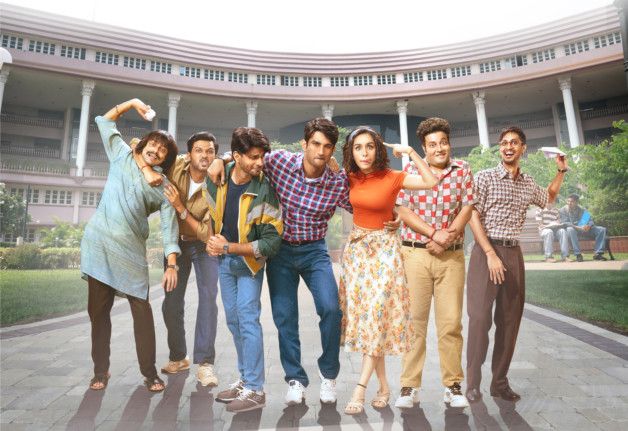
Chhichhore, the movie which taught us that, suicide is not right option, movies which taught us “ NEVER GIVE UP”, we just have to keep going, doing our best just keep going and enjoy your life cause these moments are never gonna come back.
In life things we love the most always disappears quickly and its life.
The film tells the story of Aniruddha “Anni” Pathak, a middle-aged divorcee whose son Raghav tries to commit suicide but survives, though he is in a critical condition for his unwillingness to live out of fear he would be called a “loser”. Desperate, he goes against the wishes of his former girlfriend turned ex-wife Maya’s wishes to recount his own journey in 1992 as a “loser” in a gang of six; as he continues along to convince Raghav, the other five receive news of the tragedy and decide to join their friend in his pain to complete a story they never fail to cherish as a lesson in their life.
Since childhood we are listening this, from our parents, family members and relatives, if you win this competition, I’ll buy you your fav dress or I’ll buy you motorcycle, if you get first rank in your school or college test, I’ll buy you smartphone, if you got selected or if you pass the test I’ll give you this or that or whatever you want I’ll give you, blab blah. But no one told us that if you didn’t won or if you got second rank or if you failed the test, it’s okay, it’s completely okay, atleast you have tried and worked very hard for this. What’s big deal if you didn’t got selected, the most important thing is, you tried and didn’t give up easily. Life is all about second change for them who don’t give up easily and try until they give their best. Let’s say that, it wasn’t your best and promise yourself that you will try very hard to give your best and trust yourself, if you think you can do it then you definitely can and one day you will definitely became successful and will achieve your dream.
Its human nature that we got disappointed very soon, we think like we did so much hard work for this and after all this what we got is failure.
Its life and in life things always don’t go as we planned, just trust yourself and try harder, you may struggle but it won’t matter anymore. If you feel like quitting, think about the reason why you started.
NEVER QUIT. NEVER GIVE UP. FLY IT TO THE END.
Here are some memorable dialogues from Chhichore we will always remember
1. “Tumhara result decide nahi karta hai ki tum loser ho ki nahi… Tumhari koshish decide karti hai!”
2. “Success ke baad ka plan sabke paas hai… lekin agar, galti se fail ho gaye… toh failure se kaise deal karna hai… Koi baat hi nahi karna chahta.”
3. “Hum haar jeet, success failure mein itna ulajh gaye hai… ki, zindagi jeena bhool gaye hai… Zindagi mein agar kuch sabse zyada important hai… toh woh hai khud ZINDAGI.”
4. “Doosron se haarke loser kehlane se kahin zyada bura hai…khud se haarke loser kehlana.”
5. “I am a failure, mera kuchh nhi ho sakta… But we forgot success doesn’t come at once.”
6. “Dost jinke sath hum haste hai, rote hai Par zindagi jeena sikhte hai.”
Kickresume is a resume builder tool that lets you choose from pre- designed resume and cover letter templates. Kickresume is by far the most easy to use and effective resume website which will help to make your resume look more elegant, well designed and impressive. Kickresume gives you amillion design combinations to improve your resume. Whether you are nurse or an engineer it doesn’t matter with kickresume your resume will always stand out.
“Being a college student who is transitioning to the work life, I consider Kickresume the most helpful tool available. It is very user-friendly with a variety of designs tailored to your personal preferences and profession. It doesn’t get any better than this!!!“
It offers templates for various professional arenas. Simply choose your profession and further customize it according to your needs!
2. READABLE
While creating your resume it is extremely necessary to view it from an employer’s perspective. Is the format clear? Does it hold attention? Is it easy to read and understand? Readable can help. The tools scores your content based on various aspect such as sentence construction, structure and more!
Readability is about making content clear and easy to understand for the largest audience possible. Focusing on readability increases the chance that your target audience will actually read and interact with the content you publish. For this reason, readability should be a natural part of your content management.
3. CANVA
Of course, you’ve heard of Canva choose from a plethora of templates to add that touch of finesse to your own resume. Customize your resume by changing elements, colour, and style. While it can be a lot of fun customizing your resume remember to it professional, sleek, and clean.
4. GRAMMERLY
Yes, this tool is nothing short of a lifesaver when it comes to assignments. But guess what? You can also use Grammarly to create grammatically flawless application and resumes. it will make sure that everything you type is effective and mistake-free, it will help you write mistake-free in not only resume but also in Gmail, Facebook, Twitter, LinkedIn and many other app you use. Even the text messages also!
It also check the tone of your application, making it suitable for professional and formal use . No silly spelling errors anymore, yay!
Grammarly isn’t just a safety net. You’ll get detailed explanations for all your mistakes to help you avoid making them again in the future.
Hockey is a sport in which two teams play against each other by trying to manoeuvre a ball or a puck into the opponent’s goal using a hockey stick. There are many types of hockey such as bandy, field hockey, ice hockey and rink hockey.
In most of the world, the term hockey by itself refers to field hockey, while in Canada, the United States, Russia and most of Eastern and Northern Europe, the term usually refers to ice hockey.
Games played with curved sticks and a ball can be found in the histories of many cultures. In Egypt, 4000-year-old carvings feature teams with sticks and a projectile, hurling dates to before 1272 BC in Ireland, and there is a depiction from approximately 600 BC in Ancient Greece, where the game may have been called kerētízein or because it was played with a horn or horn-like stick .[10] In Inner Mongolia, the Daur people have been playing , a game similar to modern field hockey, for about 1,000 years.
Most evidence of hockey-like games during the Middle Ages is found in legislation concerning sports and games. The Galway Statute enacted in Ireland in 1527 banned certain types of ball games, including games using “hooked” (written “hockie”, similar to “hooky”) sticks
By the 19th century, the various forms and divisions of historic games began to differentiate and coalesce into the individual sports defined today. Organizations dedicated to the codification of rules and regulations began to form, and national and international bodies sprang up to manage domestic and international competition.
Communication is the mode of exchanging our feelings and ideas with others. It paves the way for the listener to understand and for the speaker to express their thoughts. Everyone can communicate with others but whether it is effective or not is decided by the way you convey messages. This requires communication skills. It is the ability to express and share thoughts and feelings effectively. It is one of the main soft skills that are very much essential to maintain a good rapport in the workplace. Communication may be of any form – spoken, written, visual, or even non-verbal communications like body actions. In general, it is a combination of all these. Here are few ways to upgrade your communication skills.
PRACTICE ACTIVE LISTENING
Good communicator is always a good listener too. Try to listen to what others are saying so that you can communicate with those developed points and answer the questions raised as well. Don’t avoid listening or get distracted to think about what you have to respond to next. When you start paying close attention to others you become an active listener and this quality is very important to improve the skill.
KEEP IT SIMPLE
Use simple words and sentences to convey your essence. Don’t show off your vocabulary and use complex words. It will not reach everyone as every listener may not be as skilled as you. Make sure that everyone understands what you are trying to convey. Try to engage the audience by asking questions and feedback to them. A mount hill of emotions or a vague expression will not get your attention. So, manage your emotions while you deliver something.
MAINTAIN COHERENCE
While communicating ensure that you start and end with the key points and gist. Maintain the coherent sequence of ideas from start till end. Don’t make it a mess by mixing up all the points. Be clear and precise in what you are delivering. Add short stories in the middle to have the attention of the audience throughout the session. Don’t be so spontaneous, pause in between. Stick on to the timing. Don’t finish it very soon or drag it so long.
NON-VERBAL COMMUNICATION
Non-verbal communication is equally important as verbal communication. Your audience is going to judge you and your skills mostly based on this. Your body language conveys almost 50% of your ideations. So, try to have good postures and gestures. Make eye contact with the audience. This means that have eye contact with every person at least once when you communicate. Don’t be specific to a particular place, utilize most of the space provided to you.
OTHER FACTORS
Friendliness – This quality shows your positive attitude and drags others towards you to listen.
Confidence – Have full faith in what you do. It becomes difficult to make others understand when you are not confident enough.
Clarity – Use a clear tone of voice and volume to express the feelings more effectively. This is essential as it gives life to your speech.
Empathy – Be empathetic towards others and try to understand their emotions. Respect others’ opinions and views and give equal concern to them.
These are the few tips to enhance your communication skills. Practice this in your daily presentations and become an expert. Happy learning😊.
We all know that the world is heading towards deforestation, global warming, drought etc., What is the major cause of this global changes? It is us. We humans are quite selfish when it comes our own deeds. We keep on cutting the trees, increasing pollution, high useage of plastic etc. What can we do to make our earth lively and healthy? There is no other remedy than planting trees. Yes, there reason we live is the trees. Without them we won’t be alive. Let’s see about planting trees and its importance.
Why trees are important to us?!?!
Trees are important to the environment because they provide oxygen and they act as carbon sinks. A carbon sink is a natural or artificial body that stores carbon dioxide. The more trees you have, the more carbon dioxide that you can store. This is because they take in carbon dioxide and then release oxygen, which allows them to store more carbon dioxide.
Planting trees has several benefits, including the fact that they help to reduce greenhouse gases (GHGs). They also help to reduce the amount of carbon dioxide in the atmosphere. As a result, planting trees can help to mitigate the effects of climate change.
Trees are also important for the environment because they provide a habitat for wildlife. They also help to improve the quality of air and water, and they provide a home for birds, insects, and other small animals.
When you plant a tree, you are helping to reduce the amount of carbon dioxide in the atmosphere. So, it is important that you plant a tree. The more trees you plant, the more you will be helping the environment.
What are the trees can be planted??
There are several different types of trees that can be planted. Some of these include the following:
Oak trees, Redwood trees, Pine trees, Alder trees, Fir trees,Bamboo trees,Evergreen trees, Deciduous trees.
METHOD OF PLANTING TREES:
Dig a big hole, put the rootball in, cover with dirt.
This is probably the most common method. It’s simple and easy, but it’s not the best. The tree will grow fine if you fill the hole with a small amount of compost. This will help the tree get established quicker and, in the long term, will make the tree more resilient to drought. But it’s harder to dig a big hole, and it’s hard to get the compost in there without disturbing the rootball. It’s also worth noting that the tree is going to be much happier if you can put the hole in a slightly damp area.
Do water the plant regularly until its becomes a tree. You may plant whatever tree you like and the most important thing is to maintain them in a good condition. Everybody says plant trees, save earth, save water. But in reality, how many of us has really planted trees? Think about it and find the best answer yourself!!
In India, it is increasingly felt that education system is highly examination oriented. Exams and tests are held at regular intervals. Success in the exams is at index of once intelligence. Exams do cause a lot of stress rather it can be said that a student’s academic future simply depends on the marks scored by him. His admission in reputed college depends solely upon his performance in examination.
As a result, students finds studies stressful, monotonous and exasperating. Unachievable targets set by the parents and perceptors, unbearable peer pressure, cut throat competitions makes one question the usefulness of the examination system. In my sense, it is all futile. We cannot deny the fact that it is resulting into spate of suicides, absenteeism and even the percentage of dropouts has increased.
Exams should be cancelled and replaced by less stressful and more fruitful forms of assessments for several reasons including:
1) They do not define one’s skills and capabilities: Thomas Edison once said: “Tomorrow is my exam but I don’t care, a single paper can’t decide my future” and we all know what Edison achieved is his life, other successful people followed such a path and if they cared much about exams, they surely would not have achieved what they did.
2) They do not differentiate between students: Exams do not depend on someone’s preparation only, they are also dependent on their physical and mental health, and their social situation; you most luckily would not get a second chance if you developed a diarrhea during exam, such a factor would decide whether you’re among best or worst students no matter how intelligent you are, and how much you prepared for the exam. So you see how unfair the whole system is!
3) Cheating: The broken educational system values more grades than learning and that what obliged students to try any means –sometimes illegal ones- to pass to the next level, history is full of people who try every trick to cheat at exam time, modern technology also has made it much easier for students to pass their tests with less efforts and students’ last issue nowadays is knowledge.
4) Stress: Exams take a toll on a student’s body and mind through the forms of stress and anxiety and you might end up in a mental institution. Because of exams, a medical student was caught eating pages from one of their recommended texts since he failed to absorb information from taking his lectures too literally.
It is also felt that examinations don’t prepare students for life. They simply enable the students to become reasonably well informed, fact churning individuals. There should be a system of consistent evaluation throughout the year and, the examinee should not be tested only for facts and information acquired by him but should be tested for life skills. So, the examination system should be abolished instead of examinations being conducted at the end of the academic session.
It is rightly said woman is the backbone of society. From times immemorial, woman have been considered inferior to man in a patriarch society. Man has always treated woman not as an equal partner in life but as a mere slave. Biological superiority of man over woman has made him callous towards her. She has always being confined to the four walls of the house. Man has just treated her as an object of gratifying his sexual lust and physical desires.
Women have been denied most of the rights that give dignity of human beings. She has suffered a lot because of the whims and prejudices that man harbours towards her. But at the same time she has been called the better half of the man but unfortunately these are just sugar coated words. He abuses her physically, sexually, morally, economically and socially. There is no doubt that she has certainly been the victim of discrimination on the basis of sex. However, the scenario is changing very fast. The Constitution of India protects women’s rights by granting her equal status.
Woman have played a vital role in Indian struggle for freedom. Today, women are becoming more and more vigilant about their rights. They have discarded the Pardah system and have crossed the boundaries by exposing them in outer world. They are jostling with men in every walk of life braving their worth.
Education, political awareness and the impact of western culture have made her more vigil and aware about her rights. The concept of superiority of man is tottering. Today, woman have proved to be better doctors, administrators, pilots, academicians then many of the male counter parts. But despite this she is at the lower rung of the ladder in society. Though she is gaining economic independence but lately she is also exposed to sexual exploitation in offices and working places. Ironically, man still regards her as an unusual commodity.
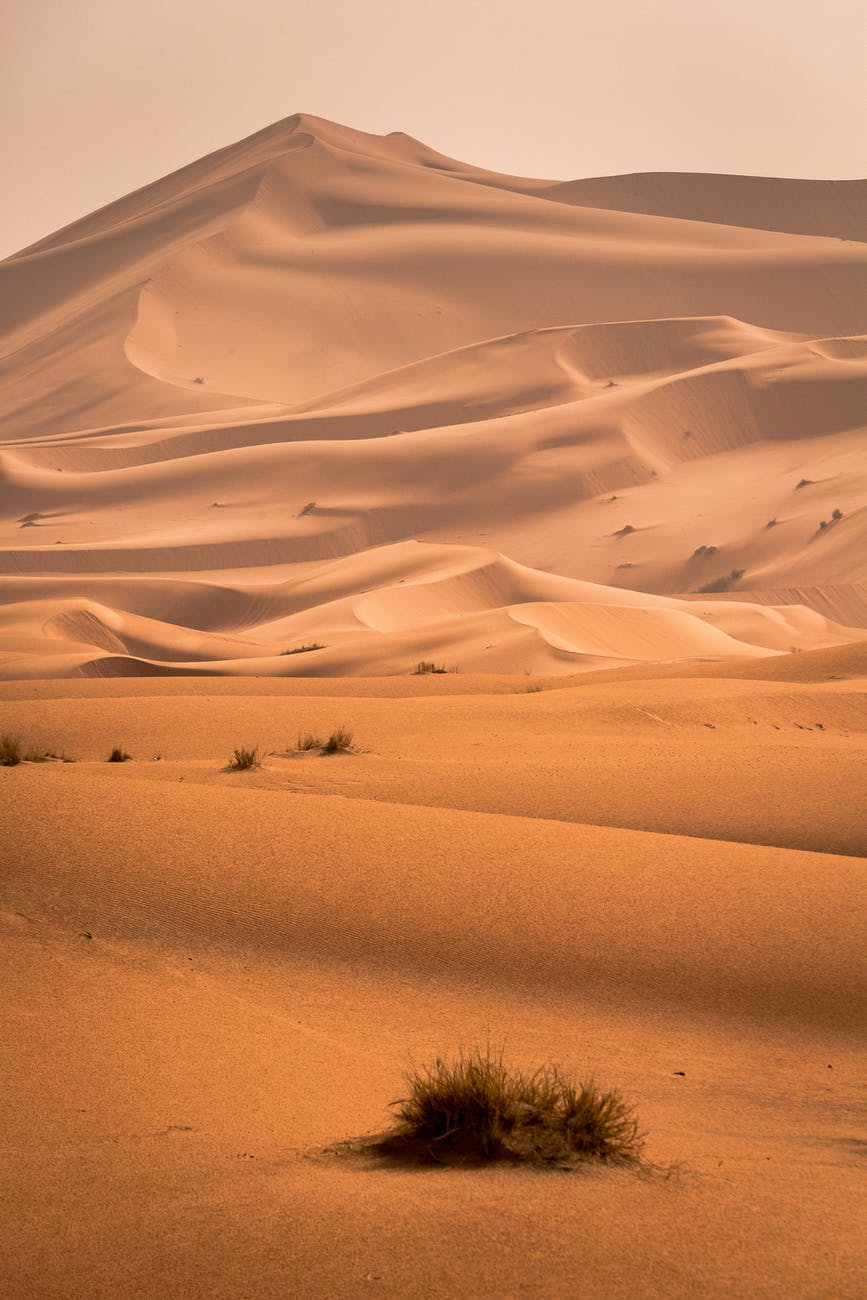
A desert is a stretch of land that can be rocky or sandy, might have zero to some vegetation, might be habitable or might not be live-able but most of all a desert is defined on the basis of amount of precipitation it receives. According to national geographic, a desert receives no more than 25 cm of rainfall per year. Now, let us have a look on the distribution of deserts in the whole world and the possible reasons of their occurrence in those places.
There are 5 types of deserts in the whole world-
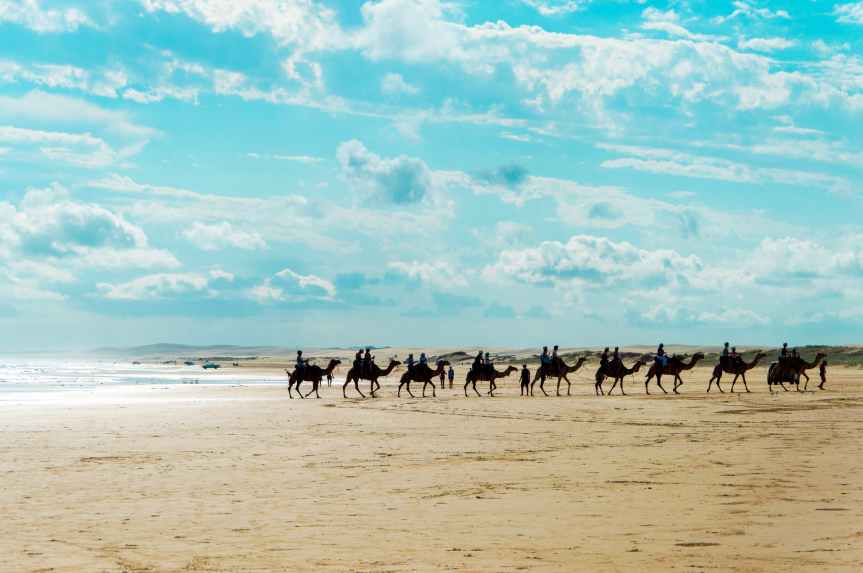
Sub tropical deserts- Due to high temperature in the equator, the air gets heated up and absorbs moisture and rise. It reaches high altitudes and the moisture precipitates and comes down as rains. The air cools and the heated air moves away from the equator reaching the tropics. Upon reaching the tropics it cools down and descends where it warms again. Thus it occupies the space meant for moisture laden air and there is no rains in the tropics leading to the formation of deserts in the region. Examples are The Sahara desert in Africa, the Arabian desert, the Syrian desert, the great Victorian desert in Australia, The Thar desert in India. The Sahara desert is the largest sub tropical desert
Coastal deserts- These type of deserts are formed due to the cold oceanic currents that create low pressure in the surrounding regions and the moisture laden winds that should have travelled from the coasts to the continents ends up travelling away instead. Such deserts are formed in the western coasts of continents in lower and middle latitudes and in the eastern side in the upper latitudes (due to the anticlockwise flow of currents in Southern and the clockwise flow of currents in Northern hemisphere). Examples are the Namib deserts in Africa (formed due to Benguela current) and the Atacama desert in Chile (formed due to Peru current). Atacama desert is the driest desert in the world.
Cold deserts and polar deserts- The cold and polar deserts are formed in the Temperate and polar region respectively. These regions are very cold and all the moisture immediately freezes to form ice. The cold deserts exist in regions of high altitude where moisture laden winds cannot reach. Examples are the Antarctic desert(the world largest desert), the Arctic desert, The Ladakh desert, Siberian desert
Interior deserts- Interior deserts are found in the interior of the continents mostly the middle where sufficient moisture laden winds do not reach. Example is the Gobi desert that stretches along both China and Mongolia
Rain shadow deserts-One another subdivision can be of those deserts where the mountains or any other physical feature act as a barrier for the moisture laden clouds. Example is the Death Valley for which four major mountain ranges(including the Sierra Nevada and Panamint Range, according to Wikipedia) act as a barrier and also The Gobi Desert for which the Himalaya act as a barrier(this river is the reason the yellow river appears yellow).
That’s all in deserts. Hit the like if you found it useful and share it among all those who might want to know something about deserts, after all they do form 1/3rd part (and increasing- desertification)of our earth’s continental mass.





















 Eduindex
You must be logged in to post a comment.