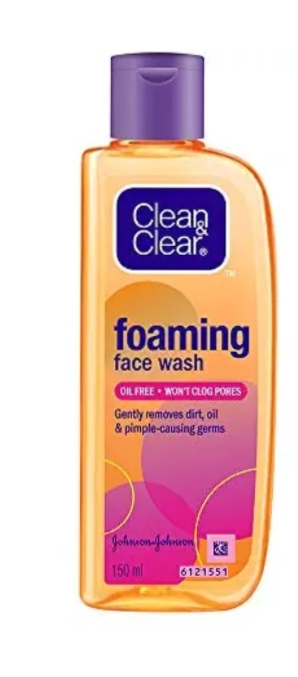
Clean & Clear Foaming Face Wash

Clean & Clear Foaming Face Wash For Oily Skin, 150ml https://www.amazon.in/dp/B00CI3HDMU/ref=cm_sw_r_apan_glt_fabc_HKAP31DH2V0G6FYKDJP1

A pomade-free facial cleanser that removes extra slick to help heal and avert boils. Formulated specially for gushy and combination skin types, this detergent flushes supererogatory canvas and contaminations. It helps combat papules and prevents them from returning. The detergent has a gentle formula suitable for everyday use.

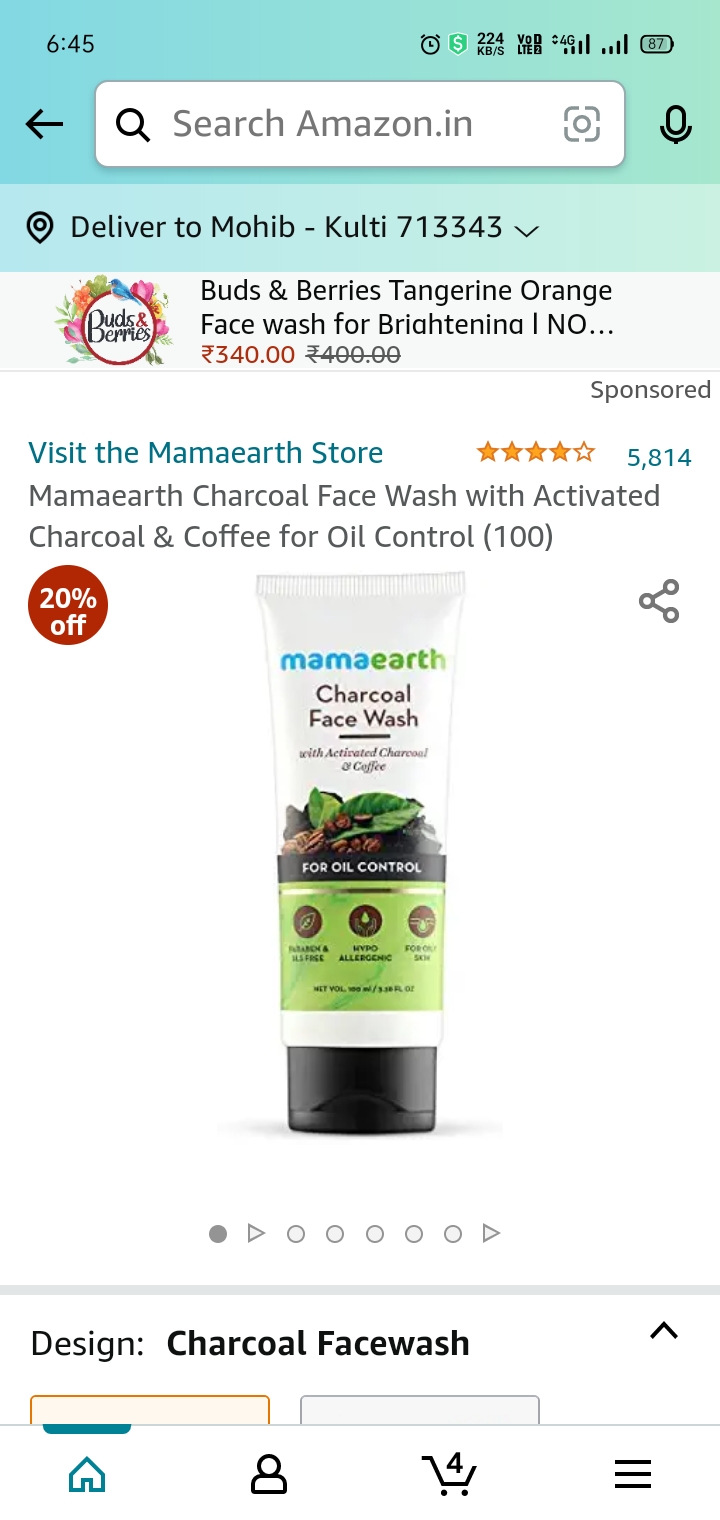
Mama Earth Charcoal Face Wash

Mamaearth Charcoal Face Wash with Activated Charcoal & Coffee for Oil Control (100) https://www.amazon.in/dp/B07FPNW916/ref=cm_sw_r_apan_glt_fabc_dl_YSBZ7WZ30HTZNWR5C6K8?_encoding=UTF8&psc=1

Tired of the day-to-day struggle with gushing skin, choked pores, and dull skin? Bring back immaculate skin that looks immature and canvas-free with the power of Cranked Charcoal &Coffee.Crafted with the integrity of nature, Mamaearth Charcoal Face Wash pulls out poisons and contaminants from deep within the pores. The integrity of Coffee tightens skin pores and promotes yea skin tone to give you an canvas-free glowing complexion.

Neutrogena Deep Clean face wash

Neutrogena Deep Clean Facial Cleanser For Normal To Oily Skin, 200ml https://www.amazon.in/dp/B006LXDQRY/ref=cm_sw_r_apan_glt_fabc_dl_0F1YKXWWE1NGE0KQYS20

 Neutrogena is notable for making face fens for fulsome, acne-prone skin. This is your most solid option in the event that you have fulsome, and acne-prone skin. Delicate on your skin yet extreme on skin inflammation, the specific canvas-free equation tenderly purifies your skin from deep out. This face fen for fulsome skin contains Salicylic acid which is known to dispose of skin break out and reduces coming bunks.

Himalaya Neem Face Wash

Himalaya Herbals Purifying Neem Face Wash, 100ml https://www.amazon.in/dp/B002Q5JE2C/ref=cm_sw_r_apan_glt_fabc_1D670NAQADQ4RFK07F0X

Himalaya Herbals Purifying Neem Face Wash reduces skin inflammation and hickeys for all skin types. It has the combination of neem and turmeric for deep purification the skin from out without drying it out. It battles bacterial complications and forestalls there-occurrence of facial irregularities and calms your skin. It likewise improves the adaptability of the skin and positions out its tone.

Oily Skin

Soapy skin is more prone to acne, whelks, and pustules and hence you need an painting-free face swampland to remove supernumerary sebum and painting. So, to get relieve of the towering painting on your skin, you need to start using an painting- control face swampland.

Hagiographic skin is the main reason behind theover-creation of sebum in your skin. It makes your skin inclined to skin break out, pocks and operatives. It effectively catches other skin pollution which will in general obstruct pores and do your skin to appear dull and glutinous. But fret not as canvas control face mire is there for your deliverance. Use a face mire that suits your skin and mitigates you from your over the top creation of sebum. The worst part is soapy skin looks slippy and sticky which in turn results in occasion of whelks, pustules, and warts.

Important Skills Everyone Should Learn

Skills are the expertise or talent needed in order to do a job or task. There are many different types of skills that can help you succeed at all aspects of your life whether it’s school, work, or even a sport or hobby. Skills are what makes you confident and independent in life and are essential for success.

1) Sales

Sales are activities related to selling or the number of goods sold in a given targeted time period. The delivery of a service for a cost is also considered a sale.A person who sells goods or service on behalf of the owner is known as a salesman or saleswoman or salesperson, but this often refers to someone selling goods in a store/shop, in which case other terms are also common, including salesclerk, shop assistant, and retail clerk.https://en.wikipedia.org/wiki/Sales

2) Marketing

Marketing is one of the valuable skills to strengthen your passive income. The action or business of promoting and selling products or services, including market research and advertising. Marketing refers to activities a company undertakes to promote the buying or selling of a product or service. Marketing includes advertising, selling, and delivering products to consumers or other businesses. Some marketing is done by affiliates on behalf of a company.https://www.investopedia.com/terms/m/marketing.asp

3) Psychology

Psychology is the scientific study of the mind and behavior. Psychologists are actively involved in studying and understanding mental processes, brain functions, and behavior. There are different types of psychology, such as cognitive, forensic, social, and developmental psychology. A person with a condition that affects their mental health may benefit from assessment and treatment with a psychologist. https://psychology.osu.edu/about/what-psychology

4) Negotiation

A negotiation is a strategic discussion that resolves an issue in a way that both parties find acceptable. … By negotiating, all involved parties try to avoid arguing but agree to reach some form of compromise. Negotiations involve some give and take, which means one party will always come out on top of the negotiation. https://www.investopedia.com/terms/n/negotiation.asp Good negotiations contribute significantly to business success, as they: help you build better relationships. deliver lasting, quality solutions rather than poor short-term solutions that do not satisfy the needs of either party. help you avoid future problems and conflicts.

5) Communication

Communication is the act of giving, receiving, and sharing information — in other words, talking or writing, and listening or reading. Good communicators listen carefully, speak or write clearly, and respect different opinions. https://en.wikipedia.org/wiki/Communication Communication is simply the act of transferring information from one place, person or group to another.

6) Habits formation

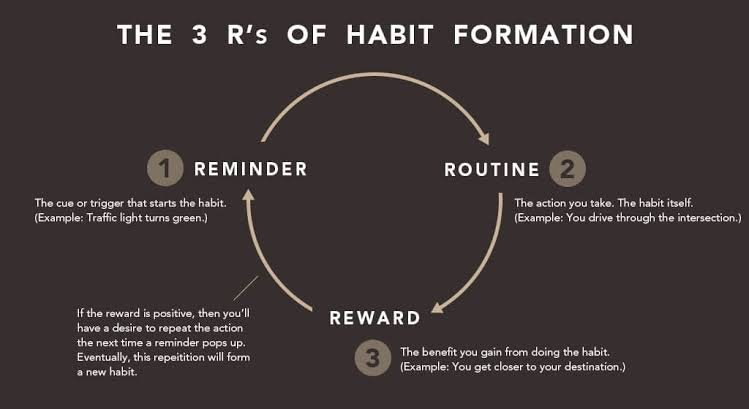
Habit formation is the process by which a behavior, through regular repetition, becomes automatic or habitual. This is modeled as an increase in automaticity with the number of repetitions up to an asymptote. This process of habit formation can be slow. All habits proceed through four stages in the same order: cue, craving, response, and reward. This four-step pattern is the backbone of every habit, and your brain runs through these steps in the same order each time. https://en.wikipedia.org/wiki/Habit

7) Decision Making

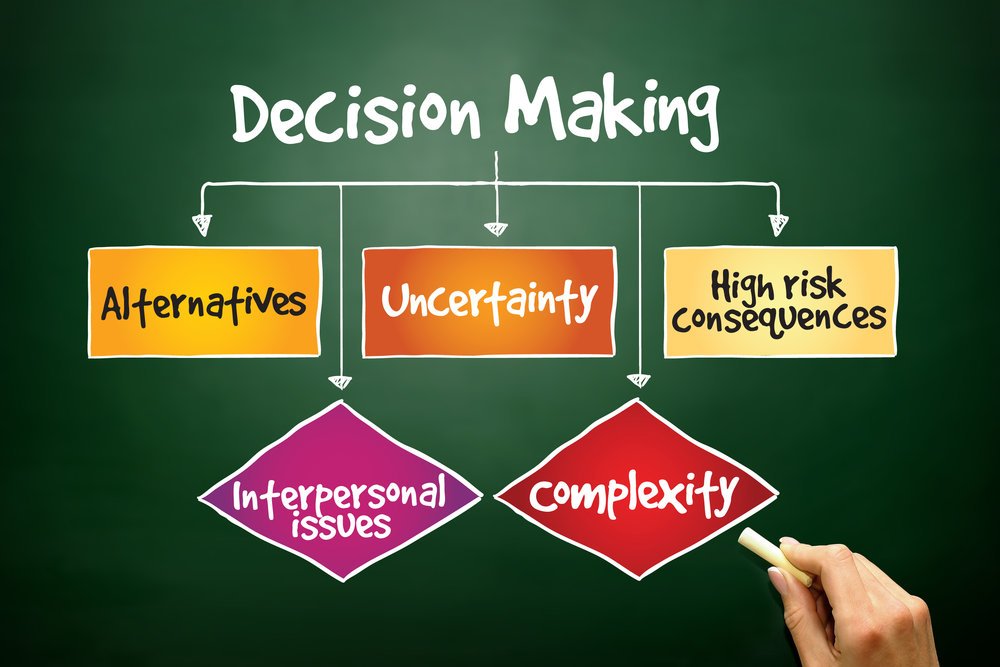
Decision making is the process of making choices by identifying a decision, gathering information, and assessing alternative resolutions. Using a step-by-step decision-making process can help you make more deliberate, thoughtful decisions by organizing relevant information and defining alternatives. Decision making can also be classified into three categories based on the level at which they occur. Strategic decisions set the course of organization. Tactical decisions are decisions about how things will get done. Finally, operational decisions are decisions that employees make each day to run the organization. https://www.umassd.edu/fycm/decision-making/process/


READING IN THREE KEYS: How to Write a READING RESPONSE

Active reading involves looking at the text in more than one way.  For your reading responses write using these three “keys,” or methods, of analyzing what you have read: 

Reading responses in this class generally vary from 250 – 400 words. The length required will be specified on the assignment.


 Sometimes you will be asked to post your reading response to the Discussion Board and then follow-up with a response to one of your classmate’s postings. You may respond in any of the three “keys.”  A sample response building on a previous posting might start off with a sentence like this: “I agree with David that advertising objectifies women by portraying them as dehumanized objects, but I wonder whether women benefit from that objectification in any way?”  You can build your ideas on comments others have made.  And feel free to keep chatting with each other.

How Should You Write Your READING RESPONSE?


Why Do It?

The reading response gives you an avenue to invite yourself into the written text and to make a connection with it. In many college courses you will be assigned to write papers about subjects with which you have no personal interest. Reading responses help to generate connections between the reader and text.


How?

The key to writing a compelling academic paper for any college course is being able to forge a personal connection on some level with your subject. You must care in some way about your subject, or else your writing will be lifeless, and your instructor, a human being, will have read a re-hashing of the facts of his/her course a million times before. Or, forget about writing for a college course. What about writing a report in the workplace?  What about proposing a new idea to your boss?  Such careful awareness of audience and tailoring your writing to a specific audience is an aspect of successful writing we’ll work on in this course.  However, you can’t even get to the point of getting someone else to care about what you are writing if you don’t care yourself.


That doesn’t mean you should only write about subjects that interest you.  On the contrary, half of the battle in writing a successful paper is coming up with an idea on a topic which is usually of little interest to you—finding an angle or connection through which you can approach or examine the text. What does it remind you of? Why do you respond emotionally? Or why do you not respond? Ask questions to find avenues into a piece of writing.  The creativity involved in continually forging such difficult connections will help you develop into a writer who can grab a reader’s attention by approaching a topic or subject through your own unique personal lens, that is, by looking at something through an angle no one else can see. 


Through active responding to reading, and examining your responses, you can learn to practice new approaches of interpretation to common themes.  Many of the ideas you generate in the reading responses will prove useful when you sit down to write the short essays (or maybe even your research paper).

KodiSoftware Download For Free | Top sites


Let’s start with knowing that what is Kodi software and why one should have it.

What is Kodi software?

Initially released in 2002 [as Xbox media play], in 2003 [as Xbox media centre]. Kodi software application is developed by the XBMC Foundation, Kodi is a free and open-source media player software application, it’s a non-profit technology consortium. It’s a 10-foot user interface with television and remote controls.

With a view of most streaming media such as podcasts, music, videos and views from the internet, one can access all Common digital media. These are some of its platform PowerPC, IA-36, ARM and x64(x84-64). Available in 12[75 including incomplete translations] language. HTPC it’s is a multi-platform home-theater PC application. Kodi is highly customizable so allow it’s users to stream media content via online services such as Crackle, Amazon Prime Internet Videos, Pandora Internet Radio, Spotify and Youtube.

The later version of kodi has a (PVR) graphic front and end. All these available advantages make Kodi a great software to be utilized.

 Let’s now dive into how to download Kodi for free.

Already millions of people are enjoying this great software for free. Kodi is running on the most common processer architectures, iOS, Android, MOS X and Windows operating systems.

How to download : select your platform

As Kodi supports a large range of devices and operating systems, it is multi flavour. Simply select your platform in which you want to install Kodi on and enjoy Kodi.


9 best vegan Omega-3 Supplements (2021) per Dietitians.

If you don’t have fish on your meal menu doesn’t mean you can’t get all the benefits of omega-3.

Omega-3 is also found in many plant foods, like chia and hemp seeds, in algal oil too. But mostly it is found in fish oil in significant levels.

For your vegan friends, there are plenty of options who wants to intake omega-3 and all of EPA, ALA L AND DHA.

REGARDING CORRECT CERTIFICATE FROM EDUINDEX

From few days I am writing emails to give me certificate of date 16 june to 16 july. since month of july i am doing so but AGAIN and AGAIN I am rcieving wrong certificate. I need to prepare summer internship report. i cant attach wrong certificate. This is my last option to write here. I am in a complusion otherwise I would have not written here.

Its my humble request to everyone who is reading it please like . So that it can come in front of the team.

And if team you are reading this please prepare a certificate from the 16 june to 16 july. In my offer letter too you have mentioned same date. COMMENT ME IF YOU HAVE PREPARED. I WILL SEND U DETAILS.

I am quite depressed with such an unlawful behaviour.

Why change your IP address

Why change your IP address
Changing your IP address can be useful if you want to avoid being attacked by other users who
are targeting your IP address, or if you simply want a new online identity from an IP standpoint.
You can change your IP address on a Mac at any time through System.

Don’t worry. Changing your IP address is easy, even if you’ve never done it before.
It’s also perfectly safe and — as long as you’re not using it to break other laws — it’s
legal. Your computer and phone have several types of IP addresses (short for
internet protocol, a unique series of numbers that identify your specific device with
your online browsing), but we’ll focus on the type normally changed to protect your
privacy as you browse, and those which make you appear like you’re in a different
country.

If you just want to change your IP address without the additional privacy boost,
you can either enter your preferred IP manually, or you can just force your
device to retrieve a new one automatically.

Is it even legal to change your IP
address?

Yes, it’s legal to change your IP address in the US. People change their IP
addresses routinely when facing direct attacks on their online security, when
testing a website before it goes live, or when they simply prefer to protect their
privacy. Obviously, this FAQ is in no way offering legal advice and you should
consult a licensed attorney for specific questions, but the legal boundaries on
IP address changes usually start with what you change your IP to, and what
you do with that new IP address.

If you’ve changed your IP to impresonate individual or a business — often
called IP spoofing — you could be running afoul of the US Computer Fraud and
Abuse Act. You might also run into trouble if you’re changing your IP address
to access a website you’ve been banned from. IP spoofing is also a tool used
by some cybercriminals to perform a handful of well-known attacks, most
commonly those related to identity theft and those aimed at crippling websites
with organized distributed denial of service bombardment.

How to travel the world for free

Whenever I ask readers what the number one thing holding them back from traveling is I almost always get the same answer: Money.

Travelling the world with no money sounds like an impossible dream. But it is possible, and you can do it responsibly without breaking the bank. It should be said that there are some expenses you shouldn’t compromise on (like travel insurance) but there are tons of ways you can travel the world on a budget — including plenty of ways you can travel for free.

Travelling for free entails taking advantage of free accommodation, transportation, and activities that are already out there, thereby reducing your cost to zero. Here, you sacrifice comfort and convenience to extend your travels as long as possible.

And yeah don’t even worry about your food budget the restaurant often has eating challenges just take an insane challenge and fill your paunch

Hope you liked it

One thousand ways to make $ 1000

HOW TO START YOUR OWN BUSINESS

W
HEN Gustavus Swift, a youngster in knee breeches, dressed and sold his first
calf to the fisherfolk of Cape Cod, he laid the foundation of the largest meatpacking business in the world. The desire to make money—to have a business of
his own—was a driving force in the make-up of young Swift. In Barnstable, he
was known as a chap with a lot of “get up and go” to him. So it was not
surprising that when he felt the desire to make money, he didn’t waste his time
wishing, but took his courage in his two hands and started in the dressed beef
business in his dad’s backyard.

No doubt there were other young men in Barnstable who wanted to make money
too. But while they were wondering how they could make it, Gus Swift cut the
Gordian knot. It meant work for him. It was not a pleasant way to make money.
There was the possibility of his not being able to sell his calf after he had dressed
it. He had to walk miles in order to market his veal, for Cape Cod in those days
was a “spread out” sort of place.

But Swift didn’t care.

He wanted money

The work, the walking and the adventure were fun. And because he regarded
making money as fun instead of work, he later was able to come to Chicago and
start the great Swift packing business. How different from the average young
men of today! They are usually more interested in having a good time than they
are establishing themselves in a business of their own. Being in business is so
confining! So they concentrate on enjoying themselves, serene in their
philosophy that tomorrow is another day. If these people, and they are not all
young people either, worked half as hard at making money as they do at having a
good time, they would be rich.

Then there are people who are willing to work and do work hard at making
money, but they are not successful because they lack a target. They are like the
chap who hunts big game with a shotgun. They do a lot of shooting, but they bag
very little game. Next to being willing to pay the price of success in hard work,
the most important thing is to have a definite, clear-cut objective. Since it is
necessary to crawl before you walk, it is suggested that you make that objective
$1,000.

What you about this story of hard work and dedication

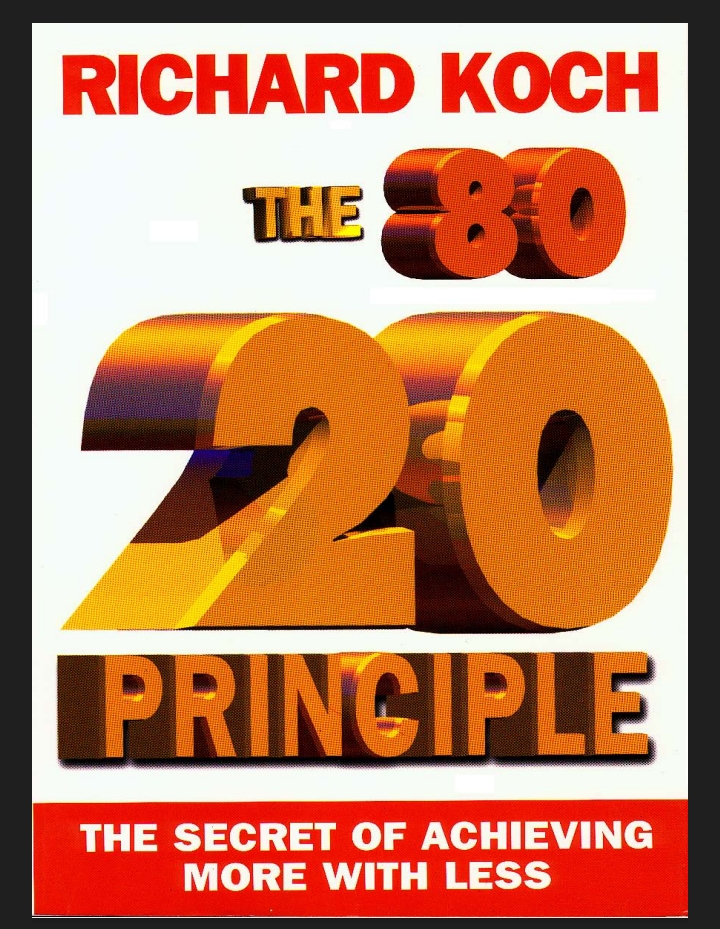
The remarkable and incredible 80/20 principal

In business, many examples of the 80/20 Principle have been validated.
20 per cent of products usually account for about 80 per cent of dollar sales
value; so do 20 per cent of customers. 20 per cent of products or customers
usually also account for about 80 per cent of an organization’s profits.

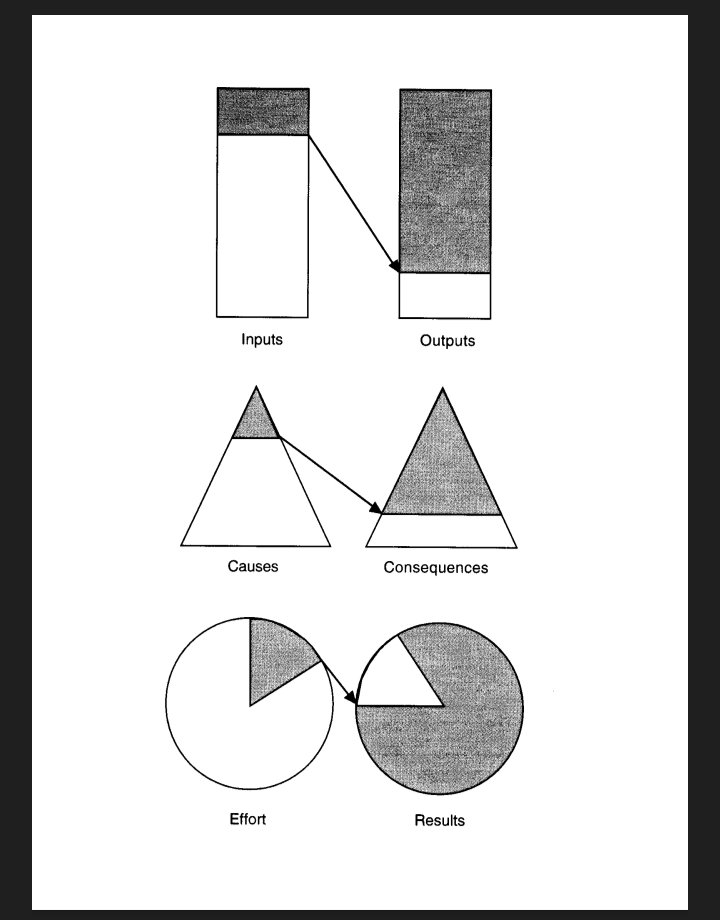
The 80/20 Principle asserts that a minority of causes, inputs or effort usually
lead to a majority of the results, outputs or rewards. Taken literally, this
means that, for example, 80 per cent of what you achieve in your job comes
from 20 per cent of the time spent. Thus for all practical purposes, four-
fifths of the effort—a dominant part of it—is largely irrelevant. This is
contrary to what people normally expect. So the 80/20 Principle states that
there is an inbuilt imbalance between causes and results, inputs and outputs,
and effort and reward.

The pattern underlying the 80/20 Principle was discovered in 1897, exactly
100 years ago, by Italian economist Vilfredo Pareto (1848–1923). His
discovery has since been called many names, including the Pareto Principle,
the Pareto Law, the 80/20 Rule, the Principle of Least Effort and the
Principle of Imbalance; throughout this book we will call it the 80/20
Principle.

By a subterranean process of influence on many important
achievers, especially business people, computer enthusiasts and quality
engineers, the 80/20 Principle has helped to shape the modern world. Yet it
has remained one of the great secrets of our time—and even the select band
of cognoscenti who know and use the 80/20 Principle only exploit a tiny
proportion of its power.

So what did Vilfredo Pareto discover? He happened to be looking at
patterns of wealth and income in nineteenth-century England. He found that
most income and wealth went to a minority of the people in his samples.
Perhaps there was nothing very surprising in this. But he also discovered
two other facts that he thought highly significant. One was that there was a
consistent mathematical relationship between the proportion of people (as a
percentage of the total relevant population) and the amount of income or
wealth that this group enjoyed.4 To simplify, if 20 per cent of the population
enjoyed 80 per cent of the wealth,5 then you could reliably predict that 10
per cent would have, say, 65 per cent of the wealth, and 5 per cent would
have 50 per cent. The key point is not the percentages, but the fact that the
distribution of wealth across the population was predictably unbalanced.

What do you about this principle