Cost Accounting focuses on company’s total cost of production by assessing the variable and fixed costs at each step of production and selling. It is critical aspect of accounting as cost directly affects the revenue of the company and also helps in determining the pricing strategy of the product/service.
Unlike financial accounting which provides information to external users (Public, Government, Banks etc), Cost accounting provides vital information to the internal users (mainly management) for decision making.
Two main types of costs are Variable and Fixed costs. Fixed cost refers to the part of cost which does not vary or depend on the level of production. For example, Rent of office or factory. It has to be paid even when the facility is not being utilised or there is no production or sales. However, Variable cost varies according to the level of production. For example, labour wages or cost of raw material.
To understand costing better, let’s understand different elements it comprises of-
Cost of material consumed is the sum of all the cost spent to procure a raw material, store it till it gets consumed. All such costs are added with the actual cost of raw material purchased to arrive at the cost of materials consumed.
Employees Benefit expenses- The benefit provided to employees are summarised into four categories:
benefits in the short-term (benefits payable to employees shortly after they provide the service, e.g. a salary)
benefits in the long-term(such benefits may become payable long after the employees provide the service e.g. a long-service award)
benefits ofpost-employment (i.e. after they have retired from employment e.g. a pension)
termination benefits (those that would be payable if the employees were to be terminated before normal retirement age (e.g. a retrenchment package)
Purchases of stock in trade, refers to all the purchases of finished goods that the company buys towards conducting its business.
Other Expenses are not directly related to the business but are ancillary in nature. It is of utmost importance and have to be accurately differentiated from the expenses, as per the prescribed guidelines and based on the nature of the business.
Amortisation and Depreciation expenses- Amortization is a method of spreading the cost of an intangible asset over a specific period of time, which is usually the course of its useful life. The goal in amortizing an asset is to match the expense of acquiring it with the revenue it generates. Depreciation is a method of spreading the cost of a tangible asset over a specified period of time, typically the asset’s useful life. The purpose of depreciation is to match the expense of obtaining an asset to the income it helps a company earn.
In order to reduce costs substantially which ultimately increases the revenue of the company, elements of the total costs need to be analysed and reduced, if possible. It helps in examining the costs step by step, stage of production wise which is an essential process to determine the price per unit and also determining the relationship between each cost and how it affects the Cost of goods sold and the net profit. These elements are grouped together on the basis of their similar nature and hence, it becomes easier to reduce cost element by element.
Enveloped in a thick foil of nature, accentuated by the scent of the flowering blossoms blending miraculously in the crisp fresh air, Nainital is truly the treasure trove of Kumaon. It is among the most visited hill stations of North India since British period.
perched at an elevation of 2,084 metres above sea level, the glittering city of Nainital is hailed for being a parent to the ravishing Naini Lake from which it has earned the epithet of being the lake city. The Nainital town not only lures the domestic travellers and tourists but also a number of foreign tourists. It shines as a glittering jewel in the Himalayan Mountains and is surrounded with lakes and nature’s bounty.
Rock Climbing and Rappelling
A 4 kilometre drive from Nainital takes you to the rock climbing area of Bara Pathar. Quite obviously named after the twelve huge rocks in this area, Bara Pathar attracts a decent number of climbers and trekkers. The climb on natural rock is fairly tough and requires a lot more resilience than a normal wall at an activity centre. With an experienced instructor to guide you through every step, making safety is the top priority, rock climbing at Bara Panther is compelling and exhilarating.
Ropeway to Snow View point
One of Nainital’s prominent factors of allure, the cable car is an opportunity not to be forsaken. It provides an irreplaceable offer of catching a bird’s eye view of the breath-taking Naini Lake and the entire Nainital hill station. A treat for the senses, relax as you glide across the air over such pristine landscapes.
Picnic by the Waterfall
Pull up a bit of rock and grass as you settle down for a rejuvenating lunch amidst the cascading waters of the waterfalls in Mukteshwar. Complete with the open valley views and unmatched serenity, this will come as a welcome break from the unending buzz which is the chaotic city life.
Planetarium Visit
Drop in for a spot of the stargazing at the Aryabhata Research Institute of Observational Sciences for an otherworldly experience. Lose yourself in the stars and beyond as you delve deep into the majestic unknown of the universe and its underlying mysteries.
Sunset at Hanuman Garhi Temple
A famous temple in the honour of Lord Hanuman, who is a much celebrated image of unwavering devotion himself, being one of the greatest worshippers of Lord Ram. Perched at an altitude of 6400ft above sea level, the whole case of divinity is multiplied by the sun making its gorgeous descent beyond the mountains silhouetting the statue of Hanuman, its palm open in blessing.
Best time to visit Nainital
March to June is the popular tourist season when the weather is perfect for outdoor activities and quite pleasant. If you’re the type to lace up your adventure boots, this is the time to visit here with paragliding, trekking, camping and rafting all up for grabs.
July to September sees heavy rainfall and quite a drop in visitors. On the up side the rains make the hills more luxuriant and if you’re the kind who prefers dripping weather and lonesome hikes, this time has your name all over it.
October to February gets chilly and January brings in snowfall too.
Although Nainital is a year-round destination, the activities open to you may vary based on when you visit. So, plan accordingly.
Things to carry
Pack as light as possible given the amount of road travel involved here.
• Cotton clothing for summer and a light jacket would work for when evenings get cooler. If you’re un[travel]ling in winter, warmer clothes complete with thick socks and warmer jackets. Carry your windcheater and umbrella if you’re here in the monsoons as well.
• Sturdy walking shoes, mandatory if you’re hiking, make sense given the amount of walking involved here.
• Sunscreen, especially if you’re going up to the higher reaches. Usual prescription medications.
There is an undefined beauty in the film, filled with mystery and unexpected events. It drives most of us crazy when we don’t know what will happen next. When watching a mystery movie, the scenario is completely different. We love watching movies where it is impossible to predict. A mystery film becomes even better when the flavor of thriller is added to it. Thrillers are also about plausibility. Once magic or science-fiction works its way into the storyline, the film becomes less about normal people surviving harrowing situations and more about the mechanics of the fantasy world it now inhabits. The events of a thriller may be highly unlikely but they could, at least in an impressionistic way, happen in the real world. That’s what makes them captivating. It could happen to you. keeping this in mind I had prepared the list of best rated mystry thriller movies. The list consists of both , Hollywood as well as bollywood movies. The Movies are mostly numbered on the basis of their ratings, reviews from critics and public response. This is not a universal list in this genre, just take it as some suggestions if you wanna watch on this genre.
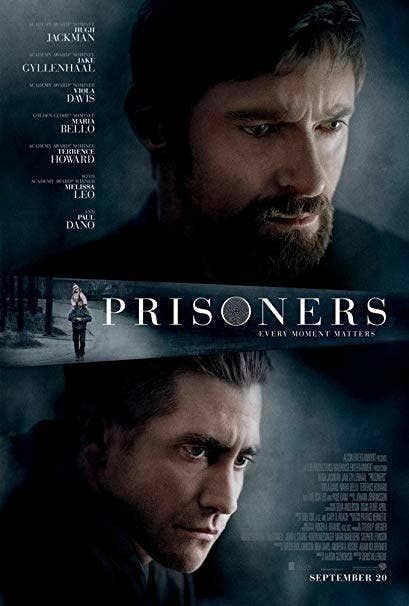
20. Prisoners (imdb- 8.1)
Prisoners is a 2013 American thriller film directed by Denis Villeneuve from a screenplay written by Aaron Guzikowski. The plot focuses on the abduction of two young girls in Pennsylvania and the subsequent search for the suspected abductor by the police. After police arrest a young suspect and release him, the father of one of the daughters takes matters into his own hands. It was chosen by the National Board of Review as one of the top ten films of 2013, and at the 86th Academy Awards, it was nominated for Best Cinematography.Gyllenhaal received the Best Supporting Actor of the Year Award at the 2013 Hollywood Film Festival for his “truly compelling, subtly layered” performance as Detective Loki.
19.kahaani (IMDb-8.1)
Kahaani is a Indian Hindi-language thriller film co-written, co-produced and directed by Sujoy Ghosh. It stars Vidya Balan as Vidya Bagchi, a pregnant woman searching for her missing husband in Kolkata during the festival of Durga Puja, assisted by Satyoki “Rana” Sinha and Khan. Kahaani garnered generally positive reviews from critics. The film won several awards, including three National Film Awards and five Filmfare Awards. The latter included trophies for Best Director (Ghosh) and Best Actress (Vidya).
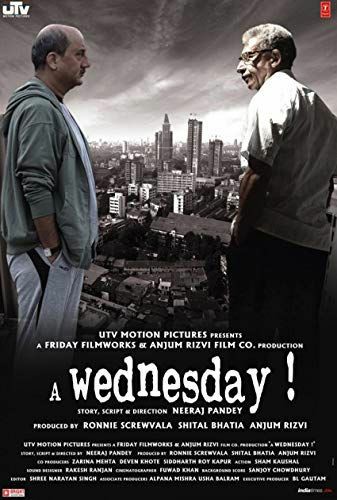
18.A Wednesday (IMDb-8.1)
A Wednesday! released on 5 September 2008 is a 2008 Indian Hindi-language thriller film written and directed by Neeraj Pandey.It stars Naseeruddin Shah and Anupam Kher. Set between 2 pm and 6 pm on a Wednesday,the film depicts an about-to-retire police commissioner (Anupam Kher) narrating a sequence of events that unfolded on a particular Wednesday. There does not exist any written record. The awareness of the incident exists only in his mind and in those of several individuals who were involved, willingly and unwillingly, and how those events affected the lives of all the concerned people. it won a number of awards including the Indira Gandhi Award for Best Debut Film of a Director at the 56th National Film Awards.
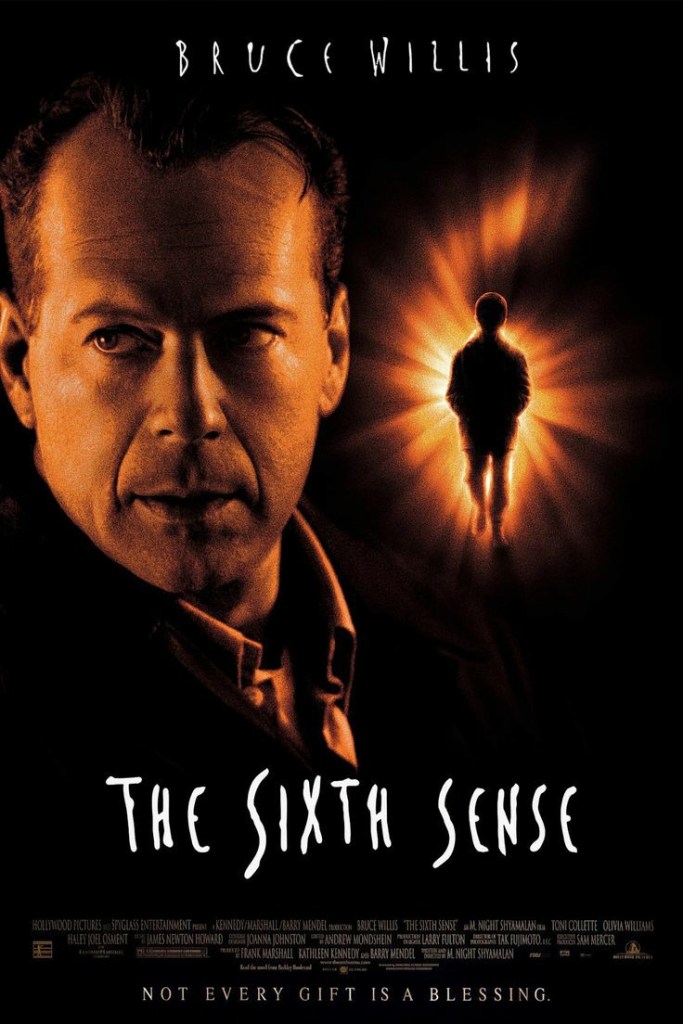
17.The sixth sense (IMDb- 8.1)
The Sixth Sense is a 1999 American supernatural psychological thriller film written and directed by M. Night Shyamalan. It stars Bruce Willis as a child psychologist whose patient (Haley Joel Osment) can talk to the dead. The film established Shyamalan and introduced the cinema public to his traits, most notably his affinity for surprise endings.It was nominated for six Academy Awards, including Best Picture, Best Director and Best Original Screenplay for Shyamalan, Best Supporting Actor for Osment, and Best Supporting Actress for Collette. It was the second-highest-grossing film of 1999, taking about $293 million in the US and $379 million in other markets.In 2013, the Writers Guild of America ranked the screenplay #50 on its list of 101 Greatest Screenplays ever written.
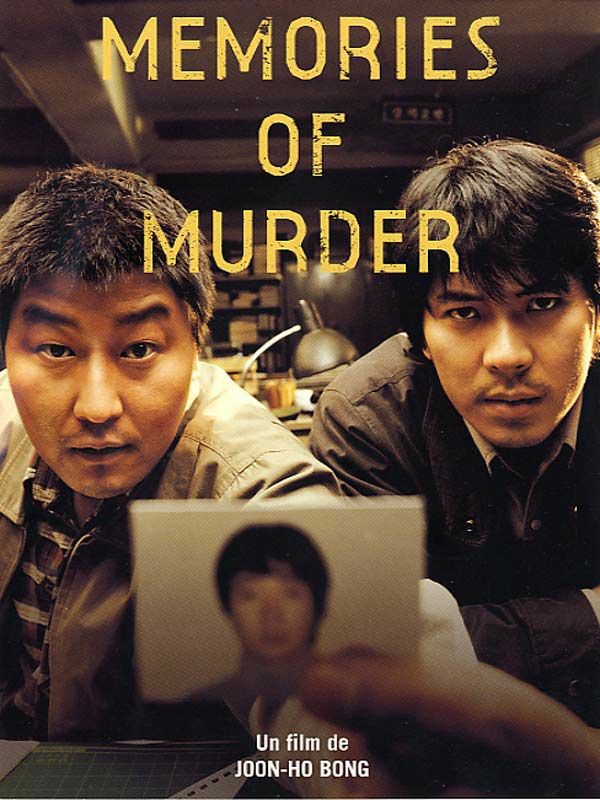
16.The memory of a murder(IMDb-8.1)
Memories of Murder is a 2003 South Korean crime thriller film co-written and directed by Bong Joon-ho. It is loosely based on the true story of Korea’s first confirmed serial murders, which took place between 1986 and 1991 in Hwaseong, Gyeonggi Province.The film has earned critical acclaim for its twisted tone, cinematography, editing, score, Song’s performance, and Bong’s direction and screenplay. Since its release, it won numerous national awards and has been regarded by many to be one of the finest films of the 21st century. It received screenings at several international film festivals, including Cannes Film Festival, Hawaii International Film Festival, London International Film Festival, Tokyo International Film Festival and San Sebastian International Film Festival, where Bong Joon-ho won the Best Director Award.
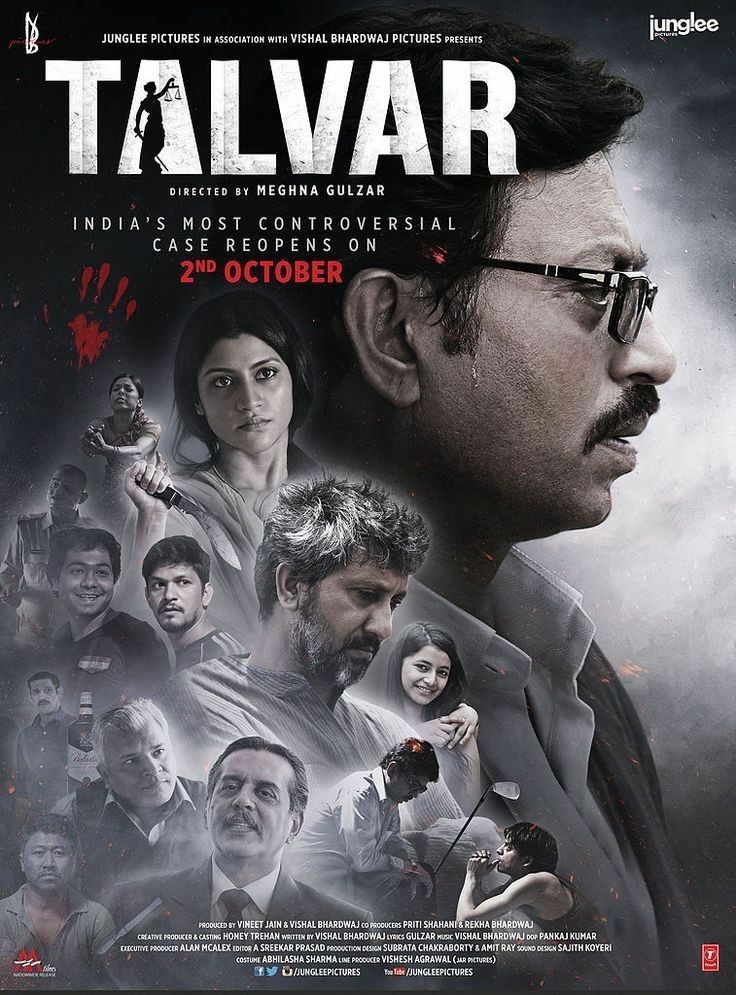
15.Talvar (IMDb- 8.2)
Talvar is a 2015 Indian Hindi-language thriller drama film directed by Meghna Gulzar and written by Vishal Bhardwaj. Produced by Bhardwaj and Vineet Jain, the film is based on the 2008 Noida double murder case involving a teenage girl and her family’s servant. Starring Irrfan Khan, Konkona Sen Sharma and Neeraj Kabi, the film follows the investigation of a case from three different perspectives in which her parents are either guilty or innocent of the murder charges by the police investigation, the first CBI probe and an investigation by a different CBI team.Talvar received a positive critical reception.Bhardwaj received the Best Adapted Screenplay Award for Talvar at the 63rd National Film Awards, and Prasad received the Award for Best Editing at the 61st Filmfare Awards.
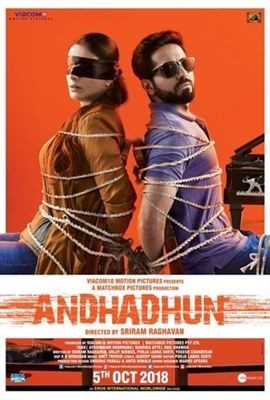
14.Andhadhun (IMDb-8.2)
Andhadhun is a 2018 Indian Hindi-language black comedy crime thriller film co-written and directed by Sriram Raghavan, produced by Matchbox Pictures, and distributed by Viacom18 Motion Pictures. The film revolves around Akash, a piano player pretending to be visually-impaired, unwittingly becomes entangled in a number of problems as he witnesses the murder of a former film actor.Critics highlighted the writing, and Khurrana and Tabu’s performances. It won four awards, including Best Director and Best Screenplay, at the Screen Awards ceremony and five Filmfare Awards, including Best Film (Critics) and Best Actor (Critics) for Khurrana. It also won three National Film Awards: Best Feature Film in Hindi, Best Actor for Khurrana, and Best Screenplay.
13.The secret in their eyes (IMDb-8.2)
The Secret in Their Eyes is a 2009 Argentinian crime drama film directed, co-written, produced and edited by Juan José Campanella.The film depicts a judiciary employee and his boss, a law clerk, in 1974, played by Ricardo Darín and Soledad Villamil, as they investigate a rape and murder case, while also following the characters 25 years later reminiscing over the case and unearthing the buried romance between them.The film received awards in both Hollywood and Spain, notably the Academy Award for Best Foreign Language Film at the 82nd Academy Awards, making Argentina, with 1985’s The Official Story, the first country in Latin America to win it twice. In 2016, The Secret in Their Eyes was ranked No. 91 by international critics for the BBC’s 100 Greatest Films of the 21st Century.
12.shutter island (IMDb- 8.2)
Shutter Island is a 2010 American neo-noir psychological thriller film directed by Martin Scorsese and written by Laeta Kalogridis, based on Dennis Lehane’s 2003 novel of the same name. Leonardo DiCaprio stars as Deputy U.S. Marshal Edward “Teddy” Daniels, who is investigating a psychiatric facility on Shutter Island after one of the patients goes missing. Mark Ruffalo plays his partner and fellow deputy marshal, Ben Kingsley is the facility’s lead psychiatrist, Max von Sydow is a German doctor, and Michelle Williams is Daniels’ wife. Released on February 19, 2010, the film received mostly positive reviews from critics, was chosen by National Board of Review as one of the top ten films of 2010, and grossed over $294 million worldwide.
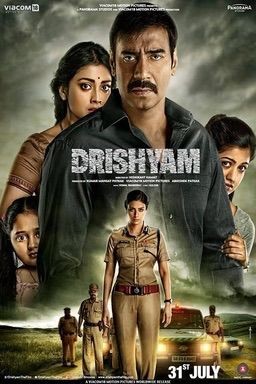
11.Drishyam (IMDb- 8.2)
Drishyam is a 2015 Indian Hindi-language thriller film directed by Nishikant Kamat. The film is a remake of the 2013 Malayalam-language film of the same name. The film was jointly produced by Kumar Mangat Pathak, Ajit Andhare and Abhishek Pathak, and stars Ajay Devgn, Tabu and Shriya Saran, and also features Ishita Dutta and Mrunal Jadhav. The movie revolves around Desperate measures that are taken by a man who tries to save his family from the dark side of the law, after they commit an unexpected crime.
10.memento (IMDb- 8.4)
Memento is a 2000 American neo-noir psychological thriller film written and directed by Christopher Nolan, and produced by Suzanne and Jennifer Todd. It revolves around a man who, as a result of an injury, has the inability to form new memories) and has short-term memory loss approximately every fifteen minutes. He is searching for the people who attacked him and killed his wife, using an intricate system of polaroid photographs and tattoos to track information he cannot remember.Memento received numerous accolades, including Oscar nominations for Best Original Screenplay and Best Film Editing.The film is now widely regarded as one of Nolan’s finest works and one of the best films of the 2000s.
9.The lives of others (IMDb-8.4)
The lives of others is a 2006 German drama film written and directed by Florian Henckel von Donnersmarck marking his feature film debut. The plot is about the monitoring of East Berlin residents by agents of the Stasi, East Germany’s secret police. It also won the BAFTA Award for Best Film Not in the English Language and European Film Award for Best Film, while was nominated for the Golden Globe Award for Best Foreign Language Film.
8.oldboy (IMDb- 8.4)
It is a 2003 South Korean neo-noir action thriller film, co-written and directed by Park Chan-wook. The film follows the story of Oh Dae-su, who is imprisoned in a cell which resembles a hotel room for 15 years without knowing the identity of his captor or his captor’s motives. When he is finally released, Dae-su finds himself still trapped in a web of conspiracy and violence. His own quest for vengeance becomes tied in with romance when he falls in love with an attractive young sushi chef, Mi-do.
The film won the Grand Prix at the 2004 Cannes Film Festival and high praise from the President of the Jury, director Quentin Tarantino.
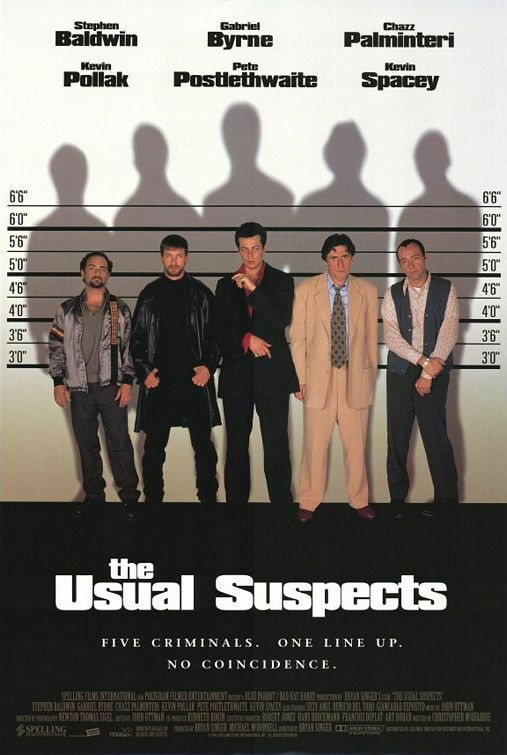
7.The usual suspect (IMDb- 8.5)
The Usual Suspects is a 1995 American neo-noir mystery thriller film directed by Bryan Singer and written by Christopher McQuarrie.The plot follows the interrogation of Roger “Verbal” Kint, a small-time con man, who is one of only two survivors of a massacre and fire on a ship docked at the Port of Los Angeles. Through flashback and narration, Kint tells an interrogator a convoluted story of events that led him and his criminal companions to the boat, and of a mysterious crime lord—known as Keyser Söze—who controlled them. .The film was shown out of competition at the 1995 Cannes Film Festival.It received favorable reviews and was eventually given a wider release. McQuarrie won an Academy Award for Best Original Screenplay and Spacey won the Academy Award for Best Supporting Actor for his performance.
6.The prestige (IMDb -8.5)
The Prestige is a 2006 science fiction psychological thriller film directed by Christopher Nolan, written by Nolan and his brother Jonathan, based on the 1995 novel of the same name by Christopher Priest. It follows Robert Angier and Alfred Borden, rival stage magicians in London at the end of the 19th century. Obsessed with creating the best stage illusion, they engage in competitive one-upmanship, with fatal results. It got Academy Award nominations for Best Art Direction and Best Cinematography.
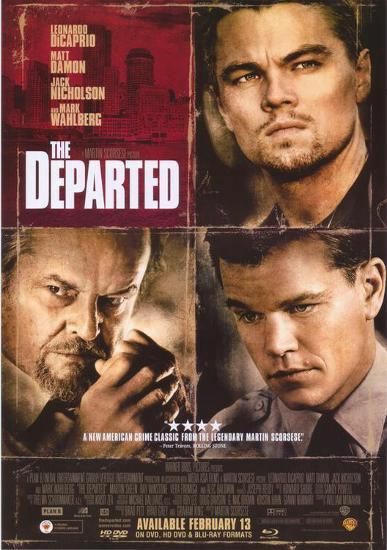
5.The. Departed (IMDb- 8.5)
The Departed is a 2006 American crime thriller film directed by Martin Scorsese and written by William Monahan. The film takes place in Boston. Irish Mob boss Frank Costello (Nicholson) plants Colin Sullivan (Damon) as a mole within the Massachusetts State Police; simultaneously, the police assign undercover state trooper Billy Costigan (DiCaprio) to infiltrate Costello’s crew. When both sides realize the situation, Sullivan and Costigan each attempt to discover the other’s identity before they are found out.
The Departed was a critical and commercial success, and won several awards, including four Oscars at the 79th Academy Awards, for Best Picture, Best Director, Best Adapted Screenplay, and Best Film Editing, becoming Scorsese’s first win for Best Director; Wahlberg was also nominated for Best Supporting Actor.
4.The silence of the lambs (IMDb- 8.6)
The Silence of the Lambs is a 1991 American psychological horror[ film directed by Jonathan Demme. It revolves around a young FBI trainee who is hunting a serial killer, “Buffalo Bill” (Ted Levine), who skins his female victims. To catch him, she seeks the advice of the imprisoned Dr. Hannibal Lecter (Anthony Hopkins), a brilliant psychiatrist and cannibalistic serial killer. The film also features performances from Scott Glenn, Anthony Heald and Kasi Lemmons.
The Silence of the Lambs is regularly cited by critics, film directors and audiences as one of the greatest and most influential films. It won Academy Awards in all the top five categories: Best Picture, Best Director, Best Actor, Best Actress, and Best Adapted Screenplay.
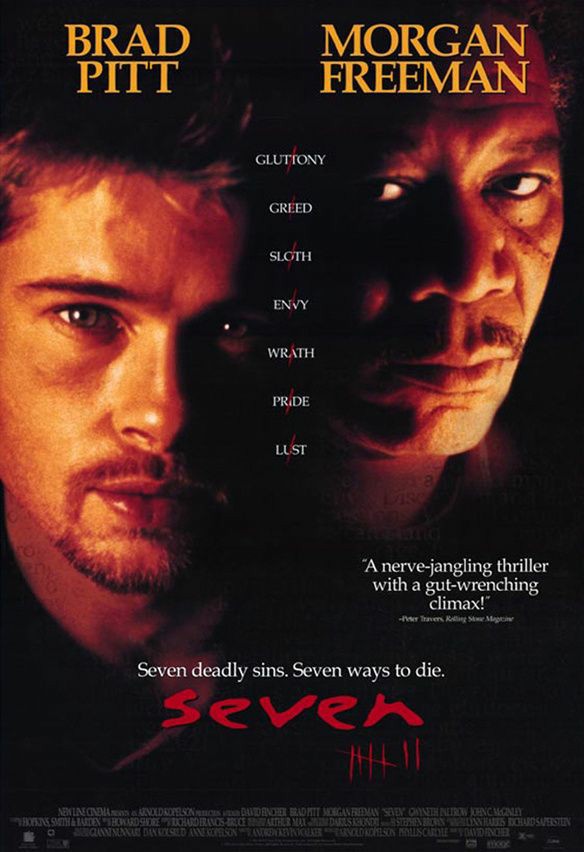
3.seven
Seven is a 1995 American neo-noir psychological crime thriller film directed by David Fincher and written by Andrew Kevin Walker. It stars Brad Pitt, Morgan Freeman, Gwyneth Paltrow, Kevin Spacey, R. Lee Ermey and John C. McGinley. The film tells the story of David Mills (Pitt), a detective who partners with the retiring William Somerset (Freeman) to track down a serial killer who uses the seven deadly sins as a motif in his murders.itwas the seventh-highest-grossing film of the year, grossing over $327 million worldwide. It was well received by critics and was nominated for Best Film Editing at the 68th Academy Awards.
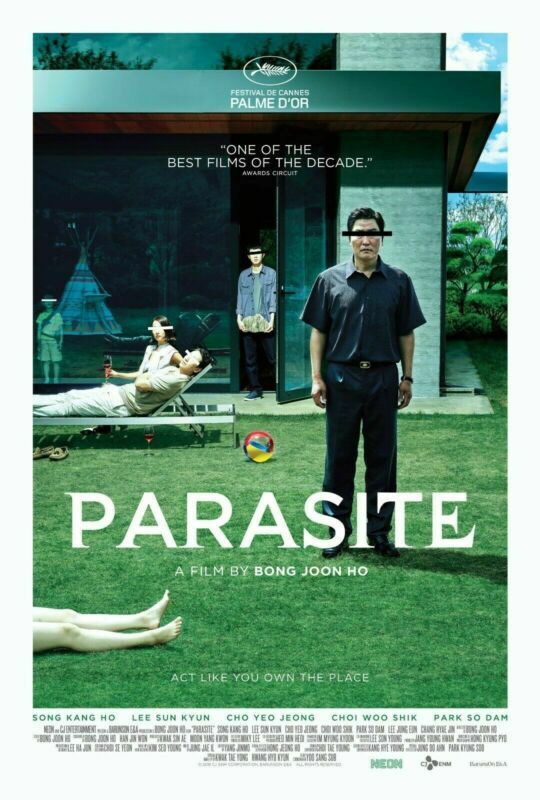
2.parasite (IMDb -8.6)
It is a 2019 South Korean black comedy thriller film directed by Bong Joon-ho, who co-wrote the screenplay with Han Jin-won.It revolves around a poor family who scheme to become employed by a wealthy family and infiltrate their household by posing as unrelated, highly qualified individuals.
Parasite premiered at the 2019 Cannes Film Festival on 21 May 2019, where it became the first South Korean film to win the Palme d’Or. Among its numerous accolades, Parasite won a leading four awards at the 92nd Academy Awards: Best Picture, Best Director, Best Original Screenplay, and Best International Feature Film, becoming the first non-English language film to win the Academy Award for Best Picture.
1.inception (IMDb-8.8)
The film stars Leonardo DiCaprio as a professional thief who steals information by infiltrating the subconscious of his targets. He is offered a chance to have his criminal history erased as payment for the implantation of another person’s idea into a target’s subconscious.Inception received critical praise for its screenplay, direction, themes, action sequences, visual effects, musical score, and ensemble cast. It won four Academy Awards in Best Cinematography, Best Sound Editing, Best Sound Mixing, and Best Visual Effects and was nominated for four more: Best Picture, Best Original Screenplay, Best Art Direction, and Best Original Score.
It may seem that there’s nothing you can do about your stress level. The bills aren’t going to stop coming, there will never be more hours in the day for all your errands, and your career or family responsibilities will always be demanding. But you have a lot more control than you might think. In fact, the simple realization that you’re in control of your life is the foundation of stress management.
Managing stress is all about taking charge: taking charge of your thoughts, your emotions, your schedule, your environment, and the way you deal with problems. The ultimate goal is a balanced life, with time for work, relationships, relaxation, and fun – plus the resilience to hold up under pressure and meet challenges head on.
Identify the sources of stress in your life-
Stress management starts with identifying the sources of stress in your life. This isn’t as easy as it sounds. Your true sources of stress aren’t always obvious, and it’s all too easy to overlook your own stress-inducing thoughts, feelings, and behaviors. Sure, you may know that you’re constantly worried about work deadlines. But maybe it’s your procrastination, rather than the actual job demands, that leads to deadline stress.
To identify your true sources of stress, look closely at your habits, attitude, and excuses:
Do you explain away stress as temporary (“I just have a million things going on right now”) even though you can’t remember the last time you took a breather?
Do you define stress as an integral part of your work or home life (“Things are always crazy around here”) or as a part of your personality (“I have a lot of nervous energy, that’s all”).
Do you blame your stress on other people or outside events, or view it as entirely normal and unexceptional?
Until you accept responsibility for the role you play in creating or maintaining it, your stress level will remain outside your control.
Start a stress journal-
A stress journal can help you identify the regular stressors in your life and the way you deal with them. Each time you feel stressed, keep track of it in your journal. As you keep a daily log, you will begin to see patterns and common themes. Write down:
What caused your stress (make a guess if you’re unsure).
How you felt, both physically and emotionally.
How you acted in response.
What you did to make yourself feel better.
Look at how you currently cope with stress-
Think about the ways you currently manage and cope with stress in your life. Your stress journal can help you identify them. Are your coping strategies healthy or unhealthy, helpful or unproductive? Unfortunately, many people cope with stress in ways that compound the problem.
Unhealthy ways of coping with stress-
These coping strategies may temporarily reduce stress, but they cause more damage in the long run:
• Smoking • Drinking too much • Overeating or undereating • Zoning out for hours in front of the TV or computer • Withdrawing from friends, family, and activities • Using pills or drugs to relax • Sleeping too much • Procrastinating • Filling up every minute of the day to avoid facing problems • Taking out your stress on others (lashing out, angry outbursts, physical violence)
Learning healthier ways to manage stress-
If your methods of coping with stress aren’t contributing to your greater emotional and physical health, it’s time to find healthier ones. There are many healthy ways to manage and cope with stress, but they all require change. You can either change the situation or change your reaction. When deciding which option to choose, it’s helpful to think of the four As: avoid, alter, adapt, or accept.
Since everyone has a unique response to stress, there is no “one size fits all” solution to managing it. No single method works for everyone or in every situation, so experiment with different techniques and strategies. Focus on what makes you feel calm and in control.
Not all stress can be avoided, and it’s not healthy to avoid a situation that needs to be addressed. You may be surprised, however, by the number of stressors in your life that you can eliminate.
Learn how to say “no” – Know your limits and stick to them. Whether in your personal or professional life, refuse to accept added responsibilities when you’re close to reaching them. Taking on more than you can handle is a surefire recipe for stress.
Avoid people who stress you out – If someone consistently causes stress in your life and you can’t turn the relationship around, limit the amount of time you spend with that person or end the relationship entirely.
Take control of your environment – If the evening news makes you anxious, turn the TV off. If traffic’s got you tense, take a longer but less-traveled route. If going to the market is an unpleasant chore, do your grocery shopping online.
Avoid hot-button topics – If you get upset over religion or politics, cross them off your conversation list. If you repeatedly argue about the same subject with the same people, stop bringing it up or excuse yourself when it’s the topic of discussion.
Pare down your to-do list – Analyze your schedule, responsibilities, and daily tasks. If you’ve got too much on your plate, distinguish between the “shoulds” and the “musts.” Drop tasks that aren’t truly necessary to the bottom of the list or eliminate them entirely.
Stress management strategy #2: Alter the situation-
If you can’t avoid a stressful situation, try to alter it. Figure out what you can do to change things so the problem doesn’t present itself in the future. Often, this involves changing the way you communicate and operate in your daily life.
Express your feelings instead of bottling them up. If something or someone is bothering you, communicate your concerns in an open and respectful way. If you don’t voice your feelings, resentment will build and the situation will likely remain the same.
Be willing to compromise. When you ask someone to change their behavior, be willing to do the same. If you both are willing to bend at least a little, you’ll have a good chance of finding a happy middle ground.
Be more assertive. Don’t take a backseat in your own life. Deal with problems head on, doing your best to anticipate and prevent them. If you’ve got an exam to study for and your chatty roommate just got home, say up front that you only have five minutes to talk.
Manage your time better. Poor time management can cause a lot of stress. When you’re stretched too thin and running behind, it’s hard to stay calm and focused. But if you plan ahead and make sure you don’t overextend yourself, you can alter the amount of stress you’re under.
Stress management strategy #3: Adapt to the stressor-
If you can’t change the stressor, change yourself. You can adapt to stressful situations and regain your sense of control by changing your expectations and attitude.
Reframe problems. Try to view stressful situations from a more positive perspective. Rather than fuming about a traffic jam, look at it as an opportunity to pause and regroup, listen to your favorite radio station, or enjoy some alone time.
Look at the big picture. Take perspective of the stressful situation. Ask yourself how important it will be in the long run. Will it matter in a month? A year? Is it really worth getting upset over? If the answer is no, focus your time and energy elsewhere.
Adjust your standards. Perfectionism is a major source of avoidable stress. Stop setting yourself up for failure by demanding perfection. Set reasonable standards for yourself and others, and learn to be okay with “good enough.”
Focus on the positive. When stress is getting you down, take a moment to reflect on all the things you appreciate in your life, including your own positive qualities and gifts. This simple strategy can help you keep things in perspective.
Stress management strategy #4: Accept the things you can’t change-
Some sources of stress are unavoidable. You can’t prevent or change stressors such as the death of a loved one, a serious illness, or a national recession. In such cases, the best way to cope with stress is to accept things as they are. Acceptance may be difficult, but in the long run, it’s easier than railing against a situation you can’t change.
Don’t try to control the uncontrollable. Many things in life are beyond our control— particularly the behavior of other people. Rather than stressing out over them, focus on the things you can control such as the way you choose to react to problems.
Look for the upside. As the saying goes, “What doesn’t kill us makes us stronger.” When facing major challenges, try to look at them as opportunities for personal growth. If your own poor choices contributed to a stressful situation, reflect on them and learn from your mistakes.
Share your feelings. Talk to a trusted friend or make an appointment with a therapist. Expressing what you’re going through can be very cathartic, even if there’s nothing you can do to alter the stressful situation.
Learn to forgive. Accept the fact that we live in an imperfect world and that people make mistakes. Let go of anger and resentments. Free yourself from negative energy by forgiving and moving on.
Stress management strategy #5: Make time for fun and relaxation-
Beyond a take-charge approach and a positive attitude, you can reduce stress in your life by nurturing yourself. If you regularly make time for fun and relaxation, you’ll be in a better place to handle life’s stressors when they inevitably come.
Healthy ways to relax and recharge
Go for a walk.
Spend time in nature.
Call a good friend.
Sweat out tension with a good workout.
Write in your journal.
Take a long bath.
Light scented candles
Savor a warm cup of coffee or tea.
Play with a pet.
Work in your garden.
Get a massage.
Curl up with a good book.
Listen to music.
Watch a comedy
Don’t get so caught up in the hustle and bustle of life that you forget to take care of your own needs. Nurturing yourself is a necessity, not a luxury.
Set aside relaxation time. Include rest and relaxation in your daily schedule. Don’t allow other obligations to encroach. This is your time to take a break from all responsibilities and recharge your batteries.
Connect with others. Spend time with positive people who enhance your life. A strong support system will buffer you from the negative effects of stress.
Do something you enjoy every day. Make time for leisure activities that bring you joy, whether it be stargazing, playing the piano, or working on your bike.
Keep your sense of humor. This includes the ability to laugh at yourself. The act of laughing helps your body fight stress in a number of ways.
Learn the relaxation response
You can control your stress levels with relaxation techniques that evoke the body’s relaxation response, a state of restfulness that is the opposite of the stress response. Regularly practicing these techniques will build your physical and emotional resilience, heal your body, and boost your overall feelings of joy and equanimity.
The OBC Bill provides constitutional status to the National Commission for Backward Classes (NCBC), which was established under the National Commission for Backward Classes Act, 1993. The power of examining complaints regarding the inclusion or exclusion of individuals or groups in the list of backward classes. The 123rd constitutional bill finally got a nod from the Supreme Court in August 2018 after being not established as a law in 2017 due to lack of majority in the house and inserted a new Article 338B.
This new bill gives the commission to investigate and monitor for the safeguard of the socially and educationally backward classes with the powers of a civil court while investigating and also gives it the power to summon any person across the country and also enforce their presence. As of earlier the commission for SC / ST used to hear for the grievances of the OBCs. The new bill also provides for having a chairperson for the commission, a vice-chairperson, and three other members who will be appointed by the President. The tenure and working conditions for all the members will be decided by the President. BJP government also assured that the committee would include a woman member also. The NCBC will be working for the socio-economic upliftment of the OBCs.
Duties of the National Commission for Backward Classes (NCBC) are –
Investigation and Monitoring of the safety and provisions provided to the backward classes under the constitution and other implemented laws.
It can inquire about the violation of the rights-specific complaints.
Annual reports should be presented to the President, and to be tabled in Parliament and State Legislative Assemblies.
To give advice and make recommendations on the socio-economic development of the backward classes.
Reports suggest, that there is less than 15% reservation in the government sector jobs for the OBCs. According to the reports of the Department of Personnel and Training (DoPT) 8.4% grade A pots are occupied by OBCs, mentioned Ram Gopal Yadav, SP, Uttar Pradesh. He even said during the parliamentary debate on the OBC Bill that, there is no need for an OBC creamy layer, as raising the limit of the creamy layer won’t benefit anyone. And also, that, though there is a need to increase the reservation in jobs for the OBCs but getting jobs alone won’t help much. The mindset of people needs to change too. Parties like Biju Janata Dal and Dravida Munnetra Kazhagam party asked for the power to add or eliminate in the list of backward classes to be laid in the hands of the State and not Centre the state knows better about what kind of people belong in that particular State while Bahujan Samaj Party (BSP) asked for reservation for the OBCs even in the private sector. Some even asked for the filling of the reserved vacant seats and that the member of the committee should be chosen from the individuals belonging to the OBC category. However, article 342 A authorizes the President to specify for the socially and educationally backward classes in consultation with the Governors of the respective States. The present members to NCBC are Dr. Bhagwan Lal Sahni as the chairperson, Dr. Lokesh Kumar Prajapati as the Vice-Chairperson, Shri Ajoy Kumar as the Secretary, and the other three members are – Dr. Sudha Yadav, Shri Kaushalendra Singh Patel, and Shri Achary Thalloju.
It’s always better to start early, and gain as much experience.
Internships have always been difficult while juggling University where it is required to show up everyday and attend almost all your classes. But the competition these days are cut throat and nothing promising could ever come your way — if you think you could just breeze through lives.
Being respectful that not all situations that every single one of us face are conducive for us to start investing our time for any sort of extra-curricular, but you also need to stop excusing yourself and being lethargic, it won’t ever help you.
You are supposedly at the prime of your age, if you keep up the act that have bailed you away from serious commitment, then you are just downplaying your life. You’d never need to blame it on other’s past action or even current actions, even though you could be right to blame them; it doesn’t help, you’ll just spiral out with your thought, and give power to someone else, that’s a big no-no.
Moving on, let’s ask oneself what they are interested in, and even with what is currently their educational qualification, are you comfortable trying new things? And if you could see yourself trying everything out just once, give yourself a pat in the back and get on your devices, reach out to people and start applying for positions and trainings that could help you.
The more you get exposed to different working conditions is better, you get street-smart for starters, but you also learn what it takes to strive and exist in the market, you learn interpersonal skills and even brush up your communication skills which wouldn’t have happened within your little friends clique.
Thus actively participating in such activities without being nagged by someone would be beneficial for you and improve you, more than anything else.. it could also help proof people that you’re serious with what you’re doing and are capable enough to look after yourself.
The pandemic with all its flaws have provided to accommodate work-from-home internship opportunities to many, which takes off a big load from us, and we can engage in multiple activities at a given time with just a switch of your device screens/windows/slides.
Along the same lines of how a tragic hero need to be an enabler for not just a good plot but to reach for the desired set of emotions equally is 5) Hamartia a tragic hero with imperfections; the specific being his/her “tragic flaw” not the best adaptation of Hamartia, but is far more commonly used for a characteristic moral failing in an otherwise predominantly good man. The Hamartia of the hero is closely and inseparably connected with 6) “Peripety” the several of fortune from the point-of-view of the character involved and for a spectator or a reader the plot of the play as a whole is a reversal of the direction of the action. The analogy is thus that Peripety is contained in the idea of the boomerang effect of one’s own action. 7) Discovery – “A change from ignorance to knowledge.” The discovery of the truth of the matter is the costly beginning from the state of ignorance which is the very essence of “hamartia”. Hamartia, Peripety and Discovery all together in their ideal schematisation of the tragic plot. Furthermore, tragedy, is presupposed as purging out of emotions of Pity and Fear i.e. Catharsis; exhilaration, a pleasurable sense of relief and the Tragic hero is given the title of the enabler of the purgation of these emotions. Relation of emotional catharsis which tragedy helps generate is the tragic pleasure. Therefore the continuous insistence towards Pity and Fear is because pity is generated under the pretence of a tragedy towards the character whose punishment for the audience is exceeding his crime; the punishment is more that what he deserves, and similarly Fear is when the hero; who being “not pre-eminently just and virtuous” is still better than ourselves and yet failed, then what hope do we have left? Therefore the catharsis that Aristotle mentioned just once in Poetics is of emotions that occurs accidentally but surely in a tragedy is something he elaborates on, this accident is to be experienced to everyone in the audience or to anyone reading a work of art; no
matter of high intellect does experience this form of proper pleasure which happens through proper tools and albeit perceived to be an “accident” is a sure shot guaranteed by the tragic hero. Thus the tragic hero of Aristotle accounts to the whole of the Tragedy to be brought up to its potential and serve its purpose.
Make sure you also read the second part of this post.
When Aristotle is talking about the tragic hero, it’s important to pan out where the tragic hero is being placed at and accordingly the significance of the ‘tragic hero’ needs to be questioned. This is furthered by the interpretation of the plot and the use of tragedy in the said plot that would give the idea of what Aristotle is describing as the tragic hero. So it’s important to understand tragedy; before anything, and so Poetics seems to be a plausible guide alongside plenty of other definitions within a dictionary which although correct; doesn’t fully help apply the idea of Aristotle. No-one in any absolute sense could define what Poetics denote as words have been genuinely lost in translation and what we could scavenge are a sense of one’s own point-of-view or interpretation to pacify their intellect; one could contest it to be inconsistent and probably is right in doing so, but the fact of the matter is the idea of lost in translation remains undeterred.
Additionally, discussing on the characteristics of the tragic hero is an extremely elaborated idea of what Tragedy is and while, Aristotle’s Tragic Hero is someone who is primary agent in his Tragedy; which is an essential element in the notion of arousing Pity and Fear – the catharsis of Pity and Fear for Tragic Pleasure is also an important characteristic feature for the Tragic Hero.
Humphrey house affirm seven points directed towards the dramatic character or the tragic hero 1) The tragic hero or the character in a tragedy must be Good. Tragedy is a limitation of personages better than the ordinary man. Hence goodness of character is a prerequisite for Aristotle as it is the foundation of initial sympathy in a spectator without which tragic emotions cannot be roused, that is tragic pleasure is ultimately conveyed through sympathy or Pity, a very basic of the whole tragic pleasure. All characters in a tragedy for Aristotle should be equivocally good. Although Aristotle’s good man is not good unless he is desiring specific, positive, good ends and working towards the attainment; therefore its necessary for the execution of a tragic plot that the hero has to be “not prominently virtuous or just”; adding here Immanuel Kant who talks action to be morally worthy, something that should be executed to do the right thing for the right reason and is said to hold that to do the right thing for personal reason isn’t morally right and that the motive of duty should be autonomous and not altruistic. Scholars have questioned on what does Aristotle mean by “good”, and it’s later when reading Poetics is established on the Ethical Goodness of a character. 2) Appropriateness of Character – a fitting character, the Plot should attempt to guarantee the individuality of Character in compliance to its status which is fundamental. 3) “Likeness” of Character – the literary portrait produced by the poet should be ‘like the original’, i.e. like what the personage in question is in history of legend; depriving the poet of his creative freedom and ties him to a quiet indefinable exemplar, because history and legends are largely the creation of other writers. Likeness — Aristotle differentiating Tragedy and Comedy by the consideration of type of characters shown acting in each — characters are either better or worse than ourselves, or just like ourselves: although Comedy makes its personages “worse” and Tragedy makes its personages “better than the men of the present day.” 4) Consistency – Aristotle describes a formula “consistently inconsistent” it is not concerned with momentary conflicting passions but with “the basis or foundation of a character “, — habit, bent or tendency.
In terms of its influence in modern literary criticism, aesthetics and philosophy of art, Longinus’s Theory of Sublime is a very critical piece of work. He is placed second to Aristotle’s Poetics by many scholars. Peri Hypsous is simply a rhetorical treatise offering an especially strong inclination of the awe-inspiring or high style of quality writing siding with the glories of written literature.
The ownership of the treatise is a debate since its emergence during the Italian Renaissance with several manuscripts around until the initial publication by Italian humanist and philologist Francesco Robortello shaping the pre-existing dominant ideas in the world of literary criticism by Horace and Aristotle. The Theory of Sublimity is considered to be subjective as well as intersubjective on account of literary practice. The entirety of Longinus’s work is constructed over the notion of expressing greatness in one’s language and that being an important precursor for a writer, it also adds to what his predecessors helped shape the art of writing and diction. Longinus’s approach is characterised as distinctive and original on its precisely subjective drift: its focus on the creative and receptive facet of verbal arts, on the wit of the writer and affect on the audience is a crucial role of the text. In western thought, the theory of Hysous is seen at length from its production contesting that the theory doubles itself as a theory of Genius. Longinus has also successfully inclined towards sublime being considered as a dual experience of simultaneously being overwhelming and elevating, dominating and exalting. We are acquainted with the five forces of Sublimity; 1) Grandeur of thought and ability to form grand conception & 2) Powerful and inspired emotions – These are related to writers innate or natural capacity. 3) The effective use of stylistic & rhetorical figures as a means of increasing emotional impact of literature, 4) Noble diction & phrasing — the skilful use of metaphors and other figures of speech & 5) Dignified & elevated composition, most effective arrangements of words – is an artificially gained tool for achieving sublimity. The nurtured virtue in an author who must skilfully cultivate into the feeling in what he/she writes is proposed as; Sublimity as the echo of noble mind, could be a viable thought. “Sublimity is” for Longinus, “a kind of eminence or excellence of discourse. It is the source of distinction of the very greatest poets and prose writers and the means by which they have given eternal of their own fame.” It’s a discussed that the hypsous is intrinsically related to logos — translated as discourse; that the thought and diction — is inherently linked to the nobility of supreme and that a piece of art containing flashes of Sublimity — for a text need not be dripping in Sublimity but its position could be elevated with just these flashes — is universal and transhistorical. The Sublimity of a text is acknowledged by its affect; its feeling and emotion, and so the most consequential way of defining sublimity of a text is by describing its affect on the audience.
Figuring out what Ideology is, when understanding these Marxist terminology, it’s important to look at these ideas not as obsolete reality but an ever evolving pervasive concept. Karl Marx, has his own definition of Ideology as ideas and beliefs set out by the dominant class of a society for everyone to obey and thus justify the actions of the dominant class in any society. Here, Louis Althusser sets out with his own interpretation and has worked in “On The Reproduction Of Capitalism: Ideology And Ideological State Apparatuses”, that; i) Ideology has no history, it is eternal; ii) Ideology represents the imaginary relationship of individuals to their real conditions of existence; iii) Ideology has a material (or spiritual) existence; iv) Ideology interpellates individuals as subjects. The four of these points become a pinnacle to what Althusser insists in the nature of Ideology.
These 4 parameters help us understand its nature, to what Ideology represents, for when man entered the state of nature, by subscribing to ideas and beliefs, we subscribed to this ideology, which though speaks of, no history in itself, it’s still is an implicit force that drives the Capitalistic existence, although omnipresent. And leading on to the second point, that “men represent their real conditions of existence to themselves in an imaginary form”. Who one is, is just another fragmented idea of you, which Lacan also states in the Mirror Stage and this is crucial in the understanding of this idea as well, that ideology works within multiplicity of narratives, conscious or unconscious, that shapes or has the ability to shape one’s identity. When the material existence of ideology is brought up, it is the material practices, ritual, and action that works under Ideology, unsuspecting and yet controlling one within their grasp. And lastly, Althusser believes, ideology interpellates individuals as subjects – their subjection to the category of subjects. There is no ideology except by the subject and for subjects, which by working seamlessly and weaving thoroughly over the three previous paradigms to concreticise the concept of ideology.
One could say, Althusser’s insight about the “social unconscious” when it comes to assessing the concrete political realities and struggles, is thus become not just another crucial point to define and understand Ideology, but in itself a very significant negotiation of the concept of ideology in itself.
Never give up on an opportunity for education, to educate yourself is a very pivoting experience.
The seemingly biggest existential crisis for most of us, if not all, hits when you’ve finally graduated but can’t focus on what is the next right step. This comes with a lot of challenges and pressures, but always remember; to focus on what you want, these are the years where you can mess up, pick up the pieces and move forward, do that, unabashedly.
Are you scared, or not ready to take up your Masters? Or do you want to look for a stable job right away? This is your life, and you get the reigns for it, no matter the pressure, don’t let people fool you into pursuing what you weren’t read for, these people are not gonna be around forever to scrutinise you, we all just need to learn to create healthy boundaries.
Make sure you are engaging yourself with all sorts of information and not just one sided research thrusted upon you by someone. That’s got to be your first step.
Think clear of long term goals before pursuing any thing, imaging what do you consider of yourself in the next 10 years, and plan accordingly.
If the situation isn’t favourable now, that doesn’t necessarily should spiral you into depression, work hard on proving a plan, it seems superficial for some, but it always works.
Have your plans gone sour? No worries, it’s not the end of the world, nothing truly happening to you is, just keep a calm mind and multiple options at your disposal; never put all your eggs in one basket.
Your degree doesn’t satisfy what you had planned, get another one, it’s just matter of years you’d put in, and it would be enlightening.
Take up courses, brush up your skills, know more and have the zeal to learn and tackle anything, and that’s it for you, if you could just wholesomely tackle anything that is in you way, you can surely win over all your situations.
But, most importantly, don’t run behind something or someone, you’re young, you’re going to make mistakes and you need to own upto it, but sticking to someone or something would always narrow down your path while you just want to do the opposite.
Just make sure that you —no matter what’s the situation is in ahead of you don’t loose faith in yourself, even when no one truly are standing besides you; because its always empty at the top 😉
Innovation is the discovery of new knowledge. It is neither automatic nor accidental rather it is a product of deep thinking, careful observation, and systematic activity. Scientific inquiry is an unending process and the object of this inquiry is innovation.
Types of innovation:
Product- Innovation in this category refers to the innovation in the quality of the product and both improvements to existing product lines or completely new offerings. The key is to add significant value.
Service- It involves the improvement of the consumer’s experience. It includes innovation in the offerings of the product, making it easier to use, fixing common problems. Here the objective is to make the product stand out.
Process- It is an inward-looking innovation, improving core competencies. It includes significant changes in technology, equipment, or software. For example, Henry Ford’s invention of the assembly line shortened the time necessary to produce a single-vehicle.
Management- It is the process of managing innovative ideas. The planning and process behind coming up with ideas, turning them into action plans, and developing them for the business until they become a reality. Implementation of new management practices, processes, etc that shows a departure from older norms.
Open- It refers to the innovation process to collaborate globally, bring out newer ideas, working beyond boundaries and expand the markets for external use of innovation.
Value-creation- It means to give something valuable for receiving something valuable in return. Value creation involves a process to make the product stand out,to deal with competitions, create demand in the market.
Radical innovation- It involves the birth of new industries and the application of revolutionary technologies. They allow society to take a leap forward. It brings about revolutionary changes in society like the industrial revolution.
Incremental innovation- Majority of innovation are of this type. It includes making improvements in existing products. the aim is to make the product stand out in the market and reduce competition around it. For example, the newer updates in smartphones and various apps add new features and improve their efficiency.
Disrupting Innovation- It involves the creation of newer markets and value networks which eventually disrupts the existing market and value network. It describes a process that initially a product is at the bottom of the market, it is less expensive and more accessible and gradually comes to rule the market. For example, Netflix disrupted the video rental business.
Architectural Innovation- It refers to innovation in the architecture of any product that changes or modifies the way various components of the system relate to each other.
No doubt that everyone wants to remain fit and healthy . Food and nutrition play a very vital role in our growth and development . These are helpful for maintaining good health . The requirement of nutrition is essential for every individual but it is indispensable for the individuals who actively participate in games and sports . With the help of appropriate nutrition , sportsperson can enhance their performance . Even some supplements are also required to provide proper nutrition to sportsperson.
Meaning of a Balance Diet
A balanced diet refers to the intake of edibles which can provide all the essential food constituents necessary for growth and maintenance of the body , in definite amount in which they are required by the body .A balanced diet means eating the right amount of foods from all food groups .
“A diet which consists of all the essential food constituents , viz., protiens , carbohydrates , fats , vitamins , minerals and water in correct proportion is called a balanced diet.”
In other words , ” Balanced diet is that diet which contains of various constituents of food in accurate and appropriate quantity and quality according to the requirement of an individual .”
In fact , every individual does not require same type of diet . The diet differs from individual to individual . The following points sum up a balanced diet .
A balanced diet must contain all the essential constituents in adequate amount
There must be definite proportion between the different constituents of food .
The food should be easily digestible .
Cooking of food is necessary because it sterilizes foodstuff and makes it palatable and easily digestible.
Colourism entered the Indian society through British rule. The British people would often prefer light skin Indians as candidates for important roles. Even the European or the Mughals were relatively light-skinned people. This made Indians start looking at light skin as a sign of superiority.
Even today the obsession with white skin tone continues. A lot of girls from a young age have to go through things like:
“you should apply turmeric and saffron paste to make your skin fair”
“you should do a particular type of wax which removes tan”
“he married her despite her being dark”
“you should use light skin makeup to look fair”
Well, these are a few of the thousands of sentences that a person with dark skin goes through. Growing up sentences like these make the person feel insecure about their colour. Nobody is born with insecurities; a child will never differentiate between a skin tone. It’s the people around us that make us like a particular skin tone.
The media never fails to make money out of the beliefs of people. People consider white skin good, so they decided to bring products like fair & lovely. There are so many more products and creams which say things like natural fairness, or natural white to attract consumers. Many young men and women use these products daily. What they don’t realise is that these products contain bleach, steroids, and other harmful ingredients that lead to skin cancer and liver damage in the long term.
After #blacklivesmatter, products like fair and lovely were trolled so they decided to change the name into glow & lovely. But it is still the same product that was built to support light skin.
A lot of other brands also did initiatives like Johnson & Johnson stopped their line of skin lightening products. They also told how they will include all shades of skin colour in their band-aids.
Changing the name of the product doesn’t mean that people won’t buy it and use it as a fairness cream. But, let’s still appreciate the little changes the multinational companies made. But, there is still a long way to go.
Another thing you must have noticed is the matrimonial ads in your newspaper. If I got money every time I saw the word “fair” I would be a billionaire.
What people fail to understand is that our skin tone depends on the geographic conditions, that is how exposed we are to direct sunlight. In places that are sun-soaked people have a dark skin tone. This is because their skin is rich in the pigment melanin. Melanin creates a shield from the radiation of the sun.
This is why when light-skinned people visit places with a lot of sunlight they experience sunburn because they don’t have enough melanin to protect them from the sun.
Our skin colour solely depends on how far we are from the equator. So, I don’t really understand why light-skinned people are given superiority when clearly this isn’t something we can control. Our skins are built of a certain tone to protect us from the environment we live in.
Next time if someone around you shames you or anyone for their skin colour make sure to correct them scientifically and also tell them how much money white people spend on tanning regularly. White people tan for hours, buy lotions, get spray tans to get the colour that we have. I am not stating this to hate on them, I just want to point out how they spend money on tanning while we bleach out our tan.
Failure a seven-letter word that has travel seven continents of the world. Failure comes across in every person’s life. In life failure is inevitable and everybody should taste failure because it teaches you the importance of everything that made you fail. Like for if you had invested money in some stock market and it failed then it teaches you the value of money, the same goes when you failed to pass an exam it teaches you the importance of time when you fail in your relationship it teaches you the value of the person you were with and the list can go on and on because failure can come even when a baby falls when he tries to stand for the first time to a startup by a young entrepreneur which fails and everyone in life has a different meaning of failure/ has a different meaning of failure in life and no one can tell you what’s failure to you and them because it’s different for everybody.
A person who has never failed in life is a real failure. Everyone thinks heroes are those who win but I feel heroes are those who have lost because they only know the real value of the win. This goes the same in the life one cannot get successful without getting failure. Failure is a part of success and also leads you to success.
Failing in anything makes you a loser in the eyes of the world. Society judges you only on your outcome. It’s like the stigma that one cannot fail in something but that’s not true everyone fails in any of the ways in life at a certain point. Rather than getting failure in something people are more concerned about what if I failed and what would people say about it and this makes you the real failure. Rather than demotivating or making fun of someone’s failure, we should help them to overcome it.
On the other hand, telling someone to never give up is terrible advice. Successful people give up all the time. If something is not working, smart people don’t repeat it endlessly. They revise. They adjust. They pivot. They quit. As the saying goes, “Insanity is doing the same thing over and over again and expecting different results.”
Success vs failure is only decided when you lose the persistence and determination to keep trying. Circumstances can only specify the amount of time and effort which it will take to achieve your goal and perhaps there are some goals you will never achieve in your life but your attempts and experience you got from it will help you in living your life.
Failure teaches you to be ready for similar situations that come in the future making you better than before. It makes you learn through the experience of a situation so that you will not fail the next time when you are in a similar situation. Failure makes you a wise person. It helps you to make wise and careful decisions about important aspects of your life so that you will not commit the same mistake twice.
So, failure is not just about not working hard or not giving your 100% percent, or not putting in the extra effort. You should also realize that it is about the decisions you take and the choices you make. It is about the responsibilities and the things you believe in.
















![Aristotle’s view on the Tragic Hero [Part B]](https://eduindex.org/wp-content/uploads/2021/07/attl.jpg?w=198&h=1&crop=1)






 Eduindex
You must be logged in to post a comment.