Cultural Diversity!

Cultural diversity can be explained as the presence of different cultures within a social system, which differ in values, norms and behavior and encompasses different ways of thinking, managing, and communicating. It is important because a country, workplaces, and schools increasingly consist of various cultural, racial, and ethnic groups and hence makes a country stronger and better able to compete in the new global economy . People from diverse cultures bring language skills, new ways of thinking, creative solutions to difficult problems and negotiating skills.

Cultures are created through communication which is considered to be the means of human interaction through which cultural characteristics are created and shared. In every culture there are basic standards for social interaction such as personal space distance, eye contact, amount of body language displayed in public, negotiating style etc. Culture is very important because it covers many different parts of human life. It is directly related to the human experiences regardless of gender, age and race. It forms people’s everyday life, their views, lifestyles, basic assumptions, their perceptions and above all, the culture shapes the individuals’ relationship.People express their culture through the values they possess about life and the world around them which in turn affects their reasoning in what behaviors suits to certain situations. Learning about another culture does not necessarily mean that one must internalize the norms of another culture and accept them. It provides a channel to learn how to manage the cross-cultural conflicts and helps people understand different perspectives within the world in which they live, and helps eliminate negative stereotypes and personal biases about different groups.

Diversity is a concept that counters discrimination and embraces the inclusion of people with various experiences and backgrounds such education, parental status, geographic location, language, and culture. It is also about learning from others, providing support and respect to those with similar and different experiences.

Culture is a way of regarding and living life that is shared by members of a social group and that is passed on to people from the previous generation. More specific, culture consists of ways to behave and value aspects in life and is derived from the social environment where people grew up. Due to globalization and labor migration the presence of diversity in society and in organizations has accelerated the process cultural diversity further. Therefore it is evident that cultural diversity is becoming an unavoidable factor in many areas.

To support cultural diversity in our workplace or at school, we can increase our level of understanding about other cultures by interacting with people outside our culture, be proactive in listening, accepting, and welcoming people and ideas that are different from your own, avoid imposing values on others that may conflict or be inconsistent with cultures other than your own , intervene in an appropriate manner when you observe others engaging in behavior that show cultural insensitivity or bias and advocate for the representation of various cultural groups within the local community and the society in general.

As diversity keeps growing globally, cultural diversity should be embraced as it acknowledges and values various cultural ideas, encourages contributions from all groups, recognizes and respects diversity, people are empowered to achieve their full potential and differences are celebrated.

Child Labour – A Curse By Fate

The COVID-19 pandemic, the worst crisis faced by mankind since the second world war will not spare anyone. It has already created much havoc as a result of which humanity is severely suffering and will continue to suffer for the next not known years. It has pushed almost every country in this world into deep recession resulting in massive job losses in all sectors of the economy and its devastating effects have already started affecting the humans.


India is the second most populous country in the world. Our country is home to more than 400 Million Children. They constitute more than 40% of Indian population. India also has the highest number of working children in the world who are employed, not only in small scale industry, but also in industries with hazardous work. There are 10 Million child labourers in India, according to the last census and majority of them are confined to the workplace by employers. In India over 80% of children below 14 years of age are engaged in child labour are based in rural areas . It has been thirty years since parliament passed the law against child labour but still is prevalent in India and is increasing at an alarming rate.


According to International Labour Organisation (ILO) this pandemic would push 400 Million informal workers in India into deep poverty and many families will not be able to provide their children with basic necessities of life and with little or no government support and with no other alternative left they would be forced to employ their children for their survival, it will become the new survival mechanism for them.


According to UN this pandemic will push thousands of vulnerable children into child labour. ILO and UNICEF have noted that number of children locked in child labour had declined by 94 Million since 2000 but UN agencies have already warned that this pandemic has the capacity of reverting the growth .


To spread awareness and for the eradication of child labour from the world in all its form by 2025 ILO introduced world day against child labour in 2002 . Since then 12 June is celebrated as World Child Labour Day. Theme for 2020 is COVID-19 : Protect children from child labour, now more than never. ILO defines Child Labour as work that deprives children of their childhood, their potential and their dignity, and that is harmful to their mental and physical development. According to the most recent estimates published by ILO in 2017, around 152 Million children were forced into work from 2012 to 2016, including 73 Million in hazardous position.


This pandemic has already affected millions of life and is likely to affect a million more and its impact is going to be long lasting and intense. Loss of livelihood, closure of school for long duration combined with loopholes in the law and poor conviction of violators will make the children worst sufferer of this crisis. Already the condition of children in India was not any good and it is likely to get worse because of this pandemic. With extreme unemployment and poverty many children will be forced drop out of school and join work to support their families .


The government should ensure strict enforcement of child labour laws and provide children and their families with the basic necessities of life so that they are not left to suffer and to prevent them from falling in the traps of trafficking and bonded slavery.


If the government of India will not take immediate and effective actions for protection of children from child labour in this crisis then we are sure to lose the battle against child labour and elimination of child labour by 2025 will just become a dream.

Whatsapp on 4 devices to access same account may come soon.

Messaging and calling app whatsapp is going to provide the facility to run the same account to multiple devices very soon. Now, user can have the access to the account with multiple device of their choice.

Whatsapp is testing multiple-device backing since few months and still many experiments are under way and is need to be done and the company might be getting ready to reveal the feature, at least in the beta version. The website that tracks new features on the beta version of the instant messaging are few other  interesting information from application.

The new post also shared a screenshot of the feature signifying that the device will use Wi-Fi in order to synchronize data between multiple devices plans.  It is also expected to provide a similar option for app handlers working on just cellular networks.

WABetaInfo, the website claimed via a post that operators will be able to practice WhatsApp on various multiple devices of their choice which is currently, a single account can only be used on a single device.

Tech expert are excited with whstsapp announcing use of multiple devices for same account handlers and its functioning. It will take few more months to whatsapp to make it official as the test and trial are under way. The app is quite popular and it is widely being used in India and other part of the world. Coming with this feature will provide more customers in near feature and it is going to be a profitable decision for the company, tech expert says.

The introduction of the instant messaging platform, WhatsApp has been limited to usage on solo device. The company later released WhatsApp Web support but the feature is only available when the primary device is connected to the internet and also needs authentication from the device. The support for multiple devices might extend to different form factors including iPads. The feature will first be made available to the beta version of the application.

WhatsApp is also making changes to the recently launched dark mode. In order to make the experience better, the instant messaging application is planning to change the color of chat bubble to a new shade of green.

WhatsApp has also been reported to release a new feature where the user will be able to conduct searches on the basis of dates. The feature has been spotted by WABetaInfo.

 This is going to be great feature and people will surely love it as whatsapp is quite common and popular with use of both the android and IOS users subsequently.

Earlier the popular messaging app is bumping up the number of people who can be on a video or voice call at once to eight, double its previous limit of four.

https://www.livemint.com/technology/tech-news/whatsapp-may-soon-allow-up-to-4-devices-to-access-same-account-11592037835230.html

Exploitation Of Innocent : Child Labour

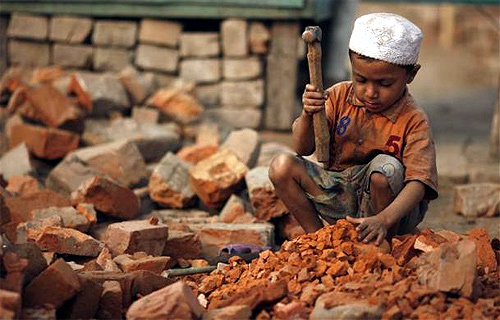
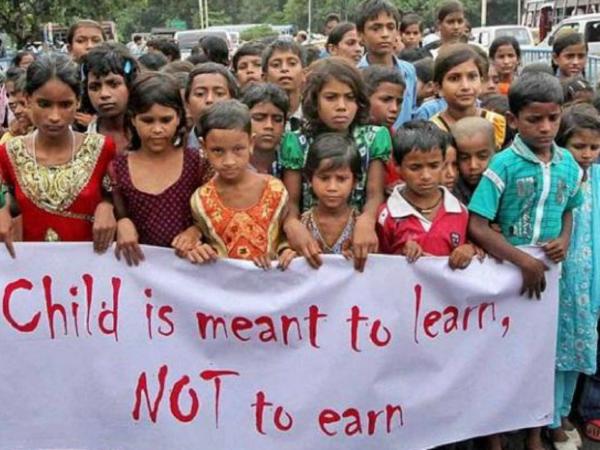
Child labour is the employment of children in any type of work. It keeps children away from the childhood and interferes with their schooling. It is dangerous and harmful to all the children (below age group of 14 years) in the aspects like physically, mentally, and socially or morally.According to the 24th Article of the Constitution of India, the work of children below 14 years of age as labourers, factories, hotels, domestic servants, etc., is covered under child labour, if a person is found doing so There is a provision for appropriate punishment.As reported by UNICEF, there has been a 54% increase in child labor in urbanized areas for children between the ages of 5-14. In addition, according to a Campaign Against Child Labour study, India has approximately 12 666 377 child laborers total. Uttar Pradesh, a state in northern India, has 19,27,997 child labourers Child labour and exploitation are the result of many factors, including poverty, social norms condoning them, lack of decent work opportunities for adults and adolescents, migration and emergencies. These factors are not only the cause but also a consequence of social inequities reinforced by discrimination

How we can reduce child Labour?

  1. Review national laws regarding child labour.
  2. Refer to your buyers’ requirements.
  3. Check the age of your employees.
  4. Identify hazardous work.
  5. Carry out workplace risk assessment.
  6. Stop hiring children below the minimum age.
  7. Remove children from hazardous work.
  8. Reduce the hours for children under the

Generally the child of poor families work as Child labour. So , there must be more employment among the poor people. Government should provide more jobs . By reducing poverty we can eradicate the child labour.152 million children worldwide are victims of child labor; 88 million are boys and 64 million are girls. Girls who leave school early do so disproportionately to undertake responsibility for chores within their own homes, while boys are more likely to leave school prematurely in order to join the labor force.The Juvenile Justice (Care and Protection) of Children Act of 2015: This law made it a crime, punishable with a prison term, for anyone to keep a child in bondage for the purpose of employment.A new report by risk analysis firm Maplecroft, which ranks 197 countries, identifies Eritrea, Somalia, Democratic Republic of Congo, Myanmar, Sudan, Afghanistan, Pakistan, Zimbabwe and Yemen as the 10 places where child labor is most prevalent All over the world, children are being exploited through child labour. This mentally and physically dangerous work interferes with schooling and long-term development—the worst forms include slavery, trafficking, sexual exploitation and hazardous work that put children at risk of death, injury or disease

Child labour refers to the exploitation of children through any form of work that deprives children of their childhood, interferes with their ability to attend regular school, and is mentally, physically, socially or morally harmful.

The government has failed to eliminate this dehumanisation of childhood . It has also failed to launch compulsory primary education for all, despite the rhetoric . Between 60 and 100 million children are still at work instead of going to school and around 10 million are working in hazardous industries . India has the biggest child population of 380 million in the world , plus the minimum age of employment ; this makes implementation of these laws difficult .

If the government was at all serious about granting children their rights , an intensive effort ought to have been made to implement the supreme court’s directive of 1997 which laid down punitive action against employers of child labour (Rs.20,000 per child to be paid by offending employers ). Only compulsory primary education can eliminate can eliminate child labour .

Surely , if 380 million children are given a better life and elementary education , India’s human capital would be greatly enhanced . But that needs , as president Abdul Kalam says , a “second vision“. Can our political establishment see beyond the haze of shallow realpolitik?

5 ways to turn your mistakes into life lessons

Have you ever found yourself saying, “I’ll never do that again,” only to find yourself doing the exact same thing just a short time later? If so, you’re not alone. It’s likely all of us have repeated some of our mistakes at one time or another.

But making the same mistakes over and over can be costly in more ways than one. Perhaps your team has lost faith in you because your behavior doesn’t match your words. Or maybe your errors have cost you or someone else a lot of money.

The good news is, you can take steps to learn from your mistakes. Then, instead of repeating them again, you’ll gain valuable wisdom that will help you in the future.

Here are five ways to learn from your mistakes:

1. Acknowledge Your Errors

So often, leaders say things like, “I’m sorry you felt that way,” or “It’s unfortunate it didn’t work out.” But blaming other people or minimizing your responsibility isn’t helpful to anyone.

Before you can learn from your mistakes, you have to accept full responsibility for your role in the outcome. That can be uncomfortable sometimes, but until you can say, “I messed up,” you aren’t ready to change.

2. Ask Yourself Tough Questions

While you don’t want to dwell on your mistakes, reflecting on them can be productive. Ask yourself a few tough questions:

• What went wrong?

• What could I do better next time?

• What did I learn from this?

Write down your responses and you’ll see the situation a little more clearly. Seeing your answers on paper can help you think more logically about an irrational or emotional experience.

3. Make A Plan

Beating yourself up for your mistakes won’t help you down the road. It’s important to spend the bulk of your time thinking about how to do better in the future.

Make a plan that will help you avoid making a similar mistake. Be as detailed as possible but remain flexible since your plan may need to change.

Whether you find an accountability partner or you track your progress on a calendar, find a way to hold yourself accountable. Keep in mind that what works for one person might not work with someone else.

4. Make It Harder To Mess Up

Don’t depend on willpower alone to prevent you from taking an unhealthy shortcut or from giving into immediate gratification. Increase your chances of success by making it harder to mess up again.

As a psychotherapist, I’ve worked with people who have found some creative ways to become more disciplined. I once worked with a woman who blew her budget every month because she shopped online late whenever she was bored.

To prevent herself from having instant access to her cards, she froze her credit cards in a big block of ice. She’d have to wait for the ice to melt to get the number. Whenever she found herself trying to thaw the block of ice, she would pause and realize how ridiculous the situation was and she’d stop short of spending money she didn’t have.

5. Create A List Of Reasons Why You Don’t Want To Make The Mistake Again

Sometimes, it only takes one weak moment to indulge in something you shouldn’t. Creating a list of all the reasons why you should stay on track could help you stay self-disciplined, even during the toughest times.

I once worked with a woman who wanted to stop talking to her ex-boyfriend. She knew he wasn’t good for her but she couldn’t’ resist answering the phone whenever he called.

She created a list of all the reasons why she shouldn’t talk to him—it was bad for her mental health, they were toxic together, etc. She laminated the list and taped it to the back cover of her phone. Whenever he called, she’d turn her phone over and begin to read over the list. It helped her resist the temptation to answer the phone.

Self-discipline is like a muscle. Each time you delay gratification and make a healthy choice, you grow mentally stronger.

So, don’t be afraid to make mistakes, most importantly you should learn from your mistakes.

Meditation: A happy pill to your life

In our lives we are surrounded by a lot of tensions of our career, of our studies and recently we are really stressed about global pandemic (Covid-19). So in this stressful time, it is necessary to keep your mind and body, calm and healthy. So one of the best way to cope up with this is Meditation.

Meditation is the practice of thinking deeply in silence to make your mind calm and peaceful. Through meditation you are able to reduce and manage your stress level. Meditation is just like other relaxation techniques like yoga and deep breathe which activates your body relaxation response. It boost your feeling of happiness and calmness. Regularly doing meditation increases your ability to stay cool, calm, and composed even if you have a lot of pressure.

According to researches, doing meditation also benefits our mental health. It decreases depression and increase the positive emotional state. It also increases the ability to deal with unavoidable stressful condition.

Doing meditation relaxes our body, it leads to active growth of positive mental skills such as affection, kindness, sympathy, tolerance and energy. It increases the creative level of our mind. We are able to do things better if we regularly do meditation.

It is necessary to perform meditation in a quite place, as effective meditation should be free from any distraction. Meditation also have a positive effect on our health, while doing meditation our heart rate and breathing slows down, usage of oxygen becomes more efficient and it normalise our blood pressure. If you are doing meditation regularly, your immune system also works well. Meditation enchances our attention span and increases positive thinking. It is very effective in reducing stress so, it is used in treatment of the prevention of many stress – related conditions. According to a study of Haward University, Meditation alters the chemistry of brain and increases positive emotions. It also shows that meditation has improved the lifestyle of many people suffering from stress related conditions.

In our lives we are surrounded by lots of tension, anxiety, stress, so it is necessary to start meditation. Even if you are happy and don’t think that you are suffering from any kind of stress then also do meditation. As we know that, meditation will also help in reducing many health related issues and also help you to be calm, reduce your anger issues.

So start meditating, it will really help you to live a happy, peaceful and disease-free life.

Movement of people during unlock 1.0

The novel coronavirus cases still continue to rise in the country at an alarming rate. The total coronavirus cases in the country has crossed 3,00,000 with a total number of 3,10,760 cases as per June 13, 2020. Maharashtra has the highest number of coronavirus cases with more than 1,00,000. With Tamil Nadu and Delhi in the next. Maharashtra, Tamill Nadu and Delhi are the top most affected states with the highest number of cases respectively. 

During unlock 1.0, the Ministry of Home Affairs (MHA) has allowed all areas outside containment zones to resume activities until June 30 with various restrictions. The government has directed the States and Union Territories that no movement shall be allowed to take place anywhere in India between 9 PM to 5 AM except for essential activities. Ajay Bhalla, the Union Home Secretary stated, movement of individuals shall remain strictly prohibited between 9 PM and 5 AM throughout the country except for essential activities. Some States and  Union Territories are also restricting movement of persons and vehicles plying on highways between 9 PM and 5 AM. “The restriction does not apply to instances of loading/unloading of goods (as part of supply chains and logistics); buses carrying persons and trucks and goods carriers plying on state and national highways; or persons travelling to their destinations after disembarking from buses, trains and flights,” Ajay Bhalla said.

Even so, the Ministry of Home Affairs (MHA) stated, the restrictions do not apply to persons travelling to their destinations after disembarking from buses, trains and flights. It also does not apply to loading and unloading of goods (as part of supply chains and logistics). Therefore, the states and UTs are also informed not to prevent such movements as mentioned above. Many social, religious, economic and sports activities are allowed to function under unlock 1.0 as per the MHA guidelines. However, according to the MHA guidelines, the lockdown shall continue to remain in force in the containment zones till June 30, 2020 and no movement is allowed anywhere in the country between 9 PM to 5 AM. The announcement was made in order to prevent gathering of persons and to ensure social distancing is maintained but it should not hamper with supply chains and logistics.

The nationwide lockdown has been imposed since March 25 and was first announced by Narendra Modi, Prime Minister of India, in order to fight the spread of novel coronavirus. This is unlock 1.0 with several restrictions. However, everyone should stay indoors and avoid going out as much as they can, to fight against the spread of novel coronavirus. 

Necessary precautions to be followed by everyone-

  • Always wear a mask properly which should be covering your nose and mouth while going out. 
  • Wash your hands with soap for at least 20 seconds after coming back home. If you touch an object outside and do not have water and soap, use hand sanitizer with more than 60% alcohol content.
  • Maintain a minimum distance of 6 feet from others.
  • Avoid touching your face without clean hands. 


Tik tok vs YouTube

Getting infected with a viral fever is far more complicated than becoming viral. Imagining today’s reality is unimaginable. Is this a topic that became viral after people started to speak about it or people used to speak after it became a viral?Youtuber wants to be in news. He doesn’t speak about something rather he picks the same thing that is news. He talks about the news in order make the news and eventually become the news i.e Takes the news,talks the news,make the news and become the news. The New always make a way to the News.

Talking about things is easier than taking the things. Speakers aren’t good listeners since listeners aren’t good speakers. Once a speaker,he always will be a speaker but listeners evolve to be speakers. Always be a good listener in order to become a good speaker. A speaker will not be a good speaker until he is a good listener.

It is easy to identify a good speaker in Youtube because tiktokers never speak(they only enact the sayings).A good youtuber don’t make good stuff,what ever they make becomes good stuff. The topic is never good,but it becomes good. He doesn’t make it good,but it becomes good.A good youtuber isn’t good as he talks good but he behaves good or appear to be good. Some youtubers talk about bad and appear to be good. Talking about bad in a bad way don’t make them good because it is the only way that projects them as good and we are blind enough to be blind. As bad spreads fast doesn’t mean good is slow enough to reach. Both reach in the same manner but good is not remembered and bad is not forgotten.
Tiktokers make us believe nothing because we spend no time with them. The time we spent while watching it doesn’t let us think. It even doesn’t allow us to make a choice to watch it or not because it makes us to watch it before we skip to the next. It doesn’t make tiktokers mindless as we use mind a less and you too better mind less about the mindless in order to make this as issue and become a mindless.
We can control the mind while watching YouTube and there is no need to mind about our mind while using TikTok. Therefore both platforms are just like the platforms that we are used just to stand . Remember Railway platforms don’t make us stand ,pair of legs does. Similarly online platforms don’t make us they support us.

Who is wrong is it Carry minati or Faisu Khan?People are behind these people not because of them because of the platform they like. This had turned into a war between online platforms and making it as roadside platform issue. They both tried to get attention from the ends. TIKTOK users had succeeded in deleting the youtube video and in turn youtube users had succeeded in the declination of TikTok ratings. Whom does this benefit? Only for the people like me who got something to write about something and make something out if it.

Why is it TikTok vs YouTube but not YouTube vs TikTok¿? Youtubers,please make it as issue and thereby giving a topic for my next post.

How the current lockdown situation has impacted a student’s career.

As we know the global pandemic Covid-19 has caused a lot trouble to the world including the education system. Due to the lockdown the school’s and university’s are shut down until the further notice. This will have a large impact on a student’s career irrespective of his/her field. Many entrance tests and competitive university exams are also on hold. Not to forget that the 10th board exams are also cancelled in the state of Maharashtra.

Impact on a School student.

Let’s start from the students who were going to enter the school for the very first time, Yes the new admissions in the primary sector. Due to the pandemic their admission is also on hold and most probably will be cancelled as the parents won’t take any risk by sending their child to school in the time of crisis as a result the student would miss one crucial year of his/her life and would graduate a year later.

Talking about the students attending the classes from 1st-9th. This is a period where a student learns all sorts of social skills and sporty activities. The student learns to adapt to the environment and learns new skills and experiences difficulties on a regular basis. Due to the lockdown there is a pause in this process and would affect the student later on as they would have to start their journey all over again. The online classes won’t fulfill the gap as to what the students used to learn In the school’s. As there is no proper monitoring and no discipline whatsoever. This will cause a student lack of discipline, social skills and would tend to loose a alot of learning opportunities and competitive activities which are held in the school to enhance the potential of a student.

The higher secondary education students are at a greater risk, with the 10th class board exams getting cancelled and the students are getting promoted on the basis of their internal marks. The major disadvantage that the students will be facing is that they won’t be experiencing any board exams this year and would directly look face to face with the 12th board exam. The experience of writing a board exam is really essential for a candidate to understand the paper and the patern.

Impact on college students.

University’s and colleges are the place where a student learns and excels new platforms to enrich his experience and gain alot of working potential. Due to the pandemic there is a temporary stop on the semester and the examinations are kept on hold.

The freshers (First year students) who were keen to learn and adapt to the college environment will now have to wait till the next semester. The first year of college is really important as the student understands his/her responsibility and starts learning in a specific manner and bring a moderate change.

The major problems arises for the final year students, as the final exams approaching and Covid-19 still increasing day by day the students are in a state of fear. Assuming the examinations getting cancelled and the students are rewarded with their degree what would be the next step? As college placement won’t be in hand due to the pandemic and won’t be receiving any job offers from the corporate sector due to the current situation.

Conclusion.

The pandemic and lockdown would eventually affect the student’s career by wasting some period of their golden time. It could also lead to certain unemployment for the graduates. The school going students and the college freshers can cope up with upcoming challenges, the major problem arises for the final year students.

Go Digital: The Latest Mantra in the Media World

Mass media are going through a great change in the contemporary times. One hardly needs to mention that mass media offer a huge platform with amazing reach among the audience. People depend on various mediums to get information on events and issues, be it news or entertainment. Newspapers, radio and television used to be the major vehicles of mass communication. But now the digital medium is becoming the most powerful agency. So powerful that it is forcing other mediums to depend on it. Newspapers are coming out with online editions. Printed books are fast turning into e-books. Radio and television are having digital versions. Movie industry is being threatened by the rise of web series. Online sites of various pre-Internet media are becoming increasingly interactive, adding advanced features and devices. The features include news chats, blogs, comments and various kinds of audio-visuals. Audiences are also being invited to contribute, giving them the feel of reporters. No doubt, the number of people contributing are increasing. It is injecting a participatory flavour to one sided traditional broadcasting. Let me be a bit more specific about the change.

Newspapers cover a broad area— from hard news to entertainment, from description to analysis. Now conventional newspapers are facing challenge from the digital. There are some limitations of newspapers. It is slow in production. It is not possible to get current updated second-to-second information from all around. At least a day is required to get news physically and process them for publication. Newspapers also need lot of material and human resources— buildings, machines, paper, ink, people— to get going. In order to get rid of slow pace newspaper proprietors are now utilising the Internet to provide updated information to readers. Even a traditional newspaper like The Hindu, established in 1878 and considered by many to be India’s best newspaper, has online presence through The Hindu News App since 2010. The Hindu online subscription is free. Even without registering one can read twenty articles per month. The Times of India, another prominent newspaper in existence since 1861, also has a powerful online presence. All newspapers, national and local, prefer to go digital with e-papers to attract readers with the promise of access to news anytime anywhere. Being digital has a major advantage. The contents can be uploaded and updated instantly.

Radio is the most cost effective medium. But in the face of competition from electronic and digital media it has witnessed a steep decline in last few decades. In recent times radio in India has received a boost through commercial stations. These channels, not being allowed to present news, have effected an entertainment mode of presentation. But alongside this change in the conventional mode of broadcasting radio stations are managing online audience interactions through local, station-branded websites. They are also making use of social media to increase their popularity among the youth. The stations are moving forward to adopt universal ‘audio platform’ tag facing increasing competition from audio-streaming platforms and other formats of digital media consumption. Thus, radio stations are becoming radio channels, increasingly building their online presence across audio and video content formats. The YouTube channel of Red FM, for instance, has 3.6 million subscribers. It has provisions for behind-the-scenes videos, contents created exclusively for the digital world, and digital versions of channel’s radio shows. Radio Mirchi has a strong digital content strategy. This brand has about thirty online radio stations and multiple YouTube channels including Filmy Mirchi, Mirchi Murga, Mirchi Bangla and Mirchi Tamil with a combined subscriber base of eight million. Various radio channels are also latching on to the trend of creating podcasts. Radio City, Radio Mirchi and Red FM are building a library of podcast content exclusive to their digital channels. The original content for digital platforms gives radio channels extra avenues for monetisation and brand integrations.

If newspapers and radio channels do so can the television be far behind? Television in India began its journey in September 1959 in a skeletal form with limited hours of telecast. The regular service started from 1965. There has been a huge change in the world of television since the coming of the privatisation of airwaves and the end of monopoly of Doordarshan by a Supreme Court judgement in mid 1990s. Now private commercial channels are vying with each other to go digital. Many innovative and more sharply focused programmes are being devised by television channels opting for Internet-based services. It is happening with increasing popularity of online streaming and connected TV sets. Subscription video on demand (SVoD) for watching full-length TV shows and movies for a monthly fee is also becoming popular. Netflix is a prime example. Many traditional broadcasters are making their content available for streaming on their website, both live and on demand. The types of content provided are called ‘over-the-top’ (OTT). It means that Internet service providers (ISPs) only have responsibility for delivering the IP packages and leave distribution rights, viewing abilities etc. over to another actor. OTT services uses the same network services as regular web browsing does. Smart TV, also known as connected TV or hybrid TV, is the collective term for TV sets that have an internal TV-tuner but also integrated Internet-connected technologies and applications that can be run; a convergence between television and computers. TV contents are being continuously complexed with the expansion of Internet and increasing presence of screens like smartphones and tablets on which content can be presented. There are online streamings of news and entertainments at the same time as that of television in the Internet. The audiences can view the shows of their preferences even if they are outside their homes. They can watch movies via Netflix, Amazon Prime Video, Hoichoi etc. News can be seen through mobiles and laptops via Jio TV, Hotstar, and Zee apps. These are all for catering the audiences whole day and at any time any place. All channels ensure online internet presence for viewers to be updated with latest information.

So it is a happening scene in the Indian media world. Different media are vying to go digital. The strict boundaries between print media, audio media, visual media and audio visual media are weakening steadily. Digital is holding the show.

ARE YOU FREE?

Everyone is trying to accomplish something big, not realizing that life is made up of little things.

The things and deeds we did in past are now to give us fruit in present and also in the future. And our present which is going to be our past will give us its fruit in the future. The topic “To look to the future’ One must study the past” revloves in the region of past present and the future of all mankind. It covers the whole story of human being. Some think it is essential to study history in order to make their future bright but some think past has no concern with the future. Other thinks that future is related to present, the things they have in present remain same as in future. Different people have different believe on the same the topic. Why is it so? Due to the different experiences they have in their past life. In some way or another experience is second name of past.

What actually affect the future? Experience affects the future. Future can never be predicted but we can strive to make it better by mean of the past experiences. Without knowing the past we repeat mistakes made in the past, and destroy our future. We can’t say that we are guessing future upon the past, but in some way we can perk up our future by relating it to the events take place in past, and work to make it enhanced. No one knows what will happen in the future but the past lend us a hand and lead us to our destiny.

There must be some reasons why past contribute a lot in building future. It is vitally important to study history and keeping the past in mind to avoid repeating the mistakes of the past and understand why things are as they are! We study history to learn where we were in the past and where we are now, to learn what worked for people in the past. We study history in order to remember the great achievements accompolished by our ancestors to make our future shine bright like diamonds and to remember the worst things happen in past and make sure not to do these things happen again in future. We study history to know what is the right thing to do and what is wrong so that we can understand what to do in life and how the wrong things happen and how we can be prevented.

Just think, if we do not have a past what would we be today? Obviuosly nothing, if we don’t know the hard works of our ancestor then how can we realize their great achievement, and what we can learn from their achievements and hardships and how can we pay respect to them. The biggest example is the achievement of Paskistan, if do not study history then how we could be able to compete with others and maintain or moral value. How could we realize and feel proud on our country, culture and faith. Without a past we couldn’t go through life. Our personal life is also interrelated with past. We can call our past as our memory it can be good or bad. It depends upon us with whom we want go either with bad one or by good one. We can take experience from bad memory furthermore good memories give us courage to live. It’s all about experiences. The more you know about history, the more you will be ready to build your future.

“Those who do not study history are doomed to repeat it.”
No one is strictly doomed to repeat it. But Yes! History repeats itself because no one pays attention for the first time. But if someone forgot the past they will surely repeat in number of manners. The game remains same but the player changes. Of course if we forgot something which we have to do then certainly we will some face outcome and consequences. There are many interesting events in the history which indicates us and enlighten with the truth about the words said above. Learning regarding the bad things in history is a way to prevent them from happening again

Some times for some people in some ways past acts as a greatest enemy of them. That who had a worst and most awful happening in their past life and couldn’t cope up with them for such people past is the greatest enemy. They rely on their past and start blaming other things that they came from this background and so on and start asking their self that why this happened to them and think if it would not happen then they would be in pleasure instead of working for the future they humiliates their past. They do not even try to come out of it and to deal with other and this will how they lose with the fear of defeat, after some time it become impossible for them to come out of this and to glow and rise again. In some ways their society won’t allow them to learn from their past, they keeping on repeating their past and let them feel bad and make them realize their mistakes and make them feel ashamed. This will lead them to disappointment.

We study history to think and feel proud on our country and on our motherland. History also introduces us to the important people of past they may be our idol or evil who contributed a lot in the structure of our country. There are loads of other reasons why do we prefer to study history. It tell us where were in our past life and where we are going to be in the future. It tells us our originality where we came from and how things, people and times change, how the culture and belief developed and then how suddenly with the passage of time they changed. History takes us to new era where we can judge our selves. Similarly if we can judge and understand our selves by studying our past, then simply we can guess, judge and understand other by analyzing their past. By mean of studying history we can understand about people behavior when they acted and how they behaved in such manners. If we do not understand them then how will we make interaction with them and develop relations with them. It also develops our thinking and relating skills that how we can relate one thing with another and then get better result. Many philosophers, scholars say to gain and learn from your past experience in order to understand your life and move towards golden future and to learn lessons, wisdom and intelligence. Therefore, history leads us to understand the past and use this fact and figure to work in present and get better result in future.

“A person with no sense of the past is a person who is a stranger both to his or her own roots and to the human condition more generally. For human beings are not creatures of nature; we are inheritors of the history that has made us what we are. Not to know our history is not to know ourselves, and that is the condition not of human beings, but of animals. And even from a practical point of view, to be ignorant of the past is to make us impotent and unprepared before the present

Our future is unwritten and can be designed to our own liking. But often what we do is we let our past determine the design of our future. And as a result, it looks quite similar to our past. We repeat the same mistakes because we bring our baggage from the past into the next chapter of our lives.

Sure we want to learn from the past and from our mistakes. But when that learning turns into so much baggage that the future looks exactly like our past, the value of that learning diminishes. The future is a blank slate that is completely open for invention.

If we’re going to effectively design our future, at some point we have to let go of our past. We have to let go of all the pain, all the agony, all the grief, and all the bullshit that’s in our heads.

To design your future you have to see the world as malleable, something that can be shaped to your own liking. And you have to see yourself as the kind of person who has the ability to take the world in your head and impose it on the world around you until the world around you looks like the one in your head.

The greatest opportunity cost you have as a human is not taking your own ideas seriously. Write a 500 word description of what you want your life to look like in 2 years. This will act as your signpost. Then (and here’s the kicker) post it on your blog or email it to someone who will “get it”. It’s hard to go back on a revolution that you’ve already announced.

If you want to be happy, do not dwell in the past, do not worry about the future,
The past is the past for a reason.
That is where it is supposed to stay,
But some cannot let it go.
In their heads it eats away
Until all their focus becomes
The person they used to be,
The mistakes they made in their life.
Oh, if only they could see
That you cannot change what happened,
No matter how hard you try,
No matter how much you think about it,
No matter how much you cry.
What happens in your lifetime
Happens for reasons unknown,
So you have to let the cards unfold.
Let your story be shown.
Don’t get wrapped up in the negative.
Be happy with what you have been given.
Live for today not tomorrow.
Get up, get out, and start living,
Twenty years from now you will be more disappointed by the things you didn’t do than by the ones you did do.
So throw off the bowlines, sail away from the safe harbor.
Catch the trade winds in your sails.
Explore. Dream. Discover.

Destiny has a way of creating chain reactions in our lives. And sometimes this chain reaction occurs when the shit hits the fan or we hit rock bottom, setting in a motion a series of events that you couldn’t have planned for or predicted. Friends we’ve yet to meet, opportunities we’ve yet to receive, and lovers whose stars have yet to cross with ours. And with each of these events our destiny unfolds into a journey worthy of our heart and soul, a life worthy of living, full contact, in full color. Remember this through fortune and misfortune, joy and grief, good times and bad ones.

Carry it with you. Let it guide you in the direction you’re destined to go, along with the path that you are destined to take. The future is an unpaved road and a destiny that is yours to shape.

Was it really a lockdown?

As I sat to pen down my thoughts, came an announcement that the nation-wide lockdown has been lifted up with new rules “unlock-1”. I was thinking “what’s left than being atmarnirbhar anymore”, but rules are rules even if no one follows them. Even before the dust settled on this communication, out came the opposition parties with their words as knifes drawn, excoriating the government! The time when we expect are political mass to speak in unison for the nation, they are throwing knifes at each other without minding, not just India but the whole world is currently in the grip of a pandemic of epic and high proportions. The need of the hour is to stand together( speaking metaphorically, social distancing needs to be maintained), and here we are having a political party comprised of imperators leading the attack on the ruling party, hate-filled rhetoric, tinged with jealousy, knowing that offers nothing productive.

An extremely infectious virus and contact of it can lead to mushrooming of it. Despite warnings, we still have people on the streets; few with genuine needs of purchasing, few hundred misled migrants wanting to return to their hometowns, and the remaining are hundreds of morons roaming the streets with absolutely no essential needs measuring the lengths even without a mask as if they are some supernatural being, a vampire or something who cannot be effected by this deadly virus. But above all they do have an intention; they are roaming with a sole intention of defying authorities! And the list not ends here; we have some self-proclaimed comedians and so called celebrities abusing the prime minister- even calling him a clown for the tasks that he assigns to us, “Indians”. All of this without realizing that this is being done to keep the spirits of the people high and country united and we did feel that in the given tasks.

 I personally had a balanced and jocular view on this lockdown period. I have been to multiple zero cost excursions to exotic locations within the house or I would rather say within my room having extremely fond memories of these trips finding my own self and working upon that and I enjoy standing in my balcony listening to birds or staring at the night sky full of stars, I loved standing in peace and the thing I loved the most is to see our mother nature heal.

I cannot understand the cribbing and negativism in some people. Is making money, socializing, visiting malls, shopping, etc. more important than life itself? If nothing, appreciate the real life heroes who are out there saving lives! One should take this as an opportunity to introspect, shed apathy and restart life with fresh dynamism.

Remember, yesterday was not ours to cure but tomorrow can be a win….or lose, choose wisely!

Pronam to Shri Guru Ravidas Ji: A Great Saint of India

    Time to time, many great personalities were born in our country and also from ancient time to present days many foreigners have been visiting India for different purposes inter alia of which are learning of Indian languages, to gain in-depth knowledge about the biography of Indian saints, Indian culture etc. While I was in many countries, honestly informing many foreigners told me ‘India/your country is great/incredible’. In this article, I am presenting few lines about a great saint Shri Guru Ravidas Ji so that readers can refresh their knowledge about this great personality.

Shri Guru Ravidas Ji, also known as Raidas (flourished 15th or 16th century) was a spiritual person, poet, great human being associated with Indian bhakti movement. He was born in Varanasi in a so called ‘untouchable leather-working caste’, but his knowledge, wisdom, spiritual development and humanitarian activities were so high that many upper castes or other castes persons cannot stand near to his activities. I feel simply by caste one cannot be great; for greatness humanitarian activities are sine qua non.    

       Many researchers believe that Shri Ravidas ji met Guru Nanak Dev Ji, the founder of Sikhism and 41 of Shri Ravidasji’s poems were included in the Adi Granth. 

Shri Ravidas ji was a prominent figure in the bhakti movement and a renowned poet of the Nirgun bhakti tradition that valued the worship of a formless God. Two researchers who have carried out extensive study on Shri Ravidas ji’s activities are Dr. Winand Callewaert and Dr. Peter Friedlander have published many books and articles on him. They have translated his songs also. One is presenting here. It may be mentioned that Prof Dr. Winand Callewaert is now retired but still teaches Sanskrit at the KU Leuven University in Belgium. He studied in India and obtained degrees in Hindi and Sanskrit. He has published many books and articles in English, Dutch and Hindi. Another scholar Dr. Peter Friedlander lived in India from 1977-1982 and learned Hindi in Varanasi. He then studied at SOAS London University and completed his PhD on the life and works of Saint Ravidas in 1991.

“Raidas says, what shall I sing?

 Singing, singing I am defeated.

How long shall I consider and proclaim:

 absorb the self into the Self?

This experience is such,

 that it defies all description.

I have met the Lord,

 Who can cause me harm?

Hari in everything, everything in Hari –

 For him who knows Hari and the sense of self,

no other testimony is needed:

 the knower is absorbed”.

(As mentioned already Shri Ravidas ji wrote and translated by Winand Callewaert and Peter Friedlander). The noteworthy point from the song is that “Hari in everything, everything in Hari” (Hari is name of a God/Bhagawan as per Hinduism).

Another researcher, David Lorenzen has mentioned Shri Ravidasji’s poetry is filled with themes of infinite loving to God, wherein this divine is intended as Nirguna. It is pertinent to mention that Nirguna bhakti is an unconditional devotion to God without any form (formless) whereas Saguna bhakti is devotion to an established deity who takes the form of an idol, an image or an incarnation. Guru Ravidas Ji was vocal against the Varna (caste) system and in his poetry, questioned caste hegemony, valued labour of all sorts, as well as a life of simplicity and morality. He initiated dialogs with upper caste Hindus about caste, social justice, love and forms of worship. He spread the message that “God created man and not man created God”, means everyone is created by the God and has equal rights on this earth. It is believed that because of his teachings and discourse many persons irrespective of castes (including upper caste) and rich or poor were his followers including the King and Queen of the Chittoor kingdom presently in Rajasthan.

    Shri Guru Ravidas Ji undoubtedly was a great saint and rightly a temple has been constructed in his hometown, where he is worshipped every day. His songs are purely devotional and recited every morning and evening in the temple. His birthday is celebrated every year on Magh Purnima day i.e. at full moon day of Magh month of Indian calendar as a religious event with full enthusiasm, dedication and devotion.

    Although, Shri Guru Ravidas Ji has passed away around 500 years ago (believed in 1520) but he will be in the heart of millions because of his spiritual, devotional and humanitarian activities. Also it is evident from his life that caste can never be a barrier to be a Saint and Guru.

I extend my respectful Pronam to such a Great Soul, Saint and Guru.

The following websites have been consulted while writing the article:

  1. https://www.britannica.com/biography/Ravidas
  2. https://en.wikipedia.org/wiki/Ravidas
  3. https://www.yogapedia.com/definition/8501/nirguna-bhakti
  4. https://www.manifestias.com/2019/11/05/saint-ravidas

Dr. Shankar Chatterjee

Former Professor& Head (CPME)

NIRD &PR (Govt. of India),

Hyderabad-500 030

Telangana, India

Email <shankarjagu@gmail.com>

Medical Emergency Not An Excuse To evade Fundamental Rights Under Article 21 Of Constitution

It is most heartening, most refreshing and most comforting to note that the Telangana High Court has on May 20, 2020 in a latest, landmark and extremely laudable judgment titled Ganta Jai Kumar Vs State of Telangana Rep. by Chief Secretary and others in Writ Petition (PIL) No. 75 of 2020 authored by Justice MS Ramachandra Rao for himself and Justice K Lakshman has explicitly, effectively and elegantly observed that a medical emergency is not an excuse to trample on the fundamental rights of a citizen under Article 21 of the Constitution. While holding so, the Telangana High Court has quashed a government order which compelled citizens to get testing and treatment for COVID-19 from designated government hospitals and prevented them from approaching private hospitals and laboratories for such purposes even though they have requisite approval from the ICMR. Very rightly so!

                                       Needless to say, the Telangana High Court was unable to agree with the contention of the Advocate General for the State of Telangana that there is a state of emergency in the State in view of the Covid-19 pandemic and that such emergency justifies the State action. It candidly and convincingly stated in para 50 that, “We are unable to agree. Admittedly no emergency has been declared by the Government under Article 356 of the Constitution of India, though there is a pandemic situation undoubtedly.” Besides, it also noted that Article 359 has been amended by the Constitution (44th Amendment) Act to say that the President cannot suspend the right to move a court for violation of Article 20 and Article 21 even in an emergency and seek appropriate relief.

                                     In this backdrop, the Telangana High Court in para 57 then very crucially went on to point out that, “This above decisions of the Supreme Court are a complete answer to the plea of the Advocate General that because there is a medical emergency or a war emergency anything can be done by the State including arbitrarily restricting the right to health conferred under Art 21 on a citizen of the State. An emergency of any sort is not an excuse to trample on the rights under Art 21 and the Courts have the power to see that the State will act in a fair, just and reasonable manner even during emergencies. Whether the State has done so or not is judicially receivable in the light of the law laid down by the Supreme Court.”    

                                          Of course, the Court also in para 56 quoted the famous words of Lord Atkin in Liversidge v Anderson that, “In this country, amid the clash of arms, the laws are not silent. They may be changed, but they speak the same language in war as in peace.”

                                                 In this context, it would be pertinent to mention that in para 33 of this noteworthy judgment, it is rightly held that, “Every human being has a basic and natural born instinct to protect himself and his kith and kin from danger – be it from human, animal or one in the nature of a disease, by utilizing all the means available in his power. The State cannot incapacitate him by restricting his choice particularly when it comes to a disease which affects his life/health or that of his kith and kin.”

                                                       More relevantly, it is then very rightly pointed out in para 28 that, “It is the basic principle of administrative law that every action of the State which affects the rights of citizens must be supported by reasons so that a Court can, while judicially reviewing it, know that there is application of mind to the issue by the authority concerned, which passed the said order. Absence of reasons would undoubtedly vitiate the later order dt 11.4.2020.”

                                  In the same vein, it is also then noted in para 38 that, “According to the Supreme Court of India, it is imperative that any restriction of right of the citizens in that regard must be by a procedure prescribed by “law” and such “law” must be reasonable, fair and just. It cannot be arbitrary, whimsical or fanciful.” Similarly, it is then observed in para 42 that, “As stated by the Supreme Court, the right to health of a citizen is a fundamental right under Art 21 and restriction thereupon must be reasonable, fair and just.” 

                                        What cannot be overlooked is what is then stated in para 43  while emphasizing the role of private sector that, “It is of utmost importance that each and every case (suspects/confirmed) of COVID-19 is isolated and provided appropriate treatment and their contacts traced at the earliest to break the chain of transmission. It is important that support and cooperation of the private sector is enlisted, in this regard. This is the policy which has been declared by the Ministry of Health and Family Welfare, Government of India in its “Guidelines for notifying COVID-19 affected persons by Private Institutions” notified recently.”

                             While acknowledging the petitioner’s contention, it is then put forth in para 59 that, “As rightly contended by the petitioner, we find that there is no power in Sec. 2 of the Epidemic Diseases Act, 1897 either to prevent private hospitals from testing suspected any victim of an epidemic such as COVID-19 patients or treating confirmed infected patients. In fact in that era (pre 1900), the concept of private sector participation in health care was hardly there in India.”

                                           Furthermore, it is then enunciated in para 60 that, “What the Sec 2 prohibits and what it permits, in a case where there is a dangerous epidemic, disease for which the ordinary provisions of the law are insufficient. In such a case the State may take, require or empower any person to take “such measures” and by public notice such “temporary regulations” to be observed by the public or by any person or class of persons as it shall deem necessary to prevent the outbreak of such disease or the spread thereof.” 

                                      Not stopping here, it is then envisaged in para 61 that, “The Ministry of Health and Family Welfare, Union of India and the ICMR cannot be said to have ignored these provisions of the Epidemic Diseases Act, 1897 and this Court has good reason to believe that the Union of India and the ICMR did give due consideration to this provision of law while permitting testing and treatment of COVID-19 patients by private laboratories and hospitals.”

                                          On similar lines, it is then further conceded in para 62 that, “On the other hand by issuing a set of guidelines called “Guidelines for notifying COVID-19 affected persons by Private Institutions”, the Union of India had clearly applied its mind to the provisions of the above Act which permit the Government “to take measures necessary to prevent the outbreak and spread thereof” by permitting private laboratories and hospitals also to be involved in the said prevention and outbreak and spread of the epidemic.”

                                          Be it noted, it is then observed in para 63 that, “The State Government, in its counter, has not questioned the wisdom of the Union Government and the ICMR in permitting private laboratories to achieve the very object of prevention and spread of the epidemic. On the other hand, the respondent Nos. 1-4 appear to have come to the opposite conclusion, contradicting the wisdom of the Union of India and an expert body like ICMR.”

                                         Going ahead, it is then disclosed in para 64 that, “In fact we find that the ICMR has notified on 3.5.2020, 111 private laboratories and 310 Government laboratories. It is obvious that by permitting 111 private laboratories to conduct COVID-19 tests across the country, the Union Government and ICMR were trying their best to take the private sector on board and to achieve the goal of stopping the spread of the epidemic.”

                                        No wonder, it is then held in para 65 that, “We therefore hold that the respondents Nos. 1-4 have no logical or legal basis to come to an opposite conclusion and come forward with total prohibition.”

                                             More strikingly, in a big setback to the respondents, it is then held in para 66 that, “It is not the case of the respondent Nos. 1-4 that there is a cure for the COVID-19 virus, that only Gandhi Hospital in the State of Telangana has got a vaccine for it, and so everybody in the State of Telanagana, who is infected with the virus has to go to the said hospital. May be the facilities in the said Hospital or other designated Government Hospitals are very good, but that does not mean that the respondent Nos. 1-4 can, under the guise of taking steps to prevent the spread of the Pandemic, restrict the liberty and freedom of a citizen to choose his own doctor and hospital and force him to take a test for COVID-19 infection or treatment from Government sources, if found to be infected with the said virus.” 

                                   Most crucially, it is then observed in para 92 that, “For the elaborate reasons given above, we hereby allow the Writ Petition and we:

(i)                         declare that the proceedings Rc.No.Spl/COVID-19/DMHO/HYD/2020 dt 11.4.2020 issued by the District Medical and Health Officer, Hyderabad which states:

“Adverting to the subject cited above, orders issued by this office regarding certain instructions on treating only emergency cases at notified hospitals in Hyderabad District vide reference 6th cited are hereby cancelled with immediate effect.”

is violative of Art. 14 and Art. 21 of the Constitution of India and also the principles of natural justice (for not giving any reasons) and is set aside;

(ii)                      hold that the respondent Nos. 1-4 cannot compel residents/citizens of the State of Telangana to get (a) testing for COVID-19 in NMS/Gandhi Medical Hospital or only in the other designated laboratories decided by them and (b) treatment/isolation only in hospitals designated by them, when the citizens/residents are willing to pay the cost and get their blood samples tested in the private ICMR approved laboratories or private sector hospitals having the requisite infrastructure by paying the requisite charges;

(iii)                   hold that it shall be the right of the citizens and residents of the State of Telangana to get tested on payment basis, if they choose to do so, for COVID-19 in any private laboratory presently approved by the ICMR or may be approved in future at such rates as may be determined by ICMR or any other competent authority of the Union of India;

(iv)                   hold that it shall be the right of the citizens and residents of the State of Telangana to get treatment on payment basis, if they chose to do so for COVID-19 in any private hospital presently approved by the ICMR or may be approved in future by it; and

(v)                      direct that all private hospitals, who wish to provide treatment/isolation for COVID-19 patients (other than the ones already granted such approval by the ICMR), shall make an application to the ICMR offering their facilities for the said purpose; the ICMR shall nominate qualified and experienced persons to scrutinize the said applications and cause inspections made of the available facilities and infrastructure in the said private hospitals, to verify whether they possess adequate number of qualified doctors, qualified nurses, paramedical staff apart requisite equipment and notify the same. This exercise shall be completed within the shortest possible time in view of the grave urgency and rising cases of persons infected by COVID-19 and deaths caused by it. Only such private hospitals as are approved by the ICMR shall be permitted to treat COVID-19 patients.       

                                           On a different note, it is then further added in this same para 92 that, “It is needless to observe that all protocols approved by ICMR or other competent authority from time to time shall be followed by the ICMR approved private laboratories and hospitals that have already been or would be approved in future by the ICMR for testing or treating/isolation of COVID-19 suspects/patients; and all possible precautions shall be taken by the ICMR approved private laboratories and hospitals to take good care of the suspects/confirmed COVID-19 patients; and the ICMR approved hospitals shall keep the respondent No. 4 or any other authority designated by respondents 1-4 informed on a daily basis of the persons who are being treated by them for COVID-19 and their health status.”

                                       Before parting, the Telangana High Court very commendably observes in para 93 that, “We place on record our appreciation for the petitioner for approaching this Court and bringing to our notice this important issue concerning the health and lives of our fellow citizens.”

                                                     In conclusion, it is a very well written, well balanced and well reasoned judgment. It leaves no room for doubt whatsoever that medical emergency cannot be an excuse to trample upon citizen’s fundamental rights under Article 21 of the Constitution. No doubt, all the State Governments as also the Union Government must from now onwards always in their own best interest bear this latest, landmark and extremely laudable judgment while deciding in such cases of medical emergency! 

Sanjeev Sirohi, Advocate,

s/o Col BPS Sirohi,

A 82, Defence Enclave,

Sardhana Road, Kankerkhera,

Meerut – 250001, Uttar Pradesh.

NHAI becomes first construction sector organisation to go ‘Fully Digital’

As one of the biggest reform, the National Highway Authority of India (NHAI) under Ministry of Road Transport and Highways has gone ‘Fully Digital’, with the launch of unique cloud based and Artificial Intelligence powered Big Data Analytics platform – Data Lake and Project Management Software. The entire project management work flow of NHAI is transformed from manual to online portal based, wherein the complete project execution operations including ‘workflow with time lines’ and ‘alert mechanism’ have been configured. All project documentation, contractual decisions and approvals are now being done through portal only. 

With advance analytics, the Data Lake software will forecast the delays, likely disputes and will give advance alerts. Thus apart from expediting the decision making, it will also facilitate in taking correct and timely decisions as the system is likely to predict financial impacts of different alternatives based on the historical data. This will reduce a lot of disputes.

NHAI has a history of having large number of arbitration cases pending with huge amount of claims and counter claims. Majority of the disputes are generic in nature like delay in handing over of encumbrance free site, shifting of utilities, idling charges of plant, machinery, equipment, manpower and delay in decisions etc. These disputes can be minimized as the Data Lake software has provisions to keep track and check on all these constraints and will ensure work is carried out within the deadlines in a transparent manner. As all processes are going to be portal-based, decision-making is going to be faster and will eventually diminish chances of litigation in future.

The complete project documents and correspondences will be stored in Digital format in the cloud-based ‘Data Lake’ linked with GIS tagging and Unique Project ID, so that the project data can be easily retrieved as and when required from any location. NHAI’s all contractors/ concessionaires/consultants/Authority Engineers (AE)/ Independent Engineers (IE) and Project Directors (PDs)/ Regional Officers (ROs) have already started using it extensively. NHAI’s e-Office module is also integrated in the system so that all correspondences can flow digitally in a secured manner from field units to HQ seamlessly. 

In the current Covid-19 pandemic scenario, when most of the organizations are facing serious challenges in working, NHAI employees are continuing their works undeterred and happily without any fear of physical contacts and touching of physical files.  Rather, lockdown period was used by NHAI to train its employees about using Data Lake.

The Data Lake will bring revolutionary changes to NHAI with benefits like No delays, Quick decision making, No question of missing records, Work from anywhere/anytime. It will enhance transparency, as all officers and stakeholders, connected with the project can see what is going on real time basis which will amount to concurrent performance audit by the seniors.