After Reported Thinning of Forces, China Says ‘Agreement’ With India Has Led to ‘Action’

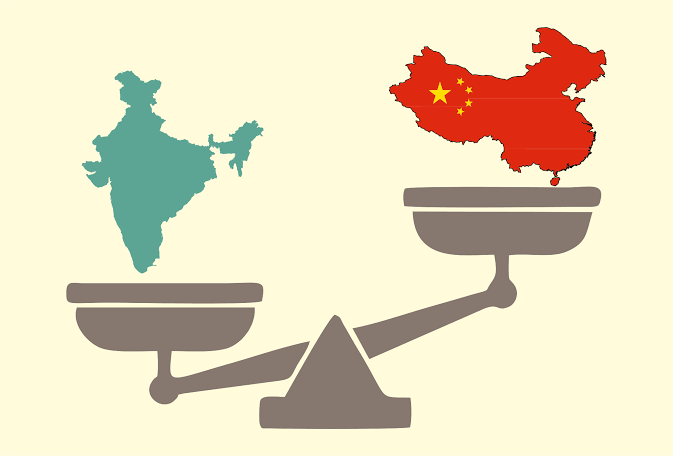
New Delhi: After Chinese troops were observed to have “thinned” out in at least four stand-off points, China on Wednesday said that “actions” were being taken in line with an “agreement” reached with India

This was the first official statement from either country that there had been changes in the ground situation in eastern Ladakh following talks between the two sides. However, the Chinese side did not provide any detail on the “actions” at the border with India.

Military sources had earlier stated that the density of Chinese troops at Galwan and Hot Springs had come down from Monday, which was reciprocated by India. However, there had been no change in status at Pangong Tso, where Chinese troops are on India’s side of the Line of Actual Control (LAC). There had, however, been no official statement from India on these developments.

This was echoed by the Chinese foreign ministry spokesperson at her briefing on Monday. “Both sides agree to implement the important consensus of the two leaders, avoid escalation of differences into disputes, work together to uphold peace and tranquillity in the border area, and create favourable atmosphere for the sound and stable development of bilateral relations,” said Hua.

Several other rounds of talks among the militaries are expected to take place in the coming days at the border.

However, there are no signs that China is willing to retract its troops from the area until Finger 4 in Pangong Tso, which is well within the territory claimed by India. It was at Pangong Tso that Indian and Chinese soldiers had come to blows in early May, which was one of the early markers of the start of the stand-off between the two armies.

India has sought a restoration of the status quo ante before the first detection of Chinese troops at Galwan, with the vacation of soldiers from the finger region in Pangong Tso being a top priority.

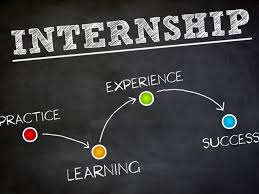
Importance of INTERNSHIPS for college students!!!

In the world full of competitors to be successful student/businessman etc. should have a different approach. They need do things which have already less participants. It would be best if none of the competitors are present, it doesn’t mean you have to do very odd thing. Everyone needs a better lifestyle and a proper career so that they can live luxurious life with the family, for that we have to start at early as possible and gain the maximum experience. There are many of the websites nationally and internationally that provide work to college students as in the name of freelancers some of the popular sites are:

1- Internshala

2- LetsINTERN

3- LinkedIN

4- GlassDoor

5- Hello Intern

6- Twenty19

7- AngelList

8- Indian Internships

9- Oyster Connect

10- Interlelo

The above listed Internship site are the popular one yet there are many more to be listed.

  • Internships not only make a student financial independent at college life but it plays a very important role as while on last year of college it boost the CV and the chances of selection in your dream company gets increased by 10 folds.
  • Internship help a student start to build a professional network that can be a resource for the student.
  • Internship also help student to decide a second option of career and also can make it as a part-time works on his professional job.
  • Many companies are in search of students who have already completed an internship related to professional job which will also help student to do the work which is of his choice and already experienced on it.
  • Internships provide a great impact on confidence of the student which will help a lot in the actual job.
  • Students gain knowledge and get aware on how to talk with superior person, how to keep conversation on and most importantly how to influence anybody with the power of the words.
  • Students also get hands on to manage the task assigned. They also get to know to give a separate time table to each task and mange the workflow while studying.
  • They get the professional guidance even if they fail to mange the task as the internship provider cannot force any student and they encourage the student on compilation of task.


download

This are the most benifits of the Internship…Hope it will be helpful.

If you are in college and not having any internship, than go for it…It will prove helpful in the future.


LIVE in online sessions and LEAVE Recorded sessions

How interesting would it be to watch the highlights of a cricket match? Everyone will have a chance to have a choice and definitely will not prefer to watch an uninterested match or the match whose result has been known. In a similar way, people will not respond to recorded session unless it has a good response.” Viewers will hear in recorded sessions and listen in online sessions”.

Live sessions will have a life and makes the dead participants to be alive and make them to participate actively. Participants in live sessions will also have a choice to listen the video in recorded session but they prefer not to because they know the advantage of online sessions. People will not listen in order to listen because there is no way to forward it. The only way to end it is to end it. One can clarify the doubts in the live chat and will save the time rather than searching for the possibility of your doubt to appear in comments. Live sessions will increase the patience level in the participants. There is no need to concentrate on concentrating because you will be busy in concentrating.
Recorded sessions will not break the records. “Participants try to end the session in order to complete the session”.

The major disadvantage of recorded session is having a choice to forward it or to watch it in required speed. Viewers prefer to listen the video in low quality and high speed simultaneously reading the comments which makes them to concentrate more on more other things and make less available for the video. There will be too many things to handle at the same time and makes you to do nothing. Your intention to handle many things at a time doesn’t make you to handle at least one of the thing in because there will be more solution which in turn reduces concentration.

Advantage of live session is mainly due to the disadvantage of recorded session.” Leave the recorded session and Live in live session”. Experiencing the live will expertise your life. Watching recorded videos is like thinking about past. So, leave your past and live in present like experiencing the live sessions. Remember that recorded sessions should also be recorded in live.

BiEnG a BoOkWoRm

Books- great friends of human-kind. They are the true companions of  man and play the role of awesome surroundings. We all, more or less, love reading. Some of us love seeing it arranged on the shelves of libraries, some of us prefer to buy famous, costly books just to make our collection rich enough. And the third one who are most fantastic, wonderful and above all real book lovers- it would not be wrong to call them book worms.

A bookworm generally reads loads of books and it actually makes them happy and keeps them refreshed. Not all of us appreciate bookworms that much, for they are pretty weird. Not weird, just not like the other people in the world. As they read a lot books, they know about lot things. They know human nature. They love to observe people. If you are a specific genre lover, like, you only love to read sci-fi series or ghost books or detective ones then knowingly or unknowingly you will start believing that you’re those cool fictitious characters and your role models will be those characters.

Now, parents. They are always on the opposite direction from us, aren’t they? Even though you are doing right, they will blindly believe that you are doing it pretty wrong. Well, I’m not against parents nor I’m criticizing them. But what I’m saying is correct and proven in hundreds of psychological theories. It’s very natural to have clashes with parents at the time of teenage. So, let’s not count that.

What I’m trying to say all these time is, being a bookie is not good thing but a VERY good thing! As much book you will read, as much true man you will become. Napoleon said once,

“Show me a family of readers, and I will show you the people who move the world.”

Books will not make you perfect, they will rather make you good. They will not help you to get good grades at exams but they will show you the right way. They will not help you to gain power but they will make you courageous enough to stand for what is right.

Books will help you to “know thyself”. So, let’s all read books. Trust me, this is cooler than social networking sites. It is more interesting to know what twist is coming at the next page than to check notifications on Facebook.

And now, they- who call themselves readers and roam around with some very high-thought books, just to get the surprising looks from friends, I don’t know what to say for them. Again, those people  who love showing attitudes and whenever they talk they love to recite lines of poems and stories from the books they have read, just to get clap and pats on their back, I don’t know what to say for them either. Maybe they should ask themselves, why they read book? For them or for others?

So, my dears, why don’t you grab a book right now and start with it? Why don’t you become Miss Marple, Mr. Holmes, Feluda or Topshe? Those very feelings, I’m asking you, does it ever gets old?

NOTE: Feluda and Topshe are characters from Bengali literature. Of  a detective series named “Feluda” written by Satyajit Ray.

5 Survival Tips for Nursing School

Have you ever wondered if you have what it takes to make it through nursing school? Some nurses will tell you that coursework and clinicals are difficult, which can be discouraging for many potential students. Just like any career, becoming a nurse takes a lot of hard work. Here are a few suggestions to help you rise to the challenge and make the most out of nursing school.
  1. Go to class. This sounds easy enough, right? Some students think it’s acceptable to skip class from time to time, but nursing classes move very quickly and your instructor will cover a lot of important information in each session. If you miss a class, you will quickly fall behind in your studies and you might not be prepared for your exams or clinicals. Plan your vacations and extra-curricular commitments around your course schedule and make sure to prioritize your schoolwork outside the classroom.
  2. Be on time. Each state requires that nursing students complete a certain amount of clinical hours. Sometimes, you might have to commute to your clinical site, which can be a hassle in bad weather or on days when you’re running late. But, if you miss a clinical session, you will have to make up those hours at the end of the semester. Trying to make up several clinical hours at the end of the term can be stressful and overwhelming, especially when you also have to study for final exams. It’s important that you complete all your hours on time and make an effort to attend every session. You can carpool with other students to hold yourself more accountable and cut down on transportation costs.
  3. Form study groups with your classmates. Studying in a group makes it easier to set aside time specifically for academics, even when you don’t have a particular exam coming up. Reviewing your notes regularly will make it easier to retain important information so that you can apply that knowledge to your work outside of the classroom. Your classmates will always be available to help you, and they might even become your friends and support system throughout your college career.
  4. Seek help from your instructors. Sometimes, you may need a refresher on the material before a big test. You should always talk to your instructors if you’re confused or struggling with course material. Your instructors are an invaluable resource—they had to survive nursing school, just like you. Above all, they want you to succeed and graduate, so don’t hesitate to ask them for help!
  5. Seek help from a tutor. All college students are expected to master basic math and writing skills, and these skills are especially important for nursing students. (For example, you have to know algebra in order to administer accurate doses of medication). Your college papers will likely require you to write in APA format. Even if you are confident in your writing, you should still ask that a peer or a tutor proofread your paper and double-check your formatting. Every student can benefit from a proofreader for papers—no one is a perfect writer! Plus, your tutor may be able to give you valuable feedback that will help you improve your writing in the future.
Of course, the best advice is to enjoy nursing school. Your years in school will go by fast, and you will learn a lot about yourself. Every student will have a different experience in school, but following these tips will help you make your experience as positive — and rewarding — as possible!
Interested in a nursing degree? Learn more here. Take our nursing personality quiz to discover the best degree options for you!
Michelle D. Metzger is a Registered Nurse who earned her Master of Science in Nursing Administration (MSN) and a Master of Business Administration (MBA) in 2013.  She has more than 20 years’ experience in healthcare starting as a Certified Nurses’ Assistant. Michelle is currently the Department Chair of Nursing at the Herzing University Kenosha Campus.  Also, she is currently pursuing her Doctorate in Nursing Practice in Education Leadership.  

An insight to Obesity and why is it a growing concern ?


Obesity is a medical condition where people have a BMI above 30. Often people get confused with the terms \’obesity\’ and \’overweight\’. There\’s a slight catch to it. If a person has a BMI between 25 to 30 he would be called overweight and the ones above 30 would be called obese.


Now, what is BMI? BMI is defined as the ratio between the weight of the body and the square of its height. The statistics show that 30% of people worldwide are obese. That\’s a whopping 2 billion people. India has around 5%, obese people. 

Obesity can be caused by a variety of factors. For instance, a normal person might be obese because of an excessive amount of food intake and a lack of physical activity. Though there are a few cases that have pointed out to genetic reasons for the case of obesity. 

Now, let\’s take a deep dive and discuss the various factors in detail. Common causes of obesity include: 

• Binge Eating: Irregular eating habit is a kind of eating disorder which may have an ill effect on the body. Eating disorders include excessive or insufficient intake of food, and in the long run, it can damage a person\’s state of health. The usual forms of eating disorders include Bulimia Nervosa, Anorexia Nervosa, and also binge eating disorder. One may not realize when he/she grew too close to eating hence it\’s important to keep a check on it right from the teens. Eat to fulfill your hunger and not your taste. Hence it\’s important to control yourself right from an early age. 

• Sedentary living style: This lifestyle can be defined as a type of lifestyle where an individual does not receive regular amounts of physical activity. Today, surprisingly most of us live a sedentary lifestyle. The person may not meet the standards as specified by the Center for Disease Control (CDC). A sedentary lifestyle is a major cause of the obesity epidemic. It has been found that living a sedentary lifestyle which includes sitting for longer than four hours per day, greatly increases the risk of cardiovascular disease. It\’s said that it can cause much greater damage than smoking itself. 

• Genetics: It\’s discovered that people whose parents are obese have an increased risk of being obese. However, there have been cases where people with obese parents are fit and healthy and may not show any signs of obesity even later in life. 

• Physiological influences: For some people, emotions influence eating habits. Many people eat not because they are always hungry but in response to social feelings like sadness or stress. There was even a popular show run on the discovery channel on TV by the name –\’ My 600lb Life\’, where they depict the real lives of obese people. But as the show progresses it\’s shown how they recover themselves after a long battle with obesity. But case studies show that almost every overweight guy or gal experience the same psychological disturbances just like any other person. 

• Weight history: A weight-history discussion is a full clinical and physical assessment to identify metabolic, genetic, and hormonal factors as well as medications that may be the reasons for weight gain. 

• Pregnancy: When a woman gives birth to a child, she may gain extra weight post-pregnancy. It\’s important to note that the extra weight gained during pregnancy is the result of feeding not yourself but your baby as well. It takes time for a woman\’s body to return to normal after pregnancy. The fact that it takes nine months for the uterus to expand to accommodate the baby, it\’s not surprising if it takes much time to return to normal. Hence, patience is a virtue, and it\’s quite beneficial for women trying to lose weight. 

• Drugs: Various drugs like steroid hormones and drugs used to treat psychiatric conditions can increase weight. For example drugs like Benadryl, Antidepressants, Beta Blockers, Prednisone, Seizure Drugs, Mood Stabilizers, Insulin & Other Diabetes Drugs.

Now the question comes if obesity can be controlled? Well with the advancements in science and increased awareness it can be controlled. All it takes is small and consistent efforts by your side. It would take a while but one can win. Before heading on to the various habits you can inculcate and various efforts you can put, it\’s important to bust up some myths floating around us. 

There are myths like : 

• People with poor self-control will remain obese throughout their life. 

• Your genes are entirely responsible for your obesity. 

• Lack of access to fresh fruits and vegetables is responsible for the obesity epidemic

• Quick weight losses are likely to be gained back. 

• Joining gym classes right from play an important role in the prevention of childhood obesity. It\’s important to distance yourself from these myths. 

Now the various ways to avoid obesity is : 

• You must say goodbye to your old lifestyle and start living an active lifestyle. Try to do simple chores like going out to buy some vegetables, using a staircase instead of an elevator. 

• You won\’t return to balanced health overnight. But putting up small efforts like these would catalyze the process. 

• Have a balanced eating diet in your schedule. The recommended daily intake of calories is 2000 for a healthy diet. Eat foods that contain fewer fats and more nutrients and avoid having high sugar content. Make sure you follow that religiously. Also, ensure that you eat only when you feel hungry. Filling your tummy unnecessarily will only put your efforts in vain. 

• Drink as much water as you can. This would clean and detoxify your body which is good in the long run. 

• Make sure that you keep junk food out of your house. It would take a while to control your love for junk food but if proper steps are taken you can surely avoid them. 

• It\’s very important to keep track of your progress and for that, you must keep an eye on your weight and get yourself a medical check-up regularly.

• And lastly do not forget to exercise regularly. Your consistent efforts would be the key to attain a healthy body.

Companies Are Turning to Digital Marketing to Survive COVID-19: Here’s Why

As we already know that Covid-19 has become a global pandemic and it is here to stay for quite a while. As this pandemic has caused a sense of chaos among the global companies and made them think and also change the ways on how they used to execute their business strategies.

Coming across the results, majority of the company owners have not succeeded in planning out some new strategy to balance out the chaos created by the pandemic.

It seems that that they are unable to the accept the fact that their previous strategies or the way they used to work may not work now. They will have to adapt to the current situation and make changes accordingly to survive this pandemic.

Some of the organizations which used to work hand in hand have now adopted Digital Marketing as a part of their survival plan.

Some of the company owners have not only embraced the pandemic but are willing to face the temporary economic downfall and then try to recover from it later on as quickly as possible.

Major impacts of Covid-19 on Business companies.

As we know that there’s no such business that’s not been affected by the corona virus but the companies that are suffering the most are the startups which do not have a large capital to keep their company alive and even the companies which highly rely on meeting and face to face interactions like hair salons, gyms, sporting complexes and clothing stores.

Some of the companies which usually had unbelievable amount of growth by the customer referrals are now experiencing such major revenue loss that their reaction to this problem is to cut the marketing costs instead of heading and thinking about the solution.

On the other hand the unusual reactions from the people have caused a lot of harm to the larger B2B companies that serve these smaller businesses.

Digital marketing can help all sorts of business ideas or strategies irrespective of the company’s net worth. The customers are still in need of the products that they used to purchase before the pandemic so the company just has to change the ways in which they reach their audience.

How to take your business online.

If we talk about the time when there was no corona virus, People knew where the best pizza was sold or the best quality beauty products.

But now as there is a complete shutdown and the companies are no where to be seen, People wonder which ones are still in business and where they can spend their money to buy the essentials.

It’s a great opportunity to the businesses which have been highly affected by the deadly virus. With the help of digital marketing they can get in touch with the customers and start boosting their brand on their website or social media platform.

Communicating with the customers.

The first step involves the interaction between the business and the customers. The companies which were never socially or digitally active will now have to change their ways and build strong connections online for the scope of their survival.

  • The companies which are affected by the corona virus should take the initiative and contact their customers via email or sms and explain them how the services have changed and how they can still avail the services.
  • Make an advertisement go viral on a newsletter on how the company have managed to keep up with the crisis and what are the necessary changes made which should be known by the people.
  • The power of social media cannot be neglected here, a simple public post on Facebook or Instagram can be used as a source to reach out the customers.

Charging up the company website.

It is a fine opportunity for the global companies to invest in longer term channels only if the marketing budget allows.

The world has become unstable and the people are not certain on what to do, here alot of external tactics can be used to for internal success as creating a blog for the company or enabling the sales of the materials.

Let’s look up to some of the examples :

Sharing vital information on the web site’s homepage regarding the business queries and letting the audience know that the business is still ongoing.

Updating the service pages with some catchy new photos and descriptions would do the job and if possible add certain discounts which would catch the eye of a lot of audience.

E-commerce system would help the company in taking online orders so it should be a top priority. Some of the platforms which can be uself for such agendas are Shopify or even Paypal.

Building the company’s social media presence.

With isolation and social distancing in hand people are spending most of their time online, this is a great opportunity to take your business on social media and start interacting with more and more people.

There is a huge increase in the time spent by the people of Italy on Facebook and when it comes to Instagram the people of USA are no further left behind they top the chart by 43.1% active users in isolation.

This is a one time opportunity for all the business leads to get on social media and set a goal to build a large set of online following.

Let’s see how the companies can do that –

Updating or sharing various sets of things such as contents or blogs related to the company or related to the social aspects.

Humor is something that is loved by the audience and the posts or videos regarding humor would catch a lot of audience.

Get in touch with an influenceer and start working with him as a lot of influencers are left set open due to the coronavirus outbreak and are available for a reasonable price.

By making these kind of certian and easy changes with less amount of money involved a company could benefit even after the lockdown is over and normalcy is availed.

Depression: Common Myths and Misconceptions

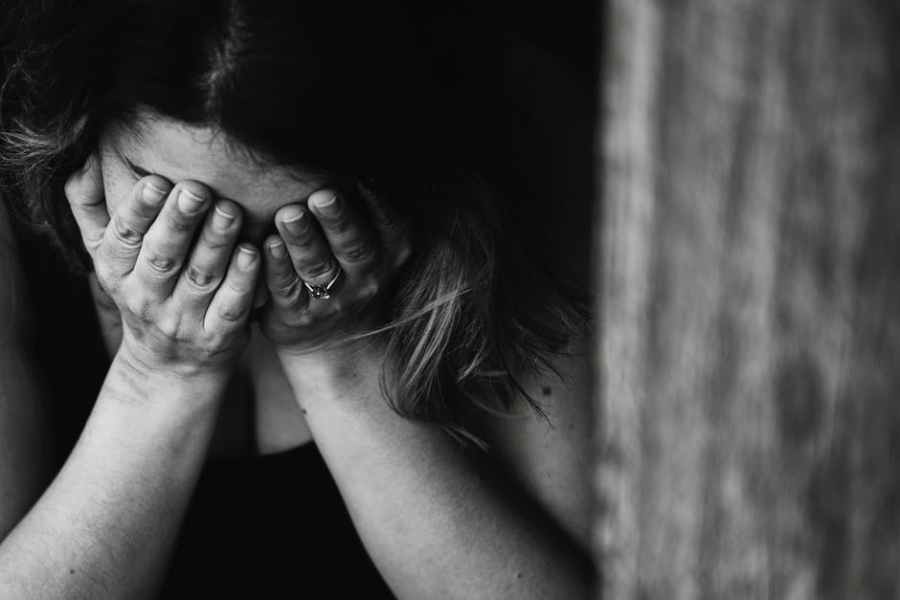
With the growing digital advancements of this virtual age, a sense of nothingness has taken over this generation in a huge way which eventually leads to mental illness in the form of anxiety disorders, personality disorders, psychotic disorders, eating disorders and needless to mention, depression. It is never easy to boil Depression down to a single definition/statement that covers all its aspects and symptoms at the same time. It is one of the major mental disorders that affect people irrespective of gender, age so on and the like.


However, even in this 21st century, many misconceptions seem to be there in the society. Many people seem to have adopted the notion of depression in such a prejudiced way that it automatically links their idea of it to a fragile and futile make-believe concept which is not only harmful for them but it also affects the people around them in the long run. This article aims at representing some of the common internalized misconceptions that seem to be wrongly associated with depression which go a long way towards causing further anxiety issues for people who suffer from depression.


1. It’s all in the head!

It is not. If you are one of those people who throw around this phrase in a casual manner whenever you hear someone talking about their fight with depression or other forms of mental disorders, it is high time you understand the repercussions associated with it. It may have a long lasting influence on that individual without you having a slightest idea about it.
It has been clinically proved to be one of the most damaging mental disorders that have the capability to break an individual inside out.

2. It is a way to seek attention.

People who happen to be clinically depressed for quite some time have a really hard time getting over it. There are various ways that they try to find their happiness in. some of them are vocal about it and many are not. However, stigmatizing, calling them names, terming them as mere attention seekers go on to make their journey way more difficult than it already is.
It takes a lot of courage and inner strength for people to come up and share their sufferings with other people. In no way do they seek attention nor do they want sympathy from anyone. In most cases, all they want is someone to listen, and understand what is going on in their mind when it is really difficult itself for them to understand it in the first place.

3. It’s genetic.


Statistics show that only around 15% of who suffer from depression has relatives who had depression in the past. Each person deals with it in a different way. The way it affects people is different. Even when it is genetic, two individuals may not show similar symptoms and the recovery time varies from one another.
Depression is just sadness!
Feeling sad temporarily and being depressed are two absolutely different things. Depression is a long term illness and is very different than being sad. It can be escalated from sadness, but it affects in a much wider way. Sadness is a temporary feeling which usually goes away on its own unlike depression. Depression comes along with a lot more other negative feelings including anxiety, unnecessary guilt feelings, overthinking, emptiness, nothingness and the like.

4. Only women get depressed.


There is this systematic internalized patriarchal fragile notion of being a Man present within us due to which in most of the cases, men choose to keep shut and do not express their emotions which eventually leads to unbearable pain and sufferings.
Women unlike men, are relatively more vocal about it and do not refrain themselves from talking about how they feel.

5. It’s just a weakness and never a big of a deal.


Due to the systematic stigmatization associated with depression, many people tend to think it is a mere temporary weakness or disability. No one chooses to be depressed and it has nothing to do with how strong they actually are.
Clinical depression is a big deal that needs regular psychological treatment in order for the patient’s recovery. Sometimes it even takes up to 8-10 years.

6. Only medication can treat depression.


Medication is one of the types by which patients are treated sometimes. It is not the only way. There are various other therapy sessions that include meditation/music therapy and other cognitive therapies that have been proved to be equally valid and helpful in treating depression.

7. Depression is always caused by trauma.


In many cases traumatic past incidents play a major role in triggering the sense of depression in people. Even people who have no such traumatizing past history can suffer from depression.

All cases are different and unique at the same time. Hence, any form of generalization or stigmatization can be way more harmful than we can even imagine. These kinds of insensitive judgmental concepts do not help, but they only contribute in making their struggle way harder than it already is. It is high time people understand to what extent these wrong judgmental thoughts and misinterpretations cause trouble for them who already are going through a lot. All we should do is to stop being judgmental and be kinder enough to help each other out in difficult situations that will eventually contribute to the process of making the world a better place, for all of us.

– Suvasree Bandyopadhyay.

SC Explains Tests To Be Applied While Sentencing In A Criminal Case

It must be mentioned right at the outset that the Supreme Court most recently on October 22, 2019, in State of Madhya Pradesh vs Udham and others in Criminal Appeal No. 690 of 2014 has briefly explained the three tests to be applied while sentencing in a criminal case. It has laid down in no uncertain terms without mincing any words that, “The aspect of sentencing should not be taken for granted, as this part of Criminal Justice System has determinative impact on the society.” Very rightly so!

                                            To start with, this latest, landmark and extremely laudable judgment authored by Justice NV Ramana for himself, Justice Mohan M Shantanagoudar and Justice Ajay Rastogi sets the dice rolling by first and foremost stating in para 1 that, “The present appeal is directed by the appellant-State against the final order dated 06.11.2012, passed by the High Court of Madhya Pradesh (Gwalior Bench) in Criminal Appeal No. 659 of 2011, whereby the High Court partly allowed the appeal filed by the respondents-accused herein and reduced the sentence awarded by the Trial Court to the period already undergone for the offences under Section 326 of the Indian Penal Code [hereinafter referred to as ‘IPC’] read with Section 34 of IPC, and Section 452 of the IPC.”

                                        While presenting the prosecution version, it is then stated in para 2 that, “The prosecution case is that the complaint lodged a report on 15.04.2008 that at around 9 p.m., while he was sitting inside his house with three other people, the respondents-accused barged in, carrying weapons. More specifically, respondent nos. 1 and 3 were carrying axes, while respondent nos. 2 and 4 were carrying sticks. The respondents-accused asked the complainant why he had not kept his cow tied, and subsequently, on respondent no. 4’s exhortation, the respondents-accused attacked the complainant and the others present at that time resulting in various injuries to them. Respondents-accused then allegedly threatened the complainant that if he did not keep his cow confined, he would be killed.”

                                         To put things in perspective, it is then elaborated upon in para 3 while putting across what the Trial Court ruled upon that, “The Trial Court tried the respondents-accused and ultimately convicted them for the offences under Section 326 read with Section 34 of IPC as well as the offence under Section 452 of IPC. The respondents-accused were sentenced to undergo 3 years rigorous imprisonment and a fine of Rs. 250/- (Rupees Two Hundred and Fifty Only) each for the offence under Section 326 read with Section 34 of IPC. They were further sentenced to undergo rigorous imprisonment for 1 year with a further fine of Rs. 250/- (Rupees Two Hundred and Fifty Only) each for the offence under Section 452 of IPC. In case of default of payment of fine, they were to undergo further rigorous imprisonment for 6 months. All sentences were made to run concurrently by the Trial Court.”

                                 As a corollary, what follows next is illustrated in para 4 that, “Being aggrieved, the respondents-accused filed an appeal before the High Court, challenging only the quantum of sentence imposed on them by the Trial Court. Vide impugned order, the High Court partly allowed the appeal and reduced the sentence to the period of imprisonment already undergone by them, which was a period of 4 days, while enhancing the fine amount imposed upon them by Rs. 1500/- (Rupees One Thousand Five Hundred Only) each. The respondents-accused were directed to deposit the enhanced fine within a period of 30 days, failing which they were to undergo simple imprisonment for a period of 30 days.”

                                             As it turned out, para 5 then states that, “Aggrieved by the impugned order, the State has filed the present appeal challenging the order of the High Court reducing the sentence awarded to the respondents-accused. The learned counsel for the appellant-State submitted that the High Court erred in not considering the gravity of the offence and the facts and circumstances of the case, particularly the fact that the respondents-accused had undergone imprisonment of only 4 days.”

                                 Simply put, para 6 then enumerates that, “On the other hand, the learned counsel for the respondents-accused submitted that the High Court has correctly appreciated the facts and circumstances of the case in passing the impugned order, and therefore, the same does not merit any interference from this Court.”

                                   After hearing the learned counsel for the parties as mentioned in para 7, it is then envisaged in para 8 that, “At the outset, it is pertinent to note that the reasoning of the High Court, for passing the impugned order and partly allowing the appeals of the respondents-accused herein, is limited to one sentence. The High Court states in its order that looking to the nature of the offence, the fact that this is the first offence of the respondents and the period of sentence already undergone by them, it is passing the impugned order.”

                             It would be of immense significance to note what is then stated so eloquently, elegantly and effectively in para 9 that, “At this stage the observations of this Court in Accused ‘X’ v. State of Maharashtra, (2019) 7 SCC 1, in which two of us were part of the Bench, with respect to sentencing in India are relevant here-

49. Sentencing is appropriate allocation of criminal sanctions, which is mostly given by the judicial branch. [Nicola Padfield, Rod Morgan and Mike Maguire, “Out of Court, Out of Sight? Criminal Sanctions and No Judicial Decision-making”, The Oxford Handbook of Criminology (5th Edn.).] This process occurring at the end of a trial still has a large impact on the efficacy of a criminal justice system. It is established that sentencing is a socio-legal process, wherein a Judge finds an appropriate punishment for the accused considering factual circumstances and equities. In light of the fact that the legislature provided for discretion to the Judges to give punishment, it becomes important to exercise the same in a principled manner. We need to appreciate that a strict fixed punishment approach in sentencing cannot be acceptable, as the Judge needs to have sufficient discretion as well.

50. Before analysing this case, we need to address the issue of the impact of reasoning in the sentencing process. The reasoning of the trial court acts as a link between the general level of sentence for the offence committed and to the facts and circumstances. The trial court is obligated to give reasons for the imposition of sentence, as firstly, it is a fundamental principle of natural justice that the adjudicators must provide reasons for reaching the decision and secondly, the reasons assume more importance as the liberty of the accused is subject to the aforesaid reasoning. Further, the appellate court is better enabled to assess the correctness of the quantum of punishment challenged, if the trial court has justified the same with reasons…”

                                                       (emphasis supplied)”   

                                         While pooh-poohing the manner followed by the High Court in sentencing the accused, it is then pointed out in para 10 that, “In the present case, it is clear that there is no detailed analysis of the facts of the case, the nature of the injuries caused, the weapons used, the number of victims, etc. given by the High Court in the impugned order. The High Court while sentencing the accused, has not taken into consideration the second charge proved against the respondents-accused herein, under Section 452 of IPC. Even the fact that the respondents-accused had only undergone sentence of 4 days at the time of passing of the impugned order, brings into question the High Court pointing to the same as a reason for reducing their sentence. As such, the order of the High Court merits interference by this Court.”

                                     While underscoring the invaluable importance of the sentencing policy, para 11 then postulates that, “We are of the opinion that a large number of cases are being filed before this Court, due to insufficient or wrong sentencing undertaken by the Courts below. We have time and again cautioned against the cavalier manner in which sentencing is dealt in certain cases. There is no gainsaying that the aspect of sentencing should not be taken for granted, as this part of Criminal Justice System has determinative impact on the society. In light of the same, we are of the opinion that we need to provide further clarity on the same.”  

                                         While continuing in the same vein, it is then very rightly articulated on sentencing policy in para 12 that, “Sentencing for crimes has to be analyzed on the touch stone of three tests viz., crime test, criminal test and comparative proportionality test. Crime test involves factors like extent of planning, choice of weapon, modus of crime, disposal modus (if any), role of the accused, anti-social or abhorrent character of the crime, state of victim. Criminal test involves assessment of factors such as age of the criminal, gender of the criminal, economic conditions or social background of the criminal, motivation for crime, availability of defense, state of mind, instigation by the deceased or any one from the deceased group, adequately represented in the trial, disagreement by a judge in the appeal process, repentance, possibility of reformation, prior criminal record (not to take pending cases) and any other relevant factor (not an exhaustive list).”

                                  Not stopping here, it is then stipulated in para 13 that, “Additionally, we may note that under the crime test, seriousness needs to be ascertained. The seriousness of the crime may be ascertained by (i) bodily integrity of the victim; (ii) loss of material support or amenity; (iii) extent of humiliation; and (iv) privacy breach.”

                               Of course, it is then rightly elaborated upon in para 14 that, “Coming to the appropriate sentence which is to be imposed on the respondents-accused in this case, the facts of this case need closer scrutiny. The respondents-accused entered the house of the complainant, attacked the others present with axes and with sticks. Four people, including the complainant, were injured. The injuries caused were incised wounds on the hands and backs of the victims, an incised wound next to the ear of one of the victims and bruising, etc. The respondents-accused were convicted for the offence under Section 326 read with Section 34 of IPC, which carries a maximum sentence of life imprisonment, or of imprisonment of a term which may extend to ten years, and fine. They were also convicted under Section 452 of IPC, which carries a maximum sentence of seven years along with fine.”

                               It cannot be lost on us that it is then also rightly pointed out in para 15 that, “The respondents-accused herein were males of age 33 years, 33 years, 28 years and 70 years respectively at the time of the incident. The main allegation as against the respondent nos. 1 and 3 is that they had used an axe to attack the victim. In this scuffle there is no dispute that some of the respondent-accused herein were also injured profusely. Further the motivation seems to be that the cow belonging to the victims had entered the household of the accused and the respondent no. 1 with his co-accused are proved to be the aggressor herein. From the perusal of the record, the injuries on some of the victims are not specifically attributed. The respondent group was numerically matched with that of the victims and there were two respondents-accused within the group carrying lathis. The bodily integrity was compromised as a result of the injury caused, but there was no evidence led to indicate any permanent establishments of any part. The scope of intrusion of privacy due to the assault is also minimal. There was no material destruction involved in the crime.”  

                                 To put it succinctly, it is then observed in para 16 that, “In this context, we need to note that the facts of the case highlighted above, however, need to be balanced with the fact that this was the first offence committed by the respondents-accused and that the motive, which is stated to be trivial. There is a requirement to treat the crime committed herein differently than other objectionable situations such as police atrocities etc. [refer to Yashwant v. State of Maharashtra, AIR 2008 SC 4067]. Having regard to the fact that the occurrence of the crime is of the year 2008 and the respondents-accused have been, in a way, only ordered to undergo four days of jail term with a fine of Rs 1,500/-, we need to enhance the same to commensurate with the guilt of the respondents-accused.”

                            Going ahead, it is then observed in para 17 that, “Comparatively, having perused certain precedents of this Court, we are of the considered opinion and accordingly direct that for the commission of the offence under Section 326 of IPC read with Section 34 of IPC, the respondent nos. 1, 2 and 3 are sentenced to serve rigorous imprisonment for 3 months and to pay a fine of Rs. 75,000/- (Rupees Seventy-Five Thousand Only)  each within a period of 1 month, on default of payment of which they are to suffer simple imprisonment for 3 months. For the offence under Section 452 of IPC, the respondent nos. 1, 2 and 3 are sentenced to serve rigorous imprisonment for 3 months and to pay a fine of Rs. 25,000/- (Rupees Twenty-Five Thousand Only) each within a period of 1 month, on default of payment of which they are to suffer simple imprisonment for 3 months.”

                                      Furthermore, it is then held in para 18 that, “For the offence under Section 326 of IPC read with Section 34 of IPC, the respondent no. 4, who is presently aged around 80 years, is sentenced to serve rigorous imprisonment for 2 months and to pay a fine of Rs. 50,000/- (Rupees Fifty Thousand Only) within a period of 1 month, on default of payment of which he is to suffer simple imprisonment for 1 month. For the offence under Section 452 of IPC, respondent no. 4 is sentenced to serve rigorous imprisonment for 2 months and to pay a fine of Rs. 15,000/- (Rupees Fifteen Thousand Only) within a period of 1 month, on default of payment of which he is to suffer simple imprisonment for 1 month.”

                                       Coming to the last two paras, para 19 holds that, “The above sentences are to run concurrently. Further, the respondents are directed to be taken into custody forthwith, to serve out their remaining sentence, as imposed hereinabove.” Lastly, the last para 20 concludes by holding that, “Accordingly, the appeal is partly allowed and the impugned order of the High Court is modified in the afore-stated terms.”

                                     On a concluding note, it may well be said that it is a very key judgment from the sentencing perspective in criminal cases as it lays down the tests to be applied in such cases which we have already discussed quite elaborately in various paras stated above of this noteworthy judgment! The three-Judge Bench of Apex Court very rightly cautions the High Courts and all the other lower courts that the aspect of sentencing should not be taken for granted, as this part of Criminal Justice System has determinative impact on the society! So the Judges should weigh carefully all the various factors which can tilt the sentencing before arriving at any decision!

Sanjeev Sirohi, Advocate,

s/o Col BPS Sirohi,

A 82, Defence Enclave,

Sardhana Road, Kankerkhera,

Meerut – 250001, Uttar Pradesh.

Plea of Privacy Not Tenable to Resist Gender Detection Test

It has to be remarked first and foremost that in an important and a landmark observation, the Madhya Pradesh High Court has just recently on October 4, 2019 in a notable judgment titled Smt. Surbhi Trivedi Vs. Gaurav Trivedi in Misc. Petition No. 4820 of 2018, held that in a matrimonial dispute, if gender of one of the parties is questioned by the other party, the court may direct such a party to undergo medical examination and the plea of violation of privacy shall not be tenable. This extremely important judgment was passed by Justice Subodh Abhyankar in a petition invoking supervisory jurisdiction of the High Court under Article 227 of the Constitution filed by one Surbhi Trivedi (Petitioner), through Advocate Sampoorn Tiwari, against an order of the Family Court whereby the Principal Judge had directed that her gender be verified by a Government lady doctor. Justice Abhyankar while concurring with the respondent’s-husband contentions clearly held that the Family Court had not committed any illegality or jurisdictional error in directing the petitioner to undergo feminity test. It was held that the parties must be given an opportunity to produce any evidence “having a nexus with the lis”.

                                       Regarding the law laid down, it is clearly mentioned in this judgment right at the outset that, “In a matrimonial dispute, if gender of one of the parties is questioned by the other party, it assumes importance and the party raising such issue also has a right to adduce the evidence in this behalf and the other party to rebut the same. This Court is conscious of the fact that one’s sex/gender is one’s own business, but when it comes to marriage, the other partner’s rights are also closely attached with the same, as it assumes importance to maintain a healthy and peaceful married life, and since he or she also has a fundamental right to life under Article 21 of the Constitution of India, the rights of both the parties are evened out. The plea of violation of privacy or any fundamental right is not tenable.”

                                  To start with, the ball is set rolling in para 1 of this landmark judgment wherein it is envisaged that, “This petition has been field by the petitioner/wife under Article 227 of the Constitution of India against the orders dated 16.8.2018 as also order dated 25.9.2018 passed in Case No. 112-A/2017 by the Principal Judge, Family Court, Jabalpur, whereby the learned Judge, by accepting an application filed by the respondent husband under Section 151 of CPC has directed that the gender of the petitioner be verified by a Government lady doctor and vide order dated 25.9.2018, the petitioner is directed to keep herself available for medical examination on 10.10.2018 before the Dean, Netaji Subhash Chandra Bose, Medical College, Jabalpur.”

                          To recapitulate, it is then pointed out in para 2 that, “Brief facts of the case are that the marriage of the petitioner-wife and the respondent husband was solemnized on 22.11.2009 at Jabalpur and after sometime a dispute arose between the parties which led to the present petitioner-wife filing an application under Section 9 of the Hindu Marriage Act, 1955 in the Family Court, Jabalpur. A reply to the aforesaid application has also been filed by the respondent along with an application under Section 151 of CPC with a prayer that as the petitioner lacks womanly attributes and is a transgender hence she be examined medically at Netaji Subhash Chandra Bode Medical College, Jabalpur. A reply to the aforesaid application was also filed by the petitioner opposing the same on the ground that the marriage between the parties was solemnized on 22.11.2009 and since last eight years the husband has never raised this issue before any authority and suddenly he has realized that the petitioner is transgender, which in itself is absurd hence the application is liable to be dismissed. It was further stated that even according to the reply of the respondent they had consummated the marriage, hence the said application being frivolous be dismissed.”    

                        While elaborating upon the decision of the Family Court, it is then stated in para 3 that, “The learned Judge of the Family Court vide the impugned order dated 16.8.2018 has allowed the said application taking note of the medical papers submitted by the respondent in respect of the petitioner’s physical attributes and it is directed that the petitioner shall get herself examine at the Netaji Subhash Chandra Bose Medical College, Jabalpur and its cost shall be born by the respondent only.”

                               Needless to say, after hearing the learned counsel for the parties and perusing the record as mentioned in para 6, it is then pointed out in para 7 that, “The learned Judge of the Family Court vide its impugned order dated 16.8.2018 has allowed the aforesaid application holding that the medical examination of the petitioner is necessary. In the considered opinion of this Court, no illegality or jurisdictional error has been committed by the learned Judge of the Family Court for the reasons assigned as here under.”

                                Most importantly, it is then very rightly held in para 8 without mincing any words that, “This Court is of the considered opinion that if any evidence having a nexus with the lis between the parties, should be allowed to be produced. In a matrimonial dispute, if gender of one of the parties is questioned by the other party, it assumes importance and the party raising such issue also has a right to adduce the evidence in this behalf and the other party, to rebut the same. This Court is conscious of the fact that one’s sex/gender is one’s own business, but when it comes to marriage, the other partner’s rights are also closely attached with the same, as it assumes importance to maintain a healthy and peaceful married life, and since he or she also has a fundamental right to life under Article 21 of the Constitution of India, the rights of both the parties are evened out. In such circumstances, the plea of violation of privacy or any fundamental right is not tenable.”

                                    It cannot be lost on us that it is then further pointed out in para 9 that, “In the judgment rendered by the Coordinate Bench of this Court in the case of Amol Chavhan Vs. Smt. Jyoti Chavhan, reported as 2012 (1) MPLJ 205, wherein, this Court, in a case where an application was filed by the wife for medical examination of the husband to ascertain if the husband is impotent or not, has held that the order passed by the trial Court directing the medical test of the husband to ascertain the impotency is just and proper. The relevant para 10 and 11 of the said judgment reads as under:-

‘10.  The Apex Court has relied on Sharda vs. Dharampal, reported in (2003) 4 SCC 493 to hold that medical examination by experts is permissible to ascertain the truth of the matter. In view of this, question No. 1 deserves to be answered against the petitioner. The Court below took a plausible stand and, therefore, cannot be interfered in this proceeding under Article 227 of the Constitution.

11. So far the issue regarding infringement of petitioner’s personal or fundamental rights flowing from Article 21 is concerned, in the opinion of this Court, there is no such infringement in a proceeding of this nature, where a question raised regarding impotency of petitioner by the wife, the Court has inherent power to direct the petitioner to undergo medical test.’

Reference may also be had to the judgment of the Hon’ble Apex Court in the case of Dipantia Roy Vs. Ronobroto Roy, reported in (2015) 1 SCC 365 wherein the DNA of the son was directed to be taken where the allegation was of infidelity of the wife by the husband.”

                                          What’s more, it is imperative to now mention that it is then made absolutely clear in para 10 that, “Having held in favour of the medical test, this Court is also of the firm opinion that if such rights to defend oneself are used in a manner so as to harass, scandalize or demoralize the other party, the Courts are competent enough to impose heavy cost on the person alleging the same so as to discourage such practice. In view of the aforesaid, in the considered opinion of this Court no case for interference is made out.”

                                               In other words, the Madhya Pradesh High Court while firmly ruling in favour of medical test which according to it does not violate any right to privacy or any other fundamental right also simultanously makes it amply clear that if such rights to defend oneself is itself made an instrument of oppression by using it as a potential weapon to harass, scandalize or demoralise the the othe party then the Court will not refrain from imposing heavy cost on the person alleging the same to send a strong and unmistakable message that if it is misused then those misusing it would have to face the music of law!

                                Lastly, it is then held in the last para 11 that, “As a result, petition being devoid of merit is hereby dismissed. It is also directed that the petitioner shall be examined as directed by the learned Judge of the Family Court and for this purpose she is now directed to appear before the Dean, Netaji Subhash Chandra Bose Medical College, Jabalpur on 14.10.2019 at 11.30 AM. The report so prepared be furnished to the concerned Court in a sealed envelope for its use in the proceedings.”

                                        In conclusion, it may well be said with a fair degree of satisfaction that Justice Subodh Abhyankar of the Madhya Pradesh High Court has very rightly held and very rightly interpreted in this latest, landmark and extremely laudable judgment that plea of privacy not tenable to resist gender detection test by parties in matrimonial disputes. Parties must therefore be always ready to submit themselves for gender detection test whenever and wherever it is considered necessary! What is wrong in it? Nothing wrong!

Sanjeev Sirohi, Advocate,

s/o Col BPS Sirohi,

A 82, Defence Enclave,

Sardhana Road, Kankerkhera,

Meerut – 250001, Uttar Pradesh.  

PM Modi’s Visit To Saudi Arabia Deepens Bilateral Ties

It goes without saying that India has always cherished to maintain good bilateral ties with Saudi Arabia. The incumbent PM Narendra Modi has right from start always shown a great deal of interest in improving further the bilateral relations between both the countries and deepening them further. The Crown Prince of Saudi Arabia – Mohammad Bin Salman too has shown great interest in enhancing further the bilateral relations between India and Saudi Arabia.

                                         It goes without saying that the sustained efforts to end the prolonged nonchalant relations between both the countries began seriously for the first time while former PM late Atal Bihari Vajpayee was at the helm of affairs. The first step was taken when Vajpayee’s Foreign Minister Jaswant Singh had travelled to the kingdom of Saudi Arabia in early 2001. We then saw how five years later, King Abdullah visited Delhi which was the first visit to India by a Saudi monarch in half a century to announce a new phase being heralded in bilateral relations. But the depth was still lacking and attention was confined only to buying oil from Saudi Arabia and exporting manpower.

                                             However, much water has flown under the bridge since then! It cannot be denied that the expansion and institutionalization of strategic cooperation between India and Saudi Arabia started taking deep roots during the Prime Minister Narendra Modi’s latest two-day visit visit to Saudi Arabia in end of October which is the second in three years. After arriving in Riyadh, PM Modi tweeted on a happy note saying that, “Landed in the Kingdom of Saudi Arabia, marking the start of an important visit aimed at strengthening ties with a valued friend. Will be taking part in a wide range of programmes during this visit.”

                                 It is quite well known that Saudi Arabia is second biggest supplier of oil to India after Iraq. It is also India’s fourth largest trading partner and the bilateral trade amount adds up to $27.48 billion in 2017-18 and Saudi investment of around $ 100 billion in India in various key areas like energy, agriculture, minerals, mining, petrochemicals and infrastructure is also in the pipeline. This makes the relations between both the countries all the more important and both countries appreciate this fully.

                                   As we all know, this latest visit by PM Modi to Saudi Arabia was about Modi delivering a keynote at the high profile “Future Investment Initiative Summit” that was basically an initiative of Crown Prince of Saudi Arabia. It also cannot be denied that this visit of PM Modi to Riyadh truly marks the consolidation of a bilateral partnership that has long struggled to take deep roots and this is in the mutual long term shared interests of both the countries.        

                                        It is most refreshing to learn that India and Saudi Arabia have shown together deep interest in last few years to deepen the ties between both the countries. This has culminated in the launch of a Strategic Partnership Council between both the countries during PM Modi’s visit to Saudi Arabia just recently. This new body comprising of two mechanisms which will be headed by the Foreign Ministers and Commerce Ministers of both sides will guide and monitor relations in some crucial areas, as for instance, energy, security and trade.

                               It cannot be lightly dismissed that India is one of eight countries with which Saudi Arabia is forging strategic partnerships under its Vision 2030 policy. Saudi Arabia understands fully the growing potential of India and this alone explains as to why it has placed India in the club of those few countries with whom it is forging strategic partnerships as just stated above. This is bound to deepen the bilateral ties between both the countries.

                                      It is also quite heartening to note that in a marked departure from the one they issued in February 2019, the joint statement by New Delhi and Riyadh made no mention at all on the resumption of dialogue between India and Pakistan. In the joint statement that was issued on October 29 after the bilateral meeting was concluded between PM Narendra Modi and Saudi King Salman bin Abdulaziz Al Saud, the two sides reiterated their “categorical rejection of all forms of interference in the internal affairs of countries” and the need for the international community to fulfil its responsibilities towards “preventing any attacks on the sovereignty of States”. This was the need of the hour also!

                                          Be it noted, the February 2019 joint statement that was issued after Saudi Crown Prince Mohammad bin Salman’s visit to India had a full paragraph on India-Pakistan relations stating that, “The two sides stressed the importance of regional stability and good neighbouring relations. His Royal Highness appreciated consistent efforts made by Prime Minister since May 2014 including Prime Minister’s personal initiatives to have friendly relations with Pakistan. In this context, both sides agreed on the need for creation of conditions necessary for resumption of the comprehensive dialogue between India and Pakistan.”

                                     It cannot be lost on us that the recent October 29’s joint statement between both India and Saudi Arabia was silent on India-Pakistan ties or a dialogue. This is a healthy sign as relations between both the countries are now not placing Pakistan on priority list any longer! It has to be unequivocally appreciated!

                                      Also it cannot be ignored that unlike February 2019 when the joint statement said that the Prime Minister and His Royal Highness “condemned in the strongest terms, the recent terrorist attack on Indian security forces on 14 February, 2019 in Pulwama in Jammu & Kashmir”, there was no reference this time to the Pulwama attack. The joint statement said that, “The Indian side condemned the terrorist acts against civilian installations in the Kingdom”. This was a reference to the drone attacks on Saudi oil fields. The joint statement said that both sides expressed their rejection of all terrorist acts and stressed the need to “prevent access to weapons including missiles and drones to commit terrorist acts against other countries”.

                                           Needless to say, the February statement too had called upon “all States to deny access to weapons including missiles and drones to commit terrorists acts against other countries. This time, on terrorism, it said that the two sides stressed that “the extremism and terrorism threaten all nations and societies. They rejected any attempt to link this universal phenomenon to any particular race, religion or culture.” Very rightly so!

                              More importantly, in a new formulation, both sides also called for “closer cooperation in the United Nations Counter-Terrorism Center”, and also agreed on strengthening cooperation in combating terrorist operations, exchange of information, capacity building and strengthening of cooperation in combating transnational crimes, within the framework of the existing bilateral security cooperation.

                                     Any discussion on India’s deepening ties with Saudi Arabia would be incomplete without mentioning the full list of 12 Memorandum of Understanding (MoU) that were signed between both the nations following bilateral talks. So let us discuss them one by one. They are as follows:-

1.  The most significant MoU was signed to establish a Strategic Partnership Agreement that was signed by the Prime Minister of India – Narendra Modi and Crown Prince of Saudi Arabia – Mohammed bin Salman bin Abdulaziz Al Saud.

2.    MoU on Cooperation in the Field of Renewable Energy between Saudi Ministry of Energy and Ministry of New & Renewable Energy of India that was signed by Dr Ausaf Sayeed who is the Ambassador of India to Saudi Arabia and HRH Prince Abdulaziz bin Salman Al Saud who is Energy Minister of Saudi Arabia.

3.   MoU on Security Cooperation that was signed by TS Tirumurti who is Secretary, Economic Relations (ER), Ministry of External Affairs (MEA) of India and HRH Prince Abdulaziz bin Saud bin Naif Al Saud who is Interior Minister of Saudi Arabia.

4.  MoU for cooperation in combating illicit trafficking and smuggling of narcotic drugs, psychotropic substances and chemical precursors that was signed by Dr Ausaf Sayeed and HRH Prince Abdulaziz bin Saud bin Naif Al Saud.

5.  MoU between Saudi General Authority of Military Industries (GAMI) and Department of Defence Production, Ministry of Defence concerning collaboration in military acquisition, industries, research, development and technology that was signed by TS Tirumurti and HE Ahmad Al-Ohali who is Governor of General Authority of Military Industries of Saudi Arabia.

6.  MoU for cooperation in Civil Aviation that was signed by Dr Ausaf Sayeed and HE Abdulhadi Al-Mansouri who is President of GACA in Saudi Arabia.

7.   MoU between Central Drugs Standard Control Organization (CDSCO), Ministry of Health & Family Welfare and Saudi Food & Drug Authority (SFDA) for Cooperation in the field of medical products regulations that was signed by TS Tirumurti and HE Dr Hisham Al Jadhey who is CEO of SFDA of Saudi Arabia.

8.  Letter of Intent between Small and Medium Enterprises General Authority (Monshaat) of the Kingdom of Saudi Arabia and Atal Innovation Mission (AIM), NITI Aayog of the Republic of India that was signed by Dr Ausaf Sayeed and Engineer Saleh Al-Rasheed who is Governor of Small and Medium Development Authorities of Saudi Arabia.

9.  Cooperation Programme between Foreign Service Institute, MEA and Prince Saud Al Faisal Institute of Diplomatic Studies (IDS) of Ministry of Foreign Affairs of Saudi Arabia by Dr Ausaf Sayeed and Dr Abdallah Bin Hamad Al Salamah who is Director General of Prince Saud Al Faisal Institute for Diplomatic Studies.

10.                   MoU between Indian Strategic Petroleum Reserves Limited (ISPRL) and Saudi Aramco signed by HPS Ahuja who is CEO and MD of ISPRL of India and HE Ahmad Al-Subayae who is Vice-President of ARAMCO of Saudi Arabia.

11.                   MoU for Cooperation between National Stock Exchange (NSE) and Saudi Stock Exchange (Tadawul) signed by Vikram Limaye who is MD and CEO of National Stock Exchange of India and Engineer Khaled Al-Hasan who is CEO of Saudi Stock Exchange (Tadawul).

12.                   MoU between National Payments Corporation of India (NPCI) and Saudi Payments that was signed by Arif Khan who is the Chief Digital Officer of National Payments Corporation of India and Ziyad Al Yusuf who is MD of Saudi Payment.

                                           In its joint statement pertaining to the volatile Syrian situation, the two leaders of India and Saudi Arabia very rightly highlighted the importance of preserving unity in Yemen, ensuring its stability and coming out with a viable political solution to solve the Yemeni crisis  that would be based on the outcome of the Yemeni National Dialogue, GCC initiative and the Security Council Resolution (2216).

                                       On Palestine, India and Saudi Arabia both stressed on the need for achieving a comprehensive, just and lasting peace in Palestine based on relevant UN resolutions and the Arab Peace Initiative. Both leaders exuded confidence that the peace resolution will guarantee the rights of the people of Palestine and lead to the establishment of their independent state based on the 1967 borders with Jerusalem as its capital.

                         Last but not the least, the two leaders also agreed on the ever-lasting importance of bilateral engagement in promoting ways to secure the waterways in both the Indian Ocean region and the Gulf, from any threat that may endanger the interests of the two countries including their national security. Finally, we saw how at the end of the visit, PM Modi extended an invitation to King Salman to visit India to complete the consultations and further discuss matters of bilateral cooperation and international issues of mutual interest. PM Modi also reiterated his support to Saudi Arabia for its upcoming Presidency of the G20 in 2020.

                                      On a concluding note, it may well be said that the bilateral relations between India and Saudi Arabia have certainly deepened over the last couple of years but still there is lot of scope for expanding it further which must be worked out exhaustively. No doubt, PM Narendra Modi is showing considerable interest in ensuring that relations between both the countries are further deepened and what is most comforting to note is that this is being reciprocated by the Saudi Crown Prince Mohammad bin Salman bin Abdulaziz Al Saud in equal measure! This will benefit both the countries equally!

Sanjeev Sirohi, Advocate,

s/o Col BPS Sirohi,

A 82, Defence Enclave,

Sardhana Road, Kankerkhera,

Meerut – 250001, Uttar Pradesh.
Am I Safe ?

Am I Safe ? The question which comes into every women’s mind at some point in her life. Earlier women used to feel insecure outside their homes but now they don’t even feel secure in their own homes.


The subjection of a major proportion of women in our country to torture is so regular that the fear part has become a part of a woman’s daily life. There is a constant fear in the back of every women’s mind whether she admits it or not .


India which is a developing country has also developed multitudinous crimes for women in the last few decades. Thomas Reuters Foundation in its 2018 survey ranked India as the world most dangerous country for women ahead of Afghanistan, Syria and Saudi Arabia. A similar poll seven years ago had ranked India fourth, with Afghanistan top of the list.


According to National Crime Records Bureau Rape is the fourth most common crime committed against women in India.
The official crime statistics for 2016 shows a woman is raped every 13 minutes; six women are gang raped every day.
According to 2018 NCRB data Uttar Pradesh is the most unsafe for women while state wise Madhya Pradesh recorded the highest number of rape cases. Among the Union territories New Delhi recorded the highest number of rape cases.


Crime against women is increasing with every passing day . Everyday newspaper articles and social media is filled with infinite cases of violence against women.
How phenomenal is that right ? Women in our country aren’t considered as humans they are just considered as mere tools to fulfill a man’s sexual desire because in a country where men indulge in violence just to establish their superiority and power over women what else can we accept. In January 2011, the International Men and Gender Equality Survey Questionnaire reported that 24% of Indian men had committed sexual violence at some point during their lives.


The increasing crime rates are imposing a serious question that where is India lacking. The same Indians who worship goddess Durga during navratri humiliate her afterwards. Has hypocrisy become an important characteristic of Indian masses?


India ranked 95th out of 129 countries in global gender equality index and 112th out of 153 on gender gap index. These surveys clearly show that Patriarchy is still playing very hard on Indian women and male superiority is still prevalent in India.
Our Indian Society still believes that women are responsible for the things happened and happening to them, this is so because they wear revealing clothes and invite the opposite sex to harass them. But dear society what about the five month old toddler who was raped by her relative, what about Asifa did they also invited their perpetrators by any means or they were also wearing revealing clothes to serve the purpose. They didn’t but then also they were raped.


No matter how many excuses our society presents but the reality will not change that the reason behind the occurrence of such incidents is the hideous mentality of some males present in our country. They have been brought up in such an environment which has forced them to become a malefactor.


We say we can’t help it and change the present scenario but we can. We can do so just by giving right values to every male around us and by making them understand that:

“ Real Men Don’t Rape

They Respect ”

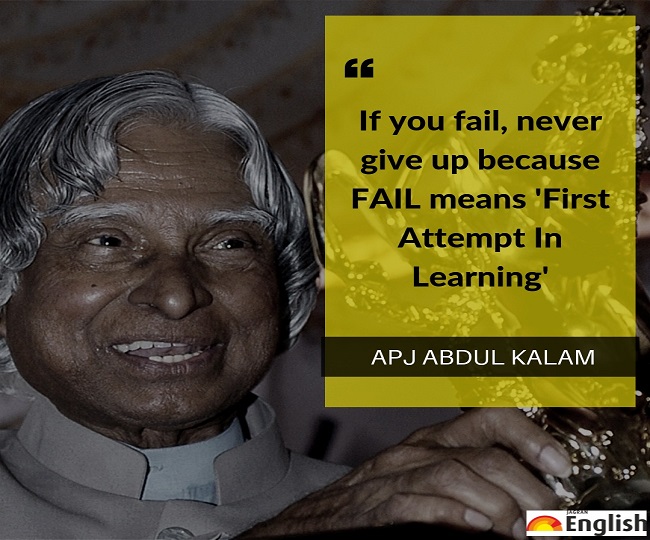
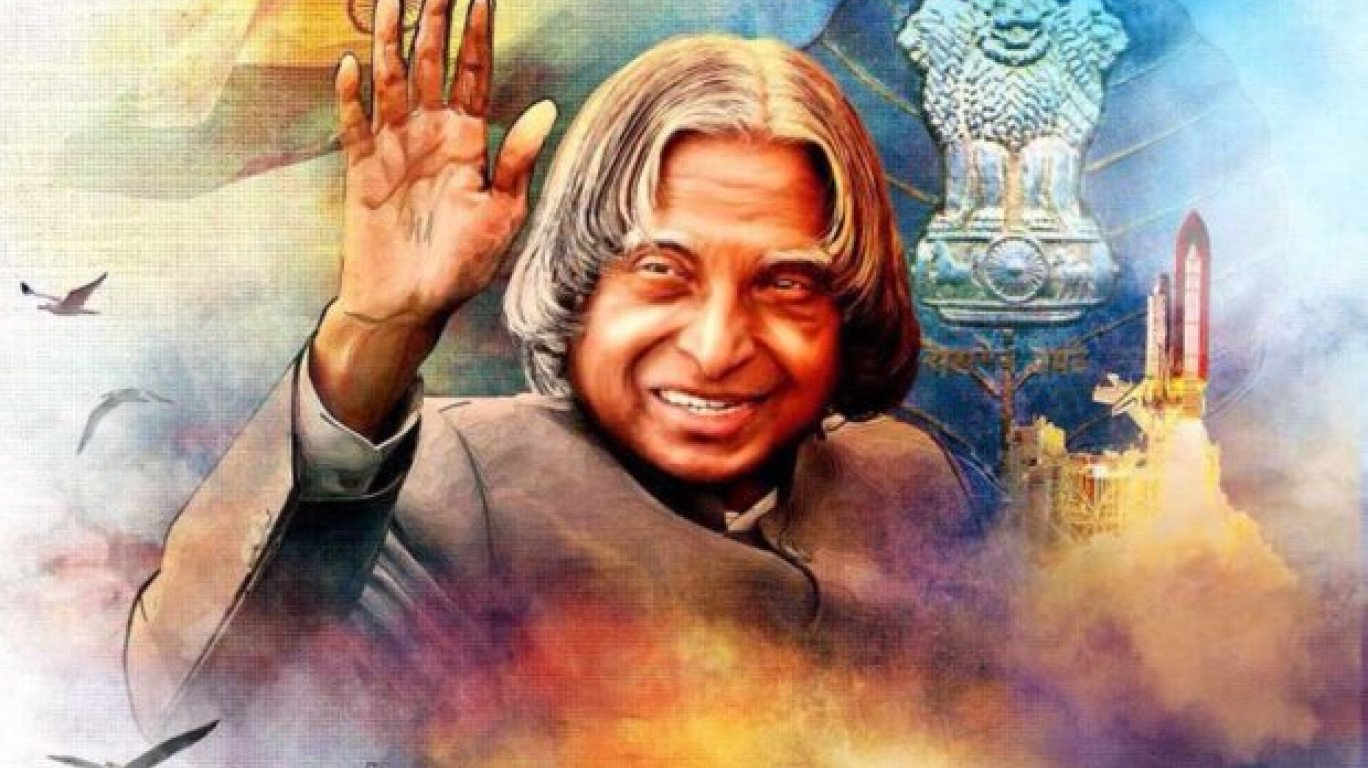
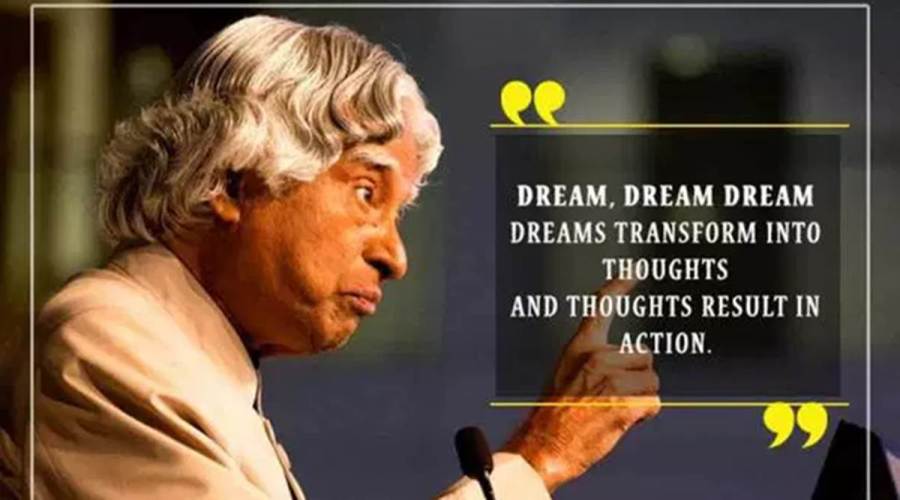
MISSILE MAN: A.P.J ABDUL KALAM

A.P.J Abdul Kalam ( Avul pakir jainulabdeen) (15 October 1931- 27 July 2015) . Kalam was born to a Tamil Muslim family in the oil grimage centre of Rameshwaram on Pamban island and raised in Rameshwaram, Tamil Nadu and studies physics and aerospace engineering.

At that time the financial condition of his family was poor so from an early age he started supporting his family financially. But he never gave up education. Along with supporting his family he continued his studies and completed graduation. Kalam earned a degree in aeronautical engineering from the Madras institute of technology.

The great missile man becomes the president of India in 2002 .11th president of India (2002-2007) succeeding K.R Narayana. He won the 2002 presidential election with an electoral votes of 922884 surpassing the 107366 votes won by Lakshmi sahagal. During his presidency period , the army and country achieved many milestones that contributed a lot to the nation. He served the nation with a open heart that’s why he was called ” People President ” . But at the end of his term period, he was not satisfied with his work that’s why he wanted to be the president a second time but later on forefiled his name. After the leaving the presidential office at the end of his term Dr. A.P.J Abdul Kalam again turn to his old passion which is teaching students. He worked for many reowned & prestigious institution of India located across the country. Above all, according to his the youth of the country is very talented but need the opportunity to prove their worth that’s why he supported them is very good dead , he always appreciated and motivated them by taking practical examples. He was friendly with students and youth through this nature youth easily became friendly with them and tell them about their issues.

He added many projects that contributed to the society also he was the one who helped in the development of Agni & Prithvi missiles. Thus came to know as the Missile man of India for his work on the development of ballistic missile and launch vehicle technology. He spent the next four decades as a scientist & science administrator, mainly at the Defence research & development organisation (DRDO) and the Indian space research organisation (ISRO) & was intimately involved in Indians civilian program & millitary missile development.

He also played a pivotal organisational, technical and political role in India’s pokhran nuclear test in 1998 , the first since the original nuclear test by Indians in 1974. During his Lifetime Dr. A.P.J Abdul Kalam was not only awarded and honoured by Indian organisation & committee but also by many international organizations & committees. During his Lifetime ,Dr. A.P.J Abdul Kalam wrote many books but his most notable work was ” INDIA 2020″ which have an action plan to make India a superpower. Dr. Kalam was a man of simplicity & integrity . He was so busy at work that he rises up early in the morning and work till late hours after midnight.

The man had the vision to make India a great country. And according to his the youth are the real assets of the country that’s why we should inspire & motivate them. The man who lead Indian’s entry into the exclusive club of countries making their own Intermediate Range Ballistic Missiles ( IBRM).

7 Invention of Kalam :

  • Nandhi ( Double engine powered hovercraft)
  • Pokhran-2
  • Indigenous Guided Missiles
  • Kalam Raju Stent ( low cost coronary stent)
  • Kalam Raju tablet ( aimed at arming health workers at the primary level to respond to emergency medical situation)
  • Light weight calipers ( After polio free India , to make easy for special people )
  • Project Devil & Project Valiant ( Develop ballistic mission)

Kalam put forward a country wide plan called technology vision 2020, which he described as a road map for transforming India from a less developed to a developed society in 20 years. The plan called for, among other measures, increasing agricultural productivity, emphasizing technology as a vehicle for economic growth, and widening access to health care & education.

He was such a bachelor who became father of India Missile man . His other child were Indian students and scholars.

Acid Attack

Acid attacks refer to physical assaults where an acid or corrosive material is thrown over another individual with the intention to disfigure, torture or kill an individual and according to recent study this form of violence against women is increasing at alarming rate. It was revealed that the victims of acid burn are most often young and teenage girls because of refusal of marriage and rejection of love proposal or sexual advances, personal revenge and family disputes.Another major cause reported was they did not bring enough dowries with them. This horrific act occurs in countries such as: Bangladesh, Cambodia, Pakistan, India, and Afghanistan.

Another major cause reported by respondents was they did not bring enough dowries with them. The most notable effect of an acid attack is the lifelong bodily disfigurement. Consequently, the victim is faced with physical challenges, which require long-term surgical treatment. Acid assault survivors also face many mental health issues upon recovery like anxiety, depression, lowered self-esteem and increased self- consciousness. Many social implications exist for acid survivors  especially women, like such attacks usually leave victims handicapped in some way, rendering them dependent on either their spouse or family for everyday activities, such as eating and running errands. These dependencies are increased by the fact that many acid survivors are not able to find suitable work, due to impaired vision and physical handicap. This negatively impacts their economic viability, causing hardships on the families/spouses that care for them. Moreover, acid survivors who are single when attacked almost certainly become snubbed or excluded from society, effectively ruining marriage prospects. Moreover, a significant number
of victims receive no compensation for healthcare and other costs, and many others face significant challenges in accessing adequate first aid and long-term healthcare.

“I lost my childhood that day, I stopped going to school and lost all my friends. People stared at me and mocked me.
Neighbors and relatives blamed me, and said I must have done something wrong to earn the man’s wrath. My only fault was I refused the man’s proposal.” These were the words spoken by Laxmi Aggarwal , a 26 year old acid attack survivor , who was subjected to an acid attack by two men in 2005 while she was waiting for a bus in the Khan Market area in New Delhi subsequent to her rejection to marry one of the attackers. In spite of the fact that she survived the attack, it had. left her disfigured for life as the acid had burnt her whole face. She has undergone several surgeries to make her physical appearance resemble of what it was.

Acid violence is widespread and prevalent in our society that remains often invisible. Hence the government must combat the acids attacks and implement laws by ensuring adequate police investigations, protecting victims, and punishing the perpetrators. One important way to combat acid violence is to limit the easy availability of acid. The acids used for attacks are easily available as they are used in domestic use as well as for scientific and research purposes. A monitoring system should be formed to check the effective implementation of the rules by the people. They can also eradicate the violence by effectively implementing laws that provide for perpetrators’ prosecution and punishment . Also we must spread awareness about the devastating effects among people and all must work effectively to curb the violence.

The Human Calculator

Shakuntla Devi , born on 4th november, 1929, was an Indian writer and mental calculator, popularly known as the ‘human computer’. Her talent earned her a place in the 1982 edition of  The Guinness Book of World Records. She was born in Bangalore, India.

Born to Hindu Kannada Brahmin parents, Devi was a precocious child and she demonstrated her arithmetic abilities at the University of Mysore without any formal education.

Shakuntala Devi wrote a number of books in her later years, including novels as well as texts about mathematics, puzzles, and astrology. She wrote the book The World of Homosexuals, which is considered the first study of homosexuality in India. She treated homosexuality in a positive light and is considered a pioneer in the field.

Shakuntla Devi travelled the world demonstrating her arithmetic talents, including a tour of Europe in 1950 and a performance in New York City in 1976.

In 1988, she travelled to US to have her abilities studied by Arthur Jensen a professor of psychology at the University of California, Berkeley. Jensen tested her performance of several tasks, including the calculation of large numbers. Examples of the problems presented to Devi included calculating the cube root of 61,629,875 and the seventh root of 170,859,375. Jensen reported that Shakuntala Devi provided the solution to the above mentioned problems (395 and 15, respectively) before Jensen could copy them down in his notebook.  Jensen published his findings in the academic journal Intelligence in 1990.

In 1977, she wrote The World of Homosexuals, the first study of  homosexuality in India.

In april 2013, she was admitted to a hospital in Bangalore with respiratory problems. Over the following two weeks she suffered from complications of the heart and kidneys. She died on 21st april, 2013 in the hospital. Sje was 83 years old.

On 4th november, 2013 she was honoured with a Google Doodle.