NASA’s Diligence meanderer, right now investigating Jezero Pit on Mars, has shared new experiences which uncover that the Red planet had supported collaborations with water, which vanished later.
Determination wanderer was dispatched on July 30 last year and showed up at the red planet on February 18 following a 203-day venture navigating 472 million kilometers. The meanderer investigated the floor of Jezero Hole, which was once a lake and a shriveled stream delta at the pit’s edge
In light of the nitty gritty pictures sent by the six-wheeler meanderer on Mars, another review by the mission researchers has now distributed first logical outcomes about the Jezero Hole delta in the diary Science.
The discoveries depend on itemized imaging of long, steep slants called ledges, or scarps in the delta, which shaped from silt gathering at the mouth of an antiquated stream that some time in the past took care of the cavity’s lake.
The pictures uncover that billions of years prior, when Mars had an air sufficiently thick to help water streaming across its surface, Jezero’s fan-molded waterway delta experienced late-stage flooding occasions that conveyed rocks and trash into it from the high countries outside the cavity, said the review.
A Pool of Changing Profundities
Right off the bat throughout the entire existence of the Jezero Cavity’s previous lake, its levels are thought to have been sufficiently high to peak the pit’s eastern edge, where orbital symbolism shows the remaining parts of an outpouring waterway channel. The new paper. portraying the size of Jezero’s lake fluctuating significantly after some time, uncovers that its water level was rising and falling by several yards before the waterway ultimately vanished inside and out.
While it’s obscure if these swings in the water level came about because of flooding or more progressive natural changes, the science still up in the air that they happened later in the Jezero delta’s set of experiences, when lake levels were no less than 330 feet (100 meters) beneath its most elevated level.
Persistence’s ‘Kodiak’ Second
In its antiquated past, Kodiak was at the southern edge of the delta, which would have been an unblemished geologic design at that point. Presently, when the pictures were taken, the scarps were toward the northwest of the wanderer and around 1.2 miles (2.2 kilometers) away. Southwest of the meanderer, and at about a similar distance, lies another conspicuous stone outcrop the group calls “Kodiak.”
Before Diligence’s appearance, Kodiak had been imaged distinctly from circle. From the surface, the wanderer’s Mastcam-Z and RMI pictures uncovered interestingly the stratigraphy – the request and position of rock layers, which gives data about the general planning of geographical stores – along Kodiak’s eastern face. The slanted and level layering there is the thing that a geologist as a rule find in a waterway delta on The planet.
A superior comprehension of Jezero’s delta is a vital aspect for understanding the adjustment of hydrology for the space,” said Gupta, “and it might actually give important bits of knowledge into why the whole planet dried out.”
Bharat Biotech said it had submitted data from the Phase 2/3 clinical trials in the 2-18 years age group for Covaxin (BBV152) to the Central Drugs Standard Control Organisation (CDSCO), that the data had been thoroughly reviewed by the CDSCO and SEC, and that they provided their positive recommendations.
The vaccine Subject Expert Committee (SEC) on Tuesday recommended granting of emergency use authorisation (EUA) for vaccine maker Bharat Biotech’s Covid-19-vaccine, Covaxin, for children in the 2-18 years age group. The SEC has recommended this to the Drugs Controller General of India (DCGI), which will approve the EUA. This is the second vaccine approved for children. Earlier, Zydus-Cadila had received EUA for administering their ZyCov-D Covid-19 vaccine for children in the 12 to 18 years group. Covaxin is the first vaccine in the country for children below 12 years.
Bharat Biotech said it had submitted data from the Phase 2/3 clinical trials in the 2-18 years age group for Covaxin (BBV152) to the Central Drugs Standard Control Organisation (CDSCO), that the data had been thoroughly reviewed by the CDSCO and SEC, and that they provided their positive recommendations. “We now await further regulatory approvals from the CDSCO prior to product launch and market availability of Covaxin for children,” a Bharat Biotech statement said.
This was one of the first approvals worldwide for Covid-19 vaccines for the 2-18 years age group. Bharat Biotech thanked the DCGI, SEC and CDSCO for expediting the review process. The company would be continuing the study, submit a risk management plan and provide data with analysis every 15 days.
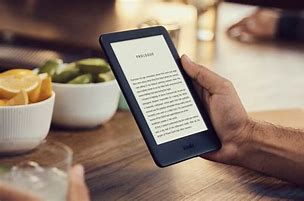
There has always been this intricate debate among readers about what is a better option – A Physical book or a Kindle. The retail shopping company, Amazon, introduced the first e-reader device into the market on November 19, 2007. This device had an escalating demand within five hours of it’s launch. It remained out of stock for a very long while due to tremendous amount of sales. This blog will attempt to illustrate whether this craze for purchase of Kindles was justified or whether physical books rule the hearts of readers till date.
PHYSICAL BOOKS
Charging – Physical books do not require any charging. They can be read as long as a reader wishes to read it. They do not have an internal battery which may drain out. Innumerable people can use it until it gets worn off.
No Network Requirement – Physical books can be read without a network connection. There is absolutely no requirement of a wifi connection or mobile data for the same. Content can be read during power cut-offs as well. During prolonged electricity cutoffs people turn to newspapers and books for recreation. Simply opening a book and reading it is what an individual needs to do.
Reuse– There are numerous shops in the market which offer second-hand copies. These copies can be bought by individuals at a very cheap rate. Thus, a large amount of paperback books can be read by a person, without having to pay a huge price, by purchasing used copies readily available in shops.
Feel and Smell – This might sound very vague to people who are not fond of reading books. Bibliophiles definitely know how heavenly is the texture and smell of a fresh book. Avid readers are really fond of holding a physical copy and reading it in a metro, at the park or while lazing on the couch. It is a different experience all together.
Less Safety Concern – Since, a book is less expensive than an electronic device, the chances of it being stolen are few. One need not feel anxious about forgetting a book somewhere. They will find it in the same place where they had left it as thieves generally avoid casting their eye on such commodities.
KINDLE
Portability – The Kindle is extremely portable in nature. This one device helps one to carry over a thousand e-books in his/her bag which is otherwise not possible. It is light weight, hence very easy to carry around.
Interpret Meanings – The Kindle has a very user friendly feature in it through which we can browse Wikipedia, Translator and Dictionaries. By simple long pressing on a word, the meaning and usage in a sentence for the word appears on the screen. There is also a Vocabulary Builder feature available, through which one can store the list of words that he has browsed for, while reading a particular content. Hence, while reading any story or novel on the Kindle one need not keep a separate dictionary alongside.
Light Modification – This reading device has a paper display technology. This means, it gives an experience that is very similar to reading printed ink on a paper. Through the light adjustment feature, it is feasible for anyone to read content in the dark as well. Another bonus element of this device is that, it does not put any strain on the eyes as it is glare free unlike other screen gadgets.
Environment Friendly – It is said that, 24 trees need to be chopped down to produce 1 tonne of paper. By using such electronic reading devices, one can contribute in lessening the amount of trees that need to be deforested to make books.
Easy to Decipher – In the Kindle, one can easily increase or decrease the Font size according to their convenience. Also, by adjusting the level of brightness, a reader can find it easier to read content.
Easy Downloads – It is quite simple to download a book from the Kindle. One need not physically visit a library or bookstore and hunt for the book or wait for it to arrive at home after placing an order. Many cost free books are available in the device if one does not wish to pay an amount to read. While, paid books are at a rate lower than that of physical books.
The debate regarding which one is a better option is a never ending one. Just as every coin has two sides, both the options i.e Books and Kindle have their own merits and demerits. This blog aimed at illustrating the pros of both the options available. A reader can choose a better option for himself/herself by weighing the pros and cons for it according to his/her practicality and convenience.
2018 has already been a great year in the history of digital marketing .User generated content and influence strategies are still among 2018 most popular digital marketing trends.
“MARKETING HAS EVOLVED, HUMAN BEHAVIOR HAS CHANGED AND MARKETERS SHOULD KEEP UP.”
We’ll get through the roots of the reason behind 4.0 becoming today’s buzzword, a look at it’s predecessors might give us a perspective on how this revolution in particular is different, trends that will explode 2019 digital awareness.
Now coming to[ what is 4.0?], it’s a term often used to refer to the developmental process in promotional or marketing industry. The term also refers to the forth revolution.this term was first introduced in 2011 under an initiative to enhance the digital industry. In this era we are entering into 4th digital marketing framework.
‘The third industrial revolution’. Perhaps the third industrial revolution is much more familiar to us than the rest revolution’s as most people living today are familiar with industries leaning on digital technologies in production.This is referred to as Digital Revolution and came about the change from analog and mechanical systems to digital ones.It’s even called as information age too.
The forth industrial revolution takes the automation of manufacturing processes to a new level by introducing customized , flexible technologies. #More integrated Global Marketing ; eg. someone reads blog article on your site follows it up with an e mail sharing or more meaningful content. # A focus on account based marketing [B2B] # Evolving marketing roles # Omnichannel marketing strategy # More integrated global marketing ; no one software can save the day,considering full stack and improving skills about how can it work together.
Trends that will explode digital branding awareness in 2019
The paradigm has shifted and what worked for you last year won’t work for you this year # Relevancy wins war ; Its no longer collecting most e mail address or leads, its about building grater intimacy and relevance with the leads. Overall its about providing right solution to the right people, at right time. # Attention is the new Currency ; If you are not capturing the right attention your losing your game ; if yes, you’re capturing their loyalty and wallet. # one platform id not enough ; eg. your leads on facebook are not on youtube. # Marketing funnel needs to be evolved ; scarcity or countdown time no longer works, instead you need to feed your audience the right content according to awareness and engagement level. # Focus on invisible ROI ; you need to become top of mind.
FINAL THOUGHTS
This concept will push global digital users to a new level of optimization and productivity.The economic reward is immense.The overall pitcher is promising but still security, employment, privacy needs more study. but approach is truly revolutionary.
Self Esteem can be defined as simply as having confidence in one’s owns abilities. It’s about believing in yourself and and being able to evaluate your own self-worth. In other words or in simpler words self esteem is how much you appreciate yourself and like yourself.
If you’d like to evaluate your own self-esteem, read till the end and solve the self-evaluation quiz at the end of this article.
Importance of Self-Esteem.
Any and every decision you make is directly or indirectly influenced by your self-esteem. It plays a very important role in self-motivation and success. A person who has a good self-esteem is more likely to understand his strengths, weaknesses and abilities and hence make use of different opportunities based on them.
People with high self-esteem are those who are motivated to constantly work hard towards achieving their goals. On the other hand, people who have low self-esteem don’t regard themselves worthy of seizing opportunities and achieving goals. They might have a hard time gathering confidence and courage.
Self esteem can be the difference between success and failure. It affects how you think and act, your confidence and happiness. If you don’t value yourself then don’t expect others to value you.
High Self-Esteem:
A person having high self-esteem thinks well of himself and is confident in his actions.They appreciate themselves and other people.They enjoy growing as a person and finding fulfillment and meaning in their lives.They are able to dig deep within themselves and be creative.They make their own decisions and conform to what others tell them to be and do only when they agree.They see the world in realistic terms, accepting other people the way they are.
Signs of Good Self-Esteem:
Having confidence in yourself and your actions.
Having a positive attitude and positive outlook in every situation.
Taking responsibility of your life.
Not letting small negatives affect your overall perspective. (Avoiding Pessimism)
Being honest and valuing honesty in self and others. Dishonesty and self-esteem are like oil and water.
Ability to express your needs and feelings effectively.
Being able to say no whenever necessary.
Low Self-Esteem:
Low self-esteem is the lack or absence of self esteem. People with low self-esteem always feel awkward, left-out, lack confidence and are pessimistic. Having low self esteem can greatly hinder your chances of success and achieving goals. In fact, people with low self esteem often lack goals and monotonous with their life.
Signs of Low Self-Esteem:
Lacking confidence in yourself.
Having negative outlook and negative attitude towards every situation.
Focusing on your weakness and not your strengths.
Unaccepting of criticism as well as positive positive feedback.
Placing others in front of yourself and your needs.
Fearing Failure.
Inability to express yourself, your thoughts and your needs.
Improving your self-esteem:
Here are a few tips to help for you to work on in order to improve your self-esteem.
Be nice to yourself.
Don’t go too hard on yourself, reward yourself for every good thing you do and keep telling yourself that you can do it.
Stay Positive.
Think positively and surround yourself with positive people. Having a positive outlook will greatly impact your decision making and will help you achieve more.
Eat healthy and Exercise often.
Choosing foods that are more nutritious and lower in sugar and fat can boost your energy, cut down on sugar crashes, and improve your overall health.
Don’t Compare.
Do not compare yourself with others. Remember that no one is perfect. Comparing yourself to others will only lead to depressing thoughts which you don’t need.
Focus on what you can change.
Focus on things that are under your influences. Make a list of your concerns and try to focus on only those which you can do something about. If you can’t control it, forget it.
But Remember:
Like all things in life too much of anything is bad. Having too much self-esteem is also an issue. It makes you arrogant and boastful. It results in over confidence and makes you egoistic and will always result in downfall and failure.
Now you must be wondering, how much is too much? Here’s a way to identify that.
ASSESS YOUR SELF-ESTEEM:
Before you can determine what changes to make in your life, it’s a good idea to get a better sense of how you see yourself at this time. Answer each question as honestly as you can. Rate yourself on each question, using the following numbering system:
Almost Always — 4 points.
Often — 3 points.
Seldom — 2 points .
Almost Never — 1 point.
Questions:
______ I feel good about my personality.
______ I am pleased with my appearance.
______ I feel confident about my abilities.
______ On the whole, I am satisfied with myself.
______ When I make a mistake, I learn from it and move on.
______ I feel as smart as others.
______ I find it easy to admit when I don’t understand something.
______ I openly express my opinions to others.
______ Overall, I believe I am successful in life.
______ I think about myself with positive and encouraging thoughts.
Scoring:
If you scored between 10 and 19 points, your self-esteem is very low, and you don’t respect yourself or have much regard for yourself. If you scored between 20 and 29 points, you are beginning to feel capable in meeting life’s everyday challenges, but you still hold back, unsure that you can be successful in different aspects of your life.If you scored between 30 and 40 points, you are well on your way to developing high self-esteem. You feel comfortable with yourself and have confidence in your ability to set and reach goals. You are still growing and can reach an even higher level of self-esteem.
Artificial intelligence (AI) is an area of computer science that emphasizes the creation of intelligent machines that work and react like humans. Some of the activities computers with artificial intelligence are designed for include:
Problem-solving, visual perception, speech recognition, decision-making, and translation between languages.
Types of A.I:-
Reactive Machines AI. …
Limited Memory AI. …
Theory of Mind AI. …
Self-aware AI. …
Artificial Narrow Intelligence (ANI) …
Artificial General Intelligence (AGI) …
Artificial Superhuman Intelligence (ASI)
Top 10 companies in abroad using A.I technology effectively.
1. AIBrain
Based in California, AIBrain is an artificial intelligence company that builds AI solutions for smartphones and robotics applications. It three products: AICoRE, the AI agent, iRSP, an intelligent robot software platform, and Futurable, a future simulation AI game where every character is a fully autonomous AI. The focus of their work is to develop artificial intelligence infused with the human skill set of problem solving, learning and memory.
2. Amazon
The online retail giant offers both consumer and business-oriented AI products and services. Amazon Echo brings artificial intelligence into the home through the intelligent voice server, Alexa. For AWS, the company has three primary services: Lex, a business version of Alexa, Polly, which turns text to speech,and Recognition, an image recognition service.
3. Anki
Anki is dedicated to bringing consumer robotics into everyday life through its Cozmo and Anki Overdrive products. Cozmo is Anki’s flagship robot. Cozmo has been described as one of the most sophisticated consumer robots to date due to its emotional responses while Overdrive is a car racing game complete with track.
4. Apple
Apple has acquired four artificial intelligence startups within the past two years, demonstrating its big step into the artificial intelligence sphere. One of them became the bases for Face ID, a facial recognition security system. The bulk of the company’s work is around Siri, Apple’s virtual assistant, but as usual Apple is tight-lipped about plans. It recently poached Google’s AI chief,which will undoubtedly help its efforts and further the acrimony with Google.
5. Banjo
Raising over $100 million last year, Banjo makes use of artificial intelligence to comb through social media and identify real-time events and situations that are important to its partners. The startup was developed after the Boston Marathon bombing in 2013 as a way for companies to analyze social media to make better decisions, move faster, and change the way they understand and interact with people all over the world.
6. Cloud Minds
Cloud Minds is developing what it calls an end-to-end cloud intelligence (CI)system called Human Augmented Robotics Intelligence (HARI) platform for robots. CI is different from AI in that it combines machines with humans rather than treating them as separate entities. This allows the robot to be controlled by human beings. It also offers the Mobile Intranet Cloud Services (MCS),provides information security for remote robot control.
7. Deep mind
Not a product company, Deep mind is nonetheless a major leader because of its role in AI research. Based in London, it recruits heavily from Oxford and Cambridge, which are leading the way in AI and ML research. Its research papers are widely read as soon as they are published. Google (see below)acquired Deep Mind.
8. Facebook
Facebook AI Research (FAIR) has four artificial intelligence labs around the world all designed to give better understanding to how people communicate.The company has also made four recent AI-related acquisitions, the most recent being Ozlo, to help Messenger build out a more elaborate virtual assistant for users.
9. Google
Google, clearly a leader in AI, is on a massive AI acquisition binge, having acquired 12 AI startups in four years. Google is deeply invested in further in artificial intelligence capabilities. Rather than selling a product to the market,Google’s AI efforts are all oriented toward improving its services. It has a major software project in Tensor Flow as well as its own Tensor AI chip project.
10. H2O
Used by more than 100,000 data scientists at more than 12,600 organizations worldwide, H2O claims to be “the world’s leading open source deep learning platform.” The company’s products include its H2O platform, the Deep Water interface that unites leading open source deep learning tools with H2O, the Sparkling Water framework that combines H2O and Spark, the Steam AI Engine for developers, and Driver-less AI, which promises “AI to do AI.” Its customer list includes large enterprises like Capital One, Progressive Insurance,Trans-america, Comcast, Macy’s and Walgreen’s.
Top 10 companies in India using a.i effectively.
1. Active.ai
Active.ai is one of the FinTech artificial intelligence startups that uses ai todeliver conversational banking services to bring automation and insightfulcustomer engagement to banks. Their advanced technology helps customershave natural dialogues over messaging, voice or IO devices.Headquarters: Singapore
Founded In: 2016
Founders: Parikshit Paspulati, Ravi Shankar, Shankar Narayanan
2. AIndra Systems
AIndra Systems is a technology ai startup that builds products in the artificial intelligence domain that can solve high impact problems. They are focused in the area of artificial intelligence, and specifically computer vision. Some of their products include Smart Attendance Campus and Smart Verify Health.
Headquarters: Bengaluru
Founded In: 2012
Founders: Adarsh Natarajan, Abhishek Mishra
3. Artivatic Data Labs
Artivatic Data Labs helps individuals make better personalized decisions. They provide an unparalleled view into an individual’s personalized interest, taste,health, lifestyle, fitness, eating, entertainment and physiologic response in real time.
Headquarters: Bangalore
Founded In: 2016
Founders: Layak Singh
4. Arya.ai
Arya.ai is one of the best artificial intelligence companies that provides tools to simplify the process of building intelligent systems. They want to enable developer to build strong AI systems and products in the shortest period possible to help solve complex issues.
Headquarters: Mumbai
Founded In: 2013
Founders: Vinay Kumar Sankarapu, Deekshith Marla
5. Braina AI assistant
Braina is a virtual personal assistant and voice recognition software for Windows PC that lets users interact with their computers with voice commands in English. They have an Android app with built-in speech recognition that allows users to interact with their PC from anywhere in the house.
Founded In: 2013
Founders: Akash Shastri
6. CruxIQ
CruxIQ is an artificial intelligence startup that helps you analyze legal contracts and extract information to help you keep important clauses at your fingertips.Their features include contract organization, deviation analysis, RAG analysis.
Headquarters: Chennai, Tamil Nadu
Founded In: 2014
Founders: Krishna Sundaresan
7. Fluid AI
Fluid AI believes in the power of artificial intelligence to solve the most unique and biggest problems in different sectors like web, government, finance, and marketing. Their solutions also include a highly accurate facial recognition service.
Headquarters: Mumbai
Founders: Abhinav Aggarwal
8. Formcept
Formcept is a data analysis platform that provides companies with actionable insights quickly and affordably. It can be used by decision makers, data Stewards, analysts/scientists.Their platform is available on premise and on AI disillusion, programmatic for the privileged and Google smart homes.
Here at MFG Labs we actively follow the latest news and opinion about Artificial Intelligence. Most articles are about the AI revolution, its miracles, and all the potential it opens to the average person and companies.
Indeed collective thinking is telling us AI is trendy and it will solve any given problem. It makes us believe AI’s miracles will next generate art, compose the news, take care of companies’ strategy or even develop relationships with us. At the same time, the Film and TV industries have created science fiction worlds and icons: Star Wars, Her, Terminator… indirectly generating a lot of expectations. However the ways is still long before reaching SF robots and you won’t meet R2D2 tomorrow. Some voices are rising saying AI is sometimes overkill, or its promises could finally be deceptive. Today AI manages complex tasks such as driving a car, detecting toxic comments on the web and more, but it actually remains just software. The next generation of algorithms will tell us if (human) intelligence can grow out of these advanced software’s we have today.
When privileged arise inside the programmatic world Google decided to meet us directly on the street. You are getting annoyed waiting for you bus? Let’s test the last features of Google home! Thanks to a partnership with JCDecaux Google transformed Chicago bus shelters into smart homes where you can change the temperature, light up the ‘kitchen’ or ask for a song. Snap makes a bet: text is over, camera is king Snap has a vision, a vision where communication system is shifting: in the future, communication is about visual, text is so 2016. Snap is betting on the rise of visual, and decides to base its whole strategy on it. Today, through the different social media we exchange with a mix of both picture and text, we’ll see how it evolves. But is writing really going to go away?
Persistent IDs are the new cookies Cookies used to be THE solution to target users. Today people use their mobile, desktop, tablet in a same day making it difficult to follow their web journey. Cookies seem to have reach their limit. This article promote a new solution: let’s discover persistent ID’s.
Made in Israel: An engineer in one of the world’s largest desalination plants, located in Israel, where even waste water is reused.By CAMERON COOPER its population is just 8.5 million, but Israel has become a high-tech start-up powerhouse and is attracting major Japanese and Chinese players on the hunt for ingenuity.To begin, to understand Israel’s remarkable rise as a magnet for technology start-ups, it is worth listening to serial entrepreneur Eynat Guez.“In Israel, you execute first. You say ‘I can deliver this’ and you think about how to do it afterwards,” says the founder of Papaya Global, a Tel Aviv business that automates international companies’ workforce and payroll management.
Guez is one of a large cohort of intelligent, ambitious business people in Israel who are cementing the small Middle Eastern country’s status as a serious rival to other technology and venture capital ecosystems such as California’s Silicon Valley, Shanghai and London. Just don’t expect the focus in Israel to be on carefully executed business plans. The Israeli emphasis is on ideas, speed and roll out. If that means the innovations are slightly unformed, so be it. If that means some entrepreneurs crash and burn, no problem.“You can say it proudly,” Guez says. “Failing in a venture in Israel is not something you try to hide. It’s part of your growth.”Eighteen months after its launch, Papaya Global has plenty of customers on its books, but it’s now finalising a Series a round of financing (the first significant round of venture capital funding) to help its workforce management platforms become a big international hit.
It is the latest venture for Guez, who says start-ups in Israel are willing to take “very big risks”.“They will not spend their time on risk management – only the really necessary things that they need to do,” she explains.A start-up formula made in Israel the formula is working for Israel. Despite having a population of just 8.5 million people and once being better known as the home of the kibbutz, the nation has developed more high-tech start-ups than all of Europe in recent years, and trails only the US on that score.Silicon Wadi (wadi means valley in Arabic) is an area around Tel Aviv on the country’s coastal plain that has a cluster of high-tech industries built around military, start-up and venture-capital communities. The Da-Vinci drone from Eibit Systems is displayed at the Israel Homeland Security and Cyber 2016 conference in Tel Aviv. Israel is a world leader in drone technology.
Dun and Bradstreet counted 4750 high-tech start-ups in Israel in 2016, and those start-ups are clearly on the radar of the world’s tech giants. In March 2017, Intel bought Mobileye, a leader in computer vision for driverless car technology, and paid US$15.3 billion, the biggest high-tech deal in Israeli history.Companies such as IBM, Google, Facebook, HP and Oracle have a presence in the region and are using their ties with Silicon Wadi enterprises to enhance their innovation, and research and development strategies.
Rising stars of the digital world are also taking their cues from Israel. Tim Fung, co-founder of Australian mobile marketplace Airtasker, visited Israel a couple of years ago on an Investec Global Entrepreneurs rip, organised by Investec and the South Africa-Israel Forum. He was impressed by the ambition of his Israeli counterparts, and the integration of the military and technology sectors.Related: 10 daring thinkers who defied the rules“People in Israel really support each other’s companies,” he says. “They believe they can make it, and talk about success a lot. This is a super-important factor and I think something that we Aussies can improve on.”Fung adds that Israel has the chutzpah of superpowers such as the US and China and knows it must pursue international business products and services.
20-Minute Workout To Maximize Your Time Power movements can add a lot to your workout program. They build strength, are extremely metabolic, and are a great way to change things up. They’re also a great option to burn an insane amount of calories in a short amount of time. So if you don’t have a lot of gym time, this 20-minute power workout is a great choice. These four sets will be performed AMRAP which means “as many rounds as possible.” Try to keep a steady pace during each set with no break for four straight minutes That will really maximize your time and create a great workout. Take a 1-minute break between sets.
First Set 4 min 10 Front Squats 10 Box Jumps (1 min break) Second Set 4 min 10 Lunge Pass (10 each leg)10 In Out Power Push-Ups (1 min break) Third Set 4 min 10 Alternating Swing (10 each arm)10 Hop Knee Drive (10 each leg) (1 min break) Fourth Set 4 min 10 Burpee 10 Double Slam You’re done! Way to work.
The term “white hat” in Internet slang refers to an ethical computer hacker, or a computer security expert, who specializes in penetration testing and in other testing methodologies that ensures the security of an organization’s information systems.
[1] Ethical hacking is a term meant to imply a broader category than just penetration testing.
[2] Contrasted with black hat, a malicious hacker, the name comes from Western films, where heroic and antagonistic cowboys might traditionally wear a white and a black hat respectively
.[3] While a white hat hacker hacks under good intentions with permission, and a black hat hacker has malicious intent, there is a third kind known as a grey hat hacker who hacks with good intentions without permission.[Symantec Group ] White hat hackers may also work in teams called “sneakers”.
[4] Red teams, or tiger teams. One of the first instances of an ethical hack being used was a “security evaluation” conducted by the United States Air Force, in which the Multics operating systems was tested for “potential use as a two-level (secret/top secret) system.” The evaluation determined that while Multics was “significantly better than other conventional systems,” it also had “… vulnerabilities in hardware security, software security and procedural security” that could be uncovered with “a relatively low level of effort.”
[5] The authors performed their tests under a guideline of realism, so their results would accurately represent the kinds of access an intruder could potentially achieve. They performed tests involving simple information-gathering exercises, as well as outright attacks upon the system that might damage its integrity; both results were of interest to the target audience. There are several other now unclassified reports describing ethical hacking activities within the US military.
The idea to bring this tactic of ethical hacking to assess security of systems was formulated by Dan Farmer and Wietse Venema. With the goal of raising the overall level of security on the Internet and intranets, they proceeded to describe how they were able to gather enough information about their targets to have been able to compromise security if they had chosen to do so. They provided several specific examples of how this information could be gathered and exploited to gain control of the target, and how such an attack could be prevented. They gathered up all the tools they had used during their work, packaged them in a single, easy-to-use application, and gave it away to anyone who chose to download it. Their program, called Security Administrator Tool for Analyzing Networks, or SATAN, was met with a great amount of media attention around the world in 1992.
What is SEO Today? SEO Setting change day by day in Google, the opportunity is too visible in search engine changed.The Fundamental things remain same very consistently but The Bunch Of Things to need you to technically, correctly in order to visible, crawler-able, index-able to google and There are Bunch of things the harm your website visibility. The mistake you make and you need to avoid that mistake to index your website in google search. You make your website in the fashion of the reader or visitor of website or blog needed for engagement and amplification. If you Content ( Blog Article ) is awesome, amicable and if you forget the optimization of Your website or the fundamental and technical SEO in order to search engine required I mean SEO then you never showed in the results of google search. You need to focus on your content or article or blog as well as SEO. both are most important for indexing your website in google searches algorithms.if you ignore either one then if you do not compete your competitor websites.
Your (Website) Visibility Is Overall Your Brand Visibility
For Popularity of your business or website, you do to Promote your website or Brand with the help of Advertisement, social sharing (Share in social media). Events .these think is also matters for your ranking for becoming more popular in your region by driving more people to look at your content.
List Of Important Thinks For Making A Website 1) Your Domain Is Related to your Business or Brand Name. Eg. Your brand name is TheOnlyMyHealth then you choose the domain like this. http://www.theonlymyhealth.com or http://www.theonlymyhealth.in
2) Make Your Website look for Eye Catching.
3) Make a List of your Competitor ( what site rank in google search where you wish to show or index your website) Look your Competitors moves and Follow their moves and think what you do best then your competitors. In short, You completely analyze your competitor’s website and there working and SEO strategy.
4) For Popularity of website, you do Promote your website or Brand with the help of Advertisement, social sharing (Share in social media).
5) What Is Backlink? Link of your website listing on other highly popular, trust-able, good website Super relevant to your topics. What relevancy of backlinks matter for your Site? Make your backlink with very smartly, genuinely related to your topic of the website. Insert your link with different website which Is super relevant to your niche (topic) but carefully and with the help of following things make your backlink to other websites.
Websites should be Trusted
The popularity of the website should be high.
Your and other websites owner (where you need backlink) relation good. Note: Don’t make your backlink to any unknown, un-trustable and fake website which is mostly responsible for your website downranking in a search engine like google.
Check List For Publishing A content in Your Website
Pure Accessibility
Should check your targeting keyword for rank which has potential to rank in web search How judge the potential of keyword: how long your content in which how many times you repeat your keywords.
Onsite optimization
Include links on some word for more detailing the meaning of that words
Your content length should long with shorts paragraph, which is reader-friendly. Importance of ranking a keywords Rand Fishkin mostly use 3 things which is….
Value: how many people are searching for.
Difficulties: how hard is to rank for us.
Opportunity: what things are top resulting website ignore than that is our opportunity.
Relevant to my business or Important to my Business (optional).
The secret of Popularity (Golden Key): Make your website into a mobile app and this mobile app share into Facebook, Instagram, google plus, twitter, play store as well as an advertisement is most user attractive thing to help to gain more and more visitor to your website.
Machine learning (ML) is the scientific study of algorithms and statistical models that computer systems use to effectively perform a specific task without using explicit instructions, relying on models and inference instead. It is seen as a subset of artificial intelligence. Machine learning algorithms build a mathematical model of sample data, known as “training data”, in order to make predictions or decisions without being explicitly programmed to perform the task. Machine learning algorithms are used in the applications of email filtering, detection of network intruders, and computer vision, where it is infeasible to develop an algorithm of specific instructions for performing the task. Machine learning is closely related to computational statistics, which focuses on making predictions using computers.
The study of mathematical optimization delivers methods, theory and application domains to the field of machine learning. Data mining is a field of study within machine learning, and focuses on exploratory data analysis through unsupervised learning. In its application across business problems, machine learning is also referred to as predictive analytics.How we split data in Machine Learning? Training Data: The part of data we use to train our model. This is the data which your model actually sees(both input and output) and learn from.Validation Data: The part of data which is used to do a frequent evaluation of model, fit on training dataset along with improving involved hyperparameters (initially set parameters before the model begins learning). This data plays it’s part when the model is actually training.
Testing Data: Once our model is completely trained, testing data provides the unbiased evaluation. When we feed in the inputs of Testing data, our model will predict some values(without seeing actual output). After prediction, we evaluate our model by comparing it with actual output present in the testing data. This is how we evaluate and see how much our model has learned from the experiences feed in as training data, set at the time of training.Difference between Machine learning and Artificial Intelligence: Artificial Intelligence : The word Artificial Intelligence comprises of two words “Artificial” and “Intelligence”. Artificial refers to something which is made by human or non natural thing and Intelligence means ability to understand or think. There is a misconception that Artificial Intelligence is a system, but it is not a system .AI is implemented in the system. There can be so many definition of AI, one definition can be “It is the study of how to train the computers so that computers can do things which at present human can do better.”Therefore It is a intelligence where we want to add all the capabilities to machine that human contain.
Machine Learning : Machine Learning is the learning in which machine can learn by its own without being explicitly programmed. It is an application of AI that provide system the ability to automatically learn and improve from experience. Here we can generate a program by integrating input and output of that program. One of the simple definition of the Machine Learning is “Machine Learning is said to learn from experience E w.r.t some class of task T and a performance measure P if learners performance at the task in the class as measured by P improves with experiences.”
Speech Recognition (Natural Language Processing in more technical terms) : You talk to Cortana on Windows Devices. But how does it understand what you say? Along comes the field of Natural Language Processing, or N.L.P. It deals with the study of interactions between Machines and Humans, via Linguistics. Guess what is at the heart of NLP: Machine Learning Algorithms and Systems ( Hidden Markov Models being one).
Computer Vision : Computer Vision is a subfield of AI which deals with a Machine’s (probable) interpretation of the Real World. In other words, all Facial Recognition, Pattern Recognition, Character Recognition Techniques belong to Computer Vision. And Machine Learning once again, with it wide range of Algorithms, is at the heart of Computer Vision.
Google’s Self Driving Car : Well. You can imagine what drives it actually. More Machine Learning goodness.
But these were expected applications. Even a naysayer would have a good insight about these feats of technology being brought to life by some “mystical (and extremely hard) mind crunching Computer wizardry”.
Aviation science- Aviation science refers to aircraft operations and support systems. In addition to flight operations, it includes aircraft maintenance, air traffic control, airport and airline management.
Information-The aerospace and aviation industry includes a wide range of careers requiring a variety of skill sets. Aviation science is the study of the basic components required for a career in this industry. Aviation science includes all the support systems that keep airlines running in a safe, efficient and orderly fashion, including air traffic control, airport operations, airline management, maintenance and piloting an aircraft.
Aviation, or air transport, refers to the activities surrounding mechanical flight and the aircraft industry. Aircraft includes fixed-wing and rotary-wing types, morphable wings, wing-less lifting bodies, as well as lighter-than-air craft such as balloons and airships.
Aviation began in the 18th century with the development of the hot air balloon, an apparatus capable of atmospheric displacement through buoyancy. Some of the most significant advancements in aviation technology came with the controlled gliding flying of Otto Lilienthal in 1896; then a large step in significance came with the construction of the first powered airplane by the Wright brothers in the early 1900s. Since that time, aviation has been technologically revolutionized by the introduction of the jet which permitted a major form of transport throughout the world.
Program Aviation-A program in aviation science will cover a wide range of topics relevant to the aviation industry. Topics may include aircraft design, instrumentation and aviation communications systems. Aviation science programs also discuss Federal Aviation Administration (FAA) regulations, environmental concerns, human resource management and airline procedures. Airport or airline operations are also covered.
Degree Options
There are various degrees available in aviation science, ranging from associate’s degrees to bachelor’s, master’s and even doctoral degrees. Most students will choose a program or a concentration that focuses on a specific area, such as aircraft maintenance or commercial piloting. Associate’s degree programs in aviation science prepare students for entry-level positions or further study in the industry within two years.
Bachelor’s degree programs provide a wider focus, typically including liberal arts and management courses. These degrees are often designed to prepare those who complete the degree for entry-level employment within the aviation industry. Some also include coursework that readies students for graduate-level study in a master’s or doctoral degree program. Some bachelor’s degree programs lead to a commercial pilot’s license.
Graduate aviation science programs explore advanced topics in-depth, such as research and development of aerospace equipment. They combine business administration skills with aviation industry knowledge for upper-level management positions.
On the 14 feb 2019, a convoy of vehicles of CRPF personnel on jammu shrinagar national highway was attacked by a vehicle-brone sucide bomber at Lethpora near Awantipora in pulwama district ,jammu and Kashmir the attack resulted in the death of 40 CRPF personnel and attacker. The responsibility of the attack was claimed by the Pakistan based militant group jaish-e-mohammed .
The after effects: After the huge attack by the militants the Indian government has to take the strict step of air strike by the INDIAN AIR FORCE which was made on the midnight 26 feb 2019 with help of 12 mirage 2000h of the Indian airforce inside the Pakistan in Balakot where the training camp of jaish-e-mhommed was located.
According to news its said that around 300 terrorist were killed in the strike. The strike longed for 21 mins only. Which made Pakistan to retaliate and soon on the 27 feb the four F-16 aircrafts of Pakistan targeted the Indian army northern command in Kashmir but the Indian airforce quickly responded and aerial engagement between mig21 of IAF and F-16 of PAF resulted the shot down of F-16 of PAF ,but unfortunately the mig 21 of wing commander Abhinandan was hit and resulted his ejection in pakistian.
ARREST of wing commander Abhinandan- After the news of wing commander missing in action soon Pakistan claimed the arrest of wing commander Abhinandan which was proven but the ill behavior and violation of GENVA convection by Pakistan on wing commander Abhinandan was not acceptable and bearable according to international law for POWs hence under the name of peace Pakistan returned India its wing commander Abhinandan within 24 hours.
Key points: The Indian air-force crossed the Pakistan’s airspace for the first time after 1971. The world record is setup by the wing commander Abhinandan and IAF for shooting down 4th generation fighter aircraft F-16 of PAF by 2nd generation Mig 21 of Indian airforce. It is said that the chief of jaish-e-mhommaed has been injured in the airstrike and died later in the hospital and also his brother in law is killed in same airstrike.
We have big goals! If you’re wanting to start your own digital marketing agency, then follow this following rules to start a Digital Marketing Agencies.
Step 1: Educate Yourself Learn as much as you can about Digital Marketing and get a better understanding of the industry before trying to sell your service Have a solid understanding of running email marketing campaigns, what SEO and PPC are, what design and development are, how to create online funnels, how to find clients, outsourcing, pricing, and selling your services. CE uses a process called SWEPS. hese are the major parts of Digital Marketing that you have to understand in order to run a successful B2B marketing agency Texas.. Social Media Marketing Website Design Email Marketing Pay-Per-Click Marketing Search Engine Optimization.
Step 2: Pricing Your Services: Create Pricing Tiers based on services provided. Tier 1 – $999 [Management Fee + $500 Ad Spend – %25 Fee] = $1399 Make sure you are getting paid. Do NOT Give away services for FREE Charge a Minimum $500+ Tier 2 – $1999 Tier 3 – $4999.
Step 3: Create Business Plan Come up with your company name, determine what industry or niche, and service offering.
Step 4: Approach Businesses This can be done through cold calling, networking events or even doing digital marketing audits for businesses.
Step 5: Getting Results Once you land clients and you are getting new business you have to be able to prove to current clients and any future clients that you get results.
Step 6: Build Your Team: Once you get some clients paying at least $3000 per month, building a team is going to be essential. Find people to create content, edit your video content, copywriters, graphic designers.
SEO Predictions & Best Practices (The Founder Of MOZ.COM )
Full Form Of SEO: Search Engine Optimization
What is SEO Today?
SEO Settings change day by day in Google, the opportunity is too visible in search engine changed. The Fundamental things remain same very consistently but the ‘Bunch Of Things’ you need technically, correctly in order to be visible, crawler-able, index-able to google and there are Bunch of things the harm your website visibility. The mistake you make and you need to avoid that mistake to index your website in google search. You make your website in the fashion of the reader or visitor of website or blog needed for engagement and amplification.
If you Content ( Blog Article ) is awesome, amicable and if you forget the optimization of Your website or the fundamental and technical SEO in order to search engine required I mean SEO then you never showed in the results of google search. You need to focus on your content or article or blog as well as SEO. both are most important for indexing your website in google searches algorithms.if you ignore either one then if you do not compete your competitor websites.
Your (Website) Visibility Is Overall Your Brand Visibility
For Popularity of your business or website, you do to Promote your website or Brand with the help of Advertisement, social sharing (Share in social media). Events, these think is also matters for your ranking for becoming more popular in your region by driving more people to look at your content.
List Of Important Thinks For Making A Website 1) Your Domain Is Related to your Business or Brand Name. Eg. Your brand name is TheOnlyMyHealth then you choose the domain like this. http://www.theonlymyhealth.com or http://www.theonlymyhealth.in. 2) Make Your Website look for Eye Catching. 3) Make a List of your Competitor ( what site rank in google search where you wish to show or index your website) Look your Competitors moves and Follow their moves and think what you do best then your competitors. In short, You completely analyze your competitor’s website and there working and SEO strategy.
4) For Popularity of website, you do Promote your website or Brand with the help of Advertisement, social sharing (Share in social media).
What Is Backlink? Link of your website listing on other highly popular, trust-able, good website Super relevant to your topics. What relevancy of backlinks matter for your Site? Make your backlink with very smartly, genuinely related to your topic of the website. Insert your link with different website which Is super relevant to your niche (topic) but carefully and with the help of following things make your backlink to other websites.
Websites should be Trusted
The popularity of the website should be high.
Your and other websites owner (where you need backlink) relation good. Note: Don’t make your backlink to any unknown, un-trustable and fake website which is mostly responsible for your website downranking in a search engine like google.
Check List For Publishing A content in Your Website
Pure Accessibility
Should check your targeting keyword for rank which has potential to rank in web search. How judge the potential of keyword: how long your content in which how many times you repeat your keywords.
Onsite optimization include links on some word for more detailing the meaning of that words. Your content length should be long with short paragraph, which is reader-friendly. Importance of ranking a keywords Rand Fishkin mostly use 3 things which is…
Value: how many people are searching for.
Difficulties: how hard is to rank for us.
Opportunity: what things are top resulting website ignore than that is our opportunity
Relevant to my business or Important to my Business (optional)
The secret of Popularity (Golden Key): Make your website into a mobile app and this mobile app share into Facebook, Instagram, google plus, twitter, play store as well as an advertisement is most user attractive thing to help to gain more and more visitor to your website.








 First Set 4 min 10 Front Squats 10 Box Jumps (1 min break)
  Second Set 4 min 10 Lunge Pass (10 each leg)10 In Out Power Push-Ups (1 min break)
  Third Set 4 min 10 Alternating Swing (10 each arm)10 Hop Knee Drive (10 each leg) (1 min break)
  Fourth Set 4 min 10 Burpee 10 Double Slam You’re done! Way to work.





You must be logged in to post a comment.