Badminton


By: Astha Raghav. 

Badminton is a racquet sport played using racquets to hit a shuttlecock across a net. Although it may be played with larger teams, the most common forms of the game are “singles” (with one player per side) and “doubles” (with two players per side). Badminton is often played as a casual outdoor activity in a yard or on a beach; formal games are played on a rectangular indoor court. Points are scored by striking the shuttlecock with the racquet and landing it within the opposing side’s half of the court.

Each side may only strike the shuttlecock once before it passes over the net. Play ends once the shuttlecock has struck the floor or if a fault has been called by the umpire, service judge, or (in their absence) the opposing side.

The shuttlecock is a feathered or (in informal matches) plastic projectile which flies differently from the balls used in many other sports. In particular, the feathers create much higher drag, causing the shuttlecock to decelerate more rapidly. Shuttlecocks also have a high top speed compared to the balls in other racquet sports. The flight of the shuttlecock gives the sport its distinctive nature.

The game developed in British India from the earlier game of battledore and shuttlecock. European play came to be dominated by Denmark but the game has become very popular in Asia, with recent competitions dominated by China. Since 1992, badminton has been a Summer Olympic sport with four events: men’s singles, women’s singles, men’s doubles, and women’s doubles, with mixed doubles added four years later. At high levels of play, the sport demands excellent fitness: players require aerobic stamina, agility, strength, speed, and precision. It is also a technical sport, requiring good motor coordination and the development of sophisticated racquet movements.

<

p style=”background: none rgb(255, 255, 255);border: 0px;color: #202122;line-height: inherit;margin: 0.5em 0px 1em;padding: 0px;vertical-align: baseline”>Thank You!

Balanced Diet

 By: Astha Raghav. 

We need a balanced diet to stay healthy. Food allows us to move, grow, repair injuries and stay alive. If we do not eat certain foods this might make us tired trying to move, might stop us growing, might make injuries very slow to heal or make us so ill we could die.
A diet is all that we consume in a day. And a balanced diet is a diet that contains an adequate quantity of the nutrients that we require in a day.  A balanced diet includes six main nutrients, i.e. Fats, Protein, Carbohydrates, Fibre, Vitamins, and Minerals.
All these nutrients are present in the foods that we eat. Different food items have different proportions of nutrients present in them. The requirements of the nutrients depend on the age, gender, and health of a person.

A balanced diet is a diet that contains differing kinds of foods in certain quantities and proportions so that the requirement for calories, proteins, minerals, vitamins and alternative nutrients is adequate and a small provision is reserved for additional nutrients to endure the short length of leanness. In addition, a balanced diet ought to offer bioactive phytochemicals like dietary fiber, antioxidants and nutraceuticals that have positive health advantages. A balanced diet should offer around 60-70% of total calories from carbohydrates, 10-12% from proteins and 20-25% of total calories from fat.

HEALTH BENEFITS OF A BALANCED DIET

Healthy eating increases energy, improves the way your body functions, strengthens your immune system and prevents weight gain. The other major benefits are:
  • Meets your nutritional need. A varied, balanced diet provides the nutrients you need to avoid nutritional deficiencies.
  • Prevent and treat certain diseases. Healthful eating can prevent the risk of developing certain diseases such as diabetes, cancer and heart disease. It is also helpful in treating diabetes and high blood pressure.
  • Following a special diet can reduce symptoms, and may help you better manage an illness or condition.
  • Feel energetic and manage your weight. A healthy diet will assist you to feel higher, provide you with more energy, and help you fight stress.
  • Food is the mainstay of many social and cultural events. Apart from nutrition properties, it helps facilitate connections between individuals.
  • Thank you!


Freedom press

Freedom of Press – Article 19(1)(a) … In Romesh Thaper vs State of Madras and Brij Bhushan vs State of Delhi

 The Supreme Court took it for granted the fact that the freedom of the press was an essential part of the right to freedom of speech and expression

Freedom of press is not specifically mentioned in article 19(1) (a) of the Constitution and what is mentioned there is only freedom of speech and expression. In the Constituent Assembly Debates it was made clear by Dr. Ambedkar, Chairman of the Drafting Committee, that no special mention of the freedom of press was necessary at all as the press and an an individual or a citizen were the same as far as their right of expression was concerned.

Freedom of Press – 

To preserve the democratic way of life it is essential that people should have the freedom of express their feelings and to make their views known to the people at large. The press, a powerful medium of mass communication, should be free to play its role in building a strong viable society. Denial of freedom of the press to citizens would necessarily undermine the power to influence public opinion and be counter to democracy.

The framers of the Indian constitution considered freedom of the press as an essential part of the freedom of speech and expression as guaranteed in Article 19 (1) (a) of the Constitution.

Public Interest has to be safeguard by article 19(1)(2) which lays down reasonable limitations to the freedom of expression in matters affecting:

a. Sovereignty and integrity of the State

b. Security of the State

c. Friendly relations with foreign countries

d. Public order

e. Decency and morality

f. Contempt of court

g. Defamation

h. Incitement to an offence

Yoga

 By: Astha Raghav 

Yoga is a group of physical, mental, and spiritual practices or disciplines that originated in ancient India, aimed at controlling (‘yoking’) and stilling the mind, and recognizing the detached ‘witness-consciousness’ as untouched by the activities of the mind (Citta) and mundane suffering (Duḥkha). There are a broad variety of the schools of yoga, practices, and goals in Hinduism, Buddhism, and Jainism, and traditional forms and modern methods of yoga are practiced worldwide.

There are broadly two kinds of theories on the origins of yoga. The linear model argues that yoga has Aryan origins, as reflected in the Vedic textual corpus, and influenced Buddhism; according to Crangle, this model is mainly supported by Hindu scholars. The synthesis model argues that yoga is a synthesis of indigenous, non-Aryan practices with Aryan elements; this model is favoured in western scholarship.

Yoga is first mentioned in the Rigveda and also referenced in many Upanishads. The first known formal appearance of the word “yoga”, with the same meaning as the modern term, is in the Katha Upanishad, probably composed between the fifth and third century BCE. Yoga continued to develop as a systematic study and practice during the 5th and 6th centuries BCE, in ancient India’s ascetic, and Śramaṇa movements. The most comprehensive text on Yoga, Yoga Sutras of Patanjali date to the early centuries CE, while Yoga philosophy came to be marked as one of the six orthodox philosophical schools of Hinduism in the second half of the first millennium. Hatha yoga texts began to emerge between the 9th and 11th century with origins in tantra.

The term “yoga” in the Western world often denotes a modern form of hatha yoga and a posture-based physical fitness, stress-relief and relaxation technique, consisting largely of the asanas,in contrast with traditional yoga, which focuses on meditation and release from worldly attachments. It was introduced by gurus from India, following the success of Vivekananda’s adaptation of yoga without asanas in the late 19th and early 20th centuries, who introduced the Yoga Sutras to the west. The Yoga Sutras gained prominence in the 20th century following the success of hatha yoga.

Thank you!

Skateboarding

By: Astha Raghav. 

Skateboarding is an action sport originating in the United States that involves riding and performing tricks using a skateboard, as well as a recreational activity, an art form, an entertainment industry job, and a method of transportation. Skateboarding has been shaped and influenced by many skateboarders throughout the years. A 2009 report found that the skateboarding market is worth an estimated $4.8 billion in annual revenue, with 11.08 million active skateboarders in the world. In 2016, it was announced that skateboarding will be represented at the 2020 Summer Olympics in Tokyo, for both male and female teams.

Since the 1970s, skateparks have been constructed specifically for use by skateboarders, freestyle BMXers, aggressive skaters, and very recently, scooters.However, skateboarding has become controversial in areas in which the activity, although illegal, has damaged curbs, stoneworks, steps, benches, plazas, and parks.

The first skateboards started with wooden boxes, or boards, with roller skate wheels attached to the bottom. Crate scooters preceded skateboards, having a wooden crate attached to the nose (front of the board), which formed rudimentary handlebars. The boxes turned into planks, similar to the skateboard decks of today.

Skateboarding, as we know it, was probably born sometime in the late 1940s, or early 1950s,when surfers in California wanted something to do when the waves were flat. This was called “sidewalk surfing” – a new wave of surfing on the sidewalk as the sport of surfing became highly popular. No one knows who made the first board; it seems that several people came up with similar ideas at around the same time. The first manufactured skateboards were ordered by a Los Angeles, California surf shop, meant to be used by surfers in their downtime. The shop owner, Bill Richard, made a deal with the Chicago Roller Skate Company to produce sets of skate wheels, which they attached to square wooden boards. Accordingly, skateboarding was originally denoted “sidewalk surfing” and early skaters emulated surfing style and maneuvers, and performed barefoot.

By the 1960s a small number of surfing manufacturers in Southern California such as Jack’s, Kips’, Hobie, Bing’s and Makaha started building skateboards that resembled small surfboards, and assembled teams to promote their products. One of the earliest Skateboard exhibitions was sponsored by Makaha’s founder, Larry Stevenson, in 1963 and held at the Pier Avenue Junior High School in Hermosa Beach, California. Some of these same teams of skateboarders were also featured on a television show called Surf’s Up in 1964, hosted by Stan Richards, that helped promote skateboarding as something new and fun to do.

Thank you!

Indiscipline in Schools


By: Astha Raghav. 

School discipline is one of the factors of good education in the country, therefore, it is necessary to train teachers to deal with their students and instill discipline at school. This issue is usually a problem for a lot of schools even in the most developed countries. Indiscipline can significantly affect the education of your child negatively, that is why you must know these top 10 causes of indiscipline in schools and how to deal with them!
Discipline in schools is a required set of rules administered to teachers and students, which they have to obey or expect to be punished for their disobedience. Discipline sets rules as guidelines and limitations for students; school rules are necessary to set up the basis of social behavior for young minds. 

Most of these rules are usually established by the government. The Ministry of Education provides certain necessary guidelines to schools; the schools also have the power to set up their own rules and punishment for disobedience according to the international standards and the government’s recommendations. These rules may include dress code, timekeeping, school schedule, work ethic, social behavior and so on. 

Indiscipline in schools is the violation of school rules; it is the complete opposite of discipline and it is necessary to stress that indiscipline is not welcomed in any school. Indiscipline in schools can be observed in different ways, including inside the classroom and outdoors. 
The student behavior policy is the fundament for adequate education in schools, therefore, it is always necessary to analyze and investigate the causes of indiscipline. 
Thank you!

My experience as a scribe writer.

Dusshera festive takes me down to the memory lane I began social work.It has been years I have been inclined towards social work. It was in the year 2017 when my Super Super senior and I began cooperating for social causes , it was all so new to me moreover I cherished it. I celebrated my first EEver birthday party in a Ngo called Rakshana charity and throughout my degree life I never missed treating the kids who were bought up in rakshana charity. I would bunk classes to work my ass off to take part at social causes conducted across the city cause I appreciated doing what I cherished, later I joined 2 Ngo’s furthermore a community which was meant for people who would provide services for social causes all over Bangalore.However I was so caught up with all my internships and college stuff that I couldn’t participate at ease in the community where I joined as a service provide,however the organiser reached me through a telephonic call and enquired if I was available for 6 hours to attend an exam as a scribe writer, I agreed and then I met this girl Manisha, a young lady who has visual impairment since birth known to be enthusiastic and extremely dedicated despite the fact that on the off chance that she can’t see , read, write or compose everything. All she does is think beyond practical boundaries and never to surrender. I belive she’s carrying on with an extraordinary life where ever she is. I had the best experience ever as I got a chance to help her in her tests as a scribe writer. P. S-I in a real sense missed my final Psychology practicals test just to go to her paper in addition I had to reappear(Backs) for the practicals all alone😅

Automation leading the generation.

"Automation applied to an inefficient operation will magnify the inefficiency"
-Bill Gates-

Disadvantages come along with the advantages.

Although automation brought about better functioning of systems, growth in the economy and developmemt of the country, the disadvantage are such that one can not gurantee the safety of build machines. The possibility of malfunction systems or incorrect informations are a great risks for share holders as one mistake could worth in terms of billions and one could end his life in bankruptcy.

Another reason is that someday, robotic designs could take over humans, snatching away the opportunity of soul workers hence leading to high unemployment rate.

Apart from those, people in the present world especially younger generations are so engrossed in technologies and advancement that they lose track of time and place. They lack sleep and interactions leaving high concern in their health. Too much is always bad.

Did you know automation gives you freedom from work?

The advancement in technology have brought a great change in every country for the past decades. Modern inventions are a revolution against Ancient techniques.

One of the greatest contribution automation has provided is in, the functioning of factories. For example, cutting 1000kgs of banana into slices would take up to 2-3days if to be performed by hands while an automatic machine would take only 2-3seconds. Let alone cutting, even pealing off the cover would require much time and effort.

It is very much essential for our daily tasks, from setting a timer for alarms or messages in Mobile phones to basic needs like washing machine. Automation enables us to perform multiple tasks smoothly.

Computer itself is a great advancement in this context. Not only that it performs tasks, it can also analyse data which most company make a great use of. It provides a system where auto generated words could be used and make better promotion in sales where plagiarism can be detected.

In the case of ATM, civilians don’t need to rush to the bank or stand in a queue to get money. They can easily draw out money by pressing few keys, thus saving time and energy.

And there is Tesla, another great innovation of mankind in the contemporary world being a successful automatic car that provides self driving mode.

If in the near future, automation could bring greater developments, perhaps we would have automatic network or wifi connection to our devices, which would be of a great help especially for the special and the old aged groups

Rating: 1 out of 5.

Indicators of Women’s Status in India


There are different forms of violence on women, which act as threats to women’s independent identity and
dignity. Forms of violence are:
1) Female foeticide & infanticide- According to a survey by British medical journal, Lancet, nearly 10
million female abortions have taken place in India in the last 20 years, which is rampant amongst the
educated Indian middle class as well.
There are organizations like Swanchetan, which are working towards educating & bringing awareness in
people against the ghastly act.

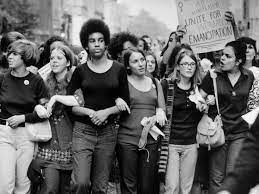
Women at a rally in support of the Equal Rights Amendment in Detroit’s Kennedy Square, June 30, 1981.


2) Rape, sexual harassment & abuse- It acts as a deterrent to women’s freedom & perpetuates the notion
that women are the weaker sex. Every 2 hours, a rape occurs somewhere in India!
The recent Dec. 16 Delhi Gang rape case, shook the entire country and led to protests all across the
country, setting up of Justice Verma panel & helped in the fast track judgment of the case. However
rampant cases of rape of Dalit women, acid attacks, eve teasing go unnoticed.
3) Domestic violence and dowry deaths- Violence on women in the family were considered family
problems and were never acknowledged as “crimes against women” until recently. It is prevalent in all
classes of society.
4) Prostitution- A large number of women destitute or victims of rape who are disowned by family fall prey
to prostitution forcibly. There are no governmental programs to alleviate the problem of prostitution.
5) Objectification of women- Indecent Representation of Women(Prohibition) Act, 1986 prohibits indecent
representation of women through advertisements or in publications, writings, paintings etc. However a
whole lot of indecent representation of women is done through literature, media, paintings etc
upholding the “right to freedom of expression”.

As per World economic forum survey, India’s Global Gender Gap Index 2011 ranking is 113 out of 134 countries
with neighbors like Bangladesh at 69 & China at 60.
1) Sex Ratio –Sex ratio is used to describe the number of females per 1000 of males. As per census 2011
sex ratio for India is 940 females per 1000 of males, i.e. females form a meager 47% of the total
population. The State of Haryana has the lowest sex ratio in India and the figure shows a number of 877
of females to that of 1000 males while Kerala has the highest of 1084 females per 1000 males
2) Health – Studies on hospital admissions and records have shown that males get more medical care
compared to girls. 2% of the female population is absolute anaemic. 12% of the female population of the
country suffers from repeated pregnancy (80% of their productive life is spent in pregnancy) & lack of
nutrition.

3) Literacy – The female literacy levels according to the Literacy Rate 2011 census are 65.46% where the
male literacy rate is over 80%. While Kerala has the highest female literacy rate of 100% , Bihar is at the
lowest with only 46.40%
4) Employment – Of the total female population 21.9% are a part of Indian workforce.
Majority of women are employed in the rural areas and in agriculture. Amongst rural women workers
87% are employed in agriculture as laborers, cultivators, self employed like hawkers etc i.e in the
unorganized sector which almost always remains invisible.
Despite the equal remuneration Act 1976, women are paid lower wages, occupy lower skilled jobs, have
less access to skill training and promotion.
5) Political status – Though India had a women Prime Minister Late Ms Indira Gandhi, women are not fairly
represented in the Parliament & other State & Local bodies. With only around 9 per cent women in
upper house and around 11 per cent in the lower house of parliament, India ranks 99th in the world in
terms of female representation among MPs.
However 73rd & 74th amendments to the constitution have ensured the participation of women in
PRIs with a reservation of 1/3rd for women. Today more than 30 million women are actively participating
in the political decision making process at the grass root.

This contains an image of: {{ pinTitle }}

“Without economic freedom other aspects of women equality would not be realized”
-Jawaharlal Nehru
Women’s work participation rate in general has been declining over the decades. The decline has occurred due
to several factors:
1) Absence of comprehensive and rational policy for women’s emancipation through education, training
and access to resources such as land, credit and technology etc.
2) The perception of male as the breadwinner of the family despite the fact that in low income households
women’s income is crucial for sustenance. This perception adversely affects women’s education &
training. Employers also visualize women workers as supplementary workers & also cash in on this
perception to achieve their capitalistic motives by keeping the wage low for women.
3) Structural changes in the economy e.g decline in traditional rural industries or industrialization.
4) Lack of assets (land, house) in their own name in order to have access to credit and self employment
opportunities
5) Huge demand

This contains an image of: {{ pinTitle }}

of time and energy of women for various tasks at home like child bearing and rearing etc
in addition to participation in labour force leave them with little time for education, training and self
development
6) Division of labour based on the gender between men and women & technological advancements work
against women. They are the last to be hired and first to be sacked.
7) Govt. programs to increase employment and productivity are focused more on men & women are seen
as beneficiaries rather than active participants

Terrorism, Extremism, Radicalization

When a decision is made that fear, terror and violence are justified to achieve ideological, political
or social change, radicalization to violent extremism occurs’
Terrorism, radicalization and extremism are subjective concepts that have different meanings for
different people. Furthermore, their meanings are constantly evolving as they manifest
themselves in different ways in different parts of the world, exploiting new vulnerabilities,
technologies and approaches.
1.1. Terrorism
‘Terrorism is a complex and contested issue, as are the associated labels of extremism, violent
extremism and radicalization’
There is no single universally accepted definition for terrorism because the concept is invariably
political and cannot be framed in a manner that excludes the state. Most acceptable words to
understand terrorism are ‘acts committed with the objective of seriously intimidating a
population, destabilizing or destroying structures of a country or international organization or
making a government abstain from performing actions’.
1.2. Extremism
‘Violent extremist ideologies have found fertile ground in fragile communities characterized by
little access to development’
Extremism is generally understood as constituting views that are far from those of the majority
of the population. Accordingly, one definition describes extremism as ‘activities (beliefs,
attitudes, feelings, actions, strategies) of a character far removed from the ordinary’. Though this
is clearly a relative term which invites disagreement regarding benchmarks, it is broadly agreed
that extremist views are not necessarily illegal and do not automatically lead to violence or harm.
Indeed those with extremist views, who may also choose to observe extreme practices with no
impact on the civil liberties of fellow citizens, are rightly protected under fundamental freedoms
and human rights norms.
Extremism becomes a concern when those views threaten democratic and tolerant societal ideas,
or promote the use of violence to coerce their followers or to achieve their objectives. This form
of extremism is described as violent extremism, a term which remains contested, but which
generally refers to the creation of ideologically motivated or justified violence, as well as support
for such acts.
1.3. Radicalization
‘Radicalizer’s work by pointing to social, political and economic injustice around their followers.’
Like terrorism and violent extremism, radicalization is a contested term with various definitions.
It is commonly understood, however, as the social and psychological process of incrementally
experienced commitment to extremist political and religious ideologies. It does not necessarily
mean that those affected will become violent. However, when a decision is made that fear, terror
and violence are justified to achieve ideological, political or social change, radicalization to violent
extremism occurs.

ROLE OF MEDIA IN INTERNAL SECURITY CHALLENGES

This contains an image of: {{ pinTitle }}

Any communication channel through which any kind of information, news, entertainment,
education, data, promotional messages etc. can be disseminated is called media.
Mass media refers to communication devices, which can be used to communicate and interact
with a large number of audiences in different languages. Be it the pictorial messages of the
early ages, or the high-technology media that are available today, mass media has become an
inseparable part of our lives. Media can be broadly classified as:
• Print Media (newspapers, magazines, books and Brochures, Billboards, etc.)
• Electronic Media (news websites, social networking sites, mass SMS schemes, television,
internet, radio, cinema etc.)
• New Age Media (Mobile Phones, Computers, Internet, Electronic Books)

This contains an image of: {{ pinTitle }}

Where Media is Misleading? – Threat to Internal Security
• Indian media does not have a wider perspective of India’s national security issues.
• Indian media is in no mood to apply brakes or observe self-restraint on its wayward and
insensitive treatment of national security issues.
• Indian media’s (especially electronic media) analysis and over-analysis of national security
issues by groups of former diplomats, generals and academia’s arm chair strategists distort
national security perspectives. All these gentlemen can only draw on their outdated
experience and none of them are privy to latest inputs. Also in many cases, reticence is
their first casualty after retirement.
• Indian TV anchors discussing national security issues do not have the political and strategic
maturity to discuss national security issues as their Western counter-parts do.
• Indian TV debates on national security issues tend to cut out development of contrary
views and perspectives by imposing commercial breaks, or go hectoring themselves.

For a country like India, the backbone of its democracy and the propagator of its national
interests remains the access to information and expression. It helps citizens to make
responsible and objective choices, to promote accountability by its officials, to provide solutions
to conflict resolution, and also to encourage diverse views of its diverse people. This access of
information has allowed the Indian media to play the role of watchdog that holds the
Government accountable in all its activities, and also functions as the only mode of expression
for its people.

This contains an image of: {{ pinTitle }}


The role of media in a democracy like India, therefore, can be summed up as to:
• Inform and educate people objectively, impartially and in an unbiased manner about
security threats and challenges
• Unbiased reporting with the restraints of self regulations
• Promotion of the principles of healthy democracy
• Respect for the Constitutional Provisions
• To build a bridge between people and governments at the national level
• Uphold fairness, justice, national unity and international cooperation
• Inform, educate, entertain, publicize and most importantly correct the excesses in any
society.
• Highlight the trouble spots in the society and press the government and public to devise
suitable mechanisms to eliminate them
• Shape the perceptions of government, influence public opinion, promote democracy, good
governance as well as influence peoples’ behavior and support people- oriented policies
Following the globalization, the responsibilities of media have also widened. It has to play a role
for preserving and pursuing the national interests of the state and highlighting its perspective
along with the global issues. It has to examine the conduct of international relations and again
to highlight the trouble spot at global level in lieu of global security.

“The internet is the largest experiment involving anarchy in history. (…) It is a source for
tremendous good and potentially dreadful evil, and we are only just beginning to witness its
impact on the world stage.”

  • Eric Schmidt, Executive Chairman, Google and Jared Cohen,
    Director, Google Ideas

Safeguard yourself knowing Cyber security!

As per Information Technology Act, 2000, “Cyber security means protecting information,
equipment, devices computer, computer resource, communication device and information
stored therein from unauthorized access, use, disclosure, disruption, modification or
destruction.”

This contains an image of: {{ pinTitle }}


1.1. Cyberspace
India’s Cyber Security Policy 2013 defines cyberspace as a complex environment comprising
interaction between people, software and services, supported by worldwide distribution of
information and communication technology devices and networks.

Common Cyber Threats


1.2. Cyber threats
Cyber threats can be disaggregated into four baskets based on the perpetrators and their
motives – Cyber Espionage, Cyber Crime, Cyber Terrorism, Cyber Warfare.
1.2.1. Cyber Crime/ Cyber Attacks
Cyber-attack is “any type of offensive maneuver employed by individuals or whole organizations
that targets computer information systems, infrastructures, computer networks with an
intention to damage or destroy targeted computer network or system.”
These attacks can be labeled either as Cyber-campaign, Cyber-warfare or Cyber-terrorism
depending upon the context, scale and severity of attacks. Cyber-attacks can range from
installing spyware on a PC to attempts to destroy the critical infrastructure of entire nations.
1.2.2. Cyber terrorism
Acts of Terrorism related to cyber space or act of terrorism executed using Cyber technologies is
popularly known as ‘cyber terrorism’.
“Cyber terrorism is the convergence of terrorism and cyber space. It is generally
understood to mean unlawful attacks and threats of attacks against computers,
networks, and information stored therein when done to intimidate or coerce a
government or its people in furtherance of political or social objectives, Further, to
qualify as cyber terrorism, an attack should result in violence against persons or
property or at least cause enough harm to generate fear, Serious attacks against critical
infrastructures could be acts of cyber terrorism depending upon their impact.”
It should be noted here that if they create panic by attacking critical systems/infrastructure,
there is no need for it to lead to violence. In fact such attacks can be more dangerous.
Besides, terrorists also use cyberspace for purposes like planning terrorist attacks, recruiting
sympathizers, communication purposes, command and control, spreading propaganda in form
of malicious content online to brain wash, funding purposes etc. It is also used as a new arena
for attacks in pursuit of the terrorists’ political and social objectives.

This contains an image of: {{ pinTitle }}

Cyber Security has assumed strategic and critical importance because of following reasons:
• Cyberspace has become key component in the formulation and execution of public policies.
• It is used by government to process and store sensitive and critical data which if
compromised can have devastating impact.
• Taking down cyberspace will result into disruption of many critical public services like railways,
defense systems, communication system, banking and other financial system etc.
• Several states are developing the capabilities in the area of cyber attacks which can alter
outcomes in the battlefield.
• Individuals are using internet based services at a growing pace making them vulnerable to
cybercrimes, such as- online bank frauds, surveillance, profiling, violation of privacy etc.

Government has taken a number of steps to acquire and increase capacity in the field of
cyber security. Some of which are discussed below.

National Cybersecurity Policy 2013

Information Technology Act 2000 (As Amended in 2008)

National Telecom Policy 2012,etc.

ABOUT THE AUTHOR – AGATHA CHRISTIE

Known Mysterious Incident About “the queen of crime” except her famous novels.

Born in Torquay in 1890, Agatha Christie became, and remains, the best-selling novelist of all time.

She is best known for her 66 detective novels and 14 short story collections, as well as the world’s longest-running play – The Mousetrap. Her books have sold over a billion copies in the English language and a billion in translation.

Agatha Christie is one of the greats of mystery literature. For eleven days, she was at the center of her own mystery, that got international headlines. Unlike the plots in her brilliant books, the motives underpinning this particular storyline are rather vague.

The characters of this real and known incidents were the Two of Britain’s most famous crime writers, Sir Arthur Conan Doyle, creator of Sherlock Holmes, and Dorothy L. Sayers, author of the Lord Peter Wimsey series and herself (Agatha Christie” the queen of crime”).

AGATHA CHRISTIE’S DISAPPEARANCE CASE

WHAT DO WE KNOW-

On the December night of 3rd,1926 she drove away from her home in Berkshire and vanished completely. Her car was found abandoned and a huge manhunt was launched. Arthur Conan Doyle, author of the Sherlock Holmes mystery stories and Dorothy L. Sayers, author of the Lord Peter Wimsey series, participated in the search. Their specialist knowledge, it was hoped, would help find the missing writer.

Her disappearance would spark one of the largest manhunts ever mounted. Agatha Christie was already a famous writer and more than one thousand policemen were assigned to the case, along with hundreds of civilians.

Agatha Christie’s disappearance prompted a nationwide search and for the first time in UK history, aeroplanes were employed as part of the search effort.

Newspapers offered rewards for information and her husband Archie was suspected of foul play.

The Home Secretary, William Joynson-Hicks, urged the police to make faster progress in finding her.

It didn’t take long for the police to locate her car. It was found abandoned on a steep slope at Newlands Corner near Guildford. But there was no sign of Agatha Christie herself and nor was there any evidence that she’d been involved in an accident.

Not until 14 December, fully eleven days after she disappeared, was Agatha Christie finally located. Eventually, it was revealed that Christie had absconded to Harrow gate via train, where she spent eleven days hobnobbing with the young social crowd under the name of her husband’s mistress. Christie, upon being discovered, says she had no memory of the events.

The Speculations–

  • Agatha Christie rarely talked about the incident, simply putting it down to about of temporary amnesia caused by a blow to the head.
  • The consensus of opinion at the time was that the whole affair (no pun intended) was an act of revenge aimed at her erring husband.
  •  Recent researches on her medical condition suggest that she was suffering from Alzheimer’s disease or other dementia. She died of natural causes in early 1976.

Anxious People Book Review-Fredrik Backman

I am a complete sucker for good books, a total bibliophile who loves and appreciates a good story. Now let me tell you this, the book Anxious People by Fredrik Backman is overwhelmingly addictive, in a good way ofcourse. Calling it a good book with a good story would be quite an understatement. This story is breathtakingly beautiful in the most elegant and realest of ways. It was my first time hearing about this author and I found out about this book in the comment section of an Instagram handle that I follow and I immediately fell for the title of the novel. ‘Anxious People’ . Instantly without making any delay I picked this title up and it was the best thing I could have done for myself since it taught me a lot. This book is my favorite book for the time being and it’ll always have a special place in my heart. I’ll always cherish this story and the wonderful people portrayed in it.

As one keeps reading the novel, the story keeps blooming into an ever changing drama between the protagonists of the story since there isn’t a definite protagonist in this fabulous piece of literature. The best part about this book is that the reader can relate to the story and that this isn’t a distant fantasy. The story revolves around real people with real world problems. Hence, it is very much relatable and also enjoyable at the same time. The humour in this book is quite entertaining along with the clever story telling. Frankly this story is hilarious. One can find themselves clutching their stomachs quite often. It is also emotional I might add but not in a sad manner. It deals and teaches us to cope with life situations and also reminds us that humanity still exists and exists splendidly so.

The story is about a bank robbery I could say. But really it is about an apartment viewing, I might be wrong here too. It is actually about Stockholmers. Well why spoil the fun. Find out yourselves what this intricately weaved masterpiece is about. I assure you it’ll be worthwhile and you’ll not be disappointed. Fredrik Backman has written many novels worth mentioning and also has won a lot of prestigious awards for them. I have yet to read his other works since I only stumbled upon the Swedish writer quite recently. I am positive I’ll find all his other works equally entertaining as well and I’m quite excited to pick his books up. I’m quite sure you’ll find yourself loving this book just as much I did.

Feminism and other stuff

Every corner of every street, their is a different definition for Feminism. But, the question is, does anyone know what exactly it is? no. One does not know the precise meaning of Feminism, but, as we say, there is always a root to a plant. The root here is equality. feminism is equality. that is it. No more, no less. Feminism is equality between men and women, male and female, him and her, girl and boy, or any other words you may use to refer to that. Feminism is a woman wearing clothes of her choice without being harassed, a mother going to work without being judged, a girl having an equal salary as a man, a lady ruling a kingdom without being considered as fragile or weak. Feminism is not particularly about women doing whatever they want, it is about women having equal rules about not doing something. It is a choice as well as a necessity, it is a regulation as well as freedom, it is about doing what you love and not being judged at. For example, if a man dates multiple women, he is a stud amongst his friends, but if a woman does the same, she is a whore. If a man stays at home to take care his child and the woman goes to work, the woman is the brazen, carefree, shameless devil while the man is a poor innocent fellow, and if the opposite happens, the man is a man and it is the woman’s responsibility to take care of her child and sacrifice her career. This happens everywhere around us, even if we notice or not, and it will keep happening, until we evolve our mindset.

Evolving our mindset isn’t exactly a piece of cake, modifying what’s made of us by this society isn’t easy. We need to process our thoughts correctly, instead of living in translucent denial. I know, some ideas, though innovating, do not fit with our mindset. no matter that we know it is good to adapt that form of thinking, our brains just can’t help nurturing an idea that has been stuck in them, almost since we were born. We need to accept our thoughts, and let them go. absolutely believe in those societal standards, and let them go. This trick, I learnt from my grandmother, she says if you want to clear your mind and have fresh thoughts, this trick will do. Accept the thought, almost believe it, and then imagine letting it go, fly away far away. It has helped me a lot, and during the pandemic, staying alone at home, I got to do this often, and it snapped my personality. literally, and not in a bad way, a good way, a really good way, believe me. So, actually accepting feminism to our bones isn’t really that hard, if you give the time to learn it. Mostly because it’s natural, god made a man, and god made a woman, and he made them both equal. it is the orthodoxic societal standards that made us accept the fact that woman is any step, any level lower or weaker. We have to stop that. we need to stop that. and if you are with me, we will stop that.

she is a goddess, she is a queen, and I can’t render enough that she is a beautiful human being. Rhymes good, doesn’t it? now bring this rhyme to life. People, not only women, but men and third genders too, have died craving and fighting for freedom of women. And, if you, regardless of gender, can’t do something to decrease this hollow gap between men and women, then what are you doing? we are all born the same, and if you don’t help towards keeping that as it is, the what are you doing? Life is a gift, and all shall have it. Free, Joyful and alive. Otherwise, this world will worsen, the few beautiful things, the first cry of a baby, the smile of a little girl, will vanish. equality between men and women is the only and only way that we can save our world from disrupting.

this is it for today!

thank you for reading,

lots of love and amnesty,

Suhaani