Toxic Positivity

Toxic positivity is a relatively new term but most definitely not an uncommon concept. This “good vibes only” approach, is a type of coping mechanism, wherein people pretend like everything is perfectly fine and invalidate their obviously distressing feelings. 

Saying things like “everything happens for a reason” and “look on the bright side”, they suppress any negative emotions and refuse to address negative experiences. Ignoring reality seems like a good option in the short-run but all those bundled up emotions eventually escalate and cause long-term repercussions. 

Take the COVID-19 Pandemic. All we hear is bad news – families losing jobs, the economy falling, people falling sick and dying. We’ve all wanted to cut ourselves from reality and live in our own happy world. Although this comes with good intentions, it only makes things worse in the long run. Such thoughts get toxic when we become dismissive of our inevitable sadness. Of course, being grateful for what we have is imperative during such times. But so is taking care of our mental health, and that includes acknowledging all our emotions, even the pessimistic ones. 

We don’t realise how we say such things, not only to ourselves, but also to others. When consoling a friend, saying something like “there are people suffering more” is the worst thing you could do. It not only invalidates their feelings, making them feel worse, but also dismisses the idea of actually helping them resolve the issue. These micro aggressive comments can aggravate situations and ruin relationships altogether.  

The difference between positivity and toxic positivity is the ‘solution-focused’ approach. Positivity involves addressing the negative, and attempting to find an effective solution to improve it. Hence, solution-focused. Toxic positivity, on the other hand, negates true human emotions and considers being “just happy” the better option. It is an inauthentic and inconsiderate thought-process. 

How does one overcome this? It is important to recognize that regardless of how positive we try to be, at the end of the day, we’re all human. We are bound to react to different situations in different ways. Negative emotions are natural and it is important to acknowledge it, both with yourself and others, and try to find a solution. Bad days are there to remind us that we have good ones to look forward to.

EDGAR ALLEN POE: THE RAVEN

First published in January 1845 Poe’s The Raven appeared in the New York Evening Mirror. The poem is about a distraught lover who was visited by a raven, an ominous bird who ultimately drags his soul “shall be lifted nevermore!” In other words, the raven’s ‘Nevermore’ goads the speaker into madness, as he is denied of the solace, he endeavors to find through his rendezvous with the raven.

Before he met the raven, the speaker was trying to meditate on his studies. He was completely torn apart because of losing his dearest, who died a premature death. Hence, he was actually trying to “borrow from my books surcease of sorrow.” But he was interrupted by a knocking at his chamber door. The speaker was instantly filled with terror and his heart began beating fast. He consoled himself, saying that it must be ‘some visitor’ ‘tapping’ at his chamber door. And on opening the door, he found none waiting outside. Yet, he waited for a while, perhaps hoping for a comeback of his deceased ladylove in some mysterious form. Hence, he called out her name and is vexed when only the echo murmured back the word ‘Lenore!’ amidst the stillness of the night. However the knocking was again heard even ”louder than before” The speaker presumed that it was the wind striking against the window pane. He opened the window and was awed to see an enormous raven settled itself on the bust of Pallas, lying close to the chamber door and further wondered the speaker saying, “Nevermore” when asked what its name was. The next moment he thought the bird would ultimately fly away in the morning by which time the storm would surely end. Earlier his friends had also flown away thereby deserting his hopes. In the same way the bird would also leave the speaker the next morning, the thought of which made him sad. But, the bird replied to him saying, ‘Nevermore.’

The speaker was then assured of the fact that the bird knew only to speak the word nevermore. Perhaps its owner was unhappy in life and thus, taught his bird, the speaker was thrilled with the thought that after all it was his unique experience to rendezvous with a talking bird, sitting on the bust of Pallas, beside his chamber door. He thus, pulled a cushioned seat close to the Pallas bust and wondered what actually this ominous bird signified its horrible eyes seemed to peer deep into the core of his heart. Yet, he sat with his head bending on the cushion’s velvet lining. He remembers how his ladylove used to sit by his side on the lamplight on a cushioned seat. But, since she had passed away, she would nevermore press the velvet of the cushioned seat.

Meanwhile, the air inside the chamber grew thicker because of being mysteriously fragranced by some unknown power. The speaker fancies that the air inside his chamber had been perfumed by angels who had brought a burning censure with them invisibly into the chamber so as to cheer him up. And the perfume in the air was introduced by the angels to drug the speaker and let him forget his grief of losing his Lenore. But, the raven hearing him spoke, “Nevermore” as usual.

This however infuriated the speaker and he wondered whether the raven before him was a mere bird or a devil. He wanted to know from the bird, whether it had come to lure him to evil or had just accidentally rushed into his chamber so as to seek shelter against the storm outside. Even he asked the bird if it knew about any balm in Hades that could pacify his grief. But the raven only said “Nevermore” to all his questions. Yet he asked him if he could tell whether his wounded soul would meet his beloved, the saintly Lenore, in heaven. But, the answer was the same – “Nevermore”.

Failing to elicit any suitable answer from the raven, the speaker finally ordered the bird to be away from his sight. After all the bird is a liar and it seemed to the speaker that the raven had thrust its break into his heart. Hence, the speaker commanded the bird to leave his chamber and fly into the storm outside. But, the ashamed raven continued sitting on the bust and replied “Nevermore” its eyes were demonic and the lamplight which was glowing inside the chamber shed the shadow of the bird on the floor. The speaker felt that his soul which lay in that shadow would be lifted from there “Nevermore”.

UNESCO WORLD HERITAGE SITES IN INDIA

Over the years, Unesco has declared a number of world historic sites in India due to their exceptional cultural or physical significance. From natural wonders to architectural marvels, there is something for everyone on this list. The United Nations Educational, Scientific, and Cultural Organization (UNESCO) aims to promote the identification, protection, and preservation of cultural and natural heritage that is of exceptional importance to mankind across the world and the UNESCO world heritable committee maintains the list of World Heritage Sites.

India now possesses 38 World Heritage Sites, making it the world’s sixth largest country in terms of World Heritage Sites.

According to UNESCO, India has 30 cultural sites, 7 natural sites, and 1 mixed sit. In this article we will know about the permanent and tentative world heritage sites in india state and union territory wise.

PERMANENT LIST OF WORLD HERITAGE SITES IN INDIA 

State/UTCultural(30)Natural(7)Mixed(1)
Uttar Pradesh Agra Fort (1983)Fatehpur Sikri (1986)Taj Mahal (1983)  
MaharashtraAjanta Caves (1983)Chhatrapati Shivaji Terminus (formerly Victoria Terminus) (2004)Elephanta Caves (1987)Ellora Caves (1983)Victorian Gothic and Art Deco Ensembles of Mumbai (2018)Western Ghats (2012)  
BiharArchaeological Site of Nalanda Mahavihara at Nalanda, Bihar (2016)Mahabodhi Temple Complex at Bodh Gaya (2002)  
Madhya PradeshBuddhist Monuments at Sanchi (1989)Khajuraho Group of Monuments (1986)Rock Shelters of Bhimbetka (2003)  
GujaratChampaner-Pavagadh Archaeological Park (2004)Historic City of Ahmadabad (2017)Rani-ki-Vav (the Queen’s Stepwell) at Patan, Gujarat (2014)Western Ghats (2012) 
GoaChurches and Convents of Goa (1986)Western Ghats (2012) 
Tamil NaduGreat Living Chola Temples (1987,2004)Group of Monuments at Mahabalipuram (1984)Mountain Railways of India (1999,2005,2008)Western Ghats (2012) 
KarnatakaGroup of Monuments at Hampi (1986)Group of Monuments at Pattadakal (1987)Western Ghats (2012) 
RajasthanHill Forts of Rajasthan (2013)Jaipur City, Rajasthan (2019)The Jantar Mantar, Jaipur (2010)Keoladeo National Park (1985)  
DelhiHumayun’s Tomb, Delhi (1993)Qutb Minar and its Monuments, Delhi (1993)Red Fort Complex (2007)  
ChandigarhThe Architectural Work of Le Corbusier, an Outstanding Contribution to the Modern Movement (2016)  
West BengalMountain Railways of India (1999,2005,2008)Sundarbans National Park (1987) 
Himachal PradeshMountain Railways of India (1999,2005,2008)Great Himalayan National Park Conservation Area (2014) 
OrissaSun Temple, Konârak (1984)  
AssamNoneKaziranga National Park (1985)Manas Wildlife Sanctuary (1985) 
UttarakhandNoneNanda Devi and Valley of Flowers National Parks (1988,2005) 
KeralaNoneWestern Ghats (2012) 
SikkimNone Khangchendzonga National Park (2016)

TEMPERORY WORLD HERITAGE SITES IN INDIA 

STATE/ UNION TERRITORY HERITAGE SITES 
West BengalTemples at Bishnupur, West Bengal (1998)Neora Valley National Park (2009)Santiniketan (2010)
KeralaMattanchery Palace, Ernakulam, Kerala (1998)Padmanabhapuram Palace (2014)
Uttar PradeshAncient Buddhist Site, Sarnath, Varanasi, Uttar Pradesh (1998)
PunjabSri Harimandir Sahib, Amritsar, Punjab (2004)
AssamRiver Island of Majuli in midstream of Brahmaputra River in Assam (2004)Moidams – the Mound-Burial system of the Ahom Dynasty (2014)
Arunachal PradeshNamdapha National Park (2006)Thembang Fortified Village (2014)
GujaratWild Ass Sanctuary, Little Rann of Kutch (2006)Wild Ass Sanctuary, Little Rann of Kutch (2006)Dholavira: A Harappan City (2014)Archaeological remains of a Harappa Port-Town, Lothal (2014)
RajasthanDesert National Park (2009)
TelanganaThe Qutb Shahi Monuments of Hyderabad Golconda Fort, Qutb Shahi Tombs, Charminar (2010)Monuments and Forts of the Deccan Sultanate (2014) Qutb Shahi Monuments at HyderabadThe Glorious Kakatiya Temples and Gateways (2014)Remnants of Swayambhu temple and Keerthi Thoranas, Warangal fortRudreswara Temple, HanumakondaRudreswara (Ramappa) Temple, Palampet
Jammu & KashmirMughal Gardens in Kashmir (2010)Cold Desert Cultural Landscape of India (2015)the Leh-Kargil areas of Ladakh 
DelhiDelhi – A Heritage City (2012)Bahá’í House of Worship, New Delhi (2014)
KarnatakaMonuments and Forts of the Deccan Sultanate (2014)Bahmani Monuments at GulbargaBahmani and Barid Shahi Monuments at BidarAdil Shahi Monuments at BijapurMonuments of Srirangapatna Island Town (2014)Sacred Ensembles of the Hoysala (2014)
Andaman & Nicobar IslandsCellular Jail, Andaman Islands (2014)Narcondam Island (2014)
Madhya PradeshGroup of Monuments at Mandu, Madhya Pradesh (1998)The historic ensemble of Orchha (2019)
Tamil NaduSri Ranganathaswamy Temple, Srirangam (2014)
OdishaChilika Lake (2014)Ekamra Kshetra – The Temple City, Bhubaneswar (2014)
Himachal PradeshCold Desert Cultural Landscape of India (2015)Spiti Valley
MeghalayaGaro Hills Conservation Area (GHCA) (2018)
ManipurKeibul Lamjao Conservation Area (2016)

Does An Apple A Day Keeps The Doctor Away?

Ever since our childhood we have been growing up with the say ‘ An apple a day keeps the doctor away.’ But is the say accurate or we have been fallen in the trap?  The phrase was first coined in 1913, it was based on a Pembrokeshire proverb that originated in 1866. The initial adage was “Eat an apple on going to bed, and you’ll keep the doctor from earning his bread.”

A 100 gram of an apple contains 52 calories with 0.3 gram protein, 13.8 grams carbohydrates, 10.4 grams of sugar and 0.2 grams of fats. It is composed of 86% of water. Although their carb and sugar contents are high, their glycemic index (GI which is a measure of how food affects the rise in blood sugar levels after eating) is low, ranging 29–44. The fiber that an apple contains is very beneficial as it has many health benefits such as improved digestion. It is also rich in various antioxidant plant compounds such as Quercetin, Catechin and Chlorogenic acid.

Apples are rich in Vitamin C and Potassium. One of the researches revealed that people who eat more apples have comparatively reduced risks of cancer. There is also a reduced risk of diabetes 2. It also leads to less acid secretion and as a result there will be less calcium loss. There is also reduction of coronary heart disease. There is reduced risks of strokes.

According to one of the study  39.0% of apple-eaters avoided more than one yearly doctor visit, compared with 33.9% of non-apple eaters.

So we can say that though the adage is not entirely true because a person eating apples may catch a disease, it is apt to say that people eating apples have reduced risks of getting diseases as compared to people who do not eat apples.

5 Things you must not miss if you are traveling to Leh Ladakh

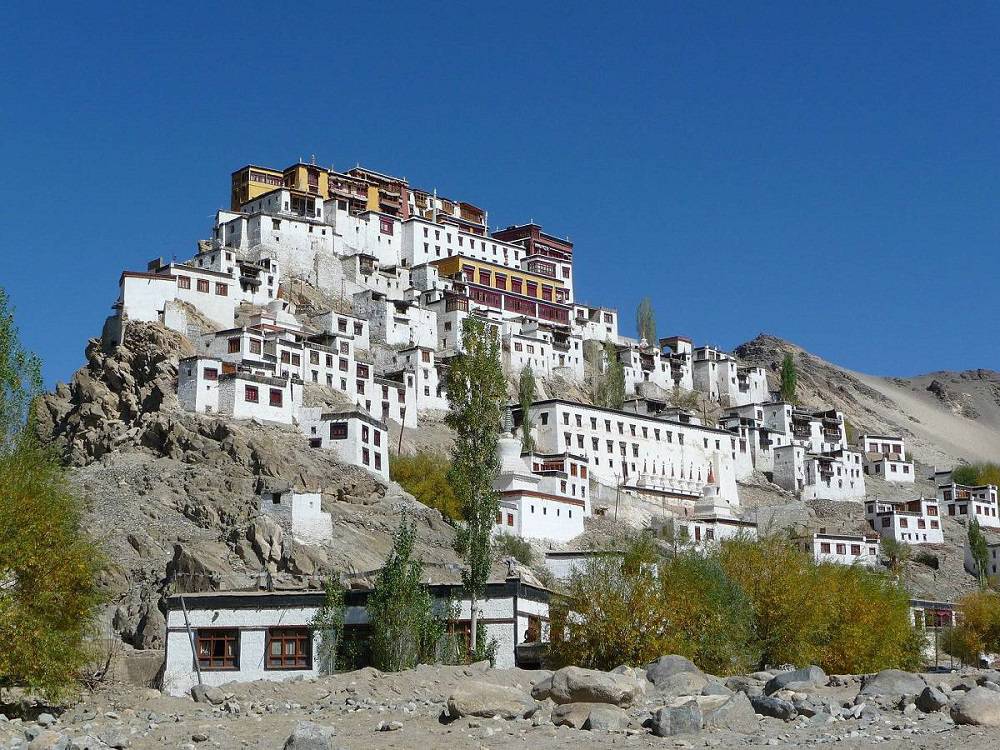
The world of virus has made all of us a couch potato. Eat, sleep, work and repeat has became our lifestory. Now lets recharge ourself and live our life happily like the way we were living before this virus, lets go on trip, a trip to Leh Ladakh. A heavenly beautiful travel destination in Himalayas. The moon-like landscapes, desert mountains with splashes of green and snow peaks the beautiful nature make you feel spaced out from this world. So if you are visiting to Leh Ladakh don’t forgot to do these 10 things

1. Pangong Tso
The place where 3 idiots ending scene was picturised. One of the wondrous things to do in Ladakh is observing the sunrise at Pangong Tso or Pangong Lake. A breathtaking sight and true craftsmanship of nature. You will observe an eye-catching blue sky which is tranquil, and cold. This is one of the truly amazing Ladakh lakes that you can find.

2. Hemis Natinal Park
Snow Leopard are seen in only a few places in entire world Hemis National Park is one of those places. Henis National Park is home of more than 200 Snow Leopards.

3. Leh Palace
The palace stands like overlooking the town, it stands like the famous tourists spot which will show you the beautiful view of Leh and surrounding area. Inside the palace there are old wall paintings on life of Buddha.

4. Turtuk and Nubra Valley
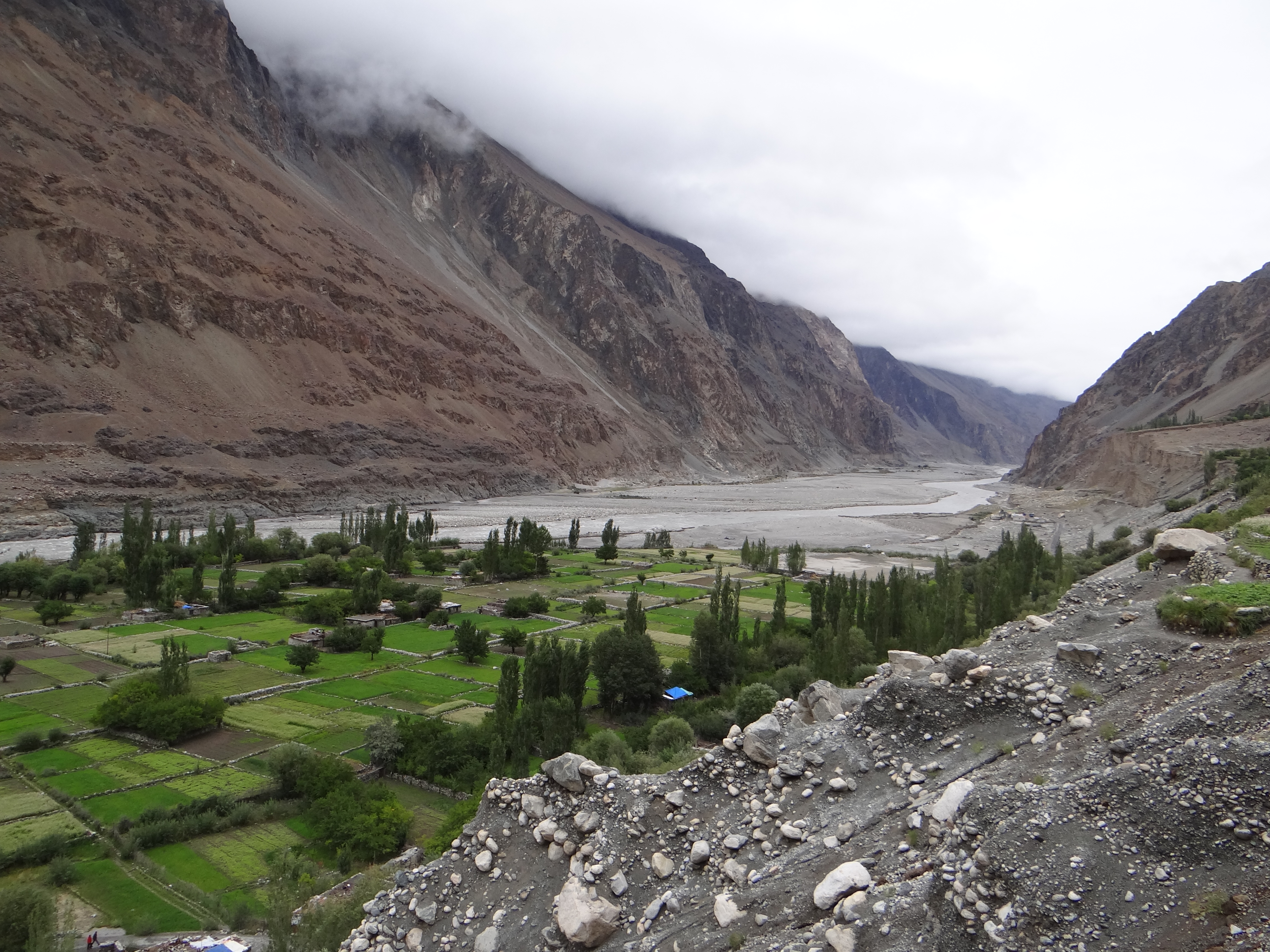
The last village in India situated in Nubra Valley. There are so many reasons to visit turtuk village like a beautiful seclusion, mixed culture and the beautiful view of nature.
Nubra Valley is the place is known for its scenic beauty and adventurous expeditions. Surrounded by the snowcapped Himalayan ranges, it lies sandwiched between Tibet and Kashmir. The view of valley is breathtaking and picturesque. You will be crossing the thriving Shyok and Nubra rivers to reach the valley which is also home to numerous beautiful monasteries. The area is under military supervision because of its proximity to Siachen Base camp. The place is also known for interesting Bactrian camel rides.

5. Hemis Festival
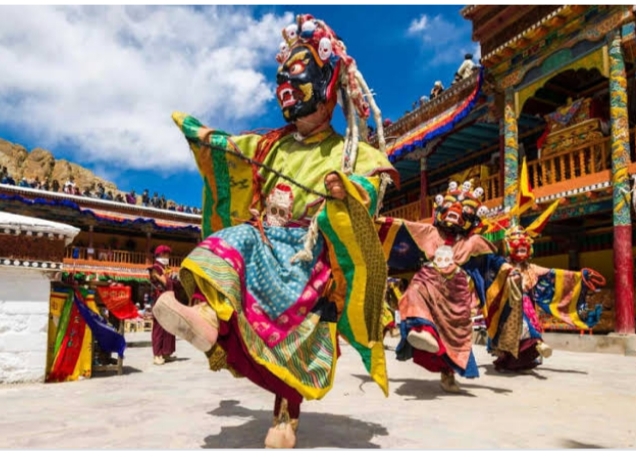
If you want to be mesmeried by colourful dances you must visit Hemis festival of Ladakh festival. People here dance wearing huge masks; the dance symbolic of good winning over bad.
Time to visit= 11th to 12th July 2021
Where=Hemis Monastery.

Prevent covid from impactig your credit score

 – Since the beginning of March, COVID-19 has turned millions of Americans’ financial situations upside down.

While the economy is showing signs of recovery, many Americans are still unemployed and having to dip into their savings to cover basic living costs. To that end, the question remains: How do you protect your credit score? Read on for some tips.

• Contact your lender aas soon as possible if you can’t make a payment. On-time payments are the largest factor affecting your credit score. Many lenders continue to offer emergency support such as deferral or forbearance options that may allow you to reduce or suspend payments for a fixed period. However, if those terms are set to expire soon, you should “call your lender to discuss what options are available,” says Rod Griffin, senior director of consumer education and advocacy for the credit reporting agency Experian.

• Look for ways to boost your credit score. If you have limited credit history, building credit can be challenging. Experian’s free tool, Experian Boost, can help raise your FICO score instantly by giving you credit for on-time utility, phone and streaming service payments.

This type of alternative financial data, known as “consumer-permissioned data,” allows you to manage your data with confidence and qualify for better credit. In fact, two out of three Experian Boost users see an increase in their credit score with an average increase of about 12 points. That’s enough to make a significant difference when applying for a loan or any type of credit.

• Consider getting a balance transfer credit card or one with an introductory offer. Handled responsibly, this actually has the potential to increase your credit score while either buying you time to pay off your debts or getting a “welcome bonus” of perhaps hundreds of dollars. If you’re looking for personalized credit card options, tools like Experian CreditMatch can help you get the right card based on your financial profile.

• Pay attention to your utilization ratio. Your credit score is based on your total balance-to-limit ratio (a.k.a. “utilization rate”). Adding a new credit card increases your total available credit. As long as your total credit balance remains the same, you’d be decreasing your utilization rate, which can potentially boost your credit score. Be sure to transfer balances to the card with lower interest and be mindful of temporary low interest rates.

While any balance can cause scores to decline, you should keep your utilization under 30 percent, both overall and on individual accounts. Shooting for a top credit score? “Keep your utilization in the single digits, or even better, pay your credit card balances in full each month,” says Griffin.

• Fight fraud by checking your credit report regularly.According to the Federal Trade Commission., there’s been a huge jump in attempted credit – and debit-card fraud since the pandemic hit; consumers have lost more than $100 million to COVID-19-related fraud

IMPACT OF COVID-19 ON CIVIL AVIATION SECTOR OF INDIA

OVERVIEW :-

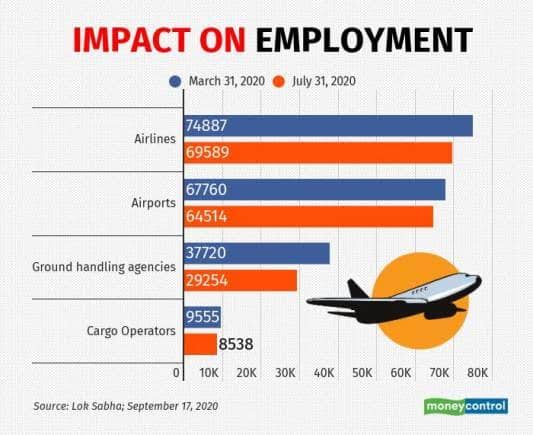
COVID-19 has emerged out as the greatest challenge to the world community in the past 100 years. Due to it, millions of people are affected and lakhs of people have to lost their life. It also has broken the backbone of all the countries. The economy of every country around the world suffered massively. Whether it is manufacturing sector or any kind of service providing sector, it has dismantled everything. The Civil Aviation Sector of India is no other exception to it . It has also suffered huge losses due to COVID-19. People working in this sector washed hands from their jobs. All the airlines saw a historic decline in their revenues and many went into losses.

WHAT COVID-19 HAS DONE…????


The major reason for these losses is due to COVID-19 related restrictions on travel. All the countries banned people from other countries to enter in their country.

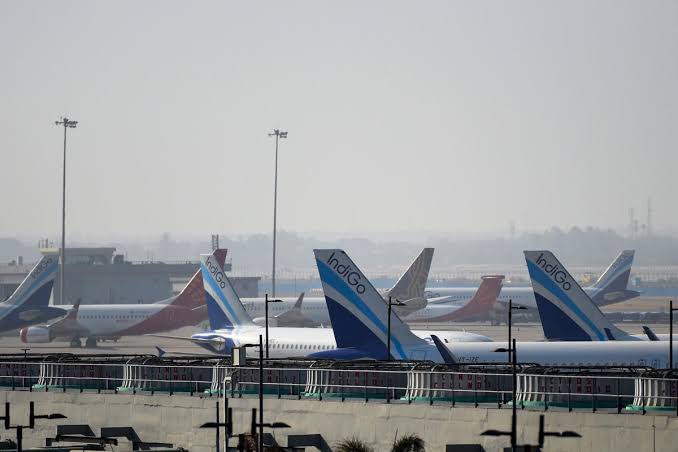
Due to this, passengers footfall on the airports have declined. International and domestic flights were cancelled. People working in this industry had no work. Many airlines including Government of India owned AIR India took steps like lay off employees.

EFFECTS OF COVID-19 :-

  • IndiGo incurred net losses of ₹ 2,884 crore and rupees 1,194 crore in Q1 and Q2 of this fiscal respectively. SpiceJet posted net losses of ₹ 600 crore and ₹ 112 crore in Q1 and Q2, respectively.
  • “The revival of overseas travel is expected to be slower and more challenging than domestic. This will hurt Air India in particular as around 60 per cent of its revenue was earlier generated from international operations,” said aviation consultancy firm CAPA in October. In the financial year more than 200 million passengers travelled in India. But this number has declined to about only one-forth in the next year.
  • CAPA India estimated a loss of more than USD 6.5 Billion in the financial year 2021.
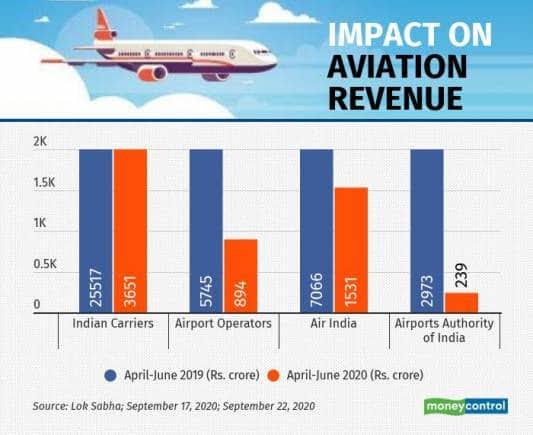
  • The Airports Authority of India (AAI) — responsible for managing and maintaining civil aviation infrastructure across the country — reported a 92 percent fall in its revenue from Rs 2,973 crore during April-June 2019 to Rs 239 crore during the corresponding period in 2020, a government reply to the Lok Sabha on September 22, 2020, said.
  • “Civil aviation has been severely hit with the tourism sector being down, and the former has a huge debt on them,” Sanat Kaul, Chairman (India Chapter) International Foundation for Aviation, Aerospace & Drones (IFFAAD), said.
  • “The revenue impact on the Indian aviation industry for FY21 is likely to be over 50 percent, and job losses, including compulsory leave without pay, are likely to be around 30 percent-plus,” Manvi Hooda, Practice Lead Consulting & Research, CAPA South Asia, said.
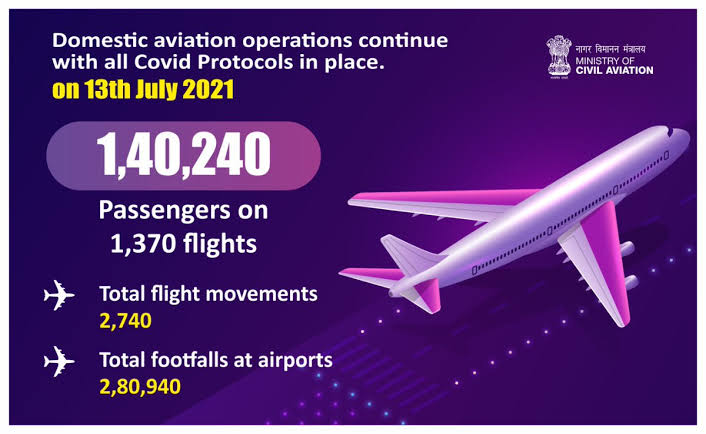
  • The passenger footfall across AAI airports saw a significant drop from 14.5 million in January 2020 to 27,687 in April 2020.

POST-COVID TIME FOR CIVIL AVIATION SECTOR :-

“Post-COVID, we need an aviation reform agenda, which must be well-directed and result in a sustainably profitable aviation industry,” said Hooda of CAPA India.
“This must include reducing negative fiscal regime, including aviation turbine fuel in the GST and ensuring that the Directorate General of Civil Aviation and Bureau of Civil Aviation Security turn into independent institutions. Privatisation of Air India and more AAI airports, and dismantling of government ownership of aviation assets, except for ATC, should also be expedited” she suggested. Further, strategic reforms like long-term airport master plan and remote airport infrastructure to deliver tangible results under the ‘flexible use of airspace’ should be envisaged, she advised.

It will take time to completely free the world from the pandemic COVID-19. Till then, all the appropriate Covid protocols must be strictly followed by everyone during their journey so that civil aviation sector health can be improved.

Links :-

Working out haan!

Exercise is any bodily activity that enhances or maintains physical fitness and overall health and wellness.

It is performed for various reasons, to aid growth and improve strength, preventing aging, developing muscles and the cardiovascular system, honing athletic skills, weight loss or maintenance, improving health and also for enjoyment. Many individuals choose to exercise outdoors where they can congregate in groups, socialize, and enhance well-being.

In terms of health benefits, the amount of recommended exercise depends upon the goal, the type of exercise, and the age of the person. Even doing a small amount of exercise is healthier than doing none.

Physical exercises are generally grouped into three types, depending on the overall effect they have on the human body:

Aerobic exercise is any physical activity that uses large muscle groups and causes the body to use more oxygen than it would while resting. The goal of aerobic exercise is to increase cardiovascular endurance. Examples of aerobic exercise include running, cycling, swimming, brisk walking, skipping rope, rowing, hiking, dancing, playing tennis, continuous training, and long distance running.
Anaerobic exercise, which includes strength and resistance training, can firm, strengthen, and increase muscle mass, as well as improve bone density, balance, and coordination. Examples of strength exercises are push-ups, pull-ups, lunges, squats, bench press. Anaerobic exercise also includes weight training, functional training, eccentric training, interval training, sprinting, and high-intensity interval training which increase short-term muscle strength.
Flexibility exercises stretch and lengthen muscles. Activities such as stretching help to improve joint flexibility and keep muscles limber. The goal is to improve the range of motion which can reduce the chance of injury.
Physical exercise can also include training that focuses on accuracy, agility, power, and speed.

Types of exercise can also be classified as dynamic or static. ‘Dynamic’ exercises such as steady running, tend to produce a lowering of the diastolic blood pressure during exercise, due to the improved blood flow. Conversely, static exercise (such as weight-lifting) can cause the systolic pressure to rise significantly, albeit transiently, during the performance of the exercise.

Heavy Rainfall next five days

Delhi, UP, Uttarakhand and Himachal to Receive Heavy Rainfall Next Five Days.

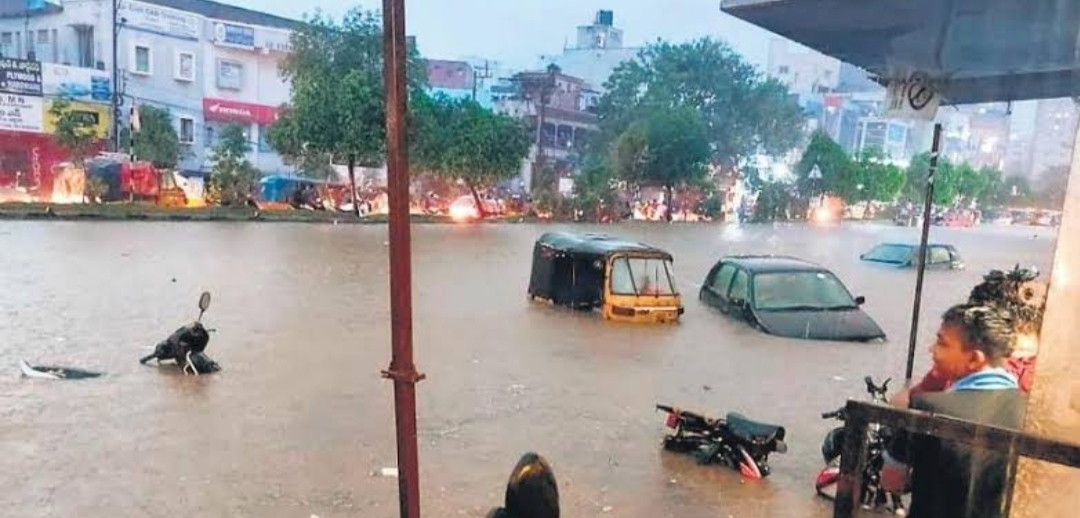
The India Meteorological Department (IMD) has predicted heavy to very heavy rainfall at some places of North India, including Delhi, Uttar Pradesh, Himachal Pradesh, Uttarakhand, during the next 5 days. 

The department has also issued an orange alert in Rajasthan and Jammu and Kashmir. It also issued a yellow alert in Himachal Pradesh and Uttarakhand, which are facing heavy losses due to cloudburst. The Metrological department issued a red alert for Madhya Maharashtra and Goa.

The prediction are taken at a time when monsoon has entered in most of the states of the country.

Following are the meaning of the color of the alert issued by authorities::

Green Alert: It means there is no danger as there is no chance of rain.

Yellow Alert: This alert means that there will be rainfall and weather will remain unclear

Orange Alert: This means that there is a full possibility of rainfall and thunderstorms. So one should not go out unless it is absolutely necessary.

Red Alert: Red Alert means warning of dangerous weather. Through this alert, people are warned against going out of their homes.

The moisture-laden winds are advancing from the Bay of Bengal towards all parts of the country due to changes in conditions that promote the advancement of these winds.

Calling Sehmat – movie based novel ( RAAZI )

  • How was Sehmat Khan alone able to influence the course of the Indo – Pakistan war of 1971? Is patriotism still in the hearts of people. The answer to this question is given in the book Calling Sehmat itself. Still people keep their country or watan on the first priority.
  • The book Calling Sehmat is written by Harinder Sikka. This book is not a history lesson but a lesson to learn in life. People still sacrifice their LIFE for the sake of the country and the safety of the country. It is a true story about a girl called Sehmat who was studying in Delhi and became an Indian spy who can be solely responsible to save India from losing the Indo – Pak war of 1971.
  • Sehmat was the only child born to Tej and Hidayat. She was born to a muslim father and hindu mother and hence she was very secular because she had seen two people practicing different religions and still living in peace under the same roof. The young Sehmat agrees to marries a officer of Pakistan army even if she loves someone else. She gathers information about Pakistan while living in her in laws house and maintaining a healthy married life. Sehmat eventually founds about the sinking of india’s pride that is INS Vikrant.
  • The story gives us the ray of hope that there are still people who stake their life for the country. It also showcasts the bravery of the Kashmiri people.  I would like to give this book a rating of 9.5/10. I would recommend this book to all those who truly believe in patriotism. It is a mixture of thiller , suspense and mystery. The plot of the book is set in an amazing way

NASA (National Aeronautics and Space Administration)

NASA is the most popular space agency whose headquarters is located at Washington, USA. It was established on 1st October 1958. It has 10 field centers, which provide a major role in the execution of NASA’s work. NASA is supporting International Space Station which is an international collaborative work on space research. It has landed rovers on Mars, analysed the atmosphere of Jupiter, explored Saturn and Mercury.


The Mercury, Gemini and Apollo programy helped NASA learn more about flying in space. NASA’s robotic space probes have visited every planet in the solar system. Satellites launched by NASA have revealed a wealth of data about Earth, resulting in valuable information such as a better understanding of weather patterns. NASA technology has contributed to make many items used in everyday life, from smoke detectors to medical tests.


APOLLO MISSION
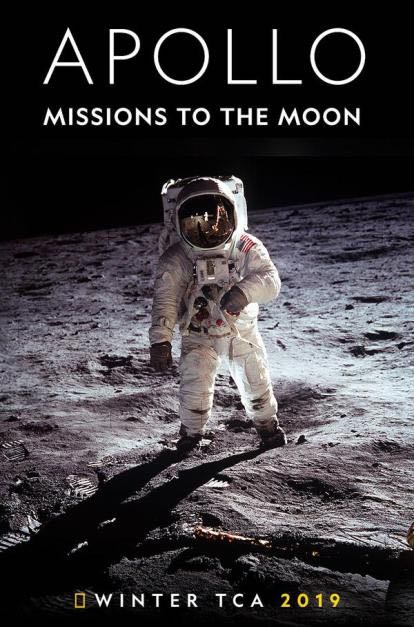
Apollo Missions are the most popular missions of NASA. These missions made American Astronauts to land on the Moon. It consists of totally 17 missions. Among them Apollo-8 and Apollo-11 are more remarkable. Apollo-8 was the first manned mission to go to the Moon.

It orbited around the Moon and came back to the Earth. Apollo-11 was the first ‘ Man Landing Mission’ to the moon. It landed on the Moon on 20th July 1969. Neil Armstrong was the first man to walk on the surface of the Moon.


NASA’s Work with ISRO


NASA’s made an agreement to work with ISRO to launch the NISAR Satellite (NASA-ISRO synthetic Aperture Radar) and Mars Exploration Missions.


Work of Indians at NASA
People of India origin in America are working in NASA and they have made remarkable contribution to NASA.

kalpana chawla

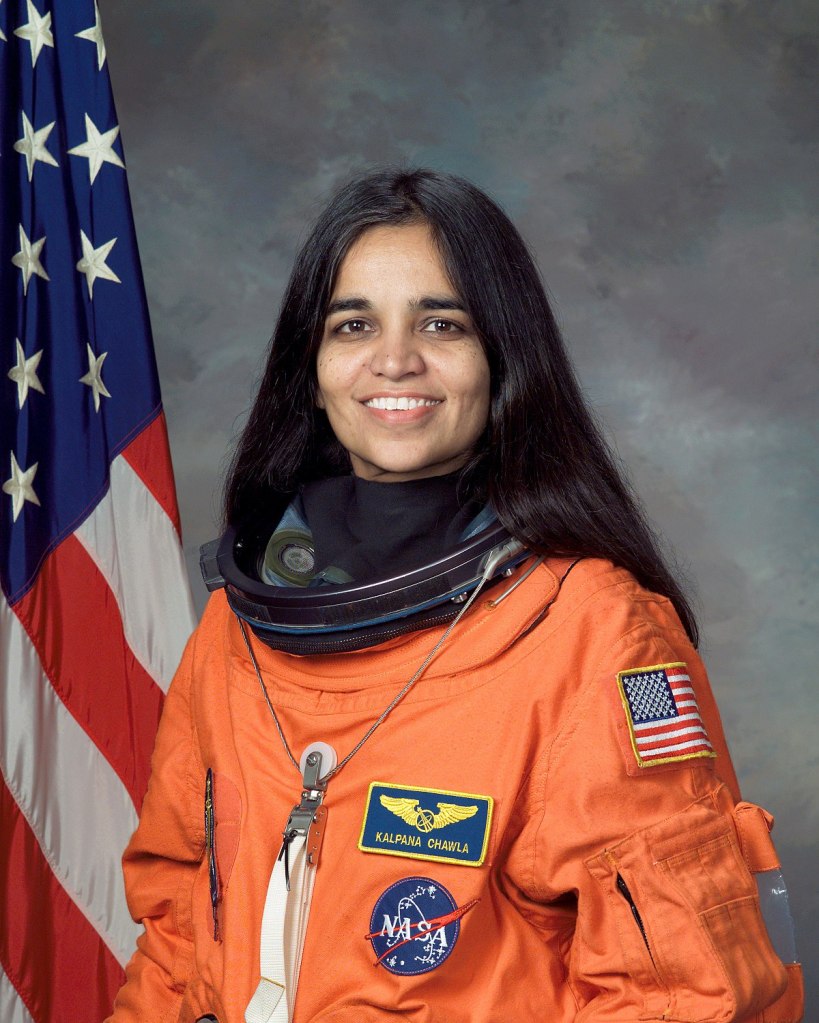
Kalpana chawla was born on 17th March 1962 in Karnal, Punjab. In 1988, she joined the NASA.

She was selected to take part in the Colombia Shuttle Mission in 1997 and she became the first Indian women astronaut fo go to space. On her second mission the Columbia shuttle, she lost her life, when shuttle broke down.


SUNITHA WILLIAMS


Sunitha Williams was born on 19th September 1965 in USA. She started her career as an astronaut in August 1998.

She made two trips to the International Space Station. She set a record of the longest space walking time by a female astronaut in 2012, with a total space Walk of 50 hour and 40 minute (7 space walks). She is one of the crew of NASA’s Manned Mars Mission.

Taoism-The art of letting it go.


Laojunshan, China famous Taoist Holy Land

Taoism (also spelled Daoism) may be a religion and a philosophy from ancient China that has influenced folk and national belief. Taoism has been connected to the philosopher Lao Tzu, who around 500 B.C.E. wrote the most book of Taoism, the Tao Te Ching. Taoism holds that humans and animals should sleep in balance with the Tao, or the universe. Taoists believe spiritual immortality, where the spirit of the body joins the universe after death.

Much of the thrust of Daoism, as we’ve seen, naturally motivates a reaction against the moralistic and elitist inclinations of Confucianism. Confucianism stood for a rigid, detailed, traditional pattern of hierarchical social behavior. Duties were assigned to all or any of one’s social roles—and an individual typically had many such roles, e.g., husband, father, minister, younger brother, teacher, student, etc.

One could escape this heavy scheme of obligations mainly in retirement or, paradoxically, the normal duty to spend three years “in mourning” for the death of one’s father. The withdrawal from society, the antipathy toward ritual roles, traditional “morality,” and any social structures or traditional culture suggests a sort of Daoist “ethos” as an antithesis to Confucianism in China.


One of the most ideas of Taoism is that the belief in balancing forces, or yin and yang. These ideas represent matching pairs, like light and dark, hot and cold, action and inaction, which work together toward a universal whole. Yin and yang show that everything within the universe is connected which nothing is sensible by itself.

Taoism became well-known within the eighth century C.E. because the religion of the Tang . within the following centuries, it existed alongside Buddhism and Confucianism (another philosophical religion). However, during the Communist takeover in 1959, Taoism, Confucianism, and other religions were banned. This caused a decline within the practice of Taoism in China. Many modern Taoists sleep in Taiwan, although recent reforms in China have increased the amount of Chinese Taoists.

Ban On Inter State Bus Transportation

Without leaving even a scintilla of doubt, the Madhya Pradesh High Court Bench at Indore has in a latest, landmark, laudable and learned judgment titled MP Bus Operator Association vs State of MP & others in Writ Petition No. 8597 of 2021 that was delivered on June 29, 2021 has maintained without mincing any words that in the extraordinary situation of a pandemic or disaster involving loss of life and human suffering, the Central Government as well as the State Government are empowered to put any restriction in the larger public interest under the Disaster Management Act, including restriction of movement of public by inter-state bus transportation. It must be apprised here that a Single Judge Bench of Indore Bench of Madhya Pradesh High Court comprising of Justice Vivek Rusia who authored this notable judgment was dealing with a petition filed by MP Bus Operator Association challenging various Government orders restricting inter State bus transportation between State of Madhya Pradesh and Maharashtra owing to the rising number of Covid 19 cases. It was the case of the petitioner association that despite having valid permit to ply inter state buses, the government had restricted them in wake of the second Covid wave. 

To start with, the Single Judge Bench of Justice Vivek Rusia first and foremost puts forth in para 1 that, “Petitioner / M.P Bus Operator Association has filed the present petition being aggrieved by the orders dated 21.03.2021, 31.3.2021 and 22.06.2021 issued by respondent No.3 whereby the inter-State bus transportation between State of Madhya Pradesh and Maharashtra has been restricted from 21.03.2021 to 31.03.2021 and thereafter up to 15.04.2021 and again extended up to 30.06.2021 due to Covid -19 pandemic.” 
While elaborating on the facts of the case, the Bench then lays bare in para 2 that, “The petitioner is an association registered under the Madhya Pradesh Society Registrikaran Adhiniyam, 1973 having its registered office at C-14, Vikas Tower, Navlakha, Indore. The society has authorized its President Mr. Arun Gupta to file the present petition by way of resolution dated 05.04.2021. The members of the petitioner/association are having permit to ply inter-State transport passengers buses. In the second phase of Covid-19 the government has restricted various commercial activities in order to control the spread of Covid virus. Since large number of Covid cases were reported in the State of Maharashtra, therefore, the State Transport Department of M.P. has decided to stop operating buses from the territory of Madhya Pradesh to the territory of Maharashtra and vice versa. According to the petitioner, the Central Government, Ministry of Home Affairs vide order dated 23.03.2021 has issued guidelines to the States and UTs for issuing necessary norms for regulating travel in other modes of public transport like buses etc. and to ensure that same are strictly complied with. All the activities are permitted outside the containment zones and SOPs have been prescribed for various activities including movement of passengers, rail, air travel, metro train, schools etc. It is further submitted that there is no restriction on the movement of passengers by way of air service and trains between these two States, therefore, the Government of M.P. cannot discriminate with the petitioner by way banning the inter-State bus service facility between these two States which is in gross violation of Article 19(1)(g) of the Constitution of India. The members of the association are having fundamental right to practice any profession or to carry on any occupation, trade or business which cannot be restricted by the State Govt. It is further submitted that the State has a right under Article 19(6) of the Constitution to put a reasonable restriction on the fundamental right but that should not be arbitrary or excessive in nature. The movement of public between Madhya Pradesh and Maharashtra is permissible through air, train, cab, taxi and through private vehicles but movement only through buses are restricted without any valid justification. The members of the petitioner are ready to follow any conditions to be put by the State Govt. for operating the buses in order to prevent spread of corona virus. They will not permit any passenger to travel in the buses without negative RT-PCR report, therefore, with certain restrictions the petitioner be permitted to ply buses between these two States.”
In addition, the Bench then also points out in para 3 that, “In support of the above contentions Mr. Manu Maheshwari, learned counsel for the petitioner has placed reliance over the judgments passed by the Apex Court in the case of Chintaman Rao vs. State of M.P- AIR 1951 SC 118; Saghir Ahmad vs. State of U.P & others- AIR 1954 SC 728; Subramanian Swamy vs. Director, Central Bureau of Investigation and another- (2014) 8 SCC 682 & Narinder S.Chadha and others vs. Municipal Corporation of Greater Mumbai and others – (2014) 15 SCC 689.”
As a corollary, the Bench then brings out in para 4 that, “The respondents have filed the reply by submitting that in the second wave of the Covid-19 most of the cases came in the State of Maharashtra and being a neighboring State of M.P, in order to protect the inhabitants of M.P, the State Govt. has restricted the transportation of public by way of buses. The State Govt. has passed the order looking to the public health in exercise of the powers conferred u/s 24 of the Disaster Management Act, 2005 (for short ‘the Act of 2005’). The transportation of the buses cannot be compared with the transportation by trains and airways because trains and airways are under the jurisdiction and control of the Central Govt. and the State Transport is within the jurisdiction of M.P State.”
Furthermore, the Bench then also brings out in para 5 that, “Shri Garg, learned GA appearing for the State has submitted that impugned restriction is temporary in nature and after the things are normalized the government is bound to lift the ban, but as on today there is a forecast of third wave of Covid delta plus coming up in the State of Maharashtra, therefore, the government may extend the period of ban which is going to expire tomorrow i.e. on 30.06.2021. It is further submitted that any tough decision taken in the public interest the interest of individuals are bound to be overlooked . The members of the petitioner society are not only restricted to do their business but other trade and business are being totally shut down like theaters, gym, restaurant, tourism etc. In order to provide essential items, the government is relaxing the restrictions . The petitioner’s members are restricted to operate the buses only to Maharashtra State where the large number of cases of Covid are reported but they are free to operate the buses in other States, hence there is no complete restriction on the right of trade and business, hence the petition kindly be dismissed.”
What’s more, the Bench then observes in para 6 that, “In rejoinder Shri Manu Maheshwari, learned counsel submits that the impugned order has not been issued u/s 24 of the Act of 2005, and only after filing of this petition the respondents came up with the plea that the impugned order has been issued under section 24 of the Act of 2005. The petitioner has filed the list of the trains and flights operating between Madhya Pradesh and Maharashtra in which there is no such restriction by the Central Govt. and submit that the petitioner be also permitted to ply the buses between Maharashtra and Madhya Pradesh and vice versa. It is further submitted that Government of Maharashtra has not imposed such restriction on transportation of passenger buses. Even the railways and airways are not demanding Covid report from the passengers and only on the basis of self-declaration they are permitting public to travel to any part of the country. The petitioner’s members are also ready to abide by all the conditions which are being followed by the rail and airways operators. I have heard the learned counsel for the parties and perused the record.”
Of course, the Bench then states in para 7 that, “It is not in dispute that the second wave of Covid -19 started from the State of Maharashtra and being a neighboring State there is a frequent movement of public between M.P and Maharashtra by all means of transport. Accordingly to the petitioner there is no restriction on transportation by railways and airways. The railways and airways are under the domain of the Central Government and on which the State Government cannot put any restriction. The transportation by stage carriages is under the control of the State Government, therefore, the State Govt. is competent to put restriction or conditions in which there is no discrimination by the State Government.”
Quite significantly, the Bench then holds in para 8 that, “Even otherwise, in transportation through airways and railways the entry and exit points of passengers are fixed and known from where the passengers can be checked about their health conditions but it is not possible in the transportation by buses. The buses can be stopped anywhere and collect the passengers which is not possible in the railways and airways, therefore, both are different classes of transportation. The State Government has put restriction only for the limited period subject to the reduction of cases of Covid. There is no permanent restriction for transportation through buses from Madhya Pradesh to Maharashtra and vice versa. The Government is reviewing the situation after the interval of 10-15 days and extending the restriction for limited period. Except Maharashtra the petitioners are permitted to ply the buses in other part of the country, therefore, there is no 100% restriction on the right of trade and business. In the larger public interest, the individual interest is bound to suffer.”
Most remarkably, the Bench then minces no words to hold in para 9 that, “So far as the applicability of section 24 of the Act of 2005 is concerned, the government has decided to enact a law on disaster management to provide for requisite institutional mechanisms for drawing up and monitoring the implementation of the disaster management plans, ensuring measures by various wings of Government for prevention and mitigating effects of disasters and for undertaking a holistic, coordinated and prompt response to any disaster situation. Section 2(d) defines the word ‘disaster’ and 2(e) defines ‘disaster management’ which means a continuous and integrated process of planning, organizing, coordinating and implementing measures which are necessary or expedient for prevention of danger or threat of any disaster or mitigation or reduction of risk of any disaster. Section 14 authorizes the State Govt. to establish State Disaster Management Authority for the State by way of notification. Section 24(l) gives power to the Central Govt. or the State Govt. to take such steps as are required or warranted by the form of any threatening disaster situation or disaster, therefore, in exercise of the aforesaid powers the State Govt. has decided to restrict or minimize the movement from Maharashtra to Madhya Pradesh. In normal situation the action of the State Government can be examined in respect of putting restriction on any trade and business but in the case of disaster or pandemic where the loss of life or human suffering or damages are in large scale then the Central Government or the State Government is empowered to put any restriction in the larger public interest in exercise of power under section 24 of the Act of 2005. Section 72 gives overriding effect to the provisions of the Act of 2005 over the other Act. The High Court in exercise of powers under Article 226 of the Constitution of India should not interfere in the policy decisions taken by the State Government looking to the interest of public at large.”
Quite rationally, the Bench then holds in para 10 that, “It is expected from the State Government that further extension or restriction of movement of public by inter-State transportation by buses shall not be in mechanical manner but after assessing the facts and figures of Covid -19 cases in the State of Maharashtra.” 
Finally, the last para 11 concludes this brief, brilliant and balanced judgment by holding that, “In view of the foregoing discussion, the petition is disposed of.”
To sum up, this cogent, commendable and convincing judgment by a Single Judge Bench of Justice Vivek Rusia of Indore Bench of Madhya Pradesh High Court sets the record straight by holding that in the extraordinary situation of a pandemic or disaster involving loss of life and human suffering, the Central Government as well as the State Government are empowered to put any restriction in the larger public interest under the Disaster Management Act, including restriction of movement of public by inter-state bus transportation. So such restrictions are valid and cannot be objected to by citizens at the drop of a hat. All citizens are bound to comply accordingly as has been clearly pointed out in this notable case also!
Sanjeev Sirohi


DOPING

To continue the fight against doping - Fondazione Gianni Benzi Onlus

Doping is not new to the people . In ancient Greece, there were specialists who used to offer athletes nutritional ingredients in order to enhance their physical performance. Those specialists may be compared to the current sports medicine specialists . During the Olympic Games in the third century BC, the athletes tried to increase their sports performance by taking mushrooms and opium . In the Ist centaury AD, the Greek runners used to drink a herbal beverage to increase their strength and become capable to run long distance races. Gladiators are also reported to use various substances for enhancing strength . In the modern era , the use of performance enhancing substances and techniques by the top sportspersons across the world has been a presistent issue in the world of sports for nearly four decades. Since the beginning of the 21st century, many athletes have been engaged in taking such substances. Some of them have been tested positive such as Tim Montgomery, Marion Jones, swimmer Phelps, etc.

Concept of Doping

‘Doping’ is the word, which is used in the field of sports, to refer to the situation when athletes use prohibited substances or methods to unfairly improve their sporting performance. In general terms, doping is the use of performance enhancing substances or methods by athletes to gain an advantage over their competitors . In fact , some athletes take illegal substances to enhance their performance . This activity is known as ‘doping’ . Doping in sports is the deliberate or inadvertent use by an athlete of a substance or method banned by the International Olympic Committee. In fact, the ban or prohibition on such substances is necessary to protect the athletes from the unfair advantage which may be gained by those athletes who use prohibited substances or methods to enhance their performance and also from the possible harmful side effects which these substances or methods can produce. The following definitions of doping may help in understanding its exact meaning:

According to International Olympic Committee, ‘‘Doping is the use of any method or substance that might harm the athlete, in a quest to gain an unfair advantage, over his/her fellow competitors”. In fact, doping is the use of prohibited substances or methods designed to enhance an athlete’s physical or mental abilities or to mask the use of such substances or methods during preparation for or participation in a sports competition .

According to World Anti-Doping Agency (WADA) ,” Doping is defined as the occurrence of one or more of the anti-doping rule violations set forth in Article 2.1 through Article 2.8 of the code.”

“Stories We Never Tell”: A Novel of Hope, Light, and Recovery

In our life, there are some bad phases when there is no one with us, and also we’ve handled our problems alone, and we never wanted to talk about or we were afraid to share because it simply hurts very much.

So today we’re going to review a book that talks about all the things that we never shared with someone. This book talks about hope, light, and recovery in the world of loss, darkness, and destruction. Yes, we’re talking about our respected save Sharma’s fictional novel, “Stories We Never Tell”.

Lessons Full of “Inspirations “:

Story of a girl named Jhanvi who is a growing social media influencer. And a boy named Ashray who had a great onset in his life, with his hard work and determination he changed his dreams into reality, where the girl appears to have it all the comforts jointly but, there was a lack of peace and happiness which was missing.

Apart from the characters ashray and jhanvi, Rishi who was the best friend of ashray helps him as his backbone. Rishi’s nature shows that there is always someone behind our success who is with us and helps in any worst conditions. Whereas Kavya who was Jhanvi’s friend, the same as Rishi Kavya existed as a rock to support Jhanvi in any episodes of life. In short, we can say that the story makes us realize that we need more souls like Rishi and Kavya.

The most beautiful character of this story is Ashray’s mom “Akshita”, brave souls like Akshita who always put together “life and people ”, a support group made away by struggling and beating all the challenges in their lives. Moreover, she also proved that love doesn’t require the relation of blood, she gives us a beautiful message that sometimes we fall in love with people because we feel the time is running but that person may not be the correct one.

Story Talks About Mental Health:

Jhanvi and Ashray, as we know that they both were diverse from each other so their stories are also different. As we see in the story Jhanvi is fighting the outside world, while Ashray’s fight is internal. There’s a line ” I need help” when people read that line they should realize what the author makes us understand, in some aspects of our lives most people don’t know if they need any type of help or not.

In general, the author talks about how being depressed affects relationships, the emotions one has to go through, and the road to diagnosis which is quite relatable.

Characters are very diverse, tricky, and dark and we guess as to the author of this book, it would be very hard to show that after all of these characters are showing hope.

Believe in your Story:

In the forgotten world of books where nowadays, people are being practical and choose to listen to podcasts or e-books for rapid listening, Savi Sharma made us introduce with her novels dedicated to everyone who still loves to read books and for them also who are still searching “hope and happiness” in books. She also said that ” I always believed that everyone has a story to tell and everyone is a writer ” and she believed that one day when all of this will end, people will always remember us as stories.

About the Author:

To motivate millions of people through her writings, Savi Sharma Bagrecha left her CA studies to become a writer. Inspired by experiences of real-life activities, her books swirl around the themes of dreams, hope, courage, friendship, love, and the Universe, to fill young readers with positivity and prosperity.

She is the author of “Everyone has a story – 1”, its sequel “Everyone has a story – “2, and “This is not your story”. Savi dreams of a world full of kindness, compassion, empathy, and love. With collective sales of over 6 lakh copies, she is India’s highest-selling female novelist.

You can find all 5 books by the author Savi Sharma which are available on Amazon and Flipkart.

Got admired by her a lot!!You can also read her blogs on http://www.savisharma.com and you can also get connected with her on Instagram, Facebook, and Twitter @storytellersavi.

We hope that you have liked this book review and for more news and blog content stay tuned with https://eduindex.org/

Thank you!!