Communication skills

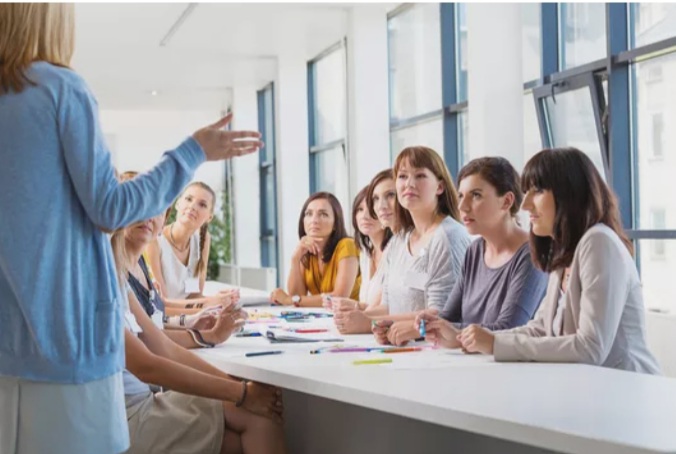
Good communication is very important to convey what is there in the mind. Whatever language, communicating in a understandable way is very important. communication today is very important both in the business world and in private life.

Even though the person is good at skills and is capable of doing things better, lack of communication degrades the skills and brings a negative mark on the person which is a bad thing for the individual.

Top 5 communication skills and How to improve them

Developing strong communication skills is essential when it comes to building a successful careee. Communication skills play a key role in your private life too. These 5 skills are absolutely necessary for sucessful commuincation in the workplace or private life.

1. Listening :

Listening is one of the most important aspects of communication. Successful listening is not just and understanding of spoken or written information, but also an understanding of how the speaker feels during communication. If a speaker can see and feel that someone is listening and understanding that can help build a stronger, deeper realtionship between interlocutors.

Careful listening can also create an environment in which everyone feels safe to express ideas, opinions and feelings, or plan and solve problems in a creative way.

2. Straight talking :

Conversation is the basis of communication, and one must not neglect its importanc. Even a simple, friendly conversation with colleafues can build mutual trust and even detect problems before they become serious. A healthy does of chatting with and unknown person can lead to a business opportunity . Be accessible and friendly because then you will be able to talk to almost anymore.

3. Non- verbal communication :

When we talk about things that matter to us then we send a lot of nonverbal messages. Non verbal signals are wordless communication, body position, facial experssion, hand movements, gestures, eye contact, attitude and tone of your voice, muscle tension and the way you breathe. The way you look, listen create, react, gesture , speaks far more about feelings than words will ever be able to.

4. Stress Management :

In small quantities, stress can be very useful and encouraging for work . However, when the stress becomes constant and completely begins to take effect, it can affect communication, clarity of opinion and appropriate behavior and action. When you are under stress you may misunderstand other people, send confusing nonverbal signals, and use funny patterns of behavior.

5. Emotion control :

In communication, feelings play an important role. Making decisions more often affects the way you feel than the way you think. Gudided by emotions, your nonverbal behavior affects the understanding of other people and how others understand and perceive you. Control of emotions provides you with tools to understand others, yourself and the messages you send. Though recognizing feelings makes it simple, many people have strong feeling like anger, sorrow, or fear being pushed under the carpet.

Importance of communication :

Communication thus helps understand people better removing misunderstanding and creating clarity of thoughts and expression. The communication brings people together, closer to each other. The communication is an important management function closely associated with all other managerial functions.

Everybody has their own way of communicating. It is influenced by cultural background, the way someone was raised, their gender, their temperament, and much more. At that point true communication may become utterly impossible. Sometimes we may have a difficult time understanding anothers feelings , needs and habits.

* communication serves four major functions with a group of organization :

* control

* Motivational

* Emotional expression

* Information

* communication serves five major purposes :

* to inform

* to express feelings

* to imagine

* to influence and

* to meet social expectations

For example:

For instance, if an individual is going to an interview with great confidence. An individual who is good at different kinds of skills, and also good at executing them and he is lack of communication skills. As the person is not a good communicator, the person faces difficulty in explaining the things to the other person which is known to him. Instantly, this brings a bad impression on the person and a negative mark will be marked on him. The negative mark has a lot to do with. The negative mark can also lead to the rejection of the person in the interview.

Being knowledgeable is very important to achieve certain goals in life, attaining good communication skills and being a good communicator is also equally important to achieve high in the life. Being a good communicator is not A big deal. It is so easy as the lifestyle. Any individual can be good communicator if he communicates all the time with other people in the possible way.
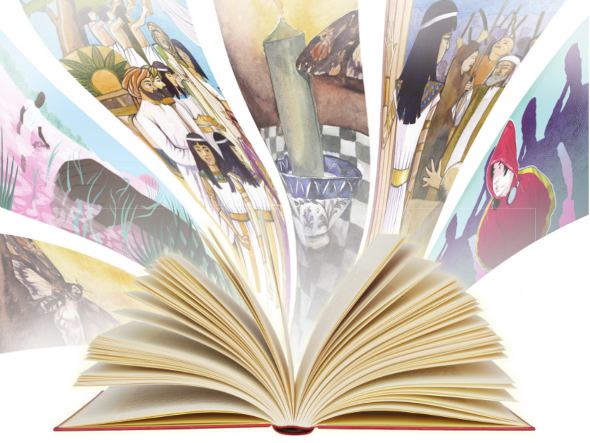
How Can Fiction Be Written? Featuring Barbie!

“Imagination and Fiction make up more than three quarters of our life.”

  • Simone Weil

Today’s article discusses an essential factor when it comes to writing fiction I.e how to write it? Barbie aka Barbara Milicent Roberts is our chief guest for today’s discussion.

“Hello Barbie! Warm Welcome Aboard. We are so glad to have you here with us.”

“Thank you for inviting me. I’m pleased to be a part of this discussion as well.”

“So, would you like to tell us the ways of writing fiction? (That for which you are here)”

“Definitely! Fiction is an interesting genre when you come to look at it. It also, comes with a wide range of interesting sub – genres which have been discussed in the earlier article. It can be written insensibly by taking almost any entity that you prefer or make one for yourself by amalgamating two or more entities. There are mostly no constraints in fiction and that is why, writing or working upon this genre doesn’t actually seem a hard task. Yes! I agree that imagining certain factors is a hard task, but we mustn’t overlook the fact that almost everything comes with its own set of hard work! Here, however I am not considering contemporary fiction or that which pertains to reality. I shall be emphasizing on how fiction (fantasy and other related genres) can be written.

Now, let us learn how exactly to write fiction through a step by step approach.

Brainstorm Over The Fictitious Topic You Intend To Choose!

Brainstorming is a process that requires time. So, first and foremost, the thing to be done, is to sit down on your favourite couch and ponder over the best fictitious topic that would definitely seem great if sketched on paper. However, don’t forget to get yourself in the reader’s shoes as stated in our earlier articles. Consider what your readers would love and write in accordance to that.

Think Of The Characters You Wish To Involve!

This is a quintessential factor that makes a story interesting. The characters make a story. However, framing of characters also depends on the sub – genre you choose. If you choose contemporary fiction, then you would definitely make use of real life characters. In such cases, you could ignore this second step and only consider the first. This step is for people who wish to work with the fantasy sub – genre because framing fictitious characters requires certain amount of deep thought processes.

In Case Of Writer’s Block, Approach The Outside World!

  Certain people experience writer’s block while writing fiction because they seem to fall short of ideas. In such cases, it is advisable to approach the outside world as inspiration to your thought processes. Some incident will definitely inspire you to write about it.

Create Strong Characters!

Make sure that the fictitious characters you create are strong enough so that the readers love them. Like, a certain character should show strong traits in personality and not physical strength 😉 Make the characters take risks throughout the story and later help them succeed. This will also deliver a good message and inspire people to take risks! Thus, all that we mean here is, that try creating characters that would also impart a message to the readers. Also, mostly it is advisable to create Round characters. Round characters are those whose traits or personalities throughout the story aren’t easily decipherable. These characters would arouse the interest factor and enhance your write up.

Create Unique Characters!

By this we mean, that when you choose to create fictitious characters, make sure that you don’t use the same repeated mythological supernatural entities revolving around mermaids, aliens and robots. These are widely known and won’t make your story that interesting. You could always create a new character for yourself by amalgamating existent entities, as stated in the earlier article.

Read Other Fiction Books For Ideas!

This is the basic step that would definitely help you to frame your own story easily. Read more and more fiction books by widely renowned authors for amazing techniques of writing a fiction book easily.

Try Fictionalizing Your Daily Life!

This means, fictionalizing your daily chores and duties in an imaginative and creative way. For instance, you are working in the kitchen and see a ladle, now you could create your own fictitious character named Mr. Ladle who could speak throughout the story. He could also be an antagonist or maybe even a protagonist if you decide to create an animated fictitious story.

Be Alert And Aware Of Your Surroundings For Inspiration!

This is extremely important because developing a fictitious story requires complete imagination. So, you need to be alert when you come across such objects which could make your story interesting. After all, if you aren’t alert then that inspiration wouldn’t be accessible to you and would pass you directly, without you acknowledging it. So, remain alert and vigilant.

“These were such essential points to be noted. We heartily thank you for your precious time! Hoping to have you again to speak on such interesting topics in the near future!”

“Please don’t mention it. I’m touched by this honourable gesture of being a chief guest on such an important discussion. Looking forward to yet another invite in the future for sure!”

Thank You So Much Barbie!

How Can Fiction Be Written? Featuring Barbie!

“Imagination and Fiction make up more than three quarters of our life.”

  • Simone Weil

Today’s article discusses an essential factor when it comes to writing fiction I.e how to write it? Barbie aka Barbara Milicent Roberts is our chief guest for today’s discussion.

“Hello Barbie! Warm Welcome Aboard. We are so glad to have you here with us.”

“Thank you for inviting me. I’m pleased to be a part of this discussion as well.”

“So, would you like to tell us the ways of writing fiction? (That for which you are here)”

“Definitely! Fiction is an interesting genre when you come to look at it. It also, comes with a wide range of interesting sub – genres which have been discussed in the earlier article. It can be written insensibly by taking almost any entity that you prefer or make one for yourself by amalgamating two or more entities. There are mostly no constraints in fiction and that is why, writing or working upon this genre doesn’t actually seem a hard task. Yes! I agree that imagining certain factors is a hard task, but we mustn’t overlook the fact that almost everything comes with its own set of hard work! Here, however I am not considering contemporary fiction or that which pertains to reality. I shall be emphasizing on how fiction (fantasy and other related genres) can be written.

Now, let us learn how exactly to write fiction through a step by step approach.

Brainstorm Over The Fictitious Topic You Intend To Choose!

Brainstorming is a process that requires time. So, first and foremost, the thing to be done, is to sit down on your favourite couch and ponder over the best fictitious topic that would definitely seem great if sketched on paper. However, don’t forget to get yourself in the reader’s shoes as stated in our earlier articles. Consider what your readers would love and write in accordance to that.

Think Of The Characters You Wish To Involve!

This is a quintessential factor that makes a story interesting. The characters make a story. However, framing of characters also depends on the sub – genre you choose. If you choose contemporary fiction, then you would definitely make use of real life characters. In such cases, you could ignore this second step and only consider the first. This step is for people who wish to work with the fantasy sub – genre because framing fictitious characters requires certain amount of deep thought processes.

In Case Of Writer’s Block, Approach The Outside World!

  Certain people experience writer’s block while writing fiction because they seem to fall short of ideas. In such cases, it is advisable to approach the outside world as inspiration to your thought processes. Some incident will definitely inspire you to write about it.

Create Strong Characters!

Make sure that the fictitious characters you create are strong enough so that the readers love them. Like, a certain character should show strong traits in personality and not physical strength 😉 Make the characters take risks throughout the story and later help them succeed. This will also deliver a good message and inspire people to take risks! Thus, all that we mean here is, that try creating characters that would also impart a message to the readers. Also, mostly it is advisable to create Round characters. Round characters are those whose traits or personalities throughout the story aren’t easily decipherable. These characters would arouse the interest factor and enhance your write up.

Create Unique Characters!

By this we mean, that when you choose to create fictitious characters, make sure that you don’t use the same repeated mythological supernatural entities revolving around mermaids, aliens and robots. These are widely known and won’t make your story that interesting. You could always create a new character for yourself by amalgamating existent entities, as stated in the earlier article.

Read Other Fiction Books For Ideas!

This is the basic step that would definitely help you to frame your own story easily. Read more and more fiction books by widely renowned authors for amazing techniques of writing a fiction book easily.

Try Fictionalizing Your Daily Life!

This means, fictionalizing your daily chores and duties in an imaginative and creative way. For instance, you are working in the kitchen and see a ladle, now you could create your own fictitious character named Mr. Ladle who could speak throughout the story. He could also be an antagonist or maybe even a protagonist if you decide to create an animated fictitious story.
Be Alert And Aware Of Your Surroundings For Inspiration!

This is extremely important because developing a fictitious story requires complete imagination. So, you need to be alert when you come across such objects which could make your story interesting. After all, if you aren’t alert then that inspiration wouldn’t be accessible to you and would pass you directly, without you acknowledging it. So, remain alert and vigilant.

“These were such essential points to be noted. We heartily thank you for your precious time! Hoping to have you again to speak on such interesting topics in the near future!”

“Please don’t mention it. I’m touched by this honourable gesture of being a chief guest on such an important discussion. Looking forward to yet another invite in the future for sure!”

Thank You So Much Barbie!

URBAN ECOSYSTEM AND URBAN SUSTAINABILITY

URBAN ECOSYSTEM

UNDERSTANDING URBAN ECOSYSTEM

Urban Ecosystem is the ecological system which is located within an urban area or a city or town or any densely populated area. Urban Ecosystem is the amalgamation of the urban population, its built infrastructure along with its surrounding environment and the interactions between them. It can be seen as a modern way by which adaption can be promoted and guidance can be provided for ecosystem approaches for planning and management of urban areas and their ecosystem. By this the effectiveness and efficiency of the amenities and services being provided for the people can be improved.

URBAN ECOSYSTEM

NEED TO UNDERSTAND URBAN ECOSYSTEM

  1. As of the current situation, more than 54% of world’s population is residing in urban areas (2017) and is projected to reach nearly 66% by 2050.
  2. Urban areas occupy only a small portion of land as compared to the total land available but the amount of global energy consumed by them is huge and is nearly 67 – 76%.
  3. Industrial activities are one of the most widely practiced activities in urban areas and they consume nearly 80% of residential water and 80% of woods.
  4. With the increasing percentage of population residing in urban areas the chances of deterioration of urban ecosystem also increases.
  5. The expanding urban areas convert the  biomes into residential, industrial, commercial, and transportation areas.

STRUCTURE OF URBAN ECOSYSTEMS

Urban Ecosystems consist of 2 elements:

  1. Biological Elements : In the biological components in includes plants, animals and other life forms of life and in addition to that, it also includes the human population, their demographic characteristics, their institutional structures and the socio economic tools that they employ.
  2. Physical Elements : The physical component mainly includes buildings, transportation networks, modified surfaces (e.g., parking lots, roofs, and landscaping) and the environmental alterations etc . 

CHARACTERISTICS OF URBAN ECOSYSTEMS

  1. In comparison to other ecosystems, urban ecosystems are more warm because of high built up areas which reduces the infiltration of rainwater and show high amount of surface run off.
  2. The amount of chemicals, pollutants and heavy metals and other man made organic compounds is also more concentrated in these areas.
  3. The biological community found in different urban areas and urban ecosystems is similar, which is mainly attributed to the structural similarities in urban areas like infrastructures, buildings etc. and due to introduction of different types of activities and characteristics in urban areas for satisfying the needs of the population.

URBAN SUSTAINABILITY

As the percentage of people residing in the cities is increasing, the need of understanding the human – nature interactions and the evolution of their interaction and relationship also increases. With increasing urbanization, the complexities, adversities and nature of this relationship increases and keeps on changing.

Urban Sustainability is the approach that aims to reduce the reliance of cities on other means and modes for satisfying its need and to power itself by making best use of the available renewable sources of energy. By this practice, the carbon footprint, ecological footprint and extent of pollution caused by the cities and urban areas can be reduced. This can be done by efficiently using the land, using the compost obtained from material, by switching to zero waste strategy and waste – to – energy concept. By this the cities impact on micro and global climate change will be reduced.

SOME STRATEGIES FOR ACHIEVING URBAN SUSTAINABILITY

  1. Urban Gardening
  2. Using Sustainable Approaches in construction of buildings
  3. Sustainable Landscaping
  4. Investments in Downtowns
  5. Food Forest

Abortion : Life or Choice?

Introduction:
Abortion is ending of the pregnancy by killing the embryo. This could take place for many reasons, the mother may not be ready to take responsibility of the child yet or it could be due to the sex of the child or it could be as there may be abnormalities in the child.

Pro-life v/s Pro choice :
People who choose not to end the pregnancy by getting an abortion are pro-life. People who choose to end their pregnancy for a number of reasons, valid or not, are pro-choice. Free will is definitely a factor in both of these choices. For many reasons, it could be considered ethically and morally wrong but there are equal number of reasons why it should not be a judge of character and there should be an understanding as to why it is done.
Abortion could take place due to a medical issue. There are two ways of aborting a child, namely, non-surgical and surgical methods. Non-surgical methods include abortion pills and morning after pills. Some people may not find this morally right as according to them a life holds a lot of importance. But, what they don’t understand is sometimes it is necessary to get an abortion so that the mothers life is not In danger and everything cannot be morally correct.
Selective abortion sometimes takes place when the parents find out the gender of the child. Sex selective abortion, even though, illegal is still practiced in many places due to the preference for the male child.
Many a times, a child is aborted as it poses a threat to the mothers life. Sometimes, parents don’t want to have a child with an abnormality as it might affect the child later in life and they might have problems coping with it. People argue that it is better to at least give them a chance to shape their life instead of just ending their life.
Sometimes, pregnancy is unintentional and the woman might be using contraception but it may have failed as a measure. When this happens, the parents cannot be blamed for the abortion as they never wanted the child in the first place.
Ethically, people still believe that if the parents weren’t ready for a child then maybe they shouldn’t have been having sexual relations.
The mother could get an abortion as it might affect their lifestyle. The child could be an obstacle for achieving their dream or it was very sudden and it doesn’t exactly work out with what they have planned for their future. Though, people argue that the child has rights of its own and it had the right to live and it should at least be given a chance to have their own life, it still depends on the parents.
Some people think that abortion is a way to punish the man but it is not a fact at all. The mother could be having her own problems or complications with the pregnancy and the man just doesn’t want to accept that as for some men, family means everything. If people think it doesn’t affect the woman at all, they are absolutely wrong. It affects her mentally and physically. So, we just cannot blame the woman without getting to know the root of the problem.
Sometimes, a woman gets an abortion as she mislead the father about the fact that she actually wanted a child or wanted a family. Usually, the man is blamed but in some cases, it isn’t true.

Conclusion:
Personally, I support abortion. Pro-choice is what I believe in. There are many reasons a woman would want to abort a child and it should be up to her to make that decision as free will plays an important role in my life and therefore, I would like to know that every other person, at least, has the choice of their own. People usually look down on women who get an abortion but that shouldn’t be the situation at all. We need to understand their needs and think about all the reasons why they wouldn’t want the child and we should also respect their decision and support them.

OLIGOPOLY MARKET

Oligopoly is a market situation in which there are a few firms selling homogeneous or differenti­ated products. It is difficult to pinpoint the number of firms in ‘competition among the few.’ With only a few firms in the market, the action of one firm is likely to affect the others. An oligopoly industry produces either a homogeneous product or heterogeneous products.

The former is called pure or per­fect oligopoly and the latter is called imperfect or differentiated oligopoly. Pure oligopoly is found primarily among producers of such industrial products as aluminium, cement, copper, steel, zinc, etc. Imperfect oligopoly is found among producers of such consumer goods as automobiles, cigarettes, soaps and detergents, TVs, rubber tyres, refrigerators, typewriters, etc.

CHARACTERISTICS OF OLIGOPOLY

  • Interdependence

There is recognised interdependence among the sellers in the oligopolistic market. Each oligopolist firm knows that changes in its price, advertising, product characteristics, etc. may lead to counter-moves by rivals. When the sellers are a few, each produces a considerable fraction of the total output of the industry and can have a noticeable effect on market conditions.He can reduce or increase the price for the whole oligopolist market by selling more quantity or less and affect the profits of the other sellers. It implies that each seller is aware of the price-moves of the other sellers and their impact on his profit and of the influence of his price-move on the actions of rivals.

Thus there is complete interdependence among the sellers with regard to their price-output policies. Each seller has direct and ascertainable influences upon every other seller in the industry. Thus, every move by one seller leads to counter-moves by the others.

  • Advertisement

The main reason for this mutual interdependence in decision making is that one producer’s fortunes are dependent on the policies and fortunes of the other producers in the indus­try. It is for this reason that oligopolist firms spend much on advertisement and customer services.As pointed out by Prof. Baumol, “Under oligopoly advertising can become a life-and-death matter.” For example, if all oligopolists continue to spend a lot on advertising their products and one seller does not match up with them he will find his customers gradually going in for his rival’s product. If, on the other hand, one oligopolist advertises his product, others have to follow him to keep up their sales.

  • Competition

This leads to another feature of the oligopolistic market, the presence of com­petition. Since under oligopoly, there are a few sellers, a move by one seller immediately affects the rivals. So each seller is always on the alert and keeps a close watch over the moves of its rivals in order to have a counter-move. This is true competition.

  • Barriers to Entry of Firms

As there is keen competition in an oligopolistic industry, there are no barriers to entry into or exit from it. However, in the long run, there are some types of barriers to entry which tend to restraint new firms from entering the industry.

They may be:

(a) Economies of scale enjoyed by a few large firms

 (b) control over essential and specialised inputs

(c) high capital requirements due to plant costs, advertising costs, etc.

 (d) exclusive patents and licenses; and

(e) the existence of unused capacity which makes the industry unattractive. When entry is restricted or blocked by such natural and artificial barriers, the oligopolistic industry can earn long-run super normal profits.

  • Lack of Uniformity

Another feature of oligopoly market is the lack of uniformity in the size of firms. Finns differ considerably in size. Some may be small, others very large. Such a situation is asymmetrical. This is very common in the American economy. A symmetrical situation with firms of a uniform size is rare.

  • Demand Curve

It is not easy to trace the demand curve for the product of an oligopolist. Since under oligopoly the exact behaviour pattern of a producer cannot be ascertained with certainty, his demand curve cannot be drawn accurately, and with definiteness. How does an individual seller s de­mand curve look like in oligopoly is most uncertain because a seller’s price or output moves lead to unpredictable reactions on price-output policies of his rivals, which may have further repercussions on his price and output.The chain of action reaction as a result of an initial change in price or output, is all a guess-work. Thus a complex system of crossed conjectures emerges as a result of the interdependence­ among the rival oligopolists which is the main cause of the indeterminateness of the demand curve.

  • No Unique Pattern of Pricing Behaviour

The rivalry arising from interdependence among the oligopolists leads to two conflicting motives. Each wants to remain independent and to get the maximum possible profit. Towards this end, they act and react on the price-output movements of one another in a continuous element of uncertainty.On the other hand, again motivated by profit maximisation each seller wishes to cooperate with his rivals to reduce or eliminate the element of uncertainty. All rivals enter into a tacit or formal agreement with regard to price-output changes. It leads to a sort of monopoly within oligopoly.They may even recognise one seller as a leader at whose initiative all the other sellers raise or lower the price. In this case, the individual seller’s demand curve is a part of the industry demand curve, having the elasticity of the latter. Given these conflicting attitudes, it is not possible to predict any unique pattern of pricing behaviour in oligopoly markets.

OLIGOPOLY MARKET

Oligopoly is a market situation in which there are a few firms selling homogeneous or differenti­ated products. It is difficult to pinpoint the number of firms in ‘competition among the few.’ With only a few firms in the market, the action of one firm is likely to affect the others. An oligopoly industry produces either a homogeneous product or heterogeneous products.

The former is called pure or per­fect oligopoly and the latter is called imperfect or differentiated oligopoly. Pure oligopoly is found primarily among producers of such industrial products as aluminium, cement, copper, steel, zinc, etc. Imperfect oligopoly is found among producers of such consumer goods as automobiles, cigarettes, soaps and detergents, TVs, rubber tyres, refrigerators, typewriters, etc.

CHARACTERISTICS OF OLIGOPOLY

  • Interdependence

There is recognised interdependence among the sellers in the oligopolistic market. Each oligopolist firm knows that changes in its price, advertising, product characteristics, etc. may lead to counter-moves by rivals. When the sellers are a few, each produces a considerable fraction of the total output of the industry and can have a noticeable effect on market conditions.He can reduce or increase the price for the whole oligopolist market by selling more quantity or less and affect the profits of the other sellers. It implies that each seller is aware of the price-moves of the other sellers and their impact on his profit and of the influence of his price-move on the actions of rivals.

Thus there is complete interdependence among the sellers with regard to their price-output policies. Each seller has direct and ascertainable influences upon every other seller in the industry. Thus, every move by one seller leads to counter-moves by the others.

  • Advertisement

The main reason for this mutual interdependence in decision making is that one producer’s fortunes are dependent on the policies and fortunes of the other producers in the indus­try. It is for this reason that oligopolist firms spend much on advertisement and customer services.As pointed out by Prof. Baumol, “Under oligopoly advertising can become a life-and-death matter.” For example, if all oligopolists continue to spend a lot on advertising their products and one seller does not match up with them he will find his customers gradually going in for his rival’s product. If, on the other hand, one oligopolist advertises his product, others have to follow him to keep up their sales.

  • Competition

This leads to another feature of the oligopolistic market, the presence of com­petition. Since under oligopoly, there are a few sellers, a move by one seller immediately affects the rivals. So each seller is always on the alert and keeps a close watch over the moves of its rivals in order to have a counter-move. This is true competition.

  • Barriers to Entry of Firms

As there is keen competition in an oligopolistic industry, there are no barriers to entry into or exit from it. However, in the long run, there are some types of barriers to entry which tend to restraint new firms from entering the industry.

They may be:

(a) Economies of scale enjoyed by a few large firms

 (b) control over essential and specialised inputs

(c) high capital requirements due to plant costs, advertising costs, etc.

 (d) exclusive patents and licenses; and

(e) the existence of unused capacity which makes the industry unattractive. When entry is restricted or blocked by such natural and artificial barriers, the oligopolistic industry can earn long-run super normal profits.

  • Lack of Uniformity

Another feature of oligopoly market is the lack of uniformity in the size of firms. Finns differ considerably in size. Some may be small, others very large. Such a situation is asymmetrical. This is very common in the American economy. A symmetrical situation with firms of a uniform size is rare.

  • Demand Curve

It is not easy to trace the demand curve for the product of an oligopolist. Since under oligopoly the exact behaviour pattern of a producer cannot be ascertained with certainty, his demand curve cannot be drawn accurately, and with definiteness. How does an individual seller s de­mand curve look like in oligopoly is most uncertain because a seller’s price or output moves lead to unpredictable reactions on price-output policies of his rivals, which may have further repercussions on his price and output.The chain of action reaction as a result of an initial change in price or output, is all a guess-work. Thus a complex system of crossed conjectures emerges as a result of the interdependence­ among the rival oligopolists which is the main cause of the indeterminateness of the demand curve.

  • No Unique Pattern of Pricing Behaviour

The rivalry arising from interdependence among the oligopolists leads to two conflicting motives. Each wants to remain independent and to get the maximum possible profit. Towards this end, they act and react on the price-output movements of one another in a continuous element of uncertainty.On the other hand, again motivated by profit maximisation each seller wishes to cooperate with his rivals to reduce or eliminate the element of uncertainty. All rivals enter into a tacit or formal agreement with regard to price-output changes. It leads to a sort of monopoly within oligopoly.They may even recognise one seller as a leader at whose initiative all the other sellers raise or lower the price. In this case, the individual seller’s demand curve is a part of the industry demand curve, having the elasticity of the latter. Given these conflicting attitudes, it is not possible to predict any unique pattern of pricing behaviour in oligopoly markets.

Learning at the school garden

India Requires All Schools to Have Kitchen Gardens
  • A one of its kind initiative, Edible Schools has been launched by MS Swaminathan Research Foundation (MSSRF) in Kalpetta, Kerala in association with Botanical Garden Conservation International (BGCI) to familiarize school children with food crops and family farming. 
  • The aim of this program is to engage the children in food production and farming activities under the guidance of trained and caring leaders, who lead the children into discovery and exploration of soil, water, biodiversity and the science of agriculture production and consumption.

Teaching gardening in schools

  • This project was launched in 2 schools of Waynad – Hill Blooms School, Mananthavady and Government High School, Thrikaipetta, in January, 2021 and it is a huge success till date. The programme was initiated by developing a nutrition garden and fruit garden at both schools following COVID 19 protocols. 
  • These gardens were designed on approximately 870Sq.ft land and fruit trees were planted as part of the campus greening. The nutrition garden has been cultivated with mostly leafy greens such as Amaranthus, Spinach, Curry leaves and Moringa and the commonly consumed vegetables such as Brinjal, Okra, Beans and Cow peas as well as medicinal plants , fruit trees, wild food plants and larval hosts have also been planted. 
  • The first harvesting from the nutrition gardens at the edible schools was done by the students and they were guided by their leaders. They were very excited to see their produce as well as fruit garden saplings of Guava, Custard Apple and Mango seeds growing into healthy trees. 

Although during pandemic the students couldn’t visit the school campuses much, the nutrition gardens have been extended to their homesteads. Training was given to the students for the collection and multiplication of the seeds of wild native trees like Venga, Njaval, Athi etc.  The seedlings planted by the students will be handed over to MSSRF and hence, the students will be a part of the reforestation programme

reference-https://content.ces.ncsu.edu/teaching-from-the-garden-creating-transformative-learning-landscapes-at-schools

School Gardening Curriculum

History Of Animation

Moving pictures are eye-catching. When this technique was used in developing characters with a story, it was known to be the greatest innovation of all time. Animation has artistically brought millions of smiles on the faces of children and adults. The power it possesses to transport you to an unimaginable world has changed people’s outlook towards its ability to create optical illusion. The evolution in animation with the growing technology has been remarkable and it’s still expanding. It has significantly attracted children of all age groups across the world. Adults are finding it fascinating too. History of animation is diverse and revolutionizing.

It all began in 1834 when Joseph Plateau from Belgium tried his hand at classical animation. He created a cardboard disc that had images. When it was spun and viewed in the mirror, it gave an illusion of movement.

Silent era was a phase from 1900’s -1920’s where the films had moving pictures with no audio. J. Staurt Blackton founded Vitagraph Studios in 1897 and created first ever animated video was created by J. Stuart Blackton in 1900, called “The Enchanted Drawing”. In this video, a drawing was made by J. Stuart Blackton which has a face reacting in different motions. He experimented with stop-motion techniques in his videos. He was considered to be the ‘Father of American Animation’.

Emile Cohl tried creating a similar video. Cohl had created first ever hand-drawn video. One of his creations was “Haunted Hotel”. He used stick figures in his videos.

Later, the animation industry outsourced services of artists to create animations like Mutt and Jeff.

Another well known animation artists in the animation industry was Windsor McCay. He created genius animated videos like Little Nemo in Slumberland and The Sinking of Lusitania. It was later developed by Pat Sullivan.

Walt Disney, an esteemed cartoonist, had given the world most unique and loved characters of all time. Oswald the Lucky Rabbit was his early creation followed by Mickey Mouse which went on to become the most beloved show. Steamboat Willie was the first sound synchronized show. The sound techniques Disney adopted in creating these cartoons brought life to the characters. Snow White and the Seven Dwarfs was the first hand written animated feature film that smashed the Hollywood box office. Pinocchio, Dumbo, Bambi and many others were iconic feature films that made Walt Disney the legend of animation. His achievements were phenomenal that entirely changed animation industry.

Animation industry was rapidly growing and people felt it had more to offer. Two brothers from New York took this opportunity and created even more sophisticated animation characters with more advanced technologies. They were the Fleischer Brothers. They worked on an unknown technique of rotoscoping. This technique was further introduced in their series “Out of the Inkwell”. Fleischer Brothers animation was more urban and adult.

Warner Bros. cartoon studios created even more edgy cartoons. Warner Bros. had the most talented artists like Chuck Jones, Bob Cannon, Tex Avery. The characters they had created were different and had a bit of quirkiness to them. Metro-Goldwyn-Mayer’s animation studio was later joined by Tex Avery. Red Hot Riding Hood was the first ‘Red’ cartoon.

Animation industry is flourishing with advancement in technology and has become more prevalent in today’s entertainment industry. All these years, animation has given us classic shows and movies that are still being adapted in designing characters and developing fresh stories.

HISTORY OF CRICKET

Early Cricket(pre 1799)

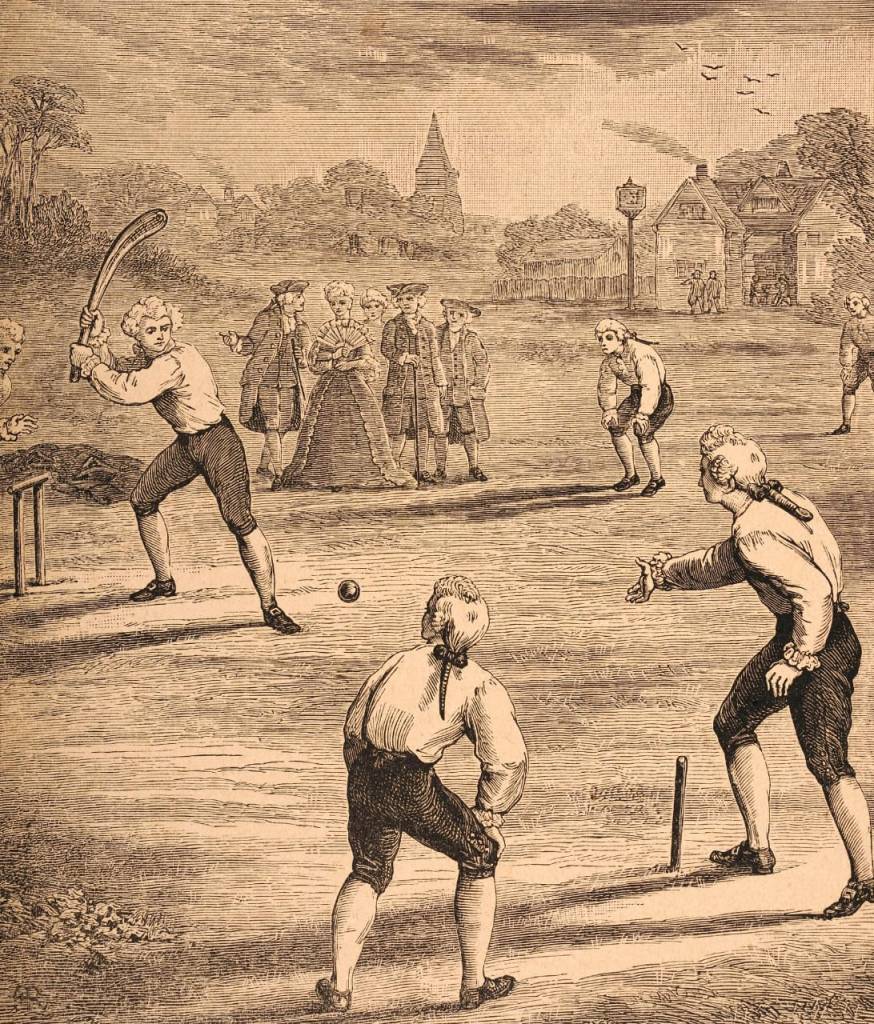
There is a consensus of expert opinion that cricket may have been invented during Saxon or Norman times by children living in the Weald, an area of dense woodlands and clearings in south-east England. The first reference to cricket being played as an adult sport was in 1611, and in the same year, a dictionary defined cricket as a boys’ game. There is also the thought that cricket may have derived from bowls, by the intervention of a batsman trying to stop the ball from reaching its target by hitting it away.

Village cricket had developed by the middle of the 17th century and the first English “county teams” were formed in the second half of the century, as “local experts” from village cricket were employed as the earliest professionals. The first known game in which the teams use county names is in 1709.

In the first half of the 18th Century cricket established itself as a leading sport in London and the south-eastern counties of England. Its spread was limited by the constraints of travel, but it was slowly gaining popularity in other parts of England and Women’s Cricket dates back to the 1745, when the first known match was played in Surrey.

In 1744, the first Laws of Cricket were written and subsequently amended in 1774, when innovations such as lbw, a 3rd stump, – the middle stump and a maximum bat width were added. The codes were drawn up by the “Star and Garter Club” whose members ultimately founded the famous Marylebone Cricket Club at Lord’s in 1787. MCC immediately became the custodian of the Laws and has made revisions ever since then to the current day.

Rolling the ball along the ground was superseded sometime after 1760 when bowlers began to pitch the ball and in response to that innovation the straight bat replaced the old “hockey-stick” style of bat. The Hambledon Club in Hampshire was the focal point of the game for about thirty years until the formation of MCC and the opening of Lord’s Cricket Ground in 1787.

Cricket was introduced to North America via the English colonies as early as the 17th century, and in the 18th century it arrived in other parts of the globe. It was introduced to the West Indies by colonists and to India by British East India Company mariners. It arrived in Australia almost as soon as colonisation began in 1788 and the sport reached New Zealand and South Africa in the early years of the 19th century.

19th century cricket

The growth of cricket in the mid and late 19th century was assisted by the development of the railway network. For the first time, teams from a long distance apart could play one other without a prohibitively time-consuming journey. Spectators could travel longer distances to matches, increasing the size of crowds. Army units around the Empire had time on their hands, and encouraged the locals so they could have some entertaining competition. Most of the Empire embraced cricket, with the exception of Canada.

In 1864, another bowling revolution resulted in the legalisation of overarm and in the same year Wisden Cricketers’ Almanack was first published. W. G. Grace began his long and influential career at this time, his feats doing much to increase cricket’s popularity. He introduced technical innovations which revolutionised the game, particularly in batting.

20th century cricket

Growth of Test Cricket:

When the Imperial Cricket Conference (as it was originally called) was founded in 1909, only England, Australia and South Africa were members. West Indies (1928), New Zealand (1930) and India (1932) became Test nations before World War II and Pakistan (1952) soon afterwards. The international game grew with several ICC Affiliate Members being appointed and, in the last quarter of the 20th century, three of those became full members: Sri Lanka (1982), Zimbabwe (1992) and Bangladesh (2000). They were followed in the early 21st century by Ireland and Afghanistan (both 2018).

Test cricket remained the sport’s highest level of standard throughout the 20th century but it had its problems, notably in the infamous “Bodyline Series” of 1932–33 when Douglas Jardine’s England used so-called “leg theory” to try and neutralise the run-scoring brilliance of Australia’s Don Bradman.

Analytic and Graphic Technology:

Limited-overs cricket increased television ratings for cricket coverage. Innovative techniques introduced in coverage of limited-over matches were soon adopted for Test coverage. The innovations included presentation of in-depth statistics and graphical analysis, placing miniature cameras in the stumps, multiple usage of cameras to provide shots from several locations around the ground, high-speed photography and computer graphics technology enabling television viewers to study the course of a delivery and help them understand an umpire’s decision.

In 1992, the use of a third umpire to adjudicate run-out appeals with television replays was introduced in the Test series between South Africa and India. The third umpire’s duties have subsequently expanded to include decisions on other aspects of play such as stumpings, catches and boundaries. From 2011, the third umpire was being called upon to moderate review of umpires’ decisions, including LBW, with the aid of virtual-reality tracking technologies (e.g., Hawk-Eye and Hot Spot), though such measures still could not free some disputed decisions from heated controversy.

21st century cricket

In June 2001, the ICC introduced a “Test Championship Table” and, in October 2002, a “One-day International Championship Table”. As indicated by ICC rankings, the various cricket formats have continued to be a major competitive sport in most former British Empire countries, notably the Indian subcontinent, and new participants including the Netherlands. In 2017, the number of countries with full ICC membership was increased to twelve by the addition of Afghanistan and Ireland.

The ICC expanded its development programme, aiming to produce more national teams capable of competing at the various formats. Development efforts are focused on African and Asian nations, and on the United States. In 2004, the ICC Intercontinental Cup brought first-class cricket to 12 nations, mostly for the first time. Cricket’s newest innovation is Twenty20, essentially an evening entertainment. It has so far enjoyed enormous popularity and has attracted large attendances at matches as well as good TV audience ratings. The inaugural ICC Twenty20 World Cup tournament was held in 2007. The formation of Twenty20 leagues in India – the unofficial Indian Cricket League, which started in 2007, and the official Indian Premier League, starting in 2008 – raised much speculation in the cricketing press about their effect on the future of cricket.

Indian Railways ran the life-giving “Oxygen Express” on the rail track

OVERVIEW :-

COVID-19 is one of the most disastrous epidemic in the last 100 years. It has killed millions of people and ruined the lives of many people. It has destroyed more or less many families around the globe. Millions of jobs lost and there is a sudden rise in unemployment throughout the world. Whether a developed country or not, all have suffered equally in this pandemic.
Besides all these, it is posting new threats every day. New variants of this pandemic are reported regularly. These variants affect people in different ways. Even the medical facilities get exhausted very quickly. This was the similar case of India. In the 2nd wave of COVID-19, India saw a sudden increase in the requirement of Liquid Medical Oxygen (LMO) for Covid positive patients. India never felt the requirement of that much amount of LMO previously. Due to this, India was left with the shortage of transport facilities to transport LMO from oxygen-generating plants to hospitals as these plants were far away from hospitals. Even the time required to transport LMO by road was quite high.
In this situation, Indian Railways stood up and decided to run “Oxygen Express” to the states were there was acute shortage of LMO.

“OXYGEN EXPRESS” LOADED WITH TANKERS FILLED WITH LMO

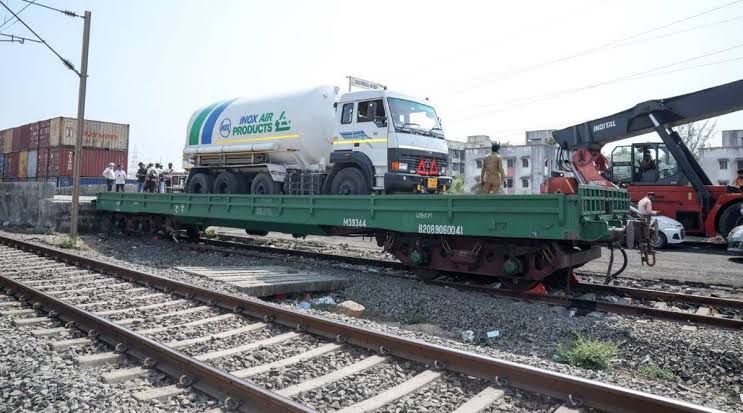
The first “Oxygen Express” ran by Indian Railways was on 20th April 2021 loaded with LMO carrying tankers from Vizag. But the process of running “Oxygen Express” was not so easy for railways as this idea was first of its kind and was not tried before.

DIFFICULTIES FACED DURING THE PROCESS OF RUNNING “OXYGEN EXPRESS” :-

  • Indian Railways had no prior experience of running this kind of “Oxygen Express” anytime before.
  • The height of the tankers loaded on oxygen express was more as compared to rail coaches. This also created a major problem.
  • “Due to restrictions of height of Road Over Bridges (ROBs) and Over Head Equipment (OHE) at certain locations, out of the various specifications of road tankers, the model of road tanker T 1618 with height of 3320 mm was found feasible to be placed on flat wagons (DBKM) with height of 1290 mm,” the release by Indian Railways added.
TRAILS WERE CONDUCTED BEFORE RUNNING “OXYGEN EXPRESS”
  • “It was decided that the tankers would be organized by Transport Commissioner, Maharashtra. These empty tankers would be moved from Kalamboli/Boisar, Railway stations in and near Mumbai, and sent to Vizag and Jamshedpur/Rourkela/Bokaro, for loading of liquid medical oxygen tankers from there ,”said a railway official after a meeting held on 17th April, 2021.
  • Before running of the first official “Oxygen Express” on 20th April, trial runs were conducted on railway tracks to check whether it is possible to run “Oxygen Express” on track or not. After the railway officials were satisfied and the trials were successful only then the permission to run “Oxygen Express” was given.

CONCLUSION :-

“Oxygen Express” ran as per the priority basis that means where LMO requirement was more and availability was quite less then “Oxygen Express” was allotted to that state. A total of 313 Oxygen Express trains run by Indian Railways have delivered 21,392 metric tonnes (MT) of liquid medical oxygen across the country. In this way, Indian Railways came out as the saviour of millions of lives in India by its great initiative to run “Oxygen Express”.

Links :-

EDUCATIONAL TECHNOLOGY: AN OVERVIEW

Educational technology is a field of study that investigates the process of analyzing, designing, developing, implementing, and evaluating the instructional environment and learning materials in order to improve teaching and learning. it is important to keep in mind that the purpose of educational technology is to improve education. we must define the goals and needs of education first and then we use all our knowledge, including technology, to design the most effective learning environment for students. instructional technology can also be seen as a process of solving educational problems and concerns, which might include motivation, discipline, drop-out-rate, school violence basic skills, critical thinking, and the whole list of educational concerns. first the problem is identified an analysis of the factors of the problem is made, and possible solutions to the problem are presented. then, the student population and the curriculum are analyzed. the next step is to select the most appropriate instructional strategies for the particular situation. next instructional materials and resources are selected that are suitable for the curriculum and the mode of instruction chosen. finally the program is implemented, evaluated, and revised as needed in order to meet the stated goals for school improvement.

The learning materials today have greatly expanded because of the various technological advances. Instructional materials include more conventional materials, such as the black board, overhead projectors, televisions, VCRs, overhead projectors, slide projectors, and opaque projectors, as well as newer materials, such as the computer, various software applications, LCD projectors, camcorders, digital cameras, scanners, the internet, the satellite, interactive T.V, audio and video conferencing, artificial intelligence, and so on. The issue of what this materials are and how to use them is a first step. But we must quickly begin to discuss how these materials should be used and how they affect the curriculum and instruction in our schools. Technology can be used to perpetuate teacher-led, knowledge-based learning approach or it can be used to help us implement a student-centered, constructivist, and progressive approach. We need to help teachers to understand the bigger picture of technology can revolutionize education. Remember in all of these areas of educational technology that the goal of improving a specific aspect of teaching and learning comes first. Technology is selected to help us meet these goals.

SOFTWARE TYPES: Drill and practice, tutorials of computer based instruction, and simulations. Teachers need to know what these are as well as why, when, and how to incorporate them into their teaching

EQUIPMENT USE: Digital camera, scanner, camcorder, CD writer, computer, modern, printer, VCR, LCD projector, laser-disk player. Teachers need to know how to use them and how they can be used in a classroom.

AUDIO AND VIDEO CONFERENCING: Understand what these are and how to incorporate them into educational process. Understand various teaching materials that best utilize these tools. Understand how these can affect how we learn.

CLASSROOM CONFIGURATIONS: How to best equip and utilize technology in the classroom. How to use the technology in the classroom. Classrooms need multimedia technology in each classroom. Teachers need to be able to quickly use this equipment and access software when needed.

WEB PAGES: How to create web pages, how to use them in their teaching, and why they should use them. Web pages can have many functions for displaying information and creating student interaction. Web pages can also be used for helping students be more independent learners.

SOFTWARE REVIEW AND EVALUATION: How to select appropriate software for specific grade levels and content areas, how to evaluate effectiveness of this software, and what types of software’s are available. Teachers need to be thoroughly familiar with many of the software options available and understand when and how to use them in the classroom.

NEW SOFTWARE AND HARDWARE: Teachers need to keep up with what types of instructional materials and tools that are being developed and how these new materials might be useful to them as teachers. They need to learn how to use these new materials and how to incorporate them into their teaching.

5 Indian Food Famous in the World

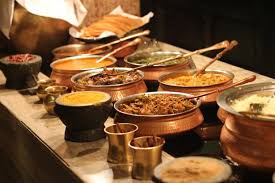
When it comes to food no-one can forget Indian food. Indian foods can be sour, sweet, spicy & tangy altogether. There is no particularity in Indian cuisine as every state of India has its own food cuisine . India is known for its spicy and sweet foods.  If you want to savour that taste of Indian quizzing then these 5 foods mentioned below must be in your bucket list .

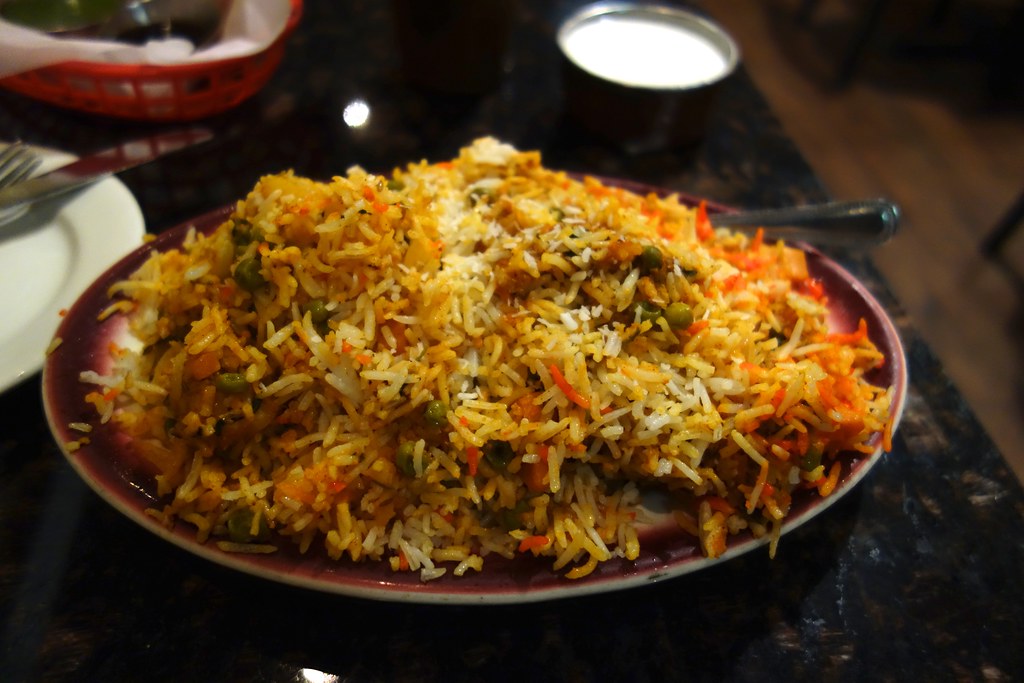
  • BIRIYANI
    1. BIRIYANI : It is the most famous food in India . Wherever you go you will be able to see its existence from restaurants to small food stalls on the roadside of India. This food first came to India by Mughals. It is a rice dish with meat and egg and potato pieces with flavour for spices and Saffron mix .There are also various type of biriyani like veg biriyani (With no meat and full of vegetables) , mutton biriyani ( as the meat pieces) ,Chicken biriyani (Chicken meat is added) , bamboo biriyani ( cooked in the piece of bamboo)  etc.  You can also see the variation in the Biryani in the different states of India like Hyderabadi Biriyani, Lucknowi Biriyani, Kolkata biriyani etc. Among all of them Hyderabadi Biriyani is the most famous for its flavour fullness and spiciness .Biriyani is also served with curd salad or Raita .
    GOLGAPPA /PANIPURI/FUUKA

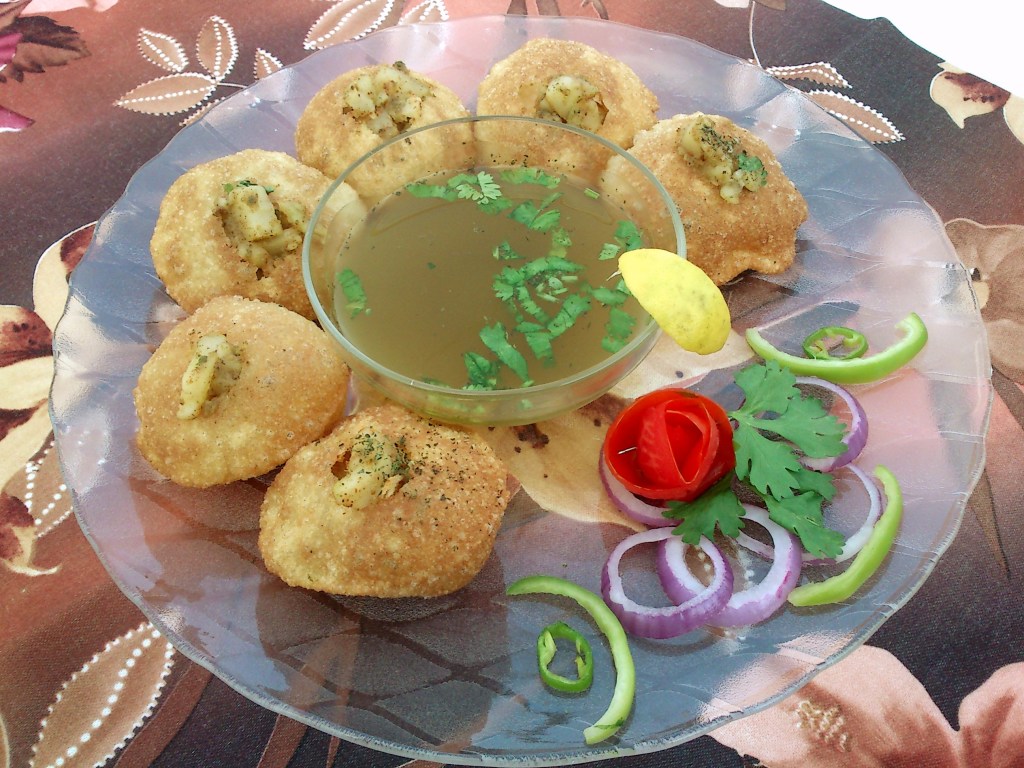
    2. GOLGAPPA /PANIPURI/FUUKA :It is a famous street food in India and you will be able to see it in every corner of India .Even nowadays it is served in restaurants .Golgappa is made of three ingredients —–

    1.  Crispy ball made of Suji
    2.  A spicy aloo/potato filling
    3.  a spicy , tangy and sour water 

                 The spicy potato filling is put inside the crispy balls and then it is filled with the sour flavoured water .This water was made of tamarind or pudina with spices. You can also see the dahi-golgappa which is filled with curd or dahi and some chutney .

    RASGULLA

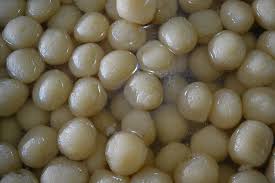
             3.RASGULLA : It is a famous sweet dessert of India . Rasgulla is a sponge like ball with which is immersed in sweet sugar liquid or chashni .Its origin is West Bengal and Orissa .The Rasgulla is made from paneer are Indian cottage cheese (a milk product) which is mixed with some suji and flour and later this mixture is drained of its containing water by special Muslin cloths .Then it is given a shape of ball and dipped in the sugar liquid or chashni . This sweet is white coloured . Some other types of sweets are also made from rasgulla .

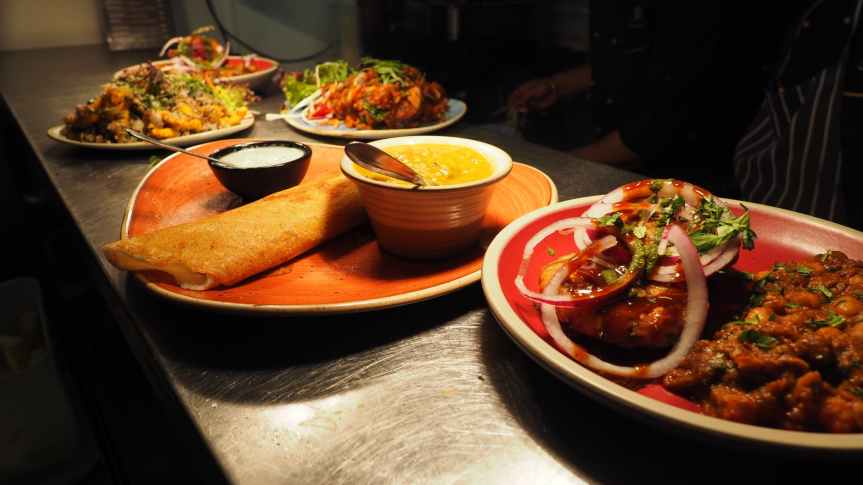
    MASALA DOSA

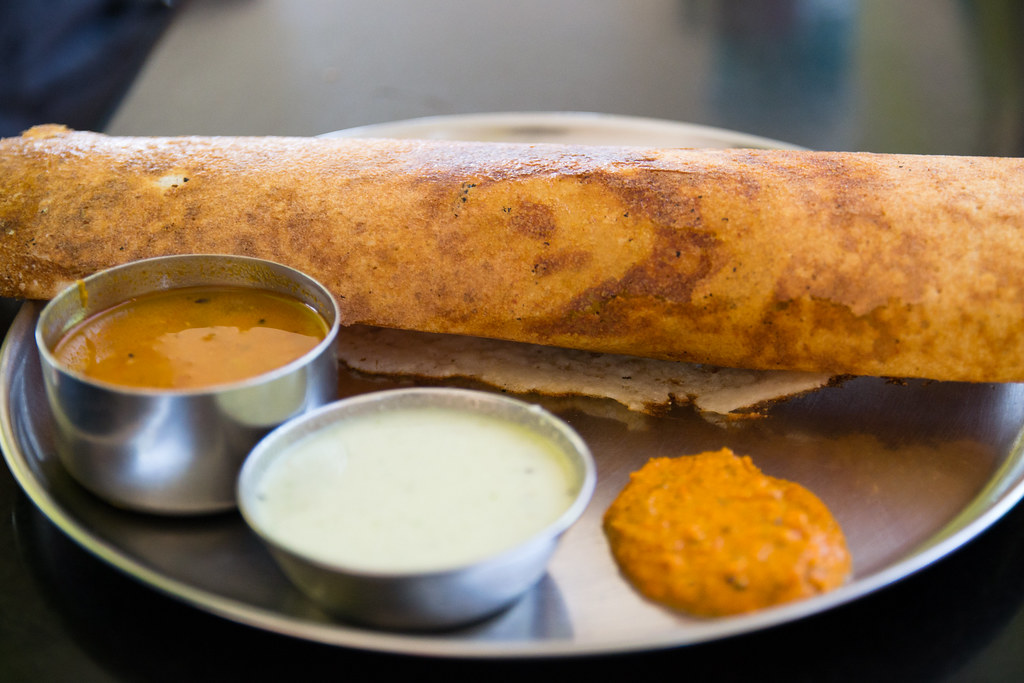
           4)MASALA DOSA : Dosa is a South Indian traditional dish . there are two parts in masala dosa —-

    1. A pancake / roti which is made from a thin batter of rice and black lentils flour . 
    2. A spicy potato and vegetable filling in the middle of the pancake  .  

     It is originally served with a coconut chutney and sambar which is one type of vegetable Dal or soup . There are also various types of dosa like paneer dosa (made of paneer filling), chicken 65 dosa ( ‘chicken 65’ Is a chicken dish which acts as a filling in dosa) and paper dosa etc.

    SAMOSA

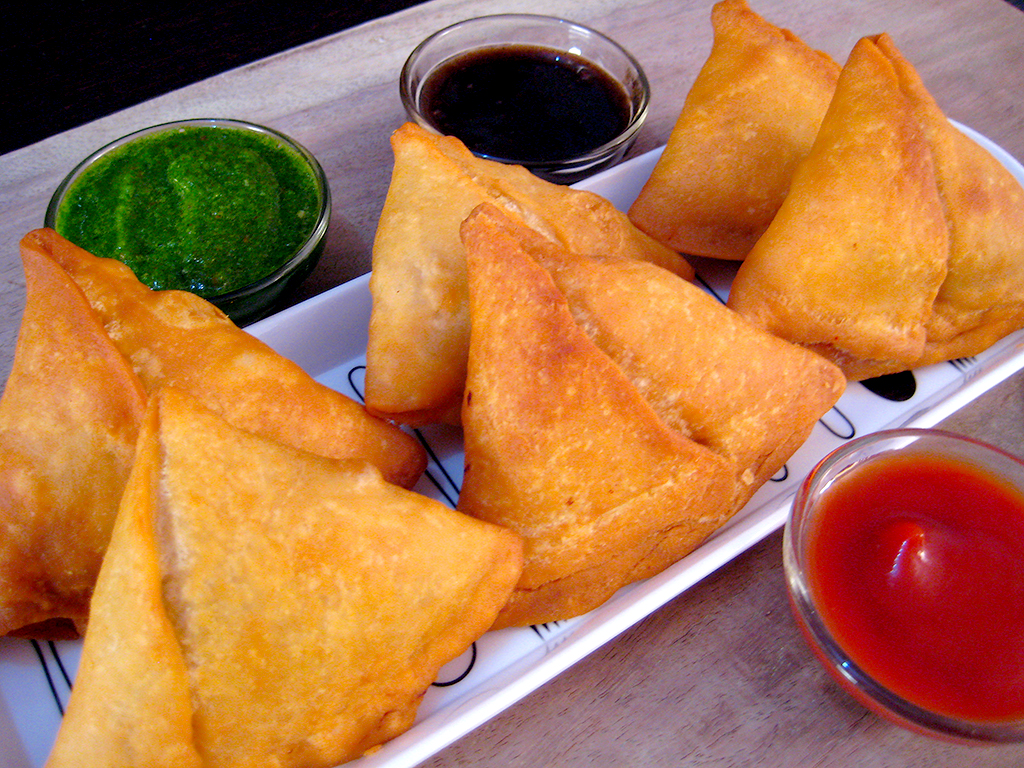
    5) SAMOSA :  it is one of the most famous street foods in India. It also have two parts —

    1. Outside a Crispy dough which is made of maida and deep fried in oil .
    2.  soft and spicy potato onion filling inside 

     It also has a unique conic shape . This food was also introduced to India by Mughal.  Paneer Samosa (filled with paneer), chicken Samosa (filled with chicken), noodle Samosa (filled with noodles) are various types of samosa with different stuffing . It is usually only served with sour sweet chutney or tomato sauce .

    Education in the present

    Education is very important in every individual’s life as it is very important for the living. The person who is educated will be well treated by the society and will you have good potential wherever he or she goes. Education as the extra energy to the individual’s life and a moles the individuals character into a good one. It is very important to be educated as the competition in the world is comparatively very high.

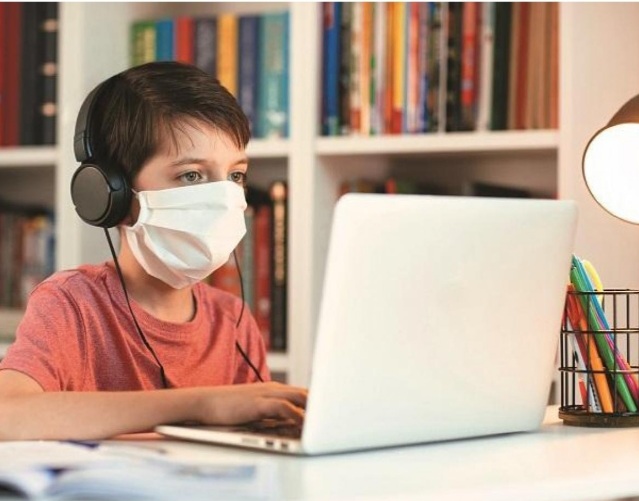
    Online classes are the greatest and the biggest task to all the students. It is so difficult for all the students to understand the topics in a detailed manner. Even though the students try their level best to understand the topics during the online class, it is only the 50% of learning but the topics are not understood properly but the students and face lots of difficulties.

    It is also equal difficult to conduct exams to all mine because it’s exams are connected through online then there is a chance formal practices. Basically, students commit malpractices during exams in a view to get good marks but not about the knowledge. So,many of the students commit malpractices.

    Ways to improve the education system

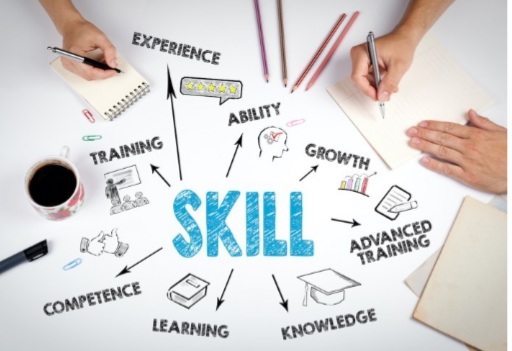
    * skill – based learning :

    As of now , the education system is such that everyone is forced to study science and math. If this system can be revamped to identify the strengths of a student, then they can be given appropriate training in the chosen field. This will ensure that the child shines in that particular field.

    * Rural Education :

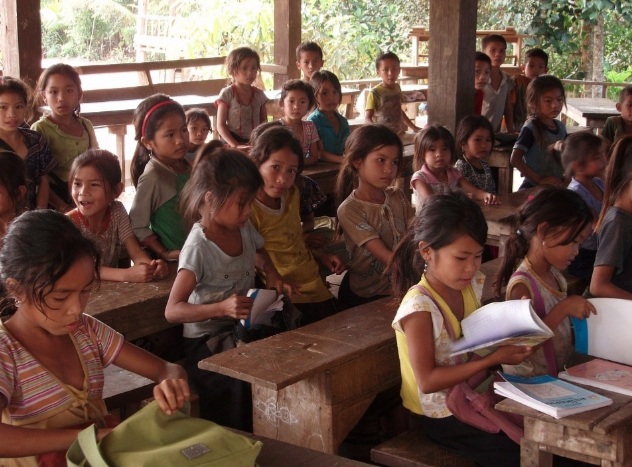
    As the sad thing about the Indian education system is the fact that its focus is only on urban clusters. There are hardly any decent centres of learning in the rural areas. This is especially true in terms of higher education. If a country has to actually develop, urban and rural development have to go hand in hand.

    * Gender Neutral Education :

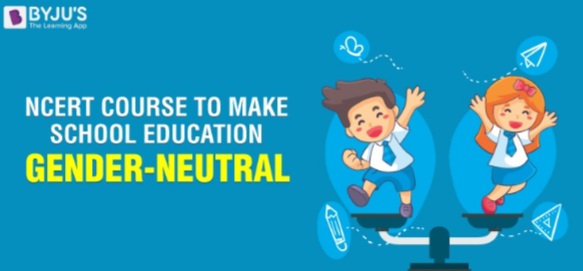
    The education system has always favoured men over the fairer sex. The major change that must be brought about is to involve women in the same. Particularly subjects that are now considered to be the strength of men alone ( like carpentry, engineering, etc). Should be made more accessible to women. Pioneer women in these fileds should be given due encouragement and appreciation.

    * Teacher Training :

    India has a very good quality of dedicated teachers. However, the sad fact here is the fact that after they join this service, they receive little or no training. In such a situation, giving them periodic training will not just ensure that they are updated with the changing times, but will also improve the entire education scene of the country by leaps and bounds.

    * Infrastructure :

    As in every other sector, the indian education sector is one that suffers from the acute death of infrastructure. Most of the government schools do not even have proper chairs, tables, restrooms, let alone a playground, libraries and laboratories. Thus ,the first step in revamping the education scene in the country should begin with improving the infrastructure so that the students are given an evironment where they can learn to the best of their abilities.

    * subsidising professional courses :

    It is a sad reality that many meritorious students are not able to afford professional corses because of the sheer expense involved in the same. This is all the way truer in case of students from the general category who do not have access to many scholarships. In such a situation subsidising the cost professional education will ensure that the same is within the reach of deserving students from the lower and lower middle class strata of the Indian society.

    * Basic computing In Rural Areas :

    On one hand , India is a land of IT giants; on the other, rural India is completely digitally ill- equipped, in a sitiation like this, the first change that the education system must bring forward is to start free computing classes for skill development in rural areas. Only then will rural Indian move in the same pace as that of the urban Digital India and the country embark on the journey of development.

    * Make sports compulsory :

    One of the main reasons for the alarming rise in suicide amongst students in the country is the fact that they cannot handle stress. That in turn is because they are subjected to too much mental pressure. By making sports compusory it can be ensured that all the students indulge in some sort of some physical activity. This will lead to their mind performance better and enable them to grasp their theory lessons well.

    * Educate parents :

    Most of the times it is seen that the children’s woes centre atound that of their parents. In the Indian scenerio, parents are the ones who force their wards into a career they do not like. As a result students do not excel and upon failing to meet their parents expectations, they suffer from a number of mental health issues. To prevent such a thing from happening, the first step that must be taken is to educate the parents about the different carrer options that are available to the students and the possible scope of future in them.

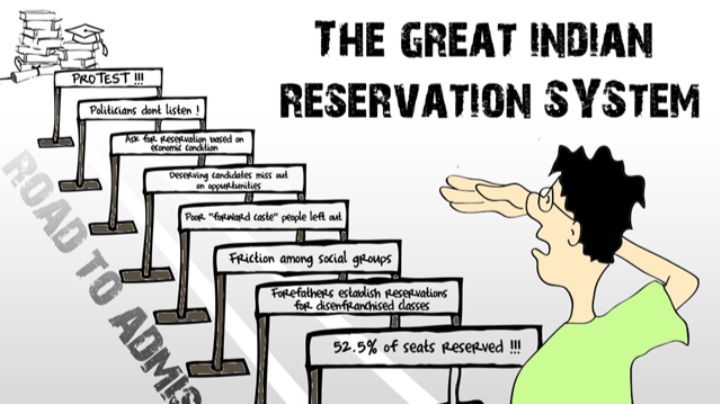
    * Remove The Reservation system :

    The reservation system in India has been so obsessed with providing the best of opportunities to the reserved that it misses out on many opportunities for the ones who actually deserve the same. This results in not just personal loss for certain people but also brain drain for the entire country and fosters a massive loss to the nation’s economy.

    Today’s education system may be good to score marks, but fails to retain the knowledge once students have completed their examinations. This leads to young minds being stifled at an age when they should be asking questions, learning and gaining knowledge, and developing a thirst for more knowledge.

    CYBER CRIME : CLASSIFICATION AND IMPACTS

    INTRODUCTION

    Cyber ​​crime can be termed as illegal use of the internet and computers. Computers can be victims of crime or be used as a criminal weapon. This crime has become a regular part of our daily lives. Every day one person or another becomes a victim of cyber crime. The Internet is accessed by many people at the same time for various purposes, and these hackers are making a way out of these opportunities.

    TYPES OF CYBER CRIME

    1)Identity theft – This involves obtaining personal information about the user by sending unsolicited emails or by using a criminal website to steal sensitive information similar to an authorized website.
    2)Identity Theft – This involves obtaining information about credit or debit cards or banking details, some unwanted payments can be easily deducted after hacking.
    3)Malware Attack – Malware is a malicious software designed to damage computers or systems. This is done to gain credible information or to commit certain crimes through the system.
    4)ATM Fraud – The ATM machine has been completely stolen in this case. Criminals have developed a way to access all the information on the card and pin, continuously succeeding in duplicating the cards and using the same to withdraw money.
    5)Cyber ​​Stalking – A criminal is involved in tracking that person through online actions. They can even send malware to damage systems to get specific information. Includes user abuse.
    6)Pornography – The act of introducing a sexual activity containing a video, through sexual websites.
    7)Download – In this case, the email was received and appears to be from a real source, but it is not the same. It’s broken.
    8)Criminal crime – Unauthorized access to confidential information. Many times when government websites are hacked and corrupted files contain important information.

    AWARNESS

    1)Strong passwords should be used. Password should be complex, you might guess.
    2)Use antivirus programs to keep the system free of malware.
    3)Continue to update the program.
    4)Be aware of and use the presence of intelligence to prevent identity theft.
    5)Let your children know online, so that they can report any abuse or abuse when they pass.
    6)Keep privacy settings on social media.

    CYBER SECURITY

    Cyber ​​security protects our system, network, devices and programs from malicious software attacks. Illegal data acquisition can therefore be suspended.

    Importance – Information relating to any significant national problem or other data intended for personal use, if shared will create a number of problems. Therefore in the event of a multi-level security test, important data and data can be retained in the leak.

    TYPES OF SECURITY THREATS

    1)Network Security – Protects the network from malware attacks and thus uses a secure network.
    2)Cloud security – Means data protection from cloud resources.
    3)Information security – Helps protect data from unauthorized or illegal access.
    4)End User Safety – User should be aware of when installing any external devices in the system, opening any emails or links.
    5)Application security – helps keep the system and software safe.

    CONCLUSION

    Cyber ​​crime is spreading its arms day by day. The safest way to avoid becoming a victim of its ill effects is to follow safety precautions. There are various ways in which we can protect our confidential information from being disclosed. We should always focus on awareness as – ‘Prevention is better than cure’, especially if there is no cure.