The Income Tax Department has busted the medical seat business in Karnataka carried out by ‘medical colleges’ in which they offered seats to NEET unqualified or NEET qualified candidates with low score for higher package/fees. Evidence has been found that these institutions have made more than Rs 400 crore in the name of capitation fees.
Category: News
Comprehensive, up-to-date news coverage, aggregated from sources all over the world by EduindexNews.
Medical seat business in Karnataka for 'medical colleges'
The Income Tax Department has busted the medical seat business in Karnataka carried out by ‘medical colleges’ in which they offered seats to NEET unqualified or NEET qualified candidates with low score for higher package/fees. Evidence has been found that these institutions have made more than Rs 400 crore in the name of capitation fees.
What are the farm laws?
Everywhere in the news, there are different refrains about the protests and opinions for and against the new farm laws. But what exactly are these laws and how do they change the status quo? These laws are: The Farmers’ Produce Trade and Commerce (Promotion and Facilitation) Act, The Farmers (Empowerment and Protection) Agreement of Price Assurance and Farm Services Act, and The Essential Commodities (Amendment) Act. They were passed in June as ordinances before being approved by Parliament during the Monsoon Session by a voice vote.
The Farmers (Empowerment and Protection) Agreement of Price Assurance and Farm Services Act allows farmers to do contract farming and market their produces freely. Some think it will result in the wage slavery of farmers but others think it will increase investment in the agricultural sector.
The Essential Commodities (Amendment) Act is an amendment to the existing Essential Commodities Act. This law freed items such as food grains, pulses, edible oils and onion for trade except in extraordinary situations. As such, it is not as contentious as the previous 2 laws.
The main grouse of the protesting farmers with these laws, especially the first one, is the lack of an MSP (minimum standard price) assurance. They believe they will suffer because of big businesses reducing prices after monopolizing the markets. However, the people that oppose this idea believe that the MSP system is inefficient and only results in wastage. Only time can tell who will win this battle of ideas and what will happen to the agricultural sector.
Women have the right to register a complaint against harassment even after decades
Former Union Minister M.J. Akbar has received a setback in the criminal defamation suit against Priya Ramani, a journalist who accused of him sexual harassment, when Delhi Court acquitted Ramani on Wednesday. Dismissing Akbar’s plea, the court said that a woman who has been tortured has the right to register a complaint even after decades. The court said that women who raise their voice against such crimes cannot be punished. Akbar alleged that Ramani’s tweet during the #me_too campaign has defamed him.
Wealth Creation through Equity Investing
Submit your book chapter for publication in this book to
Random Acts of Kindness
Humanity has gone down a downward slope over the recent years because of the growth of consumerism and capitalist selfishness. Being considerate of the welfare of others is almost an anomaly, especially in urban environments where the concepts of privacy and individualism have eroded the natural human instinct to care for fellow human beings.
In such a scenario, we must take it upon ourselves to be kind to others and to not let our lives turn into a crude competition of self-service. Every act, every gentle word and every tangible contribution to someone else’s life with no desire for self-enrichment is a way to regain the lost selfless character of humanity.
This random acts of kindness day, we should all pledge to go out of our way to aid our fellow human beings in any way we can. This can be done through helping our someone with their work, donating to the underprivileged, helping an old woman cross the street and so many other ways! Even the smallest contribution to someone else’s life will not just enrich their life but have a softening impact on our own character. To do so is a favor towards humanity and to ourselves.
CRUDE OIL PRICES IN INDIA
Today, the world is suffering from many unexpected problems. These problems includes corona virus pandemic, poverty, voilence in many subjects and rise in prices in almost every item.
WHEN THE ‘TOOLKIT’ BECOMES THE TOOL
In light of the recent ‘Farmer’s protest toolkit controversy’, a 22-year-old environmental activist from Bengaluru, Disha Ravi has been arrested by the Delhi police on Sunday 14th February 2021. She is now under five-day police custody as the Delhi Magistrate decided to remand her following the arrest. She has been booked under Indian Penal Code Sections 124(a) for sedition, 153(a) for promoting enmity between different sections of the society and 120(b) for criminal conspiracy. She is accused of involvement in the composition of the “toolkit”, an online document shared by the International environmental activist Greta Thunberg, which consists of action plans to protest against the farm bill. Police claimed that the toolkit had the violence on 26th January as one of its “action plans” to protest against the farm bill, in addition to the pro-Khalistani elements.
Since last October, thousands of farmers have been camping on the national capital borders, protesting against the three newly passed farm laws introduced by the NDA government. On the republic day, the tractor rally conducted by the protesting farmers has resulted in great commotion as the farmers attempted to enter the national capital region, storming the Red Fort complex and clashing with the police and security forces. The police allege that plans for such actions were formulated in the online document, described as a “toolkit” that Ravi created and shared with Thunberg. “The main aim of the toolkit was to create misinformation and disaffection against the lawfully enacted government,” said a police official. “The toolkit sought to artificially amplify the fake news through various tweets which they have created in the form of a tweet bank. The document that they drafted had secessionist and pro-Khalistani content embedded into it through links and texts” he added.
The arrest of Disha has instigated furious criticism against the fascist actions of the government regarding the farmers protest. The efforts made by the government to silence and oppress the voice of the farmers and the people supporting them is more of a provocative manner than a call for peace.
Objectionable content of over-the-top (O.T.T.) platforms, misusing artistic freedom
The Supreme Court has asked the central government what steps will be taken to curb the objectionable content of over-the-top (OTT) platforms such as Netflix, Amazon Prime and Alt Balaji. The apex court on Tuesday asked the government to file an affidavit in six weeks.
Adult content, foul language and anti-national ideology are some areas where Indians do not agree with the online curated content.
Out of the concerned, most (25 percent) are worried about the fact that adult content is easily accessible to children.
As many as 63 percent of respondents feel that some kind of censorship or at least a code of conduct approved by the government is the need of the hour.
last year.
INDIA PAID TRIBUTE TO THE VALIANT MARTYRS OF PULWAMA ATTACK
It’s been two years since the Pulwama terror attack which took the lives of 40 Indian soldiers happened. The 14th of February leaves a deep sigh in the hearts of every patriotic Indian. It is one of the worst hit attacks and is remembered as a ‘ black day’ in the history of India. While paying his tributes to the Pulwama martyrs on the occasion of the second anniversary of the attack, Prime minister Narendra Modi said: “No Indian can forget this day. Two years ago, the PulwamaAttack happened. We pay homage to all the martyrs we lost in that attack. We are proud of our security forces. Their bravery will continue to inspire generations”.
The gruesome incident which shook the whole nation took place on 14th February 2019 after the security convoy of 78 buses carrying around 2500 military personnels of the Indian Army was rammed by an IED-laden vehicle while traveling from Jammu to Srinagar. Investigations have revealed that the car which rammed the convoy was driven by a 22 year old suicide bomber Adil Ahmad Dar and carried nearly 300 Kgs of explosives including 80 Kgs of RDX and ammonium nitrate. The attack which took the lives of 40 CRPF jawans was later claimed by the Pakistan based terrorist group named Jaish-e-Mohammed (JeM). Even though the investigation agency was able to confirm the identity of the suicide bomber through DNA samples, they are yet to trace the source of the explosives used.
Along with the Prime Minister, many Senior officers of the various armed forces of the country also participated in the remembrance and paid tribute to the valiant heroes of the nation. “Did not Forgive, will not Forget: Salute to our brothers who made the supreme sacrifice for the nation in #PulwamaAttack. Indebted, we stand with the families of our valiant Bravehearts,” the force said in a Twitter post.
Memories- Are they real or is your brain playing tricks on you?

All of us are aware of the tricks our memory plays on us in our lives. Like the time when you spend the whole night before exam cramming information from your textbooks and when you try to remember your mind goes blank. Or when you remember the most embarrassing event that happened to you but nobody else remembers it. Some people remember the smallest things that happened in the past while the others cannot remember any of those things. Ever had an argument with a friend when they forgot your birthday, when you never fail to wish them every year. Well it’s not all their fault. Our memory is partly at fault.
The study of memory is a fascinating field and researchers have reported many new phenomena which show the dynamic nature of human memory. Here are some interesting types of memories-
False memories-
Did you know that you cannot trust all of memories? False memory is an interesting phenomenon that is induced by powerful imagination of an event that did not even take place at all. Research suggests that memory can be induced and implanted through inflation of imagination.
Flashbulb memories-
There are memories of some events that are very surprising. Such memories are very detailed, they are like a photo from a camera that are stored in our brain and you can take a look at it whenever you want. They are like images tied to a particular time, place and date.
Autobiographical memories-
These are personal memories. Kind of like our Facebook timeline, they are not evenly spread across our lives. Some periods of our lives produce more memories than others. For e.g. In early childhood especially during the first 4-5 years, we have no memories related to those years, it is also known as childhood amnesia. After that there is a dramatic increase in the frequency of the memories i.e. during the twenties. Around 30 years of age, there is a decline in certain kinds of memories.
Implicit Memories-
This is the kind of memory that a person is not aware of. It is a memory that is stored automatically. For e.g. One interesting example of implicit memory comes from typing, if someone knows typing that means they also knows the particular letters on the keyboards.
Repressed memories-
Some individuals undergo traumatic experiences. Memories of those events are hurtful, such memories are repressed into the unconscious. It is a kind of repression- painful, threatening and embarrassing memories are held out of consciousness.
Forgetfulness or loss of memories under stress and high anxiety is not uncommon.
But we can still improve our memories by using some techniques such as chunking (learning in several small chunks that are combined to form large chunks) and by deeply analyzing a particular piece of information makes it easier to remember it.
Innovative Ideas
If you get an innovative idea
Then try to work on it as soon as possible
Because after some time after deep thinking, when you will think to do it,
An inside worm full of demotivation/negativity will take birth inside you which try its best to stop you from doing it.
So, don’t think much
Do it now.
– Sahaj Sabharwal
-Jammu city,
Jammu and Kashmir, India.
Follow-: @sahajsabharwal & @sahajsabharwalwriting
Facebook-: https://www.facebook.com/SahajSabharwalWriter
Twitter-: https://www.twitter.com/Sahaj_Sabharwal
Instagram-: https://www.instagram.com/sahajsabharwal

.
.
.
World' fastest vaccination campaign is underway in India
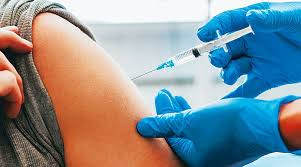
The country’s largest corona vaccination campaign is underway. The Union Health Ministry said that a total of 75 lakh people have been vaccinated in the country till Friday, the 27th day of the vaccination campaign. Out of this, 58.14,976 health workers and 16,90,034 Front line workers are included.
Why vaccination is important?
Vaccines can help limit the spread of antibiotic resistance.
The global increase in disease caused by drug-resistant bacteria, due to overuse and misuse of antibiotics, is a major public health concern. Vaccinating humans and animals is a very effective way to stop them from getting infected and thereby preventing the need for antibiotics.
Making better use of existing vaccines and developing new vaccines are important ways to tackle antibiotic resistance and reduce preventable illness and deaths.
According to the ministry, a total of 1,54,370 sessions of immunization have been completed across the country so far. Immunization campaign is fastest in India. On 11th February, a total of 4.5 lakh people were vaccinated. This includes 1,09,748 health workers and 3,78,148 front line workers.The corona virus is seen to be dying with speed in the corona vaccination campaign, according to the report released by the Union Health Ministry on Friday, 9309 cases were reported in the last 24 hours across the country, this is the third time in February when less than ten thousand cases were reported.
According to the Health Ministry, there were seven days in February when the daily death rate from Corona has been less than 100. There was no death reported from corona in 18 states and union territories of the country in the last 24 hours.
More than 20% of India’s underground water found contaminated with arsenic: IIT Kharagpur

More than 25 crore people of our nation are being forced to drink water contaminated with arsenic.
In a study carried out by IIT Kharagpur using an AI (Artificial Intelligence) based inference model it was found that the poisonous substance arsenic was present in more than 20% of the country’s underground water.
According to the estimates made by a few government and non-government organizations it was found that a large percent of the total population is being affected by the contamination. With the increasing water pollution, we need to take strict measures when it comes to collecting water samples from different regions and studying it for more chemical contamination.
According to the Assistant Professor Abhijit Mukherjee of IIT Kharagpur, it was reported that these high arsenic zones are present mostly along the Indus Ganga-Brahmaputra river basin and in the peninsular areas.
Health Effects- According to the World Health Organization, arsenic is highly toxic in inorganic form. Prolonged exposure to consuming contaminated water can cause cancer, skin lesions and other diseases when it reaches the body. It has also been associated with cardiovascular disease and diabetes. Early childhood exposure has been linked to negative impacts on cognitive development and increased deaths in young adults.
Sources of Exposure-
Arsenic is a natural component of the earth’s crust and is widely distributed throughout the environment in the air, water and land. People are exposed to high levels of inorganic arsenic through drinking contaminated water, using contaminated water in food preparation and irrigation of food crops, industrial processes, eating contaminated food.
Dietary Sources– Seafood, Poultry and dairy products contain arsenic although the amount is very low in comparison and arsenic is present in its less toxic organic form.
Industrial Processes– Arsenic is used widely in industries as an alloying agent, in processing of glass, pigments, paper, wood etc., and also in a limited extent in making pesticides and pharmaceuticals.
Smoking tobacco– Tobacco plants can take up arsenic naturally present in soil so people who smoke tobacco are exposed to natural inorganic arsenic.
Prevention and control–
- Substituting high arsenic sources such as groundwater, with low arsenic sources such as rain water and treated surface water.
- Install arsenic removal systems and ensure the appropriate disposal of the removed arsenic. Technologies for removal of arsenic include oxidation, coagulation-precipitation, absorption, ion exchange, and membrane techniques. The most important action in affected communities is the prevention of further exposure to arsenic of a safe water supply.
- Discriminate between high-arsenic and low-arsenic levels and paint tube wells or hand pumps with different colours.
Arsenic is one of WHO’s 10 chemicals of major public health concerns. WHO’s work to reduce arsenic exposure includes setting guideline values, reviewing evidence, and providing risk management recommendations.
Educating others about the dangers and necessities of this problem is crucial and community engagement is important for ensuring successful interventions. There is a need for community members to understand the risks of high arsenic exposure and the sources of arsenic exposure, including the intake of arsenic by crops (e.g. rice) from irrigation water and the intake of arsenic into food from cooking water.


You must be logged in to post a comment.