
Azad Hind Fauj & WWII

The Provisional Government of Free India (or, more simply, Azad Hind) was an Indian Temporary Government created during the Second World War in Japanese occupied Singapore, supported by the Empire of Japan and, in large measure, by it. The government was formed in October 1943.

The provisional government consisted of a cabinet ministry acting in a Subhas Bose advisory committee, who was called ‘Netaji’ and certainly the dominant figure in the interim administration. He practised virtual authoritarian control over the administration and the army. Regarding first war statements released by the government, “the Cabinet was not unanimous in its decision to incorporate the USA. Bose had shown impatience and annoyance-his absolute authority was never at all in any doubt at the time: the Cabinet had no liability and only could provide advice.

BOSE travelled to Tokyo at the end of Oct., 1943 as an observer to the Greater East Asia Co-Prosperity-Sphere of Japan to participate in the Greater East Asia conferences. The conferences were not held as a delegate because India had been legally removed from Japan ‘s concept of Greater East Asia. By the end of the meeting, the government of the Andaman and Nicobar Islands which the Imperial Japan Navy captured earliest in war had been given to Azad Hind.

Military Azad Hind, in the form of the INA had some success against the British, and moved to the city of Imphal in eastern India with the Japanese army. Plans to march towards Delhi, to win support and new recruits, have both been stopped since the moonlight season started and Imphal wasn’t captured. British bombing severely reduced morality and the Japanese started their withdrawal from India along with INA forces.

Besides the losses of the INA, in the winter of 1944–1945, the troops left to protect Rangoon without the help of the Japanese faced a daunting challenge. In order to be field commander, Loganathan was transferred to the Andaman Islands. In the absence of any other police force or military force during the time between Japanese departure and arrival of the British, the INA garrison was approximately 6,000 strong and occupied the Burmese capital. He was effective in holding law and order to the degree that during the duration of 24 April to 4 May 1945, there was no single case of dacoity or pillaging recorded.

Almost all the Provisional Government territory was situated in the Andaman Islands while some control over Indian enclaves in Japanese occupied territories was authorised by the Provisional Government. The provisional civilian government has never been named in INA occupied areas; instead it has been controlled by Japanese military authority and shared by the Japanese and Indian forces, responsibility for the management of the occupied areas of India.

The INA was left without support from the Japanese to defend[citation required] Rangoon against British advance. The government of Azad Hind, which had formed in the Andaman and the Nicobar Insels, collapsed when the island’s guards, Japanese and Indian, were defeated and the islands were recovered. Bose was suggested to leave Burma to begin its fight for Indian independence. Bose himself was supposedly killed in a crash from Taiwan to avoid Russia. With the deaths of the Axis, the INA and Bose vanishing in 1945, the provisional government of Free India ceased to exist.

The soldiers who controlled the Indian National Army brigades were captured by the British as prisoners of war. A number of these inmates, including Colonel Gurbaksh Singh Dhillon, were brought to India and convicted by British courts for trace.

Clement Attlee, who was British Prime Minister during India’s Independence, represents the true degree to which the INA ‘s actions affected the decision to quit India. Attlee cites many factors, including the INA operations of Subhas Chandra Bose, which undermined the very base in India of the British Empire, and the Royal Indian Navy Mutiny, which led the British to recognise that Indian army support could not be relied on.
Self-love

I’m not being sexist but this concept of self love must have been introduced by women, because when I see men, I don’t find these type of words really exist for them. And see now it’s like in the air. Actually, men get inspired by women but they don’t accept because of male ego or whatever. But,  action speaks more then words, na!

Hello there, how was your day? Don’t get me wrong but I’m asking you to ask yourself this question everyday before the day gets over. It is also a kind of self love, and when you will be able to answer this question to yourself in a very elaborating manner then you will start getting yourself better. In starting it can be little fussy but as the time passes you will learn it’s importance and will also able to see it’s impact on you.

Now a days, people thinks that everything a particular person do, should also be able to defend there own doing in the world. Like, if I’m doing something which is even though not good for me or the society, but, to save me from everyone else i should be able to defend my doing. And this is bullshit. Soon you will start doing whatever you want no matter it’s good or bad when you are ready to defend it. This is not self loving, it is self manipulation. And there’s a huge difference between them.

Self love is like accepting yourself, your own habits with its flaws. It is never to defend your flaws. If you keep defending you flaws you will be heading towards wrong way. You can never be someone who can be admired in the same society where you are trying to be cool and loveable just by putting yourself as priority.

Knowing yourself means accepting and evolving yourself. The better you know your flaws is the better you get with it. I Don’t say that defending yourself from the outer world is not good but everytime is not good. It’s always you who knows the real intention behind doing any work. So, if you keep your good intentions it will be you get benefits of it and if you are not then it will also be you who will face the conciquences.

So, try to improvise yourself by facing the real you in personal because that’s what self love means.

See yaa..

First Covid-19 vaccine to be available in India by early 2021, says health ministry

As the world races to develop a potential vaccine against coronavirus (Covid-19), the Ministry of Health and Family Welfare on Monday said that the first vaccine in India will most likely be available by early 2021.null

The health ministry said the research to develop a Covid-19 vaccine is being “done expeditiously”.

During a media briefing, Union health minister Dr Harsh Vardhan said, “Research to develop a vaccine is being done expeditiously. There ar at least 3 viable such vaccine candidates that are in the phase of clinical trials right now in the country. We’re hopeful that within 1st quarter of 2021 it will be available”, as quoted by ANI.

With a spike of 82,170 new coronavirus cases in last 24 hours, India’s Covid-19 tally crossed the 60-lakh mark on Monday, according to the data provided by health ministry.

The health ministry on Monday also released the 100-year timeline history of the Indian Council of Medical Research (ICMR) .

“Today’s a historic day for ICMR. It’s an honour for me to release the 100-year timeline of the history of ICMR within its premises today. The contribution of scientists associated with it is commemorated and serves as an inspiration to upcoming scientists,” Dr Vardhan told media.

Relevance of Vocational Education in India


Vocational education primarily deals with skill developmentaimed at increasing the employability of an individual. It is also known as Career and Technical Education (CTE) and as Vocational Education and Training (TVET). In consists of several practical courses that help people in building skills and experience which would be directly beneficial in a certain career path. In times of economic crisis, such as now, unemployment rises exponentially. In such a scenario where uncertainty looms over the youth’s future, vocational education serves as a safety net for many. While some vocational courses are offered at secondary and senior secondary levels in school, vocational education primarily takes place in post-secondary and college level. A 2019 report by the World Bank highlighted the importance of vocational education as a means for workers to compete in changing labour markets. 

The labour market is evolving at a fast speed, and with most employers now demand knowledge of practical skills from their workers. Enrolling in vocational courses would not only benefit those who wish to add certain skills to their resume, but also to those individuals who wish to start earning as soon as possible. In a country as fraught with economic inequalities as India, many out-of-school adults wish to start earning as soon as possible. For a majority of India’s youth, mainstream education after grade twelve serves little purpose. They wish to learn skills that would guarantee employment in a short time, primarily because of a lack of resources that could fund higher education. There is, however, another demographic that stands to gain from vocational education. Individuals who are clear about their career path can take up skill-centric courses that would contribute to their training for a prospective job. For instance, those who wish to pursue a career in flying may directly enrol in aviation programmes without pursuing an academic degree. 

The government of India recognises the role of education and skill-development in economic growth. As a result, several institutions across India are either partially or wholly funded by the Central government and various State governments. Industrial Training Institutes or ITIs offer full-time vocational courses, and they are provided recognition and certification by the Ministry of Labour, Government of India. Some several colleges and universities also offer part-time vocational courses, sometimes through distance learning. However, the government needs to streamline the courses offered by various national and state-level institutions for the youth to become more compatible with the existing job market. The critical elements of existing vocational training programs need to be modified even as these programs are made more flexible to accommodate the dynamic labour market which is vulnerable to changes due to forces of globalisation acting upon it. Issues specific to the Indian context also need to be taken up, such as high drop-out rate, lack of partnerships with the private sector, untrained and underqualified teaching faculty and red-tapism. In addition to this, the focus should be there on building an accessible channel of continuous skill up-gradation so that the workforce could update its skills and not become obsolete after the passage of some time.

Azad Hind Fauj & its Establishment

The Provisional Government of Free India (or, more simply, Azad Hind) was an Indian Temporary Government created during the Second World War in Japanese occupied Singapore, supported by the Empire of Japan and, in large measure, by it. The government was formed in October 1943.

It became part of an outside Indian nationalist movement in the 1940s in order to ally with Axis forces to free India from the British government. It was set up in exile with financial, military and political support from Imperial Japan during the latter part of the Second World War in Singapore. Created on October 21 1943, Subha Chandra Bose was influenced by the idea of government and the head of state. In southeast Asian British Colonial territory, the government declared control over Indian civil and military staff in Japan and the Indian National Army to collapse on the Japanese drive towards India.

The Azad Hind Government had its own currency, court and civil code and gave greater credibility to the war for independence against the British, in the eyes of some Indians. In 1943, the Japanese occupying Andaman and Nicobar Islands also handed over nominees to Japan, while the government remained dependent on support from Japan.

Free India declared war on the Indo-Burma Front immediately following the establishment of the provisional government. His army, the Indian National Army, was engaged in the Imphal-Kohima sector with the British Indian Army and allied forces. The INA had its first major operation at the imphal war, where it violated the British defences at Kohima under the command of the Japanese Fiveth Army until the Allies suffered a disastrous defeat and Allied air superiority, as well as compromised supply lines force the Japanese and the INA to retire. The INA was the first to make a major effort to fight Imphal.

Azad Hind ‘s presence coincided primarily with the Indian National Army’s presence. Although the government itself continued to reassume the competence of the British before the end of the war before the civil administration of the Andaman Islands, the small force of Azad Hind actually came to an end with the surrender of the latest major INA troops in the area of Rangoon. Bose ‘s death is seen as the culmination of the whole movement of Azad Hin.

Azad Hind ‘s legacy is however subject to judgement. The Raj saw the transformation from traitors and allies of Azad Hind ‘s view into “the strongest of the patriots” with alarm after the battle. Given the wave of militant nationalism which was sweeping through India and the sorrow and rebellion it inspired, the overall purpose of the British Indian Army was ultimately successful in fostering popular frustration and rebellion in order to overthrow the Raj.

Two conferences of Indian expatriates from across South East Asia can be associated with the direct roots of Azad Hind, the first one taking place in Tokyo in March 1942. The Indian Independence League was formed as a first step towards an independent Indian state that is politically allied with the Empire of Japan, in the course of this conference called by Rash Behari Bose, an Indian expatriate living in Japan. Rash also moved to establish a kind of army of independence that helped push British people from India – later on the Indian National Army. Later that year, Subhas Chandra Bose was invited to participate in the League Leadership at a second conference in Bangkok. At the time, Bose stayed in Germany and went on the submarine to Japan.

Rash Behari Bose, who was already old when the League was formed, had trouble organising the League and failed to obtain resources to create the Nazi Army. As president of the Indian Independence League, Chandra Bose was replaced by Subhas. There is some debate as to whether he has stepped down through his volition or by the Japanese, whose involvement the Indian nationalists wanted to become more strong and centred.

In a bid to bring British citizens out of the grasp of the sub-continent, Bose arrived in Tokyo on 13 June 1943 and announced his intent to launch an attack against eastern India provinces. Bose arrived in Singapore on 2 July and formally declared in October 1943 that the Provisional Government of Free India would be formed. Subha declared: “This is the duty of the temporary administration to begin and lead the fight to expel the British and their allies from the south of India,” describing the tasks of this new political base. With the assistance of Japanese, Bose formally took command of Rash Bose, the demoralised and undermined Indian National Army. He recruited Indian civilians living in South-East Asia occupied by Japanese, and integrated numerous Indian soldiers from British forces into INA brigades in Singapore, Malaya and Hong Kong.

A cabinet headed by the Subhas Chandra Bose as head of state, the prime minister, the minister for war and foreign affairs consists of the Provisional Government of Free India.

The Minister in Charge of the Women’s Organization was Captain Dr Lakshmi Swaminadhan. She was the head of a Rani Jhansi Battalion, a women’s soldier brigade fighting for the Indian National Armed Forces. This women’s regiment was very visionary for a regular Asian army; it was the first of its kind in the world. Before she gave up her practise in leadership of the Jhansi Regiment Rani troops, Dr Lakshmi was one of the most prominent and active gynaecologists in Singapore.

Bengal Colleges to reopen in Nov, govt may ask UGC to delay academic year

West Bengal schools, West Bengal schools open, West Bengal colleges, West Bengal colleges open, India news, Indian Express
Partha Chatterjee: West Bengal Education Minister

The new academic session of both undergraduate (UG) and postgraduate (PG) colleges and universities in West Bengal will begin from December 1. The decision came after a meeting between Vice-Chancellors of state universities and West Bengal Higher Education Minister Partha Chatterjee on Sunday.

Education Minister Partha Chatterjee said that the reason they are planning to start the new academic session in December is because host of festivals that are lined up in November including Lakshmi puja, Kali puja/Diwali, Chhat puja, Jagaddhatri puja etc. 

Chatterjee said, “As we need to sanitise the institution premises before starting the academic session in full course, we have to take into account the four-five festive days when no work will be possible. So it will be in the fitness of things to start the new sessions from December.”

He said since most universities have already adopted online teaching for the mid semester courses and providing course materials to students who don’t have online facilities, starting the new session won’t be hopefully of much problem.

“Still whether the classes will be entirely online or there will also be offline mode of teaching will depend on the situation at that time,” the minister added.

While admissions to UG courses will be over by October 31, the admission procedure in PG courses will be completed only by the end of November.

The education minister said his department would write to the University Grants Commission (UGC), asking it to allow the state to start the new academic year from December.

In a notice on September 22, the UGC said the admission process for UG first-year students would have to be completed by October 31, and classes should resume on November 1.

Meanwhile, sources said the universities decided to reserve 80 per cent of seats in PG courses for students who completed their graduation in an affiliated college, or in the institute itself. The decision was taken because of the Covid-19 pandemic, and curbs in transport. As a result, many graduates may find it difficult to pursue higher studies in institutions outside the state.

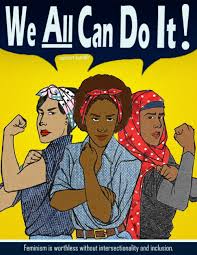
Women and their struggles in this society.

Turning the pages of History or looking into the present scenario, Women of the society have always struggled. At every stage of life they have to prove their worth. They have always been dominated by this male chauvinism or the unjust rituals or expectations. The voice of a woman is always dominated. This society never gives a second thought before blaming a women or giving her a character certificate, they judge the book by it’s cover. They have a set of rules for the woman. According to this society wearing short clothes is the reason for molestation. “It must be the fault of the woman” is their direct statement and they do not even consider of giving it a second thought before speaking. There are times when a woman wants to get a divorce or leave her husband’s house for reason but she does not because the social stigma is not allowing her to do so.

When Maa Sita was also required to prove her purity because the society had put allegations on her than what do we expect for the ordinary women in this society. In the past there were practices like Sati Pratha which were against the will of a woman but she had to do it because that is what the world asks for. A woman has to speak in a soft voice , has to remain in the kitchen , is a burden after 20 so marry with anybody good or bad but what matters is that she is married. Education was the last thing on the priority list of her parents or family because according to them it was of no use. She is objectified and nobody says a thing. Although the things have changed a lot from the past to now. Now women are getting opportunities same as men. They are proving their worth and are less than nobody. But still there are parts of the country where this does not happen. Especially in the rural counterpart, the women have still not get rights of education or are victims of early marraige.

If a woman is a single mother or a divorcee she is treated as inferior or there are certain stereotypes that come along with her. The taunts and the ill sayings are always ready for her. This is the reason a lot of women compromise in places they never should. But they are so affected psychologically that they are frightened to take the right decision for herself. The belief that it is necessary for a child to have a father’s names is also something that holds her back. It should never be like this. Be it any gender treating them equally is very important. When somebody is in pain or not in the right situation she/he should feel protected. They should be supported by this society as well as their family and friends. The problems of mental health is the reason because people only speak and do nothing. Empty vessels make much noise apt for them. Posting on social media is of no use until you practice what you preach.

It is high time that we start treating our Women with dignity. We stop judging them and start supporting them. Yes things have changed a lot from the past but to make it The Best in the upcoming future let’s stand with them. They need nothing. Nobody is as powerful as a woman. She just needs her social status to meet her self esteem needs. We have already seen women are doing great in their fields, and they will continue to do so. Women empowerment is all it is.

The story of women’s struggle for equality belongs to no single feminist nor to any one organization but to the collective efforts of all who care about human rights. – Gloria Steinem.

CORONA & EDUCATION

We all have been through this pandemic, It is very difficult for all of us to concentrate on our work. Our lives were going through a hard time until we all decided to put ourselves out of these difficult situation and fought against it together. In this time where all people are going through hard time our educational system is going through a miserable period. Because of the lockdown student cannot go to schools, colleges, and coachings etc. Their studies were completely in unstable conditions like 3-4 months, eventually some schools and colleges started video classes. Their carriers may worsened for worse. In India, broadly there are 3 types of students.

  1. UPPER CLASS STUDENTS : By this pandemic all lives are going through a miserable situation but there is always less and more. In this pandemic financial stability is very important. The rates of market products went high that everyone cannot afford to buy it. But high class people have good amount of money and resources, so difficulties are so less. Good amount of money is not the solution of all their problems but financial stability reduces their problems to greater extent. Students can take online classes because they have resources and besides that they have good environment a healthiest one.
  2. MIDDLE CLASS STUDENTS : This includes students who can afford things to some extent. Their parents have already a budget problem and this pandemic worsened the situation. Most people lost their jobs in this pandemic and have to do other jobs to fulfill their basic needs. Sometimes students have to quit their studies and have to do jobs for their basic requirements. In this class some students do have facilities some do not have the facilities. Because of the pandemic most of the students suffer through a mental problems like overthinking, depression, anxiety, etc.
  3. LOWER CLASS STUDENTS : In this class, students have to struggle the most, because of the lack of both financial stability and opportunities. During the lockdown most of the people lost their jobs. Students have to sell vegetables and other products to get some money for food. And there is no healthy environment for lives and they don’t have any equipment’s to study. They can only afford to go to government schools. In home also their parents or elder siblings are not educated to so they also can’t learn from them.

This pandemic has thrown several challenges which have impacted the mental health of the students as well. But on plus side, the aim of Government of India to make Indian educated a digital platform is taking a big leap which will eventually help India.

Your time is not passing!? Here are some Web series for you!

We all know ow how everyone go mad at web series and that too in lockdown where there is no work to do, our time obviously doesn’t pass. Here are some web series, which became very popular. This would be a li ely timepass for everyone.

On the wings of love

This is a Filipino web series. The cast in On The Wings Of Love are James Reid and Nadine Lustre. This is a love story with including family sentiments. In this web series both the hero and heroine will have mother sentiment and they both are very responsible towards their family. They know that they love each other but cannot admit that due to some family reasons. Do their live remains like that, will they go apart or stay together is the story. There is superb and lovely chemistry between hero and heroine. Actually, this is not web series, this is a Filipino TV Series. This web series is available in YouTube. You will definitely enjoy and involve with their emotion.

Till I met you

This is a Filipino web series. The cast in Till I Met You are James Reid and Nadine Lustre. Here, the families of hero and heroine will have some issues. Hero is a photographer and heroine is a event manager. Unfortunately, they both fall in love. However, they both will get married after facing lot of struggles to make their families happy for their marriage. But, they also face lot and lot of problems in their married life. Both of their thoughts will be opposite. The hero is a bit emotional, heroine is a bit practical. Did they breakup their relationship or proved their relationship? You have to watch the series to know this. This series is available on YouTube.

Put your head on my shoulder

This is a Chinese web series. Here the hero is a perfect student we can give him Mr. Perfect title. The girl is little emotional. The girl will be looking for an internship in advertising industry and the boy will be in a research. There will be a common friend for them. One day, they gotta meet and they’ll come to know that they are relatives. The girl’s mother will have a good impression on the boy and will be looking forward to make him as her son-in-law. The same impression will be on that girl also for boy’s parents also. One day, they come to know that they have to stay in same flat!! And the things change after that. Do watch this, very beautiful, emotional and romantic live story. This series is available on YouTube.

Boy for rent

Yes! In this series, there will be a company that give boys for rent. We will have two couples, but at the end of the series, the girls for the boys will be interchanged. What is the role of “Boy for rent” In this? Watch the series and know!! This is a little emotional, romantic series. This series is available on YouTube.

My little princess

As the title says, we will have a princess in the series. There will be a big hidden story behind her princess status which brings her lot of troubles in her love life and in her family life. The story of her overcoming those troubles is very emotional. This series is available on YouTube.

People have to come forward for saving the Earth

Article by – Shishir Tripathi

Intern at Hariyali Foundation
In collaboration with
Educational News

Day after day, the planet is proceeding to fall into the ocean of destruction. Each day factories are releasing poisonous smoke and harmful effluents in the nature. As it is said there is pre defined limit of everything, nature too has a limit to accept destruction and degradation of the environment. The day is coming nearer and nearer when the nature will revert back with the same intensity in the form of natural disasters and human beings will not be in a state to do anything.

Each day a new factory opens up. Each day, each firm tries to increase its production as compared to the previous day. Each day millions of litres of water in the rivers and other water bodies gets polluted by industrial and domestic waste. But everyone is so engrossed into earning money and increasing GDP and profit that human beings have assumed that they’re owners of the natural resources or environment. Human beings should realize that they are part of nature, they’ve to live their lives being just a responsible organism and go away. But in the mean process of making money and wealth people forgot that nature is suffering and natural resources being limited in amount will end up one day.

Almost 80.6 million cars are sold each year all across the world. Cars and automobiles use fuel (which is again limited in amount in nature) and release harmful gases into the air like Carbon Monoxide (CO), nitrogen oxides, hydrocarbons and many more. Each year the number of automobiles on roads is increasing, and due to which more harmful gases are released in nature, hence more pollution.

Between 1990 and 2016, the world lost 502,000 square miles (1.3 million square kilometers) of forest, according to the World Bank—an area larger than South Africa. Since humans started cutting down forests, 46 percent of trees have been felled, according to a 2015 study in the journal Nature. Millions of hectares of forests are clearing up each year by things like deforestation, forest fires, etc. But readers, when it comes to plantation, people turn back and are with no answers. Each year in India, government employees have to plant a sapling and take care of it, but the sapling is given water and care only till the plantation is captured in the camera. After that, nobody cares about the plant, the tree whether it gets dried because of shortage of water or gets eaten upon by cattle. Forest cover is reducing resulting in excess heating of the atmosphere, climate change and lesser oxygen which is the lifeline of every living organism.

Another aspect is population growth. The 2016 average of 18.6 births per 1,000 total populations equates to approximately 4.3 births per second or about 256 births per minute for the world. Births are taking place at an increased rate and resources are limited for the survival of the upcoming generations. The uncurbed and heavy usage of natural resources is going to leave the reserves of natural resources to be empty. The future generations have to face excessive climate change and have to starve even for getting water and food grains. Each day, the load on natural resources is increasing. The goal of sustainable development is just achieved maybe in figures or news. But in reality people are exploiting the nature at an aggregate level altogether just in the name of growth but actually satisfying their greed.

Greed to earn more, to own more.

But yes everyone wants more and more from nature, but never want to give anything to the nature. Some great people came, started successful campaigns for nature and went away. But now a generation is left which wants all the credit and all the popularity even after doing just a small noble deed for nature and its organisms. People just want to extract everything from nature and want to get the attention by clicking a picture sitting beside a small sapling showing plantation or standing with plastic showing cleanliness campaign.

Each human being should realize their responsibility towards nature. Economists say that inflow or the imports must be equal to the outflow or the exports, and then only equilibrium can be established. Similarly, whatever is taken from nature, it must be returned back to the nature in the same or even greater amounts. Mentioning all the environment saving techniques is not worthy as till the time people will not realize their participation in saving nature and building a good planet, no list of techniques and no piece of writing will be able to move them and get concerned for the nature.

Attempts to save nature at an individual level will soon turn out to be major attempts at aggregate level that will be helping to save the earth and the leaving a much better planet for survival of the future generations.

The author expects that all the readers of this article, being a sensible and responsible human being, should realize the need for saving the nature, for saving the Earth.

Music: An Underrated Stress Buster!…

I was going through some tough time these days. I felt like drowning in anxiety and overthinking. I didn’t even tell anyone about it.
One day I got so much lost in anxiety that I had to tell it to my best friend. He was talking with me, trying to convince and comfort me but it didn’t help. Meanwhile, a song from the movie ” Dear Zindagi ” was playing inside my head. I waited for a while and then opened my music application and played that song. I was listening to music after a very long time. With my headphones on, I was listening to music. On one side, my friend was convincing me and on the other, I was listening to music. After some time, I was feeling a bit calm and relaxed. Music helped to burst my stress.
I used to be an active music listener. But these days, I got stuck in life issues so much which took me away from music. Stress has become a major part of life. To counter with it, I even begin to meditate. But now I feel only meditation won’t help, music also needs to be there.
We must have heard from many that meditation can help you to relieve the stress. It is absolutely true that meditation, deep breathing exercises help you to stay calm and reduce anxiety. But now after coming back again to music, I feel the music is very much underrated. Soothing music can help you heal. Music has the power to change your mood. It can bring you from a state of anxiety to the state of peace. So what measures do we need to take when we feel anxious? Firstly you need to meditate and go through a deep breathing exercise. After that, you should go through your playlist and play the songs you love for a long time. But you need to play only soothing songs as they can only calm you down. One more thing, listening to music with headphones on will create a major impact. Headphones make you stay there to listen to music. It will prevent your mind from wandering towards negative emotions. These small things can help you a lot to maintain the peace. Give it a try!…

Online vs offline shopping.

Shopping trends have changed from last couple of years . People mostly in metro cities and urban areas prefer shopping online from ease and comfort oof their home. Nobody likes to go out in scorching heat, pollution and irritating traffic and roam around 10 shops to get best deals. That is the reason people mostly in urban areas do shopping online at a click and the order is dispatched. Nowadyas online shopping is having a very large spectrum it is no more confined to apparel and footwears , almost every product of daily need and even electronic products are also available online.

With the emergence of E commerce and online shopping. Small shopkeepers and offline stores are facing problems .It is getting hard for them to attract more and more customers to their shops. Thanks to god that India is an overpopulated country because of which India is huge market and every business has a great customer base to target.on . like online shopping, offline shopping has it’s own advantages like there’s no chance of fraud or cheating, you can check the product own your own, you can easily approach to the shopkeeper in any difficulty, after sales service is good in offline shopping, you can negotiate on price. These advantages you won’t get in online shopping.

So which one is the best? Which one should we choose? it completely depends on what product you want to buy and the source you are buying from. If you are shopping online make sure it is trusted source and return policies. If you are buying TV, mobile or laptop I would recommend you to enquire prices on online and offline both and if there’s not much difference then go for offline. Otherwise for buying Garments, shoes or groceries online shopping is good.

Delegation of Ladakhi veteran leaders met Union Home Minister, Shri Amit Shah

A delegation of Ladakhi veteran leaders, Venerable Thiksay Rinpoche (former MP/RS), Shri Thupstan Chhewang (former MP/LS) and Shri Chhering Dorje @ Lakrook (former Minister, J & K), on behalf of the people of Leh, Ladakh, met with the Union Home Minister, Sh. Amit Shah on September 26, 2020. Shri G. Kishan Reddy, MOS Home and Shri Kiren Rijiju, MOS Youth Affairs & Sports were also present during the meeting.

The delegation was assured that all issues related to language, demography, ethnicity, land and jobs will be considered positively/ taken care of. A dialogue between a larger Ladakhi delegation comprising of representatives from Leh and Kargil Districts under the aegis of “Peoples Movement for Constitutional safeguard under VIth Schedule” and Union Home Ministry would commence after 15 days of the culmination of LAHDC, Leh elections. Any decision so reached in this connection would be in consultation with the representatives from Leh and Kargil.

Union Home Minister assured the delegation that Government of India is committed to empower the LAHDC of Leh and Kargil and would safeguard interests of the people of the UT of Ladakh. It would explore all avenues towards this objective.

The Government of India is open to discuss protection available under the 6th Schedule of Constitution of India while looking into issues related to Ladakhi people.

The delegation has agreed to withdraw it’s call for the boycott of the ensuing LAHDC, Leh elections and promised it’s wholesome support to the smooth conduct of these elections.

PM lauds farmers of India

In his Mann ki Baat address, Prime Minister Shri Narendra Modi said that during the COVID crisis, the farmers of the country have shown tremendous resilience.

Prime Minister said that if the agriculture sector is strong, then the foundation of Atmanirbhar Bharat will remain strong.  He noted that in the recent past, the sector has liberated from many restrictions and has tried to break free from many myths. He shared the example of Shri Kanwar Chauhan, a farmer from Haryana, who used to face great difficulties in marketing his fruits and vegetables outside the mandi, but in 2014, fruits and vegetables were excluded from the APMC Act, which greatly benefited him. He formed a Farmer Producer’s Organization and farmers in his village now cultivate sweet corn and baby corn and supply produce directly to Azadpur Mandi in Delhi, to big retail chains and Five Star Hotels, which has substantially boosted their income. Prime Minister underlined that these farmers have the power to sell their fruits and vegetables, anywhere and to anyone, which is the foundation of their progress, and now the same has been imparted to farmers all over the country, for the entire spectrum of their produce.

Prime Minister also cited the benefits accruing to farmers due to exclusion of fruits and vegetables from APMC purview by sharing the example of Sri Swami Samarth Farm Producer Company Limited – a Farmer Producer’s Organization in Maharashtra. He noted that farmers in Pune and Mumbai are running weekly markets themselves and selling directly without middlemen. He also talked about Tamil Nadu Banana farmer produce company, a collective of farmers, which purchased hundreds of metric tons of vegetables, fruits and bananas from nearby villages during the lockdown, and supplied a vegetable combo kit to Chennai. He mentioned the ‘Irada Farmer Producer’ group from Lucknow who, during the lockdown, procured fruits and vegetables directly from the cultivators’ fields, and sold directly in the markets of Lucknow, free from the middlemen.

Prime Minister noted that through innovations and application of new techniques, agriculture will progress further. He cited the example of Ismail Bhai, a farmer from Gujarat, who took up farming despite being discouraged by his family. He cultivated potatoes using drip irrigation technology – the high quality potatoes are now his hallmark, which he sells directly to large companies without middlemen, and earns huge profits. Prime Minister also shared the story of Ms. Bijay Shanti from Manipur who launched a start-up to develop thread from the Lotus stem, and noted that her efforts and innovations have opened new avenues in the fields of lotus farming and textile.