1. DECIDE A PARTICULAR NICHE OR SERVICE THAT YOU WANT TO OFFER.
Decide exactly what you will offer. It’s helpful when you have a clearly defined service such as logo design, web design, etc. the clients know clearly what you can offer to them.
2. CREATE YOUR PORTFOLIO
Having a good portfolio of your niche creates a positive impact on your clients and it looks professional. You can either make your own website or there are various other platforms online available to build your portfolio. While approaching a client always give them the links to your portfolio
3. FIND YOUR FIRST CLIENT
Use your existing network to find your first client. Talk to your friends, family, relatives and ask them if anybody needed such kind of services. And if you get any client, after completing their projects you can ask them to recommend you to others.
4. GIVE YOUR BEST TO EACH AND EVERY CLIENT
Quality work is the most effective way to increase your business. It’s essential to do the best job you can so clients will recommend you to others. Doing amazing work will also lead to repeat clients that keep coming back to you.
Yes! You heard it right, international Model United Nations is offering an Official Campus Ambassador Internship at IMUN.
What is IMUN?
International MUN is recognized by the United Nations & has hosted MUN conferences in 5 different countries in the last 3 years i.e in Thailand, Vietnam, Egypt, China & Malaysia.
About IMUN internship?
5 weeks work from home internship with official internship certificate, letter of recommendation and many more. 5 weeks internship program that enables you to learn organisation management, International diplomacy and everything related to the world of United Nations. In this internship period every intern have to promote IMUN and IMUN Conferences through your social media accounts, through your friends.
This internship is a way to understand global issues, interacting with other culture and people.
Great performers receive best of IMUN certificate recognized by United Nations, letter of recommendation, appreciation, incentives, an opportunity to join IMUN team in different countries all sponsored and etc
What will you learn from this internship?
The main question comes in our mind is what new things we will learn from this internship.
Being an intern at IMUN you will learn leadership skills, social media marketing, digital marketing, communication skills, public speaking skills, networking and many more. Interns will also get an certificate after completing the internship, the international certificate from United Nations based on their performance. It will also prepare you for your career and help you to get a good job.
“A lie that is half-truth is the darkest of all lies.” ― Alfred Tennyson
In true sense, the word deception implies ‘make believe’, that is, convincing a person that something exists whereas, in reality, it does not exist. Deception is a simple tool for enticing people and trapping them to believe in something unbelievable. This is an evil that has subsisted among human beings since time immemorial in literature and history we come across several uses of deceptive methods; even in our contemporary world, deception is rampant. In fact, such is the enormity of deception that it is often difficult to distinguish the real from the fake. Consequently, even today we come across reports of how many large corporations, especially related to chit funds, dupe their investors through unrealistic schemes. As a result of their ‘get-rich-quickly schemes lakhs of innocent investors lose their lifelong savings because they are shown the dream of coming out of their miseries but are pushed to the brink of perishing.
Deception is also a major tool used in forging currency notes and other negotiable instruments like cheques and drafts. Governments across the world have introduced many new techniques to ensure that their markets are not flooded by fake currency notes or negotiable instruments but, so far, there has been no fool-proof methodology to prevent the menace. Master criminals always manage to deceive by preparing exact copies of the originals. The same applies for important documents like passports and visas.
With the dawn of online shopping, fraudsters have had a free-run as it is practically easy to dupe people and escape without leaving a trace. People end up paying money for products bought online but never actually receive the goods on many occasions, or even if they do, such goods are either defective or elaborately wrapped empty boxes are provided. Consequently, tracking cyber-criminals is very difficult and the number to solved cases is low.
However, like everything else, even deception is a double-edged weapon: it can be used against a deceitful enemy and so serves as an important military tactic, especially in guerrilla warfare. We have read how Babur, the first Mughal Emperor enticed Ibrahim Lodhi to charge headlong and then fall into the covered trenches on the battlefield or how Chhatrapati Shivaji, the great Maratha warrior, used deception to kill Afzal Khan and harass Aurangzeb. Nobody can ever forget the deception carried out by Mark Antony in inciting the Romans from the Forum to rebel against the conspirators who killed Julius Caesar.
In present day military tactics, elaborate plans are drawn out to combat the enemy. The best-known methodology is to plant spies among them so that delicate information can be easily retrieved and the opponent’s actions can be monitored.
Either Stable burning in various states accrued the air pollution in Delhi and created a gas chamber around NCR ; SC came upon a committee to observe scenario , Or 4 industries inflicting stream pollution were shut down by Maharashtra pollution board . Everybody has responsive to environmental problems as higher than . The key solution for resilience to environmental issues are provided by government in various legislations , enactments and provisions on environment laws .
In republic of India environmental law is concern with the policy and law for protection of the environment . It aims for achieving carbon free economy through taking measures for reducing climate change. All the acts under this laws are safeguards in ensuring effective management of the environment and its multiple ecosystems . It provides for preventing environmental damage .
Natural resources in the earth were unscathed from millions of years. It were remain pure until the industrialized started . After the industrialization this resources have been exploited in Spain of 100 years only . From 19th century, the environment (air , water and land ) is directly exploited by rapidly growing population at alarming-rates.
environment includes water, air and land and the inter-relationship which exists among and between water, air and land, and human beings, other living creatures, plants, microorganisms and property , as mentioned in section 2 of environmental protection Act of 1986 . Environment is a wide sphere , it consists of social, economically , political , religious dimensions .
Addressed area of environmental laws in India :
1. Quality of water : For the prevention and control of water pollution and to maintain or restore wholesomeness of water in the country the water act of 1974 was enacted. It further provides for the establishment of Boards ( CPCB and SPCB ) for the prevention and control of water pollution with a view to carry out the aforesaid purposes. This act prohibits the discharge of pollutants into water bodies beyond a given standard, it also lays down fine and penalties for non-compliance.
2. Reduction of air pollution and maintaining air quality : The Air (Prevention and Control of Pollution) Act, 1981 (the “Air Act”) is an act to provide for the prevention , protection and abatement of air pollution .It provides for establishment of Boards at the Central and State levels with a view to carrying out the aforesaid purposes.
3. Hazardous Waste management : legislations that directly or indirectly deal with hazardous waste management are the Factories Act, 1948, the Public Liability Insurance Act, 1991, the National Environment Tribunal Act, 1995 and rules and notifications under the Environmental Act.
4. Containment cleanup, damage mitigation : preventing future damage to the environment is undeniably the primary objective of environmental law, mitigating and reducing existing damage is also important. This area most often deals with issues like toxic leaks and oil spills. The central objective of this branch of environmental law is deciding liability, planning an appropriate response, and also determining the best process of investigation and monitoring in the overall clean up process. This area also concerns itself with the study and assessment of risk in the long term, to better mitigate any future accidents and risks.
5. Sustainability of resources : United Nations has put great emphasis on ensuring the sustainability of resources. For this vision , it has advocated the formation of various legal principles and legislation. In this regards concept of environmental impact assessment introduced .
Noble legislations and enactments on environment law in India :
Laws on Forest and wild life protection: • The Indian Forest Act, 1927 ; The Wildlife Protection Act, 1972; The Forest (Conservation) Act, 1980 ; The Environment (Protection) Act, 1986; The National Green Tribunal Act, 2010.
Laws on Water pollution : • The Water (Prevention and Control of Pollution) Act, 1974.
Laws on air pollution : • The Air (Prevention and Control of Pollution) Act, 1981 (the “Air Act”)
Laws on hazardous waste management : • Biomedical Waste (Management and Handling) Rules, 1998 ; Municipal Solid Wastes (Management and Handling) Rules, 2000 ; Batteries (Management & Handling) Rules, 2001 ; Hazardous Wastes (Management, Handling and Transboundary) Rules, 2008 ; E – Waste (Management and Handling) Rules, 2011 . Laws on wetlands
•Ramsar convention (1971) : This convention was initiated to push for greater conservation and sustainable use of wetlands ; Wetlands (Conservation and Management) Rules, 2017. Constitutional provisions on environment laws
• Part IVA (Art 51A-Fundamental Duties) of the constitution casts a duty on every citizen of India to protect and improve the natural environment including forests, lakes, rivers and wildlife, and to have compassion for living creatures.
• the Constitution of India under Part IV (Art 48A-Directive Principles of State Policies) stipulates that the State shall endeavour to protect and improve the environment and to safeguard the forests and wildlife of the country.
environment makes human life possible, and our cultural environment helps define who we are. It is therefore essential that our population and economic growth are environmentally sustainable.
In today’s technology driven world, people are turning towards less harmful modes of electricity. For many years now, solar power, hydro power, and wind energy have been the main source of electricity across the globe. But now more advanced technology is known to the world and it is being used to create more effective methods. Scientists and engineers are devising methods to create such sources of energy which will reduce the use of conventional resources furthermore. Solar water pumps are another product of that technology. Many people are already enjoying its benefits. Why aren’t you? Are you searching for the best one? We are here to guide you through the whole of it. At the end of this, you will be able to choose the best solar water pump there is and you can enjoy it too.
What to Look For in a “Solar Water Pump”
Efficiency – Efficiency is the most critical factor to check in the solar water pump. The pump should provide great efficiency to work properly.
Flow rate – Flow rate defines how fast the water will flow through the pump. More the flow rate, the better. You must remember that the ideal instantaneous water flow rate of a pump must be equal to one-third of its daily consumption.
Head – The head of the pump represents the increase in energy accumulated by 1 liter of water. It is also an important factor to consider as it may reduce pressure loss.
Power – The power of the solar water pump should be considered properly. It depends on the conversion of solar energy into electrical energy.
Speed – Speed is the number of revolutions taken by the pump in a specific interval of time. You need to make sure that you have a high speed pump available.
NPSH (Net Positive Suction Head) – Net Positive Suction Head is the main factor to keep in mind while buying a solar water pump. It indicates its inability to create absolute volume.
Raw material – You need to check the raw material used to make the solar water pump. It plays an important role in defining the lifetime of the pump. If the pump is made from weak raw materials, it will not last long and will cost you more for maintenance.
Quality – Quality is the first and most important factor you keep in mind while buying anything so it applies to solar water pumps too. The quality of a pump varies from company to company and is different for different manufacturers.
Size – The size of the pump should also be considered before buying it. It depends on your preference where you want to install the pump or for what purpose you are going to use it.
What do we mean by Solar Water Pump and how does it work?
Solar Water Pumps are also called Solar Photovoltaic Water pumping systems. They are designed like the old, traditional water pumps. But the difference is that they are powered by solar energy instead of fossil fuels.
There are several purposes for using a solar water pump. Some of them are listed below:
For pumping water for livestock
Providing water for farms and residential areas
For pumping water for crops and irrigation
Providing water supply for general need in households
May be used for water treatment
For pumping fluids across a long distance
And of course, sunlight is free and abundant and water is essential for all living beings. So why not put it to use?
Are they worth it over other conventional options?
Yes, the solar water pumps are worth more than the other conventional options. The main reason is that they are more eco-friendly as compared to the fossil fuels burning for electricity.
Should you just DIY a Solar Water Pump
If you want to experiment with your skills and have much free time on your hands, then you can make a DIY solar water pump at your home. Some of the crucial information you will need to do that is given below:
Main Components of Solar Water Pump
Solar Cell Module – Solar power generating device that directly converts solar energy into electrical energy.
Solar Pump Inverter – most important equipment of the photovoltaic system. It controls and regulates the operation of the whole system.
Water pump, pipeline, and reservoir – To pump, deliver and store water
Typical Design ofSolar Water Pump
Model selection process
Confirm head and flow rate of the pump
Confirm solar panel capacity
Confirm the power of the water pump
Confirm the inverter
Selection of cable specification
Obtain user demand – Daily water demands, the diameter of the well, depth of the well, area to irrigate, average sunshine daily in the area.
Some Specifications of Solar Water Pumps
Head: 110m
Flow: 1000/(300*0.8*3.5)= 1.19 m3/h
Pump selection: pump motor power 1.5kW, flow 1.2m3/H, head 115m
1.5KW water pump is equipped with 2.2KW solar pump inverter
The working voltage of the solar pump inverter is 200V-360V.
Steps of Construction
Step 1: Find a perfect location
Before building a solar water pump, the most important requirement is finding a perfect location where you want to lace the water pump. So go on the search right away and get back here to start building your solar water pump.
Step 2: Choose the size
The size of the pump is the main factor to look after while building a solar water pump. It is going to affect the amount of water that can be pulled from a water source. For this, you can use a power cord or simply install a solar panel for reducing any further costs.
Step 3: Assemble the pump
Assembling the main unit of the pump will be a tiresome job. But it can be easily done by following the instruction manual provided to you with the components of the pump. After you are done assembling the pump, move on to the next step.
Step 4: Add the solar panel
Now you are building a solar water pump all by yourself, which means you need to keep a check on your budget. So to ensure that you should install a solar panel instead of a power cord. Choose your solar panel properly. It should be large because you want to absorb as much sunlight as you can. In addition, place it at a proper angle, preferably facing the east or west to absorb light effectively during the day.
After installing the solar panel, attach it to the main unit of the pump so that you don’t have to use a power cord.
Step 5: Cover the pump
The last important step you need to follow is to cover the pump so that it is not visible as it may not look good in the middle of the garden. If you don’t want it as decor then consider hiding it in a corner.
Step 6: Modify the pump
A solar water pump will be a feast to the eyes in the garden. To decorate it you can add some flowers, some tree leaves, or other things you want it to design it with. You can be creative and make an excellent piece of decor for your garden or pool in the backyard.
That’s it. You are done. In just these 6 simple steps you will have a perfect homemade solar water pump. You can use it to decorate your garden or place it in a pool.
Pros and Cons of Solar Water Pumps
If you are not sure how to decide about the solar water pumps, check out the listed advantages and disadvantages of the same. You will get a proper image of what to look for in a solar water pump before buying. These will help to change your mind about your preference or maybe make you sure of what you want.
Advantages
Zero fuel cost – Solar water pumps are powered by solar energy so it does not require fuels to operate. Fuel adds a significant cost to the cost of the whole solar water pump system.
Installation costs only – Once you install the solar water pump system, then it only requires sunlight. That means after installation it is free.
Less labor and maintenance – Solar water pumps require very little labor to operate properly. It also does not require much maintenance. In addition, it reduces the time taken to irrigate the farm.
Environment friendly – They are sustainable and use non conventional energy sources.
Disadvantages
Can’t pump when it’s dark – However great solar water pumps are but they do need sunlight to operate. So this is the biggest disadvantage of them. They can’t operate when it’s dark.
High upfront costs – This may be the reason why it is not much use for the farmers because it is not as easily affordable.
Frequently Asked Questions
Here are some of the important frequently asked questions about solar water pumps.
How does a solar water pump work?
It works like any other water pump. The only difference is that it is operated by sunlight.
What is the use of solar water pumps?
A solar water pump is useful in irrigation for farms and for extracting water from wells and ponds.
What are the different types of solar water pumps?
There are several types of solar water pumps:
Submersible pump
Surface pumps
DC pumps
AC pumps
Can a solar water pump be relocated?
The system once installed can be relocated but it is not recommended. The process is expensive and can cause severe damage to the system.
Cooperatives play an important role in the growth of a country, although they are rarely the focus of policy planning.
According to the government, the formation of a new Union Ministry to manage the cooperatives sector will save it from neglect.
Cooperatives aren’t supposed to follow the market logic of maximising profits, but rather to evenly distribute the advantages to all stakeholders.
Cooperatives have made major contributions to poverty alleviation, food security, natural resource management, and environmental protection in India, albeit they are not consistent.
True, the sector has devolved into a tool of favouritism and plunder. In several states, mismanagement and corruption ruined the sector.
Cooperatives are effective at mediating politics at the local level, outside of the parliamentary system, in addition to helping localities and segments that markets may overlook.
As market conditions change, cooperatives in states like Kerala have expanded their businesses to include IT parks and medical schools.
More expansion opportunities, such as insurance, remain untapped, and the regulatory framework must keep pace.
Because cooperatives are on the Constitution’s State List, the Centre will have to come up with new ways to ensure the new Ministry’s legal validity.
However, the sector’s distributed capacity can be marshalled by a different Ministry.
Conclusion-The need for greater openness and efficiency in the sector is compelling; yet, this goal must be pursued not by terrifying the industry’s very soul, but by fostering a cooperative spirit.
A lady of great caliber who spends her whole life serving the poor and needy people. Although she was not an Indian still she came to India to help its people.
Mother Teresa was not his actual name but after becoming a nun she received this name from the church after the name of St. Teresa. By birth, she was a Christian and a great believer of God.
Early life Her real name was Agnes Gonxha Bojaxhiu on August 26th, 1910, at Skopje. Her father, Kole, was a widely traveled businessman. Her mother, Drana, was a housewife.
How Mother Teresa helped the society? Mother Teresa created many homes for the dying and the unwanted from Calcutta to New York to Albania. She was one of the first to establish homes for AIDS victims.
Mother Teresa joined a Roman Catholic religious order that sent her on a mission from her homeland in what is now Macedonia to far-off India. She went on to found the organization Missionaries of Charities.1962 Padma Shri Award for distinguished service.
Awards
1962 Padma Shri Award for distinguished service. 1971 Pope John XXIII Peace Prize 1971 Prize of the Good Samaritan, Boston 1971 Kennedy Prize 1972 Jawaharlal Nehru Award for International Understanding 1972 Koruna Dut, angel of charity from the President of India. 1973 Templeton Prize 1975 Albert Schweitzer International Prize 1977 Honorary PhD in Theology, University of Cambridge, England 1979 Nobel Peace Prize 1982 Honorary PhD from the Catholic University Brussels, Belgium 1985 Presidential Medal of Freedom 1996 Honorary U.S. citizenship (only the 4th person to receive this honor) 1997 Congressional Gold Medal
Want to trade? Stuck choosing between online and offline? You have come the right way. We are here to help you through your decision for trading online or offline. First, you should know the basics of trading. Then we will guide you through some points stating differences between online and offline trading.
Before the age of the internet, trading was carried out by stockbrokers. They dealt with the work of buying and selling equities on behalf of their clients. But the internet made this process a lot easier and faster. Today, both online and offline share trading is prevalent around the world.
To understand more clearly, let us tell you something about Forex trading.
What is Forex Trading?
Forex trading or better known as foreign exchange trading is multipurpose trading carried out around the world. It can be explained as a network of various types of buyers and sellers willing to transfer currency between each other at an agreed price.
Forex trading or any other type of trading can be carried out by individuals, organizations, companies, and central banks. They convert currency into one another and transfer the same. The amount of currency they convert daily causes price movements across many countries around the globe.
Now let’s see some differences between online and offline trading.
Differences between online and offline trading
Ease of trade
Online trading is usually done individually and the person makes all the transactions for himself without any guidance. Also, online trading can be done with any device provided by the internet. Here all you need is the internet so it is less expensive.
Whereas in offline trading all the transactions are carried out by the broker. And the individual has to approach the broker and contact him by going to his office. This also makes offline trading more expensive.
Convenience
Convenience is the most important factor to be considered when doing absolutely anything. Similarly, online or offline trading services should be selected based on the convenience of the individual.
Lack of the internet can be a problem for those who prefer online trading. But if you have a mobile and full-time internet then your best option is online trading. But for people who prefer regular guidance, should go for offline trading.
In terms of security, online trading is much more secure than offline trading as in online mode, the individual has complete control over the transactions to be made.
In offline trading, the transactions are in the hands of the broker. They carry out the transactions on behalf of the client without any knowledge.
Another advantage of online trading is that the traders can check their tax, brokerage, and other statements. But in offline trading, the broker can easily manipulate the trader.
Real-time information
While trading, the trader needs to keep track of the real-time information. So again online trading has the ball in its court. It is a huge benefit of online trading that all the real-time information is displayed on the trader’s screen. He can have access to updates on any crashes in the stock market.
Whereas in the case of offline trading, the trader can’t keep track regularly as the market keeps updating every second.
Trading fees
In online trading, the client executes the trade themselves so there is no need for middlemen. This reduces the trading fees to almost negligible in online mode.
Whereas in offline trading there is more than one person involved in the process which increases the trading fees significantly.
Guidance
Guidance is necessary during trading. So in online trading, the trader can surf the internet for various expert comments and suggestions.
Whereas in the side of offline trading, the trader has no other option but to depend on the broker’s word for everything.
Platform
It is a huge advantage of online trading that it has all the things under one umbrella. The trader can find everything on a single platform. No need to search here and there. Plus, the broker houses make sure they upload all the necessary things on their site.
Whereas in offline trading, the trader needs to do independent research about everything, before asking the broker to trade.
Quality of service
In online trading, the trader can access detailed reports of trends in the market and can have all information regarding stocks and orders.
Whereas in offline trading, the trader should trust the broker for all information.
Flexibility
With online trading, getting the order at the right time has become easier. All broker houses provide a trading platform like their website or app. There the trader can execute buying and selling of orders and make transactions.
Whereas in offline trading, the trader needs to go to the broker’s office or carry out the trade on call. This is tiresome and inconvenient to almost everyone nowadays because of the busy schedule.
Fraud
Online trading provides the trader with full control over their trades and transactions.
But in offline trading, clients have to take the broker on his word. This sometimes leads to mistakes and cases of fraud.
Now you can easily start trading without depending on anyone for information and all the necessary transactions. Clearly, online trading won the battle online Vs offline. Hope you make the right choice. Happy trading!
In a gig economy, temporary, flexible jobs are commonplace and companies tend to hire independent contractors and freelancers instead of full-time employees. A gig economy undermines the traditional economy of full-time workers who often focus on their career development.
Understanding the Gig Economy
In a gig economy, large numbers of people work in part-time or temporary positions or as independent contractors. The result of a gig economy is cheaper, more efficient services, such as Uber or Airbnb, for those willing to use them. People who don’t use technological services such as the Internet may be left behind by the benefits of the gig economy. Cities tend to have the most highly developed services and are the most entrenched in the gig economy. A wide variety of positions fall into the category of a gig. The work can range from driving for Lyft or delivering food to writing code or freelance articles. Adjunct and part-time professors, for example, are contracted employees as opposed to tenure-track or tenured professors. Colleges and universities can cut costs and match professors to their academic needs by hiring more adjunct and part-time professors.
The Factors Behind a Gig Economy
America is well on its way to establishing a gig economy, and estimates show as much as a third of the working population is already in some gig capacity. Experts expect this working number to rise, as these types of positions facilitate independent contracting work, with many of them not requiring a freelancer to come into an office. Gig workers are much more likely to be part-time workers and to work from home. Employers also have a wider range of applicants to choose from because they don’t have to hire someone based on their proximity. Additionally, computers have developed to the point that they can either take the place of the jobs people previously had or allow people to work just as efficiently from home as they could in person.
Economic reasons also factor into the development of a gig economy. Employers who cannot afford to hire full-time employees to do all the work that needs to be done will often hire part-time or temporary employees to take care of busier times or specific projects. On the employee’s side of the equation, people often find they need to move or take multiple positions to afford the lifestyle they want. It’s also common to change careers many times throughout a lifetime, so the gig economy can be viewed as a reflection of this occurring on a large scale.
During the coronavirus pandemic of 2020, the gig economy has experienced significant increases as gig workers have delivered necessities to home-bound consumers, and those whose jobs have been eliminated have turned to part-time and contract work for income. Employers will need to plan for changes to the world of work, including the gig economy, when the pandemic has ended.
Criticisms of the Gig Economy
Despite its benefits, there are some downsides to the gig economy. While not all employers are inclined to hire contracted employees, the gig economy trend can make it harder for full-time employees to develop in their careers since temporary employees are often cheaper to hire and more flexible in their availability. Workers who prefer a traditional career path and the stability and security that come with it are being crowded out in some industries.
For some workers, the flexibility of working gigs can actually disrupt the work-life balance, sleep patterns, and activities of daily life. Flexibility in a gig economy often means that workers have to make themselves available any time gigs come up, regardless of their other needs, and must always be on the hunt for the next gig. Competition for gigs has increased during the pandemic, too. And unemployment insurance usually doesn’t cover gig workers who can’t find employment.
In effect, workers in a gig economy are more like entrepreneurs than traditional workers. While this may mean greater freedom of choice for the individual worker, it also means that the security of a steady job with regular pay, benefits—including a retirement account—and a daily routine that has characterized work for generations are rapidly becoming a thing of the past.
Lastly, because of the fluid nature of gig economy transactions and relationships, long-term relationships between workers, employers, clients, and vendors can erode. This can eliminate the benefits that flow from building long-term trust, customary practice, and familiarity with clients and employers. It could also discourage investment in relationship-specific assets that would otherwise be profitable to pursue since no party has an incentive to invest significantly in a relationship that only lasts until the next gig comes along.
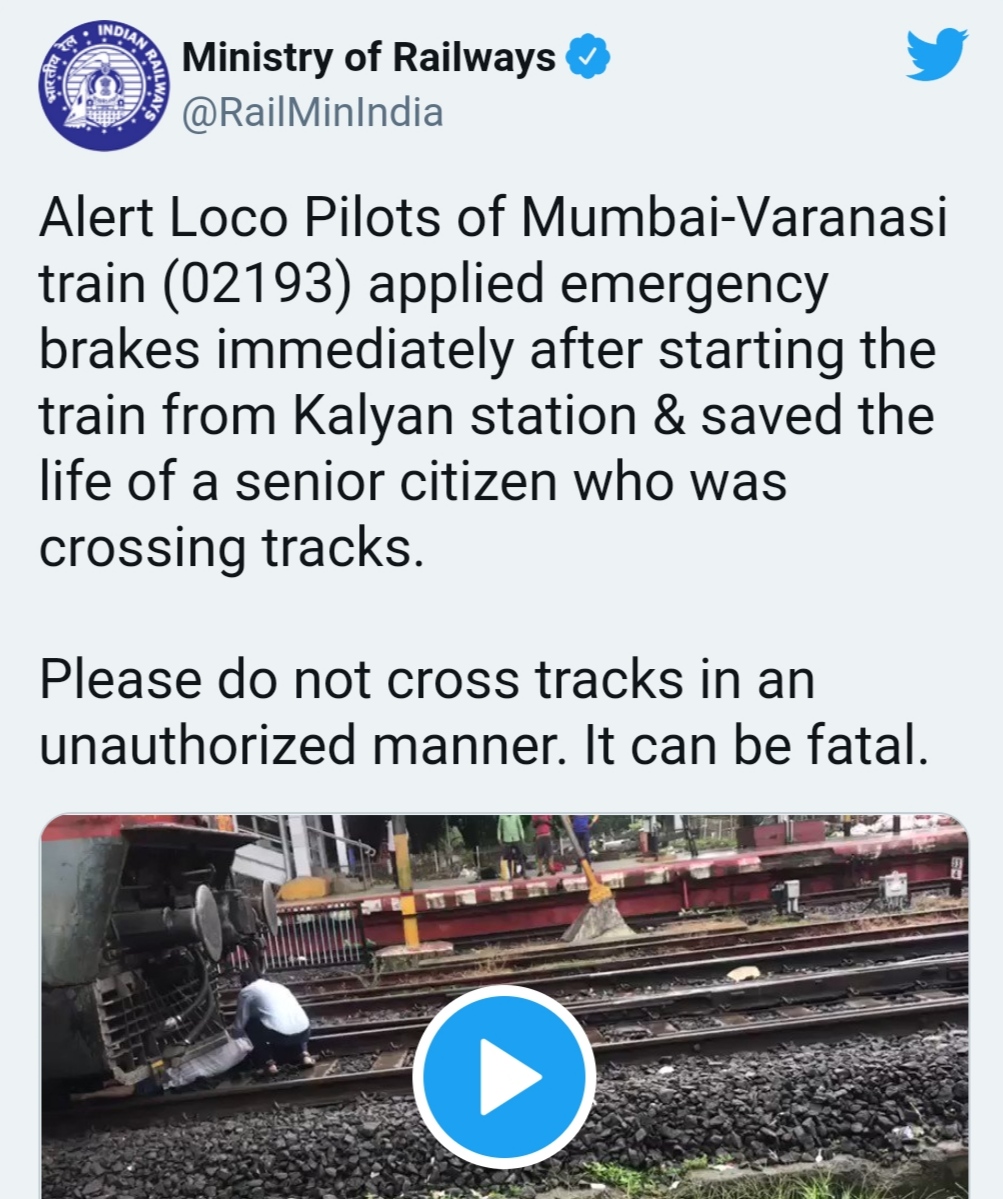
In a shocking incident, an elderly man trying to cross rail tracks was saved by the quick action of loco pilots of a running train. A video of the railway staff rescuing the elderly man stuck between the tracks was shared on Twitter by the official Twitter handle of the Ministry of Railway. The incident took place near Kalyan station, Mumbai.
In above picture, we can see it.
“Alert Loco Pilots of Mumbai-Varanasi train (02193) applied emergency brakes immediately after starting the train from Kalyan station & saved the life of a senior citizen who was crossing tracks,” captioned alongside of the video. The picture shows the staff helping the man out from under the railway engine. The man came out without a scratch.
“Please do not cross tracks in an unauthorized manner. It can be fatal,” adds the caption.
Please be careful while crossing the railway tracks, we can get into grave danger if we are not alert.
Editing is a key skill in video production that can make or break the overall quality of a video. However, editing is a relatively simple process to understand. Once you have learned the basics you’ll be able to use your new skills to significantly raise the quality of your videos. Most of all, experimentation is key to becoming a great editor, so don’t be afraid to take the road less travelled.
THE METHODS FOR LEARNING:
Learning Basic Editing Techniques
Acquiring Advanced Editing Techniques
Choosing Ideal Software
1 Film footage to gather some practice material. Film anything and everything, as long as there’s lots of it. Don’t worry about trying to tell a story, just film your surroundings, the local park, your street, your room, or even your pet.
Most modern phones are able to shoot HD footage that is perfect for practicing your editing skills.
If you don’t have a camera handy, or just want to get started on editing, you can download video clips online to practice on.
2 Import the footage into your software. Usually editing software will have what’s called a ‘bin’, a specific place in the program to store all your raw footage.[1] This will look like a list of folders or a large blank space on the left side of the main editing screen.
If you can’t find an import button some software will allow you to drag in the file from your computer into the software.
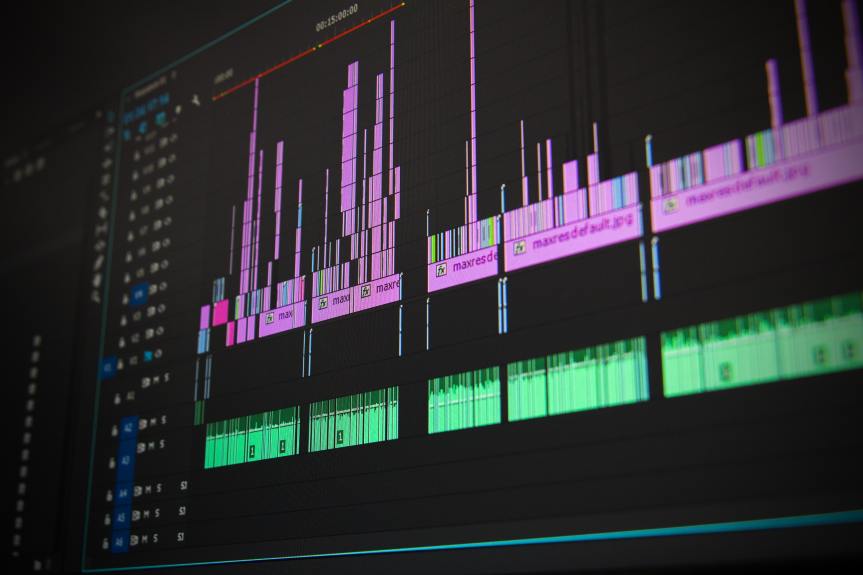
3 Add clips to the timeline. After you have imported footage into the bins, start dragging them onto the ‘timeline’. The timeline appears as a long horizontal bar that takes up the bottom half of the editing screen.
The timeline is where the majority of the work will be done. Here, you can order, rearrange, and manipulate the footage in a variety of ways
4 Rearrange the clips on the timeline. Although the footage shot may be random, try rearranging the clips into different orders to tell different stories. To do so, click and drag the long rectangular box (that represents the video clip) back and forth.
The clips you place together can affect each other. The viewer of a video will always be thinking about the following clip in the context of the previous one.[3] When you’re watching a movie, TV show or video clip, the cut can become completely invisible if performed correctly.
5 Trim the video clips to change the pace of the video. The name of the tool varies from program to program, but generally it’s called the ‘Trim’ tool. You use this tool to trim the front or back of a clip to make it shorter or to extend it outwards. Click the very edge of a video clip in the timeline and drag it inwards and outwards. This will ‘trim’ the clip.
6 Implement transitions to make cuts more appealing. Depending on the tone of the video being made, a pre-made transition from one clip to another can give the video a breath of fresh air. Navigate to the ‘Transitions’ tab located in most editing software and drag a transition you like to the cut between two video clips.
Although transitions are fun, always be thinking about who you’re making the video for. Too many exaggerated transitions can detract from the quality of a video.
7 Export the video from the editing software to save your edits. Once you’ve finished trimming, rearranging and importing all the footage you like, it’s now time to export the video. The software collects all the edits you made of the clips and ‘encodes’ them into a friendly format.
Sometimes exporting can be intimidating due to the sheer amount of options available to you in the software. If in doubt, always export at 24 frames per second (fps) and at 1080p. This means that you’ll be able to play the final video in the media player of your choice. The quality will usually look better after the video is exported.
If you want to learn video editing then first you should understand very basics of video editing.
Then I think you should first start it with Windows movie Maker and after that goes to some other softwares. I’ll suggesting you some best softwares for video editing :—
Adobe premiere pro
Corel video studio
Light worksFinal cut pro
Sony Vegas movie studio
Cinelerra
Pinnacle studios
iMovie
Pitvi
These are the some software you must try to become a good video editor but as I said you should start with learning basics of video editing.
Some you tube channel where you can lean video editing are :—
Surfaced Studios
Rocketstock
kaptainkristian
Peter McKinnon
PremiumBeat
Buddies I am not a professional editor and not also connected to this video editing feild too much. But I provided you information as best of my knowledge.
Work is worship for those who take work seriously and it should be so because your work reflects your personality to some extent and how we do it is also part and parcel of our identity. Here in, comes the real trouble because when you do the work you enjoy, you try to put in your heart and mind into it but, if you are unfortunate enough to be doing the kind of work that you are not proud of, then surely enough it shows in your outcome.
Money, being the prime factor in today’s world and so, when your sole priority is to mint money, then it hardly matters whether you are an engineer or an interior designer. You would try to impress upon the authorities in your field with the sole objective of prosperity in your field. For this, you may go to any extent of unethical attempts, without even thinking about its aftermath.
Mental tension and stress and the related health hazards are all part and parcel of today’ s changing world. Today’s young generation is the first generation of professionals who are earning, four times more than what their parents have earned and so they have a lot of money at their disposal, which is making them spend more All this was possible only because of India’s changing economic condition and the advent of multinational companies with huge capital investment and infrastructure.
In fact, the call centre culture has also changed our lives for the worst, since lifestyle patterns are changing drastically. Initially, youngsters seem to be enjoying the western influence of working like asses on five days and reserving the weekends for parties and celebrations. And to get those two days of relief, they are ready to slog whether they like their job or not. It henceforth, becomes a mechanical slogging where, you are not concerned, whether your mind is at work but it’s just about the finished product that they look forward to. On the whole, we cannot rule out the fact that there are people, who are fortunate enough to bag the job they desire or those who have ultimately landed in those fields, where they have wanted to be. Such people are really lucky in the sense that they do their work with the utmost dedication and they have a fulfilment in life, even if they are not taking home fat salaries like their counter-parts, but don’t have any satisfaction to boost of.
There is a third side to all this and that is trying to derive meaning in whatever meaningless things we are doing to make both ends meet. So even if, one is in a job that is detested by him, he can still work towards generating a positive attitude to one’s Work. Try and enjoy, what one is doing and thus try to attain a sense of satisfaction, that he supposes, he could have otherwise got.
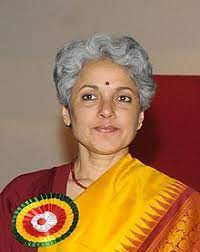
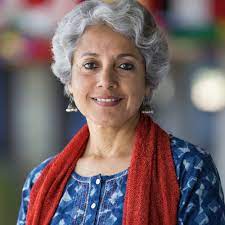
In this highly competitive world, everyone is trying to prove themselves in their areas of interest. Like men, now women are also pursuing their dream wilfully. They are the most competitive persons when compared to men. This doesn’t mean that men are incapable. Just that women are firm and strong enough to prove themselves. You may have a thought why am I talking about women too much? There is definitely a reason. Yeah! Today, I am going to share with you about an Indian Woman who marked her identity in WHO. I think you may have guesses or you should have found who she is? I think, your guess is correct. It’s our Soumya Swaminathan.
Dr. Soumya Swaminathan
Everyone know about the “Father of Green Revolution of India”, Dr. M.S. Swaminathan, right? Soumya Swaminathan was the daughter of Dr. M.S. Swaminathan. She was born on 2nd May 1959 at Kumbakonam, Chennai, Tamil Nadu. Her full name is Soumya Swaminathan Yadav. Her mother, Mina Swaminathan, was an Indian Educationalist. Soumya has two siblings namely Madhura Swaminathan and Nithya Swaminathan. She was married to Ajit Yadav who was an orthopedic surgeon.
Dr. Soumya Swaminathan with her parents and two siblings
Now, let’s see about Dr. Soumya Swaminathan’s educational qualifications and her academic achievements.
She received her M.B.B.S degree from the Armed Forces Medical College, Pune.
She completed her M.D. in AIIMS, New Delhi.
She got her Diplomate of National Board from National Board of Examinations.
She completed her Ph.D., in neonatalogy and pediatric pulmonology.
Let’s see about her Career achievements.
In 1989, she was a Research Scholar in the Department of Pediatric Respiratory Diseases in United Kingdom till,1991.
She also worked as a Senior Research Registar, at Cardiopulmonary Medicine Unit in New Jersey.
In 1992, she joined National Institute for Research in Tuberculosis, as a coordinator and later she became it’s Director.
From 2009 to 2011, She worked as the Coordinator of WHO/UNICEF/UNDP, for a research and training on Tropical diseases in Geneva.
She was the Director of ICMR and Secretory of the Ministry of Health and Family Welfare, in India from August 2015 to November 2017.
From 2017 to March 2019, Dr. Soumya Swaminathan was the Deputy Director-General of WHO.
In 2019, she has become the Chief Scientist of WHO in research about the SARAS CoV-2 and worked hard in this pandemic getting detailed reports from all the countries. And she conducted interview once in two week to make us know the exact situation of the covid.
Let me tell you some of the awards won by her. In 2008, She received Kshanika Oration Award from ICMR. In 2011, she was given an Lifetime Achievement award by the Indian Association of Applied Microbiologists. In 2016, She received Research Endowment Award from NIPER and ASTRAZENECA.
I am inspired so much by Dr. Soumya Swaminathan. Yes, now I have the spark to achieve something big in my career and want to reach heights like her. What about you? I hope you too have your own dreams. Give your full effort and just do it. She had proven herself and made her Father proud. Let’s be like her and make our parents proud. Her achievements show us, how capable women are!! How strong!! Okay, Come on! Women, have confidence in yourself that you can do anything and everything! If you can’t, who can!! Let’s make our India proud.
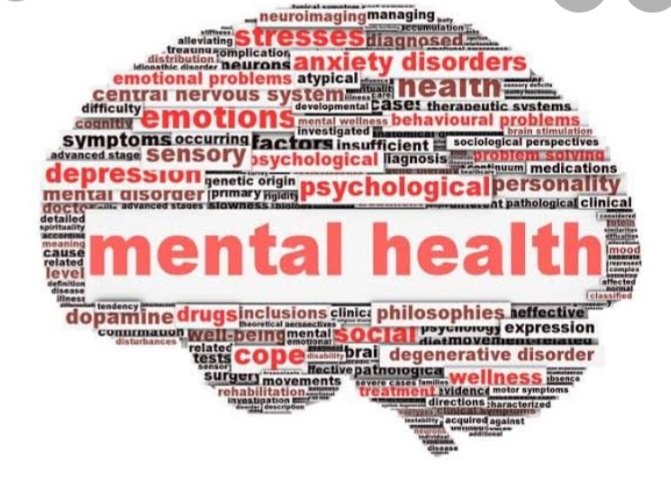
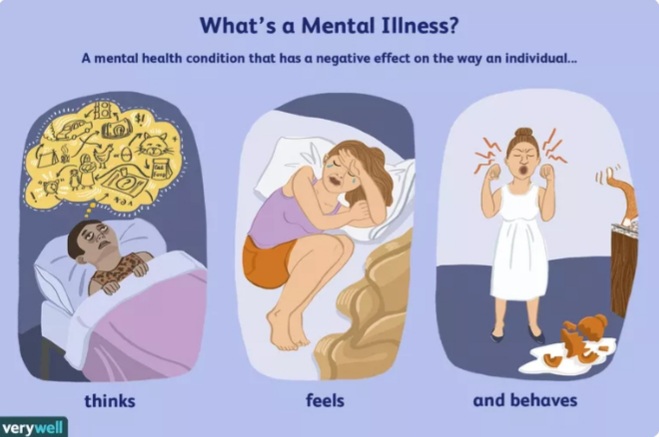
We human beings often tend to pay less attention to our mental health than our physical one, but we all should understand its heavy importance and admit the fact that they can be equally or even more dangerous than the physical issues so one should take immediate help of doctor or councilor in case some abnormalities or issues arises.
Importance of mental health :
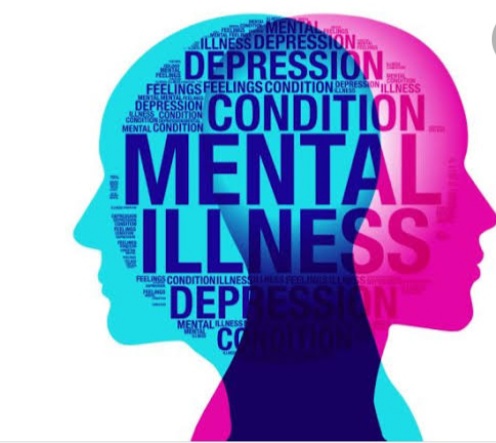
Mental and physical health are equally important components of overall health. Mental illness, especially depression, increases the risk for many types of physical health problems, particularly long lasting conditions like stroke, type 2 diabetes and heart disease. Similarly, the presence of chronic conditions can increase the risk for mental illness.
Some mental illnesses :
Mental illnesses are among the most common health conditions in the united states.
* More than 50% will be diagnosed with a mental illness or disorder at some point in their lifetime.
* 1 in 5 children,either currently or at some point during their life, have had a seriously debilitating mental illness.
Causes of mental illness :
There is no single cause for mental illness. A number of factors can contribute to risk for mental illness, such as
* Early adverse life experiences such as trauma or a history of abuse.
* Experiences related to other ongoing medical condition, such as cancer or diabetes
* Biological factors, such as genes or chemical imbalances in the brain.
* use of alcohol or recreational drugs.
Types of mental illness :
People can experience different types of mental illnesses or disorder and they can often occur at the same time.Mental illness can occur over a short period of time or be episodic. This means that the mental illness comes and goes with discrete beginnings and ends. Mental illness can also ongoing or long term.
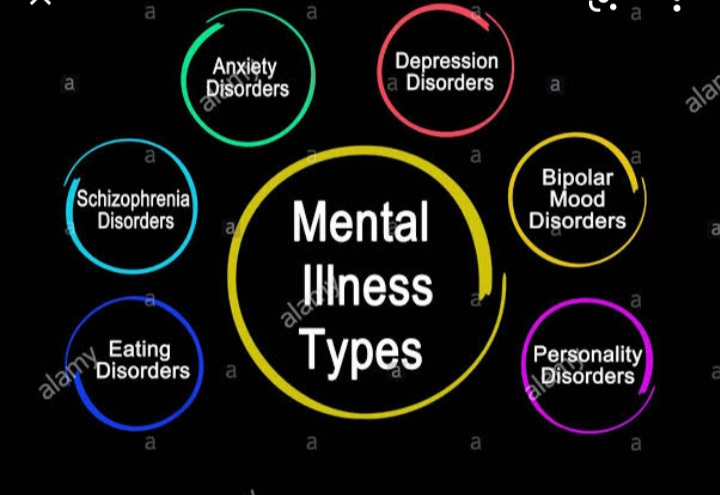
There are more than 200 classified types of mental illness. Some of the main types of mental illness and disorders are listed below; however; this list is not exhaustive.
Anxiety Disorders :
People with anxiety disorders respond to certain objects or situations with fear and dread or terror. Anxiety disorders include generalized anxiety disorder, social anxiety, panic disorders and phobias.
Hyperactivity Disorder :
It is one of the most common childhood mental disorders. It can continue through adolescence and adulthood. People diagnosed with ADHD may have trouble paying attention, controlling impulsive behaviors or be overly active.
Disruptive Behavioral Disorders :
It involves a pattern of disruptive behaviors in children that last for atleast 6 months can cause problems in school, at home and in social sitauations.Behavioral symptoms can also continue into adulthood.
Depression and other mood disorders :
While bad moods are common and usually pass in a short period, people suffering from mood disorders live with more constant and severe symptoms. People living with this mental illness find that their mood impacts both mental and psychological well- being, nearly evry day and often for much of the day.
Eating Disorders :
Eating disorders involve obsessive and sometimes distressing thoughts and behaviors including
* Reduction of food intake
* overeating
* Feelings of depression or distress
* concern about weight, body shape, poor self image
Personality Disorders :
People with personality disorders have extreme and inflexible personality traits that cause problems in work, school or social realtionships. Personality disorders include antisocial personality disorder and borederline personality disorder
Substance use Disorders :
Substance use disorders occur when frequent or repeated use of alochol and or drugs causes significant impairment, such as health problems, disability, and failure to meet major responsibilities at work, school, or home. Substance use problems can be fatal to the user or others. Exsmples include drunk driving fatalities and drug overdoses.
In this busy world our brain gets a lot stressed and its very important that we should take due care of it, some of the practices which will help us to do better with our mental health are:
Yoga plays a great role in keeping our mind calm and also helps us to focus and concentrate on things. It also helps us deal with tough situations and gives us the strength to stay away from negativity.
Exercising regularly is a key to healthy body and we all know that a healthy body and a healthy mind goes hand in hand, so we must ensure that we exercise daily to keep ourselves fit.
The environment that we stay in also the company with which we spend time also plays a major role we should be extremely aware while selecting our company and in case we are not able to adjust we should walk away.
Food is the fuel and is of immense importance we should ensure that we are not nutrient deficient also we should ensure that we intake enough amount of water daily.
“GOOD GOVERNANCE SHOULD BE LIKE AIR. IT’S EXISTENCE NEED NOT BE DISCUSSED BUT IT’S ABSENCE WOULD MAKE A HUGE DIFFERENCE”
Nowadays the terms “Governance” and “Good Governance” are being used widely. Major reforms, actions, changes and even donations and institutional activities are basing all their rules and regulations which will help achieve “good governance”.
WHAT IS GOVERNANCE ?
Governance is the process or system by which entities are administered or directed and controlled. It is the process of decision making and the process of deciding the actors who will be involved in the decision making process and implementation of decisions.
The concept of “governance” has been used from past many years and can be used in several contexts such as international or national governance, corporate governance, local governance etc. One of the major actor of governance is “government” and other actors involved in the process of governance are NGOs, private bodies, landlords, research institutes, religious leaders, political parties, military etc.
GOOD GOVERNANCE
The term “Good Governance” originated from the report entitled ” Governance and Development” which was published by World Bank in year 1992. The World Bank defined Good Governance as “the manner in which power is exercised in the management of a country’s economic and social resources for development”.
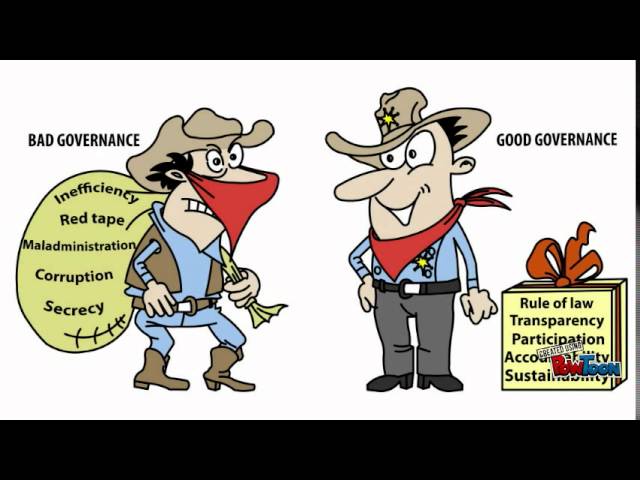
Thus, good governance is an approach which aims in creating a system which finds justice and peace and ensures the protection of individual’s human rights and liberties. Good Governance is measured by 8 characteristics : Participation, Rule of Law, Transparency, Responsiveness, Consensus Oriented, Equity and Inclusiveness, Effectiveness and Efficiency, and Accountability.
Good Governance is a process of governance that considers the views of minorities and vulnerable groups of society and minimizes corruption while taking decisions thereby boosting the economy.
REFERENCES OF GOOD GOVERNANCE
The importance of Governance is clearly highlighted and explained in Indian Constitution which is based on – Sovereign, Socialist, Secular and Democratic Republic for attaining democracy, rule of law and welfare of people.
The Sustainable Development Goal q6 also describes the linkage between improvement of governance, inclusivity, participation, rights and security.
The Bhagavad Gita also provides numerous indications of good governance, leadership, dutifulness and self realization.
According to former United Nations Secretary-General Kofi Annan, “Good governance is ensuring respect for human rights and the rule of law; strengthening democracy; promoting transparency and capacity in public administration.” He also said that “Good Governance is perhaps the single most important factor in eradicating poverty and promoting development”.
PRINCIPLES OF GOOD GOVERNANCE
Principles of Good Governance
Participation: Participation by each section of the society irrespective of their gender, social class, caste, income etc. The participation of the individuals can be through direct or indirect (through other institutions or representatives) mediums. Participation is an crucial part of governance because it brings forward the major concerns of the society, the issues as well as in identification of potentials of the area.
Rule of Law: It ensures fair and legal frameworks and methods being used in the governance and enforces impartially. This requires full protection of human rights, especially of the weaker sections and vulnerable groups of the society. For this the law needs to be impartial, uncorrupted and judicial.
Transparency : Transparency in a process or system or governance ensures that all the decisions, actions and enforcements are taken only after considering the governing rules or laws or regulations. It signifies the availability of information’s to all the stakeholders and the people who will be affected by the actions or enforcements.
Responsiveness: Good Governance requires timely actions and processes and tries to serve all the stakeholders within a reasonable time frame or specified time frame.
Consensus Oriented: Good Governance requires different interests to sum up into a broad consensus to show the best interest for the community and society. It is necessary for developing sustainable human development and the only way by which cultural, social and historical diversity can be preserved.
Equity and Inclusiveness: Equity and Inclusivity ensures that all the members of the community or society are feeling free to put forward their concern and idea. Nobody should feel excluded. Equity and Inclusivity is highly important for minor or vulnerable groups because it is very important to give them the opportunities to express their issues and ideas for improving and maintaining their well being.
Effectiveness and Efficiency: The results or outcomes of the processes should satisfy the needs of the society and should make the best use of available resources, without exploiting them. It is necessary to identify the potentials and weaknesses of the society or community or area before coming up or implementing any solution. All the outcomes and results should within desirable time frame and should be the best decisions for the welfare of the society.
Accountability: It is one of the most vital requirements of good governance as it ensures that all the stakeholders (government bodies or private institutions or civil organizations or NGOs etc) are accountable to the public. Who is accountable to whom depends on the actions or decisions which are taken in the organization.
What makes Good Governance different from Bad Governance
CONCLUSION
From the above discussion it is clear that “Good Governance” is the most ideal form of governance but it requires transperancy, accountability and intelligent form of governance which makes it more difficult to achieve. For achieving good governance, a system much be uncorrupted, bias free and free from prejudices.
Thus, there is a need to reform and reformulate strategies for restoring good governance. The government should focus on the principle of : “Sabka Saath, Sabka Vikas and Sabka Vishwas” which will guide the way to achieve inclusive and sustainable development.



















 Eduindex
You must be logged in to post a comment.