Wireless Energy Transfer-Tesla’s Dream

WPT- Wireless Power Transmission
Wireless Power Transfer holds the promise of freeing us from the tyranny of power cords. This technology is being incorporated into all kinds of devices and systems.

Wireless Power Transfer holds the promise of freeing us from the tyranny of power cords. This technology is being incorporated into all kinds of devices and systems. Let’s take a look!
The Wired Way
The majority of today’s residences and commercial buildings are powered by alternating current (AC) from the power grid. Electrical stations generate AC electricity that is delivered to homes and businesses via high-voltage transmission lines and step-down transformers.
Electricity enters at the breaker box, and then electrical wiring delivers current to the AC equipment and devices that we use every day—lights, kitchen appliances, chargers, and so forth.
All components are standardized and in agreement with the electrical code. Any device rated for standard current and voltage will work in any of the millions of outlets throughout the country. While standards differ between countries and continents, within a given electrical system, any appropriately rated device will work.
Here a cord, there a cord. . . . Most of our electrical devices have AC power cords.


Wireless Power Technology
Wireless Power Transfer (WPT) makes it possible to supply power through an air gap, without the need for current-carrying wires. WPT can provide power from an AC source to compatible batteries or devices without physical connectors or wires. WPT can recharge mobile phones and tablets, drones, cars, even transportation equipment. It may even be possible to wirelessly transmit power gathered by solar-panel arrays in space.
WPT has been an exciting development in consumer electronics, replacing wired chargers. The 2017 Consumer Electronics Show will have many devices offering WPT.
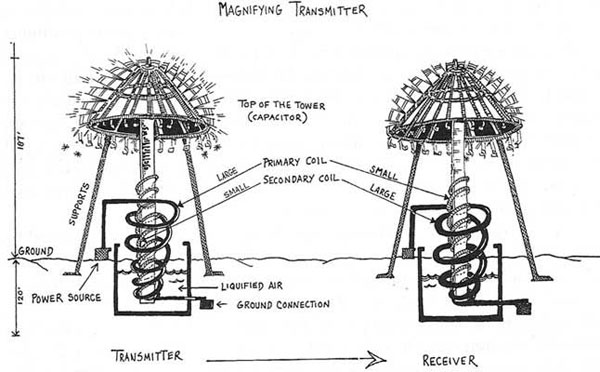
The concept of transferring power without wires, however, has been around since the late 1890s. Nikola Tesla was able to light electric bulbs wirelessly at his Colorado Springs Lab using electrodynamic induction (aka resonant inductive coupling).
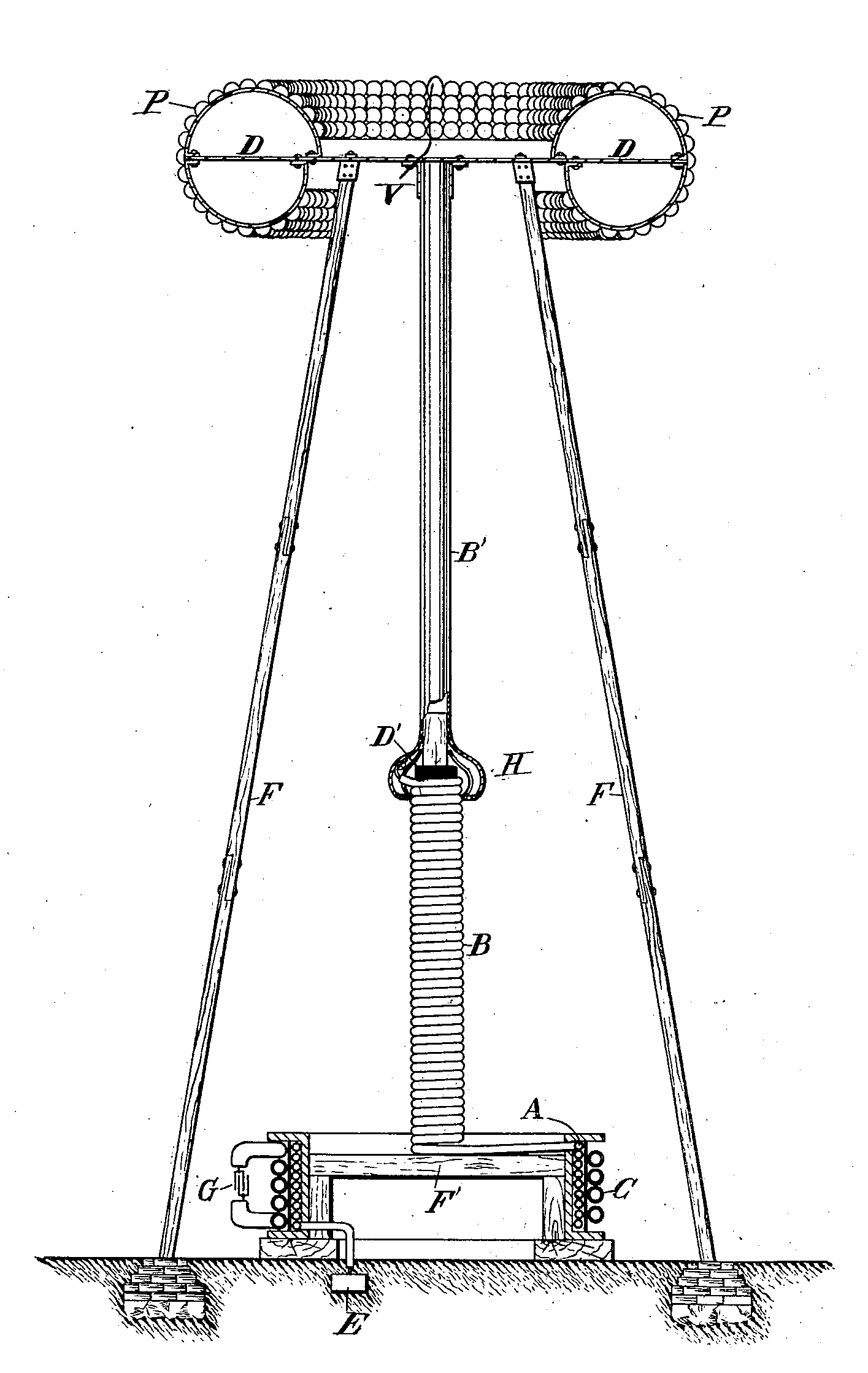
 

An image from Tesla’s patent for an “apparatus for transmitting electrical energy,” 1907.
 
Three light bulbs placed 60 feet (18m) from the power source were lit, and the demonstration was documented. Tesla had big plans and hoped that his Long Island-based Wardenclyffe Tower would transmit electrical energy wirelessly across the Atlantic Ocean. That never happened owing to various difficulties, including funding and timing.
WPT uses fields created by charged particles to carry energy between transmitters and receivers over an air gap. The air gap is bridged by converting the energy into a form that can travel through the air. The energy is converted to an oscillating field, transmitted over the air, and then converted into usable electrical current by a receiver. Depending on the power and distance, energy can be effectively transferred via an electric field, a magnetic field, or electromagnetic (EM) waves such as radio waves, microwaves, or even light.

 
Qi Charging, an Open Standard for Wireless Charging
While some of the companies promising WPT are still working to deliver products, Qi (pronounced “chee”) charging is standardized, and devices are currently available. The Wireless Power Consortium (WPC), established in 2008, developed the Qi standard for battery charging. The standard supports both inductive and resonant charging technologies.
Inductive charging has the energy passing between a transmitter and receiver coil at close range. Inductive systems require the coils to be in close proximity and in alignment with each other; usually the devices are in direct contact with the charging pad. Resonant charging does not require careful alignment, and chargers can detect and charge a device at distances up to 45mm; thus, resonant chargers can be embedded in furniture or mounted in shelving.
 

The Qi logo displayed on the Qimini wireless charging plate. Image courtesy of Tektos.
 
The presence of a Qi logo means the device is registered and certified by the Wireless Power Consortium.
When first introduced, Qi charging was low power, about 5W. The first smartphones using Qi charging were introduced in 2011. In 2015, Qi was expanded to include 15W, which allows for quick charging.
Only devices listed in the Qi Registration Database are guaranteed to provide Qi compatibility. There are currently over 700 products listed. It is important to recognize that products with the Qi logo have been tested and certified; the magnetic fields they use will not cause problems for sensitive devices such as mobile phones or electronic passports. Registered devices are guaranteed to work with all registered chargers.  
For more information on Qi wireless charging, check out this article, and for an introduction to and technical evaluation of Qi-compatible transmitter/receiver WPT evaluation boards, click here and here.
 
The Physics of WPT
WPT for consumer devices is an emerging technology, but the underlying principles and components are not new. Maxwell’s Equations still rule wherever electricity and magnetism are involved, and transmitters send energy to receivers just as in other forms of wireless communication. WPT is different, though, in that the primary goal is transferring the energy itself, rather than information encoded in the energy.
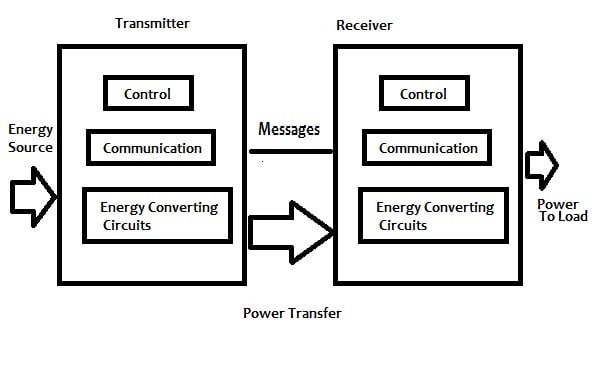


WPT transmitter/receiver block diagram.
The electromagnetic fields involved in WPT can be quite strong, and human safety has to be taken into account. Exposure to electromagnetic radiation can be a concern, and there is also the possibility that the fields generated by WPT transmitters could interfere with wearable or implanted medical devices.
The transmitters and receivers are embedded within WPT devices, as are the batteries to be charged. The actual conversion circuitry will depend on the technology used. In addition to the actual transfer of energy, the WPT system must allow the transmitter and receiver to communicate. This ensures that a receiver can notify the charging device when a battery is fully charged. Communication also allows a transmitter to detect and identify a receiver, to adjust the amount of power transmitted to the load, and to monitor conditions such as battery temperature.
The concept of near-field vs. far-field radiation is relevant to WPT. Transmission techniques, the amount of power that can be transferred, and proximity requirements are influenced by whether the system is utilizing near-field or far-field radiation.
Locations for which the distance from the antenna is much less than one wavelength are in the near field. The energy in the near field is nonradiative, and the oscillating magnetic and electric fields are independent of each other. Capacitive (electric) and inductive (magnetic) coupling can be used to transfer power to a receiver located in the transmitter’s near field.
Locations for which the distance from the antenna is greater than approximately two wavelengths are in the far field. (A transition region exists between the near field and far field.) Energy in the far field is in the form of typical electromagnetic radiation. Far-field power transfer is also referred to as power beaming. Examples of far-field transfer are systems that use high-power lasers or microwave radiation to transfer energy over long distances.
 
Where WPT Works
All WPT technologies are currently under active research, much of it focused on maximizing power transfer efficiency (PDF) and investigating techniques for magnetic resonant coupling (PDF). In addition to the idea of walking into a room equipped for WPT and having your devices charge automatically, much more ambitious projects are in place.
Across the globe, electric buses are becoming the norm; London’s iconic double-decker buses are planning for wireless charging, as are bus systems in South KoreaUtah, and Germany.
Using WiTricity, invented by MIT scientists, electric cars can be charged wirelessly, and those cars can wirelessly charge your mobiles! (Using Qi charging, of course!) This wireless technology is convenient, to be sure, but it may also charge cars faster than plug-in charging can.
 

Graphic of a wireless parking charge setup built into a parking space. Image courtesy of Toyota.
 
An experimental system for wirelessly powering drones has already been demonstrated. And as mentioned above, ongoing research and development is focused on the prospect of supplying some of Earth’s energy needs using WPT in conjunction with space-based solar panels.
WPT works everywhere!
 
Conclusion
While Tesla’s dream of having power delivered wirelessly for everyone’s use is still far from feasible, many devices and systems are using some form of wireless power transfer right now. From toothbrushes to mobile phones, from cars to public transportation, there are many applications for wireless power transfer.

What is Web Hosting? And its Types

Web hosting is an online service that enables you to publish your website or web application on the Internet. When you sign up for a web hosting service, you basically rent some space on a physical server where you can store all the files and data necessary for your website to work properly.

A server is a physical computer that runs without any interruption so that your website is available all the time for anyone who wants to see it. Your web host is responsible for keeping that server up and running, protecting it from malicious attacks, and transferring your content — such as text, images, files, etc. — from the server to your visitors’ browsers.

Types of Web Hosting Packages

  1. Shared Hosting

This type of hosting is the most common answer for most web hosting needs and it’s an excellent solution for most small businesses and personal blogs. With this type of hosting, you’re sharing one server with other clients. Websites hosted on the same server share all its resources, such as memory, computing power, disk space, and others.

  • Pros :
  • Low cost, excellent for small online business websites
  • No need for specific technical knowledge
  • Pre-configured server options
  • User-friendly control panel — hPanel
  • Maintenance and server administration is taken cared for you
  • Cons :
  • Little or no control over server configuration
  • Traffic surges on other websites can slow down your website

2. VPS Hosting

When you’re using a Virtual Private Server — or VPS for short — you’re still sharing a server with other users. However, your web host allocates an entirely separate partition for you on that server. This means you get a dedicated server space and a reserved amount of resources and memory. In fact, VPS hosting can be great for medium-sized businesses with a rapidly growing number of websites and traffic.

  • Pros :
  • Dedicated server space
  • Traffic surges on other websites have no effect on your performance
  • Root access to the server
  • Easy scalability and high customizability
  • Cons :
  • More expensive than other types of hosting
  • Technical and server management knowledge is a must

3. Cloud Hosting

Cloud hosting is currently the most reliable solution on the market. With cloud hosting, your host provides you with a cluster of servers — your files and resources are replicated on each server. When one of the cloud servers is busy or encounters a problem, your traffic is automatically routed to another server in the cluster. This results in little to no downtime, which is excellent if you own a very busy website.

  • Pros :
  • Little to no downtime
  • Server failures have no effect on your website
  • Allocates resources on demand
  • Pay-as-you-pricing strategy — you only pay for what you use
  • More scalable than other web hosting types
  • Cons :
  • Hard to estimate the actual costs
  • Root access is not always provided.

4. WordPress Hosting

WordPress hosting is a particular form of shared hosting, created for WordPress site owners. Your server is configured specifically for WordPress and your site comes with pre-installed plugins for crucial tasks, such as caching and security.

  • Pros :
  • Low cost and beginner-friendly
  • One-click WordPress installation
  • Good performance for WordPress sites
  • Customer support team trained in WordPress issues
  • Pre-installed WordPress plugins and themes
  • Cons :
  • Recommended only for WordPress sites, which can be a problem if you want to host more than one website on your server

5. Dedicated Hosting

Dedicated hosting means that you have your own physical server that’s dedicated solely to your website. Therefore, you’re given incredible flexibility over how you want to manage your website. You can configure your server as you wish, choose the operating system and software you want to use, and set up the whole hosting environment according to your own needs.

  • Pros :
  • Full control over server configuration
  • High reliability and security options
  • Root access to your server
  • Cons :
  • High cost, more oriented towards larger businesses
  • Technical and server management knowledge is a must

Use of MS Excel in today’s world.

Excel is typically used to organize data and perform financial analysis. It is used across all business functions and at companies from small to large. The main uses of Excel include: Data entry.

Excel is a software program created by Microsoft that uses spreadsheets to organize numbers and data with formulas and functions. Excel analysis is ubiquitous around the world and used by businesses of all sizes to perform financial analysis.

The main uses of Excel include:

1 Data entry
2 Data management
3 Accounting
4 Financial analysis
5 Charting and graphing
6 Programming
7 Time management
8 Task management
9 Financial modeling
10 Customer relationship management (CRM)
** Almost anything that needs to be organized!

Excel is used extensively in finance and accounting functions. In fact, many organizations run their entire budgeting, forecasting, and accounting functions entirely out of Excel spreadsheets.

While Excel is defined as a “data” management tool, the data that is most commonly managed is financial. At CFI, we would define Excel as the ultimate financial software. While there are other pieces of financial software that are tailored toward performing specific tasks, the strongest point about Excel is its robustness and openness. Excel models are as powerful as the analyst wishes them to be.

Accountants, investment bankers, analysts, and people in all types of financial career paths rely on excel to perform their daily job functions.

And one should know how to use MS Excel. Its on of the most important skill in today’s corporate world.

WHY DO WE NEED TO BE PUNCTUAL?

Know the true value of time; snatch, seize, and enjoy every moment of it——-Lord Chesterfield

ITS MEANING

Punctuality means doing a work at the proper time. To account an engagement at 10 o’ clock in the morning and to arrive at the place to keep it at 10-30 does not become a gentleman. It annoys the other party and it harms the future of the caller. No one who is unpunctual in attendance to work can be depended on or trusted in. On the other hand, a punctual man is one who knows the value of time. Such a man is a perfect gentleman and everybody has faith in his efficiency and character.

IT GIVES A MEANING TO YOUR LIFE

Punctuality is important in every sphere of life. it is rightly said that punctuality is the crown of a king. It is the most precious jewel to the character of a man. A student has to be punctual at school or college. The manager of a big firm or its common clerk has to be punctual in his office. Equally it is necessary for a factory worker, a politician, or a statesman. The greatest value of punctuality is that it is a great time-saver. An unpunctual man is always worried about time. A student who is unpunctual in his class lags behind others in his studies, he creates confusion both for himself and for others in the class. He is considered a disturbing element and is looked down upon by his teachers as well as his classmates.

MISS IT AND WELCOME YOUR HARM

Many battles have been lost on account of unpunctuality. Many Cases in Courts of Law have been lost, because one of the parties did not come in time; many a train has been missed and business lost to unpunctuality. So, unpunctuality leads to dangerous consequences. Relation of free people knows the value of punctuality. Indians are now a free people and they should cultivate punctuality in everywhere. Unpunctuality is a vice and out of it are born other vices like dishonesty, falsehood, idleness and shirking of one’s duty.

So, we observe how punctuality plays a foremost role in anyone’s life. being unpunctual is a curse, we cannot be as winner as others. Besides, this rhythmic world demands punctuality so that all of us can be successful in life.

10 tools for a Java Developer

When you talk about a Java developer, he can be a fresher or have experience of 10 years or more. That doesn’t matter. What matters is in this duration whether you have worked on different projects. So in those projects you might have used these tools or technologies but still it’s my job to list that for you. Even if you are a fresher, it’s good for you if you know these technologies because it will be helpful for you to get a job.

1) Companies are normally going for full standard uppers where one person should know both front end and back end web development. When it comes to front end, we tend to talk about HTML, CSS, JavaScript. But along with that you need to work on front end frameworks and that is where Angular and React comes into picture. You can learn and work on any one- either Angular or React.

2) When we work on a project, we also need to create the giant file creatingbthe word file and also manage the dependencies. What if, in your project you need to create jar files and also you need to create a jar out of it. That is where the build management tool- Maven and Gradle comes into picture.

3) Based on your experience, you may have worked on different IDE’s like eclipse. But to increase productivity, you need to start working in IntelliJ ultimate version. The community version does not support the exterprise part. So you have to use the ultimate version. But you have to pay for it. It is upto you to decide whether you want to save time or save money.

4) A developer normally focusses on the development part. But there is a need for debugging your code by yourself. There is a testing team. But if you want to test every class you create, that’s where unit testing comes into picture. One of the best frameworks for testing is JUnit. So make sure that you learn JUnit because it will help you test your software so that you will have less bugs in your code.

5) Okay, how can you increase your productivity more. Of course using IDE and using testing software. But of you follow a particular framework, it will help you to build your project faster and also help you to maintain your project. For different types of scenarios, we have different frameworks famous. But one framework is getting famous a lot and is used by companies now. That is Spring Framework. Spring Framework gives you a lot of features in built, you can write less code and it will also help you to maintain your project. We also have a concept of spring security. It will help you prevent your website from hackers.

6) If you need to include a payment gateway, you don’t need to create a new payment gateway. You can connect with a payment gateway service using REST/postman.

7) Once you built an application, you will release new versions upon development. It is better to have numbers for that. This version control is provided by Git. If you are in a team and you have to share the code you are working on to a team member, you can use Git.

8) If you have a big project and want to add a small module to that, just integrate it with the help of CI/CD. After integration, you can also deploy it.

9) Docker- Its primary focus is to automate the deployment of applications inside software containers and the automation of operating system level virtualization on Linux. It’s more lightweight than standard Containers and boots up in seconds.

10) Cloud- Cloud provides all the services instantly. We have Google could service, Amazon cloud service, Microsoft also has one. Amazon holds the most of the market share in cloud. The amazing this is for one year it would be free for a user. Try using it.

What is UPSC civil services examination

UPSC- union public service commission

UPSC is India’s central agency.

CSE is widely known as ‘IAS EXAM’, even though it is conducted to recruit candidates to about 24 top government services like IAS, IPS, IRS, IFS ,etc.

UPSC conducts exams like Civil Services Exam (CSE) to recruit candidates into top government services like IAS, IPS, IFS etc. Civil services exam is one of the most popular examination conducted by upsc.

UPSC civil services exam mainly consists of three stages.

1. Preliminary. 2. Mains. 3. Interview

Educational requirements

Any graduate can attempt the UPSC civil services examination. The graduate can be in any stream, it may be a regular degree or distance education.

Age limit

To attend the UPSC civil services examination, a person should cross the 21 years by August of that specified year. This is the minimum age limit for UPSC CSE. The upper age limit is 32 for general category, 35 for other backward classes (OBC) , 37 for scheduled castes (SC) and scheduled Tribes (ST).

UPSC recruits candidates to both civil services as well as defence services.

.

The Conspiracy of “Bulbs”

Do you know for how long a light bulb can last? 1000 hours, 1500 hours, 3000 hours? What if I say there is an light bulb lasted for more than 120 year and still counting, you will definitely say are you kidding me?, mine doesn’t last for more than 1000 hours. Or you may ask which machine has manufactured it? But what if I say it is hand made. Read on full article to know why life span of light bulbs are made to decrease by some giant light bulb manufacturers…

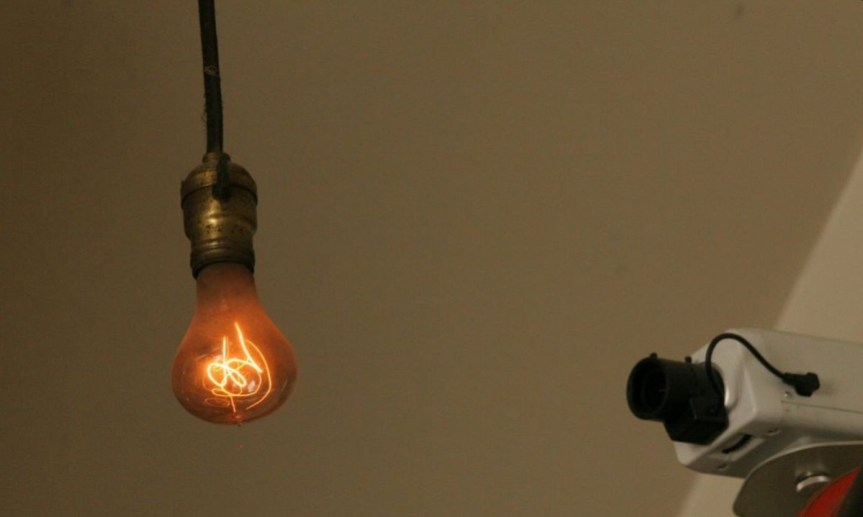
In Livermore Fire station 6 there is a light bulb active from more than 120 years hand made. The light doesn’t have a switch but it has battery back an a power generator. The bulb is never switched off as by cooling and heating up again there act stress on filament which decreases the life span of bulb.

When everyone is trying to make a filament they failed the filament burned with contact of oxygen, so in 1840s Warren De La Rue told to put the filament in vacuum so if there is no contact of oxygen and no burn. In 1879 Thomas Edison invented a perfect light bulb by making filament of carbon, from then onwards everyone tried different filament to increase the life span and then come up with tungsten. And in 1920s the life of bulbs were at peak lasting from 2000 hours to 2500 hours normally.

But at these time the sales were at least for the bulb manufacturers for example OSRAM sold 63 million bulbs in 1923, and in 1924 only 28 million. So the giant manufacturers of that come with a meeting. In 1924 at Geneva, Switzerland before christmas the giants Philips, International General Electric, Tokyo Electric, OSRAM from Germany, UK Associated Electric(AEI) formed a cartel named Phoebus Cartel after the name of Greek God of light.

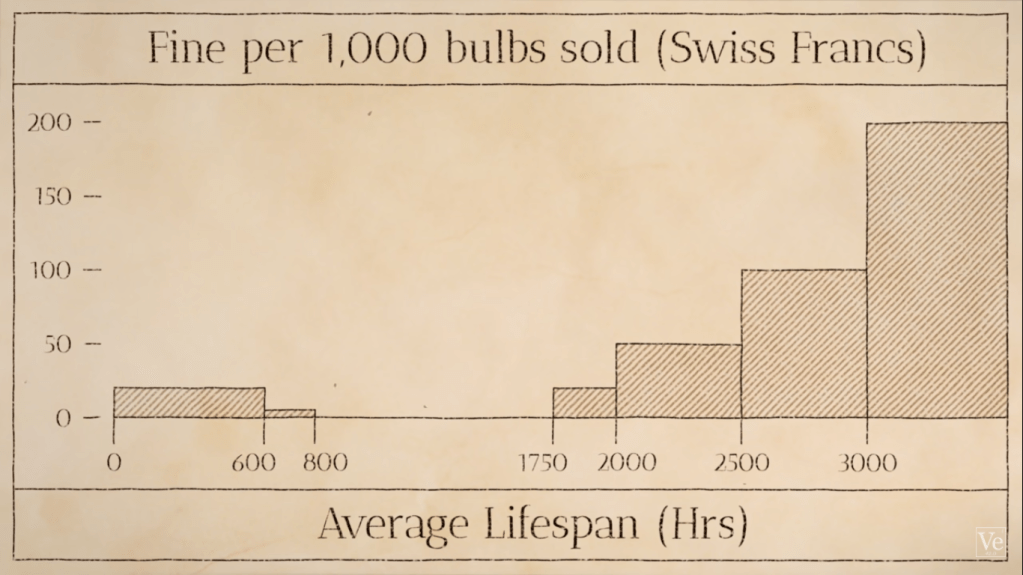
They agreed to decrease the life of bulbs to 1000 hours, the same way engineer discovered to increase, they told their engineers to decrease the life of bulbs. But, due to lack of trust they agreed to send bulbs from every factory to a lab for test. If the bulb lasts for 1000 hours is fine, but if it lasts more than 3000 hours then there is a fine of 200 Swiss Francs for every 1000 bulbs sold.

There again one question of will every manufacturer will follow or not? So they divided the area of sales. They were successful in there plan. The life of light bulbs decreased and there increased tremendously. They sold with same price to increase the profit.

-Sales – life of bubs

The cartel was made to last till 1955 but it ended in 1930s. However there were allegations on cartel, but they said that cartel in established for improvements in the bulb. The screw thread in bulbs are introduced by them.

The light bulb of Livermore is made before the formation of cartel that’s why it is there.

These is not the end of this case as there is still this type of work is going on.

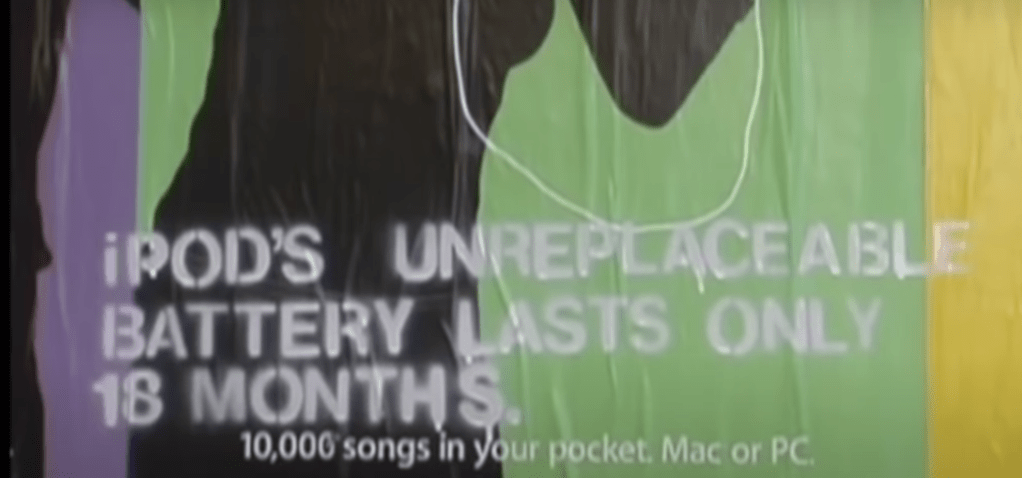
In 2003 the video of Casey Neistat was gone viral as he tried to protest against apple. Apple launched IPod having non removable memory which lasts only for 18 months, and after that you have to give 250$ to refurbish it. So there was a case in court against this which Apple settled outside court.

why hasn’t the world health organization(WHO) authorized Covaxin yet?

Traveling the world is valuable and who doesn’t want such worthwhile experience. Even In this trying times, everyone has an urge to travel the globe to experience the beauty of the world and have incredible experiences to add up in their brain’s memory bank.

But are you the one who is vaccinated by covaxin but can’t be treated as vaccinated and be permitted to travel across international borders?

Well, here are the reasons why covaxin is not approved by world health organization yet. 

First of all, we need to understand the process of getting a vaccine approved By WHO. It consists of four parts, Namely,

1. acceptance of the manufacturer’s expression of interest, 

2.A pre submission meeting between WHO and the manufacturer, 

3. Acceptance of the dossier for review by WHO, 

4.Decision on status of assessment and the final decision on approval.

Now If we talk about  the approval of covaxine which was manufactured by Bharat Biotech. The first step itself is not completed yet. That is the acceptance of the manufacturer’s expression of interests is not accepted by the WHO and more information is needed as reported by Who in order to clear the first stage. Bharat Biotech, located in Hyderabad, submitted 90 percent of the documents required for the WHO’s Emergency Use Listing in April month. The rest of the paperwork would be presented this month, according to the statement provided by the manufacturing company.

The second step which consists of a pre submission meeting between WHO and the bharat biotech will also be held in this month Meanwhile, the WHO authorized the Pune-based Serum Institute of India (SII), which manufactures Astrazeneca’s Covishield vaccine, on February 15 after passing the same four phases. The approval procedure is classified, and it is unclear what papers are needed at this time to approve covaxine. Therefore, the Indian people who got fully vaccinated by covaxine are sceptical of it’s authorization by WHO because recently, US food and drug administration also rejected Bharat Biotech’s proposal for an emergency use authorization (EUA) of Covaxin, delaying the company’s vaccine launch in that country. 

The government of india’s take on US FDA disapproval is that it respects the FDA’s decision not to grant Covaxin an EUL, but claims it will have no influence on India’s immunisation programme. Union minister of information and broadcasting prakash javedekar said in the press briefing that “The World Health Organization (WHO) has not made a judgement on whether or not persons who have been vaccinated with Covaxin should be prohibited from travelling. Covaxin is a vaccination that has shown to be one of the most successful to date.”

So, when can we expect the authorization of covaxin by world health organization is a question we all needs answer for. On June 9 bharat biotech said that the company will reveal all of Covaxin’s phase 3 trial results in July 2021, after which it will commence the phase 4 trial while concurrently applying for a complete license in India. The submission of trial results are important because it is a prerequisite for Obtaining the WHO Emergency Use Listing.

A good news for the people who got inoculated by covaxine is that so far, few countries like Iran, Philippines, Mauritius, Mexico, Nepal, Guyana, Paraguay and Zimbabwe have approved the Covaxin. But, The European Union and the United States are unwilling to let Indians who have been vaccinated with Covaxin to enter their countries since WHO authorisation is still pending.

Leonardo Da Vinci’s Human Powered Helicopter Becomes Reality

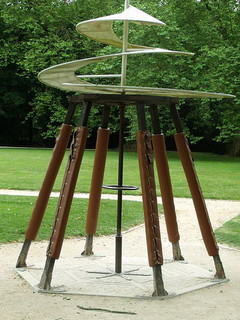
Leonardo Da Vinci's Aerial Screw

It would be hard to call Leonardo Da Vinci anything other than a man ahead of his time.  Between 1452 and 1519, Leonardo did just about everything. He is most famous today for his skills as a painter, where he painted some small works- like the Mona Lisa and The Last Supper. His sketches of man were the most anatomically correct to date (The Vitruvian Man). He was also a famed sculptor, musician, architect, anatomist, geologist, cartographer, botanist, writer mathematician, engineer and inventor. He conceptualized things far beyond his time, including concentrated solar power, a calculator, the double hull for ships, a tank and, most interesting to those of us in the aviation industry, a helicopter.

Over 420 years before the first helicopter was built, Leonardo Da Vinci sketched out what he called the Aerial Screw. This aerial screw was a man powered helicopter that required four men to spin cranks fast enough to generate enough lift to get off the ground.

Now, fast forward to 1980, 461 years after Leonardo passed away.  The American Helicopter Society sought to finally see the first human powered helicopter take flight. To win the prize money, which started at $10,000, the helicopter needed to reach at least 3 meters in the air (9.8 feet) for 60 seconds while being stable enough to have the center of the helicopter stay within a 10 x 10 meter box (32.8 x 32.8 feet). It would take 9 years from then before the first human powered helicopter even got off the ground when students at Cal Poly San Luis Obispo got their human powered helicopter 8 inches off the ground for all of 7.1 seconds. In the next 20 years, not much progress would be made so the Sikorsky Aircraft Corporation pledged additional prize money to try to see if that would inspire more innovation.

Sure enough, it did. Two teams, one from the University of Maryland and the other AeroVelo, were locked in a tight race to win. The university of Maryland got their man powered helicopter to fly for 65 seconds but it only reached 8 ft (about 1.8 feet short of where they needed to be) in August of 2012.

Finally, this July in Toronto, Aerovelo took the $250,000 in prize money with this flight:

While we don’t expect to see these Atlas human-powered helicopter’s flying around a city near you soon, this was a remarkable achievement. Congratulations to the Aerovelo team! And, over 480 years later, Leonardo Da Vinci’s vision of a human powered helicopter came to fruition.

Agriculture

When tillage begins, other arts follow. The farmers, therefore, are the founders of human civilization.”

— Daniel Webster

Introduction

It all started thousand of years ago , when the human civilization came into existence . Agriculture was a key to survival . People were farming for there domestic purpose , not for the others .

As the civilization started to grow accustomed of agriculture , they grew food in surplus that enabled people to live in cities. Plants were independently cultivated in at least 11 regions of the world.

The development of agriculture enabled the human population to grow many times larger than could be sustained by hunting and gathering.

It was the beginning of different civilization in different parts of the World. From those civilizations , one of them was our’s The Indus Valley Civilization . Vedic literature provides some of the earliest written record of agriculture in India. Rigveda hymns , describes plowing, fallowing, irrigation, fruit and vegetable cultivation.

Some of the ancient and historical evidence suggests rice and cotton were cultivated in the Indus Valley.

Agriculture : In India and World today .

India ranks second worldwide in farm outputs. As per 2018, agriculture employed Indian work force and contributed 17–18% to country’s GDP.

In 2016, agriculture and allied sectors like animal husbandry, forestry and fisheries accounted for 15.4% of the GDP (gross domestic product) with about 41.49% of the workforce in 2020.India ranks first in the world with highest net cropped area followed by US and China.The total agriculture commodities export was US $ 3.50 billion in March – June 2020.

Agriculture is the primary source of livelihood for about 58% of India’s population. Share of agriculture and allied sectors in gross value added (GVA) of India at current prices stood at 17.8 % in FY20.

During 2019-20 crop year, food grain production reached a record of 296.65 million tonnes. In 2020-21, Government of India is targeting food grain production of 298 million tonnes.

India is among the 15 leading exporters of agricultural products in the world. Agricultural export from India reached US$ 38.54 billion in FY19 and US$ 35.09 billion in FY20.

Agriculture is an important industry in the United States. The agriculture industry, which includes both crops and livestock, is responsible for producing most of the world’s foods and fabrics. Agriculture impacts so many things that it’s hard to imagine a world without this important industry.

Schemes and Initiatives

Due to the high requirement of agriculture . It is important for the government to take initiatives and provide better infrastructure to the farmers. However , the required level of investment for the development of marketing, storage and cold storage infrastructure is estimated to be huge.

The Indian Council of Agricultural Research (ICAR), established in 1905, was responsible for the search leading to the “Indian Green Revolution” of the 1970s. The Union Minister of Agriculture is the president of the ICAR. The Indian Agricultural Statistics Research Institute develops new techniques for the design of agricultural experiments, analyses data in agriculture, and specialises in statistical techniques for animal and plant breeding.

Schemes by government for Indian agriculture :

  • Dairy Entrepreneurship Development Scheme.
  • Rainfed Area Development Programme (RADP)
  • Paramparagat Krishi Vikas Yojana (PKVY)
  • Pradhan Mantri Krishi Sinchai Yojana (PMKSY)
  • National Agriculture Market (e-NAM)
  • Pradhan Mantri Kisan Maandhan yojana.
  • Pradhan Mantri Fasal Bima Yojana (PMFBY)
  • Kisan Credit Card (KCC) scheme.
  • Pashu Kisan Credit Card Scheme.
  • PM-Kisan Scheme.

Conclusion

Agriculture sector is one of the prominent sector in India as well as all over the world . India is becoming self – sufficient in pulses and other crops .

Gone are the days , when India was unable to provide sufficient amount of food to the citizens . Gone are the days , when people used to think agriculture was not as important as other sectors . Gone are the days , when people used to think less of farmers . And gone are the days , when people were less educated about agriculture.

Farming is a profession of hope.

— Brett Brian

Link

Kaleshwaram project

Hello guys!!

Today I am going to give you guys an insight about a very hot and trending topic “The kaleshwaram project”.

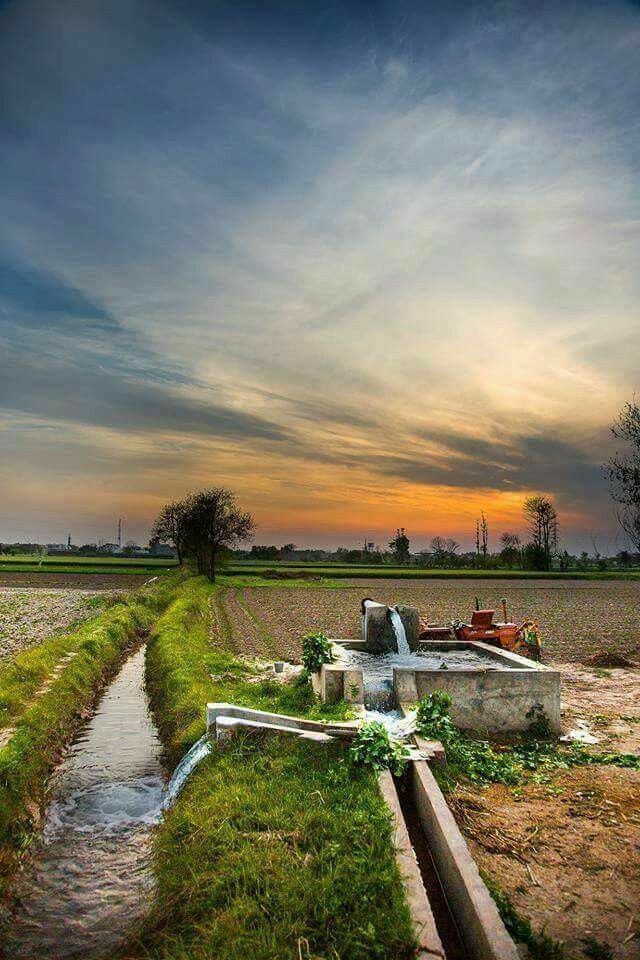
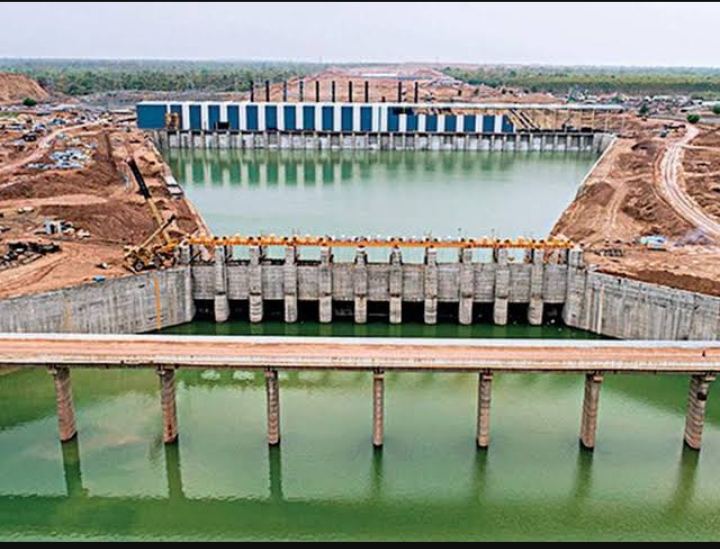
This project is a multi purpose irrigation project on the Godavari river in kaleshwaram in Telangana state.

It’s main purpose is irrigation to crops,supplying power and water. It is constructed to overcome the famine conditions.

From Times of India

In The Kaleshwaram Lift Irrigation System is considered to be one of the world’s largest multi-purpose projects. It is designed to provide water for irrigation and drinking purposes to about 45 lakh acres in 20 of the 31 districts in Telangana, apart from Hyderabad and Secunderabad.

Indian express.com

It’s construction began in 2016 and approximately 1.2 lakh crores were spend in the construction of this Although inaugurated the project is no where near completion.

From The Hans India

This project has at is own fair share of disadvantages too.

This project will displace at least 30,000 people in 19 villages.

It will affect land of about 1 lakh acres (40,015 hectares).

Considering all other costs, this project will be a major burden on the people of the state and farmers for generations to come

From Deccan Chronicle

The result is yet to be known whether the project is a success or not ,but if the result is good then the sacrifices that were done to built the project will not go to waste.

The amount of time, money, and labour spending on this project will never comeback so whether it will live up to the expectation of people or not is the question that is yet to be answered.

Thankyou^^.

Supply Chain Challenges for Covid-19 Vaccine Delivery in India

1. Logistics and Management

As of today, there are 154 candidate vaccines in pre-clinical trials, 21 in Phase-1 trials (Small-scalesafety trials), 12 in Phase-2 trials (Expanded safety-trials) and 11 in the path of approval across the globe. Not to forget, Russia’s first registered vaccine against the virus – Sputnik V. Even India has over a dozen of companies working on the vaccines out of which Covaxin developed by Bharat Biotech in collaboration with ICMR, is in its final stages and is highly anticipated. With so many possibilities, pharmaceutical manufacturers and distributors need to ensure continuity in vaccine development and delivery to meet the market demand. The following table talks about the potential vaccines being manufactured in India.

2. Availability and Affordability

Once the vaccine is launched, availability and affordability will be a key challenge. We must consider
the possibility of a private-public partnership to move this further, like in the case of polio vaccines.
There could be possible problems of irregular access to the vaccines, shortage in the supply, theft and
robbery, spike in pricing etc. which must be thought of beforehand. The vaccines must be suitably and
fairly priced for the lower income groups to be able to afford.

3. Manufacture and Production outreach

India has an upper hand in this criterion, since it has been manufacturing and exporting a significant
amount of vaccines and medicines of different kinds, globally. However, on the arrival of a potential
vaccine, manufacture and production has to be given a clear priority and must be upscaled, in order to
be prepared for the challenges of shortages like in the case of N95 masks.

4. Education and Outreach

Although vaccines are primarily important, it is not vital that everyone must be vaccinated at one
time. People with good immunity, free of ailments and high resilience are not particularly required to
be vaccinated. Healthcare workers, Senior citizens, people with health problems like diabetes, asthma,
coronary diseases etc. must be given first priority over the healthy population of the country, which
can be vaccinated at a later stage, if necessary.

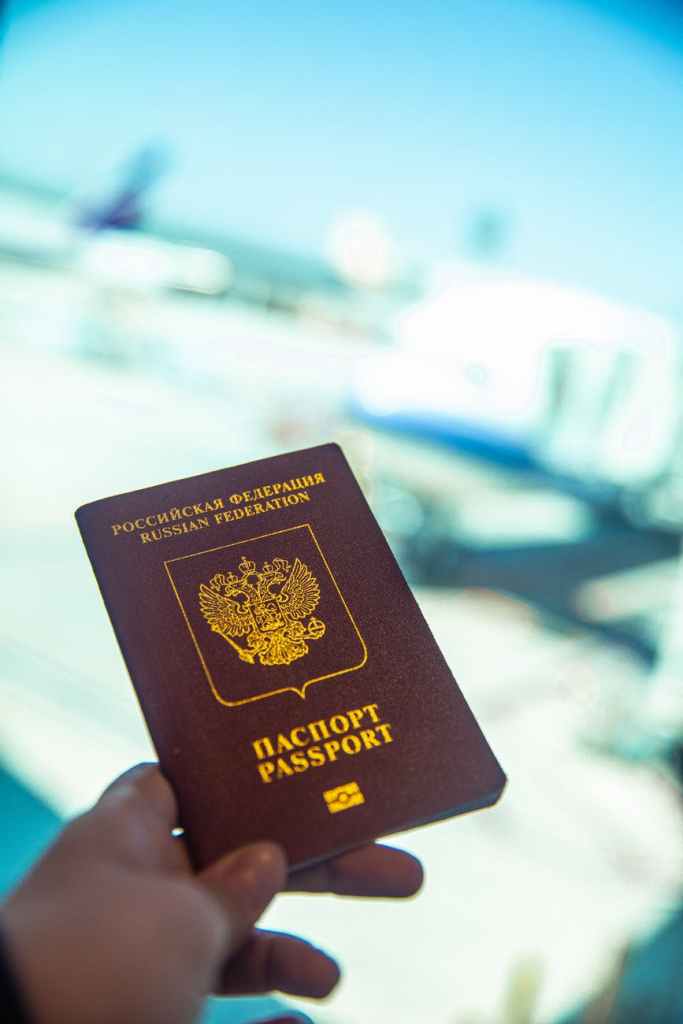
Vaccine passport system introduce by European union.

News

• New Vaccine passport system has come into effect across the European Union from July 1st

Green Passport

• European Union – EU Digital COVID Certificate.
 Ease travel restrictions for people travelling to
EU countries.

• Digital proof – Attests informations of the person.
 Vaccinated by any one of the four European Medicines Agency approved vaccines.
 Received a negative test result.
 Recovered from the viral infection.

• Certificate – digital signature which is verified
when the QR code is scanned. • Issuing body – own digital signature key, all of which
are stored in a secure database in each country.

• Certificate – recognized by all 27 EU countries,
Switzerland, Liechtenstein, Iceland and Norway.

• Possession of the certificate – exempted from free
movement restrictions.

• Member States – refrain from imposing additional
travel restrictions unless necessary.

• Lack of certificate – subjected to the usual travel
restrictions and quarantine rules which are in effect
in every country.

Issue

• EMA – listed only four vaccines.
 Vaxzevria (Oxford-AstraZeneca)
 Comirnaty (Pfizer-BioNTech)
 Spikevax (Moderna)
 Janssen (Johnson & Johnson).

• None of the three vaccines – approved for use in India till date is featured on the list.
 Covishield, Covaxin and Sputnik V.

• Only essential travel is allowed into EU
countries and that too special permission has
to be taken.

• Global concerns – Delta variant (first detected
in India), more restrictions are put in place.

Stand of the European Union

• Reason behind excluding – Serum Institute of India’s Covishield is a biologically different product.
 Needs to apply separately for EMA clearance.

• Serum Institute of India and AstraZeneca – Process of seeking clearances.

• Covaxin – yet to gain recognition from the
World Health Organization.

• Claim – Hint of racism.
 Vaccines cleared by the EMA are those taken
by residents in Europe and North America.

World Health Organisation

• Stand of the WHO
 Vaccine passports should not be made mandatory for travel and should be optional.
 The proof of COVID-19 vaccination should not
be required as a condition of entry and exit from a country.

India’s stand on the Issue

• Recent G20 ministerial conference – External Affairs
Minister registered a strong protest over the issue.

• Sources – India was prepared to initiate reciprocal harsh quarantine measures against countries that discriminate against Indians.

India’s concerns – three-fold

• Vaccine inequality – vaccine passports being restricted to passengers from countries that don’t have the same access to vaccines

• Gain recognition to Covishield

• Indian-approved vaccines – Worldwide recognition.
Stance of Africa .

• African Union and Africa Centres for Disease Control and Prevention – statement raising concerns
 Covishield vaccine was the “backbone” of the EU-supported international
COVAX alliance’s programme in Africa.

Current Status

• Nine countries – agreed to independently make
exemptions for Covishield
 Austria, Germany, Greece, Iceland, Ireland,
the Netherlands, Slovenia, Spain and Switzerland have.

• Estonia – accepted both Covishield and
Covaxin.

• Hope – enough pressure will be built on the EMA to include exemptions for Indian vaccines
as well.

DIGNITY OF LABOUR

“No work is insignificant. All labor that uplifts humanity has dignity.” Martin Luther King, Jr.

EVERY WORK MUST BE GIVEN HONOUR

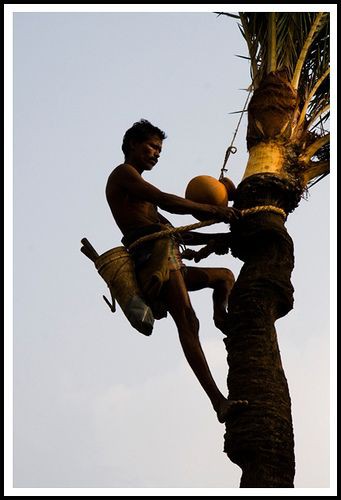
The word ‘dignity’ means the ‘quality of being worthy of honour or respect So the expression ‘dignity of labour’ means honour or respect’ received through or for hard work. That is why it is said that ‘work is worship’. Every type of work need labour, physical or intellectual. But the word labour’ is generally used in the sense of physical labour which is as important as intellectual labour. The production of cereals, construction of buildings and the other constructive work require physical labour. Man cannot do without hard labour. So, he should do all types of work.

WRONG NOTION ABOUT MANUAL LABOUR

But the attitude of the educated and the gentlemen towards manual labour is wrong. They are of the opinion that manual work is fit for the illiterate men only. But they are mistaken. All intellectual work involves some sort of physical labour. Even a student has to labour hard to pass the examination. All artists, scientists and writers whose work is intellectual have to spend hours with patience. The manual work too needs the exercise of intellect. A carpenter, an ironsmith, a goldsmith, a barber, etc. whose work is physical have to exercise intellect to improve the quality of their work.

MANUAL LABOUR: THE ROOT OF ALL PROGRESS

And it is the manual labour which is at the root of all progress. It is rightly said that true labour never goes in vain. Labour has its own importance. Nothing can be achieved in the world without labour. The prosperity of a country depends on its agricultural products. So, there is no humiliation in the cultivation of land. The people of the West do their work themselves. They look upon labour as something honourable and sacred. Such is the importance of labour that its dignity is recognised by all. It is the source of health and happiness.

SCIENCE AND TECHNOLOGY

The Google  every knows about  Google, it  gives us access to almost all information by typing what you want to know into the search bar. There are some interesting secrets you can have enjoy.

Then why are u waitimg just go with my steps ,

Go with,you have  type the phrase “Do a barrel roll”  into the search bar of Google and press enter, the entire page spin around once.

Second is a fun trick if you like Chuck Norris jokes. If you type in ‘Find Chuck Norris’ and click ‘I’m feeling lucky’, you will get a little message from Google about being careful what you search for.

Next, and this is one of my favourites, try typing ‘Google Gravity’ into the search bar on Google and pressing search. It will cause the entire page to fall into pieces. Although sometimes this doesn’t work, if you search it and click the first result on the page, it will take you back to the homepage which will then fall. The best part is that you can still search for things even after it has taken effect. It will, however, cause all of the results to fall from the sky and crash down on top of the already fallen homepage.

Finally, my favourite. Type ‘Zerg Rush’ into the search bar and hit enter. This will cause many ‘o’s to appear from all directions! But beware, they are not your friends. You must hover over each of the ‘o’s with your cursor and click like crazy. Soon they will vanish. Attempt this at your own peril, you have been warned.

So there you have it, a few cool things to do with Google when you’re bored. Of course, there are far more tricks to do with Google, but you can always find them by, you know, googling it. A little extra for reading this far: if you leave the search bar blank and click ‘I’m Feeling Lucky’, you’ll be shown all of the Google doodles that have ever been used on special dates.

Here are way more tricks you can do on google.

Do a Barrel Roll. Search for “do a barrel roll” without the quotes, and hold onto your desk for dear life. …

“As I rained blows upon him, I realized there had to be another way!” It’s a Festivus MIIIRACLE! …

Zerg Rush. …

Blink HTML. …

Party Like It’s 1998. …