Applications of Artificial Intelligence-I

What is AI?

Artificial Intelligence is the intelligence exhibited by machines based on the premise that intelligence is not ‘real’ or human’. It mimics cognitive functions exhibited by humans such as learning and problem-solving.

Artificial intelligence based on Natural intelligence

What is the scope of AI?

Jobs related to AI will increase exponentially in the coming days. It helps to find smart solutions to the problems in various fields in medicine, agriculture, education, security, and so on.

Three stages of Artificial Intelligence. We are near to the second stage.

Applications of AI

  • Machine Learning includes Deep Learning- Neural network
  • Vision includes Image & pattern recognition- Facial recognition
  • Hearing includes Voice and speech recognition
  • Natural Language Processing(NLP) includes Natural Language Understanding(NLU)- Natural Language Generation(NLG)
  • Robotics
  • Expert Systems

We are currently using the following AI-based applications:

  1. Image recognition: Recognizes objects, places, people, and actions in an image.
  2. Speech recognition: Allows humans to use their voices to communicate with the software.
  3. Language translation: Translates a word or sentence from one language to another. Ensure that the translated word is culturally and linguistically correct.
  4. Product analysis: Enables companies to leverage data to reveal user engagement with products or services and tracks the activities, likes, and dislikes of the user.
  5. A/B testing: Determines the version of a webpage and compares two versions and delivers better performance.
  6. Sentiment analysis: Analyze a piece of text to determine the writer’s attitude. It can be categorized as positive, negative, or neutral.

Let’s see few examples of Artificial Intelligence

  1. SIRI: Siri is a popular personal assistant offered by Apple which uses Machine Learning and Voice recognition.
  2. COGITO: It improves the intelligence of customer services by analyzing the human voice emotion and provides real-time guidance.
  3. NETFLIX: Uses predictive technology and provides the user with movie recommendations based on the user’s likes.

Use of Artificial Intelligence in society

“AI is a huge benefit to the society as it enhances the efficiency and throughput while creating new opportunities for revenue generation, cost savings, and job creation.”

-Anand Sampat(Datmo)

‘Robots and AI will destroy jobs’ is nothing but fiction and not fact. But instead, AI creates job opportunities in the market.

“The unparallel combination of human and machine will become the new normal in the workforce of the future”

– Matthew Lieberman

The presence of Artificial intelligence enhances our lifestyles and creates efficient businesses.

“Machine allows humans to do the most interpersonal and creative aspects of work”

 -Chalmers Brown(Due company)

AI platforms will provide real-time insights combined with the explosion of computer power.

“Smart homes will reduce energy usage and provide better security for humans. Marketing will be more targeted and health care will become more effective with smart devices”.

 – Naresh Soni

Start-ups using Artificial Intelligence 

  1. NEST: Alphabet Nest uses AI to learn a home owner’s habit resulting in a reduction of energy consumption. It adjusts the house temperature according to the weather hence energy consumption can be controlled.
  2. COMFY: Comfy offers services for reducing energy consumption in office buildings.
  3. PG&E: Pacific gas and electric company(PG&E) connected 200,000 solar customers, accounting for one in every four houses with solar rooftops.

AI benefits multiple Industries and society will be benefitted from the use of facial recognition, digital content analysis, accuracy in identifying patterns.

“AI risks are real if we don’t understand the quality of the incoming data and set AI rules which are making granular trade-off decisions at increasing computing speeds”

-Mark Butler

Facial recognition: Facial recognition is a biometric technology used to identify human faces and can be used for security purposes. 

Example: Snapchat

Snapchat differentiates between images of objects, pets, sports, and food. It suggests relevant borders and stickers. Identifies your location and suggests location-based filters.

Snapchat filters use Machine Learning and image classification techniques called Convolution Neural Networks(CNN).


BIOTECHNOLOGY- FUTURE OF THE MODERN WORLD

Biotechnology branch of biology deals with the the techniques of using living organism or enzymes to produce useful product for human welfare.

European federation of biotechnology (EFB) has has given a defination of biotechnology from both traditional and modern molecular biotechnology point of view. The definition given by EFB is as follows :

The integration of natural science and organisms,cells,parts thereof, and molecular analogues for products and services”

Engineer Karl Ereky first coined the term ‘biotechnology‘ in 1919, meaning the production of products from raw materials with the aid of living organisms 

Humans have used biotechnology since the dawn of civilization. Egyptians used yeasts to bake leavened bread, the Chinese developed fermentation techniques for brewing and cheese making, and the Aztecs used Spirulina algae to make cakes. Today, when most people think of biotechnology, they probably think of recombinant DNA. Although much of modern biotechnology does deal with manipulating DNA, classical biotechnology began long before we even knew about genes or chromosomes. What began as recipes for production of food now includes technology to enhance everything from farming to pharmaceuticals.

principles of biotechnology.

Traditional biotechnology

Traditional biotechnology refers to ancient ways of using living organisms to make new products or modify existing ones. An example of traditional biotechnology is what human beings have been doing for centuries: cloning plants. Each time a little branch is cut off from a plant and placed in soil to grow a new plant, cloning occurs. Over the past 30 years, biologists have increasingly applied the methods of physics, chemistry and mathematics in order to gain  precise knowledge.

Modern biotechnology

Modern biotechnology we are not only doing the physical manipulation at the visual level but also at the molecular level. In modern molecular biotechnology, we select the desired characteristic at the molecular level and add it to the organism’s genetic makeup. Whereas traditional biotechnology exploits  the potential of processes performed by living organisms, such as fermentation, modern biotechnology manipulates the genes of organisms and inserts them into other organisms to acquire the desired trait. 

However, both traditional and modern biotechnology share the same foundation:  the use of living organisms to enhance crops, fuels, medical treatments and other tools to help humans.

Among many, the two core techniques that enabled birth of modern biotechnology are:

1. Genetic engineering : Techniques to alter the chemistry of genetic material (DNA and RNA),to introduce these into host organisms and thus change the phenotype (physical character) of the host organisms.

2.Chemical engineering : Maintance of sterile microbial contamination free ambience in chemical engineering processes to enable growth of only the desired microbe/ eukaryotic cell in large quantities for the manufacturing of biotechnological products like antibiotics, vaccines, enzymes, etc.

Stanley Cohen and Herbert Boyer in 1972 isolated the first recombinant DNA and the antibiotic resistance gene by cutting out a piece of DNA from a plasmid( autonomously replicating circular extra- chromosomal DNA) which was responsible for conferring antibiotic resistance.

The cutting of DNA at specific locations became possible with the discovery of the so- called ‘molecular scissors’ – Restriction enzymes

Biotechnology is the emerging field nowadays and in coming future it will be the important part For the development of the country. By manipulating genes we can produce more and more useful products for the human welfare.

Bio – War

Biological warfare, also known as germ warfare, is the use of biological toxins or infectious agents such as plagues, bacteria, viruses, insects, and fungi with the intent to kill, harm or incapacitate humans, animals or plants as an act of war.

Deadliest bio weapon

Bacillus Anthracis (Anthrax)

Bacillus anthracis bacteria, which causes anthrax, is one of the most deadly agents to be used as a biological weapon. It is classified by the US Centres for Disease Control and Prevention (CDC) as a Category A agent, posing a significant risk to national security.

when it is actually started ?

One of the first recorded uses of biological warfare occurred in 1347, when Mongol forces are reported to have catapulted plague-infested bodies over the walls into the Black Sea port of Caffa (now Feodosiya, Ukraine), at that time a Genoese trade centre in the Crimean Peninsula.

Biological warfare is distinct from warfare involving other types of weapons of mass destruction (WMD), including nuclear warfare, chemical warfare, and radiological warfare. None of these are considered conventional weapons, which are deployed primarily for their explosive, kinetic, or incendiary potential

Biological weapons may be employed in various ways to gain a strategic or tactical advantage over the enemy, either by threats or by actual deployments. Like some chemical weapons, biological weapons may also be useful as area denial weapons. These agents may be lethal or non-lethal, and may be targeted against a single individual, a group of people, or even an entire population. They may be developed, acquired, stockpiled or deployed by nation states or by non-national groups. In the latter case, or if a nation-state uses it clandestinely, it may also be considered bioterrorism.

With the onset of World War II, the Ministry of Supply in the United Kingdom established a biological warfare program at Porton Down, headed by the microbiologist Paul Fildes. The research was championed by Winston Churchill and soon tularemia, anthrax, brucellosis, and botulism toxins had been effectively weaponized. In particular, Gruinard Island in Scotland, was contaminated with anthrax during a series of extensive tests for the next 56 years. Although the UK never offensively used the biological weapons it developed, its program was the first to successfully weaponize a variety of deadly pathogens and bring them into industrial production. Other nations, notably France and Japan, had begun their own biological weapons programs.

How to stop bio weapon ?

Elements of preparedness include vaccinating military personnel against anthrax and other diseases caused by biological weapons; developing methods for the rapid detection of biological threat agents; developing and stockpiling vaccines and antimicrobial drugs that could be used to protect the public against diseases

When the United States entered the war, Allied resources were pooled at the request of the British, and the U.S. established a large research program and industrial complex at Fort Detrick, Maryland in 1942 under the direction of George W. Merck. The biological and chemical weapons developed during that period were tested at the Dugway Proving Grounds in Utah. Soon there were facilities for the mass production of anthrax spores, brucellosis, and botulism toxins, although the war was over before these weapons could be of much operational use.

NOVAL APPROACHES TO BUILD A STRTUP TEAM FOR AN AGILE WORLD

Start ups are different from large established companies .So in order to thrive in technological world the corporate culture must be changed from traditional mind set to agile mind set. So, in order to change the traditional cultures of start ups they must need a perfect team which converts the entrepreneurial ideas into reality. Corporate culture has been changing extensively from the last two decades on wards with its instinctive technology, salary package and benefit factors. In todays competitive situations every startup or an established company must have a team with agile mindset.

WHAT IS AN AGILE MINDSET?

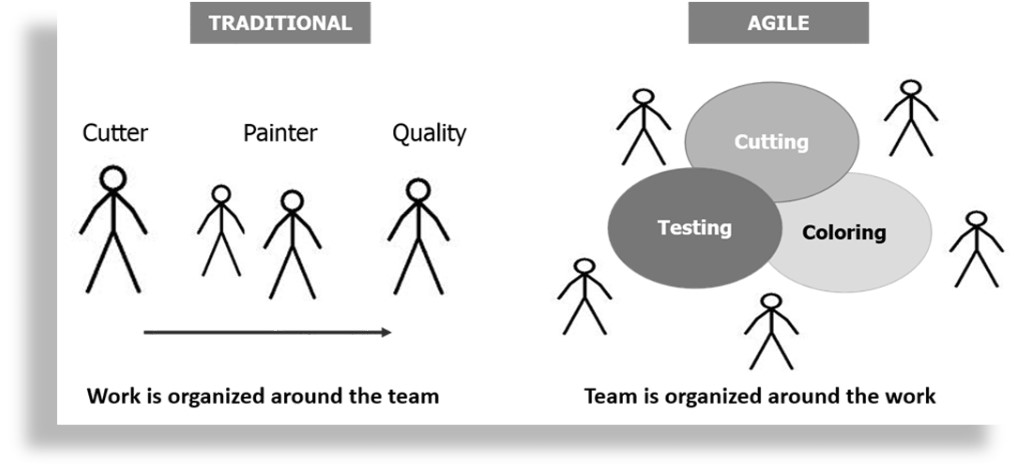
The Agile Mindset is a movement away from traditional, which avoids the bureaucratic leadership like which can involve office politics and a “whoever is loudest is right” mentality. Instead, the agile mindset keeps ego aside from the teams and focus on what is right, instead of who is right. This agile methodology was emerged in 2001 for the development of software practices by providing more reliable workspaces and improved management but now it is a globally embraced framework and mindset which enables business to be better in almost every field with its viability of vision.

THE CHARACTERISTICS OF AGILE MINDSET ARE AS FOLLOWS:

PRINCIPLES OF VISION TO VIABILITY FOR AN AGILE TEAM ARE AS FOLLOWS:

Keeping the above picturized principles in mind which can help a start up to build a perfect team to become more open-minded to the agile mindset approach. These are the core values which helps to nurture more efficiency in teamwork.  This methodology can be used for our personal development also, in order to determine the clear goals or achievements that we want to reach. Now, let’s have an idea about ” How to build an agile team ? “

THE SEVEN MAJOR VISIONARIES TO BUILD AN AGILE TEAM IS AS FOLLOWS:

1 ATTRACT AWSOME TALENT: Try to choose every individual with complementary skills who share the excitement for the company vision. So that they give their best for growth of the company.

2 CREATE FOCUSED & ALIGNED TEAMS: Companies should create the teams which concentrate on the key initiatives to meet the desired goals and achievements of the company.

3 CREATE A LEARNING ORGANISATION: The team must posses the flexibility to manage or make some adjustments to the plan to avoid un necessary risks.

4 BUILD A COHESIVE TEAM: Building a cohesive team adds a marks to the company because this type of team celebrates the collective win over the individual gain and learns from the failure.

5 BUILD A TEAM TO EMBRACE THE DIFFICULT DECISIONS: The team must address the mistakes that has been done previously or during the running project and should change them according to needs of project growth.

6 Foster a culture into the team which can embrace flexibility and also to thrive in good time or bad time.

7 Give an allow for both GEN Y and GEN Z categories in order to tap the high performance energy and fresh thinking ability.

Finally, founders or HR’s of the start ups must cross check all the abilities in hiring a person. Try to maintain some techniques while hiring a person i.e give priority to the aptitude over the experience because fresh thinking always enhances better results and look for the passion in the candidate who want’s to join in the company. Always remember that hiring persons from different cultures can give a strong grip to the foundation of a start up because diversity creates better decisions and the most important thing in hiring process is constantly polishing the way of hiring. Try to look for the culture “FIT” and always be recruiting so that we can form the best teams than the previous once which helps in the growth of the company.

Gold in Tiny Amounts; Elixir?

All about gold nanoparticles

Precious metals like silver, gold, and platinum are all used in medicine to aid treatments as diverse as wound healing and cancer therapies. Gold nanoparticles (AuNPs) are small gold particles with a diameter of 1 to 100 nm which, once dispersed in water, are also known as colloidal gold.

Nanoparticles at a glance.

How did gold get to earth?

Gold, the shiny yellow metal prized for its beauty, malleability and used in many different industries, is actually created inside massive stars when they explode into a supernova. Here lies the history-

  • Gold, like most heavy metals, are forged inside stars through a process called nuclear fusion. In the beginning, following the Big Bang, only two elements were formed: hydrogen and helium. A few hundred million years after the Big Bang, the first stars were blazing away with their nuclear fires. These nuclear fires forced lighter elements together to make slightly heavier elements, and these nuclear reactions released a huge amount of energy.
  • Gradually, these early stars began making elements such as carbon, nitrogen, oxygen — working their way up through the periodic table towards iron. But there was still no gold in the Universe. Once these earlier stars ran out of light elements to burn, they kicked in on the heavier ones.
  • Finally, as they burnt silicon to make iron, they exploded as a supernova, and for a few short moments, each star would release as much energy as all the regular stars in that galaxy put together. In that cataclysmic explosion, for the first time, atoms of gold were manufactured — and then hurled out into the Universe, along with the other debris from that explosion.
  • On Earth, gold finally reached us some 200 million years after the formation of the planet when meteorites packed with gold and other metals bombarded its surface. During the formation of Earth, molten iron sank to its centre to make the core. This took with it the vast majority of the planet’s precious metals — such as gold and platinum. In fact, there are enough precious metals in the core to cover the entire surface of Earth with a four-metre thick layer.

Cancer treatment

Colloidal gold, the suspension of gold nanoparticles in liquid, has been used for hundreds of years, from staining glass in the Middle Ages to early experiments with photography in the Victorian era. But it was only 160 years ago that gold nanoparticles were given any serious scientific examination, when scientist Michael Faraday created the first pure sample of colloidal gold in his basement laboratory at the Royal Institute in London. Faraday’s early experiments were forays into what would ultimately become the fields of nanoscience and nanotechnology.

“Scientists have pioneered a revolutionary approach in the use of gold nanoparticles that could lead to the development of a new generation of broad-spectrum antiviral drugs.”

  • Targeted drug delivery is better than conventional drug therapy because these drugs target the main effected area, so it minimizes the side effects caused..
  • Gold nanoparticles have the ability of bio-imaging of the effected cancerous cells for therapy. Cancer DNA has a special 3D structure that has an affinity for gold, according to one study, and nanoparticles change color when that DNA is present. Simple, fast tests could detect cancer in 10 minutes.
  • Gold nanoparticles have unique physical, chemical properties and strong binding attraction for thiols, proteins, carboxylic acid and disulfides, so they have been extensively used in drug delivery for cancer therapy.

Alzheimer’s-

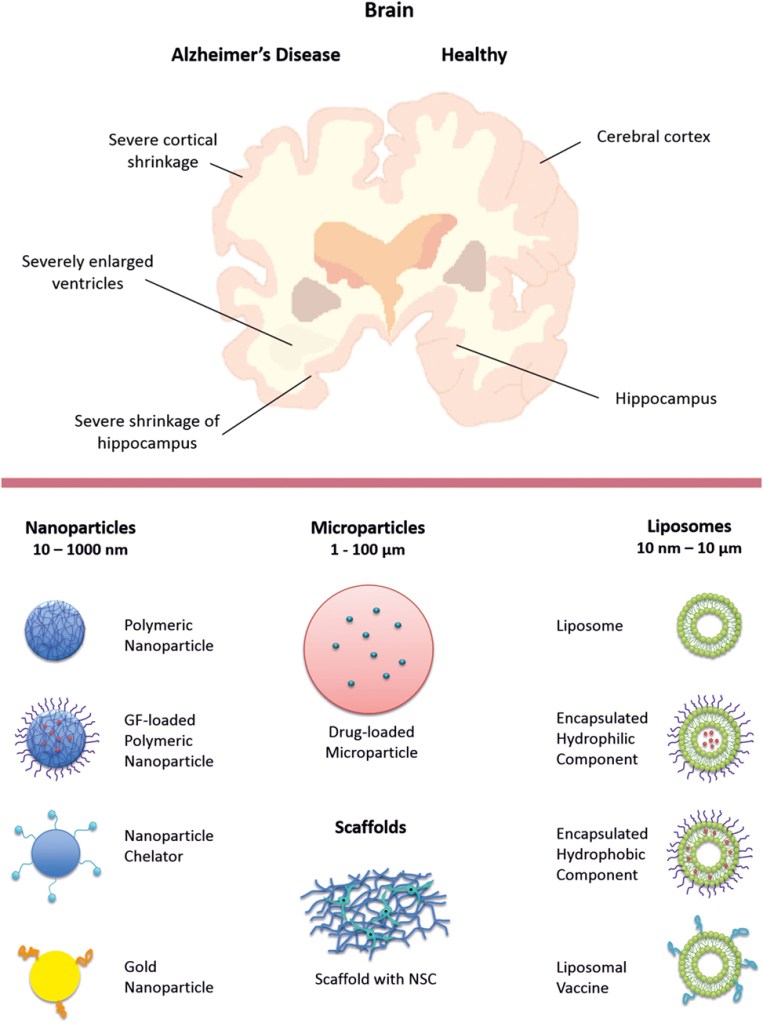
  • Illnesses associated with ageing are under the microscope too. Scientists are using gold nanoparticles to see the knot-like structures in the brain that cause Alzheimer’s and other neurodegenerative diseases. By labelling these structures–called amyloid fibrils–with gold they can see the knots more clearly and identify their weak spots for treatment.
  • Another global health problem shows promise for gold use in medicine. Tropical disease malaria, transmitted by mosquitoes, infected 219 million people in 2017 and killed 435,000. Nanoparticles used in rapid diagnostic tests are cheap to use, can give results in 15 minutes, and help doctors target treatment for malaria where it is most needed.
image description

Immunity

  • Immunotherapists are also harnessing the special properties of spherical nanoparticles to deliver a boost to the body’s immune system. Polymer-coated spheres of gold interact with B lymphocyte immune cells and can deliver drugs or vaccine to where it is most needed. In this way they hope to treat hard-to-reach brain tumors.
  • Going forward there is exciting potential for nanoparticles to help combat HIV and blood diseases. Medics use the gene editing tool CRISPR to deliver new genetic information to cells, but current methods can damage or even kill cells. Gold nanoparticles mounted with CRISPR can quickly cross the cell membrane into the nucleus to edit genes.

Thankfully, even though gold is a rare commodity compared to other metals, in microscopic quantities it can improve our lives immeasurably. Nanoparticles measuring billionths of a meter are used as tiny detectors to develop the most sensitive chemical tests.

Thank you!

← Back

Thank you for your response. ✨

Warning
Warning
Please rate our website(required)

Warning
Warning
Warning.

The utterly butterly delicious story of Amul

Over the years, Amul, one of the most beloved brands of our country, has become the taste of India, just as its tagline claims. Every Indian millennial has grown up listening to the jingles of its many dairy products, and the Amul girl, the brand’s mascot in the polka-dotted dress, has become a nostalgia-evoking symbol. Amul has truly come a long way since its founding in 1946.

The beginning

Amul was formed as a part of a cooperative movement against Polson Dairy in Anand, Gujarat, which procured milk from local farmers of Kaira District at very low rates and sold it to the then Bombay government. Everyone except the farmers benefited from this trade. The farmers took their plea to Sardar Patel, who had advocated farmers’ cooperatives since 1942. The result was the formation of the Kaira District Co-operative Milk Producers’ Union Limited in Anand.

The union started pasteurising milk produced by a handful of farmers for the Bombay Milk Scheme and grew to 432 farmers by the end of 1948. The rapid growth led to problems including excess production that the Bombay Milk Scheme couldn’t accommodate. To solve this issue, a plant was set up to process all that extra milk into products such as milk powder and butter.

Amul is born

The late Dr. Verghese Kurien, rightly called the Milkman of India, was Amul’s true architect. His journey at Amul began in 1949 when he arrived in Anand to manage a dairy as a government employee. He went from helping farmers repair machinery to revolutionising India’s dairy industry with the White Revolution (or Operation Flood), the largest dairy development programme in the world.

The new dairy with the milk processing plant was ready for operation in October 1955, the year that also saw a breakthrough in dairy technology —buffalo milk was processed to make products for the first time in the world. The word ‘Amul’, derived from ‘Amulya’, which means ‘precious’ or ‘priceless’ in Sanskrit, was used to market the range of milk products developed by the Kaira Union. It is also an acronym for Anand Milk Union Ltd.

Dr Kurien had a vision. He wanted to offer small-scale dairy farmers quality-control units and centralised marketing, which were missing at the time in the dairy economy. Thus, the Gujarat Cooperative Milk Marketing Federation (GCMMF) was created in 1973 to market milk and all milk products produced by six district cooperative unions in Gujarat. GCMMF is the largest exporter of dairy products in India and Amul is the umbrella for all of its products.

Awards, accolades, and a global presence

Over the years, Amul, together with GCMMF, has won numerous awards. Some of these include the Rajiv Gandhi National Quality Award, 1999; the Golden Trophy for Outstanding Export Performance, 2009-10; Best Marketing Campaign, 2014; and World Dairy Innovation Award, among many others. Amul earned recognition all over the world when GCMMF  introduced it on the Global Dairy Trade (GDT) platform, where only the six top dairy players across the world sell their products.

More than a mere slogan

Amul’s famous slogan, which is now a part of its logo, was created in 1994 by Shri Kanon Krishna of a Mumbai-based advertising agency called Advertising and Sales Promotion (ASP). According to Amul, the Taste of India slogan is more than just corporate positioning or advertising jargon. This slogan lends meaning to the brand’s never-ending commitment to taking quality food and products to the rural man, which he otherwise couldn’t have afforded.

The Butter Girl

Amul did not always have the round-eyed moppet as its mascot. The Butter Girl was born in 1966 when Sylvester daCunha, the then MD of the advertising agency handling Amul butter’s account, created her for its campaign. It was a pleasant change from the dull, corporate ads that the previous agency had come up with. Being a seasoned marketer himself, Dr Kurien gave daCunha complete creative freedom to create and release the ads without taking the company’s permission. 30 years later, the Utterly Butterly Girl still wins hearts wherever she is, whether on a billboard or on the packet of butter.

Amul is not just a brand; it is also a movement that represents farmers’ economic freedom. The name is now a household term that is here to stay, and the chubby-cheeked Amul girl will continue to cast a spell on the public.

Technology- boon or bane

What is technology

Technology refers to an innovation of an idea which helps the human race to develop and make their life easy. Technology doesn’t mean only virtual things, it also includes some materialistic innovation and items. Telephone, smartphone, internet television, satellite, and many more are examples of technology.  Technology makes one’s life smooth and easy. Earlier people had to use their hands to pull water from wells. Time changed, people started to use pulli and then the motor pump  took place. The need of society brings the change in technology. Nowaday we have so many innovations and techs which help us to do our work even in our personal zone.

How it is important

Imagine one month without your phone, iron press, grinder in kitchen, geyser  in bathroom, fan and air conditioner in rooms- how do you feel. Yes, you can adjust for one day but you feel discomfort somehow. The activities you can perform easily with this stuff you find difficult to do. 

Even in the medical world business field, corporate sectors, law firms and many other professional areas depend on technical society. Technology saves lives and increases the human living ratio. We develop technology for the benefit of society but when it goes to the wrong hands the technology nature becomes destructive. We should always focus on the ethical use of technology. 

Technology evolution

Nothing is permanent in the world. Everything is temporary.  Things evolve and change their nature. As the same with technology. Technology evolves and changes according to the needs of society.

Necessity is the mother of innovation. 

 From Invention of bulb to invention of LED, from pulley to motor pumps, from super computer to smartphone- technology evolves for good and bad for both. The need of society leads to the change of technology. 

Boon or advantage

Technology has many advantages in different fields.

  1. Technology in education sector:

During the pandemic we all are house arrested to save ourselves from COVID-19 virus. Education of the students was at high risk of neglect. But technology helps us to continue our academic activities through online classes. Assessment evaluation, learning,  celebration and other activities are conducted through the internet. Technology plays an important role in the education sector in academic and non academic activities.

  •  Technology in Medical 

Technology saves many lives and gives hope to the hopeless people. Innovation in the medical sector has become a boon for humanity. Nanotechnology is one of the best examples of technology in medical science. During the pandemic doctors also come on internet platforms for the concern and prescription for their patience. It is only possible with the help of technology.

  • Technology in Corporate sector

Nowadays the corporate sector also works with innovation. Technology helps to collect data, analyze and interpret the data- all the work is based on technology. Computers help to do all the work of the corporate world. They work with technology on innovation. Due to the pandemic all the things scheduled online. Only technology makes it possible.

  • Technology in Judiciary sector

Judiciary is one of the important sectors. Judiciary works for justice so it is important that the judiciary must be technology strong. The Judiciary sector also started the use of information and communication technologies in their processing, hearing and conducting examination. Pandemic also creates opportunities to raise the use of technology in the judiciary. 

  • Technology in household 

Robotic vacuum cleaners and humanoid robots are the new technology. They take care of your house as humans do. They need to charge once a day. Humanoid robots not only follow the command but also make decisions when they felt needed with the help of artificial intelligence.  

Disadvantage or bane

  • Increase in crime rate

Technology becomes the bane when it is in the wrong hands. We all are aware about the cases in which technology plays a vital role to commit a crime. Ict technology connects people but we are not aware about the intentions of other people.

  1. Negative impact on Environment 

Most of the technology is based on the waves. For setting up the plants forest and cultivation land are getting spoiled. Chemicals and other plants pollute the water and air. Our nature is degrading because of technology. We should try to use them to the limit to save nature.

  • Less social interaction

Social media is one part of virtual technology. But here is a question that we are really connected to each other. Youngsters spend most of their time on social media but they are not that energetic. They don’t want to go outside and meet people. Social interaction is limited  to smartphones and applications.

  • Addiction of technology

We all are really addicted to technology. We need them for my survival. We found ourselves nothing without technology. 

  • Destructive nature of technology

In the war, use of technology could be more destructive in nature. Army fought for their nation. But when the war is about supremacy and technology becomes the tool. Then the technology is considered bane for society.

Use of  Nuclear technology in world war against Japan is one of the best examples to prove that technology is dangerous in itself.

Conclusion

Technology is really useful and helpful for the development of society. Technology brings changes and innovation makes our life easy. We don’t need to do as much hard work as earlier. But if technology gets in the wrong hands it is also very destructive for human existence. Ethical use of technology only brings prosperity and wealth in society. Technology is a boon as well as bane for human.

Video Game crash of 1983

In 1983 the video games industry was hit with a recession that almost ended the existence of video games of that time period. This period lasted for almost two years from 1983 to 1985. Many people and journalists who were critical were calling video gaming a fad. Numerous companies went bankrupt or stopped making video games entirely. This recession is known as the Great North American Video Game Crash or Atari Shock (Primarily in Japan).

Video games in the 1970s were dominated by arcade machines and by the end of the decade home game consoles were also getting popular. With the start of the 1980s, the video gaming industry witnessed a boom with numerous companies like Mattel, Atari, and Coleco dominating the market. The early 80s was a time of innovation and growth in the video game industry but there was instability in the industry as well. This was a time period when video games were becoming more mainstream and popular. Many new players entered the market ranging from industries to small developers that had no association or prior experience in game development in general.

Pacman was a big hit in the early 80s and it was not of the most popular video games in the arcades. Its successor Miss. Pacman improved on the formula and was a success as well. After the success of Pacman in the arcades, Atari wanted to replicate the success in the home game consoles. But with the limited constraints with the memory and short development period, the game was not well received by the consumers and critics alike. In 1982 Atari also brought the license to release the video game of the movie for 21 million. The game was developed in a time period of only 5 weeks. The game was negatively received and only 1 million copies of the game were sold off the 5 million manufactured. Many of the sales were also returned to the retailers furthering the damage. During this period video games were being published by small developers with very poor quality and many big developers were producing games that were more of a marketing token than the game. There were many clones of the same games with little to no redeeming quality and replayability. There were also numerous consoles unlike today with too many options that were no different from one another. With the abundance of supply and low sales of games, retailers started to remove stocks of video games and this led to the shrinking of the industry. Atari had lost $500 Million in 1983 and had to cut its workforce from 10,000 employees to just 400 employees.

During the 1980s there was a boom in the Personal Computers market as well. The PCs were much more powerful than consoles and they could play games and do many tasks like word processing and spreadsheets. The PC industry was unaffected by this low point of video game consoles.

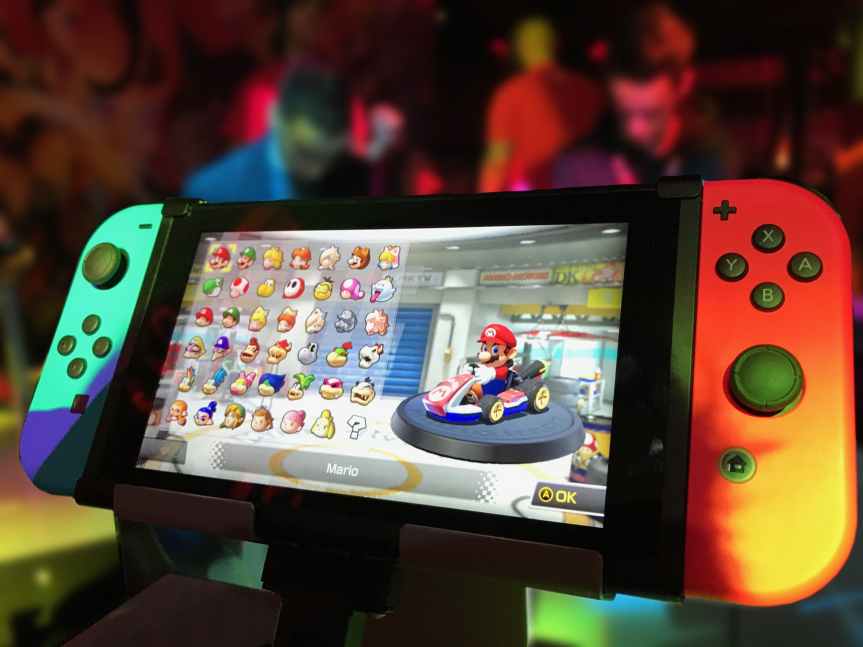
In 1985 Nintendo Corporation launched the Nintendo Entertainment systems in North America and Nintendo ensured that only a limited number of games to be released under their license agreement. This ensured a certain threshold of quality for the games that were released for the system and Nintendo emerged out of the survivor from the video game crash. The Nintendo Corporation started to dominate the video game industry with an assurance of quality that was unmatched by any other corporation at that time. Many other entrants like SEGA also emerged after the crash. Nintendo with its approach and license and quality assurance of video games has left a big impact on the industry to this date. Video games industry has only grown since then and also overtaken other source of entertainment. Nintendo can be credited to provide the industry a trajectory that was severely needed after the crash of 83.

References:

Dark Web

The term “dark web” sounds ominous, and there’s a reason for that. The dark web is a part of the internet and made up of hidden sites that you can’t find through conventional web browsers. Instead, you must rely on browsers and search engines designed specifically to unearth these hidden sites.

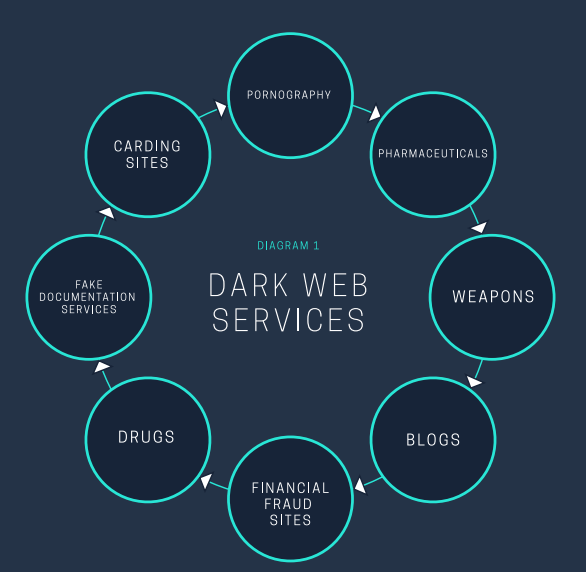
There’s also plenty of secrecy surrounding this corner of the internet. Sites on the dark web use encryption software so that their visitors and owners can remain anonymous and hide their locations. It’s why the dark web is home to so much illegal activity. If you tap into the dark web, you’ll find everything from illegal drug and gun sales to illicit pornography and stolen credit card and Social Security numbers.

Dissidents who fear political prosecution from their governments might use the dark web to communicate with each other. You might visit the dark web to get medical advice that you want to make sure remains anonymous. Sometimes journalists use the dark web so that they or their sources can remain anonymous.

Here’s a guide that will help you learn about the dark web, the sites that populate it and how you can visit it. Be careful, though: The dark web can be dangerous. And if you want to explore it for illegal activities, you could face prosecution and jail time. Depending on where you visit, and what you download, you could also be exposed to scammers and cybercriminals who could attempt to infect your devices with malware or steal your personal information.

What’s on the dark web?

The dark web has earned some of its seedy reputation. A 2016 report from researchers Daniel Moore and Thomas Rid, of King’s College in London, looked at 5,205 live sites on the dark web and found that 2,723 contained illicit content.

What does this mean? The report found that visitors to the dark web can buy and sell guns, drugs, counterfeit money, other people’s Netflix accounts, credit card numbers, and more. You can also find software that you can use to access other people’s computers.

But, again, the dark web isn’t just for criminals. You’ll also come across online versions of books that have long been out of print, a collection of political reporting from mainstream news sites, and several sites run by whistleblowers looking to expose corporate and government corruption.

Drugs

The dark web might be most notable for providing black markets that visitors can use to buy illicit drugs. Silk Road is a good example. This site was famed for the drugs visitors could find on it. The FBI shut down Silk Road in 2013. A new version of the site came online later that year but was also shut down.

The founder of the site, Ross Ulbricht, who went under the false name Dread Pirate Roberts, was arrested in late 2014 and sentenced to life in prison without the possibility of parole. AlphaBay was another popular online marketplace filled with illegal products. It was shut down in 2017.

Passwords and usernames for streaming services

If you don’t mind stealing, you can find the passwords to a host of streaming services — both those offering mainstream movies and those hosting pornography — on the dark web. Cybercriminals sell these passwords to those who want to skimp out on paying the monthly fees for streaming subscriptions.

Passwords and usernames available typically include those for services such as Netflix, Hulu, HBO, Amazon Prime, and other streaming services.

Credit card and debit card numbers

Here’s a scary one: According to a report by Gemini Advisory, 115 million stolen debit and credit card numbers were posted to the dark web in 2020.

Criminals sell these stolen numbers to other thieves. Armed with these numbers, criminals can make unauthorized purchases online using your information. And, yes, you can dispute these purchases, but who knows how much damage these thieves can do before you catch these illegal purchases?

Bank account numbers and passwords

If thieves sell credit and debit card numbers on the dark web, you can bet that they’ll sell bank account numbers and passwords to online savings and checking accounts, too.

According to a report by cybersecurity firm Digital Shadows, more than 15 billion pieces of financial account details are now being sold in online marketplaces. According to the report, banking and financial accounts made up about a quarter of these online listings.

Again, criminals can do a lot of damage after buying your bank account details. They can use your account to make purchases and drain your savings or checking accounts quickly.

Social Security numbers

Criminals can also find Social Security numbers — along with other personal information like people’s birthdates, addresses, and phone numbers — for sale on the Dark Web.

Criminals can use your Social Security number to help steal your identity. That can lead to serious financial pain, as these thieves can use your identity to apply for credit cards in your name, apply for mortgage loans, and even file your income taxes in the hope of stealing your refund.

Difference between dark web and deep web

It’s easy to confuse the dark web with the deep web. But they aren’t the same.

The deep web is also hidden, in a way. But it’s home to benign sites, such as people’s password-protected email accounts, the intranets run by businesses, the online bank account pages of consumers, government databases, and private sites that require users to type in a log-in name and password.

Think of the dark web, then, as a small subset of the deep web that has become a haven for illegal activity.

Is it illegal to access the dark web?

Surfing the dark web isn’t illegal. Buying illegal drugs or firearms from a site on the dark web or downloading child pornography? That is illegal.

For instance, in the summer of 2018, the U.S. Department of Justice, U.S. Department of Homeland Security, U.S. Secret Service, Drug Enforcement Administration, and the U.S. Postal Inspection Service teamed up to arrest more than 35 dark web vendors of drugs, weapons, and other illegal products. The agencies also seized $23.6 million in illegal guns, drugs, gold, and Bitcoin.

Advantages and disadvantages of social media

Photo by Tracy Le Blanc on Pexels.com

In todays life social media has become a very vital and essential part of our life. and the extent of its need is that at we cant live even a single day without social media. Its like we drink water to survive, same is for social media(for most of the people),we cant imagine ourselves without it. But first of all , the questions arises…how it has gained this much of importance?

If we look back.. (say 20 years back) those were the days when social media was not much popular not everyone knew about that but with the passage of time, it gained popularity. People started liking it because of its benefits. the relatives which lives far from our home we have no clue about them that what is going on their life was made possible due to social media. which we could have never imagined. it has not only changed personal life but also professional life. communication has been made much easier with the help of social media.

Photo by Anthony Shkraba on Pexels.com

Through Social media people were able to adopt digital marketing instead of offline. these are some of the benefits of social media, due to which Social media became such popular and essential part in one’s life.

Advantages of social media

There are several advantages of social media , but some of the advantages that i would like to state are:-

1.It has made communication in both (personal and professional ) relations very easy and strong .we are just a message far from communicating with our loved ones .it has created a huge network to connect people .people are getting new friends through social media and in professional life also people are they are able to get lot of knowledge .

2.Through social media , we are able to share our qualities and skills to whole world which we sometimes hesitate to share face to face. Due to which we are able to connect with our mentors ,friends and role models .we can also express ourselves in social media.

3.carrier building is one of the most important use of social media. and social media allows us to connect with specific people or pages that keeps us updated about current affairs, that gives us tips and guide us to achieve our goals.

4. One of the most important use of social media nowadays is it keeps our mental state(if used properly) good. there are many things in social media that makes our mood happy and one of the most important thing in this is none other than ‘Memes’.

memes are anything (image , video or anything else) which has humor in it which is shared by internet users to each others. They are made from any film, real life incident or current affairs, that is liked by all over the world.

5.And last but not the least , during this pandemic social media helped us a lot. it created awareness among people to wear mask and maintain social distancing and many important information were exchanged through social media.

Photo by Teona Swift on Pexels.com

Disadvantages of social media

As earlier we discussed about advantages of social media, there are equal number of disadvantages of social media some of the disadvantages are listed below:-

1.Anything that is overused is harmful for us, same is applied for social media.one of the major problems of social media is that people spends lot of time in these social networking sites searching irrelevant things .That are of no use instead of using it the right way, people( specially teenagers ) are always busy in social media. They are addicted to social media, especially teenagers are busy with social media which eventually lead to cut off to society and physical meeting to each other.

2.cyberbullying is one of the biggest disadvantage of social media people are creating fake accounts and doing whatever they want with it without being traced.it has become very common and bully anyone on the internet .This also includes death threats ,fake rumor and discomforting anyone which can have effect in victims mental state.

3. Social media helps people in relationships but some people cheats others with fake feelings and totally wrong in formation about them.

4.Hacking is also a concern in using social media. People’s personal data and privacy can be easily hacked and can be misused .which can also cause financial loss to the person. We always hear news that famous celebrity’s or politician twitter account been hacked. this is a very serious problem. when these VIP people’s account can be hacked with such ease so what about us .This is very serious issue.

5.social media also cause health issues. People are not adopting healthy lifestyle they are busy in social media till late nights and waking up late in morning that is affecting health .people are not adopting healthy lifestyle which can cause some serious health issues.

conclusion

we discussed about social media and its effect in our life.we came into a conclusion that social media is very important and essential in one’s life but the miost important thing is to use it the right way and in a limited amount.

NASA girl trolled for her faith- peak of Hinduphobia

Humanity hit a new low when an Indian origin American girl was heavily trolled by netizens just because of her faith. NASA, in order to invite new interns tweeted an application showcasing the diverse nature of the organization. An Indian girl also featured in the tweet with Hindu idols in the background of her picture.

An innumerable number of trolls targeted the girl criticizing NASA for including such a “stereotypical” image of Indians according them. But is it okay to bash someone merely because they follow a particular faith or religion? The girl undoubtedly secured a place through her efforts and a futile, good for nothing crowd directly mocked her as a fake science-lover only because she believes in her Gods. If atheism was a criterion to get selected in any scientific organization then people should also nullify the work and contributions of Einstein, Newton and Darwin.

It is so shameful to read the tweets and realize how much hatred and Hinduphobia is prevalent in society. Some of the tweets read ‘She missed Lord Ganesha and 33 million other Gods’, ‘NASA and gods don’t mix. The Indian kid seems to have some kind of obsession with Gods’. Other tweets are too vile to read.

Another user very accurately pointed out “All those mocking her: Hijab, polygamy, child marriages, Niqab, prayers on road, etc. are supposed to be respected under the concept of ‘choice’ and ‘pluralism’ but a Hindu lady practicing her faith has to be ridiculed. Carry on! Your bigotry will make her faith stronger.”

It is indeed true that the case would have been very contrasting only if the girl was wearing either hijab or had a Christ portrait in the background. However, irrespective of any religion or faith, no one should be criticked or targeted just because they are proud of their roots.

10 Best MightyText Alternatives To Send SMS From PC

We send texts on our phones; now we can do the same on our desktop computers. Many Android apps, such as MightyText, are available on the Google Play Store as well as on App Store that allow users to send and receive text messages from their computers. MightyText is one of the most popular desktop clients for accessing and controlling mobile devices from a PC.

You can simply sync MMS, SMS, Videos, Photos, and other files to other devices with MightyText. It can also be used to send and receive text messages from computers. However, it can or cannot be a paid service. The free version of Mighty Text includes a monthly restriction of around 500 text messages. Mighty Text also includes a subscription edition that allows you to schedule messages, remove the message limit, remove adverts, and sync up to 100 GB of photographs and videos, among other things. MightyText’s Pro version costs $9.99 per month or $79.99 per year. If you’re satisfied with the free version’s 500 message limit per month, Mighty Text should function fine.

AirDriod 

The Airdroid is a good substitute for MightyText. Above all, if you want to send SMS from your computer. It will also include a number of additional features not available on MightyText. Along with the standard SMS, this is one of the coolest features. Messages from Telegram, WhatsApp, and Facebook Messenger are also synced via the Airdroid. 

Apart from that, it will have a number of other capabilities, such as notification mirroring. A file-sharing programme may make and receive phone calls, among other things. The nicest part about this software is that it allows you to send limitless text messages for free.

Yappy

Yappy is another option available as one of the most powerful alternatives. This programme is available as a web extension and is capable of syncing with both mobile and desktop computers. Furthermore, the quantity of messages you can send via your PC with Yappy is unrestricted. This extension’s free version includes everything, but if you prefer an ad-free experience, you may upgrade to the Pro version. The enhancements are only available in Chrome or Firefox. The free form has no message boundaries; it can send and receive SMS or alerts, make phone calls from a distance and hold a 14 day message.

MySMS

MySMS is an Android software that is both easy and powerful. You can even send SMS from your PC or tablet using this method. There are currently no more exciting features in the app. Despite this, it has grown in popularity due to its skills. It’s true. Presently With over 1 million users, MySMS is available in over 180 countries. 

You must send an SMS from your computer. After that, you must first log in to the MySMS Android app. So, just use the same Google account to log in to the desktop app. Now your account will be synced across both devices. As a result, you can send and receive messages using only your computer. In addition, you can save your messages to the cloud using Google Drive or Dropbox. The user interface for the MySMS features is similarly neat and tidy. It is really simple for users to navigate.

PushLine

One of the best ways is by using Pushline to manage your mobile and computer. If you simply want to send and receive SMS, this is one of the greatest apps. It is a completely free programme from which to choose. You will not see advertisements even if you have the free version.

Join

Another excellent MightyText alternative is Join. This app is highly adaptable and performs admirably on both mobile devices and computers. This is now accessible for both Android and iOS devices. 

However, regardless of the device you’re using, you can get SMS remotely using a browser. You also receive a slew of other capabilities, like file sharing. Screen sharing, toll-free voice, video conferencing, and more features are available. An end-to-end encryption option will be included with a Join. This will also ensure that your privacy is well protected. There are also a few fantastic connectors, such as Chrome, Outlook, Office365, and so on. The application has a free preliminary rendition for 30 days post which is accessible for 5$.

PushBullet

One of the best Mighty Text alternatives is PushBullet. This will also have a streamlined UI that will look fantastic on any device. Furthermore, seamless device syncing and relatively simple configurations make it even more appealing. 

Messages can now be sent and received from any platform. PushBullet also allows you to view notifications on your phone, share files and links, and communicate with pals. This is also accessible in both a free and a premium version. The free version does have some limitations, but the premium version allows you to go as far as you want.

TextFree

Text Free is another excellent free SMS and calling application for your Android phone. Text Free is a web application, you can use it from any programme. 

Text Free provides customers with a real phone number that can be used to exchange texts. The actual phone number can also be utilized to make judgments. Text free is a website that allows you to send free text messages to anyone, anywhere.

These Mightytext Alternatives do not expect access to your phone number; instead, the administration generates a strange phone number that can be used to message people. It’s an excellent way to send SMS in a trouble-free manner, as long as you don’t mind it being sent from a different number.

Pulse SMS

Pulse SMS may be the perfect choice for you if you’re seeking for an Android SMS programme that’s swift, secure, and packed with useful features. Expect your mind to be blown. You can sync your SMS and MMS communications across all of your devices, including PCs, using Pulse SMS. 

TextNow

Text Now is similar to the Text Free Android software, which keeps track of prior text messages. Text Now, like Text Free, allows users an arbitrary phone number to which they can send instant messages. Because it is a web application, it may be accessed from any device or programme. It also offers calling capabilities, however it is not free. 

The text now generates a random number and does not allow the user to send messages using their own phone number. The most important aspect is that it allows you to appreciate endless information from all around the world. So, if you don’t give a damn about numbers, the programme can be of use to you.

Send Anywhere

The application also offers a work area form, making it a perfect alternative for synchronizing your computerized devices. It allows you to move or transfer gadgets to its employees for more centralized access. Before beginning any data transfer, the programme verifies and generates a six-digit access pin. 

However, the plug has a 10-minute validity period after which the records are automatically destroyed. The application does not require any information exchange and allows you to surreptitiously move an unlimited amount of data.

Remote access apps for Android can, in fact, be used to send SMS from a computer. To begin sending and receiving messages, connect your Android to your computer using Wi-Fi or Bluetooth. Apart from sending and receiving SMS, remote access applications can also be used to manage other types of data stored on Android, such as photos, videos, and documents.

The Flash Theory: Iris Brings Back The Arrowverse Multiverse Post-Crisis

Warning! Spoilers ahead for The Flash season 7 episode 16, “P.O.W.”

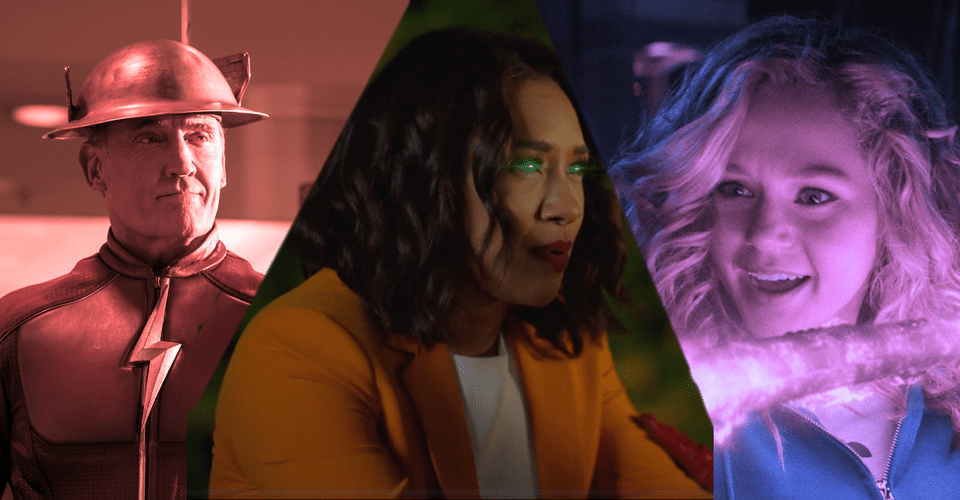
The Flash season 7 is barreling towards its two-part finale and Iris West-Allen’s latest storyline could bring back the Arrowverse’s multiverse following its collapse in Crisis on Infinite Earths. Time and interdimensional travel have been heavily utilized in the shared universe ever since The Flash unlocked the titular character’s abilities to move backwards and forwards in time. The team’s trip to Earth-2 opened up yet another gateway to traversing the multiverse. While Crisis on Infinite Earths changed that for good, Iris’ situation could unlock the multiverse once again. 

Iris has been noticeably absent from two episodes of The Flash. In season 7’s episode 15, Barry revealed she wasn’t feeling well and was recovering from a bout of illness at home. In the following episode, however, Iris confirmed what she was experiencing was far more than a regular cold; when she sneezed, her eyes briefly and startlingly flashed green before returning to their normal color afterward. Why the illness is affecting Iris in this way remains unclear, but her symptoms have led her molecules to become unstable, inducing headaches and time displacement.   

At the end of the episode, Nora West-Allen confirms that Iris will be okay, but there’s no telling when her symptoms will clear up or what will happen before they do. That said, it’s possible Iris moving in and out of the timeline could play a crucial role in the future of the multiverse and the reason for her predicament may be hiding in plain sight.

Iris Is Phasing In & Out Of The Timeline

Iris’ absence from The Flash season 7’s episode 15 was suspicious, especially since it involved a possible pregnancy storyline that was happening without her. In the following episode, however, fans learned why Iris has been absent. As it turns out, her cold wasn’t a normal one and it was somehow causing her to phase in and out of the timeline. It got so bad apparently that Deon, the Still Force, swooped in to protect Iris by using his abilities to stabilize her from phasing through various temporal planes, moving her to “pure temporal strains” to keep her alive. If it wasn’t for Deon, Iris would have fractured through time itself, which doesn’t sound very pleasant and could have unprecedented repercussions.

This subplot creates an interesting twist considering everything happening on The Flash right now. Between what’s going on with Iris, the Godspeed clones, August Heart — who originated as Godspeed in 2049 pre-Crisis on Infinite Earths — coming into the picture, and Barry dreaming about Nora telling him there seems to be something wrong in the future, Iris’ timeline instability may be the one thing connecting each of these separate storylines. That said, the reason why she’s suddenly phasing in and out of the timeline has yet to be confirmed on the show, but all roads seem to be leading back to one cause.  

Iris Being Pregnant Is Causing Her To Be Unstuck From Time

Barry and Iris have been trying to conceive for a few episodes now. After Barry dreamed about Nora the first time, he assumed Iris was pregnant only for the results of the test to come back negative. However, this could have been a false negative. Considering that Iris’ presence in the timeline has been unstable, it’s possible that she is already pregnant and doesn’t realize it. What’s more, being pregnant with speedster babies won’t follow the same patterns of a normal pregnancy and it’s possible that Iris carrying metahumans is causing her to be unstuck from time. Her phasing in and out of the timeline could be The Flash’s equivalent to morning sickness. 

This could also explain why she will be able to regain her speedster powers in the season 7 finale. In the comics, Iris phases back and forth in time because it’s revealed she is actually from the future and was sent back to the 20th century by her birth parents. The Flash showrunner Eric Wallace has teased this storyline coming into play, but like with all things that make their way onto the show, it will probably be a loose adaptation from the comics storyline it’s based on. Traveling between timelines because of a pregnancy might be the closest the series gets to this particular comics arc in this instance.

Jay Garrick’s The Flash Return Hints At Alternate Earths Connection

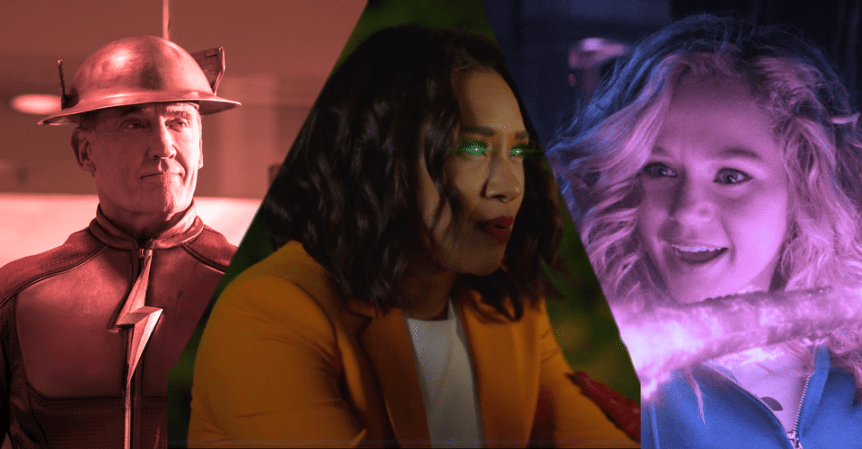
Jay Garrick (aka, The Flash of Earth-3) was last seen prior to Crisis on Infinite Earths, warning Barry of the impending doom facing the multiverse. However, the speedster didn’t participate in the crossover, nor was he confirmed to be alive in the aftermath that saw the multiverse rebooted and Earth-1 merge with others (including Supergirl’s Earth-38) to become Earth-Prime. Jay will be appearing in The Flash’s two-part season 7 finale to aid in the Godspeed clone war. How his reappearance will be explained remains to be seen, but it’s possible he will show up courtesy of Iris’ temporal phasing. Jay originally hails from Earth-3 and his return to The Flash coinciding with Iris being able to phase through time (and maybe dimensions) could be connected. Iris may be acting as the bridge between Earth-Prime and Jay’s world without even realizing, and the superhero series might confirm that he is now from Stargirl’s Earth-2 instead.

Theory: Iris’ Temporal Phasing Brings Back The Multiverse

In The Flash season 6, Nash Wells detected particles of Eternium, an interdimensional (and multiversal) element, on Iris prior to the events of Crisis on Infinite Earths. At the time, nothing much came of it, just another tease that seemed to lead nowhere. However, this could come back into play now that Iris is phasing through temporal planes in season 7. It’s possible the combination of Eternium and her moving in and out of time now allows her to connect to not only different time periods on Earth-Prime, but alternate universes as well. Perhaps before she is finally stabilized, Iris will indeed fracture through time and that’s what breaks the barrier separating Earth-Prime from the rest of the multiverse, which has remained a secret post-Crisis.

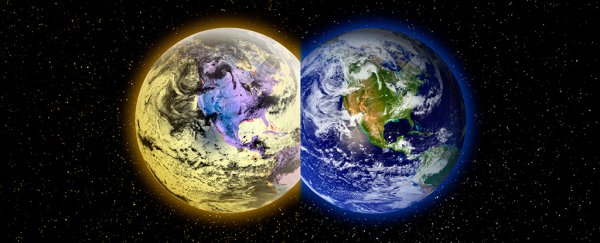
Namely, Iris’ temporal instability could alert her and The Flash to the fact there are still other worlds out there despite the collapse of the multiverse during Crisis. After all, Stargirl exists on the rebooted Earth-2 and it’s been confirmed that Jay Garrick will make an appearance on the series in its sophomore season. And so Iris’ temporal imbalance could open the gateway to interdimensional travel once more, reestablishing the connection between Earth-Prime and other earths. There has to be a reason for why Nash detected Eternium on her. All of this could also be setting up The Flash’s five-episode crossover event in the fall. Whatever the reasons behind Iris’ phasing in and out of time, the introduction of this storyline for her could finally tie together so many loose plot threads for The Flash and the Arrowverse at large. 

Do We Live in a Multiverse?

As far as we currently know, there is a single expanding blob of spacetime speckled with trillions of galaxies – that’s our Universe. If there are others, we have no compelling evidence for their existence.

Amazing book about Multiverse

That said, theories of cosmology, quantum physics, and the very philosophy of science have a few problems that could be solved if our blob of ‘everything’ wasn’t, well, everything.

That doesn’t mean other universes must exist. But what if they do?

What is a universe?

It should be a simple question to answer. But different areas of science will have subtly different takes on what a universe even is.

Cosmologists might say it describes the total mass of stuff (and the space in between) that has been slowly expanding from a highly concentrated volume over the past 13.77 billion years, becoming increasingly disordered with age. 

It now stretches 93 billion light years from edge to edge, at least based on all of the visible (and invisible) stuff we can detect in some way. Beyond that limit, there are either things we can’t see, an infinite expanse of nothingness, or – in the unlikely scenario that all of space bends back around on itself – a round-trip back to the start across a hyperspherical universe. 

If we’re talking quantum physics, though, a universe might refer to all fields and their particles, and their combined influences over one another. As a general rule, a universe (like ours, at least) is a closed system, meaning it can’t suddenly lose or gain a significant sum of energy. 

Telescope under 100

Philosophically speaking, a universe might be a discrete set of fundamental laws that governs the behavior of everything we observe. A universe would be defined by its own rules that set its unique speed for light, tell particles how to push or pull, or space how it should expand. 

What is a multiverse in cosmology?

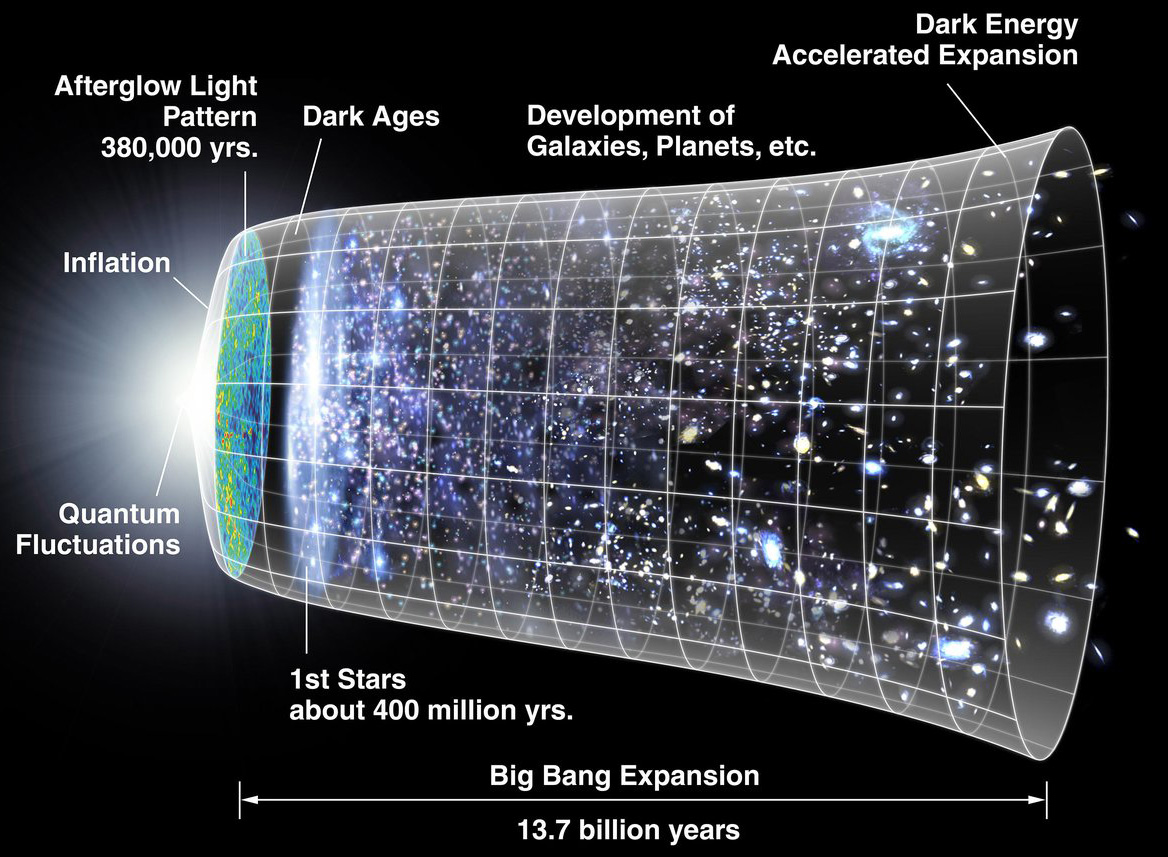
A century of astronomical observations has told us a lot about the age, size, and evolution of galaxies, stars, matter and the four dimensions we sum up as spacetime. 

One thing we know with great confidence is that everything we see now is expanding at an accelerating rate. This logically implies the Universe, at least the one we live in, used to be a lot smaller

big bang nasa infographic expansion(NASA/JPL)

We can theoretically squeeze all of the matter of the Universe down to a point where the concentration of energy reduces atoms to a soup of simpler particles and forces combine until we can’t tell them apart. Any smaller than that? Big shrugs.

If we go with what’s known as a cyclic model of cosmology, the parent universe preceded ours in some way. It might even be a lot like this one, only running in reverse compared with ours, shrinking over time into a concentrated point only to bounce back out for some reason. Played out for eternity, we might imagine the respective universes bounce back and forth in an endless yo-yo effect of growing and collapsing.

Or, if we go with what’s known as a conformal cyclic model, universes expand over trillions upon trillions of years until their cold, point-like particles are so spread out, for all mathematical purposes everything looks and acts like a brand new universe.

If you don’t like those, there’s a chance our Universe is a white hole – the hypothetical back end of a black hole from another universe. Which, logically, just might mean the black holes in our Universe could all be parents, pinching off new universes like cosmic amoebae.

What is a multiverse in quantum physics?

Early last century, physicists found theories that described matter as tiny objects only told half of the story. The other half was that matter behaved as if it also had characteristics of a wave.

Exactly what this dual nature of reality means is still a matter of debate, but from a mathematical perspective, that wave describes the rise and fall of a game of chance. Probability, you see, is built into the very machinery that makes up the gears of a universe like ours.

Of course, this isn’t our daily experience as vast collections of atoms. When we send a bucket of molecules called a rocket to the Moon as it zooms past 300,000 kilometres away, we’re not rolling dice. Classical old physics is as reliable as tomorrow’s sunrise.

But the closer we zoom in on a region of space or time, the more we need to take into account the possible range of measurements we might find. 

This randomness isn’t the result of things we don’t know – it’s because the Universe itself is yet to make up its mind. There’s nothing in quantum mechanics explaining this transition either, leaving us to imagine what it all means. https://www.youtube.com/embed/dzKWfw68M5U?ab_channel=PBSSpaceTime

In his 1957 doctoral dissertation, American physicist Hugh Everett suggested the range of possibilities are all as real as one another, representing actual realities – separate universes, if you like – just like the one we’re all familiar with.

What makes any one universe in this many worlds interpretation distinct is how each wave correlates with a specific measurement taken of other waves, a phenomenon we call entanglement.

What ‘we’ means, and why ‘we’ experience one entangled set over waves over another, isn’t clear, and in some ways presents an even bigger problem to solve. 

What is a multiverse in philosophy?

One of science’s most fundamental starting assumptions is that in spite of what your mother tells you, you’re not special. Nor is any other human, or our planet, or – by extension – our Universe.

While rare events occur from time to time, we don’t answer The Big Questions with ‘it just happened that way’. 

So why does our Universe seem to have just the right tug-of-war of forces that allow not just particles to appear, but to congeal for long enough periods into atoms that can undergo complex chemistry to produce thinking minds like ours?

Philosophically speaking, the anthropic principle (or principles, since there are many different ways to spin the idea) suggests we might have it backwards. Without these conditions, no minds would have arisen to consider the amazing turn of events. 

If just a single universe ‘just happened that way’ early one spring morning, it’d be one big coincidence. Too big really. 

But if there were infinite universes, with infinite combinations of forces pushing and pulling, some would inevitably give rise to minds that just might ask ‘are we part of a multiverse?’ 

Will we ever discover other universes?

Given the very definition of a universe relies on some kind of physical fence keeping influencing factors apart, it’s hard to imagine ways we might ever observe the existence of a sibling for our universe. If we did, we might as well see it as an extension of our own Universe anyway.

That said, there could be some cheats that could give us a glimpse.

Any experiment to find one would have to rely on that ‘fence’ having some holes in it that allow particles or energy to leak across, either into ours, or away from it. Or, in the case of universes existing in our past, monumental events that left enough of a scar that not even a rebirth could erase.

For now, we still have no good reason to think our blob of everything is anything but unique. Given we’re still learning how our own Universe works, the current gaps in physics could yet be plugged without any need to imagine a reality other than ours.

In countless other versions of this article scattered throughout the multiverse, however, the question of whether we are alone just might have a different answer.

Should Employers Check Social Media Accounts of Potential Employees?

In today’s world everyone has at least one social media account. This shows how much social media has gained popularity especially among youth. With this rise, an increasing number of companies are utilizing it to screen job prospects which means they check their potential employee’s social media account. So, make sure your social media profiles are appropriate for work because it could possibly have negative impact on your work life. It has the potential to cost you your present work as well as future career chances. According to a poll conducted by career builder in 2018, the result depicted that 70% of employers use social media to evaluate candidates throughout the recruiting process, while 43% use it to check on current employees.

Employers examine social media accounts for a variety of reasons, but the most common one is to ensure that a candidate is a good match for their firm. they do so because social media accounts allow them to get a look of a person’s personality outside of their resume, which aids them in finding the best candidate for their company.

However, Before relying on any information obtained from social networking sites such as Facebook, Twitter, Instagram, or LinkedIn, it’s vital to understand that there are several flaws to be wary of. When checking a candidate’s social media history, employers and HR professionals should be cautious. A social media history should only be evaluated as part of a comprehensive background check on job applicants. A criminal history record, as well as academic and job verifications, should all be included in a background check that can easily be done by hiring a third-party who is good in running background checks on applicants. 

Everyone who is seeking for a job or will be applying in the future should examine their social media profiles and not entirely delete their online presence. Because as per statistics 47% Employers do not call  people for interviews if they can’t locate them online. More than a quarter of employers say they like to acquire more information before phoning a candidate, and 20% say they expect candidates to have an online presence. so, deleting a social media account out of fear of shame is a no-no. you can simple keep it clean anyway. 

Now, the question of privacy comes into play. So, Employers are perfectly legal to examine public social media platforms, but anything beyond public accounts is a murky area. As long as the employer has access to public information that everyone can see, there should be no privacy concerns.  But a major pitfall is that A social media search, on the other hand, cannot provide a check on the authenticity or veracity of the material. As with any other background or reference check, the information obtained through social media must be checked for accuracy because a person’s whole career is dependent on that 1 job. Employers should use extreme caution when using social media searches to gather information about job candidates. At the absolute least, companies should consult their attorneys before obtaining information for employment reasons via social media. 

As per the data collected, following are the types of posts and behaviors that left a negative impression on employers. It is essential to know this because more than half of the employers i.e. 57% polled claimed that they discovered something through their social screenings that caused them to reject a candidate. 

Provocative or improper photos, videos, or information were shared by a job candidate: 40%
job applicants disclosed details regarding their drinking or drug use: 36%
Discriminatory remarks on color, gender, religion, and other factors were made by a job candidate: 31%
The following job contender was related to illegal activity: 30%
An applicant for a job lied about their qualifications: 27%
Candidate’s communication abilities were poor: 27%
A job seeker slandered their prior employer or coworkers: 25% 
The screen name of a job seeker was unprofessional: 22%
Former employers’ private information was disclosed by a job candidate:  20% 
Candidate for a job lied about an absence: 16%
Candidate postings are very frequent: 12%

Professionals should not take any shortcuts when it comes to establishing a positive internet presence once they have landed a job. According to the survey, 48% of companies visit social networking sites to do background checks on existing employees and as per sources they had fired them too. So one seeking job or an employee should keep his/her social media accounts clean in order to secure their jobs.