UNDERRATED ART FORMS OF INDIA

India is a land of different cultures where over 1.5 billion people belonging to different communities live together . Many years back when India was called the GOLDEN BIRD , which was then brutally plundered by the foreign invaders, was not only because of the monetary wealth but also due to the rich culture and art form which the land once inhabited. Today centuries later, when we are still reeling from the affect of past attacks and with modernization reigning over, it has become extremely difficult and also important to preserve the dying art forms to save a remainder of our rich heritage . Also these art forms have been a source of income for lakhs of people .

While the term ART includes dance, singing and the paintings , in this blog we will have a glimpse on the five lesser known and underrated art forms which are desperately needed to be saved.

Madhubani Paintings

Originated in Madhubani district of Mithila region of Bihar, these paintings are said to have been made on the walls of every house of all the villages to celebrate the wedding of Lord Ram and Goddess Sita. The paintings are made using fingers, twigs, nib pens , brushes and matchsticks as tools. The color in the original Madhubani painting is given using natural dyes and pigments. Originally done on a freshly plastered mud wall , now for the commercial purposes the paintings are being made on a canvas or cloth. The paintings generally represents mythological Hindu deities, court scenes , traditional weddings and social gatherings. The All India Handicrafts Board and the Government of India in order to promote these traditional art form have asked women from the non agricultural backgrounds to continue painting on canvas or cloth and this has also become a source of income for many families.

Miniature Paintings

The origin of these paintings darts back to 7th century under the patronage of the Palas of Bengal. It is a kaleidoscope of history, scriptures and lives of people through ages made by the use of delicate brushwork, mixture of different colors and graceful forms. The paintings are so delicately made that even today in this world of modernization the brushes used for these paintings are made from Squirrel’s hairs. This intense labor of love illustrating the ancient mythology is created on palm leaves, paper, wood , ivory panel and cloth using natural colors such as stone dust, silver dust and real gold

Chambal Rumaal

This art form is an embroidered handicraft promoted under the patronage of the rulers of Chamba and was a common gift item exchanged during the marriages in ancient times. It is said that the earliest reported form of this art was made by Bebe Nanaki , the sister of Guru Nanak in 16th century and is still preserved in the Hoshiarpur Gurudwara. The art form is now continued in various parts of Himachal Pradesh and is made on a square or rectangle shaped cut muslin or khaddar material. Embroider Lalita Vakil got the NARI SHAKTI AWARD by the President of India Mr. Ram Nath Kovind for promoting this art form and giving employment to many women.

Gond Art

This art form is the tribal art of the Gond tribe which is one of the largest tribes of Madhya Pradesh. The art form preserves and communicate the culture of the Gond Tribal Community. The paintings constitute of two main designs called DIGNA and BHITTICHIBA . While the DIGNA designs constitutes of traditional geometric patterns which were originally made on the floors and walls of the house , the BHITTICHIBA designs constitutes the animals , plants and trees which were made on the walls of the houses.

Pattachitra Art

The art form includes the ancient artworks of Odisha which were generally used for ritual purposes and as a souvenir for the pilgrims of Puri and other temples. The cloth based scroll painting captures mythological narratives and folktales which are inscribed on the cloth with intricate details. The painting is made on a traditional canvas which is made by coating a gauze like fine cotton cloth with white stone powder and gum made of tamarind seeds which makes the canvas ready to accept the paints made by natural means. it is basically a dominant icon painting and almost all the chitarakars of this community hails from Puri , a small village in the heart of Odisha . It is also the only village in the entire country where everyone is engaged in one art form or the other such as patta painting, wooden toys making and stone crafting.

The rich ancient heritage of Indian art forms cannot be contained anywhere. This blog was just a means to let people know of the beautiful things which we are missing on.

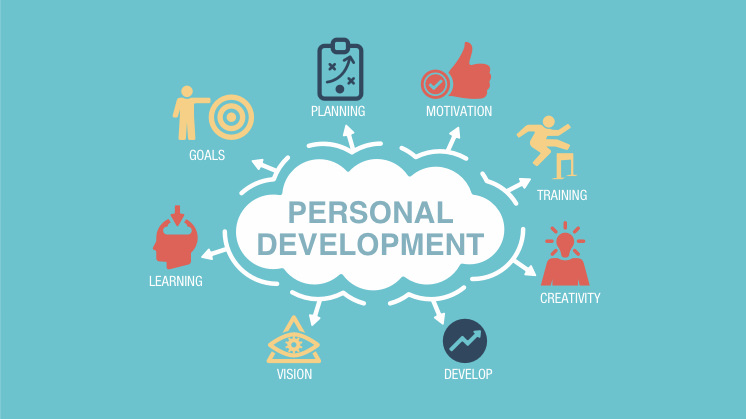
Self-help and personality development

Self help and personality development is a weapon for us

The spirit of self help creates many good qualities in a person. … These people work more harder than a person who is reliable on others for their work. This leads to help them obtain strong will- power and determination.

Self-help or self-improvement is a self-guided improvement—economically, intellectually, or emotionally—often with a substantial psychological basis. … Many different self-help group programs exist, each with its own focus, techniques, associated beliefs, proponents and in some cases, leaders

The following are common examples of self-improvement.

  • Self-Awareness. A process of introspection to understand your own character, behavior, fears and ambitions.
  • Awareness. A process of extrospection to understand the world around you.
  • Health. …
  • Physical Fitness. …
  • Time Management. …
  • Productivity. …
  • Performance. …
  • Know-How

Here’s a look at some ways to build self-improvement into your daily routine and let go of negative thoughts about yourself.

  • Cultivate gratitude. …
  • Greet everyone you meet. …
  • Try a digital detox. …
  • Use positive self-talk. …
  • Practice random acts of kindness. …
  • Eat at least one meal mindfully. …
  • Get enough sleep. …
  • Breathe consciously.

Personality development refers to how the organized patterns of behavior that make up each person’s unique personality emerge over time. Many factors go into influencing personality, including genetics, environment, parenting, and societal variables.

Personality development helps you gain recognition and acceptance from the society as well as people around. Personality development plays an essential role not only in an individual’s professional but also personal lives. It makes an individual disciplined, punctual and an asset for his/her organization.

Here are  great ways to improve your personality:

  • Be a better listener. …
  • Read more and expand your interests. …
  • Be a good conversationalist. …
  • Have an Opinion. …
  • Meet New People. …
  • Be yourself. …
  • Have a positive outlook and attitude. …
  • Be fun and see the humorous side of life.

The four personality types are: Driver, Expressive, Amiable, and Analytical. There are two variables to identify any personality: Are they better at facts & data or relationships? And are they introverted or extroverted. Note: Most people will have major and minor type.

Death of the Aral

Introduction

The Aral Sea was an endorheic lake lying between Kazakhstan and Uzbekistan in Central Asia. By definition it is a lake contrary to it’s name, translates to ‘Sea of Islands’ as it had around 1000 islands dotting it’s waters. It’s drainage basin flows through Uzbekistan and parts of Tajikistan, Turkmenistan, Kyrgyzstan, Kazakhstan, Afghanistan and Iran. It was formerly the fourth largest lake in the world with an area of around 70,000 square km. The Lake began shrinking since 1960 and largely dried up by 2010s.

History

The lake began shrinking after the rivers that fed it were diverted by Soviet irrigation projects. Kazakhstan was not an independent country then but a state or a ‘ socialist republic’ of then USSR, known as Kazakh SSR. The Soviet Government wanted Cotton to become a major export. They devised many projects diverting the Amu Darya river in the south and the Syr Darya river in the east to irrigate the nearby desert in an attempt to grow cotton, rice and cereals. There were large scale construction of irrigation canals which were poorly built allowing leakage and evaporation. Overtime the lake began to shrink at an alarming rate which didn’t exactly surprise the Soviet engineers as they, in a twisted sense, expected it. The salinity of the lake increased at an alarming pace . By 1987, the lake split into two separate water bodies, the North and South Aral Seas. Uzbekistan gained independence in 1991 after the fall of the Soviet Union but it’s first leader, Islam Karimov’s government continued the previous Soviet policies destroying the already beleaguered lake and causing an unprecedented ecological disaster.

The Post Soviet era

Uzbekistan gained independence in 1991 after the fall of the Soviet Union but it’s first leader, Islam Karimov’s government continued the previous Soviet policies destroying the already beleaguered lake. In 2003, South Aral sea further divided into east and west basins. At the same time a plan was put into motion by the Uzbek Government to recover the North Aral Sea by building Dike Kokaral, a dam, which was completed in 2005 and in the next year substantial recovery of sea level was recorded. By 2009, the southeastern lake had disappeared. By 2014, the entire Eastern basin of Aral Sea had dried up, which is now known as the Aralkum desert.

Environment Effects

Due to it’s shrinking countless unfortunate impacts on environment, economy and public health have been recorded. Worsening of the soil, pollution of the lake due to pesticides, death of the local flora and fauna, fish species, spike in cancer, lung diseases, tuberculosis, anaemia due to the locals drinking water and inhalation of contaminated dust which has caused many fatalities. Bustling fishing towns along the shores have now become grim ship graveyards. The town of Aral’sk, the main fishing port is now many kilometres away from the lake and has seen its population decline, most notably the town of moynak on the southern shores of the Aral Sea which used to be Uzbekistan’s biggest port.

Restoration Plans

There have been many restoration strategies planned out for Aral sea’s recovery. There is the Aral Sea basin programs where all five Central Asian countries help in the stabilization and rehabilitation of the local environment. There is also the North Aral sea restoration plan which has so far succeeded in recovery. Kazakhstan has partially revived and replenished it’s parts of the Aral Sea while Uzbekistan isn’t planning on abandoning the Amu Darya to irrigate their number one export cotton and are even moving towards oil exploration in the South Aral seabed.

https://tidsskriftet.no/en/2017/10/global-helse/vanishing-aral-sea-health-consequences-environmental-disaster

https://www.wearewater.org/en-IN/the-aral-sea-the-difficult-return-of-water_322871

Guiding You To The Best 20 Street Foods Available In Delhi

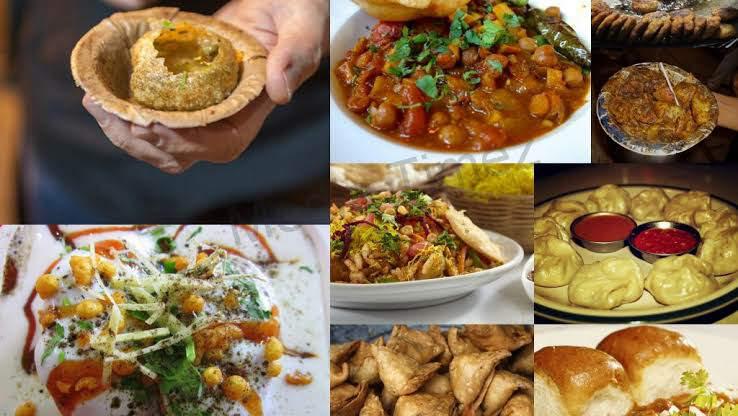
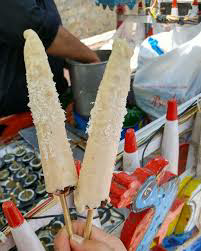
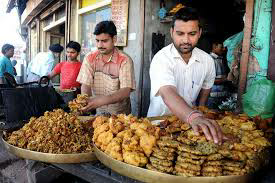
Displaying the chivalry of Indian history and ancient culture, Delhi is famous for one more happening aspect. Yes!! The national capital of India is a ‘foodie paradise’ owing to some delicate and spectacular street food in particular.  Street food in Delhi is of course not a new buzz; the same has been recognised as one of the prime attractions in Delhi.

A vacation in Delhi is incomplete without hitting the streets and trying out its rich and varied cuisines. Let’s go through some of the popular dishes included in the list of best street food in Delhi.

20 Top of the List Street Food Picks in Delhi!

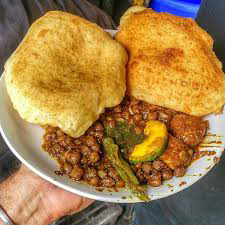
1. Chole Bhature:

The first place that comes to our minds after coming across the above dish is Delhi. Delhi is the apt place to get a taste from. Perhaps, the best street food in Delhi; this dish is known for its fluffy Bhature and an appetizing Chole. There is a special chutney that these vendors tend to offer which makes it even better.

The best place to try– Giani di Hatti in Chandni Chowk, Nand Ke Chole Bhature in Sadar Bazaar, Chache di Hatti.

2. Golgappe:

While in Delhi; how one can miss out to try the special Panipuri or Golgappe? With diverse forms, this dish is loved by almost all the locals. You can go for stuffed Panipuri, different water flavours, an extra piece of papdi dipped in curd and chutney to give some extra pinch to your taste.

The best place to try– Rajouri Garden, Lajpat Nagar Market.

3. Poori Aloo:

One of the traditional dishes in India, Poori Aloo in Delhi is the best thing to enjoy at various famous stopovers. With different spices, this dish has created another surge of reforms.

The best place to try– Chaina Ram in Chandni Chowk, Karol Bagh Market.

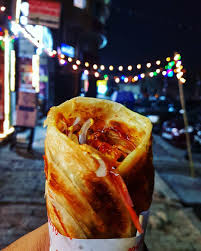
4. Rolls:

No matter at which shop you try rolls in Delhi, it will give you a lifetime experience. Each vendor tries its own stuffing recipe which allows the people to get diverse tastes. You can go for Paneer Rolls, Chicken Rolls, Mix Veg Rolls, Manchurian Rolls and so forth.

The best place to try– Taste drive at Rajouri Garden, Khan Chacha, Chowrangee lane,  Local Joints in Kamla Nagar Market, Satya Niketan.

5. Kulfi:

Kulfi is something which gets a positive response from everyone going out to have a superb dessert. The flavour and taste together make way for this delicious dish carrying caramelized milk and finely crushed granules of dry fruits.

The best place to try– Roshan di Kulfi in Karol Bagh, Kuremal at Chawri Bazaar.

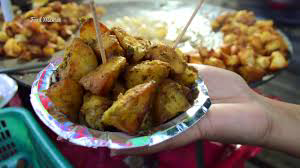
6. Aloo Chaat:

A mouthwatering street food in Delhi, Aloo Chaat is an apt pick for spending a delicious time with your loved ones. Diced fruits added to this dish make it a complete food for the foodies.

The best place to try– Taram Bazaar in Chandni Chowk, UPSC Bhawan.

7. Ram Ladoo:

Ram Ladoo is basically fried small pakoras stuffed with potato or dal that is sufficient to make any event a happening one. The crispiness of these fried balls with the taste of chutney is all that you want for a memorable getaway.

The best place to try– Local Vendors at Janak Puri, Green Park and Tilak Nagar.

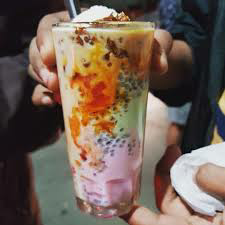
8. Rabri Faluda:

A unique taste immersed in the rich blend of coconut, dry fruits and milk; Rabri Faluda is a superb dish to ask for. This dish is very popular among the Delhi residents. 

The best place to try– Giani di hatti in Chandni Chowk

9. Kebabs:

With over 25 different varieties of Kebabs ruling the Delhi street foods, this dish will give you the best reminder of the Mughal era. It includes Kakori Kebab, Shami Kebab, Galouti Kebab and much more.

The best place to try– Chawla’s at Tilak Nagar, Vasant Place Market.

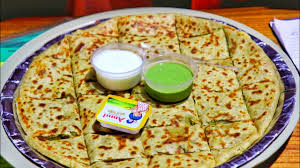
10. Paranthe:

A healthy splash of butter with diverse stuffing, Paratha over the years has become the best pick for breakfast. This street food in Delhi can be eaten at any time without much fuss.

The best place to try– Parathe Wali Gali, Moolchand ke Parathe, Kakke di Hatti.

11. Aloo Tikki:

Stuffed with mashed potatoes and onions, Aloo Tikki is an excellent option to try on the streets of Delhi. You can choose different chutneys to make it go as per your taste for satisfying your inner foodie.

The best place to try– Natraj in Chandni Chowk, Atul Chaat Corner in Rajouri Garden.

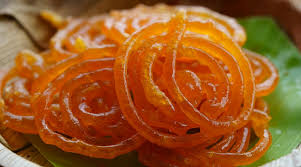
12. Jalebi:

How can one ignore the unique shaped sugary sweetness of Jalebi in Delhi? With a large number of shops offering different varieties of Jalebi, this dish has become the perfect sweet dish for the Delhi residents and tourists. You can go for Doodh Jalebi, Kesar Jalebi, and much more.

The best place to try– Jalebi Wala in Chandi Chowk, Bangla Sweets in CP, Pandara Road.

13. Pakodas:

With different veggies immersing in Besan to go out for a deep fry, this street food offers sumptuous fore deals to the people opting for this. The best food for enjoying the monsoons is Pakodas from the famous street shops in Delhi.

The best place to try– Gol Market, Kamla Nagar, Sarojini Nagar.

14. Street Burger:

You might have visited Mc Donalds and other branded affairs for a burger, but the taste you will get at a street corner in Delhi is unmatchable. Embedded with well-fried tikkis, these buns are really mouth -watering.

The best place to try– At any burger cart located in the Delhi markets.

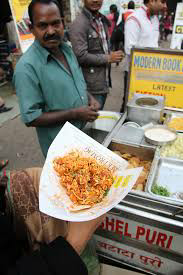
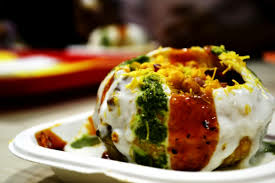
15. Bhel Puri:

Adorned with a number of flavours; Bhel Puri on the streets of Delhi offers an exquisite taste to the travellers. The tangy twist captioned with the crisp mixture is really delicious to eat.

The best place to try– Bhajan Lal Bhelpuri at Sundar Nagar, Connaught Place.

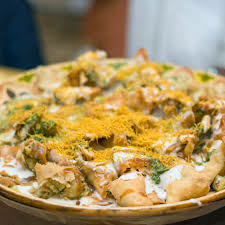
16. Dahi Bhalle:

The mix of curd along with red and green chutneys is a superb delight to experience on the streets of Delhi. The sprinkle of aloo bhujia intensifies this taste furthermore.

The best place to try– Natraj in Chandni Chowk, Shyam ji Corner at Old Delhi Road, Rajouri Market.

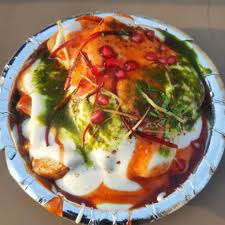
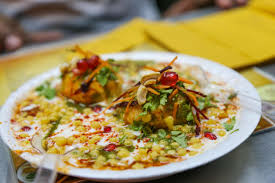
17. Samosa Chaat:

The preparation of this particular street food will leave your mouth to crave for more. A samosa prepared with chole and tangy taste of chutneys is the best thing one can ask for.

The best place to try– Tilak Munjal in Pitampura Chandni Chowk eateries, CR Park.

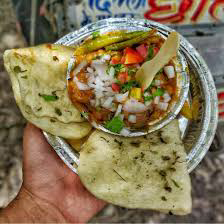
18. Chole Kulche:

Boiled Chole prepared with fresh tomatoes, onions and lemon along with a kulcha fried in butter are just exquisite to try for. The roadside eateries in Delhi offer this food in a unique way.

The best place to try– Near UPSC Bhawan, Yadav’s Chole Kulche at Saket.

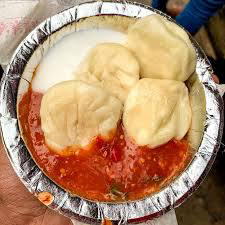
19. Momos:

Who is not familiar with momos? This is super spicy and cheap street food in Delhi. And today, they have become the most easily and tasty available street food in Delhi..

The best place to try– Bungalow Road, Kamla Nagar

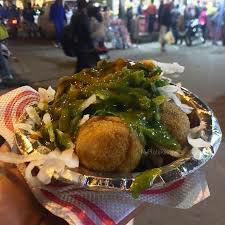
20. Raj Kachori:

A single dish capable to satisfy your hunger is what Raj Kachori is known for. Stuffed with oiled channa and crisp namkeen, this is an authentic food to give a try for sure.

The best place to try– Haldirams in Chandni Chowk, Lajpat Nagar, and Connaught Place.

Jobs and career related topics

INTRODUCTION:-

* Gender – Are there male jobs & female jobs? – A useful debate which can get heated. The statutory guidance states that you must promote equality of opportunity so care must be taken when guiding this debate.
* Jobs of the future – What jobs will exist in 5, 10, 20 years that don’t exist now?
* What effects are robotic workers having on the job market? Will robots be able to do jobs like journalism & legal work (yes they will, computerised copy writing and contract checking are already a reality) or will automation only affect ‘physical’ jobs?
* Transferable skills – what are they and why do we need them? – Useful question to elicit knowledge of transferable skills – you may find this definition useful in order to help your students decide which skills are transferable “Transferable skills are general skills you can use in many jobs. You gain these skills from previous jobs, projects, voluntary work, sport, your home life, hobbies, and interests. They enable you to be adaptable and flexible in case you need to change your job”
* What skills & qualities do employers want when they employ a person straight out of school/college/university?
* Employers are frequently reported as saying school leavers are not workplace ready. A discussion around what skills are needed and what they are can be structured using the following frequently cited skills:-Understanding of business world; Teamwork; Communication; Negotiation skills; Problem Solving; Leadership; Organisation; Perseverance/motivation; Ability to work under pressure; Confidence
* Why do some people try and dissuade people from taking certain jobs? – An ideal opportunity to explore the motivation behind advice from various sources. E.g. university & school leaver recruitment staff. Teachers who have been instructed to recruit for the school 6th  Parents who would like to see their children achieve their parent’s dream etc.
* Can you turn a hobby into a career? – Students may wish to pursue a hobby such as photography or sport as a careers. What considerations might they need to have when doing this? E.g. need to be self-employed; the effect of training 7 days a week on enjoyment of the sport etc.
* Can work be fun? What makes work fun? Can it always be fun? What is fun?
* How many types of job can I expect to do over my lifetime? – A discussion about career paths. Not just changing jobs but changing types of job and progression.  The role of lifelong learning, retraining, transferable skills.  Using a story about somebody’s career journey is a good prompt for this discussion.
* What’s the difference between a job and a career?
* Is a job just to pay the bills and a career something you’re interested in?

Jobs:-

INTRODUCTION:-

God rebukes Job’s three friends and orders them to make a sacrifice. Job prays for God’s forgiveness of them and God accepts his prayer. At the end of the book, God gives Job twice as much wealth as he had before, along with seven sons and three daughters. After that, Job lived 140 more years.
An Introduction to the Book of Job | Speaking the Truth in Love
A job, employment, work or occupation, is a person’s role in society. More specifically, a job is an activity, often regular and often performed in exchange for payment (“for a living”). Many people have multiple jobs (e.g., parent, homemaker, and employee). A person can begin a job by becoming an employee, volunteering, starting a business, or becoming a parent. The duration of a job may range from temporary (e.g., hourly odd jobs) to a lifetime (e.g., judges).
An activity that requires a person’s mental or physical effort is work (as in “a day’s work”). If a person is trained for a certain type of job, they may have a profession. Typically, a job would be a subset of someone’s career. The two may differ in that one usually retires from their career, versus resignation or termination from a job.

Jobs for people:-

Most people spend up to forty or more hours each week in paid employment. Some exceptions are children, retirees, and people with disabilities; however, within these groups, many will work part-time, volunteer, or work as a homemaker. From the age of 5 or so, many children’s primary role in society (and therefore their “job”) is to learn and study as a student.

Types of jobs:-

Jobs can be categorized by intensity (hours per week), by payment status, or by the level of experience required. The types of job stemming from intensity are categorized as full-time or part-time. They can also be classified into temporary, odd jobs, seasonal, self-employment, consulting, or contract employment. Regarding payment status, jobs are categorized as paid or unpaid. Examples of unpaid jobs include volunteer, homemaker, mentor, student, and sometimes intern. Finally, according to the level of experience required, jobs are usually grouped as entry level, intern, and co-op.
Some jobs require specific training or an academic degree.
Those without paid full-time employment may be categorized as unemployed or underemployed if they are seeking a full-time paid job.
A side job, also called a side hustle, side gig or moonlighting, is an additional job or jobs to supplement one’s income. A person with a side job may have little time left for sleep or leisure activities.
The Office for National Statistics in the United Kingdom lists 27,966 different job titles, within a website published 2015.

Day job:-

The expression day job is often used for a job one works in order to make ends meet rather than working in their preferred vocation. Archetypal examples of this are the actor who works as a waiter (the day job) while looking for roles, and the professional athlete who works as a laborer in the offseason because the athlete’s professional or semi-professional team does not pay a full living. The term is also applied to those who maintain a steady occupation while working as a day trader.
While many people do hold a full-time occupation, “day job” specifically refers to those who hold the position solely to pay living expenses so they can pursue the job they really want (which may also be during the day). The phrase strongly implies that the day job would be quit, if only the real vocation paid a living wage.
The phrase “don’t quit your day job” is a humorous response to a poor or mediocre performance not up to professional caliber. The phrase implies that the performer is not talented enough in that activity to be able to make a career out of it.

Getting a job:-

Further information: Job hunting and Employment
Getting a first job is an important rite of passage in many cultures. The youth may start by doing household work, odd jobs, or working for a family business. In many countries, school children get summer jobs during the longer summer vacation. Students enrolled in higher education can apply for internships or coops to further enhance the probability of securing an entry level job upon graduation.
Résumés summarize a person’s education and job experience for potential employers. Employers read job candidate résumés to decide whom to interview for an open position.

Use of the word:-

Workers often talk of “getting a job”, or “having a job”. This conceptual metaphor of a “job” as a possession has led to its use in slogans such as “money for jobs, not bombs”. Similar conceptions are that of “land” as a possession (real estate) or intellectual rights as a possession (intellectual property).

Occupation and life expectancy:-

Historically, manual work has seemed to contribute to shortening one’s lifespan.High rank(a higher position at the pecking order) has a positive effect. Professions that cause anxiety have a direct negative impact on health and lifespan.Some data is more complex to interpret due to the various reasons of long life expectancy; thus skilled professionals, employees with secure jobs and low anxiety occupants may live a long life for variant reasons.The more positive characteristics one’s job is, the more likely he or she will have a longer lifespan.Gender, country, and statistically confirmed danger are also notable parameters.

See also:-

  • Career and Life Planning Education
  • International Standard Classification of Occupations
  • Job analysis
  • Job guarantee
  • Job interview
  • Job performance
  • Job satisfaction
  • Job stress
  • Labour economics
  • Refusal of work
  • Unemployment
  • Wage labor

References:-

Citations:-

  1. “FOI Request: List of all the occupations noted in the UK”. Office for National Statistics. The Crown. 2015. Retrieved December 6, 2015.
  2. Newberry, Jon (October 2000). “Night Moves: Be a day trader after hours and keep your day job, too”. ABA Journal86 (10): 86. Retrieved 19 September 2020.
  3. Womack, Sarah (24 October 2007). “Why accountants live longer than builders”. The Telegraph. Archived from the original on 29 August 2018. Retrieved 4 April 2018.
  4. “Living Longer, Working Longer: The Changing Landscape of the Aging Workforce – A MetLife Study” (PDF). MetLife Mature Market Institute. April 2006. Archived from the original (PDF) on 2015-10-02.
  5. “The Most Stressful Jobs of 2014”. CareerCast.com. Archived from the original on 2016-02-20. Retrieved 2016-02-12.
  6. Lyte, Brittany (18 March 2015). “5 Jobs Proven to Make You Live Longer”. Wise Bread. Archived from the original on 16 February 2016. Retrieved 12 February 2016.
  7. Lees, John (11 November 2014). “Personality test: what job would make you happiest?”. the Guardian. Archived from the original on 9 December 2016. Retrieved 11 December 2016.
  8. “Whistling While You Work: The 10 Most Satisfying Careers”. CareerCast.com. Archived from the original on 2016-02-04. Retrieved 2016-02-12.
  9. “Find out how your gender and job may affect your life expectancy”. the Guardian. 21 October 2015. Archived from the original on 2 February 2017. Retrieved 11 December 2016.

Sources:-

  • Davis, Steven; Haltiwanger, John; Schuh, Scott (1998), Job Creation and Destruction, MIT Press, ISBN 978-0-262-54093-3
  • Graeber, David (2018). Bullshit Jobs: A Theory. Simon & Schuster. ISBN 978-1501143311.
  • Granovetter, Mark (1995), Getting a Job: A Study of Contacts and Careers, University of Chicago Press, ISBN 978-0-226-30581-3
  • Joshel, Sandra (1992), Work, Identity, and Legal Status at Rome: A Study of the Occupational Inscriptions, University of Oklahoma Press, ISBN 978-0-8061-2444-5
  • Kranzberg, Melvin; Gies, Joseph (1986), By the Sweat of Thy Brow: Work in the Western World, Greenwood Press, ISBN 978-0-313-25323-2
  • Miller, Ann Ratner; Treiman, Donald; Cain, Pamela; Roos, Pamela (1980), Work, Jobs, and Occupations: a critical review of the Dictionary of Occupational Titles, National Academy Press
  • Orr, Julian Edgerton (1996), Talking about Machines: An Ethnography of a Modern Job, Cornell University Press, ISBN 978-0-8014-8390-5
  • Robinson, Tony; Willcock, David (2005), The Worst Jobs in History: Two Thousand Years of Miserable Employment, Pan Macmillan, ISBN 978-0-330-43857-5
  • Roebuck, Carl (1969), The Muses at Work: arts, crafts, and professions in ancient Greece and Rome, MIT Press
  • Morse, Nancy; Weiss, Robert (1955). “The Function and Meaning of Work and the Job”. American Sociological Review20 (2): 191–198. doi:10.2307/2088325. JSTOR 2088325.

career:-

INTRODUCTION:-

Career development is now a lifelong process, rather than a lifelong job, and involves moving laterally or upwards within an organisation or between organisations. It is the combination of your life experience, learning, and all work experience.
Career Management Introduction | Human Resource Management

What is a career?

The past, the present and the future

The past:-

A typical career path in the past involved almost guaranteed job security. You obtained a “job for life” and you could expect steady progression up an organisation’s structure.

The present:-

Factors such as technological growth and consumer demand have changed the world of work. Career development is now a lifelong process, rather than a lifelong job, and involves moving laterally or upwards within an organisation or between organisations. It is the combination of your life experience, learning, and all work experience. These days, you are responsible for your own career and you have to continuously reflect on where you are, where you want to be and how you will prepare for further career opportunities.

The future:-

Change is everywhere. The world of work is constantly changing and we must rely on ourselves much more for stability and direction. In order to do this, we need to be aware of the changes that are occurring in the current world of work.

What is the world of work like?

Have I got the right information?

It’s important to make sure that your career decisions are informed by a realistic assessment of the information available rather than relying on assumptions that you or others may have.
Some of these assumptions may have gained credibility over time, especially if they have been reinforced by the media and people whose opinion you value.
The exercise below will give you the opportunity to test your own career assumptions.

Myths and realities quiz

This mini quiz gives you the opportunity to become aware of any career myths you may have accepted as realities and to possibly challenge these assumptions. Being aware of career myths that have influenced your career planning so far may open up new possibilities for exploration that you may not have considered.

Unmistakeable trends

Change is everywhere. There are no longer short periods of change followed by long periods of stability. We have to learn to live and prosper in a world of constantly changing demands and possibilities. Some of these changes include technological change, globally competitive markets, new patterns of work and higher educational requirements.
Whatever the reason, there has been a series of unmistakable trends, particularly in the world of work. These trends include:
  • changing social contracts between employers and labourers;
  • increasing contract work;
  • globalisation;
  • an increased competition for employment;
  • technology and its impact on all industries;
  • the creation of new industries;
  • an ageing population.
In South Africa, we are still grappling with high youth unemployment, unequal access to further education opportunities, and a widening income gap.
The results of these changes and trends are now having a major impact on our lives and we must rely on ourselves much more for stability and direction. We are constantly being reminded that we need to operate as a “company of one” and be flexible enough to respond quickly in this ever-changing environment.

Reference Links:

https://en.wikipedia.org/wiki/Job
https://www.unisa.ac.za/sites/myunisa/default/Learner-support-&-regions/Counselling-and-career-development/Plan-your-career/Introduction-to-careers

THE PAST

Past gets linked with today and tomorrow where our activities affects us.

The past is never where you think you left it

Everyone have their very own past. Someone had success story in it. Someone had failures too. But it doesn’t matter the past is something that shows who you are up to oru what you’ve been brought up.

The past is very important to anybody because it allows oneself to self evaluate himself, before he is judged by others. There’s lot of interesting things behind everyone’s past. If a guy knows his past, he knows what would happen in future.

The mistakes what we’d done in our past will let us and spare us time to change ourself before being struggled in future. There are many right thins too, which should be carried to the future. But there’s wrong too which should be left in past itself.

I’m very sure a successful man had a very bad past. The past influence a person to take an elevation of fall to rise. Many people nowadays running to fix things what we’d done in past, but the saddes truth is we can’t. Yesterday’s right may be wrong in future. Great things takes great time.

The past encourages us to lead a worthy life. The name, the position, the emotions, the character everything changes if we compare our today with yesterday. Every new day is new born to ourself. Peaceful life can be lead by us if we leave our past and work today so that good things joins at tomorrow. Yesterday is a comma today is a question mark and never let your tomorrow to be your fullstop.

You realize that our mistrust of the future makes it hard to give up the past.

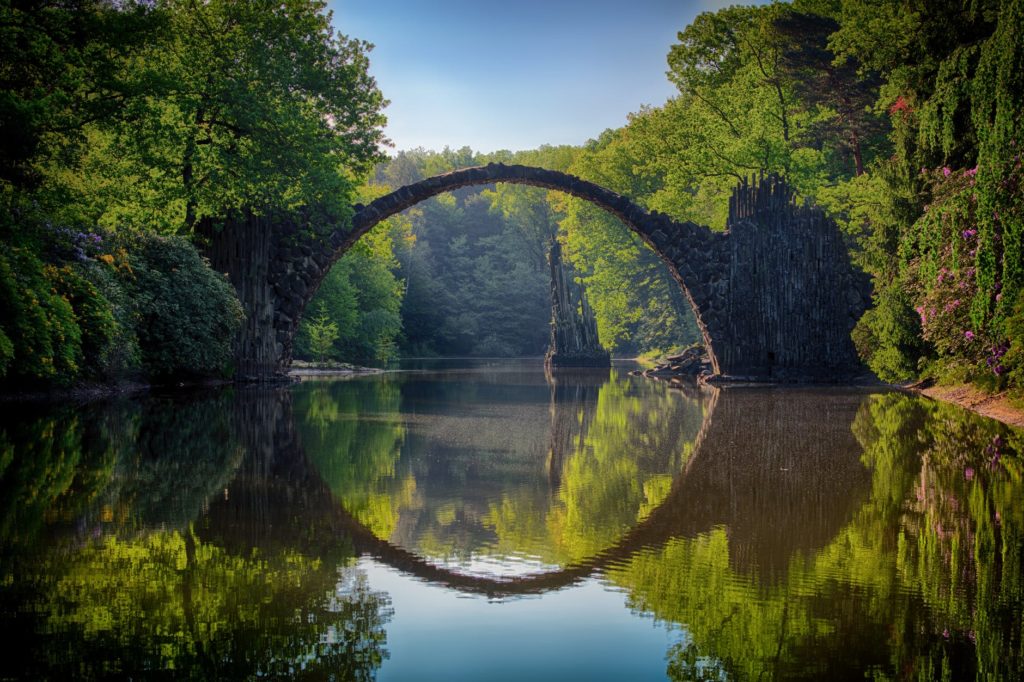
Beauty In Nature

Everything we see around us, right from the moment we step outside our home is part of nature. The trees, animals, landscape, flowers, trees, breeze, sunlight, everything that makes our surroundings so beautiful and mesmerizing are part of nature. Nature does not arise spontaneously but needs years and years to bloom and blossom.
According to researchers, nature we see today has developed in 4.5 billion years. Initially, the earth was not sustainable for any kind of living thing. The atmosphere had no to very little oxygen, and the same was the case with water. The land made of molten magma and the atmosphere was toxic to survive. Slowly, the earth cooled down, and life started blooming on it. It began to rain, and nature, as we see today, was formed. This nature then gifted the earth with living creatures like animals, birds, and finally, humans.

It is the Mother Nature who never harms us but always nurtures us. By providing us fruits and vegetables, it nurtures our body. By providing us water hydrates our body, and by providing oxygen, it cleanses our body. It is usually seen that people who live close to nature, especially the villagers live a somewhat happy life as compared to the people living amidst the high hovering skyscrapers. Nature provides our ears sweet sound of birds, rejuvenates us with fresh air, breeze fills our soul with joy, and inspires to flow like the river. Nature provides the raw material for economic development as well.
Unfortunately, humans today are polluting nature in such a way that the healing pace has fallen slowly. The use of plastic, emission of CO2, production of industrial waste, increased use of chemicals, deforestation, poaching, and oil spillage in water bodies are serious concerns today. These are not only polluting nature and are also degrading the quality of the environment needed for the survival of not only animals and birds but also humans.

Nature has inspired not only poets and writers but also the common man. All the great poets and writers like William Wordsworth have always given the nature a significant space in their writings and musings. Nature has the power to take us to the place of peace and imagination to free the emotions that been locked inside us. If those emotions and feelings get freed, then there is immense power in them to bring on the changes that are unexpected. Many people are currently working and getting linked with the nature conservation organizations to preserve and enhance the nature and beauty around us.
By taking small steps like planting trees, using biodegradable materials, stopping water pollution, animal conversation, and keeping our surroundings clean, we can help Mother Nature to breathe again and rejuvenate in the same way it helps us.
There is no question that Earth has been a giving planet. Everything humans have needed to survive, and thrive, was provided by the natural world around us: food, water, medicine, materials for shelter, and even natural cycles such as climate and nutrients. Scientists have come to term such gifts ‘ecosystem services’, however the recognition of such services goes back thousands of years, and perhaps even farther if one accepts the caves paintings at Lascaux as evidence. Yet we have so disconnected ourselves from the natural world that it is easy—and often convenient—to forget that nature remains as giving as ever, even as it vanishes bit-by-bit. The rise of technology and industry may have distanced us superficially from nature, but it has not changed our reliance on the natural world: most of what we use and consume on a daily basis remains the product of multitudes of interactions within nature, and many of those interactions are imperiled. Beyond such physical goods, the natural world provides less tangible, but just as important, gifts in terms of beauty, art, and spirituality.

The beauty of nature around us The beauty of nature around us is one of the greatest blessings of God on us.
This beauty allows us to choose places and many destinations for the sake of rest, recreation and the best of times.
The beauty of nature has always been the first inspiration for artists and creators around the world, This is evidenced by the vast number of works of art, poetry and music that have attracted people around the world, and which revolve around the beauty and charm of nature.
Man by nature is a creature eager to taste beauty, and there is nothing more beautiful than nature.
The manifestations of the beauty of nature for the beauty of nature are many manifestations.
Wherever a person turns his face he will inevitably find a manifestation of these appearances.
Perhaps the most striking of these is the unique diversity in the colors around us, which created a wonderful natural painting. Other manifestations include variations in sizes, shapes, even among the creatures of the same species.
On the other hand, one of the greatest manifestations of nature’s beauty is the beautiful smells of certain creatures, such as flowers, flowers, and certain kinds of fruits, especially citrus, Which is accompanied by seasons and certain times; like the smell of the earth after the rain.
In conclusion, nature has a powerful transformative power which is responsible for the functioning of life on earth. It is essential for mankind to flourish so it is our duty to conserve it for our future generations. We must stop the selfish activities and try our best to preserve the natural resources so life can forever be nourished on earth.

“Look deep into nature, and then you will understand everything better “.

NATIONAL DOCTOR’S DAY

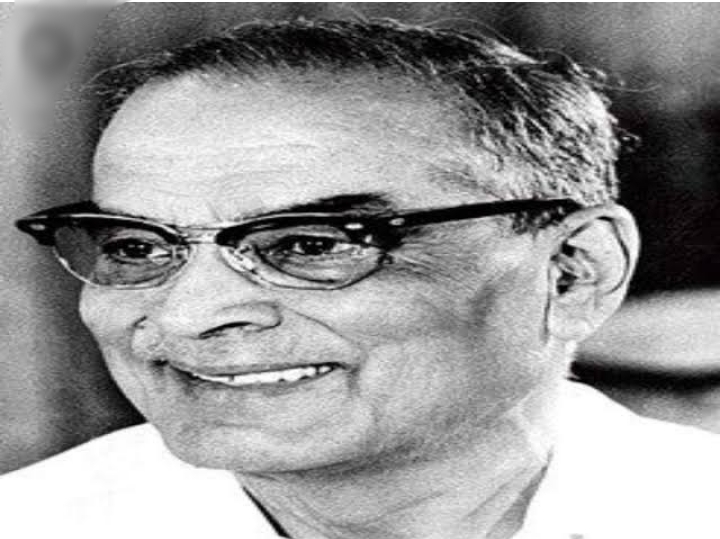
Doctor’s day is observed on various days across the world. It is an occasion marked to pay tribute to the physicians and their contributions to the society. In India, the same is celebrated on July 1 yearly in honor of birth and death anniversary of former bengal’s chief minister Dr. Bidhan Chandra Roy. Dr. Bidhan Chandra Roy was a great knowledgeable doctor. He was born on July 1, 1882, and died on the similar date in 1962.

Dr. Bidhan Roy was conferred with the honor of Bharat Ratna, on February 4, 1961. July 1 is thus celebrated to recognize the contribution of medical doctors in serving humanity.

HISTORY OF NATIONAL DOCTOR’S DAY

Talking about the history of National Doctor’s Day, Dr. Roy made an enormous contribution to the medical discipline and is one of the first ones to make high quality well being care providers obtainable to all. He performed a vital function in establishing the Indian institute of psychological well being, the infectious illness hospital and even Kolkata’s first-ever postgraduate medical school. He established medical institutes like RG Kar Medical School, Jadavpur TB Hospital, Chittaranjan Seva Sadan, Kamala Nehru Hospital and Chittaranjan Most cancers Hospital.

SIGNIFICANCE

The importance of the National Doctor’s Day is to create consciousness about the work which medical doctors do in serving lives. The day is supposed to recognize their function and obligations which medical doctors have.

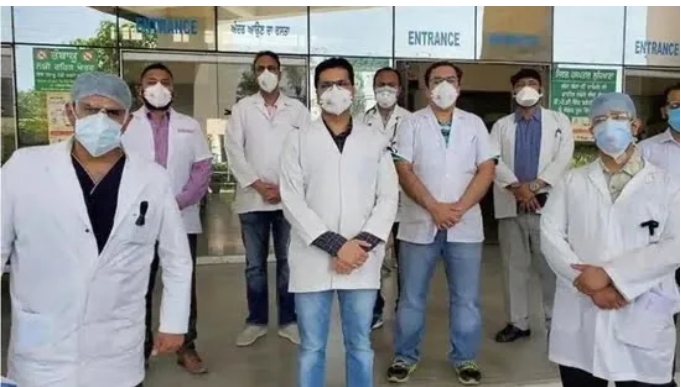
Amid the coronavirus outbreak, when the instances have elevated tremendously, it’s the medical doctors who’re working 24 hours risking their lives and desperately making an attempt to save lots of individuals from the pandemic.

Pandemic has once again reminded us about the contributions and sacrifices made by doctors and healthcare workers around the globe.

Every year 1st July marks a very significant event called the National Doctor’s Day, in order to pay utmost respect and recognize the contribution of the doctors to our lives.

NATIONAL DOCTOR’S DAY 2021

Prime Minister Narendra Modi reminded the nation of the contributions made by doctors and corona warriors during the Coronavirus pandemic. He said that the nation “must pay its tributes to the doctors who ensured that India did not succumb to the challenges posed by Covid-19.

CAN WE THINK “WORLD WITHOUT ENGLISH”?

ENGLISH IN PRE-INDEPENDENCE DAYS

During the British rule in India English was imposed on Indians as a compulsory study. The British rulers wanted a class of interpreters between the rulers and ruled. Only a selected few could learn English and get good jobs under the British rulers. English education was confined to the chosen few. The foreign rulers had no desire to educate the mass.

ENGLISH AFTER INDEPENDENCE

English education, however, did one good thing to India. It created a batch of scholars who imbibed the best English education. The western culture, new ideas and thoughts about science and scientific studies slowly spread among us through English and we became aware of the tremendous progress that the nations of the west were making. This knowledge, rather the impact of this aerated a tremendous excitement among us and this was the root of the famous Renaissance Movement, which is a bright landmark in our social, cultural and educational sphere. After independence, some nationalists wanted the complete abolition of English from our academic programme. They pleaded for the abolition of English on the ground that its retention smacks of our slavery to England. But there were others who wanted English to continue as a subject for study.

IMPORTANCE OF ENGLISH ITS PLACE IN EDUCATION

The English language is known as the lingua franca of the world. English language is no longer the monopoly of English men. It is now used by a large number of people scattered geographically in different parts of the world. English language is the gateway to the various branches of knowledge and it opens the window to the outside world. It is studied now in many countries, and it is a very helpful means for international communication in commerce and culture. So narrow patriotism should not blur our vision about its importance. It is necessary to retain English as a link language, and as a second language to be read from class III. Regional language should be given first preference, and should be the medium of instruction up to the graduate level. We would see some of the vital reasons to hug English in the main course of life.

Knowledge of English will open doors of bigger opportunity in the field of higher studies on national and international platform.

No scientific and commercial knowledge can be complete without the proper knowledge of English.

This is the language one can study quickly and smoothly without troubles. So, it paves the way to greater studies hence generate greater interest in all type of knowledge acquisition.

International English Language Testing System (IELTS) opens wider prospects to enter in any renowned institution all over the world.

Meaningful study of English will make you conscious of the progress and the standard of living the world has achieved. English is the language of the media and a person can receive exceptional growth in books publishing, films, TV shows if one pursues English in these career prospect.

Technological growth prospers in the lap of English culture and skill. One receives ample support and strength if assisted by English in all level.

English knowing professional wins laurels and fatty salary packages in comparison to other besides promotion and felicitations in a company.  

English is the language of the internet. Right from website development to social media marketing every thing demands a solid base if English. So, the good learners are always getting an edge effect in all the matter.

English education knowledge and workings make you the greater professional, enhances your competitiveness and all-round exhibition of skill. It makes you to be a satisfied citizen of the world.

Knowledge of English gives greater depth in research work, thesis writing, contents composing, communication and future advancement of all the subjects known to the humanity.

So, education, civilization and communication demand a worldwide awakening of English learning culture, practice, use and application in all aspects of life.

Insights into Caste System, and Is Reservation still needed?

The caste system in India finds its origin around 1500 BC on the arrival of Aryans. Primarily, it was based on the occupation one chooses to practice. For example, a religious leader performing sacred rituals was called Brahmin, while the one who was a part of a kingdom’s army ( a warrior ) was called Kshatriya etc.  Every occupation and individuals associated with it were addressed with particular names like a cobbler was called Chamar, a blacksmith as Lohaar, etc. And all of these occupations were a part of 4 Varnas viz. Brahmin, Kshatriya, Vaishya, Shudra. Teachers, farmers were a part of Vaishya while Shudras consisted of artisans, blacksmiths, laborers, maids, etc.

       Like most societies of the world, in India also the son inherited his father’s profession. And so there developed families, who professed the same family profession for generation in which, the son continued his father’s profession. Later on, as these families became larger, they were seen as communities or Jatis. Different families who professed the same profession developed social relations between them and organized as a common community, meaning Jati. But later this Varma system became rigid. There was merely any occupational fluidity left. A Brahmin’s son also became a Brahmin, a cobbler’s son had to become a cobbler and nothing else. If he aspires to become a Kshatriya (warrior), the society and societal norms did not permit him to do so. Perhaps, the Varna system which was primarily based on occupation had now become a basic identity attained by an individual right from his birth, hence evolving as the ‘CASTE SYSTEM’. Subsequently, the rigidity of this system proliferated on the advent of the norms like intra-caste marriages, where a Brahmin could marry only to a Brahmin, a Chamar (cobbler) only to a Chamar, a Kshatriya only to Kshatriya. Besides, it also stated hierarchy in the society where Brahmins were considered the elite and were at the top. Followed by the Kshatriyas, then Vaishyas, and then Shudras. There was another community that was excluded from the society, the UNTOUCHABLES (aka Dalits).

         Everyone was expected to follow societal norms. The problem began when some did not wish to comply. As popularly said ‘Love knows no bounds’, couples who wished to get married and live together had to face backlash from society if they didn’t belong to same castes. Such couples had to face a social boycott. Their families, as well, had to face a social boycott, many times, resulting in eviction from the village. As a result, the need to protect honor was palpable. Hence, honor killings were frequent in society.

         The caste-based hierarchy was strictly followed. Defiance was eligible for punishment. Dalits were not included in religious practices. They were denied entry to temples. Water reservoirs meant for the upper caste were not allowed access to Dalits. They were barred from educational institutions. Chhatrapati Shahu Maharaj made efforts to eradicate caste discrimination, educate people against caste prejudice. He also offered scholarship to Dr. Babasaheb Ambedkar for his further studies. Dr. Ambedkar was intelligent and a studious one but was overwhelmed and fed up by the discrimination he faced resulting in his initiation of a battle against the Caste system and Brahmanical patriarchy. In March 1930, Dr. Babasaheb Ambedkar launched a satyagraha seeking that Dalits be allowed to enter and pray in the Kalaram temple at the pilgrimage center of Nashik in Maharashtra. Evidently, was opposed by the upper castes. He also initiated the Mahad satyagraha to thereby allow Dalits to drink water from a public tank only meant for the upper castes.

Reservations.

Chhatrapati Shahu Maharaj, in 1921, had first introduced reservations for SC, ST, and OBC cadres. Also, Dr. Babasaheb Ambedkar strived for reservations in government jobs and educational institutions in order to alleviate the socio-economic and educational backwardness of the lower castes. After 70 years of Independence, do we still need reservations? Few questions need to be answered first. Reservations were granted due to social inequality and discrimination. But has this social discrimination ceased to exist? Chhatrapati Shahu Maharaj, in 1921, had first introduced reservations for SC, ST, and OBC cadres. Also, Dr. Babasaheb Ambedkar strived for reservations in government jobs and educational institutions in order to alleviate the socio-economic and educational backwardness of the lower castes. After 70 years of Independence, do we still need reservations? Few questions need to be answered first. Reservations were granted due to social inequality and discrimination. But has this social discrimination ceased to exist? Has the educational backwardness of lower castes alleviated? Are the untouchables (Dalits) and Shudras permitted entry to temples and educational institutions everywhere in India? Has the educational backwardness of lower castes alleviated?

  According to a research by IIT Delhi, there is a systematic bias against the socially and economically backward castes in the provisions of public schools. Eg: In the state of Uttar Pradesh, the villages where upper caste population in maximum, there is 1 government school for every 3 villages, while the villages where Schedule caste (SC) population is in majority, there is 1 school for every 10 villages. Also, in Schedule tribe (ST)-majority villages there is 1 school for every 12 villages. The situation is not any better in Madhya Pradesh or Maharashtra. A study has shown that upper caste villages are twice as likely to get secondary level school than Dalit ones. In SC-majority villages, the probability drops from 75% at primary level to 9% at secondary.

Talking about our society, even today, in many rural areas, Dalits get beaten up for entering temples. One such incident in Rajasthan’s Pali district, where a minor Dalit boy was tied and beaten allegedly by a group of upper-caste men after he tried to enter a temple. Two months before this, many incidents of atrocities were seen, particularly the wedding processions being attacked because Dalit grooms were riding on horses. In Jalgaon district of Maharashtra, Dalit boys were beaten as they were found swimming in a well, apparently meant for the upper castes. Villagers (many from the upper castes) allegedly caught them, stripped them, and paraded them naked around the village. After the video went viral, the then Union Minister Ramdas Athavle had condemned the incident, and subsequently, police arrested few men under the Prevention of Atrocities Act. Such incidents are pervasive and omnipresent.

Water is a natural resource and everyone has a right to it. But caste restrictions and discrimination haven’t left it untouched. When natural resources are denied to lower castes, how can we expect that resources like education and jobs aren’t denied to them? Our society, unfortunately, has continued to practice these age-old norms of casteism and discrimination associated with it. Hence, if society cannot ensure equal opportunities to the lower castes, then the government has to! This is why reservations were introduced and still continue to exist. 

National Doctor’s Day

National Doctors’ Day was established by the Government of India back in 1991 in honour of the birth and death anniversary of the physician and the second Chief Minister of West Bengal, Dr Bidhan Chandra Roy. Since then, July 1 in India is marked as National Doctor’s Day to show gratitude to all doctors.

Dr. Bidhan Chandra Roy

Dr.Bidhan Chandra Roy was born on 1 July, 1882 and also died on the same date in 1962. On 4 February, 1961, he was honoured with India’s highest civilian award Bharat Ratna.

He was a highly respected physician and a renowned freedom fighter. He was the second Chief Minister of Bengal and remained around 14 years in his post from 1948 until his death in 1962. He is also considered the great architect of West Bengal. The five cities of West Bengal were also founded by him namely: Durgapur, Bidhannagar, Ashokenagar, Kalyani, and Habra. He was also a member of Brahmo Samaj. In the Medical College of Calcutta, he was an alumnus of the University of Calcutta. In his memory, the Union Government had also instituted an award. In 1928, he played an instrumental role in the establishment of the Indian Medical Association (IMA) and also in the establishment of the Medical Council of India (MCI).

At the time of the ongoing pandemic, doctors are at the forefront and leading the battle. Their commitment to keeping the nation safe and healthy in these challenging times is truly exceptional. Doctors have been fighting a long war from the frontlines against the pandemic, saving lives at the cost of their own. To pay a tribute to the selfless work done by doctors and to honour their dedication towards serving the humanity, the Government of India along with the Indian Medical Association (IMA), a national voluntary organisation of doctors in the country, celebrate National Doctors’ Day on July 1 every year.

It is even more difficult for the doctors who are working tirelessly to ensure that all those that are infected are provided with proper medical facilities. Their contributions and hard work deserve our gratitude each and every day.

It is truly said that we can’t see God but on Earth Doctor is like a God who cures us and gives us life to live in a better way.

This day provides us an opportunity to thank physicians, doctors that they do for the patients, the communities they work in, and for society as a whole. No doubt it is their hard work that keeps us all healthy.

Doctor’s Day celebration

National Doctor’s Day is celebrated by the Government and non-government healthcare organisations to get familiar with the doctor’s contributions. Healthcare organisations staff organises several events and activities on this day. For grand celebration on Doctor’s Day Rotary Club of the North Calcutta and North East Calcutta Social & Welfare Organization organises big events annually.

Free medical check-up camps are organised at various health care centers and public places by the health care organisations to promote quality medical services free of cost among the public. Rotational medical services by doctors are also promoted. Various discussion programs are organised across the country to make people aware of health check-ups, prevention, diagnosis, proper treatment of the disease, etc.

Various activities are also organised to make people aware of the priceless roles of doctors in everyone’s lives like a free blood test, random blood sugar test, ECG, EEG, blood pressure check-up and etc.

Several activities at schools and college levels are also organised to encourage youth to choose and dedicatedly follow the medical profession.

Malala Yousafzai’sTop 10 books

  1. I am Malala : BY MALALA YOUSAFZAI
I AM MALALA

The girl who stood up for Education and was shot by the Taliban.

2. Malala’s Magic Pencil by MALALA YOUSAFZAI

If I had a magic pencil I would use it to draw a better world, a more Peaceful World.

3. We are displaced by MALALA YOUSAFZAI

My journey and stories from refugee girls around the World.

4. I am Malala by MALALA YOUSAFZAI

How one girl stood up for Education and changed the world (Young Readers Edition)

5. Malala Yousafzai by MARIA ISBAL SANCHEZ

6. Crayon Magique de Malala by MALALA YOUSAFZAI

7. Malala by MALALA YOUSAFZAI

My story standing up for girls rights.

8. Oxford Bookworms Library fact files: Level 2 : Malala Yousafzai : Graded Readers for secondary and adult learners by RACHEL BLADON

9. Malala Yousafzai (She dared) by JENNI L WALSH

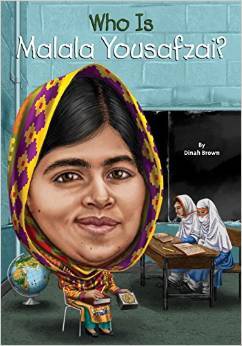
10. Who is Malala Yousafzai by DINAH BROWN

Lessons From My Favorite Book

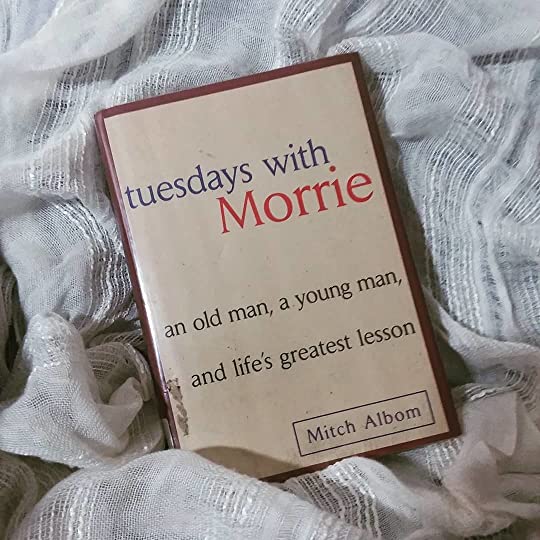
Tuesdays With Morrie by Mitch Albom

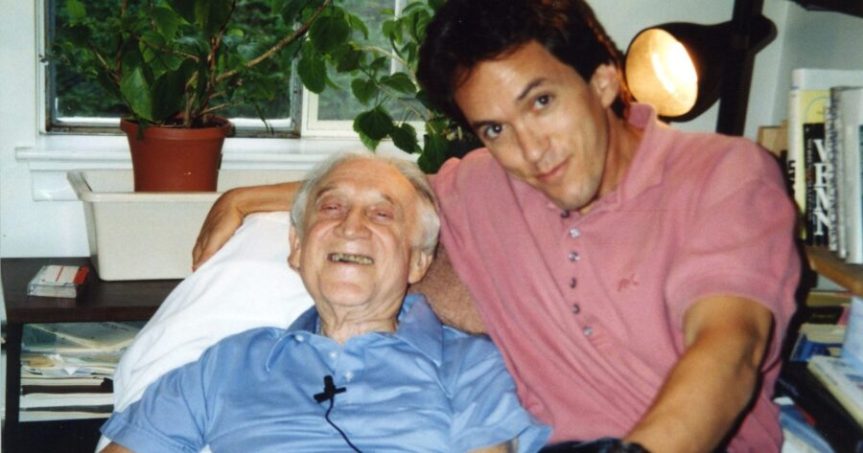
One should never underestimate the power of a good book. Books have the ability to help you discover your inner self. If you like books that force you to think about life and yourself, Tuesdays with Morrie is the book for you. Tuesdays with Morrie is my absolute favorite book. It is a memoir written by author Mitch Albom describing what his sociology professor, Morrie Schwartz taught him while he was slowly dying of ALS.

Here is a list of all the lessons I learnt from the book for which I will be forever grateful:

  • Stop feeling sorry for yourself: There are moments in our lives when everything seems to be out of control. During these moments we think about everything we have lost. However, Morrie taught me that it is okay to feel sorry for yourself but you must not focus on the bad part only. You should be grateful for everything good in your life especially during those low moments. Self-pity and loathing can rob you of everything good that’s going on.
  • Regrets: Regrets are a bigger part of our life than we admit. Spending your days thinking that if you did something differently your life would have been better now. These regrets have the capacity to eat you alive. If you stay hung up on the past mistakes, how will you ever have a better future. We are taught about forgiving others all our lives but why is forgiving so hard when it comes to forgiving ourselves. You must not torture yourself for a decision that could have gone either way. We cannot change our past because somethings are just out of our control. The healthy thing to do is move on and hope for a better future.
  • Death: “Learn how to die, and you learn how to live”, haven’t heard more accurate words. No one appreciates life like a person who is on their deathbed. They appreciate the little things in life that people generally take for granted.
  • Feel your emotions: Many a times we have these emotions that we aren’t able to let go. What I learnt is you should give yourself the freedom to feel them and have a good cry about it. Don’t let your emotions control you. As Morrie said, “Turn on the faucet. Wash yourself with emotions”.
  • Learn to Detach: This lesson is a bit complicated. It is about letting go and more. Morrie said that in order to let go of something, first you need to fully accept it. You need to let that experience, that emotion penetrate you and them you can detach yourself from it. If you don’t let yourself feel, you would never be able to let go because you would be nothing but afraid. Once you have felt it all, you would know that you need to detach yourself from that fear. Just step away.
  • Greed for Money: Since childhood we are taught that money cannot buy happiness but as we grow up we have learnt that buying things can bring you happiness but there is a catch. The happiness you feel is temporary. You use money to compensate for the love you never received. There is a difference between what we need and what we want. We must learn to separate the two. How much ever money you spend, you would never be able to receive the satisfaction you want because you would find yourself wanting more and more. And to be perfectly honest it is not entirely our fault because this is what we have been taught, “More is good”. In the words of Morrie, “Money is not a substitute for tenderness”. You must devote yourself to helping other people that is what would bring you real joy because only a life lived for someone is a life lived worthwhile.
  • Love: They say that people are never really gone, they stay alive in our hearts and it is absolutely true. Love is what keeps them alive always and forever.
  • Forgiveness: Forgiveness is tough. Whether it’s forgiving others or your own self, sometimes you just can’t gather the strength to wipe the slate clean. And yes I wrote ‘strength’. It takes a lot of courage to be the bigger man, to forget every exploitation and to move on. Morrie narrated a story where he and his friend had a falling out and how he regretted not giving him another chance before he died of cancer. Vengeance and pride can destroy you. These emotions are too heavy to be carried throughout your life. You need to make peace with everyone around you and then forgive yourself for everything you did wrong and everything you regret you didn’t do at all. Forgive those who hurt you and have the peace of mind you longed for before it’s too late.

One book, so many extraordinary lessons. Using any kind of adjective to describe this book would be an understatement. These kinds of books must be read, they must be felt and must be carried throughout life. That is the power of an exceptional book. I suggest you hurry and buy yourself a copy today.

Enjoy!!

How To Make Your System And Network Safe?

Network security management is the process of managing a network in such a manner that it is capable of dealing with all types of network threats and virus issues and solving them.

The following are the most important criteria to consider while ensuring the security of your system:

  1. Use Strong Passwords & Passphrases: To safeguard your system or network from malicious threats, create a strong password for login and access that includes a variety of letters, symbols, and numbers. Birthdays should not be used as a password since hackers may quickly crack them.
  2. Establish a Firewall: To secure your networking system from unauthorized access and other dangers, always establish a powerful firewall.
  3. Antivirus Protection: Antivirus software should always be installed on your computer and laptop. The antivirus program will scan, detect, and filter infected files, as well as resolve any issues that emerge as a result of viruses.
  4. Update Software: It’s important to keep your system and network up to date with the newest antivirus software and to install the latest patches and scripts for the system as needed. Virus threats will be less likely, and the network will be more secure as a result.
  5. Secure Mobile Devices: Mobile devices such as laptops, smartphones, and tablets are vulnerable to network attacks. To keep these gadgets safe, use a strong password to access their different resources. To gain access to smart devices, it is preferable to utilize a biometric fingerprint password.
  6. On-Time Backups: Files, documents, and other essential data on our system or hard drive should be backed up on a regular basis and saved to a centralised server or another secure location. This must be completed without fail. This will assist with the rapid restoration of the system in the event of an emergency.
  7. Smart Surfing on Websites: Before downloading or visiting any website on the Internet, we should keep in mind that a single incorrect click might invite a slew of viruses onto our network. As a result, always download material from trustworthy and secure sources, and stay away from unfamiliar links and websites. Also, whenever you connect to the Internet, avoid clicking on ads and offers that are regularly shown on online pages.
  8. Filter and Delete Spam Emails: Hacker-created phishing emails are designed to lure you to read them and click on exciting offers or links. Spam filters have come a long way and should be used to their full potential. Even yet, spam emails may get through, especially if a hacker is impersonating someone you know, such as a professional colleague or a firm with whom you do business.
  9. Encrypt Your Files: Using software particularly intended to disguise your IP address, encryption may safeguard critical data on Windows or macOS. Look for “HTTPS” in the URL bar, along with a padlock icon, to see if a website has been secured using encryption.

  10. Secure Configuration: The setup of devices such as routers, smart devices, and any other device that contains sensitive data must be very secure. Operating systems must be appropriately hardened. Passwords that are set by default must be updated.
  11. Removable Media Control: When introducing removable devices into the system, such as pen drives, dongles, and data cards, they should always be scanned. Removable gadgets should be used cautiously.
  12. Shut Down Computers When Not in Use: If your computer is linked to your company’s network and sits idle overnight, it becomes more visible and vulnerable to hackers. You’re restricting their access to your network by shutting off your PC. You’re also breaking their connection if they’ve already gotten access.

All about CMAT exam

Photo by Thirdman on Pexels.com

CMAT or the Common Management Admission Test is an aptitude test conducted by the National Testing Agency (NTA) for admission to MBA/PGDM courses in over 1,000 B-Schools across India.

Eligibility Criteria

  • The CMAT aspirant must have completed graduation in any discipline or equivalent from a recognized university
  • Final year Graduation students (10+2+3) are also eligible to apply for CMAT 2022 but they will have to present passing certificate at the time of admission

It evaluates a candidate’s ability in Quantitative Technique, Logical Reasoning, Language Comprehension and General Awareness areas. A new optional section on Innovation and Entrepreneurship with 25 questions of 30 minutes duration is also added.

  • The first option is of 3 hours Exam which is divided in 4 sections with 25 questions in each section. The sections are Quantitative Technique, Logical Reasoning, Language Comprehension and General Awareness
  • The second option is of 3½ hours exam which is divided in 5 sections with 25 questions in each section. The sections are Quantitative Technique, Logical Reasoning, Language Comprehension, General Awareness and Innovation and Entrepreneurship
  • There will be 100 questions for 3 hours exam and 125 questions for 3½ hours exam.
  • All are of objective type questions in MCQs form.
  • Question difficulty level is easy to moderate
  • Each correct answer is awarded +4 Mark
  • Each wrong answer is penalized with negative marking of -1 mark
  • No Individual Time limit to attempt question paper. Candidates can attempt any question from any section within the overall CMAT exam time limit
  • Merit Score and percentile is calculated on the basis of 4 sections.
  • CMAT score card displays Actual score obtained out of 400/500 Marks, Sectional score obtained and the sectional and overall percentile obtained in the Exam