MAJOR DEVELOPMENTS IN MEDICAL BIOTECHNOLOGY FIELD

STEM CELL RESEARCH

We all are in the era of major developments occurring around us in the field of scientific research. Research studies make it very convenient for us to understand and go through the minute details be it any disease or it’s treatment based on it; or if we want to know about certain causes of the disease such as a virus, bacteria, protozoa and many other microbes.

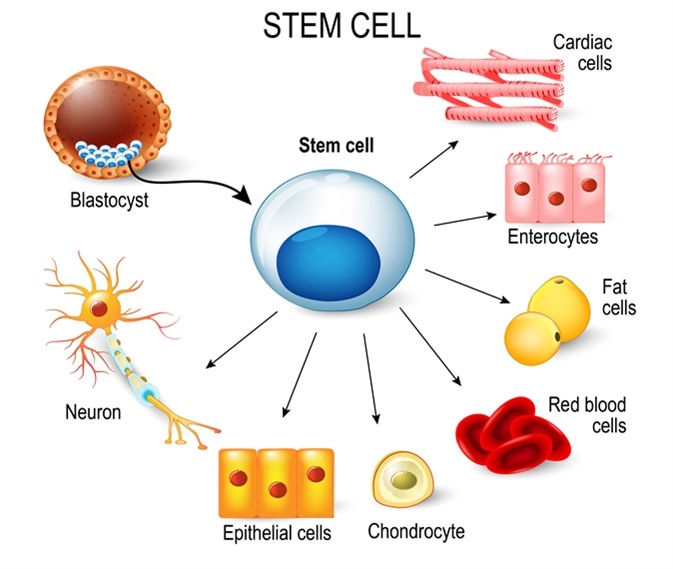
Now a days, many of us come across this word ‘stem cell’ either in science magazines or on internet in several journals. Stem cells are basically those special human cells that have the ability to develop into many different cell types. It is very surprising to know that it can range from muscle cells to brain cells. In some cases, they can also fix or heal the damaged tissues. Stem cells can also be considered as regenerative cells because of their ability to regenerate different tissues. The key properties of a stem cell were first defined by Ernest McCulloch and James Till at the University of Toronto in the early 1960s. They discovered the blood forming stem cell- the hematopoietic stem cell(HSC) through their pioneer work on a mice. Their research on mice paved different paths for other scientists to unleash this field. Scientists discovered ways to derive embryonic stem cells from early mouse embryos way back in 1981. The detailed study of the biology of mouse stem cells led to the discovery of the method to derive stem cells from human embryos and grow the cells in laboratory in the year 1998. Although it seems to be very recent but through all these discoveries on stem cells we have come a long way to know various techniques to store and preserve them for future purposes.

WHY ARE STEM CELLS IMPORTANT?

What sleep is to our brain, stem cells are to our body tissues. This maybe a little contradicting but the relation comes in a way that if we are stressed and tired, a good sleep can regenerate our energy similarly our torn and damaged tissues can be regenerated back by the stem cells.

Stem cells provide new cells for the body as it grows and replaces the specialized cells that are damaged or lost. They have two unique properties that enable them to do so: (i) they can divide over and over again to produce new cells. (ii) as they divide, they can change into other types of cells also that contribute to our body’s framework.

Stem cells are useful in both research as well as therapy. For research- they help us to understand the basic biology of how living things work and what happens in different types of cell during disease. For therapy- they replace the lost or damaged cells of our body.

STEM CELL RESEARCH

Apart from the things that stem cells do to our body they can also be useful to study how cells become specialized for specific functions in the body, and what all mistakes in this process can lead to a disease. We grow tissues and organ structures from stem cells which can then be studied to find out how they function and how they get affected by different drugs.

APPLICATIONS OF STEM CELLS

Adult stem cells are said to be multipotent which means that they have the capacity to self-renew by dividing and developing into multiple specialized cell types. These cells are currently being used to treat some conditions such as blood stem cells used to provide a source of healthy blood cells for people with some blood conditions like thalassemia, cancer who have lost their own blood stem cells during treatment; and skin stem cells can be used to generate new skin for people with serious burns.

Stem cells can also be used to generate new organs for their use in transplants. This can be done by replacing damaged organs with the healthy organs obtained from a donor. Although this process is quite a good alternative for people with organ failure but they may face a rejection from their body’s immune system considering the organ grafted to be a foreign substance.

Marital Rape

“Sexual intercourse or sexual acts by a man with his own wife, the wife not being under fifteen years of age, is not rape.”

Nevertheless, the world’s largest democracy slips far behind terms of legislative development and revisions in response to evolving societal needs. One of the causes for this is the backlog in case resolution. Marital Rape Legislation is the same way.
The law has always been ambiguous when it comes to marital rape. Women all across the world, not only in India, are victims of marital rape. People began to demand justice and adequate regulations on marital rape as society progressed. India is one of the thirty-six countries that have not yet made marital rape a crime. All of these countries have their own legal opinions and justifications for not criminalising.
The perception of marital rape varies greatly from country to country. Deem on this stumbling block has always been out of sync. Some Islamic countries, including as Afghanistan, Algeria, Bangladesh, and Pakistan, discuss the concept of shariyat and the role of their customs in not criminalising marital rape. China is a country where the law protects same-sex couples and victims of violence.

What is the most common form of rape in India?
The definition of rape established in Section 375 of the Indian legal code covers all types of statutory offences including non-consensual intercourse with a woman (IPC).
The non-criminalization of marital status rape is permitted in India under Exception a couple of to Section 375.
On the other hand, unwanted sexual activity between a husband and a woman over the age of fifteen is exempt from Section 375’s definition of “rape,” and hence is not punishable.
Following the establishment of marital status relations, it is possible for a better half to transmit her husband’s eternal consent to have sex with her.

Both legal and constitutional rights may be violated by marital rape.


1. The non-criminalization of marriage rape stretches back to the nation-state era, according to the Coverture Doctrine. The practise of matrimonial rape profoundly affected and developed the idea of combining a woman’s identity with that of her husband.
When the IPC was founded within the decade, a mate was not considered a separate legal entity.
The IPC’s marriage exemption was created in response to Victorian paternal ideals that denied men and women equality, prohibited married women from holding property, and dissolved husband and mate identities under the “Doctrine of Coverture.”
2. Matrimonial rape may constitute a breach of Article 14 of the Indian constitution, which guarantees equality.
The Exception separates women into two groups based on their legal status and prevents men from committing crimes against their wives.
As a result of the Exception, married women might be persecuted purely because of their support, although single women are protected from similar offences.

3. Section 375 of the Indian penal code is designed to protect women while punishing those who commit rape.
Exempting husbands from societal control, on the other hand, goes against the aim, because rape has long-term consequences regardless of whether or not a woman is married.
Married ladies may also find it more difficult to flee abusive situations because they are de jure and financially linked with their spouses
4. Health, privacy, dignity, safe living conditions, and a safe environment are among the rights guaranteed in Article 21, according to the Supreme Court’s innovative interpretation.

Conclusion
In India, husbands and wives today have separate and independent legal identities, and most current jurisprudence is particularly concerned with women’s safety.

As a result, it is past time for the legislature to recognise this legal flaw and repeal Section 375 (Exception 2) of the IPC, bringing marital rape under the jurisdiction of rape legislation.

Blackgaze – The Union of Metal’s ferocity and ethereal soundscape

Blackgaze is a fusion genre, the combination of black metal(which includes shrieking vocals, fast tempos, heavily distorted guitars and an emphasis on atmosphere) and shoegazing(delicate mixture of obscured vocals, guitar distortion and overwhelming volume). The word is a blend of the mentioned genres. It can be defined as a mixture of the hardcore instrumentation of black metal with the mellower, more dreamy soundscapes of shoegaze.

The genre was primarily influenced by atmospheric black metal bands like Ulver, and pioneered by French musician Neige in around 2004 through the projects Alcest, Amesoeurs and Lantlôs. Alcest’s ‘Le Secret’ is termed by many as “the birth of blackgaze”. It really developed through the band by their debut album Souvenirs D’Un Autre Monde, released in 2007. Alcest has since released several albums like Les Voyages de l’âme, Shelter, Kodama and Spiritual Instinct, with Neige describing the sounds delivered in an ‘angelic cod’ and a ‘raw, distant shriek’. Alcest has risen to prominence not only in blackgaze, but metal folklore.

Alcest

American band Deafheaven are also credited for promoting the genre with their success. The Guardian even termed them as ‘Blackgaze’s de facto poster boys’, describing their second album ‘Sunbather’ as pivotal to blackgaze. Deafheaven’s vocalist George Clarke himself cites the work of Alcest as the bands blueprint for their musical inspiration and direction.

With the blackgaze gaining more and more hardcore fans by the day though bands like Agalloch, Alcest, Altar of Plagues, Deafheaven, Ghost Bath, Liturgy, Oathbreaker and Wolves in the Throne Room the genre is just warming up.

Garhwali Culture

Garhwal is a beautiful place marked by the tall mountains, cold weather and green valleys. People from all over the country visit the place to meditate and attain peace in a life full of so much chaos. The very ancient wood carving can be seen even today on some of the doors as well temples of Garhwal. All the places such as Ransi temple, Srinagar temple, Chandpur fort, Padukeshwar and Devalgarh temple comprise of architectural remains even today.

Garhwali is the main language spoken here. Garhwali language has a number of dialects too including Jaunsari, Marchi, Jadhi and Sailani. The Garhwali language is believed to have originated from a combination of- Sauraseni Prakrit, Sanskrit and Western or Central Pahari language. Garhwal is inhabited by people belonging to a number of ethnic groups and castes. These include Rajputs who are believed to belong to Aryan origin, Brahmins who migrated after the Rajputs or later, tribals of Garhwal who stay in the Northern tracts and comprise of Jaunsaris, Jadhs, Marchas and Van Gujars.

It’s Very Difficult To Describe Garhwal Or Gadhwal In Few Words. This Place Has Worldwide Reorganization As Devbhoomi As Here You Can Find A Majority Of Temples, Holy Shrines, Spirituality, Tourism And Pilgrimage. Garhwal Region Is Surrounded By Splendid Beauty Of Snow-Capped Himalayan Peaks, Heavenly Rivers And Awesome Valley That Are The Major Attraction Of Garhwal. Along With That The Intense Woods, Prosperous Heritage And Friendly People Are Additionally Defines The Natural Beauty Of Garhwal. It Is Bordered On The North By Tibet, On The South By Uttar Pradesh, On The East By Kumaon Region And On The West By Himachal Pradesh. Pauri Or Pauri Garhwal Is The Administrative Division Of Uttaranchal.

People

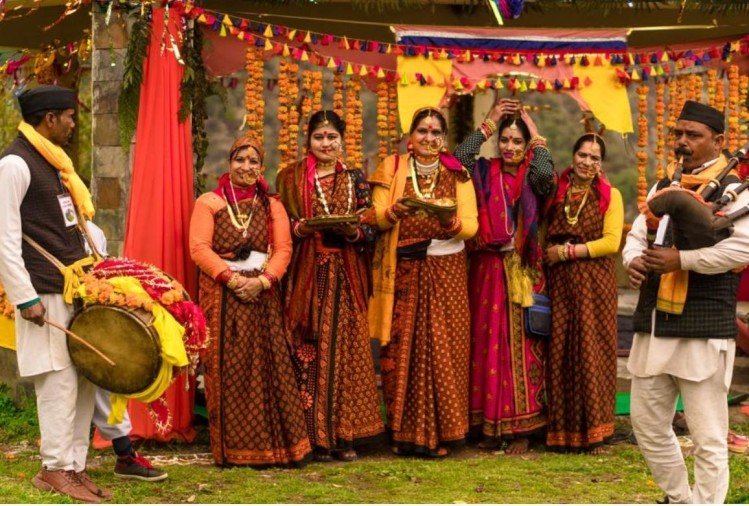
The culture of Garhwal presents an interesting blend of the indigenous population and traditions of other immigrants that settled here periodically. The local people of the region are associated with many tribes and work hard to earn their living. Folk dance and music forms an integral part of the people and culture of Garhwal.

Beauty of the place

Garhwal is a delightful spot set apart by the tall mountains, green valleys and chilly climate. Individuals from everywhere throughout the nation visit the spot to think and achieve harmony in an actual existence brimming with so much tumult. The extremely old wood cutting can be seen even today on a portion of the entryways also sanctuaries of Garhwal. This place has worldwide sort-out as devbhoomi and here everyone will majority of temples, holy shrines, spirituality, tourism and pilgrimage.

Language Spoken

Garhwali is the primary language spoken in this region. Garhwali language has various lingos also including Jaunsari, Marchi, Jadhi and Sailani. Garhwal is occupied by individuals having a place with various cultural gatherings and ranks. The principle languages spoken here are Hindi, Kumaoni, Garhwali, Bhotiya and Jaunsari.

Songs and dances

Folk songs of this area mirror an essential effortlessness and simple feelings generally got from the earth of harmony, peacefulness and the open nature all around. The subjects of tunes are justifiably connected with different farming exercises, their pillar and the incredible love for the land.

Folk dances of the area are a part for amusement and entertainment and applauding the nearby Gods. Normally most of the dances performed in groups. These society moves are primarily affected by the reverential connection of the individuals with Natraja, the God Shiva, and the relationship of Pandava of Mahabharata to the Garhwal Himalaya.

Dresses

Dresses for Men

The traditional clothing of men wears kurta and Pyjama or Churidar along with a Topi or a cap. The age of the men matters for wearing of topi or cap. During the occasion of the wedding the males wear yellow colour cotton Kurta with dhoti.

Dresses for Women

Married womenfolk are dressed in silvery jewellery known as Hansuli which decorates the spouse’s neck along with guluband. Even though they wear their old-style clothes to respect their heritage.

Personal Injury in india

India is fast transitioning from a developing to a developed country as a result of growing industrialization and globalization. Wherever there is progress, though, there will be disagreements. Increased competition, industrial growth, modernization, and technological advancements accompany increased growth and development, paving the way for more conflicts and cases to be heard by our country’s already overburdened courts and tribunals. With so many cases built up and waiting in the courts, the costs of litigation, and the unreasonable delays in redressing grievances, countless people are now driven to use Alternative Dispute Resolution (ADR) techniques to resolve their disagreements.

Physical harm or mental agony are the causes of personal injury cases, which are caused by the actions or negligence of another party. Auto accidents, defamation of character, product defects, and medical malpractice are just a few examples of personal injury claims. Contact a legal practitioner in your state to determine whether your personal injury case is valid in the eyes of the law.
If you are injured or incur losses as a result of someone else’s negligence, that person or corporation is legally responsible (liable) and may be obliged to compensate you. The court looks for negligence—carelessness on the part of one of the parties involved—to assess liability.

Whoever is found to have been less cautious is legally liable for at least a portion of the damages.
Compensation is usually determined by the quality of your evidence and the severity of your injuries. In Personal Injury cases, a legal specialist is suggested above all others in order to maximize your compensation in the face of insurance companies, which typically defend such cases. Personal injury situations are extremely serious. They frequently end in serious injury, long-term impairment, and even death.

Victims rely on a personal injury lawyer to get the financial damages they need to pay for medical treatment, replace lost income forever, and recompense them for their pain and suffering.
They have a far lower chance of securing reasonable compensation if they are doing not hire a trained, experienced personal injury lawyer. That’s why, if you’ve been injured in a car accident, it’s critical that you hire the best personal injury lawyer to defend you. Here are some factors to believe when making your decision:
Choose a personal injury lawyer who specializes in this type of case. Your personal injury lawyer should be ready to objectively assess a case’s merits, estimate its price , and identify the simplest approach for pursuing it. In addition, he or she should have a lot of experience in the field. Your personal injury lawyer should also stay up to date on the latest advances in the field.
Choose a private injury attorney who has addressed insurance companies before. The majority of defendants in personal injury cases are represented by insurance company lawyers. Because these corporate lawyers want to disburse as little as possible, a novice personal injury lawyer may find himself at an obstacle in these talks. As a result, finding a private injury lawyer with a diary of successful settlements is critical. Choose a personal injury attorney who has handled cases in court.
Despite the fact that the majority of personal injury claims are handled out of court, personal injury lawyers can sometimes achieve favorable settlements by threatening to go to trial.

To avoid costly trials, unfavorable publicity, and the possibility of a court awarding the plaintiffs more money, defendants are frequently eager to pay more money to the plaintiffs.

GENDER? No, we aren’t supposed to impose it at birth.

The above statement may appear intriguing to some, but that’s what we need to do, at least in 2021. Even today, majority of the world population is not aware about the distinction between ‘sex’ and ‘gender’.

Gender is something that is most often thrown and forced upon us according to the sex we received at birth. We are told to act, dress and behave in a certain way. In more simple words, ‘sex’ is what nature has given us at birth, for example, ‘female’ and ‘gender’ is something that we identify ourselves with as we grow up, for example, ‘woman’.

In this way, we can say that gender is a social construct, that is, gender is a human made concept while sex is a naturally grown system we have on our respective bodies since our birth.

It is also important to note that gender is variant and we would be doing injustice to the gender minorities like agender, non- binary and gender fluid people if we overlook them.

Moreover, we should also keep in mind that, lack of awareness regarding the difference between ‘sex’ and ‘gender’ is one of the main reasons of patriarchy. As mentioned above, since our birth we are expected to behave in a certain way. For example, when a male child is born, we expect them to be tough and physically strong and compare them with wild tigers and lions while when a female child is born we expect them to be soft and pleasant like an angel.

Another example could be, male toddlers are gifted guns and cars whereas female toddlers are gifted doll houses and ‘kitchen sets’, because from the beginning only we have this sexist notion ingrained in us that the male child will grow up and ‘earn’ the bread while the female child will ‘bake’ the bread.

‘Sex’ and ‘gender’ are most often used interchangeably and this also contributes to patriarchy, in fact it shows how patriarchy is deeply ingrained in us. Some of us indulge in patriarchy without even knowing it.

Patriarchy may favour males but it is beneficial to no genders in the world. In global context, gender expressions like ‘feminine’ stereotypically means one needs to be loving and
caring and ‘masculine’ stereotypically means one needs to be daring and challenging. Now here comes the problem- for example- a male who has ‘loving’ and ‘caring’ characteristics and identifies himself as a ‘man’ suffers due to these socially constructed ideas of being ‘masculine’. Similarly, a female who has ‘daring’ and ‘challenging’ characteristics and identifies herself as a ‘woman’ has to suffer due to the culturally made concepts of being ‘feminine’.

Another interesting thing is to note that if a man identifying male has some stereotypically feminine characteristics like caring, being soft and submissive, they are trolled and if a woman identifying female has some stereotypically masculine characteristics like daring, being loud and dominant, they are praised. This proves that the patriarchal world we live in hates femininity and just loves masculinity.

If a man celebrates his masculinity, he is praised but if a woman celebrates her femininity, then she becomes inauspicious for the society. It is important for us to note that femininity and masculinity is subjective and depends on person to person.

DIGITAL INDIA

The Government of India initiated the “Digital India” program to increase the use of technology in India. The goal was to make government services more accessible to citizens electronically by strengthening the country’s online infrastructure. The procedure will be designed to expand internet connectivity in order to empower the country digitally. It aids in reaching out to the general public and encouraging them to use technology in their daily life. Mr. Narendra Modi, Prime Minister of India, inaugurated the campaign on July 1, 2015. The initiative attempts to link rural India through high-speed internet connectivity.

At the heart of the “Digital India” campaign are three components:


Development of digital infrastructure– To be able to implement diverse digital services across the country, a solid digital infrastructure must be built, particularly in rural areas. The country’s interior regions have either very little or no electronic network. This is why a digital network is being established across the country. Bharat Broadband Network Limited is the governmental agency in charge of implementing the National Optical Fiber Network project, as well as the Digital India Project.

Digital service delivery– The delivery of government and other services digitally is a key component of the Digital India Campaign. It is simpler to transition from physical to digital service delivery. Many services have been digitised as part of the Digital India effort. People’s daily monetary transactions were likewise changed to digital format. To maintain transaction transparency and to combat corruption, all money transactions are conducted online and are protected by one-time passwords.

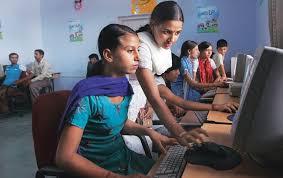
Knowledge of the Internet– The skill required for full participation of the people in India is known as Digital Literacy. The fundamental behaviours, knowledge, and skills required to effectively use digital devices are required. Desktop computers, laptop computers, tablets, and smartphones are utilised for interacting, expressing, cooperating, and advocating. Over six crore rural households would be reached by the digital literacy initiative.

The Government of India hopes to achieve all-round growth on various fronts via the Digital India Programme. The government’s goal is to focus on ‘The Nine Pillars of Digital India,’ which include

  • Broadband Highways
  • Public Interest Access Programme
  • E-Kranti
  • Universal Access to Mobile Connectivity
  • E- Governance
  • Global Information
  • Electronics Manufacturing
  • Global Information
  • Early Harvest Programmes
  • Training in IT for jobs

The Digital India Campaign has successfully raised public awareness of the relevance of technology in India. In recent years, there has been a significant increase in the use of the internet and technology. On August 5th, the Panchkula district in Haryana was named the finest and top performing district in Haryana as part of the Digital India initiative.

Technology behemoths from around the world have been paying careful attention to the Digital India Campaign and are enthusiastically supporting it. Even Facebook CEO Mark Zuckerberg updated his profile image to support the cause. He launched a Facebook trend and pledged to get Wifi hotspots operational in remote areas. Google has begun to fulfil its commitment to provide internet connectivity at 500 Indian railway stations. India is also establishing itself as a cloud hub through the use of data centres in the country. Oracle intended to invest in 20 states in order to work on smart city initiatives and payments. This Digital India campaign will aim at the growth and development of the masses of the country and will aim at improving their social and economic status.

Judicial Service Examination

Judicial Service Examination

The Indian government has three branches . Judiciary is one of them. The Judiciary is a judicial system that interpreting and applies Law. Clear Judicial service examination is the first dream of every law aspirants. Many Law aspirants graduate from the different different law school to clear Judicial Service Examination. In Law field many opportunities are there like advocacy, the litigation, the law firm, the legal officer the legal advisor but most of the law student dream to prepare and clear Judicial Service Examination and become a judge. The Judicial Services Examination ensures a safe and comfortable employment environment. Furthermore, it provides selected applicants with an opportunity to serve their country. Every year, between 50,000 and 60,000 people apply for the Judicial Services Examination, but only those are clear exam, who studied with a goal and in accordance with a philosophy, succeed. Judicial Services must be achieved.
India Judiciary exam are not Union exam means it not conducted by union government. It conducted by the State Government. Every state has its own eligibility, process ,qualifications, courses for Judiciary exam.
Mostly every state divide judiciary in 3 phase
• Preliminary Exams
• Mains Exam
• Interview round

1 Preliminary Exam – The preliminary exam is used to screen candidates for the main examination. It includes Inquiries that are objective in nature. The preliminary examination marks are not taken into account in the final selection. States have different percentages of qualifying marks. The preliminary examination requires a minimum score of 60% for general candidates and 55% for restricted candidates.
2 Mains Exam – This is a subjective sort of exam. Three to four papers form the exam. The ultimate selection is based on the candidates’ performance. The number of candidates called for viva-voce is three times the number of slots.
3 Viva-Voce/Personal Interview — This is the final stage of the selection process, during which candidates are evaluated on a variety of variables, including general interest, personality, and IQ.
This examination is conducted in English as well as in Hindi language. State has decided exam marks and pattern according to him.

Benefits to clear Judicial Services Examination:-

• In the Indian system, the position of deicide is the most prestigious.
• Candidates who are selected in the Judicial Services Examination have a safe and comfortable job.
• It also provide Allowances and Facility.

Tiers of Judiciary Exam
There are two tiers to a career in the legal system.
Lower judicial service:– which is allocated for recent graduates through an entrance examination administered by the various State Public Service Commissions (UP, MP, Rajasthan, and Haryana, Bihar, Punjab so on) or the high courts (Delhi). A career path through this ensures on-time promotions and a solid tenure.
Higher Judicial Services:- The chosen candidates get announce as extra District Judges, that and their promotion is quicker.
Civil decides (junior division) have Judicial Jurist (Second Class) powers, while Chief Judicial Jurists have Judicial Jurist (Second Class) powers (First Class).


Conclusion:
For those who want to serve the public in a high-status position, judicial service may be a good option. It provides a secure and safe job with a competitive wage package.

Shrine of Lord Shiva

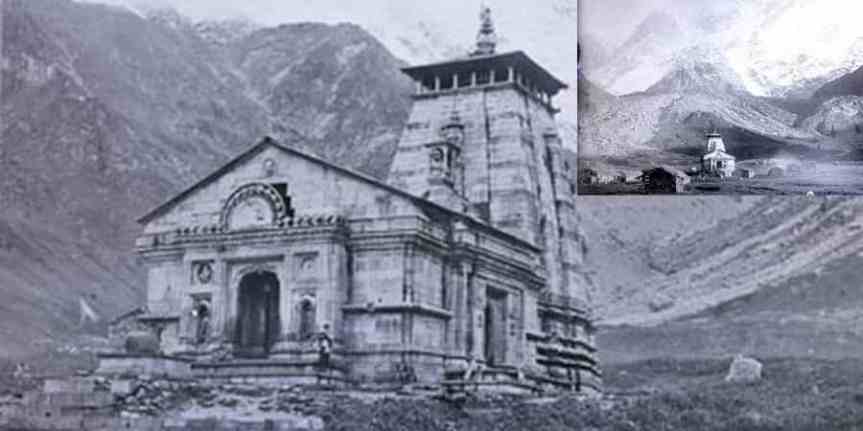
The Lord Shiva shrine of Kedarnath is of extreme importance to Hindus. Kedarnath temple is situated in the laps of the Himalayas and is said to have gained prominence after the Mahabharata tale depicted how the Pandavas urged Lord Shiva to forgive their bad Karma.

The temple is said to have been built or resurrected by the great religious Guru Adi Shankaracharya to its present form.

The Kedarnath Mandir (Temple) that nestles at the foothills of the Himalayas is one of the holiest sites of Hinduism. A shrine dedicated to Lord Shiva, the Destroyer of Evil, the temple is one of the 12 Jyotirlingas across India, one of the Char (4) Dhams (Badrinath, Kedarnath, Yamunotri, Gangotri), and one of the 5 Kedars

Given the treacherous weather in the region, this temple opens to devotees only between the months of April to November each year. It is said that this temple was constructed by a king from the Pandava lineage. His name was Janmajeya. The Shiva Linga here is very ancient. 

The temple’s architecture style is said to be the same as most ancient temples of its period – the ashlar style of construction – wherein stone slabs are interlocked into each other without the use of mortar or cement. Each year, thousands of Hindu pilgrims flock to the temple to seek the blessings of Lord Shiva. 

History of the temple:

The shrine finds a mention in the Mahabharata but the temple one sees today is said to have been built under the orders of the great Guru Adi Shankaracharya in the 8th Century. Some also claim that it was built by Raja Bhoj of Malwa region in the 2nd Century. After the April-November season of darshan, before harsh winter temperatures set in, the murti (vigraha) of the deity is carried to Ukimath for the next 6 months. The Rawals (the priests of Karanataka-origin) travel along with the deity and carry out worship there.

The Mahabharat connection: 


It is said that after the Mahabharata war ended, the Pandavas were full of remorse at having lost thousands to the violence.  They handed over the kingdom’s reins to grandson Parikshit and started for Varanasi to seek Lord Shiva’s pardon.

Not interested in meeting them, Shivji leaves Varanasi/Benaras/Kashi and heads for the Himalayas in the form of a Bull (Nandi, the Bull). He reappears in Guptakashi as the bull and the Pandavas reach there. 

Shiva escapes again and this time reappears as the bull in five different parts of India as 5 different parts of the bull’s body: the face at Rudranath, arms at Tungnath, navel and stomach at Madhyamaheshwar, the locks at Kalpeshwar and the hump at Kedarnath. The powerful Pandava – Bhima – is said to have grabbed the bull’s tail, forcing him to appear before them and forgive them. The Pandava brothers then built the first temple at Kedarnath. 

These 5 places where the bull had appeared in parts after diving underground are known as the Panch (5) Kedar.

Situated in a region of Glacial activity, the temple is said to have been under snow for 400 years. The signs of glacial assault are still there on the walls, say geologists. The temple was miraculously saved by a BhimShila (massive boulder) that rolled down the mountains during the horrific cloudburst and natural calamity in June 2013. It is said Baba Bhairo Nath saves the temple.

Nara – Narayana connection:

Nara and Narayana – two incarnations of Vishnu performed severe penance in Badrikashrayain devotion to Lord Shiva Bhole Shankar himself appeared in front of them. When the Lord granted them a boon, Nar and Narayan requested Shiva to take up a permanent abode at the place to benefit the devotees. Therefore, it is believed that Lord Shiva assumed the form as a Jyotirlingam at Kedarnath so that all people who worship Shiva shall be freed from their miseries.

Google And Jio Unveil Budget Phone “Built For India”

Billionaire Mukesh Ambani of Reliance Industries Ltd. unveiled the much-awaited JioPhone Next co-developed with Alphabet Inc.’s Google, a handset designed to target India’s hundreds of millions of first-time smartphone users.
“An ultra-affordable 4G smartphone is essential,” Mr Ambani told shareholders at Reliance’s annual general meeting on Thursday, outlining the capabilities of the device that will run a re-engineered version of the Android operating system. Alphabet Chief Executive Officer Sundar Pichai joined remotely to say that the JioPhone was “built for India” and would deliver translation features, a voice assistant and a great camera.


Neither company leader disclosed a price for the handset, which will debut in the market on September 10, ahead of the country’s peak shopping and gifting season. Both indicated plans to achieve a breakthrough price.

Jio is India’s leading telecom operator with over 423 million users of voice and data services. The new 4G-capable device will try to entice users of basic phones, those “trapped in the 2G era,” in Mr Ambani’s words, to make the transition to more advanced hardware. For Google, it marks another effort toward making Android friendlier to more frugal devices and thus accessible to a wider audience of potential users of its services.


Google Cloud technologies will form the basis for Jio’s upcoming 5G wireless solutions as well as serving the internal needs of online services such as Reliance Retail and JioMart, Mr Ambani said.

Engineers from the two companies worked for more than nine months to co-develop the JioNext hardware specifications in sync with a modified version of Android that would maintain a high-end experience without recourse to expensive components. The launch comes nearly a year after Google agreed to buy a $4.5 billion stake in Jio Platforms Ltd., the digital arm of Reliance Industries.


Global tech leaders like Google and Facebook Inc. have jumped on the Reliance bandwagon as they look for ways to grab a slice of the Indian market where an estimated 300 million first-time smartphone users are expected to start accessing the internet by 2025, according to the Internet and Mobile Association of India.

Asia’s richest man, pursuing his own large-scale project of turning an oil-and-petrochemicals giant into a homegrown tech leader, presented the new device even as the plans to sell hundreds of millions of the Google-powered smartphone faced supply chain headwinds.


Standing in the way of the Google-Jio alliance will be China’s fast-rising coterie of leading smartphone makers. Xiaomi Corp., Oppo, Vivo and OnePlus have already established their brands, credentials and some manufacturing facilities in India, with their domestic approach of high specs at low prices resonating well with the Indian consumer.

Population Explosion: The cause of poor living conditions of indians

India is a over-populated country. It is the second most populated country in the world, after China. However, researchers say that India is all set to surpass China in population density by 2024. That means India is about to become the country with the highest population density across the world.

The population of India is increasing at an alarming rate. India is not the country with the highest number of people. There are countries which has more number of people than India like Russia. But they are not overpopulated. Those countries have enough space to fit in the number of people. India has more people than the country could fit in. The number of people residing in per unit square of land in India is much higher than that of other countries. This makes India an over-crowded country.

The huge population of India makes a lot of people live in poverty. The country’s economy is not enough to sustain its population. Adding to the problem, the country’s wealth is not equally distributed. The economic gap between the rich and the poor is widening. The major chunk of the country’s wealth is held by the rich and the powerful who are quite few in number compared to the country’s huge population. A large chunk of the population live below poverty line who do not have enough money to afford their meals thrice a day.

Also, the country does not have enough employment opportunities for all its citizens. This leads to unemployment, economic distress, stress and mental health problems. Unemployment increases the amount of crimes, theft and illegal business practices.

Along with wealth and job opportunities, India’s natural resources are also limited and not enough for its huge population. Over-consumption of natural resources would exhaust them and leave none for our future generations. Overpopulation is also a threat to our environment. The air and water bodies are becoming more and more polluted day by day. Too much burning of fossil fuels, congested roads and too many vehicles are releasing toxic gases in the air.

Accommodation is also a problem in India. Thousands of people live in slums which are over-crowded with unhealthy living conditions. More houses and buildings are being constructed which leaves no place for plants and nature. Forests are cut down to make room for construction projects. The cutting down of trees leads to increase in the level of carbon dioxide in the atmosphere.

Population explosion is a serious problem which needs to be addressed at any cost. The Indian population should be controlled to improve the lives of the people. Awareness drives and contraceptive alternatives should be adopted with immediate effect.

Humanity’s Strongest Weapon- Hope

What does the word hope mean to you? Hope means many different things to different people. For some, hope is about expecting to get promoted. For some, hope is about living in better conditions, or the next day being better than today. Hope is an optimistic state of mind which is based on an expectation of positive outcome. Hope is humanity’s weapon against suffering and doom. You might have heard about the ‘Pandora’s box’. In Greek mythology, Pandora’s box was an artifact. Pandora’s curiosity led her to open a box, which released many curses on humanity. In the end when Pandora was depressed and regretted her decision, Hope came out. This tells us the importance and power of hope. Hope stands alone against all the evils. 

Hope gives us the strength to stay strong and face the challenges. But why are we talking about hope? During the pandemic, when we feel that we are lost, doomed, bent to suffering, hope can lift us up. The hope that we will make it out, the hope that these days too shall pass, will surely enable us to sail through these dark times. 

Emily Dickinson once said- “ Hope is the thing with feathers that perches in the soul and sings the tune without the words and never stops at all.” 

I believe this is a very beautiful way to express the meaning of hope. Hope lifts our soul when we feel low. To further our understanding of hope, I wish to share a story.

Image result for Hope. Size: 266 x 160. Source: www.uhsinc.com

Long time ago, there lived a poor orphaned girl, Belia. Only once had she seen her parents, that too when they left her in the hands of mother nature at the age of 4. She lived in an old hut along with another girl, Susan, who too had been abandoned by her once mother. Now they lived in destitute conditions in the lonely woods. 

“Susie! Come.” called Belia. They headed to the river to gather some berries, if there were any left. Day by day, man was growing fond of exploiting nature. Last year, they strolled in the meadows and made beautiful garlands. But now, the meadows were cleared, leaving hardly any flowers for the girls. As they walked past the cleared meadow, Belia said, “I tell you Susie, one day, we will have our flowers back.” Susan sighed and replied, “Lia, please stop dreaming. They are gone forever. They are never coming back.” Belia smiled and rushed to the river. “I don’t know how or when, but I know they surely will, Susie.” said Belia. 

Seasons changed, the girls found themselves famished. There were hardly any berries left, or money. They became fragile and lethargic due to starvation. Susan burst out into tears, ”No one cares if we live or die. I can’t bear this anymore.” Belia consoled her, ”Susie, don’t worry, someday soon we will have lots of food. Let’s go to the town to see if we find any.” Susan had lost her strength, ”No! We will die of starvation. I no longer wish to survive.” Saying this she lay down. Belia was too hopeful to give up, ”If you are unable to walk, I will go and bring some food. I know, I will find some.” Belia set out to the town. She sang merrily in her journey, as if she was a princess. She came by a big house. There she requested them to give some bread. After a long while of seeking their charity, the house Mistress gave her two pieces of bread. She rejoiced and turned back to her hut. 

Unfortunately, while crossing the river back home, her foot slipped and her basket fell into the river. She put in all of her remaining energy in chasing it. It was futile. She was panting, and fell to the ground with despair. She looked at the sky and begged for food. She heard a dulcet melody. She followed the song. The melody was coming from a few miles away. She walked and walked. Whenever the thought of giving up came to her mind, the melody relit the hope within her. Finally, she reached a pond, surrounded by trees, from whose branches hung red apples, however the melody had stopped. She jumped with joy and plucked an apple. She relished her apple. Then plucked a few more, tied them in her frock and hurried to the hut. 

Susan lay there on the cold ground. Belia tried waking her up. However, Susan lay there still. She truly had given up.

https://en.wikipedia.org/wiki/Hope 
https://dictionary.cambridge.org/dictionary/english/hope

Story of startup : flipkart

Photo by RODNAE Productions on Pexels.com

Flipkart was founded in October 2007 by Sachin Bansal and Binny bansal former employees of amazon and graduated from IIT Delhi. It is an Indian company who had its headquarters in Banglore. Initially the company started online book sales with country-wide shipping.

Being a two-man startup, they took care of everything from developing their website to delivering books. they’d managed to deliver 20 shipments in 2007 itself. In 2008, that they had moved into a 2BHK apartment .

Slowly, their business began to boom and by the end of 2009, Flipkart had managed to sell books worth ₹4 crores. In brief span of time, Sachin and Binny had managed to grow their company at an incredible pace and that they had also developed their personalities as entrepreneurs.

With new partners and more investment, Flipkart was able to dive into the electronics category. So they started selling mobiles in 2010.Flipkart had gathered enough fame to build that quantity of trust among its customers. They come up with a superb idea of introducing Cash on Delivery as mobiles were costly thing as compared to books.

And then later they came with ideas like return policy. These features were liked by customers. Flipkart began to expand its market to different products and acquired many ecommerce websites. You may be suprised to know that flipkart also owns myntra.

Thank you for reading.

https://en.wikipedia.org/wiki/Flipkart

https://www.google.com/url?sa=t&source=web&rct=j&url=https://www.flipkart.com/&ved=2ahUKEwjfpuGi4LrxAhWAIbcAHT6qCHYQFjAAegQICxAC&usg=AOvVaw0v_i-rdbD-oVZOBoKBuRP8

Hindu Succession Act

The Hindu Succession Act, 1956 is an act that codifies the laws relating to intestate succession. It is applicable to all people who are are Hindus, and also includes Jains, Sikhs, Buddhists and Sikhs. The Hindu Succession Act continues with the dual mode of devolution of property under the Mitakshara. The Hindu Succession Act is based on the principle of propinquity. It gives preference to the heirs on the basis of proximity of relationship. Heirs are categorised into Class I heirs (Immediate family members) and Class II heirs (In the absence of Class I heirs, the property goes to them). This act was amended in 2005. 

The Hindu Succession Act, 1956

Post independence, a significant change was introduced to Hindu succession laws. This was a revolutionary considering the position at that point of time. The Hindu Succession Act was enacted in 1956. This act granted right to inheritance to females. Section 6 gave women the right to inherit property like a son. It categorised people with right to inherit as class I heirs, class II heirs, agnates, cognates and others. This act was based on the principle of propinquity. That is, to grant a share of property to the nearest relatives. This act assumed a hypothetical situation of the way it would have been shared before the death of the coparcener. This act did not grant rights to people who had left the group of coparceners. Section 6 of this act talks about devolution of interest in joint Hindu family. It says that after the death of a Hindu male, the property will pass on by survivorship. This means the surviving heirs will get the share. In the presence of female heirs, the interest will devolve by succession. In such a scenario, the survivorship mode of devolution will not be followed. There is an exception to provision that states the property shall pass on by survivorship. If a coparcener dies, leaving behind female heirs the property shall pass on by intestate or testamentary succession. The survivorship mode of devolution will not followed in this case. The survivorship mode of devolution is applicable only to cases in which, the coparcener dies, without leaving behind female heirs. This is also applicable when the coparcener has not made any wills.


The most important section of this section talks about the devolution of interest and interest in coparenery property. This is done on the basis of notional partition. Every surviving member receives a share. It divides property as if the property had been divided before the death of the coparcener. The person who has left the coparcenery cannot claim his share of property. He loses his right to claim property the moment he quits coparcenery. In Shyama Devi v Manju Shukla, it was clearly explained that the share would be divided assuming the divison had happened during the life of the coparcener. After the death, the property devolves to surviving heirs. The sons get their share before others and then for others. One major drawback was the law did not deal with the exclusive rights of members of coparceners. This act codifies and forms uniform law for all who were practising different laws. This act applies to all Hindus. Hindu is defined in section 2 of the act. At that time, proposal to provide equal share for women received a lot of criticism and opposition. As a result, females were not included as coparceners. It denied admission of women to the group of coparceners. This meant that they did not have right to inherit ancestral property. Even after providing property rights to women, this act was still discriminatory.

This act introduced some major changes regarding intestate succession among Hindus. It was to improve the social status of a woman. This act governs all the people who previously followed Mitakshara and Dayabhaga schools and other schools in different parts of the country. This act governs all Hindus. This law is not applicable to people married under the Special Marriage Act 1954. Section 4 repeals all previously existing customs and laws related to interstate succession by force of law. This act abolished unbiased estate. The method of substituting unbiased estate was also abolished. According to this act, the land devolved through the husband’s descendants. The husband did not have any position. Rule of survivorship has little applicability in this act. This principle or rule can be applied if there are surviving coparceners. After the death of Mitakshara coparcener, the property will not devolve according to rule of survivorship.

The principle on which the law is based is called the doctrine/principle of propinquity. The nearest blood relation. As discussed above, there are four categories. Each category excludes the other. The heirs in Class I inherit simultaneously. They are preferential sharers. They share property along with each other. The second class heirs get property only in the absence of first category. Similarly, the other categories get property only in the absence of the preceding category. Hindu women’s restricted property was abolished by this act. This act is also known for granting women the right to dispose of their property in the way they desire. This act brought order to women’s succession of property. If she dies intestate, the property will pass on to her children and spouse. The parents and their heirs come later in the order. If her share is not issued the parent and their heirs will get the property on her death. This act introduces general rules for succession. It deals with things like preference of heirs of executors to half blood (only in the case where the nature of relationship is the same). It deals with case where two or more heirs succeed to land of the intestate. In this case, they are forbidden to receive their portion. This act dismissed exclusion on the basis of defects or deformity. Restriction of property to a widow of a late son who remarries, widow of a brother and widow of late son’s son is not touched upon by this act. There is no change regarding this. This act denies right to criminals. This act introduced a change in laws relating to converts. According to this law, convert who previously were denied share got rights to property. However, the heirs of the convert are not eligible to inherit property.

 The Hindu Succession (Amendment) Act, 2005

The need to bring amendment to the previous act was understood and this resulted in the amendment act. The Hindu Succession (Amendment) Act, 2005 was passed in 2005.  The main issue in the previous act was Section 6. The major drawback of this act was it did not include women as coparceners. It did not grant women the right to ancestral property. The amendment act introduced changes to this section. 

The second major change was omission of Section 23. The section 23 of the previous act did not allow women to claim right to partition of dwelling house. Other major changes introduced by this are Section 4(2). This section was omitted. This section was criticised as partial. This section did not permit the division of agricultural land. It forbade tenancy rights. The agricultural land was exempted from the scope of law. This did not allow women to claim a share in such property. Again this act was discriminatory in nature.  So, the amendment act omitted this section. This enables women to claim a share in agricultural land. 

The most important change was change in Section 6. The amendment act deleted the previous provisions in this act. This act included women to the group of members called coparceners. Making women coparcener allowed them to claim equal share to all kinds of property. Now women, by birth, acquired rights similar to that of a man. Until this point, a female was treated like an alien to the joint Hindu family property. This enabled her to claim interest in the undivided property. The right to property indicates the social status of a person. This amendment act by quashing this discriminatory section elevated the status of women. Right to property allows a woman to be independent. The kind of property she is allowed to inherit also matters. 

Prior to this act, women’s property was strictly restricted to donated property called Stridhan. When it came to other kinds of property, she was not allowed to get a share without the permission of the husband. She had limited or restricted rights when it came to other kinds of property. This restricted her to a limited owner. This was recognised in 1937 act. But this recognition was restricted to widows. This also forbade her to individually dispose of the property. She needed permission from other male members to transfer property. This act is considered as major leap towards equality. 

The changes or regulations introduced by the 1956 act wasn’t sufficient. Even after 1956, women were not treated as equals. The amendment act, by including women as coparceners, achieved what previous laws failed to achieve. The group of coparceners was no longer an exclusive group. This group lost its relevance as all could inherit now. The amendment act allowed women or granted her rights to seek partition. This allowed her to claim her due share of property. Now, she had a right in joint Hindu family property. This act is not applicable to testamentary succession. The next change introduced by this act was in Section 23. Section 23 of the previous act forbade women to claim a share in the dwelling house. Dwelling house is her birth house, to which she became an alien after her marriage. After her marriage, the dwelling house was occupied by male heirs. They were the exclusive owners of this property. The amended acted deleted this section. Women now were able to seek partition of the dwelling house. Married women could claim their share in the property. Another major change was in section 24. This section was omitted in the amendment act. This section was discriminatory towards widow of a predeceased son, widow of a predeceased son of a predeceased son and widow of a brother after another marriage. This was based on the reason that a widow ceases to to be a surviving partner after her marriage with another man. So, she was not granted right to property. This section was particularly discriminatory towards these women alone. When it came to the widow of the intestate, it took a different stance. Widow of an intestate was allowed to claim a share in the property. This right existed even after another marriage. This again manifested the partial and unequal nature of laws. This was contradictory to the spirit of the constitution. This fault was corrected in the amendment act of 2005. The first two types of widows, mentioned above, were included in class I heirs. The third type of widow was included as an agnate. They were invested with property rights immediately after the death of the intestate according to the amendment act. The amendment act makes her an absolute owner. This is mentioned in Section 15 of the Hindu Succession (Amendment) act, 2005. Section 25 of the Hindu Succession Act, 1956 was omitted in the amendment act. The next major change introduced in the amendment act was with regards to Section 30 of the Hindu Succession Act. The amendment act brought changes to the previous section that was discriminatory. This act replaced the words “disposed by him” with the words “disposed by him or by her”. The discriminatory nature of the previous law was changed. 

Other minor changes introduced by the amendment act was with regards to things like adding extras to the schedule of class I heir. This gave equal rights the descendants of daughters. The new version treated the descendants of the daughters equally like the descendants of the sons. This was major change. This changed the gender discriminatory nature of Hindu laws.


GOvernment VS Private

Ok Fine so why this suddenly hits in my mind.

Night time I was thinking about the situation I am in and most of my other friend like you might have this question some where inside your head.

I am not a genius or a very educated or an aged person who have the knowledge on that but as per my personal experience. You should do the things what makes you Happy.

If you are not happy with your work that doesn’t matter

  • How much money you make?
  • How big your house is?
  • How expensive things you can have or you can buy?
  • How expensive lifestyle you may get?
  • How many top beard pet you can have?

Not a single thing make you happy the is a very popular quote says “Money can’t buy your happens ” I myself read this so many time in books or in any social media but today I can feel this.

My father is a government employee and my sister is a private one so I felt like I can compare things as I am seeing things just inside my home.

It just like 9-6 desk Job, Its very easy to say but in reality, if you join private sector then every day is a challenging day. Every hours you have to ask for an update and you need to give update to other. Every minutes you might be in a situation to loss your temper. Every second will be like Am I Doing What I Suppose To DO!!! but in a same page she realized, she explored so many cites and seen so many cultures in India as she was posted at different-different places. She felt lucky that she could explore that much in her life. She did stopped her learning as a IT worker. if you stop learning and enhancing you skill then there will be no place to you.

She always said “Joining a IT company or any private sector is easy but staying there is really hard”

If you are in Private sector, hardly you will give time to your family, because every Day comes with a new responsibility and a new dead line. She (my Sister), is 25 yr youth as I mentioned she worked 10-11 hr./Day due to this she started suffering some heath issue like Eye/ back pain, some mental issue like short temper and all she is having a full working day scheduled she give us time very rarely. Todays she took off as she was noticing we are are not happy and we enjoyed. I would not say she is not happy with her job she is just full occupied and fully busy that is why she started missing her happy life. But she felt very lucky that as a lady she is earning she is independent and strong woman she can do what she want to do!!

At the same my father is in his retirement days, he is earning as my sister but he seems very happy with his job. He teaches us, made us what we are now!! He giving us time.

My father said As a general category student it very hard to join a Government sector but once you Join there is no need to worry about you future

So now what the conclusion, Its just both sectors are equal, you should do what make you happy because if you are happy you can achieve everything and you can work any where.

If you are in this dilemma You should must watch below mentioned web series only when you are free soo…!

Panchayat : https://www.primevideo.com/detail/Panchayat/0KEP4A6DWRKFYQFTSU5RXHEAN2

Aspirants : youtube.com/watch?v=0Kl1ucZuSZ8

At this end I just wanna add a small sentence :

According to Hindu menology, after 84 lac yoni (योनि) with good Karma you will get the human body. If you have this after so many hard work and time so why waste it. In this life, you have to work hard in all the stages of your life. You can do it in your school/ college and if you waste your childhood and adulthood simply doing nothing then you have to work really harder after you cross 25 because that time you are not a kid any more yo just can’t sit and study you have to work as well to feed your family.