MENTAL PEACE

We are human, and we look at happiness and peace everywhere around us , and also in another human being. But the Self Mental Peace come from the inner side.

Mental peace refers to the deliberate state of spiritual calm and the potential of stressors such as the burden arising from pretending to perform at an optional level with a positive mind (inner peace). Peace of mind is generally associated with joy, happiness, calmness, prayer, yoga, meditation etc. many spiritual practices refer to this peace as an experience of knowing oneself. But we all know that inner peace is important to mental health. The human beings who are mentally strong are confident that they can handle whatever life throws their way.

The people you surround yourself with affect the way you think, feel and behave. Mentally strong people don’t waste their time or energy trying to change toxic people. They established healthy emotional and physical boundaries.

These people take appropriate accountability. They recognize the responsibility for their choice, but they acknowledge factors beyond their control like the state of the economy, the weather and other people’s choice.

Mentally strong people are willing to put in the hard work it takes to gain contentment. They refuse to give in to instant gratification or temporary attachment. They look for ways to build a brighter future by creating long term goals. People face their fear, venture into unknown areas and test their limits. They know that being uncomfortable is tolerable and allowing themselves to experience discomfort is the key to living a better life.

Finally, further reflection on the nature of basic human needs in relationship to self and identity can provide the means to address the most deep rooted of inner conflicts. Just find inner peace and unwrap your best self.

How to get mental peace:-

Connect with something larger than yourself. There are several theories that emphasize the need for balance to produce wellness in our lives. An aspect of that theory includes spiritual wellness. Spiritual wellness promotes tranquility and harmony within yourself and within your life and is essential for mental wellness. This does not mean that you have to become religious if you aren’t; it means you must find something bigger than just yourself with which to connect. Try connecting to the awe of nature or outer-space, or in the bonds people form with each other. Finding something outside of yourself to connect with will help bring peace to your mind.

 Find meaning in your everyday life. Spiritual wellness can also help you build on your understanding of your purpose in the world. This will help you find meaning in your everyday life  If you feel fulfilled with your contribution to the world, your mind will be more at peace. Actions that could help you build your understanding include connecting with others through volunteerism or finding other ways to help and serve others. You may also find meaning in other activities, such as taking care of your family or loved ones, or doing the best job you can at your place of employment.


Saying No Can Lead To A Happier Life

START SAYING NO!

We believe that we always have to say yes to opportunities. We fear that saying no leads us to miss out on money, fun, and other experiences. But by always saying yes, we don’t value our time.

Blindly we say yes to everything that comes our way. We often don’t look at saying “no” as a skill. If we are at work and our manager asks you to hand in a report before the end of the day, we say, “sure thing.” It interrupts our work, and we often have to push other things aside.

There was never any fear for me, no fear of failure. If I miss a shot, so what?
– Michael Jordan

We say yes in our personal lives all the time. When friends ask us to go out while we have other things to do, we say yes. We friends or acquaintances a favor, without thinking about it. We even say yes to bigger things that we don’t want. We take jobs we don’t like. We start relationships with people who we are not in love with.

Why do we do this? We are afraid to say no, to let people down, to avoid confrontation. The stress of saying no often makes us say yes automatically. And then we complain or blame ourselves, “why couldn’t I just say no.” And with relationships, we are afraid that if we turn down an opportunity to settle down, another one maybe won’t show up.

I see this often with relationships at work. You spend time with a person at work so often and if you feel physically attracted to each other it easy to start a relationship. If you start a relationship, you cannot ‘kind of’ want it. No, you should be in love. Saying yes doesn’t always make you happy.

Other People’s Expectations

Learning to say no can save us a lot of time and stress. While we are afraid that we have to let people down, the opposite is true. People will start respecting you more when you start saying no. People perceive that as a strong character trait.

It’s time to stop doing things to live up to other people’s expectations. You don’t have to do things you don’t like. If you don’t start saying no, and keep doing things you don’t want to do, you begin to dislike the person you are trying to please. Saying no is not only for your benefit but actually by saying no, you are thinking about other people as well.

If you say yes to a night out with your spouse and you don’t feel like it, you probably won’t be in a great mood. It’s not fair for your spouse if you are not present mentally. If you rather go out the next day because you are tired tonight, say so. Your partner will respect you for that. If she doesn’t, we have to explain why we say no. And encourage them to say no when they don’t want to do something as well.

Conforming to other people expectations can impact your life’s outcome. When you say yes to one night out, when you don’t feel like it, doesn’t have huge life consequences. But sometimes it is about choices that will influence our life outcome. When parents expect their children to go to university, the children often give into that.

We are all unique and have things we want from life, asking people to do something they don’t like is not fair. If you don’t wish to go to university because of a good reason, then don’t. We have to follow our passion and make our own path.

Say No To Noise

We should say no to everything that is noise. Greg Mckeown, writes in his book Essentialism about how the ‘disciplined pursuit of less’ allows us to regain control over our choices. Mckeown says that many successful people in history were ‘essentialist’, people who can separate the essential from the non-essential in life. Saying no is a way of showing what you consider ‘essential’ by saying no to everything that is noise.

About the importance of saying no, Mckeown says, “ yet as hard as it can be to say no to someone, failing to do so can cause us to miss out on something far more important.” When we have a purpose in life, everything that doesn’t contribute to our purpose, becomes noise.

When we want to live a stress-free life, we have to choose “no”. Saying blindly yes to invitations from our colleagues, friends or family causes us stress. We often regret saying yes for days. We worry about damaging our relationships. We worry that we burn bridges. We worry about what people would think if we say no. We live in an abundant world. By saying no you don’t miss anything. The world is filled with opportunity and beauty.

We think we are not good friends or colleagues when we say no. You’re not a bad person when you say no. Once we start saying no, we lose the fear of disappointing people and find out that it wasn’t that hard. We find that we replace the noise with silence and clarity. We enjoy the things we do say yes to more. We become more present and happy.

Biographies of Great Leaders, Businessmen, Social reformers, Educationist

Biographies concept icon. Life history idea thin line illustration. Stories about famous people. Facts about historic personalities. Personal data. Vector isolated outline drawing. Editable stroke

Biographies is Achives and success of failure to success people of Great Leaders, Businessmen, Social reformers, Educationist

Biography is the self motivation  to every  knower

what is biography

A biography, or simply bio, is a detailed description of a person’s life. It involves more than just the basic facts like education, work, relationships, and death; it portrays a person’s experience of these life events.

The purpose of a biography

The purpose of a biography is to share the life of another person with an audience. An author may choose to write a biography because they find the subject’s story to be interesting or to have themes that apply to life today.

Types of biography

A biography is a specialized form of history. It is an account of events based upon the example of one person’s life. There are four basic types of biographies:

historical fiction, academic, fictional academic, and the prophetic biography.

What Idiots Can Teach You About Life

IDIOTS ARE NOT STUPID! BELIEVE OR NOT!

Have you ever met an idiot and thought “What an idiot?” Well, don’t be so quick to judge — idiots can teach you a lot about life.

A few years ago I went to Shangai. When I boarded the plane in Amsterdam, I met a first class idiot as soon as I stepped foot on the aircraft.

When I got to my seat, the overhead bin was already full, so I had to store my bag on the other side. But when I tried to do that, an idiot came from nowhere and started screaming at me. I didn’t understand him, but I got his message: “That’s my seat, and I want to store my bag there.”

I grabbed my bag, walked two rows down, asked the person who was sitting there if it was ok I placed my bag in his overhead bin; he said yes, I stored my bag, walked down to my seat, and sat down.

Was that difficult? No. Could the idiot have done that? Yes. He didn’t have to make a scene.

“People are surprised to find out that an awful lot of people think that they’re idiots.”
– Eric Schmidt

In my life, I’ve had many other encounters with people that had bad behavior — let’s call them idiots.

You know what I’m talking about, right? Idiot bosses, coworkers, strangers, friends. Idiots do things that are not cool. It’s not bad to be an idiot — I sometimes do idiotic things, everyone does.

Dealing With Idiots

Is it cool to call people idiots? Yes, I call myself an idiot sometimes. People think they should only learn from successful people — billionaires, entrepreneurs, athletes.

But that’s not the only way to learn. How many billionaires and athletes do you know? We all know idiots. From them, we can learn how we should not behave.

Maybe someone at work stabs you in the back. Maybe your girlfriend cheats on you with your best friend. Maybe someone wants to start a fight with you. Maybe someone bullies you.

Without a doubt, people in your life have, or will, let you down. There’s no escaping that. What’s more important is your response. Do you become bitter about people? Do you think that all people are bad?

If someone does something bad to you, don’t see it as a reason to justify that behavior. For example, when I first started working for a major corporation, I noticed quickly that people accept backstabbing. You screw someone over on one day, and get promoted the next day.

Is that good? Is that bad? It’s neither, as Shakespeare put it: “There is nothing either good or bad but thinking makes it so.”

However, it’s also not a ‘get out of jail free card’. We have to watch ourselves that we do not become what we despise. No one on this planet is born an idiot — we become one. So choose not to.

When people behave like idiots, don’t be offended, don’t take it personally, study them instead.

“Life is tough, but it’s tougher when you’re stupid.”
– John Wayne

I observe idiots doing bad stuff like cheat, lie, be aggressive, rude or anything else that is not ok to me. Then, I consciously decide to not be like them.

By observing behavior that you don’t want to associate yourself with, you will become clear on the type of person you do want to be.

Just answer to yourself: What is ok, and what isn’t? For example, stabbing people in the back for a promotion — not ok.

In the end, do whatever you think is right. Always make sure you do the right thing — but please, don’t be an idiot.

How social media has changed OUR society!

Gone are the days when our youth were surviving under the influence of their luminaries worshiping. They used to make their physique, dress style and hair style close to the look of adorable personas from film industry, besides imitating their talking style close to their praised one. ‘Social media’ has risen like a tempest and has engulfed all the existence of so-called superstars till date. Social media websites such as Facebook, Twitter, LinkedIn, Pinterest, Google +, Tumblr, Instagram, gaming sites, and blogs have given openings to common people to earn name and fame and thereby resulted in the rise of social media influencers.

Social media influencers are honking on every nook and corner and overpower people from all walks of life especially youngsters. Nobody gets respite, not even the renowned film celebrities who are joining with influencers to promote their films.

IMPACT OF SOCIAL MEDIA ON YOUTH:

Study Shows:

  • The average person now spends more time each day on their phone and computer than they do sleeping.
  • The average time spent on social networks per day: 1.72 hours (in 2015).
  • The average number of hours a teenager spends online per week: 27 (2015).

Social media has become a prominent part of life for many young people today. Most people engage with social media without ending to think what positive or negative consequences it confers on our lives. Are we as a society becoming more concerned with Facebook “friends” than we are with the people we interact with face-to-face in our daily lives? What will the long-term effects of today’s social media use be?

There are many positive aspects, but there are equally as many hazards that come with the addiction of the sites.

THE POSITIVES OF SOCIAL MEDIA:

ACADEMIC SUPPORT:

It helps a teacher team up and communicate easily with students and one another. Students exploit a free access to the treasure of resources online to help them upgraded. A big chunk of students uses social networking to discuss informative topics, hence complete their school’s/colleges’ assignments.

POLITICAL UPDATES

Social media eases political change. Online networks give social movements a quick and cheap method of broadcasting information and mobilizing people.

AWARENESS SUPPORT:

Social media keeps us updated about the significant things that are working across the globe currently or maybe in our neighbourhood. Social media enables and authorizes individuals to bring a modification within themselves and their societies.

SOCIAL BENEFITS:

Social media allow people to interconnect with friends and the increased online communication strengthens those relationships. People make new friends. A report says 57% online teens make new friends online.

JOB OPPORTUNITIES:

A boon for professionals who love marketing, connecting, and finding business opportunities. Social media sites have created thousands of jobs and new avenues of income for all and sundry.


THE NEGATIVES OF SOCIAL MEDIA:

A DAMAGE TO WORK AS WELL AS SCHOOL:

Media created weakness has compelled students to cheat on school assignments. Study shows, for every 93 minutes over the average 106 minutes spent on Facebook daily, college students’ grades dropped .12 points.

On another study, students who went online while studying, have scored 20% lower on tests. Social networking sites have harmed employees’ productivity. Record says 51% of users between 25-34 years age group use to check social media frequently at work place.

GROWING NEED OF PRIVACY:

People, especially the young, are often too open and public with personal information when online.

USERS EXPOSED TO CRIME:

Social networking sites allow hate groups to recruit and distribute propaganda online. Unauthorized sharing and copyright infringement threatens intellectual property and causes loss of income. Security attacks such as hacking, identity theft, phishing scams, and viruses are common online.  Criminals use social media to commit crimes.

SOCIAL DAMAGES:

Cyber-crimes and Cyber-oppression (the use of electronic communication to torment someone, usually by sending threatening messages) are commonplace online, cause emotional disturbance, and sometimes even lead to suicide. Sometimes some online duels eventually turn into a physical confrontation. Children are the worst suffers and are at higher risk for depression, low self-esteem, and eating disorders which ultimately pushes them to be isolated and disconnected (especially youth with disabilities).

MISINFORMATION:

Occasional spread of false rumours, unreliable information and news on social media misguide a vast majority of social media hunters. It encourages unprofessional medical advice and self-diagnosis of health problems, which can be dangerous and life-threatening.

ADVERTISING:

Studies have shown that sites such as Facebook stimulates us, via advertisements, to spend more money. Advertisers gain all kinds of personal information about us via our social media, so, they persuade us to buy their product in due course.

A WASTE OF TIME:

Time flows out uncontrollably from the clutches of the promising citizens due to the bigger exposure to social media. A great chunk of unproductive efforts kills their survival enthusiasm and push them in some lonely corner.

So, for the social media, I think, there is a crucial need of the dissemination of an awareness campaign among mass. Let everyone be alerted about the pros and cons of the social media, its use and disuse, it merits and demerits, its benefits and detriments. We must not forget our sacred rituals, brotherhood, integrity, social duties and responsibilities and all those things which pull ourselves to the higher steps of humanity. After all, safety, security, progress and development of a society do not depend upon any media, rather great thoughts, powerful leadership and practical positivity pave the way for greater citizen and wider tomorrow.

Digitalization: Where will we head?

Digitalization is the process of converting information in the form of text, audio, video, or any combination of all three or more into digital format. The omnipresence of computers in our daily lives had its roots in the introduction of computers in Indian workspaces in the 1990s. Since then the proliferation has increased manifold and digitalization has become an integral part of lives. Indian IT exports have been one of the major contributing factors to our GDP and this will not slow any time soon.

Digitalization has certainly made out lives much more comfortable and easier than it was a couple of decades ago. Since 2015 Indian government focused on increasing digital proliferation to even more areas. With the initiatives like digital India, numerous services have been transferred into digital platforms. This is evident with some major examples like the Driving license and Learners license services which have been fully transferred to an online platform and all the paperwork can be completed without visiting the RTO. The candidates have to select their slot and attempt the test of the stipulated date. This is reduced middlemen corruption and made the process of obtaining a driver’s license much more seamless. After the advent of the Covid pandemic, there has been an unprecedented growth in digital platforms. People who were wary or unsure of digital platforms were forced to learn and adapt due to the unavailability of non-digitalized services due to restrictions. Schools have adapted to the age of online classes. The consumption of online coaching platforms has increased. Businesses are developing infrastructure to support their digital services. Small business owners are jumping on online platforms to reach a wider range of potential clients.

But there are still many discrepancies with digital proliferation. This growth and reach of digital are not equally distributed. India still faces many problems due to its weak infrastructure and limited internet connectivity. This phenomenon which is also called ‘Digital Divide’ has to be addressed quickly. Because many rural areas don’t have the facility of good internet connectivity and many rural communities have not been able to avail many benefits of this digital revolution. Government schools in rural areas have been affected the most during the pandemic as the schools there don’t have adequate funding to facilitate online classes. Many teachers are untrained to use digital tools and many students don’t have laptops or smartphones to really take advantage of online classes. But this problem is not just limited to rural and undeveloped areas and many people whom we call urban poor also face similar problems.

Government initiatives are commendable but there needs to be more focus on the equal distribution of these digital services. There has to be a greater emphasis on how the services can be availed by the weaker economic section of the society otherwise it will only exacerbate the issue of the digital divide that we are facing right now. Despite having the second biggest internet user base second to China, only half of our population has an active internet connection.  A new policy needs to be implemented at a national level so that digital services can be availed equitably by every citizen of India. 

THE ART OF NATURE

Helloooo guys!! Hope you all are doing good😊.

Before we jump right into the topic .

I have a few questions to ask.

What do you think is the most popular pick for any photographer or an artist?
From where do you think are the musicians getting inspired from?

Why is the sun shining so bright in the morning and it’s so dark in the night?
Why are the water bodies blue? Why are trees green?

Ok ok I asked too many questions, haha sorry guys
I will ask only one question .

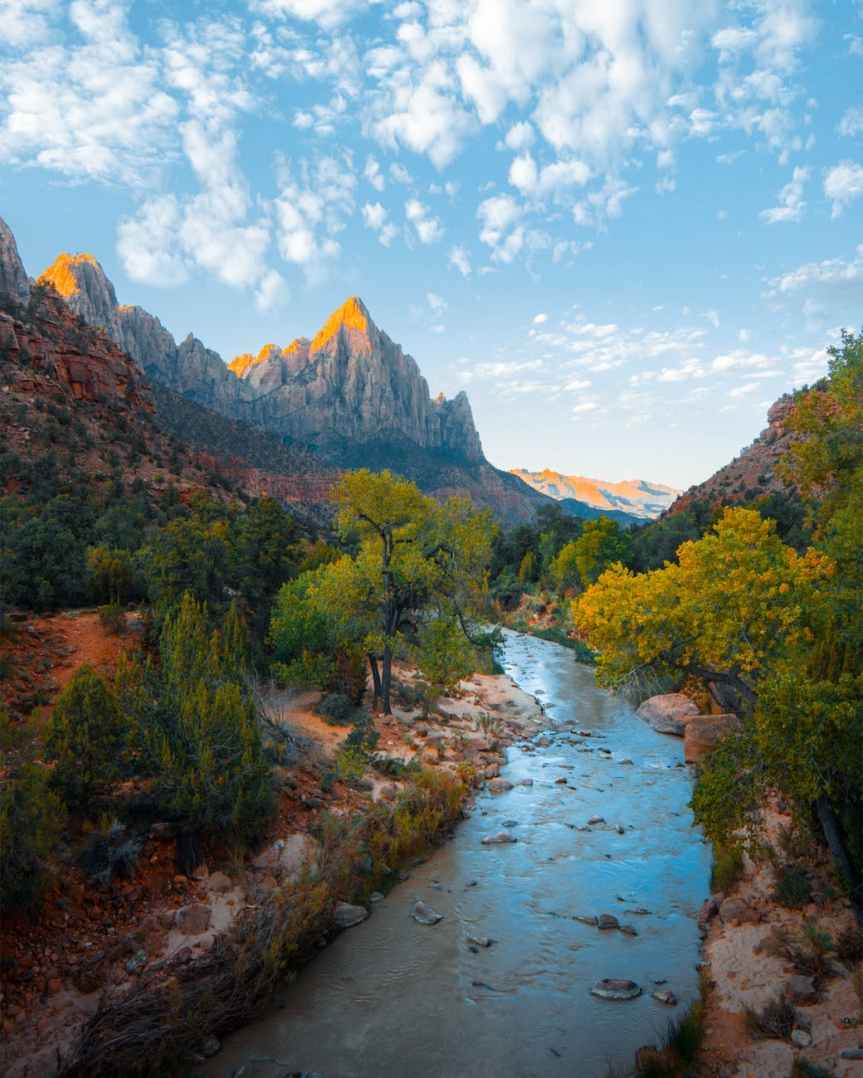
Why is the nature so beautiful?

All this points to only one thing that is

” The art of NATURE”

It’s the art of nature because the nature is deciding the beautiful and colourful strokes needed for the beings to live.

Nature has everything that is needed to be learnt by us humans .Every aspect of it is something special.

Nature is magic.”

Nature has many qualities like discipline, strictness, sincerity, love, care
The definition of beauty is nature.”


Nature is so free, boundless.
But at the same time it is not reckless or careless.

Nature is has its own will but it also bends the will if needed .
It forms it’s rules and abides by it but when it breaks those rules the living beings have to face dire consequences.

It’s as if the process of crafting is so beautiful that your in awe .

It’s make you feel every bit of emotion that exists but you cannot express all in it few words.


The ocean, sea, rivers, all forms of water bodies are like vast blankets that cover the earth as if protecting us .

The sky so free that when we stare at it makes you feel as if the limiter we have set is broken .When we stare at nature there is an immense silence and its as if nothing can stop you from experiencing the freedom .

The clouds are like the drawings that kids draw with pure heart although not perfect, it fills our heart.

We definitely have to talk about the starry night skies that fill our eyes with glitters ,words are not enough describe the beauty of the nature.

This feeling of satisfaction is similar to that of watching an art piece of your favourite artist in an art museum .

Nature gives food, water, what not it gives everything that we need so that we can sustain our lives on earth .

Because of its unconditional love we are leading happy lives .

Everyone calls it “mother nature” .In my view nature is god because of its pure love towards every being living or non living. It doesn’t discriminate anyone on any basis . Nature embraces us, protects us, even when we destroy, pollute it still accepts us.

So in return our only responsibility as on the receiver side is to protect the nature and its beauty
so our next generations can also see the “Art of nature”
.

THANKYOU^^

DELTA PLUS- VARIANT OF CORONA VIRUS

BACKGROUND

Union Health Ministry categorised the Delta Plus
variant of the novel coronavirus as a variant of concern.

DELTA PLUS VARIANT

• A further mutated form of the Delta variant
(B.1.617.2).

• Delta variant – Originated in India; predominantly
responsible for India’s second wave.

• Delta Plus has an additional mutation – K417N.
Found in the receptor binding domain – through
which virus gains entry into the human cell.
• Variants of Concern by WHO:
Delta Plus variant
∆ Alpha variant from the UK
Beta variant from Brazil
Gamma variant from South Africa
Delta variant

• Three classes of SARS-CoV-2 variants:
Variant of Interest
∆ Variant of Concern
Variant of High Consequence

VARIANT OF INTEREST

• A variant with specific genetic markers – associated
with changes to receptor binding and reduced
neutralization by antibodies. • May result in reduced efficacy of treatments,
potential diagnostic impact, increase in
transmissibility etc.

VARIANT OF CONCERN

• A variant with increase in transmissibility and more
severe disease. • May result in significant reduction in neutralization
by antibodies, reduced effectiveness of
treatments/vaccines, or diagnostic detection failures.
• More attributes than VoI: Substantially
decreased susceptibility, reduced
vaccine-induced protection, increased
transmissibility etc.

VARIANT OF HIGH CONSEQUENCE

• Prevention measures/medical countermeasures – have significantly
reduced effectiveness.

• More attributes than VoC: significant
reduction in vaccine effectiveness,
significantly reduced susceptibility to
approved therapeutics, more severe
clinical disease etc.

Fog Computing

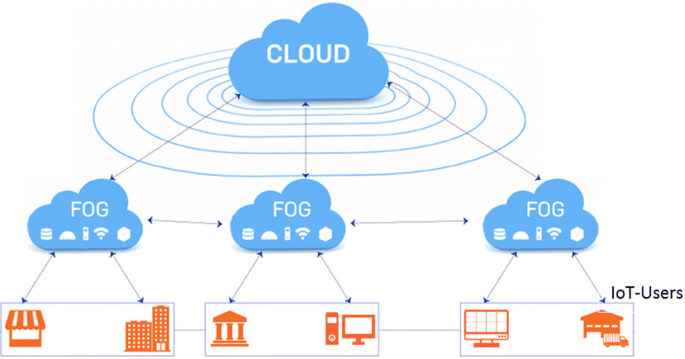
Fog computing, also known as fog networking or fogging, is a decentralised computing architecture that exists between the cloud and data-generating devices. Users may put resources, such as programmes and the data they generate, in logical areas to improve performance using this flexible structure.

In simple words, Fog computing is a type of decentralised computing infrastructure in which data, machines, storage, and applications are distributed between the data source and the cloud. 

The term “fog nodes” is used in fog computing. These fog nodes are closer to the data source, and they have more processing and storage power. When compared to sending the request to the cloud for centralised processing, fog nodes can process the data much faster.

The large number of devices connected to the internet makes the cloud more clogged. Fog computing has become important for IoT devices since cloud computing is not feasible in some circumstances. It is capable of handling the huge amounts of data generated by these devices.

Advantages of Fog Computing

  • Privacy:Fog computing could be used to limit the amount of information shared. Instead of transmitting sensitive user data to a centralised cloud infrastructure, any sensitive data may be examined locally. The IT staff will be able to track and operate the device in this manner. Also, any subset of data that requires analysis may be transmitted to the cloud.
  • Bandwidth: There are pretty minimal bandwidth requirements since the selected data may be processed locally rather than being sent to the cloud. These bandwidth reductions will be particularly useful as the number of IoT devices grows. 
  • Latency: Another advantage of processing data locally is the reduction in latency. The data can be processed at the data source that is closest to the user geographically. This can result in immediate answers, which is very useful for time-sensitive services.
  • Productivity: Fog apps can be used by customers who want the machine to perform the way they want it to. With the appropriate set of tools, developers may quickly create these fog apps. They can deploy it whenever they wish when the work is completed.

Disadvantages of Fog Computing

  • Complexity: Fog computing is a difficult concept to grasp because of its complexity. Many devices, situated in various places, each store and analyse their own collection of data. This might add to the network’s complexity. In addition, a fog infrastructure has more complex fog nodes.
  • Power Consumption: In a fog environment, the number of fog nodes present is proportional to their energy consumption. This means that these fog nodes demand a lot of energy to work properly. There is higher power usage in a fog infrastructure when there are more fog nodes. Most businesses attempt to cut costs by utilising fog nodes.
  • Authentication: Fog computing is a large-scale service provider. End users, internet service providers, and cloud providers are all part of fog computing. In the fog, this might lead to difficulties with trust and authentication.
  • Maintenance: In comparison to cloud architecture, where maintenance is smooth, fog is not. Because controllers and storages are dispersed throughout the network, additional maintenance is required. Processing is decentralised in the fog architecture.

BALANCED DIET

“TO ENSURE GOOD HEALTH: EAT LIGHTLY, BREATHE DEEPLY, LIVE MODERATELY, CULTIVATE CHEERFULNESS AND MAINTAIN AN INTEREST IN LIFE.”                                           – WILLIAM LONDEN

A balanced diet is a diet that contains differing kinds of foods in certain quantities and proportions so that the requirement for calories, proteins, minerals, vitamins and alternative nutrients is adequate and a small provision is reserved for additional nutrients to endure the short length of leanness.

A well-balanced diet provides important vitamins, minerals, and nutrients to keep the body and mind strong and healthy. Eating well can also help ward off numerous diseases and health complications, as well as help maintain a healthy body weight, provide energy, allow better sleep, and improve brain function.

There are seven main classes of nutrients that the body needs. These are carbohydrates, proteins, fats, vitamins, minerals, fibre and water. It is important that everyone consumes these seven nutrients on a daily basis to help them build their bodies and maintain their health.

A healthy diet is essential for good health and nutrition. It protects you against many chronic noncommunicable diseases, such as heart disease, diabetes and cancer. Eating a variety of foods and consuming less salt, sugars and saturated and industrially-produced trans-fats, are essential for healthy diet.

monsoon delayed in capital, temperature to touch 42 degrees celsius next week

Despite monsoon not reaching the Delhi NCR region, Chandigarh, and parts of Punjab yet, the North-West India region has got 58% surplus rain so far. According to IMD, East and North East, Central and the South Peninsula regions have all got above normal rains so far.

Daytime temperatures in Delhi, which have been below normal for the most part of June, are set to rise and touch 42 degrees Celsius next week as rains skip the National Capital. The Indian Meteorological Department had earlier forecast an early monsoon in the region. However, changes in wind patterns meant that the advancement of moisture laden winds, which bring monsoon rain, has now been hampered.

According to officials at IMD, there is now a chance that monsoon rains will hit Delhi after its onset date of June 27.

“Further advancement of the Southwest Monsoon into the remaining parts of Rajasthan, Western Uttar Pradesh, Haryana, Chandigarh, Delhi, and Punjab is likely to be slow as large scale features are not favorable and the forecast wind pattern by the numerical models do not indicate and favorable condition for sustained rainfall over the region during the forecast period,” the IMD stated.

Despite monsoon not reaching the Delhi NCR region, Chandigarh, and parts of Punjab yet, the North-West India region has got 58% surplus rains so far. According, to IMD, East and North East, Central and the South Peninsula regions have all got above normal rains so far. While light rain is expected on Friday and Saturday, with the maximum temperature expected to be 39 degrees Celsius, the next four days are expected to be dry, with the maximum temperature expected to touch 42 degrees Celsius on Tuesday and Wednesday.

On Thursday morning, the minimum temperature was recorded at 28.3 degrees Celsius, normal for this time of the year. The maximum temperature on Wednesday was recorded at 40.5 degrees Celsius, 2 degrees above normal. Humidity has been high throughout the past week, touching 77% on Wednesday.

 Due to not favorable conditions, there is a possibility of delayed arrival of monsoon in the southern districts of Punjab and Haryana including Delhi and northwest parts of Rajasthan. Although rain and thundershower activities are possible over North India from 25th to 27th June, it will not be Monsoon rain. During the next few days, rain will remain very light in many parts of Maharashtra including Mumbai and the temperature is

likely to rise. Heat and humidity are very likely to increase over Northwest India including Delhi during the next few days.

“HEALTH IS WEALTH”

“To keep the body in good health is a duty… otherwise we shall not be able to keep our mind strong and clear.”                       

                                      – Buddha

The proverb ‘Health is wealth’ means that one’s health is the greatest wealth. The definition of health is a state of a person’s physical, mental, emotional, and social well-being . Every person must maintain good health. It makes them feel good and positive.

This gives large meaning to our life, as health is considered the most valuable and precious for every individual .  Good health means not only the absence of disease in the body but a complete physical, mental, social as well as spiritual well-being of an individual.

The value of health is vital for every human being . Many people have to suffer from diseases to allergies and stuck with it for their entire life . If people had control over health , then they would make sure that there are no issues with it.

Being healthy should be part of your overall lifestyle. Living a healthy lifestyle can help prevent chronic diseases and long-term illnesses. Feeling good about yourself and taking care of your health are important for your self-esteem and self-image. Maintain a healthy lifestyle by doing what is right for your body.

Be physically active for 30 minutes or at least 10 – 15 minutes for every day . Healthy movement.  includes  walking, sports, dancing, yoga, running or other activities you enjoy. Eat a well-balanced, low-fat diet with lots of fruits, vegetables and whole grains.

       
                        “Health is not valued till sickness comes.”
                       
                           – Thomas Fuller

➡️ Healthy habits to stay fit and happy

• Eat nourishing food

• Sleep seven to eight hours a day

• Stay positive and read good thoughts

• Avoid smoking and alcohol

• Get regular exercise

            “Happiness is the highest form of health.”
                       
                              – Dalai Lama

How To Find Your Dream Job In 9 Steps

DREAM JOB!

Many people have a job they don’t like. Many take jobs they don’t like. The reason we take jobs we don’t like is because we need money. I can’t think of any other reason people would waste their time doing something that is not passionate about. I challenge you to find your dream job—a job that you love doing 7 days a week. Work that doesn’t feel like work. In that way, you are not only living for the weekend.

Many of us only live on the weekend and after 5 pm on weekdays. ‘The American Time Use Survey’ shows that we spend almost 40% of our time at work. Would you waste 40% of your money? I’ve never heard an average person saying, “I have $10.000 in savings, I’ll just throw $4.000 away.”

Time is more valuable than money. So why would you give away your time? By doing what you love to do, you are doing something of meaning. Stop the busy work and find your dream job! Here are 9 steps that you can use as a guideline.

  1. Decide exactly what kind of job you want. If the job doesn’t exist, create it.
  2. Choose the company or person you want to work for.
  3. Study your potential future employer
  4. Find out what kind of competencies you need to be successful
  5. Do a strengths/weaknesses analysis of yourself. You have to be clear about what kind of value you can offer.
  6. Create a plan of how you’re going to develop your competencies you need further.
  7. Now, apply. Forget about job openings or vacancies. If you can add value to a company, they would be idiots not hiring you.
  8. Once you know what job you want, what the company needs, what competencies you have, and what value you can add, put it on paper. Hire a copywriter or who can help you with his. Or have someone who is in sales look at it. You have to be persuasive.
  9. Find out who has the ‘power’ to hire you. Browse LinkedIn for the senior manager of the department you want to work for. If it is a smaller company, contact the CEO.

This method may take you longer and more analysis of your skills. But it’s worth it to find your dream job. Financially and mentally. By doing something you love you will save yourself many headaches in the long run. You’ll probably earn more money as well. If you follow the standard hierarchy and climb the ladder like everybody else, you will earn exactly the same as everybody else.

Learn More About Finding Your Dream Job

If you’re interested in learning more about finding your dream job, feel free to check out my course.

Mental Health in India

According to the World Health Organization(WHO) there is a 10-25% life expectancy reduction in patients with severe mental health disorders. WHO has labelled India as the most depressing country.  

These might be facts but they present the glaring reality of the stigma attached to mental health in India .

In India when a person feels anxiety or has panic attacks , they are described as doing drama to gain attention. If someone expresses desire to see a psychiatrist they are labelled as mad, lunatics by the society. Mental illness is not considered an illness , it is just seen as something which will become alright in a day or two. This mindset of people needs to undergo a change , they need to understand mental illness is an illness and it is real .

The stigma attached to mental illness prevents the ones who are suffering from seeking timely help which further worsens their condition. 

Some steps to improve the situation are:

  • First and foremost there is a need for empathy and sensitivity in people regarding mental health. 
  • There is a need to create awareness regarding mental disorders in India . Through the means of workshops, films, TV people must be made aware that mental illness is real .
  • There is also a requirement of active policy intervention and resource allocation by the government. 
  • There should be creation of a peer network to connect patients with each other so that they are able to support each other.
  • There should be an increase in the number of health personnel in the mental health care sector.
  • There is a need for more counseling facilities especially in the rural sector and counseling centres for women with women doctors. 
  • There can be establishment of telephone based helpline numbers and mental health apps.
  • School based programmes on mental health can improve and teach children about mental health. 

Hence, immediate steps should be taken to deal with the menace of mental illness in India . Awareness should be created about mental health to reduce the discriminatory attitudes of people.

How Two Words Can Change Your Life

THANK ME LATER!

We live in a uniquely safe, risk-free, and good time.

Mortality rate is at an all-time low. Poverty is decreasing year over year. Diseases are treatable. You get to live longer. And technology makes life easier and safer.

Evolution is a beautiful thing (if you only look at the facts).

However, that’s not the full story. People are still miserable. Suicide rates increase. People have more depressions and burnouts. More and more people are on meds. I’m not going to flush you with all the hard statistics. It’s not pretty.

But there are also soft measures that show the ugly side of today’s world. When you walk around on the streets, go to restaurants, parties, festivals, or take public transportation, you see a bunch of zombies instead of happy individuals who are celebrating life.

Because to me, that’s what I think everybody is doing: Dancing around all the time and saying, “I’m alive! I’m alive.” I can’t be more wrong than that.

The reality is that we, humans, are ungrateful idiots. Always have been.

The Greek Stoic philosopher Epictetus, who lived between AD 50–135, put it best:

“Do not spoil what you have by desiring what you have not; remember that what you now have was once among the things you only hoped for.”

Why do we always desire what we don’t have? Desiring things you don’t have is not necessarily a bad thing. That same trait is also the reason the world developed the way it did. If we didn’t desire unattainable stuff, the world probably wouldn’t advance one bit.

But when I read about historical figures such as Christopher Columbus, the Wright Brothers, or Nikola Tesla, they used that desire for good things. They didn’t complain and had an innate desire to achieve things.

  • Can you image Columbus saying: “Fuck this stupid boat. Let’s sail back home, I want to chill out.”
  • And that the Wright Brothers said to each other: “Man, screw this flying thing. Let’s play checkers and drink beer.”
  • Or that Tesla would say: “Who cares about current? Let Edison and his stupid DC current win. I’m going for a swim in the lake.”

Of course not.

Just Be Thankful For Goodness Sake.

Two words. That’s all.

Say it. Believe it.

Thank you.

Easy.

Or you can go with a casual “thanks.” You can say it to people, but more importantly, you can also say it to random things.

When I wake up, I just say: “Thanks.”

I don’t even know who I’m thanking. God? The universe? Life? I’m just happy to be alive. And that mindset changes everything in your life. When you say thank you, and you truly believe it, you become a grateful person.

Gratitude changes the way you:

  • Think
  • Behave
  • Talk
  • Walk
  • Eat
  • Love

You can also say it to people. When your mother, father, brother, sister, spouse, boyfriend, girlfriend, friend, colleague, manager, does something for you (no matter how small), say: “Thank you.”

What you will find is that people appreciate you too. Gratitude goes both ways.

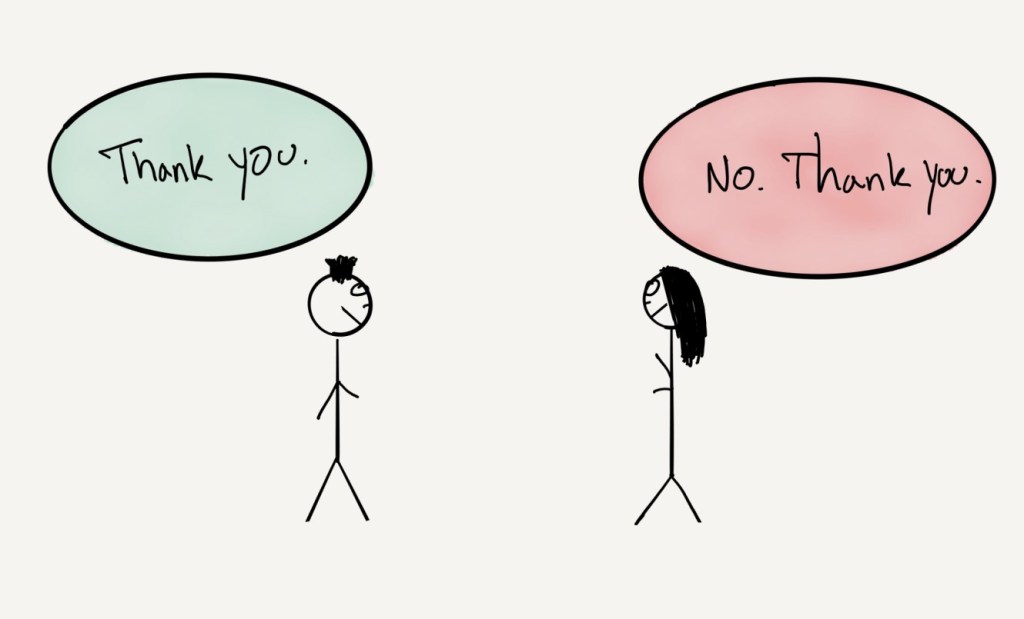
  • “Thank you.”
  • “No. Thank you.”

Saying thank you is a habit. It shows that you appreciate everything. Big things and little things. And appreciation is an important aspect of a happy life.

The French philosopher Voltaire put it well:

“Appreciation is a wonderful thing. It makes what is excellent in others belong to us as well.”

  • If you want to enjoy life, start by appreciating it.
  • And you appreciate things by saying thank you.

Thank you for reading this article.

Talk to you in the next one.