Baking

Baking is an art. It is one of the most favorite hobbies of most people.

Many people started learning to bake during these lockdown days. You can find many people posting the pictures of their baked dishes on social media, boasting their new talent.

Photo by Daria Shevtsova on Pexels.com

Baking is amazing because not only the end product of baking is great, but also the entire process is so satisfying and pleasant(even therapeutic for many).

Baking is simple. You just need the right ingredients in right quantity.

Sometimes when you try to bake a cake, it may end up as a biscuit. You should be very accepting and be happy that you made an entirely new recipe, not something that you wanted to make. And that is exactly what happened in the case of our favourite ‘Brownies’.

There are numerous legends surrounding the origin of the brownie. The legend is told variously: a chef mistakenly added melted chocolate to a batch of biscuits…a cook was making a cake but didn’t have enough flour.

Photo by Pixabay on Pexels.com

So, keep trying and don’t be disappointed, because who knows maybe one day you may create a trending tik-tok recipe.

Baked goodies are very delicious and very tempting. The amount of sugar, fats, and processed flour which goes into it is quite scary for fitness freaks. Though there are many healthy versions of baking, it is better to consume them in limited quantity.

So, please keep a check on your diet.

https://www.thenibble.com/reviews/main/cookies/cookies2/history-of-the-brownie.asp

Find any day when date is given

Pre requisites:

365 days 52weeks + 1 odd day

366 days 52weeks + 2 odd days


mon code: 0

sun code: 1

tue code: 2

wed code: 3

thu code: 4

fri code: 5

sat code: 6

28 days in month     code: 0

29 days in month    code: 1

30  days in month   code: 2

31  days in month   code: 3

400 years    code: 0

200 years    code: 3

100 years    code: 5

300 years    code: 1

100th year example:

24leap years + 76 normal years

24*2(as 2 odd days in leap year i.e. 366 days 52weeks + 2 odd days)+ 76*1(as only odd day in normal year i.e. 365 days 52weeks + 1 odd day)

hence,

24*2 + 76*1

48+76

124

1. 15th aug 1947

1946 + JAN + FEB + MAR + APR + MAY + JUN + JUL + 15

             3+0+3+2+3+2+3+15 = 31

1946

1600+300+46

0+1+57=58

58+31=89

46

11+35

11*2+35*1

22+35= 57

11 FEB 2002

2001+ JAN + 11

           3+11=14+1 = 15 =15/7= 1 MONDAY

2000 + 1

0 + 0LP+1NLP

0+0+1=1

03 NOV 1975

1974 + J+F+M+A+M+J+J+A+S+O+3

             3+0+3+2+3+2+3+3+2+3+3= 27

1600+300+74

0+1+ 18LP+56NP

1+18*2+56*1

37+56

Find the day for the date 26/07/1987 and post your answer in the comments

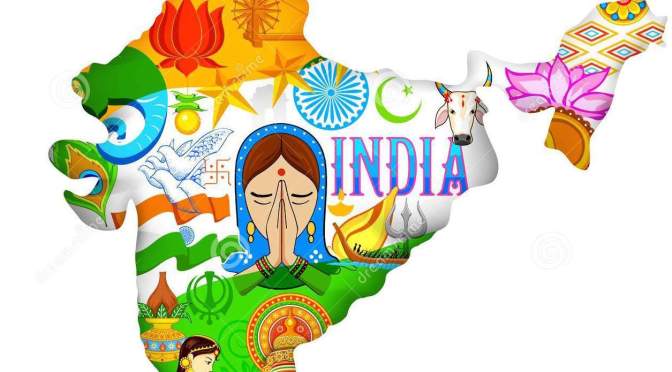
Patriotism and India

Mother and motherland are superior to heaven.

The feeling of unconditional love and immense respect that led our forefathers to set us free from the evil clutches of the British Raaj.

The feeling of selflessness and undying devotion which encourages a soldier to sacrifice his life for the nation.

It is this patriotism, that changes mere zeros to superheroes, murders to martyrs, and sinners to saints.

My country right or wrong,

If right to be kept right and if wrong to be set right.

Should be the voice of a true patriot.

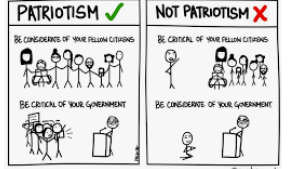
Our country is right in many things and not right in some things. We should be the ones to set it right.

In the pre-Independence days stepping out of one’s house, with one’s head held high was a dream for a common man. But it was the patience, persistence and sacrifice of our brave men and women which made this dream a reality.

Today corruption, poverty, unemployment, intolerance, communalism, gender inequality and many such issues are making it difficult for our country to stand high in the global ranking. Now it is our responsibility to carry the legacy of our forefathers and take part in building the nation.

And the key to this is,

“sabka saath, sabka vikas, sabka vishwas, sabka prayas”.

” karna hai vikas,

chaahiye sabka saath,

kisi ka na tute vishwas,

iskeliye karengey prayas.”

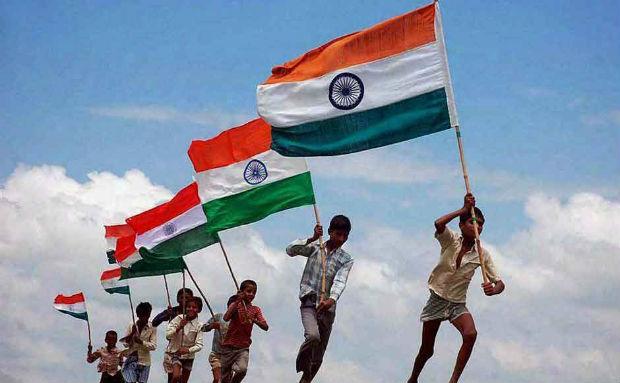
India is the largest democratic country which ensures justice, liberty and equality to all her citizens.

The great leaders who framed our Constitution took the best ideas and principles from different countries so that we could have the best form of government. And for this democracy to flourish, it requires a certain level of ability, character and awareness from a common man.

It needs people’s participation, which is the key to nation building.

Where even the basic needs like health care and nutrition of people are not met,

Where there is discrimination based on caste, religion, language and economic background,

People’s participation is possible only when there is patriotism, feeling of oneness, and sense of national identity among the citizens.

It is our responsibility to work towards the betterment of our country with feeling of oneness and sense of patriotism.

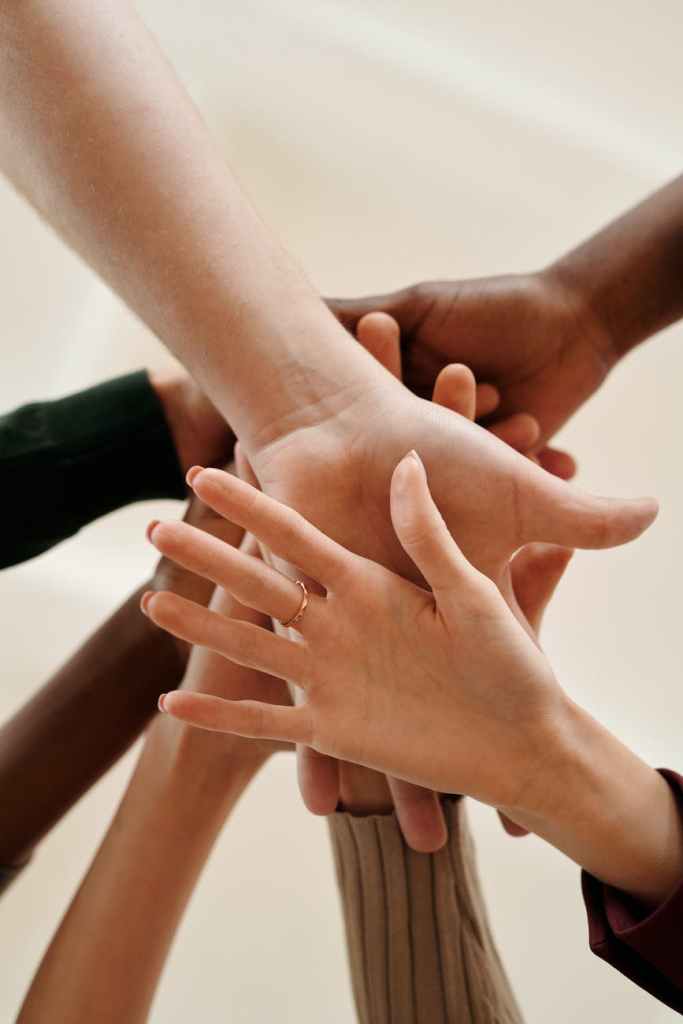
Together we grow tall, divided we fall.

Religious tolerance

“Light is good, no matter from what lamp it comes.”

~Dr. Sarvapalli Radhakrishnan

Human values, equality, social justice are the real values of all religions.

Good ideas and teachings are found in all the faiths of the world.

Religious tolerance is a unique feature of Indian people.

Our forefathers wanted to build a national character with chief facet of mutual tolerance.

Gandhiji put our secular nature in a nutshell,

“I do not wish my country to be walled in from all sides or want its windows shut; I wish the breeze of all the lands to blow in!”

Mahatma Gandhi

India has a rich cultural tradition. There is a harmonious blend of art, religion and philosophy in the Indian culture. They are so beautifully interwoven in the fabric of Indian way of life. It is only the dynamism and the flexibility of Indian culture that enabled it to survive the foreign invasions and retain its originality and traditional character even after imbibing the best of these external influences.

Indian people, by nature tolerant and fatalists, did not anytime ridicule the traditions of foreign civilizations. On the other hand, Indian mind has assimilated much of the thinking of the other cultures, thus enriching itself and thereby becoming unique in its character. Today, it is the uniqueness which attracts the Western societies to the Indian culture. Disillusioned with their materialistic lives, they turn to India for solace and peace.

We should remove the geographical, political, cultural and linguistic blockades and stand together for the well- being and prosperity of our nation.

The biggest religion is humanity and our country India will always favor this.

Patriotism in today’s world?

Patriotism is not necessarily doing great things but doing small things in a great way.

Paying taxes on time, will ensure proper functioning of government.

Photo by Nataliya Vaitkevich on Pexels.com

Performing our duties with sincerity, will help our society

casting our vote, will ensure right government

Photo by cottonbro on Pexels.com

keeping our surroundings clean, will prevent the spread of diseases

Vidhya dhaan Rakth dhaan Anna dhaan ang dhaan, will help the people in need

Planting trees, will protect the environment

Purchasing ‘Make in India’ products, will increase the nation’s economy.

These small deeds will ultimately contribute to nation building.

The way we all faced this pandemic together is the best recent example of patriotism.

Through its Vaccine Maitri, India has donated and supplied 66 million vaccines and essential medicines to countries across the globe.

And, as part of the neighbourhood first policy, India evacuated the citizens of Maldives and Bangladesh from Wuhan.

Yes, ‘Vasudeva Kutumbakam’, the whole world is one family. My country India practices what it preaches.

Let us also practice what we preach and work sincerely to make India a self – reliant and a developed nation, together with the loyal legislature that makes laws, accountable executive that carries out the laws and trustworthy judiciary that evaluates the laws.

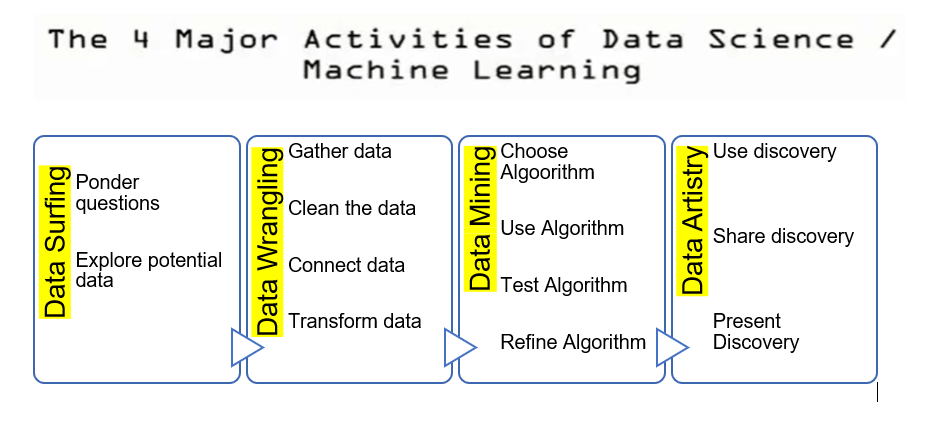
Major tasks of Data Science

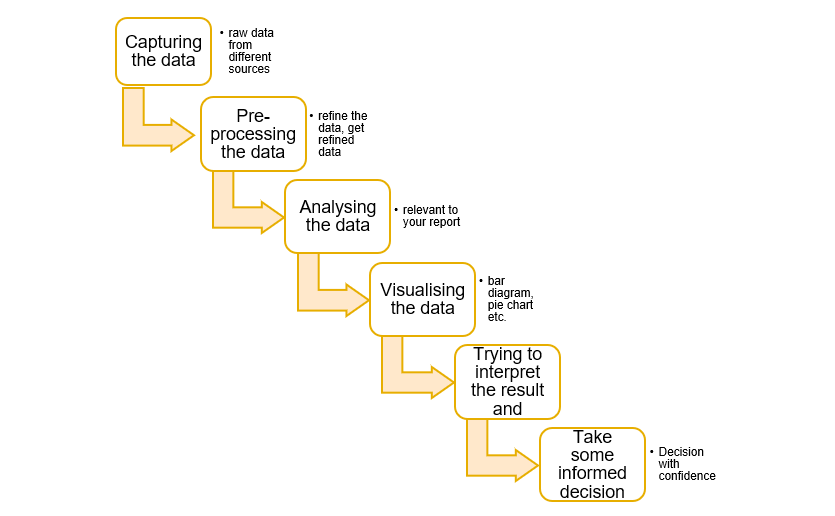
Data science involves a plethora of disciplines and expertise areas to produce a holistic, thorough and refined look into raw data. Data scientists must be skilled in everything from data engineering, math, statistics, advanced computing and visualizations to be able to effectively sift through muddled masses of information and communicate only the most vital bits that will help drive innovation and efficiency.

Data scientists also rely heavily on artificial intelligence, especially its subfields of machine learning and deep learning, to create models and make predictions using algorithms and other techniques. 

Reference

https://builtin.com/data-science

Man making is the essence of nation building

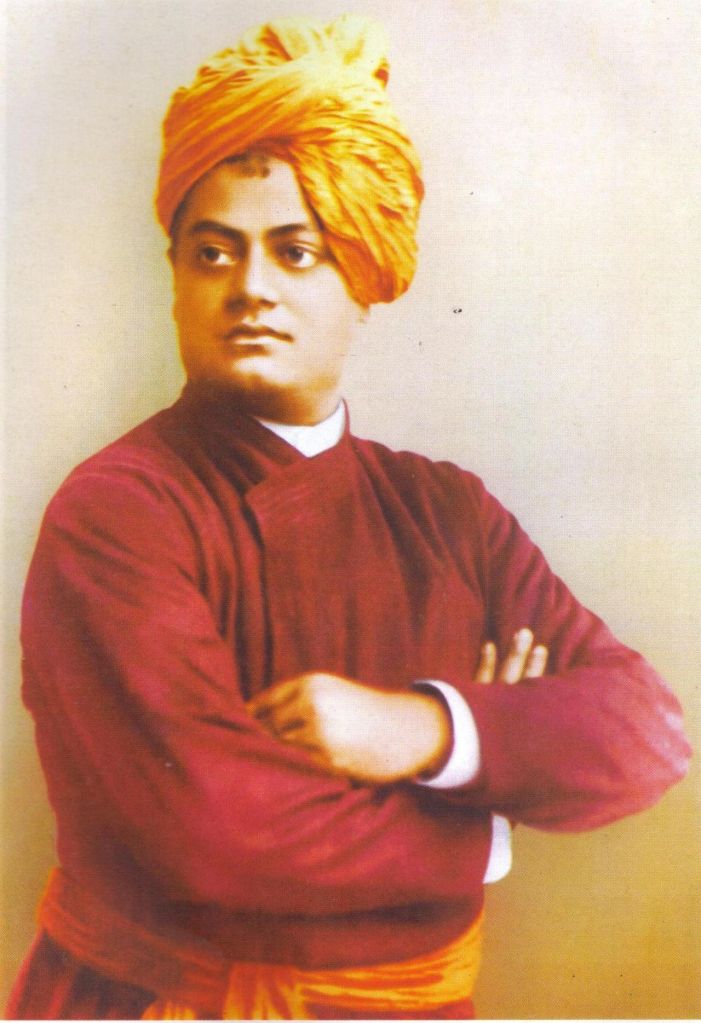
To quote the words of Swami Vivekananda,

“Man making is the essence of nation building. “

An individual builds a family, a family builds a community, and a community builds a country.

Hence strong individuals, meaning people with values of love, compassion, respect and discipline build a strong country.

When there is righteousness in the heart, there is beauty in the character.

When there is beauty in the character, there is harmony in the home.

When there is harmony in the home, there is order in the nation.

When there is order in the nation, there is peace in the world.

The easiest means to show your love to your nation is through work. Your selfless work will convey the joy and depth of your love.

Whatever your work is, put your heart into it, it will not only make you happy but also makes the entire nation happy and prosperous.

Photo by Diva Plavalaguna on Pexels.com

Dream India

Let us unite,

And fight against those who incite,

Let’s progress with minds without fear,

And succeed in every sphere,

We are a strong nation,

All we need is a little bit of dedication,

Let us open our eyes,

And see our ‘Dream India’ rise.

Photo by Still Pixels on Pexels.com

Let us work sincerely to make India a self – reliant and a developed nation, together with the loyal legislature that makes laws, accountable executive that carries out the laws and trustworthy judiciary that evaluates the laws.

How machines learn?

Machine learns through experience

Like humans,

machines also learn from experience. They analyse the existing data, figure out the pattern, and find what to do with the new data.

Learning from Medical records

based on combination of attributes i.e., symptoms, it determines an outcome variable i.e., whether the patient is covid positive or not by learning from the existing data.

Learning from Energy usage patterns

smart homes optimize the energy usage by learning from the energy usage patterns of its residents (by capturing the motion of residents), hence saving the electricity bills.

Learning from User interests

learns from user interests and gives suggestions and recommendations accordingly

Learning to target customers

learns from the travel history of customer and gives discounts, coupons, offers to the customers travelling more often during a certain period, to attract them to travel more (to retain the customer to themselves)

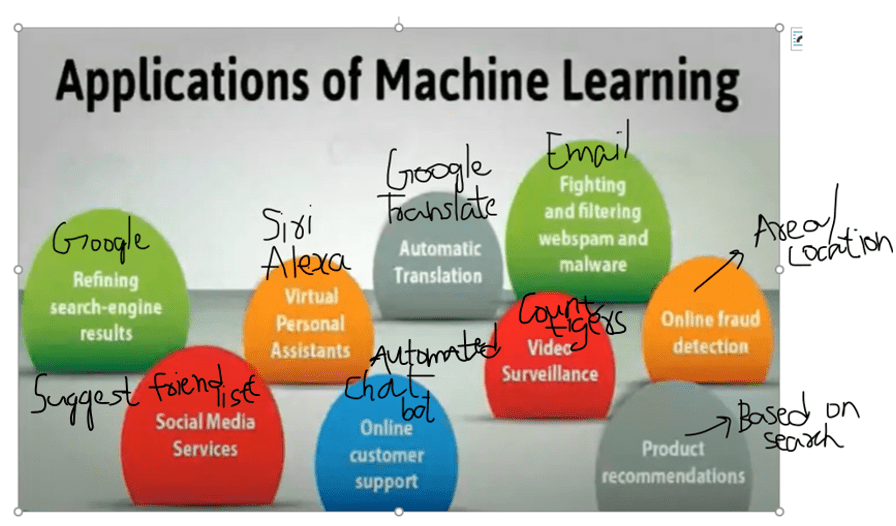
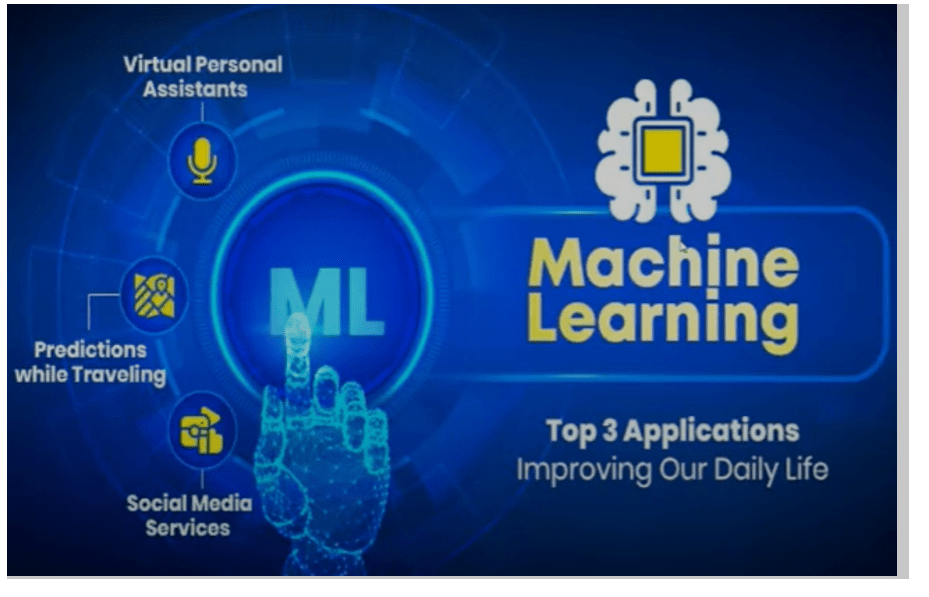
Applications of machine learning

Machine learning in finance

  • Financial Monitoring

Simultaneously multiple micro transactions to multiple accounts.

  • Risk Management

Giving loans based on credit score of the customer. (Credit worthiness)

  • Money laundering prevention

Machine learning in medicine

  • Personalized medical reports and treatments
  • Smart watches
  • Predicting whether a cell is cancerous cell or not
  • Based on the attributes (lifestyle, food habits, exercise, sleep etc.), determining whether a person is prone to certain disease (say cardiac arrest).

Equipment maintenance records

Combustion chamber, rockets

Types of Unsupervised Learning Algorithm:

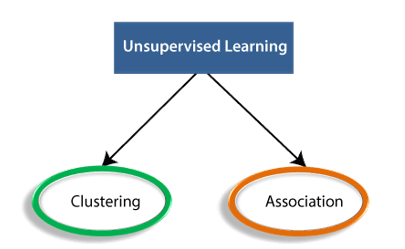
The unsupervised learning algorithm can be further categorized into two types of problems:

Clustering

Clustering is a method of grouping the objects into clusters such that objects with most similarities remains into a group and has less or no similarities with the objects of another group.

Cluster analysis finds the commonalities between the data objects and categorizes them as per the presence and absence of those commonalities.

Association

An association rule is an unsupervised learning method which is used for finding the relationships between variables in the large database. It determines the set of items that occurs together in the dataset.

Association rule makes marketing strategy more effective.

Such as people who buy X item (suppose a bread) also tend to purchase Y (Butter/Jam) item. A typical example of Association rule is Market Basket Analysis.

Unsupervised Learning algorithms:

K-means clustering

KNN (k-nearest neighbors)

Hierarchal clustering

Anomaly detection

Neural Networks

Principle Component Analysis

Independent Component Analysis

Apriori algorithm

Singular value decomposition

Advantages of Unsupervised Learning

Fast process as task of data labelling is not involved.

Provides unique and disruptive insights.

Disadvantages of Unsupervised Learning

The result of the unsupervised learning algorithm might be less accurate as input data is not labelled, and algorithms do not know the exact output in advance.

Difficult to measure accuracy

Dealing with high-dimensional data- when the dimension of data and the number of variables is more, the process becomes difficult.

Unsupervised Learning

As the name suggests, unsupervised learning is a machine learning technique in which models are not supervised using training dataset.

Instead, models itself find the hidden patterns and insights from the given data.

It is much similar as a human learns to think by their own experiences, which makes it closer to the real AI.

In real-world, we do not always have input data with the corresponding output (training or labelled data referred to as supervisor). So, to solve such cases, we need unsupervised learning.

Steps:

Step 1: The very first step is to load the unlabeled data into the system.

Step 2: Once the data is loaded into the system, the algorithm analyses the data.

Step 3: As the analysis gets completed, the algorithm will look for patterns depending upon the behavior or attributes of the dataset.

Step 4: Once pattern identification and grouping are done, it gives the output.

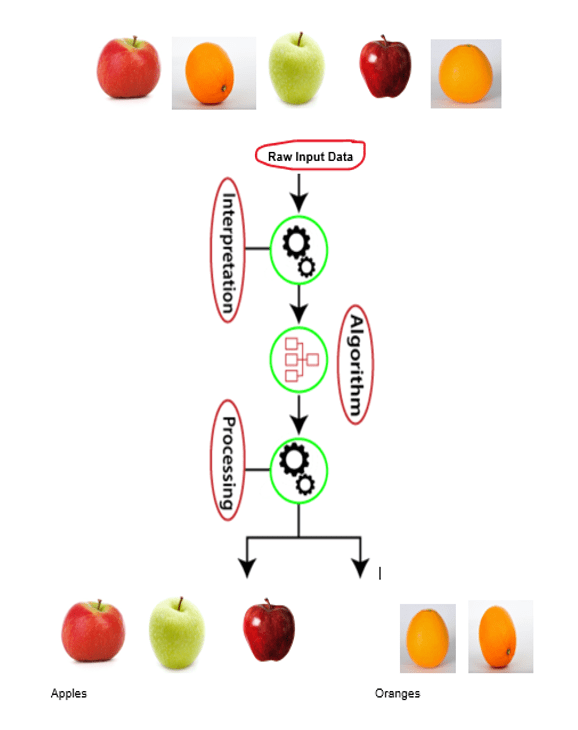
Example: Input dataset containing images of different types of fruits.

Now, let’s take these fruits and feed them to an unsupervised learning model.

The model determines the features associated with the data and understands that all the apples are similar in nature and thus groups them together.

Similarly, it understands that all the oranges have the same features and thus group them together and the same is the case with all the mangoes (in case we have mangoes in this example)

Here, the unsupervised learning algorithm will perform this task by clustering the image dataset into the groups according to similarities between images.

Example 2:

For instance, given a data base of movie reviews, you could identify clusters of users who rate action movies similarly, and use those correlations to predict how one member might like a particular movie he had not yet seen, but others have rated.

Types of Supervised learning

  1. Classification

Supervised learning can be further divided into two types of problems:

Classification algorithms are used when the output variable is categorical, which means there are two classes such as Yes-No, Male-Female, True-false, etc.

Multiple classes may also be present.

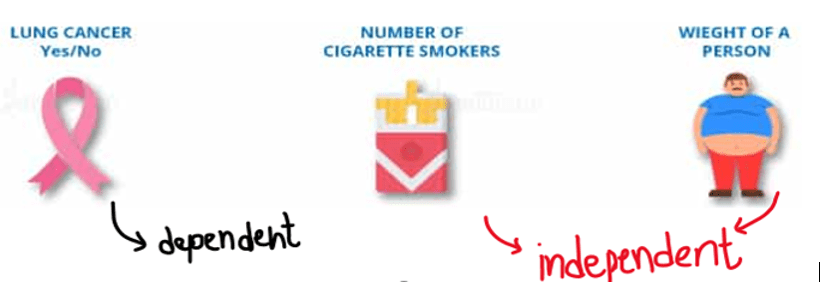
The output variable or the dependent variable should be categorical in nature.

Example:  Diagnosis

“Prone to lung cancer” (output variable) is the dependent variable and “Weight” and “Number of cigarettes smoked” are the independent variables.

  1. Regression

Regression algorithms are used if there is a relationship between the input variable and the output variable. It is used for the prediction of continuous variables, such as Weather forecasting, Market Trends, etc.

  • Analyse the existing data and
  • Predict the future data parts.

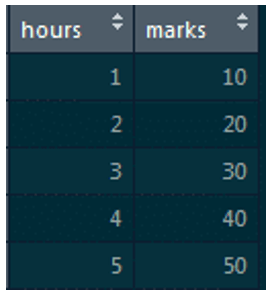
Let’s say you have two variables, “Number of hours studied” & “Number of marks scored”. Here we want to understand how the number of marks scored by a student change with the number of hours studied by the student, i.e.

“Marks scored” is the dependent variable, and “Hours studied” is the independent variable.

You need to note that “marks scored” is the dependent variable and it is a continuous numerical.

Question: “How many hours should a student learn to get 60 points?” 

Ans: The regression model would understand that there is an increment of 10 marks for    every extra hour studied and to score 60 marks the student must study for 6 hours.

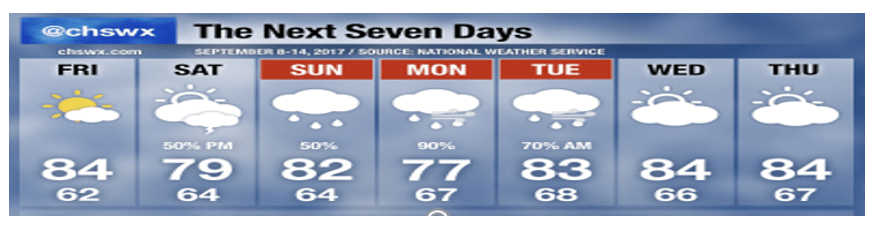
Example: Weather app in our mobile

                This app predicts the weather of the entire next week. How does it do?

By analysing the previous data (say past 10 years weather report data) and predicts the pattern for the next week.

Here, since we deal with large amount of data, it may be difficult for humans to work on it. Hence, the machines are fed with large amount of data and made to predict the future data parts.

How supervised learning works?

In supervised learning, models are trained using labelled dataset, where the model learns about each type of data.

Once the training process is completed, the model is tested based on test data (a subset of the training set), and then it predicts the output.

Example:

Task

Suppose we have a dataset of different types of shapes which includes square, rectangle, triangle, and Polygon. Now the first step is that we need to train the model for each shape.

Training Experience

If the given shape has four sides, and all the sides are equal, then it will be labelled as a Square.

If the given shape has three equal sides, then it will be labelled as a triangle.

If the given shape has six equal sides, then it will be labelled as hexagon.

Now, after training, we test our model using the test set, and the task of the model is to identify the shape.

Performance

The machine is already trained on all types of shapes, and when it finds a new shape, how well it classifies the shape based on number of sides and predicts the output.

Steps involved

  • First, determine the type of training dataset
  • Collect/Gather the labelled training data.
  • Split the training dataset into training dataset, test dataset, and validation dataset.
  • Determine the input features of the training dataset, which should have enough knowledge so that the model can accurately predict the output.
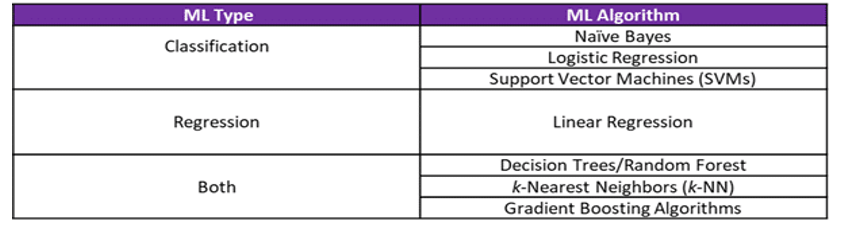
  • Determine the suitable algorithm for the model, such as support vector machine, decision tree, etc.
  • Execute the algorithm on the training dataset. Sometimes we need validation sets as the control parameters, which are the subset of training datasets.
  • Evaluate the accuracy of the model by providing the providing the test set. If the model predicts the correct output, which means our model is accurate.

References

https://www.javatpoint.com/supervised-machine-learning

Supervised learning

The machines are trained using well “labelled” training data, and on basis of that data, machines predict the output.

The labelled data means some input data is already tagged with the correct output.

Supervisor is this training data (labelled data) which helps to predict the output correctly when a new input data point is given as input.

The aim of a supervised learning algorithm is to find a mapping function to map the input variable(x) with the output variable(y).

Step 1: The very first step of Supervised Machine Learning is to load labelled data into the system. This step is a bit time-consuming because the preparation of labelled data is often done by a human trainer.

Step 2: The next step is to train and build connections between inputs and outputs(function). This step is also known as the training model.

Step 3: Then comes the step known as the testing model. As the name suggests, you test the model by introducing it to a set of new data.

Here, the input is an independent variable, and the output is a dependent variable. The goal is to generate a mapping function that is accurate enough so that the algorithm can predict the output when we feed new input.

Example of labelled data:

We have a labelled dataset that consists of images of apples and oranges, with different attributes such shape, colour etc.

Consider the image of an apple shown above with the labels- shape, colour, and apple.

We train the model with this image. Then, we repeat the same training process with other images of both apples and oranges with their attributes.

What we are doing is-

Here, the input data is the independent variable and “Apple” or “Orange” is dependent variable as it is dependent on the input picture given.

Our goal is to generate a mapping function between the dependent and independent variable so we can determine the output when we feed a new data point.          


Once the model is trained and the algorithm is built, the accuracy can be tested with the help of a test dataset.

When we feed the model with a new apple image, it scans the image and matches the attributes of the image with other trained images. Then depending upon the accuracy of the model, it returns the output ‘apple’.

When new data point is given as input, say,

The machine should be able to guess the output as  “Apple”.

This labelled data or the training data (acts as supervisor), helps to predict the output as “Apple”.