Impact of Feminism and Women Empowerment on Indian Society

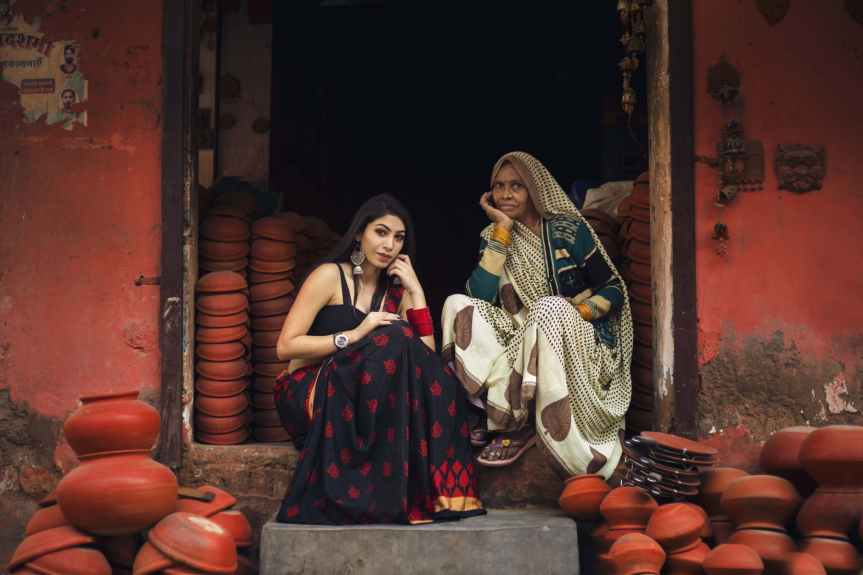
Feminism came up into being and became operative after India gained freedom in 1947. The Constitution of India then conceded right to equality, religious freedom and freedom from gender or religious discrimination. To provide health, welfare, education and employment to women, a seven five year plans were brought up by the government. The sixth five year plan even declared women “partners in development”.

Although the Indian government has tried their best to terminate inequality in workforce yet women fail to receive equal treatment. However, AIIMS nurses professed gender inequity in Nursing Officers enrollment, providing 80 percent posts to female candidates and remaining to male. Indian women winning international beauty pageants have also demonstrated in the form of pride of nation, such growth have provided considerable sexually self governed and independent women and more authority over their own bodies but some differ in opinion considering that this only portrays female bodies as mere commodities having purpose only to serve man’s desires. Headway is being made in enrollment of female students and teachers in schools, by now the female literacy rate has increased handsomely and great efforts are still being made so that female may receive education in par with male students.

In order to protect the rights of women and in wake to feminism and women empowerment different bills have been passed and various policies have been made by the government, some of them are as follows:

  • In 1986, the National Policy on Education (NPE) was made in India and a program known as Mahila Samakhya was set afloat, the aim is to promote a sense of knowledge to take control of their own lives, learn to demand information and realize their true potential. In 2019, DRDO has launched scholarship programmes absolutely for girls.In Haryana now girls are provided passport along with graduation degree.
  • The Sexual Harassment of Women at Workplace (Prevention, Prohibition and Redressal) Act 2013, is an act of legislature to protect women from any sort of sexual harassment at workplace.
  • The Protection of Women from Domestic Violence Act 2005 is a parliamentary act of India which seeks to protect women from domestic violence.
  • In 1992, the Parliament passed the 73rd Constitutional Amendment Act in which it was ensured that in all offices of election, one-third of the total seats would be reserved for the women. This was applicable in both urban as well as rural areas.
  • During 1991-2000, a national Plan of Action for the Girl Child was brought up to make sure the development, survival and protection of girl child. The terminal aim of the plan was to enhance the future for the girl child.
  • In 2001, a National Policy for the Empowerment of Women was made by the Department of Women & Child Development in the Ministry of Human Resource Development. The policy aimed at the empowerment, advancement and growth of women in various political, social, cultural and political field, by generating awareness among all.
  • In 1992, a National Commission was brought up by the government in order to monitor and examine various matters with regard to the legal and constitutional defences provided for women and also modify the existing codification whenever needed.

Today women are treated equal to men and offered equal opportunities. They are also excelling in their work and in various fields they are even ahead of men, still in many parts of India regardless whether urban or rural region, women are still battling against numerous brutal crimes.
Overhauling of Water Infrastructure

 Government of India has taken several steps towards comprehensively overhauling of the existing water infrastructure of the nation. For improving the safety and operational performances of some of the selected existing dams, Govt. of India implemented the Dam Rehabilitation and Improvement Project (DRIP), with financial assistance from the World Bank. Under the first phase of the DRIP program, which was implemented during April 2012 to March 2021, about 223 existing dams located in 7 States have been comprehensively rehabilitated at a cost of Rs. 2567 crore.

After the completion of DRIP Phase- I, Govt. of India has now taken up DRIP, Phases-II & III. The Scheme envisages rehabilitation of 736 dams located in nineteen (19) States with a budget outlay of Rs 10,211 crore. It is a State Sector Scheme with Central component. The Scheme is of 10 years duration. DRIP Phase-II has become operational from 12th October 2021. DRIP Phase-II entails financial assistance from the World Bank and the Asian Infrastructure Investment Bank (AIIB) to the tune of 500 Million US$.

Further, during 2016-17, ninety-nine (99) on-going Major/Medium irrigation projects (and 7 phases), in the country having balance estimated cost of Rs.77,595 crore (Central Assistance-Rs.31342 crore and State Share- Rs.46253 crore) under Pradhan Mantri Krishi Sinchayee Yojana (PMKSY) – Accelerated Irrigation Benefits Programme (AIBP), have been prioritized in consultation with States for completion in phases. Out of these, AIBP works of 46 projects have been reported to be completed. Under the PMKSY-AIBP scheme there are 7 Extension, Renovation and Modernization (ERM) projects. Rs. 1013.72 Crore have been released to respective States as Central Assistance for ERM projects during 2016-21.

 Government of India is also implementing the Repair, Renovation & Restoration (RRR) of water bodies Scheme under PMKSY (Har Khet Ko Pani). Under the RRR of Water Bodies scheme, since 12th Plan onwards, 2,218 schemes are ongoing with an estimated cost of Rs. 1,910 crore. Central Assistance (CA) of Rs. 476 crore has been released to States up to March, 2021. Further 1,591 water bodies are reported to have been completed up to March, 2021. Target irrigation potential restoration of these schemes is 1.887 lakh ha and out of this, 1.320 lakh ha is reported to be restored till March, 2021

The Union Government has recently enacted the Dam Safety Act, 2021 for surveillance, inspection, operation and maintenance of the specified dams for prevention of dam failure related disasters. As per this Act, dam owners have to take such measures as may be necessary to address safety concerns with a view to achieve satisfactory level of dam safety assurance.

Pollution in Rivers

 Rivers in the country are polluted due to discharge of untreated and partially treated sewage from cities/towns and industrial effluents in their respective catchments, problems in operation and maintenance of sewage/effluent treatment plants, lack of dilution and other non-point sources of pollution. It is the responsibility of the States/Union Territories (UTs), Local Bodies and Industrial Units to ensure required treatment of sewage, industrial effluents to the prescribed norms before discharging into rivers and other water bodies, coastal waters or land and prohibit dumping of puja materials & other items of religious offerings to prevent and control of pollution therein.

 As per the Provisions of Environment (Protection) Act, 1986 and the Water (Prevention & Control of Pollution), Act 1974, industrial units are required to install effluent treatment plants (ETPs) and treat their effluents to comply with stipulated environmental standards before discharging into river and water bodies. Accordingly, Central Pollution Control Board (CPCB), State Pollution Control Boards (SPCBs)/Pollution Control Committees (PCCs) monitor industries with respect to effluent discharge standards and take action for non-compliance under provisions of these Acts.

CPCB has issued guidelines for idol immersion and disposal of other puja materials during festivals and Hon’ble National Green Tribunal (NGT) directed respective District Magistrates and other Authorities to ensure implementation of guidelines of CPCB to curb pollution due to immersion of idols in rivers and water bodies. In addition, National Mission for Clean Ganga (NMCG) has also issued directions under Section 5 of the Environment (Protection) Act, 1986 regarding the immersion of idols in rivers and water bodies on festive occasions, directions have been issued to States/UTs for restricting idol immersion into rivers and water bodies during festivals like Ganesh Chaturthi, Durga Puja, Deepawali, Chat Puja, Viswakarma Puja, etc. as these causes pollution/contamination of water leading to deterioration in the quality of water in rivers, water bodies besides having harmful effect on aquatic life.

Besides, in compliance of the orders of NGT in Original Application No.673/2018 regarding rejuvenation of polluted river stretches in the country, States/UTs are required to implement approved action plans, including installation of wastewater treatment plants, for restoration of the polluted river stretches in their jurisdiction as identified by CPCB and published in their report of 2018, within the stipulated timelines. As per the orders of NGT, regular review on implementation of action plans is undertaken in the States/UTs and also at Central level.

 Delhi Pollution Control Committee (DPCC) has been conducting periodic sampling of major drains (24 nos.) out falling in river Yamuna and at various locations (8 nos.) in the stretch of river Yamuna. CPCB in association with various SPCBs/PCCs have been monitoring the water quality of rivers and other water bodies across the country through a network of monitoring stations under the National Water Quality Monitoring Programme. As per the last report published by CPCB in September 2018, 351 polluted stretches have been identified on 323 rivers in the country based on monitoring results in terms of Bio-chemical Oxygen Demand (BOD), an indicator of organic pollution. This report of CPCB includes the stretches of river Yamuna in Delhi, Haryana, and Uttar Pradesh which are as below:

River

State

Polluted River Stretches

Priority

BOD Range

(mg/l)

Yamuna

Delhi

Along Wazirabad to Asagpur

I

9-80

Haryana

Panipat to Sonepat

I

4-55

Uttar Pradesh

Asgarpur to Etawah Shahpur to Allahabad (Balua Ghat)

I

12-55


Under Namami Gange Programme, 23 projects amounting to Rs.4290 crore for creating/rehabilitation of 1840 mld capacity sewage treatment plants (STP) have been sanctioned in Yamuna river basin. These 23 projects are spread over Himachal Pradesh (1 project), Haryana (2 projects), Delhi (12 projects includes consultancy & public outreach project) and Uttar Pradesh (8 projects). Out of these 23 projects, 6 projects have been completed. Till December 2021, National Mission for Clean Ganga (NMCG) has utilized an amount of Rs. 1593.32 crore for all the 23 projects for river Yamuna.

In addition, Delhi Jal Board is also undertaking works such as capacity augmentation, improvement in treatment effluent parameters, laying of sewer network, construction of decentralized STPs, sewer interceptor, Septage Management and tapping of drains directly out falling into Yamuna river through the Yamuna Cleaning Cell (YCC) to improve quality of river water of Yamuna.

Dante Aligheiri: Connecting His Life, Love and Literature

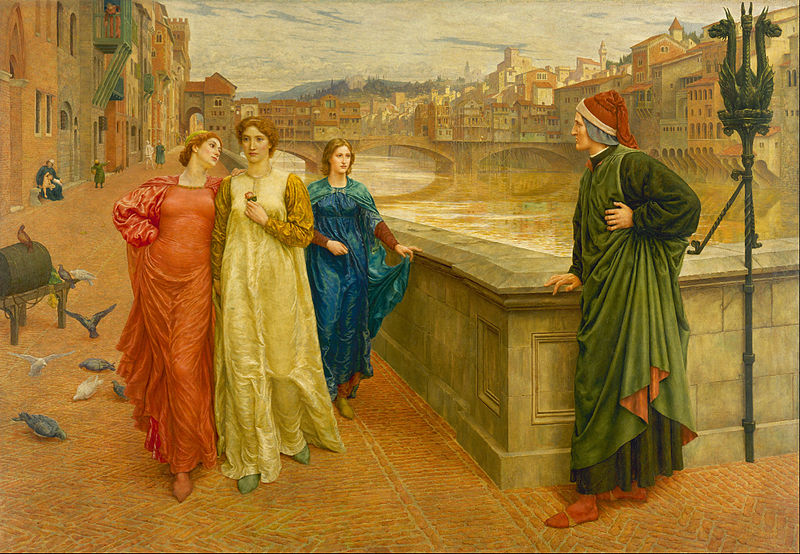
Dante, looking at Beatrice passing by (Art Work)

Introduction

Dante Aligheiri, the famous Italian poet, is without any debate, one of the most passionate poets of all time who believed in and lived by the true meaning of Love through his exceptional writings . His works are still considered as the Canvases of Human Mind, sparkling and expressing love through words. Though, the love of his own life remained unrequited and that agony fueled his journey of writing as a neverhealed wound, creating some masterpieces of Romantic Literature.

Early Life of Dante

Born in Florence, Italy around 1265, Dante was the son of Alighiero di Bellincione Alighieri and Bella di Abati, and he grew up among Florentine aristocracy. Scholars surmise that he received formal instruction in grammar, language, and philosophy at one of the Franciscan schools in the city. 

Dante’s Love : Beatrice Portinari

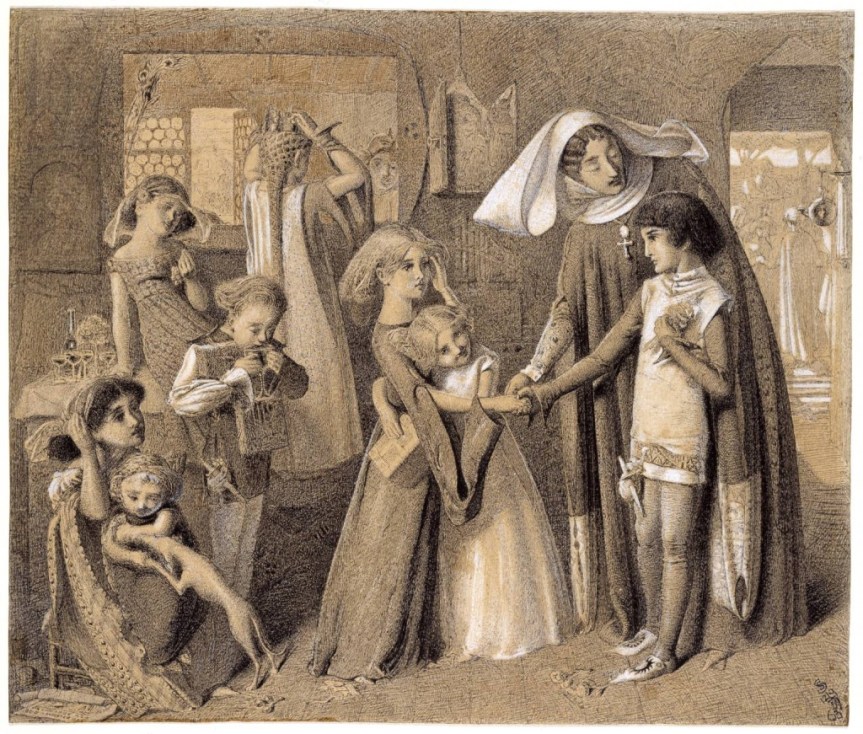
Dante first met Beatrice Portinari, daughter of Folco Portinari, when he was only nine years old and he claimed to have fallen in love with her “at first sight”, apparently without even talking with her. He would later write about his instant love for her in “Vita Nuova”, saying “Behold, a deity stronger than I; who coming, shall rule over me.”

When he was 12, however, he was promised in marriage to Gemma di Manetto Donati, daughter of Manetto Donati, member of the powerful Donati family. Contracting marriages for children at such an early age was quite common and involved a formal ceremony, including contracts signed before a notary. Dante claimed to have seen Beatrice again frequently after he turned 18, exchanging greetings with her in the streets of Florence, though he never knew her well.

Dante meeting Beatrice for the first time (Art work)

Beatrice’s Death: Presence in Dante’s work

Beatrice died in 1290 at age twenty four. Beatrice probably never had any idea of the depth of his passion for her, yet she was to become one of literature’s most famous figures.

After Beatrice’s death, Dante withdrew into intense study and began composing poems dedicated to her memory. The collection of these poems, along with others he had previously written in his journal in awe of Beatrice, became La Vita Nuova, a prose work interlaced with lyrics.
Dante describes his meetings with her, praises her beauty and goodness, describes his own intense reactions to her kindness or lack thereof, tells of events in both their lives, and explains the nature of his feelings for her. She represents an idealized love, the kind of love that transcends physicality. Alighieri included her in both La Vita Nuova and Divine Comedy. She is his salvation; the “gentilissima” (most kind) and “benedetta”(blessed). It is Beatrice who serves as his guide in Heaven in Divine Comedy. La Vita Nuova also relates of the day when Dante was informed of her death and contains several anguished poems written after that event. In the final chapter, Dante vows to write nothing further of Beatrice until he writes “concerning her what hath not before been written of any woman.”

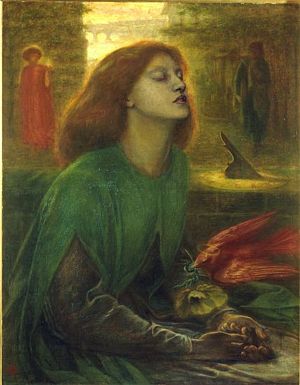
Portrait of Beatrice

Analysis of Dante’s Love and Literature

The promise is fulfilled in the epic poem The Divine Comedy, which he composed many years later. In that poem, he expresses his exalted and spiritual love for Beatrice, who is his intercessor in the Inferno, his purpose in traveling through Purgatorio, and his guide through Paradiso.

Beatrice addresses Dante, the author and a character himself, for the first time in Canto 2 of Dante’s “Inferno”: she descends into Limbo and prays that the poet Virgil can rescue Dante. She then reappears in Canto 30 of Purgatorio, when Virgil disappears.

At first sight of her in Purgatorio, he is as overwhelmed as he was at the age of nine and is dazzled by her presence throughout the journey until she ascends again to her place in heaven, the point closest to God that he is allowed to reach.
This expression of sublimated and spiritualized love ends with Dante’s total absorption into the divine.
Their last meeting is set among the blessed in Heaven at the end of their journey into the afterlife.

Dante’s work Vita Nuova, heavily influenced by Beatrice

Conclusion

Dante’s love for Beatrice may have been idealized and unattainable, but at the core of that love is admiration, goodness, and respect. That’s a type of love that we don’t see much of in the media of today’s world. We prize the scintillating and love has become synonymous with physical lust.Dante’s love transcends the physical. It is a love of the heart and the intellect. She represented the ideal of beauty and grace, but was also a real woman.
Beatrice appeared to Dante as the woman/angel that guides him through Paradise, but also remained a real woman who made his heart beat in the streets of Florence.

Gender differences or what?

I completely agree with J Ann when they talk about gender differences and how society had deeply created that image in peoples mind. It is that widely accepted that even if you ask a small child if boys can cry, they simply would say otherwise. All of this questions us the very idea of the kind of generation we are breeding into. Society had laid down certain characteristics as to how a man should behave and how a women should too. This line is so wide that people are terrified of crossing it. 

We have all been conditioned to believe that women are born to be weak, emotional, always in distress, home makers and always crying. While on the other hand men are strong, not emotional and always the hero. This have been taught to us in the forms of books, academic sessions, moral policing, films etc. It has become so much rigid that people who do not feel the same are alienated and ridiculed. They are forced to believe that they are not normal when in reality no barrier has been kept or the definition of normal haven’t been defined yet to be judge of someone’s gender. 

We can understand this very closely if we take a dive into our childhood. Ever since we were kids there always have been certain set of rules for a girl child and a boy child, the latter being more liberal than former. Girls were asked to come home early while boys weren’t. Young boys were taught to not cry and be strong and if you cry then it simply means that you are a girl and being a girl was projected as a shame. Directly or indirectly we all have been a part of this system which fosters a toxic environment for people who do not identify their sex and gender as same to grow. At this point of time, they would feel dejected, left out from society and people always mock them, making them feel inferior of who they chose to be. 

Although recently things have taken a turn, we now live in a world where people come out and chose out be who they are than living beneath a mask that society force them to wear. We see a greater representation of gender diversity in all forms in books, media, novels, social media etc. All of this had made people more comfortable with the idea of acceptance than denial. Numerous people live in denial of who they actually are and find it hard to fit in with the right crowd. 

We can see examples of people exhibiting different sorts of characters despite the gender factor in today’s world. In 21stCE, the idea of acceptance has become much easier with lot of people coming out of their shells and being who they actually are. Celebrities like Harry Styles, have recently been center of attention in terms of their representation for gender issues. Harry dressed up in a way he loved and broke all barriers of gender disparity. And because of which celebrities, especially in the K pop industry have increasing become gender diverse in terms of their representation. 

It doesn’t take much to understand and be empathetic to people who feel lost when in terms of identifying who they want to be. After all, we all want to be accepted and loved for who we are than anything else. We all should move forward to a nation, transparent and more open to needs and diversity in gender and inclusion from all sides so that people can learn to be who they want to be and not forced to.

Language is Manmade , not “Human Made” !


This is a very simple title, yet a major loophole that our society is facing for many decades. This is not about giving rights to a specific gender but the suppressions which a language creates in the backdrop of society and makes it a center of concern. Never thought language can create such discrimination against two genders.
In colloquial context we see that every day we speak our language and communicate flawlessly yet we never recognized the ocean of problem which a language brings every day.
Profoundly, the title itself gives us the best example as to how we use the word “Manmade”, linguistically whenever a thing is made by a human it is denoted as manmade. But the question here arrives is that why don’t we spell it as human-made?
There are many endless words where the wordings are based on one gender-biased, for say: countrymen, mankind, etc and mostly these words denote men and women were often neglected or ignored since the formation of words.
“Language has always been a media through which many cultures and communities bounded and created a sense of harmony with each other”.
Whereas we can notice that Gender Discrimination has always been a core of fear since civilization. It has become one of the cliché topics when it comes to feminism and cause of this people are ignorant as they assume that the world is changed and there is no more discrimination in today’s society.
Taking back to the advent of the problem we can observe that many writers, critics have battled to always protect the women community as they are always considered the “weaker section of the society”. We can’t deny this fact but, inevitably, they are still subjected when it comes to literature and language.
 
1.      How Women are Neglected by Language  as Language reflects Patriarchal world:
She says, “Women can either read and choose to stay trapped in their bodies by a language that does not allow them to express themselves, or they can use the body as a way to communicate.” – Helene Cixous (in; “The Laugh of Medusa” ).
This very quote is taken from the famous article written by a critic, writer, and feminist; Helene Cixous who has explained how a woman had gone through repression in history and how literature and language had given an upper hand to the men in society to suppress women.
In “The Laugh of Medusa”, she explains how women should find their voice and the Language is the symbol of how a person portrays themselves. “Writing is for you, you are for you, your body’s yours, take it”. Thisline highlights that it’s high time that women should raise their head and minds and be themselves by being flawlessly independent and break the walls which portray women as fragile and frail.
The author claims that there is a very close relationship between women’s bodies and their writings and both have been repressed by men for centuries. Literature, in particular, explains to us how women as a writer were hard for the audience to accept them due to cultural prejudices laid against them since ages.
Writers like Virginia Woolf show us the patriarchal world through one of her works namely “Room of one’s own” through the lens of all the women present in the world and the problems they go through.
“A Woman must have money and a room of her own if she is to write fiction”. This quote is quite relatable for the women of contemporary society, but this was a major issue which women of the 18th and 19th centuries were facing, to be independent they always needed acceptance to flourish in their fields and for that, they always needed acceptance which was a great hurdle in their lives. For their personal growth, they were bounded to be under 4 walls and do all sorts of wifely duties which gave the society that women are doing dutiful jibs under their husbands present.
But unfortunately, those women were never accepted who was unique and out of the box because society was not people’s perspective, rather it was the male perspective.
Even in “Room of one’s own”, Woolf mentions Judith Shakespeare ( was considered as Shakespeare’s real sister), her character portrays us the devastation a woman goes through while struggling for getting justice.
It also portrays us that many decades of literature didn’t accept women’s works as they were not considered as talented and rather, they were judged based on patriarchal society.
 
2.       Females were Disowned yet contributed best Literature:
As when we look into 18th century British literature, we can see that several female writers have given an immeasurable piece of works which is still remarkable to date.
It would be a disgrace if we forget to mention  Jane Austen, the Bronte sisters, Virginia Woolf, who were the pillars of 18th-century literature. Whether it is a broody romantic novel of wuthering heights or it is jane Eyre, every writer has spilled their hearts and provided the real situation of women in the era.
Some great writers are unforgettable like J.K Rowling who made us believe in fantasy and made childhood more fascinating by giving us Harry Potter which always provides us nostalgia going back to those days.
Unfortunately, these writers have always struggled to prove their identity to the world, that these immense writers like J.K.Rowling, Emily Bronte, had to change their names to get worldwide recognition. Even in the postmodern age, the situation didn’t change and the process of women hiding their originality, their names was like a custom they followed for ages.
But these female writers never let their readers down and always provided the best piece of art even having so many hurdles in their life.
It’s a long way to go, but still, the situation is better as women are gaining recognition and fame in society, the world, and literature through their masterpieces of works.


YOGAASANAS


I’ve seen many people say ‘fitness is my passion’ but have never tried doing yoga. Why? Did you know that yoga is one of the most relaxing and fun way to be fit? Every Asana, every movement builds up the strength in your muscles and relaxes your mind and body. Yoga helps build flexibility and strength. When you hold a pose for a long time, you realize that your balance has also improved which surely gives you the confidence to continue practicing yoga for a healthier life.
It is said that yoga is derived from the Sanskrit word “yuji” which means union. In simple terms, it’s the union of your body, mind and soul. Oh also, an Asana is a body posture which starts with simple poses but with time and experience, it can get more complex and interesting. In this article, I’ll mainly be talking about Surya Namaskar/ Sun Salutation.
Surya Namaskar is a powerful force in practicing yoga. It consists of 12 yoga poses. It has a very positive impact on the mind and body, it’s also a great cardiovascular workout. There are many benefits of practicing this workout, it mainly helps with stimulating the nervous system, helps in flexibility, is an amazing solution to weight loss and improves cognitive functioning.

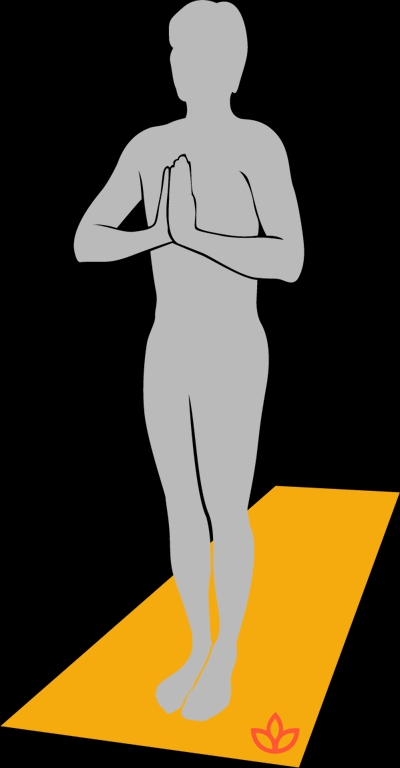
1) Pranamasana / Prayer pose :
Stand at the edge of your mat while keeping your foot together. As you inhale, lift both of your arms from the sides and while exhaling, bring your palms together and form a praying position.

2) Hastauttanasana / Raised arms pose :
The main purpose of this pose is to stretch your entire body so to do that you must breathe in, lift your arms up and then take it back while keeping your biceps close to the ears.

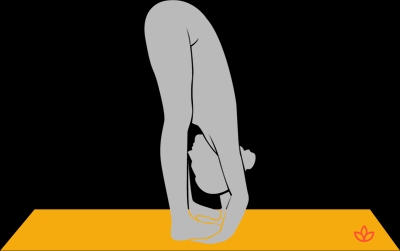
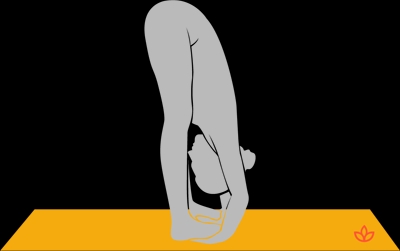
3) Hastapadasana / Standing forward bend :
While breathing out, bend forward from gbe waist but remember to keep the spine intact. After exhaling completely, bring your hands down and place them next to your feet.

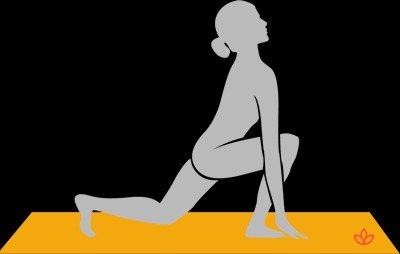
4) Ashwa Sanchalanasana / Equestrian pose :
Push your right leg back but make sure to push it as far as you can and bring the right knee to the floor and look up but also keep in mind that the left foot is in between your palms.

5) Chaturanga Dandasana / Stick pose :
in and take the left leg back and bring the whole body to make a straight line.

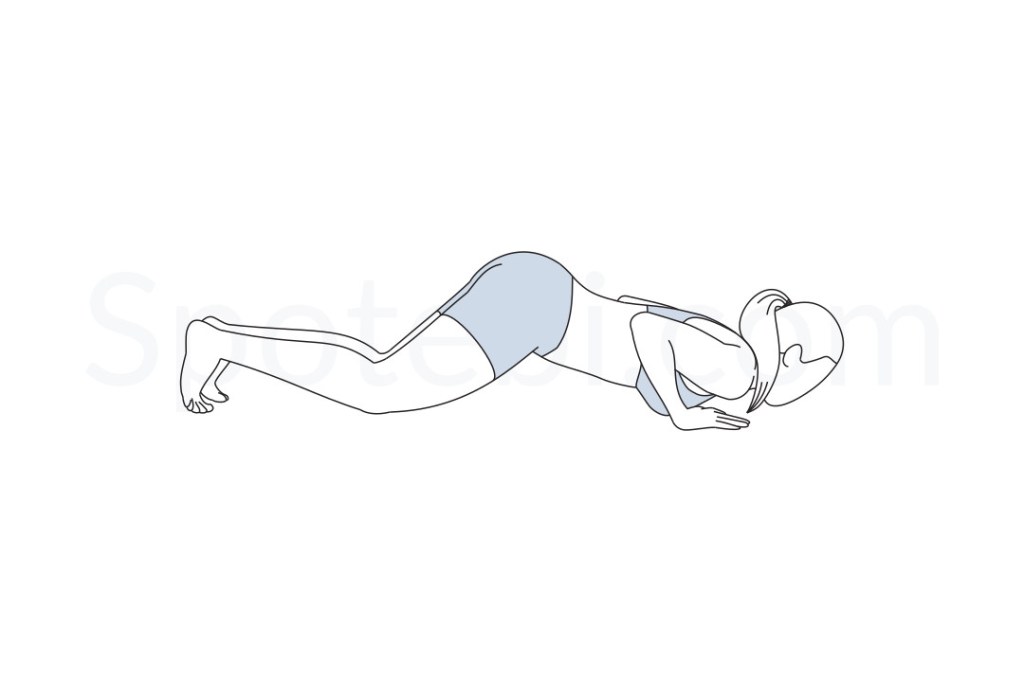
6) Ashtanga Namaskara / Salute with eight joints :
Exhale while bringing your knees down to the floor, take your hips slightly back and slide forward. Make sure your two hands, two feet, two knees, chest and chin are on the floor.

7) Bhujangasana / Cobra pose :
For this pose, slide forward and raise your chest up to form a cobra pose. It’s advisable to keep your elbows bent and keep your shoulders away from your ears and look up the ceiling.

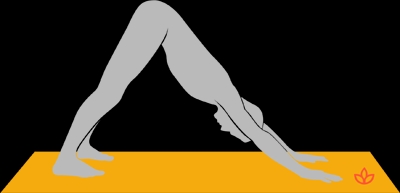
8) Adho Mukha Svanasana / Downward facing dog pose :
The inverted ‘V’ pose. Breathe out and lift your hips and the tailbone to make an inverted ‘V’. If it’s possible, try keeping your heels on the ground.

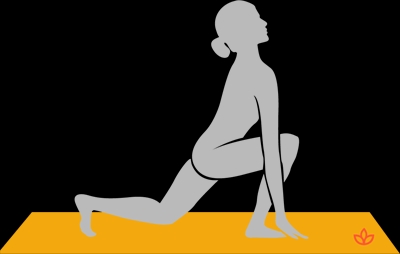
9) Ashwa Sanchalanasana / Equestrian pose :
Push your right leg back but make sure to push it as far as you can and bring the right knee to the floor and look up but also keep in mind that the left foot is in between your palms.

10) Hastapadasana / Standing forward bend :
While breathing out, bend forward from the waist but remember to keep the spine intact. After exhaling completely, bring your hands down and place them next to your feet.

11) Hastauttanasana / Raised arms pose :
The main purpose of this pose is to stretch your entire body so to do that you must breathe in, lift your arms up and then take it back while keeping your biceps close to the ears.

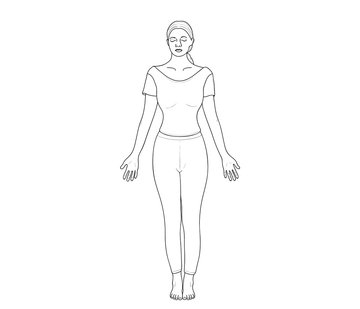
12) Tadasana / Mountain pose :
While exhaling, straighten your body and bring your arms down. Observing the sensations taking place in your body is the key point to master this pose.

Therefore, this completes Set 1. While doing Surya Namaskar, make sure to do 2 sets. For the second set, start with the left leg and bring the right foot forward in step 10.
The main purpose of doing yoga is to make sure you relax and enjoy this form of exercise. Always give yourself and your body enough time to adapt to this method and never rush into anything.

World Population Day

11th July is celebrated as THE WORLD POPULATION DAY every year. This day is devoted to focusing on the relevance of population issues. World Population Day was rooted by the Governing Council of the United National Development Programme in 1989, as an outgrowth of the interest generated by the Day of Five Billion, which was observed on 11 July 1987.

The theme for 2021 is rights and choices.

  1. Population in India
  1. Understanding our population 

The total number of children a woman bears is inversely proportional to the following:

  • Literacy
  • Per capita income
  • Development 

It’s been proved that as the above-mentioned factors rise, the total fertility decreases.

The total number of children a woman bears is directly proportional to the following:

  • Infant mortality rate
  • Poverty
  • Illiteracy
  • Unemployment

It’s been proved that as the above-mentioned factors rise, the total fertility rises too.

Our population is growing but at a decreasing rate. It is not an explosion. The total fertility rate, i.e. the average number of children a woman beers, has significantly decreased from 5 to 2.2-2.3 in the last 50 years. The replacement fertility rate, i.e. the number of children a woman needs to have so that the population replaces itself from one generation to another generation is 2.1. Approximately 20 states and UTs in India are very close to it.

  1. Why is overpopulation a concern
  • Resources

Well, the rate of growth in the number of human beings is greater than the growth of resources. This means the more the population grows, the difficult it gets to sustain everyone.

  • Environmental destruction

As the number of people grows, more resources and places to live are required to destroy natural habitat. This leads to the loss of animal habitat and they’re seen wandering around in human civilization.

  • Unemployment

An increase in the number of people, increases the demand for jobs to sustain oneself and we as a nation have failed to provide jobs.

  • Poverty

A direct relation between poverty and population has been proved by researchers. This means as poverty rises, so does population and vice versa. Along with these, overpopulation brings:

  • Social religious conflicts
  • Climate change
  • Outbreak of diseases
  • Social unrest
  • Political instability 
  1. Benefits of having a bigger population
  • A high population is an asset, which can be utilized gracefully. We can have an ample number of professionals in all the fields and can even outsource our services. There is more production of goods.
  • 4-2-1 problem, i.e 1 child looking up to 4 grandparents and 2 parents, is avoided.
  • We’ll have a balance between the ones earning and the ones depending on pensions because if the number of children born is dropped suddenly, the ones depending on pensions will far outgrow the ones earning and that would be very hard to sustain.
  • How not to tackle population
  • Population Regulation Bill or a 2 child policy

Implementing such a policy is punishing someone for having kids in the form of banning them from elected offices, eliminating them from government schemes and subsidies, government jobs, and even snatching their food by excluding them from PDS. What do you think are the probable effects of these?

A population reduction? NAH. This coercion will lead to even more poverty in the nation which is in the first place one of the root causes of a high population. Furthermore, this may lead to a poor sex ratio as in the case of China which saw sex-selective abortions, foeticides, and even bride price practice which is in simple words buying a bride and might even lead to people bringing girls from poor nations to marry them.

  • Forced sterilization

Sanjay Gandhi and Indira Gandhi led one of the Forced sterilization drives, which is never the answer. Because it violates the choice of the couple, and the right to reproduce which is a basic human right. Even if it doesn’t violate a right, it is unethical to the very roots. Approximately 10 million men were sterilized during that drive and it had no substantial effect on the population growth but had various side effects like deaths and the spread of diseases.

  • Blaming Muslims 

How many times have you heard the statement that Muslims give birth to more children so that one day they can outnumber the Hindu population, or even politicians asking their Hindu following to have more and more children to just come in way of Muslims outnumbering them? Well India’s last census, conducted in 2011, revealed that Hindus make up 79.8% of the population, while Muslims make up 14.2%. and Muslims have more children because of their developmental and literacy levels. Because in states with a higher development, the total fertility rate of Muslims is less too, and the fall in the total fertility rate of Muslims is less than the fall in the total fertility rate of Hindus. All politicians are doing is find a shortcut to avoid tackling the matter with sincerity and propose these stupid ideas.

Forced population control measures are a problem, the solution lies in the development.

  • How to tackle population?
  • Understanding and choosing better leaders for ourselves, voting for the ones who focus on development rather than playing a blame game.
  • Mass education about family planning and contraceptive techniques.
  • Creating job opportunities, improving healthcare facilities and focusing on education would tackle a lot of other significant issues along with overpopulation.
  • Improving access to contraceptives
  • Increasing investment in family planning projects
  • Takeaway

The need of the hour is to plan instead of punishing, utilizing the asset it’s blessed with instead of declaring it a disaster and blaming everything on it and stabilization of population instead of trying to control it. And lastly, having a government that owns up to its responsibilities.

references

https://www.macrotrends.net/countries/IND/india/population

https://www.statista.com/statistics/263766/total-population-of-india/

REALITY SHOWS

Reality shows have now become the latest end. Their initial popularity with the masses, helped in the number of such shows produced today. Reality shows take the form of various competitions and challenges where celebrities or the common man participate. There is or essentially no script involved and the interest of the show lies inherently in the personality of the audiences and the tasks. Many of these competitions are judged by eminent personalities within the field. There was a need for a change in the television industry from the onslaught of the various soaps that were telecasted.

However, the question that emerges today is…how real are these reality shows? May critics believe that there isn’t even a modicum of reality in any of these shows. They are often scripted and only aim at high TRP’s. The shows have a planned course and the masses are simply captivated. Though they provide raw drama and an undisputable display of anger, love, guilt and jealousy, these are often tactics used to keep the audiences fastened rather than a genuine display of emotion. There are many others, who are loyal supporters of reality shows and believe that they have indeed provided a platform for the common man to exhibit his talent and gain success. Various dance and singing reality shows as well as quiz shows for children and adults provide them with a means through which provide, they can showcase their talent and intelligence Through these shows they often gain various opportunities to prove their courage. But sadly, one cannot deny that the USP of many of these shows is emotion and melodrama and as a result the purpose of the show is often side-lined. The recent crop of reality shows have come up with themes that tends to belittle important social institutions. In spite of the fact that it has its own pros and cons various channels and producers are misusing the originality of these shows by introducing new themes and shows to keep the masses entertained. Some of the most popular Indian reality shows include ‘Kaun Banega Crorepati’, ‘Big Boss’ and ‘Indian Idol’. Many movie icons are also willingly accepting the task of anchoring these shows so as to connect with people and exploit the scope of T.V as a medium of maintaining one’s popularity.

However, there is a need to ensure that this genre does not deteriorate like the previous trends. The shows must always be well researched and fresh in its approach rather than look at reality T.V as a formula and launching shows that have little creativity and uniqueness.

Guidelines for identification, admission and continued education of migrant children

 In order to mitigate the impact of challenges thrown by the COVID-19 pandemic for out of school children, it was felt necessary for every State/UT to devise a proper strategy for preventing increased drop outs, lower enrolments, loss of learning and deterioration in the gains made in providing universal access, quality and equity in the recent years.

Thus the Ministry of Education had issued guidelines for identification, admission and continued education of migrant children.

In order to ensure that school going children have access to education with quality and equity and to minimize the impact of the pandemic on school education across the country, the Ministry of Education has prepared and issued detailed guidelines on steps to be taken by the States and UTs during school closure and when the school re-open.

The main features of the Guidelines are :      

A.        Continued Education for Out of School Children (OoSC) and Children with Special Needs (CWSN)


  • Continuation of non-residential training for identified Out of School children through volunteers, local teachers and community participation.  
  • Continuation of home based education for CWSN children through Volunteers/ Special Educators.


B.        Identifying Out of School Children


  • States and UTs to carry out proper identification of OoSC for 6 to 18 years age group through a comprehensive door to door survey and prepare action plan for their enrolment


C.        Enrolment Drives and Awareness Generation


  • Enrolment drives may be undertaken at the beginning of academic year such as Praveshotsav, School Chalo Abhiyan etc.
  • Undertake awareness generation among parents and community for enrolling and attendance of children
  • Create awareness on practicing 3 Corona appropriate behaviors – wear mask, six-feet distance and washing hands with soap for which IEC material shared on 06.11.2020 with the States & UTs.


D.        Student Support while Schools are closed


  • Students to be provided support including counseling, large scale awareness & targeted home visits
  • Using Manodarpan web portal and tele-counseling number for counseling services and psycho-social support.
  • Distribution of educational material and resources, supplementary graded material, workshops, worksheets etc to support home-based education
  • Exploring option of classroom on wheels and classes in small groups at village level
  • Increasing the access of children to online/digital resources, TV Radio etc. to reduce learning loss
  • Ensuring easy and timely access to the provisions of uniforms, textbooks and MDM
  • Timely disbursement  of stipend to enrolled CWSN girls through DBT
  • Strengthening of Child protection mechanism at local level


E.        Student Support on School Reopening


  • Preparation and running of School readiness modules/Bridge course for initial period when the schools re-open so that they can adjust to the school environment and do not feel stressed or left-out.
  • Identification of students across different grades based on their learning levels
  • Relaxing detention norms to prevent drop out this year.
  • Ensuring reading with comprehension and numeracy skills by encouraging children to  read books beyond syllabus and creative writing & problem solving.
  • Large-scale remedial programmes/Learning Enhancement programmes to mitigate learning loss and inequality.


F.         Teacher Capacity Building


  • Effective utilization of the online NISHTHA training modules and online training module for Corona responsive behavior to be launched on DIKSHA portal soon.
  • Use of alternative Academic Calendar prepared by NCERT for joyful engagement of children in learning.

*****


Child Marriage: A Legal View

In the culture of Indian society, the practice of child marriage still subsists. Child marriage refers to a marriage duly performed by minors mainly between a female below the age of 18 years and a male below 21 years. Child marriage is customarily in rural regions where there is increased rate of poverty and illiteracy. Social customs and rites, ignorance, benight and consideration of women as a burden financially, are few factors that causes solemnization of child marriage. Such marriages have their unintended consequences like problems related to health due to pregnancy at early age, deliberately cruel gender inequality cycle and further worsening of women status also happen.

Considering all these factors, the British government in 1929 enacted the Child Marriage Restraint Act. This was the first secular law towards restraining the child marriage peril. The Act only held punishments to those adult males who married minors and the parents who encouraged such marriages but the marriage was not made void. As the punishment and fine was considerably less, the Act was hence amended now and then to increase the limit of age.

Due to the inadequacy of the Child Marriage Restraint Act 1929, a new legislation was enacted namely, Prohibition of Child Marriage Act, 2006. This new Act anticipate in averting child marriage along with intensified punishments such as fine of Rs. 1 lakh or imprisonment for two years. Provisions for the maintenance of the girl child were also implied. In case if the husband is major, he is liable to pay for the maintenance and if the husband is minor, then his family is liable to pay for the same.

The marriage would be void if the child is used for trafficking or any sort of purpose that is immoral. Under the prohibition of Child Marriage Act 2006, the age of a female is 18 years and for male is 21 years. A girl can obtain a degree of nullity within two years before attaining the age of 18 years if entered into a child marriage under the Hindu Marriage Act 1956. The parties though not did consent to the union in child marriage yet they are punishable As for now there is no such provisions for punishing the people or the parents involved in the solemnization of marriage. A girl can declare a marriage invalid if she’s married off before attaining an age of 15 and can challenge it until she is 18. However till now there is no such provision which states child marriage invalid. In India, Muslim law is not codified, thus the scholars interpret provisions of the Quran. Child marriage is not barred under the Muslim law. A guardian has authority to get a child married. Although, there is an option of puberty available to the couple where they can refuse to accept the marriage after attaining puberty following the condition that they should do it before attaining the age of 18 then only the marriage can be said rejected. According to the Muslim law, the age of puberty is 15 years. Nevertheless, the marriage prior the age of 7 is void ab initio. Under the Indian Christian Marriage Act, if a marriage is to be contracted between the minors, a notice preliminary is set to be issued 14 days before marriage. Post the expiration of the 14 days, the parties have the right to go on with the solemnization of marriage without consent of the guardian or parents. Under the Parsi marriage and divorce Act, a child marriage is considered invalid. In India, Jewish law is uncodified. According to the Jewish law, the age of puberty is the marriageable age which is fixed at 12 years.

Child marriage is jeopardy and it cannot be restrained without the support of the society. Under the prohibition of child Marriage Act, several demands have been made to make the child marriage void ab initio but the society is complex as well as complicated and making child marriage void will only prove to be hazardous for the rights of women who are victims of child marriage.

HEARING VS LISTENING

When you’re in conversation with someone, it’s common for your mind to drift to other thoughts. For example, maybe you have a lot on your plate, and you’re thinking of what all you need to get done. Maybe you just argued with your partner, and you’re still upset about it. Or, maybe you’re exhausted, and you start fantasizing about how cozy your bed will be when you turn in for the night.

When your mind begins to wander, you’re likely still hearing the other person, but you’re not truly listening to what they have to say. However, this can negatively impact your conversations and relationships with people, if they feel that you’re rarely listening to them.

With inputs from a psychologist, this article breaks down the differences between hearing and listening and describes how they impact mental health. It also provides some tips to help you become a better listener and improve your relationships.

HEARING:

  • Passive
  • Involuntary
  • Requires no effort
  • Physiological perception of sound

Hearing is a passive, involuntary, and sensory process in which we perceive sounds. It is a physiological response that involves our perception of sound. It does not require focused attention.

For example, if you’re watching television, you can still hear the sound of traffic or sirens outside, your neighbour’s dog barking, and people laughing in the hallway.

LISTENING:

Listening is an active, voluntary, and intentional process that involves making sense of the words and sounds you hear; it requires your attention. In turn, you may develop an emotional response to what you hear. Listening with the intent to understand is referred to as active listening.

For example, if you’re listening to someone talk about a difficult day they had at work, you will probably have your full attention focused on them. As they speak, you will start to understand what their experience was like and the impact it had on them. This will help you make thoughtful comments and ask relevant questions to further understand their experience.

  • Active
  • Voluntary
  • Requires effort
  • Intentional interpretation of sound

THE ROLE OF HEARING AND LISTENING IN MENTAL HEALTH:

Both hearing and listening play an important role in our lives. Hearing is a form of sensory input whereas listening is a way to form connections with other people, according to Workman. She explains the role these functions play in our mental health.

IMPORTANCE OF HEARING IN MENTAL HEALTH: 

Hearing is an important sense that helps us navigate the world. The loss of hearing can have a profound effect on mental health as it could lead to anger, social withdrawal, changes in our sense of self-worth, and depression.

It is important to keep in mind that using sign language and paying attention to body language are ways you can listen without the sense of hearing. You can seek mental health care if you are experiencing depression or adjustment difficulties due to the loss of hearing. 

IMPORTANCE OF LISTENING IN MENTAL HEALTH: 

We are social beings and have a universal need for connection and belonging. Listening is what enables us to develop increased curiosity about other people’s experiences, increased compassion and empathy, and increased connection.

If you are not listening to others or being listened to, it can negatively affect your sense of connection and belonging. You can probably think of a time when you were not being listened to, the experience may have caused you to feel devalued, uncared for, and lonely, all of which can contribute to feelings of shame, anxiety, and depression.

TIPS TO BECOME A BETTER LISTENER:

It is in fact possible to become a better listener. Workman suggests some tips that can help you improve your listening skills:

  • Set an intention to improve: Setting a clear goal to work on your listening skills can help you think more concretely about how, when, and who you can practice with.
  • Practice mindfulness: Mindfulness helps you be more present. You can practice it simply by noticing what has your attention in the moment; is it the person speaking to you or something else? If your attention is on something else, you can gently redirect your focus back to the person by noticing the changes in their voice, the words they use, and their nonverbal expressions.
  • Be curious: Adopting a curious mindset allows you to truly listen and understand. In doing so, you might notice that you automatically become even more curious and interested in what the person is saying.
  • Let go of judgments and assumptions: When you judge and assume things, you essentially close the door to new information which means you are less likely to pay attention and listen. Letting go of judgments and assumptions will also help you become more curious.
  • Summarize what you are hearing: Repeating in your own words what you heard the other person say can communicate that you’re engaged and gives the other person an opportunity to clarify any misunderstandings.
  • Ask questions: Asking relevant, open minded questions shows that you are listening and responding in a thoughtful way. If you’re not sure what to ask, you can try to think of who, what, when, where, or how questions.
  • Use nonverbal gestures: Using non verbal cues, such as making eye contact and occasionally nodding your head, can communicate that you are listening and paying attention.
  • Try to validate: While giving someone your undivided attention can be validating in and of itself, being able to acknowledge how someone’s thoughts and feelings are understandable given their history or current circumstances can be quite meaningful.
  • Give advice only if required: Don’t try to solve the problem or give advice unless that is what the person is asking for. We often want to help others which is why we’re quick to offer solutions. However, this can be quite invalidating to people because a lot of the time they just want to be understood and listened to.
  • Put away distractions: This can be difficult since we are constantly surrounded by distractions. However, little gestures such as putting your phone face down so you can’t see messages or notifications come through or turning away from your computer screen can help you be more focused and attentive.
  • Practice compassionate listening exercises: You and a partner can each take three to five minutes to share a personal story. There should be a 15- to 30-second pause before the other person starts sharing. After both people have shared their stories, you can take a few minutes to discuss what it was like to listen and be listened to in this way.

CONCLUSION:

While we often equate hearing with listening, the former is typically a passive activity whereas the latter is more active. There are in fact steps you can take to become a better listener. Making the effort to actively listen to the people around you can help you connect with them and improve your relationships with them.

Solar Energy: Advantages and Challenges

What is Solar Energy?

Sunlight is a renewable source of energy which can be converted into usable energy by solar panels. There are two main types of solar energy. Solar photovoltaic (PV) panels which directly convert solar energy into a usable form of energy using a PV cell containing a semiconductor material. CSP (concentrating solar power) on the other hand, concentrates energy from sunlight to a heat receiver which transforms energy from heat into mechanical energy, and in turn, solar thermal electricity.

Photo by Pixabay on Pexels.com

Advantages of Solar Energy

  • Because solar energy does not emit greenhouse gases, there will be no negative environmental impact. It is a pollution-free and non-polluting source of energy.
  • Solar energy is a renewable source of energy. As a result, there will be no trouble using it all up without leaving any for future generations.
  • Expanding the solar energy business will result in a large number of green jobs.
  • Solar energy will benefit the economy in the long run because there will be no need to import fossil fuels like coal for energy.
  • There is no need to buy any resources because sunlight is free.
  • Solar energy requires money to install, but the energy generated is the cheapest electricity. So, many more people can have access to affordable electricity.
  • Even in disaster-hit places, off-grid solar systems provide power. Off-grid means buildings designed to be self-sufficient without depending on public electricity and water lines.
  • The production of electricity from fossil fuels requires a large amount of water. Solar energy production does not require the use of water. As a result, it saves water. Therefore, this makes solar energy more reliable. Even if there is a drought, power generation will not be affected.

Challenges in using solar energy 

  • Solar power generation on a huge scale requires a large area of land.
  • Solar cells currently only use a small portion of sunlight. Increasing the efficiency of solar cells is a big challenge. Moreover, as efficiency improves, the amount of land required decreases.
  • Solar energy production facilities need a huge investment to set up.
  • Not every part of the earth gets enough sunlight to totally rely on it.
  • Storage is required to ensure power supply during the night when there is no sunlight.
  • The clean energy industry is facing a skilled labour shortage. Another challenge is to train a large number of people in the required skill set to keep up with the increasing solar industry.
  • Toxic chemicals such as sulfuric acid and hydrochloric acid are used in the production of solar cells. Developing efficient solar cells using less toxic chemicals is a big challenge.

Conclusion

The use of solar energy will result in energy transformation from fossil fuels to clean and sustainable energy. It also helps in the fight against global warming. Government should provide subsidies and widespread awareness to encourage roof-top solar grids and solar farms, so that everyone will have access to affordable and clean energy.

Feminism and Women Empowerment

Feminism in general terms can be defined as equality among all genders holding equal rights and opportunities. The word feminism is evident whole around the globe and is concerned with activities mainly indulging women’s rights and interests. It is an approach against inequality  between men and women in this huge man domain world, it can be in form of social, economic, political movement aiming to establish social, economic, political and even personal equality among all. It ensures and encourages women to put forward their ideas, beliefs, utilize their knowledge and strengths and empower them to perceive their true rights. Feminist movements have organized course of action and are still continuing to do so for women’s rights including right to vote, receive education, equal wages, equal sibling property ownership and to safeguard women and girls from any sort of sexual harassment be it rape or domestic violence. These movements also make certain legal abortion and other social reforms for women.

Historically, women faced discrimination on the basis of their gender, they had to fight against the orthodox society with the result being constant failure. Now things have bit changed and such a result is feminism, an initiative to fight against gender stereotypes and bringing about a change in this unhealthy dynamics of society.

Feminism means congeries things to congeries of people, it is not expected to define a particular’s feminism in any way. Its all about cutting the difference between men and women and leveling them on the same scale. Thus, making similar opportunities available to both men and women in life.

Women Empowerment refers to steps taken in order to empower women. The following concept may be understood in a number of ways like, taking into consideration the opinions or views of women, encouraging women to pursue higher education and uphold a high rank in society and also to uplift the position of women through literacy, training etc. It also provides them to take their own life decisions, tackle various problems in society. Women empowerment can also be defined as to encouraging women to realize their self worth, their capacity to discover their own way out and most important their right to bring about effective social change for themselves and society.

In true sense, empowerment of women contributes greatly in the development of society. The advancement of status of women also intensifies their decision making ability at all scales in all volume of life, particularly in the field of reproduction and sexuality. This without doubt is necessary for the long term accomplishment of the population programmes. Women empowerment and ensuring women’s rights have now become a worldwide movement.

In this contemporary age, feminism and women empowerment is the talk of the town. Numerous developments have been seen till date in awake of both the elements. It is right to say that women empowerment is contributing greatly in the advancement of the society and will continue to do so. Gender discrimination has nearly diminished in the last few decades. But today also in some parts of the country such distinction still subsists. Thus, to tackle such situations it’s important for females to understand the true meaning of feminism and it is the essential right of the women to be empowered so as to hold an independent role in the society. But apart from these various developments, women and girls still face discrimination on some or the other ground and are victims to numerous harassments each day in every part of the world.

The Era of Digital Marketing

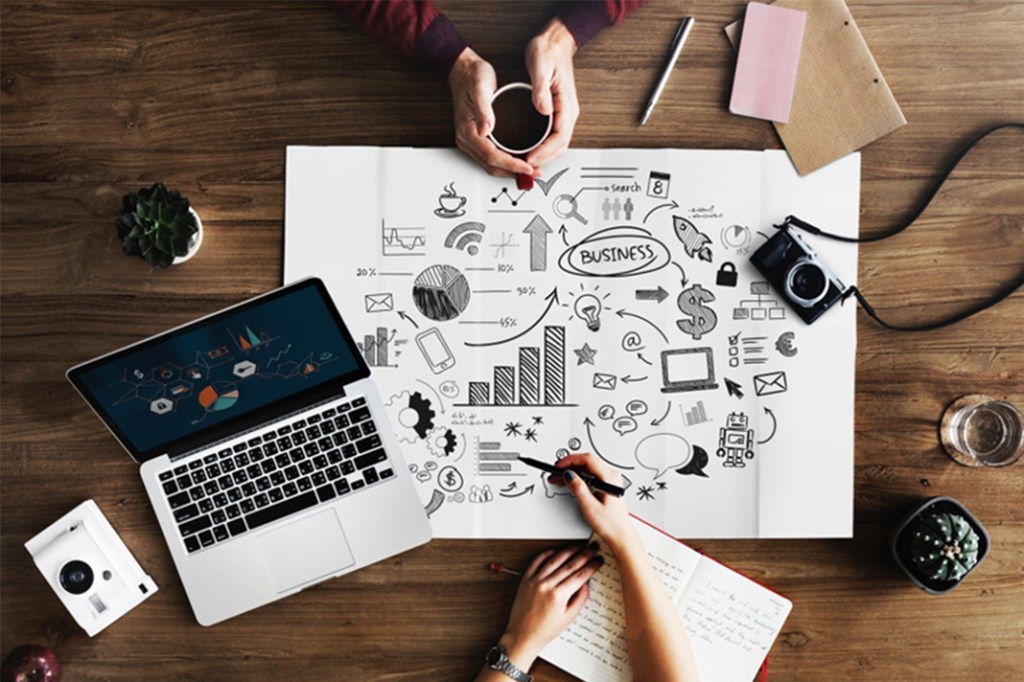
Almost 60 percent of the world population has access to the internet, which accounts for 4.66 billion active internet users in the year 2021. With the help of internet we can pay our bills, shop online, book tickets, even get an academic degree and much more. The possibilities are endless.

Other than that people also use internet as a medium of recreation such as for watching videos, playing games and most importantly spending their time on social media. In today’s time, an average internet user spends 7 hours of their day scrolling social media, answering emails, browsing websites for information, content, so on and so forth. Gone are the days when people had to physically travel to get their work done or just for entertainment. Now, everything is a click away, be it an important payment, or learning a skill, or playing any games.

The internet revolution also gave rise to a lot of industries and one such industry is of digital marketing. The rise in people buying smartphones and computers has essentially increased the numbers of people on the internet, and hence the era of digital marketing is growing at a phenomenal pace.

What is digital marketing?

Digital marketing refers to a branch of marketing at caters to use the internet and other online technologies such as mobile phones, desktop computers and other digital channels such as search engines, social media, websites, email, etc., to sell or promote their products or services. The development of digital marketing goes hand in hand with technology. Digital marketing is considered to offers a wider range of pros as compared to traditional marketing.

  • Digital marketing helps in targeting the required audience.
  • Digital marketing is more economical.
  • Digital marketing allows marketers to track the performance of the products or services, in every way possible.

However, in spite of the rise in digital marketing, traditional marketing still play an important role.

Digital Marketing and Online business

Online business is the first thing that comes to our mind when we think of digital marketing. As the digital era is growing, the need for offline businesses to also have an online portal signifies the power, digital marketing holds. Digital marketing offers small scale businesses to reach maximum number of people without investing a lot on advertising.

During the pandemic, there has been a rise in the number of small businesses, and their primary way of promoting their business has been on social media by creating content, such as posting photos, reels and so on. If a particular reel or photos gains popularity, this would mean more customer interaction and eventually will lead to more selling of the product or service.

Jeff Bezos once said, “It’s hard to find things that won’t sell online.”

Digital Marketing as a career choice

Digital marketing has been growing at an unprecedented rate and the growth is an ever expanding one. And it only makes sense to invest in a career that yields lucrative results. The most convincing part of digital marketing is that, it is for everyone. No degree is required, just a bit of creativity and passion for marketing, that will help strive for a successful digital marketing career.

Digital marketing can get as specialised as social media marketing to email marketing, SEO, etc., and can be an all-encompassing field as well, which also benefits entrepreneurs to propagate their own ventures. The possibilities are never ending. Hence, choosing digital marketing as a career option can be called a safe bet.

Digital marketing as an industry is here to stay, and it would ripe benefits if used to its fullest content. The era of digital marketing is at its glory and its never too late to be a part of it.