Maldives is made up of 1190 Islands. Maldives is the world’s lowest country. It has a ground level elevation or height above sea level about 1.5 m or 4 feet 11 inches. The Maldives have some of the smallest islands in the World with no more than a few square meters size. Ninety-nine percent of the Maldives is water.
Maldives is a Muslim country and 90% of its population is predominantly Muslim. The world’s smallest Muslim country. Muslims are considered to be citizens of the nation. Any other faith besides Islam is not considered so. Nudity and topless sunbathing is not allowed in Maldives. Visitors must obey local traditions
You are not allowed to bring your own alcoholic drink, there price of alcoholic beverages at the resorts are not too high.
Maldives is rich in exotic sea life. If you’re interested in sea life then going to the Maldives may be the best decision you would ever make.The Maldives are one of the few places on Earth where Whale sharks can be encountered all year round. The sun’s rays strike at a 90° angle.
They observe the weekend on Friday and Saturday.
For raising awareness about rising waters in the ocean. The President, transferred the cabinet meeting of October 2009 right to the ocean’s bottom. Not in a board room or boring government building. It was World’s First Underwater Cabinet Meeting.
Maldives is one country that has about 98 percent literacy among its adults.
Entrepreneurship can be defined as the recognition of opportunities and the use of creation of resources to implement innovative ideas for new, thoughtfully planed ventures. The essential characteristic of an entrepreneur is identifying the opportunity and elaborating that opportunity into a formal but it is also important to have an entry strategy while setting up a startup. So, today in this article we are going to learn the entry strategies and risk reduction strategies that are applied by every entrepreneur is explained clearly.
ENTREPRENEURIAL STRATEGIES:
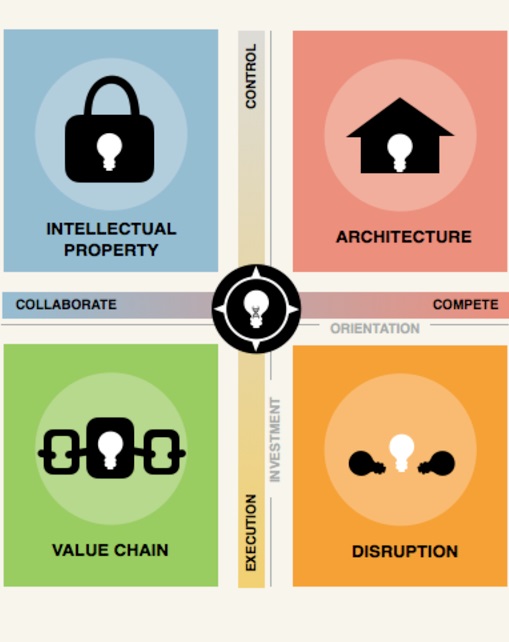
Entrepreneurial strategy involves identifying and choosing among a set of distinct choices that define a company as it translates an idea into a meaningful value proposition. So, setting up a strategy clearly describes ” what not to do? ” that is, a strategy act as a back bone for an entrepreneurship. The four strategies that can be explored for an idea are as follows:
FUNDAMENTAL ENTREPRENEURIAL STRATEGIES
1 INTELLECTUAL PROPERTY STRATEGY:
Entrepreneurs who pursue intellectual property strategy for their ideas choose to invest in control over their underlying innovation in order to construct a value chain through collaboration with incumbent firms in industry to create value for the final end consumers.
This type of startups focuses on idea generation and development to avoid the cost of down stream, customer facing activities. because cooperation requires alignment with incumbent activities. Simply, the startup which use this strategy probably choose technological investments with existing systems.
2 DISRUPTION STRATEGY:
This type of strategy highlights about decision to compete directly with incumbents emphasizing commercialization of idea and rapid growth of market share rather than control on ideas of development. Disruption entrepreneur aims to redefine established value chain.
Therefore, a disruption startup chose the competition orientation against established firms in the industry by choosing to compete through execution. Disruption strategy founders will inevitably face threat of imitative competition from incumbents and new entrants alike because of choosing invest in execution than in getting control over their idea.
Even value chain strategy is also similar to the disruption strategy where entrepreneurs choose to invest in execution rather than control but the only difference is that, they create value with the cooperation of industry incumbents.
3 ARCHITECTURAL STRATEGY:
The final strategy in the entrepreneurial strategy framework is architectural strategy. Unlike the other type of strategies , architectural strategy is about architecting an entire new value chain in the market place rather than boosting the performance of an existing value chain.
This type of strategy requires entrepreneurs to figure out how to build a new and integrated value chain that delivers value to customers while also building an economic support by maintaining control over their idea as they compete directly against incumbents.
Architectural entrepreneurs establish competitive advantage through the traditional strategic approaches. Compared to other strategies, architectural strategy used entrepreneurs must be committed to their vision and plan.
RISK REDUCTION STRATEGIES:
The situation that threatens the capability of the startup or a company to achieve its financial goals is considered as a risk to the business. There may be ma strategies in order to manage and reduce the financial loss to the company. The three type of risk reduction strategies are as follows:
1 NARROW SCOPE STRATEGY: Narrow-scope strategy offers a small product range to a small number of customer groups to satisfy a particular need. The narrow scope can reduce the risk that the firm will face competition with larger firms. A narrow-scope strategy is vulnerable to the risk that market demand does not materialize as expected. Having a narrow-scope strategy is like putting all your eggs in one basket that is, it reduces some competition-related risks but also increases the risks associated with market uncertainties.
2 BROAD SCOPE STRATEGY: Broad scope strategy highlights portfolio approach dealing with uncertainties about attractiveness of different market segments. By offering a range of products the entrepreneur gains knowledge on whole market through a process of trial and error. A broad-scope strategy reduces risks from market uncertainties, but it increases the exposure of competition. When the risk of competition is great and market uncertainties are minimal, a narrow-scope strategy is more effective at reducing risk but when a new firm entered into market with same sort of creation then, a broad-scope strategy reduces the major risk of uncertainties over customer preferences.
3 IMITATION STRATEGY: Imitation strategy copy’s the best practices of other firms in order to minimize the risk of downside loss associated with new entry in to the market. An imitation strategy has the potential of reducing the entrepreneur’s costs associated with R&D and also reduces the customer uncertainty over the firm. Imitation strategy makes the new entry to look legitimate from day one onwards. This imitation strategy is also known as me too strategy.
We have seen a lot of women who overcome the hindrances made by society to a woman. One of them was Kadambini Ganguly, who broke the norms of society and became India’s first female doctor. She was born on 18 July 1861, when India was struggling for her freedom. At that time people were not much aware of the importance of female education. She was also one of the first graduates (along with Chandramukhi Basu). She also became one of the first female doctors of the country who were certified to practice western medicine.
She was in Bhagalpur, Bihar, in a Brahmo family, in 1861. Her family was originally hailed from Barisal (in present Bangladesh). Her father’s name was Braj Kishore Basu. He was a headmaster by profession and participated in several social movements aimed at women’s empowerment. He established the Bhagalpur Mahila Samiti with Abhay Charan Mallick in 1863.
She completed her education at the Bangla Mahila Vidyalaya, and after that, she wrote the entrance examination for the University of Calcutta. In 1878, she became the first Indian woman to clear the entrance. And because of her efforts, Bethune College introduced first arts and then Graduation courses in 1883.
She married a Bramo reformer, Dwarkanath Ganguly. Her ambition was to go to the clinical school but at that in Calcutta Medical College females were not permitted to enter. She and her husband volunteered to change this standard. And in a result, she became the first woman to attempt to get admission to Calcutta Medical College in 1884. She graduated in 1886 and was awarded the Graduate of Medical College of Bengal and made history as the first practicing woman physician with a degree in modern science in the whole of South Asia. She worked for a short period of time at Lady Dufferin Women’s Hospital (her salary was 200 rupees per month). Then she decided to travel to London in 1892 for further education. The reason to leave was strong opposition from her colleagues and administrative staff who believe that this is a male-dominated stream and could not accept a woman entering the mainstream. Apart from this she also contributed to several movements in India’s freedom struggle. She became the first woman to be on the platform at a session of the Indian National Congress. She organized the Women’s conference in Calcutta (1908) and spiked many movements during the partition of Bengal. She also served as the President of the Transvaal Indian Association and worked for the rights of female coal miners in the eastern parts of India. She did not leave her profession as a doctor and continued to practice until her death in 1923.
The 19th century was a period of misogynistic practices such as Sati, Child marriage, and many more, she was truly a torchbearer in terms of providing women access to educational institutions. She is still an inspiration to many women in India who thinks that she cannot reach her goal because she is married or financially weak or having children. She achieved her goal despite all the hindrances. Women like her have always been an example in the society who created hr space for women in the fields which remain traditionally a man’s sphere even in the present day.
In the book ‘How India Wrought For Freedom’, Annie Besant depicted Kadambini as a “symbol that India’s freedom would uplift India’s womanhood”.
One of the biggest conceptions is that bananas are good for monkeys. Not only are bananas not part of monkeys’ staple diet, as they consume other foods like insects, nuts, and seeds, but bananas in fact can also cause them more harm than good. This is why some zoos across the globe have also banned bananas from monkey’s diets.
High sugar and calorie content (particularly in bananas grown for human consumption, which are sweeter than those available in the wild). Giving this fruit to monkeys is similar to giving cake to humans.
Sugar concentration may cause teeth rotting
May contain pesticides, disturbing the digestive system
A GD is a methodology used by an organization to gauge whether the candidate has certain personality traits and/or skills that it desires in its members. In this methodology, the group of candidates is given a topic or a situation, given a few minutes to think about the same, and then asked to discuss the it among themselves for 15-20 minutes.
Why GDs :
The reason why institutes put you through a Group discussion and an interview, after testing your technical and conceptual skills in an exam, is to get to know you as a person and gauge how well you will fit in their institute. The Group discussion tests how you function as a part of a team. As a manager, you will always be working in teams, as a member or as a leader. Therefore how you interact in a team becomes an important criterion for your selection. Managers have to work in a team and get best results out of teamwork. That is the reason why management institutes include GD as a component of the selection procedure.
Company’s Perspective :
Companies conduct group discussion after the written test so as to check on your interactive skills and how good you are at communicating with other people. The GD is to check how you behave, participate and contribute in a group, how much importance do you give to the group objective as well as your own, how well do you listen to viewpoints of others and how open-minded are you in accepting views contrary to your own. The aspects which make up a GD are verbal communication, non-verbal behavior, conformation to norms, decision-making ability and cooperation. You should try to be as true as possible to these aspects.
Reasons for having a GD
It helps you to understand a subject more deeply.
It improves your ability to think critically.
It helps in solving a particular problem.
It helps the group to make a particular decision.
It gives you the chance to hear other students’ ideas.
It improves your listening skills.
It increases your confidence in speaking.
It can change your attitudes.
Strategies for Improving GD Skills
Observe : Attend as many seminars and tutorials as possible and notice what other students do. Ask yourself:
How do other students make critical comments?
How do they ask questions?
How do they disagree with or support arguments?
What special phrases do they use to show politeness even when they are voicing disagreement?
How do they signal to interrupt, ask a question or make a point?
2. Practice : Start practicing your discussion skills in an informal setting or with a small group. Start with asking questions of fellow students. Ask them about the course material. Ask for their opinions. Ask for information or ask for help.
3. Participate : Take every opportunity to take part in social/informal discussions as well as more structured/formal discussion. Start by making small contributions to tutorial discussions; prepare a question to ask, or agree with another speaker’s remarks.
Do’s
Speak pleasantly and politely to the group.
Respect the contribution of every speaker.
Remember that a discussion is not an argument. Learn to disagree politely.
Think about your contribution before you speak. How best can you answer the question/ contribute to the topic?
Try to stick to the discussion topic. Don’t introduce irrelevant information.
Be aware of your body language when you are speaking.
Agree with and acknowledge what you find interesting.
Don’t
Shout. Use a moderate tone and medium pitch.
Lose your temper. A discussion is not an argument.
Use too many gestures when you speak. Gestures like finger pointing and table thumping can appear aggressive.
Dominate the discussion. Confident speakers should allow quieter students a chance to contribute.
Draw too much on personal experience or anecdote. Although some tutors encourage students to reflect on their own experience, remember not to generalise too much.
Winston Smith is a low-ranking member of the party. In his country Oceania, everything was controlled by the head of the party who is known as “Big Brother”. There will be cameras fixed everywhere like public places, apartments and even in our own houses including our bedrooms. We will be watching 24×7. The party controlled and monitored every people of the country, they decided everything of what must people talk, write even they controlled people from thinking about something which will be lead the party down. (Thoughtcrime) they say that and punish the people in secret ways. Sometimes people suddenly vaporize from society due to the crimes they commit. These all things made Winston depressed and he wanted to rebel against the party with his lover Julia. They both wanted to rebel against the current party that is ruling the country Oceania. How did they start their plan? With whom did they join to abolish the party? Who helped them? Who was against their ideas? And did they uprooted the party? Are questions will occupy our minds until the end of the book.
About the book:
This book is completely a dystopian novel by George Orwell who is famous for his dystopian and unique novels. Through this book, Orwell beautifully illustrated how it must be to be in the future. This book was written in 1948 itself. And also adapted as a movie. If you don’t have time to read this full novel you can watch it virtually. If you think “this plot reminds me of your school history subject” I say No… it’s beyond history. Orwell made a timeless satirical attack on the social and political structures of the world. People in a higher position will create rules and make us obey them. If we don’t, They will give us what we need most and convince us to obey them. Or They will give pain or fear and persuade us to obey them. Even though it’s a classic novel. The words are not that difficult. so, if you hate classic books due to their language. You can try this one. You don’t find it hard to follow it. Why you must read this book? George Orwell is a genius. Who is loot us from our reality? And left us alone in the place which is created by him. That is none other than his works. So, if you want to escape reality and get yourself into some unbearable works. You must try this one. If you are a classic lover you can read it and would eventually start to love Orwell’s works. If you are a literature student. This book and George Orwell’s “Animal Farm” book will help you with major paper and their background studies.
Quotes from this book:
Who controls the past controls the future.Who controls the present controls the past.
If you want to keep a secret, you must also hide it from yourself.
If you loved someone, you loved him, and when you had nothing else to give, you still gave him love.
Power is in tearing human minds to pieces and putting them together again in new shapes of your choosing.
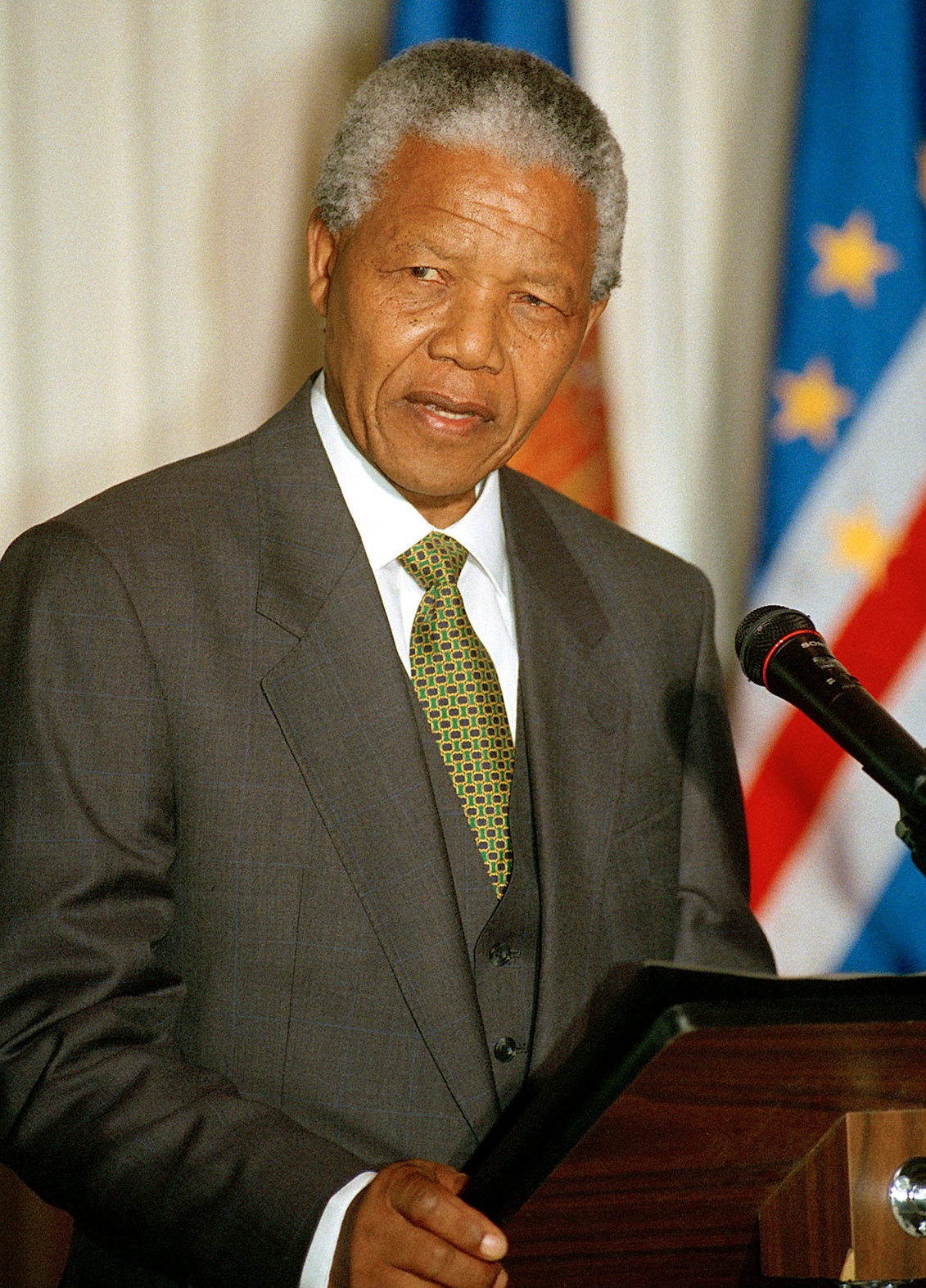
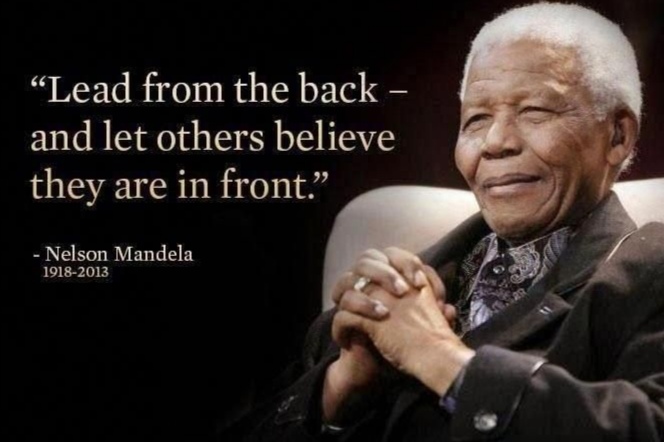
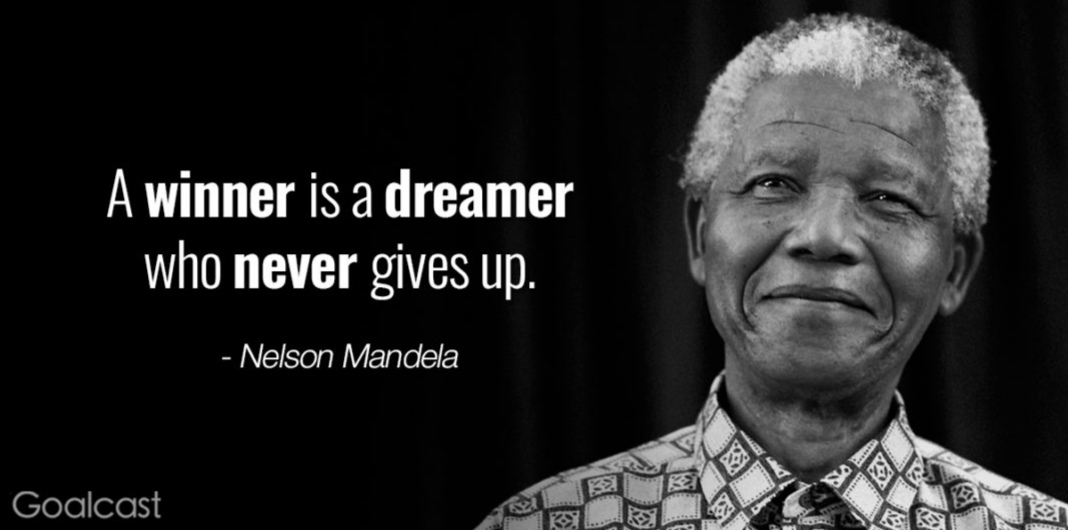
Nelson Mandela was a South African anti apartheid Revolutionary Statesman.
Nelson Mandela
He served as president of South Africa from 1994 to 1999.
Nelson Mandela was first black head of state and the first elected in a fully representative democratic election.
Nelson Mandela is known as Gandhi of South Africa.
Nelson Mandela was born on 18 July 1918.
We died on 5th December 2013.
Nelson Mandela International Day is celebrated on 18 July every year.
Today is 103rd birth anniversary of Nelson Mandela.
Nelson Mandela opposes the racist system of Apartheid in South Africa and dedicated his life to establishing social equality for all.
Nelson Mandela was awarded the prestigious Nobel Peace Prize in 1993.
He involved in anti colonial and African Nationalist politics, joining the AMC in 1943 and co-founding its youth league in 1944.
In 1962, He was arrested, imprisoned and subsequently sentenced to life imprisonment for conspiring to overthrow the state following the Rivonia trial.
He served 27 years in prison.
Nelson Mandela was also known as Madiba.
Nelson Mandela was birth name Rolihlahla Mandela.
Nelson name was given by his Primary school teacher.
In 1931, he begin his College degree at University College of Fort hare.
Nelson Mandela was expelled for participating in a protest against the universities policies.
Nelson Mandela received his law degree from University of South Africa in 1989.
The king of his village threatened him and his cousin with arrange marriages but they both ran away.
Nelson Mandela along with his fellow AMC member established South Africa’s first black law practice in 1952.
Nelson Mandela was banned from leaving the country
In order to leave the country he used the name David Motsamayi to get out of country in secret.
In prison, he was mentor to to other prisoner and taught them about nonviolent resistance.
Nelson Mandela believed that sports has the power to change the world, it has the power to inspire,. It has the power to unite people in a way that letter else does. It speaks to youth in a language they understand. Sport can create hope where one there was only dispair. It is more powerful than government in Breaking Down racial barriers.
He was released from prison in 1990 by president Frederick William De klerk.
Nelson Mandela was 76 year old when he was elected as president of South Africa.
Theme of national Mandela International Day 2021
The theme of this year is One Hand Can Feed Another.
Last year’s theme was Take Action, Inspire change.
The theme highlighted the importance of Government and citizen working together to build a peaceful equitable and sustainable world for all.
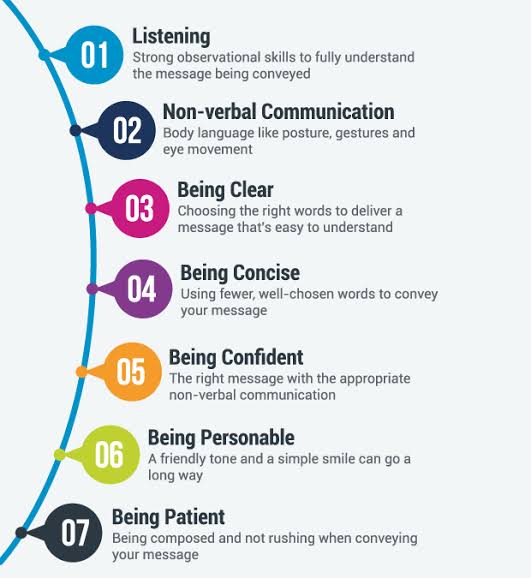
Learning effective communication skills is a straightforward process that allows you to express yourself and improve both your personal and professional relationships. Knowing how to listen well and communicate clearly will help you express yourself in job interviews, business meetings, and in your personal life as well.
What is Effective Communication?
Being an effective communicator means being able to both actively listen and clearly express yourself to those around you. Unfortunately, there is no one skill or technique that will make you a better communicator. Effective communication requires a diverse skillset that covers both verbal and nonverbal communication cues, as well as close listening.
Why Is Effective Communication Important? Effective communication is vital both in and out of the workplace because it allows you to clearly translate your intentions and feelings into easily understandable messages. Effective communication makes you a more productive worker and cuts down on unintended consequences that arise as a result of miscommunication. Developing an effective communication process helps you understand what others are saying and makes you a better collaborator and team member.
4 Skills That Are Necessary for Effective Communication: Developing better communication habits requires several important skills that work in tandem with each other. Some of these skills involve the way you speak or hold your body, and others are more emotionally based interpersonal skills. Here are a few skills that good communicators possess:
1.Listening skills: Clear communication starts with active listening. If you’re just focused on how you are expressing yourself, chances are you are not listening or reacting to what others are bringing to the table. An effective communicator uses a variety of listening styles. They pay close attention to what’s being said and make others feel heard and considered.
2.Empathy: Being able to understand the feelings of those around you is an integral part of being an effective communicator. Empathizing means both understanding and relating to someone else’s feelings. Having high emotional intelligence and demonstrating an ability to empathize builds rapport between you and others and increases your ability to communicate.
3.Nonverbal Communication skills: In addition to verbal messages, effective communication relies on nonverbal cues. Developing an awareness of your body language and tone of voice will improve your messaging and presentation skills.
4.Teamwork: The ability to actively engage in team-building and consistently collaborate with coworkers is an important part of building your business communication skills. The more you build strong relationships and rapport with others in the workplace, the more effectively you’ll be able to communicate with them.
How to Improve Your Communication Skills:
If you feel like you lack the basic skills required for good communication, there are a number of reliable ways to improve. Here are a few tips for developing your Communication skills:
1.Practice active Listening: Effective communicators are always good listeners. Active listening means engaging with what people say by giving affirmative replies and asking followup questions to show that you are paying attention.
2.Focus on Nonverbal Communication: Mastering nonverbal cues and nonverbal signals can help prevent miscommunication and signal interest to those around you. Pay attention to your facial expressions and body language when you are speaking with someone in a professional setting. Your nonverbal cues affect the first impression you make on someone. Maintaining eye contact, limiting hand gestures, and having good posture go a long way when meeting someone for the first time.
3.Manage your Own Emotions: For the sake of clear communication and your own personal wellbeing, it’s important to manage your emotions and express them appropriately in context. Allowing strong emotions to unnecessarily creep into a professional setting can lead to poor communication and conflict.
4.Ask for Feedback: There’s no shame in asking for honest feedback on your communication skills from colleagues. Asking your peers or subordinates for their advice on improving your communication skills can help you better understand how you are coming across in your work environment. Cultivate a willingness to seek out other points of view and forge better relationships with your coworkers.
5.Practice public speaking: Public speaking may sound daunting, but there’s no better way to develop good communication skills than by seeking out public speaking opportunities. Great communicators are able to clearly articulate their feelings, whether they’re speaking to a large group or talking face-to-face to one other person. Regularly speaking in front of a group will magnify your strengths and weaknesses and force you to develop great communication habits.
6.Develop a Filter: Effective communicators generally have highly developed social skills and are able to modulate how they express their thoughts and feelings to those around them. Know what’s appropriate to express in different interpersonal contexts. Developing a filter will help supplement other communication techniques and ensure that you maintain a certain level of decorum and avoid conflict in the workplace.
The story picks up almost 30 years after the battle of Endor. The republic faces a new enemy, the first order. The fist order is the remnant of the empire lead by supreme leader Snoke. The republic fights back with help of The Resistance led by general Leia Organa. Luke Skywalker has gone missing after the rise of the first order, Leia and the resistance aim to find Luke considered to be a hero.
Poe Damerone a resistance pilot finds a clue to Luke’s whereabouts, he finds a map that is supposed to point towards the hidden Luke. Before Poe could escape storm troopers led by the ruthless Kylo Ren raid the village to find Poe and the piece, Poe hides the pieces in his droid BB-8 before being caught by Kylo. BB-8 escapes into the desert unnoticed while Poe is taken to Kylo’s, aboard the ship Poe gives up the information after being tortured by Kylo. BB-8 is almost captured by scavengers but is saved by human Rey, BB-8 begins to follow Rey around. Meanwhile a storm trooper FN-2187 helps Poe escape the star destroyer.
The duo crash-lands on Jaaku after being shot by the star destroyer, FN-2187 now calling himself Finn survives the crash-landing. Assuming Poe to be dead Finn starts looking for BB-8 intending to take him to the Resistance and start a new life, he encounters BB-8 who is protected by Rey. Finn lies about being with the resistance as BB-8 recognises the jacket to be Poe’s, Finn helps Rey and BB-8 evade the forces sent by the First order who located the droid. With nobody else to help the group against the First order, Rey decides to steal an old abandoned ship. Rey pilots the ship to hyperspace after defeating a squadron of TIE fighters.
The ship is boarded by its former owners Han Solo and Chewbacca. After a brief fight with the gangs pursuing Han, the group now joined by Han and Chewie escape in the Millennium Falcon. Aboard the Falcon Han explains that Luke tried rebuilding the Jedi Order but one of his apprentice defected to the Dark side and destroyed all the others. The map stored within BB-8 is deemed just a fragment by Solo who decides to deliver the map to the resistance. Han decides to take BB-8 to Maz Kanta who could help getting the droid to the resistance. Meanwhile it is revealed by Snoke that Kylo Ren is Han Solo’s son.
After arriving on the planet Takodana to speak with Maz Kanta, Han offers Rey a job which she gladly accepts. The Force draws Rey to the Lightsaber that belonged to the Late Anakin Skywalker and briefly used by his son Luke Skywalker. Confused and scared due to a vision the Force shows her Rey flees to the woods. Maz gives the saber to Finn for safekeeping believing the saber to have chosen Rey. The first order launches an attack on Takadona to find BB-8, the group about to be beaten is saved by a squadron of Resistance X-Wings led by Poe who survived the crash. In the chaos Rey is captured by Kylo and taken to the starkiller base. Leia arrives on Takodana with C3-PO and reunites with Han.
The resistance having learnt about the star killer base plan an operation to destroy the planet, This plan is led by Han who devises of a plan to rescue Rey and plant explosives on the planet. On the starkiller base Kylo tries to use the Force to torture Rey who resists Kylo. Snoke orders Kylo to bring Rey before him as he realises Rey can use the Force. Rey escapes the base using a Jedi Mind trick on a guard. Meanwhile the resistance group arrives on the base and spots Rey after infiltrating the base.
Kylo Ren is sent to deal with the intruders and comes face to face with his father. Han Solo tries to reach out to Kylo by calling him with his birth name Ben, Kylo seems to consider but ends up killing Han. The movies makes excellent use of lighting to show what part of Kylo is thinking, Red light shows Kylo Ren and Blue light shows Ben Solo. An enraged Chewie shoots Kylo and allows Finn to set off the explosives. An injured Kylo follows Rey who fled into the woods, Finn protects Rey with the lightsaber but is knocked unconscious. Rey reaches out with the Force and grabs the saber to defeat Kylo in a duel. Snoke orders Kylo to evacuate the exploding planet and to come before him to complete his training. Chewie rescues Rey and the unconscious Finn and takes them to the rebel base.
On the rebel base BB-8 finds R2 and completes the map to Skywalker. Rey uses this map to reach to Luke using the falcon on the far off planet Ahch-to. She finds Skywalker and gives him his former weapon.
The movie ends at this point, we will take up the next story soon. Until then may the Force be with you.
As the UP Election are on the way all the political parties are on their way to lure the public towards them to getthe votes and to win the elections. Therefore a lot interviews and rallies have started taken place. India has just came out of the second wave of Covid-19 and somehow there were many political rallies lead to the boost in cases at some places.
Sadly the same thing is happening again and the rallies and political gatherings have started again. No one knows what can be the result of all this but as there are a chances of having a third wave of Covid-19 around October it is not something that leaders should be focusing on.
Among all this the role of media has became limited to promoting the government and several products only. The major news channels are not talking about the problems that may arise as the result of the actions taken by Government. Upon having a chance to interview they only end up asking silly questions like a 5 year old fro, prime minister and from chief minister as well.
The role of media is to ask questions on behalf of the public but it seems to do everything except that only.
what do you think about current media and what do you think about the government. please share your thoughts in the comments below.
Even as 2020 brought the entire world to a standstill, and as it halted the shooting and release of new movies, a young writer and director decided to challenge the pandemic, and planned to shoot a low budget experimental computer screen movie using just an iPhone, titled C U Soon. This young director was Mahesh Narayanan. The movie starred Fahadh Faasil, Roshan Andrews and Darshana Rajendran.
The movie, written, directed and edited by Mahesh Narayanan, and produced by Fahadh Faasil and Nazriya Nazim was India’s first computer screen film, and was a commercial as well as critical success.
And this was one of the movies that brought Mahesh Narayanan to the forefront, even though he has made exceptional movies like Take Off (2017) before this. But these would not end up being the magnum opus of the filmmaker.
His magnum opus would come out almost a year later, titled Malik, also starring Fahadh Faasil, Nimisha Sajayan, Joju George, Vinay Fort, Indrans and more. Even though majority parts of the post-production were completed before the Pandemic hit, it couldn’t be completed in its entirety and had to be shelved for a theatre release post the pandemic. In December 2020, it was decided that the film would have a release date of May 2021 during Eid. But the pandemic played spoil sport again, as the 2nd wave hit the country. Finally, the makers decided the best option would be to release it online, and it went on to become one of the most awaited films in 2021.
Malik tells us the story of 2 communities living in a coastal area in the Thiruvananthapuram district of Kerala. The film talks about issues like communal riots and the politics behind it, and sand mining by the government to create roads, even though the decision is met with the protests of the local citizens.
The film is a treat to watch, with brilliant acting, story, cinematography and music. Even though one can see similarities between Francis Coppola’s The Godfather (1972) and Mani Ratnam’s Nayakan (1987), the film stands out in its own right. The writer was able to characterize all the characters really well, which meant that all human aspects of all characters, and not just the protagonist was very well defined. Unlike most films, which work on the protagonist, Malik gave an overall importance to all the characters.
The actors did an amazing job of bringing this well written characters to life. While watching this film, the audience is transported to the world of Ramadappally and Suleiman Ali Malik. Especially in a scene where Nimisha Sajayan and Fahadh Faasil are mourning the loss of their son, the actors are able to bring tears in the eyes of the audience, and the audience are able to relate to the emotions going through the minds of the actors.
The music by Sushin Shyam was subtle and brought gravitas to the scenes where it was necessary. The music director has also managed to create music that would last for days in one’s head even after watching the film. The same goes for the cinematography by Sanu John Varghese and the stunt direction by Lee Whittaker, who had earlier worked on movies like Bahubali. The 13 minute single take deserves a special mention of its own.
The use of CGI in the film was minimal, but even then, it was evident that CGI was used in some scenes. But this, minor detail does absolutely nothing to the visual treat that is Malik.
Malik could be considered an epic in terms of Malayalam or rather Indian cinema. It shows how characters should be created in an ensemble movie. The movie has the potential to be studied by film students all over India, and quite possibly it will gain that status soon enough. Overall, after watching the movie, the audience can see why the filmmakers were so keen on releasing it in theatres, and kept OTT as the last straw. This movie is made for theatres, and the theatre experience would have made the film even better than it already is!
Love cannot be explained . It can only be experienced . Love cannot be experienced , yet it explains all
AUTHOR : ELIF SHAFAK
This book became one of my favorite reads in recent days. What I thought about this book is completely different , understanding more about love and life simultaneously is the beautiful feeling one can realize . No matter who you are and what you are , it doesn’t matter if there is no Love in your life. With love , one cannot lead there life happily . The story starts with a women named Ella Rubinstein who works in literary agency , her duty is to write the report on the manuscript called Sweet Blasphemy written by Aziz . That is the time Aziz comes in to her life turned into different mode. And also we learn more about devish culture. Shams teaches a lot of valuable lessons to the people . Here each and every character admires you the best because they are the ones who gives that delightful meaning of love and life.
The forty rules mentioned in this book are eye opener to everyone , they are really a thought provoking rules one should possess.. Every true love and Friendship is story of unexpected transformation. If we are the same person before and after love, that means we haven’t loved enough.
Semiconductors are defined as crystalline or amorphous solids that have electrical conductivity opposite at temperatures to those of metal, higher electrical resistance than typical resistant materials, but still of much lower resistance than insulators. Semiconductors can be pure elements, such as silicon or germanium, or compounds such as gallium arsenide or cadmium selenide.
Some facts about Semiconductors :
1. Conducts electric current less than a conductor and higher than insulator.
2. Has high resistance and negative temperature coefficient.
3. Formed due to covalent bonds
4. A semiconductor chip is an electric circuit with many components such as transistors and wiring formed on a semiconductor wafer. An electronic device comprising numerous of these components is called Integrated Circuit (IC), and can be found in electronic devices such as computers, smartphones, appliances, gaming hardware and medical equipment.
Taiwan is the world’s leading producer of semiconductors and other electronic components.The Taiwan Semiconductor Manufacturing Company (TSMC) has more than 55 per cent of the global market share in the production of high-end custom-made chips.Of the two rival companies that have survived, US-based Intel is in trouble and Korea’s Samsung has challenges of its own.
Due to the pandemic and the series of lockdowns being imposed, the world has been facing a shortage of semiconductors which has been affecting the industries dependent on them.The increase in chip consumption over the last decade is also partly attributable to the rising contribution of electronic components in a car’s bill of materials.Especially the car manufacturers and consumer electronics manufactures, have not been receiving enough of this crucial input to continue production.
This shortage has caused delayed vehicle deliveries, as carmakers in order to make just in time car deliveries , typically kept low inventory holdings and relied on an electronics industry supply chain to feed production lines as per demand. This has not only affected the international markets , but also affected the India based vehicle manufactures to curtail the production.
Also due to geopolitical tensions in Taiwan , prominently from China, this has opened an opportunity for India to realize it’s capacity and make positive changes in it.It should make extra efforts to solidify strategic-economic cooperation between Delhi and Taipei and make them more stronger.
Trade has increased from about $1 billion in 2001 to about $7 billion in 2018 . India has made a special effort to woo Taiwanese companies that are moving some of their production away from China.
India should continue to make it’s presence in Indo- Pacific stronger, and also come to terms with Taiwan’s critical role in shaping the strategic future of Asia’s waters.
Nausea due to watching fast moving digital images becoming common if you are watching computer generated mayhem in the latest action film or scrolling rapidly on your smartphone, you may start to feel a little off. Maybe it is a dull headache or dizziness or creeping nausea. And no, it is not something you ate.
A peculiar side effect of the 21st century is something called digital motion sickness or cybersickness. Increasingly common, according to medical and media experts, it causes a person to feel woozy, as if on a boat in a churning sea, from viewing moving digital content.
“It’s a fundamental problem that’s been kind of been swept under the carpet in the each industry,” said Cyriel Diels, a cognitive psychologist and human factors researcher at Conventry University’s Centre for Mobility and Transport in England. “ It’s a natural response to an unnatural environment.”
Digital motion sickness, known among medical professionals as usually induced motion sickness, stems from a basic mismatch between sensory inputs, said Steven Rauch, medical director of the Massachusetts Eye and Ear Balance and Vestibular Centre and professor of otolaryngology at Harvard Medical school. “Your sense of balance is different than other senses in that it has lots of inputs,” he said “ When those inputs don’t agree, that’s when you feel dizziness and nausea.”
In the traditional motion sickness, the mismatch of occurs because you feel moment in your muscles and joints as well as in the intricate coils of your inner ear, but you do not see it. That is why getting up on the deck of a ship and looking at the horizon helps you feel better. But with digital -motion sickness, it is the opposite. You see movement -like the turns and twists shown in a movie or video e game car chase that you do not feel. The result is the same: You may have sensory conflict that can make you feel queasy. It can happen to anyone, even if you are someone who is not prone to motion sickness in cars, boats or air r planes. Various studies indicate it can affect 50% to 80% of people, depend ting on the fidelity of the digital con tent and how it is presented. Studies show that women are, more susceptible than men, as are a those with a history of migraines or concussion.
The moment you feel the onset of symptoms, you should take a break from whatever screen you’re looking at. Crowson says you need to give your brain the visual cues that you’re not moving, ideally by looking at the horizon (which, depending on where you live, might not be possible). Even if you can’t see the horizon, anything outside or not moving around you will do.
Since it’s not realistic to stop looking at screens (unfortunately), we have to find a way to manage our time with them. “Structured breaks are really important,” says Crowson, who recommends 50 minutes on and 10 minutes off your screen. “Even if you’re feeling good at the end of the 50 minutes, it’s still good to take that 10 minutes off, especially if it’s been a trigger before.”
Since screens aren’t disappearing from our lives anytime soon, your best bet to avoid cybersickness is to keep up with those breaks even if it’s for a walk, to stretch, or to look outside the window. Chances are you need it.
Anne Frank (born June 12, 1929, Frankfurt am Main, Germany—died February/March 1945, Bergen-Belsen concentration camp, near Hannover), Jewish girl whose diary of her family’s two years in hiding during the German occupation of the Netherlands became a war classic.
Anne’s father, Otto Frank (1889–1980), a German businessman, moved his wife and two daughters to Amsterdam early in Adolf Hitler’s Nazi government. After German forces conquered the Netherlands in 1941, Anne was forced to switch from a public to a Jewish school. She was given a red-and-white plaid diary for her 13th birthday on June 12, 1942. She started writing in the book that day.
“I hope I will be able to confide in you about anything, as I have never been able to confide in anybody before, and I hope you will be a wonderful source of comfort and support.”
The Franks went into hiding in the backdoor office and warehouse of Otto Frank’s food-products firm on July 6, 1942, when Anne’s sister, Margot, was facing deportation (allegedly to a forced-labor camp).
The Frank family and four other Jews—Hermann and Auguste van Pels and their son, Peter, and Fritz Pfeffer—were confined to the “hidden annex” with the help of a few non-Jewish friends, including Miep Gies, who brought in food and other supplies. During this period, Anne kept a diary, documenting day-to-day life in hiding, from little irritations to the terror of being discovered.
She talked about usual adolescent concerns as well as her future ambitions, which included becoming a journalist or writer. On August 1, 1944, Anne wrote her final diary entry. The annex was discovered three days later by the Gestapo, who were acting on a tip from Dutch informers.
On September 3, 1944, the Frank family was taken to Westerbork, a transit camp in the Netherlands, and then to Auschwitz, a concentration camp in German-occupied Poland, on the last train to leave Westerbork for Auschwitz. The following month, Anne and Margot were moved to Bergen-Belsen.
Anne’s mother died in early January, only days before Auschwitz was liberated on January 18, 1945. The Dutch government determined that Anne and Margot perished in a typhus outbreak in March 1945, just weeks before Bergen-Belsen was liberated, however experts disclosed new evidence in 2015, including examination of archival data and first-hand reports, showing that the sisters might have perished in February 1945.
When Soviet troops seized Auschwitz on January 27, 1945, they discovered Otto Frank sick there.
The papers left behind by the Gestapo were eventually given to Otto Frank by friends who examined the hiding site after the family was apprehended. He discovered Anne’s diary among them, which was later published as Anne Frank: The Diary of a Young Girl (originally in Dutch, 1947).
It follows her emotional evolution in the face of adversity and is precocious in style and insight. “I still think, despite everything, that humans are truly wonderful at heart,” she wrote. The Holocaust Diary, which has been translated into over 65 languages, is the most widely read Holocaust diary, and Anne Frank is undoubtedly the most well-known Holocaust victim.
The Diary was also adapted into a play, which premiered on Broadway in October 1955 and won the Tony Award for Best Play as well as the Pulitzer Prize for Best Drama in 1956. In 1959, George Stevens directed a film adaptation of the book.
The play was controversial: screenwriter Meyer Levin criticised Otto Frank and his chosen screenwriters, Frances Goodrich and Albert Hackett, for sanitising and de-Judaizing the storey in an early version of the play (later realised as a 35-minute radio play) and accused them of sanitising and de-Judaizing the storey.
The drama was revived (with additions) on Broadway in 1997–98 after being played in high schools all around the world.
The revised English translation of the Diary, published in 1995, includes material that was cut out of the first version, making it nearly one-third longer than the first. The Frank family’s hideaway on Amsterdam’s Prinsengracht canal has since become a museum that is consistently among the city’s most popular tourist attractions.
ANNE FRANK’S QUOTES
“How wonderful it is that nobody need wait a singlemoment before starting to improve the world.”
“I know what I want, I have a goal, an opinion, I have a religion and love. Let me be myself and then I am satisfied. I know that I’m a woman, a woman with inward strength and plenty of courage.”
“Everyone has inside of him a piece of good news. The good news is that you don’t know how great you can be! How much you can love! What you can accomplish! And what your potential is!”
“What is done cannot be undone, but one can prevent it happening again.”
“I don’t think of all the misery but of the beauty that still remains.”

















 Eduindex
You must be logged in to post a comment.