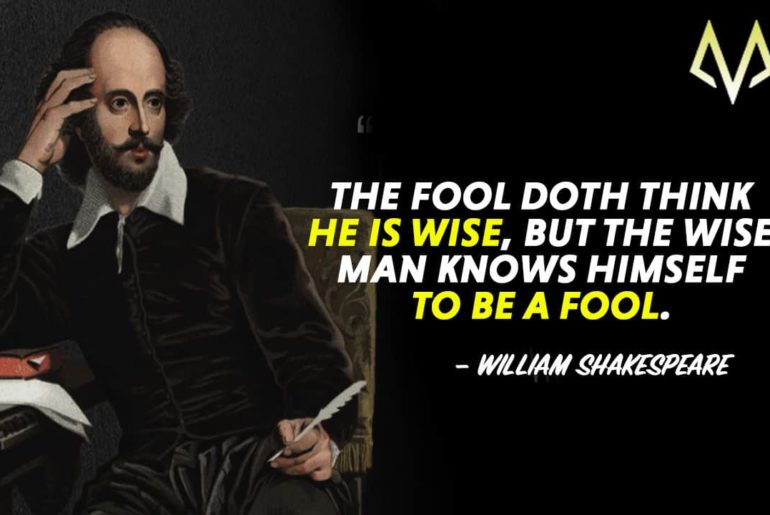
I assume that only some can recognize the name “Bard of Avon” of the great poet, playwright, actor “William Shakespeare”. The name “Bard of Avon” was given to him in recognition of his stature as great poet and the unofficial national poet of England. Many of us might have known him by his famous plays, poems and Sonnet. But it is not necessary that we all know about him and his life.
Speaking of the great person, the life of Shakespeare has a fair number of facts, but on these facts the industry of commentators has constructed an additional mass of great magnitude and complexity. His birthdate was not clear but from the church records, he was baptized in the parish church at Stratford-on-Avon on April 26, 1564. He may be born on April 23 which happens also to be his death date in 1616. His father, John Shakespeare was a burgess of the town and also done the occupations of a butcher, glover and a farmer. He attended the grammar school of the town. Ben Johnson himself a competent scholar affirmed that Shakespeare knew “small latin and less Greek”. A bond dated November 28, 1528 shows clear evidence of Shakespeare’s marriage on that date to a certain “Anne Hathway of Stratford”. He was only eighteen when he was married and his bride was eight years older than him.
In 1584, Shakespeare left his native town. The reason is unknown. But the most popular explanation which appeared after his death was that he as accused of hunting on the estate of local magnate, Sir Thomas Lucy and he fled to escape the consequences. Shakespeare the reappears as a rising star and again disappeared after 1592. During the time he is said to wandering the country and finally coming to London. In London he has done may jobs like holding horses at the stage door. On the face of them such tales are not improbable, but they grew up when the dramatist had become a half mythical figure. It is also said that he may have spent much of the time in the Low countries on service with the armies of the Earl of Leicester.
In 1592, Robert Greene in a carping book called A Groatsworth of Wit, mentions in his own conceit the only Shakescene in a country”. In 1595, his name appears on the payroll of the Lord Chamberlain’s company of actors. His chief function was to write dramas for his company and the fruit of such labour was his plays.
About 1610, Shakespeare left London for Stratford, where he stayed at new place, a house that he had bought in 1597. He may have written his plays there, but it is likely that his connection with his company of actors ceased when the globe theatre was burned down during a performance of Henry VIII in 1613. His will, executed document is dated March 25, 1616. His death occurred a month later April 23.
Shakespeare’s poetical work is worthily represented in the numerous lyrics that are scattered through the plays. His two long narrative poems “Venus and Adonis” ( 1593) were the oldest of his writings. The sonnets themselves consist of 154 numbers which are all composed in the English form of the sonnet.
His plays that are usually accepted as beind Shakespeare’s almost endless discussion has risen. For example, A midsummer night’s dream, Macbeth, Twelfth night, Love’s Labour’s Lost etc.,
He more likely lived the life of a common man and so.
Undoubtedly, reading books is the finest way towards personal growth and is considered to be one of the most intellectually beneficial activities. People who are in the habit of reading books are usually the ones who are considered to be among the most literate and learned class of society.
Different people have different tastes in reading. They prefer reading books that suit their personalities, ambitions, and likings. Some like to read about fiction, some about politics, some about business, some about romance, some about spirituality, and some like to dive deep into the historical past. Despite the diversity in the reading habits of people, many avid book readers love to read books on the subject of “self-help,” too.
The popularity of self-help books is not a vogue. There is a proper justifiable reason behind this popularity, which is that self-help books can and have transformed the lives, or at least some aspects of the lives, of millions of people around the globe.
There are several benefits of reading self-help books. The prime benefit of reading self-help books is that the experience that it provides puts the reader on a path to read, practice the strategies learned, and make improvements in their lives without asking for other’s help.
Self-help books charge you with positive energy. And not only you feel that energy within yourself, but you also carry and start spreading it all around. You create a positive atmosphere around yourself and charge up the environment wherever you go. And we all know that a more focused and energized worker is always more productive and is appreciated everywhere. In fact, several businesses provide their employees with complimentary self-help books or keep those books in public areas of the office, like the canteen or the lounge. And of course, they ain’t doing this in vain, they do have a point.
Moreover, Reading self-help books can also build a higher sense of confidence in a person – over time that in turn can help a person to get out of almost any challenging situation without seeking other’s help. Another important benefit of self-help books is that it strengthens the reader by developing a mentally tough attitude of relying on oneself. It instills the skill of addressing and untying the knots of day-to-day life.
In a nutshell, the limitless advantages of reading self-help books cannot all be summarized in a short article. However, reading and benefiting from self-help books is all about learning, applying, and taking continuous swift action. It is always encouraged to get used to the habit of reading, particularly self-help books, in order to experience the true transforming and life-enriching benefits of books. Hopefully, as a result of doing so, you too will be able to realize your dream by reaching your greatest and most fulfilling potential.
Everyone who writes on a regular basis is familiar with a little situation called “writer’s block”. It is a phase where the writers are unable to find inspiration for a new article or even have a hard time keep the old one going. There is a creative lull for a period of time and there are absolutely no new ideas. This time is very frustrating for a writer because the wanders but no inspiration can be found anywhere.
Writer’s block is not necessarily caused due to lack of writing skills or lack of commitment. There are very many reasons like stress or burnout , maybe some health issues or family issues, there could be numerous other reasons. For novelists, this situation arises when they lose touch with their story or the characters in it. If there are too many distractions around it is natural for a writer to lose his writing spree and give into those distractions. One of the more complicated reasons could be that the writer is afraid to fail. Fear of failure can lead to overthinking which finally derails the writer from their main goal. Another could be the pressure of being a perfectionist and not being satisfied with your own ideas. In all of these situations the writers could still be motivated but there would be zero creativity.
If, as a writer, you are facing a writer’s block, here are some ideas that would help you get your creative juices flowing. 1.CHANGE YOUR ENVIRONMENT:If you are cooped up in one corner of your office all day everyday trying to think, your brain will definitely go into a dead end. It is very important that you change your surroundings every once in a while. New place, new ideas and as a bonus it would be very refreshing for your brain. 2. TAKE A NAP: Sleep is the ultimate solution to majority of our problems. Lack of rest can cause unwanted stress and could ultimately lead to burnout. Even for a writer it is necessary to take 7-8 hours of sleep to reduce stress and improve the mood. Not only that it also keeps you mentally healthy and you perform better. 3. WRITE ANYTHING: An accomplished writer can make sense out of randomly written sentences too. So, if you are facing your share of writer’s block just write anything that comes to your mind. Start with writing random words and soon the words with start making sense and connecting together and voila you have your new idea. 4. DO SOMETHING RECREATIONAL: Sometimes to remove a block you need to get away from the thing all together. Take some time off and do something else than writing. Take out some paint and start painting random pictures, go for a walk, go for a hike, just divert your mind and when you are done you’ll have a whole new perspective on things. Your brain will work faster and you will come out of your block in no time. 5. TALK IT OUT: Communication is the best way to let things out. Call an old friend or talk to your family. Maybe the conversation will strike up some new ideas or will help you get that load off your mind and heart. 6. DON’T PUT TOO MUCH PRESSURE ON YOURSELF: Everyone wants to succeed but putting too much pressure on yourself won’t get you anywhere. Keep your perfectionist side aside and just let the ideas flow.
Just like rejection or failure is a part of your success, writer’s block is also just a phase and not something that will stick with you permanently. Don’t stop writing completely because your are facing a block. Keep going. You never know when the inspiration will knock on your door again. Be patient, remember your ideas are there somewhere in your mind just try some of the techniques mentioned above and the block will disappear in no time and the ideas will start flowing once again.
A diet is best described as a fixed plan of eating and drinking where the type and amount of food are planned out in order to achieve weight loss or follow a particular lifestyle. There are thousands of diets. Some are for losing weight, while others are for gaining weight, lowering cholesterol, living a long and healthful life, and many other reasons.
Ketogenic Diet
The ketogenic diet has been utilized for quite a long time as a treatment for epilepsy and is likewise being investigated for different employments. It includes decreasing starch admission and increasing fat admission. It sounds in opposition to good judgment, however it permits the body to consume fat as a fuel, instead of sugars. Solid fats, for example, those in avocados, coconuts, Brazil nuts, seeds, slick fish, and olive oil are generously added to the eating routine to keep up a general accentuation on fat. The eating regimen causes the separate of fat stores for fuel and makes substances called ketones through a cycle called ketosis. This eating regimen has hazards incorporating ketoacidosis for individuals with type 1 diabetes, be that as it may, and may bring about diabetic trance state and demise. Albeit most investigations are 2 years or less, there is some encouraging exploration according to diabetes the executives, metabolic wellbeing, weight reduction, and body sythesis change.
Vegetarian Diet
There are various types of vegetarian: lacto vegetarian, fruitarian vegetarian, lacto-ovo vegetarian, living food diet vegetarian, ovo vegetarian, pesco vegetarian, and semi vegetarian. The majority of vegetarians are lacto-ovo vegetarians, in other words, they do not eat animal-based foods, except for eggs, dairy, and honey. Studies over the last few years have shown that vegetarians have a lower body weight, suffer less from diseases, and typically have a longer life expectancy than people who eat meat.
Raw Food Diet
The crude food/Raw food diet, or crude foodism, includes burning-through nourishments and beverages that are not handled, are totally plant-based, and preferably natural. Raw foodists accept that in any event 75% of an individual’s food admission should comprise of uncooked food. A critical number of crude foodists are additionally vegetarians and don’t eat or drink whatever is creature based. There are four fundamental sorts of crude foodists: Raw veggie lovers, Raw vegetarians, Raw omnivores, and Raw carnivores.
Zone Diet
The Zone diet aims for a nutritional balance of 40 percent carbohydrates, 30 percent fats, and 30 percent protein in each meal. The focus is also on controlling insulin levels, which may result in more successful weight loss and body weight control than other approaches. The Zone diet encourages the consumption of high-quality carbohydrates – unrefined carbohydrates, and fats, such as olive oil, avocado, and nuts.
Vegan Diet
Veganism is to a greater degree a lifestyle and a way of thinking than an eating regimen. A veggie lover doesn’t eat whatever is creature based, including eggs, dairy, and nectar. Vegetarians don’t ordinarily embrace veganism only for wellbeing reasons, yet additionally for ecological, moral, and ethical reasons.
Vegans accept that cutting edge concentrated cultivating techniques are awful for our current circumstance and impractical in the long haul. If everyone ate plant-based food, the climate would profit, creatures would endure less, more food would be delivered, and individuals would for the most part appreciate better physical and psychological well-being.
Mediterranean Diet
The Mediterranean eating routine is Southern European, and all the more explicitly centers around the wholesome propensities for the individuals of Crete, Greece, and southern Italy. These days, Spain, southern France, and Portugal are likewise included, despite the fact that Portugal doesn’t contact the Mediterranean Sea. The accentuation is on bunches of plant nourishments, new natural products as pastry, beans, nuts, entire grains, seeds, olive oil as the primary wellspring of dietary fats. Cheddar and yogurts are the fundamental dairy nourishments. The eating routine additionally incorporates moderate measures of fish and poultry, up to around four eggs for each week, limited quantities of red meat, and low to direct measures of wine. Up to 33% of the Mediterranean eating regimen comprises of fat, with immersed fats not surpassing 8 percent of calorie consumption. The Mediterranean eating routine is the most widely contemplated diet to date, with dependable examination supporting its utilization for improving an individual’s personal satisfaction and bringing down illness hazard.
Offices around the country are finally opening back up. According to census.gov, more than a third of Americans are still working from home , but the number of people getting back into their daily commutes-and their work clothes — is growing every day. In the APA’s Stress in America™ poll conducted in February 2021, 42 percent of Americans reported undesired weight gain during COVID-19 quarantines, lockdowns and work-from-home time. Their average weight gain: 29 pounds. To get back into a healthier routine once you head into the office, Courtney McCormick, registered dietitian and manager of clinical research & nutrition at Nutrisystem, offers these simple tips. Pile on the Produce: Even the odds and help yourself stay on track when you clock in. Load up on non-starchy vegetables such as cucumbers, peppers, carrots and more each day because they’re loaded with vitamins, minerals and fiber, but they’re low on calories. The fiber helps you feel full without filling out. Pack Satisfying Snacks: Healthy snacks may be the most important option you can give yourself at the office. When you start to feel that 3 p.m. slump, it can be so easy to grab one of those coworker-brought bagels or hit the vending machine. Being prepared with satisfying options can help you make food decisions to meet your health goals. Make Meals Ahead: Meal prepping ahead of time can help you stay on track when it’s time to eat at the office. Pre-portioned meals such as those from Nutrisystem or power bowl recipes are a great healthy lunch meal prep option because they are easy to grab and go, yet heartier than a salad. You can also whip up several servings of chicken in the slow cooker or on the grill to pair with steamed veggies all week long. Stay in the Know: Once you’ve got your healthy meal prep underway, arm yourself with information. When a coworker invites you to lunch or happy hour, you’re going to want to be there-it’s the first one in more than a year! So give yourself the info to concentrate on the experience without stressing about your order. Look at the menu online before you head out so you can see which options are best for your healthy lifestyle. To add to your efforts, don’t forget to stay hydrated and active during the workday. Pack a water bottle to refill during the day and plan to meet a co-worker for a lunchtime walk.
” The day I understood everything, was the day I stopped trying to figure everything out. The day I knew peace was the day I let everything go. ” This is a beautiful quote by C. Joybell C. Peace has different meaning for different people. Some consider peace as a way of detaching from the world, while some believe it to be the way to find themselves. I personally think peace is happiness.
Peace is the most satisfying feeling in the whole world. It is when you just don’t care anymore. When you stop thinking about anything over and over again. When you are not bothered by anything anymore. When you don’t care what other people think about you. When you stop having expectations about something or maybe from someone. When you aren’t expected to do anything. When you don’t have to fight anymore. When you are patient. When you just don’t trust anyone but yourself.
Peace is eternal. If you find it once truly, it will stay with you forever. If it’s really peace that has come your way, it will never go away. Peace is when you are standing in the open and cold wind blows through your hair. You don’t do anything or think about anything. Then you close your eyes and whatever you see first, any thing or anyone or any feeling, that is peace.
Peace is when all your regrets are forgotten. All the mistakes forgiven. All the problems solved. The self doubts cleared. The pressure gone. The hurt healed. The sadness removed. The bad deeds neglected. The guilt ignored. The desperation turned into patience. The anger calmed. The thoughts organized and the mind cleared. That is peace. You feel it, you sense it.
Peace is the most supreme feeling anyone can have. It is greater than happiness. Even greater than the hurt. It is endless while others are temporary. Most difficult to find but the most valuable, most eternal and satisfying emotion. It subsides the anger, it heals the most dreaded hurt and fills the heart with calmness. It’s the ultimate goal of someone’s life. To not care, to not be angry, to not be hurt by betrayal, to be happy and content, to feel nothing but peace, this is life.
Search for peace and when you find it, claim it yours and never let go. Peace makes the soul last forever and ever. The crave for peace is undeniable when you are on the verge of ending everything. When you just can’t tolerate anymore, you desire the sense of calmness, the inner peace. The want doesn’t subside easily. It never ends until you do find your precious peace. Peace makes you wholesome.
The power of peace and calm is unbeatable. The crazy hunger to find peace turns into anger and that anger flows out in the form of tears. The strongest, most desired and the most overwhelming feeling is peace. It consumes you from inside out. It grabs your fear of being lost, throws it away and puts you back on the track of your life. When you have it, you will know the true meaning of peace.
New job creation is a critical endeavour that has a significant economic impact. For most countries, the economic crisis has morphed into a social crisis, resulting in a high rate of unemployment. Unemployment is a condition in which people have the aptitude and ability to work and earn money but are unable to do so due to a lack of suitable employment opportunities. It is also known as “involuntary inactivity.” Unemployment does not imply that there isn’t any work available. It literally means ‘lack of work.’ Unemployment can be characterized as a situation in which a substantial number of able-bodied people of working age are willing to work but are unable to do so at the present wage rate. The number of persons who are unable to acquire work in relation to the available people in the labor market measures the rate of unemployment in a given country. Seasonal, Frictional, Cyclical, and Structural unemployment are the most common types of unemployment. In terms of population density, India is the world’s second largest country. The country’s unemployment rate is quite high, owing to the large number of people who are unable to find work.
TYPES OF UNEMPLOYMENT IN INDIA :
Rural Unemployment in India: India’s rural population accounts for around 70% of the total population. However, there is insufficient employment in rural areas for everyone. This can result in two types of unemployment. Unemployment and underemployment are problems that exist in the rural economy at the same time.
Frictional Unemployment: It occurs when people are unemployed for a brief period of time while looking for a new job or changing occupations. The time gap between jobs is known as frictional unemployment, also known as Search Unemployment. Frictional unemployment is referred to as voluntary unemployment because the source of unemployment is not a lack of jobs, but rather the workers’ own decision to leave in search of better chances. It exists because people move from places, jobs, and sectors where their productivity is low to places where their productivity is high, and they should be encouraged to do so.
Disguised Unemployment: This refers to the large number of rural people who are employed in agriculture in excess of what is required due to increased pressure on land. Uncovering hidden unemployment is most common in the unorganized sector or in agriculture.
Seasonal Unemployment: This word is self-explanatory. Seasonal unemployment is common in industries including construction, agriculture, canning, and tourism, where the weather or the calendar dictates when production can be carried out or demand levels. It is common to utilize seasonally adjusted unemployment figures for measuring the business cycle and the strength of demand in the labor market. Underemployment is a word that can be used to describe this situation. That state of unemployment in which people are unemployed for part of the year, such as in India, where laborers are rarely employed all year.
Structural Unemployment: When a country’s economic structure changes dramatically, structural unemployment occurs. Normally, these changes have an impact on the demand for or supply of a production factor. In other words, structural unemployment is a result of global technological and economic development in every field. This type of unemployment occurs when a worker’s abilities do not meet the market’s job availability. Many people in India do not acquire occupations that match their talents or do not get positions owing to a lack of essential skills, and because of their low education level, it is critical to offer them with relevant training.
Technological Unemployment: Technological unemployment develops as a result of specific changes in production procedures that do not necessitate a large amount of manual labor. Modern technology has overtaken the need for and significance of physical labor in recent years, resulting in technical unemployment. According to World Bank data from 2016, the proportion of jobs in India threatened by automation increased by 69 percent year over year.
Causes of Unemployment in India:
The Joint Family System
Specialization in the Workplace
Low Rates of Economic Growth
Mobility of the workforce
Norms of Conduct
Cottage and small-scale industries are on the decline.
The full title of this poem is “Lines Composed a Few Miles above Tintern Abbey, on Revisiting the Banks of the Wye during a Tour July 13th, 1798”. It opens with the speaker’s declaration that five years have passed since he last visited this location, encountered its tranquil, rustic scenery, and heart the murmuring waters of the river. He recites the objects he sees again, and describes their effect upon him. The speaker then describes how his memory of these “beauteous forms” has worked upon him in his absence from them: when he was alone, or in crowded towns and cities, they provided him with “sensations sweet,/ Felt in the blood, and felt along the heart” The memory of the woods and cottages offered “tranquil restoration” to his mind, and even affected him when he was not aware of the memory, influencing his deeds of kindness and love. He further credits the memory of the scene with offering him access to that mental and spiritual state in which the burden of the world is lightened, in which he becomes a “living soul” with a view into “the life of things.”
Even in the present moment, the memory of his past experiences in these surroundings floats over his present view of them, and he feels bittersweet joy in reviving them. He thinks happily too, that his present experience will provide many happy memories for future years. The speaker acknowledges that is different now from how he was in those long-ago times. When as a boy he “bounded o’er the mountains” and through the streams. That time is now past, he says, but he does not mourn it, for though he cannot resume his old relationship with nature, he has been amply compensated by a new set of more mature gifts. He can now sense the presence of something far more subtle, powerful, and fundamental in the light of the setting suns, the ocean, the air itself, and even in the mind of man, and for that he still loves nature, for they anchor his purest thoughts and guard the heart and soul of his “moral being.”
The speaker says that even if he did not feel this way or understand these things, he would still be in good spirits on this day, for he is company of his “dear, dear sister,” who is also his “dear, dear friend,” and in whose voice and manner he observes his former self. Nature’s power over the mind that seeks her out is such that it renders that mind impervious to “evil tongues.” “rash judgements,” and “the sneers of selfish men,” instilling instead a “cheerful faith” that the world is full of blessings. The speaker then encourages the moon to shine upon his sister, and the wind to blow against her, and he says to her that in later years, when she is sad or fearful, the memory of this experience will help to heal her. And if he himself is dead, she can remember the love with which he worshipped nature. In that case, too, she will remember what the woods meant to the speaker, the way in which, after so many years of absence, they became more dear to him-both for themselves and for the fact that she is in them.
Sridhar Vembu is a CEO and founder of Zoho corporation. According to fobes article he is the 59th richest Indian in the world. He was awarded India’s fourth highest civilian award the Padma Shri, in 2021
Vembu was born in 1968 in a Tamil family of farmers from a village in Thanjavur district, Tamil Nadu.
He graduated with a bachelors degree in Electrical engineering from the Indian Institute of Technology (IIT), Madras in 1989 and earned his MS and PhD degrees from Princeton University in New Jersey.
ZOHO:
In 1996 combined with his brother, he started a software development house for network equipment providers called AdventNet. Later the company was renamed as ZOHO corporation in 2009. The name Zoho was a result of something along the lines of a “small office Home office”
To get jobs in Zoho no marks is required and ever a degree is not required. A person with good knowledge is enough for Zoho. After completing class 12, the computer science can appeal for selection process of Zoho. Once they selected, Zoho provides training to it’s employees.
Video gaming has become a popular activity for people of all ages. Many children and adolescents spend large amounts of time playing them, although no one should have more than two hours total of screen time in a day. Video gaming is a multi-billion dollar industry, bringing in more money than movies and DVDs combined. Video games have become very sophisticated and realistic and some games connect to the Internet, which allow children and adolescents to play online with unknown adults and peers.
While some games have educational content, many of the most popular games emphasize negative themes. They promote the killing of people or animals, the use and abuse of drugs and alcohol, criminal behavior, disrespect for the law and other authority figures, sexual exploitation and violence towards women, racial, sexual and gender stereotypes, and foul language obscenities and obscene gestures. Examples of video games not acceptable for children because they have these themes include the popular ones Grand Theft Auto, Call of Duty, and Mortal Kombat.
There is growing research on the effects of video games on children. Studies of children exposed to violence have shown that they can become immune or numb to the horror of violence, imitate the violence they see and show more aggressive behavior with greater exposure to violence. Studies have also shown that the more realistic and repeated the exposure to violence, the greater the impact on children. Children and adolescents can become overly involved and even obsessed with video games, leading to poor social skills, time away from family time, school work and other hobbies, lower grades, reading less, exercising less, becoming overweight, and having aggressive thoughts and behaviors.
So how can you, as a parent, protect your child against these types of video games? First, you can check the Entertainment Software Rating Board ratings to learn about the game’s content. Every video game will actually have a label on the front to tell you what type of game it is. If it says M for mature, it’s not for your child.
Play the video games with your child to experience the game’s content and know exactly what your child is playing. Set clear rules about the game’s content for both playing time in and outside of your home. Strongly warn your children about the potential serious dangers of Internet contacts and relationships while playing online. There are a lot of online predators that will look for children specifically playing video games and this can lead to them meeting in real life. Finally, remember that you are a role model for your child. Make sure the video games you play as an adult are ones that you would want your child to play.
If you are concerned as a parent that your child is spending too much time playing video games or your child starts becoming obsessed with aggressive or violent video games, make sure you set some limits. You’re not allowed to play games for one hour after all the homework is done and encourage your child to participate in other activities so they’re not drawn to those video games. By being aware of what games are out there, you can help your child make appropriate decisions about gaming no matter where your child plays.
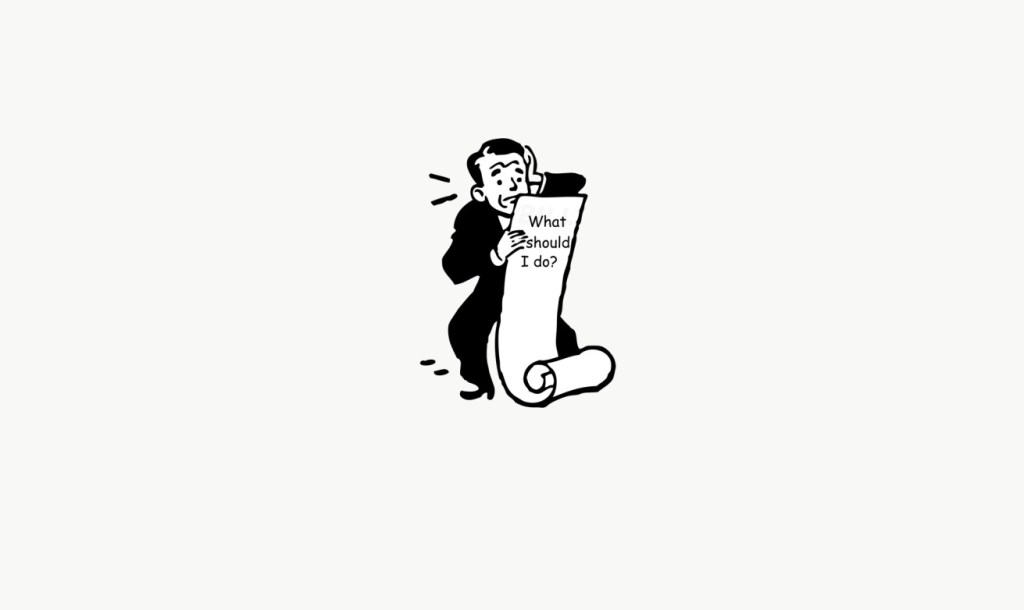
Life is complex. One day you’re happy, working on your daily tasks, and the next day you wake up, thinking: “What the fuck should I do with my life?”
Am I right? We’ve all been there. When one of my readers responded to an article last week, I asked her: “How’s it going?”
She said: “Am doing well. Been interesting times figuring out which direction to go to next in my life journey.”
Last week I talked to a friend who was in the same position. And everyone will face the same challenge one way or the other over the course of a long career.
I’ve been there many times as well. No one is immune to being confused. Let’s face it — there are literally a million things you can do with your life.
Great health, wealth, and happiness don’t happen by themselves. If you want good things to happen, you must take massive action.
But what type of action? What should you do?
I want to share 2 strategies with you that I’ve personally used in the past to figure out my next big move.
1. Burn Your Bridges
“Education is all a matter of building bridges.” — Ralph Ellison
Look, I can’t tell you to want to do with your life. No one should decide that other than you.
But I can tell you about ways that help you to make a decision. People are lazy by nature. If it was up to us, we would protect the status quo, sit at home, and eat cookies all day.
We must realize that without a reason, we will never change.
“But what if I don’t have a reason?”
Force a reason.
I always wanted to live and work abroad for a while. And year after year went by without me taking action.
So in 2014, I got fed up with my indecisiveness. I canceled the lease of my apartment, handed over all my responsibilities at our family business, and FORCED myself to do something.
Lo and behold, I did. A few weeks later I was on my way to London with an awesome job offer in my pocket from an IT research firm.
You can’t expect good things to happen when you’re living a cushy life. You need a spark. Sometimes that happens from the outside (a family loss, being fired, dumped, etc).
But if nothing happens, you have to create the spark by burning your bridges.
Instead of wanting to change, you must change.
You can also burn the bridges in your mind. To grow, we must say goodbye to old beliefs.
2. Do Nothing
“Not all those who wander are lost.” ― J.R.R. Tolkien
I don’t mean ‘eat cookies all day.’ No, I mean don’t try to force anything. It’s the exact opposite strategy of burning your bridges.
“Darius, you’re contradicting yourself.”
So? Life is full of contradictions. Get used to it.
Look at your life. Have you tried burning your bridges? Didn’t work out? Try a different strategy.
I never get why people get all hung up on opposing strategies. Life is dynamic and requires you to adapt all the time.
When I came back to The Netherlands after working abroad for 1,5 years, I didn’t exactly know what I wanted to do. I still had my business, so I didn’t have to worry about money.
But I also wasn’t satisfied. I wanted to do something that mattered. But because I didn’t know what, I just didn’t force anything. I knew I needed a different strategy this time.
So I did my job, spent time with my friends and family, worked out a lot, and just enjoyed my life.
And after six months or so, I figured it out. I can tell you how I did it, but that’s not going to help you because you have to figure out how YOU are going to do it.
And that’s the most important thing about figuring out your next move. It’s called ‘figuring it out’ for a reason. It’s not called ‘here’s your life path served on a platter.’
Just be okay with that. It’s about the journey anyway. You better enjoy every step along the way. Especially the difficult ones.
If you want to live a happy life and achieve all your goals, there’s one essential trait you can’t go without: Being kind.
Franklin D. Roosevelt put it well: “Human kindness has never weakened the stamina or softened the fiber of a free people. A nation does not have to be cruel to be tough.”
And yet, cruel people are everywhere. You see it in the workplace, relationships, families, and on the street.
One thing I find is that many of us mistake kindness for weakness. But who says you can’t be kind and firm and the same time? Many think it’s one or the other.
When we study successful people, billionaires, and athletes, we always talk about their work ethic, creativity, and leadership. Those things are essential, and we can learn a lot from them. But one thing that gets less attention is kindness.
That’s why this article and the following observations are about kindness. Kindness has the ability, more than anything else, to improve your life instantly.
You Don’t Have To Prove Yourself
Yes, you’re awesome. But you don’t have to take every opportunity to prove it to others.
Every time you correct someone, try to make a point when people already get it, or behave in another annoying way, you’re engaging in a pissing contest.
Go ahead and piss all you want. No one’s going to like you any better other than yourself. And we all know that ‘me, myself, and I’ is not a good strategy.
Show Humility
You might have achieved a lot in your life, but don’t let it get to your head. Even if you’re at the top of the world, there’s no reason to rub it in other people’s faces. Be humble. Be kind.
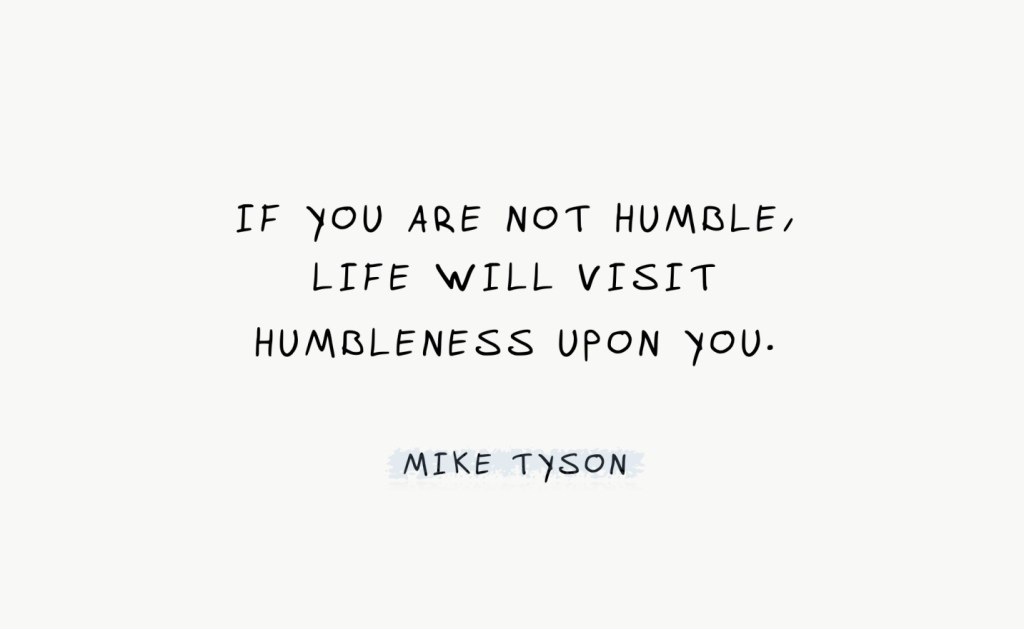
Mike Tyson put it best: “If you are not humble, life will visit humbleness upon you.”
You Don’t Always Have To Share Your Opinion
People always want to give their views about everything. And that’s cool, there’s nothing wrong with sharing your thoughts.
But most of the time it’s unwanted. Every time you say “I would do this, or I would say that”, stop for a minute and think whether you’re actually helping the other person or whether you are stroking your ego.
It’s fine to share how you would handle something, but the truth is: They are not you. So stop giving advice that no one is waiting for.
People are different, and that means everyone looks at the world differently. Recognize that instead of trying to change that. Just be there for people.
Be Open To Others
We were all born naked, crying, and pooping. If someone looks different, talks different, has less money, or whatever, it’s not a reason to judge them. Instead, be open to them.
It’s unfair to not give people a chance before they even try.
Don’t Take Everything Personally
We get offended too quickly. We say things like: “She didn’t call me back.” “He didn’t say thank you.”
Every time you say that he or she should have done this or that, you’re taking things personally.
Have you ever stopped for a second, and thought that the other person maybe didn’t do it to hurt your feelings? They’re only people—like you.
Understand That You’re Not The Centre Of The Universe
Let’s be honest, we only care about ourselves. But that doesn’t mean the world revolves around us.
We have a tendency to make everything about ourselves. In conflicts, we say things like: “How is that my fault?”
Well, it’s not your fault. Why do you even think that? Oh wait, you think the world is about you — that’s why.
Life is not a zero-sum game. It’s not you against the world. Work together and find a solution. That’s the kind thing to do.
Don’t Criticize What You Can’t Understand
Bob Dylan said that in 1964. What has changed? Not much: People still criticize the things they don’t understand.
I get it — criticism can be good. But most of the time it’s pointless. Because not everything is for everyone. Some people don’t get you, and they probably never will. And that’s fine.
Criticism is only good if it actually helps someone or some cause. Often, it does the opposite. It divides people instead of bringing them together.
If you don’t understand something — try. That’s all people expect from you, just try to be kind.
Show Compassion
We all have our own challenges. To you, someone else’s problems might seem like nothing. But sometimes we stop seeing that other people struggle.
If you can’t see that it’s not easy for people, you’re not compassionate. Kindness means empathy for all — even if you can’t relate to it.
Don’t Hold A Grudge
Let’s say that someone does something unpleasant to you. Or maybe someone says something hurtful. Is that person now a bad person for ever?
Do you see how stupid that sounds? Get over yourself and forgive people. Look ahead and realize that every day is a new day.
Show Interest In Others
People are so falsely interested in each other, it’s mindboggling. Many people are only interested in others for one reason: Comparing themselves.
Why else would you always check other people’s Facebook or LinkedIn? Or ask someone, who’s down, how they are? Some people use others as benchmarks. There’s no kindness in that.
Real interest takes real questions. If you truly care about others, you care about what’s going on in other people’s lives.
We always try to think in “realistic” terms about everything:
“It can’t be done.”
“What? Do you want to build an airplane? You’re crazy.”
“You’ll never make it.”
“Everyone fails and so will you.”
“1,000 songs in your pocket? You must be kidding, right?”
“An electrical car with a range of 300 miles? What’s next? A time machine?”
“You want to be an artist? It’s safer to get a job.”
“Why would you travel the world?”
What does it take when everyone tells you that you’re wrong? Delusion. At least, a little of it.
Everything that is not ordinary is crazy. Well, that’s what people tell you.
And if you don’t want to live an ordinary life, you have to be stubborn and stupid. Because it’s normal to live an ordinary life. That doesn’t take any courage.
You don’t need guts to get a normal job, buy a house, and do the usual stuff.
Most people are realistic. And you know what, they’re right. You should be normal, it’s the right thing to do.
It’s not realistic to be the first one to build an airplane
It’s not realistic to travel the world and earn money
It’s not realistic to build an electric car
It’s not realistic to live your dream
It’s not realistic to write a novel
It’s not realistic to make art
But what’s the fun of living a life when you know the outcome already? If you never try, you never have to deal with the hurt of failure—I’ll gives you that.
“Yeah, but an extraordinary life is not for everybody. I have bills to pay. I’m not lucky.”
I realize that you have shit going on in your life. But doesn’t everybody?
I’ve never met a ‘perfect’ person. Have you?
Rich people have problems. Poor people have problems.
But is that a reason to not do something? Life is also not a contest of “my problems are worse than yours.” If it’s the attention that you want, get a dog.
THERE IS ALWAYS A REASON TO NOT LIVE THE LIFE YOU WANT.
The truth is: You’re trying to be realistic.
And I’m telling you: DON’T. Think outside the box. Think of flying cars. Unconventional living. Space travel. Whatever.
Be crazy, weird, delusional, out of your mind, or whatever term people use for not ordinary. Do extraordinary things.
“People do not decide to become extraordinary. They decide to accomplish extraordinary things.” —Sir Edmund Hillary
Because once you decide to be realistic, your life will play out like a movie you’ve seen a dozen times. Is it still worth it to sit through it? Yeah, sure. But it’s not extraordinary.
Next time people call you crazy or think you’re weird, just realize that you’re on the right path. It’s not a reason to stop, it’s every reason to keep going.

















 Eduindex
You must be logged in to post a comment.