Gender equality can often be achieved just by holding everyone to the same standard. The problem, as highlighted by the evidence reviewed above, is the irrational gender bias that women and girls are routinely subjected to.
Objective of gender equality is a society in which women and men enjoy the same opportunities, rights and obligations in all spheres of life.
Here are some of the steps to achieve gender equality in our life:
1.Stop child marriage: If we want girls to complete education we have to end child marriage.
2.Empower mothers: When mothers are educated and empowered to make choices in their lives, they enable their daughters to go to school.
3.Work together: Between 1999 and 2010, the ratio of girls in secondary school fell from 83 to 82 girls for every 100 boys at the secondary level from 67 to 63 girls for every 100 boys at the tertiary level.
4.Encourage women into non-traditional vocations: To make the long-lasting change in women’s life, support women in non-traditional jobs.
5.Raise aspirations of girls and their parents: We need to give girls images and role models that expand their
dreams.
6.Give proper value to women’s work: The unpaid work women and girls do provide the foundation for the global economy.
7.Get women into power: A proven way to overcome many systematic barriers to a women’s success has been increased participation by women in local, regional and national legislation as empowered change agents.
8.Let girls use mobile phones: The majority of girls do not have access to using basic technology such as mobile phones and computers because of infrastructure related challenges and economic reasons.
9.Talk to women and girls: Gender equality in every realm is that women and girls voices are too often excluded from global and national decision making.
In this way we can help women and girls to achieve gender equality.
If you are a student and in search for some best internships in India (Paid & unpaid), then here’s the list of the same. From big MNCs to Government, Indian students have a lot of Internship opportunity. Especially, undergraduate students in India lookout for Summer internships.
Companies like Microsoft, Google, Cadbury, Facebook, Intel, Siemens provides the best learnings. NITI Aayog, AICTE, Lok Sabha and some other Govt departments also call for Internship training.
1.AICTE Internship:
The All India Council for Technical Education (AICTE), invites applications from young and bright candidates for the appointment of part-time paid Interns. The All India Council for Technical Education is the statutory body and a national-level council for technical education, under the Department of Higher Education, Ministry of Human Resource Development.
2. NITI Aayog Internship Scheme:
NITI Aayog, Government of India invites students pursuing Under Graduate/Graduate/Post Graduate degrees or who are enrolled as Research Scholars in recognised Universities/Institutions to apply for internships. Eligibility: Under Graduate/Graduate/Post Graduate degrees or who are enrolled as Research Scholars in recognised Universities/Institutions.
Duration: The internship period shall be at least six weeks but not exceeding three months. Stipend: No stipend shall be paid for this internship.
3. Google Summer Internship:
As a Software Engineering Intern, you will work on our core products and services as well as those who support critical functions of our engineering operations. Depending on your background and experience, you will be working in one of the following areas: Product and Systems Development and Engineering Productivity.
Eligibility: Currently pursuing a BS, MS or PhD degree in Computer Science or related technical field. Experience in software development in one or more general-purpose programming languages. Ability to speak and write in English fluently and idiomatically.
Internship for 2021 is closed, but interested one can search for the same in July- Aug every year.
4. UNESCO Internship for Graduate Students:
UNESCO invites applications for internships in the following areas: Natural Sciences Sector, Culture Sector, Communication and Information.
Eligibility: Completed university studies (bachelor’s degree or equivalent) at a university or equivalent institution prior to commencing the assignment; Enrolled in a graduate programme (second university degree or Master’s degree or equivalent, or higher), at the time of application; or Have graduated with a university degree (first or second degree as defined above), and must start the internship within one-year of graduation.
Duration of contract: From 1 to 6 months
Stipend: UNESCO does not remunerate interns.
5. United Nations Internship Opportunity:
United Nations, New Delhi invites applications for Internships (Public Information) for the year 2020. This internship is located in the United Nations Information Centre in New Delhi, India. UN interns work full-time, five days per week (35 hours) under the supervision of a staff member in the department or office to which they are assigned.
Eligibility: Requirements: (a) be enrolled in a graduate school programme (second university degree or equivalent, or higher); (b) be enrolled in the final academic year of a first university degree programme (minimum Bachelor’s level or equivalent); or (c) have graduated with a university degree (as defined above)
Stipend: The internship is UNPAID.
6. Internship at Paytm:
Paytm are always looking for innovative interns who have a strong passion for understanding people, their needs, their problems and their aspirations. The internship offers you an opportunity to work on various digital products and services such as Wallet, Payments Bank, Movies & Entertainment, Travel, Insurance, Shopping, Chat and many more.
Duration: 8 weeks – 16 weeks
7. Asian Development Bank:
The Internship Program is a project-oriented learning opportunity for graduate students to gain experience through research assignments based on ADB’s current operational needs.
Eligibility: Master’s- or PhD-level program at a school in one of the ADB member nations, both prior to and after the internship assignment;
The application period for the 2020 Internship Program: 1st batch: 1 August to 30 September 2020 and On board: January 2021 onwards 2nd batch: 1 December 2020 to 31 January 2021 and On board: June 2021 onwards.
8. Amazon Internship (Software Development Engineer):
The SDE Intern experience is unique at Amazon. You get to rub shoulders with outstanding software engineers and researchers with industry-leading technical abilities, solving challenging engineering problems that affect millions of Amazon customers.
Eligibility: Programming experience with at least one modern language such as Java, C++, or C# including object-oriented design. Self-driven, quick starters, passionate problem solvers with a curious mind who loves solving very complex, very challenging real-world problems.
9. Internships- Greenpeace India:
Greenpeace India provides opportunities for students from top educational institutions to undertake an internship at their offices in Delhi, Mumbai, Bangalore or Patna.
Eligibility: The applicant should be in his/her 2rd year of study (or higher)
Duration: Interns need to commit minimum 45 days and maximum 3 months.
10. Intel Graduate Intern:
Intel, Bangalore is looking candidates for Internship Opportunity. Intel Corporation is an American multinational corporation and technology company headquartered in Santa Clara, California, in Silicon Valley.
Eligibility: Candidate should be in B.E or Masters in Electronics or Computer Science and well versed with standard Software Methodologies like software design, implementation.
Other than these mentioned companies, many more like P&G, Cisco, WWF, WII offers a great opportunity for engineering and management students. On the other hand, Lok Sabha India also invites interns every year. Whereas looking into this pandemic, many internships companies offers Online/ virtual or work from home internships to students in India.
As technology gets advanced, we as humans also get advanced and updated with all the latest techniques which we implement in our daily lives. In particular, the era in which we are all living is also known as: “The Era of Pandemic”, or “The New Normal” or famously known as the “Tech World”.
It’s a fundamental phenomenon as a Human being since civilization that, we tend to find positivity and relieves from our stress when we are in any sort of social activity. Profoundly our youngsters who usually had “Friday nights enjoying with friends” or maybe going on a long drive with loved ones or maybe just chilling around in a beach with their homies is always their favorite part. Unfortunately, the world got standstill and the world collapsed out from the deadliest pandemic ever which changed all our lives.
Living in a situation where we are restricted to go out of the house, we find social media as the best way to be socially active with our friends and loved ones who are far away from us, and in this scenario, the meetups are done through face call, Chats, video calls which are little relief in these days.
According to my personal experience: when lockdown started, then my usage for social media increased and this growth of interest for social media became my addiction in the end. Imagining a life without social media made me felt anxious and depressing whenever I got this notion. This Notion was a state of perplex and also was a phase of my life when I was frightened of my addiction.
Technology brought both Bliss and discontent into our lives, which is also a major part of concern if we look into the darker side of how it is affecting every human, especially at the time when everyone is bounded to be inside their homes.
The secret of Detoxing My Social Media Addiction :
Out of wonder, I tried an experiment of myself which brought an unexpected but successful result for controlling my Social Media addiction.
To control addiction is never an easy job, but all we can do is to strive upon ourselves and one must be having faith in themselves only then they can accomplish their goals.
Things happened with me when I quit social media for a week, here are my accomplishments :
Sometimes Fewer Interactions are good for an Individual: Living in the world of social media, every individual feels like being active to gain a lot of attention and become popular among their friends and communities. But it is always not necessary to interact with people, sometimes not using social media and less interaction is essential as an individual should spend some time with themselves and forget the glittering life of social media. As it is a form of self-care which will help us to understand ourselves by introspecting the inner us.
You are less Anxious and Live a happy life: When a person becomes an addict of SM ( social media)world they tend to feel SM as the “Second Home”, which ultimately put them into a pit of anxiety and lowers their self-confidence, Watching other people who are glorious with all types of luxurious life and wearing a fancy dress makes them feel unwanted and people try to imitate their idols by watching their profile. Sometimes people find themselves useless in front of the bigger celebs who are having all sorts of materialistic things and compare their lives with the celebs.
This itself is a sign when people belittle themselves and there comes anxiety in their minds. When we are using less SM than we live a happy life because all we are focused on is with ourselves and we won’t compare our lifestyles with others. Especially the youngsters should keep this in mind that their lives are not meant for comparing, as everyone has their own life which is beautiful in their ways.
Detoxing is a way for self-care/ self-love: As we can look that the people who usually spend more time on social media are often depressed and sad by scrolling things that are not available in their situation and environment. There are several contents which show us the negative side which provides a negative feeling to the people.
Cutting off social Media also helps to focus on yourself as it is a way of caring for yourself and caring for your health. Being addicted to anything destroys our sanity and deteriorates our health. So it’s better to avoid SM as much as possible.
Instead, explore yourself and find things that you love about yourself. “Before knowing the world, one must know about themselves as knowing the inner self is a way of understanding the world”.
We come out of the unrealistic / counterfeited world: Social Media is a world where everyone is living a fake life. There is no reality, everyone tries to show how perfect they are, but in reality, they are not even confident about themselves. So, it is better to avoid social media and switch on to the real world and live an adventurous life where the world is real and your experiences are real.
It helped me to find my real self: After Removing my social media for a week I realized one thing that I felt confident about myself as no one was there to judging me and no one passed comments, rather living in a real-world where I was the critic of my own life and explored my real self.
The time which I used to spend on SM for hours, were now invested in growing my inner self and keeping my body healthy by some workout and meditation, this helped me to focus on my personal growth.
This was the time when I explored myself and found my passion and hobbies which were realistic.
Social Media is not a bad place, but one must always remember that everything we do should be within limits. As social media is not the real world and we should know the difference between the real world and the unrealistic world.
The government constantly launches new programmes and schemes to support the citizens of India in the best way. But, every aspect has some negative relations to it. While bits of negativity can be ignored, the differences can’t be neglected when it starts shaping into a social issue. This article addresses the issue of Reservation- An Analysis as to how far is it beneficial to support the minorities via reservation quotas.
The agenda of the reservation for the backward class in the society is to provide them equal opportunities to showcase their talent and abilities. This initiative proves best when it gives a chance to the left-out people of the society to come up and earn for themselves a respectable and comfortable life.
The problem originated from the mindset of some sections of the society or some particular people who believe in supreme powers to be in the hands of only few, selected people belonging to particular religions or caste or place, etc. Clearly speaking, people who favour discrimination in the society. This leaves those people behind who are unaware of their rights and powers as a citizen of the country.
People who are in minority at a place are often in danger of being controlled by the dominant ones. This happened to be a serious problem.
Consequently, the govt. launched the mission for reservation in quotas for the poor and backward classes of the population. This has been an ever growing compulsion imposed to all institutions including the private sectors, to provide reserved seats to the disabled, poor,scheduled castes (SCs), scheduled tribes (STs), OBCs, EWS, and so on. The institutional bodies must reserve some seats/posts in their organisations for these people. To avoid fraud, people belonging to such categories are issued a certificate for the same after verification but frauds are committed even after it. It has become easy to get a certificate proving a general category person to be the one belonging to scheduled castes. What is more important to know is why do people try seizing rights of backward class that are granted to them by the govt. itself.
The reason is competition. The race is going so fast that everyone wants success, be it at others’ cost. The mindset is still. It is not changing. This is one side.
The other side says that the minority groups are being provided with a lot! Their recognition is increasing but in a negative way. Know how-
There are people belonging to backward classes also, who take advantage of situations. Such people get the reserved seats with the help of their certificates and owns the rest (this way, corruption originates from them too when they misuse their rights for self purpose…).
The reservations are provided with quotas to each backward section which they can avail without being in the competition or the race of success that everyone is running nowadays. This is the real advantage to them. They are given relaxation for marks in schools/college admissionsespecially in govt. institutions, for ranks in competitive exams, for eligibility of posts in govt. jobs, and so on. This has led to high disagreement among the ones belonging to the general category. Opportunities seem to be seized from the hands of the general people when the less competent fellows get higher positions in the work environment or even in the educational institutions.
Students work hard to reach a better place in life. Granting admissions to students with “certificates” even at lesser marks than the ones belonging to general category appears injustice. The reason is that the competitive exams are to test the abilities of the students which is examined on the basis of their scores. If the minorities are given admissions at very less scores than the others’, this should not be considered a competitive exam anymore!
These exams are the only way to earn recognition in the fast growing world since they form an important part in defining a person’s knowledge. Govt. jobs also require a ranking in their exams to consider an applicant for a post. This is a connected chain which is being misused when the deserving people are left out just to follow some norms. If the poor or other Reserved seat students are provided education at low costs in schools and in the same manner as others, then at-least there should be not such leverage in colleges or in the competitive exams. When the equality has been granted since the beginning, everyone is equal till the middle, then why again protect them. Having access to same knowledge as the general people, the minor section students too become capable of scoring high, making it a point of dissatisfaction to provide them support at every step of life even when they are better off.
This is a big discussion with many pros and cons but it is also a very serious matter to be addressed keeping in mind the welfare of each section of society. Everyone seeks protection in such matters since it is the question of future of the present and upcoming generation.
Fashion industry is the colorful industry which encompasses various types of small and niche industries in it. Fashion industry is the industry of art and which changes itself very fast according to the demand. If you are focusing or thinking about your career in fashion industry then you must know about pros and cons of that priorly, so that you can come up to conclusion on the path that you want to choose.
For Youngsters, It is really important to Identify their Passion Clearly. We see many youngsters who pursue Fashion Design courses and later they join in a big fashions houses as Interns but within days or weeks they quit their job. When we speak to them about their decision, few of them mentioned that they were unable to undertake the pressure of bottle neck deadlines & Stressful working conditions and some of them replied that, their expectations about this industry went wrong.
Due to lack of guidance on fashion career paths most of the youngsters assume that their career would take a fairytale turn and be a part of celebrities like Manish Malhotra and Sabyasachi in social media. But they do not know the fact how stressful a designer life would be. It is important that these youngsters must also know in advance the dark side of the fashion Industry.
If a guy want to become as a fashion designer then he must know about the inner meaning of designing a collection. Yes, because designing is purely based on creativity of moulding a fabric that is given to a designer. For sure only a designer knows how much stress he has undergone to put forward a beautiful set of garments, as a next step of designing the designer must select materials for the garment which includes a stressful roaming on streets for few days & once the material is sourced it is important to communicate clearly to workers in making them understand these designs , dealing with illiterate artisans like dyers for dyeing the fabrics ,Masters for cutting, embroidery workers, Tailors ,and all this could be scrapped at any point and redone, now Marketing- this part involves photographing the garments with celebrity & conducting fashion shows to attract clients and then posting these photos in social media, finally when clients arrive with tight deadlines some even ask for hours & days , running with materials behind all those workers and delivering the garment to clients and if any measurement or miscommunication with workers would lead to failures and clients harsh words and money time and material wastes and redo all this again.
The above written para is just a simple example to show how hard to be as a fashion designer. Fashion institutes must share this knowledge to every student well in advance while joining in courses and they must also share the different career paths in fashion industry. So, that the student can choose their feasible path and let me share some career paths in fashion industry which are unknown to most of the people.
CAREER OPTIONS FOR FASHION DESIGNING COURSES ARE AS FOLLOWS:
Walking on Ramp of fashion shows, modeling in fashion Photography, being part of ad campaigns, be a brand ambassador, acting and many more.
Finally, Youngsters who desired to be a Model, it is important that they must know the difference between modeling and designing, Joining in a fashion designing course is not needed to be as a model, There are authorized agencies in which one must register and get trained with the agency to become as a model. The main thing that I want to convey through this article is, The post which is made on social media platform was just a minute of happiness but the background work behind that post will be under a stressful tight deadlines. Guys when you love creativity and like to keep your whole focus and determination on this field, then it would be a lovely field and all those pains seem nothing when we see a fruitful outcome.
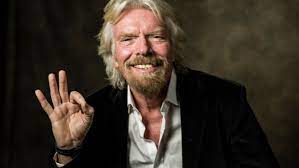
Sir Richard Charles Nicholas Branson (born 18th July 1950), soon going to be 71, is an English business tycoon, investor, author and now a commercial astronaut. He founded the Virgin Group in the 1970s which today controls more than 400 companies in various fields. Branson desired to be an entrepreneur from a very young age. His first business venture, at the age of 16, was a magazine called Student. In 1970, he set up a mail-order record business. He opened a chain of record stores, Virgin Records—later known as Virgin Megastores—in 1972. Virgin Group Ltd. is a British multinational venture capital conglomerate founded in February 1970. Branson’s Virgin brand grew rapidly during the 1980s, as he started Virgin Atlantic airline and expanded the Virgin Records music label. In 1997, Branson founded the Virgin Rail Group to bid for passenger rail franchises during the privatisation of British Rail. The Virgin trains brand operated the Inter City West Coast franchise from 1997 to 2019. In 2004, he founded spaceflight corporation Virgin Galactic, based in California, noted for the SpaceShipTwo suborbital spaceplane designed for space tourism. In 2006, he founded Virgin Comics LLC, stating that Virgin Comics will give “a whole generation of young, creative thinkers a voice”. In 2014, Branson and Virgin StartUp launched the “Foodpreneur” food and drink focused start-up competition. Winners received mentorship from Branson, legal support, and brand counseling.
The name “Virgin” arose when Richard Branson and Nik Powell formed a record shop. It was suggested by one of the earliest employees as thy were all new to business. They considered themselves virgins in business. Virgin StartUp is the Virgin Group’s not-for-profit company, helping entrepreneurs across the UK to start, fund and scale their business.
World record attempts
1986: Fastest Ocean Crossing; he beat the record by two hours with sailing expert Daniel McCarthy.
1991 Branson crossed the Pacific from Japan to Arctic Canada, 6,700 miles, in a balloon of 2,600,000 cubic feet. This broke the record, with a speed of 145 miles per hour.
1998: made a record-breaking flight from Morocco to Hawaii but were unable to complete a global flight
2004, Branson set a record by travelling from Dover to Calais in a Gibbs Aquada in 1 hour, 40 minutes and 6 seconds, the fastest crossing of the English Channel in an amphibious vehicle.
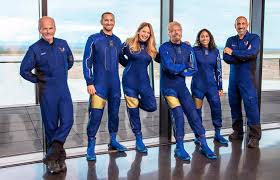
His latest feat includes him becoming the first billionaire founder of a space company to travel to the edge of space. a flight. On July 11, 2021 Branson along with Beth Moses, Sirisha Bandla (the third Indian American woman to fly into space) and Colin Bennett and reached edge of space (86 kilometers or 53 miles) on a Virgin Galatic spacecraft called VSS Unity.
They say the truth will set you free, but what they neglect to mention is what happens when the truth isn’t what you want to hear
growing up and discovering the independence brings with it the realization that this world is not all cotton candy and giggles. when people let go of their security blankets and also leave parents care, siblings love and childhood memories and our comfortable zones and stand on their two feet’s – being accountable, minimizing negative consequences and negative life’s everyday challenges on their own – the more people realize the true nature of how the society works and seeing what the reality looks like outside of televisions shows showing seemingly perfect but stages and scripted scenes, the mask that covers the peoples face, the brave fronts people puts up and the curated personas that don’t align with who people really are.
As light fades away fast; it gets significantly colder and the people that we find around us seems to have drifted away without our knowledge, disappearing quicker than sound have now hides behind the hill top. in front of us is the city filled with lights and the top of the rooftop can be seen the glittering landscapes, with cars zooming around, building illuminated, and the largest, clearest moon ever laid on rising like a marbles
sometimes even the worst dreams are better than reality
in the world that appears to indulge in negativity, I find we need to do our best to share the good. Too many to shows, blogs and newspapers spew pessimism, seemingly dedicated to tearing people down and picking them apart, piece by piece, until there’s nothing left. this horribly judgement trend has no point, save for spite and harm. You merely have to flick through magazines or scroll through the online entertainment sites to observe how peoples fashion, hair, bodies and even personalities are being dissected for commentary. Spend five minutes on twitter and you’ll see a constant stream of pointless, trolling every time you refresh your feed. Rarely does anyone have anything nice to say anymore. It’s a playground of sore shut-ins bitching and gossiping, where people drag others down for their own twisted entertainment.
The suns gleams through, seemingly brighter than before. Its going to be good one, I think as I pour the first of many cups of coffee. I have a reason to know that, but I sensed the goodness in the air. Let nonce of use be fooled into thinking we need to know what the future holds. Everyone’s been brainwashed into thinking they know or should know. we’ll be alright if we simply keep moving forward. At least, that’s what I keep telling myself. So next time someone asks about your Five-year plans, maybe shrug your shoulders and admit, “I don’t know- I am happy to see where life takes me”.
Our life was like a wildfire
It blazed and blazed and took down everything in its path
The kalpilesh temple belgaun,karnataka where lies the replica of the original sculpture.On the ceiling of this 11th -12th century Chalukyan Era temple is the unique sculpture depicting lord Krishna with 5 crawling posture coming out of one head and one pair of arms.It is said each posture is indicative of 5 elements- land ,water,air,Fire and space while the two hands convey light and darkness.This wonderful sculpted art piece is a subtle expression of life-each aspect of creation having different characteristics merge together as the part of same creation.
The difference between poetry and rhetoric
is being ready to kill
yourself
instead of your children.

I am trapped on a desert of raw gunshot wounds
and a dead child dragging his shattered black
face off the edge of my sleep
blood from his punctured cheeks and shoulders
is the only liquid for miles
and my stomach
churns at the imagined taste while
my mouth splits into dry lips
without loyalty or reason
thirsting for the wetness of his blood
as it sinks into the whiteness
of the desert where I am lost
without imagery or magic
trying to make power out of hatred and destruction
trying to heal my dying son with kisses
only the sun will bleach his bones quicker.

A policeman who shot down a ten year old in Queens
stood over the boy with his cop shoes in childish blood
and a voice said “Die you little motherfucker” and
there are tapes to prove it. At his trial
this policeman said in his own defense
“I didn't notice the size nor nothing else
only the color”. And
there are tapes to prove that, too.

Today that 37 year old white man
with 13 years of police forcing
was set free
by eleven white men who said they were satisfied
justice had been done
and one Black Woman who said
“They convinced me” meaning
they had dragged her 4'10'' black Woman's frame
over the hot coals
of four centuries of white male approval
until she let go
the first real power she ever had
and lined her own womb with cement
to make a graveyard for our children.

I have not been able to touch the destruction
within me.
But unless I learn to use
the difference between poetry and rhetoric
my power too will run corrupt as poisonous mold
or lie limp and useless as an unconnected wire
and one day I will take my teenaged plug
and connect it to the nearest socket
raping an 85 year old white woman
who is somebody's mother
and as I beat her senseless and set a torch to her bed
a greek chorus will be singing in 3/4 time
“Poor thing. She never hurt a soul. What beasts they are.”
Power by Audre Lorde is a poem that expresses anger against certain social injustices faced by the people of colour in a predominantly white-privileged society. The poem is said to be a reaction against an unjust trial of a white policeman who shot a black child to death in Queens in 1973. Owing to the title, the poem dabbles with various forms and magnitudes of power and the different ways in which it is made use of.
Lorde has structured the poem into irregular stanzas of five. She begins the poem by putting out two heavy options of poetry and rhetoric, through which one may choose to channel their power. In the second stanza, the poet paints a heart wrenching image of a powerless bleeding black child. She watches helplessly as the child slowly bleeds to death. Here, both the child and the poet are powerless; but the describing colour-contrasted imagery leaves a powerful impact on the readers. The third stanza highlights the power held by a white policeman who, in his trial, fearlessly admits that he fired the shot purely on the basis of colour. The poet then calls out the corrupt jury which exploits and manipulates its powers to set the policeman free. The jury was comprised of eleven white men who clearly held all the power and one token black woman. In the final stanza, Lorde concludes by pointing out that power, if not used right, can either end up corrupt or end up useless. She then draws up a metaphor between electricity to that of the power and anger surging within oneself. Finally, she puts forth a hypothetical situation of an old white woman being raped by a black man to point out the biased double-standards of the society that manipulates power to perpetuate racism.
The poet explains how unlike rhetoric, poetry can be used as a medium to channel one’s anger. She makes clever use of numbers (both spelt out and otherwise) and capitalisation of certain key words to draw attention to the power play within a society. Lorde tries to describe the desperation that comes with being powerless and urges the readers to use their power productively. The poem can be seen as her hopeful attempt at empowering the otherwise powerless black community.
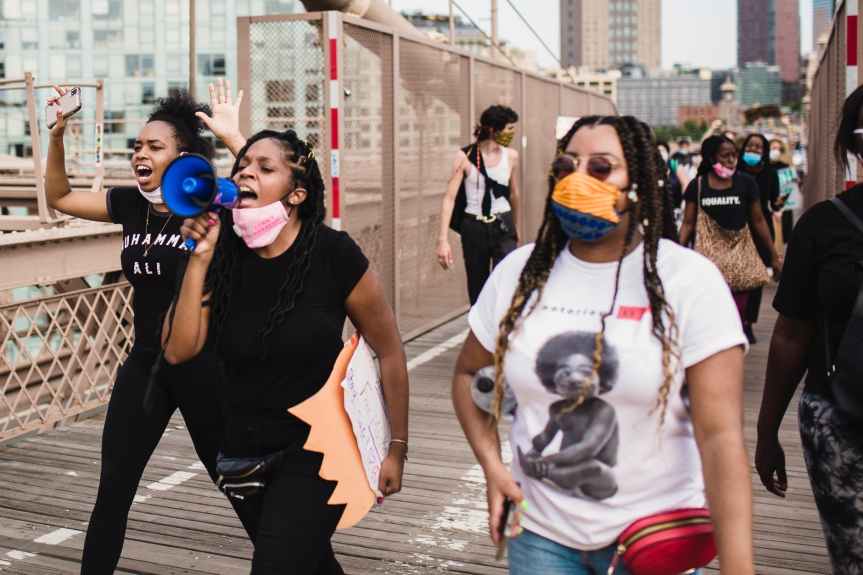
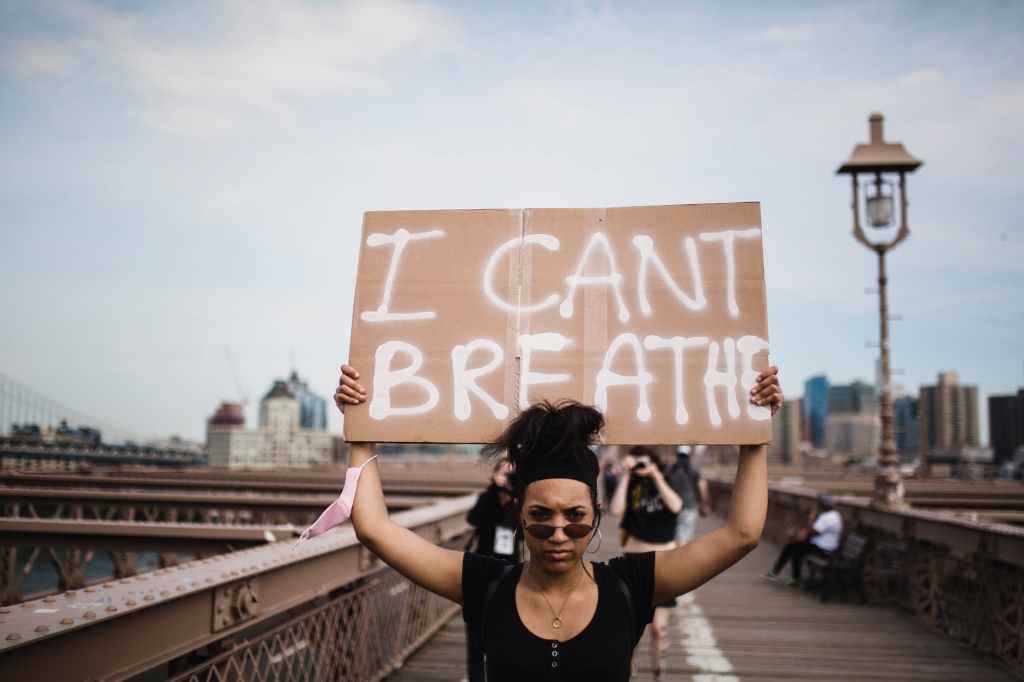
Despite the fact that Power was written in 1978, it holds strong relevance to the power imbalance prevalent in the society even to this date. It resonates with the several incidents of police brutality against certain African-Americans such as George Floyd and Breonna Taylor. This gave way to the strengthening of movements like ‘Black Lives Matter’, amassing strong protestors especially on several social media platforms. Unlike the one in the poem, the white policeman who attacked George Floyd was charged with a second-degree murder owing to the help of the massive number of protestors. Though it is disheartening to see such brutality prevailing after years of struggle, we see that Lorde’s advice on using power in the right way does make a difference.
In part-I, we have discussed the meaning, scope, stages of AI, few applications, and benefits/uses of AI in society. in this article, we are going to see about the transportation and medical applications of AI.
AI in Social Problems:
Litterati
It is a crowdsourced litter clean-up app and a global database for litter. Identifies litter type, distribution, and location and helps to find more sustainable solutions.
In 2017, 1.1 billion cigarettes were found all over the world.
AI in Road Transportation:
Road transport is a major sector where AI can be applied more prominently. AI can make transportation modes much safer, cleaner, smarter, and more efficient.
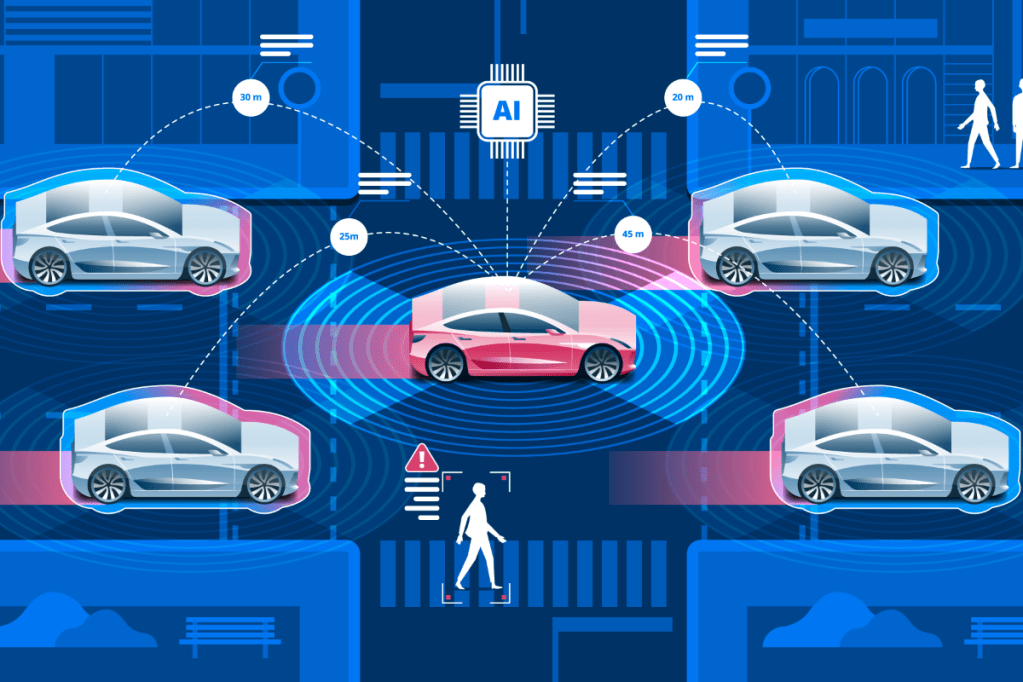
Self-driving cars are a combination of sensors, cameras, radar, and AI technologies like machine learning and neural networks. Developers use a large amount of data from image recognition systems. Neural networks identify the pattern in data i.e., images from the cameras and sensors. It identifies the traffic signs and signals, boundaries, trees, pedestrian walks..etc.
It is an example of self-driven cars. It is almost an autonomous vehicle but still needs a human to perform certain functionalities but can drive in ideal conditions.
Levels of Autonomous Cars
LEVEL 0: No Advanced Driver Assistant System(ADAS) is used. The human driver should drive.
LEVEL 1: ADAS assists the driver by its alert systems by its rear-view cameras, but the driver should take care of the steering, brakes, and acceleration
LEVEL 2: Human presence is important even though ADAS will take care of the steering, brakes, or acceleration.
LEVEL 3: ADAS can take driving tasks and parking can be performed under certain conditions. But still, human is the main driver here and need to take care of the circumstances.
LEVEL 4: The driver need not pay much attention as ADAS can take over the driving.
LEVEL 5: No human help is required. ADAS can drive the vehicle under any circumstances.
Truck platooning
Truck platooning is also an example of Artificial intelligence. It is a heavy coupling of trucks. The first truck is occupied by the human driver and the rest are fully automated. They maintain a minimal distance between them and accelerates at the same rates. It might be a risk during traffic and unexpected accidents might occur. In the future, the risk factor is expected to be less.
AI in Medical Sector:
AI helps health professionals to diagnose the patient faster and more accurately.
AI is developing innovative drugs and treatments by reducing medical and diagnosis errors by predicting adverse reactions. Lowers the cost of healthcare work providers and patients.
Problems at the healthcare centers
Due to more number of patients, general practitioners and primary care surgeons are over-burdened because of which there are extremely long waiting at the hospitals.
Solution
Your.MD
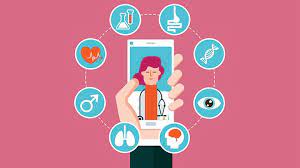
Your.MD aka Healthily is the world’s first AI-based health assistant which provides personalized advice about their medical complaints. This app records the symptoms and, maps them with the clinical data compiled from public sources. Engages about thirty doctors to research illness.
Research
It creates a pre-primary care market and eases the burden of medical staff and helps improve their work through digital screening of non-accurate conditions.
Google Launchpad Studio
Creates an ecosystem of applied Machine Learning startups and focuses on healthcare.
BYTEFLIES is the first company to use this studio.
Supervises Learning for Telemedicine
Technology can be used for good and bad so there is a need to be vigilant. The latest technologies are typically applied to the wealthy.
But,
“AI has the potential to extend knowledge and understanding to a broader population. Image-based AI diagnoses of medical conditions could allow for a more comprehensive deployment of the telemedicine”.
Google deep mind
Google deep mind can diagnose diabetic retinopathy like a highly trained ophthalmologist via telemedicine.
‘BETTER DIAGNOSE WITH LESS HUMAN EFFORT’
It uses a portable fundus camera which is deployed in the screening site and transmits images securely to the cloud software platform for analysis and automatically generates a report which facilitates compliance with follow-up examinations.
Talking about the author, Khaled Hosseini was born in Kabul, Afghanistan. Hosseini is currently a Goodwill Envoy for the United Nations High Commissioner for Refugees (UNHCR). Here is a book review of The Kite Runner which was published in the year 2003.
The unforgettable and heartbreaking story of the improbable friendship between a wealthy boy and the son of his father’s servant, The Kite Runner is a beautifully crafted novel set in a country about to be destroyed.It is about the power of reading, the price of betrayal, and the possibility of salvation; and an exploration of the power of parents over children: their love, their sacrifices, their lies.
A sweepingtale of family, love, and friendship advised in opposition to the devastating backdrop of the records of Afghanistan during the last thirty years, The Kite Runner is an uncommon and effective novel that has to turn out tobe a beloved, one-of-a-type classic.
The book gave a good cry to so many people with the brilliant writing and the emotions it holds. There was from praising all around the world.
“An astonishing, powerful book.” —Diane Sawyer
“This powerful first novel, by an Afghan physician now living in California, tells a story of fierce cruelty and fierce yet redeeming love…In The Kite Runner, Khaled Hosseini gives us a vivid and engaging story that reminds us how long his people have been struggling to triumph over the forces of violence – forces that continue to threaten them even today.” —The New York Times Book Review
“Like Gone with the Wind, this extraordinary first novel locates the personal struggles of everyday people in the terrible sweep of history.” —People
“Poignant…The Kite Runner offers a moving portrait of modern Afghanistan, from its pre-Russian-invasion glory days through the terrible reign of the Taliban.” —Entertainment Weekly (Grade: A)
“A marvelous first novel… an incredible story of the culture. It’s an old-fashioned kind of novel that really sweeps you away.” —San Francisco Chronicle
“A powerful book…no frills, no nonsense, just hard, spare prose…an intimate account of family and friendship, betrayal and salvation that requires no atlas or translation to engage and enlighten us. Parts of The Kite Runner are raw and excruciating to read, yet the book in its entirety is lovingly written.” —The Washington Post Book World
“The Kite Runner, Hosseini’s first novel, is more than just good writing. It is also a wonderfully conjured story that offers a glimpse into an Afghanistan most Americans have never seen, and depicts a side of humanity rarely revealed.” —The Philadelphia Inquirer
A gripping and moving story of betrayal and redemption, The Kite Runner moved me at the same time it tells the story of Amir and Hassan, closest friends, as well as brothers. The two boys lived in Kabul, the capital of Afghanistan, and that year they tried harder than ever to win the local kite fighting tournament, a popular Afghan pastime, and this is Amir’s only hope of winning his father’s race.
But as dragons fight in the sky, war comes to Afghanistan and the country becomes an extremely dangerous place.
People are frequently compelled to make huge sacrifices in conflict, and the young Amir himself commits a betrayal, directed at his best friend Hassan, that will plague him for the rest of his life. Amir and his father are forced to flee Afghanistan for America, and The Kite Runner becomes the story of Amir’s redemption quest – righting the wrongs he committed as a boy in Afghanistan.
The novel is fast-paced and never dull, and it brought me to a weird, interesting, yet oddly familiar world – the world of Afghan life. Not only is the story itself brilliantly constructed, but the book also explores the very art of storytelling.
Hosseini’s writing strikes a great balance between being clear and yet powerful, and not only is the story itself brilliantly constructed, but the book also explores the very art of storytelling.
The best aspect of the kite runner, in my opinion, is its sense of fate and justice, of good triumphing over evil in the end, despite all odds. Without giving anything away about the plot, Amir returns to Afghanistan and makes a new series of sacrifices in order to put things right.
The book’s closing chapter is possibly my favorite, and I’ve found it moving even after revisiting it.
The message underlying the finale could be perceived differently by different readers, but I believe it offers a glimmer of hope for the characters’ futures, as well as perhaps for war-torn Afghanistan.
This beautiful, moving novel deals with complex adult issues about religion, prejudice, forgiveness, and the nature of “goodness.”
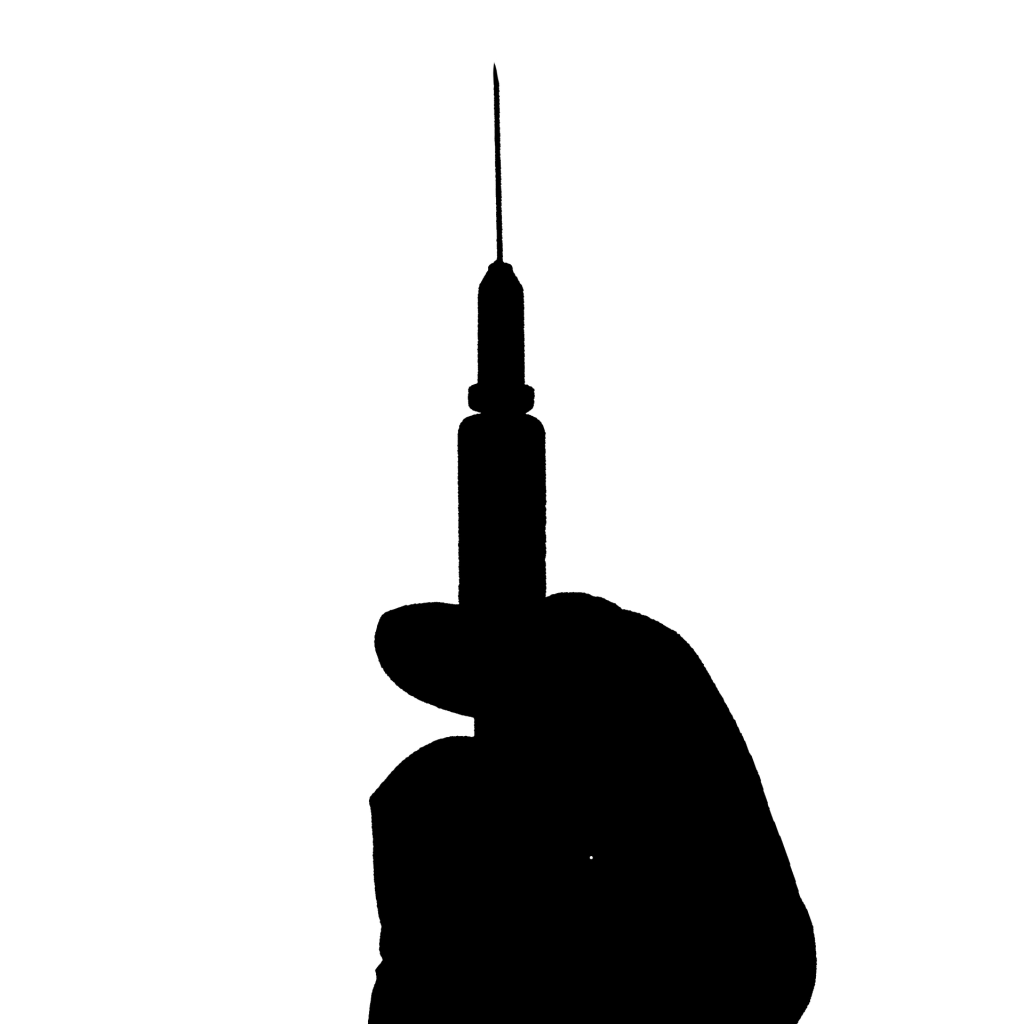
Latin word Variolae vaccinae is the origin of the word vaccine. In 1798 for the first time Edward Jenner developed first vaccine to prevent smallpox. Now vaccine is a biological preparation. It is produced from living organisms. And it will help to induce immunity or sometimes cure the disease. Vaccines can be administered orally or by injection or by nasal routes. Mostly vaccines are in liquid form.
there are types in vaccines
LIVE-ATTENUATED VACCINE: In this type, vaccine is prepared using the living microbes which cause the disease. In laboratories a culture of these organisms is grown and the isolated organisms are weakened or disabled. Even though the microbe is alive, it will loose the capacity to cause harm. The organisms can be disabled by culturing them in sub optimal conditions. These are relatively safe and produce strong response and create long memory. But these are very expensive to produce.
INACTIVATED VACCINE: Here the disease causing microbe is killed or we can say inactivated through various means. Treating with chemical agents or thermal treatment. These inactivated microbes are purified and formulated into vaccine. This type of vaccine are very safe but the memory created will be comparatively of shorter duration.
RECOMBINANT SUB-UNIT VACCINE: Here the microbe is genetically modified and their potential to cause harm is reduced or removed. Some of the components of the microbe can be prepared separately by genetic recombination. Like only a part of protein or DNA can be synthesized and formulated into vaccine.
TOXOID VACCINE: If the disease causing microbe is affecting because of the toxic substance that produces, the toxin can be isolated and purified through cultures of the microbe. And then this toxin can be treated chemically so that it will not cause any harm but will be enough to cause the immune reaction in the body. The inactivated toxin is formulated into the vaccine. This type of vaccine is easy to produce and is very safe. But these will also have shorter memory.
what dose a vaccine contains?
The vaccine is not only composed of the antigen in bulk. It contains some additional fluid also. They contain preservatives to have a good shelf life and to ensure sterility and check contamination. These preservatives will not be toxic at the concentration used. The may sometimes have saline or water. Vaccine may also contain adjuvants. An adjuvant is a substance which helps the vaccine to generate stronger immune response. You can say they make vaccines work better. Aluminum salt is a common example for adjuvant.
working of vaccines:
If you get infected, the body will show defense against the foreign substance and immune reaction would have been initiated and the person will get sick. The vaccine is the mimic of the disease causing microbe and will generate immune response without making the person sick. The mimics trigger the antibodies production in the body. Antibodies bind to these mimics and destroy them with the help of immune cells. This helps the immune system to quickly recognize the enemy if they enter again.
Vaccines have great impact on public health. They help to reduce human mortality. They prevent the entire population from the risk of infectious diseases. Many diseases were due to vaccination programs. Polio is an example to that. So everybody should get vaccinated to conquer the pandemic that we are currently facing.
Advertisement has today become one of the most important aspects of all business and to imagine life without it is almost impossible. Advertising is all over all places, on TV and radio, in newspapers and magazines, on billboards and even plastered across the side of the buses. If an advertisement can really persuade us to buy a product, surely it can be just as effective in persuading us to think in a certain way. Advertising has a great influence on our daily lives whether we are aware or oblivious of it.
Consumer is someone who buys and makes use of a product. Therefore, consumer maintain the production cycle moving in addition to play a crucial position in the economic position of any country, as a result, any country will face crisis if consumers don’t have the effective call for items produced. Consumers call for special commodities is primarily based totally on their taste and choice for them. Consciousness of good affects consumer purchase of that good. Other elements that have an effect on one’s taste and choice for a good are psychological and environmental. Taste and choice for a product change overtime. Thus, advertisements play a role in influencing taste and choice of consumers choice.
Consumer behavior includes what they buy, why they buy it, when they buy it, where they buy it, how often they buy it, how often they use it and how they dispose of it. In other words, consumer behavior is a behavior of individuals in regard to acquiring, using, and disposing of products, services, ideas or experiences.
Advertising has big stimulating impact on shopping behavior of the consumers. Mostly, marketing and marketing is greater powerful on merchandise which have intrinsic features. Qualities aren’t acknowledged on the time of buy and it takes one to find out the features upon the use of the product. And, whilst there may be a full-size danger of differentiating a product, it pleasant fits to put it on the market on that product.
Types Of Consumer Buying Behavior
There are four types of consumers buying behaviour namely, dissonance reducing, habitual, variety seeking and complex buying behaviour.
Dissonance reducing behaviour occurs when the customer finds it difficult to differentiate among the brands. So, consumers may respond primarily to a relatively better price. After the purchase, consumer might experience post purchase dissonance. This is the consumer behaviour displayed mostly by uninformed consumers.
Habitual buying behaviour is a consumer purchase decision whereby the consumers level of involvement is low. So, consumers don’t search much information among the available brands, and they don’t find important differences among the brands and buy the product without a high level of involvement. If the consumer keeps buying the same brand repeatedly, it becomes their habit.
In case of variety seeking buying behaviour the level of consumer involvement is low, but consumer perceive significant differences among the brands. In variety seeking buying behaviour, consumers very often switch from one brand to another. This type of decision is common among consumers who want to stay ahead of the latest fashion trends.
Complex buying behavior can be defined when consumers are highly involved in making a purchase decision. It calls for a high level of involvement on the part of the consumer. In the case of high involvement, consumers distinguish salient differences among the competing brands. Consumers are involved in case of expensive and highly self-expressive products.
Uttarakhand Chief Minister Pushkar Singh Dhami has acknowledged the cultural significance of Kanwar Yatra but reiterated that his government’s priority remains saving lives amid the Covid-19 pandemic. The development comes hours after the Indian Medical Association or IMA wrote to Uttarakhand Chief Minister Pushkar Singh Dhami to disallow the Kanwar Yatra this year in light of the possible third wave of the pandemic.
Image: Tour my India
Every year, thousands of ‘Kanwariyas’ (devotees of Lord Shiva) from northern states travel on foot or by other means to collect water from River Ganga at Haridwar to offer at Shiva temples in their areas as part of the yatra. But due to ongoing pandemic situation, IMA has suggested for cancellation of the yatra as this may act as super spreaders.
Recently P M Narendra Modi has called out maskless tourists and those who are violating the norms by going to crowded markets that could be the invitation to third wave of covid. We had recently faced a worst nightmare of second wave; still people are forgetting those painful lesson and continue to violate the norms.
Although, we all know covid never distinguishes between pilgrimage, tours and shopping etc. Earlier, this year Kumbh act as super spreader and we all familiar with the previous wave. Now, we even know the different variants. These are enough evidences to deny kanwar yatra for this year.
UP CM Yogi Adityanath has suggested to allow the yatra with a restricted number of kanwariyas . Religious events in India are always chaotic and it’s always difficult to manage the huge crowd during festivities. Even countries like Saudi Arabia allowed Hajj to only 60,000 pilgrimages including people who are only fully vaccinated and disallowing believers from abroad for a second straight year. This is a model every country should follow-either cancel these gatherings or proceed with only fully vaccinated ones.
Image : Shutter stock
Government must take appropriate action to discourage mass gatherings, irrespective of any reason behind these crowds. Season of festivals also approaching but we should not forget the learnt lessons from past. This celebration should depend on the pace of vaccination and how quickly the virus is spreading. Only disallowing mass gathering and proper vaccination is the only option.




























 Eduindex
You must be logged in to post a comment.