Thermal Pollution

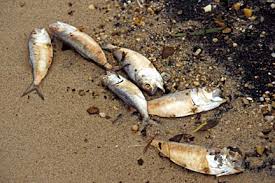
Thermal pollution is a real and persistent problem in our modern society. Thermal Pollution may be defined as ‘the excessive raising or lowering of water temperature above or below normal seasonal ranges in streams, lakes, or estuaries or oceans as the result of discharge of hot or cold effluents into such water’. Thermal Pollution is harmful because its increase water temperature in streams, rivers, lakes, or occasionally, coastal ocean waters. Thermal pollution is caused by either dumping hot water from factories and power plants or removing trees and vegetation that shade streams, permitting sunlight to raise the temperature of these waters. Like other forms of water pollution, thermal pollution is widespread, affecting many lakes and vast numbers of streams and rivers in the United States and other parts of the world. A temperature increase as small as 1 or 2 Celsius degrees (about 2 to 4 Fahrenheit degrees) can kill native fish and plants or drive them out in favor of other species, often with undesirable effects.

Definition :-

Pollution, the idea of thermal pollution often doesn’t come to mind. People will first think of things like carbon emissions, personal pollution and waste, and a variety of other changing factors.
However, thermal pollution is a real and persistent problem in our modern society. In layman’s terms, thermal pollution is when an industry or other human-made organization takes in water from a natural source and either cools it down or heats it up. They then eject that water back into the natural resource, which changes the oxygen levels and can have disastrous effects on local ecosystems and communities.
Thermal pollution is defined as a sudden increase or decrease in temperature of a natural body of water, which may be ocean, lake, river or pond by human influence. This normally occurs when a plant or facility takes in water from a natural resource and puts it back with an altered temperature. Usually, these facilities use it as a cooling method for their machinery or to help better produce their products.
Plants that produce different products or wastewater facilities are often the culprits of this massive exodus of thermal pollution. In order to properly control and maintain thermal pollution, humans and governments have been taking many steps to effectively manage how plants are able to use the water. However, the effects are still lasting today.

Causes of Thermal Pollution: – It looks like thermal pollution occurs mainly due to industrial activities, there are geothermal sources as well. These are:

1. Heavy Industries :- Industries such as power, chemical, nuclear & manufacturing are the primary source of thermal pollution. These industries use water as a coolant and discharge it back at an elevated temperature that affects the ecosystem. Water bodies that are near the nuclear power plants get heated due to emissions from nuclear reactors. Warm water decreases the dissolved oxygen content that results in thermal shock causing adverse effects on aquatic life.

2. Domestic & Industrial Effluents :-

Household and industrial effluents that include drainage from hospitals and research institutions too are often discharged with minimum or no treatment. Normally sewage treatment plants operate at a higher temperature and when discharged in natural water bodies the effective temperature increases. Thus, domestic & industrial effluents are one of the main sources of thermal pollution.avement gets quite hot, which creates warm runoffs that get into the sewer systems and water bodies.

3. Runoff From Paved Surfaces :- Urban runoff discharged to surface waters from paved surfaces like roads and parking lots can make the water warmer. During summer seasons, the pavement gets quite hot, which creates warm runoffs that get into the sewer systems and water bodies.

4. Soil Erosion :- Soil erosion causes the top layer of soil to break and washed away into the natural water bodies. The level of water bodies rises due to consistent soil erosion and sedimentation, which makes it directly exposed to the sunlight. Massive removal of vegetation and trees speeds up the soil erosion process, thus contributing to thermal pollution.

5. Deforestation :- Trees and plants prevent sunlight from falling directly on lakes, ponds or rivers. When deforestation takes place, these water bodies are directly exposed to sunlight, thus absorbing more heat and raising its temperature. Deforestation is also the main cause of the higher concentrations of greenhouse gases, i.e. global warming in the atmosphere.

6. Geothermal Activities :-
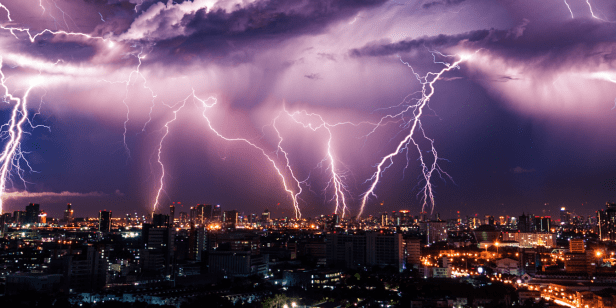
Natural causes like volcanoes, geothermal vents can trigger warm lava to raise the temperature of water bodies. Lightening can also introduce a massive amount of heat into the oceans. This means that the overall temperature of the water source will rise.

Harmful Effects of Thermal Pollution :-

Specific ecological imbalances occur due to increased water temperature affecting the associated ecosystem. Here are some major effects of thermal pollution.

Reduction in Dissolved oxygen level :- The warm temperature reduces the levels of DO (Dissolved Oxygen) in water. The decrease in DO can create suffocation for plants and animals such as fish, amphibians and copepods, which may give rise to anaerobic conditions. Warmer water allows algae to flourish on the surface of the water, and over the long term, growing algae can decrease oxygen levels in the water.

Changes in water quality :- A high temperature of the water changes the physical and chemical properties of water. When the viscosity of the water decreases, the vapour pressure increases rapidly.

Increase in Toxicity :- The concentration of the pollutant is the factor in the increase in the temperature of water, due to which the poisoning in the water increases the toxicity. Which can increase the death rate of aquatic life.

Interference in Reproduction Rates :-Thermal pollution adversely affects the natural reproductive cycles of fishes and other aquatic organisms. Due to thermal pollution, the temperature gradient of water bodies gets disturbed and affects whole aquatic organisms. Due to thermal shock, mass killing of fishes and other aquatic organisms can occur when there is a very rapid water temperature change.


Control of Thermal Pollution :- There are a number of ways to minimize the harmful effects of Thermal Pollutions.

Cooling Ponds :-
Cooling ponds or reservoirs constitute the simplest method of controlling thermal discharges. Heated effluents on the surface of water in cooling ponds maximize dissipation of heat to the atmosphere and minimize the water area and volume. This is the simplest and cheapest method which cools the water to a considerable low temperature. However, the technique alone is less desirable and inefficient in terms of air-water contact.

Cooling Towers :- After using water from water sources for cooling purposes, it is subsequently returned to the water body after passing through the condenser, which is termed as the cooling process. Therefore cooling towers are designed to control the temperature of water to make the cooling process more effective. Cooling towers are mainly used to dissipate the recovered waste heat to eliminate the problems of thermal pollution.

Cogeneration (Combined heat and power; CHP) :- Cogeneration is the use of a heat engine or a power station to simultaneously generate both electricity and useful heat. All power plants emit a certain amount of heat during electricity generation. This can be released into the natural environment through cooling towers, flue gas, or by other means. By contrast CHP captures some or all of the by-product heat for heating purposes, either very close to the plant or as hot water for district heating with temperatures ranging from approximately 80 to 130 °C. This is also called Combined Heat and Power.

Artificial Lake :- Artificial lakes are man-made water bodies that offer a possible alternative. The heated effluents may be discharged into the lake at one end, and the water may be withdrawn from the other end for cooling purposes. The heat is eventually dissipated through evaporation. However, these lakes have to be rejuvenated continuously.

Spray Ponds :- In spray ponds, the water coming out from the condensers pass into the pond through water sprayer nozzles.
The fine water droplets dissipate into the atmosphere as its area is maximized and cooled rapidly.

Other Preventive Measures:- Water Recycling
Afforestation along with the riverbank
Stricter Rules & Regulations
Spreading Awareness
Use of alternative cooling agent ( fan coolers use air to cool).

Haaland will stay at Dortmund

Erling Haaland will remain at Borussia Dortmund as their search for a replacement for Jadon Sancho goes on, according to the club’s head of first-team football Sebastian Kehl.

Haaland is attracting attention from a whole host of top clubs after a stellar 2020-21 campaign at BVB, who he helped win the DFB-Pokal and finish fourth in the Bundesliga by scoring 30 goals in 32 domestic appearances.

However, Dortmund have repeatedly insisted that a prized asset will not be sold this summer, and Kehl reiterated that stance before their opening pre-season friendly against FC Giessen on Tuesday night.

The Norwegian striker has been heavily linked with Chelsea, but BVB have to plans to sanction his departure this summer.

CSR at Cafe Coffee Day

Corporate social responsibility, often abbreviated “CSR,” is a corporation’s initiatives to assess and take responsibility for the company’s effects on environmental and social wellbeing. The term generally applies to efforts that go beyond what may be required by regulators or environmental protection groups.

As the business environment changes, customer’s expectations from a company also change. Nowadays, Customers prefer brands that are socially responsible and give back to the society. Let’s take a look at CSR initiatives taken by the Cafe Coffee Day, one of India’s leading coffee brands.

CSR goals at Cafe Coffee Day

  1. Improving livings standards for communities through increasing employment opportunities- CCD believes in working for the people, and working with the people. It ensures that it creates new employment and livelihood opportunities for millions across the globe. This is done through direct employment and contracts, as well as through inclusive business opportunities.
  2. Enhancing the health and wellbeing of communities– It works with communities at large and aims to help them become healthier and happier.
  3. Reducing environmental footprint– It works towards reducing its environmental footprint by ensuring that it allows the legislation regarding carbon production and release. It works towards designing operational processes that reduce water and land pollution. All products manufactured and distributed come with a disposal method to reduce wastage, and increase recycling.

Corporate social responsibility is an integral part of CCD’s operations. They are committed to offering ethically purchased and responsibly produced products of the highest quality, and serving quality coffee that is responsibly grown and ethically traded. They facilitate UTZ and Rainforest certification for their major coffee supplier’s estates. The UTZ Code of Conduct is a recognized global ‘decency’ standard for coffee and production criteria for socially and
environmentally appropriate growing practices and efficient farm management techniques. The Rainforest Alliance works to conserve biodiversity and improve livelihoods by promoting and evaluating the implementation of the most globally respected sustainability standards in a variety of fields which are designed to generate ecological, social and economic benefits. CCD aims to create the most value in the following aspects:

  1. Nutrition- The primary focus remains on ensuring health safety for children and infants.
  2. Water- It administers all its internal sewage plants to dispose of waste optimally without risking water life.
  3. Air Cleansing- The company also takes responsibility for ensuring that all its industrial sites and operations are placed away from residential areas to reduce maximum exposure of plant operations to the public.
  4. Rural Development– It created varied employment and livelihood opportunities for these communities to help them raise their living standards and quality of life.
  5. Protecting water- With the high scarcity of clean drinking water, CCD works and strives to provide communities with clean drinking water through having installed filter plants.
  6. Protecting natural resources- It ensures that all its operational sites are designed in a way that they do not harm or risk the natural ecosystem. In addition, the company works towards protecting the environment by building green spaces.
  7. Safeguarding the environment- The operations of CCD, like other players in the industry, are being affected by the climatic changes, and the weather alterations. To fight this change, and to safeguard the environment, CCD works towards creating safe green spaces through high rate plantations. This is to ensure environmental sustainability and
    enrichment of the ecosystem.

Commitments made by CCD

Commitments at CCD have helped shape its CSR and CSV approach based on multiple trends from across the globe. These commitments have helped maintain focus in giving back to the community as well as in developing a more sustainable environment and workplace. Commitments are the long-term goals that CCD wants to fulfil and
achieve in the following different aspects:

  1. For individuals and families
    Living healthier lives– Helping individuals attain a balance between healthy nutrition and physical exercise as a means of a healthier lifestyle and healthy living. With today’s work style and busy schedules, this is quite a challenge. 
    Having Nutritional Knowledge- CCD works with the long-term aspiration of enhancing the lifestyles of communities. The company plans to do it by sharing information regarding nutritional facts, and by raising awareness of nutritional intake.
  2. For Communities

Rural Development– It works towards developing rural communities-especially where it is operational and present. The company engages not only in employment creation but also infrastructure development and education deployment programs to help communities improve their living standards.
Promoting Diversity– It works towards inclusion through its diversity programs. The company has designed programs and policies to ensure the inclusion of all community groups in the employment cycle. In addition, the company also conducts training and skill enhancement sessions for all community groups including disabled and special persons.

Finding the potential in coffee is a key part of success. Similarly, CSR activities focus on finding
the potential in the people, society and environment.

TRAINING
CCD works through a unique partnership model wherein they have established strategic partnerships with various training bodies, non-governmental organizations, and government and leverage their relationship to provide skill training and employability to the under privileged. In states like Jammu and Kashmir and Orissa, they have provided self-improvement and vocational training to youth.

DIFFERENTLY-ABLED EMPLOYMENT
Coffee Day Global has also tied up with NGOs such as “Enable India” to work out avenues to employ more differently-abled people. Over 150 speech and hearing-impaired people are employed at their cafés, popularly called as “silent brew masters”.

WATER, SANITATION AND HYGIENE
During the manufacturing process and value additions, Cafe Coffee Day maintains an emphasis on water, sanitation and hygiene. All plants and manufacturing units operated by Cafe Coffee Day have an authorized sanitation system in place which ensures minimal water wastage. Besides, all industrial waste is disposed of off through authorized channels only ensuring that no natural water body and water source is harmed or polluted.

NATURAL RESOURCE STEWARDSHIP
Cafe Coffee Day is also an active pioneer of natural resource stewardship. Cafe Coffee Day has devised ways to ensure that natural resources are sustainably used for industrial operations, and are not damaged during business processes. Cafe Coffee Day shares this knowledge publicly for the overall welfare of the environment and the planet.

WOMEN EMPOWERMENT
During its manufacturing process, Cafe Coffee Day also ensures to employ women labour in various managerial and operational level jobs. These women are usually from local communities and are trained for new skill development and enhancement. In doing so, Cafe Coffee Day ensures that women are equipped with the confidence and decision-making abilities that they advance not only in their professional but also in their personal and social lives.

ANIMAL WELFARE
In all its sourcing, CCD ensures that no animals are harmed. CCD makes sure that all animals are fed high quality fodder, and that they are kept in a clean and safe environment. In addition, it also provides safe breeding grounds for
animals and regularly authorizes veterinary check-ups for all animals in partner farms.

HUMAN RIGHTS
CCD is also particularly careful to ensure that all human rights are upheld in its business operations. This
includes no child labour, and inclusive diversity, amongst other things. Also, the business operations of CCD also include high dependence on local workers for labour and management, making sure all local and global human rights are followed thoroughly.

CCD changing lives with Education and Employment

· Their social transformation initiatives are led by SVGH Vocational Training College (VTC) at Chikmagalur, Karnataka and are fully funded by their Promoter. VTC seeks to promote education to economically underprivileged rural youth and supporting them to be independent, responsible and adaptable to urban environment. VTC has trained over 2,500
students, many of whom have since joined CCD Group companies, including Coffee Day Global’s outlets across the country. The entire expenses of the course which includes imparting education, providing food and accommodation, uniforms and transport facilities is borne by VTC.

· The institute provides free education and training to youngsters, with all their expenses being covered by the chairman’s trust. The chairman and founder, V G Siddhartha, was keen to create employment for the rural youth, so that they could lead a productive life and contribute to society. A large number of youths were unemployable due to skill gaps, so it was decided to offer hotel management courses at Yuva (their vocational training institute).

· The institute provides a one-year course in hotel management, which includes six months of theory and six months of internship, where students get an on-the-job experience. Apart from hotel management, the institute also provides courses in audit, micro-finance, supply chain and culinary skills, which depends on the needs and demands of the organisation.


· It provides them an opportunity for personal and professional development thereby equipping them with skills to handle the rapidly changing environment. The college has trained 1180 students many of whom have found employment at CCD outlets across the country. Courses offered include Certificate Course in Hospitality Management & Micro Finance. The Trust bears the entire expenses of the course which includes imparting education, providing food
and accommodation, uniforms and transport facilities. The trained students are guaranteed employment. Current employees are involved actively in SVGH programs and help by conducting modules etc.


· “Communication skills are critical to success in customer-service roles and there is a strong commitment to building job-ready skills.” The focus has been on right skilling and reskilling to keep pace with the dynamic market needs. They aim to groom students who can think, ideate, solve problems, communicate and collaborate. They also provide specialisation studies to the students in the last quarter of the course, so as to place them in various roles at CCD in
accordance with their skills. Placements are done within the organisation. By providing quality education and employment to these students, the organisation is changing their lives and offering them a great career path. 


· Every year, around 350 students pass out from the institute and are employed by the organisation. Almost all of them are hired by Café Coffee Day. This kind of programme also creates loyalty in the minds of the employees and they are likely to stick around for a longer period of time.


· Providing a good career path, professionalism and quality skill training, the institute— which had taken birth as a simple CSR activity—is changing the lives of its students and their families. This is the best way to not only educate the underprivileged but also provide jobs to those who actually need them.

BRITISH INFLUENCE ON URBANIZATION IN INDIA

INTRODUCTION

India shares a long history of urbanization, with Indus Valley Civilization dating back to 2350 BC as its first stepping stone towards urbanization. After this and post-independence period, with the emergence of Planning Commission, India witnessed the urbanization which it had never seen before. And this period marks the progression and flourishing of urbanization in India. However, cities in India have been urbanized in number of phases. The urbanization history in India has 5 different phases (given by historians) :

  1. The Pre – Historic Period (Indus): 2350 – 1800 BC
  2. The Early Historic Period (Aryans and Dravidians): 600 BC – 500 AD
  3. The Medieval Period (Mughal): 600 – 800 AD
  4. The British Period: 800 AD – 1947
  5. Post Independence Period: 1947 – till date

URBANIZATION IN BRITISH PERIOD

The British came to India in 1858 when India was one of the most urbanized nations due to Mughal supremacy. But in the early phase of British rule, Indian cities witnessed decline in the level of urbanization and during the later phase of British rule, the Indian cities regained the lost importance and new towns and cities emerged and newer urban form was added to existing cities.

Fort St. William in Calcutta is one of the best examples of factories constructed during British Era and fortified for protection.

URBAN DECLINE IN 19TH CENTURY

The main reasons for urban decline during the British Period were:

  1. Lack of interest in British in economic development, prosperity and growth of India and their negative attitude towards the traditional industries of India which were present during that period.
  2. The alteration of urbanization in India due to the industrial revolution in England.
  3. The diversion in existing trade routes due to sudden growth and building of rail networks.
  4. Disrupted monopoly in trade especially in port towns.

BRITISH CONTRIBUTION TO URBANIZATION SCENES IN INDIA

  1. Emergence of three metropolitan port cities which emerged as leading colonial cities (Calcutta, Bombay and Madras).
  2. Creation of hill stations and plantation settlements.
  3. Modification of urban landscape in existing cities.
  4. Introduction of civil lines, camps and cantonments.
  5. Improvement in connectivity through railways.
  6. Enhanced scope of industrialization.
  7. Improvements in urban amenities and urban administration.

CONCLUSION

British era had both positive and negative impact in India but the extent of positive changes is more. The process of urbanization and building of new cities can be seen as the breaking of the continuum. During British Period, the Indian cities emerged as the focal points of urbanization and westernization. The westernization brought by the British Period continued to guide the destiny of urban elite in India. It helped in transforming the agriculture as a means of commerce by introducing new crops like indigo, tobacco, coffee etc. Thus, British Era can be seen a the period when India came across fundamental economic transition, mechanized industries and developed connectivity through railways and foreign trade. But the British Era didn’t consider the rural – urban conflict which increased the gap between urban and rural areas of India.

Thus, it can be concluded that British rule had definitely been useful in providing the foundation of development and urbanization to India. As per Census 1941, which is the last census before Independence, India had 49 one lakh cities and 2500 urbanized towns. So, when this urbanization is compared to previous trans, it can be seen that the urbanization attained zenith during the end of British period as compared to past events.

žIn 1941, which marks the last census before independence, There were 49 one-lakh cities in India and in all round 2500 urbanized towns. Urbanization attained zenith during end of this period compared to entire past events.

Satyajit Ray: A Forgotten Beacon in Indian Cinema

-S Devasankar

Satyajit Ray is a name that is familiar to most Indians. Or is it? Mr. Ray is one of India’s most decorated filmmakers of all time. In fact, he can be credited with bringing Indian cinema to the limelight with his very first movie: Pather Panchali. Martin Scorsese, the director of movies like The Wolf of Wall Street, Taxi Driver and The Irishman said that Pather Panchali was one of the first Indian movies that he had watched, and one that inspired him to make movies. He said the movie was “made by an Indian, for Indians” showcasing the intricate details of life in India. This, he said, helped him realize what Cinema is meant to be. What a target audience is supposed to be, and what story telling is. Ray is also an inspiration for many other directors like Wes Anderson, Christopher Nolan and Quentin Tarantino, who have, on several occasions, said this publicly.

Ray was not just a director, he was also a screenwriter, lyricist, author, essayist, calligrapher, magazine editor, music composer and much more. He was truly a jack of all trades. His works are still read and cherished by readers all over the world, especially ones like the Tales of Feluda, Professor Shanku, etc.

That being said, it is quite unfortunate that today, the man and his works have been forgotten. While people are aware that such a person existed, and that he was a director, they do not know of the extent of his contribution to Indian, or rather the world cinema, and to other forms of art, other than filmmaking.

But why is it so? Why is it that such a legend has been forgotten by the majority with the passing of time? The answer lies in the question. The passing of time. As time passed, cinema evolved. New movies came into existence, and the masterpieces by Satyajit Ray faded into the background.

Even then, they never ceased to exist. The works by Mr. Ray is well known among film enthusiasts, and they still try to promote the movies, especially the Apu Trilogy (viz. Pather Panchali, Aparajito and Apur Sansar).

Ray made sure to leave an impact on the world before he left it and the medium he chose for that was cinema. For his contributions to cinema, and his portrayal of India in the global stage, he was awarded an Honorary Academy in 1992.

This is not to understate his achievements in other fields of work that he engaged in. Ray excelled in all the fields he tried out, even leaving his marks in the fields of Magazine editing and calligraphy.

Ray can be considered as the best filmmaker India has produced till date, and it’s rather unfortunate that while many parts of the world remember his legacy, India has forgotten it.

Recently, an anthology titled RAY was released, based on 4 of Satyajit Ray’s short stories, namely Bipin Chowdhury’r Smritibhrom, Bahurupi, Barin Bhowmik-er Byaram, and Spotlight. Also, his first ever movie, in fact the entire Apu Trilogy has been renewed and is available in a leading OTT platform. Hopefully, these help to bring this legendary filmmaker, the man who told the story of India through a visual medium throughout the world for the first time, back to the forefront, and help get the recognition he deserves from the Indian audience.

How to delay periods naturally?

There are plenty of times in a life of woman when she doesn’t wish for her menstrual cycle to come because ofsome special vacation lined up. There are some pills which can help delay the flow of your periods. But it’s not everyone’s cup of tea, it may have some side effects. So, there are some all-natural, non-medical ways to delay your periods for a while.

Avoid eating spicy food because it increase the heat inside our body, which will trigger the period before date and if you want to delay your period, then you have to stop taking spicy food. But this method is not proven scientifically, it’s just a home remedy. You can not totally depend only on this method.

Start taking the lemon water. You just have too take one lemon and squeeze it in a glass of water. Start taking it before two or three days before your periods date.

Drinking more water. Water makes your period lighter, and helps in reducing heavy bleeding. Drinking more water with other remedies, make it effective in slowing down your period.

Cinnamon tea. Take two or three cinnamon stick, boil them in the water, and when water remains half the actual quantity. Your cinnamon tea is ready. Drink it twice a day before a week atleast.

Eating papaya and carrot. It’s safe and natural way to delay periods. Papayas are rich in carotene which triggers estrogen levels in the body leading to changes in the uterine blood flow.

French beans. Take the French beans, it’s easily available in the market, boil them in the water, take that water and add some lemon in it. Start drinking this water. It will help you.

Mustard seeds. Powder the mustard seeds and then add this powder to lukewarm milk, add some honey or you can add sugar also according to your taste. And then you have to take this mixture two or three times a day before the expected date can prove to be helpful. Antioxidant-rich chia seeds may be helpful in a similar manner.

Gram lentil. Fry some gram lentils, till they become soft. Now, grind them to make a thin powder. Now make a thick soup with this powder, and consume it daily.

Coriander seeds. Boil coriander seeds in the water, after boiling you can drink this water 2 or 3 times a day. Start this method before two or three weeks from the start date of your period.

Before applying any of these methods, consult your doctor. While these methods are safe to try, they may not be the most effective or work for everyone. These are not foolproof remedies, there can also be chances of irregular bleeding.

RUSSIAN SCIENTISTS BRING 24,000-YEAR-OLD ZOMBIES BACK TO LIFE

Important lesson Jurassic park though us is ” LIFE ALWAYS FINDS A WAY “. However scientists decided to recreate that and ” bring back organisms from dead “.

ZOMBIES BACK TO LIFE:

Tiny zombies that were frozen in Arctic permafrost for 24,000 years were recently brought back to life by the scientists of Russia and they further produced clones for them in a laboratory. The undead organisms are called bdelloid rotifers, or microscopic “wheel animals” named for their circular mouths surrounded by tiny hairs. Rotifers are multi cellular organisms that can live in fresh waters and they have been around for about 50 million years. In these years they have learnt to adapt and survive. They can live in astonishing conditions like red-hot undersea vents or the vacuum of space. Later it was found that modern rotifers can be frozen at minus 4 degree Fahrenheit and then can be retrieved up to ten years later.

For this experiment, the scientists went to Siberia and carved off a slice of permafrost ( the term for ground that permanently stays frozen ). This particular area that the scientists carved off has been frozen since at least the end of the Pleistocene epoch ( that is about 2.6 million to 11,700 years ago ). The scientists took the rotifers and thawed them gently. ( thaw – to make something become soft or liquid again after freezing ). By doing so, at a particular point the rotifers came to life again which also included their characteristic sexual reproduction. They also began to reproduce asexually through parthenogenesis which leads to creating clones that were genetic duplicates.

Rotifers evolved to use cryptobiosis because most of the them live in watery habitats that freeze or dry up, Stas Malavin, a researcher and lead author told Live Science. “They suspend their metabolism and accumulate certain compounds like chaperone proteins that help them to recover from cryptobiosis when the conditions improve,” Stas Malavin stated.

By the way, this is not the first time ancient life has been resurrected.

CORONAVIRUS: The government says people are not taking the third wave warning seriously, treating it like a forecast update

”The world is experiencing the third wave. In order to prevent India from being hit by the third wave, we have to work together. The Prime Minister said today there was no point in discussing when the third wave would hit India. There is a need to keep it at bay instead. The number of new infectious disease cases reported by India over the past 24 hours was 31,483. In the past 118 days, there have been fewer new cases. According to the Union Health and Family Welfare Ministry, the death toll in India rose by 2,020 in the last 24 hours to 4,10,784.

The union health ministry expressed concern over the violation of covid-19 standards on Tuesday, saying that people are treating third-wave warnings like a forecast update. A press briefing held by LAV Agarwal, joint secretary, the health ministry on July 18 revealed that approximately 73.4 percent of the new cases of covid-19 reported in July were from Maharashtra, Kerala, Tamil Nadu, Odisha and Andhra Pradesh.

A central team has been sent to 11 states and union territories, including Maharashtra, and Assam amid a rise in cases. He explained that when people discuss the third wave, they take it as a forecast update and do not understand its seriousness or the responsibilities associated with it.

In some states, a further increase in cases is occurring, such as in Manipur, Mizoram, Tripura, and Arunachal Pradesh. In other states, where cases are declining, the situation is still being observed in the form of a plateau. There have been repeated warnings about the imminent third wave of the pandemic, but travelers to hill destinations have not heeded these warnings. Earlier this week, a video from the KEMPTY Falls in Uttarakhand showed tourists not wearing masks and standing dangerously close to one another. There are several other images online that show tourists violating covid-19 safety norms.

It was announced on Monday that the Indian Medical Association had written to the central and state governments to warn them that the third wave of Coronavirus was inevitable and imminent. It was recommended that “tourist bonanzas, pilgrimages, and religious” wait until at least three more months, and that people follow the covid-19 protocols during this period.

In his meeting with the chief ministers of North eastern states, Modi expressed concern about people not wearing masks and crowding hill stations and markets

The world is experiencing the third wave right now, said NITI Aayog member Dr. VK Paul, and India must take measures to ensure that it doesn’t experience the same.  

WOMEN ENTREPRENEURS.

Entrepreneur means to undertake. Entrepreneur is an individual who take risk and start something new and entrepreneur is a person who puts together capital labour and converts is idea into reality. Entrepreneurship is a purposeful activity of an individuals or group of individuals undertaken to initiate maintain profit by production and distribution of associated goods and services an entrepreneur as a function of risk wearing innovative organisations managerial and decision making.

Entrepreneur can be classified on the basis of according to the type of business which includes business entrepreneur industrial entrepreneur corporate entrepreneur agriculture entrepreneur and trading entrepreneur according to motivation for entrepreneur induced entrepreneur motivated entrepreneur spontaneous entrepreneur according to the use of technology technical entrepreneur non technical entrepreneur professional entrepreneur according to the scale large scale industry entrepreneur medium scale industry entrepreneur tiny industry entrepreneur small scale industry entrepreneur according to capital ownership private entrepreneur state entrepreneur joint entrepreneur according to stage of development first generation entrepreneur second generation entrepreneur classical entrepreneur other classifications on the basis of spiritual entrepreneur and social entrepreneur.

Women entrepreneurship is the process where buy women take the lead and organise the business or industry and provide employment to others. An women entrepreneur eastern enterprise which is owned and controlled by a woman having minimum financial interest of 51% of the capital and giving at least 51% of employment opportunity to women . The following are the institution’s promoting women entrepreneur.1-self-help groups or micro finance scheme: association of small groups of self employed rural or urban women entrepreneurs which is voluntary.2- FIWE (Federation of Indian Women Entrepreneur:was established in the year 1993. They help in providing network facility women entrepreneurs in the countries and abroad to develop their business their help in providing facility for the area of marketing quality control export management standardization.3-WIT( women’s india trust): was established in the year 1968 it is used to market the products of WIT members from Door to door under Kamila trust UK a then open the shop in London named Kashi and also extended in Europe Germany.4- SIDBI( Small industry development Bank of India): it acts as the principal financial institute for promotion financing and development of industry in small scale factor and to co-ordinate the function of the institution’s engaged in promotion and financing in small sector. 5- SIDO( small industries development organisation): it was introduced for process and product oriented EDP in the areas like television repairing printed circuit boards leather goods etc.

Indian National Anthem

We have sung our national anthem since our childhood, Do we know the meaning behind it?

Indian National Anthem:

Jana-gana-mana-adhinayaka jaya he

Bharata-bhagya-vidhata

Panjaba-Sindhu-Gujarata-Maratha

Dravida-Utkala-Banga

Vindhya-Himachala-Yamuna-Ganga

uchchala-jaladhi-taranga

Tava Subha name jage, tave subha asisa mage,

gahe tava jaya-gatha.

Jana-gana-mangala-dayaka jaya he

Bharata-bhagya-vidhata.

Jaya he, Jaya he, Jaya he,

jaya jaya jaya jaya he.

Meaning of our National Anthem

The following is Tagore’s English rendering of the anthem:

Thou art the ruler of the minds of all people,
Dispenser of India’s destiny.
Thy name rouses the hearts of Punjab, Sind,
Gujarat and Maratha,
Of the Dravida and Odisha and Bengal;
It echoes in the hills of the Vindhyas and Himalayas,
mingles in the music of Jamuna and Ganges and is
chanted by the waves of the Indian Sea.
They pray for thy blessings and sing thy praise.
The saving of all people waits in thy hand,
Thou dispenser of India’s destiny.
Victory, victory, victory to thee.

Source:https://knowindia.gov.in/national-identity-elements/national-anthem.php

A simplified version:

You are the ruler of minds of people, let the victory be with you,

The dispenser of the destiny of India

Punjab, Sindh, Gujarat, Maratha, Dravid, Orissa, Bengal

There are echoes in hills of Vidhya, and the Himalayas and music is mingled in Yamuna, and Ganga which is chanted by foaming waves of Indian Sea

Wake up listening to the auspicious name of yours and pray for your blessings,

The saving of all the people is lying in your hands.

You are the one to impart well being to the people

the dispenser of the destiny of India

May you get victory, victory, and victory for you!

Source: https://www.mapsofindia.com/my-india/india/what-does-the-indian-national-anthem-jana-gana-mana-mean

Facts about our National Anthem

  • The song Jana Gana Mana is the National Anthem of India which was composed by Rabindra Nath Tagore, originally in Bengali.
  • It was adopted by the constituent assembly on January 24, 1950, in its Hindi version.
  • The song “Jana Gana Mana” was first published under the title “Bharat Vidhata” in Tattva Bodhini Patrika in January 1912.
  • The song was translated into English in 1919 with the title “Morning Song of India”.
  • The very first time it was sung at the Kolkata Session of Congress on 27 December, 1911.
  • It takes about 52 seconds for its total completion, while it takes 20 seconds for the first and last lines of the stanza.

The Beauty of Tierra del Fuego

Tierra del Fuego, which stands for “Land of Fire” in Spanish, is an archipelago or a cluster of islands in the southern most tip of South America. It is located across the Strait of Magellan.  The archipelago consists of the main island, Isla Grande de Tierra del Fuego and a group of many islands, including Cape Horn and Diego Ramirez Islands. Tierra del Fuego is divided between Chile and Argentina and is located close to the perennially frozen continent of Antarctica. Tourism is a major component of the local economy.

Brief History

The History of Tierra del Fuego ranges from settlement of the region by the local Yaghan and the Selk’nam people to it’s discovery by the infamous Portuguese explorer Ferdinand Magellan on whom the strait of Magellan is named after, to Spanish European colonization and the genocide of the natives during the gold rushes in the region.

In recent history, both countries have explored the region for oil extraction and formulated their Antarctic claims. In the 1960’s and 70’s there was even a threat of military conflict looming between the two countries over a few islands which almost led to an Argentine invasion of Chile in 1978. Ths very threat of war caused the Chilean regime of Dictator Augusto Pinochet to give logistical support and information to the British during the Falklands War of 1982.

Geography

The archipelago consists of the main Isla Grande de Tierra del Fuego island. Its westernmost part belongs to Chile and the rest to Argentina. The Chilean part is the region named Magallanes y Antarctica Chilena whose capital is Punta Arenas. The village of Puerto Toro located here is probably the Southernmost village in the world.

The eastern part of the main island, and a few small islands in the Beagle Channel, belong to Argentina. They are part of the Tierra del Fuego, Antarctic territory and South Atlantic islands province. The capital is Ushuaia, whis claims the title of the southernmost city of the World.

Flora & Fauna

Only few Islands here forests which are classified as Magellanic subpolar. Trees like winter’s bark, Lenga beech, Magellan’s beech, Northofagus Antarctica etc are found here.

The most notable animals found here are Sea Gulls, Guanacos, Foxes, Kingfishers, Condors, Penguins, Owls, Austral Parakeets, North American Beavers, Sea Lion, Leopard Seals etc.

https://www.adventure-life.com/patagonia/articles/tierra-del-fuego-culture

🐘Elephants🐘:

💫The elephant is the largest and one of the most powerful and intelligence animals. Even though blue whales are the largest animals for they grow up to 30 elephant reaches a height of 4 meters and a weight of 6 metric tones.

💫The most remarkable feature of the elephant is its tusks and trunk. The tusks, in fact, are two of its upper teeth that have grown on the outside and become enlarged. A tame or trained elephant uses its tusks to support heavy loads while wild elephants use them as weapons of attack. Tusks are made of ivory which is highly valuable. And it is for tusks that elephants are hunted down and killed. Even though Articles made of ivory are banned in most countries they are available in the black market, and this leads to elephant poaching.

💫The trunk is another intersection feature of the elephant. It serves as an arm and a hand for picking up twigs and leaves and pushing them into its mouth. The trunk is actually the elephant’s lengthened nose and upper lip. It is thick and well-protected on the outside but has a tender inside.

💫There are two kinds of elephants – the Asian elephant and the African elephant. The Asian elephant is relatively smaller than its African counterpart. While the Asian elephant is 2.75 meters tall and weight 3.5 metrics tons, the African is 3.5 meters tall and weight about 5 metric tons, and is darker than the Asian species. Moreover, the Asian elephant can be easily themed or trained and it sleeps lying down while the African elephant is wild and sleeps upright.

🐘facts about elephants🐘:

🔅They’re the world’s largest land animal. …

🔅You can tell the two species apart by their ears. …

🔅Their trunks have mad skills. …

🔅Their tusks are actually teeth. …

🔅They’ve got thick skin. …

🔅Elephants are constantly eating. …

🔅They communicate through vibrations. …

🔅Calves can stand within 20 minutes of birth.

🐘Quotes🐘:

🌟greatest glory in living lies not in never falling, but in rising every time we fall. -Nelson Mandela

🌟The way to get started is to quit talking and begin doing. -Walt Disney

🌟Your time is limited, so don’t waste it living someone else’s life. Don’t be trapped by dogma – which is living with the results of other people’s thinking. -Steve Jobs

🌟If life were predictable it would cease to be life, and be without flavor. -Eleanor Roosevelt

🌟If you look at what you have in life, you’ll always have more. If you look at what you don’t have in life, you’ll never have enough. -Oprah Winfrey

Case Analysis : National Legal Services Authority Vs Union of India

Indian society has usually lacked gender awareness, and the same is reflected in the mindset of the society. The tale of people who are generally referred to as transgender is a story of pain, misery, and agony.

They have not only face deprivation of rights, but also abuse and violence just because they do not fit within the “norms” that society has generally accepted.   They are shunned and defamed by society and are considered to be outcasts and kept far away from participation in various societal activities.

Background

In 2012, the National Legal Services Authority, an Indian statutory body which is constituted under the Legal Services Authority Act, filed a writ petition (writ petition no. 400 of 2012) with the Supreme Court of India. It was followed by another writ petition (No. 604 of 2013) which was filed by Poojya Mata Nasib Kaur Ji Women Welfare Society, a non-governmental organization representing the Kinnar transgender community. Laxmi Narayan Tripathi, an individual who identified himself as a Hijra also approached the court and was also impleaded in the present case.

Issues involved

The petitions mainly raised an issue of “Gender Identity”. It has two facets, viz.:

  • Whether a person who is born male but has female orientation has the right to be identified as a female as per his choice ; the same question arises when an individual uses surgery to change his/her sex.
  • Whether a person who does not identify either as a male or a female has the right to be categorized in a “third gender”.

Arguments

The argument was made that the recognition of only the binary genders of male and female and the lack of legal measures to cater for the needs of the represented groups violates Right to Equality (Article 14), Freedom of Expression (Article 19), Right to Life and Personal Liberty (Article 21).

The transgender community urged that their inability to express themselves in terms of a binary gender denies them their rights and social welfare schemes.

Judgment

The judgement was delivered by a 2-judge bench comprising of Justice K.S. Radhakrishnan and Justice A.K. Sikri on 15th April 2014. The Court had to decide whether persons who fall outside binary gender can be legally recognised as “third gender” persons.

The Supreme Court in this case relied on various judgements from foreign courts like New Zealand, Australia, and England and took into consideration different foreign judgements like Corbett v. Corbett with its complete emphasis on biological sex, Attorney-General v. Otahuhu Family Court in which Justice Ellis noted that once a transsexual person has undergone surgery, he or she is no longer able to operate in his or her original sex.

The Court ruled that all provisions in the international conventions including the Yogyakarta Principles must be followed provided they align with the fundamental rights guaranteed under Part III of the Constitution.

In this landmark judgement Supreme Court legally recognised “third gender” for the first time and discussed “gender identity” at length. Further, it declared that eunuchs and hijras can legally identify as “third gender”.

The Court recognised that third gender persons were entitled to fundamental rights guaranteed under Part III of the Constitution and under International law.

The Court declared that the State and Central governments must grant transgenders full recognition in the eyes of the law so that they can avail education and healthcare without being subjected to any kind of discrimination.

Conclusion

Well, we cannot ignore the fact that the transgender community for long have suffered torture, humiliation, and pain. This judgement came as a fresh ray of hope for the transgender community who have faced discrimination and social injustice. This is a landmark judgement because it is the first to legally recognise non-binary gender identities and uphold the fundamental rights of transgender people in India. However, the transgender community still has a long way to go.

Sexual Harassment faced by the Women at Workplace

Sexual harassment is a worldwide problem faced by every woman at someplace and sometime in their life. Harassing any human being is just like an offense which goes against the human rights and gender equality. Harassing a woman has emerged from gender discrimination and is a strong interplay of masculinity, supremacy and sexuality. According to Article 14 of the Constitution “equality of status and opportunity” must be for every citizens weather it’s a male or a female, everyone is supposed to treat equally. Henceforth, living in a safe working place is the right of every woman. Our Indian Constitution suggests that it’s the right of every person to live a life which is free from discrimination, provocation, agony, etc. Sexual harassment of women is an uncivilized violation against right to equality and self-esteem. The basic root behind such harassment is our patriarchal society which considers man far more superior than females and violence against woman is acceptable. Sexual harassment creates an environment which often discourages females to take part in such jobs.


Now days, harassment at workroom is quite normal. Article 19(1) (g) of the Indian Constitution suggests that it is the fundamental right of women to pursue any profession or to carry any occupation. Such harassment erodes the notion of equality and opportunity. This ultimately brings a full stop at a person’s personal development as well as development of society. Sexual harassment of women is a serious problem and in a survey it was found that in every 12 minutes a women harassed at workplace but only in some case they file a complaint or complaint’s the concerned authority. All around the world we find sexual harassment is increasing day by day and it’s violating women’s right in addition to it sexual harassment is the imitation reflection of male dominant society. We live in a society where violence against women is abided by the patriarchal value. The harassment faced by the women here are not harmful one as compare to other offense. There was an act passed called The Sexual Harassment of Women at Workplace Act, 2013 which ensure a secured and healthy working place for women. Also, it aims to build an environment that provides equal opportunity and equality for women too. The arrival of such act was accommodating to contribute gender quality, liberty as well as equality in working circumstances. Security at workplace will ultimately results in economic development and wide-ranging growth of the country. Only few women accepts to do late night work and the reason behind it is the sexual assault they faced by the society. It has become our preconceive notion that if a women is working till late night the society can put forward question in her character but if a man work’s outside till late than he is considered as an hardworking dedicated man who is working so hard for his family.
We are still struggling to be a developed country and the basic ideology behind it is our outdated notion. If a female is harassed, tortured or embarrassed in public she is taught to accept it quietly without raising her voice and the reason behind it is our patriarchal society. Sexual harassment in workplace is not just a problem in India but it’s a global problem faced by every other working women. We all should keep in mind that we live in a free country where everyone is supposed to get equal respect and appreciation.

JOBS.

The covid-19 pandemic as triggered our life has the most job crisis. The impact of this real danger that the crisis will increase poverty and widen inequalities. Countries now need to do everything they can to stop this job crisis from turning into social crisis a numerous people have lost their jobs especially womens. Man employment rate in the national capital as increased by 17% with about 83%. Women respondents choosing to permanently opt stop workforce.

As per the centre of monitoring Indian economy between Mid 2016-2020 the female labour participation rate that is to the percentage of women working out will fall from 16.4 percent to about 11% as per now it has been estimated that this numerical might be pushed down to 9%. The date stated that only about 10.7% of total workforce in 2019-20 was in favour of women and about 13.9% of job losses will be e a witness of unemploymet. The overall unemployment rate for August 2020 was 8.35% and will drop to less than 7% in the following months and it shall rather increase of the unemployment rate would be an underestimate as per the denominator is not stable. India’s unemployment rate of 24% despite the sound 7% literacy rate through the figure are discouraging the creativity and various fields the year brought to be forefront cannot be ignored.

More younger workers and freshers and women laws job with individually moving into crisis. Serve self employment in agriculture construction and small-scale trade overall 54.3 percent workforce were affected by covid-19 lockdown around 30% lost their jobs and where then able to return to employment. Status if not type of work or income experience difference by age gender industry of employment. Around 15% of workers age 15-24 years last jobs for employment added during the lockdowns when we compared to 40% and 35% of 25-34 years of age and 35-44 years respectively are affected lesson numbers having lost employment older workers were 4 times more likely to lose the jobs. The freshest with less and no experience are in general cheap to get hired or placed in any organisation. Consequently about 9 out of 10 older workers are back placed in their workforce but when compared with no experience or freshers about 5 out of 10 younger workers ere in workplace.

The COVID-19 pandemic make LED digital shift created a massive demand for skilled professionals in domains like business analytics data science online learning cyber security e commerce ed-tech and logistics. Hiring freshers top rated technology talent for roles in emerging technologies as a demand for this program in emerging technology as increased. We believe that the top skills that will continue to be in demand in next upcoming years.