NORTH INDIAN CUISINE

When ordering “Indian” food in places like the United States or the UK, garlic naan, biryani, butter chicken and dal are found everywhere.

However, when traveling to India, do not expect anything close to the standard menu. In this vast country, there are 29 places – each with its own place and culture.

Go 100 miles in any direction and religion, language and cooking culture will be completely different.

The food experience varies from place to place and climate, not to mention immigration methods, spices, trade links, rulers, and religions.

In the northern areas you can find, you can find flatbreads and tandoor-grilled kebabs, while southern Indians eat curry fish curries and rice.

Nationwide, this diversity surpasses more than nine religions, all of which affect relationships and diet. For example, Hindus inspect beef, Muslims avoid pork, and Jains are strictly vegetarian.

With Covid-19 having an impact on international tourism, we foreigners may not be able to taste these delicious dishes in India right now, but there is nothing wrong with reviving our ambitions.

From north to south, east to west, we take an in-depth look at the history of each region and the traditional vessels with insight from experts in each region.

India is a large country and home to a wide variety of foods.

The North Indian cuisine is very different from the Northeast Indian food or the South Indian cuisine, and if you get even more specific, each region is famous for each dish.

After visiting a few major cities in northern India, eating a lot of local food, I will try to cover up a few common things I have clearly noticed about North Indian food.

North Indian food is often what most people would think of as just Indian food.

With North Indian curries found outside India in Western restaurants (but don’t forget about South Indian food either – it’s like a delicious meal, but it’s different).

Within North India, you will find everything from street tables to high-end restaurants like Bukhara, all serving ancient Indian money.

Typical recipes include deep frying for many snacks, roasting or roasting meat, as well as slow cooking to stop all types of curries.

As soon as you arrive in India and start eating, you will see that there is a lot of vegetarian food and restaurants only.

If you are a vegetarian, you will enjoy delicious dishes, and if you are a vegetarian, you will never be far from the best meat either!

While rice is the main staple in much of southern India, Northern, while rice is commonly available, food never runs out without bread.

Tandoori roti, chapati, naan, and many other types of flat bread are very popular and important in all North Indian cuisine.

Bread is used as a main filling and is a great way to collect sauces.

Dal, or dal, is one of the most important cuisines throughout India.

The North Indian styles of dal curry are usually smaller and richer than the South Indian variety. It is not uncommon for a person to eat only dal and bread.

Ancient Indian food cultures, including politics, food processes, production, and consumption, are changing simultaneously and pleasantly. New inventions and more attention to Indian cuisine are likely to emerge and promise to be an exciting place for innovation and critical research in the future.

HUMAN INSULIN FOR TREATING DIABETES

BACKGROUND

Insulin is a type of protein hormone produced by pancreatic cells islets of Langerhans. It controls the glucose level in the blood for the body to function properly. Glucose is absorbed from the blood with help of insulin into the liver, fat and skeletal muscle cells and converted into glycogen Without insulin glucose forms in the blood due to which there is a lack of glucose in the cells. This may result in fatigue numbness increased thirst etc. Therefore insulin is very important for our body. A lot of researchers worked on making insulin as a drug for the treatment of diabetes and to treat high blood potassium levels.

Image result for humAN INSULIN FOR DIABETES

THE NEED

In 1921, Frederick G. Banting and Charles H. Best were able to purify insulin from a dog’s pancreas Latter it was extracted from porcine or bovine pancreases, But this insulin had its problems. Although the structure of this insulin was similar to human insulin due to minute differences it leads to coagulation and inflammation in patients. Thus it was very vital to produce human insulin for curing diabetes which was later resolved with the advent of DNA technology.

RESEARCH

In 1955, Sanger determined the pattern of insulin concluding that proteins are made up of specific amino acids which are attached in a peptide chain. The research in the production of human insulin began in the 1980s using genetic engineering. Recombinant DNA (rDNA) is DNA which particularly encodes a protein. Human insulin is developed in the lab in bacteria like Escherichia coli which is the most widely used type of bacterium and yeast can be used too. These bacteria are grown and replicate so that the insulin gene replicates millions of times.

Bacteria produce the protein, and insulin which was named Humulin was similar to that of humans can be produced. This can be used to treat people suffering from diabetes without any inflammation. In the 1990s improvement in insulin began by modifying its amino acid sequence creating insulin which leads to fewer clumps and diffuses rapidly into the blood. Later even faster-acting insulin was developed named Ultrapid insulin which was first approved by FD as first in 2017 which was more than five times faster. A lot of research is still going on to modify it for better results like correcting its gene’s mutation so that diabetics would be able to produce insulin on their own.

The advent of recombinant DNA technology proved to be very beneficial for developing and modifying insulin. Had it not been developed people would have been suffering from diabetes and various other diseases. The application of DNA technology is so vast that every research in it opens new possibilities and new fields.

TIME TRAVEL: THE ART OF PLAYING WITH TIME

Time travel is the concept of movement between certain points in time, analogous to movement between different points in space by an object or a person, typically with the use of a hypothetical device known as a time machine. Time travel is a widely recognized concept in philosophy and fiction, particularly science fiction. According to scientists time travel can be possible in recent years due to certain theories based on famous scientists.

Time travel.

HISTORY OF TIME TRAVEL

Some ancient myths depict a character skipping forward in time. In Hindu Mythology a king named kakudmi traveled to Time to meet Brahma and he was surprised when he saw time has passed when he returned to earth. The concept of universal time sphere was shown in the stories ages ago. In Jewish tradition, the 1st-century BC scholar Honi ha-M’agel is said to have fallen asleep and slept for seventy years. When waking up he returned home but found none of the people he knew, and no one believed his claims of who he was.

Time travel used to be thought of as just science fiction, but Einstein's general theory of relativity allows for the possibility that we could warp space-time so much that you could go off in a rocket and return before you set out.
Stephen Hawking

SCIENCE FICTION IN TIME TRAVEL

Christmas Carol by Charles Dickens has early depictions of mystical time travel in both directions, as the protagonist, Ebenezer Scrooge, is transported to Christmases past and future. Other stories employ the same template, where a character naturally goes to sleep, and upon waking up finds themself in a different time. A clearer example of backward time travel is found in the popular 1861 book Paris avant les hommes (Paris before Men) by the French botanist and geologist Pierre Boitard, published posthumously.

TIME TRAVEL IN PHYSICS

Some theories, most notably special and general relativity, suggest that suitable geometries of spacetime or specific types of motion in space might allow time travel into the past and future if these geometries or motions were possible. Many in the scientific community believe that backward time travel is highly unlikely. Any theory that would allow time travel would introduce potential problems of causality. The classic example of a problem involving causality is the “grandfather paradox“: what if one were to go back in time and kill one’s own grandfather before one’s father was conceived? Some physicists, such as Novikov and Deutsch, suggested that these sorts of temporal paradoxes can be avoided through the Novikov self-consistency principle or a variation of the many-worlds interpretation with interacting worlds.

The art of time

GENERAL RELATIVITY

Time travel to the past is theoretically possible in certain general relativity spacetime geometries that permit traveling faster than the speed of light, such as cosmic strings, traversable wormholes, and Alcubierre drives.:33–130 The theory of general relativity does suggest a scientific basis for the possibility of backward time travel in certain unusual scenarios, although arguments from semiclassical gravity suggest that when quantum effects are incorporated into general relativity, these loopholes may be closed.These semiclassical arguments led Stephen Hawking to formulate the chronology protection conjecture, suggesting that the fundamental laws of nature prevent time travel,but physicists cannot come to a definite judgment on the issue without a theory of quantum gravity to join quantum mechanics and general relativity into a completely unified theory

QUANTUM PHYSICS

THEORIES OF QUANTAM PHYSICS IN TIME TRAVEL

Coming up with a quantum version of time travel requires physicists to figure out the time evolution equations for density states in the presence of closed timelike curves (CTC). Two main routes has been taken in the application of self consistency in Quantam Physics.

LLOYD’s PRESCRIPTION

Based on path Integral and post selection Seth Lloyds proposed a new Alternative. In particular, the path integral is over single-valued fields, leading to self-consistent histories. He assumed it is ill-defined to speak of the actual density state of the CTC itself, and we should only focus upon the density state outside the CTC. His proposal for the time evolution of the external density state

“People like us, who believe in physics, know that the distinction between past, present and future is only a stubbornly persistent illusion.” – Albert Einstein.

Being your Authentic self

  What is Authenticity? Authenticity means being real with your emotions and letting go of role playing. e.g. son, daughter, mother, father, etc. 
    How to be authentic? Be more real in your outer world. Think of a child, how  Child's behaves and why they are so innocent, pure and charismatic. Because they don't have any sense of ego. Behind every positive sense and negative sense of self is ego . 

       "Any conceptual sense of self
                             is ego"

Being authentic makes you egoless to all things and this will bring quality in your life because you are no longer worried about the outcome (pain and happiness).

Being authentic changes your inner and outer world as you will no longer going to tolerate fake people in your life and you will be more fearless. You will be speaking your mind.

               "Being authentic means wearing your crown even in rainy season"


Critical analysis of films considering Laura Mulvey’s Essay

Introduction:

Laura Mulvey was born on 15 August 1941 and is a British feminist film theorist. She is best known for her essay on visual pleasure and narrative cinema.

I’m going to write about 4 films which clearly validates all the aspects or ideologies of the film industry which Laura Mulvey opposes and tries to teach us what is wrong with it and why.


In this part, Laura Mulvey tells us “how the fascination of film is reinforced by pre-existing patterns of fascination already at work” which basically tells us how we already have existing ideas and thoughts and also our thinking and cinema is what validates it. We also have a set of ideologies which movies reveal and we feel like we can put that into practice.


There is also a gender assymetry which is revealed to the common people and the movies validate them which makes people think that there is nothing wrong with it and it is what it is. From the beginning of time we see how women are being suppressed and not given their own voice and therefore even now, there are many films following the same pattern of filmmaking which is not justified as it gives the wrong idea to society.


We see how Laura Mulvey appropriately portrays psychoanalytic theory by demonstrating patriarchy has a structured film form.


Laura Mulvey in her essay also describes phallocentricism which is the idea of having a penis and how it is the central element of the world and how everything revolves around men. She also mentions “castrated woman” which talks about the lack of penis and because our society is a patriarch society, we do not give much importance to the ones which lack a penis. She tells this is a paradox as in order to enhance these male characters, a female is always necessary and how they are only used as a plot to forward the film. This shows us the concept of active male and passive female.


In every movie there is a concept of an active male and a passive female.
An active male is when the main character has a very important role and given all the attention or importance and is also the central reason the film is being made. The male protagonist is given all the dominant roles or is portrayed in a way that makes the audience believe that he is the most important aspect of the movie. The filmmakers try to show that the movie would not have been possible if the male character was not present.
A passive female is where in a movie, the female part is not given that much importance and is just used for the sole purpose of entertainment. It’s also how women are not given the lead roles or is just used to elevate the film, they are mostly used as foil characters, mostly to enhance the role of men. She is used as a plot and does not have any real importance in the film. It also shows how she needs a man to be protected and cannot be independent as that would hurt the ego of the man or make him feel less powerful.


An example for this would be the movie “Hero” release in 2015. The entire movie depicts how without the main protagonist which is Sooraj Pancholi, Athiya shetty would be in danger even though she is the daughter of a very well known police commissioner. It depicts how a woman would be in danger without a man, how she is dependent on him and how she “needs” him to protect her. The whole movie shows the man’s power and how he’s the only one who can save her from any problem or any situation. It shows how weak females are and how it is necessary for them to have a male by their side to be safe in this society.

Laura Mulvey talks about 2 things. The first one is how In a female’s life if there is an absence of a penis then there is a threat to her and secondly to overcome this threat she needs to raise a male child.


She tells how “woman’s desire is subjected to her image as bearer of the bleeding wound, she can only exist in relation to castration and cannot transcend it”. This tells us about how woman due to an absence of phallus is dependent on men or how she is identified as someone’s daughter or someone’s wife or a mother but she never has her own identity. They are also just displayed as objects and their appearance is in such a way that it cannot be anything apart from being erotic.


She tells how women are used to signify the men and how they are a bearer of meaning and not maker of meaning. This shows how women are always related to a male and how they lack individuality.


This essay reminds us of how we are being oppressed and how even though we are independent females, some people think that it is important to depend on men as it is a patriarchal society and that’s how it’s always been.
This essay also talks about women as a “non- mother” where according to the society, in order to be complete, she needs to have a child or motherly instincts or she is not considered as a woman.


An example for this would be the movie “dilwaale dulhaniya le jaaenge”
This movie shows the patriarchy of society where the female character ie Kajol is subjucated by her father, not allowed to listen to music,not allowed to go out with friends and is forced to marry a guy of his choice even though she was in love with Shah Rukh Khan. Futhermore, this concept is amplified when the male lead is the one who must save her from getting married.

Laura Mulvey talks about how cinema can offer a number of possible pleasure but she specifically talks about scopophilia. It is the pleasure of looking at another person in an active controlling sense or by objectifying others.
In this, looking at something itself is a form of pleasure. She also mentions voyeurism which is the practice of obtaining sexual gratification from objectifying or observing others. When someone is looking at someone they are trying to find erotic basis by objectifying them.when we watch a movie, we tend to detach from the outside world or our surroundings and start to relate to the character and try to associate ourselves with them. She explains how we relate to the characters. She tells it is because we repress our emotions or thoughts and when we see the protagonist do the same, we feel like our thoughts are validated.
An example for scopophilia is the song “Chikni Chameli”from the movie Agneepath. In this song we see how all the men take pleasure from watching a single woman dance for them which makes them feel dominant or powerful as they do it to make the woman feel like a object but she is told that she is “glorified” which is definitely problematic.

Male gaze is the term used to describe or objectify females and what their thought about an “ideal woman” is. This term was coined by Laura Mulvey. It is characterized by a tendency to sexualize women. Male gaze is problematic as women in our society are expected to be seen in a certain way and they fear of not being accepted if they don’t fulfill that criteria. The thought of “not being enough” is always at the back of their heads. This is shown from a male’s perspective keeping in mind the male audience and therefore everything is over sexualized.
Female gaze is also quite similar to male gaze. This also talks about how we the women view men as an object but we don’t fully objectify them. Female gaze also talks about how we view things from our perspective and therefore even of it’s something which is sexualized, it still seems to be normal.


An example is the movie “Babadook” Directed by Jennifer Kent.
In this movie, the main character Amelia who is in denial of being depressed was seen to pleasure herself in the bedroom and because this movie was directed by a female, this act of masturbation was completely normalises and it was not sexualized at all. This is also because it was seen from a female’s perspective. If the same scene was directed by a male director then it would be overly sexualized as it would be seen from a man’s perspective. This is the best example for male and female gaze.

Conclusion:

Laura Mulvey tries to tell us about how cinema is all about visual pleasure and how every movie is made just to satisfy the audience and how it is always filmed from a male perspective and how females lack major role in our society.

Tips To Improve Your Personality

Everyone is gifted with a unique personality. Every personality has both good and bad traits. However, what sets a personality apart from the rest is how one presents itself to the world.

Improving your personality is not changing who you are but its about becoming a better self. It polishes your existing and hidden traits.

Today’s world is competitive and demands a confident and eloquent speaker that promises to represent the company, college or any organization with an impressive personality.

Here’s how you can improve your personality.

  • Be confident

Being confident is about having faith in yourself and expressing your views no what matter people think. Never doubt yourself. Often people tell you that your idea is poor and does stand a chance. If you think it does, go ahead with it and have confidence.

  • Be a good listener

It is very important to be a good listener. You should listen to other person with the intent to understand rather than listening with the intent to reply. It is a great way to understand people’s views and thoughts on certain things. This way you get to know people better.

  • Make new connections

Talking to new people is observed to be hard for those who are not socially active but making an effort in engaging in a conservation will provide you with great knowledge. You will get to know about other people’s experiences. New connections will expose you to numerous ideas and opinions. It will expand your mind.

  • Have an optimistic attitude

Be positive. Nobody wants to be around a negative person. People prefer to be around who are energetic and cheerful. Despite the challenges you face always have an optimistic approach. Positivity enhances your personality.

  • Be a conversationalist

The more you read, the more knowledge you receive. When you are well versed with what’s happening in the current world, you are more confident to express your views. Start conversations and share knowledge. You get an opportunity to learn a lot from real world experiences of the people.

  • Treat people with respect

Treating with respect is how you earn respect. In order to earn respect, you should be honest and truthful. If you make a promise, always be sure that you fulfill it. Not staying truthful to your words and being disrespectful will reflect an unpleasant personality.

  • Improve your presentation skills

Effective presentation skills are required in school, college and workplace. It is necessary in every field. You should have the needed creativity and fluency.

  • Have an opinion

People admire who have an opinion and have a certain way of looking at things. Having uncertain opinions can make you look indecisive. If you have uncommon and strong opinions, don’t be afraid afraid to express them as people find it interesting.

  • Be yourself

Never try to be someone you are not. Copying somebody else does not show the real you. Embrace your uniqueness. The more you try to be somebody you are not, the more fake you are perceived by everyone around you.

  • Personality Development Sessions

There are sessions conducted with a small group of people or if you want there are even one on one sessions. They initially take your personality test. According to the test, they guide you through the process of personality enhancement through various activities and provide you with a safe environment where you can express yourself freely.

Greed vs Generosity: Which Gives a Better Competitive Advantage?

Many people think that in the professional world, selfishness and greed are the characteristics that pay dividends. But the truth is, excepting win-lose situations, that the most successful people in the medium and long term are those who are the most generous in their business and personal lives.

Ambition is a desire to take on more than you can realistically accomplish, to constantly strive for improvement, to grow both personally and professionally, and, of course, the desire to generate more income. However there comes a time when ambition crosses a line, and when that happens it becomes greed. Greed is the desire to chew more than you can eat, a desire that distracts you from realistically possible goals. Greed is wanting to get more than what you have actually earned, obtaining maximum profit at minimum cost, or as an old adage has it: “Grasp all, lose all.”

Today there is an abundance of courses and books on finance, limitless knowledge on hand with a simple click. But to know what is right, to subdue the pirates of greed and to follow your trading plan- this is another story. People who look for easy money invariably find that there is no such thing, paying a heavy price for this lesson. Ego, vanity, and revenge play a part, causing people to fail on their trading accounts. This is one of the factors that explains why people might not fall into the exclusive 10% that ‘win’, and find themselves one of the 90% that lose.

Literature and film are full of greedy and stingy characters, and the moral of films like ‘A Christmas Carol’ or ‘The Wolf of Wall Street’ is always the same: the fate of the greedy is heartbreaking. Their addiction to work means that they live a lonely life, and their search for wealth means that at the end of their lives, they have only the sober memory of their friends from the Stock Exchange.

GIVE AND TAKE

People do not realize that giving without expecting something in return could be a competitive advantage, as well as making ones outlook more positive. Studies have shown that the most successful people are generous. At least this is the affirmation of Adam Grant, a psychologist and professor at Wharton and author of “Give and Take”.

A generous person builds bigger and stronger networks, improves communication with their existing contacts, and also finds it easier to interact with people outside of their core network- this gives them access to new contacts and valuable sources of information. Generous people inspire in others a predisposition, or positive receptivity, to reconnect with them, as well as a greater willingness to collaborate.

Moreover, being a giver encourages persistence because givers are able to enthusiastically motivate people, inspiring confidence, because they are liberal with praise. They create a generally positive environment. Talent is important, but the most important factor in success is persistence. And what’s even more interesting is that being a giver has an energizing effect that increases levels of happiness.

According to Bill Williams, famous trader and writer of “Trading Chaos”, people with a ‘giving’ mindset enjoy more happiness and success. For example, later in his career Bill always traded two accounts, one for himself and one for his charities. The charity account always made more money, even though he traded using the same method with both accounts. In the charity account he never veered from his strategy, while in his own account he would sometimes take a trade based on a “feel”, or get in a trade before the actual signal. This shows us the importance of sticking to a plan, but also the importance of being a ‘giver’.

Giving distracts us from our problems, adds meaning to our lives and helps us feel valued by others. This explains why avidity and egoism are the trader’s worst enemy. Having a benevolent mindset while trading helps the trader to increase performance. Happy people earn more money on average, score higher yields, make better decisions and contribute more to their organizations. Furthermore, traders who are givers are at the top of the most successful trading operations.

THE GREED EFFECT

Focusing only on money results in the ‘greedy effect’, something that all professional traders know. In fact, one of the most common pieces of (rarely followed) advice that newbies receive is to shift their focus from trade results to the trading process, analyzing and following the rules of their trading system. Another suggestion is to start reasoning in pips and ticks instead of dollars. This reduces the greedy mindset and develops a more reliable attitude.

However we can make a further effort to improve our performance by shifting our focus to be more generous. One example is trading for charitable purposes like the aforementioned Bill Williams, another could be simply committing a small part of your monthly or annual profit to microcredits, which promote a world of stability and self-sufficiency, key to overcoming poverty.

Material things can be recovered, but feelings of guilt, helplessness and loneliness cannot be solved with money. If humans would be more understanding of and generous to others, the world would be a very different place. And that is why those who practice generosity, making it part of their daily lives, experience an uplifting of their mental and emotional state, and are generally filled with more satisfaction in their professional and personal lives.

In conclusion, we see that generous people are the most successful in their daily trading performance for the reasons described above. Having a giving mindset helps professionals become part of that exclusive group, the 10% of winners.

Life Lessons of Chanakya Neeti

Chanakya has always considered education as a person’s best comrade. Everything can go in vain but education is the only thing which never goes in vain. The only this which can beat a person’s beauty and youth is only education and hard work. An educated person is respected everywhere and have a fair idea of what is correct and what is not correct. Chanakya had always said in this Neeti that one should learn from the mistakes of other. Life is too short and we can’t live long enough to make them all our self so we should adapt from others mistake rather than becoming a victim throughout the life.  He also suggests that one should never share his or her secrets to anyone it can destroy you fully. One truth which he said was God is not present in temples he considers feelings as God and soul as temple. Starting any work is quite easy but the key element of success is one should always ask three question to his inner self. First is, what am I doing? What will be the consequences of this? Will I be successful? As soon as one gets the answer of the entire three questions and is satisfied he can go ahead with his work. He considered Dharma as permanent rest all comfort, luxuries, beauty and power is temporary so one should always be adhere to their Dharma. One of the most famous outlines of Chanakya Neeti was:

“No gift is better than the gift of cereal and water, No date is better than Dwadeshi, No mantra is greater than Gayatri Mantra and no God is greater than a Mother.”

He also said that a person should not be too honest in their life. He gives the example of tree calling straight trees are cut down first so a person should be keen and clever only then he can live a satisfactory life. Chanakya said that man is responsible for his own deeds plus actions and he is the one who will suffer the consequences of all good and bad that will happen to him. He said that Lord Rama is an ideal man and Lord Hari is sustainer of world. His ideology says that one should always be satisfied with his wife, his food and with his wealth; but never be satisfied with the studies, his austerity and penance and with his donation to gifts to the needy one.

“This world, in the form of a tree, has two nectarous fruits: sweet speech and good company.”

Chanakya said that good company has the supremacy to create noble elements in a soul of a wicked person but a wicked company cannot generate wickedness in noble man. He commented on the donation system by giving example of the bound water which should always have litter flow which means one should develop the practice of donating wealth to the one who really need it. According to him the meat eaters, wine takers are considered as fools as animals and these people do not have the ability to judge what is good for them and what is dangerous. He refers arrogant person as a jackal who did not believed in giving charity. In his Chanakya Neeti, Chanakya took up rhetorical question several of times in dramatic manner saying that the place where there is no wise, intelligent and noble person reside and people are engage in looting that place is denoted as a gutter and the people staying there are just like the insects. Chanakya Neeti portrays us the four basic aims in every man’s life which is Dharma, Artha, Kaam, and Moksha. When a person fails to achieve any of the four his life is considered purposeless.

Therefore, I would like to sum up by saying that Chanakya Neeti is itself too wide and this was just a few glimpse of it. But we all will agree with some point of time that there is no philosopher greater than Chanakya and his Neeti is brim-full of positivity.

Deforestation

Deforestation is the conversion of forested areas to non-forested ones. According to an estimate, almost 40 per cent forests have been lost in the tropics, compared to only 1 per cent in the temperature region.

“At the beginning of the twentieth century, forests covered about 30 per cent of the land of India. By the end of the century, it shrunk to 19.4 per cent, whereas the National Forest Policy (1988) of India had recommended 33% forest cover for the plains and 67% for the hills.”

How does deforestation occur?

A number of human activities contribute to it. One of the major reasons is the conversion of forest to agricultural land so as to feed the growing human population. Trees are axed for timber, firewood, cattle ranching etc.

Slash and burn agriculture, commonly called as Jhum cultivation in the north-eastern states of India, has also contributed to deforestation.

In slash and burn agriculture, the farmers cut down the trees of the forest and burn the plant remains. The ash is used as a fertiliser and the land is then used for farming or cattle grazing. After cultivation, the area is left for several years so as to allow it’s recovery. The farmers then move on to other areas and repeat this process.

” In earlier days, when Jhum cultivation was in prevalence, enough time-gap was given such that the land recovered from the effect of cultivation. With increasing population, and repeated cultivation, this recovery phase is done away with, resulting in deforestation.”

Consequences of deforestation

One of the major effects is enhanced carbon dioxide concentration in the atmosphere because trees that hold a lot of carbon in their biomass are lost with deforestation.

Deforestation also causes loss of biodiversity due to habitat destruction, disturbs hydrologic cycle, causes soil erosion, and may lead to desertification in extreme cases.

Prevention

Reforestation is the process of restoring a forest that once existed but was moved at some point of time in the past. Reforestation may occur naturally in a deforested area. However, we can speed it up by planting trees with due consideration to biodiversity that earlier existed in that area.

https://youmatter.world/en/definition/definitions-what-is-definition-deforestation-causes-effects/#:~:text=Deforestation%20refers%20to%20the%20decrease,%2C%20biodiversity%2C%20and%20the%20climate.

https://www.nationalgeographic.com/environment/article/deforestation

“Atmanirbhar Bharat Abhiyan”

OVERVIEW :-

“Atmanirbhar Bharat” as the name suggests is an Government of India and a vision of PM Narendra Modi to make India self-reliant in manufacturing and various other sectors. It also aims of making India the new leading global manufacturing factory of the world.


During the COVID-19 pandemic, India had suffered a lot because many medical equipments like ventilators, surgical masks and sanitizers which are the main safety measures to control COVID-19 were not manufactured in India in appropriate numbers. In many hospitals, Liquid Medical Oxygen (LMO) was not manufactured and was transported from oxygen plants that are far away from hospitals.
After seeing this situation, Government of India and PM Modi decided to launch “Atmanirbhar Bharat” scheme on 12th May 2020. Under this Abhiyan, total 20 lakh crore rupees package was announced which is 10% of India’s GDP to bring the economy back on track.

The 3 packages that are given till now on 12th May 2020, 12th October 2020 and 12th November 2020 for bringing Indian economy out of the COVID-19 pandemic were announced under the “Atmanirbhar Bharat” Abhiyan.

This Abhiyan is now extended to almost all other major and MSME sector industries including Ministry of Consumer Affairs, Ministry of Health, Ministry of Defence, Ministry of Railways, Ministry of Roads and Water Transport, Ministry of Airways, Ministry of Education, etc. The major announcements that are made under this Abhiyan are as follows :-

MAJOR KEY ANNOUNCEMENTS MADE UNER “ATMANIRBHAR BHARAT” ABHIYAN :-

>To improve the condition of hard hit State Governments due to COVID-19, borrowing limits of State Governments has been increased from initially 3% to now 5% of the Gross State GDP.
• To reduce the working cost of Central Government, Privatisation of Public Sector Enterprises (PSEs) will be undertaken. Only certain strategic PSEs will continue to work under Central Government otherwise majority of other PSEs will now be Private owned.
• MSMEs which are the backbone of our industrial sector will be provided collateral free loans of upto 3 lakh crore rupees. The Government will give the guarantee to banks and NBFCs for these loans on behalf of the MSMEs.
• To initiate high quality production and empower the MSMEs, all the global tenders of under 200 crores will be disallowed and will be given to MSMEs of India.
• An additional 2 lakh crore rupees fund will be made to provide institutional credit facilities at subsidised rates through Kisan Credit Cards.


A 1 lakh crore rupees Agri Infrastructure Fund will be made to improve and develop infrastructure required for agriculture such as building of new cold storages and modernisation of APMCs.
• “One Nation One Card” scheme will help migrant labourers by allowing them to access the PDS (Ration) from any Ration shop across the country.
• More than 80 crore people under the BPL scheme will additionally get 5kg of grains per person and 1kg of chana per family per month. This scheme is now extended upto Diwali 2021.
• To improve the defence sector by bringing new technologies and working methods, FDI is increased from previously 49% to now 74% .

  • To promote Made in India initiative in defence sector under the “Atmanirbhar Bharat” Abhiyan, a list of 108 weapons including machine guns, tanks engine, radars, etc. will be made in India and import of these weapons will be completed banned.
  • To improve the health sector infrastructure, modernized labs and hospitals will be built in every district to provide quality health services for even backward areas. Liquid Oxygen generating plants will be set up in each district to provide seemless availability of oxygen to hospitals. These plants will be set up using PM Cares Fund under “Atmanirbhar Bharat” Abhiyan to make hospitals “Atmanirbhar” in generating oxygen as per their requirement.

Links :-

https://www.prsindia.org/report-summaries/summary-announcements-aatma-nirbhar-bharat-abhiyaan

https://aatmanirbharbharat.mygov.in/

https://www.indiabudget.gov.in/anbp/

https://seeklogo.com/vector-logo/389873/aatmanirbhar-bharat

Anger

Anger is one of the basic human emotions, as elemental as happiness, sadness, anxiety or disgust. These emotions are tied to basic survival and were honed over the course of human history. Anger is related to the “fight, flight, or freeze” response of the sympathetic nervous system, it prepares humans to fight. But fighting doesn’t necessarily mean throwing punches. It might motivate communities to combat injustice by changing laws or enforcing new norms.
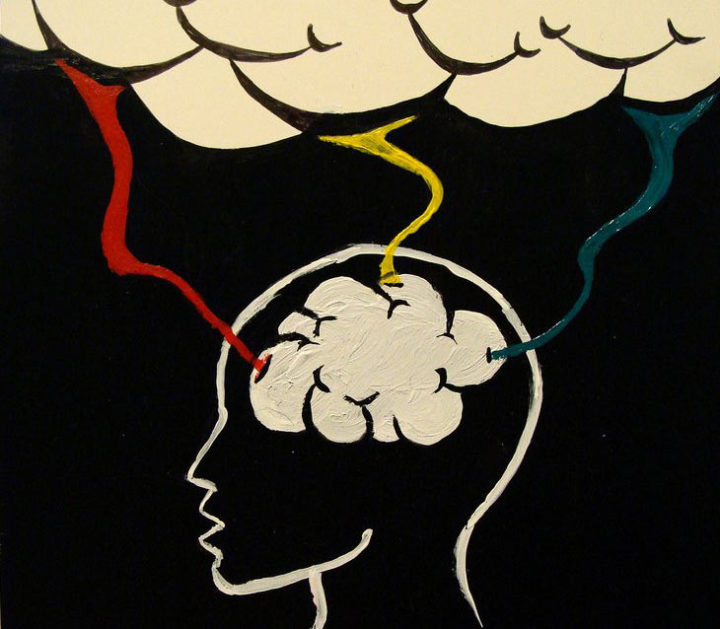
Of course, anger too easily or frequently mobilized can undermine relationships or damage physical health in the long term. Prolonged release of the stress hormones that accompany anger can destroy neurons in areas of the brain associated with judgment and short term memory and weaken the immune system. For those who struggle with chronic anger, or for those who only experience occasional outbursts, learning skills to identify and navigate this powerful emotion can lead to growth and change.

What causes anger?

The question of why some shrug off annoyances while others explode in rage is a fascinating one. One model of anger, put forth by psychologist Jerry Deffenbacher, posits that anger results from a combination of the trigger event, the qualities of the individual, and the individual’s appraisal of the situation.

The trigger is the event that provokes anger, such as being cut off in traffic or yelled at by a parent. The qualities of the individual include personality traits, such as narcissism, competitiveness, and low tolerance for frustration, and the pre-anger state, like levels of anxiety or exhaustion. Perhaps most importantly is cognitive appraisal—appraising a situation as blameworthy, unjustified, punishable, etc. The combination of these components determines why and if people get mad.

How can I manage my anger?

If you are often carried away by anger, it can be helpful to understand the patterns that trigger you. It’s possible to intervene at different points along the way to deal with anger effectively.

1. Sleep: Sleep deprivation makes it harder to control angry impulses, so regular, healthy sleep can prevent you from being provoked.

2. Consider alternative interpretations: And ask yourself what evidence you have to support your angering interpretation. Consider different perspectives.

3. Take deep breaths: Take long, slow, deep breaths, using the diaphragm rather than the chest.

4. Avoid the “catharsis myth”: Venting anger, acting with aggression, and viewing aggressive content does not tend to release anger effectively.

5. Know that it’s ok to get mad: If you have been wronged, treated unfairly, or provoked, you should get angry, but express it assertively instead of aggressively.

How can I manage anger that’s warranted?

In cases of warranted anger, such as a coworker who never contributes to collaborative projects, you may want to use a different set of anger management tips. In those situations:

1. Distance yourself from the angering situation. This will help you stop ruminating and develop a clear path forward.

2. Dedicate time to thinking about how to solve the root problem so it doesn’t occur again.

3. Express your anger assertively, with a solutions-oriented approach, rather than aggressively.

East Timor: Brief analysis of its history & independence.

East Timor or Timor-Leste is a tiny island country in Southeast Asia nestled between Australia and Indonesia.

For more than 300 years the territory of East Timor was ruled by Colonial Portugal (Portuguese Timor). They set up both commercial outposts and catholic missions. On 28 November 1975, Portugal withdrew from the island territory when the Revolutionary Front for an Independent East Timor had declared the territory’s independence. But this exit from East Timor was not at all smooth and this enraged bitter rivalry between various local groups. Just nine days later in December 1975 East Timor was invaded and occupied by the Indonesian military. Suharto, the Indonesian president at that time didn’t receive much resistance from the western countries due to the left-leaning stance of East Timor at that time (Cold war).  The Indonesian occupation was a brutal and violent period in East Timor’s history with various suppression tactics many people lost their lives during that period.

The following decades were highly violent with many conflicts between the separatist groups known as Fretilin and the Indonesian military. The military fought a continuous guerilla war with the rebels in the island’s interior mountains. There were numerous rights violations and over 100,000 people died under the occupations of Indonesia.

One of the most defining instances happened on November 12, 1991, when the Indonesian military shot and killed over 250 people who had come for the memorial procession in honor of Sebastio Gomez, a pro-independence supporter killed by the Indonesian military. The events occurred in the Santa Cruz Cemetery in Dili, East Timor’s capital. This tragedy is known as the Santa Cruz Massacre. The event gained international media attention. Although the Indonesian occupation did not cede until eight years later in 1999, the Santa Cruz massacre was a defining moment in the island nation’s quest for independence.

In 1998 president Suharto resigned from his position after more than 30 years in power due to growing pressure and protests against him from within the country. His replacement was open towards more open towards the autonomy of East Timor. International pressure for East Timor grew in 1998. During the downfall of the New Order government, as part of Reformasi, a referendum was held in East Timor to ask whether they wished to remain in Indonesia with increased autonomy or become independent. On August 30, 1999, about 78% of the population of East Timorese chose to remain independent.

Following the referendum, violence again erupted in East Timor as Indonesian-backed militias increased their activities across the country. In September UN peacekeeping let by Australia force took control of the situation but a lot of damage was already done. In 2002 Xanana Gusmão was elected as the first president after three years of transitional governance by the UN.

As of today, the country has been relatively stable but the economic conditions have not been improved. Indonesia’s Timor has fared comparatively better than East Timor. It was also discovered that Australia, a country that East Timor considered as their ally had spied on East Timor to gain leverage over negotiations on the exploitation of natural resources in the Timor Sea. On a positive note, the country has comparatively good relations with Indonesia now.

References:

Sanskrit.

Sanskrit is a standardized dialect of Old Indo-Aryan, originating as Vedic Sanskrit as early as 1700-1200 BCE. One of the oldest Indo-European languages for which substantial documentation exists, Sanskrit is believed to have been the general language of the greater Indian Subcontinent in ancient times.

Sanskrit ; attributively संस्कृत-, saṃskṛta-; nominaly संस्कृतम्, saṃskṛtam, is a classical language of South Asia belonging to the Indo-Aryan branch of the Indo-European languages. It arose in South Asia after its predecessor languages had diffused there from the northwest in the late Bronze Age. Sanskrit is the sacred language of Hinduism, the language of classical Hindu philosophy, and of historical texts of Buddhism and Jainism. It was a link language in ancient and medieval South Asia, and upon transmission of Hindu and Buddhist culture to Southeast Asia, East Asia and Central Asia in the early medieval era, it became a language of religion and high culture, and of the political elites in some of these regions. As a result, Sanskrit had a lasting impact on the languages of South Asia, Southeast Asia and East Asia, especially in their formal and learned vocabularies.

Sanskrit generally connotes several Old Indo-Aryan varieties. The most archaic of these is Vedic Sanskrit found in the Rig Veda, a collection of 1,028 hymns composed between 1500 BCE and 1200 BCE by Indo-Aryan tribes migrating east from what today is Afghanistan across northern Pakistan and into northern India. Vedic Sanskrit interacted with the preexisting ancient languages of the subcontinent, absorbing names of newly encountered plants and animals; in addition, the ancient Dravidian languages influenced Sanskrit’s phonology and syntax. “Sanskrit” can also more narrowly refer to Classical Sanskrit, a refined and standardized grammatical form that emerged in the mid-1st millennium BCE and was codified in the most comprehensive of ancient grammars, the Aṣṭādhyāyī (“Eight chapters”) of Pāṇini.The greatest dramatist in Sanskrit, Kālidāsa, wrote in classical Sanskrit, and the foundations of modern arithmetic were first described in classical Sanskrit. The two major Sanskrit epics, the Mahābhārata and the Rāmāyaṇa, however, were composed in a range of oral storytelling registers called Epic Sanskrit which was used in northern India between 400 BCE and 300 CE, and roughly contemporary with classical Sanskrit. In the following centuries, Sanskrit became tradition-bound, stopped being learned as a first language, and ultimately stopped developing as a living language.

Good digestion

In this busy lifestyle we get a lot of stress and in this period where in covid-19 situation everything has been affected by and one of the most effected thing is our health, due to increasing number of covid-19 cases and to prevent it from spreading various many people have lost their jobs and some are doing work from home.

The one who lost their jobs are basically not engaged in any sort of physical activity they have been doing when they were at their workplace.

The one who must work from home because of that they have to operate from their home by sitting in a place for long period of time.

Both above situation and many more have affected our digestion system which has affected us in many ways.

In fact, food is broken down and provide energy to the body in digestive system.

So, we should take better care of our digestive system. Though there are more effects of digestive system and from ancient time our grand parents have been following some rituals which keeps our digestive track healthy.

  • Eat slowly.

There are many who in hurry to work chew their food for not more than 4-5 times in mouth but the good time you must chew your food is 32 times in mouth, because our digestive system is designed as our 50% of digestion takes place in our mouth.

You must chew your food in your mouth.

  • Instant energy crises

When we chew fats for minimum 4-5 times only then our digestive system uses its energy to digest the food which results in us instant energy crises. So, one must chew their food and eat slowly.

  • A proper meal.

A proper meal is not only the one thing (unhealthy) that we have eaten it is a whole day what we eat and how we eat.

One should eat variety of food in a day like not having rice for breakfast, lunch and dinner but diversifying it with like Poha for breakfast, Rice for lunch and roti for dinner.

  • Post meals walk.

It has been observed that or grand parents have been going out for a small walk after meals, it has become a ritual. When we intake food the amount of blood flow is diverted toward our digestive system. If we go for post meal walks them our food will digest in a good way.

And by also staying active for all day long, one must not just sit at one spot for a long period she/he should get up and go for walk for at least 5 minutes after sitting at a particular spot for almost 1 hour.

  • Doing some yoga asanas

Yoga helps in proper digestion of food one.

There are some asanas which we should do before our meals and pranayama asana after meals which will help in proper digestion.

  • Good quality sleep

While working in quite a lot of stressful schedules one should get enough amount of sleep that is almost 6-8 hours of sleep a day and stress less.

Although these are only some changes, but you must make good changes in your lifestyle not for some time for life long which will help you in not only this but in many ways.