Emotional intelligence-concepts, and their utilities and application in administration and governance

One of the most fundamental and important aspects of the human experience is our ability to sense emotions. Without it, our existence would be one-dimensional and nowhere as rich and dynamic as it is. We feel joy and euphoria when we achieve something, sadness when we lose it, and disappointment when things don’t go our way. All of these are manifestations of the different emotions we experience.

NATURE OF EMOTIONAL INTELLIGENCE

The essence of emotional intelligence as envisioned by Goleman can be summarized as follows;
It is the ability to control the emotions of others, including groups, individuals and closed people. It is a process of knowing what is good or bad and how to go from bad to good. It is susceptible to development or damage as a result of one’s life experiences. It is not genetically fixed, rather it is widely learned and continues to develop throughout life. It develops with age and experience as a person moves from childhood to adulthood. Both men and women have a personal profile of strengths and weaknesses in emotional intelligence abilities. Women tend to be stronger in skills based on empathy and social skills, while men do better in skills based on self-regulation.

BENEFITS OF EMOTIONAL INTELLIGENCE

EI has implications for many types of our lives, from personal relationships to professional settings. Some of the benefits are as follows;
Allows individuals to harness not only thinking skills but also the information and power that emotions bring. Take a realistic and realistic view of emotions as opposed to traditional notions that encourage unhealthy emotional suppression. Facilitate understanding of self and others beyond superficial information. Encourage and enable empathy to the quality of interpersonal interactions
It adds a competitive advantage over mere cognitive intelligence and technical skill so that individuals can pursue excellence and success using a wide range of intelligences. Allows individuals to control their emotions. This means that a person can intensely feel desired emotions (e.g. joy, love, etc.) and avoid unwanted emotions like anger, jealousy, etc.

Application of emotional intelligence in administration and governance

Many administrative staff are extremely talented, exceptionally intelligent and have very high IQs. They excel in computer science, science, and math. But they have difficulty establishing social relationships. Many of them are rebellious and ruthless in their reactions to the outside world. They have little or no feelings for the people around them. They feel physiologically uncooperative in their relationships and lack social kindness or even a personal social life.

People with high emotional intelligence know how to listen to their feelings and control their intensity so that they are not influenced by others. Emotionally intelligent people know how to manage troublesome emotions. Emotionally intelligent people feel the effects of their emotions on others. People with emotional intelligence know how to use their strengths and compensate for their weaknesses. Emotionally intelligent people listen to other people’s feelings and can relate to them. Emotionally intelligent people act ethically and build trust through honesty and consistency. In the field of management and operations, emotional intelligence includes 5 main elements of emotional intelligence: Self awareness. Self-regulating. Motivation. Empathy. Social ability. These emotional intelligence skills are essential for successful leadership. Self-awareness and agency skills for accurate and confident self-assessment help emotionally intelligent decision-makers determine their appropriate role in the decision-making process (Goleman, 2001). Self-management and its behavioral components such as self-control, reliability, conscientiousness, adaptability, willingness to succeed, and initiative are important emotional intelligence skills for decision makers. decisions (Goleman, 2001). As an administrator and leader, you must manage these factors. 1. Self-Awareness: If people are self-aware, they always know how their feelings and emotions affect those around them. Perceiving themselves in an administrative or leadership position also means having a clear picture of their strengths and weaknesses.

2. Self-regulation: Managers and leaders who succeed in self-regulation do nothing to verbally attack others, make hasty or emotional decisions, stereotype people, or hurt others. harm their value. Self-regulation is about maintaining control. This element of emotional intelligence also implies the flexibility and commitment of directors and leaders to personal accountability. To improve his or her self-regulation, the person must Know the values. Take responsibility yourself. Practice calm.

3. Motivation: Directors and leaders are motivated to work consistently to achieve their goals. And they have extremely high standards for the quality of their work. Administrators can improve motivation by following the method: Double-check why they perform certain behaviors. Make sure their goal statements stay fresh and energized (goal setting). Know where they are. Let’s hope and find something good: Motivated leaders are optimistic no matter what they’re up against. Adopting this mindset can take some practice, but it’s well worth it.

4. Empathy: Empathy is essential to running a successful team or organization. Empathetic directors and leaders have the ability to put themselves in the shoes of others. They support and develop their team members, challenge those who act unfairly, provide constructive feedback, and listen to those in need

. 5. Social skills: Directors and employees should develop social skills. People who do well in this element of emotional intelligence are excellent communicators. They are equally open to bad news as well as good, and they are adept at getting their team to support them and get excited about a new task or project. Managers with good social skills are also good at managing change and skillfully resolving conflicts.


Panchayati Raj

The term “Panchayati Raj” in India signifies the system of rural local self-government. It has been established in all the systems of India by the Acts of the state legislative to build democracy at the grass root level. It is ensured with rural development. It was constitutional through 73rd Constitutional Amendment Act, 1992.

Ø A three-tier structure of Indian administration for rural development is called panchayati Raj. The aim of the panchayati Raj is to develop local self government in districts, zones and villages.

Ø Rural development is one of the main objectives of panchayati Raj and this has been established in all states of India except Nagaland, Meghalaya and Mizoram. In all union territories except Delhi and certain other areas. These areas include:-

a) The scheduled areas and the tribal areas in the states.

b) The hill area of Manipur for which a district council exists and

c) Darjeeling district of West Bengal for which Darjeeling Gorkha Hill council exists.

Evolution of Panchayati Raj

Ø The panchayati system in India is not purely a post-independence phenomenon. In fact, the dominant political institution in rural India has been the village panchayat for centuries. In ancient India, panchayat were usually elected councils with executive and judicial powers.

Ø The evolution of the Panchayati Raj system, however, got a trip after the attainment of independence after the drafting of the constitution. The constitution of India in Article 40 enjoined, The state shall take steps to organise village panchayats and endow them with such powers and authority as may be necessary to enable them to function as units of self-government.

Ø There were member of committees appointed by the government of India to study the implementation of self-government at the rural level and also recommend steps in achieving this goal.

Ø The committee appointed are as follows:-

a) Balwant Rai Mehta Committee

b) Ashok Mehta Committee

c) G V K Rao Committee

d) LM Singvi committee

A. Balwant Rai Mehta Committee and Panchayati Raj

The committee was appointed in 1957, to examine and suggest measures for better working of the community development programme and the national extensions services. The committee suggested the establishment of a democratic decentralised local government which came to be known as panchayati Raj.

Recommendations by the Committee

Ø Three tier panchayati raj system: Gram Panchayat, Panchayat Samiti and Zila Parishad.

Ø Directly elected representatives to constitute the gram panchayat and indirectly elected representative to constitute the panchyat samiti and zila parishad.

Ø Planning and development are the primary objectives of the panchayati raj system.

Ø Panchayat Samiti should be the executive body and zila parishad will act as the advisory and supervisory body.

Ø District collector to be made the chairman of the Zila Parishad

Ø It also requested for provisioning resources so as to help them discharge their duties and responsibilities.

v The Balwant Rai Mehta committee further revitalised the development of panchayati in the country, the report recommended that the panchayati raj institutions can play a substantial role in community development programmes throughout the country.

v The objectives of the panchyat, thus was the democratic decentralisation through the effective participation of locals with the help of well-planned programme. Even then prime minister of India, Pandit Jawaharlal Nehru, defended the panchyat system by saying, “authority and power to the panchayats”.

B. Ashok Mehta committee and Panchayati Raj

Ø The committee was appointed in 1977 to suggest measures to revive and strengthen the declining panchayati raj system in India.

The key recommendations are:-

Ø The three-tier system should be replaced with two-tier system: Zila parishad (District-level) and the mandal panchayat (a group of villages).

Ø District level as the first level of supervision after the state level.

Ø Zila Parishad should be the executive body and responsible for planning at district level.

Ø The institutions (zila parishad and the mandal panchayat) to have compulsory taxation powers to mobilise their own financial resources.

C. G V K Rao committee and Panchayati Raj

Ø The committee was appointed by the planning commission in 1985. It recognised that development was not seen at the grass root level due to bureaucratisation resulting in panchayat raj institutions being addressed as “grass without roots”. Hence, it made some key recommendations which were as follows:-

Ø Zila Parishad to be the most important body in the scheme of democratic decentralisation. Zila Parishad to be the principal body to manage the development programmes at the district level.

Ø The district and the lower levels of the panchayati raj system to be assigned with specific planning, implementation and monitoring of the rural development programmes.

Ø Post of district development commissioner to be created. He will be chief executive officer of the zila parishad.

Ø Elections to the levels of panchayati raj system should be held regularly.

D. L M Singhvi committee and panchayat raj

The committee was appointed by the government of India in 1986 with the main objective to recommend steps to revitalise the panchayati raj system for democracy and development. The following recommendations were made by the committee:-

1. The committee recommended that the panchayat raj system should be constitutionally recognised. It also recommends constitutional provisions to recognise free and fair election for the panchayati Raj system.

2. The committee recommended reorganization of villages to make the gram panchayat more viable.

3. It recommended that village panchayats should have more finances for their activities

4. Judicial tribunals to be set up in each state to adjudicate matters relating to the elections to the Panchayat Raj institutions and other matters relating to their functioning.

Ø All these things further the argument that panchayat can be very effective in identifying and solving local problems, involve the people in the villages in the development activities, improve the communication between different levels at which politics operate, develop leadership skills and in short help the basic development in the states without making too many structural changes. Rajasthan and Andhra Pradesh were the first to adopt panchayati raj in 1959, other states followed them later.

Ø  The act is a very significant step in creating democratic institutions at the grassroots level in the country. Art has transformed representative democracy into participating democracy.

Salient features of 73rd Constitutional Amendment Act , 1992

1. Gram sabha

2. Three-tier system

3. Election of members and chairperson

4. Reservation of seats :-

a) For SC and ST

b) For Women

c) The state legislatures are also given the provision to decide on the reservation of seats in any level of panchayat or office of chairperson in favour of backward classes.

5. Duration of panchayat

6. Disqualification

7. State election commission

8. Powers and functions

9. Finances

10. Finance commission

11. Audit of accounts

12. Application to union territories

13. Exempted state and areas

14. Continuance of existing law

15. Bar to interference by courts.

In India, the panchayati raj system is not a post-independence development. For decades, the village panchayat has been the most powerful political entity in rural India. Panchayats were elected councils in ancient India that had administrative and judicial authority. Panchayat Raj is a three-tiered administrative framework in India that focuses on rural development. The panchayati Raj is a system of local self-government that is used to build districts, zones and villages.

How Development Administration introducing socio economic transformation

Source: leverage.edu

The nectar of development administration is to bring changes through integration, organized and properly directed governmental action. The Administrative shift concern towards development objectives the researchers and practitioners of Public Administration forced to conceptualize the developmental conditions and to bridge the gap in administrative theory.

The term development administration was first coined in UL Goswami an Indian scholar’s article entitled ‘The structure of development administration in india’ published in 1955. George Gant, an american scholar is regarded as the father of development administration, Edward Weidner, Riggs , Ferrel Heady were major contributor to this field.

Conceptual thinking in this area is notably available in the writing of a group of American experts on comparative administration such as Merle Fainsod, Montgomery and Diamant. The writing of these scholars not just talk about foundation not Development Administration but also contributed greatly to its formulation and growth. Emergence of concept of developing countries in Asia, Africa and Latin America due to the liquidation of colonialism and imperialism. Extensive american economic and technicalassistance plans to newly emerged developing countries. Developmental schemes in the developing countries through multilateral technical aid and financial assistance and established Comparative Administration Group.

Source: futurelearn

After the World War Second, countries became politically independent, they have been facing political problem, they have been confronting immense problem if poverty, illiteracy, poor health, low agricultural productivity, lack of industrial development and socio political instability. The immediate action before these countries is to bring about socio economic transformation and nation building through change.

In order to achieve the objectives, the developing countries have under taken various Departmental activities in the economic and the social sphere of society. The term Development Administration is used to refer to the directly government led effort to intervene in the process of socio economic transformation.

The new administration required for the government in both quantitatively and qualitatively difference from the traditional administration. Development Administration is a concept that aim to strengthen the structure and function of developing countries in post world War II.

Objectives of Development Administration are conclude the innovative strategies for the development. Development Administration emphasis on development at the grassroot level. Development has to be need oriented and require self reliant process. It stress on social development and human capital as a major resource. Development has to be viewed not merely as a technological problem but found ideological ground.

Profound and rapid change in order to establish a distriction in  social order. Recognizing and highlighting the unity, effective and efficient use of scarce resources. Creation of a politics administration environment which is oriented towards securing basic needs  of the population. Freedom of administrative machinery to express its values and beliefs without fear or favour on programmes and projects.

The capacity of an administrative system to take decisions in order to meet the increasing demands coming from the environment with objective of achieving larger political and socio economic goals. Specialization and division of tasks and in the professionalism is personnel. Increase in administrative capability and capacity. A pattern increasing effectiveness in the optimum utilization of available resources and increase the Governance capability and capacity. Modernising the bureaucracy by external inducement and transfer of technology and training is necessary.

Development Administration of developing nation’s is rooted in the field as most of the developmental activities take place at field level. Emphasis on decentralization of authority which enables the different field units. Administration encompasses contribution from cultural anthropology and sociology. A wider perspective than the conventional approach based on organizational reforms. Development administration lays emphasis on self reliance and participation of people in the development activities. It stresses decentralized, responsive and accountable management of Developmental plans, policies and programmes.


How Development Administration introducing socio economic transformation

Source: leverage.edu

The nectar of development administration is to bring changes through integration, organized and properly directed governmental action. The Administrative shift concern towards development objectives the researchers and practitioners of Public Administration forced to conceptualize the developmental conditions and to bridge the gap in administrative theory.

The term development administration was first coined in UL Goswami an Indian scholar’s article entitled ‘The structure of development administration in india’ published in 1955. George Gant, an american scholar is regarded as the father of development administration, Edward Weidner, Riggs , Ferrel Heady were major contributor to this field.

Conceptual thinking in this area is notably available in the writing of a group of American experts on comparative administration such as Merle Fainsod, Montgomery and Diamant. The writing of these scholars not just talk about foundation not Development Administration but also contributed greatly to its formulation and growth. Emergence of concept of developing countries in Asia, Africa and Latin America due to the liquidation of colonialism and imperialism. Extensive american economic and technicalassistance plans to newly emerged developing countries. Developmental schemes in the developing countries through multilateral technical aid and financial assistance and established Comparative Administration Group.

Source: futurelearn

After the World War Second, countries became politically independent, they have been facing political problem, they have been confronting immense problem if poverty, illiteracy, poor health, low agricultural productivity, lack of industrial development and socio political instability. The immediate action before these countries is to bring about socio economic transformation and nation building through change.

In order to achieve the objectives, the developing countries have under taken various Departmental activities in the economic and the social sphere of society. The term Development Administration is used to refer to the directly government led effort to intervene in the process of socio economic transformation.

The new administration required for the government in both quantitatively and qualitatively difference from the traditional administration. Development Administration is a concept that aim to strengthen the structure and function of developing countries in post world War II.

Objectives of Development Administration are conclude the innovative strategies for the development. Development Administration emphasis on development at the grassroot level. Development has to be need oriented and require self reliant process. It stress on social development and human capital as a major resource. Development has to be viewed not merely as a technological problem but found ideological ground.

Profound and rapid change in order to establish a distriction in  social order. Recognizing and highlighting the unity, effective and efficient use of scarce resources. Creation of a politics administration environment which is oriented towards securing basic needs  of the population. Freedom of administrative machinery to express its values and beliefs without fear or favour on programmes and projects.

The capacity of an administrative system to take decisions in order to meet the increasing demands coming from the environment with objective of achieving larger political and socio economic goals. Specialization and division of tasks and in the professionalism is personnel. Increase in administrative capability and capacity. A pattern increasing effectiveness in the optimum utilization of available resources and increase the Governance capability and capacity. Modernising the bureaucracy by external inducement and transfer of technology and training is necessary.

Development Administration of developing nation’s is rooted in the field as most of the developmental activities take place at field level. Emphasis on decentralization of authority which enables the different field units. Administration encompasses contribution from cultural anthropology and sociology. A wider perspective than the conventional approach based on organizational reforms. Development administration lays emphasis on self reliance and participation of people in the development activities. It stresses decentralized, responsive and accountable management of Developmental plans, policies and programmes.


District Administration and Competency of Government

Source: Kahoot

The district is the geographical unit where the complete instrument of administration can be traced. It is the cutting edge level of administration that policies are transformed into action. The success or failure of policies are dependent on the efficiency of District Administration.

It is impossible for union government to manage entire nation in one unit so it is important to distribute the power into different units. Every state is divided into a number of administrative sub centres to needs of the people in the areas comprised in small areas.

According to Willoughby, field administrative organization falls under either of the patterns of areas including territorial, functional or unitary and multiple areas. These areas organized in horizontally , vertically and hierarchically. The office incharge of the area is the head, the head of all other specialized units at that level are his subordinates.

All communication from the field station to the head office and back are routed through him and he has a responsibility for the acts of all other departmental heads. The position is very different in a multiple or functional form of organization, where different division or branches of the headquarters office have their equitable field establishment at different areas and maintain direct contact with them. There is no coordinating or integrating authority at the area level, each service or agency is treated as an independent entity unrelated to other services the line of authority runs direct by from it’s headquarter office.

Luther Gulick described three patterns of field organization as all finger, short Arms long fingers and long Arms short finger. All fingers agencies are controlled by the headquarters office directly. Short arms long fingers patterns, agencies are controlled by the division, they communicate with control field officers in their respective areas.

Long Arms short fingers pattern geographical sub division, to these sub division are located in the central office itself each with an extensive staff and they communicate with the central field office in three respective areas. These districts split into tehsils/Taluks, headed by tehsildars, tehsil lies the pargana/revenue circle under the charge of revenue inspector then primary unit, village official is the patwari or Lekhpal or village accountant.

Constitution of India did not mentioned the term ‘district’ excluding Article 233 mentioned in term of ‘district judge’s. The 73th and 74th Amendment Act of 1992 including the term district at several places under Part IX and IX A dealt with panchayat and muncipalities respectively.


District Administration is the total management of public affairs, within this unit. DA is that portion of Public Administration which functions within the territorial limits of a district as explained by S S khera who is prominent figure in describing District Administration.

District as a unit of administration has a long history from the time of Medieval times. District called Sarkar and headed by Karori faujdar under the direct control of subedar. District administration and the office of district collector existence during the of British East India Company.

After independence the office of the District collector suffered in order to maintain status and authority due to expansion of governmental activities and emerged as Panchayati Raj, replacement of ICS into IAS, influence of pressure Group and Growth of Commissionerate system.

The programme are executed under the supervision direction and leadership of the collector. Development had a top down approach where people brought under the umbrella of one or in other development Programme. District collector’s main responsibility was identification of beneficiary in the development activities. District collector regulate the development.

The task of good District Collector is the ability to work with all people. This requires good human resource management, strategic thinking and financial management. Village Panchayat refer to the councils of the local government of India, look after the administrative affairs of the rural regions. The local government of India are self sufficient and self enabled units that work under the State Government of India. The 73rd and 74th Amendment Act 1992 attach with development of city and village councils in India. Local government have regular elections, fixed five year term and review and augmentation of finance by the State Finance commission.


HOW FINANCIAL ADMINISTRATION IS CRUCIAL FOR ECONOMIC GROWTH

Source: Public Consulting Group

The management of the finance of a state or whether Public authority endowed with taxing and spending power known as Financial administration. Efficiency and economy are two watch words of Public finance. Financial administration desire to raise, spend and account for the funds needs to fulfill the Public expenditure.

It involves the activities of “four agent executive” which needs and spend funds, that grants the funds and infuse them to particular ministries and departments of the Finance Ministry, that hold the strong bond on expenditure and audit; they will decide which fund use in what manner.

Financial administration of Government depicted as two main elements such as budgeting, financial control and fiscal & monetary policies. These elements incorporate a variety of subjects like various types of budget system, parliamentary financial control, delegation of financial powers, tax policies and tax administrative problem.

 Scope of financial Administration

Source : CFO Share

Financial administration increasing it’s magnitude and complexity. It involves the discipline of economics, political science, commerce, management, statistics, philosophy and International Relations.

Fiscal policy, economic policy, fiscal planning, monetary policy , planning and management are parts of financial Administration. Constitutional law, financial administration, economy, socio – economic development are creating relation with Public Administration. To look at Administration of Public financial institutions and Public enterpriser. Budgeting performance and management accounting. Financial accounting and management accounting, financial auditing and management auditing are the wider version of financial Administration.

Financial administration at different levels and their interest relations at federal state and local states. Regulatory financial administration for regulating financial institutions by the private sector. Promote education, training and research in financial Administration. Ensure ethics and integrity of financial administration. Corporate Financial administration experience in developed and developing society. Financial control by the legislature, executives and judiciary.

Significance of financial Administration

Financial administration role is to ensure the economic growth of a country. It is more important for developing countries which increasing it’s socio – economic and infrastructural problems like poverty, unemployment and other economic related issues. Financial administration acquiring importance in the area of financial planning, protecting funds, improves standard of living, Allocation of funds, Economic Growth and stability and taxation planning.

Nature of Financial administration

Source : Unblast.com

Financial administration capture wider spectrum of development. Financial administration based on old and new economic methods that put forward the straight method for improving the economy. Financial administration conceive as a aggregate values of generation, regulation and distribution of monetary resources which is eligible for the sustenance and growth of Public organization.

Some scholars view this as traditional perspective, emphasis upon that set of Administrative functions in a public organization which relate to an arrangement of flow of funds as well as to regulating mechanism and processes which ensure proper and productive utilisation of these funds. The core of pure theory of Public finance us that Public finance should deal with the problem of Public income, Public expenditure and public debt in more practical way without any relation to a set of values and premises of the political party in power. As per to the intellectual of modern age, financial Administration is broad concept, it is an integral part of the overall management process of public administration except only raising Public funds. It discuss three important theories of Public finance i . e the socio political theory by (Wagner Edgeworth and pigou), the functional theory of Keynesian perspective and activiting view of modern Public finance theorists.

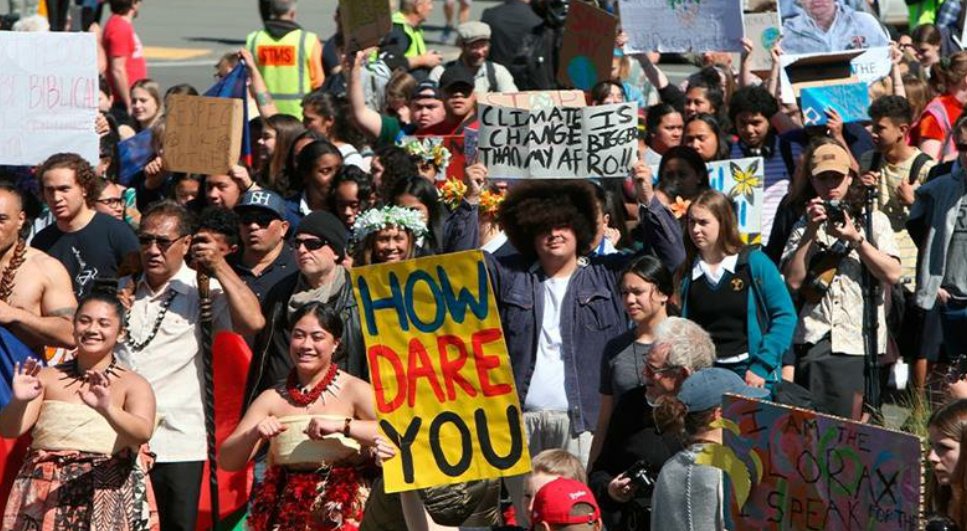
STOP BARRING THE VOICES OF NATION

Source: The Guardian (New Zealand start climate change protest)

When countries are facing crisis in the form of protests that simply means government and others should focus on their needs. Protests emphasized on the fact that we do have problems in our countries which we need to address as early as possible. Protests are a wake call to the country.

Source: The Washington Post (Chile demonstration March October 2019)

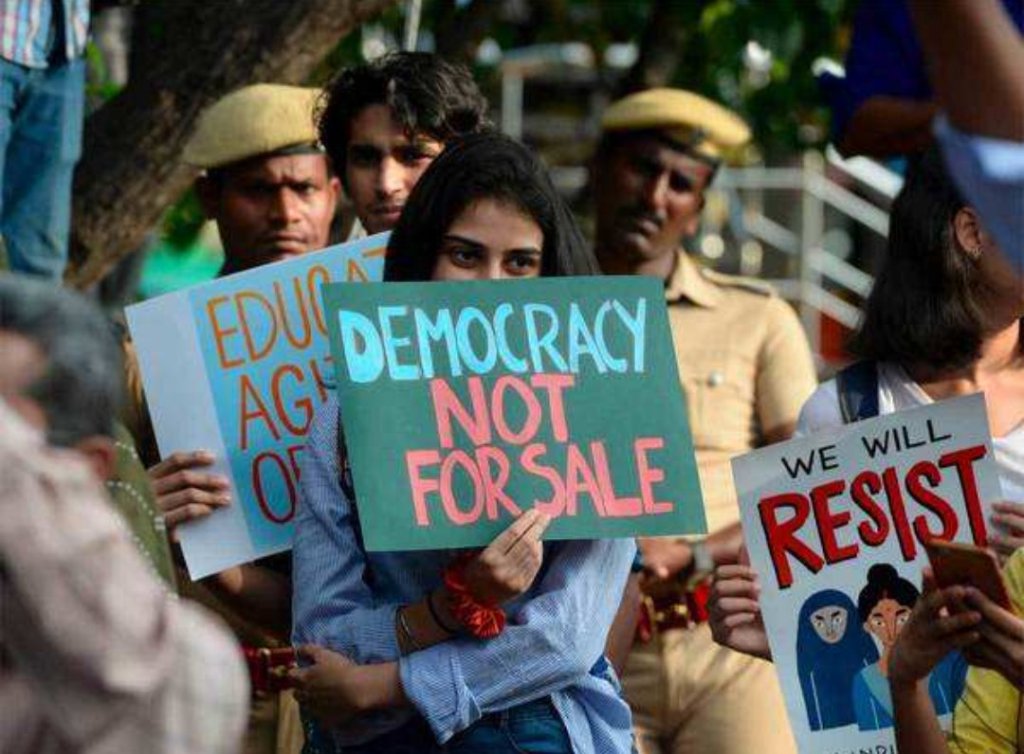
In Modern era protests become the vitality of the democracy. If government tries to shut the voices of the protests then we should raise our voices even more because if we don’t react today it will be become more dangerous to the Constitution, then their is no meaning to enjoying the ‘DEMOCRACY’.

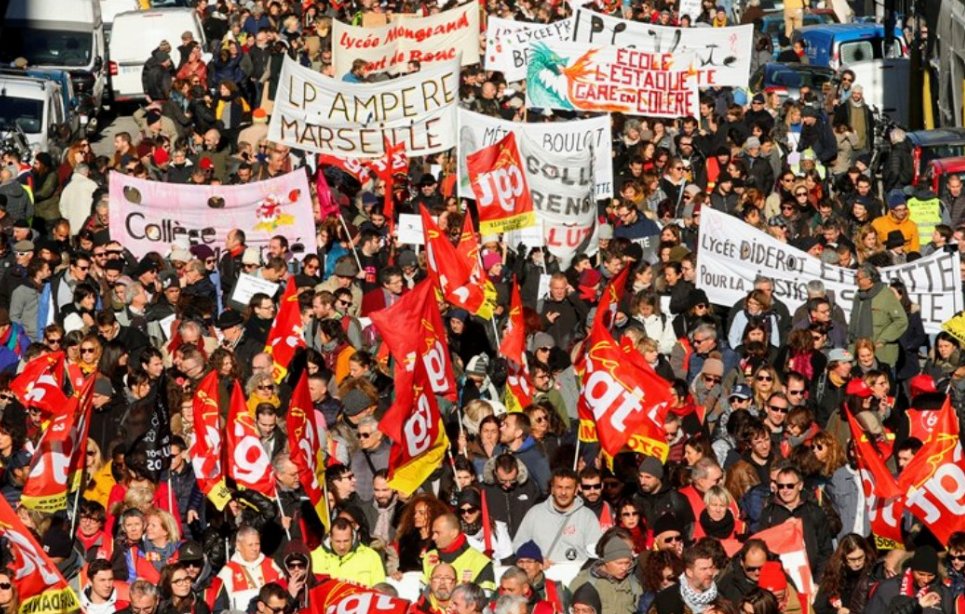
Source: New York times (French union workers strike against Government for pension reform Plan Dec 2019)

Protests are not just some voices against injustice or representing dissent. It is much more than this, more meaningful; it is AWAKENING. Awakening of people, awareness of surrounding. Awakening cannot die and it should not die because this is a combination of our consciousness or subconsciousness.

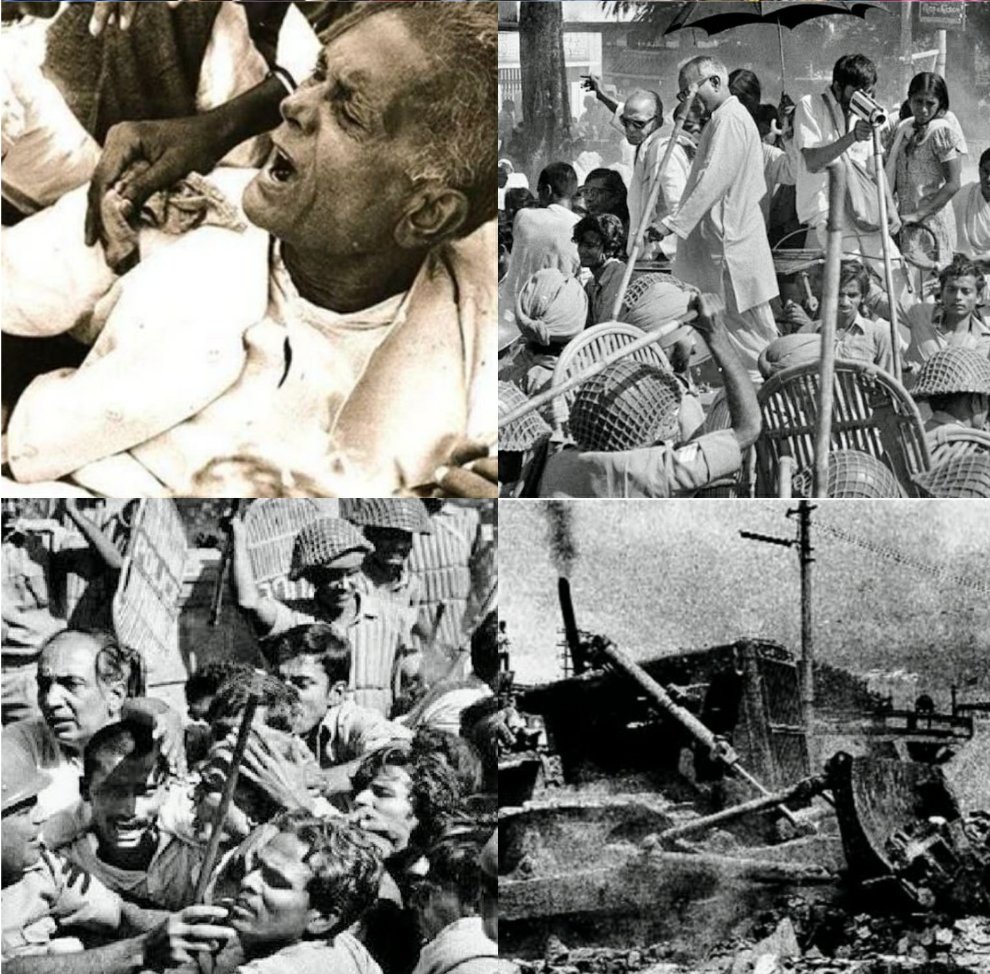
Source: TOI (Emergency in 1975)

Our history and freedom is a reflection of stand against the cruelty , knowing the fact if we don’t speak today, tomorrow will be in dark. JP Narayan movement which was started as protest against the government (Emergency) eventually become the movement for country. At the end of the movement what happened to “INDIRA” government was fallen Apart.

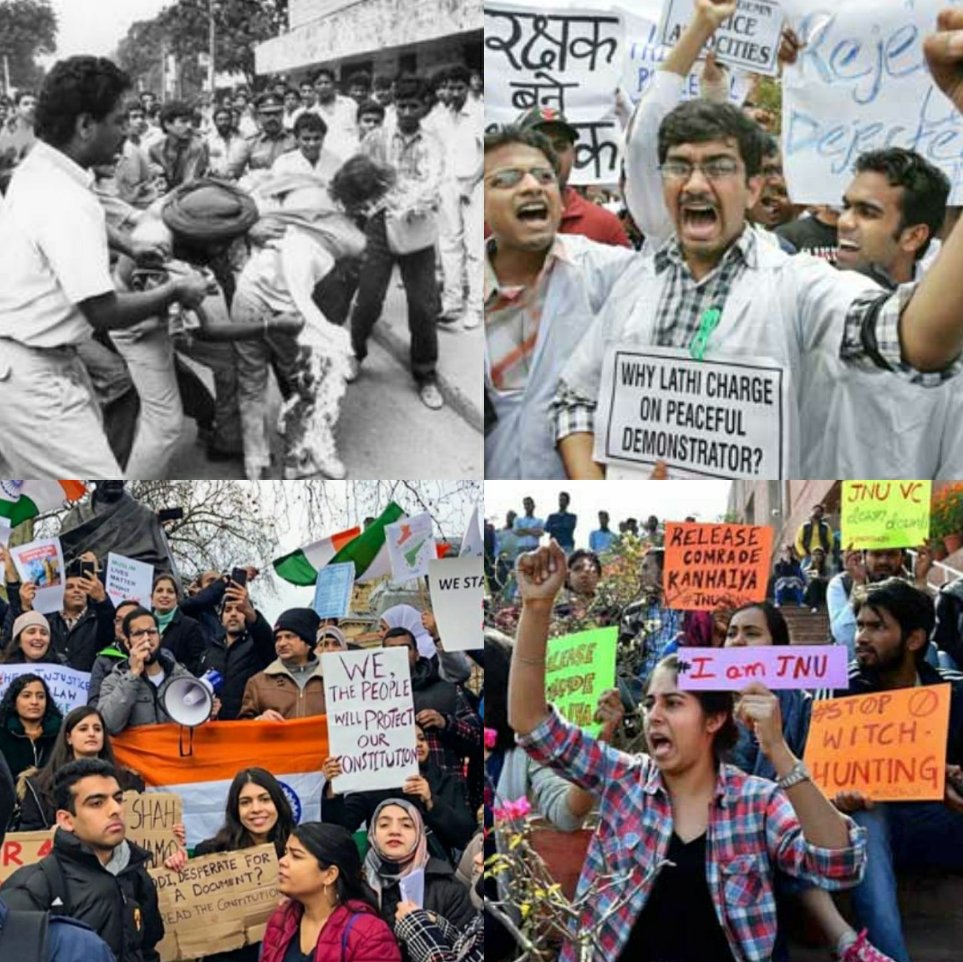
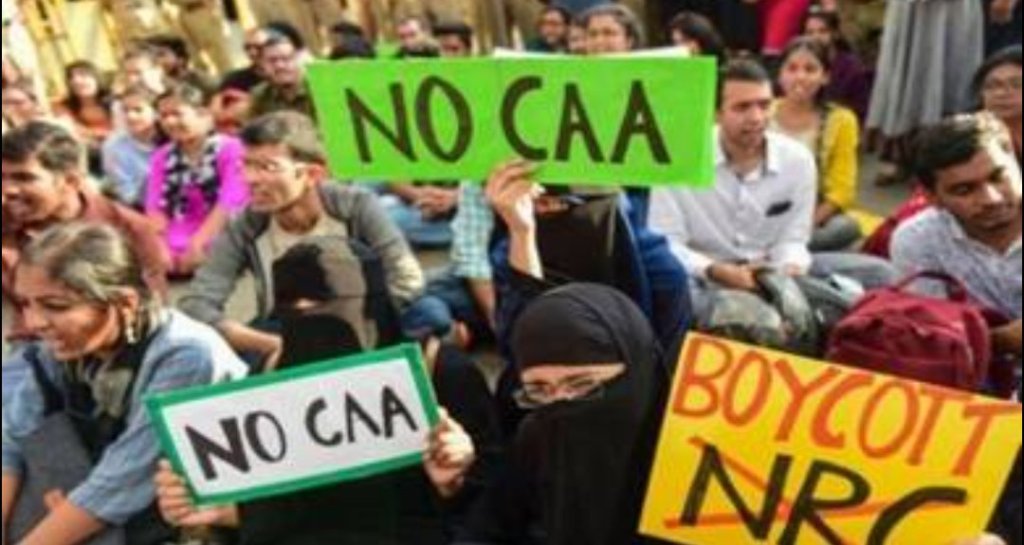
Source: TOI (From Right to Left Mandal commission, CAA Protests in foreign & Indian University)

Mandal commission another vicious mistake of government. This particular protest turned into violence. Commission introduced high reservation to Social and educationally backward classes in the central government and public sector.

Source: Indian Express

Citizenship Amendment Act 2019 was passed by the parliament of India on December 11 2019. This act amended the 1995 citizenship Act by providing a pavement to indian citizen for persecuted religious minorities from the countries like Afghanistan, Bangladesh and Pakistan; who are only Hindus, Sikhs , Buddhist, Jains, Parsis or Christian, the law does not grant such eligibility to Muslims from these Muslim majority countries. The act was declared as first act in the history of India and lndian law that used religion as criterion for citizenship. The amendment has been criticized on the basis of religious discrimination which targets one community.

 United Nations Commissioner for Human Rights (OHCHR) called this act fundamentally discriminatory. The protests first began in Assam and spread swiftly in the other states such as Meghalaya, Arunachal Pradesh and Tripura. The CAA protests rests on 14 Match 2020 because of coronavirus. This protests led Police brutality at University campus, violence brokedown against protestors. Through Section 144 Curfew Internet shutdown and paramilitary forces were imposed in various parts of the country. According to Police record, more than 65 died, 175 injured and 3000+ we’re arrested.

Source: abc

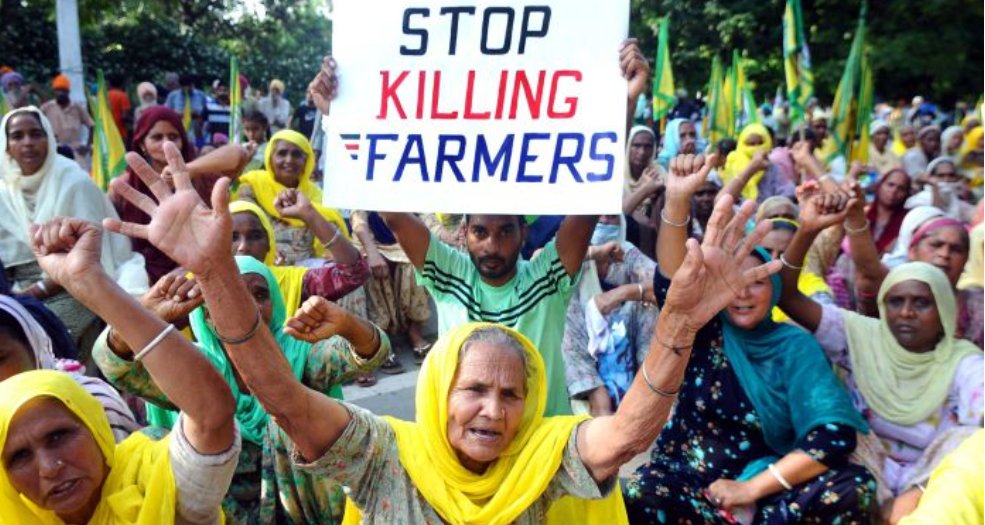
Thousands of farmers protest against three most problematic agricultural reform laws that they say government putting corporate interests over the country requirement. The 3 laws introduced to loosen the grip of rules around the sale, pricing and storage of farm produce in india. Government claimed that these changes make it easier for farmers to bypass regulatory farming market and sell their produce directly to Private buyers like supermarkets chains. As per Government, laws would benefit farmers and make investment to a agricultural sector that makes up nearly 15% of Indian $3.8 trillion economy.

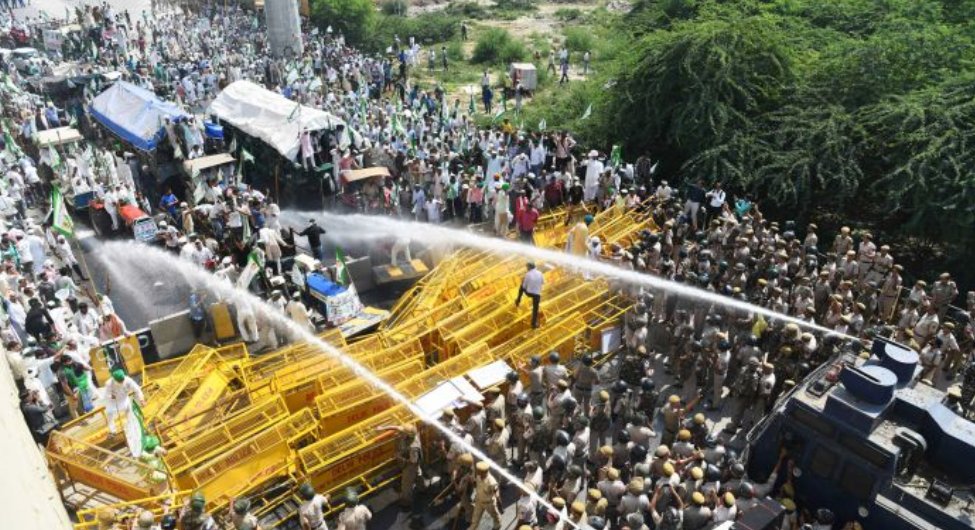
Source: Indian Express (Police use water canons to disperse & stop Farmer activits from marching into New Delhi)

Now discuss if laws sounds too accurate then where is a problem? Problem lies in Government’s intension. Farmers were worried that they don’t have enough bargaining powers to get the kinds of prices they want for their products especially when they are negotiating with bigger companies. There was one more tassel over MSP – Minimum Support Price which is a price the government guarantees for certain crops like wheat and rice. The protests were largely peaceful until 26 January after this it took drastic sight. The central government again shut down mobile internet services at several protest sites and putting the fundamentals rights of people’s on threshold.

Many socio – Political movements occurred in the past for instance Chipko movement, silent valley protest, Assam movement, Jungle bachao Andolan, Great Bombay strike, Narmada bachao Andolan, Dalit Agitation in Maharashtra (2006), Nandigram and singur protests in West Bengal (2007), Nirbhaya protest, FTII protest against chairman many more in different part of country, CAA Protest and widespread Farmer Protest.

Source: The Economics Times

Now Remember, we living in the kind of society where we know when we have to pick up our placard, flags, slogans, singing songs and show our dissent.

What should government do in such situations is a biggest question – firstly they should not adopt such policy which go against the people. Even if it is beneficiary to few people but at the same time going against the numerous number of population. Take affective measure to control the situation; Use the effective power of bureaucracy. It is government responsibility that make sure people must believe the government and their style of policy implementation is good for nation; after all Our constitution stand on – OF THE PEOPLE, BY THE PEOPLE, FOR THE PEOPLE!!

Collapsing Indian Healthcare Governance

Public health is a core components of democracy. Contemporary Health policies are unenable to build coherence with SDGs. It reflected the major execution constraints. Health Policies of India always been a disappointment point; the indecisive nature of Governance dragged country on the dangerous edge. According to world bank, India spend in Public health 3.54% of their GDP on 136.64cr demographic capacity. It is the lowest budget in World. Comparing to countries like Nepal, Myanmar, Haiti, South Sudan, Algeria and Cuba invested more than India; all spend at least 6% of their GDP in public health. Other developed nations like UK, Germany, France spend more than 10% and USA give 16% of their GDP to health care sector.

Source: Commonwealth health hub

National health policy suggested that expenditure on health by states should be increased to up to 8% but none of the states ready to invest more than 5.4% of total budget in healthcare system. Spending less in health sector decrease our capacity to fight against the pandemic in most difficult times. We require to spend more, design appropriate Policy and most importantly implement and monitor those policies in structured manner for fruitful results.

National health mission was to provide health benefits in Rural(2005) & Urban (2013). Main functions of this programme are strengthening health system, prevention of communicable and non – communicable diseases, and create universal accessibility , affordable & quality healthcare service to all citizens in urban and rural areas. This programme was extended because of the tremendous outcome which only displayed on papers but still governance needs to played their proper role in designing and implementing accurate policy. India faces several challenges in the path of addressing health crisis; India lacks strategic Policy, constructive concepts, regulation and work ethics.

Source: ncbi.nih.gov.in

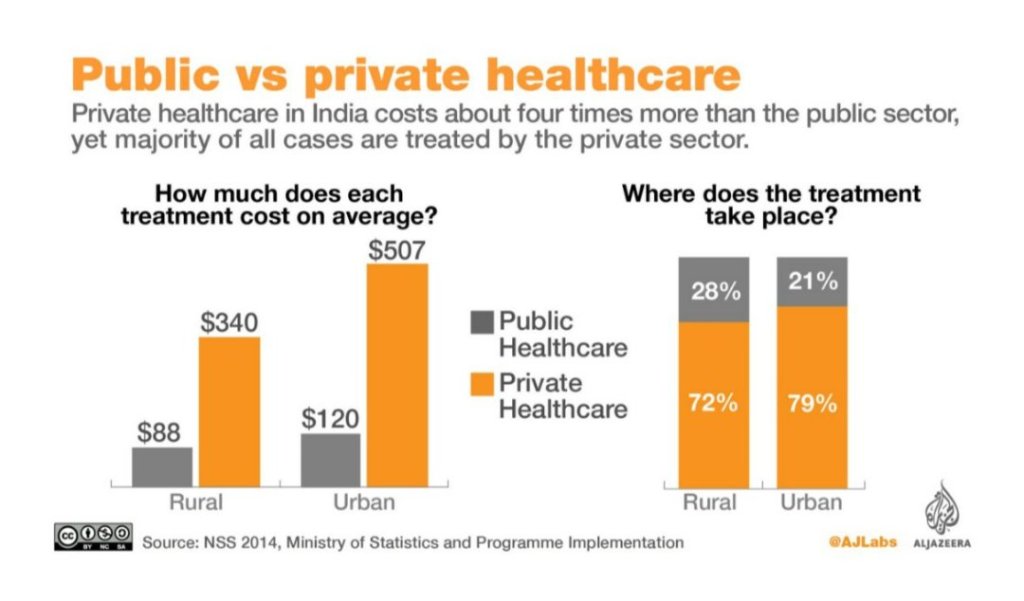
National health policy 1983 was the failure; cannot Considered to revive the healthcare crisis. Infact, liberalization opened the direction to move towards the public private partnership to achieve health services to all. To providing Healthcare services to urban poor is as essential as in rural areas. ORF mention in their report on URBAN HEALTH GOVERNANCE IN INDIA: A POLICY ROUNDTABLE addressing health as central component of urban planning and governance. Migration from rural to urban areas becoming extremely important aspect of urbanization, where people believes urban healthcare services are far more better than rural; but the urban system as crucially defected as the rural area, it raises question on the governance structure. Indian Health system cannot deal with diseases like tuberculosis, malaria, HIV+AIDS , deficiency of vitamins. Governance have to acknowledge the basic problem in health sector then only can able to build the health policy.

PUBLIC HEALTH ISSUES LEAD TO THE HEALTH CRISIS

National health policy 1983, 2002 and 2017 unleash to achieve an acceptable standard of good health system by upgrading infrastructure in existing public health; but it did not acquired the beneficial results out of these policies because Problem lying in Health Governance. Regulatory mechanism, Monitoring and evaluation of health policy aspects are not effectively pressuring for powerful outcomes. In India, 23% of sick population, 7% below poverty line population are not capable to afford Healthcare.

Source: Overview

According to spending in healthcare, India rank extremely low, estimation of spending Rs 3 per person on per day that count 1.02% of the GDP, meanwhile other countries average spending is 6%. WHO in Health financing profile 2017 depicted 67.78% of aggregate expenditure was paid out of pocket, on the other hand, the world average is 18.2%. let’s examine state – wise spending in public health.

Source: Overview

Bihar spend Rs 491 per capita on health (on 12.7cr population) less than half the Indian average spending 1.33. Madhya Pradesh spend Rs716 (on 86.8cr demography) and Uttar Pradesh Rs 733 (on 24.6cr population). On the contrary, we see complete different picture in Mizoram who spend Rs 5,862 of 4.2 % of it’s GDP (12.6cr population), Arunachal Pradesh Rs 5,177 (1.6% population) and Sikkim Rs 5126 (6.63 lakh). Two different spectrum in one country where few states neglect their public healthcare whereas others more inclined towards ensuring public health to their people.

Due to neglection of health sector, states who spend less suffering the most during Covid -19. These states had to faced the situation like lack of beds, hospital services, medical staff and medical equipments. This problem occurred because of years of neglection in health sector, health policy evaluation process was not used as weapon to counter the health crisis in India.

Lack of allocation to healthcare and lack of Governance capability caused the much bigger crisis. Covid -19 is global pandemic but it made Indian healthcare system came on it’s knees; when capital of country facing run out of beds, desperate hunt for oxygen cylinder, medical supplies it’s showed Indian healthcare system is rotten, toilsome and intricate.

Our Government and Governance is solemn enough to diminishing the health crisis. Capital of country not capable to fight against sudden health crisis then we can presuppose the conditions in rural areas. In this situation, Governance need to evaluate their mistakes that’s how Governance will play it’s sophisticated part, need some measures to ensure the public healthcare in entire country, should not resisted to only urban health centres.

Corruption in health sector, lowest quality health programme, poor cooperation between public & private sectors, lack of health awareness and no accessibility to medicines or testing machine services created cluster in health sector; which  reflected as more weakness during Covid -19. When India became epicenter of global pandemic during dangerous second wave; India made international headline. The scenes of families from hospital were horrified. It also depicted how Government failed us.

Government and bureaucrats have no capability to overturn the crisis and find relevant solution in serious conditions in country. Indian government lack leadership quality, Political will. Governance cannot work until top political leaders and bureaucrats show some credibility to disperse the crisis. India estimated 4.34 lakh death due to covid-19. Health crisis is not new in india, Government never capable to find dynamic Policy to eradicate diseases like Tuberculosis, Malaria, HIV+AIDS. Tuberculosis  caused 220,000 death every year. WHO estimated 2.64 million TB cases in 2020. KPMG report revealed that 74% doctors practice in urban areas this simply means rural area lack primary healthcare treatment facility. India has huge scarcity of doctors, nurses, paramedics and testing machines especially in rural areas. That’s how migration become prominent from rural to urban. WHO also suggested 1 doctor for 1000 people meaning 1:100 but India has 1:1445.

National TB Elimination Programme was not as effective as thought to obliterate the deadly disease from the country; where all other nation found the way to kill the health crisis. We need to revive the health policy structure and find new future oriented health policy to counter any sudden global health crisis. Let’s discuss few criteria to resist the health crisis in India.

RECOMMENDATIONS TO BUILD COLLAPSING HEALTH SYSTEM

PUBLIC PRIVATE PARTNERSHIP

Last two years shook Indian healthcare system, demanded to take evident steps in healthcare sector. This is a accurate time to transform the ancient health policy and bring unique & innovative public health programme concerning the target population. Two main components of health crisis are affordability and accessibility which majority of population cannot reach to. Well governed PPP is the direction to improve the Indian healthcare system; through PPP India have seen success in the fields such as education, urban development and infrastructure.

Source: Alijazeera

• PPP provide resources to Government, which will bring experience and finances of the private sector. It will create a bridge between affordability and accessibility to all citizens.

• PPP ensures the expertise, finances, affordability, technology, specialist doctors.

• Now, one aspect need to consider that Public – Private sector will bring the resources but how, where, what to utilize at what place and in how much quantity for that Non – Government Organization can play the role of agent to fulfill the necessary requirements & provide research to private sector.

• Non – government organization can play essential role to ensure the PPP goals spread to all citizens. These organization overlook the formulation, Implementation and functioning of PPP. It can be great gap filler between affordability and accessibility.

• But, PPP should manage in control manner make sure by Governance it’s roles and functions otherwise PPP increase the burden of expenditure on common citizen. Governance needs to evaluate time to time the working mechanisms of PPP.

• Also, it is necessary to collaborate with non profit organization to maximize the result of PPP. Need to tackle down the any coming vagueness in PPP, maintain regulation.

INCREASE ALLOCATION TO HEALTHCARE

India must increase the spending on public healthcare. It should not differ state to state. Each state has to spend good  amount of their GDP in Public health. Centre Government construct one same Affordable healthcare Programme for all states. Through INTER – GOVERNMENTAL RELATION center Government ensure overlapping authority model to communicate. Govt should spend at least more than 6% of their GDP. It will provide huge access to necessary medical services in the country.

NATIONAL FREE MEDICATION AND COUNSELING

Center and state government incite medication facility including counseling and spread awareness regarding health issues of human body. Make citizens more conscious about their body. Now, this method has challenging step concerning in rural areas with help of NGOs, ASHA workers, door to door awareness is necessary to spread the words about the sanitation, coronavirus precautions, HIV+AIDS awareness and TB awareness programme. In digitalized world, Mobile clinic can play great  outlay of serving information of diseases to the people. Lunch effective powerful awareness programme in urban and rural areas Ensuring the awareness reaching to all citizens in country.  

Center and state government incite medication facility including counseling and spread awareness regarding health issues of human body. Make citizens more conscious about their body. Now, this method has challenging step concerning in rural areas with help of NGOs, ASHA workers, door to door awareness is necessary to spread the words about the sanitation, coronavirus precautions, HIV+AIDS awareness and TB awareness programme. In digitalized world, Mobile clinic can play great  outlay of serving information of diseases to the people. Lunch effective powerful awareness programme in urban and rural areas Ensuring the awareness reaching to all citizens in country.

CONCLUSION

Health Governance is one kind of Governance that we must deal with caution. Good Public Health Governance reflect the sincerety of Government ; it ensure the transparency, accountability and promote citizen centric Approach. Government determine universal Public healthcare no resistance to PAN areas. Providing Healthcare to citizens consider as enriching the immunity of country. Policy makers recite properly the Implementation part while performing the health policy; Keep the track of Monitoring then only we can decisively conclude the success of health policies.

Source: Twitter

Collapsing Indian Healthcare Governance

Public health is a core components of democracy. Contemporary Health policies are unenable to build coherence with SDGs. It reflected the major execution constraints. Health Policies of India always been a disappointment point; the indecisive nature of Governance dragged country on the dangerous edge. According to world bank, India spend in Public health 3.54% of their GDP on 136.64cr demographic capacity. It is the lowest budget in World. Comparing to countries like Nepal, Myanmar, Haiti, South Sudan, Algeria and Cuba invested more than India; all spend at least 6% of their GDP in public health. Other developed nations like UK, Germany, France spend more than 10% and USA give 16% of their GDP to health care sector.

Source: Commonwealth health hub

National health policy suggested that expenditure on health by states should be increased to up to 8% but none of the states ready to invest more than 5.4% of total budget in healthcare system. Spending less in health sector decrease our capacity to fight against the pandemic in most difficult times. We require to spend more, design appropriate Policy and most importantly implement and monitor those policies in structured manner for fruitful results.

National health mission was to provide health benefits in Rural(2005) & Urban (2013). Main functions of this programme are strengthening health system, prevention of communicable and non – communicable diseases, and create universal accessibility , affordable & quality healthcare service to all citizens in urban and rural areas. This programme was extended because of the tremendous outcome which only displayed on papers but still governance needs to played their proper role in designing and implementing accurate policy. India faces several challenges in the path of addressing health crisis; India lacks strategic Policy, constructive concepts, regulation and work ethics.

Source: ncbi.nih.gov.in

National health policy 1983 was the failure; cannot Considered to revive the healthcare crisis. Infact, liberalization opened the direction to move towards the public private partnership to achieve health services to all. To providing Healthcare services to urban poor is as essential as in rural areas. ORF mention in their report on URBAN HEALTH GOVERNANCE IN INDIA: A POLICY ROUNDTABLE addressing health as central component of urban planning and governance. Migration from rural to urban areas becoming extremely important aspect of urbanization, where people believes urban healthcare services are far more better than rural; but the urban system as crucially defected as the rural area, it raises question on the governance structure. Indian Health system cannot deal with diseases like tuberculosis, malaria, HIV+AIDS , deficiency of vitamins. Governance have to acknowledge the basic problem in health sector then only can able to build the health policy.

PUBLIC HEALTH ISSUES LEAD TO THE HEALTH CRISIS

National health policy 1983, 2002 and 2017 unleash to achieve an acceptable standard of good health system by upgrading infrastructure in existing public health; but it did not acquired the beneficial results out of these policies because Problem lying in Health Governance. Regulatory mechanism, Monitoring and evaluation of health policy aspects are not effectively pressuring for powerful outcomes. In India, 23% of sick population, 7% below poverty line population are not capable to afford Healthcare.

Source: Overview

According to spending in healthcare, India rank extremely low, estimation of spending Rs 3 per person on per day that count 1.02% of the GDP, meanwhile other countries average spending is 6%. WHO in Health financing profile 2017 depicted 67.78% of aggregate expenditure was paid out of pocket, on the other hand, the world average is 18.2%. let’s examine state – wise spending in public health.

Source: Overview

Bihar spend Rs 491 per capita on health (on 12.7cr population) less than half the Indian average spending 1.33. Madhya Pradesh spend Rs716 (on 86.8cr demography) and Uttar Pradesh Rs 733 (on 24.6cr population). On the contrary, we see complete different picture in Mizoram who spend Rs 5,862 of 4.2 % of it’s GDP (12.6cr population), Arunachal Pradesh Rs 5,177 (1.6% population) and Sikkim Rs 5126 (6.63 lakh). Two different spectrum in one country where few states neglect their public healthcare whereas others more inclined towards ensuring public health to their people.

Due to neglection of health sector, states who spend less suffering the most during Covid -19. These states had to faced the situation like lack of beds, hospital services, medical staff and medical equipments. This problem occurred because of years of neglection in health sector, health policy evaluation process was not used as weapon to counter the health crisis in India.

Lack of allocation to healthcare and lack of Governance capability caused the much bigger crisis. Covid -19 is global pandemic but it made Indian healthcare system came on it’s knees; when capital of country facing run out of beds, desperate hunt for oxygen cylinder, medical supplies it’s showed Indian healthcare system is rotten, toilsome and intricate.

Our Government and Governance is solemn enough to diminishing the health crisis. Capital of country not capable to fight against sudden health crisis then we can presuppose the conditions in rural areas. In this situation, Governance need to evaluate their mistakes that’s how Governance will play it’s sophisticated part, need some measures to ensure the public healthcare in entire country, should not resisted to only urban health centres.

Corruption in health sector, lowest quality health programme, poor cooperation between public & private sectors, lack of health awareness and no accessibility to medicines or testing machine services created cluster in health sector; which  reflected as more weakness during Covid -19. When India became epicenter of global pandemic during dangerous second wave; India made international headline. The scenes of families from hospital were horrified. It also depicted how Government failed us.

Government and bureaucrats have no capability to overturn the crisis and find relevant solution in serious conditions in country. Indian government lack leadership quality, Political will. Governance cannot work until top political leaders and bureaucrats show some credibility to disperse the crisis. India estimated 4.34 lakh death due to covid-19. Health crisis is not new in india, Government never capable to find dynamic Policy to eradicate diseases like Tuberculosis, Malaria, HIV+AIDS. Tuberculosis  caused 220,000 death every year. WHO estimated 2.64 million TB cases in 2020. KPMG report revealed that 74% doctors practice in urban areas this simply means rural area lack primary healthcare treatment facility. India has huge scarcity of doctors, nurses, paramedics and testing machines especially in rural areas. That’s how migration become prominent from rural to urban. WHO also suggested 1 doctor for 1000 people meaning 1:100 but India has 1:1445.

National TB Elimination Programme was not as effective as thought to obliterate the deadly disease from the country; where all other nation found the way to kill the health crisis. We need to revive the health policy structure and find new future oriented health policy to counter any sudden global health crisis. Let’s discuss few criteria to resist the health crisis in India.

RECOMMENDATIONS TO BUILD COLLAPSING HEALTH SYSTEM

PUBLIC PRIVATE PARTNERSHIP

Last two years shook Indian healthcare system, demanded to take evident steps in healthcare sector. This is a accurate time to transform the ancient health policy and bring unique & innovative public health programme concerning the target population. Two main components of health crisis are affordability and accessibility which majority of population cannot reach to. Well governed PPP is the direction to improve the Indian healthcare system; through PPP India have seen success in the fields such as education, urban development and infrastructure.

Source: Alijazeera

• PPP provide resources to Government, which will bring experience and finances of the private sector. It will create a bridge between affordability and accessibility to all citizens.

• PPP ensures the expertise, finances, affordability, technology, specialist doctors.

• Now, one aspect need to consider that Public – Private sector will bring the resources but how, where, what to utilize at what place and in how much quantity for that Non – Government Organization can play the role of agent to fulfill the necessary requirements & provide research to private sector.

• Non – government organization can play essential role to ensure the PPP goals spread to all citizens. These organization overlook the formulation, Implementation and functioning of PPP. It can be great gap filler between affordability and accessibility.

• But, PPP should manage in control manner make sure by Governance it’s roles and functions otherwise PPP increase the burden of expenditure on common citizen. Governance needs to evaluate time to time the working mechanisms of PPP.

• Also, it is necessary to collaborate with non profit organization to maximize the result of PPP. Need to tackle down the any coming vagueness in PPP, maintain regulation.

INCREASE ALLOCATION TO HEALTHCARE

India must increase the spending on public healthcare. It should not differ state to state. Each state has to spend good  amount of their GDP in Public health. Centre Government construct one same Affordable healthcare Programme for all states. Through INTER – GOVERNMENTAL RELATION center Government ensure overlapping authority model to communicate. Govt should spend at least more than 6% of their GDP. It will provide huge access to necessary medical services in the country.

NATIONAL FREE MEDICATION AND COUNSELING

Center and state government incite medication facility including counseling and spread awareness regarding health issues of human body. Make citizens more conscious about their body. Now, this method has challenging step concerning in rural areas with help of NGOs, ASHA workers, door to door awareness is necessary to spread the words about the sanitation, coronavirus precautions, HIV+AIDS awareness and TB awareness programme. In digitalized world, Mobile clinic can play great  outlay of serving information of diseases to the people. Lunch effective powerful awareness programme in urban and rural areas Ensuring the awareness reaching to all citizens in country.  

Center and state government incite medication facility including counseling and spread awareness regarding health issues of human body. Make citizens more conscious about their body. Now, this method has challenging step concerning in rural areas with help of NGOs, ASHA workers, door to door awareness is necessary to spread the words about the sanitation, coronavirus precautions, HIV+AIDS awareness and TB awareness programme. In digitalized world, Mobile clinic can play great  outlay of serving information of diseases to the people. Lunch effective powerful awareness programme in urban and rural areas Ensuring the awareness reaching to all citizens in country.

CONCLUSION

Health Governance is one kind of Governance that we must deal with caution. Good Public Health Governance reflect the sincerety of Government ; it ensure the transparency, accountability and promote citizen centric Approach. Government determine universal Public healthcare no resistance to PAN areas. Providing Healthcare to citizens consider as enriching the immunity of country. Policy makers recite properly the Implementation part while performing the health policy; Keep the track of Monitoring then only we can decisively conclude the success of health policies.

Source: Twitter

Administrative Reforms In India

Public Administration is a continuous process and, in the sense, it is always an undergoing reform. So, in public administration, ‘reform is a journey rather than a destination’. Reforms are an obvious response to the new challenges confronting state institutions managing public affairs. At the root of such an exercise lies the effort at enhancing administrative capability in the changed scenario. The problem of administrative reform has received continuing attention in India, both at the centre and in the states.

Since Independence, there have been a large number of changes in the structure, work methods, and procedures of the administrative organisations. Although these changes have been gradual, at times not too perceptible, they do indicate the efforts made by the government to affect procedural and policy innovation in the administrative system and to keep pace with the changed situations, growing needs, and exigencies of the government. With this background, the present chapter makes an attempt to understand the concept of administrative reform, to analyze the initiatives of reforms after Independence, and understand the changing patterns of administrative reforms in India in the post – liberalization era.

Theoretical Underpinning Of Administrative Reforms

Public administration as an academic discipline was born with a bias toward change and reform. The term ‘reform’ literally means forming again. The Oxford English Dictionary defines ‘reform’ as ‘to convert into another and better form, to amend or improve by some change of form, arrangement or composition; to free from previous faults or imperfection.’ Following this definition, ‘administrative reform’ is to convert public administration into a better, improved form.

As An Academic Discipline

The Public Management and Administration field, in essence, is broad, necessitating a
specific study of theoretical frameworks. A review of conceptual literature and
contemporary case studies material on structural transformation and policy reform was
conducted to enlighten the research question and the statement of research. The existing
knowledge was highlighted in terms of its relevancy to this research, thus enabling the
incorporation of valid citation on previous experiences with civil service reform.
Conceptual definitions by proponents usually do not provide generic approaches on
administrative reform process, hence, the need for a focussed review of literature.

The objective is to consult the theoretical material relevant to public service reform.
For any research, it is important to establish a relationship between theoretical and
research perspectives (Procter, 2002) and identify gaps in the literature (Johnson, J.
1991). Varying views of different schools of thought cited must be contrasted so that
what has happened over time helps to show how others handled similar problems in the
past (Gerstenfeld, 2004). Philosophical or metaphysical nature of the phenomena being
investigated, whether observable or unobservable, has to be proved early before the
scientific knowledge of the object that is theory informed and the paradigms position
used in the research is established, appropriately in the concept definition section.
Research in the Public Administration field must not overlook or underlook the societal
imperatives – dynamics, which are underpinning public service reform. Political, social
and economic imperatives of a given society determine the type of public administration adopted for a particular developmental state. Each societal imperative would obviously contribute differently to the internal environment. This pattern is not common in every country as developed and developing societies likewise experience their unique situation where peace and stability enhance the conditions for reform.

Child Marriage legalised on Rajsthan

Currently, Rajasthan govt released an amendment “Rajasthan compulsory Registration of Marriage Amendment Bill 2021” it allowed registration of child marriages, it’s 21 century and we all are aware of how heinous child marriage is, here are some of my views on this act

In my views law is not wrong
Those who commit or help in child marriage will still be punished, but those who already had marriage were not allowed to have registration and so they were not able to avail all govt schemes and benefits, those saying it will make it easier to do child marriage remember availing govt benefits are everyones fundamental rights.

Those saying it’s illegal look it like this rape is illegal but rape victim and culprit both have some rights that we can’t snatch, like culprit must be allowed to go court etc, ofcourse child marriage is as heinous as rape and here victims are both boy and girl but why they suffer whole life for it, they can’t get rashion, jobs, water, now as everything is more and more digitalizing and you can’t prove you’re married, it will become more hard to avail services like jacha bacha Suraksha and this are thee parents who most need it.

Also one negative point is it will make child marriage easier, but many people will not be able to avail fundamental rights isn’t it totally wrong also we can make child marriage hard by making strong rules. As we have data of child marriage we can ask govt employee who are posted there why they let it happen like police or magistrate, they will become more accountable this way.

If I’m missing some points or you want to share your views here’s my email soni362002@gmail.com

Plight of Victim in Criminal Justice System

                                                        (Photo: The Daily Guardian)

You want to report,
but that could get your family in danger… And if you snitch on a real gang
leader…. they can get you bad… [The] police don’t have your back unless
you’re like someone on the news or whatever, and they will kind of give you
witness protection. But that doesn’t happen in the real world. 

FEMALE,
SACRAMENTO

 The expression
‘victims of crime’ has been defined in section 2 of the code of criminal
procedure, 1973. Initially, the criminal justice system in India was focused on
punishment as part of the crime without much attention on the suffering of
victims of crime. The rights of prisoners were protected even after their
conviction whereas little concern was shown for the rights of victims of crime.
Though there is a wealth of data on victims of reported crime nationally, as
well as various services and programs intending to meet their needs, there
remains a dearth of clear information on how to interrupt cycles of violence
and the persistence vulnerability that keeps such an overwhelming percentage at
high risk of experiencing more crime.

 However, with the
emergence of public interest litigation, the higher courts’ attention was drawn
to this lacunae in the existing criminal justice system by social activists,
and the courts started granting compensatory relief to victims of crime, but
comprehensive legislation on this aspect of criminal justice was still awaited.
In recent times, among the many reforms canvassed for improving the criminal justice
system is the one that advocates a victim orientation to criminal justice
administration. Though there are some provisions under the Indian constitution
and some sections in the code of criminal procedure, 1973 to protect the rights
of the victims and for providing compensation, the criminal courts at the lower
level in India have ignored those provisions for a long time and not utilized
them during their sentencing processes.

 Victim plays an
important role in the criminal justice system but his or her welfare is not
given due regard by the state instrumentality. Thus, the role of high courts or
the supreme court in our country in affirming and establishing their rights
holds much importance. “
Tears shed for the accused are traditional
and trendy but has the law none for the victim of crime, the unknown martyrs
“?
This remark by the Hon’ble Justice VK Krishna Iyer aptly describes the plight
of victims in the criminal justice system in our country. The victim is almost
a forgotten entity in the criminal system rather the irony is that the victim
sets the wheel of justice moving by giving information to the state
instrumentalities without which the entire system would collapse.

 Victims
should come first
“…

 It is of
course an indisputable fact that victims of crime have long been a forgotten
group, a group that suffered for centuries not only from society’s neglect but
also from the exploration of their rightful dias by the state. It is also true
that they had their conflicts stolen by professionals and by the criminal
justice system. However, the exceptional speed with which they were
rediscovered and their cause adopted by the politicians, let alone the
political climate that prevailed at the time of their rediscovery, is bound to
raise questions about the real interests and motives behind what has been
portrayed as a genuinely humanitarian and disinterest cause.

 A comprehensive
legal code for victim compensation is a dire necessity. The time has come for
the legislature to stop shirking its duty. Hence, a comprehensive legal code
should be enacted providing for fair treatment, assistance, and adequate
compensation to victims of crime. Only on embarking on this step can justice in
its more altruistic forms be obtained. It should be made mandatory for the
state to pay compensation to the victims of the crime of not only the private
criminal wrongs but also for the criminal acts perpetrated by its agencies.
This mandatory duty of the state gains importance from two points of view
namely as a welfare state committed to the constitutional goal of social
justice and secondly, for its failure to protect the life, liberty, and
security of its citizens.

 Therefore, I would
like to conclude with this quote-

 “Too
much money…. often resulted in further crimes which were fatal to innocent
victims who need not have been victims if justice had been put first and mercy
second
.” 

Agatha Christie


We Want Independence!-A wide view to DEVELOPMENT

The Independence day is marked on 15th August every year in India with celebrations all across the nation. It was the day during year 1947 when our country attained freedom from the rule of the Britishers and initiated a free life without any force or restrictions held upon.

Since then we have had started to build a strong nation by empowering the citizens of the country to contribute their best towards achievement of common goals. Till now we have developed a great infrastructure to rely upon and set an example for the upcoming generations to never limit themselves. There have been a wide range of development and changes from how our nation used to be at the time of independence. Yes, it took a lot time for our nation to settle and move on from the disturbances created by the British rule but it gradually made way for itself.

But is it enough to have good machines and buildings to label the country as a developing nation ?

Development is a far wider concept than this much.

Though we succeeded in earning freedom for the country but have we been able to secure one for its citizens ?

Today we have long streets but are women free to wander anytime there ? We have laid rights and duties for our policemen but are they able to hold them and exercise them whenever it feels necessary ? There are responsibilities and obligations for the ministers but not all abide by them. There are established rules and regulations for a doctor but are the street clinics following them ? There are innumerable schemes and reliefs for underprivileged sections but do they have knowledge and sources for that ? The answer is NO. We still lag behind other countries in the world for which these are amongst the major reasons. Where is the freedom for the locals when they can’t even live their own way!

People take it as just a topic to discuss about feminism but when will we accept it in our lives is uncertain till date. There is no place where we see women walk on streets during night without any tension even after the advent of this modern era. It is still the case in villages that women be kept within walls or should not speak much or should not show their face to outsiders, etc. The lockdown time recorded more cases of domestic violence which raises the question if it is the women’s fault that the men suffer in their life. No. Females are not meant to be hushed. They do hold opinions and require justified treatment and respect to live their life. People call Bharat- Mata signifying the care and sacrifices of a mother and affection of the children for it. So, are these mere words to show off ? Isn’t it the responsibility of everyone to support and care for the women since they too are human and bear feelings as men do. They too get angry but the difference is they don’t let it become heavy on their mind. Crime against women are the reason that they are being limited by the society far below their potential. It is alarming the need for women empowerment and Yes, it is taking place, though gradually but atleast people are being responsible and ignited by the thought. Women have started to fight, women have started to rise! Only the complete support by the men is lacking..

One reason for our failed administration is loopholes in the administration system itself. The Police holds powers but they are not allowed to exercise them when they need. They can catch the criminal but can’t punish them what they deserve because the law stands in between and thinks for the welfare of those who take undue advantage of it! Also, the cases in courts get lined up in such a long queue that when the turn comes, it is no more required to be solved and we know how well this is being misused. There is always a way out when it comes to criminal offences but no way reaches out for the victims or justice seekers. These failures make up our administration. Above all are the ministers who work for money. They favour crime for their benefit without even being identified publicly. These are some of the many drawbacks that we are not able to grow as individuals. These are well known by everybody but the public is helpless! It gets trapped in the lure of fake promises and elects corruption as their representative. Who would anyway dare to confront their power or if somebody does, will the others follow up or support him ? This directs us to another big issue of “unity” among the people of the country. It is only to show off on official days that we are one and stand for nation but deep within people don’t even care for their neighbours whom we call our “first relatives”. It seems like we only say but never do. Those who does are criticised for breaking or hurting the religion code, as always!

What about those who illegally open shops and clinics without being identified and very easily they succeed in gaining attention of their target sections of the society. These fraudsters sell dangerous products and services to the public, risking lives of many. The shopkeepers selling adulterated items and doctors who are not even doctors (fake), opening clinics in local streets are some infamous examples of cheating and harming the people. Another is regarding the land owners and industry employers who are biased with poor workers and keep them untouched of their rights and reliefs.

Similar to these are many more cases where the citizens demand independence from the rule of the “more powerful”. The crimes are rising and voices being suppressed which hinders future prospects of growth of the country and arises an urgent need of bringing spotlight on the public, the locals, the less-knowns and less-identified.

Environmental laws in india

Either Stable burning in various states accrued the air pollution in Delhi and created a gas chamber around NCR ; SC came upon a committee to observe scenario , Or 4 industries inflicting stream pollution were shut down by Maharashtra pollution board . Everybody has responsive to environmental problems as higher than . The key solution for resilience to environmental issues are provided by government in various legislations , enactments and provisions on environment laws .


In republic of India environmental law is concern with the policy and law for protection of the environment . It aims for achieving carbon free economy through taking measures for reducing climate change. All the acts under this laws are safeguards in ensuring effective management of the environment and its multiple ecosystems . It provides for preventing environmental damage .


Natural resources in the earth were unscathed from millions of years. It were remain pure until the industrialized started . After the industrialization this resources have been exploited in Spain of 100 years only . From 19th century, the environment (air , water and land ) is directly exploited by rapidly growing population at alarming-rates.


environment includes water, air and land and the inter-relationship which exists among and between water, air and land, and human beings, other living creatures, plants, microorganisms and property , as mentioned in section 2 of environmental protection Act of 1986 . Environment is a wide sphere , it consists of social, economically , political , religious dimensions .


Addressed area of environmental laws in India :

1. Quality of water : For the prevention and control of water pollution and to maintain or restore wholesomeness of water in the country the water act of 1974 was enacted. It further provides for the establishment of Boards ( CPCB and SPCB ) for the prevention and control of water pollution with a view to carry out the aforesaid purposes. This act prohibits the discharge of pollutants into water bodies beyond a given standard, it also lays down fine and penalties for non-compliance.

2. Reduction of air pollution and maintaining air quality : The Air (Prevention and Control of Pollution) Act, 1981 (the “Air Act”) is an act to provide for the prevention , protection and abatement of air pollution .It provides for establishment of Boards at the Central and State levels with a view to carrying out the aforesaid purposes.

3. Hazardous Waste management : legislations that directly or indirectly deal with hazardous waste management are the Factories Act, 1948, the Public Liability Insurance Act, 1991, the National Environment Tribunal Act, 1995 and rules and notifications under the Environmental Act.

4. Containment cleanup, damage mitigation : preventing future damage to the environment is undeniably the primary objective of environmental law, mitigating and reducing existing damage is also important. This area most often deals with issues like toxic leaks and oil spills. The central objective of this branch of environmental law is deciding liability, planning an appropriate response, and also determining the best process of investigation and monitoring in the overall clean up process. This area also concerns itself with the study and assessment of risk in the long term, to better mitigate any future accidents and risks.

5. Sustainability of resources : United Nations has put great emphasis on ensuring the sustainability of resources. For this vision , it has advocated the formation of various legal principles and legislation. In this regards concept of environmental impact assessment introduced .

Noble legislations and enactments on environment law in India :


Laws on Forest and wild life protection:
• The Indian Forest Act, 1927 ; The Wildlife Protection Act, 1972; The Forest (Conservation) Act, 1980 ; The Environment (Protection) Act, 1986; The National Green Tribunal Act, 2010.


Laws on Water pollution :
• The Water (Prevention and Control of Pollution) Act, 1974.


Laws on air pollution :
• The Air (Prevention and Control of Pollution) Act, 1981 (the “Air Act”)


Laws on hazardous waste management :
• Biomedical Waste (Management and Handling) Rules, 1998 ; Municipal Solid Wastes (Management and Handling) Rules, 2000 ; Batteries (Management & Handling) Rules, 2001 ; Hazardous Wastes (Management, Handling and Transboundary) Rules, 2008 ; E – Waste (Management and Handling) Rules, 2011 .
Laws on wetlands


Ramsar convention (1971) : This convention was initiated to push for greater conservation and sustainable use of wetlands ; Wetlands (Conservation and Management) Rules, 2017.
Constitutional provisions on environment laws


Part IVA (Art 51A-Fundamental Duties) of the constitution casts a duty on every citizen of India to protect and improve the natural environment including forests, lakes, rivers and wildlife, and to have compassion for living creatures.


• the Constitution of India under Part IV (Art 48A-Directive Principles of State Policies) stipulates that the State shall endeavour to protect and improve the environment and to safeguard the forests and wildlife of the country.

environment makes human life possible, and our cultural environment helps define who we are. It is therefore essential that our population and economic growth are environmentally sustainable.

Ideal student

An ideal student is one who is good at skills and an motivation to everyone in the class. Schooling is one of the best blessings that a child can have. It is one of the best feelings which no others can have.

The ideal student is the one who respects others feelings and who will be obedient in many of the situations.

The student’s relation with the teacher is a great one. A student must maintain a healthy relationship with the teachers. Teachers play a very important role in making the student perfect and make them to understand the need of the situation. Teachers help the students to reach their desired goals and in any situation teacher motivates a student to get up and stand in all the ups and downs. Like that of the mother and the father, the teacher also feels equally happy when their student acheives high in their life and when they reach their desired goals.

An ideal student will never feel low at the failures. Instead, they will take their mistakes as an experience and will continue the hard work.

Some of the qualities that make an ideal student are :

  1. Hard work
  2. Discipline
  3. Taking responsibility
  4. Maintaining friendly relationships
  5. Respecting everyone
  6. Raising diubts without features.

SOME QUALITIES THAT MAKE AN IDEAL STUDENT FOR KIDS :

  1. • Ideal student traits make him uniqu, anong others.
    • It is believed that an ideal student will never waste his time and energy on non- productive things.
    • The ideal student has inborn winning qualities.
    • Ideal students will always goal- oriented. Thys, they play according to actions to reach their goals.
    • It is proven that ideal students will punctual in school and always on time regularly.
    • He respects everyone. He also obeys their instructions and others.
    • Ideal students are not bookwarms. They keenly observe and read wisely.
    • Ideal students take his studies with all seriousness. They dont’t allow any other activites to disturb them
    • Ideal students always seek the teacher’s guidance. Also, they believe in the knowledge of their teachers.
  2. SOME QUALITIES THAT MAKE AN IDEAL STUDENT FOR SCHOOL STUDENTS :
  1. • Ideal students are always thirsty to gain knowledge.
  2. • They always strive to reach their goals
    • Ideal students always dedicated to their education and work.
    • Ideal students behave well and very attentive in classes. They always listen to their teachers while classes are going on
    • They never hesitate to raise their doubts about studies if they feel some difficulty in understanding.
    • one of the best things about ideal students is that they are very friendly. Also, they help yo his friends regarding studies.
    • Ideal students are creative and think out of the box for any completion of tasks.
    • He always inspire eveyone and attracts the teachers and elders easily.
    • Ideal students are very responsible and underdtand the value of every wird from their elders.
  3. SOME QUALITIES THAT MAKE IDEAL STUDENT FO HIGHER CLASS STUDENTS :

• Ideal students are always fit both physically and mentally.
• Ideal students can differentiate between what is right and what is wrong .
• Ideal students always keep friendly relations with othet students even though he has many competitors
• He always maintains his promise and never feels proud of his awards and achievements.
• Ideal students will nevet trust in superstitions, but believe beliefs. It is because they think very logically abd ratinally.
• An ideal students tries to improvr in all aspects of his life and to reach goals.
• Ideal students show affection and respect towards their elders and parents.
• Ideal students read a lot of books.
• The ideal students will take responsibility for their society and country.
• An ideal student will never look fir shortcuts. They believe that hard work is the only way to succeed in life.


In simple terms, an ideal students is science towards academics and maintains friendly relations with teachers and elders. Aldo, an ideal student will have leadership and communication skills.
The role of an ideal student is both attentibe and punctual in duties. He goes to his school, college or university in time. He attends the classes on regular basis .