Introduction to SEO

Introduction to SEO

Search Engine Optimization, more commonly referred to as SEO, is one of the most crucial aspects of marketing. As such, if you’re working to market your blog or your business, you need to know what SEO means and what the rules and ways of SEO success are. While a successful SEO strategy isn’t an exact science, and its practice has been challenged on many fronts throughout the years, knowing the basics is still important to an effective marketing campaign.


What is SEO?

SEO refers to the process of making a website more visible on a search engine’s results page. To clarify, a great SEO strategy will put a company’s website at the top of the list on a Google search page, therefore increasing the likelihood that people will visit the site. Search engines strive to provide the most relevant results for a person conducting a search, so that when a person runs an internet search for “cupcakes,” the first thing to appear isn’t a cookie shop, but a bakery that specializes in cupcakes as well as a definition of the dessert. In other words, SEO helps to make a search relevant to the user and can be critical in driving traffic to your site.


Search engines work by searching the Internet to find text that meets certain criteria. This text is known as keywords and refers to the most important theme(s) of the website, company, or product. Scouring the online world to find keywords are why, as in the example above, a search for “cupcakes” yields a result of multiple pages about cupcakes, not cookies. Other important things that a search engine uses to rank a website include titles, headings, and links that make up the content of a website’s pages. Search engines also employ search engine indexing to find, digest, and store the content of a website. A search engine index refers to the set of data that’s used to base a final search result on.

The Importance of Keyword Research

Another important part of an SEO introduction is understanding the significance of keywords. We explained above that keywords are the specific words or set of words that best describe the theme or overall concept of an idea, website, business, or product. Keywords are the words that people use when conducting a search, and should be words that are included in the content of your webpage. Choosing the right keywords can help to drive traffic to your site, attract potential customers, and greatly improve your SEO ranking.

When deciding what keywords you should include in your text, you should consider things such as the relevancy of the keyword(s) to your website and company, as well as the competitors that are using the same keyword(s) (you can check this by running a quick Google search of chosen keywords yourself, and seeing what sites appear at the top of the list). To discover the value of your keywords, you can buy a sample campaign from Google AdWords, which will allow you to test the traffic generated by your chosen keywords. If all three things are in check—the keywords are relevant to your website, competitors are experiencing success with similar keywords, and a sample campaign yields high traffic—you should feel confident in moving forward with the keywords.

SEO Tools and Services

Although an SEO introduction is a fantastic place to start, as your marketing initiatives develop, you might want to think about acquiring additional SEO products and services. These resources are frequently made available by the search engines themselves, including Google’s Google Analytics, Google Webmaster Tools, Google AdWords Keywords Tool, Google Alerts, Google Trends, DoubleClick Ad Planner, Google Page Speed, Google Site Map, and others.


In addition to the tools offered by Google, you may also investigate additional internet tools or even employ a business that specializes in SEO marketing to build and optimize your website.


Writing for the Web

Writing a copy for a company’s website can be quite different from other copies. Not only do you need to communicate your message clearly to the readers, but you also need to do it most quickly and interestingly as possible. Here are some points to keep in mind when writing for the web:

Get the Reader to Stay:

Web visitors are usually looking for some information and decide if your website is useful swiftly. We can say people scan, rather than read web pages. The visitor needs to get the message of the copy at a glance. How do we get our message across so quickly?

  • Make use of headings that clearly communicate what the whole website and each of its sections are about.
  • The sub-headlines should summarize the key points
  • Improve readability using bullet points
  • Give an informative caption for the images used

If the web visitors scan the web page and find the information they need, they will stay on the website instead of closing it and opening another.

Most Important Information Comes First:

Writing for scanners also means you need to put the most valuable information at the front of the website. Writing an essay or article would require you to include an introduction and a conclusion before and after the main content. But when writing for the web, present the main point first, and then provide additional information. This makes it possible for readers to leave the website at any point while still having an idea about the main point of the page.

Use Familiar Words:

When writing a copy for the web, use familiar words which are easy to understand for readers. Readers are looking for these familiar words, also called “carewords”, and if they do not spot them quickly, they can leave the page. Avoid being too fanciful or scientific with your word choices. Visitors are more likely to look for the word “cheap” than something more complicated like “cost-efficient” when trying to buy a product.

Keep it Short and Simple:

Use short paragraphs and simple sentences in your web copy. Paragraphs should contain a maximum of four sentences and sentences should have twelve words on average. Do not use jargon. Wordy, complicated text can turn off your visitors. Readers simply do not have the time to go through lengthy paragraphs and decipher complex phrases. Avoid the passive tense when writing and address the web visitors directly, use “you” to refer to them.

Maintain Visual Appeal:

When writing for the web, you have to make sure that your copy goes well with the visual design of the page. This means that the copy matches with the theme of the website. Choose the font types and colours carefully. Play around with highlights, italics and bold text. Include lots of photos and videos. Most importantly, maintain spacing and reduce noise. Adding white space improves readability and increases perceived trust.

Expect People to Arrive Anywhere on your Website:

Unlike a book in which people usually start reading from page 1 and then move through the book, visitors can arrive on any of the pages of your website. This means that they should be able to understand where they are, what the site is about and what it does from any web page they open. Each page of the website should be easy to scan and should have a call to action telling people where to go next. Other than the navigation bar, include buttons or links to guide people to the next step or next page.

Copywriting Tips to Keep in Mind

An eye-catching copy is guaranteed to pull in customers for your brand or product. But possessing good creative writing skills is not just enough to create interesting copies. Here are a few useful tips to keep in mind when writing a copy:

Don’t Miss Out on Research:

Before you start your work, do not forget to read and find out as much as possible about the product, brand and target audience. Have a clear idea regarding the objectives of the company and the benefits they are offering the consumers. Who is your target audience and how would this product or service solve their problems? Gather information about the target audience demographics – their age, job title, income range and other general information. Create a profile of a typical user persona and use it to guide you in copywriting.

Bring in your Unique Style and Tone:

You want your copy to grab the attention of the audience and potential consumers. For this, your copy needs to have its distinct tone and style. Prior research on the audience and company also helps you decide on the tone of your copy. Brand personalities would have to be taken into account when writing the copy. This means the copy of a high-class premium brand like Titan would need to maintain the classy, refined style while brands like Zomato adopt a friendlier, humorous approach.

Focus on your UVP:

One of the most important things to highlight when advertising a product or service is its Unique Value Proposition (UVP) To get ahead of your competitors, you need to communicate to your audience exactly what sets you apart. This is the brand’s UVP. It should be included in the copy, explaining to the audience why they should choose your brand.

Keep it Concise and Short:

While including everything needed in the copy, make sure that it doesn’t get too wordy or lengthy. You need to get the message across as quickly as possible, so making it longer would only make your customers impatient and eventually lose interest. Having a short attention span also means you have to use simple, uncomplicated words which people would find easy to understand. Including unfamiliar words and jargon would simply irritate the readers. Too many adjectives and imperatives should also be avoided. Filling your copy with a lot of meaningless adjectives which would also require the audience to take extra effort to understand the meaning is not recommended.

Prove your Claims:

Providing proof for your claims with significant data can be useful in building credibility and trust in the brand. People tend to believe a familiar person or even a celebrity when they talk about how useful a product has been for them. These proofs could be presented in the form of customer testimonials, facts and statistics, case studies and success stories. But avoid making the testimonials appear too sweet and sugar-coated. Also, give specific numbers when presenting data and statistics.

The 5 Different Types of Copywriting You Can See Today

In the marketing and advertising sector, the text that forms a part of an Ad is known as its copy. Copywriting is the process of writing this text. Copywriting may be found on paid Ads, brochures and even on Website pages. The primary objective is what differentiates copywriting from content writing or content marketing. While the goal of content marketing could range from education to entertainment, and awareness, copywriting is mainly focused on making sales, getting people to talk about the brand, and taking the desired actions. The copy should communicate the features, price and values of the product in the quickest way possible.

Here are the different forms of copywriting an aspiring copywriter could get into:

Brand Copywriting

Also called creative copywriting, brand copywriting deals with creating copies that distinguish a brand or company. It is aimed at getting people to recognize a brand with their unique copy, developing strong emotional attachments. Brand copywriters create copy for commercials, posters and jingles for brands. Some popular examples include Nike’s tagline – “Just Do It”, and popular jingles like “I’m lovin’ it” by McDonald’s. It aids in developing brand recognition and brand memory rather than just competing with other brands.

SEO Copywriting

In this age of 24/7 internet and eCommerce, SEO (Search Engine Optimization) is a must-have element. SEO copywriting is all about creating copies that help you get ranked highly on search engines. The copy should be attractive, offering value to readers while also mixing in essential keywords and phrases. A healthy amount of keywords ensure that your blog or web page is visible quickly on search engines, driving traffic to your work. Blog posts, copies of web pages (home page, landing page, etc), articles and product descriptions are forms of SEO copywriting.

Social Media Copywriting

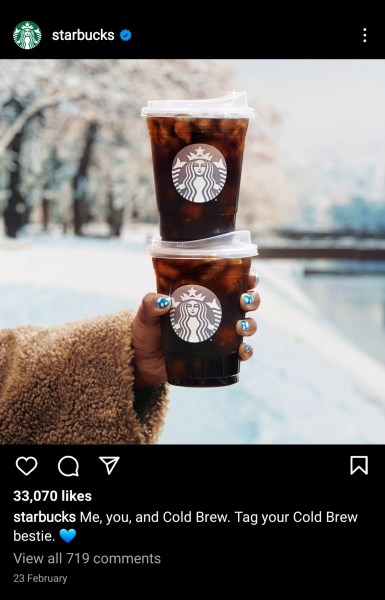
This form of copywriting deals with creating attractive posts for brands on social media. A brand can have profiles on various social media platforms like Facebook, Twitter, Instagram, TikTok and LinkedIn. A social media copywriter attempts to engage its customers through its content on these pages. The aim is to make the brand memorable. The copy would have to suit the style and tone of the social media platform it is posted in. This means that a copy would look different on Facebook and Instagram. It helps reach out to potential consumers and get them to visit your store.

Starbucks on Instagram

Technical Copywriting:

As the name mentions, technical copywriting is all about creating copies that explain information related to your brand or product. The copy goes in-depth in providing useful insight to customers regarding topics like user manuals and product descriptions. This helps in building trust in the brand. Contrary to other forms of copywriting, technical copywriting tends to be more detailed and longer, usually seen in blog posts, user guides and white papers. The tricky part of it is getting the copy to be insightful while also making it simple and easy to understand. You need to have some technical experience and good explanation skills while also using simple language without jargon.

Public Relations Copywriting:

PR copywriters write copies that get your brand noticed by news reporters and journalists, so that they can spread it across various media. This type of copywriting is useful once a brand is established and you want people to remember the brand. Instead of sharing how good your brand is yourself, you get others to talk about your brand. This is generally considered to be unbiased and credible by the viewers because it would be verified and reported by a third party. Press releases and statements of brands and companies you see on television channels and social media are PR copywriting. It can be used to improve a brand’s reputation or as damage control, after something had occurred that could affect the brand’s image negatively.

Advertisement Appeal

Advertising appeal is defined as strategies for grabbing the attention of people to persuade them to purchase a product or service. The approach can be a marketing or advertising strategy. Many advertisers commonly use appeals to influence their customers. It is also used so that people can support a cause. Appeals are customized for the target audience, and they speak to the interests of individuals and in their words or interest. The primary purpose is to entice them to take the action that is desired by the seller.

Brand appeal is for the customers or people who are brand conscious and have an individual inclination towards a particular brand. The primary objective of the brand appeal is to motivate people to buy a product because the product has an excellent brand. It gives the feeling of differentiation to the customer. Apple is an example whose products have brand appeal to its customers.

Sex is an attention catcher. It can be rarely used to promote your product. Sex appeal ads are used to convey a particular message to a selected group of audience. These days even deodorant ads and fragrant products also use sex appeal in them.

Some advertisements appeal to the sense of adventure and excitement of a person. The primary objective of these advertisements is to appeal to people that enthusiasm will be enhanced after they buy or use the product or service. The advertisements of energy drink use adventure appeal in them. It is often shown that the protagonist of the ad who is tired drinks the energy drink and achieves something almost impossible. He gets invigorated with energy, and because he consumed this product, his adventure was successful.

Bandwagon appeal involves making people feel that since everyone is buying the product, so they should too. The objective of bandwagon appeal is to ensure that the customer joins the bandwagon and starts using the product because everybody else is using it. It is known as persuasion by masses technique. Many direct to home cable services use bandwagon appeal in which they show that the entire neighbourhood is with a particular brand and why hasn’t the protagonist of the advertisement joined the bandwagon. They make him feel left out by not joining the bandwagon and show that he is happy after purchasing the product or service, ergo, after joining the bandwagon.

The fear appeal shows that adverse outcomes can happen because a particular action is not taken. Advertisements often use fear as a motivator to promote change. The fear tactic also involves isolation. With this technique, many kinds of toothpaste, deodorants, and anti-dandruff shampoos are advertised. It is shown that if people do not brush with their toothpaste, it will result in bad hygiene and foul mouth odour, which would lead to social isolation for the person. Similarly, if flakes of dandruff are seen on the shoulder of a person, then it may result in separation from the group. It is only after the consumption or use of the product that the person can avoid isolation and get a feeling of belongingness.

Some advertisements appeal to a person’s sense of humour. Human beings like to laugh and what can be a better type of attention-grabbing tool than humour, because humour helps people to remember a particular product or an idea. Humour appeal often try to build a positive association with their product or service. In many insurance advertisements, it can be seen that the customer is often shown the benefits of having insurance with the help of humour. However, humour should be carefully used so that it does not offend any group. Senior citizens often hate the idea in which they are portrayed as angry and grumpy on the other hand; women do not buy a product which shows them as overreacting. Usually, humour works for everyday products such as cell phones, alcoholic beverages, or fast food.

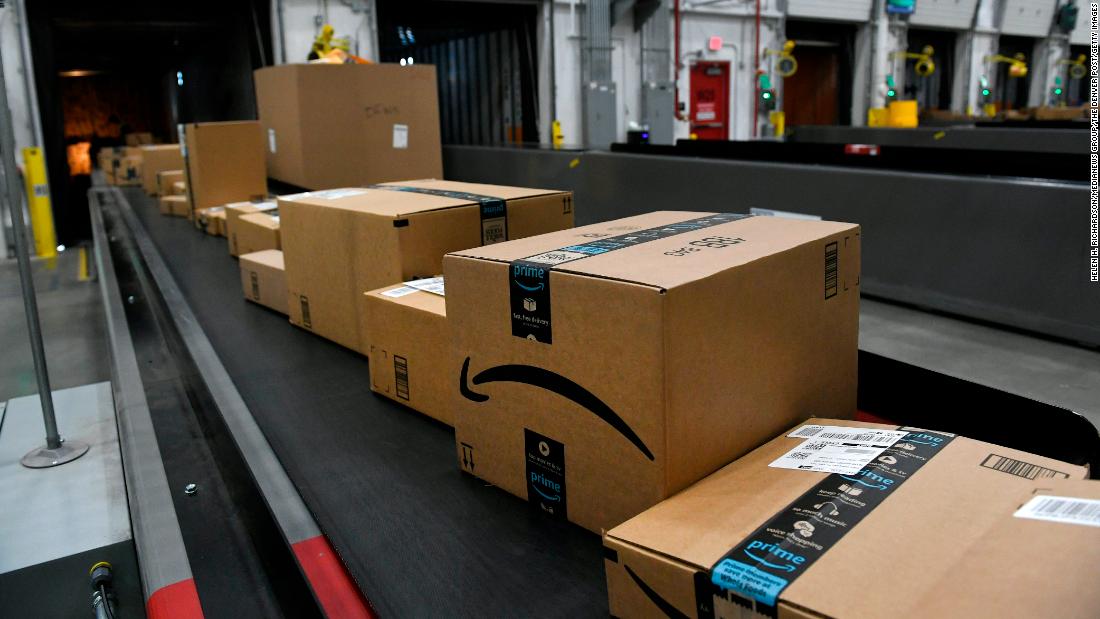
Who delivers the Amazon cardboard boxes???

Cardboard boxes that have been used for generations and thrived in the age of e-commerce continue to flourish or could the cardboard box be facing a new challenger? Cardboard boxes are a very big deal within the U.S. The United States is the Saudi Arabia of trees. Someone’s going to make the first box and that’s almost inevitably a mill generally in the Southeast United States. China certainly doesn’t have trees and India the extent they do have trees they’re not necessarily the right types of trees and shouldn’t be dedicated towards making boxes for us. The box business grew rapidly up through 1999 when the U.S. coordinated box market had its peak shipment. Starting in the early 2000s the U.S. corrugated box market faced multiple economic obstacles.

The great recession dragged on box demand and even after the recession demand continued to slow for commodity like soda and for the boxes that transport them. The move to digital devices also coincided with a drop in demand for copy paper and newsprint. But box makers found a grace in e-commerce sales and Amazon sale specifically which were growing at mostly integer rates within the recession and post-recession years. Those e-commerce sales have become a significant market for the containerboard industry. In 2018 told a U.S. e-commerce sales were estimated to be $512 billion almost 50 percent higher than in 2015. Amazon captured 48 percent of those sales. Most estimates are that e-commerce accounts for about 10 percent of the U.S. box market. Amazon accounts for close to 5 percent of U.S. box demand. By our estimates they are clearly the single largest box user in the US. International Paper with a third of the market I think does closer to 50 percent of all the amazon boxes evidently they got a bit more share than perhaps some of the smaller players.

Amazon's incredible, vanishing cardboard box - CNN

Amazon said they deal with most of the big box makers across the U.S. according to analysts. Those manufacturers include International Paper, WestRock, Packaging Corporation of America and Georgia-Pacific. Some investors were turning to these companies as a way to invest in the e-commerce giant without having to purchase Amazon’s pricey stock. People didn’t really start talking about buying International Paper or WestRock as a secondary investment in Amazon till about the last five years. Despite the boost from e-commerce sales the box business still isn’t growing all that much. And since 2018 their stocks have mostly underperformed the S&P 500. In 2018, 69 percent of International Papers total revenue came from the box business and that sales volume has been mostly flat for the past five years. Although the big producers sold less boxes in 2018 than in 2000, industry consolidation has dramatically narrowed the fields.

The handful of big players remaining are based in Memphis, Tennessee, Atlanta, Georgia and Lake Forest, Illinois. Analysts have told CNBC that substantial industry mergers have made it easier to collectively hike prices and those price increases have helped drive revenue. There are portions of the business that are in indisputable secular decline but if you’re in the brown part of the business, making these boxes, that’s been some very welcome growth. But those extra boxes piling up on people’s doorsteps have led to a backlash from disgruntled customers who are sick of receiving golf ball sized products in supersized boxes. It used to be that you’d order a toothbrush and it would come in three giant boxes and you’d say to yourself, what is this? Well, Amazon is trying to rectify that by using fewer boxes and using other types of packaging where appropriate. With e-commerce packaging underfire Amazon decided to change the way they do shipping. In 2008, Amazon introduced the Frustration Free Packaging program. It aims to reduce the extra packaging created when retail packaged products are placed inside Amazon boxes to be shipped. Instead, products certified in the program that are roughly the size of a blender or larger need to be packaged in their own ready to ship boxes. And those boxes also need to be made of 100 percent recyclable materials. For customers that means that the packaging is easy to recycle and the box is easy to open without all the excess packaging materials.

Use That Pile of Empty Amazon Boxes to Do Something Wonderful ...

Amazon offered vendors an incentive of a dollar per shipment to modify their packaging. And starting August 1st 2019 Amazon is charging a $1.99 penalty for each product shipped that needs to be reboxed. And basically the point of this deadline is for Amazon to get out of the business of packaging. They want their vendors to send them boxes that Amazon doesn’t have to touch or rebox. Over the last two years we have invented two different kinds of flexible mailers. One is the blue and white all plastic mailer. We’ve recently launched in the last six, eight months a paper padded mailer that’s actually fully recyclable with the paper stream. Amazon said they made about 10 million shipments using the paper padded mailer and depending on the month the plastic mailer is used about 20 to 30 percent of the time. So really when we come down to deciding if the product is of the size it can go on a mailer, it’s not likely to be damaged by going in the mailer, the mailer is always the better fitting option and frankly is easier for the customer to choose to recycle than breaking down a corrugate box. We’re driving in that direction for many different reasons. But those plastic mailers generally are not accepted in municipal recycling programs and you’ll need to bring them to a store that accepts plastic bags. The latest stats from the EPA show that corrugated boxes were recycled at a rate of 92 percent in 2015 while plastic bags, sacks and wraps were recycled at a rate of 13 percent in 2015.

AMAZON E-COMMERCE SELLERS, IT'S TIME TO REVIEW YOUR ADVERTISING ...

When you think about what is the greatest pain point for the consumer after having it get there safely arrive on time people are concerned about receiving something that is plastic or made a poly because of the environmental concerns. Some waste management companies say plastic packaging also causes problems for the recycling systems. Plastic mailers get caught in the recycling machinery slowing down the process and raising the costs for recyclers and sometimes contaminating entire bundles. Until Scotty on the Enterprise can beam the products from the warehouse to your living room I think Amazon’s going to be good for the corrugated business. I think there’s going to be noise I think you’re going to have challenges from time to time where people say, “Should we try and the plastic pouch?”, in the long run plastic is going to be on the wrong side of history. Because Amazon is a market leader in the U.S. e-commerce sector any move away from cardboard to plastic mailers could signal a shift for the entire industry. The corrugated box could be about to undergo a major facelift. We’re seeing some major trends among consumers and what they’re expecting from e-commerce and the first one is actually this desire for increased engagement with the package. In 2015, Amazon partnered with Universal Pictures and Illumination Entertainment to ship orders in bright yellow delivery boxes featuring cartoon characters from the movie Minions. The boxes promoting the movie and a special Amazon U.R.L. dedicated to shopping for merchandise from the film.

Struggles of big dairy companies in India!!!

India is that the world’s biggest producer and consumer of dairy. In 2018 alone, India produced 186 million metric tonnes of milk — about 410 billion pounds and 22 percent of the milk produced globally. Almost all of that is consumed domestically thanks to India’s dairy-heavy diet — think creamy curries, yogurt drinks, and a popular type of butter called ghee. A quick note before we proceed: this includes milk from buffaloes, which are an important source of milk in many developing countries. the point is that India loves milk.

What is pushing India's small dairy farmers out of business?

In 2011, the French dairy company Danone hoped to capitalize on this by opening a division in India. Danone opened its own processing plant in Haryana and tried to capture some of India’s 1.2 billion dairy lovers. But less than a decade later, Danone shuttered their dairy business in India. That same year, the corporate made 28 billion dollars worldwide and was within the top three global dairy companies. With all this success, elsewhere, why did Danone’s dairy business sour in India? Let’s start with some background on Danone. Their business is broken down into three categories:

  1. 1.specialized nutrition, like supplements and formula for babies;
  2. bottled waters and seltzers;
  3. dairy and plant-based alternatives.

That one makes up over half of their global sales, but it’s also the one that failed in India. Danone does still sell specialized nutrition products in the country, but they don’t break out those sales figures separately. This is the same company as Dannon in the U.S. The company decided to rebrand to make the spelling less confusing for American consumers. Anyway, now for some background on India’s dairy industry. There are about 75 million dairy farmers in India. Most of them are women who own one or two buffaloes or cows to supplement the family’s income. Nearly half of India’s milk is not sold, but consumed by the farmers household. This makes India’s dairy industry much more fractured and localized than other countries where Danone operates. Take the company’s native France and one of its biggest customers, the U.S. Each has far fewer dairy farms with herds that dwarf India’s one or two animal average. This was Danone’s first big problem in India: sourcing milk is difficult. Of the half not consumed by farmers’ households, only about 15 percent goes to big organized companies or government run cooperatives. The rest goes to hundreds of small, local milk processors.

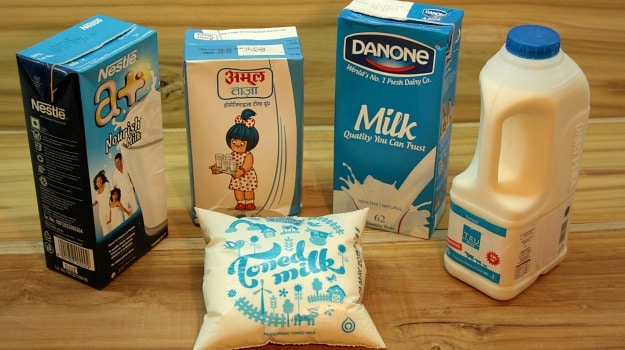
Tainted milk: Branded dairy in India sees 5% increase in ...

The largest companies like Amul, Mother Dairy, and Nestlé have tiny percentages of the market, and they’ve been there for decades. Market research firms Mintel and Euromonitor declined to release specific market share numbers to CNBC. However, a 2016 piece in The Economic Times of India citing Euromonitor put the figures at about 7 percent for Amul, 3.7 percent for Mother Dairy, and 2.9 percent for Nestlé. In short, tapping into the existing dairy infrastructure is effective but time consuming. Imagine the effort of contacting dozens or hundreds of local and regional dairies, processors, or individual farmers. But establishing a separate supply chain altogether is very expensive — a lesson Danone learned the hard way. And when Danone did get milk, the company focused on the wrong products. Danone pushed plain yogurt and flavored yogurt drinks — popular in places like the U.S. and France with high profit margins to boot. But in India around the time when Danone arrived, yogurt comprised only 7 percent of the dairy consumed.

The real money was in ghee, a type of clarified butter, and plain old fluid milk, a product with razor-thin margins dominated by those hundreds of local small-scale producers. Analysts explained to CNBC the simple reason why Indian consumers shunned Danone’s prepackaged yogurt. And if Indian consumers did want to buy premade yogurt, they had a slew of cheaper options than Danone. Dairy never accounted for more than 10 percent of Danone’s sales in India, a far cry from its global 50 percent. Its specialized nutrition arm picks up the slack, and the company announced a renewed focus on that division when it shuttered its dairy operation. Meanwhile, two of their biggest competitors, Amul and Nestlé, made nearly five billion and 750 million from dairy, respectively. But not all hope is lost for Danone’s dairy in India.

Amul, Nestle, Mother Dairy, Tru & Danone: Which Milk Tastes the ...

In January 2018, the same time that Danone ended its dairy production there, the investment arm of the company announced its part in a 26.5 million dollar investment in Epigamia, an Indian yogurt startup. This could be a sustainable move for Danone in India’s dairy industry because Epigamia offers consumers products that add value onto the plain yogurt they will make cheaply reception . But perhaps most importantly is this: while much of the population still makes yogurt the old-fashioned way, analysts predict that a growing number of consumers will want to buy premade options as they move into corporate jobs in developing urban centers. Very large numbers indeed. If only 5 percent of India’s 1.35 billion people decides to buy prepackaged yogurt, that’s over 67 million consumers — more than the entire population of Danone’s native France.

Why Apple was not so popular in India???

Apple sells millions of iPhones every year. In the year 2018, the tech giant reported selling close to 47 million units worldwide. But not all markets are created equal. India has been one of the hardest countries to crack for the Cupertino giant. Although it’s been over a decade since Apple began selling iPhones in India, the company can’t seem to get a big bite of the world’s second-largest smartphone market. India is a very price-sensitive market, which means that people pay a lot of attention to what value they are getting out of the price that they are paying for a particular product.

In the case of Apple, there’s a lot of premium being paid for the brand itself, and that’s where the price-conscious Indian consumer thinks about that if they are getting the same kind of features or specs from another phone that they can get a lower price, that makes it tougher to sell something at a much higher premium. Apple is definitely feeling the pressure. Samsung and Xiaomi accounted for the majority of smartphone sales in India in quarter three of 2018, garnering 22 percent and 27 percent respectively of the smartphone market. In contrast, Apple made up only about 1 percent of India’s smartphone market share, trailing behind Chinese phone makers Vivo and Oppo. It’s also worth noting that the premium smartphone market in which Apple operates still makes up less than 5 percent of the overall smartphone market in India.

7 Key Strategies That You Must Learn from Apple's Marketing

Most of the smartphones in India that sell, they are below $200 and Apple does not have any play in that segment. This environment is one that competitors like Samsung have begun to adapt to. The South Korean powerhouse is launching its Galaxy M series budget smartphones to appeal to the Indian market. In contrast, Apple doesn’t seem too keen on changing up its India strategy. I got some ideas for you, OK? I talked to some people at Walmart yesterday. An arrangement with Walmart Flipkart to take over India with a budget phone rather than doing it piecemeal? For us, we’re about making the best product that enriches people’s lives. And so, we’re not about making the cheapest. For us, what we’ve seen is, there’s enough people in every country in the world that we play in that we can have a really good business by selling the best phones. Still, some tech investors see Apple as being out of touch with the India market. You think they are going to slash prices? I think they have to. How can you sell a $1,000 phone in a market like China where the GDP per person is $10,000? In India it’s $2,000. And if you go back to the September earnings release, they talked about the fact that India was way below where they thought.

Apple postpones launch of online store in India - The Economic Times

Well, if your average GDP person is $2,000 and you’re trying to sell a $1,000 phone, it’s gonna be probably pretty hard to sell it. They probably want to eat. Another issue for Apple: stiff tariffs. I think iPhones have a specific disadvantage in the India market because of the local regulation. There is a very high import duty on the phones that are not manufactured locally in India. So for most of the big players in the India market, they are manufacturing locally so they do not have to pay that high import duty. Samsung has been manufacturing phones in India since 2007 and just last year opened the world’s largest mobile phone factory on the outskirts of New Delhi. Chinese phone makers Xiaomi and Oppo have also invested millions of dollars to build manufacturing plants in the country. That’s not to say Apple has completely ignored India.

The tech giant already manufactures its lower-cost iPhone SE and iPhone 6s models locally, through a partnership with Taiwanese manufacturer Wistron. This year, Apple is also expected to move its production of the iPhone X series into Foxconn’s plant in southern India. If you look at how we’ve done over the years, we’ve gone from a $100-$200 million business to last year we had we exceeded $2 billion. That $2 billion was flat year over year after a rapid rapid growth. And so we have more work to do. We’d like to put stores there. We would like some of the duties and so forth that are put on the products to go away. But even with its local hardware production push, Apple still fails to provide Indians with a robust software experience.

Apple iOS 13 Release: Should You Upgrade?

Apple has introduced turn-by-turn navigation for the India market. Before that, that significant part was missing. And beyond that, there’s not a lot of customization that Apple has done for the India market. There are not a lot of apps that specifically cater to the India market. Past complaints for Apple Maps also included missing major landmarks and having very sparse data of cities and towns. But again, Apple is working on a solution. The company has hired thousands of engineers at its mapping facility in Hyderabad to improve its services. Apple Pay is also not an option in India, though similar payment services from Samsung and Google have already been rolled out. Finally, unlike in most other markets, Apple can’t rely so much on its brand recognition to sell devices in India. The other challenge for Apple in India is that it cannot have its own retail stores or own Apple stores because of some regulatory issues, which means it has to have partners on the retail side, whether it’s the Apple premium resellers, which you see in many other countries as well, or with the third-party resellers. In order to have a larger presence in the market.

Apple has to have partnerships with thousands of these resellers, which in a country as big as India, can be challenging. Apple is still a premium status symbol for many Indians, but one that is out of reach for the majority of the population. With phones from Chinese brands like OnePlus, which was India’s best selling premium smartphone brand for the second quarter in a row, offering similar features at a fraction of the cost, Apple may have a very tough time getting a bigger slice of the India market.

Apple - Localizing the Message - Global Marketing Professor

8 Genuine ways to earn money from your home!!!

Here are some of the genuine ways to earn in your spare time without any investment.

  1. Transcriber: average earnings per month is hundred and fifty. All you need is actually to have a good pair of headphones and of course you need to get stored to type there now there is a few other sites so you can’t only rely of course on hundred and fifty dollars average earning per month but if you are good at this you can actually earn of course much more but what you can do is you can become a transcriber. rev.com is another site here as a transcriptionist you can anywhere from 24 to 90 cents per audio/video minute basically you can be a video captioner also which is pretty much the same here and you can earn anywhere from 45 cents up to 75 cents.
  2. Micro tasks you can do this on my.com in your spare time you get paid for completing simple tasks here so it can be anything from like tagging objects here helping companies select the best picture the audit user classifying you can see that there is tons of opportunities. Rapidworkers.com is another site where you can earn a decent amount just by doing some micro taskes.
  3. Data entry jobs on Amazon on rapid workers there is micro workers also but there is also assigned like a clickworkercalm.com. You just sign up for a free account and you work independently your schedule is flexible and all you need is a computer and of course and/or a mobile device with an internet connection and it’s totally up to you how much you want to work. You can do text creation, copy editing, research surveys, mystery visit, app testing and photo capturing a lot of opportunities that you can earn money from the comfort on clickworker.com.
  4. Virtual assistant one of my favorite sites is virtual assistant jobs calm and basically you can apply for data entry, call center whatever comes into your mind you can get started here and apply and search for it you might be available only to do this on part time so you can search for part-time flexible with contracts. Jobs.com helps us out there by providing all types of virtual assistance jobs.
  5. Online tutoring if you’re good at something math or English or something like that one side is a shag.com , VIP kid teachers.com which is basically they teach English here and you can earn up to twenty two dollars per hour teaching. There are many students who want to learn extra and out of their books so here comes opportunity by teaching them.
  6. Freelancer totally depends on your skills. There is other popular freelance sites like upwork.com there is freelancer.com there is people per hour so a lot of options actually that you can apply for here as a freelancer. Freelancing is one of the best option as you can work also on your niche and can enhance it for future use.
  7. Affiliate marketer and the good thing with affiliate marketing is that you don’t have to deal with shipping you don’t have to deal with anything at all. You need is just grab a link and promote that offer whatever it is and of course you earn a commission okay so one of the most popular platforms is Clickbank.com. They have thousands of products here probably one of the most popular niches will be health and fitness. You just grab a link here and what you do is you use this link to promote it you can use something like bitly to shorten this ugly link of course and then all you need to do is drive traffic to this offer. Amazon is another option that you can make money as an affiliate marketer they have millions of products here that you can promote ok you can earn a commission from anything you promote inside Amazon here so it works the same way it totally depends on your niche here how you can drive traffic to it.
  8. Sell stuff on eBay you have available that you don’t use at your home you can get stored there to sell this or you can actually use this platform to buy something and sell it much higher. So, you can be a sort of a middleman here so this is another option tons of ways and opportunities to make money eBay and you can of course do this from your home without any investment.