Graphic design

Graphic design is the process of visual communication and problem solving through the use of type, space and image. The field is considered a subset of visual communication and communication design but sometimes the term ‘graphic design’ is used interchangeably with these due to overlapping skills involved. Graphic designers use various methods to create and combine words, symbols and images to create a visual arts and page layout techniques to produce a final result. Graphic design often refers to both the process (designing) by which the communication is created and the products (design) which are generated. Common uses of graphic design include identity, publications, print advertisements, posters, billboards, website graphics and elements, signs and product packaging. For example a product package might include a logo for other artwork organised text and pure design elements sketches images shapes and colour which unified the piece. Composition is one of the most important features of graphic design specially when using pre existing materials or diverse elements.
•Skills

A graphic design project me in work to stylisation and presentation of existing text and either pre existing imagery or images developed by the graphic designer. Artistic pieces can be incorporated in both traditional and digital forms which involves the use of visual arts typography and page layout techniques for publications and marketing for example a newspaper story begins with the journalist and photo journalist and then becomes the graphic designer job to organise the page into a reasonable layout and determine if any other graphic element should be required. In a magazine article or advertisement often the graphic designer or art director will commission photographers or illustrators to create original pieces just to be incorporated into the design layout or the designer may utilise stock imagery or photography. Contemporary design practice has been extended to the modern computer. Nearly all popular and ‘industry standard’ software programs used for graphic design since the early 1990’s are products of Adobe systems incorporated. They are Adobe Photoshop (a raster based program for photo editing), Adobe illustrator (a vector based program for drawing), Adobe InDesign ( a page layout program) and Adobe Dreamweaver (for webpage design).

Another major page layout tool is QuarkXPress (a product of Quark Inc. a separate company from Adobe). Both QuarkXPress and Adobe InDesign are often used in the final stage of the electronic design process. Raster images maybe edited in Adobe Photoshop, logos and illustrations in Adobe illustrator and the final product may be assembled in one of the major page layout programs. Most graphic designers entering the field since 1990 are expected to be proficient in at least one or two of these programs.
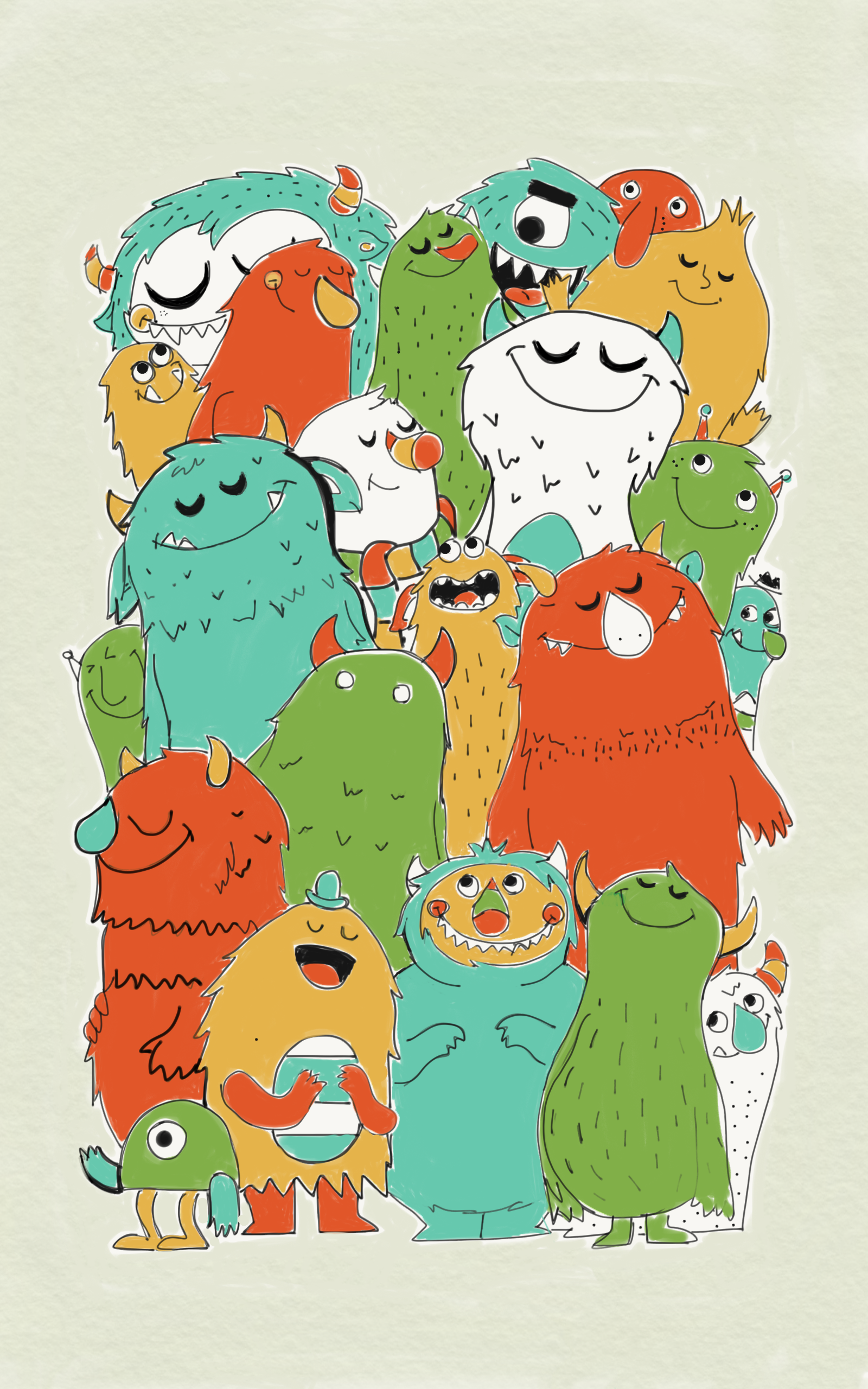
my work

Another one

•Occupation

Graphic design career paths cover all ends of the creative spectrum and often overlap. Employment within graphic design in walls workers performing specialised tasks such as design services publishing advertising and public relations. The main job responsibility of a graphic designer is the arrangement of visual elements in some type of media. The main job titles within the industry can vary and are often country specific. They can include graphic designer, are director, creative director former animator and the entry level production artist. Depending on the industry served commerce responsibilities may have different titles such as DTP associate and graphic artist But despite changes in the title graphic design principles remain consistent who start the responsibilities may come from early to specialised skills such as illustrations photography animation or interactive design. Today’s graduate in graphic design students are normally exposed to all these areas of graphic design and I guided to become familiar with all of them as well in order to be competitive. Graphic designers will face strong competition when applying for positions for organizations look for candidates with convincing talents and college level education post of field requirements consist of having strong portfolio and bachelors degree first of graphic designers can work in a variety of environments while many will work in companies devoted specifically to the industry such as design consultancies or branding agencies, others may work in publishing, marketing for other communication companies. Increasingly, special sense the introduction of personal computers to the industry commerce many graphic designers have found themselves working in non design oriented organizations as in house designers. Graphic designers may also work as freelance designers, working on their own terms, prices, ideas etc. A graphic designer reports to the art director, creative director or senior media creative. As a designer becomes more senior, he/she may spend less time designing media and more time leading and directing other designers on broader creative activities such as brand development and corporate identity development. Senior designers are often expected to interact more directly with clients, for example taking and interpreting briefs.

Thank you for reading. Have a nice day!🌼

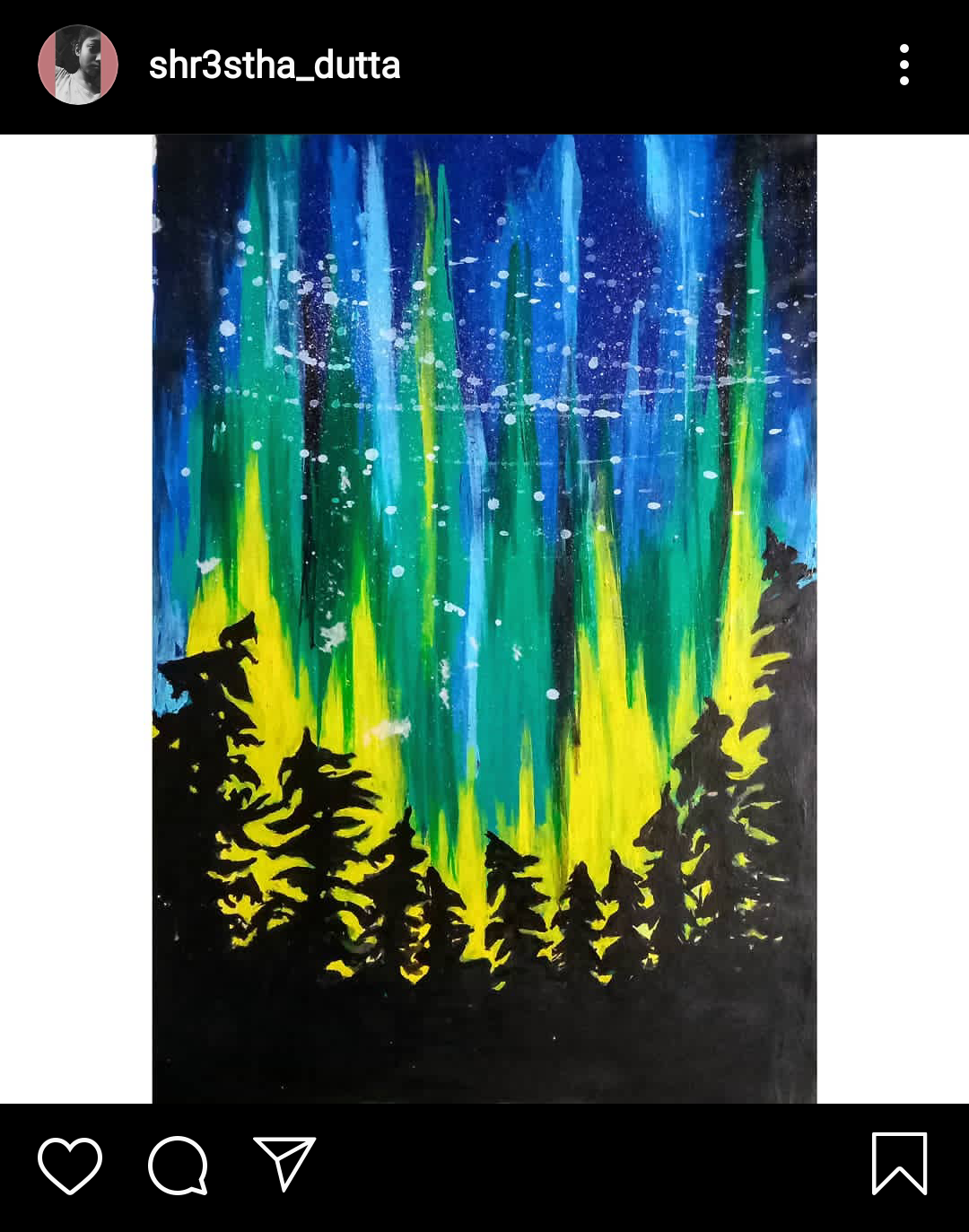
Painting techniques

Techniques in watercolour paintings

#Washes

The most basic watercolour technique is the flat wash. It is reduced by first wetting the area of paper to be covered by the wash, then mixing sufficient pigment to easily fill the entire area. The pigment is applied to a sloping surface in slightly overlapping horizontal bands from the top down. Once complete, the wash should be left to dry and even itself out. Don’t be tempted to work back into a drawing wash, the results are usually disastrous! A variation on the basic wash is the graded wash. This technique requires the pigment to be diluted slightly with more water for each horizontal stroke. The result is a wash that fades out gradually and evenly.

#Glazing

Glazing is a similar watercolour technique Do a wash, but uses a thin, transparent pigment applied over dry existing washes. Its purpose is to adjust the colour and tone of the underlying wash. Non-staining, transparent pigments such as Rose Madder (or Permanent Rose), Cobalt Blue and or Auroline are ideal for glazing as they can be applied layer after led to achieve the desired effect. Be sure each layer is thoroughly dry before applying the next.

#Dropping in colour

This technique is simply the process of introducing a colour to a wet region of the painting and allowing it to blend bleed and feather without interruption. The result is sometimes and predictable but yields interesting and vibrant colour gradations That can’t be achieved by mixing the pigment on the palette.

#Wet-on-wet

Wet-on-wet is simply the process of applying pigment to wait paper. The results very from soft undefined shapes to slightly blurred marks, depending on how wet the paper is. The wet-on-wet technique can be applied over existing washes provided they are thoroughly dry. Simply wet the paper with the large brush and paint into the dampness. The soft marks made by painting wet in wet agreed for subtle background regions of your painting.

#Dry brush

Dry brush is almost the opposite watercolour technique to wet in wet. Here a brush loaded with pigment (and not too much water) is dragged over completely dry paper. The marks produced by this technique are very crisp and hard-edged. They will tend to come forward in your painting and so are best applied around the centre of interest.

#Lifting off

Most water colour pigments can be resolved and lifted off after they have dried. Staining colours such as Phthalo or Prussian blue, Alizarin, Windsor red, yellow or blue are difficult to remove and are best avoided for this technique. The process for lifting of his simple – wet the area to be removed with a brush and clean water, then blot the pigment away with attached. Using strips of paper to mask areas of pigment will produce interesting hard-edged lines and shapes.

This is one of my watercolour paintings. I love experimenting with the medium.

Techniques in other kinds of painting

#Oil paints

As the name implies, pigments are already mixed with oil (usually linseed) in the tube, which makes for slow drying and easier blending. Clean up with turps or preferably and odourless solvent. Can be used straight from the tube (impasto) or thinly for underpainting or glazing. Usually used over canvas or board prepared with an acrylic or gas so undercoat. Retouch varnish may be used to even out the shine when finished. All other vanishes should not be applied until the paint has cured (around 6 months). Oils pretty much maintain their mixed colour once drive for, unlike water based paints which tend to dry darker or lighter than when wet.

#Poster colours

Poster colours contain a binder which remains water soluble when dry. Pigments used are generally of a courser quality than water colours and are therefore more opaque, specially pastel shades which are achieved by mixes that include white. Can be wetted again for further blending. Framing is usually as for water colours.

#Pastels

Here the pigments have been moulded into sticks using distilled water and a minimum of binders. Some are wrapped in waxed paper to prevent breakage. They come in square and round sticks and in pencil form full stock usually used on tinted pestle paper which has a texture (or ‘tooth’) to hold the dry granules of pigment. Spray fixatives prevent rubbing, button to dark in the pestle work. Framing is behind glass with the mat board to prevent the work from touching the glass.

#Acrylic painting

Painting executed in the medium of synthetic acrylic resins. Acrylics dry rapidly, serve as a vehicle for any kind of pigment, and are capable of giving both the transparent brilliance of watercolour and the density of oil paint. They are considered to be less affected by heat and other destructive forces than is oil paint. They found favour among artists who were concerned about the health risks posed by the handling of oil paints and the inhalation of fumes associated with them. Because of all these desirable characteristics, acrylic paints became immediately popular with artists when they were first commercially promoted in the 1960s.

This is one of my acrylic paintings.

#Tempera painting

Painting executed with pigment ground in a water-miscible medium. The word tempera originally came from the word temper, which means ‘to bring to a desired consistency’. Dry pigments are made usable by ‘tempering’ them with a binding and adhesive vehicle. Such painting was distinguished from fresco painting, the colours for which contained no binder.

Thank you for reading. Have a nice day!🌼

The Psychological Connection to Hobbies

Most of us have had a childhood interest or a hobby which was our favourite pastime. With not much to do all day, we would spend our time engaging in different unique and creative activities. Not only saving us from boredom, these hobbies have provided us with lot of benefits and shaped us into becoming what we are today.

Photo by Sharon McCutcheon on Pexels.com

Almost everyone had a favourite pastime activity which would keep us busy in our childhood. Starting from painting, doodling to collecting stamps, pebbles, train tickets and what not. When asked about their hobbies many people were found to narrate happy tales of their childhood. In today’s busy world where it is difficult to even take a day off from work, we tend to lose touch with our creative sides. Thinking about our childhood days makes us realise how long it had been since these hobbies were a part of our lives. Sports, music, crafts have all been pushed aside in adulthood by our busy schedules and responsibilities. In the midst of all these we have not realised how important these had been in shaping us and how amazing it would be to revisit these days by going back to those hobbies.

As children we had many different ways to spend our times. Some of us were into painting and crafts, some were into musical instruments, while some had the interesting habit of collecting stuffs. All these hobbies seem simple but studies show that there is a lot more to it.

There’s a lot of factual information about the importance of art in a child’s development. Researches show that individuals who have been into art and crafts in their childhood are found to be more expressive and have better communication skills. Experimenting with art makes children open to broader ideas and help them handle unexpected situations with ease.

Photo by Marko Blazevic on Pexels.com

Collecting is believed to be a psychological impulse. Collection is a historical practice and it ranges from stamps, books, tickets, coins to leaves and pebbles. People maintain the habit of collecting due to various reasons. Some collect due to an interest in the things that the collections represent, while others view collection as a pleasurable form of owning something. The different aspects attached with it makes the psychology behind it so interesting. It has been known that individuals who had the habit of collecting grow up to be careerist individuals in future. As the saying goes “An individual’s childhood is reflection of their life”. Collectors are also known to make better social connections and more friendships.

Photo by Karolina Grabowska on Pexels.com

Individuals engaging with music from a very young age tend to enjoy musical instruments. Engaging with music makes us happy and lifts our spirits. Studies show that music improve our brain functions and it keeps the brain active. It has also been known that music helps in retaining information and develops memory. Children who have had such hobbies grow up to be smart individuals.

Photo by Nick Bondarev on Pexels.com

Few years back, Google had encouraged its employees to devote 20 percent of their time to side projects of their interest. It was a very innovative decision on the part of the company and it yielded amazing results. It has been known that following this, employees have performed more productively in their work and have achieved more. There are innumerable ways in which hobbies help in one’s overall growth and development. Most of us have lost touch with these but we can surely try and revive those habits. In fact, discovering childhood hobbies can make our lives better and make us happier. It feels amazing to revive those countless memories we have with an instrument or a habit. This will also help us become more productive in our work. Investing one’s time in areas of interest alongside their career can yield incredible results and, in the process, will make us better individuals with a more holistic outlook towards life.

Indian Folk Art

India is home to around 2500 tribes and it has always been portrayed as a land of cultural and traditional diversity. Every corner of the country has a distinctive cultural identity which is represented through different art forms. These art forms can be collectively put under the topic of Indian Folk Art. Each region has a different style and pattern of art which is practised by the rural folks living there. These art forms are colourful and simple and reflect the rich cultural heritage of India. The country is home to around 2500 tribes and ethnic groups. So each region has a unique and interesting form of folk art.

Previously these were done using natural dyes and mostly used for decorating walls and houses. These art forms have undergone many changes through all these years including change of medium, colours and pattern. Here are 10 such art forms which give us a peek into the cultural heritage of different regions of the country.

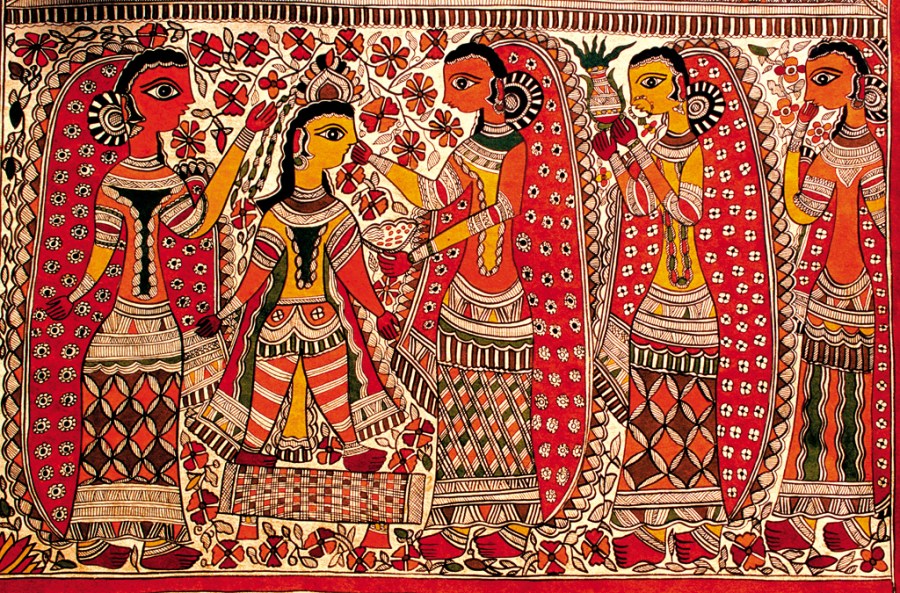
MADHUBANI

Madhubani, also known as Mithila art, was developed by women of Mithila in Northern Bihar. It is characterised by line drawings, colourful patterns and motives. These were practised for hundreds of years but were discovered in 1934 by a British colonial officer during an inspection after an earthquake.

PATACHITRA

The word ‘patachitra’ derives from the Sanskrit words patta, meaning canvas and chitra, meaning picture.  It is one of the oldest art forms of Odisha. It is done on canvas and portrays simple mythological themes through rich colours and motives. Some of the themes include Thia Badhia – depicting the temple of Jagannath, and Panchamukhi – depicting Lord Ganesh as a five-headed deity.

WARLI

Warli is the name of cultivator tribes belonging to Northern Maharashtra and Gujarat. Though discovered in early seventies, the roots of the art form can be traced back to as early as 10th century A.D. Mostly featuring geometrical shapes, they portray daily life, hunting, fishing and festival scenes. They show a common human figure through a circle and two triangles which move in circles resembling the circle of life.

RAJASTHANI MINIATURE PAINTING

The art form was introduced in the country by Mughals who brought in Persian artists for creating the art. The Mughal emperor Akbar built an atelier for them to promote the artwork. They trained Indian artists who produced it in a new style inspired by the royal lives of Mughals. Eventually the paintings made by these Indian artists came to be known as Rajput or Rajasthani miniature. They are characterized by strong lines and bold colours made from minerals, precious stones, even pure gold and silver.

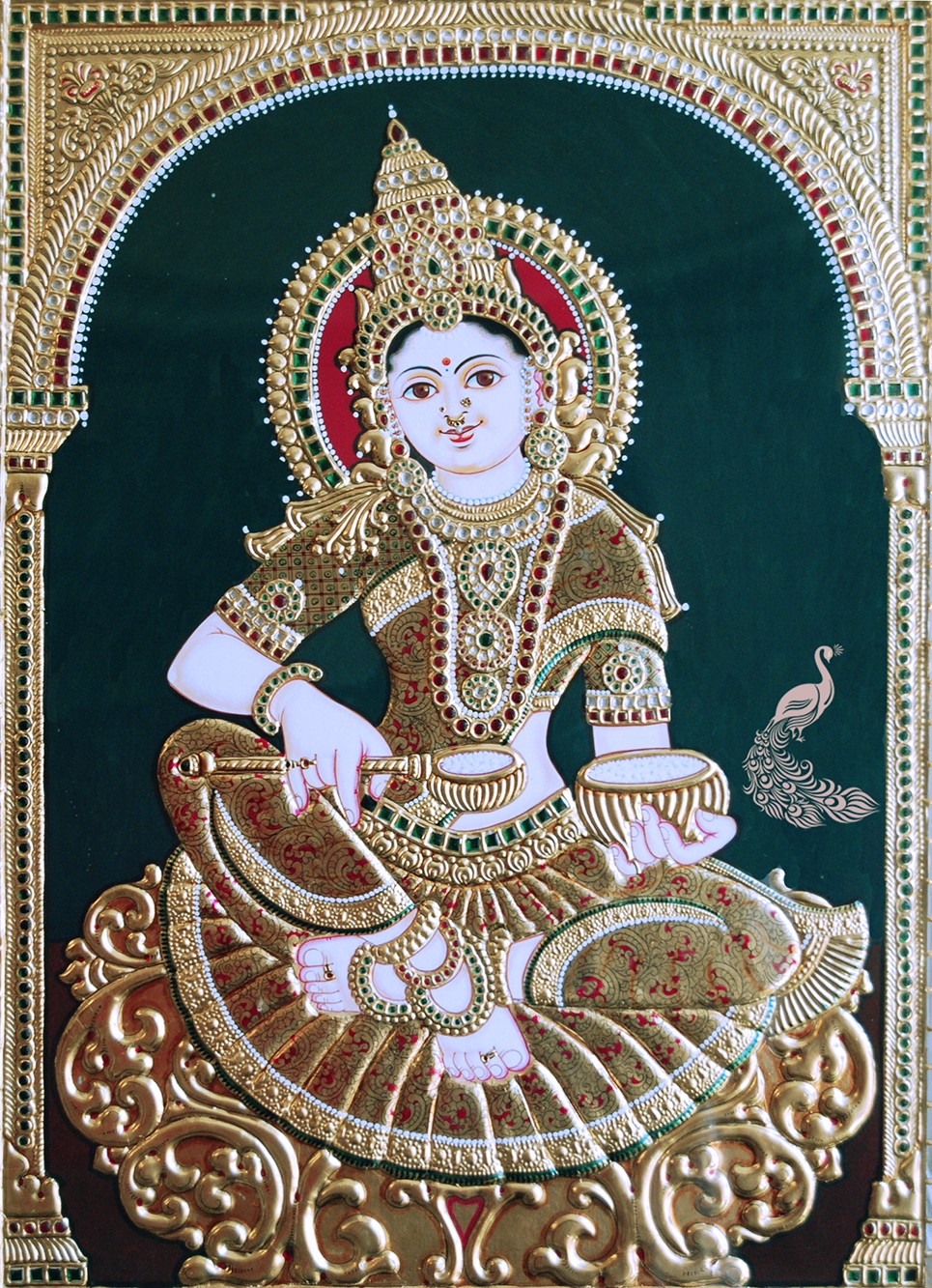
TANJORE ART

Originating in Tanjavore, about 300kms from Chennai, this art form evolved under the rulers of the Chola empire. Characterized by brilliant colour schemes, decorative jewellery with stones and remarkable gold leaf work, these paintings mostly consist themes of gods and goddesses.

KALAMEZUTHU

Similar to Rangoli and Kolam, this art form originated in Kerala. It mostly consists of the representation of deities like Kali and Lord Ayyappa on temple floors. Natural pigments and powders in five colours are used by the makers and the art is done by bare fingers without the use of any tools. The five colour shades are made from natural pigments like – rice powder for white, burnt husk for black, turmeric for yellow, a mixture of lime and turmeric for red and the leaves of certain trees for green.  Lighted oil lamps brighten the colours in the figures which usually feature anger or other emotions.

Why economy of India is slowing down???

India is one among the world’s fasting growing economies. It had been touted as an economic and geopolitical counterweight to China. But recently its growth fell to its slowest pace in six years. Investment has weakened, and unemployment has risen. So what’s causing the slowdown, and how can it be reversed? Since the turn of the century, India’s economy has grown at a rapid rate, helping transform the country. Between 2006 and 2016, rising incomes lifted 271 million people out of poverty, meaning the proportion of Indians still living in poverty has fallen dramatically, from around 55% to twenty-eight . Access to electricity has also improved. In 2007 just 70% of the population had access to power. By 2017, that grew to nearly 93%.

India's economic growth likely to remain subdued in near future ...
More recently, the Indian government constructed around 110 million toilets — a huge step towards better sanitation designed to prevent the practice of open defecation. It’s a signature program of Prime Minister Narendra Modi, known as Swachh Bharat, or Clean India. All this development has been supported by a booming economy, but as lately , that expansion has begun to run out of steam. In the third quarter of 2019, India’s economic output grew by 4.5% – making it the primary time the country’s growth dipped below 5% since 2013. For context, 4.5% growth remains much above that of developed economies just like the U.S., But with 12 million Indians entering the workforce per annum , economists say the country needs annual growth rates to remain above nine percent to make sure there are enough jobs. So, what’s causing this recent slowdown? Well, officialdom argue turbulence in international financial markets is guilty.

Economy News, Latest economy news India, Indian Economy features ...
Political uncertainty and U.S.-China trade tensions mean confidence levels among investors and consumers everywhere have sunk. The United Nations has even warned that a global recession in 2020 is now a “clear and present danger”. But back to India – many economists say the country’s growth problems are literally self-inflicted. One obvious culprit is the shadow banking sector. During the 2000s, India saw an investment boom. It was fuelled by state banks dispensing a load of loans for giant infrastructure projects. But some of the companies taking advantage of these loans couldn’t keep up with the repayments. That meant the state banks weren’t getting paid back and therefore struggled to give out new loans. To keep business moving, shadow banks stepped in. These financial institutions, which operate like ordinary commercial banks but don’t follow traditional banking rules, eventually made up an estimated third of all new loans nationwide. The loans played a pivotal role for the millions of small businesses and consumers who would otherwise have no access to credit. But in 2018, shadow banking giant Infrastructure Leasing & Financial Services, defaulted on its debt repayments. Its collapse sent shockwaves through the economy and shook up more traditional banks that had supported the world.
It became harder for people to shop for expensive items like cars. That hurt India’s automotive industry, which is one among the country’s biggest. It employs about 35 million people and makes up about 7% of India’s GDP. Last summer, the industry suffered its worst sales performance in nearly 19 years, and reports suggest tens of thousands of workers are laid off. The agriculture and construction sectors have also been hurting, with small and medium businesses being hit the hardest. The country’s percentage has been on an overall upward trend since July 2017, rising several percentage points to 7.7%. Higher unemployment means consumers are buying less, resulting in the unfortunate cycle of slower manufacturing, production, investment and job creation.

Indian Economy Will Face Adverse Affects Of Coronavirus Gdp To ...
A survey from the Reserve Bank of India found consumer confidence has fallen to its lowest level in five years. But Indians still have a positive outlook for the longer term , with most consumers expecting to feel more optimistic during a year. However, if things don’t improve, debt could become another issue. Expecting better days ahead, many households have continued to spend, by taking out loans and dipping into savings. Household savings as a proportion of GDP has fallen from 23.6% to 17.2%. Meanwhile, household debt has surged to 10.9% during the same period. Critics say the govt in New Delhi has did not spot these risks and hasn’t done enough to urge the economy moving again. The Reserve Bank of India’s former governor Raghuram Rajan recently blamed the lack of significant reforms and a slowdown in investments since the global financial crisis. Even the country’s chief economic advisor recently admitted reforms are needed to form India more friendly to investors.
India has cut its corporate rate , but labor and land laws are still extremely strict. He also says the country must become pro-market, instead of just pro-business, to avoid costly government bailouts of failing sectors. But not all reforms have been good to the economy. In 2016, Prime Minister Modi tried to crack down on corruption, counterfeits and evasion by banning high value bank notes. In one night, the cash ban made 86% of all cash invalid. Three years later, many analysts say the policy disrupted the economy and did not achieve many of its original goals. In 2017, a replacement nuisance tax placed small businesses struggling and a few of them were forced to shut . In mid-2019, India’s government introduced a controversial new tax on foreign investors. Consequently, India’s stock exchange suffered its worst July performance in 17 years. Just one month later, the measure was scrapped.
The government has now refocused its efforts on international trade and investment, and thus the recent changes to the corporate rate could indeed help attract businesses and investors to India. But if the country wants to be a part of the world’s largest supply chains, it’ll need low and consistent tariff levels to encourage outsiders to take a position for the long term.

The country’s shifting export policy has harmed several of its largest industries, particularly clothing. India’s share of the worldwide apparel market has increased only slightly within the past 20 years. And though the Indian workforce is vast, both Bangladesh and Vietnam now export more. On top of that, the country’s import tariffs on the average are much above the world’s biggest economies. They’re also among the highest of the world’s emerging economies. Even U.S. President Donald Trump has called for the country to bring down its duties.

Has India’s growth actually slowed the maximum amount as we think? The government’s former chief economic advisor Arvind Subramanian caused a good little bit of controversy in June 2019, when he claimed the country’s official stats probably overstated GDP growth by 2.5% from 2011-2012 to 2016-2017. He says the bottom line is that India never recovered from the global financial crisis. The government denies this. But none of this has hurt Prime Minister Modi at the polls – he won by a landslide in the most recent election. So how will he keep his promise and double the dimensions of the economy by 2025? Many economists insist a well-explained economic vision would help. As would more long-term investment, better skilled workers and enhancements to infrastructure. It may not matter who or what’s responsible for India’s recent economic challenges, but bottom line – India’s economic process must recover , and fast.

Kabaddi- The new World Sports!!!

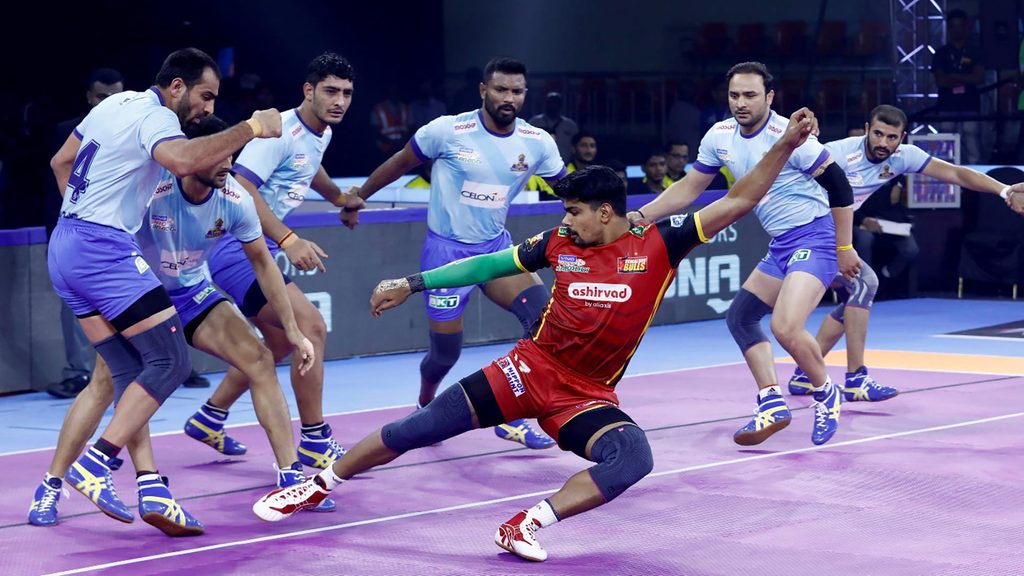
Kabaddi is played on a 13×10 meter court and is separated into two halves by a midline. The game is played between two teams made up of seven players each. The teams alternate between raiding and defending. The raider’s objective is to go to the other half of the court, tap one or more of the defenders and return safely within 30 seconds. However, the raider must start repeatedly saying “kabaddi” before he crosses the midline and can’t stop repeating this word until he crosses back over to his team’s side. If he stops saying “kabaddi” on the opponent’s side of the court, even for a split second, he is out. He picks up one point for each defender he touches, but he must also avoid being tackled to keep the points.

Five raiders who set the vivo Pro Kabaddi Season 7 stage ablaze

This is difficult as he can face between one and seven defenders at the same time. The defenders have to work together as a unit, avoid the raider’s tap and failing that, stop him from returning. Defenders get one point for a successful tackle. Any player that steps or is forced out of the court is then eliminated. UP Yoddha represents the northern state Uttar Pradesh. The team is in its second season in the Pro Kabaddi League and Rishank Devadiga is the team’s captain. So, kabaddi is all about a body contact game. It’s basically like a rugby game. You have to be strong, you have to be fit, mentally fit and also agile on the mat. In one of interview they were asked when, what’s the atmosphere like? How much pressure was there on him as captain?… He replied, Pro Kabaddi started they were told to face the camera, the audience, and everything. It was a bit nervous at the start, but then they enjoy the atmosphere, enjoy the matches.

10 Things You Need to Know About Rishank Devadiga

Kabaddi as a professional sport is a relatively new thing. Until recently, it’s been seen as more of a hobby only played outside the cities. Kabaddi was looked as a rural, rustic sport. It was a sport that was not embraced by urban India, completely overlooked the sport. The settings of the sport was such that it used to be played on dusty bowls. Kabaddi on television? Completely unheard of, “Why would somebody watch it? How are they going to present it?” And that was what aggregated people to come and sample the sport. In other sports, in cricket, for example, you have to wait for a four, or a six, or when a wicket falls. That is the high point. In soccer or football, it’s a goal, similarly in hockey. In kabaddi, every 30 seconds is a high point. It has got the potential of either being a successful raid or being a successful tackle.

PKL 7 Pro Kabaddi League (PKL) 2019: Full Schedule, Fixtures ...

The idea behind the Pro Kabaddi League or PKL started back in 1994. However, it wasn’t until 2014, 20 years later, that a broadcaster, Star Sports, came on board. The Pro League, now in its fifth year has seen considerable growth in both investment and audience numbers. From 2016 to 2017, the PKL increased its viewership in India by almost 100 million. And while it’s still second to India’s premier T20 cricket competition, the Indian Premier League, domestically, the Pro Kabaddi League is more popular than the Fifa World Cup, one of the world’s most- watched sporting events. Investment in the league has also increased. In 2017, Star Sports signed the biggest sponsorship deal in India for a non-cricket sport, worth more than $40 million. As a result player salaries have also increased. Following the 2016 player auction, the highest paid player was on just under $130,000 This year it’s $210,000. For team owners and stakeholders in the sport, more investment will help attract more young players to the game. What ultimately a sport stands on is, what does it do for its players? So, what we have been able to do is to make kabaddi athletes aspirational for sports lovers in India. Player salaries have gone up and they definitely see themselves in the front line of the committee of sports persons in India. Which means that increasingly being a kabaddi athlete will become a viable career. That is at the heart of any sport. There are also signs of the sport growing outside India. At this year’s Asia Games neither the men or women’s India kabaddi teams won gold, and the men’s team didn’t even make it to the final. Something that caught the world’s attention. Of course, we are the country who lost, which is bad for a fan, but then for our game of kabaddi, it’s an ultimate manifestation of how the game is growing.

Asian Games 2018: Men's Kabaddi Team Fails To Reach Final For ...

Will Oil Price go down???

America does rely on oil in many ways. It’s about 90 percent of the energy that we use in transportation. And it’s more than a third of the overall energy that we use. In fact, it’s probably going to stay that way for a lot, a lot longer. The Energy Information Agency administration predicts that going out to 2050 is still going to over a third of the energy that we’re going to use. So how was it possible for oil to reach a negative value and what does it mean for the American economy? To understand what happened, it’s important to know how a futures contract functions. So the futures market is a way to bet on the future price of a certain commodity.

Oil Price Fundamental Daily Forecast – Pressured by Renewed ...

Different types of oil from all across the world are traded by barrels in their individual market places. But two futures contracts serve as the major benchmark for oil price. Brent Crude trades oil from the North Sea in northern Europe, setting the standard for international oil prices. While the West Texas Intermediate, or WTI, trades a specific grade of oil traded in Cushing, Oklahoma, that serves as a domestic benchmark for oil prices. A refinery might have a contract with a producer and say, we will pay you that Brent price or we’ll pay you the Brent price minus the transportation costs. Or you know that it’s all subject to negotiation. And those two are well known. It’s a shorthand, if you will. And a lot of times other crudes are priced off of those crudes because they’re well, known the quality is high and has a long track record. Similar to most treated commodities, oil prices rely heavily on how much of it is available on the market. In other words, supply and demand. Oil like just about anything else in the world is determined that prices are determined by a willing buyer and a willing seller. And so that means that as demand goes up, more people are buying it.

The price will typically go up, supply stays the same and vice versa. If supply suddenly increases, then then typically the price will go down if the demand stays the same. The demand is determined by how much oil is needed at any given moment due to its crucial role in the economy. High demand has often been associated with a healthy economic growth. Historically, oil demand has moved with the economy of a country. It’s been very tightly tied because almost all transportation comes from burning oil and a lot of other industrial processes use oil. So when the economy is humming along strongly, the demand goes up. And when you have a recession, the demand goes down. On the other hand, supply is usually determined by the producers who have control over its output. Historically, the Organization of Petroleum Exporting Countries, otherwise known as OPEC, has played a crucial role in determining the supply. OPEC currently has 13 member countries, including Iran, Iraq, Kuwait, Saudi Arabia and Venezuela as founding members. However, a lot has changed in recent years as the U.S. surpassed both Russia and Saudi Arabia to become the world’s largest crude oil producer since 2018. Thanks to the rise in production from American shale fields. Essentially these countries and OPEC, everyone is competing for market share.

Oil prices inch higher on output cut support, but US coronavirus ...

Everyone wants to produce more for their country, but also the optionality to export it to another country and especially growth regions such as China, Asia. Being an investor or a producer in the oil industry means keeping an eye on this fine balance between supply and demand, as well as the geopolitical events that could threaten the industry. Never forget about geopolitics and the impact it can have on the oil price, because that can be that X factor of why oil may have a big premium or a big discount to fundamentals that you see supply and demand. It’s because geopolitics introduces other risk factors. A historic drop occurred on April 20th, 2020, with U.S. oil prices on WTI dropped by almost 300 percent. Trading around negative 37 dollars. What happened with oil in terms of the negative pricing in April with the futures contracts was rather unprecedented. We have seen negative prices before. For example, last year we were talking about negative natural gas prices and Waha in April 2019. But that’s more due to processing or field issues, not what is happened specifically this time with the COVID 19 and in the price war. Oil prices had been under pressure since January as China battled the spread of COVID 19.

When the pandemic finally reached the rest of the world, demand took a devastating hit. People started talking about the demand going down 2 or 3 percent instead of growing by 1 or 2 percent, as was had previously been expected. But then by the time it got to the United States and all over Western Europe, the forecasts were very different. And at the trough, we probably saw demand in April bottom out, down 30 percent. So we’ve never seen anything like this, certainly in the last 40 years since world oil markets have developed. To make matters worse, a price war erupted between Saudi Arabia and Russia in early March after OPEC and its allies failed to reach an agreement on deeper supply cuts. Oil saw its worst trading day in 20, 29 years. Yesterday, both WTI crude and Brent crude lost nearly a quarter of their value, and the S&P energy sector ended the day 50 percent off its 52 week closing high. Saudi Arabia launched a price war against other key producers. As supply remains steady while demand struck record breaking lows. The petroleum industry quickly began running out of storage space to put their oil. Cushing plays a very big role as one of the main hubs of that commercial storage. And Cushing at the time of the negative contract was around 70, 70 percent full, and what was left was perhaps already committed. So that was a huge issue because Cushing plays one of the main roles in pricing the WTI contracts. As the delivery date for WTI grew near. And investors had nowhere to put the oil. They soon began a massive sell off, prompting an unprecedented crash into the negative territory. WTI special in a way, because it’s so tightly connected to physical oil. And so if you’re holding a contract for WTI, you’re expected to take possession of oil.

Oil prices spike above $30 for first time in over a month | Fox ...

What was happening was the buyers who had bought a futures contract, which meant they had responsibility to take delivery of the oil, recognized that that storage was filling up and they had no place to put the oil and they didn’t want the oil. And so they wanted to get out of the contract. Usually they can get out of the contract by getting somebody else to take the oil instead at a positive price. Cause oil’s a valuable commodity. But there was nobody who wanted to take that oil, particularly because it was located in an area that was producing way more oil than they needed. And the pipelines to move oil out of that area were completely full. The historic drop quickly sent shockwaves through the U.S. financial market. The Dow plunged by over 1,200 points over the following two days, and brokerage firms like interactive brokers reported taking 109 million dollar hit to cover its customers losses. It was kind of like what happened in 2000 where we we’re wondering if the computers could roll over. Some of the traders computers couldn’t even handle the negative. They weren’t set up for a negative. So you can imagine the disarray and the surprise, you know, that some traders faced the next morning when they looked at their margin calls or what they owed based on the severity of this drop.

However, experts point out that although the event was unexpected, there was no need to panic. It was not unforeseen. The exchange itself saw it as a possibility ahead of time. They actually discussed what to do if that were to happen, reprogram their software and so forth. And at least one major media outlet reported on it a week ahead of time before it happened. Also, some other products have gone negative in the past. Things like natural gas. So I think it’s important to put it in perspective that while this had never happened with oil before, it was just on one particular instrument. The WTI was just for one day and it was seen as at least a remote possibility ahead of time that it happened. It was very few contracts. There was very little trading at those prices and the price very quickly rebounded into positive territory.

Indian economy to benefit from slump in international oil prices ...

Why Australia is least affected by recession!!!

America’s economy is approaching a big milestone. If it keeps humming until July 2019, it’ll be the longest expansion in U.S. history. It would be exactly one decade and one month old by then. But there’s another country with an even more impressive run It’s even called the ‘lucky country’ Three big lessons from Australia.

  1. Be smart.
  2. Be organized.
  3. Be lucky.

So, if I’ve got any advice for other countries, it’s try and be as lucky as Australia That luck has to do with Australia’s treasure trove of natural resources. You know Australia is on the other side of the world and sitting on tremendously valuable minerals right at the point where the Chinese economy is just around the corner and exploding. Australia and every one its natural resources were within the right geographic neighborhood even as the Chinese economy began to begin . And it just so happens that China did a big fiscal stimulus in 2008 and spent a great deal of money building new cities. So all of these resources were drawn from places like Australia. So that also served as a huge tailwind at a time when developed markets were in a whole lot of trouble.

What Currency Is Used In Australia | Australian Dollar : Compare ...

The year 2008 was a time of economic turmoil The Global Financial Crisis hit and markets crumbled around the world. But as it turns out this was also a year for Australia’s economic management to really show off At the time the government had a very helpful and very low level of debt. One reason? Pension reform in the 1990s. Australia set up a compulsory retirement system called the superannuation system. It requires employers put money into its employees’ retirement savings.

Since companies and citizens have to build up retirement savings, some of the financial burden to pay off pensions was taken off of Australia’s government As other economies reeled in the wake of the 2008 crisis, the Australian Government was then able to put money directly into people’s bank accounts This boosted consumer spending in order to stimulate growth In 2008, the Australian Government unlike some other developed market governments actually jumped in very quickly with fiscal stimulus, so that helped to kind of minimize the effect of the crisis The country’s numbers continued to look sluggish after the financial crisis. But they never quite dipped low enough or for long enough to satisfy the definition of a recession. It takes two quarters of negative growth to fall into a recession. Australia’s economy did post a couple of negative quarters since 2008, but no country’s perfect. Overall Australia’s economy has been managed pretty much in recent years partly due to a robust and stable financial institution.

Reserve Bank of Australia – Australia's LGBTQ Inclusive Employers

Australia has an independent financial institution and it is a very well-run financial institution . It also has a floating exchange rate and the exchange rate helped it adjust to international shocks. Australia’s economic reforms gave it flexibility in times of hardship. For example, floating the Australian dollar In 1983, Australia’s government moved the dollar onto a floating exchange rate This meant that the dollar would be valued by supply and demand instead of being subject to influence from its government or its central bank It allows the economy to react to shocks as well Typically when an economy is hit by some sort of negative shock. The currency will adjust. It will depreciate and that helps promote exports. Another reason behind Australia’s economic diary lies in its immigration policy. Since the late 1990s, Australia has seen growth in temporary migration, many arriving to the country on student or temporary work visas. The number of temporary migrants peaked in the year 2000. However a recent change to immigration law in 2018 gave visa applicants more hurdles to get through if they wanted to come to the country Even when our GDP per capital average incomes aren’t rising by much because the number of people continues to rise that means the total GDP continues to rise at even more rapid pace Part of that’s underpinned by much faster population growth Most experts think Australia’s economy remains strong in 2019, but it’s not without risks.

Australia’s suffering at the instant from pretty weak wage growth. That’s worrying a lot of people. There’s a lot of fear right now that China is hitting a wall. That will hit demand for Australian products. The good news is to the extent that the Chinese are buying commodities hopefully will find buyers from overseas for many of those commodities if the Chinese are not there The bad news is the rest of the world economy is not doing that well.

Australian economic growth slows, enters per capita recession ...

Negotiating- The Art, a small story!!!

I think there is an art to it it’s a craft, the negotiating training this morning in the office and the reason, negotiating it be is because it’s the one area of the deal where people need me the most and they need me the most they think I have the most confidence and the confidence that I have going to the deal comes from experience and it comes from honestly – practice practice practice because no matter what you’re selling you’re selling. Two different people you’ve got a seller and a buyer and in every negotiation you’ve got price you’ve got pressure and you’ve got persistence those are the three P’s remember that is it can be a nice little instructional.

The negotiations between Disney and Lucasfilm - A negotiation case ...

An iPhone cost to make now you’re not going to negotiate the price of an iPhone because there’s too strong demand but let’s say there wasn’t strong demand then you can negotiate or you can find a retailer who’s going to sell it to you for cheaper because it doesn’t cost nearly as much to make that phone. As it does for you to buy it real estate is the same way a deal that’s listed from 10 8 down to 10 so 10 million bucks the offer originally came in at 8 million dollars okay that seems like it’s way too far apart. If I go to the seller he’s going to say you got to come up they’re going to say oh no this is my offer so what do you do what do you do you remember the price you want to try to get – which in this instance was around 8 and a half that’s where we thought we’d get a deal done and the legacy price what the seller paid seller paid six point five. So, even at our low terrible awful offer that sellers making money that’s a good thing to remember and to consistently remind each side and then you let time saturate the emotions of the deal and you use repetition you only paid six five even if this bullshit offer you’re making money.

The Art of Negotiation in Project Management

There are clients who are losing million and they use pressure right the fear of a falling market and the fear of missing out every seller fears they’re not going to get their price going forward because maybe the market could change every buyer has a little fear that they’re going to lose it a little fear they’re going to miss out and then you’re trying to find the price in the middle where both sides will say we came to that number because that’s the max or the minimum that I’m willing to go to get this deal done.

Can a Business Simulation Game help develop Negotiation and ...

Are Artworks Subjective?

In my view, it depends on the artist. There are two kinds of artworks – objective and subjective. To begin with, real art is created for the spectators and audience. On the other hand, subjective art is created out of one’s desire. Though every artwork has a touch of oneself, most of them are made for the people to see, to read, and to criticize upon. Not many artworks can be entirely personal, or in other words, subjective.
Subjective art was created to pour one’s heart out without letting other people view it. It is very personal, for example, writing a journal. Objective art is designed to make people feel, make people think, observe, and analyze the deeper meaning of the artwork. To name one artist who had mastered the subjective form of painting is none other than Picasso. His paintings were created only for himself, only to pour out his thoughts, and not to please the spectators or even, make the viewers think.
Not only in painting, but subjective art is also present in poetry. To write poetry, which would include external elements, is known as objective art. But, subjective art is mostly about what is inside the poet’s mind and about the emotions he feels. Subjective poetry is very personal, for example, a ballad or an elegy. This is precisely the opposite form of objective poetry.
Now, there is a very fine line between objective and subjective art. To create the former one, an artist has to keep an object in mind, to have a prior idea regarding the outcome of his work. On the other hand, the latter comes out of the flow. It is mostly out of the artist’s mood, or imagination, or even accidental. Mostly artworks are objective, which is made for the people to comment on. There are very few artists who create individual artworks.
To answer the main question, not all artwork is subjective, though I would love them to be. But, unfortunately, they are not. It would have been so beautiful to read poetry, which got created by accident or to look at a painting, which is just a crazy endeavor of an artist’s whimsical mind. Besides, through subjective art, one can truly understand the essence of an artist’s intention or feel the artist’s emotions.
Here, I would like to mention an epistolary novel, “The Diary of a Young Girl,” written by Anne Frank. This is an extraordinary example of subjective art. The journal, which got published posthumously, was written by Anne to keep records of her experiences of World War II. In the book, she maintains a steady conversation with “Kitty,” the name of her journal, about how her days, her family, love interests, and lifestyles after they went into hiding. An excellent example of subjective art and most epistolary novels are indeed written as to express one’s experiences or thoughts, not keeping in mind about the readers.
To conclude, subjective artworks are very personal, and hence, most artists don’t publish or execute them in public, even if they create it. Most of the artworks are found after the death of the particular artist and get published. Other than that, several of the artworks created are objective.

Are products really ‘Made In China’ ???

Made in China. We’ve become accustomed to seeing the label on products manufactured in the world’s second biggest economy. But buying one of these products in China instead of say, the U.S., doesn’t guarantee you’re getting a better price. Chinese tourists have built a reputation for being big spenders abroad, spending a whopping $277 billion in 2018, much more than any other nationality. A lot of times, people think that purchasing something in China will be inexpensive, but that isn’t always the case. So how much of a difference are we talking? If we bring four products from four popular western brands to compare. Starbucks, H&M, Adidas store, a Godiva store. To keep things consistent, we will be using 2019’s average foreign exchange rate. The products compared are:

  1. A standard black t-shirt at H&M.
  2. Starbucks Grande Cappuccino.
  3. Godiva Chocolates.
  4. An Adidas hat.

Now let’s compare:

  1. The shirt at H&M is priced nearly the same in the U.S. and China.
  2. A Grande Starbucks cappuccino will cost you $4.63 in Beijing, but in Los Angles, California, $3.95.
  3. This case of Godiva chocolates, called Pearls, is priced at $7.24 in Beijing, but only $3.95 in LA.
  4. The Adidas hat will set you back $42.27 in China, nearly double the price of a similar hat in the U.S.

This experiment has made clear that pricing are complicated. So much so, that websites have popped up like the Mac Index, a site that compares Apple product prices from around the world. So many ads for Apple here in this area. According to an analysis done by Tech Insights, the cost to make an Apple iPhone 11 Pro is $490.50. Yet according to The Mac Index, the price to buy one is $1,318 in Japan, $1,477 in the U.S., $1,658 in Mainland China and more than $2,000 in Turkey and Peru. Prices vary across countries due to factors like demand, tariffs and tax refunds. And then there’s the supply chain: the network of people, organizations, activities, information and resources involved in the creation of a product.

close up of camera over black background
Photo by ATC Comm Photo on Pexels.com

Apple’s current CEO Tim Cook is considered by some to be a mastermind in supply chain. He first joined Apple in 1998 with a mandate to clean up the company’s manufacturing and distribution. Over time, he closed factories and warehouses, instead opting for contract manufacturers in China. That’s great for Apple’s profit margins, but it’s certainly not praised by President Trump, who has asked Apple to make its products in the U.S. If, say, iPhone production was moved to the U.S., instead of China, different analyses show the price for the consumer could go up from anywhere from $30 or $40 to hundreds of dollars to even $30,000-100,000. That’s partially why, despite Apple pledging to invest more money in American manufacturing, it maintains China as its hub for making its gadgets.

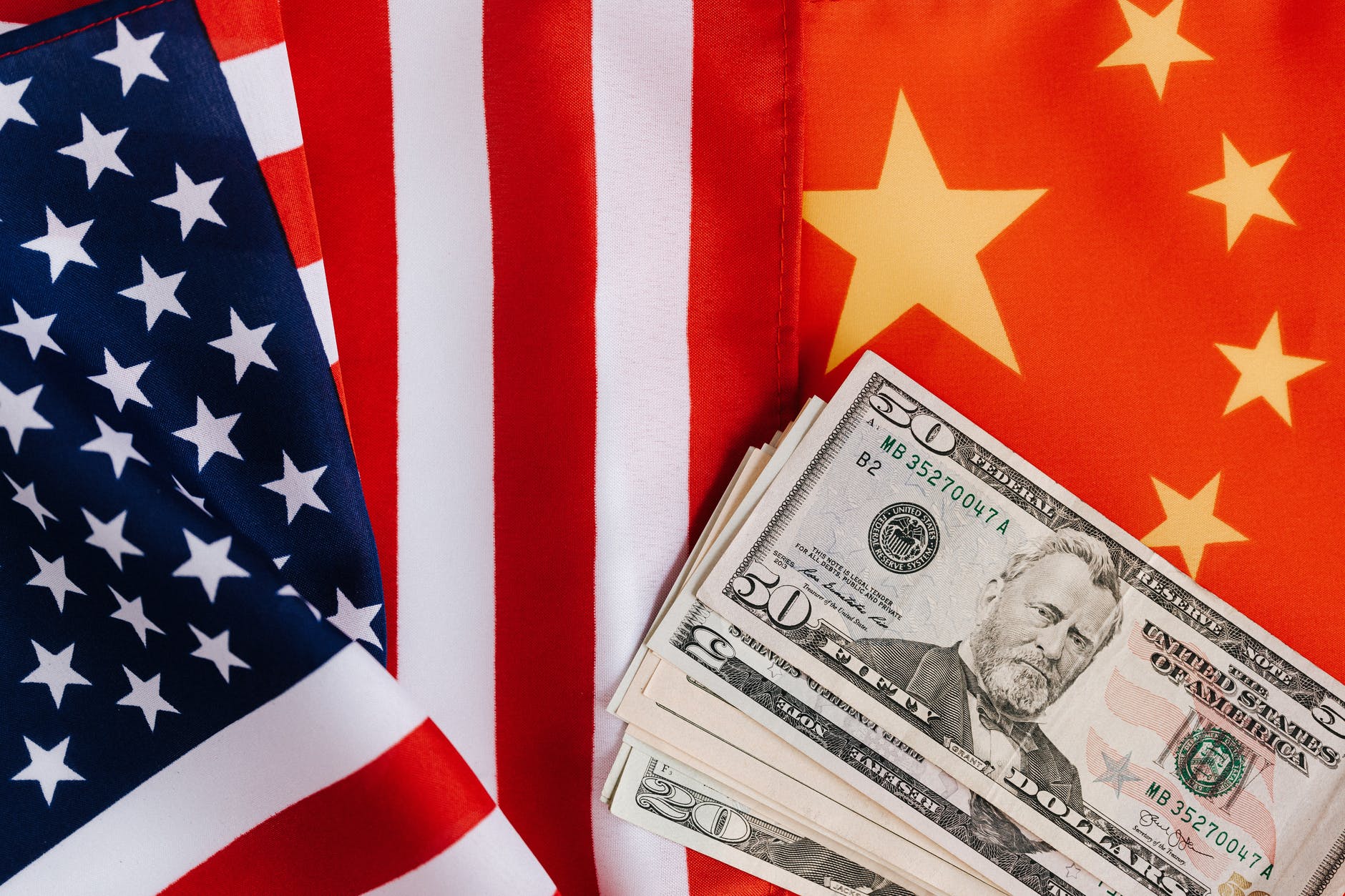
american and chinese flags and usa dollars
Photo by Karolina Grabowska on Pexels.com

That’s Omar Slim, a senior portfolio manager at global asset manager, PineBridge. When you hear about made in this country or that country is really quite relative and it’s a simplification of things because it’s most likely made in a number of countries. Here’s an example. Let’s say we want to make lasagna for dinner. If Jeff cooks the ground beef and prepares the cheese, Sarah makes the tomato sauce and layers the ingredients into a pan; and Blair, who bought all the ingredients, puts it in the oven, who gets the credit for making the lasagna? Now, let’s apply that to Apple’s iPhone. While the phone might say ‘Made in China,’ some of its parts come from other parts of Asia, Europe and even the U.S. Even though an iPhone may be assembled in China, it’s still tariffed in China as a U.S. product because Apple is an American company. The brand makes that clear with by, ‘Designed by Apple in California. How they’re treated in terms of customs, they will be treated as a U.S. product. So regardless of where they come, it’s essentially a U.S. product. Same for Chinese products going into the U.S. and same for, for instance, European cars.

India simply cannot afford to boycott Made in China — Quartz India

China became a popular manufacturing hub in the 1980s after it started to open to the world. It became known for its cheap labor costs, lax regulations and business-friendly environment. As China’s manufacturing sector grew, it took the crown from Germany as the world’s top exporter in 2010. While Made in China has become synonymous with cheap and low-quality products, China is hoping to change that. In 2015, it launched a Made in China 2025 initiative, which aims to shift its economy from low-end manufacturing to high-end, high-tech products. In 2017, Tim Cook said China lost its place as a low labor cost manufacturing nation many years ago. The U.S.-China trade war resulted in a tit-for-tat increase in tariffs on many products.

Petition · Political Parties: Boycott 'Made in China' products in ...

With increasing costs being passed on to consumers, many companies are looking to diversify their supply chain, instead of being so reliant on China. That sentiment has only grown, following the coronavirus pandemic’s hit on the global manufacturing industry. Along that supply chain, there will be some companies, that instead of manufacturing it in China, if they could, they could try to replace. In fact, companies including Apple, Microsoft and Google are reportedly looking into moving some of their hardware production from China to Vietnam or Thailand. But that might be harder than it sounds. The other countries will have a hard time to compete along with the fact that the infrastructure is shown that it’s quite good, along with the fact that in certain countries would not want to compromise the relationship with China.

70 Reasons that makes us Proud to be Made In India - Sanjay Dalmia

The reality today is that a product likely has many components which are sourced globally. A phone may be designed in the U.S, but its screen is sourced from South Korea, the sensors and microchips may be from Taiwan or Germany, with its assembly in China. So, the next time you see a product with the words, “Made in China,” remember that the full story is seldom pure, and never simple.

“Stop Worrying and Start Living” – Dale Carnegie – Book review

Dale Carnegie’s how to stop worrying and start living so the first big idea is ask yourself what’s the worst thing that can happen I remember the first year in college constantly worrying about my grades what was I getting to do if I got a B+ rather than an a well surely my life would be over and that i would never amount to anything in life like that was seriously the thought process browsing my 17 year old head now fast-forward five years.

How to Stop Worrying & Start Living
Carnegie tells a story of this guy in World War 2 who’s stuck in a submarine and basically knows that he’ll be dying in the next few hours and he sits there thinking about all the stuff he used to worry about at home and how absurd it was and makes a promise to never waste his life again like that if he survives now that might be hard to resonate with so let me give you a more contemporary example people are having their heads chopped off every single day every single day the only reason it’s not you is because you are born in a certain place. They weren’t that’s it now going back to my friend I told him look here’s what I want you to do every day you will start your morning by watching somebody’s head being chopped off and then you’ll go about the rest of the day.
He started freaking out about how he can’t do that and how he doesn’t like blood and whatever now here’s the thing. I know that’s really crass and morbid but I don’t care if you don’t worry about stuff great you don’t have to watch anything but if you’re worried about stupid all the time you have a disease so you either treat yourself or you never ask about how you can stop worrying again ever. Here’s what I will guarantee you if you start your day by watching someone else have their head chopped off nothing and I mean absolutely nothing could possibly happen to you for the rest of the day that you could get pissed off about and not feel like a complete retard yes when you’ve seen someone’s head chopped off you will have a weird feeling inside you as soon as you start to complain about how you deserve to be paid more at your job or what you’re going to do now since you bought a B+ rather than an A or how your washer is broken you’ll realize that.

automatic weapon bullet camouflage close up
Photo by Pixabay on Pexels.com

If the guy had been given the chance to live and wear that same dirty shirt for the rest of his life without ever being able to wash it he would have been the happiest man alive realize the absurdity of it all the third big idea staying busy now I don’t mean the average busy person actually those are the people that worry the foremost the guy who works 12-hour days then comes home and watches Fox all night worrying about whether some guy can marry another guy or about all the foreigners who will come and take his job you know because he’s the only one entitled to that job I’m not talking about that kind of busy here’s how I like to stay busy read a book that I like go to the gym with my girlfriend play around on the piano and compose cook amazing food work on a project. I’m passionate about now here’s what happens when you do that your brain can’t think of two things at one time it just doesn’t have that capability you can try right now if you want you can’t think of your broken washing machine and at the same time think of how much you love playing soccer it’s not how your brain works so the best way to get rid of the negative thoughts in your head is to actually start putting positive thoughts in there get busy with what you love and your brain simply won’t even have the power to stress . Finally, a question that really resonated with me here’s what you’re going to do in your life you’re going to work and worry your entire life so you can gather a bunch of stuff like your house and all the stupid.

woman working girl sitting
Photo by Alexander Dummer on Pexels.com

If you’re lucky after 50 years of all that worry and stress all of your stuff could be worth 1,000,000 dollars here’s the question would you sell your legs for a million dollars let me ask you this would you sell your legs for a billion dollars I wouldn’t and you probably wouldn’t either would you sell your arms for another billion dollars no there you go you have already got something that you simply value at two billion dollars actually hopefully more but you do not need to be all Zen you could be a greedy capitalist like me and understand this now here’s what you’re going to do you’re going to ignore and not utilize something worth two billion dollars because you’re too busy worrying and stressing about the things that might amount to 1 million dollars at the end of your life oh and you’ll be considered really lucky if that happens by the way all right.

cheerful barista in apron and hat with portafilter
Photo by Ketut Subiyanto on Pexels.com

So, I don’t know if you’re seeing how crazy that is but that’s kind of like having a huge mansion a personal jet every single car you ever wished for and not using and enjoying those things because you’re too worried about at some point having the ability to shop for a Corolla that’s crazy and sad you have already got everything that you value at billions and billions of dollars so stop ignoring wasting and treating it like for hours and days so you can worry and bitch about how your phone bill went up from a hundred dollars to a hundred and twenty.

You can buy this amazing book from here ( click here )

An interesting case of forgery

Art heists, we see them countless times in movies as well as read about them in newspapers. They can be daring swiping of art works or plain robbing them outright. One such type of thieving is forgery. Forgery is a white-collar crime that generally refers to the false making or material alteration of a legal instrument with the specific intent to defraud anyone. Forgery in itself requires a lot of skill and mental acumen to pull-off. And as all crimes go once caught, one must prove their innocence in court to live freely. However, one case in Holland which included forgery was a little different, here the accuse pleaded guilty and tried to convince the court of his guilt. This was the case of  Han Van Meegeren in 1947.

Photo by u00b6Project Atlas on Pexels.com

Like the cliché which goes with art forgers, Meegeren was an artist whose original works failed to bring him renown so he set put to make fools of those who shut the door to the art world on him. Like it was stated this kind of thievery requires a lot of skill and practice. Meegeren worked for nearly 6 years, studying all about the old masters, their styles, their biographies, their techniques and their materials.  He chose a baroque painter from the 17th century by the name of Johannes Vermeer, a rather difficult choice given that Vermeer is celebrated throughout the art world for his technical brilliance in portraying domestic scenes. He carefully made meticulous practice pieces, going as far as to making his own brushes, and paint from his knowledge of Vermeer’s time. He was partly successful in his forgeries due to the fact that the sophisticated means of testing that are available now weren’t as advanced or widespread then. The other factor was his planning, the originality of the art work being tested depends on the art specialist reviewing them, and their popularity which is subjective. From his research he knew that the leading expert on Vermeer believed that he had an early fixation on religious painting and as there was no proof of this theory, Vermeer decided to provide one. Even thought it had some inconsistencies, as it was considered an early piece, it got the stamp of approval and he sold his fake for an equivalent of $4 million dollars. The success prompted him to make and sell more forgeries.  However, his triumph was to be short lived, soon Nazi Germany occupied holland, and Hitler’s top general Herman Goring wanted a Vermeer painting for his collection. And Van Meegeren was more than happy to sell his fake. However, when the allies won the world war, Meegeren was tried for his “treasonous” act and was to be sentenced to the electric chair for selling a Dutch “masterpiece”. Thus, began Meegeren’s trial and his fight to prove that it wasn’t an original. To prove this, he explained step by step how he had forged it. However, he faced an ironical obstacle, the very man he had used to dupe the world, now came forward to take him down. The very expert who had enabled him to do the scam, now fought to protect his own reputation. Thus, to prove his innocence Meegeren made another fake and submitted to the court and was thus acquitted for collaborating with the Nazis, but sentenced to one-year imprisonment for fraud. Thus, he went from the scum who collaborated with Nazis to the folk hero who managed to swindle them. Due to his notoriety his works became valuable is his own right. Later down the line even his son forged his father’s paintings to gain money.

Thus, his “lack of talent” in his peer’s eyes was actually the fuel that unlocked his real talent in his eye for detail and dealing the art.

The Art of saying NO !

The ultimate productivity hack is saying no.

Not doing something will always be faster than doing it. This statement reminds me of the old computer programming saying, “Remember that there is no code faster than no code.” 

The same philosophy applies in other areas of life. For example, there is no meeting that goes faster than not having a meeting at all.

This is not to say you should never attend another meeting, but the truth is that we say yes to many things we don’t actually want to do. There are many meetings held that don’t need to be held. There is a lot of code written that could be deleted.

How often do people ask you to do something and you just reply, “Sure thing.” Three days later, you’re overwhelmed by how much is on your to-do list. We become frustrated by our obligations even though we were the ones who said yes to them in the first place. 

It’s worth asking if things are necessary. Many of them are not, and a simple “no” will be more productive than whatever work the most efficient person can muster.

But if the benefits of saying no are so obvious, then why do we say yes so often?

Why We Say Yes

We agree to many requests not because we want to do them, but because we don’t want to be seen as rude, arrogant, or unhelpful. Often, you have to consider saying no to someone you will interact with again in the future—your co-worker, your spouse, your family and friends. 

Saying no to these people can be particularly difficult because we like them and want to support them. (Not to mention, we often need their help too.) Collaborating with others is an important element of life. The thought of straining the relationship outweighs the commitment of our time and energy.

For this reason, it can be helpful to be gracious in your response. Do whatever favors you can, and be warm-hearted and direct when you have to say no.

But even after we have accounted for these social considerations, many of us still seem to do a poor job of managing the tradeoff between yes and no. We find ourselves over-committed to things that don’t meaningfully improve or support those around us, and certainly don’t improve our own lives.

Perhaps one issue is how we think about the meaning of yes and no.

The Difference Between Yes and No

The words “yes” and “no” get used in comparison to each other so often that it feels like they carry equal weight in conversation. In reality, they are not just opposite in meaning, but of entirely different magnitudes in commitment.

When you say no, you are only saying no to one option. When you say yes, you are saying no to every other option.

In other words, saying no saves you time in the future. Saying yes costs you time in the future. No is a form of time credit. You retain the ability to spend your future time however you want. Yes is a form of time debt. You have to pay back your commitment at some point.

No is a decision. Yes is a responsibility.

The Role of No

Saying no is sometimes seen as a luxury that only those in power can afford. And it is true: turning down opportunities is easier when you can fall back on the safety net provided by power, money, and authority. But it is also true that saying no is not merely a privilege reserved for the successful among us. It is also a strategy that can help you become successful.

Saying no is an important skill to develop at any stage of your career because it retains the most important asset in life: your time.  

You need to say no to whatever isn’t leading you toward your goals. You need to say no to distractions. As one reader told me, “If you broaden the definition as to how you apply no, it actually is the only productivity hack (as you ultimately say no to any distraction in order to be productive).”

Nobody embodied this idea better than Steve Jobs, who said, “People think focus means saying yes to the thing you’ve got to focus on. But that’s not what it means at all. It means saying no to the hundred other good ideas that there are. You have to pick carefully.” 

There is an important balance to strike here. Saying no doesn’t mean you’ll never do anything interesting or innovative or spontaneous. It just means that you say yes in a focused way. Once you have knocked out the distractions, it can make sense to say yes to any opportunity that could potentially move you in the right direction. You may have to try many things to discover what works and what you enjoy. This period of exploration can be particularly important at the beginning of a project, job, or career.

Upgrading Your No

Over time, as you continue to improve and succeed, your strategy needs to change.

The opportunity cost of your time increases as you become more successful. At first, you just eliminate the obvious distractions and explore the rest. As your skills improve and you learn to separate what works from what doesn’t, you have to continually increase your threshold for saying yes.

You still need to say no to distractions, but you also need to learn to say no to opportunities that were previously good uses of time, so you can make space for great uses of time. It’s a good problem to have, but it can be a tough skill to master.

In other words, you have to upgrade your “no’s” over time.

Upgrading your no doesn’t mean you’ll never say yes. It just means you default to saying no and only say yes when it really makes sense. To quote the investor Brent Beshore, “Saying no is so powerful because it preserves the opportunity to say yes.” 

The general trend seems to be something like this: If you can learn to say no to bad distractions, then eventually you’ll earn the right to say no to good opportunities.

How to Say No

Most of us are probably too quick to say yes and too slow to say no. It’s worth asking yourself where you fall on that spectrum.

If an opportunity is exciting enough to drop whatever you’re doing right now, then it’s a yes. If it’s not, then perhaps you should think twice.

It’s impossible to remember to ask yourself these questions each time you face a decision, but it’s still a useful exercise to revisit from time to time. Saying no can be difficult, but it is often easier than the alternative. As a famous writer has pointed out, “It’s easier to avoid commitments than get out of commitments. Saying no keeps you toward the easier end of this spectrum.” 

What is true about health is also true about productivity: an ounce of prevention is worth a pound of cure.

The Power of No

More effort is wasted doing things that don’t matter than is wasted doing things inefficiently. And if that is the case, elimination is a more useful skill than optimization.

I am reminded of the famous Peter Drucker quote, “There is nothing so useless as doing efficiently that which should not be done at all.”