Disapperance of A Cessna 182 over Australia's Bass Strait

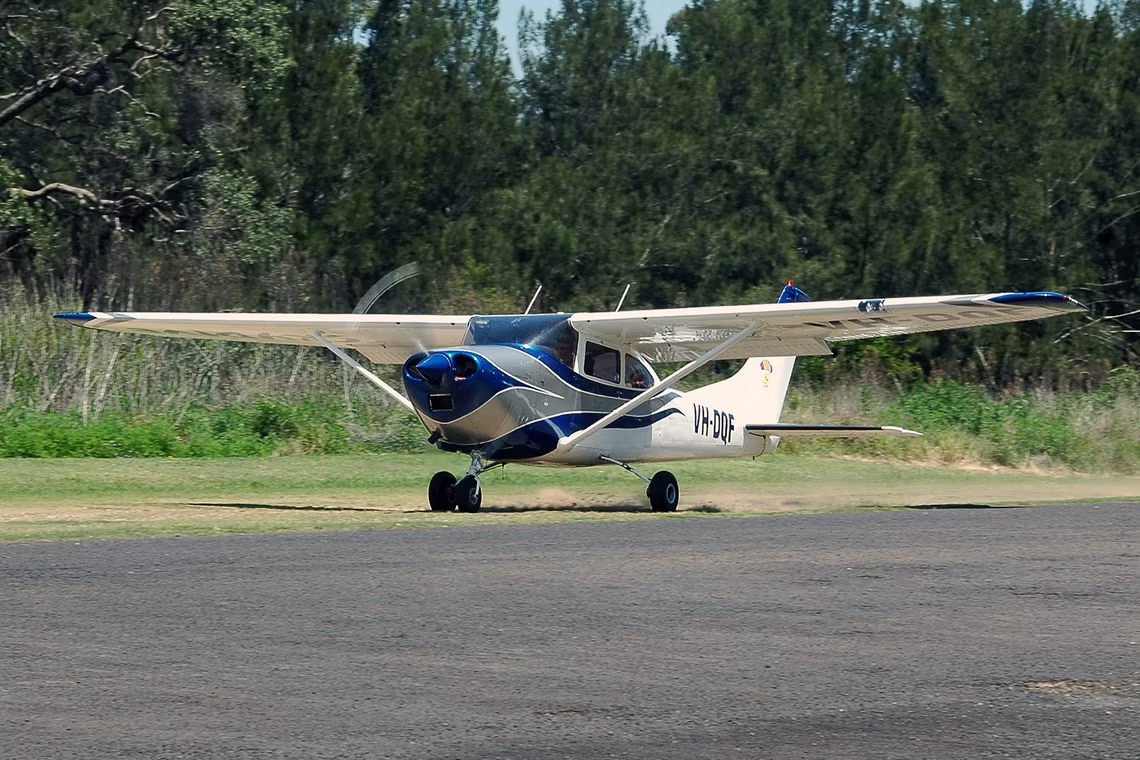
Frederick Valentich, 20, vanished on October 21, 1978, when he flew across the Bass Strait from Melbourne to King Island. He was flying a Cessna 182 that had been hired and had the registration. VH-DSJ.

One of three islands comprising the New Year Group in the Bass Strait, King Island is 125 miles from the Australian state of Victoria. Valentich, a RAAF Training Corps member and aviation enthusiast, had twice attempted to enroll in the Australian Air Force but had been turned down due to his lack of academic credentials.

Photo –  Robert Frola via wikimedia Commons

Additionally, according to his father, he was a UFO enthusiast who collected newspaper clippings and watched movies about extraterrestrials. He had accumulated 150 flight hours at the time of his disappearance and was certified to fly at night under ideal meteorological circumstances.
He initially said that he was going to King Island to pick up some pals before telling others that he was going to pick up crayfish. Later, investigators ruled out both justifications. Additionally, he did not follow protocol by notifying King Island Airport (TAS) of his plan to arrive there. This gave detectives reason to suspect that he could have orchestrated the entire incident. What specifically was Valentich doing then? Had he gone in quest of UFOs or was he trying to accrue additional flight time?
At 19:06, Valentich radioed Melbourne Flight Service to report that an unidentified aircraft was following him at 4,500 feet after taking off from Melbourne Moorabbin Airport (MBW) and crossing the ocean. He claimed to have seen four dazzling lights that resembled landing lights. He was unable to identify the plane’s brand; all he could say was that it was traveling at a breakneck pace and seemed to be playing a joke on him. A little while afterward, all radio communication was lost.
He reported seeing what seemed to be four landing lights above him in the bright night sky. Venus was the brightest planet at the time of the occurrence, making a diamond-shaped formation with Mars, Mercury, and the brilliant star Antares. These four white spots might have been misinterpreted for aircraft or UFO lights by Valentich.
Another private aircraft pilot overflying the Bas Strait a month, after Valentich vanished, reported seeing what he believed to be the form of a submerged plane. He flew over it again but could not be sure that it was an airplane in the water. A Cessna 182’s engine cowling washed found on Flinders Island five years after Valentich vanished.
Investigators came to the conclusion that Valentich being disoriented was the most likely cause of his disappearance. Valentich, being a novice pilot, could have been fooled by the appearance of a tilted horizon. Some of the horizons are still light as the sun sets, but the rest progressively grows darker. As a result of the illumination imbalance, the horizon may appear to be slanted, forcing the pilot to adjust the plane’s course. When the plane’s nose is pointed downward, its speed rises and it enters what is known as a “graveyard spiral.”

Hockey World Cup gives hope to the Indian Hockey Team

In the ongoing Hockey World Cup, India is performing well. They have been able to win their first match against Spain. In their second game, India managed to draw the game against England. 

They are being hopeful that they will likely break the 48 years of drought. For that, they will have to win the match against Wales on 19th January. But for this win, they will have to take a big lead. 

In this edition of the World Cup, there are 16 teams. Those have been divided into a group of 4. So, there are four groups namely A to D. India is in group D along with England, Spain and Wales. 

On the competitive front, Belgium and Australia are the favourites to lift the cup in this edition. The tournament is being played for the second time in a row in India. Bhubaneswar and Rourkela are the cities, which are hosting the games.

Currently, on the points table, India and England have 4 points each. But England is on top as they have won the match by a bigger margin.

For this tournament, Odisha has spent an amount of 10.98 billion rupees for the financial year 2022-23. This money has been used to build a new stadium in Rourkela and a facelift to the existing one in Bhubaneswar.

https://unsplash.com/photos/TPZiORGCRBg

The amount has been used to also beautify the two cities. For the unknowns, the stadium that has been built in Rourkela is the biggest Hockey stadium in the world. The stadium can accommodate 20,000 people at the same time.

The matches in the tournament are also going completely packed. The matches are also getting attention on the live telecast the last time India won the Hockey World Cup was in 1975. During that tournament, the final was between India and Pakistan. 

But this time, India has performed well in the Olympics also. They have been previously the Olympic Gold medallist for 8 times. So, the Indian Hockey team is going to give a tough fight to whichever team they will face in the tournament. 

On the player’s front, Hardik Singh did encounter an injury during the match against England. But there is nothing to worry and coach Reid did ensure that he is alright. 

In recent times, the Indian government is also putting in the effort to promote various games other than cricket. States especially, Odisha have been able to promote the hockey game to a great extent. It has also been able to present itself as a state that has given sports equal importance as any other field like education. There have also been good players in the Indian Hockey team from Odisha at a regular pace. 

So, now we will need to patiently wait for the finals to see whether the Indian team manages to lift the World Cup this time or not. The tournament can end in favour of any team, but this event will surely make India a worthy contender for the future several tournaments in various other sports.

ROLE OF QUAD IN SOUTH CHINA SEA

BY DAKSHITA NAITHANI

The Quadrilateral Dialogue was established in 2007 when four countries—the United States, India, Japan, and Australia—joined forces. However, it did not take off at first due to a variety of factors, and it was resurrected in 2017 after almost a decade due to factors such as growing country convergence, the expanding importance of the Indo-Pacific area, and rising threat sentiments toward China, amongst many others.

The origins of QUAD may be traced back to the Malabar Exercise. Malabar began as a modest Passage Exercise named PASSEX between the Indian and US Navies in 1992, but was halted after India’s nuclear testing in Pokhran in 1998. It was later restarted in 2002. Since its inception in 2002, QUAD has become an annual event. With the addition of Japan in 2015, it has become a trilateral practice.

The Quad’s goal remains intact: to promote the economic and security objectives of those nations with genuine and essential interests, to devise a new approach for keeping the Indo-key Pacific’s maritime lanes free of foreign influence. It has become necessary in view of the increased need for information exchange in the maritime sector. With the growing presence of the Chinese Navy in the Indian Ocean, awareness is a key subject for the Navy. After 2008, China increased its presence in the Region under the pretext of anti-piracy operations, even deploying submarines for the objective. In 2017, China formally established its first overseas facility near Djibouti, in the Horn of Africa.

What are the underlying challenges?

The environment in which QUAD has been resurrected, as well as subsequent engagements like as Malabar Exercise 2020, are regarded as governed by a counter-China narrative. There are several features that may not constitute sites of convergence, despite how they appear.

China’s influence: China has significant economic links with Quad partners, particularly Australia, which is what it may use to compel or sway nations to its side. This might prove to be an issue for India.

Maritime orientation: Quad is a marine rather than a land-based organisation because of its strong concentration on the Indo-Pacific. This raises some important concerns about the basis of collaboration with Asia-Pacific and Eurasian countries.

Differing perspectives. There are conflicting viewpoints on certain situations, such as the Myanmar crisis as seen through the eyes of the United States and India. India has remained silent in the face of Japan’s expressed worry that China is attempting to alter the status quo in the East and South China Seas.

Advantages in Space- When QUAD representatives join forces in space, they have significant benefits and are able to fight China. This includes (a) lowering the extremely high expenses of building a dock in order to promote the development of interplanetary vehicles (IPVs). (b) One member state has benefits that will compliment each other and will lead to a successful Mars exploration and the construction of support facilities that will be necessary for effective asteroid belt mining. (c) All member countries bring a high degree of convergence in space applications, for example, the United States has the advanced technological base required for advanced avionics, which will form the backbone for both the construction of a space dock and the construction of IPVs; India has a highly educated and inexpensive working population, which will lower the cost of space; and Australia has the natural resources required for exploration.

The Quad met in Tokyo on October 6, 2020, for the second time since the organisation revived in November 2017. It was the second such gathering, following the inaugural virtual meeting in June, and the first high-level Quad meeting since the 2019 foreign ministers’ meeting in New York on the margins of the UN General Assembly meeting. Furthermore, given mounting worries about Beijing’s hostile conduct and growing suspicions about China’s management of the COVID-19 outbreak in Wuhan, the meeting’s timing and circumstances added to its relevance.

China’s ‘incremental encroachment strategy’ in the South China Sea (SCS) is a source of worry not only for the countries currently affected by the loss of influence over the Exclusive Economic Zone (EEZ), but also for the rest of the world, as China may be able to exercise a monopoly over SCS Sea Lines of Communication (SLOC). Affected nations lack the necessary power to stand up to China, and so will be forced to accept a one-sided agreement such as the China-driven “Code of Conduct” (COC).

As a result, Chinese adventurism must be restrained by other major maritime countries in the global interest. The fact that China could establish a military facility in the SCS despite the existence of the US Navy shows that worldwide criticism and more effort are required to prevent the SCS from becoming “China’s lake.”

Quad may not have the fangs it needs right now, but there is no other option than to establish a prospective structure like this involving likeminded maritime countries with shared strategic objectives in the Indo-Pacific. Various perspectives on the Quad’s role, viability, and prospects have been expressed on several occasions. Because Quad is a security conversation platform rather than a military alliance, aspirations from it must be suitably limited for the time being. 

In the Indo-Pacific, each Quad member sees a distinct threat. While three of the Quad’s warships (Australia, the United States, and Japan) operate under the NATO military alliance structure, India is not a member of any military alliance, while being a reliable ally of two of them. Without India, the trilateral conversation between the three NATO partners has been since 2002. Because India is the only Quad member with an unresolved land boundary with China, it will take a different strategy to dealing with China.

The Quad has emphasised the importance of ASEAN in the Indo-Pacific; nevertheless, their membership in it is a contentious topic owing to Chinese influence. In reaction to China’s claim to the nine-dash line in the SCS, there are divisions within the ASEAN grouping. Some of the ASEAN nations that have been harmed had previously raised a faint voice opposing Chinese aggressiveness, expecting international powers to rein in China’s antics.

Quad’s shared goal of putting its vision of a free and open Indo-Pacific on a “rules-based” legal framework to ensure freedom of passage in the global SLOC requires some reflection and strengthening. The United Nations Convention on the Law of the Sea (UNCLOS III) has been ratified by Australia, India, and Japan, but the United States has yet to do so. This ratification will be required in order to maintain a high moral ground when implementing the agreement.

China is relatively certain that the US and any other country would not employ military action against it, given the current world geopolitical situation. Beijing is also beefing up its naval capabilities. Quad aims to upgrade beyond its Malabar workouts in this situation.

In the Indo-Pacific, Quad members must maintain freedom of navigation exercises and military posture as China continues to do so. Chinese expansion must continue to be condemned by the international community. Quad may not be powerful enough to stop Chinese adventurism in its current form, but it has the potential to become one of the most effective instruments if the afflicted nations and the international community band together to address their mutual concerns.

The navies of Australia, India, Japan, and the United States conducted their largest naval drills this month, sending warships, submarines, and aircraft to the Indian Ocean, signalling the four countries’ seriousness in countering China’s military and political influence in the Indo-Pacific region, according to analysts. Officials in Beijing were silent, but Chinese state media denounced the Malabar naval manoeuvres, calling them a threat to regional stability, according to the Global Times newspaper.

Conclusion

The Quad is developing as one of the major multilateral which is committed to increased security collaboration in the post–COVID-19 international order, given the rising pace and scope of the group’s work. Furthermore, having an active Quad dispels the long-held belief that the Indo-Pacific is mainly inert. With the stakes higher than ever, each of the Quad’s four members must play a larger role in balancing the Indo-threats Pacific’s and power moves. Every step made by the Quad will make it more difficult for Beijing to realise its great-power goals. As a result, China will be unnerved by the Quad’s emergence as a united front championing a free and open Indo-Pacific. Furthermore, if China continues to push the security boundaries and put the Quad members to the test, the organisation will morph into the anti-China squad Beijing fears.


Starbucks Failed In Australia WHY ?….

Starbucks has coffee shops all over the world There are more than 28,000 locations and 76 markets From Shanghai to Guantanamo Bay And in China, a new Starbucks location opens up every 15 hours But there is one continent that seems uninterested in the hype over the Seattle based coffee chain And that continent is Australia It’s proven to be one of the toughest markets in the world to break into So tough in fact, that Starbucks closed more than two-thirds of its stores on the continent back in 2008. So what went so wrong with Starbucks and Australia To answer that let’s go back to July of 2000 When Starbucks opened its first Australian shop in Sydney.

 From there it expanded fast By 2008 Starbucks had 87 stores across the continent I think one of the problems with Starbucks and its true for a lot of businesses that have been successful in one country is that they thought that their business model could just roll out to a different environment and there was no need for them to adjust But that was the problem They tried to grow the Empire too fast Starbucks rapidly opened up multiple locations instead of slowly integrating them into the Australian market When they launched they launched too rapidly and didn’t give .

The Australian consumer an opportunity to really develop an appetite for the Starbucks brand They also moved into regional areas into outer suburbs of major cities And so for the Australian consumer it was almost like it was too available for them And so there wasn’t this point of difference, this want, this need for Starbucks And it wasn’t an organic growth which is what we very much saw in the US In its first 7 years in Australia, Starbucks accumulated $105 million in losses By 2007, Starbucks Australia was hanging on by a thread taking big loans from the US, totaling up to $54 million And in 2008, Starbucks announced it was shutting down 61 stores But of course 2008 was a difficult time for businesses due to the financial crisis Along with Australia closures, Starbucks also closed 600 underperforming American stores But even still such a retreat in Australia was embarrassing for the brand.

When you’re shutting down 75 stores For the Australian consumer when they, when they did leave the market or at least a large number of bestowals were shut down they didn’t really care It’s partly because Australians are spoiled for choice when it comes to coffee Australia’s coffee market is one of the biggest in the world the industry is expected to hit more than $6 billion in total revenue in 2018 They’ve been immersed in nuances of cafe culture since the mid 1900s when Italian and Greek immigrants began traveling to the country The immigrants introduced Australians to espresso By the 1980s, Australians were fully engulfed in cafe culture.

They’ve also grown accustomed to specialty menu items like a flat white or an Australian macchiato So cafes in Australia were born out of like the Italian culture of, you know, meeting of friends and knowing your local barista and it being kind of like a local meeting place where everyone knew each other and that coffee was just a part of that and then Starbucks came in with what is more of an American style like coffee culture which is essentially just like coffee is a product, coffee is a commodity Coffee is like, like perk me up in the morning it’s caffeination Starbucks had a basic menu and offered more sugary drinks which most Australians didn’t like in Australia where, you know, local tastes are different So we don’t really want a coffee that’s, you know, hundreds of ounces with lots of sugar in it We want something a little more sophisticated Plus Starbucks charge more than local cafes .

So Australians instead opted to pay less for coffee they liked from a local barista they trusted And so when you come in with this big like hey, we’re going to open all these cafes And they’re all gonna be to go focus It just was the complete wrong market for what, what the Australian was used to But there is one American coffee company that’s thriving in Australia Founded in Chicago and now based in Australia Gloria Jean’s got the traction in Australia that Starbucks couldn’t Gloria Jean’s has more than 400 Australian locations And serves more than 35 million consumers in Australia each year So what is Gloria Jean’s doing in Australia that Starbucks isn’t Well the company attributed to success to two Australians who franchised the business in their home country Shops started to show up in Australia in 1996 Fast forward to today, the company has a presence in every Australian state .

The reason? Its menu The chain offers a wide variety of espresso drinks and specialty coffee Failing to adapt its menu to Australians coffee culture proved to be a mistake for Starbucks And the company faces another challenge later this year Italy Starbucks is opening its first store in Milan in late 2018 home of the espresso, Italy is rich in cafe culture But according to Starbucks it’s not going to make the same mistakes that it did in Australia The company said that it would develop in Italy with humility and respect for its coffee culture It announced it would be opening a roastery which is not your average cafe It gives customers a chance to see coffee beans roasted and processed before their eyes So there’s a chance that it won’t struggle like it did in Australia But Starbucks isn’t admitting defeat in Australia either Starbucks is staging a comeback on the continent In 2014, Starbucks locations in Australia were purchased by the Mount Waverley base withers group .

So this time it’s taking a different approach to putting Starbucks on the continent So if you just think about Australia as a big tourist destination There’s a lot of U.S. and Chinese tourists Starbucks has been very successful in China and it makes a lot of sense for them to build out because there are people looking for something that’s familiar to them Now with 39 locations in Brisbane, Melbourne, the Gold Coast, and Sydney areas this time it’s not looking to appeal to Australians but instead the coffee giant hopes to be a familiar face for tourists visiting popular vacation destinations in Australia free Australia has always been a high-volume tourist market .

The same thing in terms of international students at our universities are potential opportunities for them And we’re starting to see Starbucks enter into some large shopping malls here in Australia as well Australia welcomed 9 million tourists from 2017 and 2018 And those international visitors spent more than $30 billion in 2017 alone So tourists could possibly be the key to keeping the company afloat and preventing another downfall .

The International Day of Indigenous people

One of the most tragic instances in history would be that of the holocaust – a word that in itself is a definition of six years of European geopolitics. In Russia, Palestine and China, the expulsion of the White Army, the expulsion of the Arabs and the brutual suppression of cultures across China in the name of cultural revolution respectively bring to picture the way in which states and not just people can sometimes be the enemy of people. However, there have been several such instances in history, most of them hidden because they were carried out by the more ancestors of the ones who ended up being economically and intellectually influential communities.

Cultural Revolution - Wikipedia
A poster calling out for Chinese Cultural Revolution

Human history is a record of forced displacements both internal and external, ethnic cleaning and genocides and murders both to the dismay and sponsored by states. When Captain Cook discovered the down under, it led a massive import of British criminals on the continent. With them came officers, scientists and explorers. The businessmen and civilians searching for more opportunities came in later. The people of the continent – the Australian arboginals, the Maoris from Oceania and many more tribes were reduced to a mere holder of small patches of lands and often no land at all by the British who had a superior military.

When the first Irish and British settlers landed in the new World of America, the red Indians offered them food and shelter which soon became a situation where the Red Indians had to fight for the survival of their lives and their cultures which was systematically and quite institutionally taken away by the New World settlers. Similarly, when the Spanish invaded Latin America, it meant a complete and absolute dissolution of their traditions and a genocide that would annihilate their population to an extent where even after 400 years, they would not attain the same.

The Last Days Of The Incas - HistoryExtra
Machu Pichu stands as a testimony to the Grand Incan Empire in the Andes before the Spanish arrived.

To add to all these miseries are the tales of the Rohingya community from Myanmar, the Tamils in Sri Lanka, the Kashmiri Pandits in Indian state of Jammu and Kashmir, the now diminishing sea faring communities in Philippines and Malaysia and many more. Japanese and Italian unifications were also carried out at the cost of the local traditions, cultures and ways that the communities living there had been practicing for a millennia. In India, the use of English and Hindi have slowly gobbled up on the rich culture of local languages that the communities had. In fact, many communities from the state of Bihar and Uttar Pradesh have completely given up on their languages. Bihar – a state where only 6% people had Hindi as their mother tongue now has a minority of about 20%!!

World loses about 1 language every 15 days!!!

Wikipedia defines Indigenous people as – “Indigenous peoples, also referred to as first peopleaboriginal peoplenative people, or autochthonous people, are culturally distinct ethnic groups who are native to a place which has been colonised and settled by another ethnic group. ” But, a broader definition is the fact that indigenous people are defined by their cultures which is at a steady loss across the globe. The most important thing is to treasure the fragments of their traditions that still remain. Because a rainbow is better a rainbow.

COVID-19 and Indigenous peoples | United Nations For Indigenous Peoples

Happy International Day for the Indigenous communites.

A Monk

Who are Monks ?

Why people are becoming Monks?

Is it some kind of religion ?

How a monk lives ?

What kind of God they persuit ?

Want to know more about them , then start some reading .

Introduction

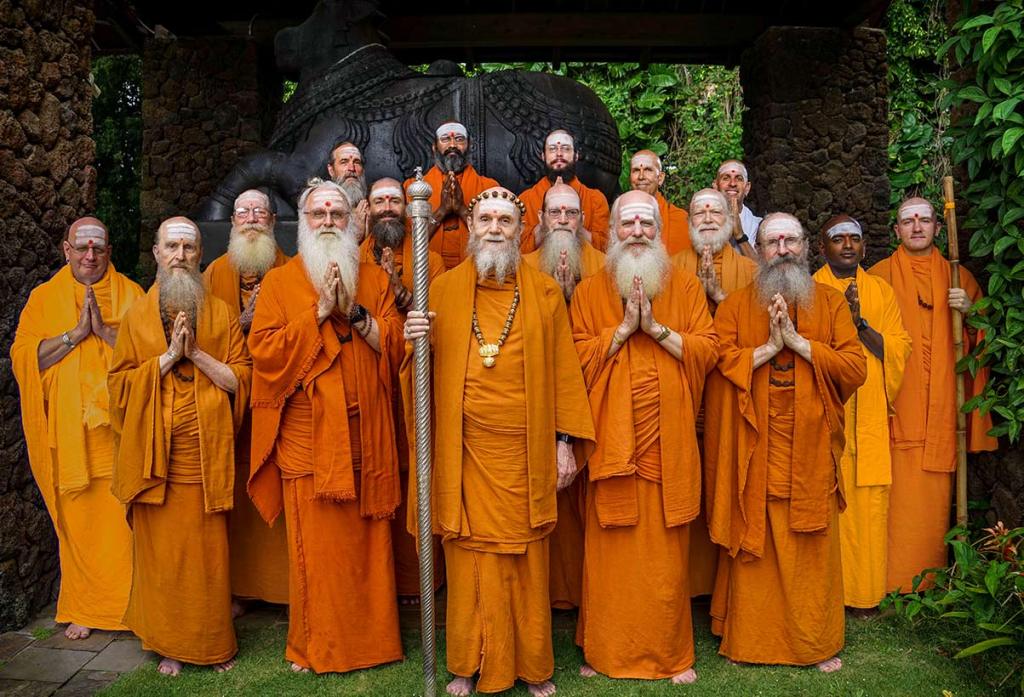
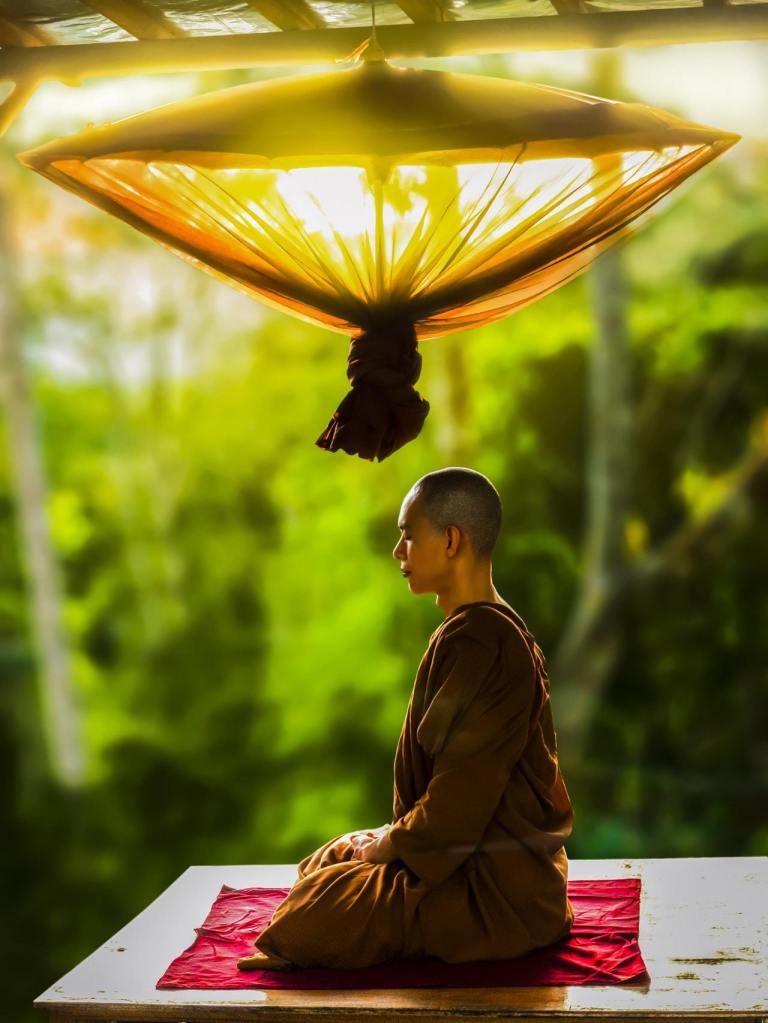
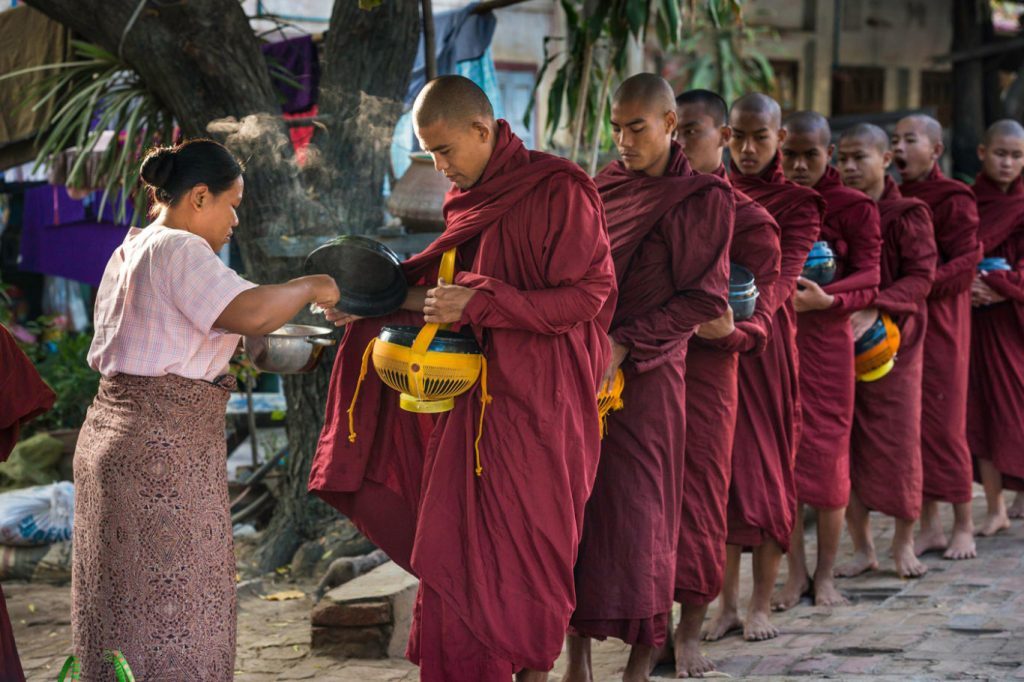
A monk is a person who practices religious asceticism by monastic living, either alone or with any number of other monks . A monk may be a person who decides to dedicate his life to serving all other living beings, or to be an ascetic who voluntarily chooses to leave mainstream society and live his or her life in prayer and contemplation. The concept is ancient and can be seen in many religions and in philosophy.

In simple words , A monk is a man who devoted part or all of his life to a religion. The word comes from Ancient Greek, and can be translated as solitary. In Greek, the word can apply to women, but in modern English it is mainly used for men. The word nun is usually used for female monastics. Monks practice asceticism. They either live alone, or together with other monks who share the same ideals. Monks can be found in different religions, most often in Buddhism, Christianity, Hinduism, Jainism and Taoism.

There living

Monks usually follow rules and regulations for convenient life. As a monk you must obey these rules .

  1. Poverty: the monk cannot own anything.
  2. Chastity: the monk cannot have sex or a sexual relationship and cannot start a family or get married.
  3. Solitude: the monk should always be alone. Some monks choose to not follow this law.
  4. Silence: the monk shall not speak unless it is necessary.
  5. Generosity: the monk should always help other people.
  6. Stillness: the monk cannot travel far unless it is necessary. Sometimes this means that the monk must be cloistered which means that they must not leave their monastery (especially Warsa period). Sometimes they can be allowed to leave, but must not go very far.
  7. Duty: The monk must do some things every day. For example, the monk must pray or meditate and must do some work.

Indian monks

One of the finest and versatile monk in India was Swami Vivekananda . Swami Vivekananda was greatly inspired by Ramakrishna. For Swami, Ramakrishna was just a plain and simple villager, who was a part of the Kali temple. However, his intense spiritual practices intrigued Swami.

For five years, Swami learnt everything from his master, Ramakrishna. After his master left the world, everyone looked up to Swami. He urged the followers of Ramakrishna to leave the worldly pleasures and look up to God.

“You cannot believe in God until you believe in yourself.”

His saying intrigued just not one nation but the whole world .

Life lessons

Being a monk , gives you a pleasure of being yourself . We live in the world where we get pleasure from materialistic things . We become selfish , ruthless, dull, lifeless and worthless. You have to believe in yourself in order to excel in life.

Start learning from lessons.

  • When you start to do meditation you recognize the egotistical mind.
  • Trying until you get it right.
  • The answer to your question is inside of you.
  • Real wisdom in life comes from doing something and failing.
  • We must be both compassionate and resilient.
  • Patience is a virtue.
  • Detach from your ego.
  • Happiness come from within, and also comes from outside.

Link

Ideal student

An ideal student is one who is good at skills and an motivation to everyone in the class. Schooling is one of the best blessings that a child can have. It is one of the best feelings which no others can have.

The ideal student is the one who respects others feelings and who will be obedient in many of the situations.

The student’s relation with the teacher is a great one. A student must maintain a healthy relationship with the teachers. Teachers play a very important role in making the student perfect and make them to understand the need of the situation. Teachers help the students to reach their desired goals and in any situation teacher motivates a student to get up and stand in all the ups and downs. Like that of the mother and the father, the teacher also feels equally happy when their student acheives high in their life and when they reach their desired goals.

An ideal student will never feel low at the failures. Instead, they will take their mistakes as an experience and will continue the hard work.

Some of the qualities that make an ideal student are :

  1. Hard work
  2. Discipline
  3. Taking responsibility
  4. Maintaining friendly relationships
  5. Respecting everyone
  6. Raising diubts without features.

SOME QUALITIES THAT MAKE AN IDEAL STUDENT FOR KIDS :

  1. • Ideal student traits make him uniqu, anong others.
    • It is believed that an ideal student will never waste his time and energy on non- productive things.
    • The ideal student has inborn winning qualities.
    • Ideal students will always goal- oriented. Thys, they play according to actions to reach their goals.
    • It is proven that ideal students will punctual in school and always on time regularly.
    • He respects everyone. He also obeys their instructions and others.
    • Ideal students are not bookwarms. They keenly observe and read wisely.
    • Ideal students take his studies with all seriousness. They dont’t allow any other activites to disturb them
    • Ideal students always seek the teacher’s guidance. Also, they believe in the knowledge of their teachers.
  2. SOME QUALITIES THAT MAKE AN IDEAL STUDENT FOR SCHOOL STUDENTS :
  1. • Ideal students are always thirsty to gain knowledge.
  2. • They always strive to reach their goals
    • Ideal students always dedicated to their education and work.
    • Ideal students behave well and very attentive in classes. They always listen to their teachers while classes are going on
    • They never hesitate to raise their doubts about studies if they feel some difficulty in understanding.
    • one of the best things about ideal students is that they are very friendly. Also, they help yo his friends regarding studies.
    • Ideal students are creative and think out of the box for any completion of tasks.
    • He always inspire eveyone and attracts the teachers and elders easily.
    • Ideal students are very responsible and underdtand the value of every wird from their elders.
  3. SOME QUALITIES THAT MAKE IDEAL STUDENT FO HIGHER CLASS STUDENTS :

• Ideal students are always fit both physically and mentally.
• Ideal students can differentiate between what is right and what is wrong .
• Ideal students always keep friendly relations with othet students even though he has many competitors
• He always maintains his promise and never feels proud of his awards and achievements.
• Ideal students will nevet trust in superstitions, but believe beliefs. It is because they think very logically abd ratinally.
• An ideal students tries to improvr in all aspects of his life and to reach goals.
• Ideal students show affection and respect towards their elders and parents.
• Ideal students read a lot of books.
• The ideal students will take responsibility for their society and country.
• An ideal student will never look fir shortcuts. They believe that hard work is the only way to succeed in life.


In simple terms, an ideal students is science towards academics and maintains friendly relations with teachers and elders. Aldo, an ideal student will have leadership and communication skills.
The role of an ideal student is both attentibe and punctual in duties. He goes to his school, college or university in time. He attends the classes on regular basis .

Mitchell Marsh with his all-round performance helps Aussies overcome caribbean’s

In the fourth match of the series played between Wi and Australia on 14 July. Australia registered a thrilling 4 run win over West Indies in the fourth match played in St Lucia. In this match, Mitchell Marsh played an important role in getting the Kangaroo team their first win in the T20 series. In this series, the West Indies team has already taken an unassailable lead by winning three consecutive matches.


In this match played at Darren Sammy National Cricket Stadium, Australia won the toss and batted first. Start was not good and the first wicket fell for 12 runs. Matthew Wade, came to open the innings, and was dismissed for 5 runs. After that, Mitchell Marsh came out to bat at number three and got Australia out of trouble with captain Aaron Finch with a 114-run partnership. Finch was dismissed for 53 while Marsh scored 75 runs. Alex Carey, Moises Henriques, Ashton Turner could not do much in the middle order. Dan Christian scored 22 runs in the lower order. Australia scored 189 runs for 6 wickets in the stipulated 20 overs in their innings.


The West Indies team, which came out to achieve the target of 190 runs, started strongly. Both the Caribbean team’s openers Lyndle Simmons and Evin Lewis added 62 runs for the first wicket. Lewis was dismissed for 31 while Simmons made 72. After the dismissal of these two batsmen, the middle order of the Caribbean team could not do much.


In the final overs, Andre Russell and Fabian Allen tried their best to win the match for West Indies but failed. Russell remained unbeaten on 24 off 13 balls while Allen was dismissed for 29 off 14 balls. West Indies managed to score 185 runs for 6 wickets and lost the match by 4 runs. Mitchell Starc bowled a superb last over and steal the show.


Mitchell Marsh took the three wickets for Australia and helped his team win first match in this series. For his all-round performance with both bat and ball ( 3 wickets and 75 runs ) ,he was awarded the player of the match award. West Indies now leads the series with 3-1 equation and last match will be played on 16th July.

East Timor: Brief analysis of its history & independence.

East Timor or Timor-Leste is a tiny island country in Southeast Asia nestled between Australia and Indonesia.

For more than 300 years the territory of East Timor was ruled by Colonial Portugal (Portuguese Timor). They set up both commercial outposts and catholic missions. On 28 November 1975, Portugal withdrew from the island territory when the Revolutionary Front for an Independent East Timor had declared the territory’s independence. But this exit from East Timor was not at all smooth and this enraged bitter rivalry between various local groups. Just nine days later in December 1975 East Timor was invaded and occupied by the Indonesian military. Suharto, the Indonesian president at that time didn’t receive much resistance from the western countries due to the left-leaning stance of East Timor at that time (Cold war).  The Indonesian occupation was a brutal and violent period in East Timor’s history with various suppression tactics many people lost their lives during that period.

The following decades were highly violent with many conflicts between the separatist groups known as Fretilin and the Indonesian military. The military fought a continuous guerilla war with the rebels in the island’s interior mountains. There were numerous rights violations and over 100,000 people died under the occupations of Indonesia.

One of the most defining instances happened on November 12, 1991, when the Indonesian military shot and killed over 250 people who had come for the memorial procession in honor of Sebastio Gomez, a pro-independence supporter killed by the Indonesian military. The events occurred in the Santa Cruz Cemetery in Dili, East Timor’s capital. This tragedy is known as the Santa Cruz Massacre. The event gained international media attention. Although the Indonesian occupation did not cede until eight years later in 1999, the Santa Cruz massacre was a defining moment in the island nation’s quest for independence.

In 1998 president Suharto resigned from his position after more than 30 years in power due to growing pressure and protests against him from within the country. His replacement was open towards more open towards the autonomy of East Timor. International pressure for East Timor grew in 1998. During the downfall of the New Order government, as part of Reformasi, a referendum was held in East Timor to ask whether they wished to remain in Indonesia with increased autonomy or become independent. On August 30, 1999, about 78% of the population of East Timorese chose to remain independent.

Following the referendum, violence again erupted in East Timor as Indonesian-backed militias increased their activities across the country. In September UN peacekeeping let by Australia force took control of the situation but a lot of damage was already done. In 2002 Xanana Gusmão was elected as the first president after three years of transitional governance by the UN.

As of today, the country has been relatively stable but the economic conditions have not been improved. Indonesia’s Timor has fared comparatively better than East Timor. It was also discovered that Australia, a country that East Timor considered as their ally had spied on East Timor to gain leverage over negotiations on the exploitation of natural resources in the Timor Sea. On a positive note, the country has comparatively good relations with Indonesia now.

References:

Whitehaven Beach

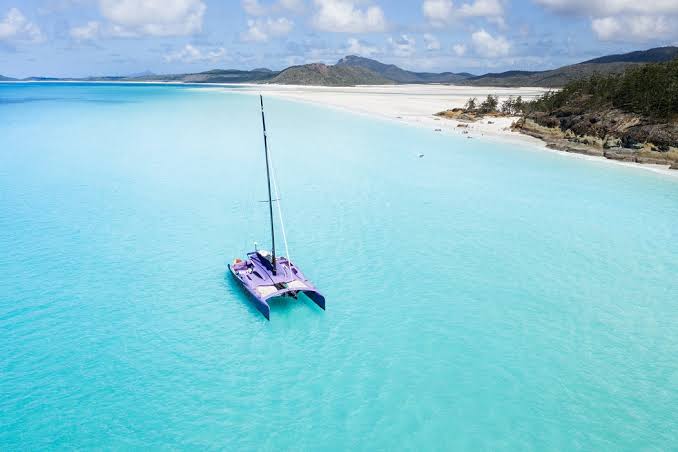
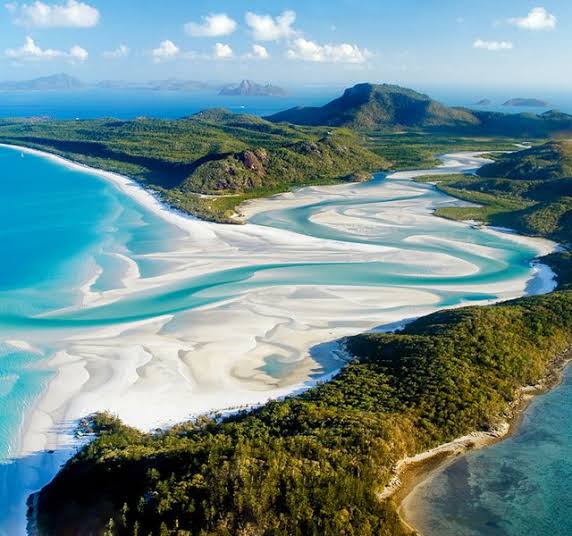
Whitehaven Beach is a 7 km stretch along Whitsunday Island, Australia. The island is accessible by boat, seaplane & helicopter from Airlie Beach, as well as Hamilton Island. It lies across from Stockyard Beach, better known as Chalkie’s Beach, on Haslewood Island. The beach is known for its crystal white silica sands and turquoise colored waters. The beach has tour barbeque and camping facilities.

The beach was named and discovered in 1879 by Staff Commander EP Bedwell. ‘Whitehaven’ was one of the many names, from the then English county of Cumberland, which Bedwell brought to the area. It followed James Cook’s 1770 naming of the island group, the Cumberland Islands.

The beach was awarded Queensland’s Cleanest Beach in Keep Australia Beautiful’s 2008 Beach Challenge State Awards. In July 2010, Whitehaven Beach was named the top Eco Friendly Beach in the world by CNN.com. Dogs are not permitted on the beach and cigarette smoking is prohibited.

Whitehaven Beach is known for its bright white sands, which consist of 98% pure silica. Local rocks do not contain silica so it has been suggested that the sands were brought to the beach by prevailing sea currents over millions of years.

Unlike regular sand, the sand on Whitehaven Beach does not retain heat making it comfortable to walk barefoot on a hot day. This sand is also very fine, and can damage electronic equipment such as telephones and cameras, although it is good at polishing up jewellery.

Tourists and locals visit Whitehaven Beach to swim and take in the bright white sand. Some visitors eat a BBQ lunch, and campers can stay by booking the National Parks camp facilities.

The Whitehaven Beach Ocean Swim is a 2 km open swimming competition held on the beach in November each year since 2009 as part of the Hamilton Island Triathlon. The 2012 event was held on 11 November 2012. The beach was also featured in the racing video game Forza Horizon 3.

In 2018, the government announced an investment of $3.9 million for the construction of a new long-distance walking track and upgrading of the camping areas on the Island to improve the holiday experience of the visitors. The track will connect Whitehaven Beach to the Tongue Point.

Whitehaven Beach is known for its bright white sands, which consist of 98% pure silica. Local rocks do not contain silica so it has been suggested that the sands were brought to the beach by prevailing sea currents over millions of years.

Whitehaven Beach has a shallow shoreline and is sheltered from the open ocean by the other islands in the Whitsunday group and the outer reef. There are no big waves or rip tides to worry about here, the water is usually relaxed and calm and suitable for swimmers of all strengths.

Self-sufficient boats and campers can anchor overnight off the beach, or book a national park campsite and camp on the southern end of the iconic Whitehaven Beach itself.

Whitehaven Beach is perhaps best known for its dazzling white sand, crystal clear waters and perfect photographic opportunities, but is often a good place to see sharks. It’s home to both blacktip reef sharks and baby lemon sharks, which use the calm and shallow waters as a nursery.

Whitehaven beach is famous for its silky smooth white sand and crystal clear turquoise water, Whitehaven Beach is on the bucket lists of travelers worldwide with thousands making the journey each year. The sand is so fine that it can easily get into and damage electronic equipment.

India-Australia Relations

A virtual bilateral summit was held virtually for the first time between the Prime Ministers of India and Australia.

A few of the major outcomes of the Summit was the Elevation of the bilateral Strategic Partnership to Comprehensive Strategic Partnership. The Elevation of the “2+2” engagement to the level of Foreign and Defence Ministers, where strategic discussions will be taking place every two years. India previously has had such mechanisms with USA and Japan.

Memorandum of Understanding (MOU) was established for cooperation in the field of mining and processing of Critical and Strategic minerals. Along with it, the Mutual Logistics Support Agreement was also signed. A Joint declaration on the shared vision for Maritime Cooperation in the Indo- Pacific region was also emphasized upon.

India- Australia Relations is not a ‘today affair’ as the two countries began their alliances during the cold war period back since when Australia was United States’ closest ally, also remembered to when India opted for non-alignment. The end of the Cold War and the launch major economic reforms in 1991 provided the first positive move towards development of closer ties between these two nations.

However, this could not last long as India’s nuclear status outside the nuclear Non-Proliferation Treaty (NPT) resulted in Australia taking a particularly strong stance against India’s 1998 nuclear tests.

 With the changing global scenario in 21st century, Australia looked at India as an important partner in promoting regional security and stability. This led to up progression of their bilateral relationship to a ‘Strategic Partnership’, as well as a Joint Declaration on Security Cooperation in 2009.

Talking of the Economic and commercial relations, the Bilateral goods and services trade between these two nations was about $30.3 billion in 2018-19, and the level of two-way investment was $30.7 billion in 2018.

Australia announced implementation of “An India Economic Strategy to 2035” in 2018. A vision document to shape India- Australia bilateral ties. India is also preparing an Australia Economic Strategy Paper (AES) on these similar outlines.

The two countries have also decided to re-engage meetings on a Comprehensive Economic Cooperation Agreement (CECA). These discussions first started in 2011, and the last time it happened was in 2015.

In the Defence and security cooperation field, there was a Civil Nuclear Cooperation Agreement signed between the two in 2014 which had also enabled India to secure uranium from Australia.

Both of the countries also contracted Mutual Legal Assistance Treaty (MLAT), Extradition Treaty and the Social Security Agreement.

Maritime Security cooperation is seen in the form of joint exercises like AUSINDEX 2019, AUSTRAHIND, Exercise Pitch Black and Kakadu biennial exercise (Hosted by the Australian Navy).

Some concerns that remain in India-Australia relations is the Comprehensive Economic Cooperation Agreement (CECA) which is still unsettled after nine rounds of negotiations. India had also earlier opted out from Regional Comprehensive Economic Partnership (RCEP). Among other things, India and Australia could not reach to agreement on the market access over agriculture and dairy products.

Furthermore, an Australia-India Strategic Research Fund commenced in 2006 for scientists to collaborate on leading-edge research. Agreement on Cyber and Cyber-Enabled Critical Technology was also signed of late to promote cooperation in the extents of digital economy, cyber security, critical and emerging technologies.

The economy of Australia has been quite heavily dependent on China, as China is one of Australia’s largest trading partners and accounts for 26 % of its world trade. Chinese aggressions and assertive foreign policies are common apprehensions between the two nations and certainly has brought both the democracies closer.

Both the countries have also shown similar interests in the vision of an open, free inclusive and rules-based Indo-Pacific region. Australia’s Pacific Step Up and India’s Forum for India-Pacific Islands Cooperation (FIPIC) give reaffirmation of their cooperation in the South Pacific region.

Both also have co-operated in various multilateral fora including QUAD security dialogue, G-20, Indian Ocean Rim Association (IORA), East Asia Summits, ASEAN Regional Forum etc.

The People to People Relations have found a different edge for these countries as the Indian diaspora, estimated at nearly 7 lakhs is the fastest growing in Australia and has become a constructive factor in the bilateral relations. Including that, almost 1 lakh Indian students are enrolled for studying in Australia and the under New Colombo Plan of Australian government, Australian undergraduates have studied and completed numerous internships in India.

Australia Government has also affirmed to help in establishing a world class Sports University in India.

Why Australia is least affected by recession!!!

America’s economy is approaching a big milestone. If it keeps humming until July 2019, it’ll be the longest expansion in U.S. history. It would be exactly one decade and one month old by then. But there’s another country with an even more impressive run It’s even called the ‘lucky country’ Three big lessons from Australia.

  1. Be smart.
  2. Be organized.
  3. Be lucky.

So, if I’ve got any advice for other countries, it’s try and be as lucky as Australia That luck has to do with Australia’s treasure trove of natural resources. You know Australia is on the other side of the world and sitting on tremendously valuable minerals right at the point where the Chinese economy is just around the corner and exploding. Australia and every one its natural resources were within the right geographic neighborhood even as the Chinese economy began to begin . And it just so happens that China did a big fiscal stimulus in 2008 and spent a great deal of money building new cities. So all of these resources were drawn from places like Australia. So that also served as a huge tailwind at a time when developed markets were in a whole lot of trouble.

What Currency Is Used In Australia | Australian Dollar : Compare ...

The year 2008 was a time of economic turmoil The Global Financial Crisis hit and markets crumbled around the world. But as it turns out this was also a year for Australia’s economic management to really show off At the time the government had a very helpful and very low level of debt. One reason? Pension reform in the 1990s. Australia set up a compulsory retirement system called the superannuation system. It requires employers put money into its employees’ retirement savings.

Since companies and citizens have to build up retirement savings, some of the financial burden to pay off pensions was taken off of Australia’s government As other economies reeled in the wake of the 2008 crisis, the Australian Government was then able to put money directly into people’s bank accounts This boosted consumer spending in order to stimulate growth In 2008, the Australian Government unlike some other developed market governments actually jumped in very quickly with fiscal stimulus, so that helped to kind of minimize the effect of the crisis The country’s numbers continued to look sluggish after the financial crisis. But they never quite dipped low enough or for long enough to satisfy the definition of a recession. It takes two quarters of negative growth to fall into a recession. Australia’s economy did post a couple of negative quarters since 2008, but no country’s perfect. Overall Australia’s economy has been managed pretty much in recent years partly due to a robust and stable financial institution.

Reserve Bank of Australia – Australia's LGBTQ Inclusive Employers

Australia has an independent financial institution and it is a very well-run financial institution . It also has a floating exchange rate and the exchange rate helped it adjust to international shocks. Australia’s economic reforms gave it flexibility in times of hardship. For example, floating the Australian dollar In 1983, Australia’s government moved the dollar onto a floating exchange rate This meant that the dollar would be valued by supply and demand instead of being subject to influence from its government or its central bank It allows the economy to react to shocks as well Typically when an economy is hit by some sort of negative shock. The currency will adjust. It will depreciate and that helps promote exports. Another reason behind Australia’s economic diary lies in its immigration policy. Since the late 1990s, Australia has seen growth in temporary migration, many arriving to the country on student or temporary work visas. The number of temporary migrants peaked in the year 2000. However a recent change to immigration law in 2018 gave visa applicants more hurdles to get through if they wanted to come to the country Even when our GDP per capital average incomes aren’t rising by much because the number of people continues to rise that means the total GDP continues to rise at even more rapid pace Part of that’s underpinned by much faster population growth Most experts think Australia’s economy remains strong in 2019, but it’s not without risks.

Australia’s suffering at the instant from pretty weak wage growth. That’s worrying a lot of people. There’s a lot of fear right now that China is hitting a wall. That will hit demand for Australian products. The good news is to the extent that the Chinese are buying commodities hopefully will find buyers from overseas for many of those commodities if the Chinese are not there The bad news is the rest of the world economy is not doing that well.

Australian economic growth slows, enters per capita recession ...

What are the options after graduation in Australia?

Many students aspire to study in Australia for their graduation across the world. Australia has world-renowned universities offering versatile programs to the students. Many of the prestigious universities are present in Australia. A large number of students take admissions in Australian universities every year for undergraduate, postgraduate, or doctoral programs. A valid question that would arise in most students’ minds is the options they can opt for post completing their graduation in Australia. Here is a detailed list of options every student has after they become a graduate in Australia.

List of options for students after graduation in Australia

  • If you are an international student living in Australia for your studies, you can return to your country. You can easily apply for jobs in your country, or become an entrepreneur. This is a legitimate option for many international students in Australia.
  • If you have completed your graduate studies in Australia, you are eligible to apply for the research fellowship programs there. You can apply for the Ph.D. programs at your university or submit your applications in other Australian universities. Once you get the offer to be a research fellow at one of the universities in Australia, you would be able to start your research under a mentor as well as teach the undergraduate students at the university.
  • If you plan on becoming a resident in Australia, you can apply for that as well. Many international students wish to stay in Australia after the completion of their graduation. You have to know the details regarding their visa program or migration program to become a permanent resident in Australia.
  • If you don’t want to become a permanent resident, you can choose to work in Australia’s suitable sectors. You can work for the educational sector or the business sector, according to your convenience. In this way, you will have experience in the market field, and with the in-hand expertise, you would be able to secure a better job anywhere in the world.
  • Many universities have excellent placement cells for the students who just completed their graduation. You can attend one of the workshops and choose your area of interest. After your interview, if you are selected, you will get the opportunity to work at one of the many companies in Australia.
  • Australia has a visa for students who wish to work and travel there. Once you are done with your graduation, you can easily apply for a visa, which will avail you one year. In this one year, you can work in Australia as well as travel in and around Australia.
  • Many students, after their graduation, plan on spending the upcoming months traveling around Australia. You can take a break and trip to the beautiful cities in Australia, and you can also decide on your plans while going.
  • After graduation, you can enroll yourself in a foreign language course in Australia. Learning a foreign language would widen your career opportunities and give you many other choices later. Also, it would be brilliant to be able to read, speak, and write in another language. After the completion of your foreign language program, you can try for various job opportunities in Australia like translator, interpreter, or working in the publishing sector.

There are innumerable choices when you think of the next step post completion of your graduation in Australia. All you need to remember is to apply for a new visa, and you can start working on the choice you made after securing your permit. Concentrate on what you want to do and how you would like to pursue your dreams after graduation. Once you are sure of your goals, it will be much easier for you to choose an option.

WHAT ARE THE OPTIONS FOR STUDENTS POST COMPLETING THEIR GRADUATION IN AUSTRALIA

Australian educational culture is very rich and has really high standards. Some of their universities are globally recognised. If any student is getting a graduation degree from any university in Australia it will be popular and well recognised among companies in Australia and in other countries too. This can definitely be an advantage for the students to secure a job. However, students often get confused about what should they do post completing their graduation in Australia. Here are few options for the students which they can do after their graduation.


Students who want to study further after achieving their graduation degree to gain higher qualification, they can start the Masters course. While starting post graduation programme, students need to get connected with the alumni groups for guidance because in the alumni group some can share their experience regarding works, employments, any new courses or social events, which can be extremely helpful for other students. Higher degrees or courses in Australia are highly competitive and to clear the entrance exams conducted by the universities, high standard of English language is a must. There are few categories in the post graduate qualifications offered by Australian universities, such as, diploma courses which involves two years of study and Masters degree and Doctoral degree or phD. Any kind of Doctoral degree requires three to four years of study. Doctoral degree is the most valuable and most desirable degree. For the students who are opting for Masters degree, there are three types of Masters degree –
1) Coursework masters – after completing bachelor degree students can go for this course which requires project work and research.
2) Research masters – students who have completed their bachelors can apply for this course which consists of researching and making thesis.
3) Profesional masters – students who are done with their graduation and have any sorts of work experience can go for this course which is a work based project. It requires professional experience.

These are few options for the students who want to study further after completing their graduation.


There are many fields to explore for the students who want to work after they complete their graduation. Newly grads can also try their hands in those fields, they are passionate about. Agriculture, tourism, mining and manufacturing these are the most strong industries in Australia. So, it is advised to the students to surely try in these fields. Students who are willing to work immediately after graduating should definitely join few courses and trainings for getting jobs in Australia. This will help them to secure a job successfully. To work in Australia after studies the students need to be very careful with their course selection. Most of the Australian companies and the employers do not run behind the name of the top class universities. So, students who have not graduated from renowned universities need not to worry. It is not always needed to chase behind the best college or university, instead they should focus more on the course they are choosing for themselves. The course should be profitable for them for a long run. An excellent communication skill specially in English language is required to get any job in Australia. The candidate should communicate clearly and effectively without hesitation. The professional skills of the candidate is extremely important to fetch a job. If the candidate has professional experience in his/her domain and have a proper portfolio to show them, that can be extremely helpful. Students who are planning to get a job in Australia after completing graduation, it is advised to them to apply for Australian PR or citizenship if they do not have it already. It is really hard to find the companies who hire the candidates without a permanent citizenship.


There are numerous options for studying further and for start working in Australia. It totally depends upon the students what they want to do after completing their graduation. Melbourne, Sydney, Brisbane, Canberra these are the few cities which are extremely student friendly. In Australia and even in other countries millennials are always in a cut throat completion both in academic fields and professional fields. So, the students have to be confident and stay focused in their lives whichever they want to do after graduating.

US Prez Trump calls for expansion of G7; Seeks inclusion of India, Russia, Australia & South Korea

US President Donald Trump has said that he will postpone a meeting of Group of 7 nations until fall and called for an expansion of the group’s membership. Mr Trump told reporters that that he has not yet set a new date, but it can take place in September around the time of the annual meeting of the United Nations.
 
The leaders of the world’s major economies were slated to meet in June in the US. Mr Trump said he considers the G7 an outdated group that doesn’t properly represent what’s taking place in the world. The US President singled out India, Russia, Australia and South Korea as possible additions.  The G7 members are US, Canada, France, Germany, Italy, Japan, and UK.