The Korean wave has certainly seen a significant rise in India during the pandemic, and K-Drama and K-Pop are seeing massive demand from fans and new followers as well. In response to the growing popularity of the Korean wave in the country, many online and offline events are held to show people what they are consuming online. And these extend not only to K-Drama and K-Pop, but also to food, beauty and culture in general. Korean singer PSY’s 2012 viral hit “Gangnam Style” may have started the Korean wave in India, but it certainly wasn’t the origin. The existence of K-POP in India dates back to the late 90’s when in Northeastern part in Manipur Bollywood films were not allowed to watch because law imposed by the Separatist group Revolutionary Peoples Front to make Manipur independent.Not so much offered, the locals turned to Korean content and it got it’s popularity from their on.
Increasing demand for Korean content is fueling competition between India’s Amazon Prime Video and Netflix. Amazon Prime Video is the first company to launch Parasite and Minari in the country. Hotstar, MX Player, Viki and Viu are also involved in the Korean wave effect. Discovery + launched the “Star vs Food” series featuring the Korea Tourism Organization (KTO) and K-POP idols to introduce Korean food to India. Some prominent dramas are: Crash Landing on You, Squid Games, Descendants of the Sun and many more more , the reason of these Korean content popularity is that as an audiance, Indian’s find Korean content relatable to them.
According to Hyun Woo, Kross Komix co-founder, president and CEO Thomas Kim predicts that South Korea’s webtoon, or digital comics, will be the next big thing.Kross Komics is India’s only webtoon platform launched in December 2019. In just about 1.5 years of operation, the app has been downloaded more than 4.5 million times, about half of which are women. “With the numerous webtoons in the romance / romantic comedy category and the world’s best-selling stories, this new format of content has become a very interesting alternative to the dramas and movies”.
“In 2020, the blockade caused by Covid-19 is said to be one of the reason to the popularity and acceptance of Korean culture in India through dramas available on multiple video streaming platforms and the different Korean music band whose craze is extraordinary. South Korea’s food exports hit a record high, boosted by social media posts from Asian celebrities and the popularity of the movie like “Parasite” and drama like”Crash Landing on You”. The widespread of k-pop, k-movies, and k-drama has evolved into a fan culture, especially among the urban youth of the country. Following k-pop music and movies, K-Food and cooking have undergone a major makeover to reach the larger Indian market. K-cuisine is all the rage, especially on social media, in the form of food challenges like Mukbang, “said Hwang Il-young, director of the Korean Culture Center India .
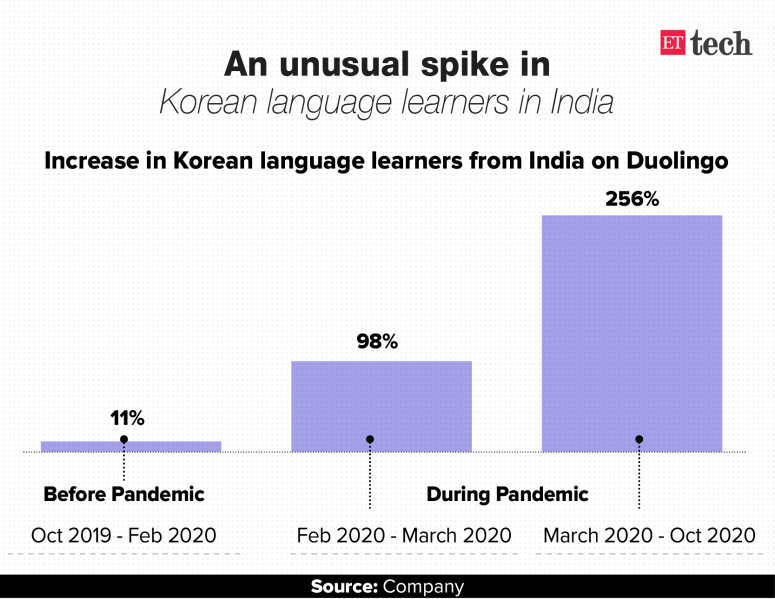
The Korean wave, the growing global popularity of Korean culture, swept India a few years ago, but exploded during a pandemic. Supported by the OTT platform, which has a large investment in Korean programs, the number of people who started watching K-Drama and listening to K-Pop has skyrocketed. Recently, the language learning app Duolingo surveyed 1,013 people in 10 cities in India and found that Korean is the fastest growing language in India. It was the 7th most popular language for Indians in 2020, but it has risen to the 5th in 2021 and will continue to rise. Duolingo’s 2021 audio report attributed this primarily to the release of Squid Game in 2021.
Himalaya Herbals Purifying Neem Face Wash reduces skin inflammation and hickeys for all skin types. It has the combination of neem and turmeric for deep purification the skin from out without drying it out. It battles bacterial complications and forestalls there-occurrence of facial irregularities and calms your skin. It likewise improves the adaptability of the skin and positions out its tone.
Let’s start with knowing that what is Kodi software and why one should have it.
What is Kodi software?
Initially released in 2002 [as Xbox media play], in 2003 [as Xbox media centre]. Kodi software application is developed by the XBMC Foundation, Kodi is a free and open-source media player software application, it’s a non-profit technology consortium. It’s a 10-foot user interface with television and remote controls.
With a view of most streaming media such as podcasts, music, videos and views from the internet, one can access all Common digital media. These are some of its platform PowerPC, IA-36, ARM and x64(x84-64). Available in 12[75 including incomplete translations] language. HTPC it’s is a multi-platform home-theater PC application. Kodi is highly customizable so allow it’s users to stream media content via online services such as Crackle, Amazon Prime Internet Videos, Pandora Internet Radio, Spotify and Youtube.
The later version of kodi has a (PVR) graphic front and end. All these available advantages make Kodi a great software to be utilized.
Let’s now dive into how to download Kodi for free.
Already millions of people are enjoying this great software for free. Kodi is running on the most common processer architectures, iOS, Android, MOS X and Windows operating systems.
How to download : select your platform
As Kodi supports a large range of devices and operating systems, it is multi flavour. Simply select your platform in which you want to install Kodi on and enjoy Kodi.
“Kya se kya hogyaaa” if you are an Indian, you must have use this sentence to explain this lockdown. Still, we are not able to collect that when and how it happened. More than 7 months in home, after staying away for this many days huh!! Wasn’t a dream for all of us and also was a real challenge, isn’t it?
This blog is for those who were out from there home town and had to return back. Actually, I guess many of us has returned, but, those who didn’t are lucky and also not so lucky. Like everything has pros and cons of it and both has to be faced by every individual in respect of there action.
Let me first clear that we are not going to discuss about the business world and COVID impact on it because when we say business we mean surviving through ups and downs with tactics and making profit. But, the great impact of it was felt in every individuals life and I’m sure that something has changed in every one of us. So, I’m gonna talk about that according to my experience and level of thinking. You are free to judge here.
So, Dec 2019 has started and everyone was excited for the coming year. We can say that 2019 was little rough for all of us till that time when we were hoping for 2020. We heard about the COVID that time but we were not soo serious about it because we all have thought about it as some kind of regular flue which will be gone in few days. But, as we entered 2020 we came to know that it is not going to end soon. And them march 2020 came when govt announced total lockdown in country.
Some of us still didn’t BELIVED that this was really happing, but soon we all. And then second news we got about work from home. Hush! What a relief that was. Now, work and family was together. For some days it was like best thing to do but after that it became a trouble. As, staying at hom for work.e and still not able to have a good time really makes you uncomfortable, isn’t it?. We all must have started felling left out from certain things, while there were many things which again started to build up. People started working on their bonds and relationship stuffs with there loved ones. but, it also make them distracted from there work. And at last they all understood that office was best because that place had full concentration for work.
Now, let’s see the bachelor side of view. How lockdown or COVID put an impact on them?. I guess, pretty well because they are adjustable. They got some break from everything. Yeah! Even though they didn’t have such hard job to do but still for a class 1 student it’s class 1st syllabus what is hard for them. And they also weren’t getting paid. What really didn’t worked for them is not meeting there friends daily and staying in house. These bachelors have hot blood so they can’t just sit at one place for long time. And second thing was now they were under restrictions. Those who were not living with there parents from many years will be getting that being with them after so many days for these many days was a kind of trouble, right?. Like we weren’t far from them but living 24hr with them after many days needs some kind of adjustment and understanding after living alone with all the pockets money. But, at last we all came out of it and I’m pretty sure now it will be difficult to live alone again, na!.
Overall we can say that this COVID was a drastic things but it also did some good things which can’t be ignored.
So, leaving you all here with a question, How you felt this COVID impacted on personal life? Tell us below in comment section about your answer.
A study published in a medical journal has revealed that SARS-CoV-2, which causes Covid-19, has undergone multiple mutations in its “spike proteins”. This is the protein that gives the virus the ability to infiltrate the human cells. Once this occurs, the virus starts replicating, which leads to infection.
The paper published in Journal of Laboratory Physicians was based on an analysis of 1,604 spike proteins extracted from 1,325 complete genomes and 279 partial spike coding sequences of SARS-CoV-2 available at National Center for Biotechnology Information (NCBI) in the US till May 1.
Dr Sarman Singh, the lead author of the study, said they found 12 mutations in the spike proteins, six of which were novel mutations. “One deletion was also found in an Indian strain (MT012098.1). Deletion means change in the genetic structure of the virus. We don’t know how it will affect the virulence of the disease though,” he added.
The maximum genetic mutations were observed in spike proteins extracted from genomes of SARS-CoV-2 from the US, the experts said. “Viruses are known to mutate or change their genetic structure upon exposure to different environments. But in this case, the change is happening quite fast. We are not sure how it will affect the disease spread,” Singh said.
The others participants of the study included experts from Infectious Diseases and Immunity in Global Health Programme, Research Institute of McGill University Health Center, and McGill International TB Center, Canada. The study said spike protein was the major target for vaccine development, but several mutations were predicted in the antigenic epitopes across all genomes available globally.
“The emergence of various mutations within a short period might result in conformational changes in the protein structure, which suggests that developing a universal vaccine could be a challenging task,” the study added. Mutation was also found in the antigens responsible for producing antibodies, indicating that the patients infected with the mutants would have very low or nil antibodies.
Recently, Hong Kong reported a case of re-infection due to Covid-19. Similar cases have also been documented in the US and India. “Even if a person gets Covid-19 again due to a mutated strain of the virus, the likelihood of severe symptoms would be less as seen in the patient in Hong Kong. This is because the antibodies against one strain of Covid-19 can offer protection against the mutated virus too. However, further scientific study and analysis is needed to ascertain this. The disease is new and we are still learning about it,” said a virologist from Maulana Azad Medical College.
In Delhi, the cases of Covid-19 had dipped significantly in July. However, it has started rising over the past few days. While lack of social discipline and opening of the economy are two key factors, many doctors said a mutation of the virus could also be behind it. “Multiple strains of the virus have been identified in the country, including the original one from Wuhan, China and the ones spreading in Europe,” said a doctor. The World Health Organization does not expect widespread vaccinations against COVID-19 until the middle of next year, said a spokeswomen, stressing the importance of rigorous checks on their effectiveness and safety.
The World Health Organization insisted Friday it would never endorse a vaccine that has not proven safe and effective, amid concerns over the rush to develop a jab for Covid-19. Across the globe, governments are hoping to deploy a vaccine as soon as possible against the virus, which has infected well over 26 million people, killed hundreds of thousands, upended millions of lives and wreaked havoc on the global economy.
Under normal procedures, test administrators must wait for months or years to verify that vaccine candidates are safe and efficacious. But as the pandemic continues to take a devastating toll, there has been massive pressure to roll out a vaccine quickly, sparking concerns that testing standards could be lowered. WHO chief Tedros Adhanom Ghebreyesus insisted that was not the case.
“WHO will not endorse a vaccine that is not effective and safe,” he told a virtual briefing.
He also took issue with the so-called anti-vax movement that has been stoking fears about the vaccines in development. They might be able to “build narratives to fight against vaccines, but the track record of vaccines tells its own story,” he said.
There are currently more than 30 candidate vaccines being tested on humans, with at least eight in final-stage Phase III trials, which typically involve tens of thousands of people. Unprecedented speed’ – “It is a very optimistic scenario because there’s a huge field of candidates,” WHO’s chief scientist Soumya Swaminathan told Friday’s briefing, emphasising that only around 10 percent of candidate vaccines succeed.
She explained that the “unprecedented speed of development of Covid vaccines” was largely enabled by prior investments in vaccine platforms for other diseases, which had been repurposed for use against the novel coronavirus. But she stressed, developers must not skip over the various phases of stringent testing.
“No vaccine is going to be mass-deployed before the regulators are confident and the governments are confident and that WHO is confident that these vaccines have met the minimum standards of safety and efficacy.” Tedros voiced hope that one would soon become available “so that the world can get back to norma.” But while the WHO has said it expects to see results from a range of Phase III trials by the end of the year, it on Friday tempered hopes that a vaccine is imminent.
Pointing to the massive challenge of manufacturing and rolling out vaccines to the billions around the world who need them, widespread vaccination is not expected to begin until the middle of 2021. Moral and economic imperative’ – Tedros stressed that, initially at least, supply would be limited.
“Priority must be given to vaccinating essential workers and those most at risk,” he said, stressing that “the first priority must be to vaccinate some people in all countries, rather than all people in some countries.” The WHO has set up a mechanism, known as Covax, aimed at ensuring a more equitable distribution of any future vaccines, but has struggled so far to raise the funds needed to provide for the 92 poor countries that have signed up. But Tedros hailed Friday that 78 high- and upper-middle income countries and economies have now confirmed they will participate, including Germany, Japan, Norway and the European Commission in just the past week. He pointed out that in an interconnected world, “the virus will continue to kill and the economic recovery globally will be delayed” if poorer countries are unable to gain access to a vaccine. Sharing equitably, he said, is “not just a moral imperative and a public health imperative, it’s also an economic imperative.”
As the restrictions are being lifted in order to aid the degrading economy it needs to be kept in mind that the cases in India are achieving new heights.
Here are some disturbing facts before you think that this month was going to be easy on you.
1) Bill Gates is supremely confident that a new wave of cases will be seen in October – November. This might take a nasty turn as the increased rates could be blamed on protestors and these relaxations
2) China and India are prepared for a war. Both the nations have gathered their arms and ammunitions along with planning their strategies that might come in use anytime soon.
3) The increase in the incidence of earthquakes in the himalayan fault line (5.1 in Manipur recently) indicates there could be big one soon.
4) The economy is moving towards recession and will not recover any soon. This is one of the reasons of the gradual unlock happening.
5) There are possibilities of cyclones in both Eastern and Western front in the cyclone season October.
6) Food shortages most probably will happen sooner than later considering the unusual weather that has led to increase pest attacks. Those migrants who returned home due to covid outbreak thinking to take up farming have lost everything and are burdened with loans.
7) The hospital, tourism, transport industries suffer the most due to lack of mobility of people under such conditions.
8) Small businesses are being whiped out and corporate houses purchasing various businesses.
9) Crime rates are bound to increase along with suicide rates due to unemployment. 45% increase in suicide rates has already been noted.
10) Both center and state are faced with huge shortage of funds with centre refusing to pay GST compensation to states. This might lead to increased taxes.
The list goes on and on. Good days seem like a distant dream.
Government of India is taking several steps to ensure that we are well prepared to face the challenges and threats posed by COVID-19. With active support of citizens of India, we have been able to mitigate the spread of the virus so far. One of the most important factors in the fight with the virus is to empower the citizens with accurate information and enable them to take precautions as per the advisories being issued by different Ministries. The COVID-19 Inter-Ministerial Notifications website serves this purpose efficiently by providing COVID-19 related notifications from various Ministries in a format that is accessible, built using the S3WaaS framework, that is secure & scalable.
India has faced the COVID-19 situation with fortitude and a spirit of self-reliance, that is evident in the fact that from zero production of Personal Protection Equipment (PPE) before March 2020, India today has created a capacity of producing 2 lakh PPE kits daily, which is also growing steadily. Additionally, India has demonstrated how it rises up to challenges and uncovers opportunities therein, as manifested in the re-purposing of various automobile sector industries to collaborate in the making of life-saving ventilators. The clarion call given by the Hon’ble PM to use these trying times to become Atmanirbhar (self-reliant) has been very well received to enable the resurgence of the Indian economy.
Unlock 1 Guidelines have been issued to enable resumption of economic activities while maintaining abundant caution thus allowing graded easing of restrictions. The Five pillars of Atmanirbhar Bharat focus on: • Economy • Infrastructure • System • Vibrant Demography and • Demand
The Five phases of Atmanirbhar Bharat are: • Phase-I: Businesses including MSMEs • Phase-II: Poor, including migrants and farmers • Phase-III: Agriculture • Phase-IV: New Horizons of Growth • Phase-V: Government Reforms and Enablers
The exemplary role played by India in the global fight against COVID-19 has been recognized and appreciated widely. The Union Minister of Health & Family Welfare Dr. Harsh Vardhan has been elected as Chair of the Executive Board of World Health Organization for the year 2020-21. This took place during the 147th session of the Executive Board, in a meeting that was held virtually. He takes over from Dr Hiroki Nakatani of Japan.
Atmanirbhar focuses on small scale and medium scale industries. It also focuses on the service sector. Development of business that has faced a downfall due to Covid-19 pandemic and bringing up of the nation is the primary aim of this scheme. It also involves development of the economy as a whole. Assisting farmers in providing some support to agriculture is also under this scheme.
These 5 phases are to be carried on With due attention has it involves the development of the economy. Assisting the migrants in reaching their destinations. They lacked income during this pandemic. Financial assistance also is to be provided to the migrants. Development of the infrastructure facilities in a better way.
Due to the pandemic, India suffered a greater loss in its income. this has been affected as the citizens lacked work reducing their income. It has affected the economy of the nation. Bringing back the economy is the main aim of this scheme. Nation can be developed through the propose implementation of this scheme.
The world is facing a learning crisis. While countries have significantly increased access to education, being in school isn’t the same. Crisis will affect generations of students without action to boost teaching. Global learning crisis is costing $129 billion a year 10% of global spending on primary education is being lost on poor quality education that is falling to ensure that students learn. This situation leaves one in for young people in poor countries unable to read a single sentence. International students applying to foreign universities have hit a wall due to this global crisis. The dilemma to continuing with their education in India on waiting for universities abroad is faced by many students who are studying in international board. Many studies explored the challenges and hurdles experienced by international students attending institutions of higher education abroad.
Universities and college campuses are places where students live and study in close proximity to each other. They are also a buzzing cultural hubs where students are brought together from Nations around the world. Recently, the foundations of this unique ecosystem have been impacted significantly by the rapid spread of the coronavirus (COVID-19) outbreak, creating uncertainty regarding the implications for higher education.
One of the biggest concerns for the sector at large is the percentage of international students that make up the domestic higher education markets. This pandemic has resulted in an economic slump globally and parents are becoming conscious of the cost of sending the children abroad. As a result, international school students who would have ideally chosen to apply to universities abroad are now evaluating higher education prospects in their home country.
The question we often ask parents is : if their ward is planning to apply to an Indian university, should they opt for a school that offers curriculum from international boards, or stick to conventional Indian boards.
It is believed that it is highly advisable for parents to enroll their child in an international board as the curriculum is global and the skills amasses will ensure that every student becomes an active learner for life. These programs are brilliantly designed to help students become adaptable, thereby helping students to perform with ease in the Indian education system as well as Internationally.
It is important to understand that a rigorous curriculum ensures that students are challenged effectively to think critically and creatively. These skills along with many others these programmes inculcate, are learning for a lifetime. They are also highly sought after by universities and employers both abroad and within India.
International board follows application based teaching – It is also important at this stage to understand that while many curricula focus on teacher-led methodology, the international curriculum is more about an involved facilitation process, in order to allow the student to develop essential independent thinking skills.
Cambridge international AS and A Level is an in-depth program which helps students develop many core higher-order thinking skills that universities are looking for, such as analysis, evaluation, and synthesis. The program also focuses on building research, innovation, reflection, and communication skills in each student. These I believe are essential for the 21st-century learning and a global citizen.
Students adapting to international curriculum – Let us focus on India for the moment. Many parents were often worried if the process of transferring a child from an international curriculum to our national one is easy. Let me reassure you here that there is a smooth progression for the learners who choose to study at universities in India. These learners from international boards acquire knowledge, skills, and adaptability that enable them to enter, or re-enter the Indian education system, without difficulty as they are well prepared for independent study. All reputed indian universities accept and value international qualifications. The subject knowledge along with the critical thinking and reasoning skills that the Cambridge International AS and A Level programme grants its students is unparalleled. And this has been of immense help to our students who have moved on to various Indian and international universities to study science, technology, law, design, medicine, management, finance, history, math, psychology, literature, research etc.
The international outcomes allow them to apply to all universities including esteemed organisations such as All India Institute of Medical Sciences (AIIMS), Indian Institute of Technology, National Institute of Design etc.
Many students from Podar International School have over the years successfully found placements in renowned universities. I strongly believe that the skills and knowledge that they amass during their years of international education are significant contributors to them being successful in the field of their choice.
The emergency use approval authorisation by US Food and Drug Administration (US FDA) to use plasma as a potential therapy for Covid in US is expected to provide impetus to its used as yet ‘promising’ treatment option in India, even as doctors say clear scientific evidence is needed.
The US President announced US FDA approval on August 23, though the agency put it on hold over doubts on it’ efficiency. Doctors claim that the therapy of using recovered Covid-19 patients plasma to treat infected people will get even more widespread in India, given the endorsement from US. This would be similar to the sharp surge in demand witnessed for anti-malarial drug hydroxychloroquine as a potential covid 19 treatment, after President Trump’s repeated backing and later failed in global trials.
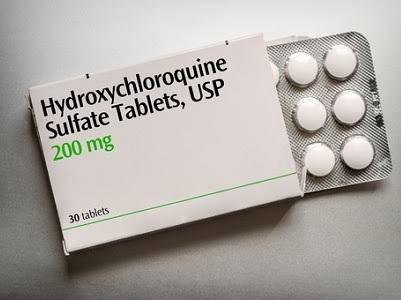
US FDA previously issued an EUA to allow hydroxychloroquine sulfate and chloroquine phosphate donated to the Strategic National Stockpile (SNS)to be distributed and used for hospitalized Covid-19 patients. In fact, these two drugs have been used for decades for the therapy and control of malaria and autoimmune diseases.
Preliminary studies have suggested HUQ may have utility in fighting covid-19. Distinct possible effects may be selected to its function in the treatment of covid-19 patients : A. anti-virus, B. anti-inflammation and C. anti-thronebotic. As until now there have been no data indicating HCQ has any immunity boosting effect, here we will mainly discuss the anti-virus and anti-inflammation effects. Both CQ and HCQ have been shown to possess anti-viral activity against various viruses such as human immunodeficiency virus (HIV), hepatitis A virus, hepatitis C virus, influenza A and B viruses, influenza A HSNI virus and others. Recent studies reported that CQ and HCQ could also inhibit SARS-CoV-2 in vitro, suggesting that they are potentially applicable to Covid-19 patients. However, there is to date no convincing report of the in viro anti-viral effects of HCQ/CQ. Several randomized controlled trials brought comforting news that CQ and HCQ showed potential effects in reducing respiratory symptoms and pulmonary inflammation as evaluated by computed tomography (CT) of covid 19 patients. It led to panic buying as people attempted to acquire this purpoted ” life saving drug”. Even some physicians stocked up CQ and HCQ for personal use in US and some European countries.
One person in US died and another become seriously ill after using verterinary formulation of CQ tablets intended for use in fish tanks in an effort to present Covid-19. Shortly after permitting the use of CQ and HCQ for treating covid-19, the US FDA issued precautions on using those drugs. Hence, we believe that serious discussions of the potential mechanisms are urgently needed to guide the potential clinical application, evaluation of efficacy and prevention of adverse effects of these drugs.
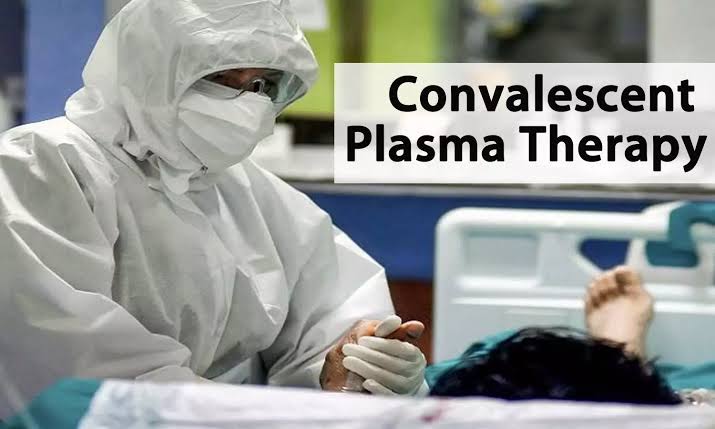
Plasma therapy has become the most common and simple treatment used niw-a-days in Covid-19 treatment. The US FDA announced that convalescent plasma may be effective in treating covid-19 and potential benefits of the product outweigh the risks based on scientific evidence available.
In India, multi-centre clinical trials to study whether plasma therapy is a useful covid-19 treatment are underway by the Indian Council of Medical Research. Further, States like Maharashtra are running the world’s largest plasma therapy trials, Project Platina, in 18 medical colleges, but response from donars reportedly has been lackluster. Covid therapy is highly individualised. The use of plasma therapy can be life-saving in certain cases and is being used in compassionate grounds. It is a promising treatment option if used earlier in the cycle of the disease. It has been used as therapy for over 100 years, but for COVID-19, we need to document this in a research programme. We also need better methodology for its use while screening donors so as to know the adequate level of neutralizing antibody, ortiters”, told Dr.Shashanka Josh.
Significantly, World Health Organisation on Monday remaind cautious about endorsing the use of plasma to treat infected people. “The results are not conclusive”, its chief scientist Soumya Swaminathan said’ adding ” We recommend that convalescent plasma is still and experimental therapy, and should be continued to be evaluated in well-designed randomised clinical trials.”
The US FDA decision was based on an observational study that gave “some positive signals that convalescent plasma can be helpful in treating COVID-19” and might reduce the mortality if administered early after diagnosis. This article is posted on preprint service and is yet to find its way into a medical journal. However, the claims made by the US FDA commissioner have considerably done more harm to the science and raised unrealistic hopes among the public.
In India, plasma is being promoted asking people to donate plasma to save lives, and shaming COVID-19 survivors who chose not to donate. We seem to have accepted plasma therapy widely without any good quality evidence supporting its use. This is likely to give even more widespread with the endorsement from the US, said Dr.Lancelot Pinto consultant respirologist at Mumbai-based PD Hinduja Hospital.
Plasma reduces death rates if there are enough neutralizing antibodies in the donor plasma. As of now, our labs are not accurately measuring the titres of antibodies in donor plasma – thus it is a wild guess if plasma administered to the COVID patient would indeed benefit the patients”, Kalantri added.
US FDA’s statement implies a 35% absolute improvement in outcomes, when the reality is a 32% improvement and that two comparing early late plasma, Dr.Pramesh said, adding, the danger of such a public statement is that ongoing randomised trials of convalescent plasma will struggle to recruit patient. However, the US FDA still recommend that randomised trials of plasma continue.
This pandemic has brought us all into a dilemma regarding the position of academics of students. Online classes are already being carried on by schools and colleges. Yet, this cannot be continued for long as the effectiveness of classroom education lacks in online classes. No one actually knows when the pandemic will be flattened and students flock to campuses.
The only thing that is known is that a large number of students and teachers would come together at their colleges. Students are already mentally fatigue and dying to be back to the campus.
The Government had earlier instructed a gradual opening of colleges with caution and precautionary measures from September 1st. But with more than 3.6 million Coronavirus cases in India, the date was shifted and the next plausible one may go for the dawn of the new year, with one semester going online.
Colleges have to be opened someday. When the day comes, there are many chances of arising this pandemic again. We can avoid this situation to an extent by following certain steps and safety measures.
Here are the steps colleges need to take before the reopen after Covid-19 :
1) To start with, all educational institutes need to quickly migrate to the digital mode through the use of existing massive online courses (MOOCs) and create their own MOOCs for the domains they deal in, provided they can muster the courage and the resources. Going ahead, it will by PhyGital or blended learning, with physical being the base and digital being the larger engagement period. Even virtual labs and studios will do half the practical work as well. This is a big call and for digital content creation and aggregation along with engaging delivery need to be ensured.
2) It goes without saying, that no campus can ensure a batch coming in for all 5 days or 6 days to the campuses physically for a long time ahead. It will be two to a maximum of three days a week, and that too, with temperature checking, gloves and masks, ideally with full sleeves and legs covered, and a head cover might be ordered also.
3) Many campuses will and should have a sanitising tunnel to walk through, will have to walk with a minimum 4 feet distance from the nearest peer and sit at a distance from the next buddy. This will make it necessary for half the batch to sit in a classroom, and half the team working in studios at a point of time, which stretches the infrastructure to a hilt and doubles the workload of mentors, who anyways shall be rarer and lesser paid in these Corona times.
4) The lunch-time will be staggered to reduce crowding at eating places, while session timings will be changed to reduce commotion on corridors. Lunch-time is a weaker time period during which the students tend to form groups for informal talks.
5) Campuses will call for creating a digital persona for all learners thus making it compulsory for all to have networked smartphones, specific apps to be downloaded for regular use, a good laptop, WiFi-driven high-speed digital access at homes, and cameras, to assist tech-driven learning. Though many schools banned mobiles sometime earlier, today, schools need mobile handsets more than ever. The tool of wasting time is the harbinger of besting time today.
6) While an individual student may need to come to campuses for two to three days a week, most staff and faculty members may in fact need to be on campus for five to six days to cater to the staggered and smaller batches, while continuing to guide those online at homes. That’s a double whammy for the staff in times of fewer colleagues and insecure salaries.
7) Another major need is to revolutionise the assessment system with loads of formative assessments online through quiz and open book tests. Instead of conducting exams offline, online exams would give a way to reduce the chances of another pandemic.
8) Libraries need to go digital, and mentors need to be thoroughly trained to create and deliver an engaging learning content and aggregated learning resources, apart from management becoming flexible on fees and add-ons.
9) Hostels may be hit hard for a while, and learners may choose to have home food and water. This will harm economic interests of the related service providers.
10) We are in for a plethora of surprises. But college campuses with a quick migration to a robust yet easy-to-use learning management systems, and with a sanitised environment are expected to do better.
TN Board SSLC 10th Result 2020, Tamil Nadu Board SSLC Class 10th Result 2020 at tnresults.nic.in, dge1.tn.nic.in, dge.tn.gov.in, dge2.tn.nic.in Live Updates: Around 9.7 lakh candidates who had appeared for the SSLC, class 10 exams will get their result through the website tnresults.nic.in
More than nine lakh students were waiting for the results which was declared today. The result was declared today at 09:30 am on the TNDGE official website.
The Tamil Nadu Directorate of Government Examination (TNDGE) released the result for the Secondary School leaving certificate examination (SSLC) or class 10 examination on Monday, August 10. Around 9.7 lakh candidates who had appeared for the SSLC, class 10 exams will get their result through the website tnresults.nic.in
The state government cancelled the board exams due to Coviid-19 and is awarding marks based on half-yearly and quarterly exam marks of students.
“The results of Class X would be declared at 9.30am on August 10. Candidates can check their results by registering their date of birth and roll number,” C Usharani, director of government exams, said in a release.
If students have any grievances over their marks, they can submit the form through their schools from August 17 to 25. The forms will be received on the DGE’s website www.dge.tn.gov.in and processed
“The results would be conveyed through school headmasters,” the release added. The candidates also can get provisional mark sheets from August 17 to 25.
In order to clear the examination, candidate needs to score a minimum of 35 marks out of 100 in each subject while for science candidate needs to clear the theory and practical examination separately such as they need to score 20 out of 75 marks in theory paper and 15 out of 25 marks in practical paper to be declared a pass.
Total Covid-19 positive cases stand at 16,95,988 including 5,65,103 active cases, 10,94,374 cured/discharged/migrated and 36,511 deaths, the health ministry said.
With 57,117 people testing positive for coronavirus in a day, India’s COVID-19 tally neared 17 lakh mark today, while the recoveries jumped to 10,94,374. The country’s death toll rose to 36,511 with 764 fatalities being recorded in a day. The fatality from covid currently stands at 2.18% in India as compared to global average of about 4%.
This is the third consecutive day that COVID-19 cases have increased by more than 50,000. The total number of confirmed cases also includes foreigners.
A day after Maharashtra added the highest number of Covid-19 cases, the state’s tally dropped marginally to 10,320 on Friday, its third highest addition so far. This is the second day in a row that the state has added over 10,000 cases. Active cases in the state crossed the 1.5-lakh mark.
The number of COVID-19 cases in Pune city touched 54,255 after 818 people were detected with the infection in the last 24 hours, According to Worldometer.
Odisha Announces Weekend Shutdown in Rourkela City, 4 Districts Till Aug 31 Meanwhile in India, the Odisha government on Friday announced a weekend shutdown in four districts and Rourkela city till August 31 in the wake of a spike in coronavirus cases.
Andhra was also among eight states that recorded their highest single-day jump in cases on Friday.
The others were Uttar Pradesh 4,453 new cases, Bihar 2,986, Bengal 2,496, Assam 2,112, Telangana 1,986, Kerala 1,310, Delhi 1195 and Punjab 665.
As the world battles the COVID-19 pandemic, countries are moving to stringent measures like lockdowns and curfews. With markets crashing, the global economy is staring at a deep distress.
Entire world is fighting against epidemic COVID 19 outbreak and Hon’ble Prime Minister of India Sh. Narendra Damodardas Modi has taken much need precautionary step of complete lockdown from midnight 12’o clock of 24th March, 2020 onwards for next 21 days and again extended to 3rd May, 2020 for another 19 days.
In this difficult environment, each regulatory body is releasing relief measures and guidelines for easing out the impact of COVID 19. On the financial and compliance front, announcements have been flowing from the Government authorities in the form of deferment of statutory due dates or relaxation in payment terms to overcome the financial crisis being faced due to lock-down.
Similar to several countries, the Government of India has begun working on an economic package to deal with the impact of the pandemic. Realising the hardships faced by its citizens, the Union Finance & Corporate Affairs Minister Smt. Niramla Sitharaman has announced several important relief measures on tax and regulatory aspects.
The Finance Minister also announced that necessary legal circulars and legislative amendments for giving effect to these relief measures will be issued by the concerned Authority.
Following is the summarised form of the key announcements made by the Finance Minister here below:
Direct Taxes
1. Extension of tax return filing deadline
The deadline for the following types of tax return have been extended from 31 March 2020 to 30 June 2020
Belated income-tax return for tax year 2018-19
Revised income-tax return for tax year 2018-19
2. The timeline for linking Aadhaar with PAN has been extended to 30 June 2020
3. Relief with regards to delay in payment of taxes
Interest at the reduced rate of 9% (i.e. 0.75% per month instead of 1/1.5 percent per month) will be charged on delay in respect of following payments made between 20 March 2020 and 30 June 2020:
Advanced tax
Self-assessment tax
Regular tax
Taxes withheld or collected at source
Equalization levy
Securities Transaction Tax and
Commodities Transaction Tax
Penalty and late fees in relation to the above mentioned payments are to be waived off
4. Extension of compliance due dates
In respect of the following, where the due dates fall between 20 March 2020 and 29 June 2020, the revised due dates shall be 30 June 2020:
Issue of notice
Intimation
Notification
Approval order
Sanction order
Filing of appeal
Furnishing of return, statements, applications, reports, any other documents
Completion of proceedings by the authority and
Any compliance by the taxpayer including investment in saving instruments or investments for roll over benefit of capital gains
5. The Direct Tax Vivad se Vishwas Act, 2020:
The timeline for payment of disputed arrears without attracting additional 10% amount under the Vivad se Vishwas Scheme extended from 31 March 2020 to 30 June 2020.
Indirect Taxes
1. Extension of GST return filing deadlines:
The last date for filing the forms GSTR-3B due in months of March, April and May 2020 (i.e. returns of February, March and April 2020) will be extended till 30 June 2020 (in staggered manner)
Date for filing GST annual returns of FY 18-19, which is due on 31 March 2020 is extended till the last week of June 2020
2. Relief in respect of payment of taxes
For those having aggregate annual turnover less than INR 50mn, no interest, late fee, and penalty will be charged for the period
However, for those having an aggregate annual turnover of more than INR 50mn, a reduced rate of interest @ 9% per annum will be charged from 15 days after due date (current interest rate is 18 % per annum) for the delayed payment between 20 March 2020 and 30 June 2020, but no late fee and penalty will be charged if complied before 30 June 2020
Last date for making payments by the Composition dealers for the quarter ending 31 March 2020 will be extended till the last week of June 2020
Payment under Sabka Vishwas Scheme shall be made without interest till 30 June 2020
3. Extension of compliances due dates
In respect of the following under GST law, where the due date falls between 20 March 2020 and 29 June 2020, shall be extended to 30 June 2020:
Issue of notice
Notification
Approval order
Sanction order
Filing of appeal and
Furnishing of return, statements, applications, reports, any other documents
4. Date for opting for composition scheme for the F.Y. 2020-2021 is extended till 30 June 2020
5. 24X7 Custom clearance till end of 30 June 2020
Corporate Laws
1. CARO 2020
Applicability of Companies (Auditor’s Report) Order, 2020 will be effective from FY 2020-2021
2. Board meeting
The mandatory requirement of holding Board meetings within prescribed interval provided by the Companies Act, 2013 (120 days) shall be extended by a period of 60 days till next two quarters i.e. till 30 September
3. Meeting of Independence Directors
For FY 2019-20, if mandatory one meeting of independent directors is not held, the same will not be treated as non-compliance
4. Form INC-20A- Declaration of commencement of Business
New Companies being given 6 more months for filing declaration of commencement of business
5. Debenture
Time line to invest 15% of debentures maturing in a particular year has been extended from 30 April 2020 to 30 June 2020
6. Deposit Reserve
Requirement of creating a Deposit Reserve (equal to 20%) of deposits maturing during FY 20-21, extended to 30 June 2020 instead of 30 April 2020
7. Minimum residency
Non-compliances with 182 days residency in India by Director will not treated as non-compliance
8. No Additional Fees
Moratorium period from 1 April 2020 to 30 September 2020, during which no additional fee would be charged in respect of any filing, irrespective of its due date
9. Insolvency and Bankruptcy Code 2016 (IBC)
Minimum amount of default required to initiate insolvency and liquidation on corporate debtors raised from INR 1 lakh to INR 1 crore, effective immediately, in order to prevent admission of MSMEs defaulting due to economic conditions in lieu of COVID-19
Proposed Suspension of new initiations of Corporate Insolvency Resolution Process under Sections 7, 9 and 10 of IBC for 6 months, contingent upon scenario beyond 30 April 2020 as a safeguard companies from defaults attributable to financial downturn pursuant to the COVID-19 pandemic
Among the measures announced late on Tuesday, the government extended the e-way bill validity for the second time since the lockdown was imposed. The e-way bill generated on or before March 24 and expiring during the March 20-April 15 period would now be valid till May 31. This is likely to help trucks stuck en route to reach their destinations.
Further, the notification extended by three months the deadline for furnishing the annual return and GST audit for financial year 2018-19 to September 30. Additionally, a taxpayer can now furnish monthly return GSTR-3B showing nil sales through SMS using the registered mobile number. This return would be verified by a registered mobile number based one-time password (OTP) facility, the notification said.















 Eduindex
You must be logged in to post a comment.