First time a female doctor is found infected with both Alpha and Delta Variant of Covid-19. The doctor was simultaneously infected with both the virus and doctors have said that the condition of patient is fine and she will recover later.
The officilas have said that there is nothing to worry and the women will soon recover.
The women have previously been vaccinated and receiving the treatment as any other patient of Covid-19.
Earlier this month a Belgium Women was found infected with both the variants. The women died after five days when her conditions worsened following a collapse of her respiratory system, That happen due to being infected with both the variants of Corona Virus.
The numbers of Unemployment rate of India were not good & this pandemic have done the work of fuel in the fire . In January 2021, India saw an unemployment rate of over six percent. This was a significant improvement from the previous month. A damaging impact on an economy as large as India’s caused due a total lockdown was imminent. Unemployment went up to nearly 24 percent in April 2020. This was possibly a result of a decrease in demand as well as the disruption of workforce faced by companies.
The most drastic impact of pandemic was lockdown , & the most drastic impact of lockdown was on economically backward class ,because these people don’t have good medical system , & people from these sections mostly were of labour class , all factories & construction sites were shut , without employment & with no money left in their hands , these people were left unemployed . In India employment rate in 2019 was 5.36% which increased by over 6 % in 2021. These were not good numbers for India. Before numbers of unemployment one major thing to keep in consideration was these economically backward class . For these people , our honorable prime minister , Shri Narender Modi Ji launched a yojana named as “PRADHAN MANTRI GARIB KALYAN YOJANA” .
Just to give you all a gist of what this yojana is & what are the benefits of this yojana , & how this yojana worked as a magic wand for all the poor people who were left unemployed & lost their loved ones due to COVID19 .
The Pradhan Mantri Garib Kalyan Yojana / Package is a comprehensive relief package of Rs 1.70 Lakh Crore Yojana for the poor to help them fight the battle against Corona Virus. This was announced in March 2020, to reach out to the poorest of the poor, with food and money in hands, so that they do not face difficulties in buying essential supplies and meeting essential needs. The package included the measures listed hereunder from 30th March 2020:
Insurance cover of Rs 50 Lakh per health worker fighting COVID-19 to be provided under Insurance Scheme – extended for one year effective April 2021
80 crore poor people will to get 5 kg wheat or rice and 1 kg of preferred pulses for free every month for the next three months – extended to November 2021 (initially, the package was extended to May & June 2021; originally, it was extended to November 2020)
20 crore women Jan Dhan account holders to get Rs 500 per month for next three months
Increase in MNREGA wage to Rs 202 a day from Rs 182 to benefit 13.62 crore families
An ex-gratia of Rs 1,000 to 3 crore poor senior citizen, poor widows and poor disabled
Government to front-load Rs 2,000 paid to farmers in first week of April 2020 under existing PM Kisan Yojana to benefit 8.7 crore farmers
Central Government has given orders to State Governments to use Building and Construction Workers Welfare Fund to provide relief to Construction Workers.
Our government is providing food , money & insurance facility to the weaker sections of the society, so that though being unemployed they don’t sleep empty stomach. Under the Pradhan Mantri Garib Kalyan Yojana, 312 billion Indian rupees were accrued and provided to around 331 million beneficiaries that included women, construction workers, farmers, and senior citizens. More aid was announced in mid-May, to mainly support small businesses through the crisis. Coming to the conclusion , though unemployment numbers are rising but government is much concerned about the living of people , & is much concerned about health of people , because govt. knows that is people will live , they can make living too.
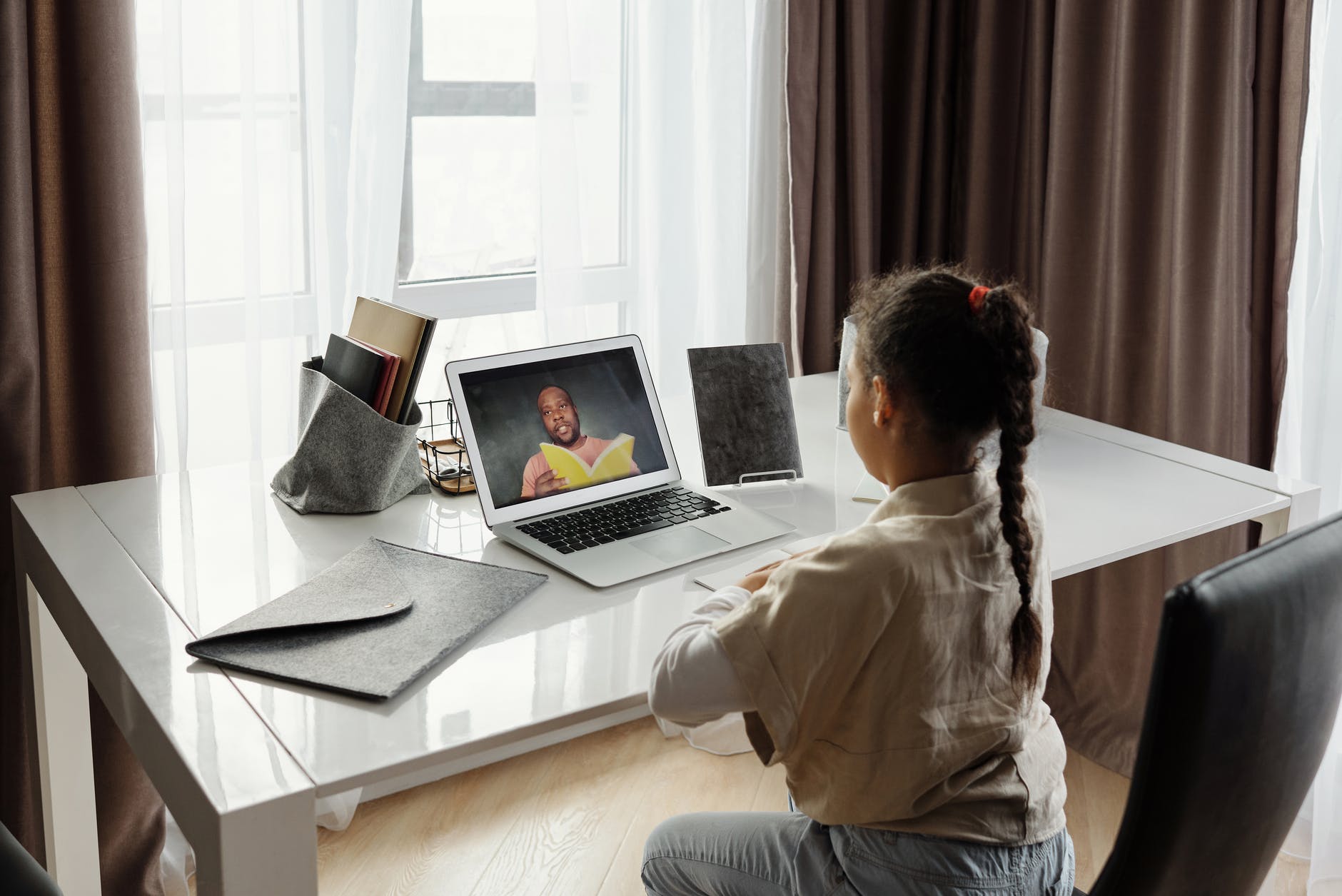
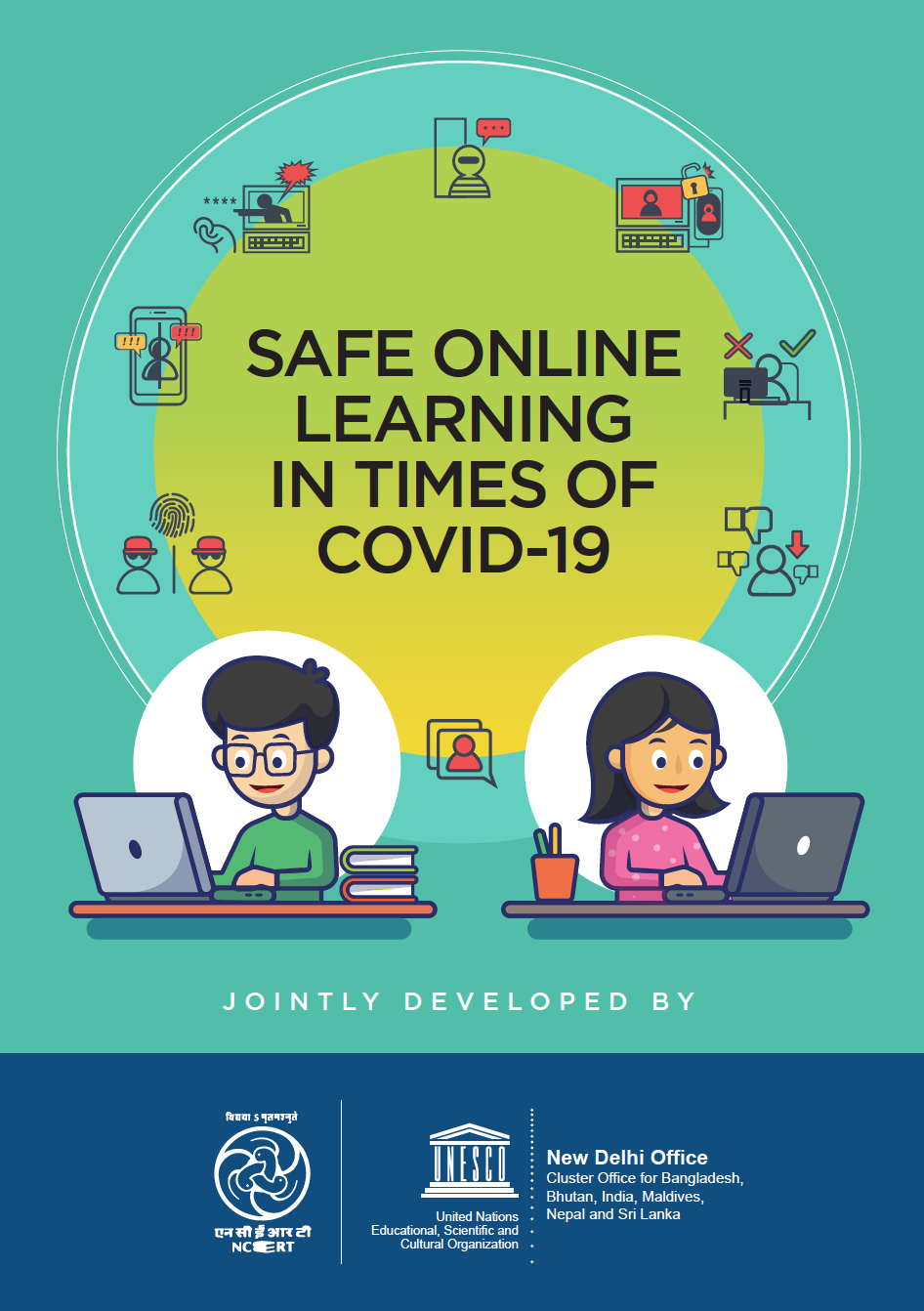
Online classes are here to stay . Online learning has gain popularity , thanks to this pandemic . Not only colleges & universities but all schools have also introduced this system . In this pandemic , where the whole world is in lockdown it was very difficult to continue studies as all schools , universities , organizations were shut , & here these online class came into force .Online classes have whole different environment as compare to our traditional form of classroom , & students are enjoying this environment.
Some advantages of online classes which you also will relate to are :
Taking classes usually means showing up on class at a particular time, sitting through a somewhat lengthy lecture and then going directly to your next class. Or, if you’ve spaced your classes out, you may be able to take a break in between, but you still have to stay on campus. It can make for really long, really intense, really exhausting days. Then you have to come home, do homework, sleep and do it all again the next day. It can easily become a grind. But with online classes you can sit comfortable & take the lecture by sitting in the position you want to .
Online classes teaches you self discipline , because their is no teacher that will ask you to sit in discipline . You learn the most important thing of your line that is self discipline .
Comfort of you very own home is what students like the most . You can take class from any where & every where .
4 Online classes will force you outside of your comfort zone (in a good way). You will have to learn to navigate the course lectures, download materials, interact with others online and communicate well digitally. Yes, this may be scary for some people! However, in the information age, these are essential skills and will allow you to keep pace with others.
At the same time online classes have disadvantages also which all of us know , they are :
Online learning creates a sense of isolation , students starts feeling that they are in a cage & somebody is forcing you to sit in front of a device .
It require self discipline , students don’t have this skill , as this skill require experience.
Online classes are prone to technical issues, it require proper network connection & needs a proper device for taking classes on .
Online classes need more time to be spend on screen & people don’t have this much time & patience to sit at one place .
Conclusion drawn from this is , we all know that this pandemic will stay for long & online classes are the only remedy for this , to avoid contact with one & other , & for students safety & security , online classes are here to stay
E–education or e–learning is the delivery of education or training by electronic teaching methods like computers or laptops etc. E- Education means Schools on Web and it consolidates virtual classrooms, laboratories and integrates it with your other enterprise applications. These now supplement the face – 2 – face class room and commonly known as Blended Learning. It is the learning experiences from the online information sources. This E-Learning approach helps the students know, makes them understand how to research more and the students can preserve their online resources posterity. It helps the teacher to provide better materials for the students by doing research on various topics and subjects. It normally works over the internet and provides numerous tools such as for assessment, communications, collaborations, uploading of content etc.
Schools On Web help in connecting people with each other and provides new ways of communications and collaborations with the help of all kinds of information’s being provided by it. The aim is – Learning without Limits- anytime, in any place, and at any pace. It provides a platform where students and parents are connected, administrators are empowered and teachers are inspired.
E- Learning
The technologies of web collaborations helps in real time access to subjects or instructors or topic matters directly from the PC of users. The key communication/ participation tools are: e mail, chat rooms, whiteboards, journals etc.
Some of the key benefits are:
Enable the teaching od new or existing courses wuthin virtual classrooms
Interactive sessions which can be recorded
Effective evaluation of virtual classes
Provide instant accesS
Generate academic reports
Enables to track the progress of individual learner
Experiential Learning
Experiential Learning
Experiential Learning stimulates experiments and boosts the dimensions of interest, involvement, imagination and interaction by virtual laboratories, scenario – based learning activities and tests of different concepts. All these can be incorporated into various teaching approaches as pre-labs, as alternatives to textbooks home work and individual or group activities.
Some of the key benefits are :
Highly Interactive Platform
Provide Learning by Doing
Ensures and promotes high level of cognition and retention
Safety and Security is ensured
Simulates real-life environments
Management System
E-Learning helps in managing fee structure, fee submission, generation of time table and management, library management and other reports. Web based Institute Management software is designed which enables better interaction among students, teachers, parents and managing body. Thus, it helps in customization of the system for respective needs at a reasonable cost.
COVID 19 and E – Education
Countries are at different points in their COVID 19 infection rates and worldwide there are nearly 1.2 billion children in 186 countries who are getting affected by school closures due to the pandemic. With such sudden transition and shift away from the classroom many problems and issues have emerged across the globe. In such situations, online learning and e-learning approaches have emerged as solutions and in response to significant demand, many online learning platforms have also moved forward for offering free access to their educational services. With the help of e-learning and online teaching initiatives many issues which were being faced in the field of education have been sorted out but still there are still lots of problems which are associated with the availability of proper infrastructures etc. at each and every corner of the globe which can enable each and everyone to access the facilities of e-learning.
A strong economy is the source of national strength .
In an economy , the production & consumption of goods & services are used to fulfill the needs of those living & operating within. In short an economy is an area of the production , distribution & trade , as well as consumption of goods & services by agents & these agents are not someone other but are we only. These agents are individuals , businesses , organizations, or government.
Till here we can conclude that people makes up an economy.
Now lets jump on the topic which is saving lives or saving economy . In this situation of pandemic i.e., COVID 19 , lakhs of people have lost their lives , their livelihood , their families . For controlling this situation , which can be controlled only by not coming in contact with an affected person & by maintaining social distancing & self consciousness , government has laid many rules & one such rule is ” lockdown” . Never before we have heard of this word of this word but in past 2 years each one pf us has experienced it . It is a situation where every one is restricted to move out of their houses , factories were shut , many people last their jobs , because of which employment rate decreased , those who have lost their jobs migrated to their villages, All & all we can say that lockdown had the most drastic effect on the economy . lockdown is one among the reason for falling of the economy.
But lockdown was not applied to do so , rather it was meant to protect people , so that we could break the chain of Corona virus . Because of this rule of lockdown , people avoided gathering & because of this lockdown only we are able to defeat & break the chain of COVID 19 . Government took this step though knowing that this will have negative impact on the economy but we all know that it is ‘we’ who makes up an economy , & if we are safe the economy will improve for sure . Because for production you need people , for consumption you need people, for trade you need people , & for distribution you need people. So if people are safe economy is safe .
So this pandemic taught us the importance of lives , we all should thank the all mighty & our health workers for saving many lives & according to me saving lives is more important than saving economy but this doesn’t mean ignoring economy & economic development . Saving lives with holding economy & adopting every measure to save it , will leads to development of both , because both the factors are directly proportional to each other & fall in one will leads to fall in other. Hence saving lives will improve economy because at the end we all know people makes up an economy.
Covid-19 has effected all sectors like education, business, health care and daily wage workers In this blog, we are going to discuss the impacts on education, health care, business and daily wage workers. Due to the covid-19 pandemic.
COVID-19IMPACT ON EDUCATION
The covid-19 has impacted all countries all over the world. It has majorly impacted education the most. Due to the out spread of the covid-19 government decided to shut down the schools, which was a big decision. Due to this all teachers and students shifted to online education.
Since all schools have been shut down, all schools shifted to online mode of education. Students and teacher find it hard because it was a new environment. Now, teachers have teach there students in online also, students have to submit there assignment and projects online. Teachers found very hard to teach in online because they has to teach students using online gadgets. Students have to scan there assignments and convert it to a PDF then they have to submit there assignments. In India, many students didn’t attend online classes because they don’t have the access to internet. In an online survey, up to 50 percent of the students in India don’t have the access to internet. In all online classes, only 40 percent of the students used attend a class. Due to covid-19 all exams were conducted in online mode. Teachers has to evaluate answer sheets in online using some gadgets. Due to lack of resources like phone, laptop and internet students cannot write online exams, submit assignments. Some schools didn’t conduct online classes for there students.
COVID-19 IMPACT ON BUSINESS
Because of national wide lock down all companies were shut down. All there business and profits were collapsed. All small business companies were collapsed due Covid-19 pandemic. Only few companies could sustain but there was huge loss for them. Only IT companies survived in this covid pandemic. There was huge loss for all companies in India. Due to the shut down of many companies, many people lost there job, creating a financial crisis for many families. The share values of many companies dropped. According to a survey, nearly 60 percent of businesses were fully closed. Many people started doing work from home.
COVID-19 IMPACT ON DAILY WAGE WORKERS
Daily wage worker are the most effected people in the covid pandemic. They have to work everyday to eat. They are paid very low wage. They even didn’t get the minimum wage. Each and single rupee is important for them to survive. Due to national wide lock down, all constructions were closed making no job for them. Even though government helped them, but it was not enough. They have no shelter, no people were giving them shelter due to the wide spreading of covid-19. They are sleeping on streets and roads. There was no food for them. Many workers died due to hunger.
COVID-19 IMPACT ON HEALTH CARE SECTORS
There was also lot of impact on health care sector. There were many patients in every hospital. Daily thousand’s of people are dying due to covid-19. Doctors were working day and night to save patient’s life. Doctors are risking there life to treat a covid patient. There were lack of doctors in hospitals. Government hospitals are full of patients. There were shortage of medicines.
That’s all from my side. I hope you like it, thank you.
When the whole world is facing a pandemic situation and it affected every single sector of the world. And it has impacted the educational sector tremendously. Every single educational institutions is closed and we don’t have a choice. As a result globally, over 1.2 billion children were out of the classroom. In India, according to a UNICEF report, “School closures have impacted 247 million children enrolled in elementary and secondary education and 28 million children enrolled in pre-schools and Anganwadi centers. This is in addition to the more than 6 million girls and boys who were already out of school before the COVID-19 crisis”, the report mentioned. ICT appears as a bridge to break the distance and survive the learning i.e, the gap which was created by lockdown between teachers and learners has been filled with the help of ICT.
Due to this Covid-19, every educational institution and pandemic forced the sector to shift to a virtual and blended mode of learning. Because this was the only way to continue the education. Initially some problems were faced by students as well as teachers. Because suddenly they have to shift in a totally different situation than earlier and many teachers and institutions were not trained and equipped adequately to shift to online teaching. Hence, they give their best and learn new skills in such difficult times. And gradually they adopted and teaching-learning process continued.
ICT initiatives for continuing the Learning Process
In the era of digitalization ICT is necessary in every aspects of life. It stands for Information, Communication and Technology. These three words have different meaning but collectively ICT becomes a part and parcel of human being. With the help of ICT Educational Institutions have been using various platforms like Google Classrooms, Microsoft Team, Zoom, Google Meeting and many more to continue the process of learning for students amid pandemics. Techers also provide e-content to students for better learning.
National level ICT initiatives
To address the challenges of learning, the Ministry of Education has undertaken several initiatives to assist students and educators. Some initiatives used which already exists digital platform like DIKSHA(Digital Infrastructure for Knowledge Sharing), e-Pathshala, NROER(National Repository of Open Educational Resources). These were used extensively for supporting the learners and teachers across the country with educational resources and relevant trainings. ICT tools like T.V( Swayam Prabha TV channels), Radio(All India Radio) helped the government to reach a larger number of target audiences. Various states also adapted initiatives to provide the necessary resources. For example
Chhattisgarh’ Education at Your Doorstep(Padhai Tuhar Duar)Initiative:– It is a portal to tackle the impact of the Covid-19 crisis in the education sector. It aimed to provide the platform to connect the teachers and learners by providing access to good quality educational content from comfort of their homes. It has a mix resources like Live classes, Offline Video Lectures, Animations, Podcasts etc.
Kerala- KITE Initiatives:- The state government launched virtual classes through Kerala Infrastructure and Technology for Education which was launched in 2005. During the difficult times of Covid-19, the state has been effectively using technology to ensure continuous learning and embodied their slogans “Physical Distance and Social Utility into Practice.” and many more initiatives by central and state government.
Individual Initiatives
Initiatives by various profit, non-profit organizations, and individuals have been incredible force behind the effort to use technology to make learning possible to many learners. Some initiatives in India like Smarter ED Platform(it is an initiative by Lenevo in collaboration with Vidayalaya(a non-profit organization) that connects volunteer teachers and learners.) and Digital Daan. Individual efforts of teacher to reach every student to continue their learning has been also incredible during this pandemic situation. One such teacher is Ritika Tomar from Sonbhadra ,UP has come up with the solution to provide necessary information to her students. she divides her students into two groups one having smartphones and other having simple cell phones. she used WhatsApp and message services to reach out tob both groups respectively. Her efforts helped the available ICT iniciatives to reach her students in the best possible way. Few teachers in rural areas teaches their students following the protocols of social distancing using Loudspeakers. In this way lot of teachers have explored and used ICT tools to teach their students in the pandemic.
Thus it can be said that ICT has proved itself as a boon to education in the pandemic situation . Education sector has been impacted tremendously especially in India. technological innovation in the sector have made it possible to overcome the situation due to the crisis. The importance of e-learning has been realized and it has been acknowledged by educational communities. We can say that the era of e-learning has been started due to this pandemic. In post pandemic world to this ICT can be used in blended mode of learning.
The outbreak of COVID-19 affected all sections of society since the first case recorded in China in late 2019. People were asked to quarantine themselves in their homes to prevent the spread of this virus. Despite its negative effect on other sectors, the pandemic was a boon for a few viz online shopping sites and also a rapid increase was seen in e-learning as compared to the traditional classroom method of education.
Even before COVID-19, there was already a high growth and adoption in education technology, with investments in e-learning apps reaching a value of $18.66 billion in 2019 and the overall market for online education is projected to reach $350 billion by 2025. The pandemic however challenged the education system across the world and forced educators to shift to an online mode of teaching overnight. Many academic institutions that were earlier reluctant to change their traditional approach were left with no alternative option but to shift entirely to e–learning. Whether it was language learning apps, virtual tutors, tools for video conferencing or online learning software, all had a significant surge in its usage since the pandemic hit.
While some believe that the unplanned move to online learning – with no training and little preparation – will result in a poor user experience, others believe that a new hybrid model of education will emerge, with significant benefits. There have already been successful transitions amongst many universities. The Imperial College, London started offering a course on the science of coronavirus, which is now the most enrolled class launched in 2020 on the site coursera. The e-learning method offers teachers an efficient way to deliver lessons to students. Videos, PDFs, podcasts, can be used as a part of lesson plan. By extending the lesson beyond traditional textbooks to include online resources, teachers are becoming more efficient educators. The online learning system, with its range of options, can be personalized in many ways. Some students are visual learners, while some prefer to learn through audio. Similarly, some students thrive in the classroom, and others are solo learners. It is the best way to create a perfect learning environment suited to the needs of each student.
There are, however, challenges to overcome. Some students without reliable internet access and/or technology struggle to participate in digital learning; this gap is seen across countries and between income brackets within countries. While internet penetration has grown in leaps and bounds over the past few years, still in smaller cities, a consistent connection with decent speed is a problem. Without a consistent internet connection for students or teachers, there can be a lack of continuity in learning. This is detrimental to the education process. Online learning also requires teachers to have a good understanding of digital forms of learning. However, this is not the case. Very often, teachers have a very basic understanding of technology. To combat this, it is important for schools to invest in training teachers with the latest technology updates so that they can conduct their classes seamlessly.
Parents and students are also concerned about the health hazards of spending hours staring at a screen. This increase in screen time is one of the biggest disadvantages of online learning taking a toll on students ‘eyesight. Sometimes students also develop bad posture and other physical problems due to staying hunched in front of a screen.
Major world events are often an inflection point for rapid innovation – a clear example is the rise of e-commerce post the SARS pandemic (2002-2004). While we have yet to see whether this will apply to e-learning post-COVID-19, it is one of the few sectors where investment hasn’t dried up. What has been made clear through by this pandemic is the importance of disseminating knowledge across borders, companies, and all sections of society. If online learning technology can play a role here, it is incumbent upon all of us to explore its full potential. From chalks and blackboards to smart boards to laptops -the education sector has jumped the boundaries of a school wall…the journey has just begun.
Typically, in an Indian household when a child grows up, Indian parents expect them to be doctors or engineers. But do we respect and love the same children when they actually become our life savers?
July 1, every year, is celebrated as National Doctors Day in India as this date marks both birth and death anniversary of prominent Doctor Bidhan Chandra Roy who was also the Chief Minister of West Bengal in early years of post independent India.
In 1991, Government of India established National Doctor’s Day to recognise the contributions of Dr. Bidhan Chandra Roy and also honour the Doctors nationwide.
Currently, the doctor-patient ratio in India is 1:1445 which is lower than WHO’s prescribed ratio of 1:1000. Doctors work day and night for their patients’ well being and this even increased since March 2020 due to COVID-19. But how much we as citizens give them in return?
India has suffered because of acute shortage of Doctors since the beginning as they never got the remuneration they deserve. This has always led to brain-drain in India as Doctors shift to other developed countries for better career prospects as they receive better salary and opportunities there.
Since the beginning of COVID-19, the only hope to get out of this deadly pandemic were Doctors and health care workers. Whenever our loved ones contract the virus, we immediately look towards our doctors with a helpless eyes, and Doctors without caring about themselves tirelessly give their life and time for us.
Some incidents in the recent past haven’t been so fruitful though. Doctors and other healthcare workers were brutally assaulted during the entire first and second wave and this is another downfall our country has witnessed.
Even on eve of Doctors day, two doctors were assaulted in Delhi yesterday after having a heated argument with two fellows. From an assault in June 2020 in Hyderabad to several such incidents in all parts of the country like Madhya Pradesh, Maharashtra, Assam and many more shows that we as citizens have failed our doctors.
Citizens have to understand by doing such acts of violence, their loves ones whom they lost won’t return. Yes, if any citizen feels their loved ones faced hospital casualties, they’ve a right to protest and they can take the legal procedures but they must not come into emotions and act violently.
Indian Medical Association has held several protests to voice for the rights of doctors. Nearly, 3000 Doctors resigned last month in Madhya Pradesh after High Court declared their strike as “illegal”. Several more prominent as well as junior Doctors in the country have vowed to not serve India as they feel citizens do not treat them with dignity.
If this goes on, India would have a vast decline in doctors per thousand people ratio and all the lives of Indian citizens will be at stake because private hospitals charge a lot and most Indians won’t be able to afford them due to mediocre and low income.
India would face a dangerous phase just like it faced in the second wave of pandemic if things continue like this till the upcoming third wave which will probably hit India by the end of 2021 as predicted by health experts. Stricter parliamentary laws against anyone who assaults doctors and moral policing of citizens can improve the doctor-citizen relationships however.
National Doctors Day is celebrated nationwide, every year, on the 1st of July. But why? This is to express our gratitude towards doctors and physicians for their service towards our well-being. Legendary physician and the second Chief Minister of West Bengal, Dr Bidhan Chandra Roy was born on the 1st of July in Patna, Bihar in 1882 and coincidentally died on the very same date in the year 1962. In 1961, Dr Roy was conferred with the nation’s highest civilian award, Bharat Ratna. Doctors day in India was established in 1991 in honour of his birth and death anniversary.
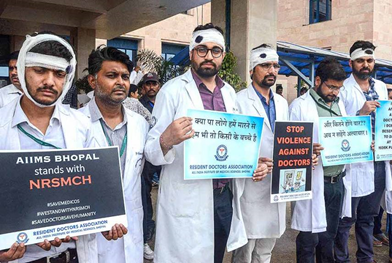
Well, Doctors day is celebrated every year on the 1st of July but this year another day was observed, by the doctors of IMA (Indian Medical Association) on 18th of June, NATIONAL PROTEST DAY. Doctors came together against the assaults on doctors in COVID wards. IMA observed nationwide protests demanding central law to protect doctors against violence.
Doctors and healthcare workers held placards and raised slogans like doctors bachao desh bachao (save doctors, save nation) and save the saviour. Doctors and medical staff at the IMA office in Hyderabad protested wearing black badges. Doctors from AIIMS Delhi and IMA unit, Ludhiana also took part in the agitations. Various state-level protests were taking place for a long time.
Why are these protests taking place?
Let me brief you here
Bhopal: A local politician was seen screaming at a Bhopal doctor who couldn’t save the life of a patient who was bought to the hospital at an oxygen level of 30. This left the doctor in tears and he was demoralised to the extent that he wanted to resign.
Guwahati: A doctor at a coronavirus facility in Assam was punched, kicked, and pounded with metal trash cans and bricks, by the relatives of a Covid patient who had died, allegedly due to oxygen shortage. Locals also assaulted the doctor who was then hospitalised.
Kerala: A police official allegedly attacked a doctor in the Alappuzha district. The official is accused of slapping Dr Rahul Mathew, who was working the night shift at the Mavelikkara district hospital, after the former’s mother, a COVID-19 patient, was brought dead to the hospitals. Doctors protest for the non-arrest.
And many more such cases went viral on social media. Assaults on doctors might not make it to the news daily, but take place every day.
What exactly did they do to get such treatment?
Grinded in high school, cracked NEET, spent 7-8 years working hard and studying in college, paid a hefty amount of fees to medical colleges or even took loans for their studies.
Who does that? Their fault, right?
Image source: Google | Image by: BusinessToday.In
During COVID lockdown when most of us were busy making dalgona coffee and baking cakes, they were out there in scorching heat, wearing PPE kits dealing with patients. Burning the candle at both ends, forgetting they have a life of their own, forgetting they have a family waiting for them, isolating themselves from their own family members, in their own houses to protect their families from contracting the virus, more than 500 doctors died during COVID, trying to save our lives. But why, just to save us. Imagine how demoralising it is for them to get beaten up by the ones they’re working for.
What is the probable reason?
Lack of infrastructure
Manpower
Laws in place
Security arrangements
Lack of infrastructure
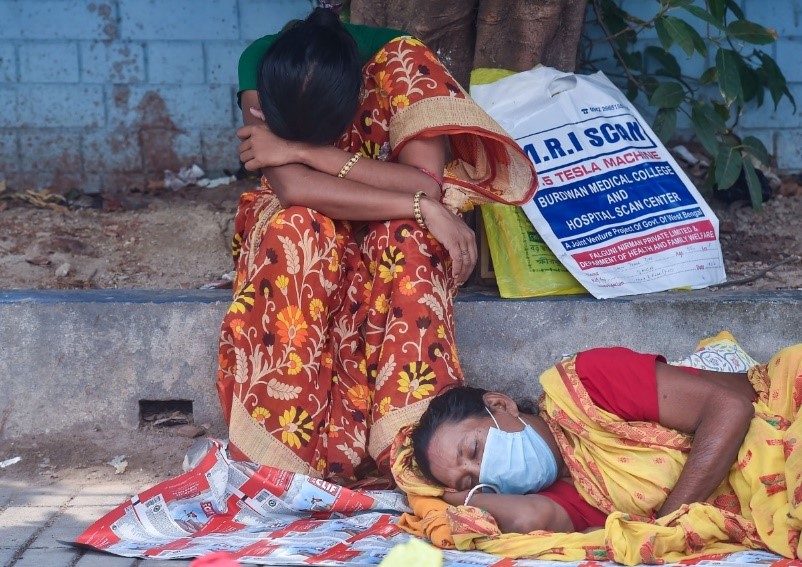
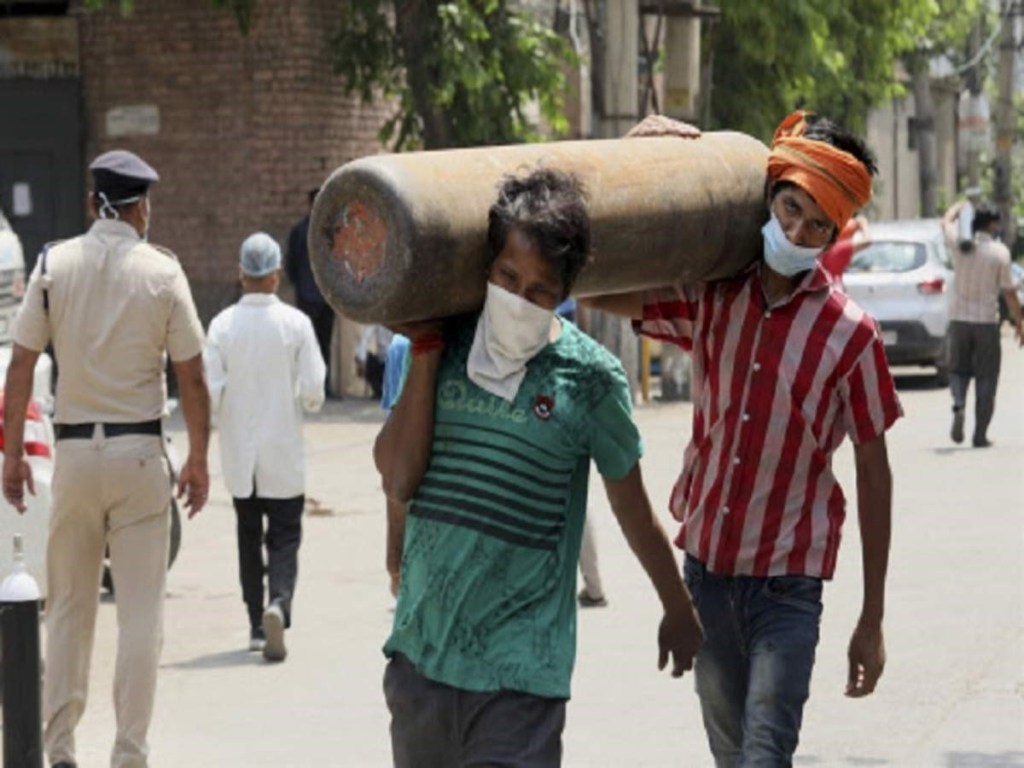
The shortfall of ICUs, no beds for patients, dearth of oxygen support, the inadequacy of medicines, caretakers bound to wait in long queues for medicines at dispensaries, patients gasping outside hospitals, black marketing of almost everything required for a person to recover, our health infrastructure was crippling.
Image source: Google | Image by: The Times Of India
Manpower
Along with the tools used to help fight COVID, there is a paucity of our warriors too. There should be at least one doctor per 1000 patients according to WHO, whereas in India there is one doctor who attends more than 1445 patients. Not just doctors, the suggested number of nurses per 1000 patients is at least 3, there are just 1.7 in India (43% less than WHO standards). This leads to overworking of doctors and medical staff ignoring their basic requirements like sleep and a proper diet.
Laws in place
Medicare Service Persons and Medicare Service Institutions (Prevention of Violence and Damage to Property) Act, also known as the Medical protection act is there in at least 19 states, which when breached can lead to an imprisonment of up to 3 years and a fine of INR 50,000. Damage to any medical devices and equipment is a punishable offence and offenders are liable to pay twice the amount of the damaged equipment’s cost.
The Act, however, fails to really protect doctors because it features neither in the Indian Penal Code (IPC) nor in the Code of Criminal Procedure (CrPC). This makes it difficult for victims to approach the police for help or the latter to file a complaint against suspects.
Security arrangements
Doctors are not politicians with scores of gunmen and bouncers around them, who will assure their safety? Due to lack of security at hospitals and clinics, doctors and other staff are the soft targets for unhappy relatives and agitated patients.
Stepping into doctor’s shoes
Imagine yourself as a teacher who fears being beaten up to death by parents for their child’s poor performance at a test, will you even be willing to teach anymore with the same zest. I don’t think so. Hospitals are understaffed, doctors are overworked, patients are overwhelmed.
But this isn’t the fault of our doctors. They are going an extra mile in order to save as many patients as they can, making 3 patients share a bed or switching oxygen support among patients, they have our best interest at heart.
Doctors are not supposed to be accountable for the paralyzed infrastructure, that is where the leaders we vote for come into play. They’re made to work for 15+ hours at a stretch that too in a harsh environment, in a place they no longer feel safe or comfortable in.
What do doctors want?
All they want is for the government to sit with them and consider their problems.
For a law to protect their lives so that they can continue with their duties towards the nation. The implementation of existing laws.
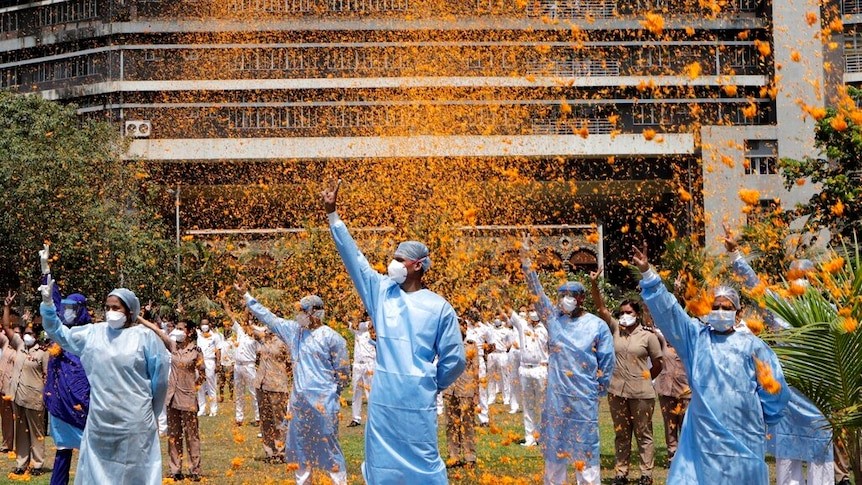
They don’t demand banging of thalis from our balconies or something like that in order to pay our respect, they didn’t ask for showering of flowers upon them for their service, all they’re asking for is to be able to practice in a safe environment where they’re worried for patients’ life, not scared of getting beaten up by sticks.
Image source: Google | Image by: Anjana Pasricha ( VoA)
We were always raised to believe doctors are God on land. Saving our life, giving us a new one at times, while risking their own. What they now want is not godly, but at least a humanly manner.
How can we help?
First and foremost, don’t be someone they need protection from. i.e. don’t be an assaulter.
Secondly, don’t ignore if you see someone being unfair toward them. Raise your voice, report if you see something like this.
A simple realisation that we can trust our doctors can do wonders.
Lastly, don’t forget they’re humans too. Thank them, pay your respect, or at least, just don’t be a jerk.
This Doctors day, I bet Dr Bidhan Chandra wouldn’t be proud of our country treating its doctors and medical staff like this.
Let’s all come together and promise that we’ll make the world a better place to live for our selfless human beings. We owe them.
Ending here with a salute to any doctor or an aspiring doctor reading this, and a sincere tribute to the warriors that lost their lives.
Online education is a flexible instructional delivery method that encompasses any learning that occurs through the internet. Online learning allows educators to communicate with students who may not be able to enrol in a regular classroom course, as well as students who need to work on their own time and pace.
Every subject is experiencing a rapid increase in the amount of distant learning and the awarding of online degrees. The number of schools and institutions that provide online education is likewise increasing. Students pursuing degrees online must be diligent in ensure that their curriculum is completed by a reputable and credentialed university.
Synergy is a well-known benefit of online education. The style used here allows for interactive contact between students and professors. Sources are shared through these exchanges, and an open-ended synergy emerges as a result of the learning process. It aids the student to learn better when each person bestows a view or opinion through conversations and comments on others’ work. This distinct benefit is exhibited in a virtual learning environment that is student-centered, something that the online learning format alone cannot provide. We don’t have to travel to another location or commute large distances to take online lessons. We can stay where we are and keep our current job while we work toward improving our career with an online degree. Online education also helps digital nomads—someone who espouses a technology-enabled or location-independent lifestyle. We can watch lectures and complete our coursework wherever we are.
Whether we are full-time or part-time online students, we have a lot more reasonable schedule. Because of its low cost, online education has gained a lot of popularity. As a result, online courses are less expensive than those offered in schools or universities. While we may have to spend money on things like transportation, lodging, and meals while attending university, online education may not. The enormous flexibility of online learning is one of its most appealing features; nevertheless, there is a catch: one must be exceptionally self-motivated. With the online platform, students devise a variety of strategies for keeping up with their studies. The simplest things like setting aside time every week to study and create a workspace with minimal distractions can help immensely.
Advantages of Online Learning:
Online education allows us to learn from a variety of mentors and teachers in a variety of fields, broadening our knowledge and expanding our horizons. It lessens student anxiety since many students are able to communicate more effectively through online education than in traditional classes. Anyone can learn from anywhere as long as they have access to the internet. Because there is no rush with online education, we may study at our own pace. When compared to traditional classes, most online courses are frequently more fun and comfortable. It relieves you of the hassle of needing to travel to a specific location every day.
Online schooling is frequently less expensive. Furthermore, when compared to traditional educational methods, online education is less expensive. Students in typical university programmes must pay for transportation, textbooks, institutional facilities such as gyms, libraries, and swimming pools, as well as other expenses that drive up the cost of university education. Online education, on the other hand, solely costs for tuition and other necessary expenses. As a result, both the wealthy and the poor can benefit from virtual education.
It enables one to discover novel ways via the internet and therefore improve one’s skills. When compared to traditional education, if there are any changes in the syllabus, adjustments may be made promptly with online education. Because one can learn at any time, even at midnight, online education is flexible and adaptive. When compared to traditional education, it can assist some people improve their grades. Some people benefit from online schooling more than others.
Disadvantages of online learning
The benefits of online education to students are numerous and undeniable. Taking an online course is a fantastic educational alternative, especially when traditional learning conditions provide many challenges, such as transportation or distance. However, like with everything, there are certain fundamental limitations to online schooling that can be uncomfortable. Students who spend too much time on the computer are more likely to plagiarise. It can also create eyesight difficulties because we spend practically all of our time in front of the computer. Physical growth may be hampered by online education. Without someone to guide you through your online education, it might be difficult to be responsible for your own learning.
You are cut off from your classmates while you study online. In some circumstances, extra time may be required to comprehend the learning process. It’s easier to cheat on an online exam than it is in a classroom, thus it’s probably not a good idea to do so during exams. Online education also provides a great deal of autonomy, which is important for our learning. Advertisements on the internet can provide a multitude of distractions, which can disrupt our learning. Self-assessment is also substantially lower in online education.
Online education offers both benefits and drawbacks, but it is a wonderful technique of learning that can aid in the development of a student’s abilities. To be successful in online education, one must select the best institution and course to avoid enrolling in one of the many suspect universities that employers may reject. The other most important item is to ensure that communication with the school faculty and fellow pupils is maintained. The main element is proper time management, which allows us to manage our time and finish and submit assigned tasks on time.
In a bid to contain the spike in COVID-19 cases, the UK went on lockdown in November 2020. But despite having the same lockdown measures, infections in Kent were still rising. Due to an overall drop in the number of cases, the country eventually relaxed its lockdown restrictions. What happened next was nothing short of a nightmare. The number of cases skyrocketed. Researchers realized somewhere in Kent the virus had mutated. It was a new variant, and it was more contagious and was spreading extremely fast. In the next five months, this became the most common form of the virus.
But let us back up for a bit. Why did the COVID-19 virus mutate? Why do any virus mutate at all?
From an evolutionary standpoint, mutations are necessary accessories to natural selection. Most mutations are not beneficial for the organisms. Many mutations cause organisms to leave fewer descendants over time, but once in a while, there are changes that give the virus an advantage. These advantageous mutations led to the emergence of what are now called the Variants of concern.
Viruses are basically just a shell of protein surrounding some genetic material- either DNA or RNA. That genetic material is made up of molecules that can be represented by a series of letters like this
Structure of genetic material of viruses. [ Source: Vox]
Each part of the genetic code contains instructions for how to make one specific protein that allows the virus to function. The virus has one goal- to make more copies of itself. But because they are extremely simple entities they use us to replicate. Whenever a virus infects someone, it takes over their cells to make more and more copies of themselves. This means tediously replicating the same code repeatedly. Occasionally, however, the virus makes a mistake. This is called a mutation, and it slightly changes the instructions for making the virus. This altered virus is a variant.
Coronaviruses have a specific type of proteins called the spike proteins that they use to bind with and infect the human cell. Luckily for us, this binding is not a perfect fit and the virus cannot always get past the cell’s defenses. What happened with the UK variant or the B.1.1.7 variant is that it had a mutation on the spike itself making the binding better.
The deadly second wave of Coronavirus that wreaked havoc globally, had a cataclysmic effect in India. WHO recently announced that the highly infectious virus variant which was first detected in India will be referred to as the ‘Delta variant.’ As per data, the Delta variant or the B1.617.2 was the primary cause behind India’s devastating second wave and is much more infectious than the Alpha strain (B.1.1.7), which found in the UK.
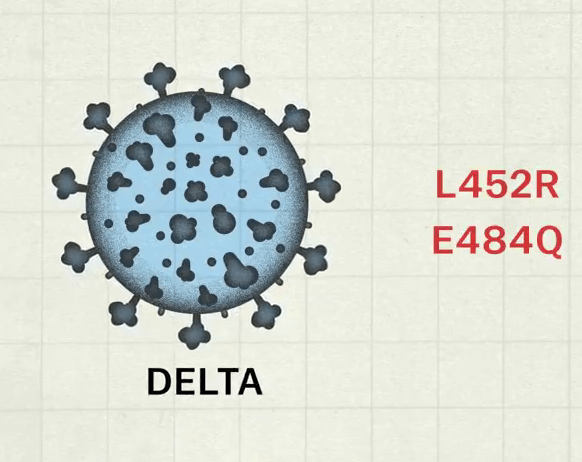
The Delta variant and its two mutations. [Source: Vox]
The Delta variant has many different mutations, two of which had been seen earlier. These mutations seem to make the virus more transmissible and confers it power to re-infect people. This means the Delta variant evolved as a response to our immune system.
The Delta plus variant, a new mutant version of the Delta strain first detected in India, has been found in 22 cases in Maharashtra, Kerala and Madhya Pradesh and is a “variant of concern”, the government said in a warning to these states this evening. Sharing preliminary details of the Delta-plus variant, researchers at CSIR-Institute of Genomics and Integrative Biology (IGIB) said that it may be linked with abilities to better escape immune response, which means the virus can potentially dodge vaccines and antibody therapies. In fact, Vinod Scaria, a scientist with IGIB, said that there is also evidence of the Delta-plus variant’s “resistance to monoclonal antibodies”, putting into question the effectivity of the monoclonal antibody cocktail that was recently okayed for the treatment of milder cases.
The tsunami we witnessed in the second wave of the pandemic, caused by the delta variant, has only started to ebb. The rise of a new mutant, merely months after the initial detection, makes the Delta plus variant a serious cause of concern, at least on paper.
As Covid-19 streaked the globe in March, many businesses soared or plummeted as the pandemic wrought sudden sweeping change on the market environment. While some businesses like medical suppliers, drugs and chemists, small scale mask manufacturers, online education platforms, digital gadget markets soared high while many other businesses like restaurants, bars, hotels, malls etc were forced to shut down. Imposing lockdowns led to panic buying wherein consumers started buying essential goods like monthly groceries and hoarding them. Some switched to selective and cheaper buying. Unemployment soared and consumer spending fell causing major global economies to slide into recession.
This shift in consumption pattern created an altogether different trend where less costly consumer goods dominated purchases. The stock market reached its highest level with Nifty crossing 15000 mark and Sensex soaring as high as 35000. All this seems contradictory to what the situation validates.
Economists accredit these gains to ” The Lipstick effect “.
What is ‘The lipstick effect’
The lipstick effect is a theory in economics propounded in 2001 by ‘Leonard A Lauder’ chairman of a cosmetic company ‘Estee Lauder’. It states that at times of economic crisis or in periods of recession consumers demand shifts from costly and expensive luxury goods to less costly luxury goods. Consumers buy luxury goods even if there is crisis. During times of such economic distress consumers confidence in economy falls and their demand shifts to such goods that doesn’t affect their income much. In other markets besides the cosmetic industry For eg: instead of going on a tour to some country or buying expensive fur coat or jacket consumers prefer to go to cinemas, restaurants or simply buy less costly gadgets.
During the great depression American economy saw 25% increase in cosmetic sales, while in 2008 when economies were under recession cosmetic company L’Oreal saw 5.3% increase in sale of its products. In 2001 during 9/11 attacks when the US economy was under pressure Lauder saw a significant increase in sale of lipsticks in his company. He, thus appraised that there was a negative effect between economic condition and lipstick sales. This is how ‘The lipstick effect’ came into existence. However, all these examples majorly focus on lipstick but the word ‘lipstick’ is used in generalized sense and includes all other luxury goods that consumers purchase even at the time of crisis.
What the lipstick effect has to say in Indian context ?
Pandemic has impinged economy leading to tremendous fall in GDP, employment, Investment and most important of all consumer’s demand. The lockdown and the period afterwards saw a mixed bag of varied demand patterns. Broadly three different demand patterns were working simultaneously – normal demand, pent-up demand and inventory build-up. In August 2020 Boston consulting group reported that while there has been a rise in consumption of essential goods like health products, and home entertainment, positive sentiments ware also noticed around other essential items like personal care products, packaged foods and discretionary segment like apparel, cosmetics, consumer electronics. In September 2020, Shopper stops reported 33% increase in eye-makeup sales. In quarter two of 2020-21, Godrej consumers’ business saw 5% increase in its sales. Share prices of many such brand rose for eg: share price of Cinthol soap rose to 36% from 33% before the pandemic.
Is the lipstick effect glimmer of hope for the brands in the new normal ?
The lipstick effect offers an interesting insight that even during slump, trusted brands find a place in consumer’s wallet and are purchased as usual. However, this can be observed only in the case of less expensive goods and doesn’t apply to all the categories. Ceding many of their activities and expenditures including eating out due to growing fear consumers seem reluctant to spend at costly restaurants. Due to travelling restrictions their outing trips have reduced leading them to save more money for their future expenditure. Apart from saving for future, consumers have adapted themselves to this new normal and started spending on things like refurbishing their homes, decorating rooms with less costly luxury goods maybe a vase or pot that they always wanted to spend on, buying things for their new hobbies and all those small acts that cheer and give hope to them. A new car purchase might have been postponed, or a foreign tour has been cancelled but small pleasures every now and then have taken a toll over other spending. by small acts that keep them happy just like purchasing a lipstick is.
As J.K Rowling has rightly said “Happiness can be found even in the darkest of times; if only one remembers to turn on the light”. Even after the fatality of the pandemic demand by consumers will still be exceptionally characterized by irrationality and altogether opposite behavior. But what brings light to the overall situation is how well these branded businesses grab this opportunity and contribute their parts in comforting this economic crisis. Advertising can rekindle this hope. Using creative themes like togetherness, warmth, joy can help. Be kind, hopeful, positive and get the consumer to see more of your brand as a friend, supporter and a well-wisher.
The subject of online education is contentious in the present scenario when the world is fighting with a disastrous pandemic. Education is always seen as a necessity for everyone as it forms the basis for human capital formation which aids in development process of the nations. India being a country of 1.35 million people with more than 50 percent of population below 25 years of age represents a huge potential for education sector. The disastrous situation currently being faced by the world has made everyone to rethink the modes in which education can be imparted to the students. In the long run the practice of online learning will increase.
From a long time, online learning platforms were always seen with a sense of castigation. Transition from traditional Gurukul system to university education took almost several thousand years. Now the new way of learning through online platforms is on surge due to the present pandemic. Schools and universities are continuously making efforts to mitigate the loss caused to students due to closing of schools during this pandemic. Investment in education market is increasing day by day with online platforms leading this surge.
This new way of learning things virtually has made students techsavy and dynamic. Students can access the videos anywhere anytime as per their preference. At the same time it reduces your travel time and efforts. We can devote our time to something different maybe some skill development course or enhancing our hobbies which seem difficult in times of classroom learning. Experts from different fields can teach students more effectively as they can get connected virtually. It is an economical option as it reduces travelling expenditure and universities can spend that amount somewhere else
Experts have argued on this new method of learning as it is not that effective. Students may not able to get conceptual clarity and it would be difficult for them to clear their doubts. Struggling on the particular subject by themselves would lead to fall in their interest in it. This method would require sheer commitment and dedication from students and their willingness to watch the videos and get in touch with their teachers. This might be beneficial only for those who truly want to learn and enhance their knowledge base. Learning without taking any efforts will make the learners lazy and Indisciplined. Apart from its demerits if we look at this approach it is far more beneficial than it seems. Hence in the ever-changing world where nothing is stable online learning can be the substitute.



















 The subject of online education is contentious in the present scenario when the world is fighting with a disastrous pandemic. Education is always seen as a necessity for everyone as it forms the basis for human capital formation which aids in development process of the nations. India being a country of 1.35 million people with more than 50 percent of population below 25 years of age represents a huge potential for education sector. The disastrous situation currently being faced by the world has made everyone to rethink the modes in which education can be imparted to the students. In the long run the practice of online learning will increase.
  Eduindex
You must be logged in to post a comment.