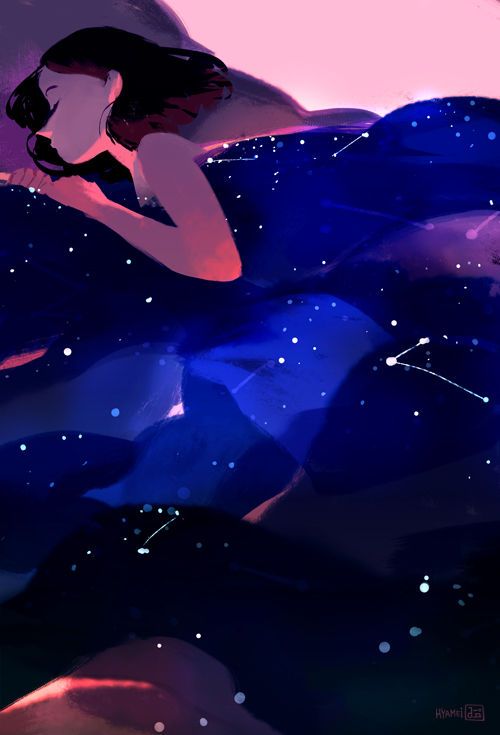
Dream is a succession of images, ideas, emotions, and sensations that usually occur involuntarily in the mind during certain stages of sleep.
The content and function of dreams have been topics of scientific, philosophical, and religious interest throughout recorded history. Dream interpretation was practiced by the Babylonians in the third millennium BCE and even earlier by the ancient Sumerians. .Dreams figure prominently in major world religions. The dream experience for early humans, according to one interpretation, gave rise to the notion of a human ‘soul’ as a central element in much religious thought.
Psychologist Calvin S. Hall considered dreams part of the cognition process or a type of thinking that happens as you sleep. Hall believed dreams could offer important insight into how you view yourself and others, your problems and conflicts, and the world in general. Many psychologists believed dreams played an important role in cognitive processes including memory and emotion regulation. Domhoff also noted that, although dreams may shed some light on heavy concerns, they might not have any real purpose, because he stated normally human beings forget most of their dreams. William Dement, who helped found the field of sleep medicine, suggested that, while dreams may lack a clear purpose, they can still convey meaningful messages.
Image credits – Google
Many experts do not believe dreams have much meaning but believe they still serve a purpose. The existing theories outline a few of these purposes.
1. Threat simulation theory
2. Activation-Synthesis theory
3. Dreams as emotional regulation
4. Continual-activation theory
Psychotherapist, Eliza Boquin, states “For vivid dreamers, our body can often experience what is happening in the dream.”
Certified dream analyst and speaker Lauri Loewenberg says while you are sleeping your brain is conjuring up around five dreams per night. That is a lot of subconscious thoughts to unpack. And although every dream is unique, they do tend to follow certain symbolic patterns.
How to examine your own dreams -:
1. Make sure you are getting proper sleep –: Research says that if we get enough sleep (7 to 9 hours) each night. This may, in turn, boost dream recall.
2. Review the dream –: when you wake up from the dream, lie calmly and analyze the visions, emotions, people, and places and mainly pay attention to small details because it would play a significant role in examining the dream.
3. Write it down –: Have a journal and start writing what all you saw the colors and visions, also your moods and feelings.
4. Make connections to your own life -: connecting these facts to your everyday life, would connect to your past life experiences and in some cases might even show some glimpses of your future. There are also many dreams interpretation books that you can interpret and gain more insights into.
Dreaming and sleep are intertwined. Dreams occur mainly in the rapid-eye movement (REM) stage of sleep when brain activity is high and resembles that of being awake. No one knows for certain what purposes dream serve. But at the end of the day, their true function might not really matter. It depends on each individual If you find them meaningful, then they add value to you or do not concern you.
Dreams are stories and images that our minds create while we sleep. They can be entertaining, fun, romantic, disturbing, frightening, and sometimes bizarre.
Although it is hard to define what a dream is, for the purpose of this article, we will define dreams as our thoughts during sleep that we recall when we wake up. So, sleeping dreams are not the same as “daydreaming.” Dreams are mostly visual (made up of scenes and faces; sound, taste, and smell are rare in dreams). Dreams can range from truly strange to rather boring, snapshots from a recent event.
Facts on Dreams
We may not remember dreaming, but everyone is thought to dream between 3 and 6 times per night.
Dreams improve creativity and problem solving.
It is thought that each dream lasts between 5 to 20 minutes.
Dreams regulate our moods and emotions.
Around 95 percent of dreams are forgotten by the time a person gets out of bed.
Dreaming can help you learn and develop long-term memories.
Blind people dream more with other sensory components compared with sighted people.
Dreams support memories.
Types of Dreams
There are 5 main types of dreams :
1. Normal Dreams
Common dreams about people and experiences that we can sometimes forget.
2. Day Dreams
When we escape from reality and visualise the past, present & future throughout the day.
3. Lucid Dreams
Being completely aware and in control of dream the dream you are having while you sleep.
4. False Awakening Dreams
A vivid type of dream that feels like you have woken up but you are actually still asleep.
5. Nightmares
The least favourite type of dream. Nightmares are disturbing and scary dreams that can feel realistic.
Whether you remember your dreams or not, most people dream every night during REM sleep. REM stands for rapid eye movements, which happen during this stage of sleep. During REM sleep, muscle and brain activity also differ from other sleep stages. Characteristics of dreams tend to be different for each of these sleep stages.
Conclusion
There are different ways scientists measure dreams from asking questions to using MRI. These studies show us that activity in the brain while we sleep gives us the interesting dreams we recall when we wake up. These dreams help us remember things, be more creative, and process our emotions.
We know most kids do not get enough sleep. Some diseases (like Alzheimer’s disease) also make people sleep less, while others (like REM sleep behaviour disorder and mood disorders) affect dreams directly. It is important to study sleep and dreams to understand what happens when we do not get enough sleep and how we can treat people with these diseases.
“Dreams are as simple or as complicated as dreamers.” The interpretations of the dreams are the royal road to a knowledge of the unconscious activities of the mind. The theories state that dreams don’t mean anything. These are just images put in by the brain from the memories. These are the stimulants that help one face the tragedies of life. As it’s truly said, “an individual suffers more in imagination than in reality” proves in this situation. Before facing it in person if a being conquers it in the dreams, then it will encourage him to win easily in real life. Its history goes back to the early stages when it was used as a tool to fool enemies because though our bodies get paralyzed while dreaming minds stay active. There is a whole psychology behind the dream theory and an explanation of why we dream in the way we do?
You dream, what you believe!!
Interesting Facts
“I always dream about falling from great heights.” It symbolizes that something in your life isn’t well. It might mean you need to rethink a choice or consider a new direction in some areas of life. It characterizes fear in existence, perhaps falling in work or love. It often expresses a need to let go and enjoy more.
“I was attacked by a chaser in my dream.” These types can be quite terrifying. It might indicate a desire to escape from your fears. Running away from an animal often depicts that you are hiding from your anger, passions and other feelings. If your pursuer is mysterious, it represents childhood trauma. And if a person is of opposite sex then it reveals that you are haunted by love or past relationships.
“I died, no not in real….in my sleep.” Death is a very common subject of dreams. People imagine death either of loved ones or about themselves. It reflects anxiety about a change. Just like death, change can be scary. Those approaching the end of life and loved ones around them experience significant and meaningful dreams, often relating to a confronting presence, preparing to go, watching or engaging with the deceased, loved ones waiting, distressing experiences, and unfinished business.
“I flew like a bird while dreaming.” It can be liberating at the same time, quite frightening. It can represent two sides. One, independence and freedom. On the other hand, escape from the realities of life.
There are a lot of things that influence dreams. The first thing includes health conditions that affect the secretions of the brain causing sleep to disrupt. The type of food one intakes can also become the factor for the feeling of sickness and in turn affect the types of dreams one visualize. Daily exercises and a little change in daily activities can help improve sleep and at last the dreams. There are two ways to remember dreams; one by telling yourself that you want to remember them when you wake up and the other by grasping as many images as you can before getting out of bed or using a smartphone.
Dreams are more profound when they seem the craziest. “Life is only a dream and we are the imagination of ourselves.”
Lucid dreams occur when you are aware that you are dreaming while sleeping.You’re aware that the events that are flashing across your mind aren’t genuine. However, the dream is vivid and real. You could even be able to guide the action in your sleep, as if you were directing a movie. According to studies, roughly half of all adults have had at least one lucid dream. However, they are unlikely to occur frequently, usually only a few times per year.
Lucid dreams are most common during rapid eye movement (REM) sleep, which is characterised by rapid eye movement, faster breathing, and increased brain activity. About 90 minutes after falling asleep, you normally enter REM sleep. It lasts approximately ten minutes. Each REM cycle lasts longer than the one before it, eventually reaching an hour.
Lucid Dreams Research
Neuroscientists are baffled as to how and why lucid dreams occur. They do, however, have some suggestions. For one instance, research have discovered physical differences in the brains of those who have lucid dreams versus those who don’t. People who have lucid dreams have a larger prefrontal cortex, which is responsible for high-level processes such as decision-making and memory recall. That shows that people who are most prone to have lucid dreams are self-reflective individuals who ruminate on their own thoughts. In a tiny study conducted in Germany, individuals’ brain electrical activity was monitored as they slept. According to the findings, lucid dreaming may be a kind of “in-between state” in which you aren’t entirely awake but also not fully sleeping. Some sleep researchers believe that lucid dreams can occur outside of REM sleep, which was previously regarded to be the only moment when people dreamed.
Benefits of Lucid Dreams
Lucid dreams may assist your waking life by providing advantages such as:
– Less Anxiety: There is less anxiety. The sense of control you experience during a lucid dream may linger and make you feel powerful. You can mould the tale and the finale after you realise you’re in a dream. This could be used as a form of treatment for people who suffer from nightmares, teaching them how to manage their dreams.
– Better motor skills: Some research suggests that by “practising” in a lucid dream, you might be able to improve simple things like tapping your fingers faster. Whether you visualise the actions while awake or run through them in a lucid dream, the same area of your brain becomes engaged.
– Improved Problem-solving skills: Researchers discovered evidence that lucid dreams can assist people address difficulties involving creativity (such as a disagreement with another person) rather than reasoning (such as a math problem).
– Increased creativity: Some participants in lucid dream studies were able to generate new ideas or insights, sometimes with the assistance of characters in their dreams.
Dangers of Lucid Dreams
Lucid dreaming can lead to a variety of issues, including:
– Sleep deprivation: Vivid dreams might wake you up and make it difficult to fall back asleep. And if you’re too concentrated on lucid dreaming, you can have trouble sleeping.
– Confusion, delirium, and hallucinations: Lucid dreams can cause confusion, delirium, and hallucinations in people with certain mental health problems.
Motivation is something that helps you grow. Not only from inside but also from all aspects, all ups and downs in your life, whenever you feel low why do you need motivation? Have you ever thought about it. Here, is the answer because motivation is something that helps you to grow, that helps you to be you, that makes you. It has the power to awaken the beast hiding inside you.
” Your perspective with either become prison or your passport.“
-Steven Furtick
” Realise deeply that the present moment is all that you ever have. “
– Eckhart Tolle
” How you love yourself is how you teach others to love you.“
– Rupil Kaur
” The Secret of your success is determined by your daily agenda.“
– John C. Maxwell
” Burn the past, Turn the page, Move on.”
– Safura Arsh
” Act as what you do makes a difference, IT DOES.”
– William James
” Excessive fear is always powerless.”
– Aeschylus
” A good Education is the foundation of better future.”
– Elizabeth Warren
” Between thinking and seeing there isa place called knowing.”
– Carolyn Myss
” You can’t build a reputation on what you are going to do.”
– Henry Ford
” Believe you can and you are halfway there.”
– Theodore Roosevelt
” Take care of your body, It is the only place you have to live.”
– Jim Rohn
” If you hear a voice within you say ‘ you cannot paint,’ then by all means paint and that voice will be silenced.”
– Vincent Van Gogh
” Ofcourse motivation is not permanent. But then, neither is bathing: but it is something you should do on a regular basis.”
– Zig Ziglar
” The only way to do a great work is to love what you do.”
– Steve Jobs
” It’s not the load that breaks you down, it’s the way you carry it.”
– Lou Haltz
” Nothing will work unless you do.”
– Mayo Angelo
” Do one thing everyday that scares you.”
– Anonymous
” If you are not willing to risk the usual, you will have to settle for the ordinary.”
– Jim Rohn
” When I hear somebody sigh, ‘ Life is hard,’ I am always tempted to ask, ‘Compared to what?’
– Sydney Harris
” Success is walking from failure to failure with no loss of enthusiasm.”
– Winston Churchill
” All progress takes place outside the comfort zone.”
– Michael John Bobak
” The only place where success comes before work is in the dictionary.”
– Vidal Sassoon
Here are some of the motivational quotes that if you implement in your lives will be successful for sure. Motivation will help you to achieve all your goals and so are these quotes.
India the land of culture, heritage, devotion and beauty. There are many beautiful places to visit in India and we cannot talk about all places in this article. So, here are 4 affordable places to visit. If you are travel lover then this is great for you all.
1) Goa
Goa is one of the cheapest country to visit. Alcohol is also very cheap here. You can have unlimited fun and crazy party all night and can even return with full pocket. The best time of the year to visit is October to March. Must visit places to visit is Calangute Beach, Fort Aguada, Dudhsagar falls, Anjuna beach. Goa is also known for its cruise and its water sports. You can check many websites for price. Average 4 days/ 3 Nights will cost you around 12,000 per adult on twin sharing with many amenities.
2) Nainital, uttarakhand
Nainital is famous for its misty lakes and mountains. Nainital is very beautiful hill station. It is also known for its cheap hotels and meals. You can do boating here at barely any cost. The area of interest lies in its name which it has gotten from the eye shaped Lake the Naini Lake thus due to this eye shaped Lake it’s called Nainital. Must visit places include Naini Lake, Tiffin top, Snow view point, Mall road, Eco cave gardens and High Altitude zoo. Average 3 days/ 2 Nights will cost you around 4,500 Rs per adult on twin sharing with other amenities as well. It can be seen that how much affordable is this place. Best time to visit is throughout the year.
3) Udaipur, Rajasthan
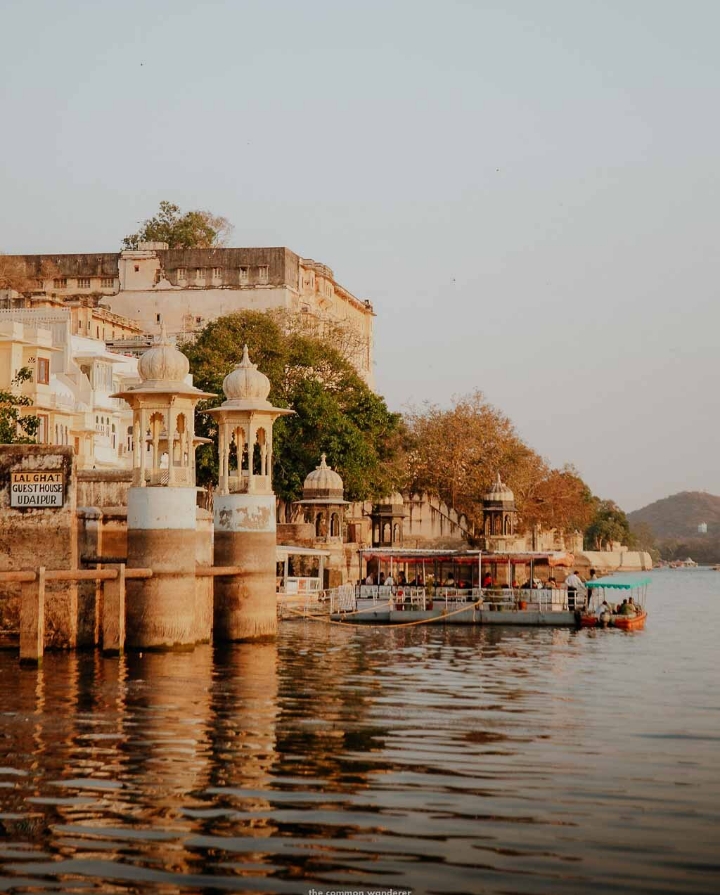
Udaipur also know as city of lakes. It is also called as Venice of East. It is also termed as jewel. It has abundance of natural beauty, awesome architecture and breathtaking temples. Must visit places include Lake pichola, City Palace, Fateh Sagar Lake, Jaisamand Lake, Sajjangarh palace, Jagdish temple. In addition to this it cost very less on average 6 days/ 5 night stay cost you around 17,700 INR per adult on twin sharing. Best time to visit is from October to March.
4) Darjeeling, West Bengal
Darjeeling also know as Queen of Himalayas, has jaw dropping and mesmerizing sunrises, the breathtaking beauty of the hills, the charm of past and all those beautiful smile of beautiful people. It is one of the most appealing hill station. And all chai lovers it offers best quality chai. Hotels and lodges are at reasonable price and it’s also cheap. Must visit places include Darjeeling Himalayan railway, Tiger hill, Batasia loop, Himalayan mounteering institute, Darjeeling ropeway and Nightingale park. Average 4 days/ 5 nights will cost around 8,375 Rs per adult on twin sharing. Best time to visit is from February to March and September to December.
So these are the places that have jaw dropping and breathtaking beauty. Apart from this they are also very affordable and hence you can easily visit with low money in your pocket. You can even check rates on different websites and there you may can get offers too. Hope you all like it.
Chhichhore, the movie which taught us that, suicide is not right option, movies which taught us “ NEVER GIVE UP”, we just have to keep going, doing our best just keep going and enjoy your life cause these moments are never gonna come back.
In life things we love the most always disappears quickly and its life.
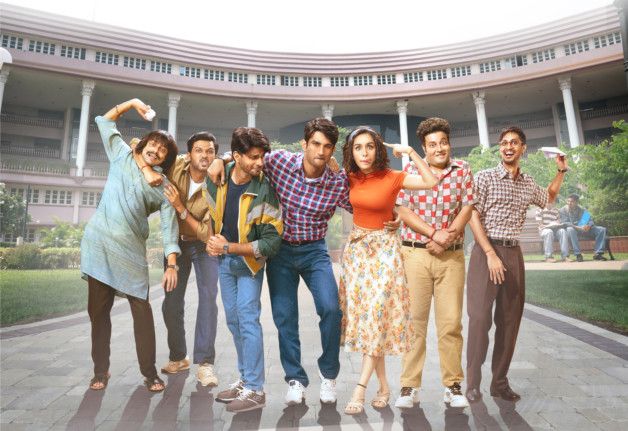
The film tells the story of Aniruddha “Anni” Pathak, a middle-aged divorcee whose son Raghav tries to commit suicide but survives, though he is in a critical condition for his unwillingness to live out of fear he would be called a “loser”. Desperate, he goes against the wishes of his former girlfriend turned ex-wife Maya’s wishes to recount his own journey in 1992 as a “loser” in a gang of six; as he continues along to convince Raghav, the other five receive news of the tragedy and decide to join their friend in his pain to complete a story they never fail to cherish as a lesson in their life.
Since childhood we are listening this, from our parents, family members and relatives, if you win this competition, I’ll buy you your fav dress or I’ll buy you motorcycle, if you get first rank in your school or college test, I’ll buy you smartphone, if you got selected or if you pass the test I’ll give you this or that or whatever you want I’ll give you, blab blah. But no one told us that if you didn’t won or if you got second rank or if you failed the test, it’s okay, it’s completely okay, atleast you have tried and worked very hard for this. What’s big deal if you didn’t got selected, the most important thing is, you tried and didn’t give up easily. Life is all about second change for them who don’t give up easily and try until they give their best. Let’s say that, it wasn’t your best and promise yourself that you will try very hard to give your best and trust yourself, if you think you can do it then you definitely can and one day you will definitely became successful and will achieve your dream.
Its human nature that we got disappointed very soon, we think like we did so much hard work for this and after all this what we got is failure.
Its life and in life things always don’t go as we planned, just trust yourself and try harder, you may struggle but it won’t matter anymore. If you feel like quitting, think about the reason why you started.
NEVER QUIT. NEVER GIVE UP. FLY IT TO THE END.
Here are some memorable dialogues from Chhichore we will always remember
1. “Tumhara result decide nahi karta hai ki tum loser ho ki nahi… Tumhari koshish decide karti hai!”
2. “Success ke baad ka plan sabke paas hai… lekin agar, galti se fail ho gaye… toh failure se kaise deal karna hai… Koi baat hi nahi karna chahta.”
3. “Hum haar jeet, success failure mein itna ulajh gaye hai… ki, zindagi jeena bhool gaye hai… Zindagi mein agar kuch sabse zyada important hai… toh woh hai khud ZINDAGI.”
4. “Doosron se haarke loser kehlane se kahin zyada bura hai…khud se haarke loser kehlana.”
5. “I am a failure, mera kuchh nhi ho sakta… But we forgot success doesn’t come at once.”
6. “Dost jinke sath hum haste hai, rote hai Par zindagi jeena sikhte hai.”
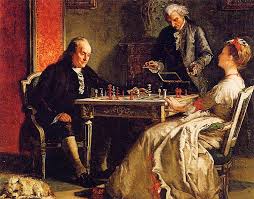
Chess was the most important indoor game of the nineteenth century in England. It enjoyed centuries-old privileged status. It was considered as a ‘rational recreation’. Chess, unlike any other game, deals more with logic and rationality rather than fun, as we know, Rationalism had taken over the Victorian era abundantly.
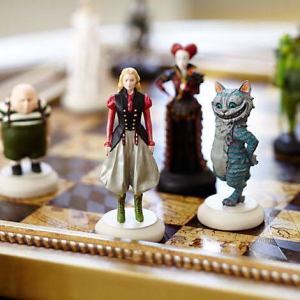
(Alice playing Chess in Looking Glass world)
Alice, at once, recognizes the chess board stretched on the vast land in the Looking Glass World. It shows that although she is just seven and a half years, still familiar to the this game, which signifies the popularity of Chess in England in Victorian Era, especially among the bourgeois class(as it is also called ‘game of royals’) and Alice belonged to the same.
In life we make ‘choices’, in chess we make ‘moves’. In order to attain something valuable in life as to capture the opponent’s castle in chess, initiative has to be taken. Nobody can make decisions for me, I’ll have to play myself, it’s just suggestions that our people may put before us. Here, Alice makes a choice to participate in the game ‘imagining’ her goal where she wants to be in the end. Well, talking about imagination with reference to Victorian era, it significantly brought out a drastic change in society, though previously children along with adults were forced into realism. ‘Imagination’ is quite efficient to presume one’s position in the coming years and then working out to get there can be useful, because life makes it hard to calculate the further possibilities due to lack of information. Alice restrained herself asking the Queens about their arrival, thinking it would be obtrusive, which keeps her away from the information, also we see Alice not able to distinguish between Red Knight and White Knight and actually who’s there to save her declares her ignorance towards information.
Chess is symbolic to attributes of life, we see, there are (apparently) three stages in chess, that is, opening, middle game and the end game, similarly we have childhood, youth and adulthood in life. Alice joins the giant Chess game of life as a white pawn, that is, she holds very limited power and can move once at a time. We always need to start from the beginning, that is, from the very first ladder in order to earn it step by step. Alice has the freedom to setup her ‘goal’ to be a Queen, but she has no power over her inevitable maturation that’s leading her to womanhood. Within the framework of the chess game, Alice has almost no control over her path and she, with certain implied rules of the game, is driven by the corresponding characters in the book, as in chess, every piece moves in answer to the move of the other one. She is pushed towards her goal by the various situations occurring before her in every square, such as, the train ride, no-name forest, Humpty Dumpty and the White Knight. Thus, it can be traced from the narrative that in life, there is some invisible force that’s propelling every individual in the direction of set goal. It can be comprehended that collaboration is the biggest instrument to victory, for example, White Knight saved Alice from the attack of Red Knight without which it had been a Herculean task for her to reach to final square. We will have to rely on our people somehow, otherwise we can’t achieve our dreams just by our own self. In chess, one can take full credit for one’s victories, but in life it would be naive to say that what I achieved is all because of my sole efforts.
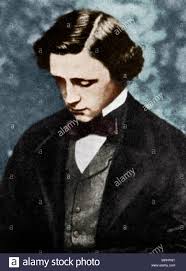
(Lewis Carroll)
The game of Chess in Through The Looking Glass represents the interest of Carroll in logics and mathematics, and the agent is ‘Alice’. This game is not about luck unlike other indoor/board games, rather brainy. In the same way, Life is more about randomness, it’s not alone in the hands of fate, though life is much more unpredictable. We need statistics as well as probability in both chess and life. Also, chess possesses two different colors, that is, one is light and the other one is dark, where I suppose, they stand for logic and nonsense respectively. Based on this idea, Alice often proves to be smarter, more prudent than the so-called adults she confronts in the Looking Glass world. This might also be a reverse-reflection of actual world, I guess, where we see adults inclined towards logic and children uttering stuff and nonsense and vice-versa, here, in the world of mirror.
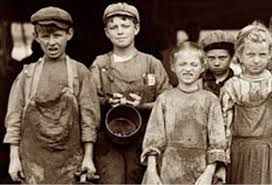
(Children doing factory chores in Victorian England)
Life of the children in Victorian period was totally opposite to that of present-day children. They were considered as miniature adults and were expected to be highly sophisticated, more in the case of rich class children. Children were not allowed to shout, complain, interrupt or disagree with anyone. The children of rich parents were usually looked after by governesses, no matter humble or strict, and they only used to teach them manners and the way of living. Here, in Looking Glass world, Red Queen, the first character to guide Alice in the reverse world,
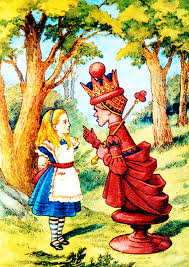
(Red Queen scolding Alice)
resembles very much like a governess of Alice when she teaches her how to not tweedle her fingers while speaking, how to behave, and to curtsey, and how Alice couldn’t go against her. She says, “when you’ve once said a thing, that fixes it, and you must take the consequences.”, because Alice is a Pawn and a Pawn cannot move backward, it is also allusion to the fact that once you have made the decision/choice, you can’t step back and stay committed bearing with it’s outcome, and she also asks Alice only to speak when she was asked to. Even we see TweedleDum-TweedleDee not ready to converse with Alice before she greets them. When Alice thinks that asking the Queens how they arrived would be impertinent, it shows again the social structure built for children in the real Victorian world.
When we are in a state of childhood, we want to turn into an adult soon. Similarly, Alice is excited about her lone-tour of adulthood through the Looking Glass world as she thinks she will be free of all the scolding, she says, “….no one here to scold me away from the fire….and can’t get me!” In the beginning, Alice was thrilled about her journey but as she is heading forward, she encounters the sense of loneliness in her journey to become a Queen(apparently) and acts adult herself. Though she is surrounded by different creatures many a times, but she feels alienated to their foreign ways. Hence, here Chess is a symbol of journey advancing from childhood to adulthood. She undergoes many crucial experiences, putting forward the idea of challenges one has to face in this journey of adulthood in one’s life. In the beginning, we see Alice being rude to Gnat about his jokes and later we see her kindness with White Knight that declares the change in her attitude as moving towards adulthood. When the Queen gives Alice directions as how to be a proper queen, it indicates that Alice wasn’t actually prepared to become a queen, just as it’s hard to prepare to be an adult in real world. Every square leads her to different characters and every character teaches Alice something significant, as we know, advice can come from the most unexpected places. For example, revelation of identity imposed by the situation in the woods of forgetfulness, the White Queen teaches her to believe in impossible, the fall of Humpty Dumpty symbolizes ‘the fall of man for pride’ and also ‘the fall of innocence’ proceeding towards maturity, and likewise all the other characters. These teachings help Alice to inherent the characteristics of adulthood within her. The crown here, symbolizes the transformation of Alice from childhood to adulthood.
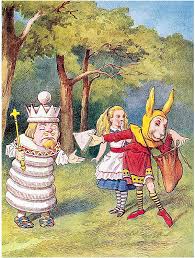
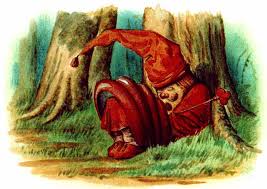
The Red King and the White King are almost doing nothing throughout the game as compared to their Queens. The Red King, as first encountered by Alice, is sleeping and his other pieces are performing their tasks to save him, whereas, the White King seems to be nervous not able to catch up with her Queen.
White King
Red King
Now these characters resemble in moves of both as that of the White and Red King in the real chess board. These actions of Queens and Kings in the world behind the mirror, may portray the position of women in the Victorian era. Women, at that time, used to engage themselves working for their husband and family, and also middle class and the working class women were employed to earn bread for their family, in support of their husbands. Red Queen saying to Alice, “…if you want to get somewhere else, you must run at least twice as fast as that!” may ascertain the idea that in a male-dominated society, women need to work double/toil harder in comparison to men in order to attain recognition. Women in the nineteenth century were not given much of the rights and privileges. This period is named after Queen Victoria, who was in the place of power. It is strange to encounter such a frivolous situation of women at the time when a lady herself was reigning over the society. When we behold Alice as a little woman moving from actual world to Looking Glass world, it may seem as she is struggling to change her confided world. She starts her journey all by herself which reflects the essence of independence in her. The characters like Live flowers resemble the social class structure that pushes Alice to follow their rules. When she chooses to be a Queen, she establishes the path for women/girls to upgrade their status because Alice learns that she must have a powerful authority to control Looking Glass world when one of the servants at once answers her after she turns into a Queen, so is the case for women in Victorian era, for example, Queen Victoria.
We need not be afraid of our high-rated opponents and feel incapable before them and it is then only that Alice is able to shake Red Queen in frustration and raises her voice against her rather than stitching her lips out of fear as evident in the beginning, that is, crown here, symbolizes her transformation from childhood to womanhood, gives her voice and finally renovates her status from a pawn to a queen. All the exclusive pieces are placed right behind the pawns. And a Pawn in comparison to them is just an ordinary, common piece that can slowly and gradually become a Queen. Even a pawn can cut down a King, pertaining to life, a single human being, regardless of his status, is enough to bring about revolution in the society, and win the castle of life. Alice suffering through all the odds, obstructions eventually made it, checkmated the Red King and turned into a Queen.
As a Queen in the game, the Red Queen and the White Queen are able to move swiftly and effortlessly. The White Queen, as she says, “jam-tomorrow and jam-yesterday, but never jam-today.”, and screams before pricking her thumb, travels in past and future which is true for the Queen,
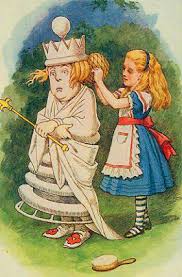
(Alice tying clumsy hair of White Queen)
in general, in chess that she can freely move in every direction possible, but she is seen nervous and messy all the time here, and ultimately at two points passes up a chance to checkmate and on another occasion she missed the opportunity to capture the Red Knight. Similarly, the Red Queen said to Alice, “Speak when you’re spoken to!”, and having supporting her words, she doesn’t announce it after putting White King on the check, hence, the check is ignored. Their individual character traits restrained them from performing their duties. This also discovers their absent-mindedness and reverse effect of the mirror world.
The Knight in the chess moves very distinctively and is allowed to jump over any other pieces. Riding and falling of the White Knight in looking glass world is signifying it’s unique L-shape movement. The inventions of White Knight are here to present his powerful character trait, like in chess board Knight is an only piece imbibed with many powers, unlike other pieces, not even a Queen can move in same way as Knight, though his inventions are unprofitable disclosing the touch of the illusionary world, still it is pointing to the fact that precaution is must, so his horse wears spikes on it’s ankles to protect it from shark bites and he collects things that might be useful in the difficult situation. The White Knight is the only character that is benevolent with Alice and saves Alice from the attack of Red Knight (stopping her to be a Queen/upgrade the position of women in society), but it can be an example of gender-biased society where a man is shown as a powerful figure and woman belongs to a weaker section. Alice, here, is represented as a weak girl and this action of White Knight throws light on the concept of feminism, and make Alice learn that a woman must stand for herself and must discover her own capabilities.
Chess wasn’t just one of the themes in Carroll’s story, indeed, it was the ground for the novel’s structure. The game of chess in real world is ‘logical’ while in looking glass world it can be called as ‘maddening game of chess’. Also as an inverted image created by the mirror, this indoor game is displayed as an outer giant field of chess. The pieces are definitely running and moving under the implied rules, but the pattern is not applied evenly. This game sets the deterministic way of life. Both life and chess are, more or less, synonymous in almost every aspect.
Have you ever dreamt of something strange and believed that there would be a hidden message behind it?
Dreams can provide useful insights on our lives. Humans have long sought meaning in their dreams. For centuries, people have questioned the meaning of dreams. According to early civilization they thought it as a medium between humans and the gods. The Greeks and Romans were convinced and believed that dreams could predict the future.
THERORIES:
But, Deirdre Barrett, a psychologist and dream researcher at Harvard Medical School said that “There’s really no research that supports that point of view”. “No dictionary or dream interpreter can tell you what a dream really means “, she added.
Several theories based on dreams were studied. THREAT STIMULATION THERORY which tells ” Dreams as a defense mechanism our brains put in place to prepare us for scary events and allows us to face our fears in a safe simulation “. Another such theory, ACTIVATION SYNTHESIS HYPOTHESIS that states ” Dreams don’t actually mean anything, instead they’re merely electrical brain impulses that pull random thoughts and imagery from our memories “.
On a contrary, psychologist Sigmund Freud though otherwise. According to Freud, ” Dreams are imagery of a wish or impulse from childhood that has since been repressed “. And for this reason Freud studied dreams to understand the unconscious mind. After his study he tells that ” Your dreams reveal your repressed wishes to you “.
FACTS
Some 68 percent said that dreams foretell the future, and 63 percent said at least one of their dreams had come true.
Not all dream are in color. Roughly 12% of people claim to only dream in black and white.
70% of your dreams contain secret messages.
Bad Dreams Can Kill You in Your sleep by Causing a Heart Attack.
Death in dreams is really about some kind of change or ending you’re dealing with in your real life.
Children under age of 3 do not dream about themselves.
Some say dreams give a person some hint and on the other hand some disagree. While one cannot come to a conclusion if dreams actually give some hidden messages or not but all that we can say is, it definitely benefits a person. Dreams offer emotional benefits, such as introspection. Dreams can also aid creativity. It is also important for memory consolidation or conflict resolution.
When we are asleep in this world ,we are awake in another .
What is a dream.
Dreams are stories and images that our minds create while we sleep. They can be entertaining, fun, romantic, disturbing, frightening, and sometimes bizarre.
Phases of sleep.
Dreams feel real while we’re in them. It’s only when we wake up that we realize something was actually strange
There are five phases of sleep in a sleep cycle:
Stage 1: Light sleep, slow eye movement, and reduced muscle activity. This stage forms 4 to 5 percent of total sleep.
Stage 2: Eye movement stops and brain waves become slower, with occasional bursts of rapid waves called sleep spindles. This stage forms 45 to 55 percent of total sleep.
Stage 3: Extremely slow brain waves called delta waves begin to appear, interspersed with smaller, faster waves. This accounts for 4 to 6 percent of total sleep.
Stage 4: The brain produces delta waves almost exclusively. It is difficult to wake someone during stages 3 and 4, which together are called “deep sleep.” There is no eye movement or muscle activity. People awakened while in deep sleep do not adjust immediately and often feel disoriented for several minutes after waking up. This forms 12 to 15 percent of total sleep.
Stage 5: This stage is known as rapid eye movement (REM). Breathing becomes more rapid, irregular, and shallow, eyes jerk rapidly in various directions, and limb muscles become temporarily paralyzed. Heart rate increases, blood pressure rises, and males develop penile erections. When people awaken during REM sleep, they often describe bizarre and illogical tales. These are dreams. This stage accounts for 20 to 25 percent of total sleep time.
Someinteresting facts about dreams.
1. You Forget 90% of Your Dreams.
Within 5 minutes of waking half of your dream is forgotten. Within 10, 90% is gone.
2. Blind People also Dream
People who became blind after birth can see images in their dreams. People who are born blind do not see any visuals, but have dreams equally vivid involving their other senses of sound, smell, touch and emotion
3. In Our Dreams, We Only See Faces That We Already Know
Our mind is not inventing faces – in our dream, we see real faces of real people that we have seen during our life but may not know or remember. We have all seen hundreds of thousands of faces throughout our lives, so we have an endless supply of characters for our brain to utilize during our dreams.
4. Not Everybody Dreams in Color.
A full 12% of sighted people dream exclusively in black and white. The remaining number have full color dreams. Studies from 1915 through to the 1950s maintained that the majority of dreams were in black and white, but these results began to change in the 1960s. Today only 4.4% of the dreams of under-25 year-olds are in black and white. Recent research has suggested that those changing results may be linked to the switch from black-and-white film and TV to color media.
5. Emotions
The most common emotion experienced in dreams is anxiety Negative emotions are more common than positive ones.
even though we have stressful days with alot of failures, but at night in our dreams we can live a life filled with happiness , we also can do things we want to do and can be the way we want us to be …..
Everyone has a profession or two that they aspire to be when they grow up. Some children, for example, want to be firefighters, while others want to be physicians or professors and lots more. This is where everything starts. Dreaming is what gives a child the wings to fly, the hope to survive and the will to become successful in future. Childhood and early adulthood experiences may mould and mould these dreams. Many of these children grow up to abandon their childhood ambitions whereas some of these children, continue on their road to pursue their aspirations and become the professionals they’ve always wanted to be.
My Childhood Aspirations When I reflect on my life, I realize how wonderful it has been. I had an absolutely fantastic childhood and consider myself to be quite fortunate. I grew up in a home with two loving parents who have been there for me through thick and thin, and for that I am eternally grateful, forever. My parents instilled in me the belief that I could be anything I wanted and that I could do everything I set my mind to, they made me believe that nothing is impossible and you can gain what you want if you work hard. As I grew older and developed into the person I am now, my dreams evolved.
DREAMS AS ADULTS
When people consider their life dreams, they frequently consider whether or not they are childlike fantasies. Adults are continually influenced by what is considered juvenile or practical, as well as how others would see them if they pursue their aspirations. Most people who are going to follow all of their childhood aspirations are emotionally immature in some way. Bringing this down to the level of students has a similar effect. After all, when children reach a certain age, the adults in their lives dismiss their dreams as infantile or kiddish which is very much seen among the people in the current generation. Despite the fact that it can drive someone’s willingness, childishness is usually regarded as negative or problematic in some way. People can be motivated by a variety of emotions that are considered juvenile, such as wrath, sadness and many more.
When broken down by gender, it appears that gender stereotypes were still present in the minds of today’s adults when they were children. Pilot (13 percent), Athlete/Olympian (10 percent), and Police Officer or Detective (6 percent) were the most popular dreams for boys, while Vet (12 percent), Teacher (11 percent), and Dancer/Choreographer were the most popular ambitions for girls (6 percent). I’ve had a range of interests and occupations throughout my life that have given me a lot of pleasure. But when it came to my work and something I’d be doing for the rest of my life, I couldn’t think of anything that would make me truly happy.
Some people have an easier time moving on from their “childhood aspirations” than others. As they become older, they develop interests behind the scenes or in theater administration, which they can turn into an internship, which could lead to a full-time job. That’s just fine with them but this is not fine by me.
Modern world has opened the doors for newer technologies. Every day, people bring new ideas to transform the way of thinking and doing things. Stories from all over the world from different fields influence many to pursue with their field of interest. There are several successful women in many fields in India also; they become true inspiration to all the young dreamers. Moreover, this pandemic have also taught us to be more skillful to achieve success and continuous growth in our lives.
One of the inspiring stories that have made young girls believe in their dreams is that of P.V. Sindhu. She started playing Badminton at the age of 8 and made her international debut when she was 17 yrs old. After tremendous hard work and with constant learning she became the World’s 6th Ranking Women in Single Badminton. This dedication and her constant efforts are real inspiration for the women out there who believe on themselves.
Image: Sports24
Likewise, Sharanya a 24 yr old young junior doctor who treated the victims of the Kozhikode Plan Crash. After working for 1 year at Kozhikode General Hospital,she quits to start preparing for her NEET exams. On one of the fateful night, when the hospital needed all hands on deck, she jumped into help without a second thought.
12 year old Haaziq from Pune came up with ingenious innovation- Ervis – which is a prototype ocean cleaner ship that can suck out plastic from the surface of the ocean. The picture of a young whale that died of intestinal blockage after consuming huge amount of plastic is what made this 12 year old to wage war against plastic. His novel idea received global attention and he got a chance to present this idea before audience through TED-X club.
India is one of the countries having most number of youths; the need is to give them a proper direction to think and to bring a change. Engagement of young people at local, national and global levels is impacting lives. The more they explore the more idea they collect. At this stage of confusion and uncertainty youths from different part of India are setting examples for others. No talent should be wasted, because they are capable of much more. But due to societal pressure and constant discouragements they often confused to choose their field of interests.
Image: Rightful Owner
The 22 year old a Haimanti founder of the NGO Junoon, is the inspiration for people who want to bring a change in the field of education especially for underprivileged children. Since May 2018, she has been on a mission to equip them with necessary skills along with education that will enable her to enroll them in a regular school under the Right to Education Act.
There are several more tales of young minds whose acts inspire us to work towards innovative methodologies. A young regular college student from Palakkad district, Shahinsa belongs to an agrarian family from the Panamanna village have deep passion for farming and finds the time to grow crops using modern technology in the fields.
Sriya Donepudi (15), a school going girl from Khajaguda started an initiative to recycle used flowers after social functions. She collected discarded flowers from various events and with the help of women from economically weaker sections they made soaps, paper-weights and other items from floral waste. According to The New Indian Express, this initiative made her bag The Diana Awards of 2020.
In the year 2017, Malhar and his friends collected the garbage thrown by visitors at Dadar Beach. Earlier, they started it as a weekend activity that gradually turned into a fully fledged cleanup movement engaging over 20,000 Mumbaikers. Collectively they have gathered 1000 tonnes of waste including plastics, stale food and religious offerings that had been cleared from the beach side. His efforts for this cleaning drive recognized globally when United Nations felicitated him on the International Volunteer Day.
Most of Indian startup and innovation landscape provide opportunity to young inventors to bloom. Their keen observations combined with deep sense of strategic ideas helps them in dealing with various problematic situations in the field of technology. These tales not only made us proud but also inspire us to build a new India with innovative thoughts.
Image : Shutterstock
Each of us is great in our own fashion. Even a tiny story of inspiration can influence thousands of youngsters to pursue their dream; each act can impact the world. Every one of us has that hidden power, the requirement is to have faith and continue our work with relentless efforts. These tiny tales of youths inspires many to pursue their dream . This pandemic is really tough and a challenging time for all the innovators but if you’re passionate enough to achieve your goal, you should continue with perseverance and patience.
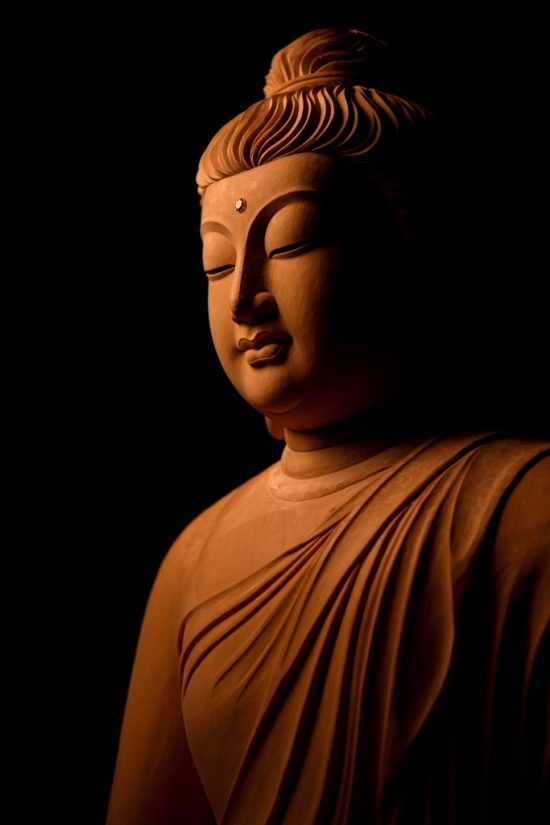
We are what we think. All that we are arises with our thoughts. With our thoughts, we make the world. Peace comes from within. Do not seek it without.
Lord Buddha
Introduction.
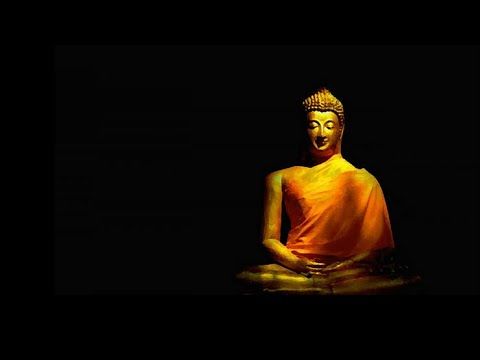
He was a spiritual personality . An ancient teacher and enlightened many . A founder of world religion Buddhism . He was popularly known as Gautama Buddha (also known as Siddhattha Gotama or Siddhārtha Gautama or Buddha Shakyamuni ) .
The Enlightened One who rediscovered an ancient path to release clinging and craving and escape the cycle of birth and rebirth. He taught for around 45 years and built a large following, both monastic and lay. His teaching is based on his insight into the arising of duḥkha (the unsatisfactoriness of clinging to impermanent states and things) and the ending of duhkha—the state called Nibbāna or Nirvana (extinguishing of the three fires).
Buddhism
Buddhism, one of the major religions and philosophical systems of southern and eastern Asia and of the world. Buddha is one of the many epithets of a teacher who lived in northern India sometime between the 6th and the 4th century before the Common Era.
The title buddha was used by a number of religious groups in ancient India and had a range of meanings, but it came to be associated most strongly with the tradition of Buddhism and to mean an enlightened being, one who has awakened from the sleep of ignorance and achieved freedom from suffering.
According to the various traditions of Buddhism, there have been buddhas in the past and there will be buddhas in the future. Some forms of Buddhism hold that there is only one buddha for each historical age; others hold that all beings will eventually become buddhas because they possess the buddha nature (tathagatagarbha).
According to Buddhist doctrine, the universe is the product of karma, the law of the cause and effect of actions, according to which virtuous actions create pleasure in the future and nonvirtuous actions create pain.
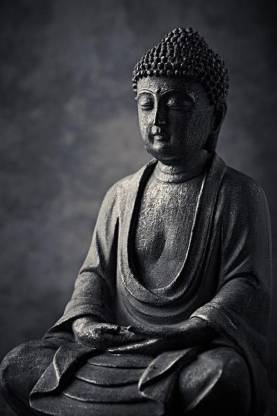
Your work is to discover your world and then with all your heart give yourself to it.
Lord Buddha
History
Gautama Buddha ( born c. 6th–4th century BCE, Lumbini, near Kapilavastu, Shakya republic, Kosala kingdom [now in Nepal]—died, Kusinara, Malla republic, Magadha kingdom [now Kasia, India]).
Buddha is one of the many epithets of a teacher who lived in northern India sometime between the 6th and the 4th century before the Common Era.
Learnings from Gautama Buddha.
1. “Three things cannot be hidden: the sun, the moon and the truth.”
2. “You will not be punished for your anger; you will be punished by your anger.”
3. “You can search throughout the entire universe for someone who is more deserving of your love and affection than you are yourself, and that person is not to be found anywhere. You, yourself, as much as anybody in the entire universe, deserve your love and affection.”
4. “We are shaped by our thoughts; we become what we think. When the mind is pure, joy follows like a shadow that never leaves.”
5. “Believe nothing, no matter where you read it, or who said it, no matter if I have said it, unless it agrees with your own reason and your own common sense.”
No one is perfect in the world but always try to be the better version of yourself. Every person is unique in herself or himself. person’s behaviour, attitude, character, perception, temper, personality traits make him distinctive.
Be the better version of yourself means making an effort to attain your quintessential self. This is something that applies to every human being, because no one is born perfect. all human beings are distinct from each other internally and externally. Extrinsic differences are visible for all of us. Evaluation or measurement of any person can’t be done only on the basis of his or her external quality. internal qualities make them exclusive and special.
I think our efforts and hard work assists us to be a better version of ourselves. There are many people who want to become exactly like renowned or eminent personality . there is nothing wrong with it . Everyone have their own dream which they want to fulfil. We all have different capabilities , potential , abilities and skill those things decide how far you can go and achieve. Always show the world what you really are. Only you know yourself better than anyone. No need to become anyone’s type. You are your own type .
If you’re feeling anxious about self-improvement. confidence , belief in yourself , hard work and perseverance plays very important role in the journey of self improvement. you just need to stick to your goal. Someone else’s life path cannot be your benchmark of success, since they have different desire, dreams, passions and skills. someone else’s journey would be completely dissimilar than yours.
DISCOVER : you have to discover each and everything about you, before starting the journey of self improvement, you need to identify some of the point and evaluate them. Identify the person you want to be ,identify your passion ,area of interest, dream and desire. What is your positive and negative points. what is your expectation , where you want to see yourself in future, identify your area of weaknesses where you need improvement. what kind of activities do enjoy daily, what is your happiest memory ,what impact do you want to make on the world. Answer all questions sincerely and honestly.
You also need to evaluate yourself. Evaluate your capabilities, potential and abilities. Analyze whether your goal is beyond your ability .Compare your potential with your goal. Your target should match with your capabilities. follow smart approach. Make sure that your goal should be specific, measurable, attainable, realistic and time bounded. This approach increase the chances of achieving your goal. Overall you have to explore yourself thoroughly and deeply.
There are a few ways to be a better version of yourself , you have to take some concrete steps to get there.
Let go of limiting beliefs you know and understand yourself better, but do you know who you could be. we hold back by limiting beliefs. Learn to recognize and let go of all limiting beliefs that are holding you back from being the best version of yourself.
Amplify your strengths you should focus more on our strength ,you’ll get even stronger in those areas, becoming more fully yourself along the way. When you amplify your strengths, you’ll crush the obstacles in your path. It’s also important to focus on your strengths when you hit obstacles – which you will inevitably do.
Develop a growth mindset Having a developed growth mindset is essential for converting a person into better version. we all have some areas which require more attention. Successful people deal with it by having a growth mindset. They believe that there are no weaknesses. They focus on areas of improvement , how they can improve and take action to avail any opportunity .
Throw out expectations our beliefs create our world, but unfortunately, sometimes our beliefs are not our own. Sometime we set up target as per the expectations of others. Your vision for who you want to be should be yours , not someone else’s
Be willing to shed your old identity when you determine to find the best of you. You have to voluntarily give up your old identity .people who know your old self might resist due to the feeling of insecurity, But don’t let it become roadblocks of way. willingly accept the changes and embrace a can do attitude.
Tame your fears whenever you anxious or if you are afraid to try anything , prepare your mind for this kind of situation think about the less scary alternatives and possible results .once your mind is accustomed to this process, you will feel less anxious .and you will be able to take right decision in this kind of circumstances .
Set reasonable goals always set reasonable goal that should be achievable. To boost confidence you can divide your goals into some smaller part that would be achievable in short time. Confidence brings you closer to the better version of you.
Create empowering rituals we all know eminent and renowned personalities because they have successfully become the best version of themselves. Any person’s habit assist him or her to grow. Make good habits like eating healthy food, exercise daily, be punctual, meditation etc.
Have compassion for yourself it’s totally fine if you are not whereyou wanted to be , have compassion for yourself. Instead of worrying deeply about setback, do things that make you happy. And then also analyze negative points and replace it with positive once.
Manage yourself effectively Self management includes time management that should be managed effectively and efficiently. To evaluate yourself you can check your progress on quarterly , monthly and yearly basis Effective time management sets you free from stress, leads you to your ideal self and also gives you self gratification. your management would reflect in your work.
Stay positive whatever situation you face in life you have to be positive. its certain to combat many arduous circumstances in life Make your personality resilient to any kind of adversity, also change your perception towards any problem , take it as an opportunity. Positivity works in a tremendous way.
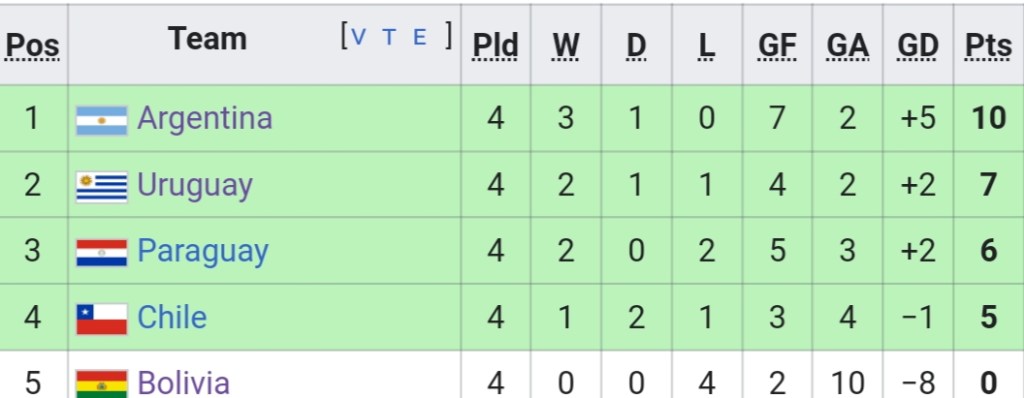
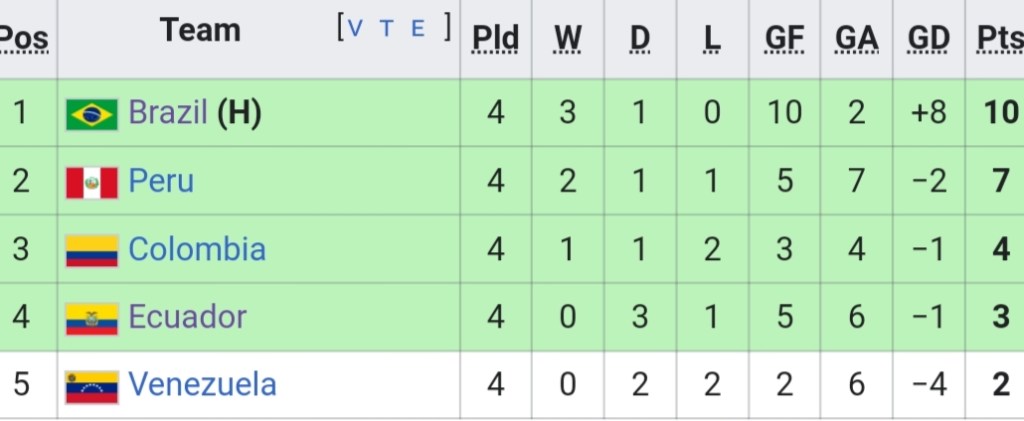
The 47th edition of the international men’s football championship organised by South America’s football ruling body CONMEBOL. The tournament was hosted in Brazil from 13 June to 10 July 2021. Originally the tournament was scheduled to be hosted in Argentina and Colombia from 12June to 12 July but due to the outbreak of COVID 19 the game was relocated in Brazil. The worldwide audience witnesses some amazing matches and some great sportsmanship in the field. On 20 May 2021, Colombia was removed as co-host amid ongoing protests against President Iván Duque Márquez, and Argentina was then removed on 30 May due to COVID-19 issues. CONMEBOL confirmed Brazil as the new host of the tournament.
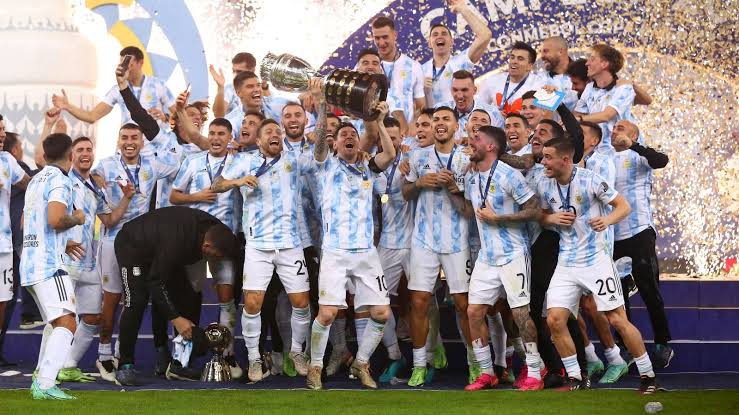
Hosts Brazil were the title holders, having won their ninth title in 2019, which they also hosted. Argentina won their fifteenth title by defeating the host, Brazil, 1–0 in the final. It was Argentina’s first senior title since 1993.Argentina also equalled Uruguay’s record for winning the Copa America title on the most number of occasions.Colombia won the third place.
VENUES.
1 June 2021, the cities of Brasília, Goiânia,Cuiabá and Rio de Janeiro as the hosts of the competition,with the following stadiums for the matches: Maracanã, Mané Garrincha, Pantanal and the Olímpico. On 2 June, the CBF decided to use the Nilton Santos as the second stadium in Rio de Janeiro.The government will also allocate resources in the federal budget to provide the necessary support for the CONMEBOL’s tournament logistics and security. Mané Garrincha will host the opening on 13 June,the final will be in Maracanã on 10 July.
The venues.
MATCH OFFICIALS. On 21 April 2021, CONMEBOL announced a total of 14 referees, 22 assistant referees, 16 video assistant referees (VAR), and 10 support referees appointed for the tournament. This edition will feature the participation of a Spanish refereeing team as part of the memorandum of understanding signed by CONMEBOL and UEFA in February 2020, which included a referee exchange programme.
MASCOT
Pibe
Pibe was selected as the official Mascot for the tournament and it was the 14th Mascot selected as an official Mascot in the history of Copa America
BROADCASTING RIGHTS
The Tournament was broadcasted by different networks all over South America
Territory Broadcaster(s) Argentina TVP TyC Sports Vrio Corp. Bolivia Tigo Sports Unitel Brazil ESPN Fox Sports SBT Chile Canal 13 TNT Sports Vrio Corp. Colombia Caracol Televisión RCN Televisión Vrio Corp. Win Sports Ecuador TC Televisión Vrio Corp. Paraguay SNT Telefuturo Tigo Sports Trece Vrio Corp. Peru América Televisión Vrio Corp. Uruguay Dexary Vrio Corp. Venezuela La TeleTuya VC Sports
THE REST OF THE WORLD WAS ALSO CATERED BY DIFFERENT NETWORK
Albania DigitAlb Australia Optus Sport Balkans Arena Sport Canada RDS TSN Univision Caribbean Fox Sports SportsMax Central America Tigo Sports China CCTV Huya Live Kuaishou PPTV Cuba Tele Rebelde Costa Rica Repretel Teletica Tigo Sports Cyprus PrimeTel Czech Republic Digi Sport Dominican Republic CDN 37 El Salvador Canal 4 (TCS) France L’Équipe Georgia Adjarasport Germany OneFootball Sportdigital Greece Open TV Haiti TNH Honduras Canal 11 Todo Deportes TV Hong Kong i-Cable Hungary ARENA4 Indonesia Indosiar Vidio Italy Eleven Sports Sky Italia Indian subcontinent Sony Pictures Networks Israel Charlton Japan AbemaTV Kazakhstan Qazsport Maldives ICE TV Public Service Media MENA beIN Sports Mexico Fanatiz Sky Nepal DishHome Netherlands Ziggo Sport New Zealand Spark Nordic countries NENT Panama RPC TVMax Poland TVP Portugal Sport TV Russia Okko Sport Telesport Singapore StarHub Slovakia Digi Sport South Korea SPOTV Spain Kosmos CRTVG (Galicia) TV3 (Catalan) Sri Lanka Dialog TV Sub-Saharan Africa Canal Suriname SCCN Tajikistan TV Varzish Thailand PPTV Turkey Haber Global Ukraine MEGOGO United Kingdom BBC United States Fox Sports Univision Vietnam Next Media


























 Eduindex
You must be logged in to post a comment.