
Agriculture

When tillage begins, other arts follow. The farmers, therefore, are the founders of human civilization.”

— Daniel Webster

Introduction

It all started thousand of years ago , when the human civilization came into existence . Agriculture was a key to survival . People were farming for there domestic purpose , not for the others .

As the civilization started to grow accustomed of agriculture , they grew food in surplus that enabled people to live in cities. Plants were independently cultivated in at least 11 regions of the world.

The development of agriculture enabled the human population to grow many times larger than could be sustained by hunting and gathering.

It was the beginning of different civilization in different parts of the World. From those civilizations , one of them was our’s The Indus Valley Civilization . Vedic literature provides some of the earliest written record of agriculture in India. Rigveda hymns , describes plowing, fallowing, irrigation, fruit and vegetable cultivation.

Some of the ancient and historical evidence suggests rice and cotton were cultivated in the Indus Valley.

Agriculture : In India and World today .

India ranks second worldwide in farm outputs. As per 2018, agriculture employed Indian work force and contributed 17–18% to country’s GDP.

In 2016, agriculture and allied sectors like animal husbandry, forestry and fisheries accounted for 15.4% of the GDP (gross domestic product) with about 41.49% of the workforce in 2020.India ranks first in the world with highest net cropped area followed by US and China.The total agriculture commodities export was US $ 3.50 billion in March – June 2020.

Agriculture is the primary source of livelihood for about 58% of India’s population. Share of agriculture and allied sectors in gross value added (GVA) of India at current prices stood at 17.8 % in FY20.

During 2019-20 crop year, food grain production reached a record of 296.65 million tonnes. In 2020-21, Government of India is targeting food grain production of 298 million tonnes.

India is among the 15 leading exporters of agricultural products in the world. Agricultural export from India reached US$ 38.54 billion in FY19 and US$ 35.09 billion in FY20.

Agriculture is an important industry in the United States. The agriculture industry, which includes both crops and livestock, is responsible for producing most of the world’s foods and fabrics. Agriculture impacts so many things that it’s hard to imagine a world without this important industry.

Schemes and Initiatives

Due to the high requirement of agriculture . It is important for the government to take initiatives and provide better infrastructure to the farmers. However , the required level of investment for the development of marketing, storage and cold storage infrastructure is estimated to be huge.

The Indian Council of Agricultural Research (ICAR), established in 1905, was responsible for the search leading to the “Indian Green Revolution” of the 1970s. The Union Minister of Agriculture is the president of the ICAR. The Indian Agricultural Statistics Research Institute develops new techniques for the design of agricultural experiments, analyses data in agriculture, and specialises in statistical techniques for animal and plant breeding.

Schemes by government for Indian agriculture :

  • Dairy Entrepreneurship Development Scheme.
  • Rainfed Area Development Programme (RADP)
  • Paramparagat Krishi Vikas Yojana (PKVY)
  • Pradhan Mantri Krishi Sinchai Yojana (PMKSY)
  • National Agriculture Market (e-NAM)
  • Pradhan Mantri Kisan Maandhan yojana.
  • Pradhan Mantri Fasal Bima Yojana (PMFBY)
  • Kisan Credit Card (KCC) scheme.
  • Pashu Kisan Credit Card Scheme.
  • PM-Kisan Scheme.

Conclusion

Agriculture sector is one of the prominent sector in India as well as all over the world . India is becoming self – sufficient in pulses and other crops .

Gone are the days , when India was unable to provide sufficient amount of food to the citizens . Gone are the days , when people used to think agriculture was not as important as other sectors . Gone are the days , when people used to think less of farmers . And gone are the days , when people were less educated about agriculture.

Farming is a profession of hope.

— Brett Brian

Link

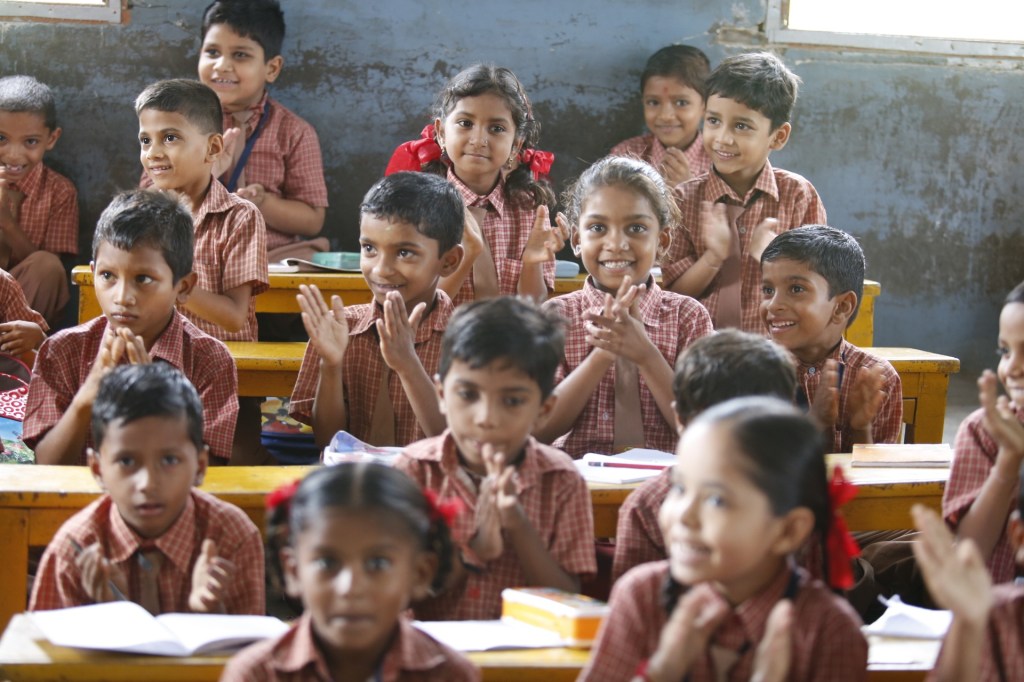
Awareness on Educational Rights

‘Education is a human right which should be accessible to everyone without any discrimination.’

Right to Education (RTE) Act, 2009

The Right to Education Act 2009, also known as the RTE Act 2009, was enacted by the Parliament of India on 4 August 2009. 

Free and compulsory education for children aged between 6-14 years in India under Article 21 (A) of the Constitution of India.

This act came into effect on 1 April 2010 and made India one of the 135 countries to have made education a fundamental right for every child. 

1. Compulsory and free education for all

2. The benchmark mandate

3. Special provisions for special cases

4. Quantity and quality of teachers

5. Zero tolerance against discrimination and harassment

6. Ensuring all-round development of children

7. Improving learning outcomes to minimize detention.

8. Monitoring compliance of RTE norms

9. Right to Education Act is justiciable

10. Creating inclusive spaces for all

Still there is no proper awareness about this among people.

Qualified faculty, including both male and female teachers, close accessibility of schools, proper infrastructure, hygienic toilets, and free meal system must be implemented in all the schools.

Awareness creates interest and interest creates demand. So, let’s show some interest and hope that this demand creates a real, free, and quality education for everyone someday soon.

Laws in India children need to know

Out of tons of subjects and important topics missing from our Indian curriculum, laws are one of the most important.

Here are some laws each and every child needs to be aware of, regardless of all variable factors:

I LAWS AGAINST CHILD LABOUR

Image source: Google | Image by: Nikita Roy 

Children below 14 years of age – can work in family enterprise or entertainment industry as artists with certain conditions

Children between 14-18 years of age- cannot work in any factory, mine or any other hazardous setting, without exception

Children cannot be made to overwork or even work night shifts.

These laws are made clear in article 24 of the Indian constitution and acts that were passed in its pursuance.

II LAW AGAINST SEXUAL OFFENCES

Image source: Google | Image by: Manisha Yadav scroll.in

The Protection of Children from Sexual Offences(POCSO), amendment Bill 2019 protects children below 18 against:

  • Sexual assault against children
  • Child pornography
  • Harassment
  • Drugs being administered to them to bring about early sexual maturity

POCSO aims at making offences against children gender-neutral.

III ENSURING FREE AND COMPULSORY EDUCATION

Image source: Google | Image by: Aprajita Jha

The Right of Children to Free and Compulsory Education Act or Right to Education Act (RTE), 2009, Article 21A of the Indian constitution, ensures free and compulsory education to everyone between 6 to 14 years of age. 25% of seats in all private institutions are reimbursed by the state to which kids are admitted based on economic status or caste-based reservations.

The Right to education of a specially enabled child (under 18 years of age) has separate legislation that is laid down under the Persons with Disability Act.

IV PROHIBITION OF CHILD MARRIAGE

Image source: Google | Image by: OBJECTIVE IAS

Any marriage in which either the boy is under 21 or the girl is under 18, is child marriage.

Prohibition of Child Marriage Act, 2006 serves the following purpose:

  • Prevents child marriages
  • Protects the children involved
  • Prosecutes the offenders

Child marriages, under the above-mentioned act, are cognizable and non-bailable offences. This law also prescribes punishment for performing, conducting and abetting child marriage. Permitting or promoting these marriages by the parents of a child is punishable.

POCSO penalizes penetrative sexual assault on a child by anyone related to the child through marriage

Section 375IPC penalizes sexual acts with a girl below 18 years of age, with or without her consent.

V LAWS AGAINST TRAFFICKING

Image source: Google | Image by: Jessica Gooding

The Trafficking of Persons (Prevention, Protection and Rehabilitation) Bill of 2018 addresses this crime affecting mostly children and women.

This bill addresses:

  • Aggravated trafficking for forced labour
  • Begging
  • Trafficking by administering chemical substances or hormones for the purpose of early sexual maturity
  • Trafficking for marrying, under the ploy of marriage or after marriage.
  • Promotion or facilitation of such crimes

So these were some of the children specific laws other basic laws such as the right to equality, right to life, right against discrimination etc. should also be taught to children.

Here are some of the basic ways we can spread awareness:

  1. Including basic laws and fundamental rights in school textbooks.
  2. Making young parents aware of the laws.
  3. Workshops, seminars, etc. in educational institutions.
  4. Including them in cartoon shows and podcasts for children.

To all the parents reading this, ensure your child is safe and comfortable and make them aware of all the laws to ensure their well-being.

To all the children reading this,

If you’re being hurt in any manner, verbal abuse, beatings, bad touch, not being provided with essentials or absolutely anything that is making you feel uncomfortable, REPORT.

Here are some of the few actions you can take:

Image source: Google | Image by: Sage Day

Tell a trusted adult, your parents, grandparents, school counsellors or teachers. You can also tell a friends’ parent, or any other adult you trust.

Don’t have an adult you trust, don’t worry as there is support available, you can always call childline number 1098.

As a child being harassed, you might be threatened to stay mum, but it’s important you raise your voice.

If you think any of your friends or someone you know is being abused or suffering in any manner, you should tell your parents or teachers.

Child-friendly mechanisms are used in all stages of your case and you don’t ever need to hesitate to report when something unfair is happening to you. You don’t deserve that ordeal.

References:

  1. https://byjus.com/free-ias-prep/right-against-exploitation-articles-23-24/
  2. https://www.firstpost.com/india/child-labour-act-govt-allows-under-14-children-to-work-in-non-hazardous-family-enterprises-2242120.html
  3. https://www.business-standard.com/about/what-is-pocso
  4. http://righttoeducation.in/know-your-rte/about
  5. https://timesofindia.indiatimes.com/blogs/legally-speaking/legal-status-of-child-marriages-in-india/
  6. https://www.thehindu.com/opinion/op-ed/preventing-trafficking/article23325538.ece

Bandwagon Effect

What Is the Bandwagon Effect?

The bandwagon effect is a psychological phenomenon in which people do something primarily because other people are doing it, regardless of their own beliefs, which they may ignore or override. This tendency of people to align their beliefs and behaviors with those of a group is also called a herd mentality. The term “bandwagon effect” originates from politics but has wide implications commonly seen in consumer behavior and investment activities. This phenomenon can be seen during bull markets and the growth of asset bubbles.

Understanding the Bandwagon Effect

The bandwagon effect arises from psychological, sociological, and, to some extent, economic factors. People like to be on the winning team and they like to signal their social identity. Economically, some amount of bandwagon effect can make sense, in that it allows people to economize on the costs of gathering information by relying on the knowledge and opinions of others. The bandwagon effect permeates many aspects of life, from stock markets to clothing trends to sports fandom.

Politics

In politics, the bandwagon effect might cause citizens to vote for the person who appears to have more popular support because they want to belong to the majority. The term “bandwagon” refers to a wagon that carries a band through a parade. During the 19th century, an entertainer named Dan Rice traveled the country campaigning for President Zachary Taylor. Rice’s bandwagon was the centerpiece of his campaign events, and he encouraged those in the crowd to “jump on the bandwagon” and support Taylor. By the early 20th century, bandwagons were commonplace in political campaigns, and “jump on the bandwagon” had become a derogatory term used to describe the social phenomenon of wanting to be part of the majority, even when it means going against one’s principles or beliefs.

Consumer Behavior

Consumers often economize on the cost of gathering information and evaluating the quality of consumer goods by relying on the opinions and purchasing behavior of other consumers. To some extent, this is a beneficial and useful tendency; if other people’s preferences are similar, their consumption decisions are rational, and they have accurate information about the relative quality of available consumer goods, then it makes perfect sense to follow their lead and effectively outsource the cost of gathering information to someone else.

However, this kind of bandwagon effect can create a problem in that it gives every consumer an incentive to free ride on the information and preferences of other consumers. To the extent that it leads to a situation where information regarding consumer products might be underproduced, or produced solely or mostly by marketers, it can be criticized. For example, people might buy a new electronic item because of its popularity, regardless of whether they need it, can afford it, or even really want it.

Bandwagon effects in consumption can also be related to conspicuous consumption, where consumers buy expensive products as a signal of economic status. 

Investment and Finance

Investing and financial markets can be especially vulnerable to bandwagon effects because not only will the same kind of social, psychological, and information-economizing factors occur, but additionally the prices of assets tend to rise as more people jump on the bandwagon. This can create a positive feedback loop of rising prices and increased demand for an asset, related to George Soros’ concept of reflexivity.

For example, during the dotcom bubble of the late 1990s, dozens of tech startups emerged that had no viable business plans, no products or services ready to bring to market, and in many cases, nothing more than a name (usually something tech-sounding with “.com” or “.net” as a suffix). Despite lacking in vision and scope, these companies attracted millions of investment dollars in large part due to the bandwagon effect.

Minimalism

What is Minimalism?

Minimalism is defined as a design or style in which the simplest and fewest elements are used to create the maximum effect. Minimalism had its origins in the arts—with the artwork featuring simple lines, only a few colors, and careful placement of those lines and colors. More recently, it has become representative of a lifestyle that aims to remove clutter from all facets of life. 

Minimalism is all about owning only what adds value and meaning to your life (as well as the lives of the people you care about) and removing the rest. It’s about removing the clutter and using your time and energy for the things that remain. We only have a certain amount of energy, time, and space in our lives. In order to make the most of it, we must be intentional about how we’re living each day.

There are many different approaches to minimalism, but it’s really just a tool to help you prioritize what’s important in your life.

Joshua Becker of Becoming Minimalist offers this definition: “Minimalism is the intentional promotion of the things that bring you joy and the removal of those that do not.” It might be called simple living, tiny living, intentional living, and a myriad of other things—but there is at least one common thread: the idea of curating the things we own to best reflect our priorities and vision for our lives.

If the idea of minimalism sounds intimidating to you or if you’ve seen some images and thought, “that’s a nice idea, but I’d never want to live like that,” don’t worry. You can benefit from applying minimalism in your life whether you live in a tiny home, suburban house, or a mansion. You can use minimalism as a guiding philosophy and customize based on what works best for you.

Common Misconceptions of Minimalism

Contrary to what some people think, there aren’t any actual rules to minimalism. There’s no official board of minimalism to determine whether or not you’re doing minimalism right. Minimalism truly looks different for everyone.

You don’t have to own below a certain number of items. You can still have nice things, and no, you don’t need to get rid of your favorite collection—whether it’s books, shoes, or music. Minimalism doesn’t have to look like white-walled, modern and sparse homes you’ve probably seen in magazines and videos, a common minimalism mistake. Minimalism is also not a one and done project. It is a a continual practice to ensure everything in our lives is working for us in our vision, not against us. Its used over the years to make substantial changes in our careers, home, lifestyle, buying behaviors, etc.

Everyone can benefit from applying the principles of minimalism to their lives. It’s a process of removing distractions and things that no longer add value to our lives.

Why Minimalism Is An Effective Tool For Living An Intentional Life?

In the end, minimalism is less about owning fewer items and more about actively making choices on what kind of things truly matter to you.

We exist in a society that creates false value on owning more stuff and having no time to use them much. The constant pursuit of bigger and better is an endless cycle. There will always be a nicer car to buy, a bigger boat, a larger home, and or a faster private jet. Did you know that there’s a website for billionaires to shop? Yeah. It never ends.

It may seem like an overwhelming challenge at first, but as you untangle the life you built around owning more things, you’ll find the stress disappearing and the world starting to slow down. Those choices you make will begin to build a muscle that will fundamentally change the way you live your life.

JOURNEY TO SANITY -JOURNALING

A sudden change in the external environment surrounding a person might affect ones physical, mental and emotional health. As we all have been facing an unusual situation for past one year, the importance of sanity and peace has increased. It might not possibly change the outer environment but it can certainly change the way a person sees the situation and help them fight the hardships of life.
There is no thumb-rule to living a perfect life. However, there are certain qualities we can attain that might help us make our lives nearly perfect. JOURNALING AND WRITING ONE’S EMOTIONS OUT, is something we have heard since ages. How children make a personal diary and write their emotions out where they feel the need to be heard.
I know it sounds boring to a lot of people but Journaling and letting ones feeling out can reduce a lot of burden from one’s chest (Yes, children can be smarter than adults). In life, we have a lot of things that generally cannot be shared with others and we tend to keep those emotions inside us, hoping that they won’t bother us anymore. But little do people know how suppressed emotions can harm a person’s mind and even manifest itself in form of physical illness.

Looking at our own life from an outside perspective.

So, the first issue with Journaling might be accepting one’s emotions which we have denied for a long-time. I know, that accepting might not change the situation but might help in making peace with it. If not so, then a little writing might not affect a person as it might give you a clearer picture of the issue and maybe possible outcomes or ways to make things better for it.

Probably we have started considering writing our issues out but what about others getting an insight into our hidden lives by reading the journal. For such cases, thanks to technology we have free apps for IOS and Android that keeps a person’s account confidential and provides app locks for security purpose. Since we have checked out two major issues from our list, I guess we might start to consider Journaling.

Additionally, it is win – win situation as there’s no loss. However, there might be some gain in terms of gaining more understanding, compassion and peace.

Do not forget to read more from the series 🙂

JOURNEY TO SANITY – ACCEPTANCE

JOURNEY TO SANITY – MINDFULNESS

JOURNEY TO SANITY – SELF CARE

JOURNEY TO SANITY – DOUBLE STANDARDS

JOURNEY TO SANITY – SUNSHINE 🌤️

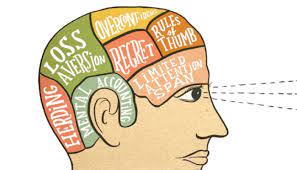
Behavioural Economics

In an ideal world, people would always make optimal decisions that provide them with the greatest benefit and satisfaction. In economics, rational choice theory states that when humans are presented with various options under the conditions of scarcity , they would choose the option that maximizes their individual satisfaction. This theory assumes that people, given their preferences and constraints, are capable of making rational decisions by effectively weighing the costs and benefits of each option available to them. The final decision made will be the best choice for the individual. The rational person has self-control and is unmoved by emotions and external factors and, hence, knows what is best for himself. Alas behavioral economics explains that humans are not rational and are incapable of making good decisions.

Behavioral Economics is the study of psychology as it relates to the economic decision-making processes of individuals and institutions. Behavioral economics draws on psychology and economics to explore why people sometimes make irrational decisions, and why and how their behavior does not follow the predictions of economic models. Decisions such as how much to pay for a cup of coffee, whether to go to graduate school, whether to pursue a healthy lifestyle, how much to contribute towards retirement, etc. are the sorts of decisions that most people make at some point in their lives. Behavioral economics seeks to explain why an individual decided to go for choice A, instead of choice B.

Because humans are emotional and easily distracted beings, they make decisions that are not in their self-interest. For example, according to the rational choice theory, if Charles wants to lose weight and is equipped with information about the number of calories available in each edible product, he will opt only for the food products with minimal calories. Behavioral economics states that even if Charles wants to lose weight and sets his mind on eating healthy food going forward, his end behavior will be subject to cognitive bias, emotions, and social influences. If a commercial on TV advertises a brand of ice cream at an attractive price and quotes that all human beings need 2,000 calories a day to function effectively after all, the mouth-watering ice cream image, price, and seemingly valid statistics may lead Charles to fall into the sweet temptation and fall off of the weight loss bandwagon, showing his lack of self-control.

IS LEARNING A DIFFICULT PROCESS

When it comes to the topic of learning or studies,there arises various queries and comments. Is learning that difficult or a boresome work. Before we blame our Education system or institutes,we need to realise some actual factors. Learning is not a hard job, in fact learning is a delight if you accept it as a friend. It’s just a form of entertainment from which you get to know more. Education is the thing which makes a person complete and everyone must have access to it. Often the process is misunderstood, its aim is  to learn and not merely to crack a exam or to earn a degree. In this case parents and students get worried and anxious about getting into various institutes. They believe that the only way to access it is by joining an institute and spend money on it. It is a misconception,truth is where you study doesn’t matter but how you study is important. The light is within you,the interest to learn new things will help you access it. It’s only lack of attentiveness and sometimes parent’s pressure by which students ends up in coaching centres. A person doesn’t need to go for a special coaching if he has self control and willingness to achieve his goal. It’s just needs a little effort. The process doesn’t eat much of your time but it needs your interest and concentration.

To make the learning process easier and effective one needs to grow interest which can be achieved by active form of learning.

  1. While you are learning a topic first you need to give a thorough reading so that you can form an idea.
  2. You must raise questions and try to explain it yourself. While searching for the answer you get to know more about the topic further you will grow interest in the field.
  3. To have better understanding one needs to explain the concept to other person. You should make sure that you can answer to their queries and make the concept simpler.
  4. The next thing one needs to do is to write down the concept in own words. This makes sure that you never forget the concept.

Apart form these there must be a regular practice. Inorder to follow these,one must have self discipline. If you are able to work in streamlined manner with full dedication you’ll definitely succeed in the process.Once you decide what you want,you need to focus on it without falling for any sort of distraction and must work hard to reach it. Discipline is the important factor for this, if one can practice it there is no need for the person to relay on other and can function independently.

On Translation

Translation is defined as the rendering of something into another language from another language.

The purpose of translation, as opposed to the general conception, is not to make it accessible to a new reader base or cater it to the people of a different region. It must not limit itself to a mere identification of the substitute words. The purpose is not to translate the literal meaning to the targeted language but to convey the intention. The purpose of translation is to express the commonalities that connects the original language and the targeted language. It’s purpose is to express the relationship between languages. Translation has the potential to convey a ‘pure language’ and to harmonize the languages. The languages are interrelated in what they want to express and the translation has to identify it. Language, like all things, is affected by time and translation helps it evolve from time to time. The perfect translation is like a tangent, it has to touch the original text and move away from it infinitely. Translation has to broaden the targeted language by coming in contact with the original language. Translation is an artistic revival of the mode of intention that the original text intends to convey.

Translation is widely misinterpreted as a straightforward process of substituting words in the original text with equivalent words in the targeted language. It is often seen as an imitative process lacking creativity and a process incapable of conveying the intention of the original text. However, it is to be understood that literal translation of a text (especially literary text) renders the translation useless. The role of a translator is not just substituting words but involves creativity and creative decision making. A good translator has to identify the correct intention of the original text and has to rewrite accurately in the targeted language. A proper process of translation has to find the effect the mode of intention has on the targeted language. Thus, it becomes an echo of the original. Literal translation is not effective as literal words might convey a different meaning. A good translator reveals what is hidden in the languages in his language or translation. The process of translation is derivative, ideational and ultimate and the process is unique. The translator must allow the targeted language to be affected by the original language and broaden his own language. Hence, it can be concluded that translation is a creative activity and not a linguistic imitation.

Equivalence in translation means that the targeted text has to recreate the same effect of the source text. It has to try to achieve optimal equivalence. The problem of equivalence arises because of differences between the original language and the targeted language(especially cultural differences). If a translation ignores equivalence, it can lead to misinterpretation and might not convey the intention of the original text. Equivalence should been seen as an important criteria to evaluate a translation. Ignoring equivalence might result in spoiling the essence of the original text and creating the same effect is sometimes as important as conveying the meaning. Since a language represents its people, history, culture etc… it is important to achieve equivalence. Considering equivalence as a parameter will result in retaining the originality of the source language and helps in better communication. It helps in understanding the contextual meaning of a text. So, equivalence is an important factor in translation.

ELON MUSK

Musk is a physicist, entrepreneur, philanthropist and a great deal of an investor. he was born on 28th June, 1971 in Pretoria, South Africa to an African father and a Canadian mother. His childhood was not a bit happy. After his parents divorced he chose to live with his father. the relation of dad and son was eventually embittered; he called it the worst decision of his life. as a child he was bullied also. This rather turned him towards book. He was an avid reader and an independent learner. At the mere age of 12, he created a video game “Blastar” which he sold to a computer magazine.

He completed his bachelor’s in Economics and then again in Physics from University of Pennyslyvania. He left his Master’s in Applied Physics from Standford University just after 2 days to become an entrepreneur.

Foundations

  • ZIP2
  • X.com and PayPal
  • SpaceX

In 1995, Elon and Kimbal (brother) founded web software company. Zip2  provided and licensed an Internet city guide for the newspaper publishing industry, with maps, directions, and yellow pages. It allowed a two-way communication between users and advertisers.

X.com, which was later named as PayPal is one of the oldest online payment company. It was co-founded by Musk in March 1999.  In March 2000, X.com merged with Confinity Inc., a software company based in Silicon Valley. Musk was attracted to Confinity because of its easy payment system. The name was changed to PayPal. eBay bought the company for  US$1.5 billion in 2002.

Towards the coming of 2001, Musk was deeply inclined towards settling life in Mars. He traveled to Moscow to buy refurbished Intercontinental Ballistic missiles (ICBMs) that could send the greenhouse payloads into space. But he was overlooked as a novice. This put the founding stone of SpaceX in 2002. Musk decided to start a company that could build affordable rockets. The company holds expertise in it’s production of reusable thrusters (a small rocket attached to a spacecraft and used to control its attitude or translational motion).

This private company holds enormous achievements; from being the first private company to launch fully liquid-fueled rocket that reached orbit to becoming the largest commercial satellite constellation operator in the world. SpaceX has definitely distinguished itself with the reusable thrusters. On June 17, 2021, it launched GPS III-05 on Flacon 9 which was the second flight of booster B1062, for a ‘national security‘ mission (National security missions had previously only used new boosters).

Investments

“When something is important enough, you do it even if the odds are not in your favour.”

Elon Musk in an interview

An independent learner as he is, he has never believed in degree. He always gives importance to potential. With the same potential he could achieve such milestones, nevertheless having no former degree. Let us take a look at some eye-catching investments of the CEO of SpaceX and Tesla.

TESLA

Tesla is an American based company. it was originally founded by Martin Ebberhard and Marc Tarpenning as Tesla Motors. It is majorly based on electric vehicle and clean energy. Elon came up as an investor when the company was facing crisis in 2008. Later the board decided to appoint him the as CEO, noting his potential. Tesla first built an electric sports car, the Roadster, in 2008. With sales of about 2,500 vehicles, it was the first  serial production of all-electric car to use lithium iron battery cells. This innovation was an instant success. Tesla stock has risen significantly; it became the most valuable carmaker in summer 2020.

HYPERLOOP

In 2013, Musk assigned a dozen engineers from Tesla and SpaceX to establish the conceptual foundations and initial designs of an airplane without wings. It is a concept for ultra-fast inter-city travel using travel pods inside metallic tubes.

THE BORING COMPANY

With an aim to enable rapid point-to-point transportation, Elon’s hopes that Boring Co. Tunnels will revolutionise transport by carrying people in giant, electric underground sleds.

On being asked about the number of tunnels that would fit, he replied “The deepest mines are much deeper than the tallest buildings are tall, so you can..”.

NEURALINK

In 2016, Musk co-founded Neuralink, a neurotechnology startup company to integrate the human brain with AI. Neuralink’s purpose is to create devices that are implanted in the human brain surgically, and with it, one will be able to communicate with machines. Musk has predicted that it would one day give people telepathy, cure paralysis, and enable vision.

STARLINK

Starlink is a low latency, high speed broadband intternet system aimed at providing free internet across the globe. The starlink satellites are a link of 12,000 satellites circling the earth. Starlink satellites are over 60 times closer to Earth than traditional satellites, resulting in lower latency and the ability to support services typically not possible with traditional satellite internet.

Musk’s thoughts are really beyond the world!

OPEN AI

This is a not-for-profit AI system. It aims to develop artificial general intelligence in a way that it is safe and beneficial to humanity. Musk is really concerned about the artificial intelligence technology as the field has not been studied fully yet. He therefore, always emphasizes on proper knowledge before application.


To conclude with the article, we learn an important lesson from Elon Musk’s life up till now;

Execution is greater than innovation.

Elon is just so fearless, even after facing numerous obstacles, he has overcome each of them. He never hesitates in taking risks. This boldness is serving us with unimaginable inventions.

COMMERCIAL BANKS & CREDIT CREATION PROCESS

COMMERCIAL BANKS

A commercial bank is that financial institution which accepts deposits from the people and offers loans for the purpose of consumption or investment.

The rate if interest charged by the commercial banks(for the loans the offer) is higher the the rate of interest paid by them (for the deposits the accept ).The difference between two rates is called ‘spread’, which is the source of profit for the banks.

BASIC FUNCTION OF COMMERCIAL BANKS

Commercial banks perform two basic function:

1.Aceepting deposits

2. Advancing loans.

CREDIT CREATION PROCESS OF COMMERCIAL BANKS

Commercial banks create credit on the basics of their cash reserve .

Let assume all banks in the economy receive cash deposit of RS.10000. The banks are guided by their historical experience that all the depositors never withdraw their deposits at a single time. Thus, the bank find it safe to keep cash reserve of only 10% of their demand deposit. That is RS. 10000.

Now , the banks can safely advance loans of RS.9000 and earned profit. The banks never offer loan on cash so the loan amount again returned back to banking system of an economy. Now the total deposit of bank is RS.10000+RS.9000= RS.19000.

By keeping 10%of secondary deposit that is RS.9000 of 9000 he again lend RS.8100 and this process is going to continue until all cash balance are not going to exhaust.

With the help of credit multiplier a bank can know maximum of credit creation .

K = 1/RR

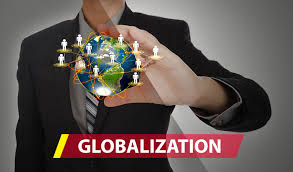
Globalization!

Globalization is the word used to describe the growing interdependence of the world’s economies, cultures, and populations, brought about by cross-border trade in goods and services, technology, and flows of investment, people, and information.

Globalization is driven by the convergence of political, cultural and economic systems that ultimately promote — and often necessitate — increased interaction, integration and dependency amongst nations.

The more that disparate regions of the world become intertwined politically, culturally and economically, the more globalized the world becomes.

These international interactions and dependencies are enabled and accelerated by advances in technology, especially in transportation and telecommunications. In general, money, technology, materials and even people flow more swiftly across national boundaries today than they ever have in the past. The flow of knowledge, ideas and cultures is expediated through Internet communications.

There are three types of globalization:

1. Economic globalization. This type focuses on the unification and integration of international financial markets, as well as multinational corporations that have a significant influence on international markets.
2. Political globalization. This type deals mainly with policies designed to facilitate international trade and commerce. It also deals with the institutions that implement these policies, which can include national governments as well as international institutions, such as the International Monetary Fund and the World Trade Organization.
3. Cultural globalization. This type focuses on the social factors that cause cultures to converge — such as increased ease of communication and transportation, brought about by technology.

Black Holes: What are they exactly?

Don’t be fooled by the name: a black hole isn’t just empty space. Rather, it’s a vast amount of matter compressed into a small space – imagine a star 10 times more massive than the Sun crammed into a sphere the size of New York City. As a result, nothing, not even light, can escape the gravitational field. NASA instruments have created a fresh picture of these strange objects in recent years, which are considered by many to be the most fascinating entities in space.

For millennia, people have imagined an object in space that is so big and thick that light cannot escape it. Einstein’s theory of general relativity, which proved that when a large star dies, it leaves behind a small, dense remnant core, is most famous for predicting black holes. The equations demonstrated that if the core’s mass is greater than three times that of the Sun, gravity will override all other forces, resulting in a black hole.

Telescopes that detect x-rays, light, or other forms of electromagnetic radiation cannot directly observe black holes. However, we can deduce the existence of black holes and study them by observing their effects on adjacent matter. If a black hole passes through a cloud of interstellar matter, for example, it will accrete matter. If a normal star approaches close enough to a black hole, a similar scenario can occur. In this situation, as it pushes the star closer to itself, the black hole has the potential to break it apart. As the attracted matter speeds up and warms up, x-rays are emitted into space. Moreover, recent discoveries provide compelling evidence that black holes have a profound impact on their surroundings, generating intense gamma ray bursts, eating neighboring stars, and playing a large role in the creation of new stars in some locations while halting it in others.

The death of a star and the beginning of a black hole

The remnants of a massive star that dies in a supernova explosion form the majority of black holes in our universe. (Smaller stars decay into dense neutron stars, which lack the mass to confine light.) It can be demonstrated theoretically that no force can protect a star from collapsing under the force of gravity if the entire mass of the star is great enough (about three times the mass of the Sun). However, something unexpected happens when the star collapses. As the star’s surface approaches an imaginary surface known as the “event horizon,” time on the star slows in comparison to time measured by observers far away. When the surface of the star reaches the event horizon, time stops and the star can no longer collapse – it is merely a frozen entity in space.

Collisions between stars can produce even larger black holes. The strong, transient flashes of light known as gamma ray bursts were first spotted by NASA’s Swift telescope shortly after its launch in December 2004. After collecting data from the event’s “afterglow” with Chandra and NASA’s Hubble Space Telescope, researchers concluded that enormous explosions can occur when a black hole and a neutron star meet, forming another black hole.

The sheer size of black holes

Although the basic formation process is well studied and documented, one persistent mystery in black hole research is that they appear to exist on two dramatically different scales. On one hand, there are innumerable black holes formed by the collapse of huge stars. These “stellar mass” black holes are 10 to 24 times as massive as the Sun and can be found all around the Universe. When another star gets close enough to the black hole’s gravity, some of the matter around it is snared, causing x-rays to be emitted. The majority of galactic black holes, however, are extremely difficult to detect. Models estimate that there are as many as ten million to a billion such black holes in the Milky Way alone, based on the number of stars massive enough to form them.

The “supermassive” black holes, which are millions, if not billions, of times as massive as the Sun, are on the other extreme of the size range. Supermassive black holes, according to astronomers, are found at the centre of nearly all major galaxies, including our own Milky Way. Astronomers can spot them by observing the effects they have on neighboring stars and gas.

Astronomers have long held the belief that no mid-sized black holes exist, but r ecent data from Chandra, XMM-Newton, and Hubble, on the other hand, strengthens the case for the existence of mid-sized black holes. A chain reaction of star collisions in compact star clusters leads to the production of extremely massive stars, which eventually collapse to generate intermediate-mass black holes, according to one theory. After then, the star clusters descend to the galaxy’s centre, where the intermediate-mass black holes merge to produce a supermassive black hole.

Be it a baby black-hole or a giant one, these fantastic freely occurring galactic phenomena are still something that modern science needs to understand completely. The fact is that most fascinating things of science take the most time to completely grasp.

Energy Economics

This up and coming career option deals with the consumption and supply of energy on a macroeconomic scale. Energy economists analyse energy markets and financial decisions that affect the global energy market. Energy commodities include gasoline, electricity, natural gas, coal etc. In recent years, natural resources like crude oil and geothermal deposits have been decreasing at an alarming rate and it is imperative that we now conserve these energy resorces and learn to use them efficiently. The objective of energy economics is to use these natural resources without degarding the environment in any way. This can be done because energy can be neither created nor destroyed. Rather, it can only be converted into different forms. Also, energy taken from the physical environment ultimately has to return back. So, energy has to be converted into renewable forms like solar, wind and hydroelectric energy to keep the environmental impact to a minimum.

In economics, energy will always have positive demand no matter what the price becomes. Because of this, energy is seen as an essential good. Meaning some portion of the consumer’s income always goes toward energy. As such, the public policies that affect the global energy market should be taken very seriously. The main concerns that energy economists have to deal with are the demand and supply for each of the main fossil fuels and the competition for these fuels and of course, the impact these fuels have on the environment.

Energy economists can be classified into resource and environmental economics, mineral economics, and energy. Each of these three specialities arose because of different perceived needs and they all have different bases. Resource and environmental economics arose due to a federal government study on natural resource availability. After seeing the problems with availability of natural resources, the US setup Resources for the Future, a research institute that dealt with managing natural resources. Mineral economics came about in the 1930s when mineral extraction issues were being faced. Finally, energy economics as a separate speciality came about in the 1970s when there was a energy crisis and the people needed some organisation that dealt with these kind of issues.

Thus, energy economics is a very viable field to pursue a career in as they are more in demand now than they ever have been.

-Siddhant Kulkarni

A Survivor : The Story of Lakshmi Agarwal

She was just a 15 year old girl . A girl , full of life . But what happened to her .

It’s her story . A story of a survivor.

She was powerful not because she wasn’t scared but because she went on so strongly, despite the fear.”

– Atticus

At the age of 15 , when a girl or a boy makes happy memories and learn about life . She was attacked in the market full of people . She was attacked because she rejected an old jerk of 32 years old.

A 32 year old proposed a marriage proposal to a 15 year old girl , who lives near the neighborhood. She ignored and rejected him and he planned an acid attack .

Her name is Lakshmi Agarwal , she was attacked at the age of 15 in 2005 in New Delhi after rejecting the romantic advances of Naeem Khan . She didn’t inform anyone about the scenario because she believed her parents and society would have blamed her and stopped her study .

After 10 months , Lakshmi was in the market and Naeem asked her again through message about the marriage proposal but she didn’t respond . And in no time , Kamran (Naeem’s older brother ) and his girlfriend attacked her with acid . He was in the motorcycle and his girlfriend Rakhi threw acid on Lakshmi , when Kamran called her name and she looked behind for response.

She fainted on the road and when she regain consciousness she went middle of the road asked for help and met with multiple accidents but no one stopped to help her . She was burning in fire and her skin was melting.

A man named Arun Singh called PCR and told police about the situation . Someone threw water to help her but it turned out opposite and the acid burnt her neck . Arun think it might be late , so he helped her on the backseat of his car , later the seat cover turned into black hole due to the acid .

Arun admitted her in the hospital , called police and her family . Lakshmi went through many surgeries and operations including eye surgery. Four days later Naeem Khan got arrested but was bailed after a month later .

Protests and media attention.

After many protests and media attention Naeem got life imprisonment .

Lakshmi’s story was one of the series in the Hindustan Times. Lakshmi was scared after the attack because most of her face and body parts were not same as before . But she didn’t loose hope ,she fought for justice , asked for help for the victims of acid attacks and pleaded the law for the ban on sale of acid.

Meanwhile government failed to frame policies on acid sale and chemical attacks .

Seriousness is not seen on the part of the government in handling the issue,” the bench headed by Justice RM Lodha.

In 2013 , the plea of Agarwal was heard and later claims that “ Acid is freely available in shops. Our own volunteers have gone and purchased acid easily. In fact, I have myself purchased acid,” she said. “We have launched a new initiative called ‘Shoot Acid’.

After , the law passed by Supreme court . Lakshmi founded NGO named Chhanv Foundation to help acid attack survivors in India.

In 2019, she was honored with the International Women Empowerment Award from the Ministry of Women and Child Development, the Ministry of Drinking Water and Sanitation and UNICEF for her campaign of Stop Acid Sale. In 2014, she received the International Women of Courage award at the hands of First Lady Michelle Obama.

And the movie Chhapaak is based on her life and stars Deepika Padukone in her role.

“And one day she discovered that she was fierce, and strong, and full of fire, and that not even she could hold herself back because her passion burned brighter than her fears.”

– Mark Anthony

Link