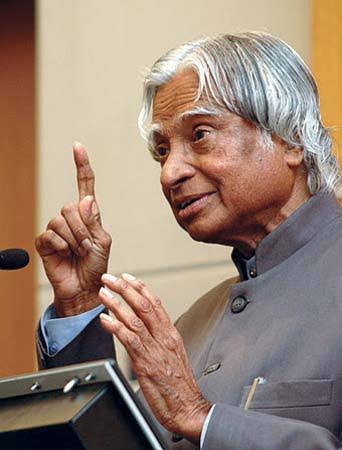
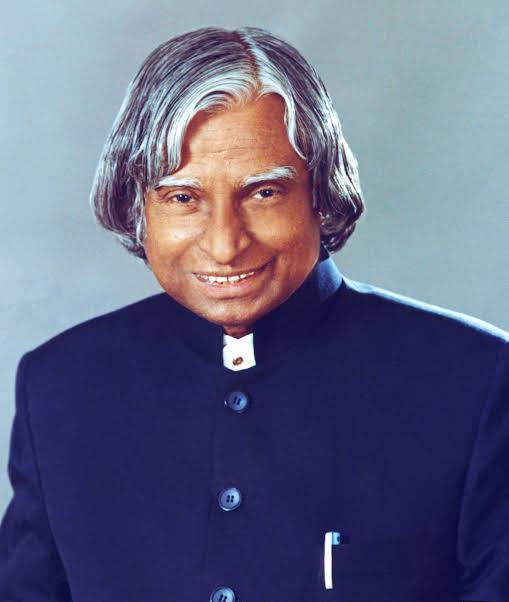
LIFE HISTORY OF APJ ABDUL KALAM

Early life :
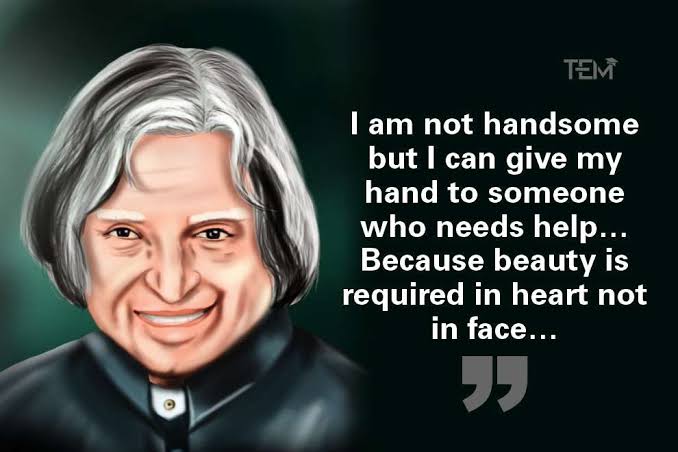
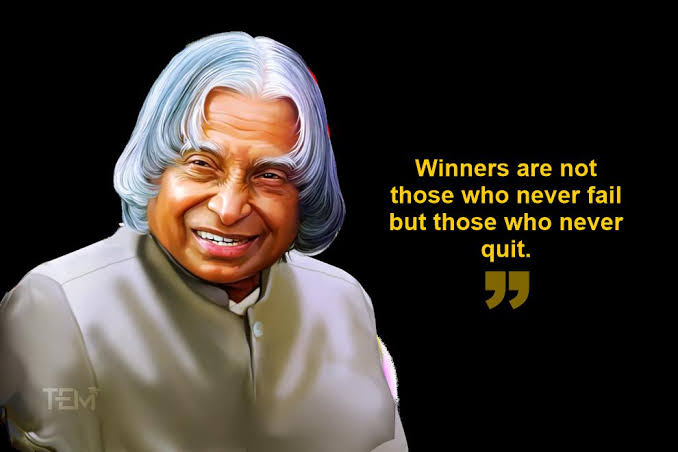
His full name is Abul Pakir Jainulabdeen Abdul Kalam. He was born on 15th October, 1931 in Rameswaram, Madras Presidency, British India which is presently known as Tamil Nadu, India. His father’s name was Jainulabdeen Marakayar who was a boat owner and imam of a local mosque. His mother’s name was Ashiamma. She was a housewife. He was the youngest of four brothers and one sister in his family. Even though his ancestors had numerous properties and were wealthy, they lost most of their fortunes by the 1920s. This is why Kalam was born and grew up during poverty.

Education:
He studied in Schwartz Higher Secondary School. Previously he had average grades but later he was described as a bright and hardworking student who had a strong desire to learn. He went to Saint Joseph’s College, Tiruchirapalli, then affiliated with the University of Madras. He graduated in Physics in 1954. In 1955 he moved to Madras to study Aerospace Engineering in Madras Institute of Technology. The Dean was dissatisfied with his lack of progress in a senior class project and threatened to revoke his scholarship unless the project was finished within the next three days. He met the deadline impressing the Dean who later said to him that he was putting Kalam under stress and was asking him to meet a difficult deadline. He narrowly missed achieving his dream of becoming a higher pilot, as he got ninth position and only eight positions were available in Indian Air force.

Career as a Scientist:
After graduating from Madras Institute of Technology in 1960 he joined the Aeronautical Development Establishment of the Defence Research and Development Organisation. He started his career by designing a small hovercraft but remained unconvinced by his choice of job. He was also a part of the INCOSPAR Committee. In 1969 he was transferred to the India Space Research Organisation (ISRO) where he was the project director of India’s first Satellite Launch Vehicle.

Presidency:
APJ Abdul Kalam served as the 11th President of India, succeeding KR Narayanan. He won the Presidential election held in 2002. His term lasted from 25 July 2002 to 25 July 2007.

Books written by Dr. APJ Abdul Kalam:
He played an important role in the second pokhran nuclear test in 1998. He was also associated with India’s Space Program and missile development program. Therefore, he is also called the “Missile Man” of India. He wrote many books. The name of these books are as follows:-
1. India 2020: A Vision for the New Millennium
Publishing year: 1998
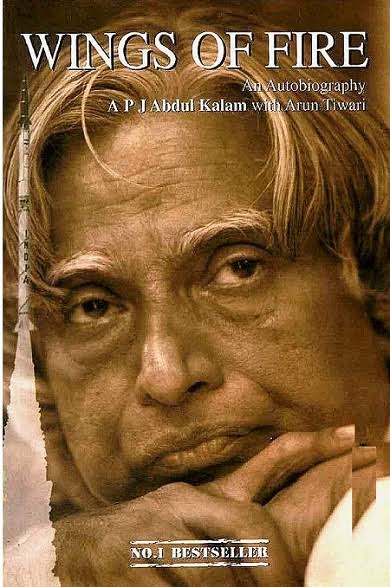
2. Wings of Fire: An Autobiography
Publishing year: 1999
wings-of-fire-biography-kalam
3. Ignited Minds: Unleashing the Power within India
Publishing year: 2002
4. The Luminous Sparks: A Biography in Verse and Colours
Publishing year: 2004
5. Guiding Souls: Dialogues on the Purpose of Life
Publishing year: 2005
Co-author: Arun Tiwari
6. Mission of India: A Vision of Indian Youth
Publishing year: 2005
7. Inspiring Thoughts: Quotation Series
Publishing year: 2007
8. You Are Born to Blossom: Take My Journey Beyond
Publishing year: 2011
Co-author: Arun Tiwari
9. The Scientific India: A Twenty First Century Guide to the World around Us
Publishing year: 2011
Co-author: Y. S. Rajan
10. Failure to Success: Legendary Lives
Publishing year: 2011
Co-author: Arun Tiwari
Ramnath Kovind: 10 facts about 14th President of India
11. Target 3 Billion
Publishing year: 2011
Co-author: ‎Srijan Pal Singh
12. You are Unique: Scale New Heights by Thoughts and Actions
Publishing year: 2012
Co-author: S. Poonam Kohli
13. Turning Points: A Journey through Challenges
Publishing year: 2012
14. Indomitable Spirit
Publishing year: 2013
15. Spirit of India
Publishing year: 2013
16. Thoughts for Change: We Can Do It
Publishing year: 2013
Co-author: A. Sivathanu Pillai
17. My Journey: Transforming Dreams into Actions
Publishing year: 2013
18. Governance for Growth in India
Publishing year: 2014
19. Manifesto for Change
Publishing year: 2014
Co-author: V. Ponraj
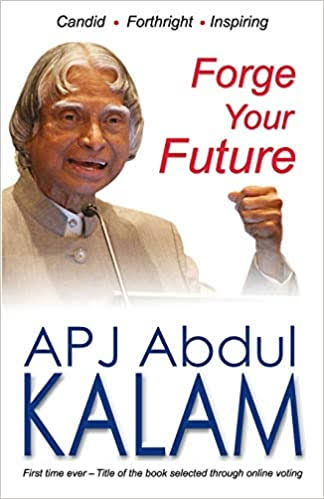
20. Forge Your Future: Candid, Forthright, Inspiring
Publishing year: 2014
21. Beyond 2020: A Vision for Tomorrow’s India
Publishing year: 2014
22. The Guiding Light: A Selection of Quotations from My Favourite Books
Publishing year: 2015
23. Reignited: Scientific Pathways to a Brighter Future
Publishing year: 2015
Co-author: ‎Srijan Pal Singh
24. The Family and the Nation
Publishing year: 2015
Co-author: Acharya Mahapragya
25. Transcendence My Spiritual Experiences
Publishing year: 2015
Co-author: Arun Tiwari

Awards:
He won many awards. The list are as follows:-
1981: Padma Bhushan- Government of India
1990 : Padma Vibhushan- Government of India
1997 : Bharat Ratna- Government of India
1997 : Indira Gandhi Award for National Integration- Government of India
1998 : Veer Savarkar Award- Government of India
2000 : SASTRA Ramanujan Prize- Shanmugha Arts, Science, Technology and Research Academy, India
2013 : Von Brown Award- National Space Society

Death:
Dr. APJ Abdul Kalam breathed his last on 27th July,2015 due to a cardiac arrest while delivering a lecture at th Indian Institute of Management, Shillong.

@track2traininginstitute @track2trainingseminar @edunewsnetwork @pen2prints

On Easements and Essentials of a Valid Easement

The Indian Easements Act, 1882 defines the concept of easement under section 4. According to Section 4 of the Indian Easements Act, 1882, easement is a right of the owner or occupier of the land that enables the person to enjoy the land. The section 4 of the Easements At, 1882 provides the definition of easements as “ a right which the owner or occupier of certain land possesses as such for the beneficial enjoyment of that land, to do and to continue to do something or to prevent and continue to prevent something being done in upon or in respect of certain other land not is own”. In the case of an easement, there is absence of conveyance and this disqualifies it from being called a transfer of property. With easement rights the person gets to enjoy the benefits of the land. In the absence of this right, the owner is not in a position to enjoy the rights of the land.

 The interpretation of easement also includes the right or capacity to act or not refrain the activities or stop the activities or opting to stop the activities continually in a different land, which does not belong to him, so that he can continue to enjoy the land in his ownership. Here, the understanding of the word ‘land’ includes all the things fixed to the earth. The understanding of the term ‘beneficial enjoyment’ is that it means necessities, amenities, convenience and other advantages. 

The Easement Act in India can be dated back to 1882. This allowed all the citizens to exercise the right to an easement. This makes easement come under the bracket of the rights granted to the citizens. It tells that the right of easement allows the possessor of the land or citizens who occupy the land for enjoying the benefits of the land. This ownership allows the people who own or occupy to do the activities or continue to do or to not allow or to opt to continually forbid some activities done on the concerned land that does not belong to the person. Law requires the fulfilment of certain conditions for the qualification of a valid easement. In this context the possessor of the land or the person who is presently occupying the land, according to law, is called as the Dominant Owner. The concerned land for which there are easementary to protect the benefits is called Dominant Heritage.The person or the possessor on whom there is an imposition of the liability is called as the Serviant Owner. The land concerned in the above situation on which there is an imposition of liability is called as Servient Heritage.

Section 5 of the The Indian Easements Act, 1882 deals with the classification of easements. Easements can be classified as continuous and non continuous. Continuous easements can be defined as the ones that can be enjoyed without any human intervention and any action on the part of a human. This is seen as a special quality to the property. Whereas, in discontinuous easements human interventions is necessary to enjoy the right of easement. The right of easement which is discontinuous requires the owner to perform certain actions on the land of the other person. The right of easement can also be classified as apparent or non – apparent. An apparent easement has certain permanent signs to prove its existence. Reasonable foresightedness and thorough examination shows these signs. The other name for this type of easement is express easement. 

Essentials of Easement

Law requires fulfilment of certain conditions for a valid easement. One essential is that there has to be a dominant and a servient heritage. This is an important and mandatory condition. For a person to enjoy or have the right of easement there has to be two properties called dominant and servient heritage. There has to an owner who imposes the liability and another person on whom it is imposed. There has to be a property on which the liability is imposed and a property for the enjoyment of which the liability is imposed. The presence of dominant heritage and servient heritage is the first and a compulsory element of easement. The heritage or property which is vested with certain privileges is called dominant heritage, and the person who owns the property is called the dominant owner. The property being subjected to certain liabilities is called as servient heritage. According to the definition, the possessor for his own benefit exercises the right of easement over another person. These concepts of dominant and servient heritage are opposites and cannot be one. This makes it a must for two completely different properties to exist in order to claim a right of easement. This understanding makes us deduce the requirement of two different owners for the right of easement. The right of easement is not required if the owner is one person. There have to be two people, so that the owner gets to exercise the right of easement over another. 

The goal of right of easement is to benefit the dominant owner. It is to enable him to enjoy the land he owns. Expressed benefits and implied benefits are included in it. The right of easements can be either positive or negative or both. Positive easement right refers to an act through the performance of which the dominant owner gets to exercise over servient owner. Negative easement involves an act performed to prevent something or the act of preventing itself. This involves the restriction or forbidding the servient owner to do certain things. One important thing to be understood here is that the dominant owner does not have the right to ask or legally bind the other person to do something. Another mandatory condition is the adjacent existence of the concerned heritages. The right of easement is also a right in rem. The right of easement is claimable against the entire world. The right of easement is tied to the dominant tenement. The right of easement is also a right of re-aliena. It is a right that exists over a servient tenement and is not applicable to one’s own land. Another mandatory element is separate existence of both these properties. They have to be separate and owned by different people as an easement is not granted or vested on the happening of one property in two properties. 

Section 4 explains this concept using these words “Which is not his own”. In the casw case Radhika Narayan VS. Chandra Devi, the High Court of Delhi said that the beneficial enjoyment should be on the land of a person who is not the owner or possessor of the occupied property for an easement to exist. This is essential for an easement to exist. 

Another essential element is using easement as a status of power of land. It means that the person or dominant should exercise the right of easement as a status of power. It can be exercised only by the owner. As easement is attached to the property, without there is no easement. It is also necessary that the owner uses it for his own beneficial enjoyment. He has to utilise the right of easement to derive beneficial enjoyment from his property. Here the term ‘beneficial enjoyment’ can be interpreted as things like facilities, profits etc. In  the case of Ramchandra VS. Diwakar, the High Court of Madhya Pradesh declared that the easement can be awarded only to the actual owner and not others. 

The right of easement can be enjoyed only by the dominant owner and not by serivitude owner. It is not available to others.Another important essential of easement is that it is tied to the respective property. The right exists only if the property exists. It is related to the property and is not dependent on the person. It is transferred to another person after the transfer of property. Any act committed as a part of his right (owner of the property) is a positive easement. Any action or other things being forbidden by the owner is a negative easement. The right of easement is not only available against the owner of the adjacent land but against everyone. The dominant owner has the right to sue other if they interfere in the beneficial enjoyment of his land. Remedial action is available for such interferences. In the case of Mohammad VS. Anantehari, the High Court of Kerala gave out the essentials of an easement. According to the judgement dominant heritage and servient heritage is necessary, land has to be used for the beneficial enjoyment of the owner, it is necessary that the properties are owned by different people, the owner’s right of action and prevention, easement has to be definite and clear, and finally accommodation of easement along with the dominant property. In Laxman Patnayak VS. Cuttack Municipal Council, the court gave the three essentials of easements. They are: two different kinds of properties namely dominant heritage and serivient heritage have to exist, the properties to be owned by different people, and beneficial enjoyment as the motive to exercise the right of easement by the owner.

POLYTHENE BAGS ARE HARMFUL FOR THE ENVIRONMENT

Introduction

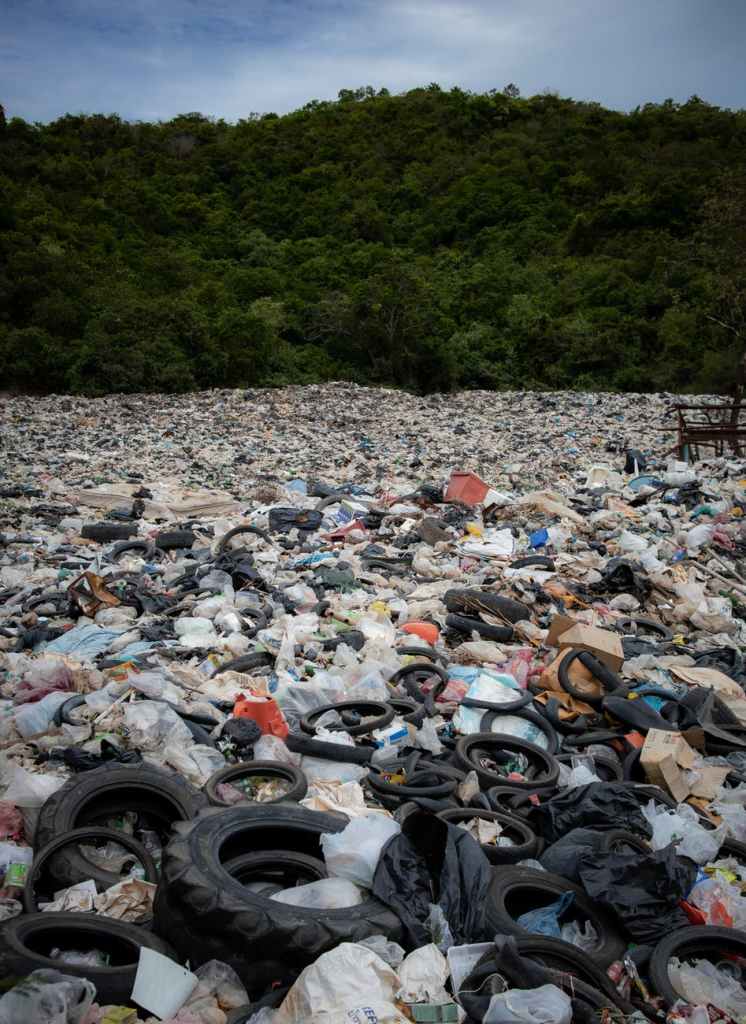
Plastic bags are the main cause of plastic pollution. The pollution which is destroying our environment. To reduce pollution plastic bags must be banned. Humans try to decompose them but it does not decompose instead it leads to air, water as well as soil pollution. It is said that plastic bags are the leading causes of increasing pollution.
For this reason plastic bags are banned in various countries. In spite of knowing the consequences, plastic bags are still used widely in most parts of the world making it harmful for the environment.

Plastic bags are readily available in the market and are used widely.These are popular at the grocery stores, markets, etc because they are handy and are comfortable to carry the grocery items like rice, wheat flour, pulses. Apart from grocery items it is used to carry veggies, fruits etc.

It is available in various sizes; these are quite economical and also easy to carry or use. But the cost for using these bags -is overlooked. These bags are costing us our beautiful environment. The plastic bags that we use in our everyday life are very much harmful to the environment. The actual problem is much more severe than it appears to us.

Plastic bags are destroying the soil making our agricultural lands infertile. It also causes several other serious problems. To ensure a cleaner and greener environment many countries have banned the use of plastic bags. Among those countries, India is one of them.

Our country has banned the use of plastic bags in many states. However, the implementation of this rule hasn’t been proper.

These are still available in the market. The retailers provide goods in these bags, and the shoppers gladly take their stuff in these easy to carry bags. And another reason for this does not have a proper option to replace them.

It is time for each one of us to understand the severity of the issue and stop the use of plastic bags.

Plastic Bags – A Boon or A Bane /A Curse?

Plastic bags are lightweight and can be carried anywhere without much effort.

This may sound like a blessing to us, but in reality it is much more harmful than its uses. They get carried away by the wind and water because of its light weight. They end up landing on the seas and water and pollute them. They get stuck in fences and pollute the environment while getting carried away with the wind.

The material used to make plastic bags is polypropylene. This material makes them durable thus making them last for a longer time. This polypropylene is prepared from natural gas and petroleum. They are non biodegradable in nature.
Green-house gases like Methane Carbon, Monoxide, and Carbon Dioxide are released during the production of various plastics products including plastic bags. This is a significant cause of global warming in the world today.

There is a misconception that recycling is an alternative to the misuse of plastic bags but recycling of plastic products cannot be a good choice because only 5% of the plastic bags can be recycled and the remaining 95% find their way in soil, water and landscape causing pollution. Only 35-40 percent of plastic bags are being recycled and the remaining 60% is not even known where it is gone.

As 60% of the plastic bags are not being traced, the producers are forced to produce more products to meet the needs of people. Everyone considers plastic bags as the most convenient bags to carry loads but it has the most harmful effects on human health.
Synthetic substances present in the polythene bags can disturb the typical working of hormones in the body.Most plastic pieces in the seas, like plastic bags, have a few contaminations, for example, PCBs (polychlorinated biphenyl) together with PAHs (Polycyclic fragrant hydrocarbons), which disturbs the normal function of our hormones.

When the marine creatures eat these synthetic substances, they travel through the food web then later into the people who consume sea animals, especially the fish.

How can we minimize their use?
In many countries across the world plastic bags have been restricted in several nations all over the world.

In many states the Government of India has already restricted the utilization of plastic bags.

Strict measures must be taken to ensure that the use of these bags is stopped. There must be curbs on the production of plastic bags altogether.
Retailers for selling as well as those who are carrying and using plastic bags must be fined.
Good quality plastic available in the market must be made chargeable. This is a good strategy to minimise the use of plastic bags.
To provide a proper alternative of polythene bags is another good strategy. The alternative must be cost efficient and have to be similar in use.

Conclusion
We had often overlooked and underestimated the harmful consequences caused due to plastic bags because we don’t notice the long term effect of these small, easy to carry bags used in our daily life.

People keep on using these bags owing to their convenience. They completely ignore the real fact about these bags that they are harmful for the environment and are a threat to life on earth.

@track2trainingseminar @track2traininginstitute @edunewsnetwork @pen2prints @

CHILD LABOUR

INTRODUCTION
The best phase of human life is childhood. It is the most innocent phase of our life. In this stage human foundations are laid for successful adult life. In this phase we spend the most cosy, carefree and tension free lifestyle. We pass our time by playing, and leading a tensionless fun life. But there are many children who spend their life supporting themselves instead of spending it in a carefree and fun-loving manner because for them learning and playing are scared and tormented. They are controlled & tortured by others.

They want to get out from this dark world but they are forced to stay in this world. This is the true story of the child labour. Child labour is term that we all heard about in news or in movies.

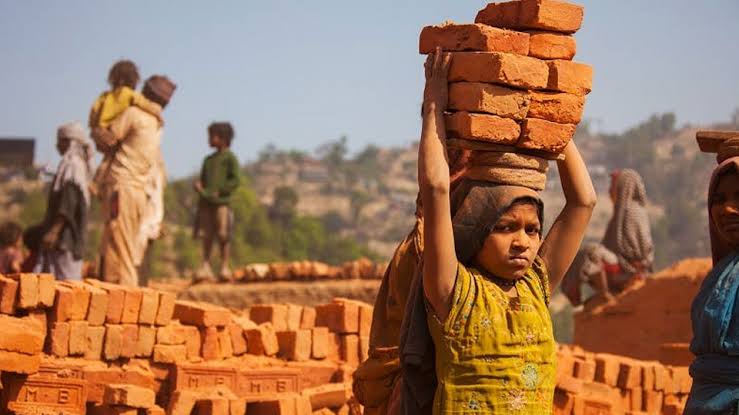
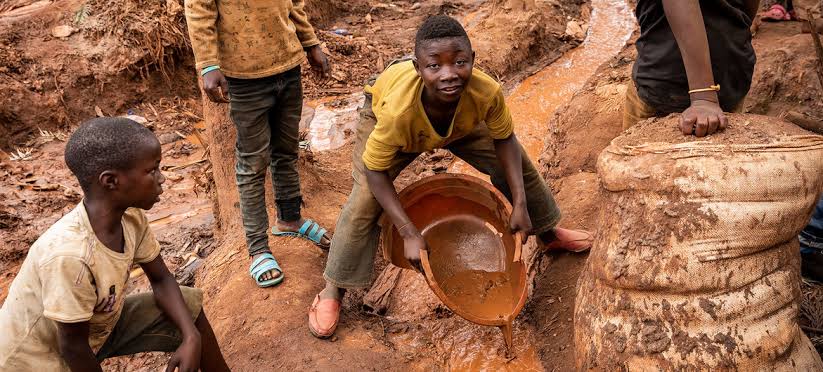
Child labour is a crime. In some underprivileged families who are suffering from poverty, children are forced to work from a very early age to support themselves economically because they expect their kids to take responsibilities of working and provide food for them.
Industries and individuals take the advantage of their poverty and employ children to put them to work at very low payables.

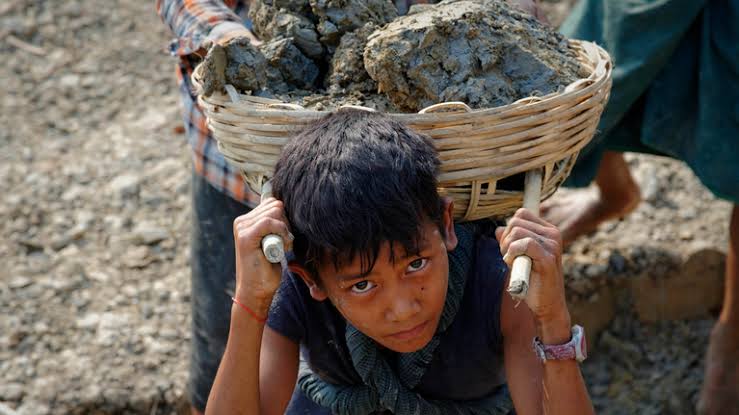
They are forced to work for long hours in dangerous factories. Sometimes they are forced to carry heavy loads that weigh even more than their body weight.

Then comes some individuals’ who hire children in their house for domestic help. They are so rude that when the children make a single mistake they beat them and torture them physically.

Those children do not get proper food to eat or clothes to wear. Sometimes they are made to starve and given worn-out clothes to wear. This is the story of many children who are suffering in this cruel world.
The average age for a child to be appropriate to work is considered 15 years or more, below this age limit won’t be allowed to indulge in any work forcefully.
Child labour takes away the kid’s opportunity of having a normal childhood a proper education and physical and mental wellbeing in some countries. It is illegal, but still now it is practiced in many countries.

CAUSES OF CHILD LABOUR
The main reasons for the ever-growing child labour are poverty and lack of education.
The parents think that their children are money-making machines. To earn more money by getting sympathy from other people they carry infants on the street begging.
Then when they grow up, they take them and eventually sell them to employers.This is a sickness that is rampant across the length and breadth of India
But other than poverty and lack of education, many other reasons are also responsible for child labour.
Firstly, it is common in those countries where unemployment is more than poverty. When the families are unable to earn enough money to support their lifestyle they put the children to work so they can have enough money to survive.
At the same place if the adults
are unemployed. The younger ones have to go to work. When people are illiterate then it is very common that they will send their children to work. This is because being uneducated all they care about is short term results due to which they send children to work even if the earning is less to survive their present . This destroys the future of children. They also remain uneducated and later after growing up when they start their own family they repeat the same thing as their parents did i.e., sending their children to work at an early age.

WORST CONDITION FACED BY CHILD LABOUR

India is in the second-highest number of child labour after Africa.
The worst employment bfir children is bonded child labour which is also known as slavery for lifetime.
Indian Parliament passed an act on the bonded labour system in 1976 but in spite of this act people still keep on practicing this system. It is estimated that almost 10millions children are victims of the bonded child labour. They work as domestic servants in India. Apart from India, almost 55 millions of children are hired across the world for bonded child labour.
The children are sold to money lenders as a payment of the money borrowed by their parents which they failed to return.
Children living in streets, instead of going to school, work in streets as a beggar, or selling flowers. This also is an example of child labour of different category. They are made to stay without eating food for many days so that people feel sad for them and give some.
Nowadays child labour couples who abuses child has become one of the greatest maladies across the world.
Every year the number of child abuse increases especially in the case of the girl child.This usually happens when someone abuses a girl at home, then to hide this fact her family sell her to an employer or money lenders as domestic help or the girl gets married to a man older than her age.

ERADICATION OF CHILD LABOUR
To eradicate child labour we should formulate some efficient solutions which will save our children. The future of other countries dealing with these social issues will also get enhanced. With the help of this one can create several unions that work to prevent child labour solely. It would help the children to indulge in this work and punish those who make them do it.
Stakeholders must take responsibility
Increased access to education
Provide support for children
Improve economic growth
Engage with the Sustainable Development Goals

@track2traininginstitute @track2trainingseminar @edunewsnetwork @hariyaliinsitute

Indian contract act

The term contract is defined as an agreement two or more parties which has a binding nature, in essence, the agreement with legal enforceability is said to be a contract. It creates and defines the duties and obligations of the parties involved.

Agreement = Offer + Acceptance of offer Contract = Agreement + enforceability by law
Contract- An agreement between two or more parties which is enforceable
by law, is known as Contract.


That is if any two parties or more than two parties want to do something together
or exchange something for that purpose of they are entering into any agreement
which is enforceable by law, it is known as Contract.
A promise enforceable by law.

Essential Elements of contract

Agreement : The primary element that creates a contract between parties is an agreement, which is a result of offer and acceptance, that forms consideration for the parties concerned.

Free Consent: Consent of the parties is another important aspect of a contract, which means the parties entering into the contract, must agree upon the same thing in the same sense. The consent of the parties is said to be free when it is not influenced by corecieon undue influence, fraud, misrepresentation and mistake.

Competency: Competency refers to the capacity of the parties to enter into the contract, i.e. he/she has reached the age of maturity, he/she must be of sound mind, and he/she is not disqualified from contracting, as per the law like the alien enemy, foreign sovereigns, etc.

Consideration: It implies the price agreed to be paid for the promisor’s obligation by the promisee. It must be adequate and lawful.

Lawful object: The object for which the contract is created must be lawful, or else it is declared as void.

Not expressly declared as void: The law should not expressly declare the contract as void, such as contract in restraint of marriage, trade or legal proceedings.

Sales of goods act 1930

According to Sec 4(1) of sale of goods act, “A contract of sale of goods
is a contract whereby the seller transfers or agrees to transfer the
property in goods to the buyer for a price”.

Agreement to Sale
The sale of Goods Act defines it as, “where the transfer of the property in the
goods is to take place at a future time or subject to some condition thereafter to be
fulfilled, the contract is called an agreement to sell.”

Unpaid Seller
According to the sales of goods act, 1830 the seller of goods is deemed to be an
unpaid seller when. The whole of the price is not paid or rendered.The bill of exchange or other negotiable instrument has been received as
conditional payment and the condition on which it has was received has not
been fulfilled by reason of the dishonour of the instrument.

Examples
X sold certain goods to Y for Rs. 50,000. Y paid Rs. 40,000 but fails to pay the
balance. X is an unpaid seller.
P sold some goods to R for Rs. 60,000 and received a cheque for a full price. On
presentment the cheque was dishonoured by the bank. P is an unpaid seller.

Difference between Sale & Agreement to sale
When in a contract of sale, the exchange
of goods for money Consideration takes
place immediately, it is known as sale.

In sale, title of goods is transferred to the
buyer with the transfer of goods.
When in a contract of sale the parties to
contract agree to exchange the goods for
a price at a future specified date is known
as Agreement to sale.

Bullying in Schools

“To educate a person in the mind but not in morals is to educate a menace to society.-Theodore Roosevelt

Bullying, an unfortunate human activity, has always been prevalent across human society since Neanderthals. The nerdy, scrawny one may not always be the victim or the big burly be the bully. There is no specific type of someone who gets bullied or the way bullying is done despite what may be generally portrayed in movies and on TV.

The term “bullying” covers a broad, encases a myriad of activities, but sums up to targeting an individual who is unlikely to retaliate under the radar, put in control and domination ,shredding their esteem to pieces and making them feel as insignificant as possible. Bullying is intentional, it’s a power grab, and it is repeated. Even the rude and mean behavior, snide remarks made, veiled hostile joking cloaked in ‘playful teasing’ and “just kidding” if all it does is crush someone from inside out. Bullying behavior cuts across all socio-economic, racial/ethnic, and cultural lines. It is estimated that 20 -30 percent of school-age children are involved in bullying incidents, as either perpetrators or victims.

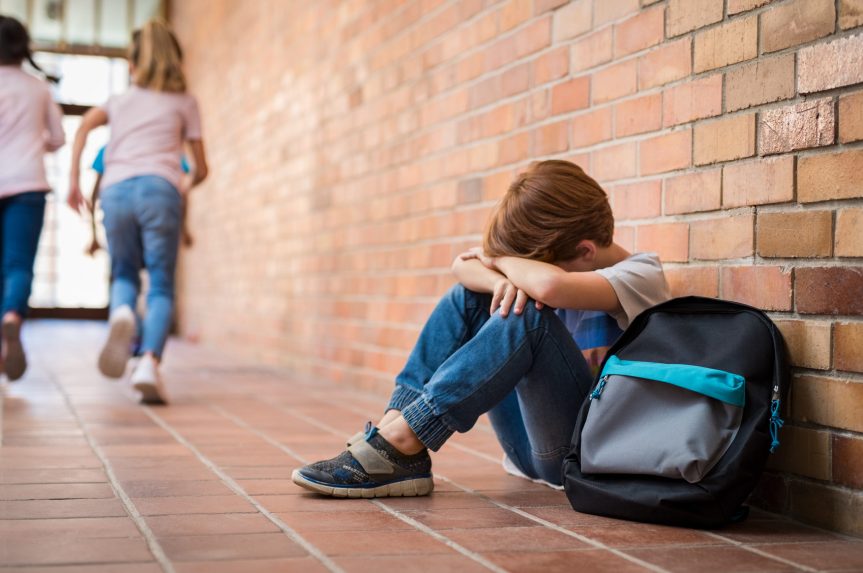
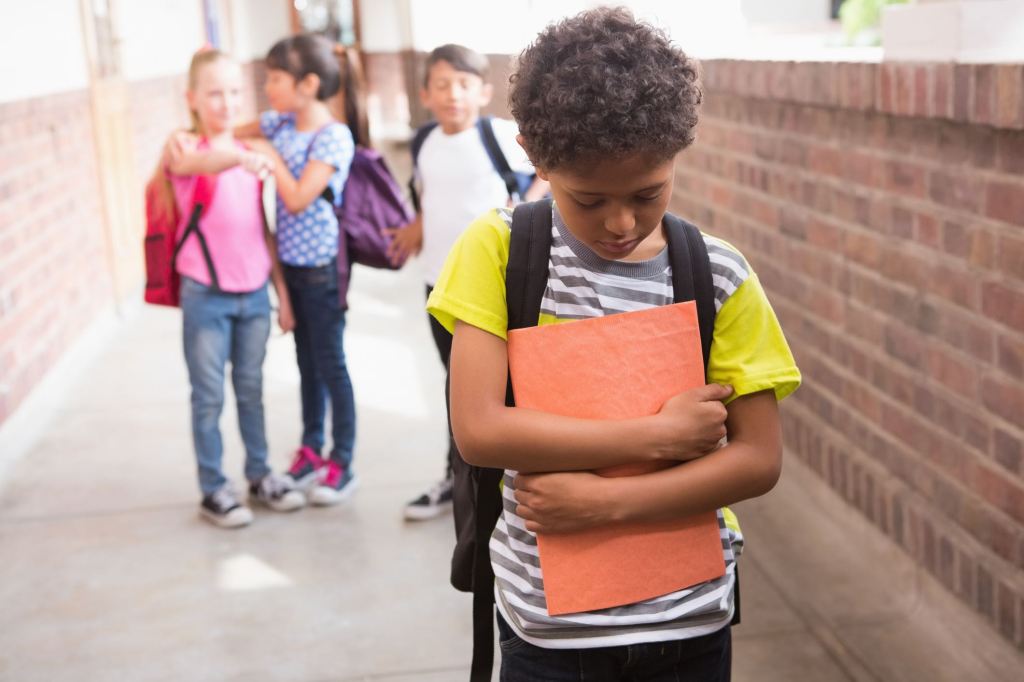
Pupils friends teasing a pupil alone in elementary school

Bullying is a hot button issue for sure, and people feel it is overplayed. This atrocity isn’t an alien to our educational institutions despite the more recent increase in demands to end bullying in schools. As many as 42% of students of Class 4 to 8 and 36% of Class 9 to 12 in India said they are subjected to bullying by peers on school campuses.If all we do is “raise awareness” about bullying rather than teach kids how to respond to it, then guess what happens? They report a lot of bullying but there’s no antidote.

 While the legal and institutional repercussions cause even swing of a fist to get the assaulter land into jail or pending expulsion in schools , bullies have wrestled their way out to vent anger without leaving any physical traces of harm proving it is no cliché that words cause more pain than actions. Aggression that was once channeled into  fist fights and bloodying knuckles and noses has now  dragged on with more silent ways such as exclusion or being talked about behind their backs to make up for the lost thrill of shaming someone.

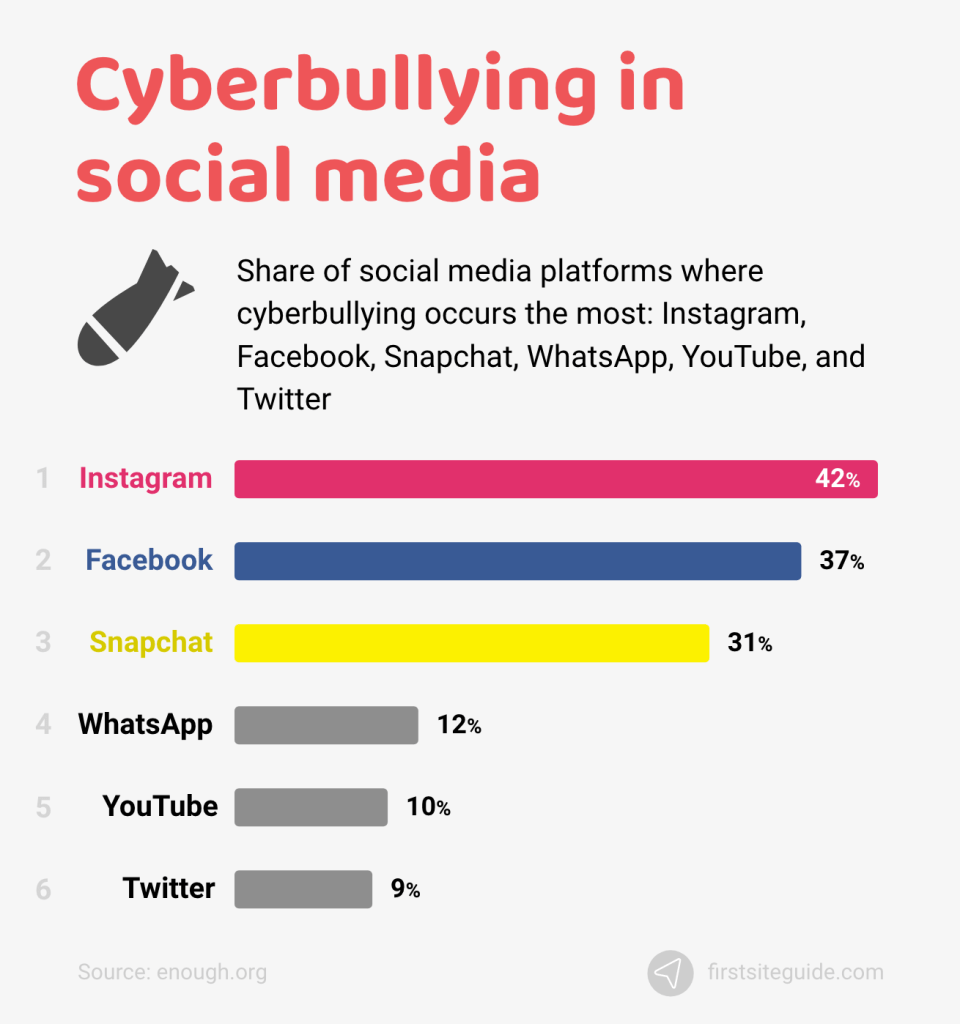
Bullying once stayed within the confines of school property campus and the dread of  being away from home in the morning to attend eight-hour long torture sessions full of squeamish humiliation had always an end for the day upon returning back to homes. But today unfortunately, technology-equipped bullies possess the evil ability to harass their targets  24/7, right at their fingertips. Cyberbullying is making some researchers rethink the definition of what it means to bully.

Gut wrenching,hurtful words once expected between 8 a.m. and 3 p.m. now pierce through anyone’s heart without warning at any hour,just a phone notification away. Even upon leaving school,profanity-spewing texts, and social media comments follow you everywhere like goons, right there,ready to be read and cause the innumerable amount of hurt that has no end to.Bullies may be sitting next to you but prefer to bully through social media for there’s always a wall to hide behind in the cyber world and that way the actions can be viewed by more and they feel a false sense of power and invasion over your personal space.

Today’s problem isn’t  the bullying which we have been familiar with since years, it’s the escape out of the vicious spiral of hate,hurt and harm which is difficult to find. Despite campaigning, bullying itself won’t become extinct, but the safety felt by victims can be increased.

‘Strong people stand up for themselves, but the strongest people stand up for others.’

 It is important that we empower children to morph from a Bystander to Defender. We have to give kids the courage and confidence they need to stand up for others instead of them feeling fear of getting hurt or  feeling powerless against the bully. Stepping in and speaking up is the greatest support a victim could get to tackle the wrong.Parents, school staff, and other adults in the community can help kids prevent bullying by talking about it, building a safe school environment, and creating a community-wide bullying prevention strategy. Parents need to sit down and have a conversation with their kids about bullying and praise them whenever they help someone being bullied.

Cyberbullying shouldn’t lead parents to ban a teen’s social media usage, rather there’s a need to have a room for conversation about how they need to responsible about what they write and post over their feeds and if it hurts anyone’s sentiments and that social media is about interactions with others and not your invitation for people to invade into your privacy.If a child is being bullied, it’s the foremost priority of the parents and teachers to ensure that they know that they don’t feel like a coward or tattletale while talking to someone about it- a trusted friend or another adult to find a solution.

              ” I survived bullying.”

 Let’s work together so no one else has to ever declare this again.

Unite to end bullying!

IMPACT OF HUMAN POPULATION ON ENVIRONMENT

WHAT IS POPULATION
The number of organisms of the same species that live in a particular geographic area at the same time, with the capability of interbreeding is called population.

HUMAN POPULATION:
Human population refers to a collection of humans living in a particular geographic area. The social science that entails the statistical study of human populations is called Demography. Thus, human population is the number of people in a city or town, region, country or world; population is usually determined by a process called census (a process of collecting, analyzing, compiling and publishing data).

HUMAN POPULATION GROWTH The increase in the number of individuals in a population is population growth. Annual global human population growth amounts to around 83 million or
1.1% per year. In 1800 the global population was 1 billion which has rises to 7.9 billion in 2020. The UN projected population to keep growing, and estimated that by the middle of 2030, 2050 and 2100 the total population will rise to 8.6 billion ,9.8 billion and 11.2 billion respectively. But some academics outside the UN have developed human population models that shows the additional downward pressures on population growth. They also suggested that if this happens then the population would peak before 2100.

POPULATION EXPLOSION AND ITS CAUSE:

The sudden increase in population growth in an unmannered way is called population explosion.

Causes of population explosion:
The causes of population explosion are as follows:-
High Birth Rate
The major cause responsible for the rapid growth of population is high birth rate. In India, the birth rate was found to be 45.8 per thousand during 1891-1900 and 25.8 per thousand in 2001, but still it is considered to be substantially high. This shows in spite of the increase in the widespread propaganda of family planning, family welfare programmes and population education campaigns, instead of a decrease in the birth rate it is increasing.
2. Low Death Rate
The death rate in recent years has phenomenally fallen which is another important factor that leads to the rapid increase in population. The death rate in India was about 8.5 per thousand in 2001. But because of the advancement in medical science, dreadful and chronic diseases such as smallpox, cholera, plague, typhoid are no longer dreaded. Better facilities for sanitation and cleanliness, provision of pre-natal and post-natal care has also reduced infant mortality rate.
3. Early Marriage
The practice of early marriage is another important reason for the rapid increase in population in India. The marriage of girls at an early age results in a longer span for reproductive activity and thus leads to an increase in the number of children.
4. Social and Religious reasons
In India,marriage is a compulsory institution as per social norms.so people have to marry.Therefore, people do not hesitate to increase the size of the family as in a joint family everyone takes equal responsibility . Apart from this most people think that it is necessary to give birth to at least one male child so in expectatin of getting a male child, they go on increasing the family size.
5. Poverty
Poverty is another cause of population growth. Children are source for income of the family. So instead of going to school they go to work and thus prove to be an asset for the family. This makes the parents believe that every child born will become an earning member of the family.
6. Standard of living
People whose standard of living is low tend to have more children because an additional child is considered as an asset rather than a liability. Since majority is uneducated and think that every child born will become the earning member of the family they keep on increasing the family size.
7. Illiteracy
Most of the people in India are either illiterate or has the minimum education. This leads them to accept low paying work but fails to support the family resulting poverty. Due to the prevalence of higher rate of illiteracy, there is widespread ignorance in the form of social customs and beliefs like early marriage and preference for a male child. As a result, there is high rate of population growth in the country.

IMPACTS OF POPULATION GROWTH ON ENVIRONMENT: Population growth leads to overconsumption that causes environmental concerns, such as biodiversity loss and climate change, due to resource-intensive human development that exceed planetary boundaries.The impacts of overpopulation and the environment are often interrelated and complex.
Farming impacts
If the population increases the need for food also increases. To meet the need of food intensive farming is done.This includes harmful mechanisation, chemical fertilizers and pesticides that degrades the soil quality causing soil erosion. This also leads to eutrophication that depletes water from oxygen having negative effects. To create new farmland deforestation is done resulting in a negative outcome.
Agriculture is responsible for about 80 percent of deforestation.
Deforestation
Deforestation leads to a reduced ability to capture CO2, resulting in the increase of greenhouse gas problems. Deforestation is also strongly associated with loss of habitat and extinctions.
Human population increase is related to all of these deforestation pressures. The more people we need, the more food, more wood products, and more firewood.
Eutrophication
The main cause of eutrophication is agricultural runoff caused by the presence of excessive nutrients in bodies of water.
Eutrophication causes the dense growth of plant life that consumes oxygen, resulting in the death of aquatic animals. Other major sources of eutrophication are industry and sewage disposal–both related to population growth.
Loss of Freshwater
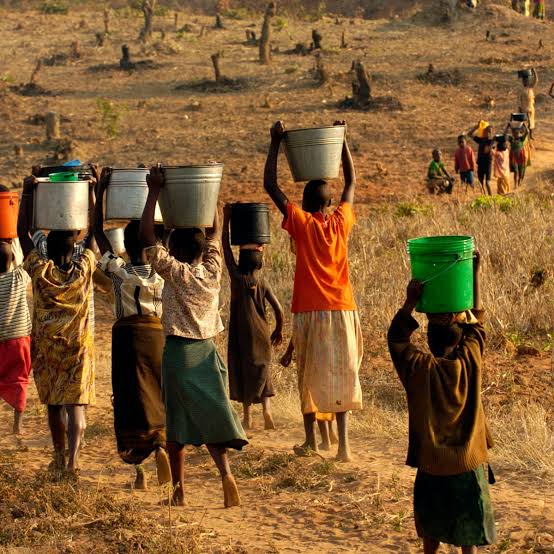
Although there are plenty of water resources,only 2.5 percent of water resources are fresh water, and only a small fraction of it is available as unpolluted for drinking purposes. This is because with the increase of Human population, human waste also increases which pollutes the water making it unsuitable for drinking. Also with the increase in population the need for drinking water increases thus water scarcity also increases.
Global Warming
Human population growth and climate change have grown hand in hand as the use of fossil fuels has exploded to support industrialized societies. More the number of people, the more is the demand for oil, coal, gas, and other energy sources extracted from below the Earth’s surface that spew carbon dioxide (CO2) into the atmosphere when burned, trapping warm air inside like a greenhouse. Most fossil fuel consumption comes from developed countries.It is a sobering thought that most developing nations aspire to similar industrial economies as they experience economic growth, which further escalates CO2 emissions into the atmosphere.

PREVENTION:The population can be controlled by following measures.
A. Social Measure:
Population explosion is a social problem and it is deeply rooted in society.

1. Minimum age of Marriage:
The minimum age of marriage should be raised because fertility depends on age of marriage. Fixed by the law the minimum age of men is 21years found 18 years for women.
2. Raising the Status of Women:
Women should be given opportunities to develop socially and economically.
3. Spread of Education:
The spread of education changes the outlook of people. The educated men will prefer to delay marriage and adopt small family norms. Educated women are health conscious and avoid frequent pregnancies and thus help in lowering birth rate.

4. Adoption:
Some parents who do not have any children are advised to adopt the orphan children. It will be beneficial to orphan children as well as lower the population.

5. Change in Social Outlook:
Social outlook of the people must be changed. Marriage should not be considered as social binding anymore.

6. Social Security:
People should be covered under-social security schemes. So that they do not depend upon others in the event of old age, sickness, unemployment etc. with these facilities they will have no desire for more children.

B. Economic Measures:
1. More employment opportunities:
The first and foremost measure is to raise the employment avenues in rural as well as urban areas.This step can check the population growth.

2. Development of Agriculture and Industry:
If agriculture and industry are properly developed then a large number of people will be employed and when their income increases they would improve their standard of living and adopt small family norms.

3. Standard of Living:
Improved standard of living acts as a deterrent to large family norms. In order to maintain their higher standard of living people prefer to have a small family.

4. Urbanisation:
People in urban areas have a lower birth rate than those living in rural areas. Urbanisation should therefore be encouraged.

C. Other Measures:
1. Late Marriage:
At the age of 30years,marriage should be solemnized. This will reduce the period of reproduction among the females bringing down the birth rate.
2. Self Control:
Self control is a powerful method to control the population. It helps in reducing the birth rate.

3. Family Planning:
This method implies family by choice and not by chance. People can regulate the birth rate by using preventive measures like cheap contraceptive devices for birth control etc.

4. Recreational Facilities:
For many people sex is the only recreation of life which is responsible for a high birt rate. But the birth rate will fall if other recreational activities like cinema, theatre, sports and dance etc are available to the people. As a result of which people will not have sex for recreation reducing in lower birth rate.

5. Publicity:

The communication media like T.V., radio and newspaper will propagate the benefits of the planned family to the uneducated and illiterate persons especially in the rural and backward areas of the country.

6. Incentives:
The govt. can give various types of incentives to the people to adopt birth control measures. This will result in small family norms reducing the birth rate.

7. Employment to Woman:
If women are given employment they will get incentives for their work. This will keep them busy and is a good measure of population control. @track2traininginstitute @track2trainingseminar @edunewsnetwork

Environmental Sociology: The Perspectives of Madhav Gadgil

Introduction 

The aggregate of all animate beings and inanimate objects surrounding a living organism is defined as environment. The environment of a being is an important factor in its growth and development. Throughout history, all human societies have been dependent on the ecosystem for fulfilling their needs and wants. The use of nature, the working of which during the initial stages was considered capricious, has changed significantly over time. From considering himself a part of nature and using natural resources prudently to believing him to be apart from nature and conqueror of nature, man’s interaction with the environment has undergone a drastic shift. 

Environmental sociology is a study of human behaviour towards nature. It focusses on the nature of interaction between man and the ecosystem. Environmental sociology has now solidified its position as an interdisciplinary study.Madhav Gadgil is an India ecologist known for his contribution towards the preservation of ecology in the country. His researches played a major role in identifying Nilgiris as the first biosphere reserve in India. In his works, he focusses on the ecological and historical aspects of man’s interaction with nature and natural resources. His works detail the role of humans in causing environmental destruction and also focusses on prudent use of natural resources by humans. He understands environmental problems through environmental history. His works study the conditions under which humans preserve or exploit natural resources. He analyses human actions that are prudent and profligate in use of natural resources. 

From a sociological point of view, he presents a new framework called ‘modes of resource use’. This framework analyses how different societies interacted with nature and classifies them based on their interactions with nature and natural resources. He finds the need for this classification as the classical Marxian concept of ‘modes of production’ does not consider the realms of natural resources. He also explains the role of environmental factors in conflicts within groups and conflicts between groups. In one of his important works, he focuses on the history of resource use and abuse in post independent India. In this work, he proposes a programmatic agenda for renewal of environment. He proposes another framework on ecological consumption, which classifies human populations based on their consumption of natural resources. He retains the essence of both sociology and ecology in his works by explaining the reciprocal relationship between nature and man and nature’s influence on the relationship between humans. This paper aims to analyse the perspectives of Madhav Gadgil and the theories proposed by him in his works. 

Theory of ‘Modes of Resource Use’

Understanding the shortcomings of Marx’s mode of production when trying to classify societies based on resource use and ecological context, Gadgil introduces the concept of modes of resource use. His major criticisms of Marx’s mode of production are that it ignores natural contexts within which field and factory exist, places less importance on political structures and struggles, its lack of applicability outside Europe, and its little value when interpreting religious, ideological and cultural values of various societies and differences in them. The concept introduced by Gadgil ‘modes of resource use’ includes natural resources in its domain of production. 

According to Gadgil, the concept of modes of resource use helps in finding the characteristics of different modes, and estimates the environmental impact of different modes, and estimates the effects of these modes on the ecosystem and availability of natural resources.

 According to the theory of modes of resource use, human societies are classified into four historical modes. These are gathering(including shifting cultivation), nomadic pastoralism, settled cultivation or agriculture, and industrial mode of society. Each historical mode of society has a set of unique characteristics with respect to the aspects of technology, economy, social organization and ideology. The nature of ecological impact varies from one historical mode to other. In the gathering mode of society, hunting wild animals and gathering of vegetable matter are the main activities for survival. The practices or characteristics of gathering is prevalent even in the time of shifting cultivation. Humans in this mode relied mostly on human muscle power and wood fuel as energy sources. 

For fulling their needs and wants, they are dependent on plants, animals and stones. In this mode, man’s knowledge of nature is narrow and considers the working of nature as capricious. There are no efforts to   dominate nature and believe nature to be beyond man’s control. The capacity to store food and transportation of resources during this period is also limited. The economy is constructed mostly around the resources gathered within small spaces. The range of resources that is possible to transport is limited(shells, peacock feathers and such things). The variety of species, considering restrictions of space, is high. The consumption is based on subsistence needs in this mode. These societies are vulnerable to changes in the availability of resources. Their response is fine tuned adaptations to these conditions. Their abilities to transform resources is also basic and rudimentary. The social organization is restricted to tiny social groups and territories are restricted. Relationship with people from outside these territories are rare. There is no division of labour present in this mode and when there is division of labour it is based on age and sex. Their accessibility to resources are restricted due to spatial restrictions and lack of transport. There are no ideas of personal property and nobody is in a position to dominate others. In this mode, man is considered as one of other beings in the community. There are several practices like restriction of fishing in some ponds in the name of sacred ponds that aimed at sustainable resource. The impact of human activities on environment is minimal in this period. 

The next mode of society is nomadic pastoralism. In this mode, humans additionally start using animal power as a source of energy. Societies are dependent on plant and animal materiel for satisfying their material requirements. Domestic animals served as meat supply on hooves. Their ability to store resource is better than gatherers. They use domestic animals for transport purposes. Since they travel from one locality to another, their resource base is extensive. Their rate of consumption is moderate. They do hold the beliefs of gatherers and started using natural resource without the prudence of hunters and gatherers. 

The mode of society slowly progressed to settled cultivation. This became possible after the development of farming or agricultural techniques and animal husbandry. In this mode, societies begin to use human and animal muscle power, fuelwood, coal and water power to certain extent. For fulfilling material requirements, they are dependent on stone, plant, animal and some metals. Their ability to store resource is high compared to previous modes. This is made possible by grains and domestic animals. Domestic animals are used for transportation purposes. Their ability to transform resources sees a shift as these societies begin involving in the practice of metal making and weaving. Their accessibility to resources is moderate and higher compared to gatherer mode of society. Some elites begin dominating others and notions of personal property start emerging during this phase. The rate of consumption by elites is higher than other. Overall consumption, however, remains moderate during this phase. 

Invention of tools leads to the evolution of much advanced society called industrial mode of society. The sources of energy used is extended to fossil fuels, hydro-electricity, nuclear power, fuelwood, and human and muscle power. The reliance on human and animal power is much less compared to previous modes. There is an extensive use of resources for fulfilling material requirements. Societies use metals and synthetic materials extensively for fulfilling material requirements. The ability to store is very high as  even perishable goods(like meat and fruits) are stored for longer durations. The usage of fossil fuels as an energy source makes transportation over large distances possible. The time of transporting is also drastically reduced. The ability to transform resources is extensive in this mode. There is no spatial or territorial restriction for accessibility of resources. Resources through world are transported to all parts and consumed. The rate of consumption is also high. Societies consume enormous quantities of resources. Division of labour is considerable is based on knowledge and skills. The extent of kinship and attachment to societies are also weak. Transactions, unlike previous societies, are codified with legal sanctions. The sense of personal property is high. Resources are owned by individual, states and corporates. Community ownership is delegitimized in this mode of society. 

In this mode, man begins to dominate nature and is seen as apart from nature. The earlier modes of resource use followed practices, in the name of religion or customs, that were ecologically prudent. There were several social practices which guided the society towards sustainable use of resources. For example, gatherer societies and other communities followed practices like sacred groves and sacred ponds that prohibited usage of certain resources keeping in mind the sustainability of resources. There are several practices that regulated their behaviour. Man is the only who is cognitively able to exercise prudence in the use of nature and practice restraints. Old practices, studied by several anthropologists and ethnobiologist, have been proved to be beneficial in the long run. These practices involve different types of restrictions on harvesting, quantity, locality, season, and life history stages. There are also certain practices that do not contribute to sustainable resource use. These practices were guided by social beliefs and customs and may have been developed on the basis of their experience. In the modern industrial mode, such practices are not followed and practices guided by science have had several consequences. It is difficult to ascertain precise prescriptions, but simple methods could be followed to avoid resource collapse.


education ministry releases guidelines for parents to facilitate children’s home-based learning

The Union Education Ministry on Saturday released guidelines for parents and caregivers on how to provide support to children and facilitate their home-based learning at a time when schools are closed due to COVID-19 pandemic.

The guidelines emphasized the need for parents to create a safe, engaging and positive learning environment for children, have realistic expectations from them, take care of their health and ensure a healthy diet, and also have fun, a statement from the ministry said.

In a tweet, Union Education Minister Ramesh Pokhriyal ‘Nishank’ said the ‘Guidelines for parent participation in home-based learning during school closure and beyond’ have been drafted “for parents and caregivers to provide information on the ‘why’, ‘what’ and ‘how-to’ of participation in supporting children during school closure, irrespective of literacy levels”.

“I strongly feel that a home is the first school and parents are the first teachers. In this pandemic, the role of parents is pivotal in the growth and learning of children,” he tweeted.

These guidelines are meant not only for parents but also for caregivers, other family members, grandparents, community members and other siblings in promoting the welfare of children.

The activities suggested in the guidelines are in accordance with the various stages of school education under National Education Policy 2020, the statement by the ministry said. Age-appropriate art activities have been categorized on basis of 5+3+3+4 system such as Foundation Stage(age 3 to 8years); Middle Stage(age 11 to 14 years); and secondary stage: From Adolescent to Adult (age 14-18 years). The activities are simple and suggestive, which can be adapted and adopted to local needs and contexts. The guidelines appreciate the role of art as a therapy for children under stress or trauma, the statement said.

“They (guidelines) also lay significance on improving children’s learning by monitoring and addressing their learning gaps.” Collaboration of parents with teachers in documenting and reflecting on the progress of children in their learning is important for both teachers and parents, the statement by the Education Ministry said. The guidelines also advise schools to involve parents by providing information and ideas on helping students with homework and other curriculum-related activities, decisions, planning and involving them in school decisions, it said.

Resources have been made available for children with special needs which may be explored by parents. A separate chapter has been included in the guidelines for supporting parents with low or no literacy. Schools, teachers and volunteers may take suggestive steps to provide support to parents who are not quite literate, the statement said.  

Sustainable development and its pillars

Sustainable development is development that meets the needs of the present without compromising the ability of future generations to meet their own needs….The concept of sustainable development was introduced in early 1980’s (in particular through the publication of the World Conservation Strategy by IUCN, UNEP and WWF, 1980), in order to reconcile conservation and development objectives.

Sustainable development consists of a long-term, integrated approach to developing and achieving a healthy community by jointly addressing economic, environmental, and social issues, whilst avoiding the over consumption of key natural resources.

The 3 pillars of sustainable development is
Social development, economic development,environmental protection.

Economic Development
It requires that a business or country uses its resources efficiently and responsibly so that it can operate in a sustainable manner to consistently produce an operational profit.

Social Sustainability Social sustainability is the ability of society, or any social system, to persistently achieve a good social well being. Achieving social sustainability ensures that the social well being of a country, an organisation, or a community can be maintained in the long term.

Environmental Sustainability Environmental sustainability means that we are living within the means of our natural resources.To live in true environmental sustainability, we need to ensure that we are consuming our natural resources, such as materials, energy fuels, land, water…etc, at a sustainable rate. Some resources are more abundant than others and therefore we need to consider material scarcity, the damage to environment from extraction of these materials and if the resource can be kept within Circular Economy principles.

Ordinance Making Power of the President

One of the important provisions in the Constitution of India is regarding the ordinance making power of the executive. The nature of the Indian Constitution can be called exhaustive citing the example of the above provision. The President is the Head of the State acting on the advice of the Council of Ministers. He can exercise the executive powers allotted to him either himself or through subordinates. The legislative power to promulgate ordinances is granted to the President under Article 123. The Indian Constitution clearly differentiates the powers and functions of the Parliament and the State Legislatures, providing no room for each to encroach upon the powers and functions of the other, in accordance with the theory of separation of power. To achieve the separation of power, the government is divided into three branches, namely The Legislative, The Executive, and The Judiciary. The powers and functions of these organs are sufficiently differentiated. The motive is to ensure a fair democracy through checks and balances.   

     The President is empowered to pass ordinances when the circumstances make it necessary. It is passed by the President to deal with emergency situations or unforeseen circumstances. These have the same legal status as that of laws passed by the Parliament. This power helps the government in urgent times. For example, the recent   Epidemic Act 1897 (Amendment) Act Ordinance, 2020. Any attack or abetment of violence against healthcare workers was made an offence. This paper explores the nature of ordinance making power, whether it is subject to judicial review, its usage over the years, its limitations and trends in promulgation of ordinances. This paper aims to critically analyse the power of ordinance promulgation granted to the executive by the Constitution.

Ordinance Making Power of the President

The ordinance making power of the President is explained under Article 123. Though India follows the theory of separation of powers and powers and functions are sufficiently differentiated, it is not incorporated in its strictest sense. The ordinance making power can be seen as an overlapping of executive and legislative. Article 123 explains the ordinance making power as follows:

(1) If at any time, except when both Houses of Parliament are in session, the President is satisfied that circumstances exist which render it necessary for him to take immediate action, he may promulgate such Ordinance as the circumstances appear to him to require

(2) An Ordinance promulgated under this article shall have the same force and effect as an Act of Parliament, but every such Ordinance

(a) shall be laid before both House of Parliament and shall cease to operate at the expiration of six weeks from the reassemble of Parliament, or, if before the expiration of that period resolutions disapproving it are passed by both Houses, upon the passing of the second of those resolutions; and

(b) may be withdrawn at any time by the President Explanation Where the Houses of Parliament are summoned to reassemble on different dates, the period of six weeks shall be reckoned from the later of those dates for the purposes of this clause

(3) If and so far as an Ordinance under this article makes any provision which Parliament would not under this Constitution be competent to enact, it shall be void.

This allows the President to promulgate ordinances during an emergency when the Parliament is not in session. The President can pass ordinances if one house is not in session. The nature of the ordinances is temporary. These ordinances have the legal force similar to any law passed by the legislation. Similarly, the Governor of an Indian state is empowered to pass laws under Article 213. Article 213 deals with the law making powers of the Governor of a state. These laws can be promulgated only when the legislative assembly is not in session and are temporary in nature. In the cases of states following bicameral form of legislature, the Governor can pass an ordinance if any one house is not in session. According to the Constitution, the ordinance may have a retrospective effect and may be passed to repeal other acts and ordinances. This power, however, cannot be used to amend the Constitution. This granting of legislative power was seen as a necessity during the drafting of the Constitution and the opinion is shared by many other experts and jurists. The ordinance making power of the President was justified by Dr. Ambedkar in the constituent assembly. 

“It is not difficult to imagine cases where the powers conferred by the ordinary law existing at any particular moment may be deficient to deal with a situation which may suddenly and immediately arise, what is the executive to do. The executive has got a new situation arisen, which it must deal with. Ex hypothesi it has not got the power to deal with that in the existing code of law. The emergency must be dealt with and it seems to me that the only solution is to confer upon the President the power to promulgate a law which will enable the executive to deal with that particular situation because it cannot resort to the ordinary process of law because, again ex hypothesi , the legislature is not in session. Therefore it seems to me that fundamentally there is no objection to the provisions contained in article 102.” 

To this, B. N. Rau observed that:

“The ordinance-making power has been the subject of greater criticism under the present Constitution. It must, however, be pointed out that the circumstances may exist where the immediate promulgation of a law is absolutely necessary and there is no time in which to summon the Union Parliament. . . .The President who is elected by the two Houses of Parliament and who was normally to act on the advice of ministers responsible to Parliament is not at all likely to abuse any ordinance-making power with which he may be invested.”

The article concerning ordinance making power drew inspiration from the previous The Government of India Act, 1935. Another appropriate could not be thought of at that time.

The Government of India Act, 1935 had two provisions dealing with the ordinance making power of the Governor General. According to Section 42 of this act, the Governor General had the power to introduce ordinances when the legislature was not in function. The Governor General could promulgate ordinances on his own or by following the advice of the ministers. The consultation with ministers was mandatory. According to Section 43 of this act, the Governor General could issue ordinances to carry out his functions or under the act which required him to act in his discretion. This can be seen as a parallel legislative power with a lifespan of only six months. The lifespan could be extended with the consent of the Crown. This act was also a source for the ordinance making power provided in the Indian constitution. In India, this provision has been met with mixed response. While some have supported the power citing emergency as a reason, others opposing the provision have reasoned that the power is undemocratic and an encroachment upon the legislative. 

The power vested in the executive is not without limitations. The president is empowered to pass legislation only in certain scenarios. He can pass legislations only when the Parliament is not in session. He can pass legislations even if one house is not in session. The President is allowed to legislation only when situation demands immediate action. Another necessary element, according to the Constitution, is that the President should be satisfied as to the circumstances that necessitate action. The legislation thus passed has to be approved within the prescribed time limit of six weeks after the reassembling of the Houses of the Parliament.  

Race: today’s generation!

As I’m going to start this blog I would love to say everyone is perfect in their own personality, in their own perspective, in their own decisions. So it’s been a long time I had passed my school and now persuing my passion (not a course) ‘my passion’ so let me tell what is the main topic I’m talking about but firstly I’ll tell you a story which is real, so I was studying in 10th and one of my closest friend I can’t revel his name but his intrest was in painting and then he was confused that ‘bro what should I take as a stream in 11th’ so I told him what you love or in which you have your interest, but he said my father is telling me to take PCM (science, math) and he wants to take humanity but he was confused because his dad said if you’ll took humanity then there’s no future! And his dad told him take science-maths and then you cout prepare for IIT and he took science-math and just because he want to become a engineer and want to earn money! And he wasn’t happy as he wasn’t able to paint because of his studies and he wasn’t that good in studies so he was trying very hard but I said why I mean if you love to paint and you wanted to take humanity as your stream then did you took science and math just for the sake of money and even you don’t have intrest in science maths then why and he said because of my father. And this is my experience ladies and gentlemen he took science and maths he studied very hard and gave the exam for jee and he failed because he wasn’t having that intrest in PCM. And on the other hand he haven’t painted for more than a year and when he gave his exam and came back home he took his brush and painted and I’ll that art was one of the best of my friend as he hasn’t painted for a while which is more than a year but,

As i said ‘IF YOU HAVE INTREST IN A PARTICULAR FIELD, YOU’LL DEFINITELY WIN’ but if you don’t have intrest in that particular field you’ll definitely lose doesn’t matter who much you work upon it ‘HAVING INTREST IS THE TOP FACTOR’

For example, if you don’t love to cook and your mom said son just cook tonight’s dinner and you know how to cook but you hate it than Tonight’s dinner would be for the dustbin. I’m damn sure! I don’t love to paint and if you’ll say please make my sketch. Then I don’t know what I’ll make but after making that Sketch you’ll disown me I know.

But why you guys just want yurselves to put yur souls, your hard-work, your precious time and obviously money, in those things where you don’t have any Intrest in. My today’s generation just want to become a engineer, doctor, or a IAS.

Okay so, let’s take an assumption, if my friend was passed in that jee exam and he was selected in a college and becomes an engineer and was doing his job properly but what do you think he used to be happy and prosperous okay if you was at his place were you used to feel good and happy. Guys invest yourselves in those materials where you’re good at and where you’ll love your thing. Its not about that we should not listen to our parents but sometimes we should listen to ourselves too.

ON SOCIAL RESEARCH

The Nature of Social Research 

Research means a reliable systematic approach that is approved by a community of social researchers, to extend our knowledge of the outside world. It aims to create new ideas and understandings.The fact that social research involves people at both ends is what differentiates it from other kinds of research. The research object is a person(single person or a group or society) in social research, and there is an interaction between the person and the object. A proper research design(explaining the research problem) has to consider this fact carefully to be accurate. The one advantage of this fact is the researcher’s prior insight of the research object. This type of research is used in various disciplines such as psychology, sociology, history, politics, accountancy, nursing, medicine, and subjects involving people. Design is the key to systematic approach, and it has to start with a research question. Strategy and method has to be decided based on the research question. 

Research Strategy

According to Catherine Hakim, design deals with aims and plans within practical constraints such as time, money and staff availability. It is also about style(different styles that researchers prefer and each produces a different result. Two philosophies of research are positivist approach and interpretive approach. Positivist approach relies on scientific evidence and tries to emulate or copy the methods of natural sciences. It uses experiments and survey. It is scientific, hypothetico-deductive(deducing consequences from policies that can be tested), quantitative, and extensive. Interpretive approach is concerned more about language and meanings, and interpreting the world by studying humans as social animals. It does not treat beings independently rather studies human experiences and contexts. It is ethnographic, explanatory, hermeneutic(works by humans that can be interpreted), qualitative, and intensive. It uses case study, participant observation, and interviews. In real world, the research is either positivist or interpretive. However, one can collect a mixture of both data. 

Types of Research Strategies

Survey: It is collection of information in standardized form from groups of people. Here, a sample of population is studied to determine its characteristics. Then, it is inferred from the study that the population has similar characteristics. One can either select samples from known population or survey everyone on a smaller scale. Data from each individual is collected through a questionnaire or structured interview(same for all). The practice of distributing questionnaires in person or web questionairres are common methods, and however, the usage of questionairres is not compulsory. Examples include studying diet habits of teenagers, taste preference surveys etc.

Case Study: It involves complete observation of a social unit. It is usually an in depth study about a single complex object, or of a small number of related objects. It emphasizes on individual events. Robert Yin suggests that a wide range of research is best understood as case studies. It sometimes involves direct participation and study documents to relate an event to a broader issue or aspect, or social context. Examples include case study of E commerce business in India, case study investigating the process of planning and implementing a service in Primary Care Organisations etc.

Experiment: Alteration of one variable can lead to different results, and new relationships. Experimentation measures the effect of manipulating one variable on another. It is done to test hypotheses and discover new relationships. It involves selection of representative samples from known population(rare). Then, it is allocated randomly to different conditions. The next step involves introducing planned changes(manpulation of a variable like trying it with different age groups or people in different conditions), and its effect on the population is measured. Examples include employee skill evaluation, evaluating teaching methods etc.

How Educational Psychology Help Children’s Learning?

Educational Psychology

Educational Psychology includes the investigation of how individuals master, including showing strategies, educational cycles, and individual contrasts in learning. The objective is to see how individuals learn and hold new data.

Educational Psychology draws from different fields like neuroscience and frequently includes government sanctioned testing to acquire data about youngsters’ mastering abilities.

This part of brain research includes not simply the learning cycle of youth and pre-adulthood yet incorporates the social, enthusiastic, and psychological cycles that are associated with learning all through the whole life.

Child Development

As your child grows, they go through reformist formative stages, from birth into adulthood. Natural, hereditary, and social variables would all be able to influence a youngster’s turn of events, and how rapidly they progress starting with one phase then onto the next. It’s hard for kids to clarify what they’re going through, considerably less to examine their sentiments. That is the place where kid brain science can help give you exceptionally significant and important data.

Everybody needs their children to have sound turn of events, yet it’s anything but in every case clear if a kid’s conduct is a manifestation of an ordinary stage being developed or an indication of an anomaly. Kid therapists and child psychologist can assist you with understanding the distinction. Understanding the ordinary and unusual mental examples of a youngster can assist guardians with seeing how to best impart and interface with their kid, instruct their kid methods for dealing with stress for overseeing feelings, and help their kid advance and flourish in each new formative stage.

Educational Psychology and Child development

At the point when you notice brain research the vast majority consider advising a treatment for intense subject matters, like uneasiness or sorrow… And keeping in mind that all clinicians have preparing here, our group has explicit postgraduate preparing in Educational and Developmental Psychology, which is a part of brain science zeroed in on learning and improvement.

Is educational psychology a hypothetical and applied branches at one of the parts of general brain research , which is characterized as the examination and comprehension of the standards of conduct of people in various instructive circumstances, where he is keen on investigations mental hypothesis and how to transform them right into it and commonsense strides in the instructive field bunch, ie the utilization of the laws and standards of brain science in the instructive angles, adjusted to the instructive climate wherein they identify with the viable childhood of positive and powerful, to raise the degree of capacities and capabilities, abilities and characters of the understudy bunch engaged with the cycle Altali Yeh.

Importance of educational psychology

  • The educational psychology profits by the encounters of analysts and their encounters in the field of schooling and training, to foster special hypotheses of learning and techniques, and to introduce the fundamental standards and laws for the use of these speculations.
  • So Educational Psychologists work with children to discover HOW they learn and measure data and search for approaches to improve their exhibition. What’s more, it’s difficult knowledge that influence learning results.
  • Intense subject matters, perspectives, inspiration, self-guideline, conduct and confidence all add to learning.
  • Educational clinicians acquire significant data by attempted individual appraisals with youngsters to decide what their hidden psychological cycles are meaning for their degrees of educational accomplishments.
  • It is imperative to comprehend the kid’s instructive history and whether the current concerns have been creating over the long haul. The foundation data is typically given by guardians finishing a poll, and preferably, from a survey finished by the youngster’s educator.
  • These appraisals may likewise uncover certain trouble spots like memory or passionate variables that influence learning, like uneasiness.
  • Educational Psychology offers systems and strategies that will assist the educator with understanding the understudy’s brain research and brain science through the advancement of instructive educational plans in the light of the understudies’ capacities and aptitudes so as not to over-burden them and to investigate the mental issues confronting the understudy at various age levels.

Conclusion

Alongside all the over, an educator should know about their conduct around youngsters and should be a good example for them. Kids gain so much from perception; they likewise will in general do it unwittingly. In this way now and again, it’s anything but important to really instruct the youngster but instead show them by doing it without anyone else’s help. This article concludes the importance of Educational Psychology on Children’s learning.