Global warming is a term almost everyone is familiar with. But, its meaning is still not clear to most of us. So, Global warming refers to the gradual rise in the overall temperature of the atmosphere of the Earth. There are various activities taking place which have been increasing the temperature gradually. Global warming is melting our ice glaciers rapidly. This is extremely harmful to the earth as well as humans. It is quite challenging to control global warming; however, it is not unmanageable. The first step in solving any problem is identifying the cause of the problem. Therefore, we need to first understand the causes of global warming that will help us proceed further in solving it. In this essay on Global Warming, we will see the causes and solutions of Global Warming.
Causes of Global Warming
Global warming has become a grave problem which needs undivided attention. It is not happening because of a single cause but several causes. These causes are both natural as well as manmade. The natural causes include the release of greenhouses gases which are not able to escape from earth, causing the temperature to increase. Further, volcanic eruptions are also responsible for global warming. That is to say, these eruptions release tons of carbon dioxide which contributes to global warming. Similarly, methane is also one big issue responsible for global warming.
After that, the excessive use of automobiles and fossil fuels results in increased levels of carbon dioxide. In addition, activities like mining and cattle rearing are very harmful to the environment. One of the most common issues that are taking place rapidly is deforestation.
So, when one of the biggest sources of absorption of carbon dioxide will only disappear, there will be nothing left to regulate the gas. Thus, it will result in global warming. Steps must be taken immediately to stop global warming and make the earth better again
Global Warming Solutions
As stated earlier, it might be challenging but it is not entirely impossible. Global warming can be stopped when combined efforts are put in. For that, individuals and governments, both have to take steps towards achieving it. We must begin with the reduction of greenhouse gas. Furthermore, they need to monitor the consumption of gasoline. Switch to a hybrid car and reduce the release of carbon dioxide. Moreover, citizens can choose public transport or carpool together. Subsequently, recycling must also be encouraged For instance, when you go shopping, carry your own cloth bag. Another step you can take is to limit the use of electricity which will prevent the release of carbon dioxide. On the government’s part, they must regulate industrial waste and ban them from emitting harmful gases in the air. Deforestation must be stopped immediately and planting of trees must be encouraged.
In short, all of us must realize the fact that our earth is not well. It needs to treatment and we can help it heal. The present generation must take up the responsibility of stopping global warming in order to prevent the suffering of future generations. Therefore, every little step, no matter how small carries a lot of weight and is quite significant in stopping global warming.
Cardboard boxes that have been used for generations and thrived in the age of e-commerce continue to flourish or could the cardboard box be facing a new challenger? Cardboard boxes are a very big deal within the U.S. The United States is the Saudi Arabia of trees. Someone’s going to make the first box and that’s almost inevitably a mill generally in the Southeast United States. China certainly doesn’t have trees and India the extent they do have trees they’re not necessarily the right types of trees and shouldn’t be dedicated towards making boxes for us. The box business grew rapidly up through 1999 when the U.S. coordinated box market had its peak shipment. Starting in the early 2000s the U.S. corrugated box market faced multiple economic obstacles.
The great recession dragged on box demand and even after the recession demand continued to slow for commodity like soda and for the boxes that transport them. The move to digital devices also coincided with a drop in demand for copy paper and newsprint. But box makers found a grace in e-commerce sales and Amazon sale specifically which were growing at mostly integer rates within the recession and post-recession years. Those e-commerce sales have become a significant market for the containerboard industry. In 2018 told a U.S. e-commerce sales were estimated to be $512 billion almost 50 percent higher than in 2015. Amazon captured 48 percent of those sales. Most estimates are that e-commerce accounts for about 10 percent of the U.S. box market. Amazon accounts for close to 5 percent of U.S. box demand. By our estimates they are clearly the single largest box user in the US. International Paper with a third of the market I think does closer to 50 percent of all the amazon boxes evidently they got a bit more share than perhaps some of the smaller players.
Amazon said they deal with most of the big box makers across the U.S. according to analysts. Those manufacturers include International Paper, WestRock, Packaging Corporation of America and Georgia-Pacific. Some investors were turning to these companies as a way to invest in the e-commerce giant without having to purchase Amazon’s pricey stock. People didn’t really start talking about buying International Paper or WestRock as a secondary investment in Amazon till about the last five years. Despite the boost from e-commerce sales the box business still isn’t growing all that much. And since 2018 their stocks have mostly underperformed the S&P 500. In 2018, 69 percent of International Papers total revenue came from the box business and that sales volume has been mostly flat for the past five years. Although the big producers sold less boxes in 2018 than in 2000, industry consolidation has dramatically narrowed the fields.
The handful of big players remaining are based in Memphis, Tennessee, Atlanta, Georgia and Lake Forest, Illinois. Analysts have told CNBC that substantial industry mergers have made it easier to collectively hike prices and those price increases have helped drive revenue. There are portions of the business that are in indisputable secular decline but if you’re in the brown part of the business, making these boxes, that’s been some very welcome growth. But those extra boxes piling up on people’s doorsteps have led to a backlash from disgruntled customers who are sick of receiving golf ball sized products in supersized boxes. It used to be that you’d order a toothbrush and it would come in three giant boxes and you’d say to yourself, what is this? Well, Amazon is trying to rectify that by using fewer boxes and using other types of packaging where appropriate. With e-commerce packaging underfire Amazon decided to change the way they do shipping. In 2008, Amazon introduced the Frustration Free Packaging program. It aims to reduce the extra packaging created when retail packaged products are placed inside Amazon boxes to be shipped. Instead, products certified in the program that are roughly the size of a blender or larger need to be packaged in their own ready to ship boxes. And those boxes also need to be made of 100 percent recyclable materials. For customers that means that the packaging is easy to recycle and the box is easy to open without all the excess packaging materials.
Amazon offered vendors an incentive of a dollar per shipment to modify their packaging. And starting August 1st 2019 Amazon is charging a $1.99 penalty for each product shipped that needs to be reboxed. And basically the point of this deadline is for Amazon to get out of the business of packaging. They want their vendors to send them boxes that Amazon doesn’t have to touch or rebox. Over the last two years we have invented two different kinds of flexible mailers. One is the blue and white all plastic mailer. We’ve recently launched in the last six, eight months a paper padded mailer that’s actually fully recyclable with the paper stream. Amazon said they made about 10 million shipments using the paper padded mailer and depending on the month the plastic mailer is used about 20 to 30 percent of the time. So really when we come down to deciding if the product is of the size it can go on a mailer, it’s not likely to be damaged by going in the mailer, the mailer is always the better fitting option and frankly is easier for the customer to choose to recycle than breaking down a corrugate box. We’re driving in that direction for many different reasons. But those plastic mailers generally are not accepted in municipal recycling programs and you’ll need to bring them to a store that accepts plastic bags. The latest stats from the EPA show that corrugated boxes were recycled at a rate of 92 percent in 2015 while plastic bags, sacks and wraps were recycled at a rate of 13 percent in 2015.
When you think about what is the greatest pain point for the consumer after having it get there safely arrive on time people are concerned about receiving something that is plastic or made a poly because of the environmental concerns. Some waste management companies say plastic packaging also causes problems for the recycling systems. Plastic mailers get caught in the recycling machinery slowing down the process and raising the costs for recyclers and sometimes contaminating entire bundles. Until Scotty on the Enterprise can beam the products from the warehouse to your living room I think Amazon’s going to be good for the corrugated business. I think there’s going to be noise I think you’re going to have challenges from time to time where people say, “Should we try and the plastic pouch?”, in the long run plastic is going to be on the wrong side of history. Because Amazon is a market leader in the U.S. e-commerce sector any move away from cardboard to plastic mailers could signal a shift for the entire industry. The corrugated box could be about to undergo a major facelift. We’re seeing some major trends among consumers and what they’re expecting from e-commerce and the first one is actually this desire for increased engagement with the package. In 2015, Amazon partnered with Universal Pictures and Illumination Entertainment to ship orders in bright yellow delivery boxes featuring cartoon characters from the movie Minions. The boxes promoting the movie and a special Amazon U.R.L. dedicated to shopping for merchandise from the film.
India is one among the world’s fasting growing economies. It had been touted as an economic and geopolitical counterweight to China. But recently its growth fell to its slowest pace in six years. Investment has weakened, and unemployment has risen. So what’s causing the slowdown, and how can it be reversed? Since the turn of the century, India’s economy has grown at a rapid rate, helping transform the country. Between 2006 and 2016, rising incomes lifted 271 million people out of poverty, meaning the proportion of Indians still living in poverty has fallen dramatically, from around 55% to twenty-eight . Access to electricity has also improved. In 2007 just 70% of the population had access to power. By 2017, that grew to nearly 93%.
More recently, the Indian government constructed around 110 million toilets — a huge step towards better sanitation designed to prevent the practice of open defecation. It’s a signature program of Prime Minister Narendra Modi, known as Swachh Bharat, or Clean India. All this development has been supported by a booming economy, but as lately , that expansion has begun to run out of steam. In the third quarter of 2019, India’s economic output grew by 4.5% – making it the primary time the country’s growth dipped below 5% since 2013. For context, 4.5% growth remains much above that of developed economies just like the U.S., But with 12 million Indians entering the workforce per annum , economists say the country needs annual growth rates to remain above nine percent to make sure there are enough jobs. So, what’s causing this recent slowdown? Well, officialdom argue turbulence in international financial markets is guilty.
Political uncertainty and U.S.-China trade tensions mean confidence levels among investors and consumers everywhere have sunk. The United Nations has even warned that a global recession in 2020 is now a “clear and present danger”. But back to India – many economists say the country’s growth problems are literally self-inflicted. One obvious culprit is the shadow banking sector. During the 2000s, India saw an investment boom. It was fuelled by state banks dispensing a load of loans for giant infrastructure projects. But some of the companies taking advantage of these loans couldn’t keep up with the repayments. That meant the state banks weren’t getting paid back and therefore struggled to give out new loans. To keep business moving, shadow banks stepped in. These financial institutions, which operate like ordinary commercial banks but don’t follow traditional banking rules, eventually made up an estimated third of all new loans nationwide. The loans played a pivotal role for the millions of small businesses and consumers who would otherwise have no access to credit. But in 2018, shadow banking giant Infrastructure Leasing & Financial Services, defaulted on its debt repayments. Its collapse sent shockwaves through the economy and shook up more traditional banks that had supported the world.
It became harder for people to shop for expensive items like cars. That hurt India’s automotive industry, which is one among the country’s biggest. It employs about 35 million people and makes up about 7% of India’s GDP. Last summer, the industry suffered its worst sales performance in nearly 19 years, and reports suggest tens of thousands of workers are laid off. The agriculture and construction sectors have also been hurting, with small and medium businesses being hit the hardest. The country’s percentage has been on an overall upward trend since July 2017, rising several percentage points to 7.7%. Higher unemployment means consumers are buying less, resulting in the unfortunate cycle of slower manufacturing, production, investment and job creation.
A survey from the Reserve Bank of India found consumer confidence has fallen to its lowest level in five years. But Indians still have a positive outlook for the longer term , with most consumers expecting to feel more optimistic during a year. However, if things don’t improve, debt could become another issue. Expecting better days ahead, many households have continued to spend, by taking out loans and dipping into savings. Household savings as a proportion of GDP has fallen from 23.6% to 17.2%. Meanwhile, household debt has surged to 10.9% during the same period. Critics say the govt in New Delhi has did not spot these risks and hasn’t done enough to urge the economy moving again. The Reserve Bank of India’s former governor Raghuram Rajan recently blamed the lack of significant reforms and a slowdown in investments since the global financial crisis. Even the country’s chief economic advisor recently admitted reforms are needed to form India more friendly to investors.
India has cut its corporate rate , but labor and land laws are still extremely strict. He also says the country must become pro-market, instead of just pro-business, to avoid costly government bailouts of failing sectors. But not all reforms have been good to the economy. In 2016, Prime Minister Modi tried to crack down on corruption, counterfeits and evasion by banning high value bank notes. In one night, the cash ban made 86% of all cash invalid. Three years later, many analysts say the policy disrupted the economy and did not achieve many of its original goals. In 2017, a replacement nuisance tax placed small businesses struggling and a few of them were forced to shut . In mid-2019, India’s government introduced a controversial new tax on foreign investors. Consequently, India’s stock exchange suffered its worst July performance in 17 years. Just one month later, the measure was scrapped.
The government has now refocused its efforts on international trade and investment, and thus the recent changes to the corporate rate could indeed help attract businesses and investors to India. But if the country wants to be a part of the world’s largest supply chains, it’ll need low and consistent tariff levels to encourage outsiders to take a position for the long term.
The country’s shifting export policy has harmed several of its largest industries, particularly clothing. India’s share of the worldwide apparel market has increased only slightly within the past 20 years. And though the Indian workforce is vast, both Bangladesh and Vietnam now export more. On top of that, the country’s import tariffs on the average are much above the world’s biggest economies. They’re also among the highest of the world’s emerging economies. Even U.S. President Donald Trump has called for the country to bring down its duties.
Has India’s growth actually slowed the maximum amount as we think? The government’s former chief economic advisor Arvind Subramanian caused a good little bit of controversy in June 2019, when he claimed the country’s official stats probably overstated GDP growth by 2.5% from 2011-2012 to 2016-2017. He says the bottom line is that India never recovered from the global financial crisis. The government denies this. But none of this has hurt Prime Minister Modi at the polls – he won by a landslide in the most recent election. So how will he keep his promise and double the dimensions of the economy by 2025? Many economists insist a well-explained economic vision would help. As would more long-term investment, better skilled workers and enhancements to infrastructure. It may not matter who or what’s responsible for India’s recent economic challenges, but bottom line – India’s economic process must recover , and fast.
India is that the world’s biggest producer and consumer of dairy. In 2018 alone, India produced 186 million metric tonnes of milk — about 410 billion pounds and 22 percent of the milk produced globally. Almost all of that is consumed domestically thanks to India’s dairy-heavy diet — think creamy curries, yogurt drinks, and a popular type of butter called ghee. A quick note before we proceed: this includes milk from buffaloes, which are an important source of milk in many developing countries. the point is that India loves milk.
In 2011, the French dairy company Danone hoped to capitalize on this by opening a division in India. Danone opened its own processing plant in Haryana and tried to capture some of India’s 1.2 billion dairy lovers. But less than a decade later, Danone shuttered their dairy business in India. That same year, the corporate made 28 billion dollars worldwide and was within the top three global dairy companies. With all this success, elsewhere, why did Danone’s dairy business sour in India? Let’s start with some background on Danone. Their business is broken down into three categories:
1.specialized nutrition, like supplements and formula for babies;
bottled waters and seltzers;
dairy and plant-based alternatives.
That one makes up over half of their global sales, but it’s also the one that failed in India. Danone does still sell specialized nutrition products in the country, but they don’t break out those sales figures separately. This is the same company as Dannon in the U.S. The company decided to rebrand to make the spelling less confusing for American consumers. Anyway, now for some background on India’s dairy industry. There are about 75 million dairy farmers in India. Most of them are women who own one or two buffaloes or cows to supplement the family’s income. Nearly half of India’s milk is not sold, but consumed by the farmers household. This makes India’s dairy industry much more fractured and localized than other countries where Danone operates. Take the company’s native France and one of its biggest customers, the U.S. Each has far fewer dairy farms with herds that dwarf India’s one or two animal average. This was Danone’s first big problem in India: sourcing milk is difficult. Of the half not consumed by farmers’ households, only about 15 percent goes to big organized companies or government run cooperatives. The rest goes to hundreds of small, local milk processors.
The largest companies like Amul, Mother Dairy, and Nestlé have tiny percentages of the market, and they’ve been there for decades. Market research firms Mintel and Euromonitor declined to release specific market share numbers to CNBC. However, a 2016 piece in The Economic Times of India citing Euromonitor put the figures at about 7 percent for Amul, 3.7 percent for Mother Dairy, and 2.9 percent for Nestlé. In short, tapping into the existing dairy infrastructure is effective but time consuming. Imagine the effort of contacting dozens or hundreds of local and regional dairies, processors, or individual farmers. But establishing a separate supply chain altogether is very expensive — a lesson Danone learned the hard way. And when Danone did get milk, the company focused on the wrong products. Danone pushed plain yogurt and flavored yogurt drinks — popular in places like the U.S. and France with high profit margins to boot. But in India around the time when Danone arrived, yogurt comprised only 7 percent of the dairy consumed.
The real money was in ghee, a type of clarified butter, and plain old fluid milk, a product with razor-thin margins dominated by those hundreds of local small-scale producers. Analysts explained to CNBC the simple reason why Indian consumers shunned Danone’s prepackaged yogurt. And if Indian consumers did want to buy premade yogurt, they had a slew of cheaper options than Danone. Dairy never accounted for more than 10 percent of Danone’s sales in India, a far cry from its global 50 percent. Its specialized nutrition arm picks up the slack, and the company announced a renewed focus on that division when it shuttered its dairy operation. Meanwhile, two of their biggest competitors, Amul and Nestlé, made nearly five billion and 750 million from dairy, respectively. But not all hope is lost for Danone’s dairy in India.
In January 2018, the same time that Danone ended its dairy production there, the investment arm of the company announced its part in a 26.5 million dollar investment in Epigamia, an Indian yogurt startup. This could be a sustainable move for Danone in India’s dairy industry because Epigamia offers consumers products that add value onto the plain yogurt they will make cheaply reception . But perhaps most importantly is this: while much of the population still makes yogurt the old-fashioned way, analysts predict that a growing number of consumers will want to buy premade options as they move into corporate jobs in developing urban centers. Very large numbers indeed. If only 5 percent of India’s 1.35 billion people decides to buy prepackaged yogurt, that’s over 67 million consumers — more than the entire population of Danone’s native France.
America’s economy is approaching a big milestone. If it keeps humming until July 2019, it’ll be the longest expansion in U.S. history. It would be exactly one decade and one month old by then. But there’s another country with an even more impressive run It’s even called the ‘lucky country’ Three big lessons from Australia.
Be smart.
Be organized.
Be lucky.
So, if I’ve got any advice for other countries, it’s try and be as lucky as Australia That luck has to do with Australia’s treasure trove of natural resources. You know Australia is on the other side of the world and sitting on tremendously valuable minerals right at the point where the Chinese economy is just around the corner and exploding. Australia and every one its natural resources were within the right geographic neighborhood even as the Chinese economy began to begin . And it just so happens that China did a big fiscal stimulus in 2008 and spent a great deal of money building new cities. So all of these resources were drawn from places like Australia. So that also served as a huge tailwind at a time when developed markets were in a whole lot of trouble.
The year 2008 was a time of economic turmoil The Global Financial Crisis hit and markets crumbled around the world. But as it turns out this was also a year for Australia’s economic management to really show off At the time the government had a very helpful and very low level of debt. One reason? Pension reform in the 1990s. Australia set up a compulsory retirement system called the superannuation system. It requires employers put money into its employees’ retirement savings.
Since companies and citizens have to build up retirement savings, some of the financial burden to pay off pensions was taken off of Australia’s government As other economies reeled in the wake of the 2008 crisis, the Australian Government was then able to put money directly into people’s bank accounts This boosted consumer spending in order to stimulate growth In 2008, the Australian Government unlike some other developed market governments actually jumped in very quickly with fiscal stimulus, so that helped to kind of minimize the effect of the crisis The country’s numbers continued to look sluggish after the financial crisis. But they never quite dipped low enough or for long enough to satisfy the definition of a recession. It takes two quarters of negative growth to fall into a recession. Australia’s economy did post a couple of negative quarters since 2008, but no country’s perfect. Overall Australia’s economy has been managed pretty much in recent years partly due to a robust and stable financial institution.
Australia has an independent financial institution and it is a very well-run financial institution . It also has a floating exchange rate and the exchange rate helped it adjust to international shocks. Australia’s economic reforms gave it flexibility in times of hardship. For example, floating the Australian dollar In 1983, Australia’s government moved the dollar onto a floating exchange rate This meant that the dollar would be valued by supply and demand instead of being subject to influence from its government or its central bank It allows the economy to react to shocks as well Typically when an economy is hit by some sort of negative shock. The currency will adjust. It will depreciate and that helps promote exports. Another reason behind Australia’s economic diary lies in its immigration policy. Since the late 1990s, Australia has seen growth in temporary migration, many arriving to the country on student or temporary work visas. The number of temporary migrants peaked in the year 2000. However a recent change to immigration law in 2018 gave visa applicants more hurdles to get through if they wanted to come to the country Even when our GDP per capital average incomes aren’t rising by much because the number of people continues to rise that means the total GDP continues to rise at even more rapid pace Part of that’s underpinned by much faster population growth Most experts think Australia’s economy remains strong in 2019, but it’s not without risks.
Australia’s suffering at the instant from pretty weak wage growth. That’s worrying a lot of people. There’s a lot of fear right now that China is hitting a wall. That will hit demand for Australian products. The good news is to the extent that the Chinese are buying commodities hopefully will find buyers from overseas for many of those commodities if the Chinese are not there The bad news is the rest of the world economy is not doing that well.
PTFE was accidentally discovered in 1938 by Roy J. Plunkett while he was working in New Jersey for DuPont. Teflon is the trade name for a plastic material called polytetrafluoroethylene (PTFE), which was discovered by researchers working for the DuPont chemical company in 1938.
There are thousands of uses for Teflon, and some are relatively unexpected. In fact, one of the first major applications to use the advancements brought on by the development of Teflon was the Atomic Bomb! Teflon’s high resistance to corrosion allowed scientist to use it as a barrier in the gaskets that held the uranium within the bomb.By 1948, DuPont, which founded Kinetic Chemicals in partnership with General Motors, was producing over two million pounds (900 tons) of Teflon brand PTFE per year in Parkersburg, West Virginia. An early use was in the Manhattan Project (Atomic Program that led to Hiroshima & Nagasaki Nuclear Bombings) as a material to coat valves and seals in the pipes holding highly reactive uranium hexafluoride at the vast K-25 uranium enrichment plant.
Teflon’s Toxic Legacy: 3M and DuPont covered up the health risks of C8 in 20th Century.
It all began in 1945, when DuPont, renamed DowDuPont following its 2017 merger with Dow Chemical, began manufacturing Teflon, a product best known for its use in non-stick cookware, but also widely used in a variety of other consumer products, including waterproof clothing and furniture, food packaging, self-cleaning ovens, airplanes and cars.
One of the key ingredients in DuPont’s Teflon was C8, a toxic, man-made chemical created by Minnesota Mining and Manufacturing Company, better known as 3M, to make Scotchgard. The chemical, also known as PFOS or PFOA, is what gave Teflon its non-stick properties.
Both 3M and DuPont were well aware of the health hazards associated with C8. But that didn’t stop DuPont from dumping the toxic chemical into local waterways, where it made its way into public drinking water and subsequently sickened thousands of people, and ultimately killing many of them.
Stories from a number of people who were affected by DuPont’s Teflon, including DuPont employees, children and adults in the surrounding community, as well as pets, livestock and wildlife.
One of those stories is that of Sue Bailey, a former DuPont employee who gave birth to a son with severe deformities. Her son, William Bailey, aka Bucky, was born with half of a nose, one nostril, a serrated eyelid and a keyhole pupil where his iris and retina were detached.
Sue’s work for DuPont required her to come in direct contact with C8. Her job involved working in a large room with huge cylinders filled with C8. The cylinders would bubble over like an out-of-control bubble bath, according to the film. The Teflon production process left behind a discharge of water. It was Sue’s job to pump it out back, where it would flow directly into the river.
DuPont tried to blame Sue for her son’s birth defects. But she wasn’t buying it. On her first day back to work, she heard her co-workers talking about another DuPont employee who had given birth to a baby with deformities very similar to Bucky’s.
DuPont knew exposure to C8 could harm human health and cause birth defects. Both DuPont and 3M had been studying the chemical since the 1960s. One study on the chemical led by 3M, determined that the chemical could potentially cause birth defects in the eyes of rat fetuses.
Studies link Teflon chemical to six human diseases
Ken Wamsley, a former DuPont employee who worked for the company for 40 years. He said the first time he heard C8 was dangerous was from a supervisor who said it might hurt pregnant women. DuPont sent all the women home, but insisted the men were not at risk.
That turned out to be a bold-faced lie.
Today, we know that exposure to C8 in drinking water is linked to six different diseases: kidney cancer, testicular cancer, ulcerative colitis, thyroid disease, preeclampsia and high cholesterol.
Evidence shows that DuPont knew for decades that exposure to C8 could cause long-term health effects in humans. DuPont started conducting cancer studies in 1988. The company’s own studies showed that exposure to C8 killed rats, dogs and monkeys, by causing testicular cancer, liver disease and pancreatic disease.
Teflon chemical is in the blood of 99 percent of Americans and soon will be in Indians too as the hazardous chemical PFA, is still unregulated in India.
Not only did DuPont continue to manufacture Teflon, but it also continued to dump the chemical into waterways.
In 2001, a class-action lawsuit was brought against DuPont by residents of the Ohio River Valley who had been exposed to C8 in their drinking water. DuPont agreed to settle the suit, offering the plaintiffs $343 million.
C8 contamination is so widespread that, according to this article in the Intercept, 99 percent of Americans have the chemical in their blood. It’s also been found in the blood of people from all parts of the world. The main sources of exposure are still somewhat of a mystery. The likely culprits, though, are industrial waste and the consumer products that shed C8 over time.
PFAS are still unregulated in India and will cause diseases like cancer in upcoming times.
As far as India is concerned, the situation is worse as PFAs are unregulated, states the 2019 India PFAS situation Report, published by IPEN, a Sweden-based non-profit organisation.
The report clearly states that India joined as a party to the Stockholm Convention in 2006 and in turn, the Convention included India’s name to the PFA global restriction list in 2009. But, India has not accepted this amendment till now.
Yes, No PFAS substances are regulated in the country. India became a Party to the Stockholm Convention in 2006 and the treaty added PFOS to its global restriction list in 2009. However, India has not accepted the amendment listing this substance and it is unregulated, along with other PFAS.
IPEN researchers also conducted a small case study in Delhi. They found that non-stick cookware were sold under two categories: one was PFOA-coated and the other was PFOA-free cookware. PFOA is Perfluorooctanoic Acid and is known as an emerging health concern.
“Brands which sell PFOA-free cookware, usually label the product. But this label is not completely fool-proof and it is likely that many of these manufacturers are simply using fluoropolymers made without using PFOA,” state the researchers.
Fluorine-free alternatives include silicone-, ceramic- or enamel-based coatings. More research is required to be done in India to establish the constitution and shifts in the coated cookware market, states the report.
Breast milk is contaminated with PFAS substances A 2008 study found significant PFAS levels for PFOS, PFOA, PFHxS, and PFBS in women from Chidambaram, Kolkata, and Chennai.
Overall, average PFOS levels in Indian breast milk averaged 46 ppt – more than 2 times higher than the drinking water health advisory limit of 20 ppt for PFOA, PFOS, PFHxS, PFHpA and PFNA combined in the US State of Vermont. The highest level of PFOA exposure in Indian breast milk was more than 16 times higher than this drinking water limit!
PFAS pollutes river, groundwater, and drinking water, a 2016 study found 15 PFAS in one or more locations in Ganges River surface water with levels ranging from 1.3 – 15.9 ppt. Short-chain PFAS (C5 – C8) were found more frequently and the authors indicate that this is likely due to ongoing substitution by industry.
The study calculated the mean cumulative PFOS and PFOA discharges to the whole Ganges catchment area to be 240 g/day for PFOS and 210 g/day for PFOA. This area covers a population of approximately 400 million people. PFOS could not be detected at the River’s origin in Rishikesh, but levels gradually increased downstream and elevated at the confluence with the Yamuna River in Allahabad. The study also found PFAS in groundwater – which is used for drinking water as well as irrigation purposes in most of the Ganges basin.
Fourteen PFAS were frequently detected and PFHxA and PFHpA were detected in all samples. The highest intakes per kg body weight were observed for children. Another study found that the Noyyal River contains significant levels of PFOA at 93 ppt and PFOS at 29 ppt. The authors note that this could be due to extensive industrial activity in this area including textile factories that dump directly into the river. PFOS has been found in the Cooum River (3.91 ppt) and in untreated sewage (12 ppt). Tap water samples from Goa, Coimbatore, and Chennai did not contain PFOS or PFOA – but shorter chain PFAS such as PFHxS (81 ppt) instead. Note that this is four time higher than the health advisory limit in US State of Vermont which sets a drinking water health advisory limit of 20 ppt for PFOA, PFOS, PFHxS, PFHpA and PFNA combined.
What can you do about it and how can you avoid PFAs Chemical exposure?
Avoid buying fabrics treated with nonstick chemicals such as:
Teflon.
Scotchgard.
Stainmaster.
Polartec.
Gore-tex.
Use stainless steel and cast iron cookware.
Skip optional stain-repellant treatment on new carpets and furniture.
Eat less fast food and skip the microwave popcorn.
Where are PFAS Chemicals Found?
1.Drinking Water
EWG’s Tap Water Database, based on tests by almost 5,000 utilities nationwide, shows that the drinking water supply of at least 16 million Americans in 33 states is contaminated with one or more nonstick chemicals. Many more people were not told that their drinking water contains harmful levels of PFAS, because the test information was not made public. From what EWG has been able learn about this secret data, we estimate that 110 million Americans’ drinking water is contaminated with PFAS.
If PFAS chemicals have been detected in your water, reverse osmosis and activated carbon filters may be effective for reducing or removing the contaminants.
2.Food Packaging
PFAS chemicals are widely used to coat paper and cardboard wrappers for fast food and bakery goods.
To avoid them, skip pre-cooked, packaged foods. Cut back on fast food and greasy carryout food and cook at home instead. Pop popcorn the old-fashioned way – on the stovetop. The inside of microwaveable popcorn bags is nearly always coated with PFAS chemicals. And check out EWG’s 2017 report showing that nearly all major brands use PFAS-treated wrappers.
3. Cosmetics
Dozens of personal care products, including dental floss, contain PFAS ingredients. Choose personal care products without “PTFE” or “fluoro” ingredients.
4.Cookware
The most prominent sources of PTFE, the chemical name for Teflon, are nonstick pans and utensils.
Avoid these products by choosing stainless steel and cast iron cookware instead.
5.Clothing
Textile products labeled Teflon, Scotchgard, Stainmaster or Gore-Tex, and clothes labeled stain- or water-repellent, usually contain PFAS chemicals. Although many responsible clothing companies are seeking safer alternatives, few of these options have made it to market so far.
6. Home Goods
PFAS chemicals nearly always lurk in stain-resistant furniture and carpets, as well as in spray treatments for leather and fabric protection. Avoid the coated products when possible and skip optional stain-repellant treatments.
The Earth is dying. This fact is hidden from no one anymore. A better and clearer way to say it is that the Earth is being slowly and torturously choked by the plastic that is being consumed and then left to rot by the humans. All of us know that plastic is dangerous for our environment. It is, in a way, killing us. Nature is figuratively and literally grasping at straws, pleading humans to save it. Most of us want to save the environment but we do not know the alternatives for all this plastic that we are consuming so rapidly. And this brings to light an important product that most of us use almost every day without even realizing the harm it’s been causing the whole while – Plastic Straws.
It is the most common use of plastic these days. Billions of plastic straws are used every day and then discarded away carelessly and thoughtlessly. Well, to counter this tremendous waste being generated, there is now a solution for us to try – straws made from one of the green industry’s favorite products, bamboo.
Bamboo straws are actually whole pieces of young bamboo cut into various shapes and sizes according to the needs of the users. They have a fun and quirky appearance, giving you a sense of novelty while drinking the drink of your choice in style and panache. Here are a few reasons why you should replace your plastic straws with the bamboo straws immediately.
Healthier alternative
When you drink hot beverages from plastic straws, the toxins leach from the plastic, entering your body, and disrupting your hormones. They are famous for causing health problems like obesity, early-onset puberty, and sometimes even cancer. A bamboo straw, on the other hand, is free from any such chemicals, eliminating the potential for ingesting any toxin. Bamboo will act like a natural filter making your drink taste plastic-free. You can easily drink any hot or cold beverage whenever you like, without having to think twice about the damage to your health (unless the damage is being caused by the drink directly, that is).
Environmentally friendly
Plastic and acrylic drinking straws are trashing the environment every day, the vast majority of which can’t be recycled. Instead, they end up being thrown into the landfills, or worse, the ocean. Plastic straws are one of the top 5 items found in the coastal clean-ups worldwide, harming marine life. Bamboo straws, on the other hand, are biodegradable and a safe and reusable alternative to plastic straws any day. They are also cheaper than their steel counterparts.
Fun and Decorative
Apart from being non-toxic, bamboo straws have a style quotient attached to them. To alleviate the damage to the environment, more and more people are using bamboo straws in their cocktail parties, kids’ summer parties, and even for homemade beverages like hot chocolate. Bamboo straws are the new alternative to spice up your Instagram with your unique and sustainable style. They could also be used for decorative purposes, finding use in the do-it-yourself craft items.
So, what are you waiting for? Go and grab yourselves a bamboo straw and do your little bit for your Earth.
Made in China. We’ve become accustomed to seeing the label on products manufactured in the world’s second biggest economy. But buying one of these products in China instead of say, the U.S., doesn’t guarantee you’re getting a better price. Chinese tourists have built a reputation for being big spenders abroad, spending a whopping $277 billion in 2018, much more than any other nationality. A lot of times, people think that purchasing something in China will be inexpensive, but that isn’t always the case. So how much of a difference are we talking? If we bring four products from four popular western brands to compare. Starbucks, H&M, Adidas store, a Godiva store. To keep things consistent, we will be using 2019’s average foreign exchange rate. The products compared are:
A standard black t-shirt at H&M.
Starbucks Grande Cappuccino.
Godiva Chocolates.
An Adidas hat.
Now let’s compare:
The shirt at H&M is priced nearly the same in the U.S. and China.
A Grande Starbucks cappuccino will cost you $4.63 in Beijing, but in Los Angles, California, $3.95.
This case of Godiva chocolates, called Pearls, is priced at $7.24 in Beijing, but only $3.95 in LA.
The Adidas hat will set you back $42.27 in China, nearly double the price of a similar hat in the U.S.
This experiment has made clear that pricing are complicated. So much so, that websites have popped up like the Mac Index, a site that compares Apple product prices from around the world. So many ads for Apple here in this area. According to an analysis done by Tech Insights, the cost to make an Apple iPhone 11 Pro is $490.50. Yet according to The Mac Index, the price to buy one is $1,318 in Japan, $1,477 in the U.S., $1,658 in Mainland China and more than $2,000 in Turkey and Peru. Prices vary across countries due to factors like demand, tariffs and tax refunds. And then there’s the supply chain: the network of people, organizations, activities, information and resources involved in the creation of a product.
Apple’s current CEO Tim Cook is considered by some to be a mastermind in supply chain. He first joined Apple in 1998 with a mandate to clean up the company’s manufacturing and distribution. Over time, he closed factories and warehouses, instead opting for contract manufacturers in China. That’s great for Apple’s profit margins, but it’s certainly not praised by President Trump, who has asked Apple to make its products in the U.S. If, say, iPhone production was moved to the U.S., instead of China, different analyses show the price for the consumer could go up from anywhere from $30 or $40 to hundreds of dollars to even $30,000-100,000. That’s partially why, despite Apple pledging to invest more money in American manufacturing, it maintains China as its hub for making its gadgets.
That’s Omar Slim, a senior portfolio manager at global asset manager, PineBridge. When you hear about made in this country or that country is really quite relative and it’s a simplification of things because it’s most likely made in a number of countries. Here’s an example. Let’s say we want to make lasagna for dinner. If Jeff cooks the ground beef and prepares the cheese, Sarah makes the tomato sauce and layers the ingredients into a pan; and Blair, who bought all the ingredients, puts it in the oven, who gets the credit for making the lasagna? Now, let’s apply that to Apple’s iPhone. While the phone might say ‘Made in China,’ some of its parts come from other parts of Asia, Europe and even the U.S. Even though an iPhone may be assembled in China, it’s still tariffed in China as a U.S. product because Apple is an American company. The brand makes that clear with by, ‘Designed by Apple in California. How they’re treated in terms of customs, they will be treated as a U.S. product. So regardless of where they come, it’s essentially a U.S. product. Same for Chinese products going into the U.S. and same for, for instance, European cars.
China became a popular manufacturing hub in the 1980s after it started to open to the world. It became known for its cheap labor costs, lax regulations and business-friendly environment. As China’s manufacturing sector grew, it took the crown from Germany as the world’s top exporter in 2010. While Made in China has become synonymous with cheap and low-quality products, China is hoping to change that. In 2015, it launched a Made in China 2025 initiative, which aims to shift its economy from low-end manufacturing to high-end, high-tech products. In 2017, Tim Cook said China lost its place as a low labor cost manufacturing nation many years ago. The U.S.-China trade war resulted in a tit-for-tat increase in tariffs on many products.
With increasing costs being passed on to consumers, many companies are looking to diversify their supply chain, instead of being so reliant on China. That sentiment has only grown, following the coronavirus pandemic’s hit on the global manufacturing industry. Along that supply chain, there will be some companies, that instead of manufacturing it in China, if they could, they could try to replace. In fact, companies including Apple, Microsoft and Google are reportedly looking into moving some of their hardware production from China to Vietnam or Thailand. But that might be harder than it sounds. The other countries will have a hard time to compete along with the fact that the infrastructure is shown that it’s quite good, along with the fact that in certain countries would not want to compromise the relationship with China.
The reality today is that a product likely has many components which are sourced globally. A phone may be designed in the U.S, but its screen is sourced from South Korea, the sensors and microchips may be from Taiwan or Germany, with its assembly in China. So, the next time you see a product with the words, “Made in China,” remember that the full story is seldom pure, and never simple.
internet is a global computer network providing a variety of information and communication facilities, consisting of interconnected networks using standardized communication protocols. It connects millions of computers together globally, forming a network in which any computer can communicate with any other computer as long as they are both connected to the Internet. the full form of the internet is Interconnected Network, firstly the Internet has its origin in the efforts to build and interconnect computer networks that arose from research and development in the United States and involved international collaboration, particularly with researchers in the United Kingdom and France.
Fundamental theoretical work in data transmission and information theory was developed by Claude Shannon, Harry Nyquist, and Ralph Hartley in the early 20th century. Information theory, as enunciated by Shannon in 1948, provided a firm theoretical underpinning to understand the trade-offs between signal-to-noise ratio, bandwidth, and error-free transmission in the presence of noise, in telecommunications technology. With so many different network methods, something was needed to unify them. Robert E. Kahn of DARPA and ARPANET recruited Vinton Cerf of Stanford University to work with him on the problem. By 1973, they had worked out a fundamental reformulation, where the differences between network protocols were hidden by using a common internetwork protocol, and instead of the network being responsible for the reliability, as in the ARPANET, the hosts became responsible. Cerf credits Hubert Zimmermann and Louis Pouzin designer of the CYCLADES network and his graduate students Judy Estrin, Richard Karp, Yogen Dalal, and Carl Sunshine with important work on this design.
During the first decade or so of the public Internet, the immense changes it would eventually enable in the 2000s were still nascent. In terms of providing context for this period, mobile cellular devices like smartphones and other cellular devices, which today provide near-universal access, were used for business and not a routine household item owned by parents and children worldwide. Social media in the modern sense had yet to come into existence, laptops were bulky and most households did not have computers. Data rates were slow and most people lacked means to video or digitize video; media storage was transitioning slowly from analog tape to digital optical discs (DVD and to an extent still, floppy disc to CD). Enabling technologies used from the early 2000s such as PHP, modern JavaScript, and Java, technologies such as AJAX, HTML 4, and various software frameworks, which enabled and simplified speed of web development, largely awaited invention and their eventual widespread adoption.
The Internet was widely used for mailing lists, emails, e-commerce and early popular online shopping (Amazon and eBay for example), online forums and bulletin boards, and personal websites and blogs, and use was growing rapidly, but by more modern standards the systems used were static and lacked widespread social engagement. It awaited a number of events in the early 2000s to change from a communications technology to gradually develop into a key part of global society’s infrastructure.
The first Internet link into low earth orbit was established on January 22, 2010, when astronaut T. J. Creamer posted the first unassisted update to his Twitter account from the International Space Station, marking the extension of the Internet into space..) This personal Web access, which NASA calls the Crew Support LAN, uses the space station’s high-speed Ku band microwave link. To surf the Web, astronauts can use a station laptop computer to control a desktop computer on Earth, and they can talk to their families and friends on Earth using Voice over IP equipment.
Communication with spacecraft beyond earth orbit has traditionally been over point-to-point links through the Deep Space Network. Each such data link must be manually scheduled and configured. In the late 1990s, NASA and Google began working on a new network protocol, Delay-tolerant networking which automates this process, allows networking of spaceborne transmission nodes, and takes the fact into account that spacecraft can temporarily lose contact because they move behind the Moon or planets, or because space weather disrupts the connection. Under such conditions, DTN retransmits data packages instead of dropping them, as the standard TCP/IP Internet Protocol does. NASA conducted the first field test of what it calls the “deep space internet” in November 2008. Testing of DTN-based communications between the International Space Station and Earth has been ongoing since March 2009 and is scheduled to continue until March 2014.
As the Internet grew through the 1980s and early 1990s, many people realized the increasing need to be able to find and organize files and information. Projects such as Archie, Gopher, WAIS, and the FTP Archive list attempted to create ways to organize distributed data. In the early 1990s, Gopher, invented by Mark P. McCahill offered a viable alternative to the World Wide Web. However, in 1993 the World Wide Web saw many advances to indexing and ease of access through search engines, which often neglected Gopher and Gopherspace. As popularity increased through the ease of use, investment incentives also grew until in the middle of 1994 the WWW’s popularity gained the upper hand. Then it became clear that Gopher and the other projects were doomed to fall short.
In recent years, it’s become very clear that the internet is key to living in the modern age. Basically, everyone is expected to have an internet connection and everyone is expected to use that internet on a daily basis. The idea of doing something as simple as finding work without the internet is alien to most Europeans. I remember entering a job center in Norway and seeing the staff completely baffled and out of ideas when I informed them I was temporarily out of the internet. I also found it near impossible to manage here without some form of daily internet access, I think everyone who has been without it for more than a day will realize how much they rely on it, not just ‘want’ it.
However, when people think, “free internet” I don’t think they mean “we should have free WiFi hotspots everywhere.” I think they instead mean that you should not have to pay for WiFi to be wired to your house, and you should not be charged by a company to provide you the internet. I agree with this fully, the internet should not be a paid commodity like it’s simply something you can go without, it simply is too important. Like water and electricity, most developed countries monitor these services consistently and try to ensure they’re as cheap as possible, otherwise, the cost of surviving is simply too high, that’s why you can often find electricity and water for rather cheap prices. Internet, however, can be damned expensive, and the packages and contracts that must be signed are sometimes akin to signing a contract with the devil. Sometimes the companies won’t even deliver your modem, or they will purposely throttle you in order to ensure you upgrade your package. Internet providers can be, and often are, thieves, it’s almost completely unchecked.
In 2015, Google started the ‘Station’ program to bring free public Wi-Fi to 400 busiest railway stations in New Delhi, India, Google has decided to gradually wind down the service globally as it believes that better data plans and improving mobile connectivity have made it “simpler and cheaper” for users to get online. Google explained that it took the decision to end the program because it was becoming difficult to scale up and to make a sustainable business. The company had worked with various partners in each market where it offered the Station service, but each had different technical and infrastructure requirements. In India, it worked with RailTel, Indian Railways, and Pune Smart City, for example, while in South Africa it worked with Think WiFi. However, Google isn’t the only company to have tried to make it easier for users in developing markets to get online. Facebook founded the Internet.org project in 2013, and in 2016 it launched Express Wi-Fi In India after its previous internet service was banned in the country.
Global warming is the ongoing rise of the average temperature of the Earth’s climate system due to greenhouse gases released as people burn fossil fuels.
CAUSES OF GLOBAL WARMING
Global warming causes due to increasing concentration of greenhouse gases in the atmosphere mainly from human activities such as burning fossil fuels, deforestation, and farming.
Burning fossil fuels- When we burn fossil fuels like coal, oil and gas to create power for our cars and generate electricity, it will lead to CO2 production in the atmosphere.
Deforestation and tree clearing- Plants and trees play a very important role in regulating climate as absorb CO2 from the atmosphere and give back O2. Forests act as carbon sinks and it keeps global warming to 1.5 degree Celsius. But human are consistently clearing the vegetation for farming, making infrastructure or to sell tree products such as timber. When these are removed or burnt which again release CO2 back into atmosphere which contribute into global warming.
Agriculture & farming- Livestock like sheep and cattle produce methane, a greenhouse gas. Some fertilizers that farmer use also release nitrous oxide, which is also a greenhouse gas.
Global warming occurs when CO2 and other air pollutants and greenhouse gases, collect in the atmosphere and absorb sunlight and solar radiation that have bounced of the earth’s surface. Normally, these radiation would escape into space but these pollutants trap the heat which causes the planet to get hotter. These pollutant lasts for years to centuries in the atmosphere.
EFFECTS OF GLOBAL WARMING
It leads to extreme weather events such as heat waves, droughts, cyclones, bizzards and rainstorms.
It leads to flood as trees have the water holding capacity in the roots and we cut the trees then chances of flood increases.
Prolonged periods of warmer temperature typically soil and underbrush to be drier for longer periods, increase the risk of wildfire.
Global warming also effects on ocean. Ongoing effects include rising sea level due to thermal expansion and melting of glaciers and ice sheets and warming of ocean surface leading to increased temperature stratification.
Warmer water cannot contain as much oxygen as cold water, so heating is expected to lead to less oxygen in the ocean which leads to oxygen depletion.
These are only some effects. There are many more effects, so it is necessary to do something to reduce global warming.
HOW CAN WE REDUCE GLOBAL WARMING
Apply 3Rs in your life- Reduce, Reuse, Recycle. Use reusable products instead of disposable products. Eg: reusable water bottle. Buy products with minimum packaging to reduce waste. Always recycle things like paper, plastic, newspaper, glass and aluminium foil.
Use less heat or air conditioner. Adding insulation to your walls and attics and installing weather stripping and caulking around doors and windows can lower your heating cost more than 25% by reducing the amount of energy you need to heat and cool your home.
Replace regular light bulbs with LED bulbs, they are even better than CFLs.
Use cycle and walking instead of using cars. Try to check out options for carpooling. If you are driving make sure that your car is running efficiently.
Use less hot water, set your water heater at 120 degrees to save energy. Buy low-flow showerheads to save hot water and about 350 pounds to CO2 yearly.
Save electricity and reduce global warming by turning off the lights when you leave the room and use only as much light you need.
Try to plant a tree once in a year. Trees will absorb CO2 and give off O2 which helps to reduce global warming.
Try to apply these small steps and save your earth from global warming. It is your earth and it is your responsibility to save earth.
Today 21 June, The sun sheds light directly on the Tropic of Cancer on June 21. From March to September, the northern hemisphere gets more sunlight than the southern one. June 21 is the day when the northern hemisphere receives the most direct sunlight, which causes the day to last longer than any other day in the year, known as Solar eclipse. This year, the annual solar eclipse will occur on 21 June. According to Time and Date, the eclipse will begin at 9.15 am IST and will end at 15.04 pm. The maximum eclipse will be visible at 12.10 pm. In the Northern Hemisphere, where it is the longest day of the year in terms of daylight, the June solstice is also called the summer solstice.
Why it is the longest day ?, because Since the Earth rotates on the axis, the North of the Equator receives more direct sunlight between the month of March and September, hence Summer is experienced during the time. Is there any effect on humans? yes during the total solar eclipse, the total eclipse may last only a short period of time, and if you are looking towards the sun as the moon moves away from blocking the sun, you might get a solar burn on your retina which can cause permanent damage to your eyes.
The Father’s day
Furthermore, 21 June also celebrated as the father’s day, a person, who makes a path of success for their child, even though he has to suffer from any critical condition. Father’s Day is a day of honoring fatherhood and paternal bonds, as well as the influence of fathers in society. Father’s Day was founded by Sonora Smart Dodd and celebrated on the third Sunday of June for the first time in 1910. It is held on various days in many parts of the world all throughout the year, often in the months of March, May, and June.
To celebrate Father’s Day, try making your dad a card and writing a note inside letting him know how much you appreciate him. we can also surprise him with his favorite meal, whether it’s breakfast in bed or a nice dinner when he gets home from work. it is important and It is necessary because all year we want to do special for mom and dad. These Mother’s Day and Father’s Day remind us to do for our parents. Our parents also feeling special on this day or we are doing that thing to make happy or mesmerizing. This is the best part of Father’s Day our parents wish to fulfill by their children.
On this father’s day don’t purchase any gifts for father, instead, Show and Tell him how much you love him, Create poems using the letters of father’s name as the first letter of each line, or make a list of positive character qualities which begin with each letter of his name, Perhaps there’s a song he always sings halfway through and hums the rest because he doesn’t know the words. Find the lyrics online, print them, and have the family sing along with him and, Have fun with a guessing game in which someone asks the father about his favorite things: his favorite color, recipe, movie, sports team, song, etc.
पापा हर फ़र्ज़ निभाते हैं, जीवन भर क़र्ज़ चुकाते हैं. बच्चे की एक ख़ुशी के लिए, अपने सुख भूल ही जाते हैं.
फिर क्यों ऐसे पापा के लिए, बच्चे कुछ कर ही नहीं पाते. ऐसे सच्चे पापा को क्यों, पापा कहने में भी सकुचाते.
पापा का आशीष बनाता है, बच्चे का जीवन सुखदाइ. पर बच्चे भूल ही जाते हैं, यह कैसी आँधी है आई.
जिससे सब कुछ पाया है, जिसने सब कुछ सिखलाया है. कोटि नम्न ऐसे पापा को, जो हर पल साथ निभाया है.
प्यारे पापा के प्यार भरे’ सीने से जो लग जाते हैं. सच्च कहती हूँ विश्वास करो, जीवन में सदा सुख पाते हैं.
Solar Eclipse a sight is rarely seen on earth.On this day the sun will look like a shining ring.This will be neither partial eclipse nor complete.The shadow of the Moon will cover almost 99% of the Sun rays. Which will cause the side of the sun remain illuminated and the middle part of the sun will be completely covered by the shadow of the moon.
Solar eclipse will be addressed on 21st June 2020 from 10:20 AM to 1:49 PM which will be visible in India and according to astrology this day will be impressive as many planets and constellations will be matching which did not match from past 500 years! Sutak period will start from 10:17 AM on 21 June it self. This solar eclipse will be in Mrigashira, Ardra, Nakshatra and Gemini.During this eclipse, 6 planets i.e. Jupiter, Saturn, Mars, Venus, Rahu and Ketu will be in retrograde state;Rahu and Ketu are always retrograde.Such position of planets will make solar eclipse impressive.According to astrology, eclipses can become a factor of natural disasters, which may cause disaster like earthquake, typhoon or storm.
Precautions should be taken during the solar eclipse every time like; Solar eclipse should not be viewed with naked eyes.During this time the rays emanating from the sun are vary harmful and hence can damage the eyes.Therefore, to see this, special types of equipment should be used like Welding glasses, X-ray sheet keep a not that your face and body should be covered fully as the rays may damage the skin.According to religious beliefs, do not do any auspicious work at the time of eclipse.At the time of the eclipse, neither should you eat or drink anything. It is believed that before eclipse, basil leaves should be put in food and drink to make it safer.In the eclipse period, remembering the Lord, do puja, chanting, charity etc. religious work which will be good for family and ourself too.As soon as the eclipse of the eclipse begins, cover the place of worship in the house during the eclipse.After the eclipse, take a bath and clean the place of worship and sprinkle Ganga water. Pregnant women should be very careful and stay away from the sun full day as it may affect the infant.
Finally some good news today dexamethasone is now being called a major breakthrough based on a recent randomized controlled trial in the UK. Dexamethasone also known as Decadron is an example of a glucocorticoid are sometimes referred to as corticosteroids other examples of glucocorticoids include hydrocortisone methyl prednisolone prednisolone, prednisone beta methazone and triamcinolone so glucocorticoids are a class of steroid hormones that bind to the glucocorticoid receptor in the body cortisol aka hydrocortisone is the glucocorticoid.
We naturally make in our body it’s essential for life it regulates or supports various cardiovascular metabolic and homeostatic functions it also plays a big role in our immune system especially when it comes to reducing certain aspects of inflammation this is why we use them all the time in medicine we sometimes give these steroids for asthma copd rheumatologic type diseases and countless more diseases. Sometimes it is also given for steroids for meningitis and also for some forms of cancer we also give them in the early course of severe ards acute respiratory distress syndrome whether that ards is due to infection such as pneumonia or vaping lung injury or whatever the cause for severe ards we typically give methylprednisolone or solumedral at a dose of one milligram per kilogram per day. So, for most people that ends up being around 80 milligrams per day so this is the equivalent of 15 milligrams of dexamethasone the idea here is to suppress the cytokine storm that has taken place meaning that the massive amount of inflammation that causes lung damage and can indirectly cause damage to other organs as well our body naturally makes cortisol in our adrenal glands specifically in the zona fasciculata of the adrenal cortex the adrenal gland then secretes cortisol into the bloodstream and the cortisol travels to different tissues of the body and then binds to the glucocorticoid receptor inside cells it then stimulates the cell to make more anti-inflammatory proteins and causes the cell to make less pro-inflammatory proteins but giving someone glucocorticoids meaning steroids to someone who has an infection is somewhat of a tricky thing because the fear is that if you suppress the body’s immune system it has the potential to make the infection worse. Sometimes the body’s immune system does more damage than the actual infection for example in cases of meningitis that is due to either streptococcus or tuberculosis we give steroids because the medical evidence shows that they have better outcomes when we do so and giving someone steroids for viral pneumonias like influenza is more controversial because doing so generally leads to worse infection with that said if the viral pneumonia is so bad to the point of causing severe ards most doctors will give steroids in that situation. So this is why, the general medical guidelines so far recommend against giving steroids for covert pneumonia unless the patient has severe ards and we’ve been waiting for randomized controlled trials to come out for steroids in covid and here we are now with this study so in march of 2020 the recovery trial which stands for randomized evaluation of covid-19 therapy was one of the randomized control trials that actually looked at several different potential treatments for covid which included low-dose dexamethasone this trial was done in the UK.
Image source: Sky News
Over 11 500 patients in it so this trial has not been peer reviewed as of has not been published in the journal yet so everything I know so far is based on what’s been released to the general public in this trial over 2100 patients were randomized to receive dexamethasone specifically six milligrams once per day for 10 days and this group was compared with over 4 300 patients that were randomized to the standard care alone so 6 milligrams of dexamethasone is the equivalent of 32 milligrams of methylprednisolone so this is about half the dose we would typically use for someone with severe ards so among the patients who received standard care alone 20-day mortality was highest in those who required mechanical ventilation this was 41 and then intermediate in those patients who required supplemental oxygen only this was mortality rate of 25 percent and the mortality rate was lowest among those who did not require supplemental oxygen in which that mortality rate was 13 for patients who were on mechanical ventilators dexamethasone reduced mortality from 41 percent to 28 percent for patients who needed supplemental oxygen it reduced mortality from 25 percent to 20 percent and there was no benefit among those patients who do not require supplement oxygen in other words if someone only had mild disease there was no point in giving dexamethasone so based on these results one death would be prevented by the treatment of around eight ventilated patients. So that’s the number needed to treat for ventilated patients and then the number needed to treat for the ones who required supplemental oxygen that number needed to treat would be 25 so these preliminary results are significant but it doesn’t mean that dexamethasone is a miracle drug it’s certainly not a cure but it does seem to help based on these numbers index and methazone could be of huge benefit and not just rich countries but poorer countries as well because this drug is very cheap and is widely available so this is great news and very exciting but there are still a lot of questions that need to be answered like what is the ideal dose should we use higher doses in patients who are mechanically ventilated with ards and when will it be approved for use in the united states and we’ll get these answers pretty soon now another.
Interesting question is should we give decadron dexamethasone to people who have mild disease now even though this study didn’t show any benefit the reason why i bring this up is because some people start out with mild disease and then go on to have moderate or severe disease and we have no way of predicting who goes on to do that and also it happens very quickly lots of times someone could be doing just fine and then all of a sudden within hours they all of a sudden are deteriorating and they have severe disease so should we give those patients decadron regardless is there any harm doing so that’s another question that remains to be seen.
It’s a far cry from the clean, mechanized mines of South Africa, but it’s how much of Africa’s gemstones are mined: men dig by hand in pits, gravel and stream beds, looking for telltale signs of that elusive stone that will make them rich – or at least bring in enough money to sustain them and maybe secure the family’s future. Over one million diggers search for diamonds this way in Africa. They make less than a dollar a day, while the global diamond trade nets an estimated $80 billion a year. But, economic woes are not the only human toll of the gem industry.
In countries like Angola, the Democratic Republic of Congo, and Sierra Leone, diamonds were used by armed militias and rebels to fan civil war and inflict misery on the population. These became known as “blood diamonds.” Global Witness was one of the first non-governmental organizations to focus on the issue. Speaking with VOA in London, Annie Dunnebacke says the group set out to document the tragedy of conflict diamonds. “Sierra Leone is one of the most notorious cases where hundreds of thousands of people died as a result of the conflict that saw the eastern part of the country, where the diamond fields are, controlled by the Revolutionary United Front, a rebel group backed by then Liberian president Charles Taylor,” says Dunnebacke. “Horrific destruction and havoc were wreaked, especially upon the civilian population really, because the diamonds represented an economic incentive for the war to continue.”
The horrors of that war shocked the public, especially the scenes of innocent men, women, and children with their limbs cut off by rebels, and youngsters being forced into combat. Efforts to publicize the link between the atrocities, the warlords, and the diamonds paid off.
The movie Blood Diamonds helped. In it, Leonardo DiCaprio plays an ex-mercenary who sells arms to Sierra Leone rebels in exchange for diamonds. In the end, though, he gives up the business and helps publicize the illicit trade. Global Witness was an advisor on the film, and Annie Dunnebacke says it had an impact. “I think bringing the message is sort of Hollywood terms to a much wider audience than possibly our reports get to, it does have value,” she says.
Eventually, international pressure made the diamond industry sit up and listen. In 2003, the Kimberley Process came into being. It requires member governments to certify that exports and imports are free from blood diamonds. Industry associations said they would comply. Tom Tweedy is a spokesman for DeBeers, the world’s largest producer of. He says the Kimberley Process is a good way forward. “We have a system, and however imperfect it may be, it is probably the only comprehensive system of its type in the world,” says Tweedy.
At the World Diamond Center in Antwerp, Director Philip Claes says that before the Kimberley Process, conflict diamonds accounted for 4 to 15 percent of rough diamonds traded worldwide. “Today, conflict diamonds account for only 0.2 percent of all rough diamonds traded worldwide,” says Claes.The emphasis is on certifying the origin of the diamonds to weed out goods traded illegally. Annie Dunnebacke of Global Witness says it’s a good start but there are loopholes.
“There are huge weaknesses ranging obviously from porous borders in African artisanal producing countries and basic lack of infrastructure, corruption, things like this which are stopping the scheme from being implemented effectively, things that encourage a lot of smuggling, cross-border smuggling,” she says. In Johannesburg, diamond trader Janine Chaveau agrees. “I know quite a few people who are multi-millionaires who have never dealt in legal diamonds,” she says, “it’s always been illegal, blood diamonds.”
Chaveau says she has been offered many undocumented diamonds. She says if they don’t have papers, she doesn’t touch them. But, it’s not just diamonds that are causing trouble. More than 90 percent of the world’s rubies come from Burma, a poor country with a military government that controls the sale of gems. The trade helps maintain the government in power. Human rights activists are working to tighten sanctions against Burmese rubies. But, like with diamonds, the potential profits are large and many are willing to look the other way.
Rights activists are hoping consumers will start to ask more questions of the jewelers to make sure that the gemstone they buy is not sullied by anguish and blood.
We celebrate world picnic day on 18 June, and It’s often claimed that life is no picnic but today it is! International Picnic Day is a chance to eat out in the open air with friends or family. The word “picnic” comes from the French language, and it’s believed this type of informal outdoor meal became a popular pastime in France after the Revolution. As fans of Jane Austen’s novels will know, 19th-century picnics were elaborate social occasions, with menus featuring a wide range of cold meats and pies that took days to prepare. International Picnic Day is celebrated in many countries, though its origins are uncertain. Charity events, school picnics, and all kinds of other group meals are organized to mark the occasion. You could also bike, walk or hike to a nearby beauty spot, or just take your sandwiches and cold hard-boiled eggs into the garden and enjoy an al fresco lunch.
International Picnic Day is observed on June 18, every year. It is a day to encourage people to go outdoors and enjoy a hearty meal in nature, with other people’s company. In the early days, people used to go on a picnic as an escape from their daily lives. The true origin of International Picnic day remains unknown, but it can be traced back to the end of the French Revolution and the Victorian Era. This day is also marked by various charity events and school picnics. People all around the world meet their friends and family and go on picnics. They generally used to carry food, outdoor games, soft drinks, juices, and other essentials to share it with their travel partners. According to the Guinness Book of World records, the largest Picnic took place in Portugal. In Australia’s Northern Territory, the International picnic day is celebrated in August on the first Monday of each year. It is a popular concept in that area and the general public gets a day off on this day. Schools and Colleges are also shut on this day.
Asian people do not give any importance to the picnic day, and this day always celebrated in Australia and the U.S., Australian celebrate Picnic Day events since the late 1800s in Northern Territory. The Harts Range Races in Central Australia are held each Picnic Day long weekend. The races began in 1946 when three brothers Bennett, Quinton, and Kil Webb from Mount Riddock Station raced stockman Jack Schaber and the regional policeman Senior Constable Bob Darken over a distance of about a mile to the Ulgarna Yards to determine who had the fastest horse.
Moreover, in the U.S., Picnic Day is organized by a board of directors consisting of 18–20 students, ranging from different backgrounds and talents. Directors are full-time students and active participants of other extra-curricular activities and events at UC Davis. Every year, the board of directors selects a theme that will reflect the mission and vision of that year’s Picnic Day, and they also organized a different kind of themes and parade marshals each and every year since 1942 the themes started and in 1962 the parade marshal was started.
Here are some advantages and benefits of a picnic:
Spending time outdoors, basking in nature, breathing fresh air, and enjoying a great view. The pure air invigorates you and leaves you feeling rejuvenated.
Spending time with family is always a great bonding experience. In the fast-paced, urbane lifestyle of today, there is often limited time for maintaining relationships with some of the most important people in your life.
Since picnics often take place in warm environments, the tendency to participate in relaxing small talk is high.
While picnics offer many social benefits, you don’t have to spend the entire time chatting up a storm.
Meals prepared and eaten at home are usually more nutritious and healthy than eating out and particularly so when you bring food for a picnic.
Eatinglunch outdoors is a natural mood booster. You can be amazed at how much the lack of sun in your body can affect your mood.
Picnics are a great stress buster as it helps reduce the stress and anxiety related to work and home.
Please, spend time with family at outdoor and spread awareness regarding it.



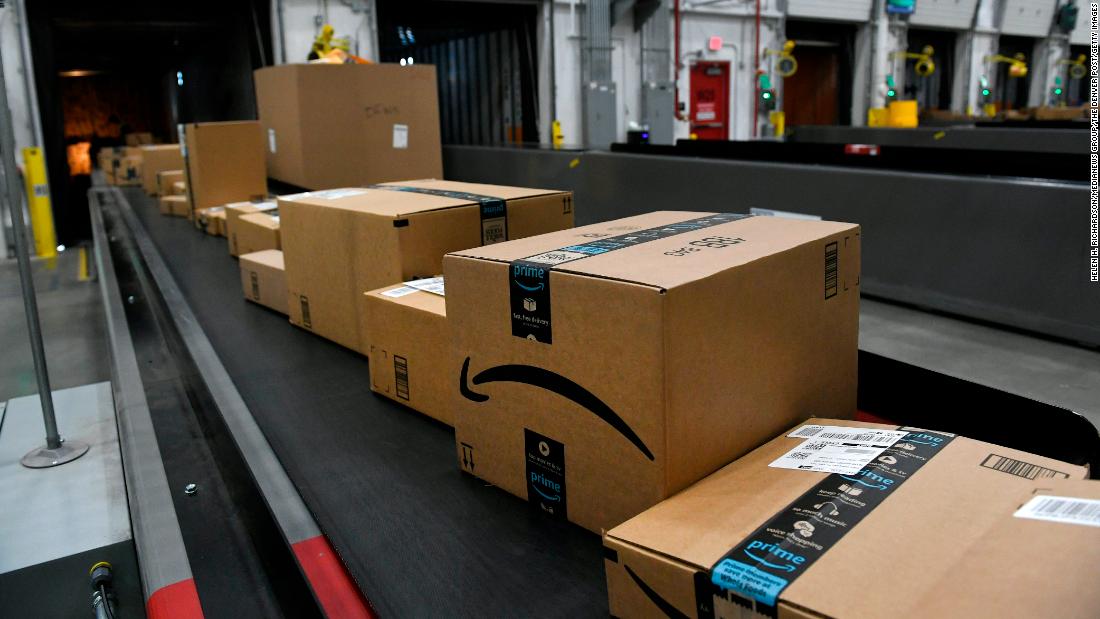







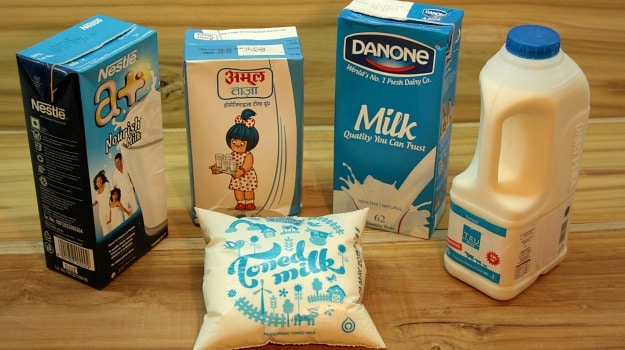


 Bamboo straws are actually whole pieces of young bamboo cut into various shapes and sizes according to the needs of the users. They have a fun and quirky appearance, giving you a sense of novelty while drinking the drink of your choice in style and panache. Here are a few reasons why you should replace your plastic straws with the bamboo straws immediately.
 Apart from being non-toxic, bamboo straws have a style quotient attached to them. To alleviate the damage to the environment, more and more people are using bamboo straws in their cocktail parties, kids’ summer parties, and even for homemade beverages like hot chocolate. Bamboo straws are the new alternative to spice up your Instagram with your unique and sustainable style. They could also be used for decorative purposes, finding use in the do-it-yourself craft items.
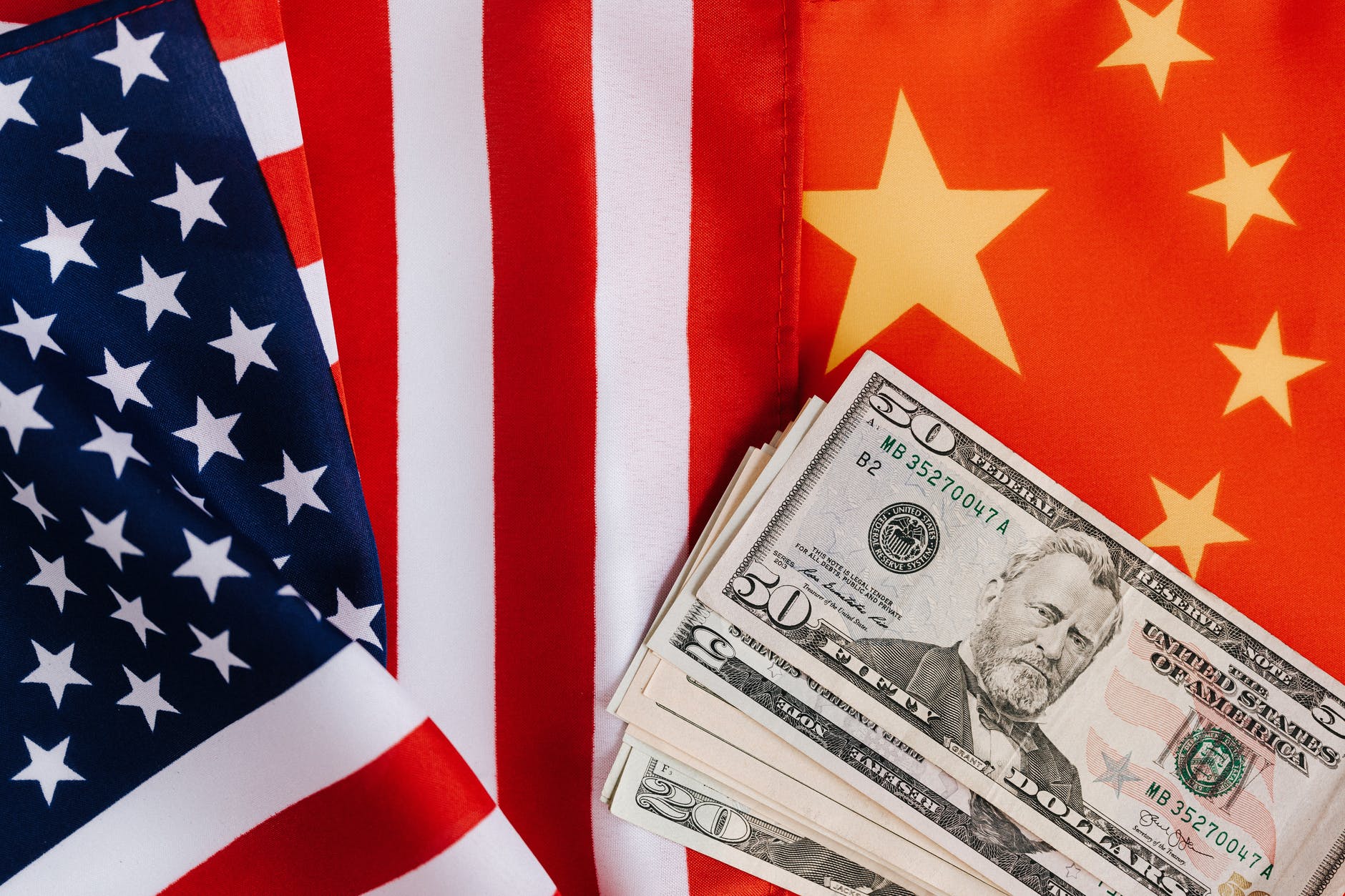


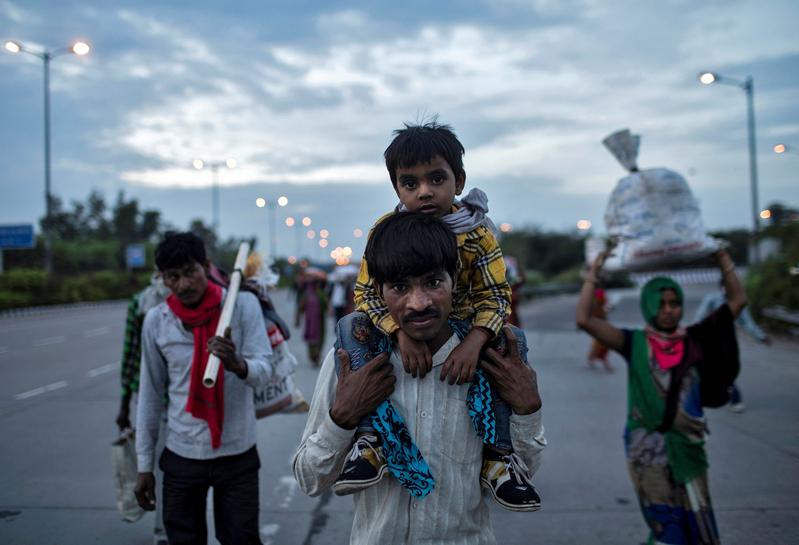





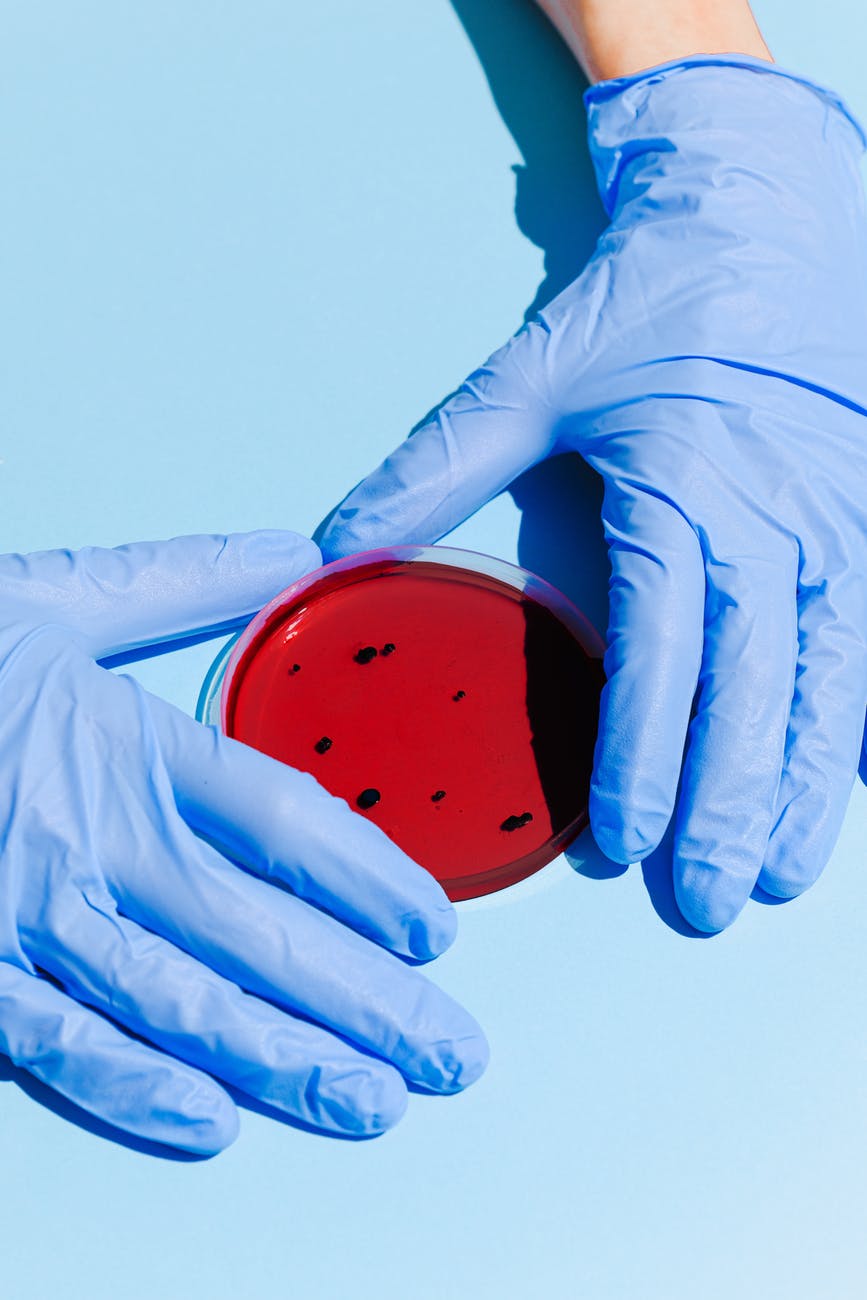



 Eduindex
You must be logged in to post a comment.