#AbKoiBahanaNahi Campaign to end Gender-Based Violence launched

A National Campaign “#AbKoiBahanaNahi” was launched today in New Delhi. It is a collaborative effort between the Ministries of Women and Child Development and Rural Development, with support from UN Women. The Union Minister for Women and Child Development, Smt. Annpurna Devi, Union Minister for Rural Development, Shri Shivraj Singh Chouhan, Minister of State for Rural Development Shri Kamlesh Paswan and Dr. Chandra Sekhar Pemmasani, Minister of State for Rural Development and Communications were present on this occasion.
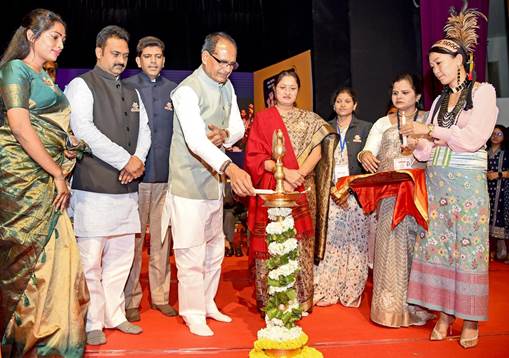
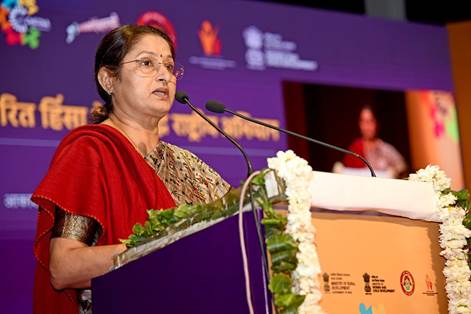
While addressing the gathering the Minister Smt. Annpurna Devi said that the purpose of this campaign being launched today is to advance the rights of women and individuals of diverse genders, and to free their lives from fear and gender-based discrimination. This aims to empower women to break free from shame and societal constraints, enabling them to report the atrocities they have faced and fight for their dignity.
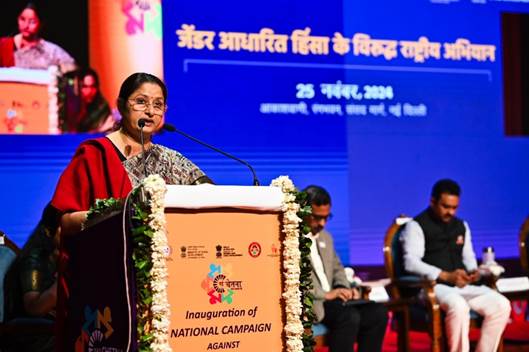
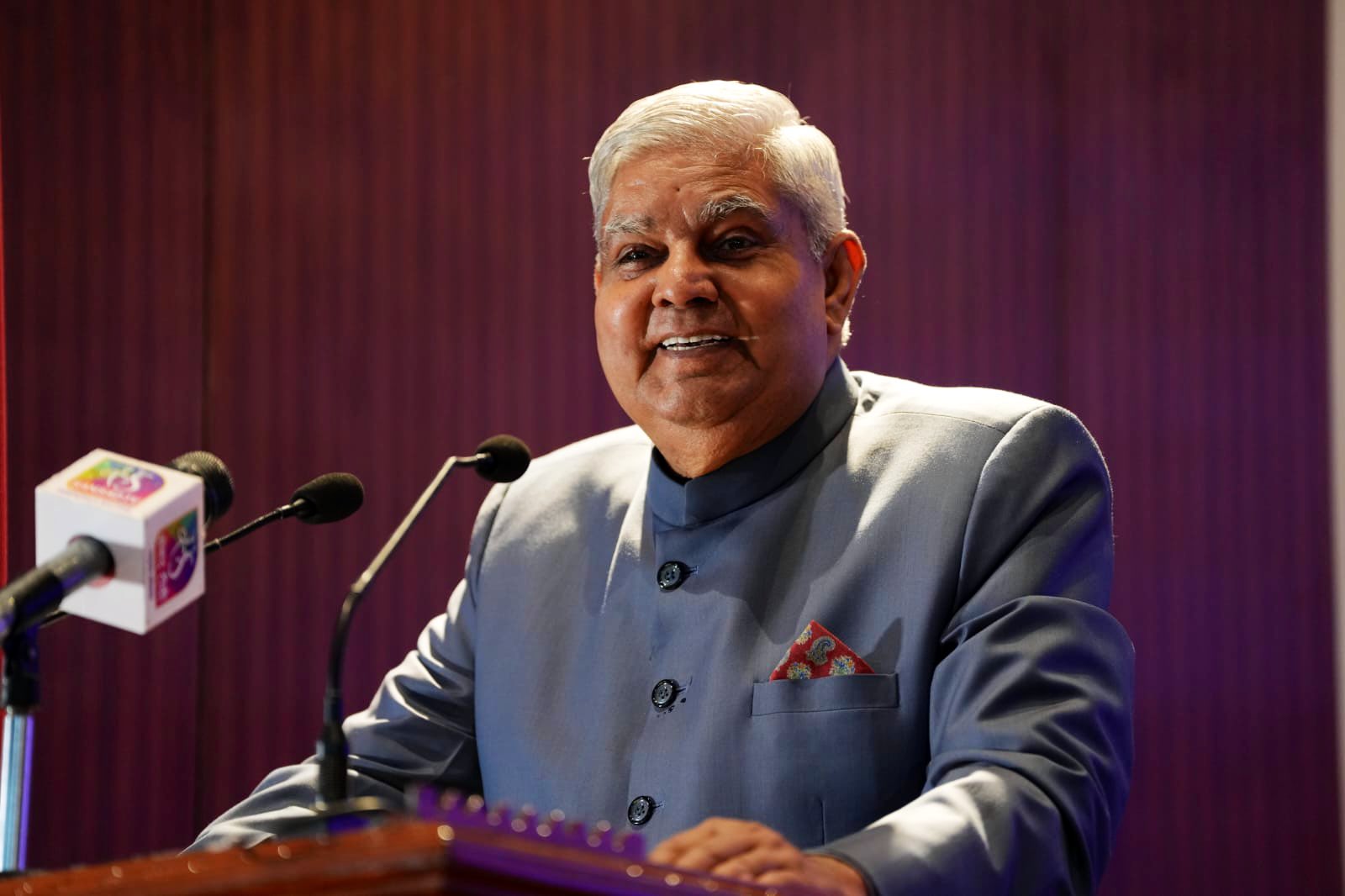
A person speaking into a microphoneDescription automatically generated

This year, building on the Global Campaign of the United Nations of , which draws attention to the alarming escalation of violence against women to revitalize commitments, call for accountability and action, the Government of India launched with the aim to highlight the message of urgency of ending violence against women and girls, and underscoring zero-tolerance stance of central India towards any and all forms of gender-based violence.

The Government of India, implementing the paradigm shift in governance to women-led development, has created enabling provisions for women’s full, equal and meaningful participation in all spheres of life and the economy, such as several large scale interventions to reduce women’s drudgery and  poverty, building public care infrastructure and universal access to healthcare, to reduce women’s disproportionate care work, improving access to formal financial systems, bridging the gender digital divide, ensuring safe mobility, safe accommodation, and building a robust service delivery infrastructure for the prevention and redressal of all forms of violence against women and girls. 
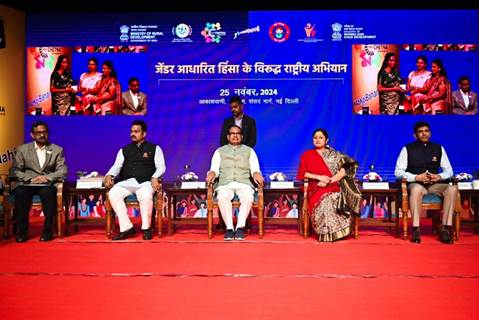
A group of people sitting on a stageDescription automatically generated

Highlighting the good work already underway the Union Minister for Rural Development, Shri Shivraj Singh Chouhan, said that if women are to be completely empowered, then women empowerment, social empowerment, political empowerment, and educational empowerment must be achieved. Under the leadership of Prime Minister Shri Narendra Modi, women empowerment initiatives are being implemented as a campaign.

Gender-based violence inhibits women and girls from living with dignity and contributing as equal partners in the development process. As India aims to become a developed country by 2047, under the visionary leadership of Prime Minister Shri Narendra Modi, this dream will not be possible without women’s full and equal contribution, which, in turn, is hindered if women continue to face violence or the threat of violence. The Union Minister for Women and Child Development reiterated the importance of female participation in the economy to make Viksit Bharat, as envisioned by Prime Minister, a reality.
Hence, in order to urge all stakeholders to take decisive steps towards addressing violence against women and girls, the “#AbKoiBahanaNahi” (#अबकोईबहानानहीं)  campaign commenced with a national Call to Action. To ensure a wide reach on spreading the call to action on ending gender-based violence, leaving no one behind, the campaign was launched in conjunction  with the ‘Nayi Chetna 3.0 campaign,’ organized by the Ministry of Rural Development, reaffirming the national commitment to end all forms of gender-based violence.
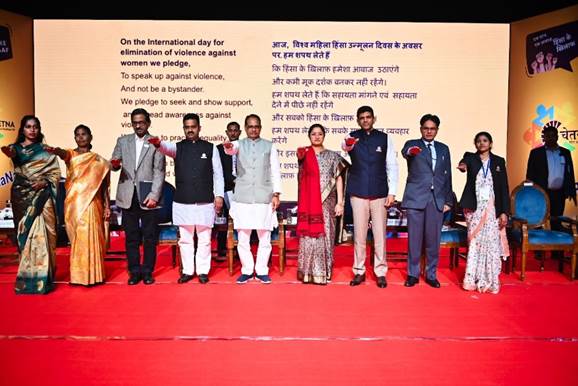
A group of people standing on a red carpetDescription automatically generated

At the launch event, a film on was showcased, highlighting the need for accountability from all stakeholders, including citizens, to pledge against ending gender-based violence.

The primary objective of the campaign is to foster advocacy efforts and inform policy directives concerning the safety and security of women and girls. Furthermore, this campaign serves as a critical and urgent call for systemic change, emphasizing the imperative for justice, equity, and transformation. The campaign aims to catalyze a ripple effect, where each action and initiative contributes to reinforcing the message of women’s safety as a fundamental and non-negotiable priority for national growth and development.
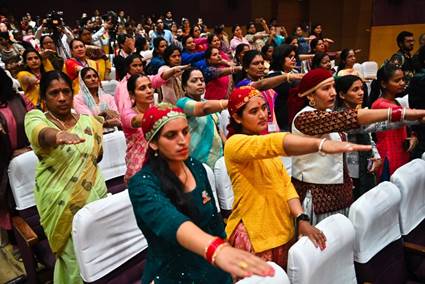
A group of women in colorful clothes doing a danceDescription automatically generated

The launch event was attended by women leaders from Self Help Groups across the country, staff from service providers for redressal for survivors of violence against women and girls, such as One Stop Centres, and Aanganwadi workers, amongst others.  To spread the awareness of the campaign to the remotest corners of the country, the launch was telecast live through the Webcast link and  Ministry of Women and Child Development’s YouTube channel.

Globally, every year, from 25th November, which is observed as the International Day for the Elimination of Violence against Women, to 10th December, which is observed as the Human Rights Day, the 16 Days of Activism campaign is observed by civil society to raise awareness on ending gender-based violence.

YouTube Link -https://www.youtube.com/embed/xTcQfXFuRmo

****
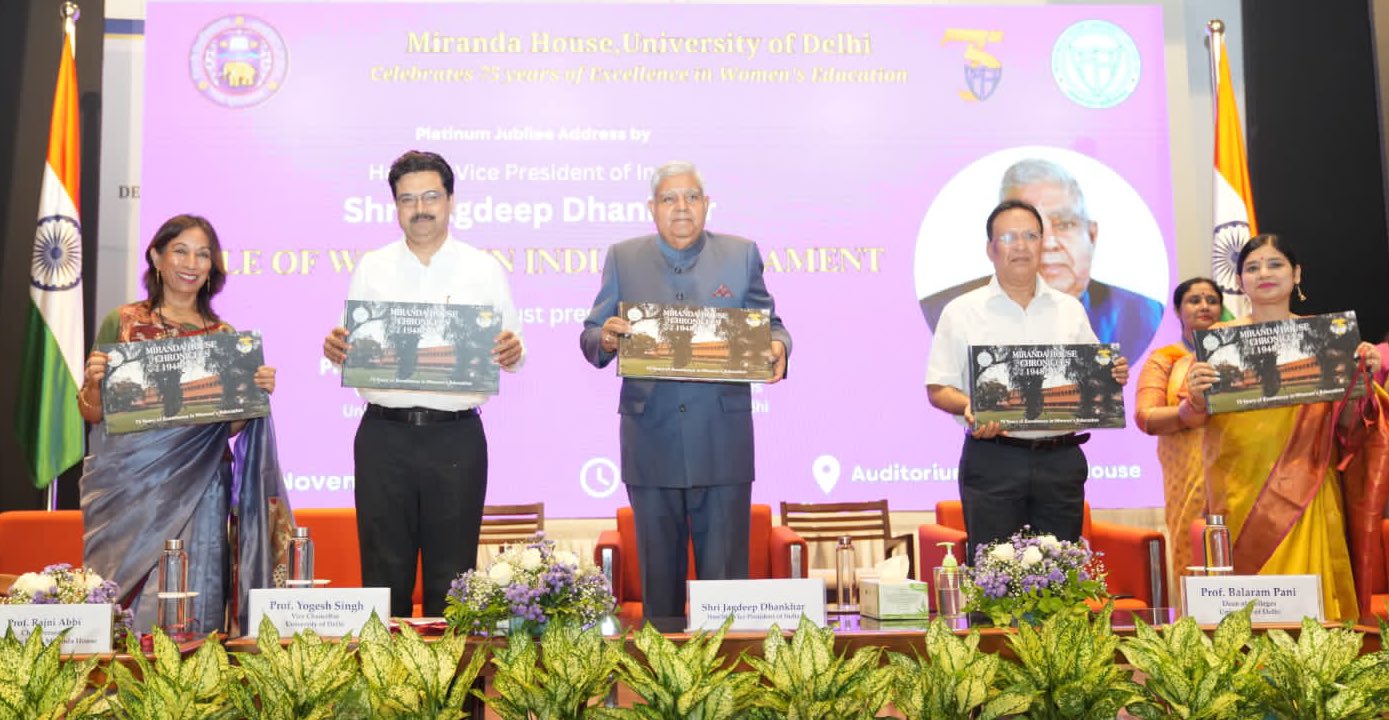
Gender equality is quintessence to any equality

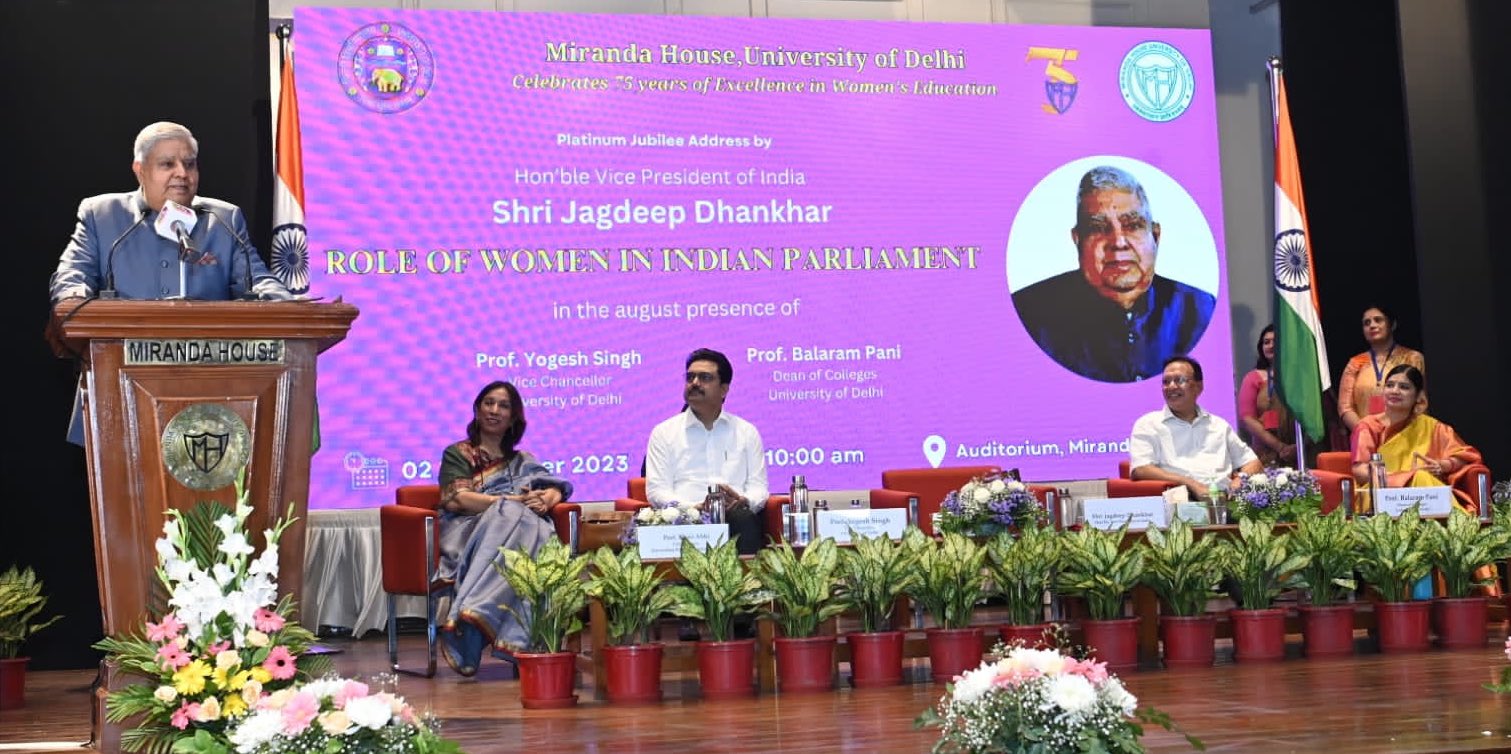
 The Vice President, Shri Jagdeep Dhankhar today emphasized that gender equality is quintessence to any equality and there can be no equality in society if there is no gender equality. He also said that this gender equality has to be in substance, not in form; and its manifestation has to be a ground reality.

The Vice President made these remarks while delivering the Platinum Jubilee Address of Miranda House on the topic – “Role of Women in Indian Parliament”. In his speech, Shri Dhankhar highlighted that “the role of women in parliament is enormous, and that their presence by itself will surcharge the atmosphere in legislatures.”

Recognizing that women will be able to bring on the table their experiences worth the life they live through and the challenges they face, Shri Dhankhar asserted that “this would certainly help the governance in evolution of policies that would lead to the resolution of larger issues.”

Describing the passing of Nari Shakti Vandan Adhiniyam as an epochal development in history, VP said that “this is a great development which will ensure that Bharat@2047, when the nation celebrates the centenary of its independence, we’ll be on peak.” Mentioning that he selected 17 women parliamentarians to lead the Upper House when Rajya Sabha discussed the women reservation bill, VP called upon the girl students to never allow themselves to be on the back bench or the back foot. “The world belongs to you; the world has to be shaped by you. Today, Indian women are occupying the position of power in global institutions, making all of us very proud,” he added.

Referring to the election of the highest number of women parliamentarians in Lok Sabha in 2019 General Elections, Shri Dhankhar credited this success to various women empowerment initiatives by the Prime Minister over last years. Noting that the phenomenon of ‘Sarpanch Pati’ is largely gone, he said that now no one dares to occupy a seat meant for women representatives.

The Vice President noted that it is the women, who sacrifice a lot for their families, society, children & elders, and asserted that “giving justice to your gender is automatic justice to my gender.” He further added that, “This is because your gender exemplifies virtuosity, sublimity, & service. God has gifted you faculties that give you an opportunity to help others.”

Quoting Mahatma Gandhi, who said “As long as women in India do not take part in public life, there can be no salvation for the country,” the Vice President said that today the dream of our Bapu is coming true.

Mentioning various initiatives by the government for women empowerment in recent years, Shri Dhankhar noted that “Girls are in combat positions in defense forces. Girls are getting admission to Sainik Schools now. You are the change, you are catalyzing the change.”

Talking about the Swachh Bharat Mission, he said that when the Prime Minister calls for toilets in every home, the focus is women, her dignity & her respect. Similarly, if gas connections are given to needy households, it’s again the women who benefit most as she is the one who manages the kitchen & suffers tears in her eyes due to smoke. He also cited the example of Har Ghar Jal & Mudra schemes which are helping the cause of women empowerment in a big way. “Our Amrit Kaal, on account of the vision, passion, and mission of our Prime Minister has become our Gaurav Kaal,” he added.

Expressing happiness over India becoming the world’s fifth largest economy, VP said that the Indian economy’s rise is principally driven by women. He said that Bharat is on rise and this rise is unstoppable.

The Vice President said that some people are not able to digest India’s growth story, and called upon the students to reply to such elements. Your silence will not be in national interest, he asserted and asked them to be “proud citizens of Bharat and take pride in our Bharatiyata.” Repeating the PM’s call for ‘vocal for local’, VP emphasized the importance of economic nationalism in the country’s development and underscored that items like Diya, candle, kites, toys and curtains should not be imported.

Prof. Yogesh Singh, Vice Chancellor, University of Delhi, Prof. Balram Pani, Dean of Colleges, University of Delhi, Prof. Rajni Abbi, Chairperson, Governing Body, Miranda House & Proctor, University of Delhi, Prof. Bijayalaxmi Nanda, Principal, Miranda House, faculty members, students and other dignitaries were present on the occasion.

 *****
Women Empowerment

 The concept of women empowerment has become a very significant topic of discussion in development and economies. Women empowerment is empowering women to take their own decisions for personal as well as social development. Empowering women is to make them independent in all aspects and to set them free from all social and family limitations.

Gender equality is, first and foremost, a human right. It implies a society in which women and men enjoy the same opportunities, outcomes, rights and obligations in all spheres of life. Equality between men and women exists when both of them are able to share equal distribution of power and influence; have equal opportunities financially through work and through setting up businesses; enjoy equal access to education and opportunity to fulfill personal ambitions. Yet there is discrimination against women and girls – including gender based violence, economic discrimination, sexual coercion, reproductive health inequalities, and harmful traditional practices. Women usually have less access than men to training and employment, medical care, property ownership, etc. They are less likely than men to be politically active and more likely to be victims of domestic violence. The ability of women to control their own fertility is absolutely fundamental. And when these reproductive rights – including the right to decide the number, timing and spacing of her children are free of discrimination, coercion and violence, she would have the freedom to participate more fully and equally in the society because when she would be healthy, she would be more productive. The roles of men and women are not biologically determined – they are socially determined and changeable.

India is a country where all the women are been honoured as goddesses since ancient times. However, when it approaches to providing them with correspondent rights the same people abandon its major importance and swallow that the main purpose of women is to take care of the family and kids firstly. Whereas, there have been various organizations and institutions advocating for women, supporting various projects that provides women basic education and health care requirements. Apart from these there are many welfare schemes for women – Beti Bachao Beti Padhao, Ujwalla, ICDS, Kishori Shakti Yojana, etc. implemented by the Indian government. According to me every women should be given equal opportunities to education and employment without any gender bias. Now, we know that women empowerment is a minute key to economic growth and social transformation. 

 Benefits of Empowering Women in India

Women, as the majority of India’s population, represent a sizable portion of the country’s untapped economic potential. As a result, providing equal opportunities for women in India would enable them to contribute to the economy as productive citizens. Women can thrive economically and rise out of poverty with higher literacy rates and equal pay for equal work.

Protecting women and girls from violence and abuse, as well as challenging the stigmas associated with reporting crimes, would result in a much safer society. Improving female political representation would allow more women to serve as role models for young girls and provide a platform to raise awareness about women’s issues in India. Overall, gender equality enables women to have a higher quality of life, allowing them to determine their futures beyond traditional expectations.

As an African proverb says,

“If you educate a man, you educate an individual but if you educate a women, you educate a nation”

Recommendations for Gender Based violence

Source: UN Women

Sex Education, Community, media, intervention, gender norms programmes helpful to tackle GBV. Several LGBTQ+ organizations and their programmes initiated in the USA (New York, Washington, California) we’ll discuss below all their activities.

  • Community intervention can address gender norms and attitudes. For example, the combination of microfinance schemes for women. IMAGE microfinance and gender equity initiated in South Africa and stepping stone programmes in Africa and Asia. Well trained facilitators and community ownership appear to boost the effectiveness of the programme.
  • Public awareness campaigns via television, radio, newspapers and other mass media can be effective in altering attitudes towards gender norms.
  • School based programmes consider considerable components to spread words regarding gender norms and attitudes before they become deeply ingrained in children & youth. Positive results have been reported in the US and Canada by Youth Relationship Project.

In Rawada, UNFPA introduced  “one stop centers” to fulfill the diverse physical, emotional and school needs of survivors.

  • Psycho – counseling, helplines and safe houses programmes on sexual reproduction health that should be treated as first place service.

Research – Build Gender sensitivity in male groups  

Men as partners programme from age 10 – 14 years, only all male groups must participate in changing attitude or mindset. Encourage boys to stop domestic and sexual violence towards gender and to become responsible but programme has yet to be in evaluation process.

Youth Relationship Project in Ontario is a community based intervention to help at-risk 14 – 16 year old boys; take a health promotion approach that develops healthy, no abusive relationships by providing education about gender related issues, conflict resolution, communication skills and social action activities. Randomized controlled trials showed that intervention was effective in reducing incidents of physical and emotional abuse.

Another programme in United States, Mentors in violence prevention, provide two hours educational sessions to male and female high school and college student in mixed or single sex groups. Here, students learn about different types of abuse, gender stereotypes and society’s acceptance of violence against women. Evaluation of the programme examined the knowledge and attitudes of participants  after two to five months of implementation. This study indicated that the programme improved participants’ attitudes towards violence against GBV.  

Organizations like GLSEN, Lambda legal, Advocates for youth, Gender spectrum, Centrelink,The Trevor Project are working exclusively for gender sensitivity and inclusive environment, suicide prevention services to young LGBTQ people under 25. Some of the main projects/steps of organizations are:- 

  • Through litigation, education and Policy advocacy protect the rights of LGBTQ people that seek health care and medical professional health and facilities understand their responsibility to treat LGBT patients fairly.

Sports projects as education & advocacy programme.

  • Solidarity week, No name calling week and day of silence are part of the project
  • Supportive educators, comprehensive policies and inclusive curriculum.
  • Train organize and support student survivor activists in challenging their educational institutions to address violence and discrimination.
  • Advocate for Policy change at the campus, state and federal levels to ensure meaningful systematic action to end gender violence.
  • Communities engagement including young people of color, black and Latino and trans color youth; members use social media campaigns, peer education, storytelling and media outreach to raise awareness of interconnection between HIV disparity, racism, homophobia and transphobia determinate for inclusion of youth most impacted by HIV in planning, implementation and evaluation of programs; policies that affect their health and well being.

MUST WATCH FILMS FOR REAL NATIONALIST

Nationalism always been most  forgettable ideology. Nationalism seeks to pressure & foster a nation’s traditional culture. Nationalism dominant the loyalty and devotion towards nation. It aims to build and maintain a single National identity based on shared social characteristics of culture, ethnicity, geographic location, language, politics, religion traditions and belief in a shared singular history to promote National unity or solidarity.

The moral value of nationalism the relationship between nationalism patriotism and the compatibility of nationalism and cosmopolitanism are all subjects of philosophical labels. Nationalism can be combined with diverse Political goals & ideologies such as conservatism (Right Wing) or socialism (Left Wing). Nationalism is seen as positive or negative depending on it’s actions and outcomes.

Scholars frequently place thebeginning of nationalism in late 18th century or early 19th century with American declaration of Independence or with the French Revolution. Nationalism as a concept was firmly established by 19th century. The template of nationalism, as a method for mobilising Public opinion around new state based on popular sovereignty, Due to Industrial Revolution there was an emergence of an integrated, nation encompassing economy & National Public sphere, where the people began to identify with the country at large, rather than the smaller units of their provinces, town or family.

Union Jack was adopted in 1801 as the rational one. The political development of nationalism and the push for popular sovereignty culminated with the ethnic/ national revolution of Europe. It has also been used to legitimate racial, ethnic and religious divisions, suppress or attack minorities and undermine human rights and democratic tradition. Radical nationalism combined with racial hatred was a key factor in the Holocaust perpetrated by Nazi Germany. In 1749, Thomas Arne composed the patriotic song “Rule Britannia”!. Cartoonist John Arbuthnot invented the character of John Bull as the personification of the English national spirit in 1712.

Imposing the idea of one language in 1772 through his “ Treatise on the origin of language” focusing on the role of common language the instance observe in modern politics. He attached exceptional importance to the concepts of nationality and of patriotism.

Sociological or modernist interpretation of nationalism & nation building argues that nationalism arises and flourishes in modern societies that an industrial economy capable of self sustainability, a central supreme authority capable of maintaining authority and unity, few prominent figures developed the modernist interpretation of nation and nationalism include: Carlton J H Hayes, Rabindranath Tagore, Emile Durkheim, Max weber, Talcott Parsons, Arnold Joseph Toynbee.

 Now, think about it, how preferable to have nationalism as development ideology that emphasis on destroying the diversity; diversity that intact the entire nation in oneness without holding on discrimination. If people understand each other with different culture & religion the world will become the better place to live; politicians will not take advantage & will not turn up entire region in war.

Conflict will resolve quickly if sit & have table talk. Far – Right leader Marine Le Pen in France emerging as second highest vote collector candidate belongs to National Rally Party. National Rally believes in strong French centric ideology same as Trump reign during his tenure like “ Make America great again” to have strong immigration policy and secure the American individual identity . VÖLKISH MOVEMENT (Body of people) – German ethno nationalist movement from late 19th century through to Nazi Era impose the “blood and soil”.

However, It is difficult to amaze the world with far right nationalism as we have example of Vietnam War reaction when people saw the images from Vietnam War people protested against the government, Movements like Black life matters, Protest against CAA.

So, Now what should be the real meaning of Nationalism – Simple we believe in democracy and diversity (ironically scrapped from new CBSE syllabus) when we embrace the different culture. Encouraging tolerance for people of different cultural and racial background. When we send off ethnic & racial difference, religion, socio – economic background, intelligence. So whatever movies are mentioned here are based on true meaning of Nationalism. These movies asking question from Society in terms of socio – economic difference, war, racial discrimination, gender biases if you concern about these matter then you are real nationalist and kind of facets of society that Government wants us that we must not talk about these situations.

Movies Like: –

1)Never look away – Werk ohne Autor

2)Dr. Strangelove: Or How I learned to stop worrying and love the bomb

3)Full metal jacket

4)The lives of others – Das Leben Der Anderen

5)Ardh Satya

6)Mathilukal

7)Shyam benegal’ s films

8)Apu Trilogy

9)Bimal Roy’s films

These above mentioned movies list here in this article because of their Challenging Attitude towards for bringing something better for disadvantaged groups. More Can include in it with time and how we will evolve.


MUST WATCH FILMS FOR REAL NATIONALIST

Nationalism always been most  forgettable ideology. Nationalism seeks to pressure & foster a nation’s traditional culture. Nationalism dominant the loyalty and devotion towards nation. It aims to build and maintain a single National identity based on shared social characteristics of culture, ethnicity, geographic location, language, politics, religion traditions and belief in a shared singular history to promote National unity or solidarity.

The moral value of nationalism the relationship between nationalism patriotism and the compatibility of nationalism and cosmopolitanism are all subjects of philosophical labels. Nationalism can be combined with diverse Political goals & ideologies such as conservatism (Right Wing) or socialism (Left Wing). Nationalism is seen as positive or negative depending on it’s actions and outcomes.

Scholars frequently place thebeginning of nationalism in late 18th century or early 19th century with American declaration of Independence or with the French Revolution. Nationalism as a concept was firmly established by 19th century. The template of nationalism, as a method for mobilising Public opinion around new state based on popular sovereignty, Due to Industrial Revolution there was an emergence of an integrated, nation encompassing economy & National Public sphere, where the people began to identify with the country at large, rather than the smaller units of their provinces, town or family.

Union Jack was adopted in 1801 as the rational one. The political development of nationalism and the push for popular sovereignty culminated with the ethnic/ national revolution of Europe. It has also been used to legitimate racial, ethnic and religious divisions, suppress or attack minorities and undermine human rights and democratic tradition. Radical nationalism combined with racial hatred was a key factor in the Holocaust perpetrated by Nazi Germany. In 1749, Thomas Arne composed the patriotic song “Rule Britannia”!. Cartoonist John Arbuthnot invented the character of John Bull as the personification of the English national spirit in 1712.

Imposing the idea of one language in 1772 through his “ Treatise on the origin of language” focusing on the role of common language the instance observe in modern politics. He attached exceptional importance to the concepts of nationality and of patriotism.

Sociological or modernist interpretation of nationalism & nation building argues that nationalism arises and flourishes in modern societies that an industrial economy capable of self sustainability, a central supreme authority capable of maintaining authority and unity, few prominent figures developed the modernist interpretation of nation and nationalism include: Carlton J H Hayes, Rabindranath Tagore, Emile Durkheim, Max weber, Talcott Parsons, Arnold Joseph Toynbee.

 Now, think about it, how preferable to have nationalism as development ideology that emphasis on destroying the diversity; diversity that intact the entire nation in oneness without holding on discrimination. If people understand each other with different culture & religion the world will become the better place to live; politicians will not take advantage & will not turn up entire region in war.

Conflict will resolve quickly if sit & have table talk. Far – Right leader Marine Le Pen in France emerging as second highest vote collector candidate belongs to National Rally Party. National Rally believes in strong French centric ideology same as Trump reign during his tenure like “ Make America great again” to have strong immigration policy and secure the American individual identity . VÖLKISH MOVEMENT (Body of people) – German ethno nationalist movement from late 19th century through to Nazi Era impose the “blood and soil”.

However, It is difficult to amaze the world with far right nationalism as we have example of Vietnam War reaction when people saw the images from Vietnam War people protested against the government, Movements like Black life matters, Protest against CAA.

So, Now what should be the real meaning of Nationalism – Simple we believe in democracy and diversity (ironically scrapped from new CBSE syllabus) when we embrace the different culture. Encouraging tolerance for people of different cultural and racial background. When we send off ethnic & racial difference, religion, socio – economic background, intelligence. So whatever movies are mentioned here are based on true meaning of Nationalism. These movies asking question from Society in terms of socio – economic difference, war, racial discrimination, gender biases if you concern about these matter then you are real nationalist and kind of facets of society that Government wants us that we must not talk about these situations.

Movies Like: –

1)Never look away – Werk ohne Autor

2)Dr. Strangelove: Or How I learned to stop worrying and love the bomb

3)Full metal jacket

4)The lives of others – Das Leben Der Anderen

5)Ardh Satya

6)Mathilukal

7)Shyam benegal’ s films

8)Apu Trilogy

9)Bimal Roy’s films

These above mentioned movies list here in this article because of their Challenging Attitude towards for bringing something better for disadvantaged groups. More Can include in it with time and how we will evolve.


How Should You Write Your READING RESPONSE?


Why Do It?

The reading response gives you an avenue to invite yourself into the written text and to make a connection with it. In many college courses you will be assigned to write papers about subjects with which you have no personal interest. Reading responses help to generate connections between the reader and text.


How?

The key to writing a compelling academic paper for any college course is being able to forge a personal connection on some level with your subject. You must care in some way about your subject, or else your writing will be lifeless, and your instructor, a human being, will have read a re-hashing of the facts of his/her course a million times before. Or, forget about writing for a college course. What about writing a report in the workplace?  What about proposing a new idea to your boss?  Such careful awareness of audience and tailoring your writing to a specific audience is an aspect of successful writing we’ll work on in this course.  However, you can’t even get to the point of getting someone else to care about what you are writing if you don’t care yourself.


That doesn’t mean you should only write about subjects that interest you.  On the contrary, half of the battle in writing a successful paper is coming up with an idea on a topic which is usually of little interest to you—finding an angle or connection through which you can approach or examine the text. What does it remind you of? Why do you respond emotionally? Or why do you not respond? Ask questions to find avenues into a piece of writing.  The creativity involved in continually forging such difficult connections will help you develop into a writer who can grab a reader’s attention by approaching a topic or subject through your own unique personal lens, that is, by looking at something through an angle no one else can see. 


Through active responding to reading, and examining your responses, you can learn to practice new approaches of interpretation to common themes.  Many of the ideas you generate in the reading responses will prove useful when you sit down to write the short essays (or maybe even your research paper).

Child Marriage legalised on Rajsthan

Currently, Rajasthan govt released an amendment “Rajasthan compulsory Registration of Marriage Amendment Bill 2021” it allowed registration of child marriages, it’s 21 century and we all are aware of how heinous child marriage is, here are some of my views on this act

In my views law is not wrong
Those who commit or help in child marriage will still be punished, but those who already had marriage were not allowed to have registration and so they were not able to avail all govt schemes and benefits, those saying it will make it easier to do child marriage remember availing govt benefits are everyones fundamental rights.

Those saying it’s illegal look it like this rape is illegal but rape victim and culprit both have some rights that we can’t snatch, like culprit must be allowed to go court etc, ofcourse child marriage is as heinous as rape and here victims are both boy and girl but why they suffer whole life for it, they can’t get rashion, jobs, water, now as everything is more and more digitalizing and you can’t prove you’re married, it will become more hard to avail services like jacha bacha Suraksha and this are thee parents who most need it.

Also one negative point is it will make child marriage easier, but many people will not be able to avail fundamental rights isn’t it totally wrong also we can make child marriage hard by making strong rules. As we have data of child marriage we can ask govt employee who are posted there why they let it happen like police or magistrate, they will become more accountable this way.

If I’m missing some points or you want to share your views here’s my email soni362002@gmail.com

LADLI FOUNDATION


LADLI FOUNDATION


Ladli Foundation is an internationally recognized non-profit organization. It is known for its innovative action research initiatives and effective community outreach at the grassroots level.

Foundation is also listed by the Niti Aayog – The highest policy-making body of the Government of India.

Driven by concerns of gender equality as an integral and critical dimension of human rights, Ladli Foundation became a reality in 2012 for working as a grassroots social catalyst.

Officially associated with government departments and Delhi Police, Ladli has been known to bring positive reformative changes in society through its unique initiatives at the grassroots level, bringing direct benefits to program recipients.

Further, in acknowledging its well-meaning endeavors, Ladli Foundation gained the reputed Special Consultative Status in the United Nations Economic and Social Council.

Recently the organization was recognized by the United Nations Secretary-General Mr. António Guterres during the 65th Session of Commission on the Status of Women for raising the voice to prioritize the agenda of Women’s Health and elimination of Child Marriages in developing countries for achieving Gender Equality (SDG5).

With a mission of building a gender-sensitized inclusive society with equal access to basic, essential amenities and services- healthcare, education, workforce participation by women- the foundation has been diligently working in 50 districts across 10 states in India.

Ladli foundation have taken many initiatives for unprivileged and illiterate women and children who are living in slum areas. This foundation is created to make society for developing in every field. Ladli scheme has been started to spread awareness about the safety and importance of girls. Along with it, the Ladli scheme has been started with the aim of increasing the trend of registering girl child after her birth and promoting the education of girl child. This organization also contribute to those women who have skills and talents by making homemade crafts and food items. By this, the organization helps to take the products to the market. There are certain many privileges which are given by Ladli Foundation: – 1. To provide education to poor girls, getting 50 poor girls married in a year and includes all work like bearing all the expenses. 2. Preventive and Primary healthcare is given to the needed ones. 3. Education and skill development is practiced for the children who cannot afford school fees. 4. Making campaigns and providing all the necessities to the poor people. This was spread among millions through media and it was praised by our honorable Home Minister of India Sh. Rajnath Singh. There were many initiatives taken by Ladli Foundation: – 1. Foundation have diagnosed nearly 57,000 girls and women in the country at various locations. 2. Used to approach and sensitize the affected women to counsel and educate them. 3. Under Ladli Foundation’s Scheme initiative, they sensitize both mother and daughter because there is no barrier for discussions related to any such issues faced by a girl. Equally, it aims to create awareness among the global community about the significance of scientifically proven Indian traditional practices for advancing sustainable living for achieving United Nations sustainable development goals.


Feminism: A Myth

All over the world people are misguided about the word feminism. According to you what does feminism mean? Is it to put men down and rule the world or is it to enjoy everything a man can? Let’s discuss about various myths and the actual meaning of feminism and the significance of it in a women’s life.

According to the Oxford dictionary feminism means “the belief that women should have the same rights and opportunities as men“. In more simpler words feminism is all about the equality between men and women and have the freedom of everything that they wish to do. Some people argue that they believe in ‘equality’ but they have no belief in feminism. Feminism has been made critical despite of it being a very simple concept.

From ancient times women are pointed out for the way they dress and for their aspirations. They have been constantly told to dress in a certain way and to live their life according to the norms of the society. Women are fighting for their equal rights from centuries for there right to vote, right to speech and freedom. People in the society have framed a woman according to their needs and expect them to fulfill their expectations. A married woman taking care of her husband, her in-laws and looking after their children is considered to be the ideal one whereas if she wants to work and be dependent, she is criticised and often being questioned on her motherhood. Similar type of Criticism she faces at her work place. These are the basic yet essential inequality that a women regularly faces.

Women-Women Conflict regarding feminism

Sometimes women also take feminism in a wrong way. They think that being a feminist means to humiliate men and they often misuse their power of being a women by falsely accusing a men in a crime. This is basically pseudo feminism. Women around the world debates for the real meaning of feminism which sometimes leads to conflicts. Some women of old generation are also against feminism and consider it as uncultural.

Myths

  • Feminists hate men.
  • Feminists are angry.
  • Feminists are unattractive and not feminine.
  • All feminists are lesbians.
  • Feminists are all pro-choice.
  • If you are a feminist, you cannot be religious.
  • All feminists are career women and do not support stay-at-home moms.
  • Feminists are Bra- Burners who hate sex.
  • Feminists can only be women.
  • Feminists don’t believe in marriage.

If you have ever found yourself saying “I’m not a feminist, but I am for equality,” then ask yourself why you do not claim the title? If it is because of the misconceptions of what a feminist truly is then empower yourself to raise awareness about what feminism is really all about. 

Feminists are all about equality between genders– which means feminists don’t want women to be more powerful than men any more than we want men more powerful than women. What may seem like a discriminatory act against men is actually an attempt to level the playing field between men and women.

While huge strides have been made towards complete gender equality, a great deal of work remains to be done, both in India and abroad, including the gender pay gap, access to reproductive healthcare, protection against sexual assault and violence and gender representation in media, among other issues.

How a Guy Can Be a Feminist?

Basically feminism is not only committed to changing negative stereotypes about being a woman. A large facet of feminism is understanding streotypes about masculinity and its effects on society and what it means to be a man. If you care about equality for your mother, daughter, grandmother, girlfriend, a friend, who is female then feminism should be important to you. Additionally, feminism is about equality for all marginalized groups- equality for those who are LGBTQIA, disabled, and ethnic and racial minorities. Caring about feminism means caring about people who fit into these categories.

Being a feminist is not something to be ashamed of. It is the right of every person who believes in equality for all.

Thank you for reading!

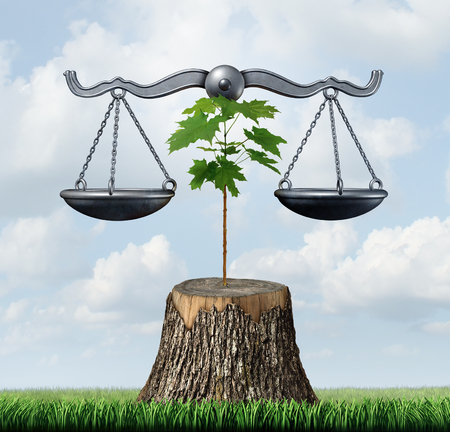
Environmental laws in india

Either Stable burning in various states accrued the air pollution in Delhi and created a gas chamber around NCR ; SC came upon a committee to observe scenario , Or 4 industries inflicting stream pollution were shut down by Maharashtra pollution board . Everybody has responsive to environmental problems as higher than . The key solution for resilience to environmental issues are provided by government in various legislations , enactments and provisions on environment laws .


In republic of India environmental law is concern with the policy and law for protection of the environment . It aims for achieving carbon free economy through taking measures for reducing climate change. All the acts under this laws are safeguards in ensuring effective management of the environment and its multiple ecosystems . It provides for preventing environmental damage .


Natural resources in the earth were unscathed from millions of years. It were remain pure until the industrialized started . After the industrialization this resources have been exploited in Spain of 100 years only . From 19th century, the environment (air , water and land ) is directly exploited by rapidly growing population at alarming-rates.


environment includes water, air and land and the inter-relationship which exists among and between water, air and land, and human beings, other living creatures, plants, microorganisms and property , as mentioned in section 2 of environmental protection Act of 1986 . Environment is a wide sphere , it consists of social, economically , political , religious dimensions .


Addressed area of environmental laws in India :

1. Quality of water : For the prevention and control of water pollution and to maintain or restore wholesomeness of water in the country the water act of 1974 was enacted. It further provides for the establishment of Boards ( CPCB and SPCB ) for the prevention and control of water pollution with a view to carry out the aforesaid purposes. This act prohibits the discharge of pollutants into water bodies beyond a given standard, it also lays down fine and penalties for non-compliance.

2. Reduction of air pollution and maintaining air quality : The Air (Prevention and Control of Pollution) Act, 1981 (the “Air Act”) is an act to provide for the prevention , protection and abatement of air pollution .It provides for establishment of Boards at the Central and State levels with a view to carrying out the aforesaid purposes.

3. Hazardous Waste management : legislations that directly or indirectly deal with hazardous waste management are the Factories Act, 1948, the Public Liability Insurance Act, 1991, the National Environment Tribunal Act, 1995 and rules and notifications under the Environmental Act.

4. Containment cleanup, damage mitigation : preventing future damage to the environment is undeniably the primary objective of environmental law, mitigating and reducing existing damage is also important. This area most often deals with issues like toxic leaks and oil spills. The central objective of this branch of environmental law is deciding liability, planning an appropriate response, and also determining the best process of investigation and monitoring in the overall clean up process. This area also concerns itself with the study and assessment of risk in the long term, to better mitigate any future accidents and risks.

5. Sustainability of resources : United Nations has put great emphasis on ensuring the sustainability of resources. For this vision , it has advocated the formation of various legal principles and legislation. In this regards concept of environmental impact assessment introduced .

Noble legislations and enactments on environment law in India :


Laws on Forest and wild life protection:
• The Indian Forest Act, 1927 ; The Wildlife Protection Act, 1972; The Forest (Conservation) Act, 1980 ; The Environment (Protection) Act, 1986; The National Green Tribunal Act, 2010.


Laws on Water pollution :
• The Water (Prevention and Control of Pollution) Act, 1974.


Laws on air pollution :
• The Air (Prevention and Control of Pollution) Act, 1981 (the “Air Act”)


Laws on hazardous waste management :
• Biomedical Waste (Management and Handling) Rules, 1998 ; Municipal Solid Wastes (Management and Handling) Rules, 2000 ; Batteries (Management & Handling) Rules, 2001 ; Hazardous Wastes (Management, Handling and Transboundary) Rules, 2008 ; E – Waste (Management and Handling) Rules, 2011 .
Laws on wetlands


Ramsar convention (1971) : This convention was initiated to push for greater conservation and sustainable use of wetlands ; Wetlands (Conservation and Management) Rules, 2017.
Constitutional provisions on environment laws


Part IVA (Art 51A-Fundamental Duties) of the constitution casts a duty on every citizen of India to protect and improve the natural environment including forests, lakes, rivers and wildlife, and to have compassion for living creatures.


• the Constitution of India under Part IV (Art 48A-Directive Principles of State Policies) stipulates that the State shall endeavour to protect and improve the environment and to safeguard the forests and wildlife of the country.

environment makes human life possible, and our cultural environment helps define who we are. It is therefore essential that our population and economic growth are environmentally sustainable.

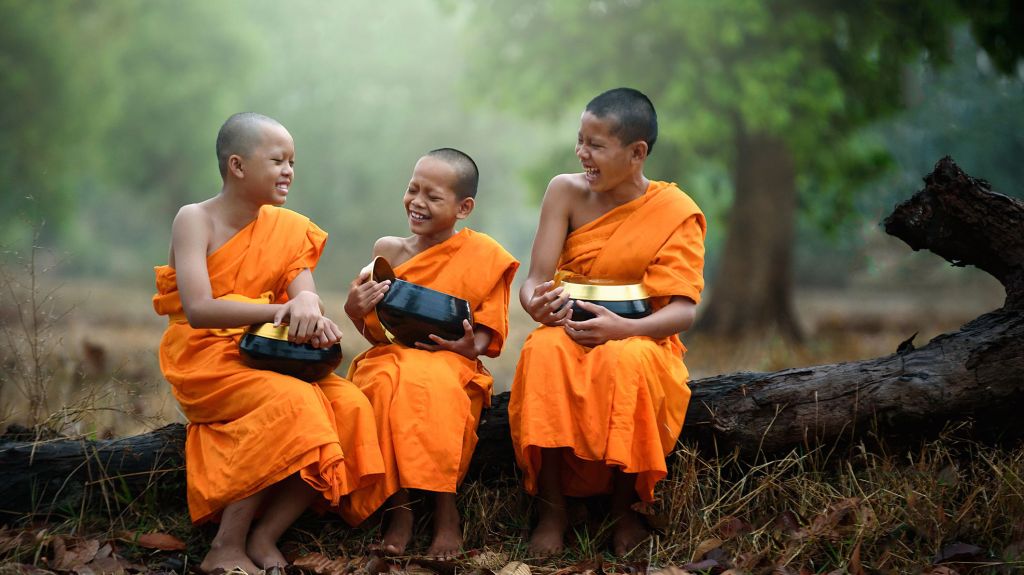
A Monk

Who are Monks ?

Why people are becoming Monks?

Is it some kind of religion ?

How a monk lives ?

What kind of God they persuit ?

Want to know more about them , then start some reading .

Introduction

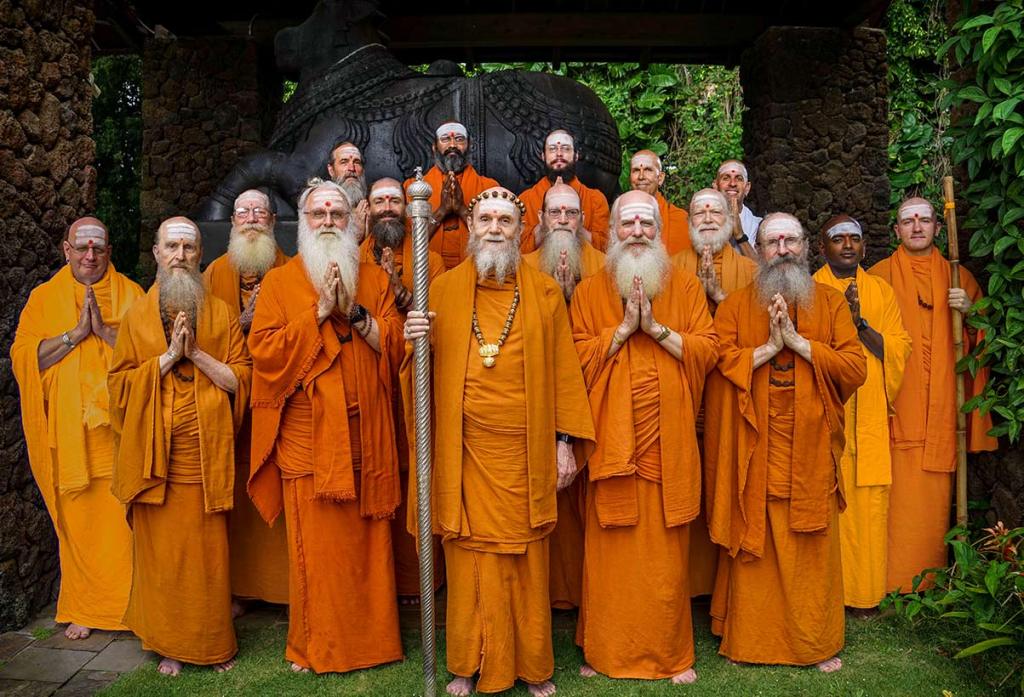
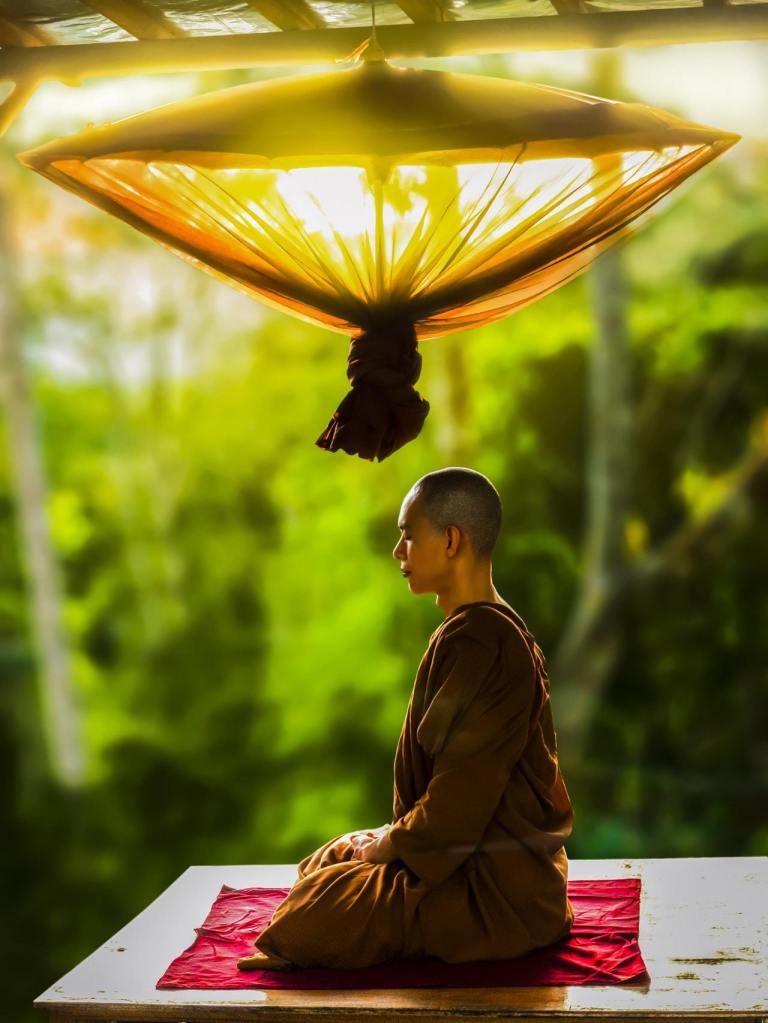
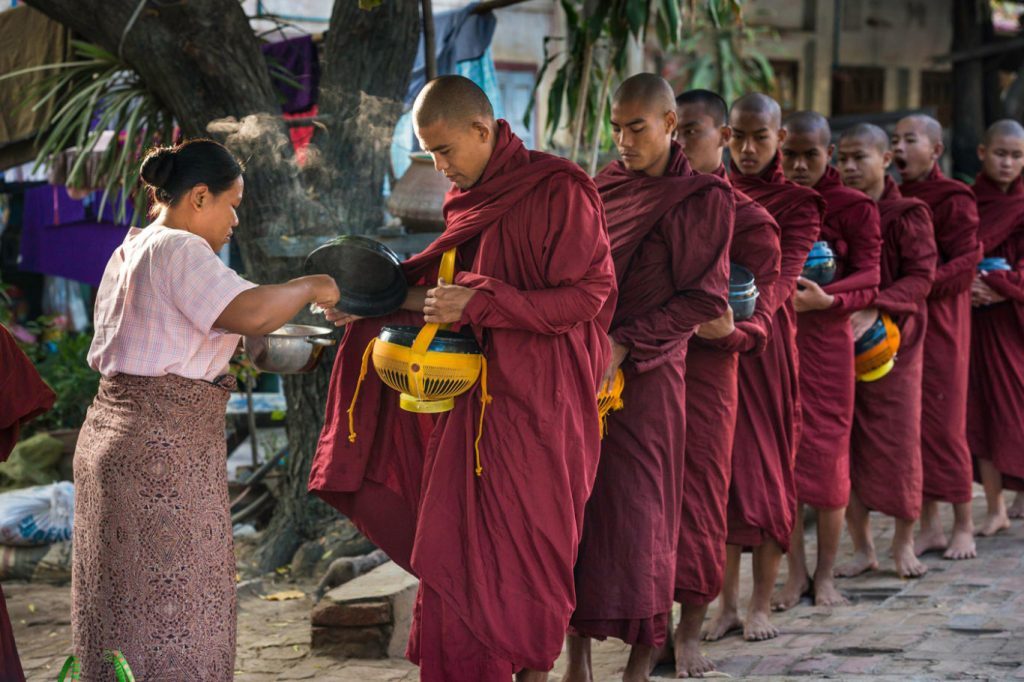
A monk is a person who practices religious asceticism by monastic living, either alone or with any number of other monks . A monk may be a person who decides to dedicate his life to serving all other living beings, or to be an ascetic who voluntarily chooses to leave mainstream society and live his or her life in prayer and contemplation. The concept is ancient and can be seen in many religions and in philosophy.

In simple words , A monk is a man who devoted part or all of his life to a religion. The word comes from Ancient Greek, and can be translated as solitary. In Greek, the word can apply to women, but in modern English it is mainly used for men. The word nun is usually used for female monastics. Monks practice asceticism. They either live alone, or together with other monks who share the same ideals. Monks can be found in different religions, most often in Buddhism, Christianity, Hinduism, Jainism and Taoism.

There living

Monks usually follow rules and regulations for convenient life. As a monk you must obey these rules .

  1. Poverty: the monk cannot own anything.
  2. Chastity: the monk cannot have sex or a sexual relationship and cannot start a family or get married.
  3. Solitude: the monk should always be alone. Some monks choose to not follow this law.
  4. Silence: the monk shall not speak unless it is necessary.
  5. Generosity: the monk should always help other people.
  6. Stillness: the monk cannot travel far unless it is necessary. Sometimes this means that the monk must be cloistered which means that they must not leave their monastery (especially Warsa period). Sometimes they can be allowed to leave, but must not go very far.
  7. Duty: The monk must do some things every day. For example, the monk must pray or meditate and must do some work.

Indian monks

One of the finest and versatile monk in India was Swami Vivekananda . Swami Vivekananda was greatly inspired by Ramakrishna. For Swami, Ramakrishna was just a plain and simple villager, who was a part of the Kali temple. However, his intense spiritual practices intrigued Swami.

For five years, Swami learnt everything from his master, Ramakrishna. After his master left the world, everyone looked up to Swami. He urged the followers of Ramakrishna to leave the worldly pleasures and look up to God.

“You cannot believe in God until you believe in yourself.”

His saying intrigued just not one nation but the whole world .

Life lessons

Being a monk , gives you a pleasure of being yourself . We live in the world where we get pleasure from materialistic things . We become selfish , ruthless, dull, lifeless and worthless. You have to believe in yourself in order to excel in life.

Start learning from lessons.

  • When you start to do meditation you recognize the egotistical mind.
  • Trying until you get it right.
  • The answer to your question is inside of you.
  • Real wisdom in life comes from doing something and failing.
  • We must be both compassionate and resilient.
  • Patience is a virtue.
  • Detach from your ego.
  • Happiness come from within, and also comes from outside.

Link

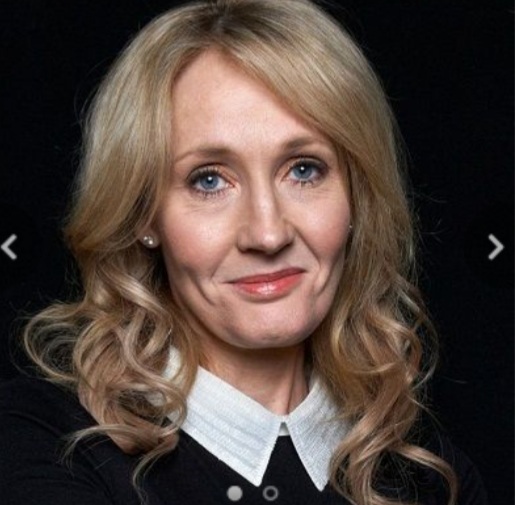
INSPIRATIONAL STORY OF J.K ROWLING

J.K Rowling’s story is one of the most famous insipirational failures to the success story of our time. She had failed in almost everything she attempted to do in her life and at one point she considers herself a major failure.


Most of the people only know her as a woman writer who created Harry Potter, but what people don’t know about the struggle she faces before reaching the stardom.


BIRTH AND CHILDHOOD :


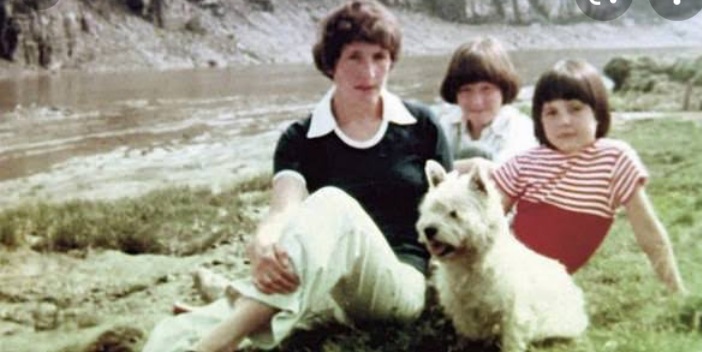
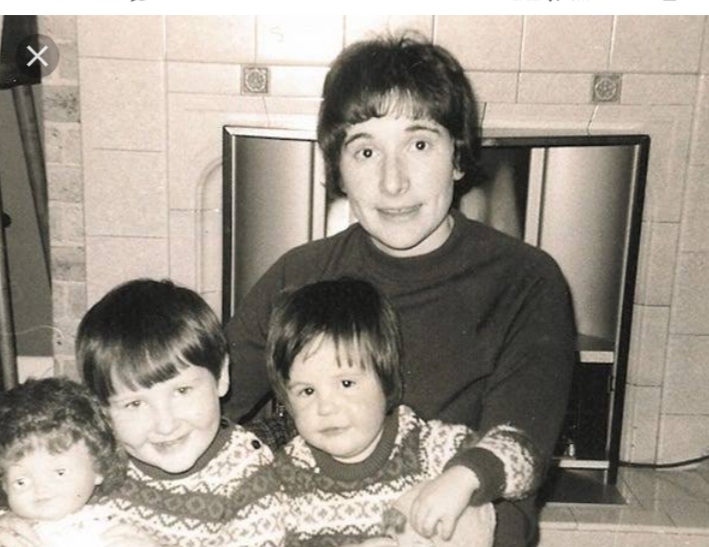
Joanne Rowling was born on 31st July 1965 in yate, Gloucestershire, England to Peter James Rowling and Anne Rowling. Her father was a Rolls- Royce aircraft engineer and mother was a science technician
She had one little sister, Dianne, as a child Rowling loves to write fantasy stories and read them to her younger sister. When she was a teenager she got a chance to read Jessica Mitford ‘s autobiography, from then on Mitford become her heroine and after that, she read all her books.


BOOK INSPIRATION AND MOTHER ‘S DEATH :


After working for Amnesty International as a researcher and bilingual secretary in London, Rowling moved to Manchester with her then- boyfriend where she worked at chamber of commerce. In1990, Rowling first had the idea for Harry Potter, a story of a young boy who attends a school of wizards, while she was on a 4 hour delayed train trip from Manchester to London.
While travelling the idea fully formed in her mind and when she reached her flat she began writing furiously. However, in December 1990 her mother died after 10 years of complications from Mutiplr sclerosis Mother’s death heavily affects Rowling and leave her extremely distraught and upset. Later she channelled her own feelings of her loss by writing about Harry’s feelings in her first book.


MARRIAGE, DIVORCE AND SINGLE MOTHER:


After a few months of her mother’s death, she moved to Portugal to teach the English language. There she met a man, fall in love with him, got married and gave birth to her daughter. In 1993 her marriage ended in Divorce and she with her infant daughter moved to Edinburgh Scotland to be closer to her sister.
This is the most struggling time for Rowling and she saw herself as a complete failure. She was divorced, jobless, no money and a dependent child. Because of all this, she suffered bouts of depression and contemplated suicide. Eventually, she signed for Government-assisted welfare describing her economic status as poor. It was a really difficult time in her life but she kept going on and put all her energy on completing her novel.


HARRY POTTER :


In 1995 Rowling completes her manuscript for Harry Potter and the philosopher’s stone on an old manual type writer. She was so poor at that time she could not afford a computer or even the cost of photocopying the novel, so she manually typed each copy and submitted to twelve publishing house in London.
The manuscript was rejected almost dozens time until she was finally given chance with £1,500 advance by a small London publisher, Bloomsbury after the company’s CEO little 8 years old daughter fell in love with it after reading the first chapter of the book.


In July 1997 Bloomsbury published first 1000 copies of Harry Potter series out of which 500 copies were distributed to libraries. Just five months later the book won Nestlé smarties Book prize it’s first award . In early 1998 an auction was held in America for the printing rights to publish the novel.
Scholastic INC won the auction for USB 105, 000, later Rowling said in a interview that she nearly died when she heard the news of this amount for printing her novel. Today Harry Potter is a global brand worth an estimated 15 billion dollars.
The last four Harry Potter books have set the records for the fastest selling books in history. The Harry Potter series to talking 4, 195 pages have been translated either in whole or in part into 65 languages. The Harry Potter books series have also gained recognition for creating an interest in reading among the children’s at a time when they were more inclined towards the Internet, computers and television.


FINANCIAL SUCCESS :


In 2001 J.K ROWLING purchased a 19th century killiechassie House, an estate house on the banks of the river tay in Perth. She also owns a £ 4.5 million Georgian house in West London. In 2004 , Forbes named Rowling as the first person to become a us dollar billionaire by only writing books.In 2017, according to Sunday times, Richard list Rowling net worth was approx. £ 650 million.


PERSONAL LIFE :


Rowling and her second husband Neil Murray were married on 26th December 2001. They live in Edinburgh with their 3 children. Rowling was a runner up in 2007. Time’s annual person of the year issue after Russia’s president Vladimir putin.


JK ROWLING’S RULES OF SUCCESS :

  • Failure helps you discovers yourself.
  • Take action on your ideas.
  • You will be criticised
  • Remember where you started
  • Truly Believe in yourself
  • learn from adversity.
    *Visualise to achieve
  • Persevere
  • Dreams can happen.
  • use your creativity.

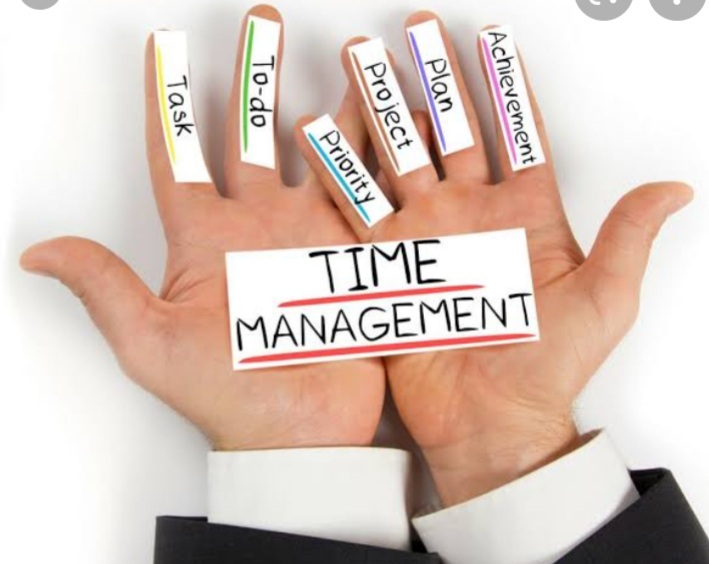
Time management

Time is nothing but the count of the life. It is measured in Hours, minutes and seconds. It is very important to manage the time as it is very precious and cannot come back once it is lost. It is also very important to utilize the time properly.

Managing the time is very important. Many of the people don’t know how to manage the time. Let us now know some of the time management techniques and how to use them.

•Make schedules:-

Making schedules is one of the best methods to manage the time. All you have to do is, think of the things what you have to do on a particular day and allot some particular time for each activity. Complete particular activity in the allotted time. When the work takes too much time, then leave it aside and go for another work. Whenever all the work is finished, go for the work which is unanswered in the beginning and complete it. This is how schedules helps for time management and makes the proper use of the time.

•Don’t spend much time on one thing:-

Spending much time on a particular thing disturbe the individual and disturbs the concentration. So, to focus on the work, an individual must go for some another work whenever they get bored on a particular work. So, it helps to focus on the work and for not wasting the time.

Time management is the process of planning and controlling how much time to spend on specific activities.
BENEFITS OF TIME MANAGEMENT :


The ability to manage your time effectively is important. Good time management leads to improved EFFICIENCY and productivity, less stress, and more success in life. Here are some benefits of managing time effectively:

  1. STRESS RELIEF :
    Making and following a task schedule reduces anxiety. As you check off items on your ” to- do” list, you can see that you are avoid feeling stressed out with worry about whether you’re getting things done.

  2. 2.MORE TIME :
    Good time management gives you extra time to spend in your daily life. People who can time- manage effectively enjoy having more time to spend on hobbies or other personal pursuits.
  3. MORE OPPORTUNITIES:
    Managing time well leads to more opportunities and less time wasted on trivial activities. Good time management skills are key qualities that employes look for. The ability to prioritize and schedule work is extremely desirable for any organisation.

  4. 4.ABILITY TO REALIZE GOALS :
    Individuals who practice good time management are able to better achieve goals and objectives, and do so in a shorter length of time.

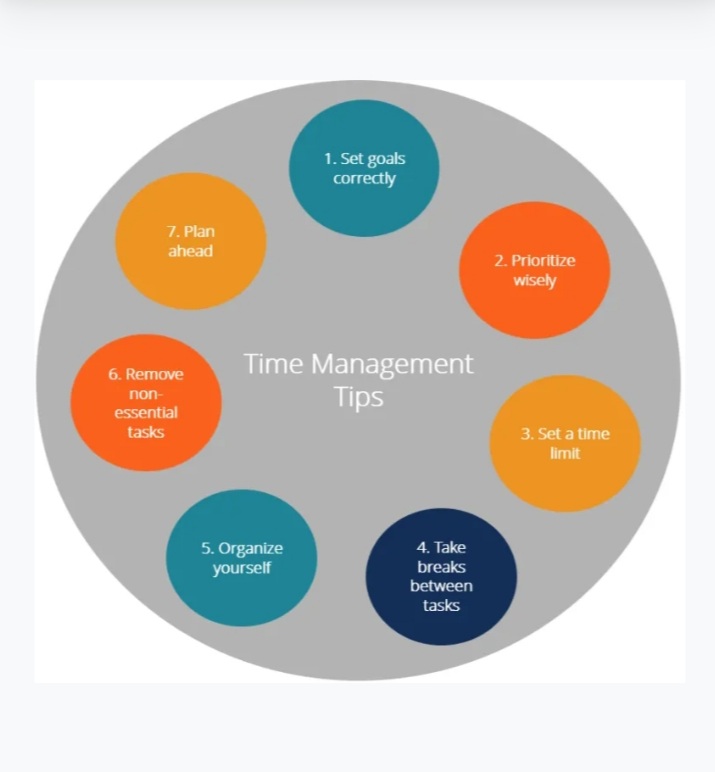
  5. LIST OF TIPS FOR EFFECTIVE TIME MANAGEMENT:


  1. 1.SET GOALS CORRECTLY:
    Set goals that are achievable and measurable. Use the SMART method when setting goals. In essence, make sure the goals you set are specific, Measurable, Attainable, Relevant, and Timely.

  2. 2.PRIORITIZE WISELY :
    Prioritize tasks based on importance and urgency. For example, look at your daily tasks and determine which are :
  • Important and urgent : Do these tasks right away.
  • Important but not urgent : Decide when to do these tasks.
  • Urgent but not important: Delegate these tasks if possible.
  • Not urgent and not important : set these aside to do later.

  • 3.SET A TIME LIMIT TO COMPLETE A TASK :
    Setting time constraints for completing tasks helps you be more focused and efficient. Making the small extra effort to decide on how much time you need to allot for each task can also help you recognise potential problems before theyv arise. That way you can make plans for dealing with them.

  • 4.TAKE A BREAK BETWEEN TASKS:
    When doing alot of tasks without a break, it is harder to stay focused and motivated. Allow some downtime between tasks to clear your head and refresh yourself. Consider grabbing a brief nap, going for a short walk, or meditating.

  • 5.ORGANISE YOURSELF :
    Utilise your calendar for more long term time management. Write down the deadlines for projects, or for tasks that are part of completing the overall project. Think about which days might be best to dedicate to specific tasks. For example, you might need to plan a meeting to discuss cash flow on a day when you know the company CFO is available.

  • 6.REMOVE NON- ESSENTIAL TASKS :
    It is important to remove excess activities or tasks. Determine what is significant and what deserves your time. Removing non- essential tasks frees up more of your time to be spent on genuinely important things
  • IMPLICATIONS OF POOR TIME MANAGEMENT :
  • Let us consider the consequences of poor time management ;
  1. PLAN AHEAD :
    Make sure you start everyday with a clear idea of what you need to do- what needs to get done THAT DAY. consider making it a habit to, at the end of each workday, go ahead and write out your ” to- do” list for the next workday. That way you can hit the ground running the next morning.
  2. POOR WORKFLOW :
    The inability to plan ahead and stick to goals means poor efficiency. For example, if there are several important tasks to complete, an effective plan would be to complete related tasks together or sequentially. That translates to reduced efficiency and lower productivity.
  3. WASTED TIME :
    Poor time management results in wasted time. For example, by talking to friends on social media while doing an assignment, you are distracting yourself and wasting time.

  4. 3.LOSS OF CONTROL :
    By not knowing what the next task is, you suffer from loss of control of your life. That can contribute to higher stress levels and anxiety.

  5. 4.POOR QUALITY OF WORK :
    Poor time management typically makes the quality of your work suffer. For example, having to rush to complete tasks at the last minute usually compromises quality

  6. 5.POOT REPUTATION :
    If clients or your employer cannot rely on you to complete tasks in a timely manner, their expectations and perceptions of you rely adversely affected. If a client cannot rely on you to get something done on time, they will likely take their business elsewhere.

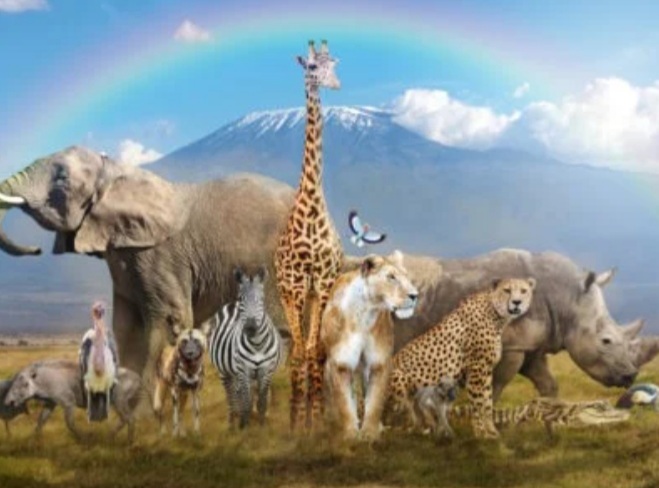
Animals

Since the time Earth developed the quality of sustaining life, life has always gone under the process of evolution. Life started from single celled organisms and developed stage by stage. One organism extinct to develop into its better developed species or even at times it happens that some animals get erased from the surface of the earth due to extreme environmental condition.

EXTINCT ANIMALS: Species of animals which existed in the surface of the earth once upon a time but has no current existence, this may have been a result of extreme environmental condition or some other condition for existence. For example, we have dinosaurs, Dodo.

ENDANGERED ANIMALS: The species of animals which have only a few animals left on the surface of the earth and are in the mouth of being extinct are known as endangered, currently this is a result of poaching i.e., unethical killing of wild animals with purpose or change in the climate due to pollution and other factors. For example, we have the Royal Bengal Tiger.

We cannot do anything for the species which are extinct but we can definitely take steps and save our endangered species. Poaching laws should be made stricter and it should be taken care that people follow them.

Different types of animals :

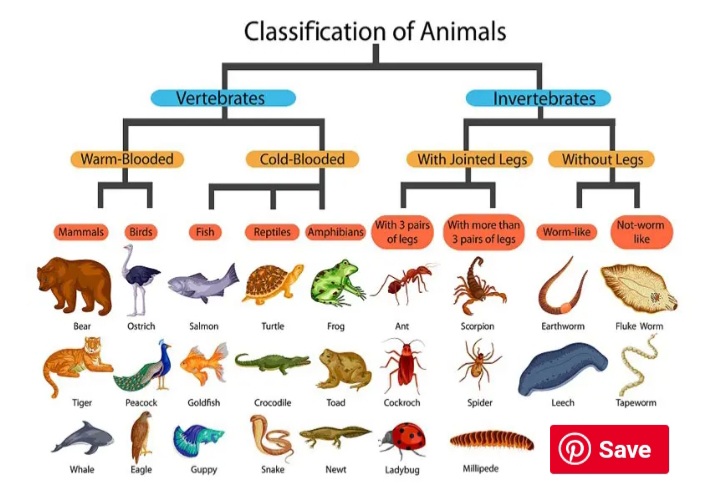
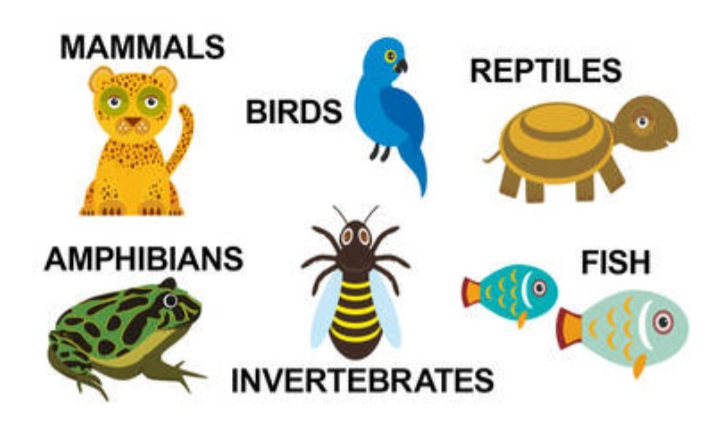
Scientists sort the different types of animals in the world into categories based on certain characteristics. Animals are generally grouped into six types of aninals. The system for animal classifications is called taxonomy.

The Animal Kingdom :

All animals belong to a biological kingdom called kingdom Animalia. This kingdom is then broken down into over 30 groups. About 75% of all species on earth are aninals. Animals are then broken down into two types : vertebrates and invertebrates.

* Animals with a backbone are vertebrates.

* vertebrates belong to the phylum called phylum chordata.

* vertebrates are classified into five classes. They are amphibians, birds, fish,mammals, and reptiles.

* Animals without a backbone are invertebrates.

* Most invertebrates are in the phylum Arthropoda.

1. Amphibians :

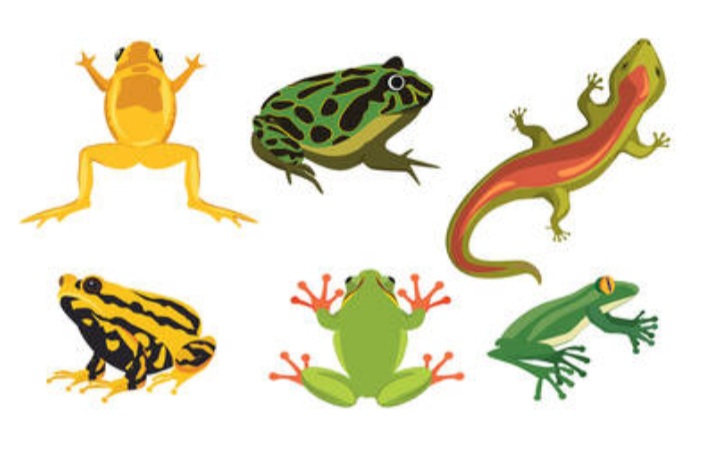
All amphibians are vertebrates, and they need moist environment or water to survive.

* They are cold- blooded.

* They absorb water and breathe through their thin skin

* They have at least one special king gland used for defense.

* Most follow the life cycle of egg-larva- adult.

* examples : frog , newts, salamanders, toads.

2. Birds

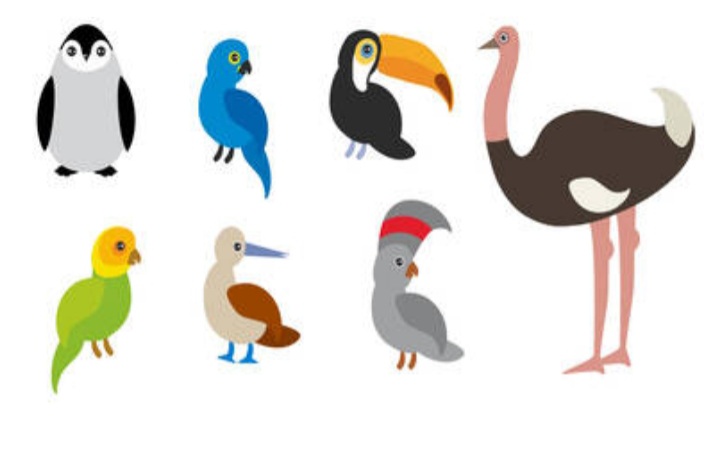
Birds are a type of warm- blooded vertebrate that are adapted to fly.

* Not all birds can fly, but they do all have wings.

* Birds have beaks that help them catch and swallow food.

* The digestive system of a bird allows it to eat whenever it can and digest that food later.

* Birds lay egg to reproduce.

* They are endothermic, mening they maintain their own constant body temperature.

* They are bipedal, which means they have two legs.

* They have hollow bones and their bodies are covered in feathers.

* Birds belong to the class called Aves.

* Examples : albatrosses, chickens, hummin birds, falcons, falmingoes, ostriches, owls, parrot, penguins, pigeons.

3. Fish :

Fish are also vertebrates, and they are considered the oldest-known vertebrates.

* They are ectothermic, or cold- blooded, which means they rely on their surroundings to regulate their body temperature.

* Fish have funs.

* Most, but not all, fish have bodies covered in scales and breathe through gills.

* Fish live under water.

* Examples : eels, hangfish, lampreys, minnows, rays, salmon, seahorses, sharks.

4. Mammals :

Mammals are another type of vertebrate that belongs to the class Mammalia.

* young mammals get nourishment from milk produced by their mothers.

* Most mammals have hair.

* Their jaw is hinged directly to their skull unlike all other vertebrates.

* Almost aĺl mammals give birth to live bsbies.

* They are endothermic, or warm- blooded.

* Examples : there are over 5500 living species of mammals all over the world. Aardvarks, bats, elephants, hamsters, human, rabbits, rhinoceroses, whales.

5. Reptiles :

Reptiles are thought to be the first vertebrates to live completely on land. But, not all reptiles live only on land today.

* They are cold- blodded, or ectothermic

* They lay eggs to reproduce.

* They have four legs or descended from animals with four legs.

* They breathe through lungs

* Their bodies are covered in scales or scutes.

* Examples : crocodiles, geckos, lizards, sea turtles, snakes, tortoises.

Invertebrates :

Approximately 95% of all animals are invertebrates. Invertebrates do not have a backbone. There are different types of invertebrates, but they all share a few characteristics.

• They are made up of many cells that work together, or multicellular.

• Most, but not all have tissues, cells that work together in a more complex way.

• Most, but not all, can move.

• There are over 35 phyla of invertebrates.

• They generally have soft babies.

Types of Invertebrates :

There are eight phyla of invertebrayes that are alive today.

* Annelida – have a segmented body and primitive brain

* Arthropoda – have jointed appendages and an exoskeleton.

* Cnidaria – have tissues and an incomplete digestive system

* echinodermata – have some type of spiny structure on their bodies

* Mollusca – generally have sofy bodies and a hard exoskeleton.

* Nematoda – unsegmented with worm- shaped bodies

* platyhelminthes – have soft, ribbon- like worms with no respiratory system.

* porifera – multicellular organisms living in water with no organs or tissues.

Examples : anemone( cnidaria) , clams ( mollusca), coral,