The Dutch are the people of Holland (now the Netherlands). The Dutch arrived in India shortly after the Portuguese. The Dutch have long been experts in sea trading. The Dutch government granted the United East India Company of the Netherlands license to trade in the East Indies, including India, in 1602. Dutch India was more of a geographical location than a political authority. In comparison to the Portuguese and the English, the Dutch had the shortest presence in India of all the European colonial powers.
Dutch history in India The Dutch East India Company was founded in 1602 and signified the Dutch entrance in India. They arrived in Andhra Pradesh’s Masulipatam (now Machilipatnam). From 1605 to 1825, they occupied the Indian subcontinent. Given the growing demand for Indian spices from Asia in Europe, the Dutch arrived to India with the intention of trading. The establishment of the Dutch East India Company marked the beginning of the modern multinational company (MNC). Following a pact between the Zamorin of Calicut and the Dutch chief, Steven Van der Hagen, Dutch trading in India began on November 11, 1604. The goal was to force the Portuguese off the Malabar Coast, but this was never achieved. The Dutch, on the other hand, soon built commercial facilities in various parts of India and traded cotton, textiles, silk, Indigo, and Golconda diamonds. In 1661, the Dutch conquered the Portuguese and took control of all of Malabar. They had now mastered the pepper trade and made tremendous profits selling pepper, which was known in Europe as “Black Gold.” In the 17th century, nothing could stop the Dutch from capturing Pondicherry from the French in 1693. In the East Indies, the Dutch became a large producer of sugar and coffee, as well as a big exporter of spices and textiles. During their time in India, the Dutch tried their hand at currency manufacture as well. They established mints in Cochin, Masulipatam, Nagapatam Pondicherry, and Pulicat as their trade grew. Furthermore, the Pulicat mint issued a gold pagoda with an image of Lord Venkateswara (god Vishnu). The Dutch minted coins that were all based on local coinages.
The Decline of Dutch power The Dutch East India Company began to fade in the mid-eighteenth century. It was characterised by poor corporate practices, corruption, and political upheaval. Martanda Verma, the formidable monarch of Travancore, defeated the Dutch in 1741 and reclaimed control of Malabar. The fourth Anglo-Dutch war, in which the British navy sunk Dutch ships and seized trading ports, resulted to their bankruptcy in 1799. Finally, the Anglo-Dutch Treaty of 1825 ended the Dutch dominance in India by transferring all Dutch assets to the British.
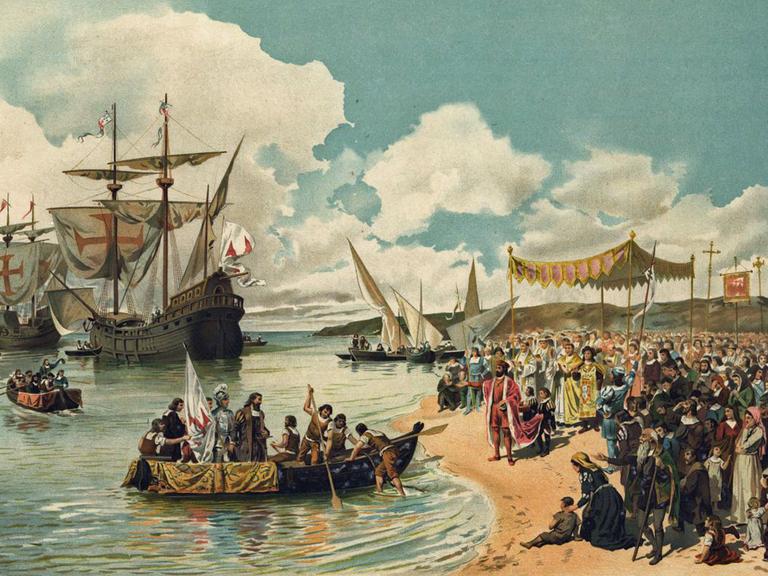
The Portuguese State of India was a Portuguese colonial state on the Indian Subcontinent. Vasco De Gama was the first Portuguese to set foot in India in 1498. However, Portuguese control in India is considered to have lasted from 1505 until 1961. Although Portuguese colonialism outlasted its English counterpart, it had little influence outside of its territories. The Portuguese were the first Europeans to arrive in India and the last to go.
Portugal’s Early Years in India When Vasco da Gama arrived in Calicut on the Malabar Coast on May 20, 1498, Portuguese colonialism began in earnest. He met with the ruler of Calicut, the Zamorin, and received permission to trade in Calicut. But Vasco da Gama was unable to pay the customs duties and the cost of his merchandise. The Zamorin’s officials detained some of Vasco da Gama’s soldiers when the duties were not paid. This enraged him so much that he kidnapped some Indians and fisherman. However, the voyage was a success in the eyes of the Portuguese authorities in Lisbon. A sea path around the Ottoman Empire was discovered, and the expedition made a profit well in excess of its initial cost.
Expansion of Portuguese Colonialism Vasco da Gama established a base of operations on the Malabar coast after further conflict with the Zamorin Kingdom. Francisco de Almeida, the first viceroy, placed his headquarters in what is now Cochin. Alfonso de Albuquerque, the second governer of the Portuguese territories in the East, was appointed in 1509. Off the coast of Calicut, a Portuguese fleet led by Marshal Fernão Coutinho arrives. Their orders were quite clear: destroy the Zamorin. The city was levelled and the palace of the Zamorins was taken, but the local soldiers rallied and attacked the invading Portuguese, forcing them to retreat and wounded Albuquerque. In 1510, Afonso de Albuquerque defeated the Sultanate of Bijapur, establishing Goa as a permanent settlement. It would later become the viceroy’s seat and the headquarters of the Portuguese colonial conquests in India. Modern-day Mumbai was likewise a colonial possession until 1661, when it was handed over to the British. From 1799 until 1813, the British conquered Goa for a brief while, eradicating the final vestiges of the inquisition. The capital was moved to Panjim, which was later renamed Nova Goa, in 1843, when it became the administrative center of Portuguese India. For the next century, Portuguese control would be limited to Goa and the enclaves of Diu and Daman.
Cause of Decline of Portugal in India While the British granted independence to most of India, the Portuguese retained colonial colonies in India. Local anti-Portuguese demonstrations in Goa were violently suppressed. Despite repeated pleas from the Indian government, the Portuguese government, led by dictator António de Oliveira Salaza, refused to hand over its colonial holdings, saying that they were an intrinsic part of Portuguese territory. The invasion of Goa by the Indian troops took place in December 1961. The Portuguese attempted to resist against overwhelming odds, but were quickly crushed by the Indian Army. On December 19, 1961, the Governor of Portuguese India signed the Instrument of Surrender, freeing Goa after 450 years of Portuguese domination in India.
Many modern-day scientists see themselves as the first to create all the technological advancements we use today. Yet many of the so-called discoveries are nothing more than re-inventions created by examining the knowledge of the ancients. Many things related to science and invention have their origins in the thoughts and imagination of the sages of Ancient India. Indian culture has evolved over the ages by India’s ancient Rishis, who at the banks of its holy rivers had ‘discovered’ the Vedic literature – the very foundation of Indian civilization. The term ‘Rishi’ originally denoted the composers and singers of Vedic hymns. However, the Rishi is also a ‘sage’ to whom the Gods revealed the Vedas (knowledge of the eternal truths about the Creator, His creation and means to preserve it).Some lost works of science by Indian sages are-
Acharya Sushruta – Father of Surgery
Acharya Sushruta was a great Indian Physician and was known to be as the Father of Surgery or Father of Plastic Surgery. The Sushruta Samhita is one of the most important survived ancient texts on medicine and it is considered a foundational text of Ayurveda. He was the world’s first surgeon who performed complicated surgeries 2600 years ago.The Sushruta Samhita has 184 chapters containing descriptions of 1,120 illnesses, 700 medicinal plants, 64 preparations from mineral sources and 57 preparation based on animal sources. It describes thoroughly the surgical techniques of making incisions, extractions of foreign body or particles, how to probe, excisions, tooth extraction, how to remove prostate gland, dilation of Urethral stricture, vesicolithotomy, hernia surgery, how to do C-section (Caesarian for baby delivery), laparotomy, management of intestinal obstruction, perforated intestines and accidental perforation of the abdomen with protrusion of omentum and the principle of fracture management. He also classified the eye diseases including cataract surgery.It is interesting to note that when surgery was not even heard and performed by the other parts of the world, here Sushruta was performing Rhinoplasty and many other challenging operations.
Panini – Father of Linguistics
Panini was an ancient Sanskrit philologist, grammarian and a received scholar in ancient India. He is considered as First Descriptive Linguist and is known as the Father of Linguistics. He is well known for his text Astadhyayi, a Sutra on Sanskrit grammar. He analyzed the noun compounds which is still been followed in the theories of the Indian language. Panini’s comprehensive and scientific theory on grammar is conventionally taken to mark the start of Classical Sanskrit.The Astadhyayi is the oldest linguistic and grammar text of any language and of Sanskrit surviving in its entity. His rules have a reputation for perfection – he described the Sanskrit morphology completely. Panini made use of technical metalanguage consisting of syntax, morphology and Lexicon. This metalanguage is organized according to a series of Meta – rules, some of which are explicitly stated while others can be deduced.The Astadhyayi consists of 3,959 sutras in eight chapters. This text attracted many of the ancient authors to upgrade their text in terms of Language.
Acharya Nagarjuna – Master of Chemical Science
Nagarjuna was a great Indian metallurgist and alchemistHe did his research for around 12 years in the field of chemistry and metallurgy. Textual masterpieces like “Ras Ratnakar”, “Rashrudaya” and “Rasebdramangal” are his renowned contributions to the science of chemistry. He also discovered the alchemy of transmuting base metals into gold. He did his experiments especially on mercury. He distinguished between the metals and the sub metals and also between solvents and soluble. He stated that Mercury could dissolve all metals. He also invented the processes of “Distillation” and “Calcinations”. He was the first person in the planet to use a Mercury as medicine. He found five types of mercury: red and grey were good; yellow, white or multi colored had so much of bad qualities and this should use as a medicine after several treatments.Alchemist or today what we called as Chemist was the Gifts for Nagarjuna. He made several discoveries which was the path to the other discovers to lead in this field.
Baudhayana – Discovered Pythagoras Theorem
Baudhayana was a great Mathematician, who was also called a priest. He is the author of the Sulba Sutra which contained several important mathematical results. He discovered the several concepts in mathematics which was later rediscovered by the other scientist in the western world. The value of the pie was discovered by him. Today all know how to use the pie and where to use (calculating the area and the circumference of a circle). He also discovered Pythagoras Theorem in Sulba Sutra. He provided how to find a circle whose area is the same as that of a square. The other theorems includes the diagonals of rectangle bisect with each other, diagonals of rhombus bisect at right angles, area of square formed by joining the mid points of a square is half of original.The mathematics given in the Sulba Sutras is there to enable the accurate construction of altars needed for sacrifices. It is clear from the writing that Baudhayana must have been a skilled craftsman. He was a great Practitioner.
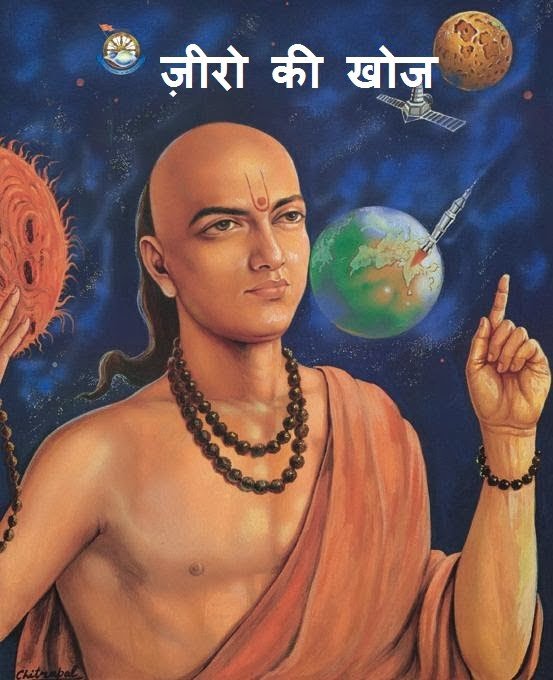
Acharya Aryabhata – Motions of the Solar System
Acharya Aryabhata was the first mathematician astronomer from the classical age of Indian mathematics and Indian astronomy and is not an unknown name. His major work on Aryabhatiya was very successful. It is extensively referred in the Indian mathematical literature and has been survived to modern times.
Acharya Aryabhata correctly stated that the earth rotates about its axis dailyr. He also stated that the motion of the stars are being observed just because the earth is rotating. He was also succeeded in explaining the geocentric model of the Solar System. The positions and periods of the planet was calculated relative to uniformly moving points. He stated that the Mercury and Venus move around the earth at the same speed as of the sun. He was also succeeded in explaining eclipses in terms of shadows cast by and falling on earth. He also mentioned Units of Time or the Sidereal rotation that earth takes 23 hours, 56 minutes and 4.1 second to complete one revolution and the sidereal year has 365 days, 6 hours, 12 minutes and 30 seconds which in turn adds an extra one day every after four years which is called a leap year.Calendric calculation which was devised by him is still being used in India for Practical purposes for fixing the Hindu calendar. India’s first satellite Aryabhata and the lunar crater Aryabhata are both named in his honor.
Maharishi Bharadwaj –Invention of the First Airplane of Earth
In 1875, the Vymaanika Shaastra, a 4th Century BC text written by Sage Bharadwaj was discovered in a temple in India. The book greatly deals with the operation of ancient vimanas and included information on steering, precautions for long flights, protection of the airships from storms and lightning and how to switch the drive of solar energy or some other form of energy.
One of the chapter will reveal the secrets of constructing aeroplanes that cannot be broken or cut, that is indestructible, that is fire resistant. It also deals with the secret of making planes motionless and invisible. It also describes how to defeat the enemy planes etc. as per the Sage Bharadwaj the vimanas were classifies as per the Yugas. During the period of Krita Yuga, Dharma was establishes firmly. The pushpak Vimana which was used by Ravan was an Aerial vehicle. He used this vehicle to kidnap Sita from jungle and took him to his Kingdom Srilanka. Ramayana was during the Treta Yug in which the Vimanas were highly discovered. During this period “Laghima” gave them the power to lighten their vehicle do they can travel freely in the air.In present Kaliyuga both Mantra and Tantra Shakti are almost vanished from the earth and so the ability to control vehicle has also been gone. Today the artificial vehicles are built which is called as Kritaka Vimanas.
Practicing yoga for even a few minutes a day can help you gain more awareness of your body. This will help you notice where you’re holding tension and where you have imbalances. You can use this awareness to bring yourself into balance and alignment. We hardly sit with a straight back or take any effort to improve our body posture. This imbalance in the alignment results in back pain. Sedentary lifestyle and lack of exercise are other reasons for a back ache but it’s not too late. You can get rid of back ache with yoga asanas.
Adho mukha svanasana (Downward facing dog)
Adho mukha svanasana or the downward dog position is one of the best known yoga poses. This asana is for your entire body. It boosts your metabolism, clears your mind, stretches your ankles and calves, strengthens your bones and is an excellent pose to get relief from back pain.
Marjaryasana (cat/cow pose)
Cat/cow pose massages your spine and relieve the stress. This pose keeps your back healthy and limber. It is also effective in improving your mental stability. It allows for a nice flexion and extension of the spine, promotes mobility, and it also helps to just relieve any tension in the lower back.Cat/cow also helps you get familiar with what your neutral spine is—not too arched and not too rounded—which can help improve posture.
Paschimottanasana (Seated forward bend)
The seated forward bend or paschimottanasana stretches your spine and eases lower back pain. It provides relief from neck pain and stiffness, eases PMS symptoms, stimulates liver, improves digestion and reduces fatigue
Salabhasana (Locust Pose)
Locust pose or salabhasana improves your core strength, stretches your spine and strengthens your legs. It will open your chest, improve your digestion and stimulates kidneys. Do not do this if you suffered an injury to your shoulders, arms or back recently
Trikonasana (Triangle Pose)
The triangle pose or trikonasana strengthens your spine, legs, shoulders and chest. It also improves your body alignment and stretches your hamstrings and calves.
Bhujangasana(Upward-Facing Dog)
If you experience back pain when bending forward, this is an especially helpful move since it stretches your low back. This also works to activate the muscles around the spine, which better supports painful areas
Shashankasana (Child’s Pose)
This gentle forward fold is the perfect way to relax and release tension in your neck and back. Your spine is lengthened and stretched. Child’s Pose also stretches your hips, thighs, and ankles. Practicing this pose can help relieve stress and fatigue.
Yoga is such an efficient way to help your body and mental health. It is also very easy, but make sure you follow instructions and try out increate asana to avoid pulling a muscle! You can start a home practice with as little as 10 minutes per day. You can use books, articles, and online classes to guide your practice. Once you learn the basics, you can intuitively create your own sessions.
There is enough in the world for everyone’s need, but there is not enough to meet everyone’s greed, said Mahatma Gandhi, Father of our nation. By these Mahatmaji is calling our attention towards the greed of the world’s most greedy species, namely the human being. As human beings are the only species which could think and feel, it is also the only species that exploits the nature in any which ways possible for their short-term gain. Ignoring the fact that human beings are comparatively new species when we consider the entire time frame of life on earth, we are behaving as if the entire planet and its resources are solely meant for making human lives easier.
The social and economic development of a country owes a lot to the development of energy resources. Man’s greed and uncontrolled use of these resources has resulted in its depletion and in turn has put a question mark on the future of this beautiful planet.
Scientists fear that the conventional energy sources like crude oil, natural gas, etc may become extinct before the end of this century. This has turned man towards the development and promotion of alternate energy resources.
The most important source is solar power because sun is the largest source of energy in this universe. Our country India receives 5000 trillion kilo watt of solar radiation per year. Most part of our country have not less than 300 clear days in a year. It is possible to generate 20 mega watt solar power per square kilometer land area. This energy can be used for a variety of applications like cooking, water heating, water pumping, lighting, etc. Latest innovations have made it possible to run vehicles like cars, trains and even small aircrafts. The German railway, a pioneer in the entire organization will be operated by solar energy by the end of another 25 to 30 years.
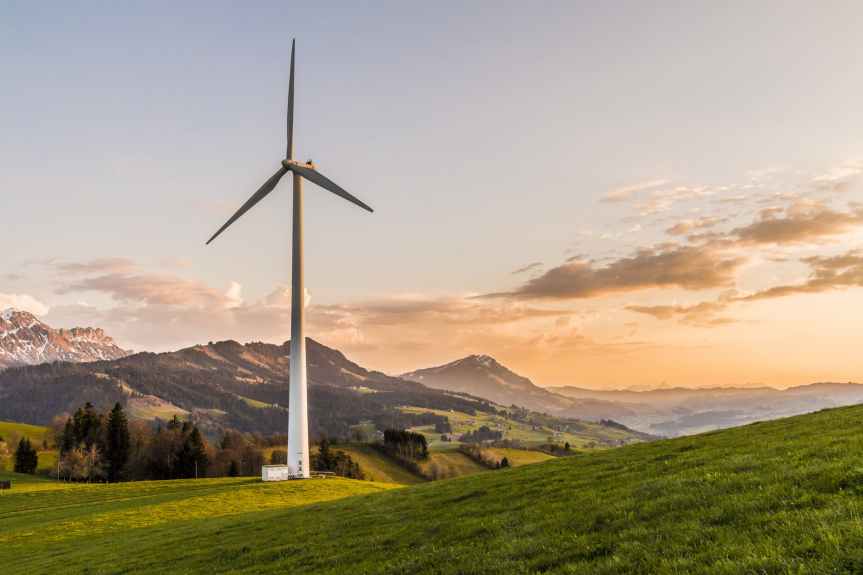
Another one is wind power. India now holds a significantly high position in the list of wind power capacity. The gross wind power potential of India is estimated to be above 45000 milli watt, while the present technical is only near one third of this capacity. It should be noted that the government has initiated several plans and policies to make use of this immense potential.
We can also obtain energy from biomass. It includes food and food waste, municipal waste, land fills gas and biogas. The use of Ethanol blended fuel and bio diesel is also an emerging trend which could replace several other means effectively.
Hydro power is also a prospect for the world with two third of the planet covered with water. If widely used hydro power could be generated from the enormous water resources available in this planet by setting up small hydro power plants.
As the eminent scholar professor Yashpal rightly quoted, “we have not inherited this world from our ancestors, but we have borrowed it from our children”. So, it is high time we turn to some alternative energy sources and leave something for our future generation also.
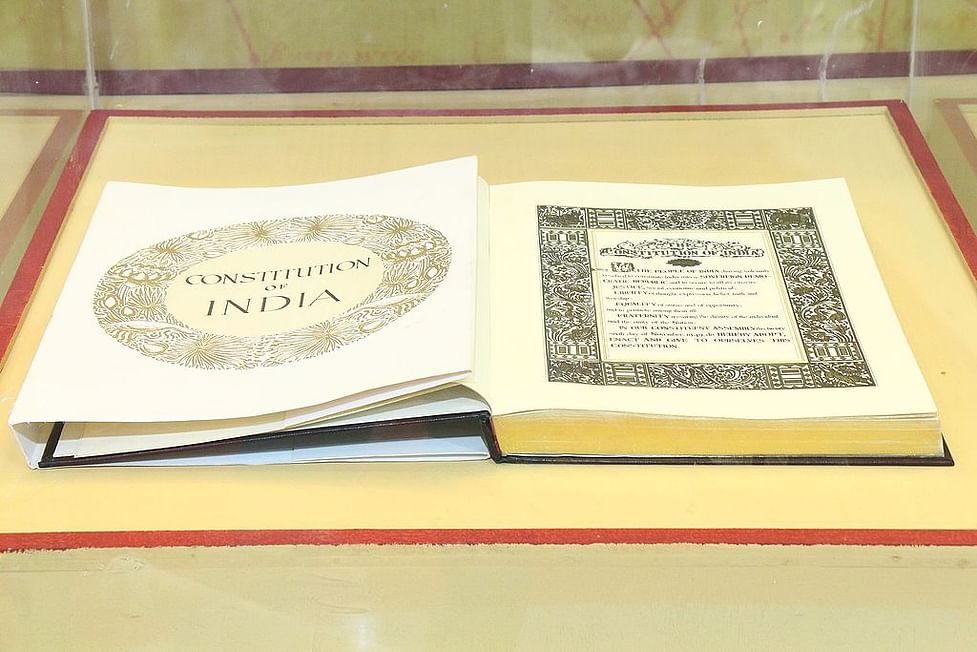
Indian constitution is one of the largest constitutions in the world. Even though it is a compilation of borrowed ideas from several parts of the world, it upholds the values and vision of the great freedom fighters who shed their blood for our nation. The constitution has played a significant role in holding together this huge diverse nation for a period of 75 years. On examining each and every aspect of the constitution the vision shared by the visionaries become more evident.
Doctrines of the constitution are general guidelines laid for enabling proper interpretation of the constitution. It is acts as a guide for the law makers as well as implementers.
The doctrines are:
Doctrine of eclipse
The Doctrine of Eclipse states that any law which is inconsistent with fundamental rights is not invalid. It is not totally dead but overshadowed by the fundamental right. The inconsistency (conflict) can be removed by constitutional amendment. This doctrine emanates directly from Article 13(1) of the Constitution that is a part of the fundamental rights, which states, “all laws in force in the territory of India immediately before the commencement of this Constitution in so far as they are inconsistent with the provisions of this Part, i.e. Part III, shall, to the extent of such inconsistency, be void.” The doctrine of eclipse envisages fundamental rights as prospective in nature. It states that a pre-constitutional law inconsistent with the fundamental rights is not nullity or void ab initio but only remains unenforceable, i.e., remains in a dormant state. They exist for all past transactions, i.e., for rights and liabilities that were acquired before the Constitution came into being.
Doctrine of severability
This doctrine of severability is also known as the doctrine of separability. The word “to the extent of the inconsistency or contravention” makes it clear that when some of the provision of a statue when some of the provisions of a statute becomes unconstitutional on account of inconsistency with fundamental rights, only to the repugnant provision of the law in question shall be treated by the courts as void, and not the whole statute. The doctrine of severability means that when some particular provision of a statute offends or is against a constitutional limitation, but that provision is severable from the rest of the statute, only that offending provision will be declared void by the Court and not the entire statute.
Doctrine of judicial review
The doctrine of Judicial review is basically the power of the judiciary to decide on the constitutional validity of the acts of the other wings of the government (the executive and the legislative). The objective is to regulate any such acts which may contravene the constitution. For instance, if any act of the law-making bodies is such that it negates the provisions given in the constitution, it is important that it should be made null and void. In order to do so an organ is required to have the force or power to articulate such acts as void.
Doctrine of pith and substance
To disintegrate the doctrine to its molecular meanings, Pith denotes true nature or essence of something and Substance means the most important or essential part of something. The definition of this doctrine states, within their respective spheres the state and the union legislatures are made supreme, they should not encroach upon the sphere demarcated for the other. Doctrine of Pith and Substance is applied when legislation made by of the legislatures is challenged or trespassed by other legislatures. This doctrine says that when there is a question of determining whether a particular law relates to a particular subject the court looks to the substance of the matter. If the substance of the matter lies within one of the 3 lists, then the incidental encroachment by law on another lists, does not make it invalid because they are said to be intra vires.
Doctrine of harmonious construction
According to the Doctrine of Harmonious Construction, a Statute should be read as a whole and one provision of the Act should be construed with reference to other provisions in the same Act so as to make a consistent enactment of the whole statute. Such an interpretation is beneficial in avoiding any inconsistency or repugnancy either within a section or between a section and other parts of the statute.
On October 17, 1949, Article 370 was added to the Indian constitution, as a ‘temporary provision’, which exempted Jammu & Kashmir, permitting it to draft its own Constitution and restricting the Indian Parliament’s legislative powers in the state. It was introduced into the draft constitution by N Gopalaswami Ayyangar as Article 306 A.
Under Article 370: The Constituent Assembly of Jammu & Kashmir was empowered to recommend which articles of the Indian Constitution should apply to the state,The J&K Constituent Assembly was dissolved after it drafted the state’s constitution. The article allowed the state a certain amount of autonomy – its own constitution, a separate flag and freedom to make laws. Foreign affairs, defence and communications remained the preserve of the central government.As a result, Jammu and Kashmir could make its own rules relating to permanent residency, ownership of property and fundamental rights. It could also bar Indians from outside the state from purchasing property or settling there.
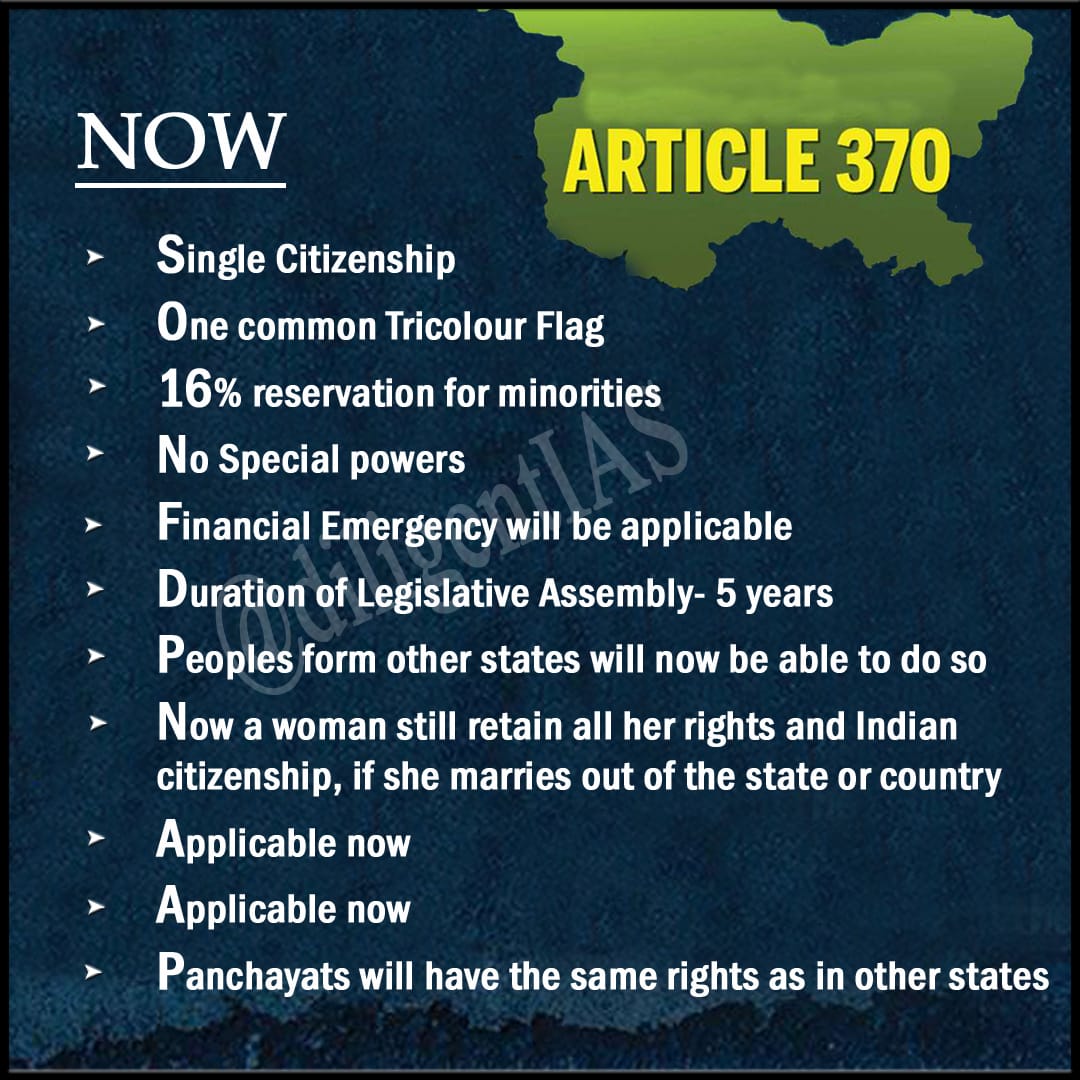
On 5th August 2019, President of India in the exercise of the powers conferred by Clause (1) of Article 370 of the Constitution had issued the Constitution (Application to Jammu and Kashmir) Order, 2019. Through this, Government of India has made modifications in Article 370 itself (not revoked it).With this, the Government of India has dramatically altered the relationship between the state of Jammu and Kashmir and the Indian Union. Order, 2019 has replaced Presidential Order of 1954.Subsequently, the Jammu and Kashmir Reorganisation Bill, 2019, passed by Parliament divides the state of Jammu and Kashmir into two new Union Territories (UTs): Jammu & Kashmir, and Ladakh.This is the first time that a state has been converted into a UT.Of the six Lok Sabha seats currently with the state of Jammu and Kashmir, five will remain with the union territory of Jammu and Kashmir, while one will be allotted to Ladakh.The UT of Jammu and Kashmir will have an Assembly, like in Delhi and Puducherry.Instead of 29, India will now have 28 states. Kashmir will no longer have a Governor, rather a Lieutenant .The special status provided to J&K under Article 370 will be abolished. Jammu & Kashmir will no longer have the separate constitution, flag or anthem. The citizens of Jammu and Kashmir will not have dual citizenship. As the new union territory of Jammu and Kashmir will be subject to the Indian Constitution, its citizens will now have the Fundamental Rights enshrined in the Indian constitution. Article 360, which can be used to declare a Financial Emergency, will now also be applicable. All laws passed by Parliament will be applicable in Jammu and Kashmir, including the Right to Information Act and the Right to Education Act. The Indian Penal Code will replace the Ranbir Penal Code of Jammu and Kashmir. Article 35A, which originates from the provisions of Article 370 stands null and void. Since Presidential Order has extended all provisions of the Constitution to Jammu and Kashmir, including the chapter on Fundamental Rights, the discriminatory provisions under Article 35A will now be unconstitutional.
The Need for Changes in abolishing A370 was dire. Article 370 was added in the Indian constitution to provide autonomy to J&K.However, it failed to address the well-being of Kashmiris who have now endured two generations of insurgency and violence. It contributed to the gap between Kashmir and the rest of the nation. In the newly-formed Union Territory of J&K, the central government is trying to formulate new rules that will give domicile rights to residents over land and in government jobs. This has been a response to the perception that the unemployment rate in J&K is higher than the national average.Domicile rights have also been a long-standing demand of the Dogras of Jammu and the Buddhists of Ladakh. While most of those interviewed by this author chose to remain silent on the issue of domicile rights, a few expressed their fears that such a move will further limit the employment opportunities for the local youth and also lead to a demographic disruption in the Valley.
Possible Consequences include rise in militancy as Article 370 was seen by Kashmiris as a marker of their separate identity and autonomy. Widespread protests and violence as a reaction to the dilution of Article 370 are bound to take place .Terror elements in Pakistan would find Kashmir to be the most fertile ground for breeding terrorism. The unrest can affect the democratic progress that has been made so far. Opposition political parties could launch a legal challenge but Kashmir is an emotive issue with many Indians, and most parties would be wary of opposing the move lest they be branded anti-India. All in all, Kashmir and the people there are reaching towards normalcy after 2 years of removing article 370, but for how long will peace prevail? India is hoping for a long one.
Public Policy is new tool of Government to solve socio economic problems through several policies such as Agriculture Policy, Labour Policy, Health Policy, Education Policy, Wage Policy, Industrial Policy and Foreign Policy etc. Government view public policy as a dependent variable and study as to how society is evolving and Political system shaping the nation.
The field of public policy has emerged comparatively in beginning as traced in early 1950s. The concept of public policy was originated in 1951 from the publication of Harold Lasswell. According to Thomas R Dye, Public Policy is what Government will choose to do or not to do. In indian context, public policy could be government rules and Programmes in the form of political system of laws, ordinance, court decision, executive orders, decisions or even unspoken understanding of what is to be done.
Paul Appleby, the essence of public administrative decision policy defined as a purposed course of action of an individual a group, an Institution or government to realize a specific objective or purpose, within a given environment. The process of public policy flows both top to bottom and bottom to top or even simultaneously. The policy process is viewed from higher level as execution of Policy and viewing meta Policy meaning progressive.
After independence, India did not carry a specific structural path for economic development. It was decided that economic development must be based on social, political growth that transmutes human advancements. India adopted the Socio – economic development model in which major areas were industries and agriculture. Planning commission (now NITI Aayog) for the purpose of development initiatives adopted in a five year plan as a major development plan. structure policies Public policy developed as academic pursuit in the 1950s. However, Public Policy was very much evident in 1940, stimulating Government activities and academic organizations. Study of government, policy, Social Science involves political Science, public administration, economics and management.
Dimock stated public policy as “deciding at any time or place what objectives and substantive measures should be chosen in order to deal with particular problems”. Public Policy process structure to maximize and utilize all resources to overcome the catastrophic events. Public Policy is a continuous process, furiously working towards acquiring best outcomes. Righteous and accurate conditioning helps to bring desired aims. The process requires transparency, decentralization, and effective policy implementation. Public Policy Process is significant to change nation economic, social, and political representation especially in the Case of developing nations.
According to Chandler and Plano, treated public Policy as ” the strategic use of resources to alleviate national problems or governmental concerns”. Freeman and Sherwoods stated that it is the Public answer to the interest in refining the circumstances. Robert linebewy emphasized on “it is what governments do and fail to do for their citizens”. Anderson expresses it,” policy is being made as it is being administered as it is being made”.
Understanding of Public Policy
Source: iass.potsdam.de
The Public Policy process is a kind of Physics equation that if finding a small error will cost the huge problem, also diffuses the whole processing mechanism. Public policy processes require pointed manifestation at each level. Hogwood and Gunn (Policy Analysis for the Real World, 1984) concluded nine vital Stages in the policy process: Agenda Setting, object screening issue defining , forecasting alternatives, objectives & priorities, policy implementation, monitoring and control, policy maintenance, succession and termination, these all required for successful policy. As we are aware, policy making is a complex and dynamic strategy, it requires certain tools to resolve the real world problem of economic, financial, economic, social problems. Public Policy enacted by the government or its executives with the help of civil Societies, media, and pressure groups.
In the Context of public policy process Lindblom stressed on a highly relative and plasticity decision making system characterised by compromise, incrementalism and continual adjustment. Public policy process is conceptualized as in sequence or stages ( Benson, Jordan, 2015). There are (1) sequence follows as – i) Problem emergence 2) agenda setting 13) Consideration of policy options, &) Decision making 5) implementation 6) evaluation (Jordan and Adelle, 2012).
A policy can be simple or complex, explicit or implicit, discretionary or detailed, private or public qualitative and quantitative. Government does not set advisory principles; it is the Supreme Court who decides and provides new interpretations of the articles of constitution to curve out the new Policy.
Nature of public policy covering wide portion of its activities such as socio- economic development, women empowerment, child labour, equality, education and so on. Nature of Public policy foremost needs Policy making closely related to decision-making. Decision making includes an identification of a problem, sharp analysis, and the ability to see alternatives. Policies have specific goals, It is absolute to expect a policy to indicate the direction towards. where actions are required. The choices of policies or its objectives are frequently mesmerized. Thus, goals and objectives depend on the values of the policy makers. Planning or formulation is a key component to move forward in the public policy process. Administrators must maintain a planner to know the portion of resources, investments because goals cannot be achieved without having proper planning. Policy Analysis is most significant to rectify any problem in process; it is a technique to use in Policy Process. Basically used for problem assessment and monitoring. Before the decisions, Similarly, Policy Management is also familiar with implementation. It deals with policy making and policy preparation process, it ensures it is producing good quality policies.
Thus, goals and objectives depend on the values of the policy makers. Planning or formulation is a key component to move forward in the public policy process. Administrators must maintain a planner to know the portion of resources, investments because goals cannot be achieved without having proper planning. Policy Analysis is most significant to rectify any problem in process; it is a technique to use in Policy Process. Basically used for problem assessment and monitoring. Before the decisions, Similarly, Policy Management is also familiar with implementation. It deals with policy making and policy preparation process, it ensures it is producing good quality policies.
Policy management should be considered as a loose point or giving no importance, it is an Icebreaker of Public Process, if you assess anything wrong at this stage, there will be high chance to “trash in” the policy. That is why policy analysis and policy management is interdependent.
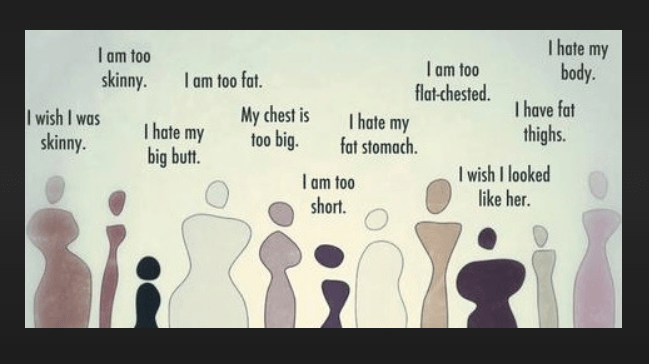
Ever heard these? I hear them daily and it’s either about my self or a group of people or a person talking , to be more clear gossiping about some one else.
So the society expects one to be perfect ,like fair color, good height and slim and fit ,but are every one built in the same way? of course no , just like all the five fingers of our hand are different ,every human being is different and beautiful in their own ways.
If a girl is dark the whole society gives advices ,how to become fair ,if she or he is fat they are given advices about how to reduce weight , if skinny then how to increase their weight, if short ,how to become tall , I just keep wondering if the society has problem with every one’s appearance ?
From my personal experience , I can tell you that I faced such things , I was bullied in my school by my classmates , my friends and even my relatives bullied for my appearance , I could not tolerate them and even I cried due to that , and used to be envious of others for their personalities. I too wanted to achieve what they had and for that I used to skip meals some times and due to that I would feel more hungry than ever and used to over eat. As the time passed I started to accept my body and for my health and fitness , I took healthy steps in my life and started exercising and developing good healthy food habits.
I understood that everyone is beautiful in their own ways and its something that everyone has to accept , I understood that this bullying and body shaming is not good , not for your mental neither for your physical health, body shaming can lead to mental health issues , people start to overthink and worry about their appearance and in order to look perfect and beautiful they will choose faster and dangerous ways , like trying to reduce fat in just a week or trying to increase height and all this is really dangerous for one’s health and can lead to other dangerous consequences.
People of every gender and of all ages must deal with body shaming , it not a big issues , but this can damage one’s mental health the one at whom we are laughing at , whom we are body shaming, or mocking, this may also lead to emotional damage and trauma and depression.
So who are the culprits behind this , one is the society and the other is we ourselves , the product advertisers are the main ones for creating a pain point and then offering a solution to it, making ourselves think that we are not worthy and if we are not of certain skin tone ,height or weight and all , secondly we have ourselves to blame because we do not believe in ourselves and our bodies and we do not treat them well , we do not accept ourselves for how we are and then all this leads to a solution to overcome our issues and that too in a quick and unhealthy way ,leading to more disasters .
I just want the society to accept everyone as they are and to appreciate everyone’s personality since its unique for everyone and to stop body shaming or bullying . Society can be more beautiful if we accept people how they are and try not to change their appearance and instead help build confidence with in them about how unique they are and how to accept and love your body . Not only the society but firstly you yourself have to accept your body and treat it in a proper way and you have to love yourself the way you are , because self love comes first and you have to your first priority.
RBI governor, Shaktikanth Das, on May 4 2022 revised the repo rates. On this context, let us look more about the credit control measures adopted by Reserve bank of India.
Reserve bank is the apex body to control the banking system in India. As we all know banks are the major link in money supply. Thus, RBI can control the money in the economy by controlling the banks. These policies are termed as monetary policy.
RBI could adopt either quantitative or qualitative methods.
Quantitative methods
Statutory Liquidity Ratio
Statutory Liquidity Ratio or SLR is the minimum percentage of deposits that a commercial bank has to maintain in the form of liquid cash, gold or other securities. It is basically the reserve requirement that banks are expected to keep before offering credit to customers. The SLR is fixed by the RBI and is a form of control over the credit growth in India.
The government uses the SLR to regulate inflation and fuel growth. Increasing the SLR will control inflation in the economy while decreasing the statutory liquidity rate will cause growth in the economy. The SLR was prescribed by Section 24 (2A) of Banking Regulation Act, 1949.
Cash Reserve Ratio
CRR is an essential monetary policy tool used for controlling the money supply in the economy, a regulation implemented in almost every nation by the Central Bank of that country.
CRR rate is the minimum percentage of cash deposits (as specified by RBI) that must be maintained by every commercial bank as per the requirement of the Central Bank.
Cash Reserve Ratio Rate is computed as a percentage of the net demand and time liabilities of each bank. Net Demand and Time Liability is reached with the total of the savings account, current account, and fixed deposit balances.
Bank rate
Bank rate is a rate at which the Reserve Bank of India (RBI) provides the loan to commercial banks without keeping any security. There is no agreement on repurchase that will be drawn up or agreed upon with no collateral as well. The RBI allows short-term loans with the presence of collateral. This is known as Repo Rate. Bank Rates in India is determined by the RBI. It is usually higher than a Repo Rate on account of its ability to regulate liquidity.
Open market operations
Open market operations refer to the selling and purchasing of the treasury bills and government securities by the central bank of any country in order to regulate money supply in the economy.
It is one of the most important ways of monetary control that is exercised by the central banks. Under this system, the central bank sells securities in the market when it wants to reduce the money supply in the market. It is done to increase interest rates. This policy is also known as the contractionary monetary policy.
Similarly, when the central bank wants to increase the money supply in the market, it will purchase securities from the market. This step is taken to reduce the rate of interest and also to help in the economic growth of the country. This policy is known as the expansionary monetary policy.
Qualitative methods
Margin Requirement:
Margin requirement refers to the difference between the current value of the security offered for loan (called collateral) and the value of loan granted. It is a qualitative method of credit control adopted by the central bank in order to stabilize the economy from inflation or deflation.
Rationing of Credit:
Rationing of credit refers to fixation of credit quotas for different business activities which is introduced when the flow of credit is to be checked particularly for speculative activities in the economy.
Moral Suasion:
The central bank makes the member bank agree through persuasion or pressure to follow its directives which is generally not ignored by the member banks. The banks are advised to restrict the flow of credit during inflation and be liberal in lending during deflation.
Indian economy is one of the developing economies in the world and is expected to reach new heights in the coming decades. But a sizeable population of this economy particularly the poor, underprivileged, disadvantaged and vulnerable group of people does not have access to most basic financial services. Formal lending agencies often left the poor unbanked on account of high levels of transaction cost incurred in lending to the poor. Their access to formal banking channels was constrained to their resource base as well as the nature of formal credit institutions. The demand for collateral security that a micro- borrower did not possess, the credit worthiness of the poor, high transaction cost due to difficulties in screening, and unattractive business proposition due to tiny savings and loans, were the deterrents faced by the formal lending institutions in loaning to the poor. Consequently, the poor continued to be dependent on informal sector lending, paying exorbitant rates of interest or underselling the product and their labor power to the creditor. Formal financial system was less accommodative to women.
The realization that this sort of unequitable development could not lead to the well -being of the society raised the need for financial inclusion. Financial inclusion is delivery of financial services like bank accounts, savings product, remittances and payment services, insurance, financial advisory services and micro credit to weaker sections in rural and urban areas at an affordable cost. It also involves actions to provide access to formal financial system like nationalized banks. Government of India and Reserve bank of India have taken series of measures and have experimented various alternatives to take financial services to the masses, but the task is stupendous, hence the pace of work should be accelerated and sustained. Since the formal banking system was limited to collateral based lending, there arose a need for developing a new system for financing the marginalized sections.
Microfinance by providing small loans and facilities to those who have been excluded from commercial financial services, has wider scope in the area of financial inclusion. The basic idea of microfinance is that poor people are ready and willing to pull themselves out of poverty if given access to economic inputs. The need for informality in credit delivery and easy access is denoted by the fast growth of microfinance providers in reaching out to small borrowers. The major microfinance providers in India are SHG-Bank linkage model, Non- Banking Financial Institutions and some trusts. Among these initiatives Self Help Groups have emerged out as an efficient alternative as they are uniquely positioned among the beneficiaries. Many of them operate over a limited geographical area, have a greater understanding among the rural poor, enjoy greater acceptability among the people and have flexibility in operations providing a level of comfort to their clientele. This fills the existing gap between formal financial networks and unfinanced poor weaker sections which is the intention of financial inclusion.
The SHG-bank linkage program gained extensive acceptance amongst NGO community and bankers. Establishing one million SHGs, the NABARD envisioned covering one third of the rural population in India. By the year 2002–03, promulgations were made for linking 200,000 SHGs. Visually perceiving SHG-bank linkage program emerging as a major way of banking with the poor in the ensuing years, the task force on microfinance estimated that at least 25,000 bank branches, 4000 NGOs, and 2000 federations of SHGs involving 0.10 million personnel of these institutions would scale up microfinance to a great magnitude.
For example, in Kerala, Kudumbashree Mission has emerged as one of the renowned Self-help group initiatives on a worldwide basis. Even though it was incorporated with the mission of women empowerment, it has grown out as source for economic empowerment for the marginalized sections of the society. It has outnumbered several other financial institutions in the case of provision of microfinance and has emerged out as a reliable tool for financial inclusion.
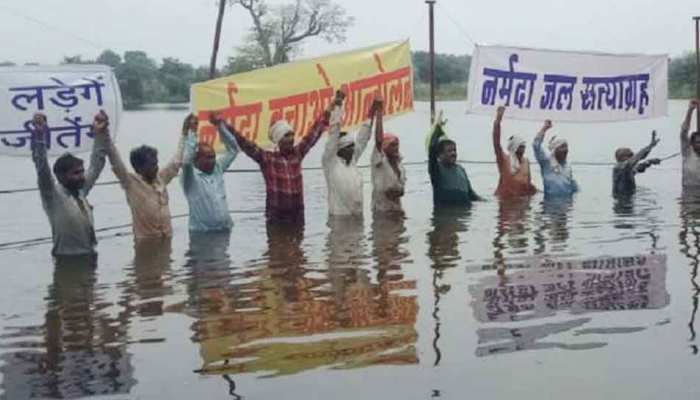
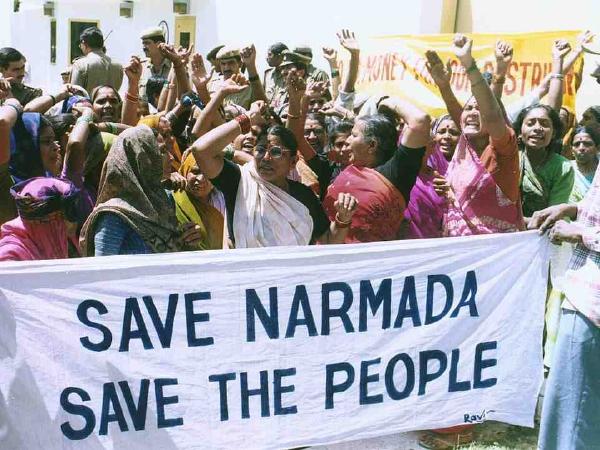
In 1985, Narmada bachao andolan became an Indian social ,and environmental movement. Narmada Bachao Andolan is the most powerful mass movement, started in 1985, against the construction of huge dam on the Narmada river. Narmada is the India’s largest west flowing river, which supports a large variety of people with distinguished culture and tradition ranging from the indigenous (tribal) people inhabited in the jungles here to the large number of rural population. The proposed Sardar Sarovar Dam and Narmada Sagar will displace more than 250,000 people. Narmada bachao andolan was led by native tribals, farmers environmentalists and Human Rights activist. Narmada bachao andolan was against and number of large Dam projects across the river Narmada, which to the states of Gujarat Madhya Pradesh and Maharashtra. The big fight is over the resettlement or the rehabilitation of these people. The two proposals are already under construction, supported by US$550 million loan by the World Bank. There are plans to build over 3000 big and small dams along the river. This protest, to express the views against a large number of dams being contrasted near Narmada river, brought a large number of adivasis, farmers, environmentalists, and human rights activists together. The movement involved prominent celebrities and people went on hunger strikes to show their support for the cause. The decision is still pending, though the court initially ruled the decision in the Andolan’s favor, thereby effecting an immediate stoppage of work at the dam and directing the concerned states to first complete the rehabilitation and replacement process. Later the court allowed the construction to proceed.
It is a multi crore project that will generate a big revenue for the government. The Narmada Valley Development plan is the the most promised and most challenging plan in the history of India. The proponents are of the view that it will produce 1450 MW of electricity and pure drinking water to 40 million people covering thousand of villages and towns. Some of the dams have been already been completed such as Tawa and Bargi Dams. But the opponents says that this hydro project will devastate human lives and bio diversity by destroying thousand of acres of forests and agricultural land. On the other hand it will overall deprive thousands of people of their livelihood. They believe that the water and energy could be provided to the people through alternative technological means that would be ecologically beneficial.
Medha Patkar and Baba Amte together let a series of protests, some of which failed while the others achieved success. In September 1989, Amte led a 60,000-person anti-dam NBA rally in Harsud—a town of 20,000 people in Madhya Pradesh that faced submersion. In May 1990, a massive NBA five-daydharna (sit-in) at then-Prime Minister V. P. Singh’s residence in New Delhi forced the Prime Minister to agree to ‘‘reconsider’’ the project. In December 1990, Amte, along with 5,000 protestors, began the Narmada Jan Vikas Sangharsh Yatra (Narmada people’s progress struggle march), marching over a hundred kilometers from Amte’s headquarters near Barwani in Madhya Pradesh to Ferkuva on the Madhya Pradesh–Gujarat border. The government reacted by deploying the Gujarati police force and by bussing in thousands of governmentsupported pro-dam demonstrators from urban centers in Gujarat. Following the government’s announcement that rising waters from the dam would begin to submerge villages, domestic protest intensified and with it the resulting backlash from the state. On January 5, 1991, Amte began a ‘‘dharna [sit-in] unto death.’’
The most popular slogans of the NBA were Vikas Chahiye, vinash nahin! (‘‘We want development, not destruction’’) and Koi nahi hatega, bandh nahi banega! (‘‘No one will move, the dam will not be built’’).Led by one of the prominent leader Medha Patkar, it has now been turned into the International protest, gaining support from NGO’S all around the globe. Protestors are agitating the issue through the mass media, hunger strikes, massive marches, rallies and the through the on screen of several documentary films. Although they have been protesting peacefully, but they been harassed, arrested and beaten up by the police several times. The Narmada Bachao Andolan has been pressurizing the world bank to withdraw its loan from the project through media .The strong protests throughout the country not only made impact on the local people but has also influenced the several famous celebrities like film star Aamir Khan , who has made open efforts to support Narmada Bachao Andolan. He said he only want that those who have been rendered homeless should be given a roof. He pleaded to the common people to take part in the moment and come up with the best possible solutions. .
In october 2010 Supreme Court approved construction in decided that the height of the Dam to be raised 90m. This is much higher than 88m which anti Dam activist demanded but it is definitely lower than the proposed height of 130 m. As the World Bank withdrew its financing in 1933 the project is now largely financed by the state governments and market borrowings ,now the project is expected to be fully completed by 2025.
Judiciary is one of the most powerful organs of Indian democracy. It has got the power to uphold the provisions laid down by the constitutions. In order to facilitate this, there are several provisions and one such provision is writs.
A Writ means a command of the Court to another person or authority by which such person/authority has to act or abstain from acting in a certain way. Thus, writs are a very essential part of the judicial power of the Courts.
In India, the supreme court and high courts can issue several writs according to the provisions of article 32 and article 226 accordingly. Further, the parliament can empower any other court to issue these writs. So far, no such provisions have been made.
The writs are borrowed from English law where they are known as ‘prerogative writs. They are so called in England as they were issued in the exercise of the prerogative of the king who has and is still, described as the ‘fountain of justice’.
Some Writs mentioned in the constitution are:
Habeas corpus
It is a Latin term which literally means ‘to have the body of’. It is an order issued by the court to a person who has detained another person, to produce the body of latter before it. The court then examines the legality and cause of the detention. It would set the detained person free, if the detention is found to be illegal. Thus, this writ is a bulwark of individual liberty against arbitrary detention.
Mandamus
It literally means ‘we command’. It is a command issued by the court to a public official asking him to perform his official duties that he has failed or refused to perform. It can also be issued against any public body, a corporation, an inferior court, a tribunal or government for the same purpose.
Prohibition
Literally, it means ‘to forbid’. It is issued by a higher court to a lower court or tribunal to prevent the latter from exceeding its jurisdiction or usurping a jurisdiction that it does not possess. Thus, unlike mandamus that directs activity, the prohibition directs inactivity. The writ of prohibition can be issued only against judicial and quasi-judicial authorities. It is not available against administrative authorities, legislative bodies and private individuals or bodies.
Certiorari
In the literal sense, it means ‘to be certified’ or ‘to be informed’. It is issued by a higher court to a lower court or tribunal either to transfer a case pending with the latter to itself or to squash the order of the latter in a case. It is issued on the grounds of excess of jurisdiction or lack of jurisdiction or error of law. Thus, unlike prohibition, which is only preventive, certiorari is both preventive as well as curative. It is not available against administrative authorities, legislative bodies and private individuals or bodies
Quo warranto
In literal sense it means ‘by what authority or warrant’. It is issued by the court to enquire into the legality of claim of a person to a public office by a person. Unlike the other four writs, this can be sought by any interested person and not necessarily by the aggrieved person.
The district is the geographical unit where the complete instrument of administration can be traced. It is the cutting edge level of administration that policies are transformed into action. The success or failure of policies are dependent on the efficiency of District Administration.
It is impossible for union government to manage entire nation in one unit so it is important to distribute the power into different units. Every state is divided into a number of administrative sub centres to needs of the people in the areas comprised in small areas.
According to Willoughby, field administrative organization falls under either of the patterns of areas including territorial, functional or unitary and multiple areas. These areas organized in horizontally , vertically and hierarchically. The office incharge of the area is the head, the head of all other specialized units at that level are his subordinates.
All communication from the field station to the head office and back are routed through him and he has a responsibility for the acts of all other departmental heads. The position is very different in a multiple or functional form of organization, where different division or branches of the headquarters office have their equitable field establishment at different areas and maintain direct contact with them. There is no coordinating or integrating authority at the area level, each service or agency is treated as an independent entity unrelated to other services the line of authority runs direct by from it’s headquarter office.
Luther Gulick described three patterns of field organization as all finger, short Arms long fingers and long Arms short finger. All fingers agencies are controlled by the headquarters office directly. Short arms long fingers patterns, agencies are controlled by the division, they communicate with control field officers in their respective areas.
Long Arms short fingers pattern geographical sub division, to these sub division are located in the central office itself each with an extensive staff and they communicate with the central field office in three respective areas. These districts split into tehsils/Taluks, headed by tehsildars, tehsil lies the pargana/revenue circle under the charge of revenue inspector then primary unit, village official is the patwari or Lekhpal or village accountant.
Constitution of India did not mentioned the term ‘district’ excluding Article 233 mentioned in term of ‘district judge’s. The 73th and 74th Amendment Act of 1992 including the term district at several places under Part IX and IX A dealt with panchayat and muncipalities respectively.
District Administration is the total management of public affairs, within this unit. DA is that portion of Public Administration which functions within the territorial limits of a district as explained by S S khera who is prominent figure in describing District Administration.
District as a unit of administration has a long history from the time of Medieval times. District called Sarkar and headed by Karori faujdar under the direct control of subedar. District administration and the office of district collector existence during the of British East India Company.
After independence the office of the District collector suffered in order to maintain status and authority due to expansion of governmental activities and emerged as Panchayati Raj, replacement of ICS into IAS, influence of pressure Group and Growth of Commissionerate system.
The programme are executed under the supervision direction and leadership of the collector. Development had a top down approach where people brought under the umbrella of one or in other development Programme. District collector’s main responsibility was identification of beneficiary in the development activities. District collector regulate the development.
The task of good District Collector is the ability to work with all people. This requires good human resource management, strategic thinking and financial management. Village Panchayat refer to the councils of the local government of India, look after the administrative affairs of the rural regions. The local government of India are self sufficient and self enabled units that work under the State Government of India. The 73rd and 74th Amendment Act 1992 attach with development of city and village councils in India. Local government have regular elections, fixed five year term and review and augmentation of finance by the State Finance commission.
NITI Aayog is a government of India policy Think tank established in 2015 after dissolving the planning commission. “Nithi” means policy and “Aayog” means commission. It will seek to provide a critical directional and strategic input into the development process. It will emerge as a “think tank” that will provide central and state government with relevant strategic and technical advice across the spectrum of key elements of policy. It will also put an end to slow and delayed implementation of policy, by nurturing better inter ministry and inter state coordination. It develops a shared vision of national development priorities and promote cooperative federalism, recognizing that strong states make strong nation.
Structure of NITI Aayog:
-Prime minister as chairperson
-Governing council comprising the chief ministers of all states and union territories with legislatures and lieutenant governors of all other UTs.
-Regional council will be formed to address specific issues impacting specific states or a region.
-Experts, specialists and practitioners with relevant domain knowledge as special invitees nominated by prime minister.
-Full time organizational framework comprising: Vice chairperson, two full time members, two part time members, ex officio members and chief executive officer
-Secretariat
Objectives of NITI Aayog
-An administration paradigm in which government is the enabler.
-Progress from food security to focus on a mix of agricultural production
-Ensure that India is an active player in the global commons.
-Ensure that the middleclass remains engaged and its potential is fully realized
-Leverage India’s pool of human resource
-Incorporate the significant geo economic and geo political strength of non-resident Indian community.
-Use urbanization as an opportunity to create a wholesome and secure habitat through the use of modern technology
-Use technology to reduce opacity and potential for failures in governance.
Functions of NITI Aayog
-Cooperative and competitive federalism
It enables to have active participation of states in the formulation of national policy
-Shared national agenda
Evolve a shared vision of national development, priorities and strategies with the active involvement of states
-State’s best friend at the center
Support states in addressing their own challenges, building on strengths and comparative advantage
-Decentralized planning
Restructure the planning process into a bottom-up model
-Vision and scenario planning
Design medium and long-term strategic framework across all sectors. Identify critical gaps and harness untapped potentialities.
-Domain strategies
Build a repository of specialized domain expertise to assist central and state government.
-Network of expertise
Inculcate mainstream external ideas and expertise into government policies
-Knowledge and innovation hub
It aims to be an accumulator as well as disseminator of research and best practices on good governance
-Harmonization
Facilitate harmonization of actions across different layers of government through communication and coordination
-Conflict resolution
Provide a platform for mutual resolution of inter sectoral, inter departmental, inter state as well as center state issues.
-Coordinating interface with the world
Be the nodal point for strategically harnessing global expertise and resources from multilateral platforms
-Internal consultancy
Offer an inter consultancy function to central and state governments on policy and program design
-Capacity building
Enable capacity building and technology upgradation across government
-Monitoring and evaluation
Monitor the implementation of policies and programs and evaluate their impact through tracking for performance and evaluation.



















 Eduindex
You must be logged in to post a comment.