VALUE EDUCATION- A REMEDY FOR SOCIAL EVILS

Education is provided everywhere in today’s world but the concept of value education is not provided. No one feels the need of providing value education to the students, no one teaches that. The institutions and schools only provide education to their students, how to learn and write, but no one gives the knowledge of values to them. There is no stress in the educational institutions to uplift the students morally, spiritually and physically. The need of the hour is to impart value based education. Morals, ethical values, performance of duty, regard and consideration for fellow human beings, sympathy and compassion seem to have gone with the wind in this modern, complex and fast competitive era. We should realise the real aim of education, which is to provide moral values, to follow the concept of value education in every small and large educational institution.

Modern education simply prepare students to acquire degrees or diplomas in general or specialized fields but value education helps for the all round development, inculcate moral values. It teaches a person to handle their responsibilities well, be compassionate and a decent human being. It makes a person sacrificing and empathetic in nature which can decrease the crime rate and all the social evils happening in our society. The students must be learned to keep values as top priority.

WHAT IS SOCIAL EVIL?

Social evil is any pain or suffering brought by the evil intentions or actions of many individuals. It harms a person and even toxics their life to death. Common social evils include- caste system, poverty, dowry system, domestic violence, no education for girls, illiteracy etc. These are happening from a very long time and if no value education is provided within a right time, these evils continue to happen.

ROLE OF EDUCATION IN PREVENTING SOCIAL EVILS-

Education enables people to distinguish good and bad and become a good person in the society. Value education provides the overall learning to the people. It makes them go through the various areas of knowledge, the individual becomes able to distinguish good from the evil and right from the wrong. It helps the students to become more sensible and responsible towards their work. It generates a feeling of compassion to other human beings and develop a sense of belongingness in them. It makes a person helping in nature and they try to help people and not to harm them in any way. It helps them to understand the perspective of life in a better way and lead a successful life. They become a responsible citizen of the country and make their country secure from any social evil. It also help students to develop a strong relationship with family and friends. Education also empowers women to fight for their rights and challenge inequality. It gives them learning about their various rights and duties and how should they exercise it. Value education can cure economic inequality and poverty, racism and sexism. It can make the life and future of a person better and act as backbone in society. It develops the character of a person and improves the inner personality. If it is rightly exercised in every institution, then the social evils will come to an end.

CONCLUSION-

Our education should lay stress on cultivating human values. A really educated person has the capacity of self-sacrifice. A dedicated individual is a boon to the society and the nation. In fact value education can help in removing all social and cultural evils. We need vigilant men and women to help India march forward. Thus, it is very important to include the concept of value education to remove all the social evils happening in our country.

” The aim of education is the knowledge not of facts but of values.”- William Ralph Inge
Difference Between Fundamental Rights And Directive Principles Of State Policy

Introduction

With 448 Articles, 25 Parts, and 12 Schedules, the Indian Constitution is the world’s longest. It is the ultimate law of the land and controls a variety of sectors, some of which are essential and necessary for the nation’s functioning. The various portions of the Constitution have a specific title under which various legislation pertaining to that subject are listed. Parts III and IV, the Fundamental Rights and the Directive Principles of State Policy, are the most visible and discussed sections of the Indian Constitution. Whereas the Fundamental Rights are the rights that all citizens have, the Directive Principles are the mandates that the State must bear in mind when making laws and regulations. Each has a specific function to play, and each is fully described.

However, there may be times when both of these elements are at odds with one another. A circumstance may call for one to be picked over the other, i.e. one to take precedence over the other. In such a scenario, not only is it difficult to select between the two, but the worth of the one not chosen is reduced. It is sometimes stated that Basic Rights, since they are essential, will take precedence over Directive Principles; nevertheless, it is also contended that Directive Principles are fundamental in the sense that they provide the foundation for the operation of the State. To determine their real nature and activities, it is necessary to thoroughly analyse both components and comprehend the points of distinction between the two.

The Fundamental Rights

Fundamental Rights - Nature, Scope and importance

Individuals’ rights are extremely essential. Rights aid in the formation of personality by providing a person with plausible claims that may be enforced against the State if any of his basic convictions are infringed. The Fundamental Rights envisioned in Part III of the Indian Constitution are the fundamental rights guaranteed to every citizen of the nation, regardless of caste, creed, gender, religion, place of birth, and so on. Articles 12 to 35 of the constitution mention six essential rights:

  1. The Right to Equality, which promotes citizen equality and forbids discrimination on certain grounds.
  2. The Right to Freedom, which enumerates numerous liberties like as freedom of expression, freedom of profession, and so on.
  3. The Right to Religious Freedom, because India is a melting pot of religious groupings, it is critical to protect the interests of religious minorities.
  4. The prohibition against forced labour, child labour, and other kinds of human exploitation is known as the Right Against Exploitation.
  5. Cultural and Educational Rights, because India is a diverse nation with so many cultures and beliefs, so it is essential to preserve the culture of every group.
  6. The Rights to Constitutional Remedies, under which a person can approach the courts of the country if he/she feels that his/her Fundamental Rights have been violated.

These rights further branch out and give us various other fundamental rights, such as the Right to Privacy, the Right to Education, the Right to Life and Personal Liberty etc.

Although the rights are fundamental in nature, they can be taken away in certain situations, for example, if there is a situation of emergency under Articles 358 and 359 of the Constitution. Even then, the Right to Life and Personal Liberty cannot be taken away by the State.

The Directive Principles of State Policy

Articles 36 through 51 of the Constitution include the Directive Principles of State Policy. They were derived from the Irish Constitution, which was derived from the Spanish Constitution. The Directive Principles are rules that the government must follow while developing legislation for the country. They fulfil the notion of a Welfare State, which can only be realised if these Principles are followed in the manner that they are stated. Article 37 of Part IV indicates that, while these principles are not enforceable in any court of law, they are important to the country’s governance and the government has a duty to adopt them when drafting legislation.

Directive Principles of State Policy - (Articles 36-51) - DPSP

In contrast to Fundamental Rights, the Directive Principles are not classified in the Indian Constitution. However, for a better understanding, they are typically divided into three categories: socialist principles, Gandhian principles, and liberal-intellectual ideas.

  1. Articles 38 to 39A, Articles 41 to 43A, and Article 47 are composed of socialistic principles, and they lay down the framework for the development of a democratic socialist state.
  2. Articles 40, 43, 43B, and 46 to 48 include Gandhian principles, which promote the ideology of Mahatma Gandhi during the movement for Independence.
  3. Articles 44, 45, and 48 to 51 are inclined towards the ideas of liberalism and intellectualism. The Uniform Civil Code is also covered under these Articles.

The Directive Principles do advocate for the protection of certain rights, such as the right to equal compensation for equal labour, as well as equality and justice, but they are more rules than rights. They may be classified as the responsibilities of those in charge of governing the country.

Points of Difference Between Fundamental Rights And Directive Principles Of State Policy

Apart from the fact that the Fundamental Rights and the Directive Principles of State Policy represent distinct things and are found in various portions and articles of the Constitution, they are fundamentally different in terms of their aims and execution. The following are the relationships between fundamental rights and state policy directive principles:

  1. The Fundamental Rights are open to all Indian people, they represent an individualised attitude. They are the fundamental rights of every individual citizen in the country, and if violated, they can be enforced against another individual or the State. The Directive Principles have a more social stance. They exist for the benefit of the country’s whole population rather than for the benefit of individuals. They have a group mentality.
  2. The scope of Fundamental Rights is essentially limited, because granting limitless rights to the citizens may result in anarchy. They are to be read strictly. But the scope of Directive Principles is limitless. They can be read and interpreted extensively and can give birth to more principles.
  3. Fundamental Rights are negative in nature, which means that they are prohibitions on the State. The State is required from doing certain things that would lead to the violation of an individual’s Fundamental Rights. They are legally enforceable in a court of law of the country. This also implies that Fundamental Rights are of such a nature that they can be violated. Directive Principles, on the other hand, do not possess the characteristic of being violated. They exist as a basis for the laws that are formulated for the country and this implies that they cannot be legally enforced in a court of law of the country. This renders the Directive Principles positive in nature, i.e. the State is obliged to do certain things for the welfare of the country.
  4. Because India is a democratic country, democratic features may be seen in its laws. Both the Fundamental Rights and the Directive Principles promote the concept of democracy, although they do it in distinct ways. Fundamental Rights spread political democracy, whereas Directive Principles spread social and economic democracy. It is simply due to the fact that the goals of both parties are dissimilar. Furthermore, Fundamental Rights represent individual wellbeing, whereas Directive Principles represent societal and economic benefit.
  5. Adequate legislation is necessary for the execution of Directive Principles. The Directive Principles can only be realised via law. They cannot be implemented automatically and in the language in which they are enshrined in the Constitution. Fundamental Rights, on the other hand, are already enforceable. They do not require any legislation to be enacted. However, this does not mean that there are no consequences for violations of Fundamental Rights. Directive Principles are subject to legal and political sanctions, but Fundamental Rights are also subject to legal consequences.
  6. If a legislation violates the Fundamental Rights, a court might declare that law illegal and void. However, the courts lack the authority to declare any statute that violates a Directive Principle illegal or void. A legislation, on the other hand, can be supported by a court if it gives effect to a Directive Principle.
  7. The Fundamental Rights were given a place of honour by the drafters of the Constitution. They are the fundamental rights granted to all citizens. The Directive Principles are granted permanent status in the Constitution since they serve as the foundation for the country’s legislative activities.
  8. Violation of the Fundamental Rights results in punishment, as per the Indian Penal Code, 1860. These rights can be enforced against the State or against any individual(s). There is no punishment for the violation of Directive Principles.
  9. Fundamental Rights can be suspended during a period of emergency, except the Fundamental Right to Life and Personal Liberty, which cannot be suspended even in an emergency. Directive Principles can never be suspended or restricted, under any circumstance.
  10. The Constitution of India was formulated at a time when a lot of countries had their own constitutions. Thus, many parts of our Constitution have been borrowed from other constitutions. While the Directive Principles have been borrowed from the Irish Constitution, the Fundamental Rights have been borrowed from the Constitution of the United States of America.

Conclusion

The differences between the Fundamental Rights and the Directive Principles of State Policy suggest that the aims and objectives of both are different but somewhat similar. Each part of the Constitution compliments another, and so do they. It is necessary to understand the importance of each and apply/use them accordingly. Fundamental Rights are rights in the sense that they are available to the people, and Directive Principles act as duties upon the State, which the State is required to fulfil, even though the Directive Principles incorporate some elements of social and economic rights. Together, they aim at promoting the principles of democracy and welfarism, which can be achieved only when both the parts go hand in hand, without any conflict.

Impact of Social Media on Youth

In today’s society, we are all witnessing how social media is evolving on a daily basis. The majority of individuals on the planet use social media. This is very popular among the younger generation. Even if you look at statistics, you will find the same scenario. Every day, the popularity of social media grows. The effects of social media on youngsters are also seen in other aspects of our life.

Social Media Trivia: Brush Up Your Knowledge

Here are some statistics that were done on social media.

  • The average time spent by the people per day on the social network is 1.72 hours.
  • For the teenagers, the numbers are much higher which is up to 27 hours per week.
Impact of Social Networking Sites on the Youth | The Knowledge Review

In today’s society, social media has become an integral part of many young people’s lives. Many young people continue to engage in social media without stopping to consider the influence of social media on youth. The consequences might be beneficial or bad, but they are usually detrimental if they are not linked with a commercial or professional purpose.

It is a major issue for the majority of people in today’s society because what is more important?

Is it more essential to be concerned about “Facebook” friends than those with whom we meet face to face in our everyday lives? What is the long-term influence of social media on today’s youth?

There are many advantages to using sites such as Twitter, Facebook, Pinterest, LinkedIn, Tumblr, Google +, Gaming sites, Instagram, and blogs, but there are also many disadvantages. If we want to make sound decisions, we must go deep within ourselves and conduct extensive study on the subject.

Positive Impact of Social Media on Youth

  • It keeps connected to their friends when they are not able to see each other always when they want to.
  • Social media keeps you updates about the important things that are going across the globe currently or maybe in your locality. It is a great benefit to know about everything just by the simple click of your finger.
  • The youths have the perfect place to express themselves in such a way in which they won’t be allowed to do in public. This is something which makes the youth feel better about them and they hold some position in society.
  • It helps you in developing social skills and the best part is that a number of friendships can begin from the social website. Youths generally like make new friends and know about others as much as they can. All of this is possible with the social media platform.
  • One more interesting impact of social media on youth is that it feels fun to interact with peers rather than talking to them face to face.

Negative Impact of Social Media on Youth

  • People in today’s age place such a high value on social media that it has become their top priority. They like being on social networking sites and neglect all of the things that should come first for them, such as family, sports, and school.
  • We can only see the virtual aspect of a person on social media sites. This implies that we can only see the aspect that they want us to see. Many people strive to present themselves to others as someone they are not.
  • Young people have a bad tendency of bullying their classmates, which is understandable to some extent. However, when it comes to cyberbullying, it has a significant impact on the other peer because it may appear on anyone’s newsfeed and quickly go viral. Such factors can sometimes lead to despair and suicide ideation.
  • Some young people are extremely susceptible to influence. They may feel the urge to modify their physical appearance and compare themselves to everyone they see on social media.
  • Social media provides a powerful temptation. It might become an addiction for the young and cause them to get distracted.

Positive Impact of Social Media on Youth in different Sectors

Educational Aspects

  • Social media allows teachers to quickly interact and connect with students and others.
  • Students have free and simple access to internet sites where they may obtain all of the information.
  • Grades have improved, and the rate of absentees has decreased.
  • According to a poll, around 59 percent of schools confess that their students use social media for instructional purposes. In addition, 50 percent of them utilise social media to discuss school tasks.

Political Aspects

  • The participation of the voters has increased. The users of the platform of Facebook have admitted that they get the inspiration to vote in an election when they see online their friends have voted too. A survey reported that those who visited Facebook more than two times in a single day were more likely to attend a political meeting or rally- 43% more people said that they are sure to vote.
  • Social media gives birth to the idea of change in politics. Social networking gives the social movement cheap as well as a quick method for distributing the information and make the people come together.

News/ Awareness

  • Around 30% of the people of America get their news from online. The information in the social networking sites spreads much faster than any other forms of media.
  • More than 50% of people in the world nowadays get the breaking news from a social media platform
  • The social networking sites provide the benefits academic research to the people along with the online access. This helps the people to get access to the resources that were unavailable before
  • The people who use the platforms of social media get empowered and informed to change their communities and themselves.

Social Aspects

  • With the help of social media, people can communicate with friends and this enhanced communication online strengthens the relationship between them. Survey says around 52% of the teens that remain online say social media have helped them with their friendships and around 88% of the people say that staying online has helped them stay in touch with the friends they don’t see regularly.
  • As said earlier, young people always have this tendency to make new friends. Around 57% of the teens that remain online say that they make new friends on social media.

Jobs for the Youth

  • Social media is one of the best ways for marketing products, connecting with people and find business opportunities.
  • It helps the employers to get the employees and those who are in search of new jobs. Around 87% of the job recruiters have found their employers through LinkedIn, around 30% through Facebook and 15% through Twitter.
  • The social media sites are the reasons for creating thousands of job opportunities for the people and they have brought new avenues of income.

Negative Impact of Social Media on Youth in different Sectors

Work/School

  • Social media helps the students to cheat on school assignments and for those who work can get some idea about their work.
  • If social media is used on a light scale, it will help the students to improve their grades. However, for those students who are heavy users, their grades tend to fall incredibly. A study shows that students who are using Facebook have an average GPA of 3.06 while those who don’t use Facebook have an average GPA of 3.82.
  • On average of 106 minutes in every 90 minutes that is spent on Facebook college students drop their grades to12.
  • The social media platform affects the productivity of the employees to .51%. These workers are generally between the age of 25-34 and check their social media during work.

Lacking Privacy

  • One thing that is seen common among the young people is they often get too open in the public and share their personal information. Most of the people don’t read the privacy policies and are unaware that their information that the information is read by the insurance companies, advertisers and the IRS.
  • They expose themselves to the governmental and corporate intrusions. The justice department of the US gather hundreds of pieces of information from the social networks and email every year.

Cyber Bullying

  • One of the very prime negative impact of social media on youth as some of the negative minded individuals use it for bullying someone.
  • People use it for sending intimidating messages to others that sometimes create trauma for the others as well.
  • Misinformation or false propaganda is another negative impact of social media on youth.

Harmful Effects of Junk Food

The term “junk” refers to something that should be discarded due to its negative consequences. Despite its negative consequences and low nutritional value, it is quite popular among the urban population. Junk food’s huge appeal is purely due to its flavour. Because the flavour is addicting, individuals consume it on a daily basis without recognising that these forms of junk food are destroying their health. We shall examine the impact of junk food and strategies to reduce it in this essay about the detrimental consequences of junk food in English.

13 Disadvantages Of Junk Foods - Boldsky.com

Below is a long article on the negative effects of junk food and a short essay on the bad effects of junk food to help you grasp the topic. You can compose an essay on this topic after going over the issues mentioned in the following essays and rephrasing them in your own words.

Short Harmful Effects of Junk Food Essay

In this short essay on harmful effects of junk food, a brief account of the impact of junk food on our health and how important it is to avoid junk food are discussed.

We are all aware that how we treat our bodies reflects the state of our minds and the way we live our lives. The food we eat has a direct impact on our mental state, therefore when we eat good and nutritious foods, we are happier, more happy, and more positive in life. Despite this, we do not take care of our bodies and eat junk food that damages them. Unfortunately, nowadays, children want everything to be provided promptly, and fast food meets this goal admirably.

Junk and fast food manufacturing is at an all-time high. The increased demand has resulted in an increase in supply. It contains very few nutrients and has little nutritional value. It’s oily, greasy, and high in fats and carbohydrates. Obesity and high blood pressure have increased as a result of the high calorie intake. It has also made the digestive system and appetite worse. When this is paired with today’s comfortable and sluggish lifestyle. It also leads to children’s insufficient growth and development. They are also more vulnerable to mental health disorders such as depression at a young age. Such intake has only negative consequences. When the world is trying to normalize conversations about such problems we should also be doing our bit in taking care of our health and life.

Long Harmful Effects of Junk Food Essay

It is critical to care for one’s body since it is our vehicle, the most crucial instrument that allows us to navigate through life and accomplish our everyday tasks. When we treat our bodies well, they respond with the same enthusiasm and resolve that we demand.

The first and most essential method to take care of our bodies is to exercise or work out in any manner, whether it’s yoga, pilates, functional training, or weight training. All of this will help us stay in shape. Even if we work out every day, we will not achieve our fitness goals if we do not eat correctly. The most essential trigger for living a healthy life is a decent diet.

A healthy diet comprises a decent mix of calories, fats, proteins, fibres, and nutritionally dense foods. All of these nutritional qualities may be found in foods such as green leafy vegetables, fruits, and rice for carbs. It is beneficial to both the body and the psyche.

Fast meals such as french fries, fried foods such as churros, pastries, pizzas, cookies, sweets, burgers, and chips are examples of junk foods. All of this has a high salt level, as well as cheese, sugar, and oils with little nutritious benefit. It is not a healthy source of nourishment and does not benefit our bodies in any manner.

It only satisfies our taste buds because all junk foods taste good. But we must realize, in order to satisfy the cravings of our tongue we are ruining our body and depriving it of a healthy lifestyle. This short-term fulfillment of mere cravings can have long-term impacts on our health, with life-threatening diseases that will leave a lasting negative impact on our bodies. It results in the following:-

  1. On the Brain and Mental Health – the sodium content in junk food leads to headaches which will help lose focus and motivation even for mundane tasks. The risk of depression and other mental illnesses increases with increased consumption of processed foods.
  2. On the Respiratory System – due to heavy and oily foods the children are consuming these days and leading a lazy lifestyle they are at high risks of shortness of breath and according to the studies it is also found that such children also suffer from asthma even to their adult and old age.
  3. On the Cardiovascular System – Cholesterol consumption blocks the blood flow to and from the heart because of the deposition of fats and leads to blood pressure-related issues. There is also the risk of premature heart diseases like heart failure, arrhythmia, etc. A weak heart results in many other bodily diseases due to improper and inadequate supply of blood to others.
  4. On the Digestive Tract – When such processed food is consumed it is very difficult to digest because our bodies are not designed to do so. When digestion is slowed, the metabolism also becomes slower and it results in weight gain and obesity. Other such problems are food poisoning, acid reflux, constipation, and indigestion and in severe cases may also lead to kidney failure.
  5. On the Skin – Processed food contains very high levels of sugar eventually leading to obesity. In such conditions, the blood sugar level also sees a spike and this causes the outbreak of acne in the skin and face.

Curbing the intake of Junk food:- It is important to have healthy food due to the aforementioned reasons but surely one is attracted to junk food regardless. In such a case we must reduce the intake of junk and processed foods and have it less often rather than making it a habit. Incorporating healthy food will allow you to have an active lifestyle and lead a fulfilling life. It will keep the heart in check, and energy levels will always soar high which is the optimal way of living.

Conclusion

Being mindful of your own health and the potentially negative effects that junk foods may have on our bodies can be quite beneficial. This insight will assist one in making healthier choices. A healthy workout is incomplete without a balanced meal, therefore it is critical to attend to the body’s demands while also satisfying your desires and taste preferences. Long-term consequences endure a lifetime and rob you of your childhood and youth, therefore it is never too late to begin a healthy diet for a better living.

Custody of Children to Grandparents

Custody is included within the notion of Guardianship, and it happens as a result of the parents’ divorce. Divorce may be harmful to both parents and children, and children are often subjected to significant emotional trauma as a result of their parents’ divorce. The question of custody comes after the divorce is finalised, and it is a pertinent subject that must be resolved by the court. Custody refers to the privilege granted by the court to either of the parents in favour of the kid who is under the age of eighteen. The parent who is given the custodial right has to look after the financial, emotional, medical, and all other necessary needs of the child.

Custody of Children to Grandparents

Types of Custody in India

Physical Custody-

The kid will be under the guardianship of one of the parents in this custody, and the other parent will have the ability to visit the child from time to time. This is the most common type of custody, and it ensures that the kid receives all of the advantages of the family as well as the finest possible upbringing. Both parents’ love and devotion are intended for the kid.

Joint Custody- 

In this custody, both parents are allowed the right to keep their kid with them, but only in turn. Joint custody is one of the greatest alternatives to the post-divorce custody struggle. No parent feels deprived under this custody arrangement since both parents have the opportunity to be with the kid and have a major role in their upbringing. The major advantage of this custody arrangement is that the kid receives the love, care, and attention of both parents equally, and both parents have the right to make decisions about the child’s future.

Third-Party Custody-

In this custody, neither of the parents gets the custodial right. This is because the court believes that both parents are incapable of parenting a child and that granting the child’s rights to any of them would be detrimental to the child. In such cases, a third party is appointed and the custody of the child is given in his favor for the benefit of the child. This is mainly done in cases when both the parents re-marry after divorce then the custody of the child is given to grandparents. 

Sole Custody-

In this case, the custody of the child is given to either mother or father and the other parent has no right over the child. This is usually done because of the abusive or immoral nature of the non-custodial parent. Under such cases, the court passes an order that non-custodian parents will not be granted the right to visit or meet the child once in a while.

Custody of Children to Grandparents

In some circumstances, the court may give grandparents custody of the kid. When giving custody of a child, the court takes various factors into account. The minor’s well-being takes precedence over a specific party’s legal rights. If the youngster is mature enough to choose who he wants to live with, the court will take it into account while deciding on final custody. The court must consider the following Acid test while determining custodial rights:

  • Education, health, and maintenance of the child are the relevant factors while determining the custody of the child.
  • The priority of the custody of the child is given to their biological parents. However, if they do not promote the welfare of the child, custody can be granted to the grandparents.
  • Financial stability cannot be the sole ground for deciding the custody of the child, the welfare of the child is of paramount consideration. 
  • The child’s moral and ethical well-being, as well as its bodily well-being, must be considered by the Court.
  • Love of the parents towards their children cannot be a ground for deciding the custody in their favor. 
  • The physical and mental conditions of the parents along with their professional life are taken into consideration while deciding the custody. In such cases in which both the parents are professionally working and are not able to look after the child properly, custody will be granted to the grandparents. 
  • The wish of the child with whom he/she wants to stay is of utmost importance while deciding the custody.
  • The ‘character’ of the proposed guardian is one of the issues that must be examined by a court of law.
  • When dealing with custody disputes, a court is not bound by legislation, rigorous standards of evidence or process, or precedents. When choosing a competent guardian for a minor, the most important factor should be the child’s welfare and well-being.
  • Custody disputes cannot be determined only based on papers, oral evidence, or precedents; the human touch is the most important factor for the minor’s wellbeing, since the other materials may be generated by the parties themselves or on the advice of counsel to fit their needs.

In Jai Prakash Khadria v. Shyan Sunder Agarwalla and Anr, the appellant was the child’s maternal grandfather, while the respondent was the child’s paternal grandparents. Because the kid’s school was close to their house, the court gave paternal grandparents custody of the youngster. The paternal grandpa became overly close to the youngster and gave all of his property to him. The court also argued that because the maternal grandfather was living alone and there was no one at his house to care for the kid, custody would be given to the paternal grandparents.

Conclusion 

Child custody is one of the most sensitive and difficult problems that arises following a parent’s divorce. Custody of the kid is always granted to the person considered by the court to be the best alternative for the child. The welfare of the children is the most important consideration when determining custody. Courts will award custody of the kid to the party who can demonstrate that the child’s best interests are served by them. In some instances, if the court deems it appropriate, custody of the children might be assigned to grandparents.

Where to Look for an Internship

Hunting for internships? Read the Article to Know Where to Look!
Once you know your interests and prospects. You can start hunting for internships opportunities. Here is how you can start!

Job sites

Websites like Internshala and Linkedin have many jobs and internship listings. Research well! Look for the internship titles you’re interested in, and narrow result down by location, size, industry company rating, pay and more. To get relevant updates in your inbox, create a job alert.

Internships and Job fair

Your college, as well as other students organization often organise career and internship fairs- make sure to attend them as they allow you to connect face-to-face with hiring decision-makers.

Leverage Your Network

Getting a personal recommendation can make all the difference in your internship search, so make sure to reach out to friends, family, colleagues, classmates, professor and alumni to see if they know anyone hiring. Another great strategy is to look up the companies you’re interested in and reach out to employees there for an informational interview – don’t underestimate yourself!

Cold Mailing companies

If you have a dream company in mind but they don’t have any relevant internship you can always try writing them a letter of interest in hopes that they will either contact you when one opens or even create a position for you. It’s a longshot, but worth a try.

Put a word on your social media

Job hunts are as dynamic as technology-you don’t have to stick to the above mentioned traditional methods of job hunting! Put a word on your Instagram stories, make a post on Linked ln and Facebook. opportunities present themselves in the most unexpected places!

Data Science

A deep dive into the course revolutionising business worldwide.

What is Data Science?

According to Wikipedia Data Science is an interdisciplinary field that uses scientific method, processes, algorithms and system to extract insights from structured and unstructured data.

There is an humongous amount of data being generated every minute and so, industries need experts who can solve problem fast.
Currently, many popular universities across the world offer postgraduate programs specialising in Data Science.

Why is Data Science is important for students and businesses?

The importance of data Science brings together the domain expertise from programming, mathematics, and statistics to create insights and make sense of data. When we think about why data science is increasingly becoming important, the answer lies in the fact that the value of data is soaring heights.
Data science is high in demand domain and explains how digital data is transforming businesses and helping them make sharper and critical decisions. So data that is digital is ubiquitous for people who are looking to work as a data scientist.

Is Data Science a good career?

Data scientists are in constant demand because it is a data-heavy world! Data scientists are a new growing breed of professionals, highly in demand today.
Data science has been called “the sexiest job of the 21st Century” by Harvard Business Review. The Scope of Data science is getting more popular in recent times. Data scientists are professionals who can simplify big data through coding and algorithms and turn it into a problem-solving solution for the business.

What Will I Study?

A chance to study subject like
• Machine learning
• Data analytics
• Business analysis
• Data visualisation
• Cloud computing
• Database systems
• Internet technology
• Algorithm

What Exams Do I Need To Take?

Most of the universities in the United States prefer students to undertake the GRE/GMAT exam.
Many universities in Australia, Canada, UK, Ireland and New Zealand assess the student based on their academic background and may not ask for GRE/GMAT scores.

Career Opportunities?

Being one of the most sought – after courses in these days, Data Science is a field to ripe opportunities for you, not to mention handsome remuneration.

Career option after data science
• Business Intelligence Developer
• Data Scientist
• Marketing Analyst
• Statistician
• Quantitative Analyst

HOW TO IMPROVE YOUR EYESIGHT ?

Does Wearing Eyeglasses improve Eyesight?

1.Get enough key nutrients and minerals

Nutrients A, C, and E, just as the mineral zinc, contain cell reinforcements that can help forestall macular degeneration. It’s a condition wherein the macula — the piece of the eye that controls focal vision — disintegrates.

Food hotspots for these significant supplements incorporate an assortment of bright vegetables and organic products, for example,

  • carrots
  • red peppers
  • broccoli
  • spinach
  • strawberries
  • sweet potato
  • citrus

Food sources wealthy in omega-3 unsaturated fats, like salmon and flaxseed, are likewise suggested for better eye wellbeing.

Eat These 5 Foods to Improve Your Eyesight | Auntyfaith.com

2.Don’t fail to remember the carotenoids

A couple of different supplements are additionally keys to further developing visual perception. Among them are lutein and zeaxanthin, which are carotenoids found in the retina. You can likewise discover them in verdant green vegetables, broccoli, zucchini, and eggs.

Lutein and zeaxanthin can likewise be taken in supplement structure. These carotenoids assist with securing the macula by further developing shade thickness in that piece of the eye, and retaining ultraviolent and blue light.

Low levels of carotenoids linked to Parkinson's disease risk and  progression: RCT

3.Stay fit

Indeed, practice and keeping a sound weight can help your eyes, not simply your waistline. Type 2 diabetes, which is more normal in individuals who are overweight or stout, can make harm the small veins in the eyes.

This condition is called diabetic retinopathy Trusted . A lot of sugar flowing in your circulatory system harms the fragile dividers of your corridors. Diabetic retinopathy causes the tiny supply routes in your retina — the light-touchy back piece of the eye — to spill blood and liquid into the eye, hurting your vision.

Free Vector | Stay fit illustration

4.Follow the 20-20-20 principle

Your eyes buckle down during the day and need a break from time to time. The strain can be particularly serious on the off chance that you work at a PC for extended lengths all at once. To facilitate the strain, keep the 20-20-20 standard.

That implies like clockwork, you should quit gazing at your PC and take a gander at something 20 feet away for 20 seconds.

5.Quit smoking

You realize smoking is terrible for your lungs and your heart, also your hair, skin, teeth, and pretty much every other body part. That incorporates your eyes, as well.

RESOURCES:

1.https://versanthealth.com/blog/top-8-ways-to-improve-vision-over-50/

2.https://www.healthline.com/health/how-to-improve-eyesight

Advantages And Disadvantages Of Online Learning

Online learning, like other educational techniques, offers advantages and disadvantages. Decoding and comprehending these positives and negatives will assist institutes in developing ways for more effective class delivery, guaranteeing a continuous learning journey for students.

Discover Everything You Need To Know (Good And Bad) About  Online Education

The term “new normal” has become one of the most commonly used expressions in the aftermath of the epidemic. The growing usage of online learning resources is the new normal in education. The COVID-19 epidemic has prompted new methods of learning. Educational institutions all around the world are turning to online learning platforms to help them continue the process of educating pupils. The new normal is a changed vision of education, with online learning at its heart. Digital learning has now emerged as an essential resource for students and schools all around the world. For many educational institutions, this is a whole new method of teaching that they have had to adapt to. Online learning is currently used not only to study academics, but also to learn extracurricular activities for students. The demand for online learning has increased substantially in recent months and will continue to do so in the future.

As with most teaching methods, online learning also has its own set of positives and negatives. Decoding and understanding these positives and negatives will help institutes in creating strategies for more efficiently delivering the lessons, ensuring an uninterrupted learning journey for students.

What Are The Advantages Of Online Learning?

1. Efficiency :- Online learning allows teachers to provide courses to students in a more efficient manner. Online learning includes a variety of materials such as videos, PDFs, and podcasts, which teachers may use into their lesson plans. Teachers may become more efficient instructors by expanding the lesson plan beyond standard textbooks to include internet resources.

2. Accessibility Of Time And Place :- Another advantage of online education is that it allows students to attend classes from any location of their choice. It also allows schools to reach out to a more extensive network of students, instead of being restricted by geographical boundaries. Additionally, online lectures can be recorded, archived, and shared for future reference. This allows students to access the learning material at a time of their comfort. Thus, online learning offers students the accessibility of time and place in education.

3. Affordability :- Another advantage of online learning is that it saves money. When compared to traditional schooling, online education is considerably more inexpensive. This is due to the fact that online learning reduces the costs of student transportation, food, and, most significantly, real estate. Furthermore, all course or study materials are available online, resulting in a paperless learning environment that is both more cheap and environmentally friendly.

4. Improved Student Attendance :- Since online classes can be taken from home or location of choice, there are fewer chances of students missing out on lessons.

5. Suits A Variety Of Learning Styles :- Every kid has a unique learning experience and learning style. Some pupils like to study visually, while others prefer to learn through audio. Similarly, some kids flourish in the classroom, while others prefer to learn alone and are easily distracted by large groups. With its variety of options and resources, the online learning system may be customized in a variety of ways. It is the most effective method for creating a perfect learning environment tailored to the needs of each learner.

What Are The Disadvantages Of Online Learning?

Disadvantages of Online Learning - YouTube

1. Inability To Focus On Screens :- One of the most difficult aspects of online learning for many students is the inability to focus on a screen for extended periods of time. With online learning, pupils are more likely to be quickly sidetracked by social media or other sites. As a result, it is critical for professors to maintain their online lessons concise, engaging, and interactive in order to keep students focused on the subject.

2. Technology Issues :- Another significant issue with online classes is access to the internet. While internet coverage has increased by leaps and bounds in recent years, a continuous connection with adequate speed remains a challenge in smaller cities and villages. There may be a loss of consistency in learning for the child if pupils or teachers do not have a continuous internet connection. This is harmful to the educational process.

3. Sense Of Isolation :- Being in the company of their peers may teach students a lot. However, there are little physical encounters between students and professors in an online class. This frequently leads to a sense of isolation among the kids. In this case, it is critical that the school provide for other modes of communication between students, classmates, and teachers. This includes online chats, emails, and video conferencing, which allow for face-to-face connection and reduces feelings of isolation.

4. Teacher Training :- Online learning necessitates that teachers have a fundamental grasp of how to use digital forms of learning. However, this is not always the case. Teachers may have a very rudimentary grasp of technology. They may not even have the required resources and tools to conduct online lessons at times. To address this, it is critical for schools to spend in training instructors on the most recent technological advancements so that they can conduct their online lessons smoothly.

5. Manage Screen Time :- Many parents are concerned about the health risks of their children spending so much time looking at a screen. One of the most serious issues and drawbacks of online learning is the rise in screen time. Students may acquire improper posture and other physical issues as a result of sitting slumped in front of a screen. A excellent approach would be to offer kids frequent pauses from the computer in order to rejuvenate their minds and bodies.


WAYS TO IMPROVE SPEAKING SKILLS

Speaking is the art of conveying thoughts and feelings vocally through language. It may be an informal speech or a formal one. Informal speech is the casual conversations that you have in our day-to-day life. Formal speech is the conversations that you have in official meetings, schools, and colleges. It is one of the communication skills that are necessary to maintain good relationships in the work environment. This skill gives the ability to speak with others effectively. Here are few tips that will help you to improve your verbal skills.

  • EXPAND YOUR VOCABULARY

Learning new words and phrases every day can widen your vocabulary. Have a target to learn few words per day and follow that throughout the year. For example, if you learn one word per day then you should have learned 365 new words in one year. These targets help you to have gradual increments daily. While you are learning be specific in what you are learning. Analyze what terms you require and learn accordingly.

  • CONCENTRATE ON YOUR PRONUNCIATION

You might know a lot of words, but do you pronounce them all correctly? You may or may not. When you are learning words have the habit of learning them with the right pronunciation. You may also need to learn how to use the word, intonation, and stress. Try to use a particular accent throughout your speech and don’t mix up different accents. This will showcase your speaking efficiency.

  • SPEECH SHADOWING

Shadowing helps to improve your language fluency. Shadowing is the technique of repeating a speaker right after him. It is like giving an echo to the speaker’s speech. Take a video of a good speaker and listen to it. Shadow the speaker with subtitles first, then try without transcripts. Start from simple videos, practice until you speak them perfectly, and move on to the next higher-level video.

  • IMITATE GOOD SPEAKERS

This is an effective way of improving your style and proficiency by listening to others. Listen to many good speakers and try to imitate them. Here, copying is not wrong rather it is good to do so as it helps in betterment your style and outlook. First, listen, observe then imitate. While you imitate record yourself to compare with the original one. You can repeat to listen as many times as you need until you are ready.

  • PRACTICE DAILY

Have a good practice of speaking the language. You may practice by speaking with your friends, colleagues or even with your family members. Start your practice from normal conversations and improve it gradually. You may also attend online classes to practice and speak along with a teacher to guide you. Practice by seeing yourself in the mirror. This self-talk enables you to know your expressions and body language. Record yourself when you practice and listen to it to correct your mistakes. Always speak with confidence in yourself. This shows your speech up. Try to keep the natural flow of the language. Use shortened forms and learn to use the word stress correctly. Participate in public events and competitions without hesitation. This will be a great learning for anyone because you gain confidence and lose fear as you do it in front of an audience.

These are some of the points that you could follow if you want to improve your speaking skills. Always keep in mind that even the best speakers emerged from the worst. So, practice hard until you master the skill. HAPPY LEARNING😊.

Common Mistakes to Avoid on Your Resume


Saying YES to the mess

An unprofessional resume screams SKIP! Remember to keep it sleek and professional with proper highlighting, bullets, and minimal colours. Don’t make it fancy or too simple, don’t use any kind of word or sentence, which will look like a command or too unprofessional, make it professional.
Ensure that it isn’t too busy, too colourful or has illegible fancy font styles.

Check out my posts, ‘Tools to enhance your resume’ for more on this.

Not linking your portfolios, and recommendation

One of the most common mistakes that are made while creating a holistic resume is not providing links to these. Ensure you add a hyperlink to your port folio and recommendation. Also, ensure it is accessible to the employer to view!
Recommendations are like a golden star on your resume. Keep it short, but do provide a contact that they can reach out to, for verification.
Never forgot to add this!!

Not highlighting well enough

Sure, we did tell you what to highlight. But what do you not highlight? Unnecessary minor details, especially in a stretched – out manner. Just add what is important, that will make it look good but if you add small things, it will make your resume look bad. So just remember that you have added things which are important and don’t make it too long.
Use action verbs to describe your daily responsibilities and experience.

Sorry, they can’t come to the phone right now

Why? Because they listed an incorrect contact details on their resume or didn’t list one at all.
So many times we never check our personal information and because of this even if you got the job you will miss it.
Be careful to double and triple check your contact information. E-mail addresses and phone numbers should be highlighted for easier identification.

Too long to read

Keep it short. Your ideal resume should not exceed 2 pages. Employers usually have to go through several resumes in a single day. A super lengthy resume, just make it easier for them to glance and skip.
Make it effective and short.

Grammatical or spelling error

Not only is it extremely unprofessional, but it also implies to the employer that you are not very interested in the position. Use tools like Grammarly to run spelling and grammar checks. Additionally, you could also run it by a friend, just in case you missed something. It’s that easy!

Book Review – Norwegian Wood

Amazon.in: Buy Norwegian Wood Book Online at Low Prices in India | Norwegian  Wood Reviews & Ratings

Norwegian Wood by Haruki Murakami is a coming-of-age story of Toru Watanabe, set in the late 1960s in Tokyo during the main character’s early student life. Toru narrates the story himself. Having lost his close friend, Kizuki, to suicide, Toru moves out of his hometown in Kobe and to Tokyo to study theater, which he clearly isn’t really interested in. Their lives in those days have a background context of a weak student revolution which fizzles out too soon, only to reveal the hypocrisy of the people leading it.

Here in Tokyo, Toru once accidentally bumps into Naoko, his deceased friend’s girlfriend. Naoko, if not more, is clearly as affected by Kizuki’s death as Toru (only to know later that Kizuki isn’t the only close one Naoko has lost to suicide). Naoko is broken and in dire need of someone’s emotional support in order to heal. And here comes ToruToru & Naoko share a bond, albeit a sad one, a bond strengthened by the death of the third partner of their group. They spend multiple Sundays together, wandering through the streets of Tokyo and, as one may expect, Toru falls for her. Unfortunately, that is where things take the melancholic path further down hill.

Naoko ends up in an institution called Ami Hostel up the hills, an hour from the city of Kyoto. Ami Hostel is a sophisticated version of (to put it subtly) a mental hospital. It’s secluded, clean, peaceful, and more of a community living where the lines between doctors & patients are blurred. While back in Tokyo, Toru finds Midori Kobayashi, his ‘History of Drama’ classmate. Midori, despite her own multiple problems — family, boyfriend, her family bookstore — to name a few, helps Toru to live through his lonely days, while he still yearns for Naoko to reach out to him. Toru is equally attracted to both Naoko and Midori. The story progresses as he sways back and forth and spends time with Naoko and Midori alternatively. While in his mind he is always rooting for Naoko to come back to his life, he doesn’t allow him to register that fact that he loves & misses Midori equally well. Naoko is troubled deeply & doesn’t want to come back to Toru until she is in a much better shape while Midori hates the fact that Toru always prioritizes Naoko over her, even though Midori Toru have never discussed Naoko even once. This is a tough choice Toru has to make and a journey he’ll have to take in his mind moving from Naoko to Midori or vice versa. What choice does he make? Do read the book to find out.

The two women in Toru’s life couldn’t have been more contradictory — One doesn’t speak much, the other doesn’t stop at all. One goes all out in showing affection for Toru while the other never confesses even though Toru keeps asking for it. Both have seen death, grief and loss, up close and personal, but one gets accustomed to it, jokes about it while the other gets crushed by it.

In the end, Toru has to make a choice between Naoko and Midori. Before he decides, you would have definitely made up yours. It’s not a grey area anymore. Norwegian Wood is a love story, with some ecstatic, arousing moments and with some dark, melancholic, heart wrenching ones as well — just like life, as one may say.

Bottom line, we will lose the people we love, friends and lovers will fall out of our lives, and there will be mistakes we make in our lives or watch others make towards other people we won’t be able to rewrite, because that’s the power of time. It can only go forward, not back. The characters interacting with each other are nostalgic; they recount the times that made them to be the person they are today. The lessons from this book aren’t any easy pills to swallow, so if you’re intending for a happy-go-lucky read, then I’d probably request you to skip Norwegian Wood.

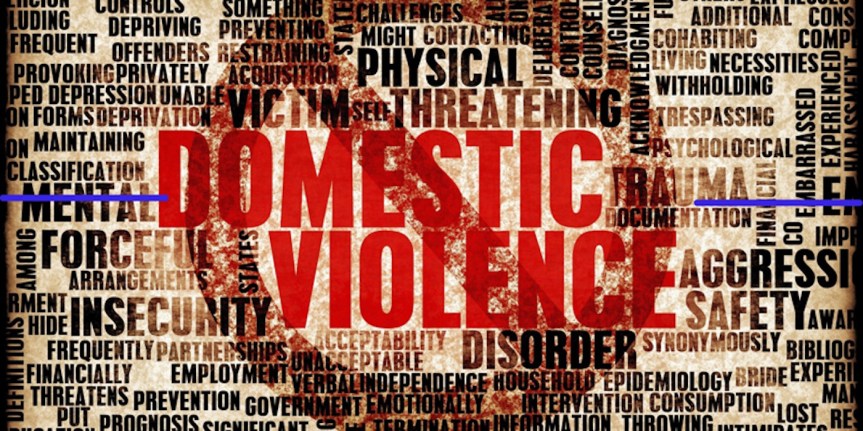
Domestic Violence

Domestic violence is defined as violence and abuse that occurs in a domestic environment, such as cohabitation or marriage. Domestic violence is defined as any type of behaviour that attempts to acquire authority and control over the victim, not simply physical abuse. It may afflict people from many areas of life and is usually directed at a partner, spouse, or close family member. We will discuss the causes and repercussions of domestic violence in an essay.

Causes of Domestic Violence

Domestic violence frequently targets women and children. Domestic abuse is a heinous crime that kills many people. Illiteracy and economic reliance on males are two of the most prevalent causes of domestic violence. This dilemma is exacerbated by a male-dominated culture. Furthermore, dowry is one of the major causes of violence against newlywed wives. Physically abusing women and making obscene statements is widespread in many areas of the world.

Furthermore, children are frequently victims of this cruel behaviour. It is critical to identify society’s double standards and hypocrisy. Frequently, the abuser is either insane or in need of psychiatric counselling. Domestic violence, on the other hand, is the result of a series of reckless behaviours displayed by a segment of society. It is also crucial to highlight that the abuser is not the only one who is accountable; those who allow this to happen and behave as quiet bystanders are equally to blame.

Types of Domestic Violence

Domestic abuse has a variety of negative consequences that vary depending on the type of domestic violence that occurs. It might be physical, emotional, sexual, or pecuniary in nature. A physical abuser employs physical force that injures or endangers the victim’s life. Hitting, punching, choking, slapping, and other forms of violence are included. Furthermore, the abuser refuses the victim medical attention. There is also emotional abuse, in which the perpetrator threatens and intimidates the victim. It also entails damaging their self-esteem.

It involves threatening someone with danger or disgrace in public. Emotional abuse can also include continuous name-calling and criticism. Then there’s sexual abuse, in which the perpetrator uses force to get undesired sexual intercourse. If your spouse does not consent, it is considered sexual abuse since it is coerced. Finally, there is economic abuse, in which the abuser has power over the victim’s money and economic resources.

They use this to impose control over them and make them completely reliant on them. Economic abuse occurs when your partner needs to beg you for money. The victim’s self-esteem suffers as a result.

Why is domestic violence an issue?

Domestic violence has a significant influence on people’s overall health and well-being. It is due to the fact that it causes bodily harm, anxiety, and despair. Furthermore, it affects social skills and increases the probability that they may engage in health-harming behaviours such as self-harm or drug addiction.

How does domestic violence affect a woman?

Domestic abuse has a negative impact on women’s health. It has severe ramifications for their mental and physical health, including reproductive and sexual health. It also covers injuries, gynaecological issues, despair, suicide, and other issues.

Conclusion

To summarise, domestic violence can take various forms, including physical aggressiveness such as kicking and biting, as well as sexual or emotional abuse. It is critical to recognise the indicators of domestic violence and report the abuser if it occurs around or to you.

TOOLS TO HELP ENHANCE YOUR RESUME

1. KICKRESUME

Kickresume is a resume builder tool that lets you choose from pre- designed resume and cover letter templates. Kickresume is by far the most easy to use and effective resume website which will help to make your resume look more elegant, well designed and impressive. Kickresume gives you amillion design combinations to improve your resume. Whether you are nurse or an engineer it doesn’t matter with kickresume your resume will always stand out.

“Being a college student who is transitioning to the work life, I consider Kickresume the most helpful tool available. It is very user-friendly with a variety of designs tailored to your personal preferences and profession. It doesn’t get any better than this!!!“

It offers templates for various professional arenas. Simply choose your profession and further customize it according to your needs!

2. READABLE

While creating your resume it is extremely necessary to view it from an employer’s perspective. Is the format clear? Does it hold attention? Is it easy to read and understand? Readable can help. The tools scores your content based on various aspect such as sentence construction, structure and more!

Readability is about making content clear and easy to understand for the largest audience possible. Focusing on readability increases the chance that your target audience will actually read and interact with the content you publish. For this reason, readability should be a natural part of your content management.

3. CANVA

Of course, you’ve heard of Canva choose from a plethora of templates to add that touch of finesse to your own resume. Customize your resume by changing elements, colour, and style. While it can be a lot of fun customizing your resume remember to it professional, sleek, and clean.

4. GRAMMERLY

Yes, this tool is nothing short of a lifesaver when it comes to assignments. But guess what? You can also use Grammarly to create grammatically flawless application and resumes. it will make sure that everything you type is effective and mistake-free, it will help you write mistake-free in not only resume but also in Gmail, Facebook, Twitter, LinkedIn and many other app you use. Even the text messages also!

It also check the tone of your application, making it suitable for professional and formal use . No silly spelling errors anymore, yay!

Grammarly isn’t just a safety net. You’ll get detailed explanations for all your mistakes to help you avoid making them again in the future.

HOW TO ENHANCE COMMUNICATION SKILLS?

Communication is the mode of exchanging our feelings and ideas with others. It paves the way for the listener to understand and for the speaker to express their thoughts. Everyone can communicate with others but whether it is effective or not is decided by the way you convey messages. This requires communication skills. It is the ability to express and share thoughts and feelings effectively. It is one of the main soft skills that are very much essential to maintain a good rapport in the workplace. Communication may be of any form – spoken, written, visual, or even non-verbal communications like body actions. In general, it is a combination of all these. Here are few ways to upgrade your communication skills.

  • PRACTICE ACTIVE LISTENING 

Good communicator is always a good listener too. Try to listen to what others are saying so that you can communicate with those developed points and answer the questions raised as well. Don’t avoid listening or get distracted to think about what you have to respond to next. When you start paying close attention to others you become an active listener and this quality is very important to improve the skill.  

  • KEEP IT SIMPLE

Use simple words and sentences to convey your essence. Don’t show off your vocabulary and use complex words. It will not reach everyone as every listener may not be as skilled as you. Make sure that everyone understands what you are trying to convey. Try to engage the audience by asking questions and feedback to them. A mount hill of emotions or a vague expression will not get your attention. So, manage your emotions while you deliver something.

  • MAINTAIN COHERENCE

While communicating ensure that you start and end with the key points and gist. Maintain the coherent sequence of ideas from start till end. Don’t make it a mess by mixing up all the points. Be clear and precise in what you are delivering. Add short stories in the middle to have the attention of the audience throughout the session. Don’t be so spontaneous, pause in between. Stick on to the timing. Don’t finish it very soon or drag it so long. 

  • NON-VERBAL COMMUNICATION

Non-verbal communication is equally important as verbal communication. Your audience is going to judge you and your skills mostly based on this. Your body language conveys almost 50% of your ideations. So, try to have good postures and gestures. Make eye contact with the audience. This means that have eye contact with every person at least once when you communicate. Don’t be specific to a particular place, utilize most of the space provided to you.

  • OTHER FACTORS
    • Friendliness – This quality shows your positive attitude and drags others towards you to listen.
    • Confidence – Have full faith in what you do. It becomes difficult to make others understand when you are not confident enough.
    • Clarity – Use a clear tone of voice and volume to express the feelings more effectively. This is essential as it gives life to your speech.
    • Empathy – Be empathetic towards others and try to understand their emotions. Respect others’ opinions and views and give equal concern to them.

These are the few tips to enhance your communication skills. Practice this in your daily presentations and become an expert. Happy learning😊.