World Milk Day

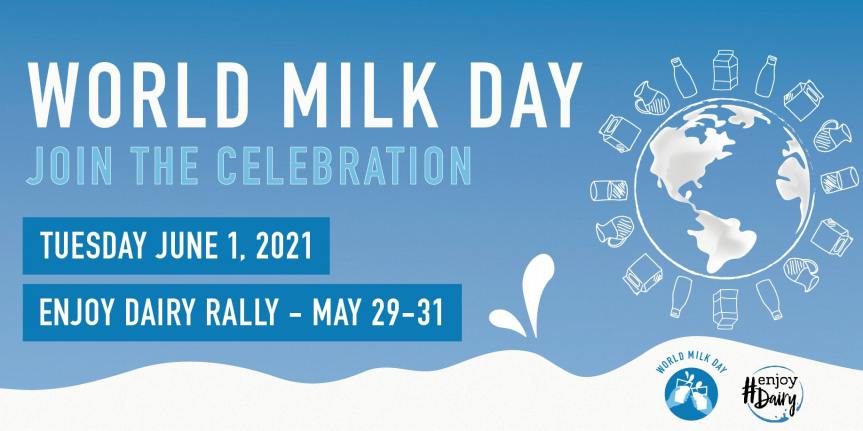
June 1 is observed as World Milk Day every year. World Milk Day is a day established by the Food and Agriculture Organization (FAO) of the United Nations in 2001 to recognize the importance of milk as a global food.

The day is intended to provide an opportunity to bring attention to activities that are connected with the dairy sector. This year’s theme will highlight the work already being done to accelerate climate action and help reduce the dairy sector’s impact on the planet.

Using the World Milk Day platform, awareness of the messaging and action will be raised towards Dairy Net Zero.

Indian Dairy Sector: 

  • India is the world’s largest milk producer, with 22% of global production, followed by the United States of America, China, Pakistan and Brazil.
  • Milk production in the country has grown at a compound annual growth rate of about 6.2% to reach 209.96 mn tonnes in 2020-21 from 146.31 mn tonnes in 2014
  • The top 5 milk-producing states are: Uttar Pradesh (14.9%), Rajasthan (14.6%), Madhya Pradesh (8.6%), Gujarat (7.6%) and Andhra Pradesh (7.0%).

What are the Initiatives of the Government of India related to Dairy Sector?

  • Rashtriya Gokul Mission: This mission is launched to improve productivity and enhance milk production through genetic upgradation of bovine population and development and conservation of indigenous bovine breeds.
  • Gopal Ratna Award 2021: Gopal Ratna Award is given to encourage all individual farmers, artificial insemination technicians and Dairy cooperative societies working in this sector.
  • Nationwide Artificial Insemination Programme: Under this programme, Artificial Insemination services delivered free of cost at farmers’ doorstep.
  • e-GOPALA app: A comprehensive breed improvement marketplace and information portal for direct use of farmers in the form of the e-GOPALA app (Generation of Wealth through Productive Livestock)
  • National Programme for Dairy Development (NPDD): It is launched across the country since 2014 with an objective of strengthening of infrastructure for Production of quality milk, Procurement, Processing and Marketing of Milk & Milk Products through State Implementing Agency (SIA) i.e State Cooperative Dairy Federation.
  • Kisan Credit Card (KCC) for Animal Husbandry & Dairying Farmers: Through Kisan Credit Cards, farmers are enabled to gain access to institutional credit at concessional interest rate for working capital expenditure.

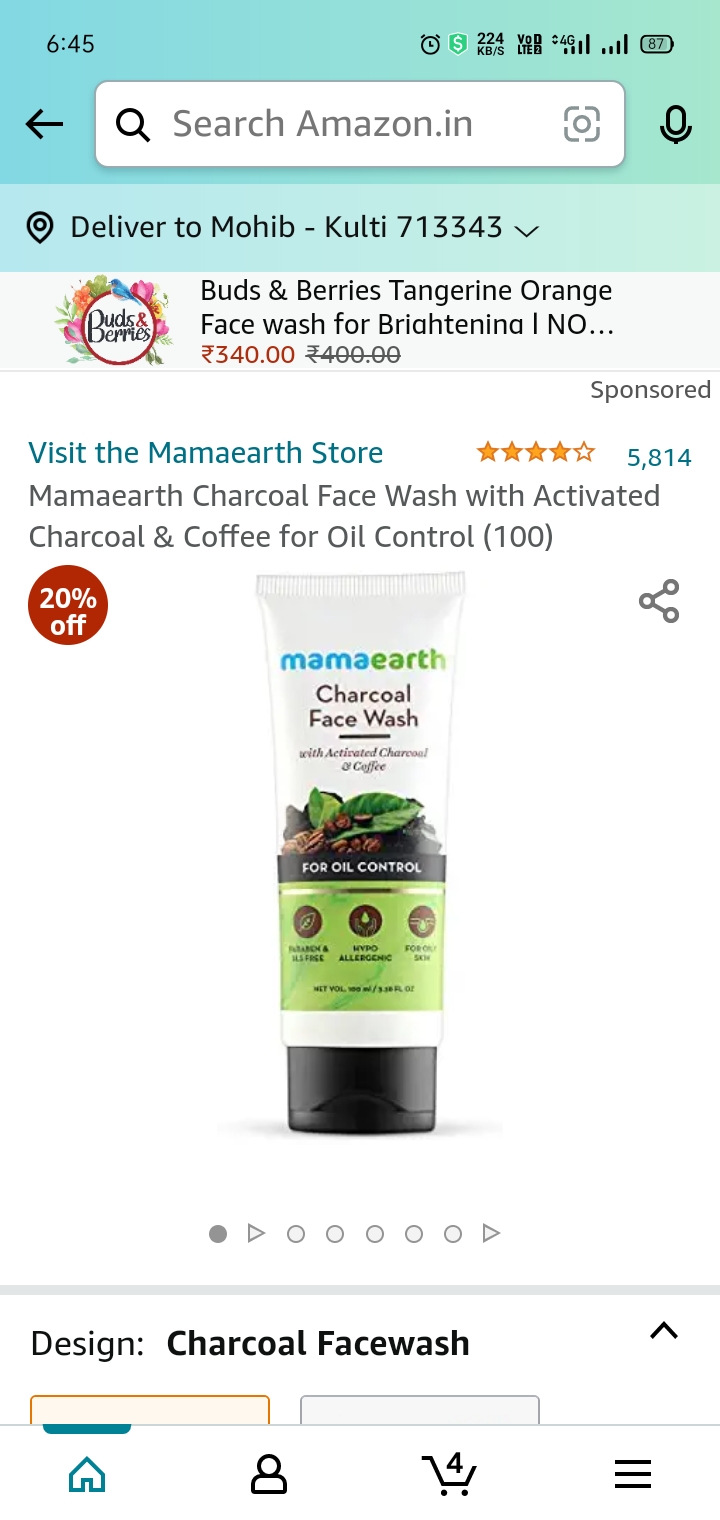
Mama Earth Charcoal Face Wash

Mamaearth Charcoal Face Wash with Activated Charcoal & Coffee for Oil Control (100) https://www.amazon.in/dp/B07FPNW916/ref=cm_sw_r_apan_glt_fabc_dl_YSBZ7WZ30HTZNWR5C6K8?_encoding=UTF8&psc=1

Tired of the day-to-day struggle with gushing skin, choked pores, and dull skin? Bring back immaculate skin that looks immature and canvas-free with the power of Cranked Charcoal &Coffee.Crafted with the integrity of nature, Mamaearth Charcoal Face Wash pulls out poisons and contaminants from deep within the pores. The integrity of Coffee tightens skin pores and promotes yea skin tone to give you an canvas-free glowing complexion.

KodiSoftware Download For Free | Top sites


Let’s start with knowing that what is Kodi software and why one should have it.

What is Kodi software?

Initially released in 2002 [as Xbox media play], in 2003 [as Xbox media centre]. Kodi software application is developed by the XBMC Foundation, Kodi is a free and open-source media player software application, it’s a non-profit technology consortium. It’s a 10-foot user interface with television and remote controls.

With a view of most streaming media such as podcasts, music, videos and views from the internet, one can access all Common digital media. These are some of its platform PowerPC, IA-36, ARM and x64(x84-64). Available in 12[75 including incomplete translations] language. HTPC it’s is a multi-platform home-theater PC application. Kodi is highly customizable so allow it’s users to stream media content via online services such as Crackle, Amazon Prime Internet Videos, Pandora Internet Radio, Spotify and Youtube.

The later version of kodi has a (PVR) graphic front and end. All these available advantages make Kodi a great software to be utilized.

 Let’s now dive into how to download Kodi for free.

Already millions of people are enjoying this great software for free. Kodi is running on the most common processer architectures, iOS, Android, MOS X and Windows operating systems.

How to download : select your platform

As Kodi supports a large range of devices and operating systems, it is multi flavour. Simply select your platform in which you want to install Kodi on and enjoy Kodi.


Struggles of big dairy companies in India!!!

India is that the world’s biggest producer and consumer of dairy. In 2018 alone, India produced 186 million metric tonnes of milk — about 410 billion pounds and 22 percent of the milk produced globally. Almost all of that is consumed domestically thanks to India’s dairy-heavy diet — think creamy curries, yogurt drinks, and a popular type of butter called ghee. A quick note before we proceed: this includes milk from buffaloes, which are an important source of milk in many developing countries. the point is that India loves milk.

What is pushing India's small dairy farmers out of business?

In 2011, the French dairy company Danone hoped to capitalize on this by opening a division in India. Danone opened its own processing plant in Haryana and tried to capture some of India’s 1.2 billion dairy lovers. But less than a decade later, Danone shuttered their dairy business in India. That same year, the corporate made 28 billion dollars worldwide and was within the top three global dairy companies. With all this success, elsewhere, why did Danone’s dairy business sour in India? Let’s start with some background on Danone. Their business is broken down into three categories:

  1. 1.specialized nutrition, like supplements and formula for babies;
  2. bottled waters and seltzers;
  3. dairy and plant-based alternatives.

That one makes up over half of their global sales, but it’s also the one that failed in India. Danone does still sell specialized nutrition products in the country, but they don’t break out those sales figures separately. This is the same company as Dannon in the U.S. The company decided to rebrand to make the spelling less confusing for American consumers. Anyway, now for some background on India’s dairy industry. There are about 75 million dairy farmers in India. Most of them are women who own one or two buffaloes or cows to supplement the family’s income. Nearly half of India’s milk is not sold, but consumed by the farmers household. This makes India’s dairy industry much more fractured and localized than other countries where Danone operates. Take the company’s native France and one of its biggest customers, the U.S. Each has far fewer dairy farms with herds that dwarf India’s one or two animal average. This was Danone’s first big problem in India: sourcing milk is difficult. Of the half not consumed by farmers’ households, only about 15 percent goes to big organized companies or government run cooperatives. The rest goes to hundreds of small, local milk processors.

Tainted milk: Branded dairy in India sees 5% increase in ...

The largest companies like Amul, Mother Dairy, and Nestlé have tiny percentages of the market, and they’ve been there for decades. Market research firms Mintel and Euromonitor declined to release specific market share numbers to CNBC. However, a 2016 piece in The Economic Times of India citing Euromonitor put the figures at about 7 percent for Amul, 3.7 percent for Mother Dairy, and 2.9 percent for Nestlé. In short, tapping into the existing dairy infrastructure is effective but time consuming. Imagine the effort of contacting dozens or hundreds of local and regional dairies, processors, or individual farmers. But establishing a separate supply chain altogether is very expensive — a lesson Danone learned the hard way. And when Danone did get milk, the company focused on the wrong products. Danone pushed plain yogurt and flavored yogurt drinks — popular in places like the U.S. and France with high profit margins to boot. But in India around the time when Danone arrived, yogurt comprised only 7 percent of the dairy consumed.

The real money was in ghee, a type of clarified butter, and plain old fluid milk, a product with razor-thin margins dominated by those hundreds of local small-scale producers. Analysts explained to CNBC the simple reason why Indian consumers shunned Danone’s prepackaged yogurt. And if Indian consumers did want to buy premade yogurt, they had a slew of cheaper options than Danone. Dairy never accounted for more than 10 percent of Danone’s sales in India, a far cry from its global 50 percent. Its specialized nutrition arm picks up the slack, and the company announced a renewed focus on that division when it shuttered its dairy operation. Meanwhile, two of their biggest competitors, Amul and Nestlé, made nearly five billion and 750 million from dairy, respectively. But not all hope is lost for Danone’s dairy in India.
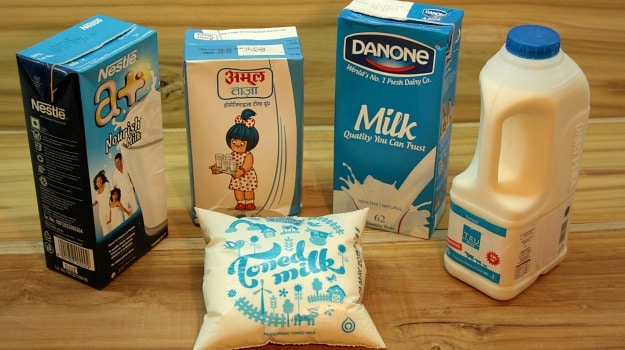
Amul, Nestle, Mother Dairy, Tru & Danone: Which Milk Tastes the ...

In January 2018, the same time that Danone ended its dairy production there, the investment arm of the company announced its part in a 26.5 million dollar investment in Epigamia, an Indian yogurt startup. This could be a sustainable move for Danone in India’s dairy industry because Epigamia offers consumers products that add value onto the plain yogurt they will make cheaply reception . But perhaps most importantly is this: while much of the population still makes yogurt the old-fashioned way, analysts predict that a growing number of consumers will want to buy premade options as they move into corporate jobs in developing urban centers. Very large numbers indeed. If only 5 percent of India’s 1.35 billion people decides to buy prepackaged yogurt, that’s over 67 million consumers — more than the entire population of Danone’s native France.


CHEESE- introduction and production

Cheese is a most commonly used dairy product which is a product derived from milk. Cheese is available in the market in various textures, forms and flavors. It is basically the product of coagulation of milk protein, casein. Cheese is said to be a concentrated form of two major products i.e. Milk protein (casein) and Milk fat. Combination of these two results in the production of cheese which is very much liked by everyone nowadays.
The other ingredients of cheese besides milk are a particular, selective strain of a bacterium, a milk clotting agent and some amount of sodium chloride (to give a salty flavor).
Various types of cheese are present in the market which is basically due to the variation in its basic constituents. No new ingredient is actually added in forming the new type of cheese. Just a basic variation in the already present ingredients can help. Sometimes there is a need to add new additional ingredients which give rise to completely different variety of cheese. It has also been observed and noted that the change in any environmental conditions surrounding the manufacture and subsequent ripening of cheese also affects its manufacturing and thus type.
BASIC CHEESE MANUFACTURING PROCESS –
The basic cheese manufacturing process consists of 3 main stages – Curdling, Curd processing and ripening. All different varieties of cheese can be manufactured at different levels of manufacturing means some cheese can be made in the first step while some needs all the 3 steps to completely occur.

  1. CURDLING –
    It is the first and the most important step in the production of cheese. In this step, there is a separation of milk into solid curds and liquid whey. Usually, this step is achieved by the addition of acidifying (souring) agent in milk and adding the enzyme RENNET. The acidification can also be achieved by directly adding some acidic agent such as vinegar. But most commonly for this acidification purpose, a starter bacteria is used which converts milk sugars into lactic acid and without even the addition of any acidic substance, the acidification is achieved. The common starter bacteria which are used are from Lactococcus, Lactobacillus, or Streptococcus families. Swiss cheese requires the addition of Propionibacter Sherman, which is used to produce Carbon dioxide bubbles during ageing resulting in the hole like structure of Swiss cheese.
    Some fresh cheeses are curdled only the acidification process, but most cheeses require the addition of enzyme, rennet which sets the cheese as strong and rubbery. It also allows the curdling step at low acidity.
  2. CURD PROCESSING
    Till this step, the cheese has now set into a very moist gel. Some soft types of cheeses are essentially complete in the first step. They are just drained, salted and packaged. But from other cheeses, which are not been prepared in the single step, the curd is cut into small cubes which allows the remaining water to drain off from the individual pieces of curd itself.
    Some harder cheeses are then heated at a normal temperature which deliberately forces out the whey from the cut curds. This step changes the taste and flavor of the cheese. Apart from providing a salty flavor to cheese, salting has some other benefits also like it prevents cheese from spoiling, it drains out moisture and also it is used in firming he cheese’s texture in an interaction with its proteins. Different cheeses have different processes of getting texture.
  3. RIPENING
    Most of the cheeses are already prepared in the last step, some of which are not prepared yet are of harder varieties and more rubbery in texture which is completely attained in this step. In this step, the cheeses are left to rest under controlled conditions. This step is also known as AGING. This step may take several years to complete. As a cheese ages, the microbes and the enzymes secreted by them transform its texture and also intensify the flavor. This transformation is more of a result of the breakdown of casein proteins and milk fat into a complex mixture of amino acids, amines and fatty acids.

YOGURT- a fermented milk product

Yogurt is a basic fermented milk product that usually contains the basic bacterial starter cultures of Lactobacillus bulgaricus and Streptococcus thermophillus.
Although the composition of different types of yogurts changes but there is some fixed composition of fats present in them. It is important to note that all yogurts must contain at least 8.25% of solid which is not fat. The fat composition changes with the type of yogurt like full fat yogurt must contain not less than 3.25% of milk fat whereas low fat yogurt must not contain more than 2% milk fat. Also there is a category of non fat yogurt where the fat composition is even less than 0.5%.
The yogurt is basically a mixture of milk and cream which is then fermented by using a culture of Lactic acid producing bacteria. The types of milk which can be used are whole, reduced-fat, low-fat or non-fat depending on which the type of yogurt is decided. The lactic acid produced by the starter culture bacteria is basically responsible for lowering the pH of the yogurt making it acidic and tart. This finally causes the milk protein to thicken. These bacteria ferment the milk which results in the production of yogurt leads to partial digestion of the milk making it more easily digestible. In addition, these bacteria also act as a beneficial microorganisms for the human body as they act as oral-antibiotic therapy and helps in eliminating the pathogenic-bacteria from the gut and replenishing the non-pathogenic bacteria.


Ingredients of yogurt
Milk
Cream
Sweeteners (e.g. sugar, honey, aspartame, etc)
Flavorings (e.g. vanilla, coffee, etc)
Other ingredients (e.g. fruits, preserves, stabilizers such as gelatin)

Types of yogurt –

  1. Set yogurt – This type of yogurt has a jelly-like structure and texture and is incubated and cooled in a final package.
  2. Stirred yogurt – This type is less firm than set yogurt. It is incubated in a tank and final coagulum is broken by stirring before cooling.
  3. Drinking yogurt – It also has coagulum broken before cooling though very little reformation of coagulum will occur.
  4. Frozen yogurt – This type of yogurt is incubated in the same way the stirred yogurt is incubated. It has an ice-cream like texture.
  5. Flavored yogurt – In this type of yogurt, flavors are added just before yogurt is poured into pots and the sugar content present in this type of yogurt is about 50%.

General processing of yogurt

  1. Adjusting milk composition and blending all the ingredients
  2. Pasteurization of milk (at 85 degrees celcius for 85 minutes)
  3. Homogenization of milk (2000-2500psi)
  4. Cooling of milk to 42 degree celcius
  5. Inoculation with bacterial starter cultures into the cooled milk
  6. pH reduction by waiting for sometime
  7. Again cooling to 7 degree celcius
  8. Addition of fruits and flavors
  9. Packaging of prepared yogurt.

Health benefits of yogurt:
• Yogurt is comparably easier to digest than milk.
• It is rich in variety of vitamins.
• It is a rich source of protein.
• As it is source of protein, it may help in losing weight and gain muscles.
• It acts as a booster for immune system
• It is also important and useful for digestive system. It destroys the pathogenic microorganisms from the gut.
• It is good for bones especially for kids and elderly
• It may also be useful in lowering the blood pressure.